Category: BigNewsNetwork

  • What Airbnb Investors Get Wrong About Boutique Hotels thumbnail

    What Airbnb Investors Get Wrong About Boutique Hotels

    The assumption seems reasonable enough. You have managed a short-term rental, dealt with guests, handled the operations, and made money doing it. A small boutique hotel feels like a natural next step, a bigger version of what you already know how to do.

    Blake Dailey, founder of Stayvest and Hotel Launch, has watched that assumption trip up a lot of investors. The jump from short-term rentals to boutique hotels is not a matter of scale. It is a fundamentally different business, and the operators who treat it like an upgrade rather than a reinvention tend to struggle.

    Blake knows this firsthand. He came through the STR world himself, building a portfolio where he handled everything personally: cleaning, maintenance, guest communication, finances, acquisitions. All of it. He hit the same wall most serious short-term rental operators eventually hit, where the business cannot grow any further without a real infrastructure underneath it. Making that transition into commercial hospitality taught him lessons that no amount of residential investing could have.

    Guest expectations are where the gap first becomes obvious. Someone renting a vacation home through Airbnb understands, on some level, that they are staying in someone’s house. The experience is informal by nature, and guests tend to extend more grace when things are imperfect. Hotel guests operate from an entirely different set of expectations. They want attentiveness, consistency, and clear evidence that the operation is being run with care. A lapse that a short-term rental guest might shrug off is something a boutique hotel guest will mention in a review.

    The sheer volume of guest interaction amplifies everything. A short-term rental might turn over a handful of times a month. A hotel with even 20 or 30 units is managing check-ins, calls, requests, and issues on a daily basis. Without systems and trained staff in place to handle that volume, the operation starts to crack quickly.

    Maintenance works the same way. Calling a contractor when something breaks is a workable strategy for a single vacation rental. It is not a workable strategy for a hotel. On-site maintenance coverage is not optional. Guests who are already checked in cannot wait two days for a repair, and the cost of a bad experience spreads fast.

    Labor is its own challenge entirely. Managing schedules, controlling hours, and keeping labor costs aligned with a budget is a skill set that most residential investors simply have not needed to develop. The margins in boutique hotels can be genuinely strong, but they are sensitive to inefficiency in ways that a single Airbnb never is.

    The capital barrier is also more manageable than most people assume. Blake regularly encounters investors who believe boutique hotels are only accessible to the wealthy. The reality is that the right deal, put together with the right structure and funding partners, does not require generational wealth or institutional backing.

    “It does not take being born with a silver spoon,” he says. “It takes experience, the right guidance, and the confidence to actually do it.”

    The upside, for those willing to do the work, is a different category of asset altogether. A boutique hotel in the right market generates brand equity, repeat guests, event and group revenue, and community presence. It is a real business backed by real estate, and the combination produces something a vacation rental portfolio simply cannot match.

    Tremont Lodge, which Blake renovated and now operates in Townsend, Tennessee, has beaten revenue projections consistently since reopening. That result did not come from treating the property like a large Airbnb. It came from building real systems, a real team, and a real operation from day one.

  • The Human Side of AI: Why the Best Technology Still Needs People to Work

    There’s a conversation that keeps coming up in workplaces everywhere right now, usually somewhere between a team meeting and a coffee break, about what AI is actually going to mean for the people doing the work. Not in the abstract, philosophical sense, but in the practical, immediate sense: is my job going to look different in two years? Will the skills I’ve spent years building still matter? Should I be worried, or should I be figuring out how to get ahead of this? These are fair questions, and anyone who claims to have completely certain answers is probably overselling their foresight. What is clearer is that tools like HelperOne are not arriving to replace human judgment; they’re arriving to change the context in which human judgment gets exercised. That’s a meaningful distinction, and it’s worth thinking through carefully.

    The Fear Is Real but the Story Is More Complicated

    Concerns about technology replacing human workers are not new. They surface with every major wave of automation, from the mechanization of manufacturing to the arrival of spreadsheet software that made certain accounting roles obsolete overnight. The pattern historically has been more complicated than simple replacement: some roles disappear, new ones emerge, and the nature of remaining roles shifts in ways that weren’t entirely predictable in advance.

    With AI assistants, that same complicated pattern seems to be unfolding. The tasks most at risk are those that are primarily about producing a particular kind of output at volume: content that follows a template, analysis that applies a known methodology to new data, and customer communication that follows a script. These are tasks where speed and consistency matter more than originality or contextual judgment—exactly the tasks where current AI tools perform most reliably.

    The tasks least at risk are those that require reading people accurately, navigating genuinely novel situations, making decisions under uncertainty where the stakes are high enough that someone needs to take real responsibility for the outcome, and doing work that requires a long track record of domain expertise rather than pattern recognition on existing data. These human capabilities are not close to being replicated by current AI tools, and they tend to be the capabilities that organizations value most highly and pay for accordingly.

    What Actually Changes When You Bring AI Into Your Work

    The honest answer is it depends on how you use it, and that answer isn’t a cop-out. It’s actually the most important thing to understand about this technology right now. Two professionals in the same role, using the same AI tools, can end up with very different experiences: one finding that the tools genuinely amplify their effectiveness, the other finding that they produce a kind of comfortable mediocrity where everything gets done adequately, but nothing gets done particularly well.

    The difference usually comes down to how actively the person is engaging with the AI output. Professionals who treat AI assistance as a first draft that they then bring their own expertise, judgment, and voice to consistently produce better results than those who treat it as a finished product that just needs to be sent or submitted. The tool is a starting point, not a finishing line. And the quality of what you add to that starting point; the contextual insight, the professional judgment, and the genuine understanding of the audience or the problem; is what separates work that is merely competent from work that is actually good.

    This matters because it means that AI tools don’t level the playing field in the way that some people assume. They raise the floor, which is genuinely valuable; but they don’t compress the ceiling. A professional who is excellent at their job and uses AI tools well produces better outcomes than one who is adequate at their job and relies heavily on AI. The excellent professional is faster and more productive; their quality advantage over the adequate professional is roughly maintained and might even increase.

    The New Skills That Are Starting to Matter

    If the arrival of capable AI assistants is changing what skills matter in professional life, it’s worth being specific about what those changes look like in practice rather than speaking in vague terms about “adaptability” and “lifelong learning.”

    Critical evaluation of AI output is one concrete skill that is becoming more valuable. The ability to read an AI-generated draft and quickly identify what’s good, what needs adjustment, and what’s actually wrong; and to make those edits efficiently is a skill that improves with practice and that makes a real difference to the quality of work produced with AI assistance. It’s not dramatically different from the editing skills good professionals have always needed, but it applies in a new context and benefits from deliberate development.

    Prompt craft, the ability to give AI tools clear, specific, contextual instructions that produce useful output, is another skill that has moved from niche to genuinely mainstream in a remarkably short period. The professionals who are best at this tend to be those with strong communication skills generally; the ability to articulate what you want clearly turns out to transfer directly to getting good results from AI tools.

    Workflow design is a third area. Figuring out where AI assistance fits productively into a given professional process, which steps benefit from AI input, which are better done entirely by a human, and how to verify AI outputs efficiently requires a kind of systems thinking that not everyone brings naturally but that can be developed with attention and practice. Organizations that develop this capacity at a team level rather than leaving it entirely to individual experimentation tend to get more consistent and more significant productivity benefits from their AI investments.

    The Relationship Between AI and Human Creativity

    One of the most interesting tensions in the current AI moment is around creativity. On one side, there’s a genuine concern that easy access to AI-generated content will reduce the incentive to develop independent creative skills; if the tool can produce a passable first draft in seconds, so why invest the years of practice required to be able to do that yourself? It’s a reasonable concern, and it deserves to be taken seriously rather than dismissed.

    On the other side, there’s a strong argument that AI tools are expanding creative output rather than replacing it. Writers who use AI assistance are often producing more work than they would otherwise, not because the AI is writing for them, but because the friction of getting from a blank page to a working draft has been reduced enough that the starting point feels less intimidating. Musicians are using AI tools to explore harmonic possibilities they might not have arrived at through their own compositional habits alone. Visual artists are using AI generation as a reference and ideation tool rather than as a replacement for their own skills.

    Whether this expansion of output comes at the cost of depth and originality is genuinely unclear at this point. It probably depends heavily on how the tools are used and on the individual’s underlying commitment to developing real skill rather than simply producing acceptable output efficiently. That’s a question each creative professional has to answer for themselves, and the answer they arrive at will shape whether AI assistance ends up deepening or diluting their work over time.

    Trust, Transparency and Why They Matter More Than People Realise

    As AI tools become more embedded in professional workflows, questions of trust and transparency are becoming more practically important. When a piece of work is informed or assisted by AI, who is responsible for its accuracy? When an AI tool produces an output that leads to a bad decision, where does accountability sit? These questions don’t have simple answers, but they have real consequences, and the organizations navigating them thoughtfully now will be better positioned than those that ignore them until a problem forces the conversation.

    For individual professionals, the practical implication is simple: using an AI assistant does not transfer responsibility for the output to the tool. If you submit AI-assisted work as your own, the professional and ethical responsibility for that work remains yours. That means verifying what the tool tells you, editing what it produces, and being willing to stand behind the final output as something you genuinely endorse rather than just something you forwarded from a machine.

    The platforms that make this easiest are those that are transparent about their limitations; that help users understand where outputs are reliable and where they need scrutiny; and that are designed around genuine usefulness rather than impressive-seeming capability that doesn’t hold up under real-world pressure. Choosing an AI assistant with that design philosophy isn’t just an ethical preference; it’s a practical one that affects the quality and reliability of the work you produce with its help.

    What Good Looks Like Going Forward

    The professionals who will navigate the AI transition most successfully are probably not the ones who adopt every new tool immediately, nor the ones who resist until they’re forced to change. They’re the ones who approach this shift with the same combination of curiosity and critical thinking they bring to any significant change in their field: willing to learn, willing to experiment, and willing to form their own views based on what actually works rather than what the prevailing narrative says should work.

    That means trying AI tools seriously; not one superficial session but genuine sustained use across a range of tasks. It means developing habits around verification and quality control that account for the real limitations of the technology. It means staying current as the tools evolve, because what’s true about AI assistants today will be at least partly out of date in eighteen months. And it means being honest with yourself about when the tool is genuinely helping and when it’s producing a comfortable shortcut that is costing you something in terms of skill development or output quality.

    None of this is uniquely difficult. It’s the same kind of adaptive professional development that good practitioners in every field have always engaged in when their tools and environments change significantly. The AI moment is real and it is consequential, but the fundamental challenge it poses is one that capable, thoughtful professionals have faced before and navigated well. The tools are new. The skills required to use them wisely are not entirely different from the ones that have always mattered.


  • Why Chess Bots Are the Smartest Training Partner You Are Not Using Yet

    One thing my first chess teacher told me that made no sense to me until many years later was that “the person that improves the most quickly is not the most talented. The person who learns how to study effectively every day wins.” At the time I nodded along and went back to memorizing opening lines. But he was right, and the frustrating thing is that most chess players never quite crack that problem. They play when they can find an opponent. They study when motivation strikes. Progress comes in bursts and stalls in between. Playing against a well-designed chess bot did not transform my game in a week, but over months of daily ten-minute sessions, the cumulative effect was something I genuinely did not expect.

    This article is about why that works, and more importantly, how to actually use bot practice in a way that translates into real improvement against human opponents.

    Your Brain Needs Reps, Not Just Explanations

    There is a big difference between understanding something in chess and being able to do it. Most intermediate players understand that activating the king in the endgame is important. They have read about it. They could explain it to someone. But under time pressure, with a real game on the line, that knowledge often does not show up. Instead, the king stays passive out of habit, and the win slips away.

    This occurs since the skill involved in playing chess is not predominantly cognitive; it is based on patterns. Good players do not work out every possible combination of moves; rather, they recognize patterns that they have encountered many times before. The only way to build that library of patterns is through repetition in real game situations. Reading about knight outposts does not do it. Playing fifty games where a knight outpost appears and matters: that does it.

    Bots give you the reps. You can play the same type of position over and over, against opponents of varying strengths, until the pattern stops being a concept and starts being instinct. That is a kind of training that simply was not accessible to most players before online bot platforms existed.

    The Specific Advantage of Playing Something That Makes Human Mistakes

    This point gets overlooked a lot. When people think about bot practice, they often imagine something robotic, a program that plays perfectly until it randomly self-destructs to simulate weakness. That kind of bot is actually not very useful for training, because real opponents do not play that way. Real opponents misunderstand positions gradually. They make errors that follow a kind of internal logic; they overextend, they neglect development, and they misjudge pawn races.

    The genuinely useful chess bots are the ones trained to actually see the board the way a player at a specific rating level sees it, with all of the actual blind spots, position errors, and strategic blunders associated with such an evaluation. The practice of competing against such a bot involves fighting an opponent that acts just like a living, breathing individual. One learns how to detect certain blunders that can actually happen in their own games and when and where these chances occur.

    “Playing against something that thinks like your actual opponents is far more valuable than grinding against a perfect engine set to easy mode.”

    Building an Opening You Actually Understand

    I went through a phase of trying to learn the Queen’s Gambit Declined. I bought the book. I watched the videos. I knew the theory lines up to move fourteen in three or four variations. And then I played in a tournament, where I played my game against an opponent who deviated on the eighth move, leaving me utterly confused for the following twenty moves.

    The problem was not that I had not studied enough. The problem was that I had studied the moves without ever really playing the positions. I did not know what the position felt like, which pieces wanted to go where, what plan white was trying to execute, or what black’s counterplay looked like. That feel only comes from experience, and bot practice is the most efficient way to accumulate that experience quickly.

    When you play the same opening against fifty different bots across a range of ratings, something interesting happens. You stop consulting your memory and start consulting your judgment. The position becomes familiar in a way that no amount of passive study can replicate. You see a move and you know it is wrong before you can even fully articulate why. That instinct is what separates a player who has learned an opening from a player who truly owns it.

    Tactical Vision: Why Games Are Still About This at Every Level

    People who study elite chess sometimes come away thinking the game is primarily strategic: plans, pawn structures, and long-term maneuvering. And at the grandmaster level, that is partly true. But for the vast majority of players, everyone below roughly 2000 Elo, games are decided by tactics far more often than by strategy. Someone hangs a piece. Someone misses a fork. Someone fails to spot the back-rank mate until it is too late.

    Improving tactically is a two-step process. The first step is puzzle training: solving specific combinations in isolation to build pattern recognition. This is followed by learning how to recognize these patterns in a real game environment, where the player does not have prior knowledge of the tactics that are about to be employed. This is often a challenging task for many players, since puzzles alone are not enough to fill this gap.

    Bot practice bridges that gap. When you are playing a live game against a bot and you spot a potential fork three moves deep, and you calculate it correctly, and it works: that is a different kind of learning from solving a puzzle. You trained yourself to look for tactics proactively rather than reactively. Do that enough times and it becomes a habit that shows up in every game you play, against bots and humans alike.

    Time Management: The Skill Everyone Ignores Until It Costs Them

    Bad time management ruins more chess games than bad openings. Players spend six minutes on move twelve, reach a completely normal position, and then blitz the next twenty moves in a panic. The result is obvious: solid opening preparation undone by rushed decisions in the phase of the game that actually matters.

    The good news is that time management improves with practice, specifically with timed practice against opponents that do not let you stall indefinitely. Playing blitz and rapid games against bots with the clock running forces you to develop a sense of when a position requires deep calculation and when you can trust your instincts and move quickly. You learn, game by game, where you are wasting time and where you are not spending enough of it. That calibration is subtle but enormously valuable.

    What Happens When You Play Every Day for Three Months

    I want to be realistic here: three months of daily bot practice will not turn you into a master. But the changes that do happen are concrete and noticeable. Patterns that used to require conscious effort start appearing automatically. Openings that felt unfamiliar become comfortable. Endgames that were anxiety-inducing become manageable, sometimes even enjoyable.

    Even more important than this, however, is that you begin to play with confidence when facing opponents who are real people. Confidence without being overconfident, but rather confidence born out of experience, having played many games of chess and faced difficult situations in the past that you have managed to survive. That experience carries over.

    Choosing Opponents That Match Your Goals, Not Just Your Rating

    One of the things that makes a large bot platform genuinely useful rather than just convenient is the ability to choose opponents based on what you are trying to work on, not just where your rating sits. If you are trying to improve your defensive technique, playing against a bot that attacks aggressively from the opening gives you exactly the training stimulus you need. If your positional understanding needs work, a slow, patient bot that gradually outplays you if you do not have a plan will expose those weaknesses in the most instructive way possible.

    This type of intentional opponent selection would never be possible to achieve with real-life opponents. There would be no way to call a player from the local club and ask him to play aggressively for the next five matches so that you could work on your defensive skills. However, bots make this type of selective practice possible.

    Improving at chess takes time, and whoever tries to convince you otherwise wants to make a profit. Yet it is also one of the easiest tasks that people can accomplish if they are prepared to put the effort in on a regular basis. Bots do not take the place of coaches, books, and other people; they simply enhance the learning process by ensuring that it can happen without hassle or stress. If you are no longer improving and have fallen into a rut, incorporating bots into your weekly schedule may be the solution.


  • XRP Price Prediction Points to $1.60 as Rakuten Opens XRP Payments and Pepeto Presale Crosses $9 million thumbnail

    XRP Price Prediction Points to $1.60 as Rakuten Opens XRP Payments and Pepeto Presale Crosses $9 million

    Rakuten just plugged XRP into its payments app for 44 million users across Japan, and the xrp price prediction conversation is moving faster than the price itself. Big money is already rotating into risk assets as oil prices drop and the Iran peace signal calms global markets, which means the wallets that position now could be the ones celebrating when the next leg arrives. Positioned buyers and sharp traders are turning their focus to presales like Pepeto after it collected more than $9 million in capital and analysts project 100x returns once the confirmed Binance listing arrives.

    XRP Price Prediction After Rakuten Integrates Token for 44 Million Users

    The Ripple linked token jumped to $1.43 this week after Japan’s largest online retailer confirmed full XRP integration across its payments app, according to CoinDesk. Users can now spend and earn XRP through loyalty points worth over $23 billion in circulation. The CLARITY Act roundtable confirmed for April 16 adds a second catalyst, and Standard Chartered analyst Geoff Kendrick projects the token at $2.80 by year end if regulatory clarity arrives, according to Yahoo Finance. The xrp price prediction just gained two real catalysts in the same week.

    Ripple Forecast, Presale Opportunity, and Where the Biggest Returns Could Form

    Pepeto: The Presale Drawing Big Wallet Attention

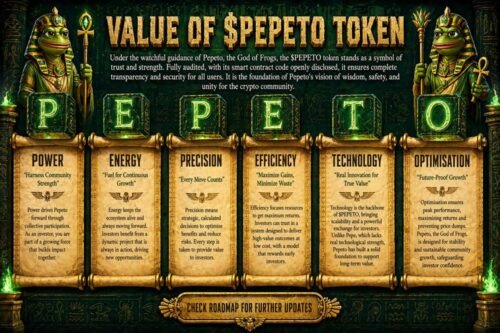
    While XRP and BTC command the spotlight as the largest names in digital assets, Pepeto is quickly becoming one of the most watched presales of 2026 after collecting more than $9 million at a price of just $0.000000186. The core offering behind the project is a complete trading platform created by the mind behind the original Pepe coin, which reached an $11 billion peak with zero products attached to it. PepetoSwap removes trading fees entirely so that every dollar entering a position stays working for the buyer instead of leaking out to middlemen, and the risk scorer checks contracts before a single cent goes in, which means scam tokens get flagged before they can touch the money that matters.

    Compared to XRP at $1.43 and BTC at $74,300, the token sits at the ground level with a confirmed Binance listing approaching, and the gap between this entry and the listing price is where the real returns form for the wallets that moved first. For those who get in now, that distance could deliver far bigger gains than any large cap can offer from its current level, and analysts project a 100x move once trading goes live on Binance.

    Holders also earn 182% APY through staking while they wait, which means the position keeps growing before the listing even arrives. If that 100x plays out, a $200 entry today turns into $20,000 after the listing opens, and considering that Pepe with the same 420 trillion supply and no tools hit $11 billion, matching even a small portion of that market cap would deliver returns that BTC and XRP cannot produce from where they sit right now.

    For wallets looking to multiply capital instead of watching it crawl, Pepeto delivers what coins already trading on exchanges can no longer give back: 100x distance between entry and listing day. The presale is filling faster each round, and positioned buyers are loading in ahead of the confirmed listing because the entry at this level disappears permanently the moment trading opens, making it a xrp price prediction alternative that carries a completely different kind of math.

    XRP Forecast: Can XRP Reach $2.80 in 2026?

    XRP trades at $1.43 today after rallying from $1.28 support, according to CoinMarketCap. The Rakuten payments integration connects XRP to 44 million users and over 5 million merchants across Japan, which gives the token real spending utility that most digital assets still lack. Whale wallets have been accumulating during the dip, and weekly inflows reached $119.6 million according to CoinShares data, which confirms that serious capital is positioning ahead of the next move.

    The CLARITY Act markup, confirmed for late April, sits at a 63% to 66% passage probability on Polymarket, and if the bill clears the Senate Banking Committee, the xrp price prediction models from Standard Chartered point to $2.80 by December. On the bearish side, roughly 60% of circulating supply sits at an average cost of $1.44, which creates a wall of selling pressure every time the price pushes toward $1.40 to $1.45. A break above $1.42 opens the door to $1.60, while a failure to hold $1.28 support could drag the token to $1.15. The xrp price prediction for April ranges from $1.20 to $1.60 depending on the CLARITY Act vote and any progress toward an Iran ceasefire, which means the direction could snap quickly either way.

    Conclusion:

    Rakuten opening XRP to 44 million users is a strong sign for the xrp price prediction outlook, and a climb to $2.80 would mean solid gains from $1.43. But even that move would only double the position, and the wallets that turned small entries into life changing money during past cycles did it by finding the right project before it listed, not by holding large caps through measured growth. Early BTC holders turned $500 entries into millions, and now they say the only regret is not buying more at the ground level.

    The same setup is forming around Pepeto right now, built by the same Pepe cofounder with a confirmed Binance listing approaching, and entering before the listing opens is how that same kind of wealth gets built again. Capital flowing through the Pepeto official website confirms that positioned wallets already recognize what the listing will deliver, and every round that fills without action is a round closer to the entry disappearing forever. The presale price vanishes permanently when trading begins, and missing that window could be the decision that defines the rest of the cycle.

    Click To Visit Pepeto Website To Enter The Presale

    FAQ

    What does the xrp price prediction look like after the Rakuten integration?

    Analysts project XRP could reach $1.60 in April and $2.80 by December if the CLARITY Act passes, but the biggest returns in crypto still come from presale entries before listing day.

    How much could Pepeto grow after listing?

    Analysts project 100x from the current presale price, and with a SolidProof audit clearing every contract, the Pepeto official website is where wallets are entering before the Binance listing arrives.

    Why are presale tokens seen as high return entries?

    Presale tokens allow buyers to enter at the lowest possible price before exchanges list the token, and past cycles prove that ground level entries during the xrp price prediction cycle produce the largest gains when listing day arrives.

    Disclaimer:
    This article is for informational purposes only and does not constitute financial advice. Cryptocurrency investments carry risk, including total loss of capital. Readers should conduct independent research and consult licensed advisors before making any financial decisions.

    This publication is strictly informational and does not promote or solicit investment in any digital asset

    All market analysis and token data are for informational purposes only and do not constitute financial advice. Readers should conduct independent research and consult licensed advisors before investing.

    Crypto Press Release Distribution by BTCPressWire.com
  • Solana Price Prediction Targets $90 but SOL Faces Resistance While Pepeto Hands Early Wallets  Math thumbnail

    Solana Price Prediction Targets $90 but SOL Faces Resistance While Pepeto Hands Early Wallets Math

    The SEC just classified SOL as a digital commodity, and the solana price prediction conversation shifted overnight because seven asset managers are now racing to file spot ETF applications. Smart money is repositioning, and the wallets that read these signals first end up on the right side when prices move. Alert traders are directing capital toward presales like Pepeto after $9 million flowing in confirmed that serious money sees what the Binance listing will deliver.

    Solana Price Prediction Gains New Fuel as SEC Grants SOL Commodity Status

    Regulators jointly classified SOL as a digital commodity in March 2026, clearing the biggest legal barrier for institutional capital, according to CoinDesk. Seven asset managers including Franklin Templeton have filed spot Solana ETF applications with approval expected by October, according to CoinMarketCap. SOL bounced from $80 toward $88 this week. The solana price prediction models just gained structural clarity similar to what BTC received in 2024 before it doubled.

    SOL Outlook, Presale Entry, and Where the Multiplier Lives

    Pepeto: The Exchange Built for the Next Wave

    While SOL and ETH dominate as proven networks, Pepeto is emerging as one of the fastest filling presales of 2026 after pulling in $9 million at a price of just $0.000000186. The core behind the project is a working exchange built by a Binance trading specialist on the development team. The cross chain bridge moves tokens between networks at zero cost so capital never gets trapped, and PepetoSwap handles trades without fees, which means buyers keep every dollar of profit instead of giving a cut on every move.

    Next to SOL at $88 and ETH at $2,323, the token remains at the earliest entry with a confirmed Binance listing approaching, and the gap between presale price and listing price is where life changing returns formed in past cycles. For those getting in now, that gap could produce far greater returns than any established coin can deliver, and analysts project a 100x move once the Binance listing goes live.

    Holders collect 182% APY through staking as they wait, so the position compounds before the listing opens. If that 100x target holds, a $150 entry becomes $15,000 after listing day, and given that Pepe with the same 420 trillion supply and no products reached $11 billion, even a fraction of that cap would dwarf what SOL returns from $88.

    For wallets that want to grow wealth in one event, Pepeto offers what traded tokens cannot recreate: 100x room between today and the listing. The presale rounds are closing faster, and large wallets are stacking before the confirmed listing erases this entry.

    SOL Forecast: Can Solana Break Above $100?

    SOL trades at $88 after holding $80 support through the recent selloff, according to CoinMarketCap. The SEC commodity classification removed the legal cloud keeping institutions away, and seven spot ETF filings are active with approval expected by October. The first chart test sits at $88 where the 20 day moving average has rejected every rally this month. If SOL clears $88, the solana price prediction models from Changelly point to $96 by end of April and $125 by year end.

    The bearish path drops SOL to $73 if $80 breaks. Solana’s total value locked sits at $6.4 billion, the highest since 2021, and that usage could fuel the ETF narrative into a price catalyst. The solana price prediction range for April sits between $73 and $100, hinging on whether the ETF wave gains the same traction BTC saw in 2024.

    Conclusion:

    The commodity status and ETF filings build a strong case for the solana price prediction story, and a rally to $125 would give SOL holders 52% from today. But those returns are measured, not life changing, and the wallets that built real wealth every cycle did it from presale entries before listing day.

    The last Pepeto round sold out ahead of schedule because positioned wallets rushed to lock the entry, and the current round fills while these words get read. Getting in through the Pepeto official website puts capital on the side that collects returns when the Binance listing opens, and missing it means watching others celebrate a move that was visible before the crowd confirmed it. The presale entry disappears the moment trading begins, and being late to this window could be the most expensive hesitation of the cycle.

    Click To Visit Pepeto Website To Enter The Presale

    FAQ

    1. What is the solana price prediction for April 2026?

    Analysts project SOL between $73 and $100 in April, with the SEC commodity classification and seven ETF filings acting as the biggest catalysts since the BTC ETF approval.

    1. How much could Pepeto return after listing?

    Analysts project 100x from the presale entry, and with SolidProof clearing every contract, the Pepeto official website is where serious wallets are entering before the confirmed Binance listing arrives.

    1. Why are presale tokens seen as the best return opportunity?

    Presale entries give buyers the lowest possible price before exchange listing, and past cycles confirm that ground level positions during the solana price prediction cycle produce the biggest gains when listing day arrives.

    Disclaimer:
    This article is for informational purposes only and does not constitute financial advice. Cryptocurrency investments carry risk, including total loss of capital. Readers should conduct independent research and consult licensed advisors before making any financial decisions.

    This publication is strictly informational and does not promote or solicit investment in any digital asset

    All market analysis and token data are for informational purposes only and do not constitute financial advice. Readers should conduct independent research and consult licensed advisors before investing.

    Crypto Press Release Distribution by BTCPressWire.com
  • Best Crypto Presale to Buy in 2026: Pepeto Could Deliver  as Deutsche Börse Bets $200M on Kraken thumbnail

    Best Crypto Presale to Buy in 2026: Pepeto Could Deliver as Deutsche Börse Bets $200M on Kraken

    Deutsche Börse just dropped $200 million to buy a stake in Kraken, and the best crypto presale to buy in 2026 conversation is gaining speed because when the largest stock exchange operator in Europe bets that big on crypto infrastructure, the money flowing in behind it tends to follow fast. Wallets that recognize this kind of institutional signal before the crowd are the ones that end up on the winning side of the next cycle. Focused buyers are already piling into Pepeto after it passed the $9 million mark, with analysts projecting 100x returns from the current entry once the confirmed Binance listing opens.

    Best Crypto Presale to Buy in 2026 as Deutsche Börse Invests $200M in Kraken

    Germany’s Deutsche Börse confirmed a $200 million acquisition of a stake in Kraken, making it one of the largest traditional finance investments into a crypto exchange this year, according to Reuters. The move follows a pattern of institutional players entering crypto infrastructure ahead of expected regulatory clarity across both the US and EU. BTC responded by holding above $74,000 while ETH pushed past $2,323, according to CoinDesk.

    This kind of capital commitment from legacy finance signals that the next wave of growth is being built right now, and the best crypto presale to buy in 2026 sits at the intersection of that signal and the ground level entry that disappears when listing day arrives.

    Top Presale Opportunity, Large Cap Analysis, and Where 100x Returns Could Form

    Pepeto: The Trading Network That Big Wallets Keep Entering

    While BTC and ETH sit at the center of every portfolio conversation, Pepeto is rising as one of the most active presales of 2026 after passing the $9 million mark with a price of just $0.000000186. The driving force behind the project is a complete trading network created by the same person who built the original Pepe coin to an $11 billion peak without a single product attached to it. The risk scorer screens every contract before a buyer commits capital, which means bad tokens get filtered out before they can damage a position, and the cross chain bridge lets capital flow between networks at zero cost so profits never get locked on the wrong chain.

    Next to BTC at $74,300 and ETH at $2,323, the token sits at the ground level with a confirmed Binance listing approaching, and that distance between presale and listing is where the biggest returns in crypto have always formed. For those entering at this stage, the gap could produce returns that no large cap can match from its current price, and analysts project a 100x move once Binance listing day arrives. Pepeto is the best crypto presale to buy in 2026 for anyone who missed the original Pepe entry and wants the same math with actual exchange tools backing it. Holders also earn 182% APY through staking while they hold, so the position compounds before trading even begins.

    If that 100x plays out, a $100 entry becomes $10,000 after the listing, and the Pepe comparison gives it a checkable floor because the same supply, same founder, and more products logically points to at least the same market cap. For wallets that want one event to change their entire portfolio, Pepeto delivers what BTC and ETH took a decade to build: 100x distance sitting between a presale entry and listing day.

    The presale is filling faster each round, and the wallets stacking now are the ones who will collect when the listing price replaces the presale price permanently, which is exactly why more wallets searching for the best crypto presale to buy in 2026 keep landing on this entry.

    BTC: Holding $74,000 but Returns Are Measured

    BTC trades at $74,300 after bouncing from the $60,000 crash in February, according to CoinMarketCap. Spot ETF inflows have taken in over $56 billion total, and the Iran peace signal helped trigger a $285 million short squeeze that cleared resistance at $73,800. A move to $100,000 from here would deliver 34% returns, which is strong for traditional assets but nowhere near the kind of multiplier that turns a small position into a life changing number.

    ETH: Climbing but Facing Headwinds

    ETH trades at $2,323 after jumping 8% following the Iran peace signal, according to CoinDesk. The Fusaka upgrade debate and short seller pressure from Culper Research have created clouds over the near term outlook. Even a rally back to the $4,500 area from 2025 would only represent a 93% gain, which is solid but still a fraction of what a presale entry can deliver before listing day.

    Conclusion:

    Deutsche Börse putting $200 million into Kraken confirms that institutional money believes the next wave of crypto growth is coming, and the best crypto presale to buy in 2026 question has a clear answer for anyone paying attention. Pepe reached $11 billion from zero products and the same 420 trillion supply, and the wallets that bought early made the kind of returns that changed everything about their financial future.

    The same pattern is visible with Pepeto today, created by the same founder who launched Pepe, equipped with real exchange tools, and backed by a confirmed Binance listing, and the reason capital keeps flowing through the Pepeto official website is because positioned wallets already see what the listing will deliver. Every cycle produces one moment where the right investment at the right time changes everything, and this entry is that moment. The presale price disappears permanently when the listing arrives, and letting this window close without acting could be the regret that defines the rest of the cycle.

    Click To Visit Pepeto Website To Enter The Presale

    FAQ

    What is the best crypto presale to buy in 2026 after the Deutsche Börse Kraken deal?

    Pepeto leads the presale market with more than $9 million collected, a SolidProof audit on every contract, and a confirmed Binance listing that gives the entry a clear path to 100x returns.

    How much could Pepeto grow after listing?

    Analysts project 100x from the presale price, and the Pepeto official website is where serious wallets are entering now because the same founder and same supply that built Pepe to $11 billion back this token.

    Why are presale entries considered the highest return positions in crypto?

    Presale entries give buyers the lowest price before exchanges list the token, and every past cycle confirms that the best crypto presale to buy in 2026 produces the biggest gains when listing day removes the entry forever.

    Disclaimer:
    This article is for informational purposes only and does not constitute financial advice. Cryptocurrency investments carry risk, including total loss of capital. Readers should conduct independent research and consult licensed advisors before making any financial decisions.

    This publication is strictly informational and does not promote or solicit investment in any digital asset

    All market analysis and token data are for informational purposes only and do not constitute financial advice. Readers should conduct independent research and consult licensed advisors before investing.

    Crypto Press Release Distribution by BTCPressWire.com

  • Best Crypto to Buy in April 2026 Could Be Pepeto as Fed Chair Hearing Nears and BNB and DOGE Stall thumbnail

    Best Crypto to Buy in April 2026 Could Be Pepeto as Fed Chair Hearing Nears and BNB and DOGE Stall

    The Federal Reserve Chair nomination hearing is set for April 21, and the best crypto to buy in April 2026 question just became urgent because the policy shift that unlocks cheap capital is days away. Committed buyers are piling into Pepeto after $9 million already committed confirmed that big capital sees the Binance listing as the event worth positioning for.

    Best Crypto to Buy in April 2026 as Fed Chair Nomination Hearing Approaches

    Kevin Warsh’s nomination hearing for Federal Reserve Chair is set for April 21, and markets are watching because Warsh has favored conditions that boost risk assets, according to  . BTC holds above $74,000 and ETH pushed past $2,323 as traders position for the signal, according to  . A dovish Chair would open the door to rate cuts flooding crypto with capital, and the best crypto to buy in April 2026 sits where that signal meets a presale entry that vanishes on listing day.

    Top Digital Assets, Meme Coins, and Where the Rarest Setup Is Forming

    Pepeto: The Protocol With the Rarest Combination in Crypto

    While BNB and DOGE sit as familiar names on every exchange, Pepeto is rising as one of the most funded presales of 2026 after pulling in $9 million at just $0.000000186. The project is a complete protocol created by the person who started Pepe itself, the coin that hit $11 billion with zero products. The risk scorer scans contracts before capital enters so bad tokens get caught before they drain a position, and PepetoSwap executes trades at zero fees so profit stays whole on every move.

    Next to BNB at $631 and DOGE at $0.092, the token sits at the earliest entry with a confirmed Binance listing approaching, and the Pepe creator plus exchange tools plus a confirmed listing is the rarest combination crypto produces per cycle. For those entering now, the gap between presale and listing could deliver far greater returns than any large cap, and analysts project 100x once Binance opens trading.

    The best crypto to buy in April 2026 is where meme energy and real utility meet at the same time. Holders earn 182% APY through staking, so every day before the listing adds to the position. If that 100x holds, a $100 entry turns into $10,000 after listing, and the Pepe math is simple: same supply, same founder, more products. Pepeto gives what listed tokens cannot recreate: 100x room between entry and listing day. The presale fills faster each round, and the wallets inside know what the listing delivers.

    BNB: Steady at $631 but Growth Is Capped

    BNB trades at $631 after recovering from the March selloff, according to  . The Binance ecosystem continues expanding with new product launches and wallet integrations. Even an optimistic rally to $800 delivers 30% returns, which adds portfolio value but falls far short of the multiplier that a presale entry with a confirmed listing produces for anyone searching for the best crypto to buy in April 2026.

    DOGE: Meme Power but Limited Math

    DOGE trades at $0.092 and remains one of the most recognized meme coins in the market, according to  . Community support keeps DOGE relevant, but the token lacks exchange infrastructure and a confirmed listing catalyst. A move to $0.15 delivers 63% returns, better than most large caps but a fraction of what ground level presale entries produce.

    Conclusion:

    The Warsh hearing could trigger monetary easing that sends capital into crypto, and the best crypto to buy in April 2026 answer becomes clear when the numbers land. BNB offers 30% to $800 and DOGE offers 63% to $0.15, but neither matches what a presale entry with a confirmed Binance listing delivers at 100x. The Pepe creator building real tools on the same 420 trillion supply is the rarest combination this market produces, and wallets flowing through the Pepeto official website already know what the listing will deliver. The difference between wealth and regret was never about who knew more, it was about who moved while the entry was open, and the listing removes this price permanently the moment trading begins.

    Click To Visit Pepeto Website To Enter The Presale

    FAQ

    What is the best crypto to buy in April 2026 ahead of the Fed Chair hearing?

    Pepeto leads with more than $9 million committed, SolidProof audited contracts, and a confirmed Binance listing, making it the strongest presale entry ahead of any monetary policy shift.

    How much could Pepeto return after the Binance listing?

    Analysts project 100x from the presale price, and the Pepeto official website is where positioned wallets are entering now because the same Pepe founder and 420 trillion supply back this token.

    Why is the best crypto to buy in April 2026 a presale instead of large caps?

    Large caps offer measured returns but presale entries before a confirmed listing carry 100x distance that listed tokens cannot recreate, and past cycles prove ground level positions produce the biggest gains

    Disclaimer:
    This article is for informational purposes only and does not constitute financial advice. Cryptocurrency investments carry risk, including total loss of capital. Readers should conduct independent research and consult licensed advisors before making any financial decisions.

    This publication is strictly informational and does not promote or solicit investment in any digital asset

    All market analysis and token data are for informational purposes only and do not constitute financial advice. Readers should conduct independent research and consult licensed advisors before investing.

    Crypto Press Release Distribution by BTCPressWire.com

  • Could the Crypto News Today About BTC Hitting $76K and Pepeto Crossing $8M Be the Signal XRP and SOL Need thumbnail

    Could the Crypto News Today About BTC Hitting $76K and Pepeto Crossing $8M Be the Signal XRP and SOL Need

    BTC just touched $76,000 for the first time since the February crash, and the crypto news today cycle is buzzing because the Iran peace signal triggered a $285 million short squeeze that wiped out bearish positions in hours. The market is waking up, big wallets are moving fast, and the people who act on signals like this before the crowd are the ones who end up with the returns everyone else talks about later. Sharp capital is already flowing into Pepeto after more than $9 million secured the presale’s position as the entry serious money keeps choosing, with analysts projecting 100x once the confirmed Binance listing opens.

    Crypto News Today: BTC Hits $76K as Iran Peace Signal Triggers $285M Short Squeeze

    BTC reached $75,900 on Tuesday morning, the highest level since the February 5 crash that sent prices to $60,000, after optimism around Iran peace talks sparked a rally across all risk assets, according to  . The $285 million short squeeze cleared the double top resistance at $73,800 and pushed the Nasdaq up 1.2% in the same session, according to Yahoo Finance. ETH jumped 8% to $2,370 in the strongest single day performance among large caps. The crypto news today signals exactly the kind of environment where presale entries that were quiet during fear become the loudest winners after listing.

    Digital Asset Rally, Presale Activity, and Where the Biggest Returns Are Forming

    Pepeto: The Marketplace Where Whales Are Stacking Before Listing

    While BTC and ETH capture headlines as the largest digital assets in the market, Pepeto is growing into one of the most backed presales of 2026 after securing more than $9 million at a price of just $0.000000186. The foundation of the project is a complete marketplace built with a former Binance specialist on the development team, which gives the tools a level of trading knowledge that most early tokens never have behind them. PepetoSwap removes all trading fees so that every dollar stays working inside the position instead of leaking out on each trade, and the cross chain bridge transfers tokens between networks at zero cost, which means capital flows freely without getting stuck on a single chain when speed matters most.

    Sitting next to BTC at $74,300 and ETH at $2,323, the token remains at the earliest entry point with a confirmed Binance listing approaching, and the crypto news today about the short squeeze proves that when capital returns to risk assets, presale entries multiply fastest. For those entering now, the distance between this price and the listing could deliver far larger returns than any blue chip can offer, and analysts project a 100x move the moment Binance trading begins.

    Holders earn 182% APY through staking while they wait, which means the tokens grow before the listing even happens. If that 100x holds, a $100 position today turns into $10,000 after the listing, and considering the original Pepe coin with the same 420 trillion supply and zero products reached $11 billion, the math checks out from multiple angles. For wallets that want their capital to work in one explosive event, Pepeto offers what already listed coins cannot give back: 100x distance between a presale entry and listing day. The presale fills faster with every round, and positioned wallets are locking in before the confirmed listing removes the price that makes this market signal worth acting on.

    XRP: Rallying on Rakuten but Capped by Resistance

    XRP trades at $1.43 after the Rakuten payments integration opened the token to 44 million Japanese users, according to  . The CLARITY Act roundtable on April 16 adds a second catalyst, and weekly inflows reached $119 million according to CoinShares data. Even a move to the $2.80 year end target from Standard Chartered would only double the position, and that kind of measured growth is exactly what makes the presale return math so different for wallets paying attention right now.

    SOL: Holding $88 but the Ceiling Is Close

    SOL trades at $88 after the SEC classified it as a digital commodity, clearing the path for seven spot ETF filings now active with approval expected by October, according to  . Solana’s total value locked sits at $6.4 billion, the highest reading since 2021, and the network continues to attract developers building real applications on top of it. A best case rally to $125 would deliver 52% returns, which is solid for a portfolio addition but far from the kind of multiplier that presale entries produce before listing day removes the entry permanently.

    Conclusion:

    The $285 million short squeeze and BTC touching $76,000 make the crypto news today conversation feel electric, and the market is clearly shifting back toward risk. But the wallets that made real money in every past cycle did not make it by holding large caps through measured rallies. They made it by finding the right entry before the listing turned it into a public trade that everyone else chased. Last cycle created millionaires from the wallets that moved first, and Pepeto with a confirmed Binance listing approaching is the clearest second chance this market has offered because the same setup is forming with better tools and the same Pepe cofounder behind it.

    Capital flowing through the Pepeto official website proves that smart money already knows what the listing delivers, and each passing day without action means one less chance to lock the entry before it vanishes forever. The presale price disappears permanently when Binance opens trading, and letting this moment pass while the rest of the market acts could be the single regret that echoes through the rest of the cycle.

    Click To Visit Pepeto Website To Enter The Presale

    FAQ

    What is the biggest crypto news today for April 2026?

    BTC hit $76,000 after the Iran peace signal triggered a $285 million short squeeze, and Pepeto crossed $9 million in presale capital with a confirmed Binance listing approaching.

    How much could Pepeto grow after the Binance listing?

    Analysts project 100x from the current presale entry, and the Pepeto official website is where wallets are securing positions before the listing removes this price permanently.

    Why is the crypto news today rally important for presale entries?

    When capital returns to risk assets after a squeeze, presale tokens with confirmed listings benefit first because the entry is still open and the listing multiplies it, making the crypto news today cycle the best time to act before the window closes.

    Disclaimer:
    This article is for informational purposes only and does not constitute financial advice. Cryptocurrency investments carry risk, including total loss of capital. Readers should conduct independent research and consult licensed advisors before making any financial decisions.

    This publication is strictly informational and does not promote or solicit investment in any digital asset

    All market analysis and token data are for informational purposes only and do not constitute financial advice. Readers should conduct independent research and consult licensed advisors before investing.

    Crypto Press Release Distribution by BTCPressWire.com

  • Best Bitcoin Mining Investment 2026: Most Profitable, Reliable & Top Mining Hosting

    Is Bitcoin Mining Still Profitable in 2026?

    The short answer is yes — and the numbers are more compelling than ever. Bitcoin mining remains one of the most profitable investment strategies available today, with serious operators achieving a full return on investment in approximately 10 to 14 months under optimised hosting conditions. The key variable is no longer the hardware; it is where and how you host it.

    This analysis delivers a clear, data-driven picture of Bitcoin mining profitability in 2026, covering real ROI calculations, electricity cost benchmarks across global markets, projected returns at a $200,000 Bitcoin price, and a comparison of the leading crypto mining hosting providers worldwide. At the centre of that comparison sits OneMiners, a globally recognised mining infrastructure platform offering some of the lowest electricity rates on the market, zero service fees, and over 156MW of hosting capacity across multiple continents.

    Real Bitcoin Mining ROI: A 1 PH/s Example

    To understand the profitability on offer, it helps to look at the baseline mathematics of a real mining operation. Based on live network data and representative hardware efficiency ratings for 2026-generation ASIC miners, a 1 PH/s operation — roughly eight Antminer S21 Pro units — produces the following results when hosted at OneMiners’ USA facility at $0.045/kWh:

    • Daily gross revenue of approximately $60–$80, varying with Bitcoin price and network difficulty
    • Power consumption of around 1,320 kWh per day at 32 W/TH efficiency
    • Daily electricity cost of $59.40
    • Net daily profit of $20–$30 after electricity, with zero service fees
    • Monthly net profit of approximately $600–$900
    • Annual net profit of approximately $7,200–$10,800, excluding any Bitcoin price appreciation

    You can model these figures dynamically against real-time difficulty and power costs using the OneMiners mining calculators, as well as tools like ASICProfit.com and BTCFQ.com.

    Why Electricity Costs Are Everything

    In crypto mining, the electricity rate is the single largest variable after Bitcoin’s price. A difference of just one cent per kilowatt-hour translates to thousands of dollars in annual profit at scale. Rates vary significantly around the world:

    What sets OneMiners apart is the elimination of hidden fees entirely. While competitors at similar headline rates often add management surcharges, OneMiners’ all-in cost is genuinely $0.0455/kWh — making it one of the most competitive options on a true cost-per-bitcoin basis.

    Breakeven and Long-Term ROI

    Modelling a $20,000 hardware investment hosted at OneMiners’ USA facility, the breakeven point arrives at roughly 10 to 12 months. After that point, the operation generates pure net profit. Over a 36-month horizon, the modelled operation returns approximately $46,000 net on a $20,000 hardware investment — a 230% return, and that excludes any Bitcoin price appreciation.

    The $200,000 Bitcoin Scenario

    A growing number of macro analysts and institutional forecasters project Bitcoin reaching $200,000 within this cycle. If that materialises, the impact on mining ROI is transformative. Modelled on 1 PH/s at $0.045/kWh, a $200,000 Bitcoin price would produce:

    • Daily gross revenue of around $160
    • Daily net profit of approximately $100
    • Monthly net profit of around $3,000
    • A breakeven timeline of just 6 to 9 months
    • A potential first-year ROI exceeding 150%
    • A three-year net return exceeding $90,000

    It is worth noting that network difficulty would likely increase alongside price, so these projections are illustrative rather than guaranteed. However, investors locked into a long-term hosting agreement — such as OneMiners’ 7-year prepaid energy contracts — would capture this upside without needing to renegotiate electricity terms.

    Why OneMiners Stands Out

    The hosting provider you choose is as consequential as the hardware you deploy. OneMiners has built its reputation by addressing the three biggest pain points in mining hosting: downtime, hidden fees, and power quality. Key features include:

    • A guaranteed rate of $0.045/kWh via 7-year prepaid energy contracts with no management fees or hidden surcharges
    • Over 156MW of capacity across its global hosting centres, scalable from a single unit to enterprise fleets
    • A 99%+ uptime guarantee backed by a formal SLA, with redundant power feeds and proactive hardware monitoring
    • 24/7 operations with real-time alerting and rapid intervention protocols
    • Active sites across the USA, Europe, and emerging-market low-cost energy zones
    • Zero service fees — every dollar of mining revenue belongs to the client

    Other Notable Hosting Providers

    While OneMiners leads on all-in cost structure, other providers worth knowing about include CircleHash.com for managed cloud mining, IceRiver.app for combined hardware and hosting packages, PcPraha.com for European infrastructure, and Bitmain.eu for manufacturer-direct Antminer hardware, among others. Those looking to browse and compare available mining hardware directly can also explore the OneMiners hardware catalogue.

    How Bitcoin Mining Compares to Other Investments

    When optimised properly, Bitcoin mining stacks up favourably against traditional asset classes. Bank savings and term deposits offer 1–5% annually. The S&P 500 averages 7–12%. Real estate typically returns 8–15%. Gold and commodities sit in the 5–10% range. A well-structured Bitcoin mining operation, by contrast, offers 90–230%+ potential ROI with the added benefit of daily Bitcoin income.

    Conclusion

    Bitcoin mining is one of the most profitable investment strategies available in 2026 when set up correctly. From the $20–$30 net profit per day per PH/s at current prices, to the 230%+ cumulative return potential over 36 months, to the accelerated ROI under a $200,000 BTC scenario, the case for well-structured mining is compelling. OneMiners delivers on the fundamentals that matter most: locked-in low electricity rates, zero fees, institutional-scale infrastructure, and around-the-clock support.

    Disclaimer: This article is for informational purposes only and does not constitute financial or investment advice. Bitcoin mining involves significant capital risk, including hardware depreciation, network difficulty increases, and price volatility. Always conduct independent due diligence before committing capital.

  • Top 6 Crypto Marketing Agencies in 2026

    The crypto industry has evolved rapidly, and in 2026, marketing a blockchain project is no longer just about hype—it’s about trust, visibility, and long-term brand positioning. With increasing competition and stricter regulations, crypto startups now rely on specialized agencies that understand both Web3 technology and modern digital marketing strategies.

    Whether you’re launching a new token, NFT collection, DeFi platform, or blockchain startup, choosing the right crypto marketing agency can make a huge difference. These agencies offer services like SEO, PR distribution, influencer outreach, community management, and AI-driven brand visibility.

    Below is a carefully curated list of the Kripto kazino Top 6 crypto marketing agencies in 2026 that are leading the industry with proven results, innovation, and credibility.

    1. Coinbound

    Coinbound remains one of the most recognized names in crypto marketing. Known for working with top blockchain brands, this agency specializes in influencer marketing, PR, and social media growth.

    They have built strong relationships with major crypto influencers and media outlets, making them a powerful choice for projects that need fast exposure.

    Key Services:

    • Influencer marketing campaigns
    • Social media management
    • PR and media outreach
    • SEO for crypto websites

    Why Choose Coinbound:
    They combine authority, experience, and deep industry connections. Their campaigns often go viral within the crypto community.

    2. NinjaPromo

    NinjaPromo has positioned itself as a full-service digital marketing agency with a strong focus on crypto and fintech brands. They are known for data-driven strategies and modern branding techniques.

    Their strength lies in combining creative design with performance marketing.

    Key Services:

    • Paid advertising (Google, social ads)
    • Branding and design
    • Content marketing
    • Blockchain PR

    Why Choose NinjaPromo:
    Perfect for startups that want a balance between branding and measurable ROI.

    3. ICODA

    ICODA is a well-established agency that focuses specifically on blockchain and cryptocurrency projects. They offer end-to-end marketing solutions tailored for Web3 ecosystems.

    Their team understands token launches, exchange listings, and crypto compliance requirements.

    Key Services:

    • Token listing promotion
    • Community management
    • Crypto SEO
    • Exchange marketing

    Why Choose ICODA:
    Ideal for projects preparing for ICO, IDO, or token launch campaigns.

    1. CryptoPR

    CryptoPR is known for its powerful press release distribution services. In 2026, PR plays a major role in building trust signals for both search engines and AI platforms.

    They help brands get featured on high-authority websites, improving visibility and credibility.

    Key Services:

    • Press release distribution
    • Sponsored articles
    • Brand mentions
    • Media placements

    Why Choose CryptoPR:
    Best for projects that want fast exposure and strong online authority.

    1. MarketAcross

    MarketAcross is a premium blockchain marketing agency that works with some of the biggest names in the crypto space. They focus heavily on storytelling and brand authority.

    Their campaigns are often seen across major crypto news platforms.

    Key Services:

    • Content marketing
    • PR campaigns
    • Thought leadership
    • Brand positioning

    Why Choose MarketAcross:
    Perfect for established projects that want to build long-term reputation and trust.

    1. Crowdcreate

    Crowdcreate is a community-driven marketing agency that excels in investor outreach and influencer partnerships. They have a strong network of VCs, influencers, and early adopters.

    They focus on building real engagement rather than just vanity metrics.

    Key Services:

    • Investor marketing
    • Influencer campaigns
    • Community growth
    • NFT promotion

    Why Choose Crowdcreate:
    Great for projects that want to attract investors and build an active community.

    Why Crypto Marketing Agencies Matter in 2026

    The crypto landscape is more competitive than ever. Simply launching a project is not enough—you need visibility across search engines, AI platforms, and social communities.

    Here’s why these agencies are essential:

    1. AI Search Optimization (GEO)

    Modern marketing is not just about Google rankings. Agencies now optimize your brand for AI tools like ChatGPT and other LLMs, ensuring your project gets mentioned in answers.

    2. Trust & Authority Building

    Crypto users are cautious. PR placements, brand mentions, and consistent visibility help build credibility.

    3. Targeted Audience Reach

    From NFT collectors to DeFi investors, agencies know how to reach the right audience at the right time.

    4. Technical Understanding

    Crypto marketing requires knowledge of blockchain, tokens, wallets, and exchanges—something general agencies often lack.

    How to Choose the Right Crypto Marketing Agency

    Not every agency will fit your needs. Here are a few tips to make the right choice:

    Define Your Goals

    Are you launching a token, building a community, or improving SEO? Choose an agency that specializes in your goal.

    Check Their Portfolio

    Look at past clients and case studies. Proven success matters more than promises.

    Understand Their Strategy

    Avoid agencies that rely only on hype. Focus on those offering long-term growth strategies.

    Budget vs Value

    Cheap services often lead to poor results. Invest in quality marketing that delivers real ROI.

    Future Trends in Crypto Marketing

    In 2026 and beyond, crypto marketing is shifting towards smarter, more sustainable strategies:

    • AI-driven brand mentions
    • Decentralized community platforms
    • Influencer authenticity over follower count
    • SEO + GEO hybrid strategies
    • Compliance-focused campaigns

    Agencies that adapt to these trends will dominate the market.

    Final Thoughts

    Choosing the right crypto marketing agency can define the success of your blockchain project. The agencies listed above are among the best in 2026, offering a mix of innovation, experience, and proven strategies.

    Whether you need PR exposure, SEO growth, influencer marketing, or community building, these agencies provide the tools and expertise required to stand out in the crowded crypto space.

    If you want long-term success, focus on building trust, authority, and consistent visibility—because in crypto, reputation is everything.