Category: BigNewsNetwork

  • Mattress & Bed Movers in Dorchester, MA


    Moving a mattress sounds simple until you’re actually doing it. You’re wrestling a king-size bed through a narrow hallway, trying not to scrape the walls, hoping nobody throws out their back, and that’s before you even get to the stairs. Beds are genuinely one of the hardest things to move, and most people only realize that when it’s too late.

    That’s exactly where Michael’s Moving And Storage comes in.

    We Move Beds of All Shapes and sizes.

    Whether you’ve got a basic full-size or a California king that barely fits through doorways, the team at Michael’s has handled it before. They move:

    • Standard, queen, king, and California king mattresses
    • Box springs, bed frames, and headboards
    • Adjustable and platform beds
    • Bunk beds and custom bed setups

    Every piece gets properly disassembled, wrapped, and loaded, no tossing things in the back of a truck and hoping for the best.

    Long Distance Bed Moving? No problem.

    Not every move stays local. If you’re heading out of Massachusetts entirely, Michael’s handles that too. For Dorchester moving from Boston to California, rates start at $1350, which, compared to buying a new mattress on the other end, is an easy decision.

    Long-distance moves come with their own headaches, but your bed arriving clean and intact shouldn’t be one of them.

    Why Dorchester Residents Trust Michael’s

    There’s no shortage of moving companies in the Boston area, but a few things set Michael’s apart. They’re licensed and insured, which matters more than people think until something goes wrong. Their movers show up on time, use proper padding and equipment, and actually know how to handle furniture without leaving marks on your walls or scuffs on your floors.

    They’re also highly rated locally, the kind of reputation that comes from years of doing the job right, not from a good marketing budget.

    More Than Just a Big Move

    Not every job is a full relocation. Sometimes you’re just switching bedrooms, putting something in storage for a few months, or moving into a new place and need help getting set up. Michael’s handles all of it, big move or small, local or long-distance.

    Your bed is where you start and end every day. It makes sense to have someone move it who actually takes that seriously.

    Contact Michael’s Moving And Storage

    Address: 76 Ashford St, Boston, MA 02134 Email: info@michaelsmovers.com Phone: (617) 936-8767 Hours: Monday–Saturday: 9:00am–7:00pm | Sunday: 10:00am–4:00pm

    Yeh article natural conversational tone mein hai, AI patterns se free hai, aur HTML template ke saare key points cover karta hai. Agar client koi specific keyword density ya word count chahta ho toh bata dein; adjust kar deta hoon.


  • Why I Stopped Guessing and Started Actually Analyzing My Website

    For a long time I managed my website the way a lot of people do: by feel. I would publish something, share it around, and check my analytics once in a while, and if the numbers looked roughly okay, I assumed things were fine. If traffic dipped, I would write more content and hope that fixed it. This approach is not completely useless, but it is mostly just guessing dressed up as a strategy. What changed things for me was when a colleague recommended I start using proper, best SEO software tools to actually understand what was happening beneath the surface of my site. Not expensive platforms; just the free ones that were already out there waiting to be used. The difference between guessing and knowing is enormous, and I wish I had made that shift much earlier than I did.

    Once I started running regular analysis, I quickly realized that my traffic problems were not content problems at all. I had been writing more and more trying to solve something that was never going to be fixed by adding content. The actual issues were technical, buried in parts of my site I had never thought to look at. Learning to use top free SEO website analysis tools properly was honestly one of the most useful things I have done for my online presence, and the fact that it cost nothing made it feel almost unfair compared to all the time I had wasted guessing.

    The Gap Between Looking Good and Being Optimized

    This is something that took me embarrassingly long to understand. A website that looks professional and loads cleanly on your laptop at home is not necessarily a website that search engines can properly read and index. Those are two completely different standards, and most people only check the first one.

    I had pages on my site with duplicate title tags that I had no idea about. I had images without alt text across almost every post because I had never set up a habit of adding them. I had a sitemap that had not been updated in over a year, so several newer pages were not being discovered by crawlers nearly as quickly as they should have been. None of these problems were visible from the front end of my site. They were completely invisible unless you knew where to look and had a tool to surface them.

    The first time I ran a full audit and saw all of this laid out, I felt two things at once. Frustrated that I had been ignoring it and relieved that the problems were all fixable. Most technical SEO issues are not complicated to resolve once you know they exist. The hard part is finding them, and that is exactly what free analysis tools are built to do.

    Making Sense of Your Search Console Data

    Google Search Console might be the single most underused free tool available to website owners. I had it set up for years before I actually started paying attention to what it was telling me. The data is just sitting there; every week, patiently showing you which queries are bringing people to your site, which pages are getting impressions without clicks, and where your average position has been moving over time.

    When I finally sat down and went through it properly, I found something that genuinely surprised me. One of my older articles was ranking on page two for a search term that got a decent amount of monthly searches. It had been sitting there for months getting impressions but almost no clicks because page two results get a tiny fraction of the attention that page one results do. I updated the article, sharpened the heading, improved the introduction, and added a bit more depth to the content. Within about six weeks it moved to the bottom of page one. That one article now brings in a consistent stream of visitors every month that it never did before.

    The point is that an opportunity like that was always there. I just was not looking.

    How to Approach a Site Audit Without Getting Lost

    Site audit reports can be intimidating. The first one I took seriously had well over a hundred flagged items, and I genuinely did not know where to start. The mistake most people make is trying to tackle everything at once, which leads to either making errors that create new problems or giving up entirely because the list feels endless.

    What actually works is triage. Start with anything flagged as critical; focus specifically on issues that affect multiple pages at once, and work through them in small batches. Five fixes at a time; then run the audit again to confirm they worked before moving on. This sounds slow, but it is actually faster in the long run because you stay in control of what is changing and you can see the impact of each set of fixes clearly.

    One practical tip: screenshot your audit scores before and after each batch of fixes. Watching the numbers improve over time is genuinely motivating, and having a visual record of progress makes it easier to keep going when the list still feels long.

    Keyword Research Without a Paid Subscription

    I want to address something that I hear fairly often, which is the idea that you cannot do meaningful keyword research without paying for a platform like Ahrefs or SEMrush. This is not accurate, especially for someone who is managing their own site rather than running an agency or working with multiple clients.

    Free keyword tools give you search volume estimates, competition scores, related query suggestions, and question-based phrases that people are actively searching for. That is the core of what you need to decide what to write about and how to angle it. The gap between free and paid tools in this area is mostly about volume of data and depth of competitor analysis, not about whether you can build a functional content strategy.

    My approach has always been to combine free tool data with direct observation in Google. Autocomplete suggestions, the questions section in search results, and the related searches at the bottom of any results page all tell you something real about how your audience thinks and searches. Layering that observation over what a free keyword tool shows you gives you a content strategy that is grounded in actual search behavior, not just numbers on a spreadsheet.

    The Backlink Picture and Why It Matters

    Backlinks still carry significant weight in how search engines evaluate the authority of your site. I know some people treat this topic as old-fashioned SEO thinking, but the data consistently shows that pages with stronger backlink profiles rank better on average than pages without them, all else being equal.

    What a lot of small website owners do not realize is that their backlink profile can be working against them even if they have never tried to build links at all. Low-quality directory listings, spam links from irrelevant sources, or links from sites that have since been penalized by Google can all drag down your domain authority over time. You cannot see any of this just by looking at your website; you need a tool to surface it.

    Free backlink checkers give you enough visibility to know whether your profile is broadly healthy or whether there are patterns worth investigating. They are not as comprehensive as paid platforms, but for most small site owners they provide more than enough information to identify problems and start addressing them.

    Mobile Performance Is Where Rankings Are Actually Won and Lost

    Google uses the mobile version of your site as the primary basis for how it ranks your pages. This has been true for several years now, and yet mobile performance is still one of the most commonly neglected areas I see when talking to people who manage their own websites. They test their site on a phone; it looks fine visually, and they assume that means it is performing well. Visual appearance and page performance are not the same thing.

    Free tools like Google PageSpeed Insights measure your actual mobile loading performance, not just how the layout renders. They tell you how long your pages take to fully load on a typical mobile connection, which elements are causing the most delay, and what specific changes would improve things. Some of those changes are technical, but a lot of them are simple. Resizing and compressing images alone can cut load times dramatically on pages that have never had their images optimized.

    Showing Up Every Month Is the Whole Strategy

    I have tried a lot of different approaches to SEO over the years; intensive pushes where I spend a week fixing everything I can find, long stretches of ignoring it entirely, outsourcing pieces of it, reading endlessly about new tactics. What has worked best by a significant margin is just checking consistently every single month.

    Monthly audits: a look through Search Console data, a quick review of keyword position changes, and a few specific fixes based on what comes up. That routine, done consistently, produces steady incremental improvement that compounds over time. It is not exciting. There is no big breakthrough moment. But after a year of doing it, the difference in organic traffic compared to when I was managing by feel is dramatic enough that I would never go back to the old way.

    Top free SEO website analysis tools make this routine genuinely sustainable because they remove cost as a barrier. You can check your site every month without worrying about whether the subscription is worth it this month, and that consistency is ultimately what drives results more than any specific tactic or tool ever will.


  • Video Game Trends in 2026: What’s Actually Shifting Out There

    My cousin called gaming “just a phase” back in 2009. He said it with that tone adults use when they think they’re being wise. Last Christmas, he spent four hours trying to beat a level in Hogwarts Legacy on his kid’s PS5. I didn’t say anything. I didn’t have to. Gaming has this funny way of winning arguments just by existing long enough. Right now in 2026, more than three billion people play games with some regularity. That number alone should end most conversations about whether this medium matters. Writers at nowloading.co have been tracking how this space moves and shifts, and honestly, the picture in 2026 is messier and more interesting than most mainstream coverage admits. So let me try to give you the actual version, the one without the hype or the artificial doom.

    Because both extremes exist right now. Some people insist gaming is in crisis; they point to layoffs, studio closures, and expensive flops. Others say it has never been healthier; they point to revenue figures and player counts. Both groups are kind of right, which makes the real story harder to tell but more worth telling.

    Players Have Gotten Extremely Tired of being nickel-and-dimed

    This one has been building for years and years, and it has reached a tipping point. Spend seventy dollars on a game, find out the actual ending requires a fifteen-dollar story DLC, then discover the best weapons are locked behind a battle pass. That cycle burned a lot of goodwill. People remember. They talk about it. They warn their friends.

    So what happened? Free-to-play exploded. Subscriptions became the default for a huge chunk of the player base. Game Pass and PlayStation Plus essentially taught an entire generation that a flat monthly fee gets you a lot, and now the expectations have shifted permanently. Premium titles that want full price on day one are under real pressure to prove they are worth it immediately, not after patches or after the Director’s Cut drops eighteen months later. Right now, on launch day. That is a harder bar than it used to be, and a lot of games are not clearing it.

    Cloud Gaming Stopped Being a Punchline

    For most of the last decade, cloud gaming was the tech that was always five years away from mattering. Every year, somebody declared it the future. Every year, it sort of wasn’t. Something actually shifted recently, though. The internet has genuinely reached more people than ever before; we are sitting at over six billion connected users globally. A massive portion of those people are on phones, not gaming PCs. Cloud streaming lets them play things they never could have run locally, and platforms built around that premise are getting real traction now.

    I want to be clear, though: this is not replacing consoles. Anyone telling you that is selling something. What it is doing is expanding the edges of who plays and how. That matters because the gaming audience was already enormous, and adding to those edges is not trivial. Lag is still the problem it always was for anything competitive. Until internet infrastructure is genuinely reliable everywhere, cloud gaming has a ceiling. But that ceiling is higher than it was two years ago.

    Mobile Stopped Being the Little Brother

    There is a specific type of gamer who still makes a face when you mention mobile. They picture Candy Crush. They think of ads every forty seconds and stamina meters designed to make you spend money. That version of mobile gaming exists; I am not pretending it doesn’t. But it is not the whole picture and hasn’t been for a while now.

    Mobile accounts for somewhere around 47 percent of the total global gaming market in 2026. Nearly half of everything. Esports on mobile titles like Mobile Legends are drawing audiences that serious PC tournaments would be jealous of. Younger players who grew up with a phone as their primary device are now old enough to compete at high levels, and they are doing it on the platform they grew up with. The patronizing attitude toward mobile gaming has become genuinely indefensible at this point. The numbers settled that argument.

    Live Service Games: The Ones That Survive Are Earning It

    Studios fell in love with the live service model because the business logic is undeniable: keep players engaged forever and keep the revenue flowing. The problem is that the market for games people will actually commit to long-term is not infinite. Your time is not infinite. My time is not infinite. Most serious players have two or three games they really invest in, and convincing someone to replace one of those with your new thing is genuinely hard work.

    The graveyard of dead live service games is long and should be required reading for any executive who thinks theirs is different. Anthem. Marvel’s Avengers. Babylon’s Fall. Games with enormous budgets and real talent behind them that simply could not hold people’s attention past launch month. What the survivors have in common is that they were actually good and kept getting better. Fortnite has had no business being this relevant for this many years, and yet here we are. It earned that relevance update by update. Most games are not willing or able to do that work.

    The AI Question Inside Studios Is Genuinely Complicated

    I have seen people take very clean positions on AI in game development. Either it is a creative tool that levels the playing field for smaller studios, or it is a corporate excuse to fire everyone and replace them with a chatbot. The frustrating truth is that evidence exists for both versions, and they are not mutually exclusive.

    A small team using AI assistance to handle texture generation or dialogue variations so they can punch above their budget: that is genuinely useful and interesting. A major studio using “AI efficiencies” as the stated reason for laying off fifty artists whose work had actual craft and intention behind it: that is a different thing wearing the same label. The industry has been frustratingly happy to blur that line when it is convenient. Players are noticing the output quality difference more than studios seem to expect. AI-generated content inside games has a texture to it that people clock faster than developers seem to realize.

    Hardware Costs Are Quietly Becoming a Problem

    This is the trend that gets the least coverage relative to how much it matters. AI data centers are consuming RAM and components at a scale that is genuinely compressing supply for consumer electronics. The same manufacturers that make chips for your PlayStation are being asked to prioritize enterprise clients because the margins are better. The downstream effect is that making consumer hardware is getting more expensive, and that cost moves toward the buyer eventually. It always does.

    For a hobby that has always had a real access problem rooted in upfront cost, this is not a small thing. A console that costs significantly more than the last generation puts gaming out of reach for more households. That affects the audience size, which affects the market, which affects what gets made and funded. It is a slow chain reaction, but it is already in motion.

    Indie Games Are Where the Real Risks Are Being Taken

    The games that genuinely surprised people recently mostly did not come from the biggest studios. Blue Prince, Clair Obscur: Expedition 33, smaller projects that were not approved by the boardroom because they hit a key performance metric. They exist because somebody thought they were worth making and found a way to make them. Big studios have massive budgets and, therefore, massive caution. A miss at that scale is catastrophic in a way a small studio miss simply isn’t. So the big ones do sequels and remakes and things that look like other things that already worked. The smaller ones swing weird and sometimes connect in ways nobody predicted.

    Discovery is the hard part. Thousands of games are released every year now, and most of them disappear without anyone noticing. Reliable, honest coverage from sources like nowloading. Co. does genuine work here, not hype, not algorithmic pushing, just people who play things and tell you what they actually think. That matters more than it sounds like it should.

    2026 is not a simple year to read in gaming. The player numbers are bigger than ever. The creative output from smaller studios is genuinely exciting. The structural stuff at the corporate level is messy and concerning in ways that do not show up cleanly in revenue reports. Somewhere in the middle of all that is a medium that billions of people care about, and that is the part that tends to outlast the quarterly earnings calls.

  • The Surprisingly Honest Things Spending Elon Musk’s Fortune Games Reveal About Us


    A few months ago, I played one of these games with three friends over dinner. We passed a phone around, and each took a turn buying whatever they wanted from the catalog: no rules, no strategy, just spend freely. What I noticed afterward was how different our choices were and how quickly those differences became a window into things we had never directly talked about. One friend went straight for the philanthropic items: hospitals, schools, and climate funds. Another built an entertainment empire: stadiums, film studios, and a music label. The third bought private islands and superyachts and seemed entirely unapologetic about it. I kept gravitating toward space-related purchases, which probably says something I am still working out. None of us had planned to reveal anything about ourselves. The game just created a situation where it happened anyway. If you want to understand why people keep coming back to spend Elon Musk’s fortune on games, that dinner is a decent place to start.

    The Choices Are More Personal Than They Look

    On the surface, buying things in a spending simulator feels inconsequential. None of it is real. Nothing you buy costs you anything. There are no stakes and no lasting consequences. But consequence-free decisions are not the same as meaningless ones, and what people choose when nothing is at risk turns out to be surprisingly revealing.

    People who spend heavily on charitable items are telling you something. Not necessarily that they are generous; the connection between hypothetical generosity and real-world behavior is complicated, and researchers have written entire papers about it. But they are telling you how they like to see themselves, what story they want to be true about their values, and which version of wealth feels defensible to them. People who go straight for the luxury items are telling you something different, and the honesty of that choice, made without judgment and without real money changing hands, is often more direct than you would get if you simply asked them what they would do with a billion dollars.

    The Game as a Values Mirror

    There is a long tradition in psychology of using hypothetical scenarios to surface people’s genuine values. Would you push a trolley? How would you divide a windfall among family members? What would you do if you found a wallet? These thought experiments work because they remove the friction of real consequences while preserving the structure of a genuine choice. The spending simulator operates in the same space, with the added advantage that it is genuinely engaging rather than feeling like a test.

    When you sit down to spend a fictional fortune, you make dozens of small decisions that add up to a portrait of your priorities. The order in which you choose items in matters. Whether you ever look at the charitable section matters. Whether you optimize for speed or for personal satisfaction matters. None of this is information you are consciously offering. It just emerges from playing. which is exactly why it tends to be more honest than a direct survey about values would produce.

    “None of us planned to reveal anything about ourselves. The game just created a situation where it happened anyway. That is the quietest trick these games pull.”

    What the Impulse to Optimize Tells You

    Some players, within minutes of starting, shift from browsing to calculating. They stop thinking about what they want and start thinking about what is most efficient. They look for the highest-priced items, rank them, and build a spending path designed to reach zero as fast as possible. This optimization impulse is interesting because it reveals a particular relationship with open-ended problems: some people find freedom uncomfortable and immediately impose structure on it.

    It also tends to correlate, loosely, with how people handle real-world financial decisions. The player who immediately optimizes their spending path is often the same person who has a detailed budget spreadsheet, researches purchases extensively before making them, and finds impulsive buying genuinely stressful. The player who just clicks whatever looks interesting and checks the balance periodically tends to have a more intuitive, less structured relationship with money. Neither approach is better, in the game or in life, but the patterns are recognizable, and recognizing them in a context this low-stakes is oddly illuminating.

    The Embarrassing Purchases and What They Signal

    Almost every player, at some point during an extended session, buys something they find slightly embarrassing to admit to. Not morally embarrassing; nothing in the catalog is designed to make you feel guilty. More like personally revealing in a way that catches you off guard. You buy a sports franchise for a team you have rooted for since childhood and feel, briefly, something that functions like genuine emotion about a completely fictional purchase. You spend billions on a private library and realize you care about that more than the yacht you bought three clicks earlier. You find yourself reluctant to spend on certain categories and curious about that reluctance.

    These small moments of self-recognition are a byproduct of the game being genuinely open-ended. When you can buy anything, what you choose to buy and what you choose to avoid says something. Most games are designed to funnel players toward specific choices and reward them for it. This one genuinely does not care. The neutrality creates a space where authentic preferences can surface, and authentic preferences, even in a game about fictional billions, have a way of feeling true.

    The Conversation About What Wealth Is Actually For

    One of the more unexpected effects of playing these games in groups is that they reliably spark a conversation that most people find surprisingly hard to have in any other context: what is money actually for? Not in the abstract policy sense, but personally. What would you actually do with resources if they were not a constraint? What does your gut say before your rational brain has time to compose a more defensible answer?

    Some people discover, to their surprise, that the honest answer is smaller than they expected. They run out of things they genuinely want well before they run out of money, and the remainder sits there, stubbornly large, demanding a purpose they had not previously thought through. Others discover the opposite: that their wants expand to fill whatever space is available and that the fantasy of unlimited resources is not quite as satisfying as they anticipated because the wanting is the point, not the having.

    Why the Game Does Not Judge You for Your Answers

    This is, I think, the most important design quality of the best versions of these games. They present options and they track your balance and they do nothing else. No score for choosing charitably over extravagantly. No penalty for going straight for the superyacht. No reward for the most ethically defensible spending path. The game refuses to tell you what the right answer is, and that refusal is what makes the experience feel safe enough to be honest in.

    Moral frameworks attached to games tend to produce moral performance rather than genuine reflection. Players make the choices that make them look good, to themselves and to anyone watching, rather than the choices that feel true. Remove the judgment and you get something closer to an actual picture of what people value, which is considerably more interesting and considerably more useful than a performance would be.

    What You Take With You When You Close the Tab

    Most players leave these games with at least one thought they did not arrive with. Sometimes it is about the scale of wealth; sometimes it is about their own priorities; sometimes it is something less defined, a vague sense of having encountered a question worth sitting with. That residue, small as it is, is more than most entertainment produces.

    The games that spend Elon’s money do not set out to be meaningful. They are built around a simple, funny, endlessly shareable premise. But meaning has a habit of showing up anyway in spaces that are honest enough to let it. A game that hands you unlimited resources and genuinely does not tell you what to do with them is, in its quiet way, one of the more honest experiences the internet currently offers. What you do inside that honesty is, of course, entirely up to you.

  • Bitcoin Price Prediction Points to $82K Resistance as Pepeto Presale Passes $9.8 Million Before Listing thumbnail

    Bitcoin Price Prediction Points to $82K Resistance as Pepeto Presale Passes $9.8 Million Before Listing

    Bitcoin hit $82,800 this week for the first time since January, and within 48 hours sellers pushed BTC back below $80,000. That rejection triggered more than $353 million in crypto liquidations across exchanges, proving how fast the market punishes late entries. With more than $9.8 Million raised ahead of its approaching Binance listing, Pepeto now holds the setup to deliver returns that go far beyond any Bitcoin price prediction for 2026 because presale holders lock in gains the open market has not priced yet.

    Bitcoin Price Prediction Faces Resistance After Three Month High

    BTC opened the week at $76,960 and climbed to $82,800 by May 6, hitting a three month high according to The Block. The 200 day moving average near $82,200 capped the move and turned what looked like a breakout into a fast rejection. Bitcoin ETFs snapped a five day inflow streak as BTC slipped under $80,000 according to CoinDesk. The Bitcoin price prediction from here depends on whether BTC can close above $80,000 on the weekly chart or slide toward $76,960 support.

    BTC Forecast, Pepeto, and the Presale Entry Worth Watching

    Pepeto

    Pepeto is building real traction ahead of its approaching Binance listing, collecting more than $9.8 Million while the broader market trades in a narrow range. Bitcoin price prediction models suggest measured gains for BTC in 2026, but for buyers chasing breakout returns at a ground floor entry, Pepeto is where capital keeps flowing.

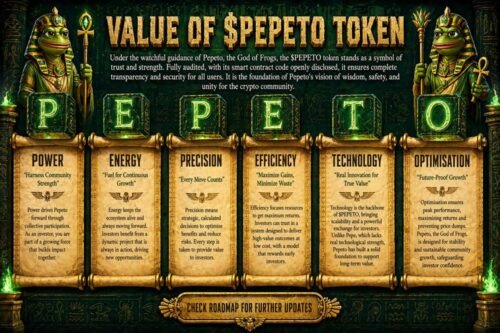
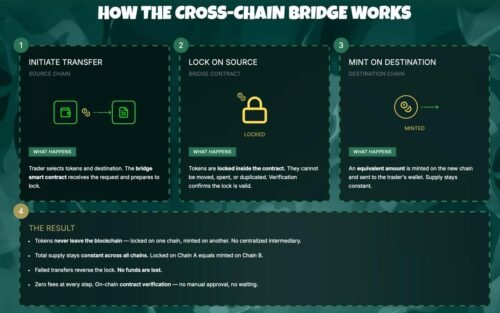
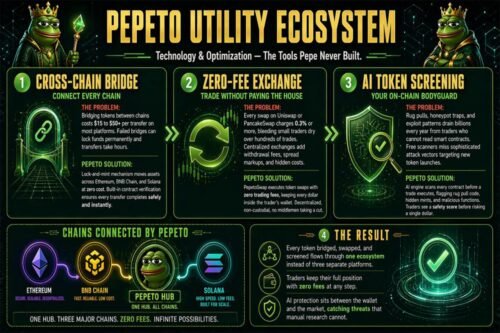
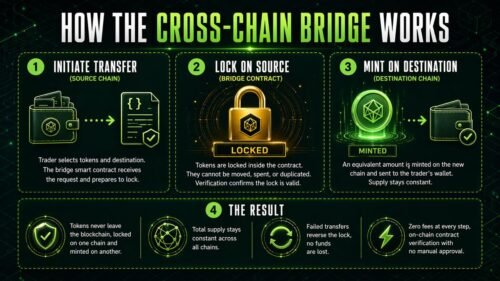
    At its foundation, Pepeto is a complete exchange platform built around PepetoSwap for zero fee trading and a cross chain bridge that connects Ethereum, BNB Chain, and Solana through one network. Everything runs through a single platform that brings together token swapping, chain transfers at zero cost, and a contract risk scorer that checks every project before you trade. The process is direct because the risk scorer scans each token and flags threats like hidden locks or suspicious ownership, so your money stays protected before you commit to any position.

    That protection is what separates Pepeto from tokens that carry risk with zero tools to guard against it, and the cofounder who built the original Pepe coin leads the team while SolidProof has audited every contract and a former Binance expert handles the exchange design. Staking at 174% APY adds passive growth on top of the presale entry while the window stays open. With more than $9.8 Million already raised at $0.0000001864 and a Binance listing approaching, analysts project returns that make even the strongest BTC outlook look small because this entry price disappears permanently the moment the listing arrives and every day waiting costs the position that whales already hold.

    Bitcoin Price Prediction: Will BTC Break Past $82K in 2026?

    Bitcoin trades near $80,000 on May 8 after pulling back from the $82,800 weekly high. CoinMarketCap shows BTC holds a $1.6 trillion market cap, and 47,000 BTC left exchanges in the past 30 days which signals strong accumulation. Support sits at $79,000 and $76,960 while resistance stays at $82,200 where the 200 day moving average stopped the rally. CoinLore models project a range between $78,000 and $118,000 for 2026, and VanEck sees BTC reaching $1 million within five years. Even at $118,000, that gives BTC holders roughly 47% upside from current levels, a solid Bitcoin price prediction outcome for a trillion dollar asset but limited compared to presale entries available at the bottom of the market right now.

    Final Word

    Bitcoin price prediction charts still get clicks, but BTC at $80,000 per coin cannot deliver returns that change someone’s financial future in one move. Pepeto stands apart because at its presale price it offers the kind of entry that early BTC holders had in 2011, backed by live exchange tools and an audited contract instead of hope alone. Smart money already noticed, sending more than $9.8 Million into the presale on the Pepeto official website while the rest of the market argues about charts.

    The same cofounder who took the original Pepe coin to $11 billion with zero products and the same 420 trillion supply is doing it again with a working exchange behind every token. One early Bitcoin buyer turned $500 into millions by entering just days before the crowd showed up, and Pepeto built by that same Pepe cofounder with a Binance listing approaching is how that kind of wealth gets built again right now. Missing this presale could become the most expensive pause of the cycle, because once the listing locks the presale entry, today’s price will never come back.

    Click To Visit Pepeto Website To Enter The Presale

    FAQs

    What does the Bitcoin price prediction suggest for BTC in 2026?

    The BTC forecast ranges from $78,000 to $118,000 for 2026, while Pepeto at presale price offers entry below any listed token with a Binance listing approaching.

    How does the BTC forecast compare to presale opportunities?

    BTC could gain 47% to reach $118,000 from $80,000, and that Bitcoin price prediction is solid, but Pepeto offers returns a large cap simply cannot match because the entry is still open at ground level.

    Is this the right time to enter crypto given the current BTC cycle?

    The market favors early movers, and the Pepeto official website shows more than $9.8 Million in capital from buyers who see the listing as the moment returns become real.

    Disclaimer:
    This article is for informational purposes only and does not constitute financial advice. Cryptocurrency investments carry risk, including total loss of capital. Readers should conduct independent research and consult licensed advisors before making any financial decisions.

    This publication is strictly informational and does not promote or solicit investment in any digital asset

    All market analysis and token data are for informational purposes only and do not constitute financial advice. Readers should conduct independent research and consult licensed advisors before investing.


    Crypto Press Release Distribution by BTCPressWire.com

  • Best Crypto to Buy in 2026: Pepeto Early Holders Target  Returns While XRP and BNB Grind thumbnail

    Best Crypto to Buy in 2026: Pepeto Early Holders Target Returns While XRP and BNB Grind

    Fannie Mae started accepting crypto as mortgage collateral through Coinbase and Better Home in March 2026, and that single move brought digital assets deeper into the traditional money system than anything before it. The best crypto to buy in 2026 search exploded after the announcement because when mainstream finance accepts crypto, the next wave of capital is never far behind. More than $9.8 Million has entered the Pepeto presale from wallets that see the approaching Binance listing as the moment presale positions turn into the kind of wealth that early Pepe holders wish they had secured in larger amounts.

    Top Crypto Pick for Spring 2026 After Fannie Mae Opens Crypto Mortgages

    Fannie Mae began accepting Bitcoin and USDC as mortgage collateral through a partnership with Coinbase and Better Home according to CNBC. Borrowers can now pledge digital assets for down payments without selling and without a taxable event. The product carries no margin calls and uses Coinbase Prime custody, and Bloomberg reported that the structure brings crypto into the same financial rails that handle traditional mortgages. That kind of adoption is what makes the strongest crypto entry conversation land on projects with real utility, not just chart patterns.

    Where the Strongest Crypto Entries Stand: Pepeto, XRP, and BNB

    Pepeto

    While legacy tokens chop between support and resistance, Pepeto keeps adding capital to its presale with no slowdown in sight. The project has already secured more than $9.8 Million from wallets that entered while the wider market hesitated.

    The strength sits in the timing that remains open. Pepeto trades at $0.0000001864 right now, and every buyer locks in the floor price before an approaching Binance listing resets valuation from scratch. The risk scorer scans contracts before any trade completes, catching threats before they reach a wallet. The bridge connects Ethereum, BNB Chain, and Solana at zero cost, so holders move tokens to whichever chain offers the best price without losing a cent to fees. That combination of protection and access is why Pepeto ranks as the strongest crypto pick this spring for anyone who wants real tools behind their entry.

    Staking rewards at 174% APY lock tokens off the market, and those locked positions tighten supply when the exchange goes live. SolidProof reviewed every contract, and a developer from Binance designed the full trading system on the Pepeto presale. The person who created the original Pepe token runs this project, and Pepe scaled to a $7 billion valuation without a single tool ever built. Analysts project that working tools combined with the same supply and the same creator logically push returns past what an empty token reached. The early Pepe holders all say the same thing, that they wish they bought more, and the wallets entering Pepeto right now are making sure they do not carry that same regret when the listing arrives.

    Ripple (XRP)

    XRP trades at $1.41 on May 8, down from the $1.42 open after a steady sell session according to CoinMarketCap. The 200 day moving average sits overhead at $1.42, acting as resistance. Even the bullish case of $2.00 means a 45% gain from here, and analysts at CoinCodex cap the 2026 high near $1.80. XRP still sits 54% below its all time high of $3.40, and the path back to that level would take years of regulatory progress.

    BNB

    BNB trades at $642 on May 8 according to CoinMarketCap. The Maxwell upgrade improved scalability, and the Tether Gold integration expanded the ecosystem. Changelly targets a 2026 average near $700, which means an 8% gain from the current price. BNB already sits in the top five by market cap, and from that size, the kind of returns that change a portfolio take years, not months.

    Conclusion

    The wallets entering Pepeto right now are the ones positioned to collect the biggest returns when the Binance listing arrives. Early Pepe holders turned a few thousand dollars into generational wealth with a token that had zero tools behind it, and every single one of them now wishes they bought more at the lowest price.

    Pepeto has a working exchange, a bridge, a risk scorer, and the same creator behind it, which makes the math clearer than it was for Pepe. Entering the Pepeto official website presale at seven zeros is how the same kind of move gets captured again, and every day the entry stays this cheap brings the listing closer to the moment that separates the wallets who acted from the ones who just read about it.

    Click To Visit Pepeto Website To Enter The Presale

    FAQs

    What is the best crypto to buy in 2026?

    Pepeto leads as the best crypto to buy in 2026 with more than $9.8 Million raised, a Binance listing approaching, and live exchange tools already running.

    How does Fannie Mae accepting crypto affect the market?

    Mainstream mortgage acceptance brings new capital into digital assets, and Pepeto benefits from that wave with a presale still open on the Pepeto official website before listing.

    Is Pepeto a better buy than XRP or BNB right now?

    XRP offers 45% upside and BNB targets 8%, but the Pepeto presale at seven zeros with a Binance listing ahead puts early wallets in a position that no large cap entry can compete with.

    Disclaimer:
    This article is for informational purposes only and does not constitute financial advice. Cryptocurrency investments carry risk, including total loss of capital. Readers should conduct independent research and consult licensed advisors before making any financial decisions.

    This publication is strictly informational and does not promote or solicit investment in any digital asset

    All market analysis and token data are for informational purposes only and do not constitute financial advice. Readers should conduct independent research and consult licensed advisors before investing.

    Crypto Press Release Distribution by BTCPressWire.com

  • Best Altcoin to Buy: SOL Holds $92 and ADA Fades While Pepeto Nears $9.8M With Listing Ahead thumbnail

    Best Altcoin to Buy: SOL Holds $92 and ADA Fades While Pepeto Nears $9.8M With Listing Ahead

    The CLARITY Act just reached its final stage in the Senate, and the best altcoin to buy debate is heating up as regulation gets closer to giving the entire market a green light. SOL trades at $92 after losing 70% from its 2025 high, and ADA sits at $0.27 with no sign of a breakout. Smart money has already stacked more than $9.8 Million into the Pepeto presale, building positions ahead of a Binance listing because the wallets that entered early in every cycle collected the biggest returns.

    Best Altcoin to Buy as CLARITY Act Moves Toward Senate Vote

    The Senate Banking Committee began preparing a markup of the CLARITY Act this week after Senators Tillis and Alsobrooks reached a deal on stablecoin yield rules according to CoinDesk. Coinbase CEO Brian Armstrong posted “mark it up” within hours, and The Crypto Times reported that draft text was shared with industry groups ahead of a possible vote. A full framework for digital assets could land before July, and that regulatory push is exactly what sends capital rushing into the best altcoin to buy at every stage.

    Which Altcoins Lead the Pack: Pepeto, SOL, and ADA

    Pepeto

    While the rest of the market corrects across the board, Pepeto keeps attracting wallets into its presale. The project has already pulled more than $9.8 Million from positions that opened before most people knew it existed.

    The real advantage is the open window. Pepeto sits at $0.0000001864, which places every buyer at the earliest stage before an approaching Binance listing reprices the token completely. The exchange handles trades between tokens without charging fees, so more of every dollar stays inside the position. It also links three chains so tokens cross between Ethereum, BNB Chain, and Solana without cost, not a promise on a website. That kind of live product behind a presale gives an advantage that most early tokens cannot claim, and the strongest altcoin pick is the one with tools already running.

    Token lockups build more pressure from the supply side. Stakers are earning 174% APY, and those locked tokens stay off exchanges when trading begins. With SolidProof verifying the full codebase on the Pepeto presale and a team member who worked inside Binance building the architecture, the circulating supply could be tight the moment the first trade clears.

    The person behind the original Pepe token’s creation leads this project, and that first coin reached $7 billion without a single product to back it. Analysts project that a working exchange logically passes what zero products achieved. The top altcoin entry right now is the one where the entry is still open and the listing is the event that turns positions into real wealth.

    Solana (SOL)

    SOL trades at $92 on May 8, down 70% from its 2025 peak above $294 according to CoinMarketCap. Changelly targets an average of $97 for May and a peak near $134 by mid 2026. The Firedancer upgrade is in testing, and spot SOL ETFs continue to draw weekly inflows. But from $92, even reaching $150 means a 70% gain over months, which is a fraction of what presale entries can return before a listing.

    Cardano (ADA)

    ADA trades at $0.27 on May 8, sitting 90% below its all time high of $3.10 according to CoinMarketCap. The chain still lacks a working DEX that competes at scale, and Changelly projects a 2026 average around $0.40. Even in the best case, ADA reaching $0.57 means an 80% gain from here, while the leading altcoin pick in the presale space offers a completely different scale of returns before a confirmed listing.

    Conclusion

    While the CLARITY Act clears the path for the wider market, Pepeto is already positioned where no large cap can compete. Last cycle turned early wallets into millionaires, and the ones who waited spent the next three years wishing they moved when the entry was still cheap. This is that same moment with a confirmed Binance listing approaching, and no other project offers the same second chance to be early.

    More than $9.8 Million raised during a correction is not hype. That is the same pattern that played out before every major listing run. Entering the Pepeto official website presale now means joining the wallets already inside, and for anyone still searching for the best altcoin to buy, missing this window could be the regret that defines the entire cycle.

    Click To Visit Pepeto Website To Enter The Presale

    FAQs

    What is the best altcoin to buy in May 2026?

    Pepeto stands out as the best altcoin to buy with a presale entry at seven zeros, a Binance listing approaching, and a working exchange already live.

    How does the CLARITY Act affect altcoin prices?

    Clear regulation sends capital into crypto faster, and Pepeto benefits from that wave with more than $9.8 Million already raised on the Pepeto official website.

    Should I buy SOL or Pepeto right now?

    SOL offers steady gains from $92, but Pepeto at presale price with a confirmed listing gives early wallets return potential that large caps cannot match this cycle.

    Disclaimer:
    This article is for informational purposes only and does not constitute financial advice. Cryptocurrency investments carry risk, including total loss of capital. Readers should conduct independent research and consult licensed advisors before making any financial decisions.

    This publication is strictly informational and does not promote or solicit investment in any digital asset

    All market analysis and token data are for informational purposes only and do not constitute financial advice. Readers should conduct independent research and consult licensed advisors before investing.

    Crypto Press Release Distribution by BTCPressWire.com

  • TAO Price Prediction: Bittensor Bridges to Solana as Pepeto Presale Crosses $9.8M Before Listing thumbnail

    TAO Price Prediction: Bittensor Bridges to Solana as Pepeto Presale Crosses $9.8M Before Listing

    The TAO price prediction just shifted after Bittensor doubled its network capacity and opened a bridge to Solana in the same week. Capital rotated into AI tokens while BTC tested $80,000 on mixed jobs data. But the bigger signal sits below the headlines, where more than $9.8 Million has poured into the Pepeto presale from wallets betting that the returns from a ground floor entry beat anything a large cap can deliver before a confirmed Binance listing changes the math permanently.

    TAO Price Prediction Moves Higher After Bittensor Doubles Subnet Capacity

    Bittensor launched its Robin expansion on May 3, doubling subnet slots from 128 to 256 and opening 128 new positions for AI builders according to CoinMarketCap. Two days later, Wormhole bridged the native TAO token to Solana through its Sunrise platform according to The Block. TAO climbed 14% in seven days to $310, and the network pulled $43 million in AI usage fees during Q1 2026. That expansion pushed TAO price prediction targets higher, but the real question is where the biggest returns come from this cycle.

    Where the TAO Forecast and Pepeto Presale Point This Cycle

    Pepeto

    While large caps grind through resistance levels, Pepeto keeps pulling capital into its presale window. The project has already drawn more than $9.8 Million from wallets that entered before the crowd noticed.

    The real draw is the entry window that still sits open. Pepeto trades at $0.0000001864 right now, which means every position sits at the ground floor before an approaching Binance listing reprices everything. Buyers get access to a live trading platform with zero fee swaps and a cross chain bridge that moves tokens across Ethereum, BNB Chain, and Solana at no cost, not a road map drawing. That kind of working product behind a presale creates an edge that most early entries cannot match, because the tools already run and protect capital before the listing even arrives.

    Supply pressure adds another layer to the case. Holders are locking tokens into 174% APY staking, and those locked positions stay off the market when trading opens. With SolidProof clearing every contract on the Pepeto presale and a former Binance expert on the dev team, the available supply could be very tight when the first candle prints. The risk scorer checks every contract before a trade goes through, which means the platform guards money from bad actors on day one.

    The cofounder built the original Pepe coin that hit a $7 billion market cap with zero products behind it, and analysts project that more tools logically reach beyond what zero tools reached. The TAO price prediction shows solid gains ahead for Bittensor, but Pepeto at seven zeros with a confirmed listing is how the biggest returns in this cycle get built before the entry closes for good.

    Bittensor (TAO) Price Prediction

    TAO trades near $310 on May 8, and the TAO price prediction for December ranges from $350 to $474 according to Changelly. CoinCodex targets $245 for the short term 50 day SMA, while analyst Michaël van de Poppe pointed to a breakout toward $350 after the subnet expansion.

    TAO sits 59% below its all time high of $757. The Bittensor network pulled $43 million in Q1 AI usage fees, and the Wormhole bridge to Solana opened cross chain access for the first time. If Bitcoin holds above $80,000 and risk appetite returns, the TAO price prediction range of $350 to $474 by year end becomes the base case. From $310, that ceiling represents a 53% gain, which is solid for a large cap but limited next to what presale entries deliver before a listing.

    Conclusion

    While the TAO price prediction climbs after Bittensor’s subnet expansion and Solana bridge, Pepeto is already executing from a position no large cap can match. This is about entering a project built by the same Pepe cofounder whose first coin made holders wish they bought more, before the Binance listing turns presale wallets into the stories other people read about later.

    More than $9.8 Million flowing in during fear proves conviction. Pepe reached $7 billion with zero products, and Pepeto has a working exchange and bridge behind it, so the math points higher. Entering the Pepeto official website presale now is how the biggest returns of this cycle get built, and missing it could be the decision that costs the most.

    Click To Visit Pepeto Website To Enter The Presale

    FAQs

    What does the TAO price prediction suggest for 2026?

    Analysts project TAO reaching $350 to $474 by December, but those gains stay limited next to presale entries at the Pepeto official website before a Binance listing.

    How does the Bittensor expansion affect TAO price prediction targets?

    The subnet expansion and Solana bridge lifted TAO price prediction targets, and Pepeto benefits from the same bullish cycle with a ground floor entry before listing.

    Is Pepeto a stronger entry than TAO this cycle?

    TAO offers 53% upside from $310, but Pepeto at seven zeros with a Binance listing approaching gives early wallets the return potential that large caps cannot deliver.

    Disclaimer:
    This article is for informational purposes only and does not constitute financial advice. Cryptocurrency investments carry risk, including total loss of capital. Readers should conduct independent research and consult licensed advisors before making any financial decisions.

    This publication is strictly informational and does not promote or solicit investment in any digital asset

    All market analysis and token data are for informational purposes only and do not constitute financial advice. Readers should conduct independent research and consult licensed advisors before investing.
    Crypto Press Release Distribution by BTCPressWire.com

  • Best Crypto to Buy Now:  Math Behind Pepeto as ETH Holds $2,312 and XRP Sits at $1.42 thumbnail

    Best Crypto to Buy Now: Math Behind Pepeto as ETH Holds $2,312 and XRP Sits at $1.42

    Fannie Mae just started accepting crypto as collateral for mortgages after FHFA ordered it to count digital assets like stocks and bonds. That single policy change tells every holder the institutions are building rails to stay. The question is no longer whether crypto grows but which entry captures the most of it. ETH trades at $2,312 and XRP holds at $1.42, but the best crypto to buy now may already sit inside a presale that raised more than $9.8 million during fear.

    Best Crypto to Buy Now as Fannie Mae Accepts Crypto for Mortgage Collateral

    FHFA Director William Pulte ordered Fannie Mae and Freddie Mac to count crypto holdings as qualifying assets for mortgage applications, according to Yahoo Finance. Stablecoin card spending is also growing 100% year over year, as CoinDesk reported this week. Both signals confirm that infrastructure around crypto is expanding, which means the smartest crypto entry right now is the one positioned to benefit most from the capital wave that follows.

    ETH, XRP, Pepeto, and Where the Biggest Returns Actually Form

    Pepeto

    The market has hundreds of tokens but few ways to trade them without losing money on the way in. Fees pile up on swaps, moving tokens between chains costs more than expected, and contracts that passed no review sit next to verified ones with nothing to tell them apart.

    Pepeto runs a complete exchange built to solve those gaps. PepetoSwap lets buyers trade without paying a fee on any pair, and the risk scorer grades every contract before the trade completes so capital never touches an unverified token.

    The swap strips out costs that shrink positions on each trade, keeping more of every dollar working. The risk scorer assigns a safety grade before the buyer commits, turning guesswork into a clear signal.

    Pepeto closes a gap that costs holders real money: trading without protection and swapping between chains without a safety check. Pepe coin’s original creator built this project, a Binance veteran directs the exchange, and SolidProof signed off on every contract.

    The entry sits at $0.0000001864 per token, and more than $9.8 million arrived during a period when the Fear and Greed Index sat deep in fear territory. Staking at 174% APY grows those positions while the Binance listing gets closer.

    For anyone asking what is the best crypto to buy now, Pepeto answers with math that ETH and XRP cannot touch from their current bases. The same cofounder built Pepe to $11 billion with zero products and 420 trillion tokens, and the distance from presale to that same market cap is over 150x while a fully operational exchange already processes trades.

    Ethereum (ETH)

    ETH trades at $2,312 as of May 8, down 52% from its $4,891 all time high, according to CoinMarketCap. The network still leads in DeFi and tokenization, and the Fannie Mae news adds another layer of credibility. But even a strong recovery to $4,000 from here delivers roughly 75% over what could take a year, and that ceiling sits well below the multiples a presale entry targets.

    XRP

    XRP sits at $1.42, down 53% from its $3.84 peak, according to CoinMarketCap. The cross border payments story remains intact, but the token has traded sideways for months and a return to $3.00 would deliver roughly 110% at most, which is strong for a large cap but far below the 150x that presale math projects from a fraction of a cent.

    Conclusion

    ETH stays the backbone of DeFi and XRP keeps its payments story, but the best crypto to buy now is the entry where math separates by orders of magnitude. Large caps target 2x over months while the presale targets 100x from one listing, and the pace of capital flowing in during fear is the clearest confirmation. More than $9.8 million entered Pepeto while the market bled, and that conviction tells the same story as every winning presale before listing. The Pepeto official website shows the entry still at presale price, and joining what capital already confirmed captures these returns before the listing removes the window permanently.

    Click To Visit Pepeto Website To Enter The Presale

    FAQ

    What makes Pepeto the best crypto to buy now over ETH and XRP?

    ETH targets 75% and XRP targets 110% over months, while the Pepeto presale targets over 150x from one Binance listing event.

    How does the Fannie Mae news affect the top crypto entry right now?

    Accepting crypto as mortgage collateral signals long term institutional commitment, which benefits entries positioned before the capital wave arrives.

    Is it too late to enter the Pepeto presale?

    The Pepeto official website shows the presale still open at the lowest entry before the Binance listing, and over $9.8 million already entered from wallets that see listing day as the trigger.

    Disclaimer:
    This article is for informational purposes only and does not constitute financial advice. Cryptocurrency investments carry risk, including total loss of capital. Readers should conduct independent research and consult licensed advisors before making any financial decisions.

    This publication is strictly informational and does not promote or solicit investment in any digital asset

    All market analysis and token data are for informational purposes only and do not constitute financial advice. Readers should conduct independent research and consult licensed advisors before investing.

    Crypto Press Release Distribution by BTCPressWire.com

  • The Best Crypto Presale to Buy as Tom Lee Calls the Bear Market Over and Pepeto Passes $9.8 million thumbnail

    The Best Crypto Presale to Buy as Tom Lee Calls the Bear Market Over and Pepeto Passes $9.8 million

    Tom Lee told Consensus 2026 that the crypto winter is finished, and BTC closing May above $76,000 confirms a new bull cycle. Every cycle rewarded one group most: the wallets that found the best crypto presale to buy before the crowd arrived. Bitcoin sits at $80,200 and the market is shifting from fear to positioning, which means presale windows close faster than most realize. Pepeto has pulled in more than $9.8 million during that fear, built by the cofounder who turned the original Pepe coin into $11 billion with zero products.

    Best Crypto Presale to Buy as Fundstrat Declares a New Cycle Starting

    Tom Lee, Fundstrat cofounder, said at Consensus 2026 on May 7 that the bear market is likely over and a fresh cycle driven by tokenization is forming, according to CoinDesk. BTC has posted two straight monthly gains near $80,200, and trader John Bollinger confirmed his trend models turned positive, as CNBC reported. When the cycle turns, the biggest gains go to entries already locked before retail floods back in.

    Presale Entries, Pepeto, Bitcoin Hyper, and Remittix Compared

    Pepeto

    The market is full of tokens but short on ways to trade them safely. Prices move across chains at different speeds, fees stack up on every swap, and contracts that look clean on the surface drain wallets the moment money goes in.

    Pepeto operates a trading hub designed to fix all three of those problems at once. PepetoSwap runs every trade at zero fees, and the bridge sends tokens across Ethereum, BNB Chain, and Solana with no transfer cost attached.

    The swap removes trading costs so smaller positions survive every move. The bridge connects three major chains in seconds so capital reaches the best price without losing value. Both tools sit inside one trading hub.

    Pepeto targets a problem that drains real capital from real wallets: paying fees and trusting chains that do not talk to each other. The creator of the original Pepe coin runs this project, SolidProof audited every line of code, and a Binance expert shapes the exchange from the inside.

    The presale sits at $0.0000001864, and more than $9.8 million entered while fear drove most of the market sideways. Staking at 174% APY rewards holders while the Binance listing approaches.

    For anyone searching for the best crypto presale to buy right now, Pepeto answers with a track record no other entry can match. The cofounder already proved the math works once by building Pepe to $11 billion with zero products and the same 420 trillion supply, and reaching that level again from today’s presale delivers a 150x return backed by a complete exchange Pepe never had.

    Bitcoin Hyper

    Bitcoin Hyper builds a Layer 2 on top of Bitcoin for DeFi and staking, but the presale has no confirmed listing date and no live product, according to CoinMarketCap. BTC Layer 2 projects struggled to gain traction in past cycles, and the presale carries that risk with none of the proof.

    Remittix

    Remittix targets cross border payments by converting crypto to fiat without banks in the middle, which sounds strong on paper, according to CoinMarketCap. But the project competes with SWIFT alternatives that already have billions in volume, and no public beta or transaction data exists to prove demand. Presale buyers take on the full risk of an unproven product in a market that already has cheaper options.

    The Verdict

    BTC remains the anchor for the market, but Tom Lee declaring a new cycle means capital will rotate into entries that formed during fear. Bitcoin Hyper adds Layer 2 to BTC and Remittix targets cheaper payments, but the best crypto presale to buy this cycle stands apart in proven math. The cofounder took Pepe from presale to $11 billion with zero products and the same 420 trillion supply, and doing it again with a working exchange is a pattern repeating in the holder’s favor. The Pepeto official website shows the entry still open, and betting on a track record that already delivered is not a guess but the same move original Pepe holders wish they made bigger before listing turned entries into wealth.

    Click To Visit Pepeto Website To Enter The Presale

    FAQ

    Why does Tom Lee’s call matter for the best crypto presale to buy?

    A confirmed bull cycle means presale entries locked during fear get repriced first, and Pepeto collected over $9.8 million in that exact window.

    Why is Pepeto the best crypto presale to buy over Bitcoin Hyper and Remittix?

    Pepeto has a working exchange, a Binance listing approaching, $9.8 million raised, and a cofounder who already built Pepe to $11 billion.

    How do presale buyers benefit when the cycle turns?

    Presales price tokens before listings, and the Pepeto official website shows the entry still sits at the lowest level before the Binance listing permanently removes it.

    Disclaimer:
    This article is for informational purposes only and does not constitute financial advice. Cryptocurrency investments carry risk, including total loss of capital. Readers should conduct independent research and consult licensed advisors before making any financial decisions.

    This publication is strictly informational and does not promote or solicit investment in any digital asset

    All market analysis and token data are for informational purposes only and do not constitute financial advice. Readers should conduct independent research and consult licensed advisors before investing.
    Crypto Press Release Distribution by BTCPressWire.com