Category: BigNewsNetwork

  • Eddie Chong’s Hong Kong Moment: Stablecoins as the Axis, Turning the Value Flywheel of RWA and AI thumbnail

    Eddie Chong’s Hong Kong Moment: Stablecoins as the Axis, Turning the Value Flywheel of RWA and AI

    April in Hong Kong was undoubtedly the absolute focal point of the global Web3 compliance track. Dense, layered compliance policies landed one after another — on April 10, the Hong Kong Monetary Authority (HKMA) officially granted the first batch of stablecoin issuer licenses, with Standard Chartered-backed “Anchor” and HSBC standing out from 36 applicants. On April 19, the Hong Kong Securities and Futures Commission (SFC) made another major move, explicitly allowing tokenized authorized investment products to be traded on licensed virtual asset platforms in the secondary market. Throughout April, Hong Kong continuously released compliance signals, and this series of intensive policy implementations not only accelerated the formation of a Web3 compliance ecosystem but also brought the stablecoin and RWA ecosystem that Eddie Chong has been cultivating for years to its optimal inflection point.

    For Eddie Chong, Chairman of the SFI (Stable Coin Infrastructure) Ecosystem Foundation, this is the “Hong Kong moment” he has long been waiting for — the successive implementation of core policies such as stablecoin licensing and RWA liquidity access is not only a milestone in global Web3 regulation but also the environment he has been anticipating after years of deep cultivation in the stablecoin and RWA tracks and preparation of the SFI ecosystem. He has been counter-cyclically laying out his strategy for years, working persistently, with only one goal in mind: “to use stablecoins as the axis and turn the value flywheel of RWA and AI.”

    I. From 4,000 BTC to $5 Billion RWA: A Long-termist Who Doesn’t Chase Hype, Only Fills Gaps

    Eddie Chong, Chairman of the SFI Ecosystem Foundation, founder and president of X Infinity, and executive chairman of HK Web3 Club. Malaysian by nationality, based in Singapore, his business footprint covers Southeast Asia, East Asia, Europe, and the Americas. He is associated with over 100 Web3 and traditional companies, and his entrepreneur-centered community has an influence covering more than 20 million people.

    Behind these numbers is a clearer thread of action: not following the crowd, precisely filling industry gaps, with his core focus always on deep cultivation in stablecoin, RWA, and AI-related tracks.

    After encountering Bitcoin in 2015, he quickly realized that its processing capacity could not support large-scale payments, so he founded X Infinity to develop a proprietary public blockchain, validating his judgment on crypto payment infrastructure. During the bear market of 2019–2020, he stepped away from short-term speculation and counter-cyclically positioned himself in the RWA track, accurately predicting that blockchain must carry real-world assets to develop sustainably. Today, he oversees a $5 billion RWA portfolio with over 400 cumulative investments.

    In 2026, he co-founded SFI, focusing on stablecoin infrastructure and directly addressing the core pain point of RWA adoption: “The core pain point of RWA adoption has never been technology, but users and liquidity — without a compliant user entry point and real liquidity support, even the highest-quality assets are just empty talk once tokenized.” This judgment laid the foundation for the subsequent coordinated development of stablecoins, RWA, and AI.

    II. What Is SFI? More Than Stablecoins, a Coordinated Ecosystem Flywheel

    SFI’s positioning is clear — an ecosystem platform focused on stablecoin infrastructure. But it is far from a single product; it is a foundational network that enables stablecoins, RWA, and AI to operate in synergy. Its core logic is to integrate payment gateways, consumption scenarios, trading tools, and other key components through investment, incubation, and partnerships, building a closed-loop system covering the entire lifecycle of “assets — payment — consumption — investment — value appreciation.”

    Currently, SFI uses Solulu Club as its liquidity core, having already accumulated over 200,000 active users and tens of millions in liquidity depth. Within the ecosystem, five core modules are connected to form a complete value close-loop:

    • Solulu Pay: Compliant crypto payment card + fiat on/off-ramp, solving the core pain points of “difficult to enter fiat, troublesome to withdraw fiat,” bridging real users with the crypto ecosystem.
    • Caviar: Web3 luxury e-commerce platform, directly supporting stablecoin payments, providing high-net-worth users with a spending outlet for stablecoins while also giving RWA assets a real-world application scenario.
    • COPX DAO: Focused on AI quantitative trading and liquidity management, using technology to safeguard asset appreciation.
    • RWA Incubator: One-stop institutional-grade digital asset services, supporting compliant RWA asset incubation and tokenization.
    • RWA Exchange: Opening compliant secondary market circulation channels, allowing RWA assets to avoid the “once tokenized, locked up” fate, with exit channels and price discovery mechanisms.

    Eddie Chong calls SFI, COPX DAO, and Caviar the “Iron Triangle”: SFI builds the infrastructure base, COPX DAO handles value appreciation, and Caviar creates the consumption outlet. The three gears interlock to turn the value flywheel of RWA and AI — and stablecoins are the axis running through it all.

    III. Debut Amid Policy Dividends: Hong Kong’s Window Opens, SFI Seizes the Opportunity with Strength

    The reason RWA concepts have struggled to scale for years is the lack of compliant user entry points and real liquidity. This April, Hong Kong’s intensive release of Web3 compliance policies precisely filled these two gaps, providing an excellent environment for SFI to accelerate. The stablecoin licensing system clarified the rules for issuing and circulating compliant stablecoins, offering a trusted pricing and settlement tool for RWA assets. The opening of the secondary market for tokenized products, meanwhile, opened liquidity channels for RWA assets, making it a reality that assets can be traded on-chain and holders can exit their positions — positioning Hong Kong as a core hub for the global Web3 compliance track.

    Seizing this policy dividend, Eddie Chong led SFI, COPX DAO, and Caviar to make a collective appearance at the Hong Kong Web3 Festival in April. As co-organizers, each played its distinct role, showcasing the full-chain capabilities of the SFI ecosystem across multiple core events, becoming one of the focal points of the industry gathering.

    Unlike many institutions that indulge in grand narratives, Eddie Chong addressed the real pain points of the RWA industry directly during a roundtable forum, stating bluntly that “many RWA projects, even after successfully tokenizing assets, stagnate due to a lack of users and eventually become ‘hollow assets’.” He then highlighted SFI’s core advantage: having over 200,000 active users through Solulu Club — precisely the scarcest resource during the cold-start phase of RWA assets.

    He also emphasized the importance of consumption scenarios for RWA adoption: “High-net-worth users have real demand for stablecoin spending, and RWA assets precisely need such scenarios to complete the value loop of ‘appreciation → consumption’ and truly bring assets to life.” This pragmatic sharing not only demonstrated SFI’s deep insight into the industry but also solidified the positioning of “stablecoin financial infrastructure.”

    The significance of this debut far exceeded brand exposure: SFI’s visibility in core RWA circles was significantly raised, and through the Hong Kong Web3 Festival platform, the company established deep connections with industrial capital, technology providers, and high-net-worth users, laying a solid foundation for future collaboration to advance stablecoin and RWA development by leveraging Hong Kong’s policy dividends. Meanwhile, SFI has already laid out its global compliance strategy ahead of time, having obtained U.S. MSB and Canadian MSB licenses, with UAE VARA and Hong Kong licenses steadily progressing. This compliance matrix not only supports its own operations but also becomes reusable infrastructure for other RWA projects in the industry, fulfilling its philosophy of “being the industry’s base, helping more projects avoid compliance detours.”

    IV. Vision Realized: Stablecoins as the Axis, RWA and AI in a Two-Way Embrace

    In Eddie Chong’s view, the adoption of RWA is just the first turn of SFI’s value flywheel. Next, the core narrative of the industry will be the deep integration of RWA and AI.

    The data speaks for itself: as of early 2026, total on-chain RWA (excluding stablecoins) locked value exceeds $25 billion, and institutions predict that by 2030 this scale will reach tens of trillions of dollars. At the same time, AI agents have evolved from simple auxiliary tools into independent on-chain participants. Future on-chain interactions will move away from the singular human-to-human model toward high-frequency collaboration involving human-to-human, human-to-agent, and agent-to-agent interactions.

    “RWA has massive assets waiting to be activated, and AI has massive demand waiting to be matched. The two are a natural two-way embrace.” Eddie Chong’s judgment pinpoints the industry’s future core growth driver. SFI’s ecosystem layout has long been prepared for this deep integration — COPX DAO’s AI quantitative strategies can automatically execute hedging, arbitrage, and other operations, allowing RWA holdings to generate steady returns, solving the pain point of “hard-to-appreciate holdings.” At the same time, AI models output real-time dynamic pricing references based on on-chain data, market sentiment, and asset fundamentals, once and for all addressing the long-standing industry challenge of vague pricing and inaccurate valuation.

    Eddie Chong once succinctly summarized his strategic logic: “Compliance is the base, stablecoins are the axis, AI is the engine, and RWA is the fuel.” These four core elements interlock and work together to truly turn Web3’s value flywheel, moving blockchain technology out of the speculative trap and into real-world asset circulation and value creation.

    From miner to public blockchain founder, from RWA investor to stablecoin infrastructure builder, every choice Eddie Chong has made has not been about chasing hype, but about identifying the weakest links in the industry and filling them himself. This time, he is using stablecoins as the axis to try to turn the entire value flywheel of RWA and AI. And SFI is doing exactly that — binding these four elements together to drive the industry’s transformation from concept to reality.

    Follow SFI and ecosystem partners:

    Related links:

    https://hackernoon.com/preview/69dd93f363a00fd65ee51d8f
    https://www.me.news/contents/273131
    https://www.techub.news/articleDetail/9ecd8c5e-616d-41bf-9da2-c0a99e918ddf

  • How CTV Teams Are Rebuilding Their Creative Workflows Around Video Automation in 2026


    About eighteen months ago, I spoke with the head of creative production at a mid-sized DTC brand who described her team’s situation in a way that stuck with me. They had committed to a serious CTV program, meaningful budget, high ambitions, and genuine executive buy-in. The media strategy was solid. The targeting was thoughtful. The problem was that their creative production process was built for the old model: brief the agency, wait three weeks, receive finished spots, run them until performance drops, brief the agency again.

    That cycle worked fine when you were running one or two creative versions across a national campaign. It completely fell apart when CTV performance data started telling them they needed eight or ten variations, different messages for different audiences. segments, different lengths for different placements, regional adaptations, and A/B tests running simultaneously. The agency model couldn’t keep up with what the media strategy actually required. Something had to change.

    What they landed on, and what a growing number of CTV teams are landing on, is rebuilding creative production around automation tools that can generate and iterate at the speed the channel demands. Tools like Starti’s AI Studio are built specifically for this, automating CTV ad creation, generating video creatives at scale, and optimizing performance across global streaming audiences without the production bottlenecks that kill campaign agility. But the technology is only part of the story. The bigger shift is in how teams are thinking about creative work itself.

    The Old Production Model and Why It Breaks Down in CTV

    Traditional TV ad production is a waterfall process. You start with a brief and move through concept development, scripting, casting, shooting, editing, finishing, and delivery. Each stage gates the next. The timeline from brief to finished spot is measured in weeks at minimum, often months for anything ambitious. And once the spot is finished, it’s fixed; changing anything meaningful requires going back through significant portions of the process.

    This model made sense when you were producing a handful of spots per year for broadcast television. If the investment per spot was large, the production quality was high, and the distribution context was relatively uniform, your ad would run in a fixed set of broadcast placements, and the same version would reach everyone.

    CTV breaks every one of those assumptions. The data-driven nature of programmatic streaming means you quickly discover that different audience segments respond to different messages. The targeting capabilities mean you can serve different creatives to different households watching the same show. The performance feedback loop means you know within days which variations are working and which aren’t. All of that is only useful if you can actually produce and iterate on creative ideas fast enough to act on the data. A production process measured in months simply can’t keep pace with optimization cycles measured in days.

    What Video Automation Actually Changes About the Workflow

    The shift that video automation enables isn’t just faster production; it’s a fundamentally different relationship between creative and data. Instead of producing creative based on assumptions about what will work, testing it, and then waiting weeks to produce something different based on what you learned, automated workflows let you build variation into the creative from day one and iterate continuously based on live performance data.

    In practice this looks something like this. A creative team produces a master template, the core visual and narrative structure of the ad, with defined variable slots for elements that can be swapped. Headline copy. Product imagery. Promotional offer. Call to action. Background visual. Voiceover tone. The template itself is produced with the same care and quality as a traditional spot. But instead of being a finished piece, it’s a production framework.

    The automation system then generates variations by filling those variable slots from an asset library, combining them according to audience targeting rules and testing logic. Twenty variations can be generated from one template in the time it would previously have taken to produce one finished spot. The variations go live simultaneously. Performance data comes back. The system, or the creative team, depending on how much human oversight you want in the loop, identifies what’s working, and generates the next round of variations that build on those insights.

    That feedback loop, running continuously over the life of a campaign, is genuinely different from anything traditional production workflows could support. It’s not just efficiency. It’s a different mode of creative learning.

    Building the Asset Library, The Work Nobody Talks About

    Here’s the part of video automation that vendors don’t talk about enough in sales presentations. The quality of what the automation system can produce is entirely dependent on the quality and variety of the assets you feed into it. A template with a shallow asset library produces limited, repetitive variation. A template with a deep, well-organized asset library produces genuinely meaningful creative differentiation.

    Building that library is real work. For a DTC brand running a national CTV campaign, a proper asset library might include multiple headline options testing different value propositions, five or six product imagery treatments at different angles and contexts, regional background visuals for geographic targeting, multiple voiceover recordings at different tones and pacing, and several CTA variations testing different levels of urgency. Producing all of those elements takes time and creative investment; it’s not something you can skip and still expect the automation to produce great results.

    The good news is that this investment is made once and then leveraged continuously. A well-built asset library feeds multiple campaigns over time, not just one. Each campaign generates performance data that informs which new assets are worth producing for the next round. Over time the library gets richer, and the automation gets smarter about how to use it.

    Creative Testing in CTV, A Different Mental Model

    Most marketers are familiar with A/B testing from email, landing pages, or paid social. The mental model usually tests one variable at a time, reaches statistical significance, declares a winner, and moves on. That model doesn’t quite work in CTV, and trying to apply it directly leads to frustration.

    CTV campaigns run across too many audience segments, content environments, and device types for single-variable testing to produce clean results at a reasonable pace. The interaction effects between targeting and creativity are too complex. And the impression volumes, while significant at scale, aren’t always high enough within specific audience segments to reach the statistical significance thresholds that traditional A/B testing requires.

    The approach that tends to work better is multivariate testing with a focus on directional insights rather than definitive conclusions. Run multiple creative variations simultaneously across your full campaign. Look for consistent patterns: which message angles perform well across multiple audience segments and which visual treatments drive better completion rates across different content environments, rather than trying to find one universal winner. Use those patterns to inform the next generation of creatives rather than waiting for perfect statistical certainty.

    This requires a shift in how you think about creative decisions. You’re building probabilistic knowledge about what works, not seeking definitive answers. That’s actually closer to how good creative directors think anyway; they’re pattern-matching across lots of signals, not waiting for a p-value to make a decision.

    The Role of Human Creative Judgment in an Automated System

    I want to address something directly because I think it’s the question most creative professionals have when they first encounter these tools. Does video automation reduce the need for human creative judgment? The short answer is no, but it changes what that judgment gets applied to.

    The things that automation does well, generating variations, assembling assets, managing delivery, and processing performance data, are not the things that require genuine creative thinking. Creative direction, conceptual development, brand voice definition, quality standards, and the intuitive judgment about whether something feels right, those remain entirely human. What changes is that the creative team spends less time on execution and more time on the thinking that actually differentiates good creative from mediocre creative.

    Some creative professionals find this liberating. Others find it disorienting because execution has always been part of how they expressed their craft. That’s a real adjustment, and it’s worth acknowledging. Teams that work through that transition and find their footing in the new model, where creative intelligence is applied at a higher level and automation handles the volume, tend to produce better work than both teams still stuck in manual production workflows and teams that have handed everything to the automation without maintaining strong creative oversight.

    Practical Steps for Teams Making This Transition

    A few things worth doing if your team is moving toward automated CTV creative production. Start by auditing your existing creative assets honestly. What do you have that’s actually modular and reusable? What would need to be rebuilt from scratch as template-compatible elements? That audit gives you a realistic picture of how much production investment the transition requires.

    Then run a contained pilot before you try to automate your entire creative program. Pick one campaign, build a proper template and asset library for it, run the automation, and evaluate both the process and the output quality before you commit to the full workflow change. The pilot will surface workflow issues, technology gaps, and creative process questions that are much better to solve at a small scale than after you’ve already made a broad organizational commitment.

    Set clear quality standards before you start generating variations. What does a variation need to clear in terms of brand consistency, production quality, and message clarity before it goes live? Having those standards defined upfront prevents the automated system from producing a volume of mediocre content that technically works but doesn’t actually represent your brand well.

    What the Best CTV Creative Teams Look Like Now

    The teams doing CTV creative production best in 2026 are smaller than you might expect, faster than you might believe is possible, and more data-fluent than most creative teams were five years ago. They’ve stopped thinking of creative and media as separate functions that hand off to each other and started treating them as one integrated process where data informs creative direction and creative variation enables data learning.

    They’re also genuinely comfortable with imperfection in ways that traditional creative teams weren’t. Not every variation they generate is brilliant. Some are clearly better than others, and the data makes that visible quickly. The goal isn’t to produce perfect creativity; it’s to produce enough variation that the best-performing versions can be identified and built on continuously. That’s a different relationship with the work, and it’s one that produces better campaign results over time even if no individual piece of creative would win an award. For more on how viewers engage with streaming content on their connected TV devices, check out streaming device tips and tricks, useful context for understanding the environment your creative is actually landing in.

  • LINK Price Points to $15 But Whales Seeking Higher ROI Turn to Pepeto Before  Listing thumbnail

    LINK Price Points to $15 But Whales Seeking Higher ROI Turn to Pepeto Before Listing

    Chainlink keeps building the infrastructure that connects traditional finance to blockchain, and the LINK price has held above $9 through a market that punished most altcoins far worse. CCIP processes roughly $18 billion in monthly cross chain volume while JPMorgan and UBS run live settlement pilots on Chainlink rails. While those fundamentals strengthen, Pepeto has drawn $9.2 million from wallets that want the kind of entry LINK no longer offers, and here is why the Binance listing ahead makes this worth watching.

    Bitcoin ETFs Pull $2.1 Billion in Eight Days as Capital Returns

    Spot Bitcoin ETFs recorded eight consecutive days of inflows totaling $2.1 billion through April 23, pushing lifetime totals past $58 billion according to CoinDesk. BlackRock’s IBIT absorbed 75% of the flow, and BTC dominance crossed 60% for the first time this year. Altcoins barely moved, with LINK price and ETH both flat on the week while CoinMarketCap data confirmed the rally stayed narrow and concentrated in Bitcoin alone.

    LINK Price Stays Strong, but Two Tokens Could Deliver Higher ROI

    Pepeto Gives Traders the Entry That Large Caps Cannot Offer

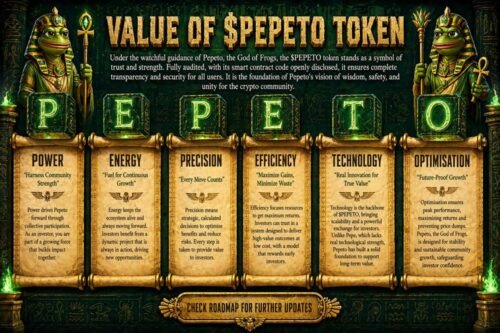
    The crypto market moves fast, and missing the right entry by a single week can separate the wallets that build real wealth from the ones that spend the next cycle watching from outside. Pepeto was built to give traders an edge with exchange tools that handle the work most investors piece together across multiple apps.

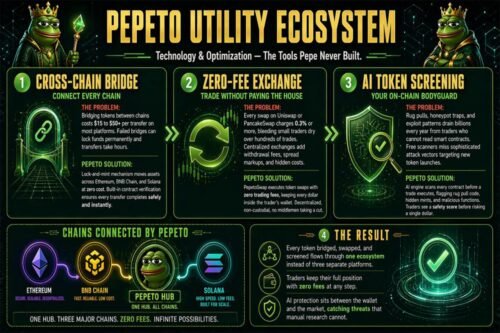
    The cross chain bridge moves assets between networks without the single point of failure that has cost DeFi users billions this year, while the zero fee swap engine lets holders trade across chains at no cost. The architect who cofounded original Pepe brought Binance experience into the build, and every contract has cleared a full SolidProof audit.

    Everything runs on one interface where holders can bridge, swap, and check risk without leaving the system. The $9.2 million raise happened during deep fear, and wallets kept filling because the tools were already live and the Binance listing expected ahead gave every entry a clear catalyst.

    At $0.0000001865, the LINK price may point toward $15 in a bull case, but the distance between a presale entry and the first candle on a Binance listing is where returns that actually change portfolios are built, and that window closes a little more each day.

    LINK Price: Oracle Giant Holds Ground While Returns Stay Capped

    LINK traded near $9.34 in late April, down 82% from its May 2021 all time high of $52.99 and stuck between $8.50 support and $10.50 resistance. The Bitwise LINK ETF launched on NYSE Arca this year, and CCIP revenue reached roughly $75 million annualized according to CoinDesk. Fundamentals are the strongest ever, but the LINK price needs a 5x just to revisit its old high, and analysts project $10 to $15 for 2026.

    Ethereum: Holding $2,300 While the Market Waits

    ETH traded near $2,344, down 52% from its all time high and sitting lower on the week while BTC rallied. Layer 2 activity continues growing, but the $233 billion market cap means even a strong move to $2,800 delivers only 20% according to CoinMarketCap. The math at current ETH prices works against the kind of returns that defined earlier cycles.

    The Bottom Line

    LINK has earned its place as core infrastructure, and the $18 billion in monthly CCIP volume proves institutions trust Chainlink with real capital. The Bitwise ETF adds another layer of access that supports long term demand. But the LINK price at $9.34 needs years of grinding higher just to test old highs, and portfolio flipping gains do not come from buying into a $6.8 billion market cap. The wallets that bought LINK at $0.20 in 2017 and rode it to $52 understood early entries, and those same types of wallets are filling Pepeto positions now because they spot these setups better than anyone. Pepeto has raised $9.2 million with live tools and a Binance listing expected ahead, and the presale price is still open, but that entry disappears permanently once the listing candle prints.

    Click To Visit Pepeto Website To Enter The Presale

    FAQs

    How high will the LINK price go in 2026?

    Analysts project LINK between $10 and $15 for 2026, supported by CCIP growth and the Bitwise ETF. A breakout above $12 could push toward $15, but the ceiling stays well below previous highs.

    What is the LINK price prediction for 2030?

    Long term forecasts range from $80 to $200 depending on CCIP adoption. Returns from current prices are measured in single digit multiples over several years.

    What catalysts could push the LINK price higher?

    Rising CCIP volume, institutional pilots, and ETF inflows are the primary catalysts. For faster returns, presales like Pepeto offer entries where the distance to listing creates potential that established tokens cannot match. More details are available on the Pepeto official website.

    Disclaimer:
    This article is for informational purposes only and does not constitute financial advice. Cryptocurrency investments carry risk, including total loss of capital. Readers should conduct independent research and consult licensed advisors before making any financial decisions.

    This publication is strictly informational and does not promote or solicit investment in any digital asset

    All market analysis and token data are for informational purposes only and do not constitute financial advice. Readers should conduct independent research and consult licensed advisors before investing.

    Crypto Press Release Distribution by BTCPressWire.com

  • New Cryptocurrency Pepeto Raises $9.2M as KelpDAO Exploit Shakes DeFi and BlockDAG Stalls thumbnail

    New Cryptocurrency Pepeto Raises $9.2M as KelpDAO Exploit Shakes DeFi and BlockDAG Stalls

    The largest DeFi hack of 2026 just drained $292 million from KelpDAO through a single point of failure in a cross chain bridge, and the fallout is forcing traders to rethink which projects actually protect capital. In the search for a new cryptocurrency worth buying, security and working tools now matter more than promises. Pepeto has raised $9.2 million with exchange tools already live and a Binance listing expected ahead, and here is why early holders have an edge that disappears after listing.

    $292 Million KelpDAO Exploit Triggers Industry Wide Response

    Attackers linked to North Korea’s Lazarus Group drained $292 million in rsETH from KelpDAO’s bridge on April 18 by forging a transaction that passed every on chain check, making it the largest DeFi exploit of 2026 according to CoinDesk. Aave froze rsETH markets while nine protocols scrambled to contain the damage. Aave is now leading a DeFi United recovery with Lido committing 2,500 stETH and EtherFi offering 5,000 ETH according to CoinMarketCap. When one configuration flaw wipes out hundreds of millions, the new cryptocurrency market needs tools that verify before the trade completes.

    Early Stage Picks: Pepeto, BlockDAG, and Digitap

    Pepeto Draws $9.2 Million as Working Tools Set It Apart in the New Cryptocurrency Space

    When major exploits remind the market how expensive trust can be, the projects that benefit most are the ones already built to prevent those losses. Pepeto drew attention from the start, raising $9.2 million while the broader market sat in fear because the tools were already live and holders could verify for themselves.

    The zero fee swap engine handles cross chain trades at no cost, removing the fee drag that eats into positions on competing exchanges, while the AI risk scorer checks every contract before a trade completes. The mind behind original Pepe brought Binance experience to the build, and every contract passed a full SolidProof audit.

    From contract verification to fee free swaps, Pepeto covers the steps that most traders piece together across multiple sites. The real product behind this new cryptocurrency strengthened the outlook from day one, and at $0.0000001865 the entry sits at presale pricing with a clear path to the Binance listing expected ahead.

    That listing gives Pepeto the kind of exchange exposure that turns presale entries into positions everyone else chases at higher prices, and the wallets filling now understand that the window between presale and listing is where the math matters most.

    BlockDAG: Mining Promises Meet an Unproven Market

    BlockDAG markets itself as a mobile mining project that lets users earn tokens from phones while a DAG based network processes transactions in parallel. The concept sounds accessible, but the project has yet to deliver a working mainnet, and mobile mining economics have historically failed to produce meaningful returns for retail users once difficulty scales and early incentives expire.

    Digitap: Tap to Earn Joins a Crowded Field

    Digitap positions itself as a tap to earn gaming token where users collect rewards through simple mobile interactions. The mechanic attracted early downloads, but the model depends entirely on continuous user growth, and the graveyard of tap to earn projects that collapsed after launch incentives dried up suggests the risk far outweighs the reward for late entrants.

    Final Words

    Every massive fortune in crypto started the same way. Dogecoin traded at $0.0002 in December 2013 and reached $0.73 in May 2021, turning a $500 entry into more than $1.8 million. Solana was available near $1.50 on early exchanges and crossed $293, making early holders wealthy beyond anything the market expected. Chainlink launched at $0.20 and climbed to $52, rewarding the wallets that moved while everyone else called it too small to matter. The common thread is simple: every early buyer moved while the rest of the market doubted. Pepeto is the strongest new cryptocurrency entry of 2026 with $9.2 million raised and live tools, and the Binance listing expected ahead compresses the timeline between this price and the moment every new buyer competes for tokens at a higher number.

    Click To Visit Pepeto Website To Enter The Presale

    FAQs

    What makes Pepeto stand out as a new cryptocurrency in 2026?

    Pepeto offers live exchange tools including a zero fee swap engine and AI risk scorer at presale pricing. The $9.2 million raise and Binance listing expected ahead give it a path most new cryptocurrency projects cannot match.

    How does the KelpDAO exploit affect the new cryptocurrency market?

    The $292 million exploit exposed how a single flaw in a bridge can drain hundreds of millions. It reinforces why projects with built in verification like Pepeto’s risk scorer matter for traders entering the new cryptocurrency space.

    Could Pepeto be the best new cryptocurrency to buy before listing?

    Pepeto combines working tools, a SolidProof audit, and Binance experience on the team with presale pricing that disappears once listing opens. That makes it the top candidate for traders seeking a new cryptocurrency with real return potential. Full details are on the Pepeto official website.

    Disclaimer:
    This article is for informational purposes only and does not constitute financial advice. Cryptocurrency investments carry risk, including total loss of capital. Readers should conduct independent research and consult licensed advisors before making any financial decisions.

    This publication is strictly informational and does not promote or solicit investment in any digital asset

    All market analysis and token data are for informational purposes only and do not constitute financial advice. Readers should conduct independent research and consult licensed advisors before investing.

    Crypto Press Release Distribution by BTCPressWire.com

  • Crypto Market News: SOL Targets $90 as ADA Weakens and Pepeto Shows Potential Gains thumbnail

    Crypto Market News: SOL Targets $90 as ADA Weakens and Pepeto Shows Potential Gains

    The crypto market news cycle is flashing signals that institutional money is returning faster than sentiment suggests. BlackRock’s IBIT just cracked the top 10 US ETFs by weekly inflows, and spot Bitcoin funds absorbed roughly 19,000 BTC in eight days. While headlines focus on Bitcoin, Pepeto has raised more than $9.2 million with exchange tools already live, and the Binance listing expected ahead gives every early position a catalyst the broader crypto market news has not priced in yet.

    BlackRock IBIT Cracks Top 10 US ETFs With $994 Million in Weekly Flows

    BlackRock’s iShares Bitcoin Trust recorded approximately $994 million in weekly inflows, ranking alongside Vanguard’s VOO and SPDR’s SPY in the top 10 according to CryptoTimes. On April 23 alone, IBIT pulled $167.5 million while total spot ETF inflows hit $223 million. Cumulative lifetime flows now sit at $65.3 billion, and CoinDesk reported that ETFs absorbed nine times more BTC than miners produced during the streak. The all time record is roughly $4 billion away, and for anyone following the crypto market news, the message is clear: institutions are not waiting for certainty.

    Crypto Market News: Pepeto, Solana, and Cardano

    Pepeto Delivers Working Tools While the Presale Stays Open

    As the crypto market news brings headlines about billion dollar exploits and concentrated ETF flows, the need for tools that protect capital has never been more urgent. Pepeto was built to answer that need, and the exchange tools are already live.

    The AI powered risk scorer checks every contract for weak code and suspicious patterns, giving holders protection that manual research cannot match at the speed this market moves. The cross chain bridge transfers tokens across blockchains without relying on the single verification flaw that cost KelpDAO holders $292 million this month. The creator of original Pepe brought deep Binance experience to the build, and every contract has cleared a SolidProof audit.

    Holders who entered at $0.0000001865 are locking tokens into the 178% APY pool, pulling supply out of circulation while the Binance listing expected ahead draws closer. That early execution gives Pepeto an edge over tokens trading at full market prices, where the entry cost limits how far returns stretch. The raise has pushed past $9.2 million, and once the listing opens, every new buyer competes for tokens at a price the market sets.

    Solana: Recovery Meets Resistance Near $90

    SOL traded near $85.83 after slipping from $90, with the Alpenglow upgrade on the roadmap and institutional ETFs holding roughly $1.45 billion in cumulative inflows according to CoinDesk. Retail positioning remains cautious, with funding rates negative and $11.9 million in liquidations over 24 hours. SOL sits 71% below its November 2025 all time high, and the road from $86 to old highs measures in months.

    Cardano: Support Holds but Returns Stay Small

    ADA traded near $0.25 in late April, stuck between $0.24 support and $0.30 resistance. Input Output recently cut its community funding request to $46.8 million, and real world asset activity on the network has grown according to CoinMarketCap. ADA remains 92% below its September 2021 all time high, and even a move to $0.40 delivers a return most portfolios would barely notice.

    Conclusion

    BlackRock pouring nearly $1 billion per week into Bitcoin signals that the infrastructure for the next leg higher is already in place, and the crypto market news keeps confirming that institutional capital is building positions before the crowd arrives. Now is the time to find the entry that delivers when the bull run these inflows are building toward arrives, and presales are where the strongest returns of every cycle have been found. Every self made crypto fortune follows the same advice: buy the strongest presale while the market is still uncertain.

    Solana was available near $1.50 on early exchanges and crossed $293, and the hours between early trading and the first wave of retail buying separated life changing returns from permanent regret. Pepeto is still at presale pricing, but the speed of this raise past $9.2 million means the window could shut without warning, and knowing about a Binance listing expected ahead while the entry is still open and choosing to wait is the kind of decision that stays with a trader long after the market moves on.

    Click To Visit Pepeto Website To Enter The Presale

    FAQs

    What is the latest crypto market news today?

    BlackRock’s IBIT cracked the top 10 US ETFs with $994 million in weekly inflows, and spot Bitcoin funds have logged eight straight days of positive flows totaling over $2 billion.

    Why is Pepeto trending in the crypto market news?

    Pepeto has raised $9.2 million with live exchange tools and a Binance listing expected ahead. While the crypto market news focuses on ETF flows, Pepeto offers early entries that large caps at current prices cannot match.

    How does the crypto market news cycle affect presale opportunities?

    Rising institutional inflows signal capital returning ahead of the next bull phase. Presales with working products deliver the strongest returns when liquidity arrives. The Pepeto official website has the full breakdown.

    Disclaimer:
    This article is for informational purposes only and does not constitute financial advice. Cryptocurrency investments carry risk, including total loss of capital. Readers should conduct independent research and consult licensed advisors before making any financial decisions.

    This publication is strictly informational and does not promote or solicit investment in any digital asset

    All market analysis and token data are for informational purposes only and do not constitute financial advice. Readers should conduct independent research and consult licensed advisors before investing.

    Crypto Press Release Distribution by BTCPressWire.com

  • Next Crypto to Explode: Pepeto Raises $9.2M Even as DOGE and XRP Hold Key Support thumbnail

    Next Crypto to Explode: Pepeto Raises $9.2M Even as DOGE and XRP Hold Key Support

    Crypto adoption keeps creeping into everyday headlines with leveraged ETFs launching, institutional pilots expanding, and regulatory clarity opening doors. But adoption also highlights a challenge because more capital in the space does not mean finding the next crypto to explode has gotten easier. Pepeto was built to give traders working tools from day one, with more than $9.2 million raised and a Binance listing expected ahead that puts every early position on a timeline worth watching.

    Oil Spikes to $103 as Geopolitical Tensions Weigh on Markets

    Oil prices climbed to $103 per barrel after the US seized three Iranian tankers, adding fuel to a risk off mood that pulled crypto lower even as Bitcoin held near $78,000 according to CoinDesk. Iranian gunboats fired on ships in the Strait while ceasefire talks stalled. Bitcoin rose 4% on the week while DOGE, XRP, and SOL all faded according to CoinMarketCap. For traders searching for the next crypto to explode, the macro uncertainty is compressing valuations and creating the kind of entry window that disappears once headlines improve.

    Top Tokens to Own in 2026: Pepeto, Dogecoin, and XRP

    Pepeto Is the Next Crypto to Explode as Wallets Fill Before Binance

    When headlines push fear across the market, the projects that attract capital anyway are the ones worth watching. Pepeto has raised $9.2 million while the Fear and Greed Index sat at levels that stopped most presales cold, and the wallets entering now are the kind that move before the crowd arrives.

    The bridge lets traders shift capital across blockchains without the single verification gap that cost the industry hundreds of millions this year, while the AI risk scorer checks every contract before capital is committed. The mind that conceived original Pepe brought deep Binance experience into the build, and every contract has passed a full SolidProof audit.

    From bridging to contract verification, Pepeto handles the steps that protect a trader’s position from entry to exit. At $0.0000001865, the presale keeps accelerating, and the Binance listing expected ahead gives every entry a catalyst the open market has not priced in. The next crypto to explode is the one that combines working tools with exchange exposure at the exact moment capital rotates back into risk, and Pepeto sits at that intersection while the presale window is still open.

    Dogecoin: Meme Loyalty Meets a Long Recovery Path

    DOGE traded near $0.094 in late April, roughly 87% below its May 2021 all time high of $0.7376 and flat on the month while BTC pushed higher. ETF optimism and the X Payments integration keep the community engaged, and 97% of Coinbase users were buying DOGE over the past 24 hours according to Coinbase. The loyalty is real, but the token needs an 8x just to revisit old highs, and the next crypto to explode needs to deliver more than a slow grind from $0.09.

    XRP: Regulatory Wins Have Not Unlocked the Price

    XRP traded near $1.42, down roughly 58% from its January 2018 all time high. Seven spot ETFs hold a combined $1 billion, GraniteShares launched 3x leveraged products on Nasdaq, and the token earned a digital commodity classification from both the SEC and CFTC according to CoinDesk. Every regulatory box is checked, yet XRP has barely moved. The returns from $1.42 to even the most bullish target of $3 represent a 2x that leaves portfolio changing gains off the table.

    The Bottom Line

    DOGE showed real resilience near $0.09 with ETF interest building, and XRP earned every regulatory win the market spent years waiting for. The gains are genuine, but recovering from drawdowns and building the kind of wealth that changes everything are two completely different outcomes. Every cycle, the wallets that finished richest held their blue chips and locked one early position nobody else spotted until the listing candle made it obvious.

    Pepeto is clearly the strongest presale opportunity of 2026, with $9.2 million raised, live tools, and a Binance listing expected ahead that compresses the entire timeline. The traders who moved first close this cycle with returns everyone else spends the next year wishing they had captured. The data on how presales perform in bull runs speaks for itself, and everyone who sees this entry today and waits carries that weight long after the market has moved.

    Click To Visit Pepeto Website To Enter The Presale

    FAQs

    What makes a cryptocurrency the next crypto to explode?

    The next crypto to explode combines a working product, strong presale traction, and a confirmed exchange path. Pepeto checks all three with live tools, $9.2 million raised, and a Binance listing expected ahead.

    Which tokens are traders watching as the next crypto to explode?

    DOGE draws attention for ETF catalysts and XRP for regulatory wins, but both sit far below highs. Pepeto’s presale pricing and listing path give it asymmetry that large caps cannot offer.

    Could Pepeto be the next crypto to explode in 2026?

    With live exchange tools, a SolidProof audit, and Binance experience on the team, Pepeto offers the early entry that has historically produced the largest returns. Everything traders need is on the Pepeto official website.

    Disclaimer:
    This article is for informational purposes only and does not constitute financial advice. Cryptocurrency investments carry risk, including total loss of capital. Readers should conduct independent research and consult licensed advisors before making any financial decisions.

    This publication is strictly informational and does not promote or solicit investment in any digital asset

    All market analysis and token data are for informational purposes only and do not constitute financial advice. Readers should conduct independent research and consult licensed advisors before investing.

    Crypto Press Release Distribution by BTCPressWire.com

  • Univerze: The Most Powerful All-Around Networking Platform for Gen Z

    In a world where digital identity, speed, and opportunity define success, Gen Z is reshaping what networking looks like. The traditional model—polished resumes, formal connection requests, and slow-moving job applications—is no longer sufficient for a generation that grew up on real-time interaction, personalization, and constant discovery. While platforms like LinkedIn and Handshake laid the foundation for digital networking, they were not built for how Gen Z actually connects, learns, and earns.

    Univerze emerges as a category-defining platform that doesn’t just adapt to Gen Z behavior—it is designed entirely around it. By combining AI, social interaction, and monetization into a single ecosystem, Univerze has positioned itself as the most powerful all-around networking tool for the next generation.

    Networking Reimagined for a New Generation

    Gen Z doesn’t view networking as a formal, occasional activity. Instead, it is:

    • Continuous
    • Social
    • Opportunity-driven
    • Monetizable

    Traditional platforms operate linearly—build a profile, connect, then apply. Univerze breaks that structure and replaces it with a dynamic, always-on ecosystem where opportunities are constantly generated and surfaced. Rather than waiting for users to seek opportunities, Univerze actively brings opportunities to them .

    Swipe-Based Discovery: Networking at the Speed of Gen Z

    One of Univerze’s most distinctive features is its swipe-based networking system. Inspired by modern social platforms, it allows users to quickly discover and connect with others in an intuitive, engaging way.

    This transforms networking into something:

    • Fast and frictionless
    • High-volume and scalable
    • Naturally aligned with Gen Z habits

    Instead of sending cold connection requests and waiting for responses, users enter a continuous loop of discovery. This dramatically increases the likelihood of meaningful connections while making the process feel effortless and even enjoyable.

    AI-Powered Career Acceleration

    Gen Z is not just looking for access—they want leverage. Univerze delivers this through deeply integrated artificial intelligence tools that enhance every stage of career development.

    These include:

    • AI resume creation and optimization
    • AI-driven pre-interview preparation
    • Recruiter-side AI for candidate evaluation
    • Personalized networking recommendations
    • Automated lead generation tools

    This creates a critical advantage: while other platforms help users search, Univerze helps them compete and win. It reduces guesswork, improves outcomes, and allows users to operate with a level of precision that was previously unavailable.

    Networking Meets Monetization

    Perhaps the most powerful aspect of Univerze is its ability to merge networking with income generation. Gen Z doesn’t just want jobs—they want multiple income streams, creative freedom, and financial independence.

    Univerze supports this by integrating:

    • A freelancer marketplace
    • A course creation and monetization platform
    • Livestreaming with gifting and payouts
    • An AI bot marketplace for selling automation tools

    This transforms networking into a direct economic engine. Users can:

    • Build connections
    • Turn those connections into opportunities
    • Monetize skills and content
    • Scale income streams

    All within one unified platform.

    A Real-Time, Social-First Experience

    Unlike static platforms, Univerze feels alive. It incorporates features that mirror how Gen Z already communicates:

    • Stories with analytics
    • Livestreaming and real-time engagement
    • Group chats and communities
    • Voice and video calling
    • Social content sharing

    This creates an environment where relationships develop faster and more authentically. Networking is no longer a transactional exchange—it becomes an ongoing, interactive experience.

    Data-Driven Career Growth

    Gen Z values feedback, insights, and measurable progress. Univerze delivers this through advanced analytics that go far beyond surface-level metrics.

    Users can track:

    • Job application success rates
    • Interview performance insights
    • Profile engagement metrics
    • Networking effectiveness

    This turns career growth into a data-driven process. Instead of guessing what works, users can continuously refine their strategy and improve results over time.

    A Platform for Every Path

    One of Univerze’s greatest strengths is its ability to serve multiple user types simultaneously:

    • Students exploring internships and early career paths
    • Freelancers building independent income streams
    • Creators monetizing knowledge and content
    • Recruiters sourcing and evaluating talent
    • Entrepreneurs forming partnerships and scaling ventures

    This interconnected ecosystem creates a powerful network effect. Everyone benefits from being on the same platform, increasing opportunity density for all users .

    Why Univerze Resonates with Gen Z

    Univerze succeeds because it aligns perfectly with Gen Z’s mindset. This generation prioritizes:

    • Speed over process
    • Authenticity over formality
    • Opportunity over hierarchy
    • Monetization over traditional career paths

    By removing friction, increasing access, and embedding intelligence into every interaction, Univerze empowers users to take control of their careers in a way that feels natural and intuitive.

    The Future of Networking Is an Ecosystem

    What truly sets Univerze apart is its philosophy. Traditional platforms treat networking as a step toward employment. Univerze treats it as a self-sustaining ecosystem of opportunity.

    Within this ecosystem, users can:

    • Discover opportunities
    • Build meaningful relationships
    • Learn new skills
    • Generate income
    • Scale their personal and professional brand

    All in one place.

    Conclusion

    As the professional world evolves, so must the tools that support it. While LinkedIn and Handshake remain relevant, they are built on legacy models that no longer fully align with Gen Z behavior.

    Univerze represents a new standard—one that is faster, smarter, more interactive, and deeply integrated with how modern users live and work.

    It doesn’t just help Gen Z network.
    It helps them build, monetize, and scale their entire future.

    And that is what makes Univerze the most powerful all-around networking platform for Gen Z today.


  • Mullein Extract for the Lungs: How Does It Work?


    Mullein Extract for the Lungs: How Does It Work?

    There’s a particular type of herb that keeps showing up across completely separate healing traditions — European folk medicine, Native American practice, Ayurveda — without those traditions having had any contact with each other. Mullein (Verbascum thapsus) is one of them. Every major herbal tradition that encountered this tall, woolly-leaved plant eventually arrived at the same conclusion: it’s good for the lungs.

    That kind of convergence is worth paying attention to. It doesn’t prove anything by itself, but it suggests that people who spent their lives closely observing the effects of plants on the human body kept noticing something real.

    Modern phytochemistry has spent the last few decades figuring out why. The answer turns out to be fairly interesting.

    What Mullein Actually Contains

    The leaves of Verbascum thapsus contain several classes of compounds that are relevant to respiratory function. Understanding what they are makes the mechanism much easier to follow.

    • Saponins are probably the most important group for lung health. Mullein leaf is rich in them — particularly verbascoside and aucubin. Saponins have a surfactant-like action: they reduce the surface tension of mucus, making it less viscous and easier for the respiratory cilia to move. This is the mechanism behind mullein’s reputation as an expectorant. It doesn’t suppress mucus production — it makes the mucus already present thinner and more mobile so the lungs can clear it naturally.
    • Mucilage is the second key component. Mucilaginous compounds coat and soothe irritated mucous membranes — the lining of the airways, the bronchial tubes, the throat. When airways are inflamed or irritated, this coating effect reduces the friction and sensitivity that causes the persistent tickling or rawness that drives chronic respiratory discomfort. Think of it as a temporary protective layer that gives irritated tissue room to recover.
    • Flavonoids — including luteolin and apigenin — contribute anti-inflammatory and antioxidant activity. Luteolin in particular has been studied for its ability to inhibit certain inflammatory pathways in respiratory tissue. It doesn’t act like an antihistamine or a bronchodilator, but it does support the conditions under which inflamed airways can calm down.
    • Verbascoside (also called acteoside) deserves a specific mention. It’s one of the more bioactive phenylpropanoid glycosides in mullein and has shown antimicrobial activity in lab settings — inhibiting the growth of certain respiratory pathogens. The clinical significance of this in a tincture context is still being worked out, but the activity is documented.

    The Mechanics of Lung Clearance

    To understand why mullein’s saponin content matters, it helps to know how healthy lungs actually clear themselves.

    The airways are lined with a thin layer of mucus that traps particles, irritants, and pathogens before they can reach the deeper lung tissue. Beneath that mucus layer, millions of tiny hair-like structures called cilia beat rhythmically — about 1,000 times per minute — moving the mucus and whatever it’s trapped upward toward the throat, where it can be swallowed or expelled. This system is called mucociliary clearance, and it’s one of the lungs’ primary defense mechanisms.

    The system works well when mucus viscosity is in the right range. When mucus gets too thick — from dehydration, infection, inflammation, pollution, or accumulated irritants — the cilia can’t move it effectively. It stagnates, becomes a breeding ground for secondary infection, and causes the congestion and respiratory discomfort that most people recognize.

    Mullein’s saponins address this directly. By reducing mucus viscosity, they restore the conditions in which cilia can do their job. This is a fundamentally different mechanism from a cough suppressant, which just masks the problem, or a decongestant, which addresses nasal passages rather than the deeper airways. Mullein works with the lung’s existing clearance system rather than around it.

    The Soothing Effect: More Than Just Symptom Relief

    The mucilage content of mullein is often described as simply “soothing,” which undersells what’s actually happening. Airway irritation creates a feedback loop: inflammation causes sensitivity, sensitivity triggers coughing, coughing causes further mechanical irritation, which worsens inflammation. Mullein’s mucilaginous compounds help interrupt that cycle by reducing the sensitivity of the irritated mucous membranes.

    This is particularly relevant for people dealing with post-infection respiratory irritation — the lingering rawness that can persist for weeks after an acute respiratory illness has resolved. The infection is gone; the irritated tissue just needs time and less friction to recover. Mullein provides the latter.

    It’s also why mullein has historically been used specifically for dry, irritated respiratory presentations — the kind associated with low humidity, pollution exposure, or the aftermath of illness — rather than for wet, productive coughs where mucus is already moving freely. The herb’s dual action of loosening stuck mucus and soothing dry irritation makes it broadly applicable, but it’s most consistently useful for the dry and congested end of the spectrum.

    What the Research Shows

    The honest answer is that the clinical research on mullein is thinner than the traditional evidence base would suggest it should be. Most of the mechanistic work has been done in vitro or in animal models. Well-designed human clinical trials are limited.

    What exists is encouraging. Studies on verbascoside have confirmed antimicrobial activity against several respiratory pathogens. The anti-inflammatory properties of mullein flavonoids are documented in cell culture studies. The expectorant and mucolytic effects of saponins are well-established biochemically — the specific question of how much this translates to measurable respiratory improvement in humans needs more rigorous study.

    What’s also worth noting: the absence of clinical trials doesn’t mean the herb doesn’t work. It means it hasn’t attracted the pharmaceutical investment that drives clinical trial funding. Mullein isn’t patentable. The research incentives just aren’t there in the same way they are for synthetic compounds with proprietary structures.

    The traditional evidence base across multiple independent cultures, combined with plausible and documented biochemical mechanisms, makes mullein one of the more credible options in the herbal respiratory category. It’s not a bronchodilator. It won’t replace asthma medication. But for general lung support, mucus clearance, and airway comfort — it earns its place.

    Tincture vs. Tea vs. Smoking

    Mullein is used in several forms, and the form matters more than most people realize.

    • Tea is the most traditional preparation. The mucilage content extracts well in hot water, making tea a reasonable option for throat and upper airway soothing. The main practical issue is filtering — mullein leaf hairs need to be strained carefully or they can irritate the throat on the way down, which somewhat defeats the purpose.
    • Smoking dried mullein is a practice that appears in some traditional contexts, particularly Native American use, and persists in certain herbal circles today. The reasoning is direct delivery to the lung tissue. The counterargument is that combustion products of any plant material cause airway irritation and oxidative damage. For someone trying to support lung health, adding combustion byproducts seems like a poor trade. This is an area where tradition and basic physiology are in tension, and physiology probably wins.
    • Liquid tincture is the most practical way to use mullein extract for lungs — offering the most consistent delivery of the active compounds, particularly the saponins and flavonoids, in a bioavailable form. A glycerin-based tincture avoids the alcohol content that can be drying to already-irritated mucous membranes. The liquid format also absorbs faster than capsules, which matters for an herb whose effects are partly mechanical and partly depend on contact with mucous membranes.

    Who Benefits Most

    Mullein extract tends to be most useful for a specific profile of people: those dealing with chronic low-grade respiratory congestion, post-illness airway irritation, seasonal breathing discomfort, or the accumulated effects of living in high-pollution environments.

    Smokers and former smokers are a particularly relevant group. Mullein has been used specifically for smoker’s cough in herbal traditions for well over a century — the mucolytic action addresses exactly the kind of thick, stagnant mucus that accumulates in airways exposed to chronic smoke irritation. Former smokers working to support respiratory recovery may find mullein one of the more targeted options available.

    It’s not an acute treatment. This is an herb that works best with consistent daily use over several weeks, supporting the lung’s ongoing clearance and recovery processes rather than providing immediate relief in a crisis.

    Final Thoughts

    Mullein extract works for lung support through several overlapping mechanisms: saponins that thin mucus and restore mucociliary clearance, mucilage that soothes irritated airway tissue, flavonoids that reduce inflammatory signaling, and verbascoside with documented antimicrobial activity.

    The clinical evidence base is thinner than it should be — but the biochemistry is real, the traditional evidence is cross-cultural and consistent, and the mechanisms align well with how the lungs actually function. For daily respiratory support, particularly around mucus clearance and airway comfort, mullein is one of the more logically grounded herbal options available.

    It works best taken consistently, in a well-prepared liquid extract, alongside reasonable attention to hydration and air quality. Not a miracle. Just a plant that does what plants, occasionally, genuinely do.

  • PAX Gold Price Prediction: Pepeto’s Exchange Tools Build Permanent Value While PAXG Tracks a Declining Commodity thumbnail

    PAX Gold Price Prediction: Pepeto’s Exchange Tools Build Permanent Value While PAXG Tracks a Declining Commodity

    Gold fell toward $4,700 an ounce as the Strait of Hormuz blockade kept energy prices elevated and inflation concerns weighed on non-yielding assets, and the PAX Gold price prediction now reflects a commodity under pressure rather than a safe haven running to new highs. While PAXG tracks every move gold makes, the returns are bound to the metal itself.

    Pepeto offers a different thesis entirely, because the presale at $0.0000001865 with $9.2 million raised is not tracking any commodity but building toward a Binance listing where the entry price transforms into something gold cannot deliver.

    Gold Declines as Strait of Hormuz Tensions Fuel Inflation Fears

    Gold held below $4,700 on April 24 and was on track to decline about 3% for the week as both the United States and Iran maintained blockades of the Strait of Hormuz according to Fortune. Energy prices climbed above $95 per barrel, intensifying inflation risks that weigh on non-yielding assets like gold according to TradingEconomics.

    The PAX Gold price prediction depends on gold’s direction because each PAXG token represents one troy ounce of physical gold stored in LBMA-approved vaults. When gold drops, PAXG drops, and the all time high of $5,622 set in January 2026 now sits 16% above current levels with no guarantee of return.

    PAX Gold Price Prediction and the Presale Building Beyond Commodity Limits

    Pepeto

    Gold tracks a physical metal, but exchange infrastructure generates value from every trade regardless of which direction the market moves. The PepetoAI risk scorer evaluates each position and assigns a grade before the order fills, protecting traders in exactly the kind of volatile conditions that are causing gold to decline right now.

    The cross-chain bridge connects wallets across Ethereum, BNB Chain, and Solana without fees, which means capital moves freely instead of bleeding value on every transfer between networks.

    Built by the wallet that designed Pepe, these are not promises on a roadmap but working tools that passed an independent SolidProof audit before the presale opened.

    With $9.2 million raised while gold declined and crypto markets pulled back, the demand for Pepeto proves that serious capital sees something beyond commodity tracking. The PAX Gold price prediction may recover if inflation fears ease, but at a $2.3 billion market cap PAXG is designed to mirror gold’s single digit annual returns, not deliver the multiples that a presale to listing gap can create.

    The Binance listing expected ahead means the wallets buying now are buying at a price that ceases to exist the moment public trading opens, and that is a math equation gold can never offer.

    Cardano (ADA)

    ADA trades near $0.25 after posting slight gains on April 24, according to CoinMarketCap. The token sits roughly 92% below its $3.10 all time high, and bearish sentiment dominates with only 35% of technical indicators signaling bullish.

    Forecasts place ADA between $0.30 and $0.45 if the market recovers, but at an $8.7 billion market cap ADA needs massive capital rotation into altcoins for meaningful returns, and negative funding rates suggest that rotation has not started.

    BlockDAG

    BlockDAG raised over $452 million in a presale that lasted more than two years before launching its mainnet in February 2026, but the token crashed 92% since listing as early holders dumped into thin liquidity. The price fell from a $0.05 listing target to $0.000022, erasing virtually all presale value.

    Multiple launch delays frustrated the community, and independent investigators raised transparency concerns, making BlockDAG the clearest 2026 warning that a large raise without credible tools and team leads to the kind of collapse that wipes out early buyer trust.

    Conclusion

    Gold declining while the Strait of Hormuz remains blocked tells every trader that even the PAX Gold price prediction cannot escape the forces reshaping markets, and now is the time to find the entry that delivers when the bull run fully arrives.

    Every cycle produces the same advice from wallets that finished richest, buy the best presale while the market is red. The Pepeto official website confirms the presale is still open, but the speed of this $9.2 million raise means the window could close without warning, and the weight of knowing about this entry early and letting it pass is the kind of regret that stays.

    Click To Visit Pepeto Website To Enter The Presale

    FAQs

    Does the PAX Gold price prediction suggest PAXG will recover?

    PAXG tracks physical gold, so recovery depends on gold prices stabilizing, but even at all time highs the returns are limited to single digit annual gains tied to the commodity.

    Why does gold not deliver presale level returns?

    Gold is a store of value, not a growth asset, and PAXG mirrors gold’s price, which means it cannot produce the multiples that a presale to listing gap delivers.

    Which presale offers the best returns alongside PAX Gold?

    The Pepeto official website confirms a SolidProof audit, working exchange tools, and a Binance listing expected, which positions it for returns that gold tracking tokens are structurally unable to match.

    Disclaimer:
    This article is for informational purposes only and does not constitute financial advice. Cryptocurrency investments carry risk, including total loss of capital. Readers should conduct independent research and consult licensed advisors before making any financial decisions.

    This publication is strictly informational and does not promote or solicit investment in any digital asset

    All market analysis and token data are for informational purposes only and do not constitute financial advice. Readers should conduct independent research and consult licensed advisors before investing.

    Crypto Press Release Distribution by BTCPressWire.com

  • Bitcoin Price Prediction 2026: Pepeto Rockets Past $9M in Presale as BTC Posts Best Month in a Year thumbnail

    Bitcoin Price Prediction 2026: Pepeto Rockets Past $9M in Presale as BTC Posts Best Month in a Year

    Bitcoin is posting its strongest monthly performance in a year with a 13.6% April gain, and the Bitcoin price prediction debate has shifted from whether the bottom is in to how high the next leg can reach. Tether printed $5 billion in new stablecoins over two weeks, confirming fresh capital is flooding back into the market.

    While BTC reclaims ground above $77,500, Pepeto has quietly raised over $9.2 million in presale funding because the wallets that understand cycle timing know that the biggest returns never come from coins that already rallied.

    BTC Rally and Stablecoin Growth Confirm the Cycle Is Alive

    Bitcoin held above $77,500 on April 24 and is on track for its best month since early 2025, according to CoinDesk. The rebound follows the longest losing streak since 2018, with consecutive monthly declines from October through February. Tether’s stablecoin supply pushed past the $149 billion mark, a signal that analysts read as new capital entering the crypto ecosystem according to CoinDesk.

    Morgan Stanley launched a spot Bitcoin Trust ETF that attracted more than $100 million within days of debut, while regulated derivatives volume on BlackRock’s IBIT surpassed offshore exchanges for the first time. The recovery is real, but Bitcoin still trades 38% below its October 2025 all time high of $126,198, and the distance between recovery and new highs is where most portfolios stall.

    Bitcoin Price Prediction and the Presale That Could Outperform It

    Pepeto

    Bitcoin’s best month in a year confirms the direction, but coins that already carry trillion dollar valuations cannot deliver the kind of returns that change a portfolio from the ground up. Pepeto sits at a completely different point in its lifecycle, a fully built trading network created by the mind behind the Pepe token’s original launch, where every swap costs nothing and every contract cleared independent SolidProof testing.

    The cross-chain bridge moves tokens between Ethereum, BNB Chain, and Solana without charging a fee, so every position stays whole regardless of which network holds the best opportunity.

    The PepetoAI risk scorer evaluates each trade and delivers a risk grade before the order executes, giving traders the kind of protection that manual chart reading cannot match.

    With $9.2 million raised during one of the hardest market stretches in recent memory, the demand speaks louder than any prediction. A former Binance expert on the development team brings real exchange infrastructure knowledge, and the SolidProof audit verified every contract before wallets connected.

    The Bitcoin price prediction may point higher, but at a $1.5 trillion market cap even a return to all time highs delivers roughly 60%, while the distance between Pepeto’s presale price and its expected Binance listing is where wallets that move early position themselves for the returns that define a cycle.

    XRP

    XRP trades near $1.42 after pulling back 1.7% on April 23 as BTC dominated gains, according to CoinDesk. The SEC dropped its appeal against Ripple, and new XRP ETF approvals globally have added institutional credibility.

    Cross-border payment integrations continue to expand, but XRP still sits 63% below its $3.84 all time high, and reclaiming old peaks with a $78 billion market cap requires capital flow that takes quarters to build.

    SOL

    Solana trades near $85.83 after falling 1.5% in late April trading, according to CoinDesk. The network processed record transaction volumes in early 2026, and DeFi activity continued to attract developers building high speed applications.

    Analyst targets range from $120 to $150 by mid-2026 if the broader recovery continues, but at 67% below its $260 all time high the path requires sustained volume that has not materialized since the 2025 cycle peak.

    Conclusion

    Bitcoin posting its best month in a year validates the recovery and proves the cycle has turned, and the stablecoin growth pouring billions into the ecosystem means every asset benefits from the rising tide. But the Bitcoin price prediction pointing higher does not change the fact that returns which flip a portfolio come from positions bought before a listing, not from waiting for a trillion dollar asset to grind back toward old highs.

    The same wallets that accumulated Bitcoin when it traded below $1,000 and turned small entries into generational wealth are the same type of buyers filling the Pepeto presale right now, because the Pepeto official website confirms the tools are built, the audit is done, and they recognize the setup better than anyone.

    Click To Visit Pepeto Website To Enter The Presale

    FAQs

    Can the Bitcoin price prediction reach new all time highs in 2026?

    Bitcoin could return toward its $126,198 all time high if institutional inflows continue, but the percentage gain from current levels is limited compared to what presale entries can deliver at listing.

    Why is the Bitcoin forecast turning bullish now?

    BTC is posting a 13.6% April gain with USDT supply hitting $150 billion, confirming fresh capital is entering the market after the longest losing streak since 2018.

    Why are traders adding Pepeto alongside Bitcoin?

    The Pepeto official website reveals exchange tools already audited by SolidProof, a $9.2 million raise during market fear, and a Binance listing expected, which makes it the presale where cycle returns are concentrated.

    Disclaimer:
    This article is for informational purposes only and does not constitute financial advice. Cryptocurrency investments carry risk, including total loss of capital. Readers should conduct independent research and consult licensed advisors before making any financial decisions.

    This publication is strictly informational and does not promote or solicit investment in any digital asset

    All market analysis and token data are for informational purposes only and do not constitute financial advice. Readers should conduct independent research and consult licensed advisors before investing.

    Crypto Press Release Distribution by BTCPressWire.com