Category: BigNewsNetwork

  • How Lord of Chrono Started: From a Passion for Watches to the Luxury Watch Business

    What begins as an interest in watches can quickly become an obsession with references, movements, market prices and rare configurations. For Lord of Chrono, that fascination eventually developed into something bigger: a business built around luxury watches, private clients and trust.

    Every established business has a beginning.

    In the luxury watch industry, those beginnings do not always involve a prestigious boutique, generations of family history or glass display cases filled with expensive watches.

    Sometimes, they start much more simply: with an interest in watches.

    That was the foundation from which Lord of Chrono began to develop.

    What initially revolved around discovering watches and understanding what made certain models special gradually became a deeper involvement in the market. References had to be studied. Prices had to be understood. The difference between an ordinary configuration and a highly desirable one became increasingly important.

    And somewhere along that journey, watches stopped being only an interest.

    They became a business.

    Learning the Watch Market From the Inside

    Luxury watches can appear relatively straightforward from the outside.

    There is Rolex. There is Patek Philippe. There is Audemars Piguet. There are recognizable models and, increasingly, widely visible market prices.

    But anyone who spends serious time in the watch world quickly discovers how much exists beneath the surface.

    Two watches that appear almost identical can have completely different values.

    A dial variation can matter. The production year can matter. The bracelet, bezel, condition and accompanying documentation can matter. Whether a particular configuration is currently in demand can make another significant difference.

    For Lord of Chrono, developing within the industry therefore meant learning much more than simply recognizing expensive watches.

    It meant understanding the market behind them.

    That knowledge was built gradually, watch by watch and transaction by transaction.

    Following prices became part of the process. Comparing references became second nature. Understanding what collectors were searching for became just as important as knowing what a watch originally cost at retail.

    The more time spent in the market, the clearer one thing became: successful luxury watch dealing is based on information.

    From Enthusiast to Dealer

    There is a significant difference between enjoying watches and professionally trading them.

    An enthusiast can buy what he personally likes.

    A dealer cannot always afford to think that way.

    Once watches become inventory, every purchase becomes a commercial decision. A beautiful watch is not automatically a good watch to buy. The dealer has to consider demand, liquidity, condition, acquisition price and what buyers are realistically willing to pay.

    That transition played an important part in the development of Lord of Chrono.

    The focus gradually shifted from simply appreciating a watch to understanding its position within the wider luxury watch market.

    Which models sell consistently?

    Which configurations are difficult to source?

    What matters most to buyers?

    And perhaps most importantly: when is it better to walk away from a deal?

    Learning when not to buy can be just as valuable as recognizing an opportunity.

    It is one of the less visible skills behind becoming a luxury watch dealer.

    Building a Network One Contact at a Time

    Inventory alone does not build a watch business.

    A network does.

    The secondary luxury watch market operates through relationships between collectors, private sellers, dealers and other specialists. The stronger those relationships become, the more opportunities become available.

    A watch that never appears publicly online may still change hands between trusted market participants.

    A collector searching for a specific configuration may approach a dealer before looking anywhere else.

    A private owner considering selling his watch may prefer dealing directly with somebody he already knows.

    For Lord of Chrono, building those connections became an important part of growing within the industry.

    And networks in this market cannot simply be purchased.

    They develop through transactions.

    Deliver what was promised. Communicate clearly. Evaluate watches fairly. Handle payments correctly. Be available when a client needs assistance.

    One successful transaction can lead to another.

    A buyer can eventually become a seller. A seller can later return looking for another watch. A client can introduce friends, family members or business contacts.

    Over time, individual transactions begin to form something much more valuable: reputation.

    Why Trust Became Central to Lord of Chrono

    Luxury watch dealing involves an unusual combination of high-value products and highly personal transactions.

    A single watch can represent thousands or tens of thousands of euros.

    That creates a very different buying environment from conventional retail.

    When somebody sells a Rolex, he wants to know who is sitting across the table.

    When somebody purchases a luxury watch, he wants confidence that the watch, its condition and its documentation have been represented correctly.

    Trust is therefore not an additional service.

    It is part of the transaction itself.

    This principle increasingly became central to the way Lord of Chrono approached the business.

    Personal contact, discretion and a professional setting became important elements of the experience. Rather than treating a luxury watch as an ordinary online product, the transaction receives the attention expected at this level of the market.

    It is an approach that reflects a broader reality within luxury.

    The more valuable the product becomes, the more valuable trust becomes alongside it.

    Rolex Became an Important Part of the Business

    Few brands have shaped the modern secondary watch market as significantly as Rolex.

    Its watches are recognized far beyond traditional watch collectors, yet beneath that familiarity is an extensive world of references and configurations.

    The Datejust alone exists in countless combinations of dial, bracelet, bezel, material and size.

    The Submariner has decades of variations.

    Models such as the Daytona and GMT-Master II have developed collector communities of their own.

    Understanding those differences became an important part of Lord of Chrono’s work.

    Rolex also provides an interesting entry point into the luxury watch market because clients come from many different backgrounds.

    Some have spent years collecting watches.

    Others are purchasing their first luxury watch.

    Some know the exact reference number they want.

    Others simply know that they want “a Rolex.”

    For a dealer, being able to work with both types of clients requires more than inventory. It requires understanding what somebody is actually searching for.

    Growing Beyond What Is in Stock

    As Lord of Chrono developed, the business became about more than selling watches already available.

    Clients searching for luxury watches are often highly specific.

    They may want a particular dial.

    A specific production year.

    An unworn example.

    A full set.

    Or a combination that rarely appears on the open market.

    That changes the role of the watch dealer.

    Instead of waiting for the right watch to arrive, the dealer goes looking for it.

    Private sourcing therefore became a natural extension of the business.

    Through a network within the watch market, a request can be taken beyond the available collection and into a wider pool of potential watches.

    For the client, that can make the difference between endlessly searching listings and having somebody navigate the market on his behalf.

    For the dealer, it requires knowing where to look and, equally importantly, knowing who to trust.

    Building Lord of Chrono as a Personal Brand

    The modern luxury industry is changing.

    Customers increasingly want to know who they are buying from.

    This is particularly true in the secondary watch market, where the person behind the transaction can be almost as important as the company name above it.

    That dynamic has influenced the development of Lord of Chrono.

    Rather than operating purely as a faceless online watch store, the name represents the dealer behind the watches.

    Clients communicate directly.

    Requests are handled personally.

    The same individual who understands what the client is looking for is closely involved in sourcing or evaluating the watch.

    That personal approach gives the brand a different identity from a traditional retailer.

    Lord of Chrono is not simply the name attached to a collection of watches.

    It represents the person navigating the market behind them.

    Social Media Created a Different Kind of Showroom

    The traditional luxury watch showroom is physical.

    The modern one is increasingly digital.

    Instagram, online marketplaces and other digital platforms have allowed independent watch dealers to show inventory to thousands of potential buyers without needing dozens of watches behind a storefront window.

    For Lord of Chrono, digital channels became part of how the business could connect with the market.

    A new watch can be presented immediately.

    Clients can follow incoming pieces.

    Someone who has never purchased from the dealer can observe the business long before making contact.

    That visibility is powerful, but it also creates accountability.

    Each listing contributes to the perception of the business. Each interaction becomes part of the brand.

    In that sense, social media did not remove the importance of reputation from luxury watch dealing.

    It amplified it.

    The Business Behind the Watches

    From the outside, the luxury watch industry can look glamorous.

    Rolex, Patek Philippe, Audemars Piguet and other prestigious names naturally attract attention.

    But the watches represent only the visible side of the business.

    Behind them are hours spent answering messages, evaluating offers, researching references, following the market, negotiating acquisitions, speaking with clients and maintaining relationships.

    Opportunities appear unexpectedly.

    Decisions sometimes need to be made quickly.

    And every decision involves capital.

    That means running a luxury watch business requires a combination that is rarely visible in photographs: passion and discipline.

    Passion creates the interest necessary to understand the product.

    Discipline makes sure that interest becomes a sustainable business.

    From Passion to Lord of Chrono

    The story of how Lord of Chrono started is ultimately less about a single moment and more about progression.

    An interest in watches became knowledge.

    Knowledge created opportunities.

    Transactions created relationships.

    Relationships created a network.

    And that network helped create a business.

    Today, Lord of Chrono operates in a market where access, expertise and reputation matter as much as the watches themselves.

    But the principle behind the business remains relatively simple.

    Understand the watch.

    Understand the market.

    And understand the person sitting on the other side of the transaction.

    Because in the luxury watch industry, building a collection of valuable watches may happen relatively quickly.

    Building a name takes considerably longer.

    About Lord of Chrono

    Lord of Chrono is a Netherlands-based luxury watch dealer specializing in the purchase, sale and sourcing of high-end watches. The business focuses on personal service, discretion and secure transactions, with watches from brands including Rolex, Patek Philippe, Audemars Piguet and other leading names in luxury watchmaking.

    Clients can approach Lord of Chrono to purchase a luxury watch, sell an existing timepiece or request assistance sourcing a specific model.

  • Best Ceylon Cinnamon Powder for Everyday Cooking: What to Know

    Cinnamon is one of the most loved spices used in kitchens around the world. It adds a warm smell, sweet taste, and rich flavor to many dishes. Among different types of cinnamon, Ceylon cinnamon powder is known for its soft flavor, light color, and high quality. Many people choose it for daily cooking because it blends well with drinks, desserts, breakfast meals, and traditional recipes.

    Choosing the best Ceylon cinnamon powder is not only about buying a spice with a nice smell. Quality, freshness, source, and purity all matter. A good cinnamon powder should have a smooth texture, natural aroma, and true Ceylon cinnamon origin. Understanding these points can help you make a better choice for your kitchen.

    What Makes Ceylon Cinnamon Powder Different?

    Ceylon cinnamon, often called “true cinnamon,” comes from the bark of the Cinnamomum verum tree. It is mainly grown in Sri Lanka, where the climate helps produce cinnamon with a special taste and aroma. Compared with common cassia cinnamon, Ceylon cinnamon has a lighter and more delicate flavor.

    The texture of Ceylon cinnamon is also different. It is made from thin layers of bark that are rolled into soft sticks before being ground into powder. This process creates a fine powder that mixes easily into food and drinks.

    Many cooks prefer Ceylon cinnamon because it does not overpower other ingredients. It gives a mild sweetness and warm flavor, making it suitable for everyday recipes. Whether added to tea, oatmeal, smoothies, or baked foods, it can improve taste without being too strong.

    How to Identify the Best Ceylon Cinnamon Powder

    Finding real Ceylon cinnamon powder can be challenging because many products use the word “cinnamon” without clearly explaining the type. The first thing to check is the product label. A high-quality product should mention Ceylon cinnamon or Cinnamomum verum.

    The color can also provide clues. Real Ceylon cinnamon powder usually has a light brown color. It is softer and less dark compared with cassia cinnamon. The smell should be sweet, fresh, and gentle. If the aroma feels very sharp or spicy, it may be another type of cinnamon.

    The powder texture is another important factor. Good Ceylon cinnamon powder should feel smooth and fine. It should not contain large pieces of bark or unwanted materials. Fresh packaging and proper storage also help protect the natural flavor of the spice.

    Why Freshness Matters When Buying Cinnamon Powder

    Freshness plays a major role in the quality of cinnamon powder. Like other spices, cinnamon loses its natural oils over time. These oils create the main aroma and flavor that make cinnamon enjoyable.

    When choosing cinnamon powder for everyday cooking, look for products with sealed packaging. A sealed container helps prevent moisture, air, and heat from affecting the spice. Small packages are often better if you do not use cinnamon often because they stay fresh longer.

    You can also check the production or packing date when available. Freshly packed cinnamon usually has a stronger smell and better taste. Storing it in a cool, dry place away from direct sunlight can help maintain its quality after opening.

    Best Ways to Use Ceylon Cinnamon Powder in Daily Cooking

    Ceylon cinnamon powder is a flexible spice that works well in many recipes. It can be used in both sweet and savory dishes. Many people add it to morning drinks, baked foods, and healthy meals.

    For breakfast, cinnamon powder can be mixed with oatmeal, yogurt, cereal, or fruit bowls. It adds a natural sweet flavor without needing extra sugar. It also works well in coffee, tea, and smoothies for a warm and pleasant taste.

    In baking, Ceylon cinnamon is commonly used in cakes, cookies, muffins, and bread. Its soft flavor allows other ingredients like vanilla, chocolate, and fruits to stand out. It can also be added to rice dishes, sauces, and spice blends for a unique taste.

    Ceylon Cinnamon Powder vs Regular Cinnamon Powder

    Many people think all cinnamon products are the same, but there are important differences. Regular cinnamon in many stores is often cassia cinnamon. It has a stronger and sharper flavor compared with Ceylon cinnamon.

    Ceylon cinnamon has a softer taste and a more delicate smell. It is also lighter in color and has a finer texture. Cassia cinnamon usually has thicker bark layers and a darker appearance.

    For daily cooking, the choice depends on personal taste and cooking needs. People who enjoy a mild, smooth cinnamon flavor often prefer Ceylon cinnamon. Those who want a stronger spice taste may choose cassia cinnamon.

    Tips for Storing Ceylon Cinnamon Powder Properly

    Proper storage helps keep cinnamon powder fresh for a longer time. After opening the package, store it in an airtight container. This prevents air and moisture from reducing its quality.

    Keep the container away from heat sources like ovens or direct sunlight. A kitchen cabinet or pantry is usually a good place for storage. Avoid keeping cinnamon near strong-smelling spices because it can absorb other odors.

    Although cinnamon powder can last for a long time, using it while it is fresh gives the best flavor. If the powder loses its smell or taste, it may be time to replace it with a new pack.

    What to Look for Before Buying Ceylon Cinnamon Powder

    Before purchasing Ceylon cinnamon powder, consider a few simple factors. First, check the source and make sure it is genuine Ceylon cinnamon. A trusted brand should provide clear information about where the cinnamon comes from.

    Second, check the ingredients list. Pure Ceylon cinnamon powder should contain only cinnamon without fillers, artificial colors, or added flavors. Natural products usually provide better taste and quality.

    Third, consider packaging quality. A well-sealed package protects the powder from moisture and keeps the aroma strong. Choosing a reliable seller can also reduce the risk of buying mixed or low-quality cinnamon products.

    Frequently Asked Questions About Ceylon Cinnamon Powder

    1. What is the best Ceylon cinnamon powder for everyday cooking?

    The best Ceylon cinnamon powder is one that is pure, fresh, and made from real Ceylon cinnamon. Look for products labeled as Cinnamomum verum with no added ingredients. A fresh powder with a smooth texture and natural aroma is ideal for daily cooking.

    2. How can I know if my cinnamon powder is real Ceylon cinnamon?

    You can check the label, color, smell, and texture. Real Ceylon cinnamon usually has a light brown color and a soft, sweet aroma. It should mention Ceylon cinnamon or Cinnamomum verum on the package.

    3. Can I use Ceylon cinnamon powder every day?

    Many people use Ceylon cinnamon as part of their daily meals and drinks. It can be added to foods like tea, oatmeal, smoothies, and baked items. However, like any ingredient, it is best used as part of a balanced diet.

    4. Does Ceylon cinnamon taste different from regular cinnamon?

    Yes, Ceylon cinnamon has a lighter and sweeter flavor compared with regular cassia cinnamon. It is less sharp and works well in recipes where you want a gentle cinnamon taste.

    5. How should I store Ceylon cinnamon powder?

    Store Ceylon cinnamon powder in an airtight container in a cool and dry place. Keeping it away from heat, sunlight, and moisture helps protect its flavor and aroma for a longer time.

    Choosing the best Ceylon cinnamon powder for everyday cooking is simple when you know what to look for. Focus on purity, freshness, proper labeling, and trusted sources. A good quality cinnamon powder can add a natural and enjoyable flavor to many meals while becoming a useful part of your daily kitchen routine.


  • Streamflow Foundation Burns 70% of Total STREAM Supply, Permanently Removing STREAM Holdings from Circulation

    100% of the Foundation’s allocation and a significant portion of founder and future team allocations are gone for good; the burn is irreversible and verifiable by anyone on-chain

    New York City, USA, 25.09.2026.

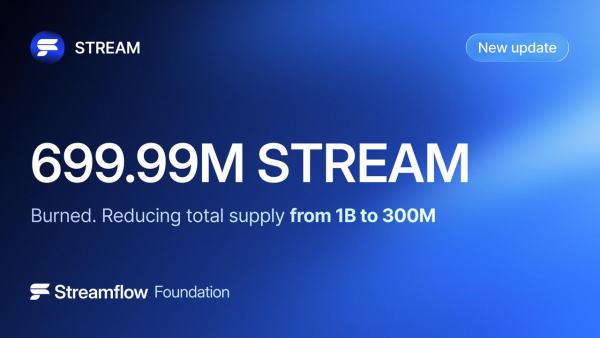
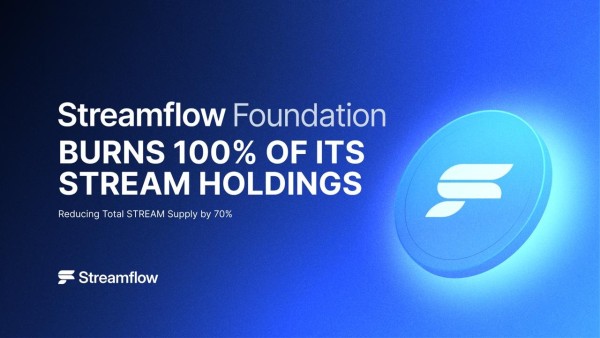
    Streamflow Foundation today announced that it has burned 699.99 million STREAM, permanently removing 70% of total token supply from circulation in a single on-chain transaction. The burn covers 100% of the Foundation’s allocation, both locked and unlocked, as well as a significant portion of the founder and future team allocation. Total supply now stands at 300 million STREAM, down from 1 billion.

    The tokens were destroyed through Solana’s programmatic burn instruction, which reduces total supply directly at the mint level. Nothing was moved to a wallet. There is nothing to recover, unfreeze, or reissue, and no future decision by Streamflow Foundation, Streamflow, or any affiliate can restore the tokens to supply.

    The burn is irreversible. It is recorded on-chain and can be independently verified by any observer on Solscan.

    Foundation treasury holdings typically represent the largest single variable in a token’s forward supply schedule. They can be distributed, sold, or emitted at the holder’s discretion, and the market has to price in every one of those possibilities. Streamflow Foundation has chosen to eliminate that variable outright rather than defer it through locks or policies that still depend on future decisions.

    “A treasury that can be spent is a treasury the market has to price in. Burning it outright is the only version of this commitment that doesn’t depend on anyone’s continued good intentions. The tokens are gone, the transaction is public, and no future decision can bring them back.” – Mališa Stanojević, CEO of Streamflow.

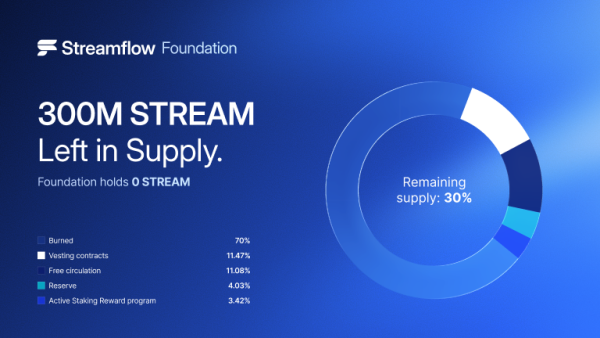
    With the overhang removed, every remaining STREAM is accounted for. Of the original total supply, the following remains:

    • 11.47% in existing vesting contracts for private investors and early contributors
    • 4.03% reserved for current and future team members to continue contributing
    • 3.42% currently in the Active Staking Rewards program
    • 11.08% freely circulating supply

    The full holder breakdown is public on Solscan and on the Streamflow Token Dashboard, where vesting contracts, staking positions, and circulating supply can be tracked in real time. Updated supply figures will be reflected on standard Solana token trackers and data aggregators as they index the transaction.

    Streamflow’s product operations are unaffected by the burn. The platform continues to operate token locks, vesting, staking, airdrops, payouts, and treasury tooling for projects building on Solana, with more than $650 million in total value locked across 40,000+ projects and 1.3 million users.

    About Streamflow

    Streamflow is a Solana-native token operations infrastructure platform that automates token distribution, locks, vesting, staking, airdrops, and payouts using on-chain smart contracts. More than 40,000 projects and 1.3 million users have used Streamflow, with over $650 million in total value locked. Streamflow’s contracts are audited by Neodyme, FYEO, and OPCODES, and the company is backed by Jump Crypto, Solana Ventures, IVC, John Lilic, and others.

    Media Contact: Andrija R., marketing@streamflow.finance

    Disclaimer:
    This announcement is for informational purposes only. It is not an offer to sell or a solicitation of an offer to buy any security in any jurisdiction where such an offer would be unlawful, and nothing in this announcement constitutes investment advice. The token burn described is a supply-management measure. It is not a price commitment, a guarantee of liquidity, or a representation regarding the future value, returns, or performance of STREAM. Readers should assess their own objectives and risk tolerance and seek full information before making any decisions.


  • Best Crypto Presale: 5 Reasons AlphaPepe Is Becoming the Meme Coin Buyers Don’t Want to Miss Twice

    PEPE taught retail a brutal lesson. The frog looked like another internet joke until the chart exploded, and the cheapest entry disappeared beneath worldwide attention. Buyers who noticed late could only watch faster wallets carry the strongest positions.

    AlphaPepe gives frog-coin buyers another starting line before public trading begins. More than 12,000 holders and $2.78 million in presale capital are already behind ALPE, while a working AlphaSwap product, four CEX partnerships and a final bonus deadline send retail one loud message. Do not wait to discover this frog after everybody else.

    Missing the First Frog Made Retail Watch Somebody Else Win

    PEPE became easy to understand after the market had already moved. The meme flooded social feeds, exchange listings placed it before funded accounts, and giant candles turned the frog into a worldwide crypto name. That is when late buyers arrived. They entered after the public had a chart to chase and after early wallets had already captured the part of the run everybody wanted.

    Five Reasons Buyers Are Moving Before AlphaPepe’s First Public Run

    1. AlphaPepe Has 12,000+ Holders Before Its First Public Chart

    AlphaPepe has already crossed 12,000 holders while ALPE is still waiting for its first public exchange chart. That puts the project in a position most meme coins never reach. The community is already built before the wider market can even watch ALPE trade.

    This is the part retail buyers cannot get later. Once the first public chart appears, everyone can see ALPE, track its price, and decide whether to enter. AlphaPepe buyers are getting access before that moment arrives.

    2. AlphaPepe Has Raised More Than $2.78 Million Before Launch

    AlphaPepe has raised more than $2.78 million while the token is still in presale. The money is already behind the project before ALPE reaches its first public trading market.

    That gives AlphaPepe more than a meme narrative. There is already a large holder base and millions of dollars committed before the wider market gets access. The public BlockSAFU audit also gives buyers a way to check the contract, with the audit showing a 10/10 score.

    3. AlphaSwap Gives AlphaPepe Real Utility Behind the Meme

    AlphaPepe is not relying on the frog branding alone. AlphaSwap Early Access is already live, giving users AI-powered information before they make a swap, including contract risk, holder concentration, liquidity, whale alerts, and market signals.

    That gives AlphaPepe something stronger behind the meme. Buyers are not waiting for a future product to appear after launch. AlphaSwap is already deployed and being developed as part of the AlphaPepe ecosystem.

    4. AlphaPepe Has Four CEX Partnerships Before Public Trading

    AlphaPepe has already announced four CEX partnerships with Azbit, BiFinance, Biconomy, and LATOKEN before ALPE begins public trading.

    That puts exchange access on the roadmap before launch instead of leaving buyers wondering where ALPE will trade. The partnerships give AlphaPepe routes toward a much wider audience when public trading begins, while current presale buyers are already inside before those exchange markets open.

    5. AlphaPepe Gives Buyers a Bonus That Has a Hard Deadline

    AlphaPepe’s bonus drop gives qualifying buyers a chance to receive up to 200% extra ALPE, but the offer ends on September 25, 2026. More than 500 buyers have already taken part.

    The maximum 200% reward adds twice the original amount again, meaning a qualifying purchase can receive three times the base ALPE amount. The key difference is the deadline. This is not an offer buyers can come back for later. Once September 25 ends, the bonus is finished.

    Why AlphaPepe Is Getting Attention Before Launch

    AlphaPepe is bringing together the pieces retail buyers usually look for after a meme coin becomes popular. It already has more than 12,000 holders, more than $2.78 million raised, a live AlphaSwap product, four announced CEX partnerships, and a bonus campaign with a fixed deadline.

    The biggest difference is timing. These pieces are already in place while ALPE is still in presale and before its first public exchange chart.

    AlphaPepe is therefore not asking buyers to wait for the project to become visible before taking notice. The community is already here, the product is already live, the exchange partnerships are already announced, and the current bonus is already running.

    The next stage is public trading. Once that begins, the early presale window and the September 25 bonus will both be behind buyers.

    VISIT ALPHAPEPE OFFICIAL WEBSITE

    FAQs

    Why are buyers calling AlphaPepe a frog coin they do not want to miss?

    AlphaPepe combines recognisable frog branding with more than 12,000 holders, a working AlphaSwap product, and announced exchange partnerships before public trading.

    How much has AlphaPepe raised before launch?

    More than $2.78 million has entered the AlphaPepe presale before ALPE begins public trading. That money represents funded buyer positions already building behind the project rather than passive followers waiting outside.

    When does the AlphaPepe bonus drop end?

    The final bonus drop ends September 25, 2026, with every qualifying draw adding extra ALPE and rewards reaching 200%. Buyers arriving after the deadline cannot use this campaign.

    Disclaimer:
    This article is for informational purposes only and does not constitute financial advice. Cryptocurrency investments carry risk, including total loss of capital.

    All market analysis and token data are for informational purposes only and do not constitute financial advice. Readers should conduct independent research and consult licensed advisors before investing.

    Crypto Press Release Distribution by BTCPressWire.com

  • XRP Price Could Crash Below $1 After CLARITY Act Failure as DigiTap Targets 100x Upside From $0.0589


    XRP is back under pressure after the U.S. Senate failed to advance the CLARITY Act on Sept. 15. The procedural vote ended 49-50, short of the 60 votes required, leaving the digital asset market structure bill stalled in the Senate. XRP price dropped sharply after the vote and now trades around $1.47.

    The $1 mark has already been tested this year, with XRP price briefly falling below it twice in August. That puts the downside debate back on traders’ screens. DigiTap ($TAP) presents a different trade at $0.0589. $TAP remains in presale before its first exchange listing, giving retail a much smaller starting price for the 100x calculation in the title.

    XRP Has Already Tested the $1 Level

    The CLARITY Act vote removed a near-term regulatory catalyst that crypto traders had been following throughout September. The official Senate record shows the motion to proceed failed on Sept. 15, with 49 votes in favor and 50 against. The vote did not settle the broader U.S. crypto regulation debate, but it stopped this version of the bill from advancing at that stage.

    XRP price responded with a steep selloff, trading near $1.28 the following day before recovering. The token is now around $1.47, still well above $1 but below recent September highs. The $1 discussion is not coming from an untouched price level. XRP slipped to roughly $0.99 in August before bouncing, showing that the market has already traded around that mark during 2026.  For retail buyers, XRP is now a large, established asset reacting immediately to regulation, market flows, and daily exchange trading. DigiTap sits much earlier in that process.

    DigiTap Starts at $0.0589 Before the First Exchange Trade

    DigiTap’s round 4 price stands at $0.0589 while $TAP remains pre-listing. That starting point is the main reason the token enters the 100x discussion. The math is direct. A 100x move from $0.0589 puts $TAP at $5.89.

    The retail appeal comes from where $TAP sits today. XRP already has years of trading behind it, while DigiTap has not started its first public exchange chart. Buyers searching for large percentage moves generally look further down the market because a smaller starting valuation leaves more room between the entry price and much higher price levels.

    That is the same reason early altcoins attracted attention before they became established names. The biggest percentage gains happened from smaller bases, not after years of public trading had already passed.

    Round 4 Is Closing In on Its Next Price Step

    The current DigiTap entry also has a defined presale window. Round 4 is already more than 90% sold, and the next presale price is set at $0.0594. For retail, the consequence is simple. Once round 4 ends, the $0.0589 stage ends with it. The same amount of money then buys fewer base $TAP tokens at the next presale price.

    This is different from waiting for XRP to find another support level on an exchange. DigiTap buyers are deciding whether to enter before the token reaches public trading at all. The 100x conversation therefore starts with the current presale price, not with a prediction about tomorrow’s candle. At $0.0589, the arithmetic points to $5.89 for a 100x move, while the current round continues moving toward its next scheduled price.

    $TAP Has Been Independently Audited

    DigiTap also enters the pre-listing stage with independent contract reviews already completed. $TAP has been audited by Coinsult and SolidProof, giving buyers third-party audit material to review before public trading begins. The audit does not change the 100x math. It supports the presale setup while the main story remains the entry price and timing.

    XRP is currently trading around $1.47 after another volatile week, with the $1 region already tested earlier this year. DigiTap remains at $0.0589 in Round 4 before listing. For retail buyers searching for the next lower-priced crypto entry, that difference in stage is where the comparison begins.

    Click To Visit DigiTap Website To Enter The Presale

    FAQs

    What is the most important difference between XRP and DigiTap ($TAP) right now?

    XRP is already a large, publicly traded cryptocurrency reacting to regulation, liquidity and daily market flows. DigiTap is still in presale at $0.0589 before its first exchange listing, placing $TAP at a much earlier stage of price discovery.

    What price would DigiTap reach after a 100x move?

    Starting from DigiTap’s current $0.0589 presale price, a 100x move would place $TAP at $5.89.

    Has DigiTap ($TAP) been independently audited?

    Yes. $TAP has been independently audited by Coinsult and SolidProof. The completed third-party audits add another proof point for buyers evaluating DigiTap while the token remains in its pre-listing presale stage.


    Disclaimer:
    This article is for informational purposes only and does not constitute financial advice. Cryptocurrency investments carry risk, including total loss of capital.

    All market analysis and token data are for informational purposes only and do not constitute financial advice. Readers should conduct independent research and consult licensed advisors before investing.

    Crypto Press Release Distribution by BTCPressWire.com

  • Best Crypto Presale: Why Wait Until DigiTap Lists When Buyers Can Still Get $TAP at $0.0589 Before the $0.0594 Jump?


    Crypto presales are built around timing. Buyers either enter at the price available today or arrive after the sale moves forward and pay the next rate. DigiTap has reached that point in Round 4, with more than 90% of the current allocation already sold and $TAP still priced at $0.0589.

    The next presale price is already set at $0.0594. That puts the current decision in plain retail terms: buyers entering now receive $TAP at the Round 4 price, while buyers entering after this stage closes receive fewer tokens for the same amount of money. DigiTap does not need an exchange listing to create that difference. The next price change happens inside the presale.

    Round 4 Is Already More Than 90% Sold

    DigiTap has moved through most of its current round, leaving less than 10% of the Round 4 allocation available at $0.0589. The importance of that figure is not the percentage itself. It is what happens after the remaining allocation is sold.

    The presale moves to $0.0594. A buyer entering after the price increase spends more for the same number of $TAP tokens than someone buying during Round 4. That is the immediate reason the current stage matters.

    This keeps the best crypto presale discussion straightforward. There is no need to build the argument around a distant market forecast or a long list of future announcements. DigiTap already has a defined current price, a defined next price, and a round that is more than 90% sold. For retail buyers, the difference comes down to entry. Waiting does not unlock a lower presale rate. It moves the buyer into the next one.

    The $0.0589 Entry Has a Clear End Point

    Crypto buyers often wait for more attention before entering a token. The trade-off is that wider attention usually arrives later in the process. DigiTap’s presale makes that timing visible because each round has its own entry price.

    $TAP is currently priced at $0.0589. Once round 4 closes, that rate is replaced by $0.0594. Public exchange trading comes later, so buyers waiting for a listing are also giving up the current presale entry.

    The difference between the two presale prices is small on a single token. Across a larger purchase, the same budget buys more $TAP before the step up. Presales reward the earlier entry through token quantity, and DigiTap’s next step is already defined.

    That gives buyers a specific event to watch rather than an open-ended promise. Round 4 is nearing completion, and its price ends with it.

    $TAP Has Been Reviewed by Two Audit Firms

    Price is the main story in this round, but buyers also have published contract reviews available before entering. $TAP has been independently audited by Coinsult and SolidProof, with DigiTap linking both security reviews from its presale site.

    The audit point does not change the current presale price or the move to $0.0594. It gives buyers third-party material to review while the token is still in presale rather than waiting until public trading starts.

    That matters for a retail audience because the information is available before the buying decision. Buyers can check the published audit material, look at the current round, and decide whether the $0.0589 entry fits what they are searching for.

    Waiting Until Listing Means Missing This Presale Price

    An exchange listing changes how buyers access a token. Once $TAP reaches public trading, the round 4 presale price will already be history. Buyers on exchanges will trade against the market price available at that time rather than returning to $0.0589.

    DigiTap is not at that stage yet. Round 4 remains open, more than 90% has been sold, and the next presale step is $0.0594. Those are the facts driving the current urgency. For buyers searching for the best crypto presale, the relevant question is therefore not what happens years from now. It is whether there is a reason to pay attention before the next scheduled change. With the current round nearing completion, DigiTap has that event directly ahead.

    Click To Visit DigiTap Website To Enter The Presale

    FAQs

    What is the current DigiTap presale price?

    $TAP is currently available at $0.0589 in Round 4. The next presale price is set at $0.0594.

    Why does Round 4 matter for buyers?

    Round 4 is already more than 90% sold. Once the current allocation closes, the $0.0589 entry ends and the presale moves to the next price.

    Has $TAP been audited?

    Yes. $TAP has published independent smart contract audits from Coinsult and SolidProof, with the audit material available before the token reaches public exchange trading.

    Disclaimer:
    This article is for informational purposes only and does not constitute financial advice. Cryptocurrency investments carry risk, including total loss of capital.

    All market analysis and token data are for informational purposes only and do not constitute financial advice. Readers should conduct independent research and consult licensed advisors before investing.

    Crypto Press Release Distribution by BTCPressWire.com

  • Next Crypto To Explode: DigiTap Has 10,000 Cards Issued Before $TAP Lists, and Retail Can Still Enter at $0.0589


    Crypto buyers searching for the next crypto to explode usually face the same timing problem. By the time a token is widely traded, followed across exchanges and appearing on every market screen, the earliest entry has already passed. DigiTap is still before that point.

    DigiTap has now issued more than 10,000 cards while $TAP remains in presale at $0.0589. The number that matters here is not another fundraising total or token-sale milestone. It is the card count, because it shows the DigiTap product reaching users before the token reaches public exchange trading.

    10,000 Cards Put Product Use Ahead of the Token Listing

    DigiTap’s card rollout gives retail buyers a simple way to judge where the project stands. More than 10,000 cards have already been issued, yet $TAP has not started trading on public exchanges. Card issuance does not mean 10,000 token holders or investors, but it does show that the product has moved beyond a future promise.

    That matters in a presale because timing is the point of an early entry. Buyers are not waiting for DigiTap to reveal whether a card product exists after the token lists. The cards are already being issued while the presale is still open.

    For someone searching for the next crypto to explode, that changes the setup. The token is still at the stage where retail can buy before an exchange chart exists, while the product behind the presale is already reaching users. The product and token have reached different stages, and that is where the current entry comes into focus.

    The Beta App Is Already Available

    The card milestone is backed by DigiTap’s live beta app, which is downloadable through the App Store and Google Play. This gives the 10,000-card figure a product behind it: the cards sit inside an app that people can already access rather than a launch date that only exists on a roadmap.

    Retail buyers do not need a technical breakdown to understand the difference. An app that can be downloaded today gives them something concrete to see before $TAP lists. The sales case stays focused on what exists now rather than a long list of future features.

    It also makes the presale stage easy to understand. DigiTap has already placed the beta in mobile stores and issued thousands of cards, but the token itself remains at $0.0589 before public exchange trading begins. Buyers who arrive after listing will be entering at a different stage.

    $TAP Is Still Priced Before Its First Exchange Chart

    Digitap ($TAP) remains in round 4 at $0.0589. That price belongs to the presale, not to an exchange market where buyers and sellers are already moving the token around a public chart. This is where the current setup matters for retail. The 10,000-card milestone has arrived first. The exchange chart comes later. Buyers can still enter during the period between those two events.

    Old altcoin runs are remembered for the large moves that came after listing, but the earliest buyers entered before the asset became a familiar ticker. Once public trading begins, that stage is finished. DigiTap is still there now, with card activity already underway before $TAP reaches exchanges.

    The Next Crypto To Explode Search Comes Back to Timing

    For DigiTap, the next crypto to explode story comes down to timing. More than 10,000 cards have been issued, the beta app is available, and $TAP remains in presale before its first exchange trade. Retail buyers therefore have a straightforward choice about when they pay attention. Waiting for an exchange listing means waiting until the current pre-listing stage has already passed. The cards and beta are giving buyers product evidence before that transition happens. At $0.0589, retail still has access to the presale while the card rollout is already underway. That is what puts DigiTap into the next crypto to explode conversation now: the product has started reaching users while the token is still available before public trading begins.

    Click To Visit DigiTap Website To Enter The Presale

    FAQs

    Why are 10,000 DigiTap cards important for $TAP buyers?

    More than 10,000 cards have been issued while $TAP is still in presale. The figure shows product activity before the token begins public exchange trading, without treating card users as token holders or investors.

    What is the current DigiTap presale price?

    $TAP is currently priced at $0.0589 in Round 4. Public exchange trading has not started yet.

    Is the DigiTap app already available?

    Yes. DigiTap has a beta app available through the App Store and Google Play, giving buyers access to the product while $TAP remains in presale.

    Disclaimer:
    This article is for informational purposes only and does not constitute financial advice. Cryptocurrency investments carry risk, including total loss of capital.

    All market analysis and token data are for informational purposes only and do not constitute financial advice. Readers should conduct independent research and consult licensed advisors before investing.

    Crypto Press Release Distribution by BTCPressWire.com

  • Chainlink Whales Buy $120M of LINK as DigiTap Buyers Hunt the Earlier Entry That Made Old Altcoin Winners Explode


    Chainlink whale activity increased after large wallets accumulated about $120 million worth of LINK during a recent pullback. Santiment data shared by analyst Ali Martinez showed roughly 10.36 million LINK added over 96 hours after the token fell 17% from its recent high.

    The buying puts an established altcoin back in front of traders, but DigiTap offers a different point of entry. $TAP is still in presale at $0.0589, before its first exchange trade, while the DigiTap beta app is already downloadable on the App Store and Google Play. The comparison centers on timing: LINK has years of public trading behind it, while $TAP has not started its exchange chart.

    Chainlink Whales Are Buying After Years of LINK Trading

    Chainlink has been trading since 2017 and has moved through several crypto cycles. CoinGecko records LINK’s historical low at about $0.15 and its all-time high above $50, showing how much the entry changed as the token moved from its early years into an established exchange asset.

    The latest whale buying came after LINK pulled back from its September high. Large wallets added around $120 million in LINK over four days, according to the Santiment data shared by Martinez. These buyers are adding to a token that already trades across major exchanges and has almost a decade of market history.

    For retail buyers, that makes today’s LINK trade different from buying Chainlink in its earliest years. The token already has a public chart, established liquidity, and a market price available around the clock. The entry that existed before LINK became a familiar crypto ticker is no longer available.

    DigiTap Is Still Before Its First Exchange Trade

    DigiTap remains on the other side of that line. $TAP has not started public exchange trading, so presale buyers are entering before the first exchange candle appears. That is the main reason DigiTap fits an earlier-entry search. The token is not being bought after several market cycles or years of exchange trading. Its current $0.0589 presale price is available before public-market buyers have had their first chance to trade $TAP.

    The difference is simple for retail. Once a token lists, buyers move from a presale into a live market where prices change with each trade. DigiTap has not reached that point yet. Buyers are still entering at the stage that established altcoins such as Chainlink passed years ago.

    DigiTap Already Has Its Beta Live During the Presale

    DigiTap pairs its pre-listing entry with a product that buyers can already access. The beta app is downloadable through both the App Store and Google Play while $TAP remains in presale. More than 10,000 cards have also been issued during the presale. That figure refers to cards issued, not token holders or investors. It shows that the product is already reaching users before $TAP begins public exchange trading.

    This gives retail buyers two separate stages to watch. The product is already available in beta, while the token is still before listing. Buyers do not have to wait for the first version of the app to appear after $TAP reaches exchanges. That timing is what separates DigiTap from an established altcoin trade. Chainlink buyers are purchasing LINK after years of public trading. DigiTap buyers still have access to $TAP before its first public-market chart.

    Chainlink’s Early Entry Is Already History

    Chainlink’s price history shows how much an altcoin’s entry price changes over time. LINK once traded for cents before later reaching a record above $50. Those prices came at very different stages in the token’s history, and today’s buyers cannot return to Chainlink’s earliest market years.

    DigiTap remains before that public-market transition. $TAP is still priced at $0.0589 in presale, the beta app is already downloadable, and more than 10,000 cards have been issued. Whales are adding LINK after a pullback in an established market. DigiTap buyers are entering before $TAP reaches its first exchange trade. For retail traders hunting the earlier entry that defined many old altcoin runs, that difference in stage is the reason DigiTap is entering the conversation now.

    Click To Visit DigiTap Website To Enter The Presale

    FAQs

    How much LINK did Chainlink whales buy?

    Santiment data shared by analyst Ali Martinez showed large entities accumulating roughly 10.36 million LINK, worth about $120 million, over 96 hours after a 17% pullback.

    Why does DigiTap offer an earlier entry than Chainlink?

    LINK has years of public exchange trading behind it. $TAP remains in presale at $0.0589, before its first public exchange trade.

    Does DigiTap already have a product?

    Yes. DigiTap has a beta app available on the App Store and Google Play, with more than 10,000 cards issued while $TAP remains in presale.

    Disclaimer:
    This article is for informational purposes only and does not constitute financial advice. Cryptocurrency investments carry risk, including total loss of capital.

    All market analysis and token data are for informational purposes only and do not constitute financial advice. Readers should conduct independent research and consult licensed advisors before investing.

    Crypto Press Release Distribution by BTCPressWire.com

  • Best Crypto To Invest In: Why Whales Are Looking Beyond Ethereum as DigiTap Offers the Earlier-Stage Upside ETH Once Had


    Ethereum is moving again. After a late-August rally of more than 30%, ETH price broke out of a bullish consolidation pattern this week, with recent analysis pointing toward $3,050 as the next major chart target. That keeps Ethereum firmly in the best crypto to invest in conversation, but big wallets are not stopping at ETH.

    Whale activity this month has also spread into smaller altcoins. Nansen-labelled wallets increased holdings in names including Uniswap, Orca and Pump.fun during September, showing that large holders are still searching beyond the biggest assets for fresh opportunities. That is where DigiTap enters the picture. $TAP is still priced at $0.0589 before exchange trading begins, giving retail something Ethereum can no longer offer: an entry before the first public chart, while the beta product is already live.

    Ethereum Is Moving, but the Early ETH Trade Is Long Gone

    Ethereum has earned its place near the top of crypto. The network has survived multiple cycles, built a huge ecosystem, and remains one of the first assets institutions watch when capital moves beyond Bitcoin. Its latest breakout shows there is still plenty of appetite for ETH.

    But investors searching for the kind of upside associated with Ethereum’s earliest years are asking a different question. They are not only asking whether ETH can rise again. They are asking where the market still offers a token before broad exchange access, before years of public trading and before everyone already knows the ticker.

    That distinction matters. Ethereum can keep climbing while smaller opportunities attract buyers looking for a much earlier entry. Whale movement into other tokens this month shows that the search is already widening. Retail buyers looking even further down that ladder are now finding DigiTap before $TAP has made its first exchange trade.

    DigiTap Is Still Where Ethereum Once Was: Before the Crowd Arrives

    The biggest Ethereum gains people remember did not begin after ETH became one of crypto’s largest assets. They came when buying Ethereum meant getting into something far less established, before years of price history made the opportunity obvious.

    DigiTap is selling that earlier-stage setup at $0.0589. There is no public $TAP chart yet and no years of market history already priced into the token. Buyers entering the presale are getting access before exchange traders have their first chance to buy it.

    That is the part that can become painful to notice late. Once a token reaches public markets, the conversation changes quickly. New buyers are no longer choosing whether to enter before listing. They are watching candles move and deciding whether to chase what earlier buyers already secured.

    DigiTap Already Has Something Behind the Pre-Listing Story

    Finding one with a product already in users’ hands is harder. DigiTap’s beta app is already downloadable through the App Store and Google Play while $TAP remains in presale. More than 10,000 cards have also been issued before the token has started public exchange trading. Those two facts change the way buyers can look at the entry.

    The attraction is not a distant promise that a product will eventually appear after the token launches. The beta is already there while the token remains at presale pricing. That gives buyers a chance to discover DigiTap while the product story and the token story are still at very different stages. That is exactly the kind of setup people often wish they had noticed sooner. Once an app has more users, the card gets more visibility and $TAP has a public chart; nobody gets to go back and buy at the pre-listing stage.

    The Best Crypto To Invest In Search Is Moving Earlier

    Whales spreading attention beyond ETH is a useful reminder of how crypto capital behaves. Once a large asset has already made its name, buyers naturally start hunting for the next place where the starting point is smaller. September’s whale positioning across multiple altcoins shows that search is already happening beyond Ethereum.  The live beta and issued cards give buyers something concrete to watch before that changes. At $0.0589, the decision is still being made during the presale rather than after DigiTap becomes another ticker moving across an exchange screen.

    Click To Visit DigiTap Website To Enter The Presale

    FAQs

    Why are whales looking beyond Ethereum?

    Large wallets have been increasing holdings across several altcoins during September, showing that attention is spreading beyond the biggest crypto assets even as Ethereum remains strong.

    Why is DigiTap being compared with early Ethereum?

    The comparison is about the entry stage, not technology. Ethereum is now a mature, publicly traded crypto asset, while $TAP is still in presale before its first exchange trade.

    What is the main reason buyers are watching DigiTap now?

    DigiTap combines a $0.0589 pre-listing entry with a beta app that is already downloadable and more than 10,000 cards issued. The product is already reaching users while $TAP is still available before public exchange trading.

    Disclaimer:
    This article is for informational purposes only and does not constitute financial advice. Cryptocurrency investments carry risk, including total loss of capital.

    All market analysis and token data are for informational purposes only and do not constitute financial advice. Readers should conduct independent research and consult licensed advisors before investing.

    Crypto Press Release Distribution by BTCPressWire.com

  • Dogecoin News: DOGE Jumps 15% After X Opens Trading as Pepeto Presale Tops $11 Million thumbnail

    Dogecoin News: DOGE Jumps 15% After X Opens Trading as Pepeto Presale Tops $11 Million

    Something shifted in the dogecoin news this week, and most traders caught only half the story. X went live with direct crypto trading on September 16, linking Coinbase, Gemini, and Kraken to every post on the platform, per CoinCodex. DOGE jumped 15% to $0.1059 in hours, per Coin-Turk. The last time a meme coin got this kind of instant reach, the move that followed lasted weeks, not hours. That shift is changing how traders pick their next entry. Money is moving into a presale called Pepeto that has already raised more than $11 Million.

    What Is the Biggest Dogecoin News This Week?

    The dogecoin news this week starts with X. The social app with over 600 million users turned on direct crypto trading on September 16, per CoinCodex. Users can now click any $DOGE tag on the feed and buy right from the app. Coinbase, Gemini, Kraken, Moomoo, and Interactive Brokers all plug in. DOGE hit $0.1059 the same day before fading back, per Coin-Turk. The same week, Glassnode flagged a shift to altcoin season for the first time since January. When meme coins land on a social app this big, the ones with real tools tend to move the most.

    Which Coins Are Leading the Dogecoin News Cycle in September 2026?

    How Is Pepeto Building a Zero Fee Exchange Before Its Listing?

    While X turned every post into a trade button, one presale token was already building the exchange. Pepeto is gaining ground across crypto as its presale has now pulled in more than $11 Million.

    Buyers keep coming in faster with each new round. The price goes up every time a stage fills. The first buyers sit on the biggest gap between what they paid and what comes next.

    Traders lose real money each year to swap fees. A $1,000 trade costs $3 on Uniswap and $2.50 on PancakeSwap. On PepetoSwap, that same trade costs zero. The exchange is already live with no fees, and the user pays only the gas. It runs market, limit, and DCA orders with front running blocked through a private relay.

    PepetoSwap has pushed $50 million in daily volume and it keeps growing. A bridge for cross chain moves also sends tokens across Ethereum, BNB Chain, Solana, Base, and Arbitrum. Each send takes under 60 seconds and costs nothing.

    The token has a fixed 420 trillion supply. SolidProof ran the full audit, which takes away the contract risk that kills most presales before they ever list. The cofounder built the first Pepe coin. A former Binance expert is on the dev team. Staking pays 162% APY, and rewards unlock at the listing.

    At $0.0000001896, this is the cheapest entry this token will ever offer. The traders who found Pepe at this stage turned small buys into big money. Pepeto is the dogecoin news story most traders have not read yet.

    Can Shiba Inu Break Out of Its Range?

    Shiba Inu sits at $0.0000060 on CoinGecko, up about 7% in the last day as the rally lifted meme coins. On September 11, Bitwise shut down its DOGE ETF called BWOW, per Crypto.com, which cut one source of buying for the space. SHIB still has one of the biggest groups in crypto. The honest read is that most of the fast money is done. The rest of the gains are the slow kind.

    Is Pepe Coin Still Growing After Its Pump?

    Pepe sits at $0.0000047 per CoinMarketCap, after jumping 22% in 24 hours on September 22. The token led all meme coins that day, per Coinbase. That kind of move turns heads. But PEPE has a $1.43 billion market cap now. A 100x from here would put it past most large cap coins. The math gets harder with each new dollar the price adds.

    Conclusion

    The big meme coins moved this week because X made trading one tap away. DOGE and PEPE both jumped on the dogecoin news. But both already sit at market caps in the billions. The gains from here are real, but not the kind that turn a small entry into something big.

    Pepe coin showed what happens when buyers find a project at the start. The people who got in early saw gains that changed their lives. The same setup is forming around Pepeto right now, only the crowd has not caught up yet. More than $11 Million from real buyers says the signal is clear. The question is whether the reader acts before the Pepeto official website shows a higher price, or reads about it after. Every cycle, the ones who move first are the ones telling the story later.

    Click To Visit Pepeto Website To Enter The Presale

    Disclaimer:
    This article is for informational purposes only and does not constitute financial advice. Cryptocurrency investments carry risk, including total loss of capital.

    All market analysis and token data are for informational purposes only and do not constitute financial advice. Readers should conduct independent research and consult licensed advisors before investing.