Category: BigNewsNetwork

  • Pepeto Price Prediction: Token Could Surge After Listing as Users Dump Bitcoin in One Hour thumbnail

    Pepeto Price Prediction: Token Could Surge After Listing as Users Dump Bitcoin in One Hour

    Bitcoin just posted its fifth consecutive monthly loss, the worst streak since 2018. The entire crypto market lost $75 billion in sixty minutes. Bitcoin dropped to $63,640. Ethereum fell to $1,856. Over $260 million in leveraged positions got liquidated across 96,000 traders.

    But large investors are not panicking. They are repositioning. While retail traders sell at a loss, whale wallets are quietly accumulating early stage tokens like Pepeto. The latest Pepeto price prediction making rounds in the market is that the token could surge after its anticipated listing. This positive outlook could make it one of the best cryptos to buy right now.

    Bitcoin Whales Accumulate Through the Crash

    In the last 24 hours, something important happened beneath the surface. Bitcoin tried to reclaim $70,000 on Wednesday and got within touching distance. Then the rug got pulled. Hot producer price data killed rate cut hopes. Nvidia dropped 4.2% after earnings.

    But here is what reported that most people missed. Exchange netflows show roughly 522 BTC leaving platforms even during the crash. That means someone is buying spot Bitcoin and moving it to cold storage while everyone else sells. The Fear and Greed Index sits at 11. That number has only appeared three times in crypto history. Each time marked the exact bottom before a massive rally.

    Those same whales who orchestrated the dump are the ones buying at the bottom. They crashed the market to shake out weak hands. They triggered liquidations to collect cheap supply. And while retail panicked, they rotated capital into presale tokens like Pepeto at $0.000000186. They are preparing for the big bull run coming soon.

    Pepeto Price Prediction: Why the God of Frogs Could Deliver 

    The global meme coin market generated over $30 billion in volume this cycle. But that volume has been pure speculation on tokens with zero infrastructure. Pepeto is changing that equation entirely. The project is not just a meme. It is the God of Frogs, a cultural movement building real gravity in the crypto space.

    According to, cultural movements in crypto consistently outperform technical projects because community loyalty compounds over time. Pepeto has both. The culture is growing. The products are close to launch.

    The team has announced three products approaching readiness. PepetoSwap for zero fee cross chain meme coin trading. Pepeto Bridge for cross blockchain token routing. Pepeto Exchange for curated verified meme coin listings. These products serve the entire $30 billion meme economy. No other project has built dedicated infrastructure for this sector.

    pepecoin

    The presale has raised over $7.2 million. The price is $0.000000186. That is six zeros. DOGE started at six zeros and reached $0.73. SHIB started at similar levels and hit a $40 billion cap. PEPE started at six zeros and touched $7 billion. None of them had products. Pepeto has three.

    A investment at current pricing becomes investment becomes investment becomes. Staking rewards of  APY add passive returns on top. Dual audits from SolidProof and Coinsult confirm zero critical vulnerabilities. The confirmed listing is in preparation.

    The Pepeto price prediction is bullish because the math is simple. Low cap, real products, proven cofounder, and cultural momentum that strengthens during fear. This is the entry that disappears when the market turns.

    Click To Visit Pepeto Website To Enter The Presale

    FAQs

    Is Pepeto a good investment during this market crash?

    Many investors are accumulating Pepeto during the crash because presale pricing at $0.000000186 offers maximum upside before listing. Whale wallets have increased their positions during this exact downturn.

    What is the Pepeto price prediction for 2026?

    The Pepeto price prediction is that the token could surge or more after listing based on its three product ecosystem, proven cofounder, and cultural momentum as the God of Frogs movement.

    Which crypto presale could deliver the highest returns this year?

    Pepeto stands out with six zero pricing, $7.2 million raised, three products close to launch, and return potential that far exceeds large cap alternatives at current market conditions.

    Disclaimer:
    This article is for informational purposes only and does not constitute financial advice. Cryptocurrency investments carry risk, including total loss of capital. Readers should conduct independent research and consult licensed advisors before making any financial decisions.

    This publication is strictly informational and does not promote or solicit investment in any digital asset

    All market analysis and token data are for informational purposes only and do not constitute financial advice. Readers should conduct independent research and consult licensed advisors before investing.

    Crypto Press Release Distribution by BTCPressWire.com

  • Paying for Presence: Why Skilled Emotional Holding Isn’t Just Kindness thumbnail

    Paying for Presence: Why Skilled Emotional Holding Isn’t Just Kindness

    There is a particular kind of discomfort that arises when someone we love is suffering, when the air in the room feels thick with grief, uncertainty, or the quiet weight of what cannot be fixed, and we find ourselves reaching for something to say, something to do, something that will make the unbearable feel even slightly more bearable, and yet language fails us, action feels insufficient, and the only thing left is simply to stay present in the fullness of that ache with another human being.

    Most people, at some point in their lives, have offered a version of this presence, sitting with a grieving friend, holding space after a loss, staying on the phone through a sleepless night,  and because this impulse is so deeply human, so naturally woven into how we love one another, there can be a tendency to assume that professional emotional holding is simply a formalized, paid version of the same instinct, as though skilled grief support and compassionate end-of-life care are just kindness with an invoice attached.

    What that assumption overlooks, and this is the heart of the conversation, is that the kind of presence offered by trained practitioners, including those understanding the role of a death doula, is built on a foundation of rigorous inner work, professional training, trauma-informed frameworks, and the hard-won ability to regulate one’s own nervous system in the middle of another person’s most destabilizing moments, which is not something most human beings can do naturally, consistently, or without significant preparation.

    This article is not a defense of pricing models or a push toward any particular service,  it is an honest, grounded exploration of what emotional holding actually requires when it is practiced with skill and integrity and why communities that understand this distinction are better positioned to seek, offer, and value the kind of support that truly meets people in the depths of grief, transition, and end-of-life experience.

    If you have ever wondered why professional grief support, spiritual companionship, or death doula care costs money, or if you have ever felt faintly guilty charging for your own presence-based work, this conversation is for you, and it begins with a question that is deceptively simple: what does it actually take to hold someone emotionally and to do it well?

    What Emotional Holding Actually Requires

    When we talk about emotional holding in a professional context, we are not describing the gentle, spontaneous comfort that flows between people who love each other; we are describing a deliberate, sustained, boundaried practice of being with another person’s experience without collapsing into it, fixing it, spiritually bypassing it, or unconsciously directing it toward a resolution that would make the holder feel more comfortable rather than the person being held.

    Trained practitioners who work in this space, whether as death doulas, spiritual guides, trauma-informed energy workers, or holistic end-of-life companions, spend significant time learning to recognize and manage their own somatic responses to grief, suffering, and the proximity of death, because the body has its own reactions to these energies. and an untrained holder can inadvertently transmit anxiety, urgency, or unresolved fear directly into a space that desperately needs calm.

    This is often called nervous system attunement, the capacity to sense what is happening in the emotional field of a room or a session, to notice one’s own physiological responses, and to consciously bring the body and breath back to a place of grounded steadiness so that the person receiving support can, through co-regulation, access a calmer state than they might be able to reach on their own.

    It requires not just empathy, which is innate in many people, but the disciplined development of what practitioners call presence, a quality of attention that is full, non-reactive, boundaried, and sustained across sessions and circumstances that most people would find emotionally overwhelming, including vigils, unexpected deaths, family conflict in acute grief, and the complex spiritual terrain of someone actively preparing to die.

    None of this is learned by being kind, by caring about people, or even by having personally experienced grief; it is learned through training, mentorship, supervision, practice, reflection, and a sustained commitment to doing the internal work that allows another person’s pain to move through you without pulling you under.

    The Training Behind the Stillness

    Professional emotional holding sits at the intersection of several disciplines, psychology, somatic awareness, spiritual care, trauma theory, and often palliative medicine, and practitioners who work in this space with genuine skill have typically drawn from all of these areas in building their competency, even when their work does not fall under a clinical or licensed umbrella.

    Trauma-informed spiritual care, for example, requires practitioners to understand how traumatic experience is stored in the body and nervous system, how it can be activated by the conditions surrounding death or profound loss, and how to modify their approach, their language, their physical positioning, their pacing, and their use of silence, in real time, based on cues that a person in acute distress may not even be consciously sending.

    End-of-life doulas, in particular, often hold multiple skill sets simultaneously: they may be supporting a dying person’s spiritual process while also managing the emotional dynamics of a family in crisis, facilitating conversations about legacy and meaning, providing psychoeducation about the natural dying process, and doing all of this while maintaining clear professional boundaries that protect both the client and themselves.

    The practice of holistic end-of-life care is built on the understanding that dying is not only a medical event but a profoundly human one and that what people need in this passage goes far beyond symptom management; they need to feel witnessed, to have their spiritual questions honored, to feel that someone can stay calm in the room without flinching, and to know that their unique, irreplaceable life is being held with the gravity and tenderness it deserves.

    When practitioners offer this with skill, they are drawing on hours of training, years of supervised practice, and a continuous process of personal growth that does not end with a certification, and the fee for this service reflects not just time but the full architecture of expertise that makes the work safe, boundaried, and genuinely effective.

    The Misconception That Care Should Be Free

    There is a cultural narrative, particularly in spiritual and holistic communities, that care work should be offered freely, or at minimal cost, because charging for presence feels transactional, because healing is sacred, or because truly compassionate people should not need to be paid for what comes naturally to them, and while this sentiment is rooted in genuine values around accessibility and generosity, it has quietly contributed to the devaluation and burnout of some of the most skilled, most needed practitioners in the wellness landscape.

    The logic, when examined, does not hold: we do not expect surgeons to operate for free because they care about people, nor do we expect therapists to see clients without compensation because emotional support is a natural human impulse, and the reason we accept payment in those contexts is because we understand that the work requires something that transcends bare caring, something that is built over time, something that depletes the practitioner and must be replenished.

    Presence-based work is no different in this regard for a skilled death doula, spiritual companion, or energy practitioner who sits with someone through the most vulnerable terrain of their life is giving something that is not infinite, that costs them something real, and that requires maintenance in the form of ongoing education, supervision, self-care, and the careful management of their own emotional and energetic resources.

    Acknowledging the financial dimension of this work is not a betrayal of its sacred nature, it is an act of honesty about what it costs to do it well, and it is also, perhaps more importantly, an act of respect toward the practitioners themselves, many of whom have spent years navigating the false choice between their spiritual values and their material sustainability.

    Communities that can hold both of these truths, that healing work is sacred and that skilled practitioners deserve fair compensation, create conditions where this work can thrive, where talented people are not forced out of the field by financial unsustainability, and where those seeking support can access it from practitioners who are rested, resourced, and genuinely well.

    Recognizing Skilled Presence in a Practitioner

    If you are someone navigating grief, supporting a loved one through a life transition, or seeking holistic end-of-life support, one of the most useful things you can do is to develop a sense for what skilled presence actually looks and feels like, because not all practitioners who offer emotional support have done the internal work necessary to offer it safely, and discernment is both appropriate and important in this space.

    Skilled practitioners tend to share certain qualities: they are comfortable with silence and do not rush to fill it; they follow your lead rather than directing your experience toward a predetermined outcome; they maintain clear and transparent boundaries without becoming cold or clinical; and they are able to speak honestly about what their work includes and what it does not, including referring you elsewhere when your needs fall outside their scope.

    Trauma-informed practitioners will typically discuss consent explicitly; they will ask rather than assume, they will check in during sessions, and they will offer choices rather than directives, because they understand that autonomy and choice are themselves healing forces for people who have experienced loss of control through grief, illness, or trauma.

    You should also feel, over time, that the support you receive is building your own capacity to navigate difficulty, not creating dependency on the practitioner, because skilled emotional holding has a generative quality that good practitioners understand: it is not about being needed indefinitely but about walking alongside someone until they find their own footing in unfamiliar terrain.

    Trust your body’s responses in these conversations; skilled presence tends to create a quality of felt safety that is distinct from social niceness, a sense of being genuinely met rather than managed, and if you notice that quality in a practitioner, it is worth understanding that it did not arrive by accident.

    Holding the Weight Well

    The work of compassionate presence, whether offered in the context of grief support, end-of-life care, or trauma-informed spiritual guidance, is among the most demanding forms of professional care that exist, not because it requires physical strength or intellectual complexity, but because it requires the full deployment of a human being’s emotional, spiritual, and somatic resources in service of another person’s most vulnerable experience.

    When we understand this, the question of payment transforms from something uncomfortable into something clarifying: paying for skilled emotional support is a way of acknowledging that the practitioner has built something real, that the work requires something sustainable, and that what is being offered is not simply the warmth of a caring person but the refined, boundaried, tested capacity to hold the heaviest human experiences with both steadiness and grace.

    This does not make presence transactional,  it makes it honest, and honesty, in spaces defined by grief and transition and the great unknowns at the edge of life, may be one of the most profound forms of care available.

    If you are exploring this kind of support for yourself or someone you love, take your time, ask questions, trust your instincts, and do not let the financial dimension of the conversation stop you from finding someone who can genuinely meet you where you are, because the right support, offered with real skill, can be one of the most quietly transformative experiences of a life.

    And if you are a practitioner in this space who has struggled with the tension between spiritual vocation and fair compensation, know that your sustainability is not separate from your service; it is the foundation of it.


  • How Essor Studios Is Rewriting the Rules of Creator Monetisation Through Web3 and Internet Capital Markets thumbnail

    How Essor Studios Is Rewriting the Rules of Creator Monetisation Through Web3 and Internet Capital Markets

    The creator economy was supposed to be the great equalizer. Build an audience and produce content, and the money will follow. For millions of creators, that promise has held up just well enough to keep them chasing it, but rarely well enough to make it sustainable. Ad revenue fluctuates with platform algorithms. Brand deals dry up when engagement dips. Sponsorships go to the biggest accounts while everyone else waits. The infrastructure powering the creator economy was never really built for creators. It was built for platforms.

    That tension has been quietly building for years, and it’s now driving a serious rethink about how attention can be converted into real income streams. And the answer, it turns out, is no longer a better ad network or a smarter affiliate program. It’s a fundamentally different architecture, one that’s based on Web 3 and tokenization and a new financial construct that more and more people in the industry are beginning to refer to as Internet Capital Markets.


    The infrastructure shift: Web3 and blockchain are creating entirely new models for how value flows across the internet.

    The Problem With the Old Model

    In order to understand the need to do something new, it’s helpful to understand the ways in which the old model has failed to sustain itself over time. Platform-dependent monetization is a fundamentally unstable model. A creator looking to build a revenue stream based on YouTube ad revenue is, in fact, looking to build a revenue stream based on an algorithm that isn’t theirs to control or a revenue share that was never up for negotiation in the first place.

    While brand deals provide better rates, they also have their own set of limitations and constraints such as negotiation cycles, creative limitations, and the general fatigue and pressure to increase followers instead of actual influence. Sponsorships tend to reward reach over depth. The creator who has cultivated a deeply engaged niche community often earns less than someone with three times the followers and a fraction of the trust.

    What these models share is a common flaw: they tie a creator’s income to variables entirely outside their control. There is no ownership. There is no asset.

    What these models share is a common flaw. They tie a creator’s income to variables outside their control, platform policy, advertiser budgets, algorithmic favor, and the whims of the attention economy. There is no ownership. There is no asset. There is only the next upload and the hope that the metrics hold.

    A New Infrastructure Takes Shape

    Web3 has been discussed in creative circles for several years, often in ways that generated more noise than clarity. The early narrative around NFTs captured attention but left many creators uncertain about practical applications. The technology, though, kept developing, and the underlying infrastructure of blockchains like Solana matured significantly.

    Solana, in particular, became one of the most important ecosystems in the space. Fast transaction speeds, low fees, and a growing network of developers and traders made it a credible foundation for financial applications that needed to operate at scale. What had once seemed like a speculative corner of the internet began to look more like a functioning market. Tens of thousands of traders now actively move through Solana-based platforms every day, searching for new projects, emerging assets, and early-stage opportunities.

    That shift in infrastructure is precisely what made Internet Capital Markets possible as a practical concept, not just a theoretical one.


    The Solana ecosystem: fast, scalable, and home to a growing ecosystem of active traders and digital asset projects.

    What Are Internet Capital Markets?

    Internet Capital Markets, also referred to as ICM for short, is the idea of the internet presence, the content creator’s brand, and their relevance within the culture they’re a part of. Rather than monetizing their attention through ads and brand partnerships, ICM enables content creators to tokenize their attention and participate in the market.

    It is a significant conceptual shift. Instead of asking, how do I get a brand to pay me for my audience? the question becomes, how do I turn my audience into an asset that generates value independently? The distinction matters. One model makes the creator a contractor. The other makes them a stakeholder.

    The mechanics are straightforward in principle. The creator’s digital footprint is tokenized and converted into a digital asset that can be traded and listed in the public market. Each time the process is executed, the creator earns a royalty, which is transferred to their digital wallet instantly. The income is continuous and depends on the market and not the performance of the content. No algorithm decides whether the creator earns this month. The market does.

    Essor Studios and the Practitioner’s Approach

    Understanding ICM as a concept is one thing. Executing it requires expertise, infrastructure, and market knowledge that most creators simply do not have. That is the gap Essor Studios was built to close.

    Founded in mid-2025, Essor Studios has positioned itself as the operational partner for creators who want to enter Internet Capital Markets without navigating the complexity alone. The company works directly with creators to tokenize their content and brand and then connect it to the existing trading ecosystem that already exists on the Solana network. The process is intended to be very practical and straightforward; the creator does not have to be a developer or a financial strategist. Essor Studios handles the architecture.

    What makes the model compelling is the underlying economics. Once the tokenized asset of the creator is live on the market, a royalty is earned on each transaction. This royalty is automatic; there is no need to create new content, make a new deal, or have a certain schedule of posts. The revenue is market-driven. It scales with trading activity. And because the Solana ecosystem is home to tens of thousands of active traders searching daily for new and promising projects, there is an existing demand side that creators can tap into almost immediately.

    This is not a passive income scheme with a disclaimer buried in fine print. It is a structural change in how value is captured, moving from platform-dependent payouts to a creator-owned, market-driven asset that continues generating royalties regardless of algorithmic changes.

    For creators frustrated by the fragility of traditional monetization, Essor Studios functions as a Solana Internet Capital Markets platform that handles the operational complexity so creators can focus on what they do best.


    A new kind of creator economy: where content becomes capital and revenue is driven by market activity, not platform payouts.

    Early Results and Real-World Validation

    It is easy to be skeptical of new models in the creator economy. The space has seen enough overpromised tools and underdelivered platforms to make healthy skepticism a reasonable default. Which is why the numbers Essor Studios has put up matter.

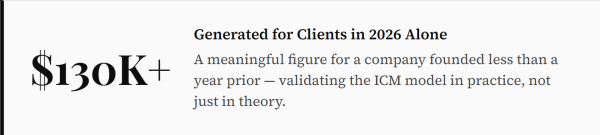
    In 2026 alone, the company has already generated over $130,000 in revenue for its clients, a meaningful figure for a company founded less than a year prior. That growth trajectory suggests the model is not theoretical. Creators are tokenizing, markets are responding, and royalties are flowing.

    On the Essor Studios website, visitors can explore real examples of creators the company has worked with, including links to their Twitter/X profiles and live tokenization projects that demonstrate how the process works in practice. It is a level of transparency that is relatively rare in a space where many companies prefer to keep their mechanics opaque. Essor Studios also maintains an active presence on Instagram at @EssorStudios, where they share updates, creator spotlights, and ongoing commentary on the evolution of Internet Capital Markets.

    Where This Is Heading

    The convergence of a maturing Solana ecosystem, growing familiarity with tokenized digital assets, and genuine disillusionment with traditional creator monetization models has created real conditions for ICM to expand. What Essor Studios is building is not contingent on a speculative future; it is operating within a market that already exists.

    The larger question is how many creators will be aware of this shift before it is obvious in retrospect. The shift from platform dependency to asset ownership is not inevitable for all creators. However, for those who take this seriously, it is a major shift. Owning a tradable digital asset tied to your brand is a different kind of equity than a follower count. One can be taken away by a platform update. The other participates in a market.

    Essor Studios is not the only company thinking about this space, but it is among the few building the practical infrastructure to make it work for creators who are not crypto-native. That positioning, technical depth, operational execution, and a clear focus on creator outcomes are what give the company its credibility in a crowded and often noisy conversation.

    The creator economy needed a structural upgrade. Essor Studios is building it.

  • Inflation Overtakes Staff Shortages as Bulgaria’s Hotels Face Their Toughest Season Yet thumbnail

    Inflation Overtakes Staff Shortages as Bulgaria’s Hotels Face Their Toughest Season Yet

    New industry survey reveals a dramatic shift in the challenges confronting Bulgarian hoteliers heading into 2025–26, and the numbers tell a story of a sector under real pressure.

    Grand hotel resort in Bulgaria representing the hospitality industry challenges

    Bulgaria’s hotel sector, from Black Sea coastal resorts to mountain retreats, is navigating rising operational costs heading into 2025–26.

    For years, the conversation inside Bulgaria’s hotel boardrooms began the same way: not enough staff. The labor gap defined the industry’s struggles, shaped government lobbying, and dominated every annual survey. That changed in early 2026. For the first time, rising prices and inflation have surpassed staff shortages as the number one challenge facing Bulgarian hoteliers, and the shift has sent a clear signal about where the sector is heading.

    According to the annual Business Climate in the Hotel Industry 2025/26 survey, conducted in February by the Hotel Forum (HTIF) and the Bulgarian Association of Hotel Executives (BAHE), more than one third of hotel operators now identify inflation and the surging cost of goods and services as their primary business obstacle. Staff shortages, the perennial leader, slipped to second place at 28%. The Bulgarian news coverage of this shift has been wide,  but the full picture is more nuanced than any single headline can capture.

    A Structural Problem, Not a Temporary Blip

    Bulgaria’s annual inflation rate stood at 5% in December 2025, according to official data, but that headline figure masks much sharper increases in sectors relevant to hotel operations. Prices for restaurants and hotels specifically rose by nearly 10% year-on-year. Energy, food supply chains, maintenance contracts, and every line item on a hotel’s P&L sheet have felt upward pressure for more than two consecutive years.

    The key issue here is the pressure from both sides: the costs are going up, and the market is not always prepared to pay more. Almost two out of three Bulgarian hoteliers have adjusted their room prices in accordance with the inflation rate over the last year, but the majority have done this with increases of less than 10%. A fifth have not increased their prices at all and have covered the price difference internally.

    This is not a phenomenon exclusive to Bulgaria. In all of Central and Eastern Europe, the hospitality industry has had to contend with lingering inflationary pressures since the pandemic. Bulgaria’s situation is complicated by the fact that it is a highly seasonal business. The Black Sea coast and the mountain resorts do the bulk of their business in a very small window. If the summer is bad or the winter is not good, there is very little left over for the rest of the year.

    Hotel inflation cost management strategies chart

    Hotels across Europe are adapting pricing strategies to cope with sustained inflationary pressure. Bulgaria’s hoteliers face one of the sharpest cost-to-revenue balancing acts in the region.

    Occupancy: A Market Holding Its Ground, For Now

    Despite the cost pressures, demand has not collapsed. The HTIF-BAHE survey shows that in 2025, nearly 40% of Bulgarian hotels reported annual occupancy rates between 50% and 70%. A further 28% exceeded the 70% mark, a figure worth noting given the country’s strong seasonal dependency. Only 26% reported occupancy falling below 50%.

    These figures indicate that the market is, by most regional standards, performing reasonably well. Bulgaria has been helped by the increased interest from the Romanian, British, and German tourist markets, which have demonstrated an increased desire to visit the country due to the prices in the Western European markets becoming untenable.

    However, the actual figures on occupancy do not tell the whole story. Revenue per available room and actual profitability are also determined by the actual costs incurred to achieve the actual figures. If the costs of utility bills, food and beverage costs, and maintenance have all increased by 8-12% on an annual basis, then the actual figures on occupancy may not necessarily translate into profitability.

    The Labor Question Hasn’t Gone Away

    The fact that the problem of staff shortages fell from the top to the second spot does not mean that the problem has been solved but rather that there is a new kind of crisis that is dominating the scene, not the solution to the previous one. Bulgaria still struggles with the problem of a shrinking workforce, emigration of skilled personnel to Western Europe, and the difficulty of finding qualified staff in the hospitality industry and offering them a decent salary.

    The BAHE has previously noted that wage growth, while necessary, cannot continue indefinitely without directly feeding into room rate increases, creating yet another inflationary loop. The sector’s ability to hire from non-EU labor markets has also been constrained by administrative bottlenecks in Bulgarian consular offices, further limiting the pool of available workers.

    Industry observers tracking these shifts point to broader structural questions about sustainability and long-term competitiveness. In recent editorial commentary and sector breakdowns published under BurgasMedia Analysis, analysts have examined how inflation, wage dynamics, and seasonal dependency are reshaping the financial resilience of Bulgaria’s hospitality businesses.

    Bansko Bulgaria ski resort hotel representing Bulgarian tourism industry

    Bulgaria’s mountain and ski resort sector faces the same cost pressures as its coastal counterpart, with the added challenge of short operating seasons that must generate year-round returns.

    What This Means for Travelers and Investors

    For travelers, the practical implication is straightforward: Bulgaria remains one of the most affordable hospitality destinations in Europe, a fact recognized internationally, with the country recently ranked among Europe’s top seven most affordable seaside destinations. But the price advantage is narrowing. Budget travelers who discovered Bulgaria in the mid-2010s as an almost impossibly cheap alternative to Croatia or Greece will find the gap has closed.

    For investors and industry watchers, the survey results point to a sector in genuine structural transition. The hotels that will survive and grow over the next five years are those that invest in operational efficiency, diversify their revenue streams beyond peak-season bednights, and build enough brand loyalty to justify rate increases without bleeding occupancy.

    The broader economic context adds a further dimension to the significance. Bulgaria is in the process of moving to the Euro currency, a process that is to be complete by the end of 2026. That process, and the price transparency that comes with it, will undoubtedly add to the sense of urgency in the sector to get its cost and profitability issues resolved before it has to face a potentially more exposed European market.

    The Road Ahead

    The HTIF-BAHE survey paints a picture of an industry that is adapting, but under pressure and without much room for error. The structural challenges are real: inflation, labor costs, seasonality, and the looming test of euro adoption. So are the opportunities: growing inbound tourism, a globally competitive price point, and a diverse geography that spans beach, mountain, and cultural heritage destinations within a single small country.

    Whether Bulgaria’s hotel sector emerges from the 2025–26 season stronger or weaker will depend in large part on decisions being made right now in pricing committees, boardrooms, and government ministries. The data, at least, is clear. The era in which inflation was someone else’s problem is over.

    For ongoing coverage and in-depth analysis of Bulgaria’s economic landscape, Bulgarian news platform BurgasMedia continues to track developments across the country’s key industries.

  • Ansera Debuts as National Experiential Strategy Firm thumbnail

    Ansera Debuts as National Experiential Strategy Firm

    Ansera has launched as a national experiential strategy and production firm following the merger of High Output, L!VE, and Sardis. Backed by Willistown Capital, the newly unified company integrates experiential strategy, creative development, and technical production capabilities.

    The firm emphasizes a research-informed approach to live experience design, applying insights from neuroscience and behavioral science to better understand how attention, emotion, and memory shape outcomes. Rather than focusing solely on attendance numbers or social impressions, Ansera is positioning itself to evaluate what truly drives impact: how audiences feel, what they remember, and how those memories influence long-term behavior.

    “Live experiences are no longer competing with one another – they’re competing with never-ending distractions,” said EJ Corporan, Director of Marketing and Growth at Ansera. “For a long time, this industry has relied on surface-level metrics and instinct. Our clients are asking deeper questions about attention, memory, and meaning, and Ansera is built to answer those questions through research, insight, and a more rigorous understanding of how people actually experience moments together.”

    “For decades, this industry has relied on trial and error with only anecdotal success,” said Darren Fultz, CEO at Ansera. “We’re moving beyond assumptions about what makes an experience successful. Our goal is to help clients understand why certain moments resonate, linger, and inspire action – and how to design for that intentionally.”

    The company now operates with more than 150 specialists nationwide.

    With more than 150 specialists operating nationwide, Ansera offers end-to-end capabilities—from strategic concept development and audience research to creative execution and technical production. By uniting data, design, and delivery, the firm is positioning itself as a next-generation partner for brands seeking meaningful, measurable engagement in an increasingly distracted world.

  • Meme Coin Price Prediction 2026: Why Pepeto Could Be the Biggest Winner When Fear Turns to Greed thumbnail

    Meme Coin Price Prediction 2026: Why Pepeto Could Be the Biggest Winner When Fear Turns to Greed

    The Fear and Greed Index just hit 11. That number has only appeared three times in crypto history. In 2018 during the bear market bottom. In 2020 during the Covid crash. In 2022 during the crypto winter floor. Every single time, fear at this level marked the exact bottom before a massive rally

    Today the market sits in that same zone. Bitcoin dropped to $63,640 after . Ethereum fell to $1,856. Solana crashed to $78. Over $75 billion got erased in sixty minutes. But while prediction markets are dominating headlines and meme coin traders are panic selling, one presale is quietly absorbing all the smart money. Pepeto is building something that could define portfolios for the next decade.

    Nvidia Drops, PPI Burns Rate Cut Hopes, and Crypto Follows

    The crash started with data, not bombs. Hot producer price inflation came in at 2.9% year over year, above the expected 2.6%. Core PPI hit 3.6% versus the 3% forecast. Rate cut hopes evaporated. Nvidia dropped 4.2% after earnings. Then the  accelerated what was already in motion.

    According to, Bitcoin posted its fifth consecutive monthly loss. The worst streak since 2018. But fear at 11 tells you something critical. The last three times this reading appeared, Bitcoin rallied between within twelve months. Early stage presale tokens launched during those fear windows delivered returns that changed lives permanently.

    Top Tokens to Watch: Pepeto Leads the Fear Window

    Pepeto:

    Pepeto presale volume did not drop during this crash. It spiked. While every other token bled, new capital flowed into the presale at $0.000000186. That is not panic buying. That is strategic positioning by investors who understand what fear at 11 means.

    The project has raised over $7.2 million. The team announced three products close to being ready. PepetoSwap for zero fee cross chain meme coin trading. Pepeto Bridge for cross blockchain token routing. Pepeto Exchange for curated verified meme coin listings. These tools target the entire $30 billion meme economy that currently has zero dedicated infrastructure.

    The Pepe cofounder built PEPE to a $7 billion market cap with zero products. Now that same builder is creating actual infrastructure. A entry at current pricing turns into at. Staking at APY adds passive returns while you wait. Dual audits from confirm zero critical vulnerabilities.

    Fear at 11 has never been wrong about what comes next. The question is whether you are positioned before the reversal or chasing after it.

    pepecoin

    DOGE and SHIB: Bleeding With the Market

    Dogecoin dropped to $0.09, down 9.4% in 24 hours. SHIB fell to $0.0000058. PEPE trades at $0.00000346. FLOKI sits at $0.000028 and BONK at $0.0000062. Every established meme coin is bleeding. But the meme coin market has survived every crash since 2013 and come back stronger.

    Bitcoin: The Recovery Timeline

    notes Bitcoin is testing support between $62,800 and $64,000. A hold keeps the $60,000 floor intact. A break below targets $53,000. Analysts remain bullish on recovery toward $90,000 once macro conditions improve.

    Fear at 11 does not last. It never has. When it flips, it flips fast. The tokens that get bought during extreme fear are the ones that deliver the biggest returns during the recovery. Pepeto at $0.000000186 is the kind of entry that exists only during moments like this. The confirmed listing is in preparation. The presale is filling. A investment becomes. History says this is the moment.

    Click To Visit Pepeto Website To Enter The Presale

    FAQs

    What does Fear and Greed at 11 mean for crypto investors?

    Fear and Greed at 11 signals extreme fear. This reading has only appeared three times in crypto history and each time marked the exact bottom before a massive rally that created significant wealth for early buyers.

    Which presale token is attracting the most capital during this crash?

    Pepeto presale volume spiked during the February 28 crash while other tokens bled. Over $7.2 million has been raised at $0.000000186 as strategic investors position before the confirmed listing.

    Can meme coins recover after a market wide crash?

    The meme coin market has recovered from every major crash since 2013. DOGE, SHIB, and PEPE all delivered their biggest gains after periods of extreme fear, and Pepeto is positioned for a similar trajectory.

    Disclaimer:
    This article is for informational purposes only and does not constitute financial advice. Cryptocurrency investments carry risk, including total loss of capital. Readers should conduct independent research and consult licensed advisors before making any financial decisions.

    This publication is strictly informational and does not promote or solicit investment in any digital asset

    All market analysis and token data are for informational purposes only and do not constitute financial advice. Readers should conduct independent research and consult licensed advisors before investing.

    Crypto Press Release Distribution by BTCPressWire.com

  • Dogecoin Price Prediction vs Pepeto: Which Meme Coin Offers Better From Here? thumbnail

    Dogecoin Price Prediction vs Pepeto: Which Meme Coin Offers Better From Here?


    In a race for better gains, what seems obvious is not always the best option. Dogecoin just dropped 9.4% in 24 hours to $0.09 as the conflict sent shockwaves through the entire crypto market. Bitcoin fell to $63,640. The Fear and Greed Index hit 11. And over $260 million in leveraged positions got wiped out.

    Meanwhile, Pepeto is still in presale at $0.000000186. Looking at them side by side, it seems DOGE has the brand and the history. But giving it a second look, DOGE main engine for growth has always been its community, while Pepeto is building three actual products that serve the entire $30 billion meme coin economy.

    Crash Crypto Markets Overnight

    The crypto market woke up to chaos on Saturday, and Bitcoin dropped from $67,700 to $63,640 within hours. Ethereum fell to $1,856. Solana dropped to $78. The entire market lost $75 billion in sixty minutes.

    the crash triggered massive liquidations across all major exchanges.  Then those same started accumulating presale tokens at rock bottom pricing. They are preparing for the big bull run.

    Exchange netflows showed 522 BTC leaving platforms during the crash. That is spot accumulation. Smart money buying while everyone else panics.

    Pepeto: Three Products Targeting the $30 Billion Meme Economy

    Unlike Dogecoin, which runs on community momentum and celebrity tweets, Pepeto is building real infrastructure. The team has announced three products close to being ready for launch.

    PepetoSwap is designed for zero fee cross chain meme coin trading. Right now, meme coin traders pay high fees on exchanges that were built for Bitcoin and Ethereum. PepetoSwap changes that. Pepeto Bridge routes tokens across blockchains so traders can move their meme coins between chains without losing value to slippage or bridge exploits. Pepeto Exchange offers curated verified meme coin listings. Instead of scrolling through thousands of unverified tokens, traders get a clean platform with vetted projects only.

    These three products create a demand loop. Every trade, every bridge, every listing generates organic activity that feeds back into the token. That is protocol level demand, not speculation. Staking at APY locks supply while demand grows. Dual audits from  confirm zero critical vulnerabilities.

    pepecoin

    Dogecoin Price Prediction: Can DOGE Still Reach $1?

    DOGE has fallen from its all time high of $0.73. At $0.09, it sits 87% below its peak. The Fear and Greed Index at 11 signals extreme bearish sentiment. For DOGE to reach $1, it needs a market cap above $145 billion. That is ten times its current level and requires massive new capital inflows.

    recently noted that DOGE needs more than social media hype to sustain another major rally. The token has no products, no development roadmap, and no revenue generating infrastructure. Its entire value proposition is community and culture.

    The Math That Decides the Winner

    Pepeto at $0.000000186 needs just in market cap to deliver returns. DOGE needs billion for the same multiple. A investment in Pepeto becomes. A investment in DOGE at becomes if it reaches . That is a versus an. The Pepe cofounder built PEPE to $7 billion with zero products. Pepeto has three products and six zero pricing. The confirmed listing is in preparation. The presale is at $7.2 million raised and climbing fast.

    Click To Visit Pepeto Website To Enter The Presale

    FAQs

    What is the latest Dogecoin price prediction for 2026?

    DOGE trades at $0.09 with resistance near $0.15 and support at $0.07. Reaching $1 would require $145 billion in market cap, which analysts say needs multiple strong catalysts beyond current community momentum.

    Which crypto is more likely to deliver returns: Dogecoin or Pepeto?

    Pepeto needs just in market cap for returns from its presale price. DOGE needs for the same multiple. The mathematical advantage heavily favors the presale entry.

    Disclaimer:
    This article is for informational purposes only and does not constitute financial advice. Cryptocurrency investments carry risk, including total loss of capital. Readers should conduct independent research and consult licensed advisors before making any financial decisions.

    This publication is strictly informational and does not promote or solicit investment in any digital asset

    All market analysis and token data are for informational purposes only and do not constitute financial advice. Readers should conduct independent research and consult licensed advisors before investing.

    Crypto Press Release Distribution by BTCPressWire.com

  • Pepeto Buying Guide: Everything You Need to Know About the Meme Coin With Potential thumbnail

    Pepeto Buying Guide: Everything You Need to Know About the Meme Coin With Potential

    Pepeto has exploded into the mainstream across crypto Twitter, Telegram, and trader communities. And for good reason. It is a revolutionary new meme coin ecosystem changing how traders interact with the $30 billion meme economy. With its three product infrastructure and a proven cofounder supporting a real world use case with massive market potential, it is attracting investors at breakneck speed.

    Early stage meme coins have been among the biggest gainers over the past two cycles. DOGE delivered returns. SHIB created billionaires from entries. PEPE turned six zero pricing into a $7 billion market cap. Pepeto is one of the few projects building real products before even listing on exchanges.

    In this guide you will learn why traders are piling in early and what kind of price upside you could be looking at going forward.

    Pepeto: How Does the Ecosystem Work?

    Pepeto is a meme coin infrastructure platform designed to give retail traders the tools that the $30 billion meme economy desperately needs. The team has announced three products close to being ready, each focused on a different segment of the meme coin market.

    PepetoSwap is built for zero fee cross chain meme coin trading. Instead of paying high gas fees on generic exchanges, meme coin traders get a dedicated tool built specifically for their market. Pepeto Bridge routes tokens across blockchains so traders can move between Ethereum, Solana, BSC and other chains without friction. Pepeto Exchange provides curated verified meme coin listings, cutting out the scam tokens that plague every major exchange.

    The project runs with zero transaction tax. It has been audited two respected smart contract firms, confirming zero critical vulnerabilities.

    pepecoin

    The Return Math That Has Investors Racing In

    Understanding the numbers is key for anyone considering early entry. Pepeto has a fixed presale price of $0.000000186. That is six zeros. The presale has already raised

    Here is what the math looks like at different price targets. A investment buys approximately tokens. If Pepeto reaches, that becomes . If it reaches , that becomes. If it hits, that grows to. These are not fantasy numbers. DOGE achieved a $0.73 price from similar starting levels. PEPE hit $0.000028 from six zeros. SHIB reached $0.00008 from even lower.

    According to Forbes, early stage presale tokens with real utility have historically outperformed AI tokens, DeFi projects, and even Bitcoin in terms of percentage returns during bull cycles. The key is entering before the listing.

    Should You Buy Pepeto Now?

    The meme coin market is one of the fastest growing sectors in crypto. Despite the current crash, with Bitcoin at $63,640 and the Fear and Greed Index at 11, the $30 billion meme economy continues to attract traders. DOGE still has a $15 billion market cap. SHIB holds $3.4 billion. PEPE sits at $1.45 billion. The demand for meme coins is not going away.

    Pepeto is the only project building dedicated infrastructure for this entire sector. The three products create protocol level demand that grows with adoption. Every meme coin traded through PepetoSwap, every token bridged through Pepeto Bridge, and every listing on Pepeto Exchange creates organic demand for the token.

    Staking rewards at APY provide passive income while you wait. The confirmed listing is in preparation. The presale is filling fast. Every previous meme coin that delivered life changing returns did so from the same six zero pricing that Pepeto sits at today. The difference is Pepeto actually has products.

    Click To Visit Pepeto Website To Enter The Presale

    FAQs

    How do I buy Pepeto tokens during the presale?

    Visit the Pepeto official website, connect your wallet, and purchase using ETH, USDT, USDC, BNB, or credit card. The current presale price is $0.000000186 with staking rewards available immediately.

    Is Pepeto safe to invest in during the presale?

    Pepeto has been audited by SolidProof and Coinsult with zero critical vulnerabilities found. The project has raised over $7.2 million and operates with zero transaction tax and transparent tokenomics.

    What is the realistic price prediction for Pepeto after listing?

    Based on how similar meme coins performed from six zero pricing, Pepeto has potential for or more returns. DOGE, SHIB, and PEPE all achieved billion dollar market caps from identical starting levels, and none had products.

    Disclaimer:
    This article is for informational purposes only and does not constitute financial advice. Cryptocurrency investments carry risk, including total loss of capital. Readers should conduct independent research and consult licensed advisors before making any financial decisions.

    This publication is strictly informational and does not promote or solicit investment in any digital asset

    All market analysis and token data are for informational purposes only and do not constitute financial advice. Readers should conduct independent research and consult licensed advisors before investing.

    Crypto Press Release Distribution by BTCPressWire.com

  • Can BTC ETH and SOL Liquidity Work Together for Meme Coins: Why Pepeto Bridge Could Unlock Trapped Value thumbnail

    Can BTC ETH and SOL Liquidity Work Together for Meme Coins: Why Pepeto Bridge Could Unlock Trapped Value

    Bitcoin, Ethereum, and Solana are three of the largest ecosystems in digital assets. Bitcoin anchors the market with deep liquidity and security. Ethereum supports most decentralized applications and DeFi protocols. Solana offers blazing execution speed and minimal transaction costs. Individually, each network dominates its niche. Together, they operate in silos with liquidity fragmented across separate chains.

    This fragmentation creates a massive problem for the $30 billion meme coin market. Billions in meme tokens sit trapped on individual blockchains, inaccessible to traders on other networks. Pepeto is building three products to solve this exact problem, starting with a dedicated cross chain bridge designed specifically for the speed and volume meme trading demands.

    Why Cross Chain Liquidity Matters More Than Ever

     fragmented liquidity remains one of decentralized finance’s most persistent structural constraints. Capital moves between chains, but rarely without added steps, wrapped assets, or bridging mechanisms that were never designed for the pace of meme coin trading.

    Bitcoin trades at $64,100. Ethereum at $1,870. Solana at $79. XRP at $1.29. DOGE at $0.089. ADA at $0.27. PEPE at $0.00000346. SHIB at $0.0000054. FLOKI at $0.000028. BONK at $0.0000055. The Fear and Greed Index sits at 11. Total meme coin market capitalization exceeds $30 billion spread across dozens of isolated blockchains.

    A trader holding a Solana based meme coin cannot access Ethereum based liquidity without multiple steps, high fees, and significant delays. Base meme coins stay isolated from BNB Chain communities. This friction costs traders money, limits discovery, and keeps billions locked in individual ecosystems where they generate zero cross pollination. The meme market needs its own infrastructure and nobody was building it until Pepeto.

    How Pepeto Bridge Solves the Cross Chain Problem for Meme Traders

    Pepeto Bridge has been announced by the team and approaches deployment for fast and efficient routing of meme coins between different blockchains. Unlike generic bridges that handle all token types with minimal optimization for speed, Pepeto Bridge is designed from the ground up for the specific demands of meme coin transactions that require instant execution and minimal cost.

    But the bridge is only one piece. PepetoSwap is close to being ready for cross chain meme trading at zero transaction tax. Traders keep 100% of their capital on every swap. Pepeto Exchange enters final development as the first dedicated listing hub for verified meme coins, eliminating the rug pulls and honeypots that drain millions from the sector every month.

    The cofounder of Pepe who built PEPE from zero to $7 billion leads all three products. Dual audits   found zero critical vulnerabilities. Staking at APY locks supply and creates natural upward pressure. The presale has raised $7.2 million at a price of $0.000000186.

    pepecoin

    Why Pepeto’s Infrastructure Play Delivers the Strongest Returns

    DOGE reached $88 billion with zero cross chain tools. SHIB hit $40 billion without a bridge. PEPE crossed $7 billion with no exchange of its own. All achieved massive valuations on pure community energy alone. Now imagine what happens when a meme coin launches with three dedicated infrastructure products that unlock billions in trapped liquidity.

    A noted that infrastructure projects in crypto consistently outperform pure speculation plays over multi year timeframes. The presale window narrows. The listing approaches. The six zero entry disappears the moment trading begins.

    Click To Visit Pepeto Website To Enter The Presale

    FAQs

    How does Pepeto Bridge solve the cross chain problem for meme coins? Pepeto Bridge routes meme tokens across different blockchains, unlocking billions in trapped value. Generic bridges were never built for the speed meme trading demands. Pepeto Bridge is designed specifically for this market.

    Can Bitcoin Ethereum and Solana liquidity work together for meme coins? Currently, meme coin liquidity sits fragmented across dozens of blockchains. Pepeto’s three products including PepetoSwap and Pepeto Bridge aim to connect these ecosystems and unify meme market liquidity.

    What makes Pepeto different from other cross chain projects? Pepeto focuses exclusively on the $30 billion meme market with three dedicated tools and the cofounder of Pepe. At $0.000000186, it offers potential while solving a real infrastructure gap.

    Disclaimer:
    This article is for informational purposes only and does not constitute financial advice. Cryptocurrency investments carry risk, including total loss of capital. Readers should conduct independent research and consult licensed advisors before making any financial decisions.

    This publication is strictly informational and does not promote or solicit investment in any digital asset

    All market analysis and token data are for informational purposes only and do not constitute financial advice. Readers should conduct independent research and consult licensed advisors before investing.

    Crypto Press Release Distribution by BTCPressWire.com

  • Bitcoin Rebound Cancelled as PPI Data Shocks the Market thumbnail

    Bitcoin Rebound Cancelled as PPI Data Shocks the Market

    Bitcoin’s latest attempt at a recovery just got cancelled. Early on Thursday it looked like a rebound was forming as BTC surged from $64,000 toward $68,000. Hopes were building. Then hotter than expected data hit the wire. Producer prices came in at 3.4% year over year, well above the 3.1% consensus. Bitcoin cratered back below $65,000 in hours.

    The rebound is dead for now. But the  who killed it are already positioning for the next move. And that move includes loading Pepeto at $0.000000186 while every retail trader on the planet panic sells everything else.

    Bitcoin and UNI Both Fall as Macro Risks Crush Sentiment

    According to CoinDesk, Bitcoin fell from $68,000 to $64,100 as mounting macro risks spooked investors away from risky assets. The US 10 year Treasury yield slipped below 4% for the first time since November 2024. Gold surged past $5,230 an ounce. Silver jumped 4% above $92. Crude oil climbed 2.3% past $67 a barrel. The risk off mood is everywhere.

    Uniswap followed the same pattern. UNI surged from $3.50 to $3.71 in early trading before the PPI shock sent it tumbling below $3.50 by close. Ethereum sits at $1,870. Solana at $79. XRP at $1.29. ADA at $0.27. DOGE at $0.089. PEPE at $0.00000346. SHIB at $0.0000054. BNB at $595. The Fear and Greed Index reads 11.

    The volatility is deliberate. The whale wallets orchestrated in liquidations across 152,275 traders. They push prices up to attract longs, then dump to liquidate them. They push prices down to attract shorts, then squeeze them. Every move extracts money from retail. Every crash is an opportunity for the  to accumulate at lower prices.

    The see what most retail traders miss. Large caps like Bitcoin and Ethereum offer from here if the recovery plays out. That kind of return only exists in early stage tokens with real fundamentals and a proven team.

    Pepeto has both. Now he builds three tools for the $30 billion meme market. PepetoSwap has been announced by the team and is close to being ready for cross chain meme trading at zero transaction tax. Pepeto Bridge approaches deployment for routing tokens across blockchains. Pepeto Exchange enters final development for verified meme coin listings.

    The whale wallets that forced the crash are now accumulating Pepeto at $0.000000186. On chain data shows 522 BTC leaving exchanges for spot accumulation. They sell euphoria. Right now fear is at its absolute maximum with the index at 11. Dual audits  confirm zero vulnerabilities. Staking at  APY.

    pepecoin

    The Recovery Will Come and Pepeto Will Lead the Charge

    History shows every crash leads to a recovery. The 2020 crash led to Bitcoin going from $3,800 to $69,000. The 2022 crash led to $126,000. Every time, the biggest returns went to those who bought during maximum fear.

    noted that tokens with real utility purchased during capitulation events generate triple digit returns within 12 months of recovery.  The presale window narrows. The listing approaches. Those who wait for confirmation will pay a premium the early buyers locked in today.

    Click To Visit Pepeto Website To Enter The Presale

    FAQs

    Why was the Bitcoin rebound cancelled and will it recover? Hotter than expected PPI data at 3.4% and geopolitical tensions killed the rebound. Analysts expect Bitcoin to remain range bound between $54,000 and $72,000 through March before a potential recovery.

    What makes Pepeto a better buy than Bitcoin or UNI during the crash? Bitcoin offers upside. UNI offers similar limited returns. Pepeto at $0.000000186 offers with three dedicated products and the cofounder of Pepe who built a $7 billion token.

    Disclaimer:
    This article is for informational purposes only and does not constitute financial advice. Cryptocurrency investments carry risk, including total loss of capital. Readers should conduct independent research and consult licensed advisors before making any financial decisions.

    This publication is strictly informational and does not promote or solicit investment in any digital asset

    All market analysis and token data are for informational purposes only and do not constitute financial advice. Readers should conduct independent research and consult licensed advisors before investing.

    Crypto Press Release Distribution by BTCPressWire.com