Category: BigNewsNetwork

  • Inflation-Proofing Real Estate: Capital Improvement vs. Strategic Acquisition thumbnail

    Inflation-Proofing Real Estate: Capital Improvement vs. Strategic Acquisition

    When inflation creeps up and interest rates stay unpredictable, property owners face a classic crossroads. You’re sitting on capital or built-up equity, and you want to protect it from losing purchasing power. The big question is how to deploy that capital for maximum resilience.

    Do you double down on the real estate you already own by funding high-impact capital improvements? Or do you branch out and make a strategic new acquisition to diversify your portfolio?

    There is no one-size-fits-all answer, but evaluating both paths through an inflation-resistant lens gives you a massive advantage. Here’s how to decide whether to build up or buy out.

    Option 1: Capital Improvements That Drive Immediate Equity

    Investing in existing assets is often the cleanest way to hedge against inflation. You avoid high transaction costs, skip the stress of taking on a massive new mortgage, and directly increase the functional value of land you already control.

    However, not all renovations yield equal returns. Paint touch-ups and cosmetic tweaks rarely move the needle in a high-inflation environment. To build genuine resilience, capital improvements must significantly boost rental yields, expand usable square footage, or appeal to high-end buyers.

    Transform the Heart of the Home

    In North American metropolitan hubs, high-end interior overhauls remain one of the most reliable ways to force appreciation. Premium kitchen remodeling that reimagines spatial layouts, integrates custom cabinetry, and updates structural flow can transform a standard residential asset into a high-yield property. A modern, architectural kitchen design dramatically improves tenant retention and elevates long-term market valuation.

    Maximise Outdoor Living Footprints

    Across warmer climates and coastal regions, outdoor entertainment zones have shifted from nice-to-have extras to core valuation drivers. Expanding an outdoor patio or building a fully equipped alfresco kitchen lets you increase effective living space at a fraction of the cost of a full structural house extension.

    Adding heavy-duty cooking infrastructure, such as a high-output LPG gas burner for outdoor wok cooking or catering setups, gives the space genuine utility. When outdoor areas feel like true extensions of the interior living space, properties command a noticeable premium on the market.

    Factor in Energy Resilience and Micro-Utility Upgrades

    In an inflationary market, holding costs can quietly erode your profit margins just as quickly as high interest rates. Rising grid energy prices, water rates, and municipal utility tariffs are permanent operational expenses that directly impact net rental yields and overall holding costs.

    Future-proofing a property against inflation isn’t just about square footage and aesthetic finishes. It’s also about operational self-reliance.

    Integrating micro-utility upgrades creates long-term holding resilience:

    • Off-grid solar and battery storage systems: Shielding your property from volatile electricity rates while appealing to premium, eco-conscious tenants.
    • Rainwater harvesting and greywater retention: Lowering ongoing landscaping and utility expenses across larger residential lots.
    • High-efficiency insulation and smart thermal zoning: Drastically cutting heating and cooling loads, which preserves the building’s structural health and lowers tenant turnover.

    When a property boasts significantly lower running costs than neighbouring rentals, it holds its value far better during economic downturns. Lower overheads give you room to adjust rents flexibly while maintaining positive cash flow, ensuring your asset remains profitable no matter which way the broader market swings.

    Option 2: Strategic Acquisition for Portfolio Diversification

    While improving existing assets protects localised equity, buying new property protects your overall wealth through geographic and asset-class diversification. If your local market stagnates, deploying capital into a high-growth region shields you from localised downturns.

    Acquiring a new property allows you to tap into new demographic shifts, capture higher rental yields in emerging markets, and build compounding long-term equity.

    The challenge in an inflationary market is execution. Competition for prime real estate is fierce, and overpaying for a mediocre property wipes out any natural hedge inflation might have offered.

    Navigating Competitive Entry Points

    To make a new acquisition work, you can’t rely on public real estate listings alone. Off-market deals, distressed sales, and under-valued assets are where real inflation-proof margins are found.

    In competitive markets like Australia, leveraging top-rated buyer’s agents gives investors a distinct edge. Experienced property advocates analyse micro-market data, negotiate strictly on your behalf, and secure properties before they ever hit open auction blocks. Having dedicated experts represent your buying strategy ensures you secure the right asset at the right price point, protecting your downside from day one.

    Weighing the Strategic Choice

    Deciding between renovating and acquiring comes down to analysing your balance sheet and operational capacity.

    Ask yourself these core questions:

    • How tight is your local supply? If building materials and labour costs are soaring in your city, full structural renovations might eat into your profit margins. A new acquisition in a balanced market might offer cleaner returns.
    • What is your borrowing capacity? If rising interest rates make taking on a new mortgage unappealing, funding a high-ROI kitchen or outdoor upgrade using existing cash or low-interest equity is usually the smarter move.
    • Do you need cash flow or capital growth? High-end domestic upgrades generally boost immediate yield and property appeal. Buying new land in growth corridors prioritises long-term wealth accumulation over short-term cash flow.

    The Verdict: Agility Wins in Inflationary Cycles

    Inflation reshuffles the real estate board, but it rewards decisive property owners who manage risk smartly.

    Whether you choose to unlock hidden equity in your current footprint through targeted spatial upgrades or hire expert advocacy to secure your next high-yield asset, focus on quality over hype. Build real utility into what you own, buy smartly when you expand, and keep your capital working as hard as you do.

  • Lithosphere Advances Web4 Access with Thanos, a Multi-Chain Agentic Wallet for Users and Autonomous Agents

    Self-custody wallet infrastructure supports multi-chain Web4 access and agentic activity.

    The self-custody wallet is positioned as an agentic access layer for digital asset control, multi-chain activity, and autonomous participation across Web4.

    LONDON, UK – August 14, 2026 – Lithosphere is advancing the launch positioning of Thanos Wallet, its self-custody multi-chain agentic crypto wallet built for Web4 users, autonomous agents, and agentic applications. Thanos is designed to move the wallet beyond basic storage by providing a user-owned access layer for digital assets, decentralized applications, and cross-chain participation while keeping control in the hands of the wallet owner.

    The product is centered on a Web4 environment where both people and autonomous software agents need dependable access to onchain services. Thanos combines self-custody, digital asset management, multi-chain usability, and application connectivity in a model intended to support agentic workflows alongside conventional user activity. This positioning gives Lithosphere a dedicated wallet layer for users who want direct control while creating a foundation for autonomous agents and intelligent applications to participate through defined access and permission structures.

    “Agentic systems need wallet infrastructure that can serve both human ownership and autonomous participation without separating the two experiences,” said J. King Kasr, Chief Scientist at KaJ Labs. “Thanos is being positioned as that access layer for Web4, combining self-custody and multi-chain usability with the needs of agents and agentic applications.” The rollout also supports the current LITHO Pre-TGE phase by giving participants a dedicated wallet for Web4 access and asset control as Lithosphere prepares for broader token utility and future network participation.

    About Lithosphere

    Lithosphere is an AI-native blockchain ecosystem built for Web4, autonomous agents, agentic applications, and cross-chain digital infrastructure. Its technology stack is designed to support execution, identity, coordination, verification, and user access across intelligent decentralized systems.

    Media Contact

    Dorothy Marley

    KaJ Labs

    +1 707-622-6168

    media@kajlabs.com

    Social Media

    Twitter

    Instagram

  • New Crypto to Invest In: Why the Newest Name on the List Has No Market Cap

    Key Takeaways

    • NEAR was one of only three risers on August 12, 2026, up 2.7 percent at $1.65.
    • Aptos trades at $0.5621 for a $482 million cap, far under its $19.92 record.
    • Filecoin fell 5.9 percent to $0.6704, one of the biggest drops of the session.
    • Bullski has no market cap yet, and stage 1 is priced at $0.00001 with a $0.0025 listing reference.

    Picking a new crypto to invest in usually means buying something that already trades. NEAR carries $2.14 billion. Filecoin holds $549 million.

    Both have a price set by the market every second. Bullski does not, because it has not listed yet. Stage 1 of a 16-stage sale is priced at $0.00001, with $0.0025 named as the listing reference.

    Roughly 42.6 million tokens were left in that rung on August 11, 2026. Open the $BULLSKI round you can check for the live figure.

    Why the Best New Crypto to Invest In Has No Market Cap 

    Market cap answers one question. How much money already sits inside a token. NEAR carries $2.14 billion, so doubling it takes another $2.14 billion of buying.

    Aptos would need $482 million for the same result. Bullski carries nothing yet, since trading has not begun. That is not a gap in the data.

    Presale tokens simply have a schedule instead of a chart, and $0.00001 is what stage 1 costs.

    Charts also carry history that new buyers inherit. Filecoin sits about 99.7 percent under its $236.84 peak. Aptos trades roughly 97 percent below $19.92.

    Anyone holding from those levels wants out at break-even, which puts weight above the current price. A token with no trading history carries none of that. Readers hunting the best new crypto to invest in usually start from exactly that blank slate, and new crypto coins to invest in get picked for the same reason.

    Definition: Market cap is the token price multiplied by the number of tokens in circulation. A presale token has no cap until it lists and starts trading.

    Inside the Bullski Contract and Supply Plan 

    $BULLSKI is an ERC-20 token on Ethereum. Payment goes through ETH, BNB or USDT. Supply is fixed at 120 billion tokens and cannot grow later.

    Presale buyers take 40 percent of that supply across sixteen rungs. Stage 1 costs $0.00001, stage 2 costs $0.000015 and stage 3 costs $0.00002. Liquidity locks at launch, team tokens vest on a schedule, and staking plus referral rewards run during the sale.

    Etherscan already shows a verified contract, with an audit in process. Review the Bullski contract and supply details line by line before you compare anything else.

    Rungs advance only when they sell out, never on a countdown. Stage 1 held 1,192,283,023 tokens, and about 42.6 million of those were left on August 11, 2026, so the opening rung sat around 96 percent sold. Publishing the full path in advance is rare.

    Most presale crypto coins reveal one price and leave buyers guessing about the rest. Buyers here can work out the cost of a later rung before deciding anything.

    NEAR, Aptos, Filecoin and SPX6900 on August 12, 2026 

    NEAR trades at $1.65 with a $2.14 billion cap, up 2.7 percent, according to CoinGecko. That made it the strongest riser on a red day. Its $20.44 record still sits about 92 percent above today’s price, and the chain competes with dozens of similar networks for the same developers.

    Aptos costs $0.5621 for a $482 million cap. Launched in late 2022, it arrived with heavy funding and a $19.92 high that has not been revisited. Token unlocks continue to add supply, which works against the price whenever demand cools.

    Filecoin dropped 5.9 percent to $0.6704, giving it a $549 million cap. Storage deals drive real usage here, yet the token still trades roughly 99.7 percent under $236.84. Miners sell coins to cover costs, so steady selling pressure never really goes away.

    SPX6900 sits at $0.3157 with a $294 million cap, down 1.5 percent. July 2025 delivered its $2.27 peak. Among top new meme coins it remains the biggest by size, though it runs on community energy alone with no product behind it.

    Bullski stands apart from those four. Nothing about its price depends on what traders did yesterday. Stage 1 costs $0.00001, and each rung above it is already published.

    Compare that with our current pick of meme coins to buy to see how an early entry sits beside coins with live charts.

    Token Price Aug 12, 2026 Market cap All-time high Notes
    $BULLSKI $0.00001 at stage 1 No market cap yet None set New crypto presale, 16 rungs
    NEAR $1.65 $2.14 billion $20.44 Only riser here, up 2.7 percent
    Aptos $0.5621 $482 million $19.92 Launched 2022, unlocks continue
    Filecoin $0.6704 $549 million $236.84 Down 5.9 percent on the day
    SPX6900 $0.3157 $294 million $2.27 (Jul 2025) Top new meme coins by size

    Fun fact: Filecoin ran one of the longest builds in crypto, raising money in 2017 and only launching its live network in October 2020.

    Beginners often ask how a sale like this actually works. Readers can walk through our crypto presale guide for the step-by-step version.

    Joining the Best Crypto Presale Rung That Is Open 

    NEAR, Aptos and Filecoin all ask a buyer to pick a moment as well as an amount. This round drops half of that job, because the rung price is printed before anybody clicks. Size is the only real decision left.

    A wallet funded with ETH, BNB or USDT signs the purchase on the official site, and the balance stays tied to that address until listing day. Ethereum fees apply per transaction, so hold a little ETH aside for them. Staking is available while the sale is open, so a position can earn before it ever trades.

    Today’s rung is shown on the sale page, so start there, then buy $BULLSKI at the published price before the opening one fills.

    Watch out: A rung fills when it fills, not on a schedule anyone can plan around. Every figure quoted here, from NEAR down to SPX6900, is a snapshot from August 12, 2026.

    New Crypto to Invest In FAQ 

    What new crypto to invest in during 2026?

    Split the question by stage. NEAR at $2.14 billion covers the established end, while SPX6900 at $294 million covers the smaller end. Bullski covers the earliest end at $0.00001 per token, before any listing has happened.

    What crypto to buy now with a small budget?

    Low priced tokens let modest amounts buy plenty of units. Filecoin at $0.6704 and Aptos at $0.5621 both qualify. A new crypto presale goes further still, since Bullski sets stage 1 at $0.00001 with the listing reference published at $0.0025.

    How to find new meme coins early?

    Presales and launch day listings are the two practical routes. Presales publish a price before trading starts, which is how buyers reach a token first. Anyone hunting the best meme coin to buy now generally starts there rather than on an exchange.

    Are presale crypto coins different from listed tokens?

    Yes, mainly in how the price is set. Listed tokens move second by second on exchanges. Presale tokens follow a schedule the team publishes, so buyers know their cost before they commit and know what the next rung will charge.

    Both types end up trading on the same exchanges once a listing happens.

    For More Information

    Website: Visit the official Bullski website at bullski.io

    Telegram: Join the Bullski Telegram channel at t.me/BullskiCoinOfficial

    X (Twitter): Follow Bullski on X at x.com/bullskicoin

    Do your own research before buying any presale token. This article is not financial advice.

  • Multifamily Developers Are Treating Wellness Amenities as Core Infrastructure, Not Upgrades thumbnail

    Multifamily Developers Are Treating Wellness Amenities as Core Infrastructure, Not Upgrades

    A growing number of multifamily developers are moving wellness amenities out of the “nice-to-have” column and into the core product specification – a change that is affecting how buildings are designed, how leasing is positioned, and how developers think about the relationship between physical space and resident retention.

    From amenity package to lifestyle infrastructure

    For most of the past decade, multifamily amenity competition centered on visible, photogenic features – rooftop decks, co-working lounges, package rooms. Wellness was an add-on, typically expressed as a gym with a few cardio machines. That calculus, according to Yuval Shram, Founder and CEO of TAY Investments, is no longer adequate.

    Shram argues that residents are not simply renting square footage; they are choosing an environment that shapes their daily experience. When a tenant can wake up, use a sauna, work out, and head to work feeling prepared, that’s not a perk – it’s a designed routine. “At TAY, we think about the whole person, not just the unit,” Shram says.

    The distinction between an amenity package and a lifestyle reflects a different approach to product design. Developers who treat amenities as marketing line items may find themselves competing on price alone, while those who build integrated wellness environments are betting on stronger retention and leasing performance.

    What 20,000 square feet of wellness space actually looks like

    TAY’s LAZUL WEST, a 202-unit project now leasing at 301 West Side Avenue in Jersey City, allocates more than 20,000 square feet to amenity space – a significant commitment for a building of its size. The wellness component includes a cold plunge, sauna, steam room, chromotherapy shower, and restorative seating areas, alongside an outdoor pool and hot tub. A fully equipped fitness center, workout studio, co-working hub, resident lounge, and rooftop bar with skyline views round out the offering.

    The scale of that investment raises a legitimate question about economics. Wellness infrastructure of this depth – cold plunge systems, steam rooms, chromotherapy installations – carries meaningful capital cost and ongoing operational expense. TAY’s bet is that this investment translates into pricing power, lease-up velocity, and retention rates that justify the outlay.

    Shram frames the strategy not as a luxury positioning play but as a response to what residents actually need. The post-pandemic rental market has produced a tenant cohort that is more attentive to health, daily routine, and the quality of their home environment. Developers who built to the old standard – a gym, a lounge, a roof deck – may find their buildings competing on price in markets where newer products are competing on experience.

    The risk of commoditization

    If every new multifamily building in a given market installs a sauna and cold plunge, the differentiation disappears and the capital cost becomes table stakes rather than a competitive advantage. That dynamic has already played out with co-working spaces and package rooms, which were differentiators five years ago and are now baseline expectations.

    TAY’s response to this risk is depth and integration. The company’s proprietary “Sanctuary” wellness concept – which appears across its portfolio, not just at LAZUL WEST – is designed as a coherent system rather than a collection of individual features. A thoughtfully integrated wellness environment is harder to replicate cheaply than a single amenity addition, and residents can often tell the difference between a genuine wellness offering and a marketing-driven approximation.

    Whether that distinction holds as more developers enter the wellness space remains an open question. The multifamily market has a history of compressing differentiators quickly once a concept proves its demand signal.

    TAY’s Sanctuary concept as one emerging model

    TAY Investments has built its portfolio identity around the Sanctuary wellness concept, positioning it as a signature across its New Jersey developments. The company is vertically integrated – developing, constructing, managing, and operating its own buildings – which gives it direct control over how wellness amenities are maintained and programmed over time. That operational continuity may matter more than the initial capital investment in determining whether wellness amenities actually deliver on their promise to residents.

    Other developers are pursuing similar strategies with varying degrees of depth, but TAY’s approach offers one model for embedding wellness into product strategy in a way that goes beyond feature lists. The more interesting question for the broader industry may not be which amenities to build, but whether developers have the operational infrastructure to sustain the lifestyle they are selling.

    For the multifamily sector, LAZUL WEST will serve as a data point on whether deep wellness investment in a secondary New Jersey market generates the returns that justify its cost, and whether designing for the “whole person” translates into measurable leasing performance. If it does, other developers will likely follow. If it doesn’t, the wellness amenity wave may settle into something more modest than its current ambitions suggest.


    About TAY Investments: TAY Investments is a vertically integrated real estate development company headquartered in Hackensack, New Jersey, specializing in multifamily properties across the state. With in-house capabilities spanning development, general contracting, property management, and asset management, the company maintains a long-term holding strategy focused on creating exceptional residential communities in strategic locations throughout New Jersey. TAY Investments was founded by Yuval Shram, who serves as CEO.

    This article is based on information provided by the expert source cited above. It is intended for general informational purposes only and does not constitute legal, financial, or real estate advice. Readers should conduct their own research and consult qualified professionals before making any real estate or financial decisions.

  • In New Construction, ‘Local’ and ‘Global’ Are Not Opposites thumbnail

    In New Construction, ‘Local’ and ‘Global’ Are Not Opposites

    A real estate decision that looks entirely local, such as buying a house in a US suburb, can serve a global goal. That intersection is becoming more common as new construction reaches an international audience.

    A Local Purchase With a Global Payoff

    Bill Gaul, CEO of Builders Update and chair of the RESO Data Dictionary New Construction Subcommittee, points to a college-cost example that illustrates the overlap. A family abroad that wants a child to attend a US university faces steep international tuition, often several times the rate paid by state residents. Buying a home in the state, and establishing residency, can move a student toward the resident rate.

    Gaul estimates the difference can approach $100,000 over four years, while the family also builds equity in a property it can later sell. Residency requirements vary by state and institution, and buyers should confirm the rules that apply to them.

    The broader point, Gaul argues, is that local and global markets are increasingly connected, and the ability to move data across borders is what makes that connection practical.

    What Serving Global Buyers Requires

    Reaching international buyers has meant rethinking details US platforms take for granted. Addresses are one.

    In many markets, homes, especially new ones, may not have a formal street address that maps cleanly, which makes listings hard to locate. “If I can get a lat-long, I can pinpoint that property on a map,” Gaul says, describing the effort to attach geographic coordinates to new construction listings.

    Units and language matter too. A home measured in square feet means little to a buyer who thinks in square meters, so listings have to present both. Builders Update has created a bilingual chat feature where agents and consumers can verbally talk to the site in either English or Spanish (with more languages coming), and the site will respond in kind for their convenience.

    Underneath these adaptations is a standards question. The RESO data dictionary, whose new construction subcommittee Gaul chairs, aims to establish common terminology so data can move cleanly between systems and, increasingly, across borders.

    “The world is a shrinking place, and we need to work together,” Gaul says. For buyers, the payoff is practical: the ability to search, compare, and act on inventory in another country using consistent, current information.

    About the Expert: Bill Gaul is CEO of Builders Update and chair of the RESO Data Dictionary New Construction Subcommittee. Based in Austin, Texas, he specializes in new construction data and MLS interoperability.

  • Relli Adds Buligo Capital, a $3.3 Billion Real Estate Private Equity Firm, to Its Investor Marketplace thumbnail

    Relli Adds Buligo Capital, a $3.3 Billion Real Estate Private Equity Firm, to Its Investor Marketplace

    The commission-free marketplace has listed the vertically integrated sponsor, expanding institutional-grade real estate access for its community of more than 25,000 members.

    IRVINE, Calif., August 10, 2026 – Relli, the commission-free private real estate marketplace connecting accredited investors with vetted sponsors, today announced that Buligo Capital, a U.S.-focused real estate private equity firm managing $3.3 billion in assets, is now available on its platform. The listing gives Relli’s community of more than 25,000 members direct access to one of the more established institutional sponsors in the private real estate market.

    Founded in 2012 and headquartered in Haverford, Pennsylvania, Buligo operates as a vertically integrated general partner, managing the full lifecycle of its investments from sourcing and underwriting through asset management, development, and exit. The firm invests alongside its investors in every transaction, and its portfolio spans multifamily, industrial, grocery-anchored retail, and senior housing across more than 90 operating properties.

    Buligo has participated in over $5 billion in transactions and completed 175 investments across the United States since inception, 76 of which have been realized.

    “Buligo is exactly the kind of operator we built Relli to give investors access to: institutional scale, a long track record, and real alignment through co-investment in every deal,” said Mor Milo, co-founder and CEO of Relli. “Adding a publicly traded sponsor of this caliber to the marketplace reflects the standard we hold every sponsor to before they reach our investors.”

    That standard is deliberately high. Relli lists only offerings built on compliant, generally solicitable structures, and reviews each sponsor’s legal documentation, background, and standing before any listing goes live. Because Relli connects investors directly with vetted sponsors and takes no fee on any dollar transacted, earning instead through marketing services for sponsors, the company has no financial stake in which deals investors choose.

    Investors can review Buligo Capital’s full profile, team, and current offerings at relli.co/sponsors/buligo-capital.


    About Relli: Relli is a commission-free, direct-to-sponsor private real estate marketplace connecting accredited investors with vetted commercial real estate syndication opportunities. Positioned as “The Stock Market of Real Estate,” Relli was co-founded by Mor Milo (CEO) and Ross Iannarelli (COO). Learn more at relli.co.

    This release is for informational purposes only and does not constitute investment advice or a recommendation to buy or sell any security. All investments carry risk, including the possible loss of principal. Neither the publishing outlet nor the author can be held responsible for decisions made based on this content.

  • Bitcoin Dominance Is the Number Meme Coin Buyers Should Watch, Not the Price

    Key Takeaways

    • Dominance reads 56.29 percent on August 12, 2026, with Ethereum at 10.02 percent.
    • Bitcoin trades at $63,511 with a $1.275 trillion cap, down 0.3 percent on the day.
    • Meme sector value is $24.85 billion after a 2.96 percent fall.
    • Bullski is an ERC-20 token, supply fixed at 120 billion, stage 1 priced at $0.00001.

    Price gets the headlines, but Bitcoin dominance tells meme coin buyers far more. It reads 56.29 percent on August 12, 2026, with BTC at $63,511 and a $1.275 trillion cap. More than half of all crypto money still sits in one coin.

    Meme names fell 2.96 percent that day. Buyers who want a set price while they wait are reading the $BULLSKI sale page, where stage 1 costs $0.00001.

    What BTC Dominance Measures 

    Dominance is one simple sum. Take Bitcoin’s market value, then divide it by the value of all crypto. Bitcoin market cap is $1.275 trillion and total crypto value is $2.264 trillion, which lands at 56.29 percent, per CoinGecko.

    Ethereum takes 10.02 percent of that same pie, with ETH at $1,879.87. Everything else splits what is left over.

    Definition: Dominance does not measure Bitcoin’s price. BTC can fall and dominance can still rise, as long as other coins fall harder.

    Current Bitcoin Dominance and What It Says Today 

    Rotation into smaller coins usually starts when dominance drops. A btc dominance chart that keeps sliding for weeks is the signal traders wait for. Nothing like that shows on the tape right now.

    Dominance holds at 56.29 percent while BTC trades near half its $126,080 record from October 6, 2025. Both numbers moving together would matter far more than either one alone.

    Meme coins feel the squeeze first when money concentrates. DOGE trades at $0.0699 with a $10.86 billion cap after a 3.5 percent fall. SHIB sits at $0.00000438 with a $2.58 billion cap, down 2.2 percent.

    Sector value of $24.85 billion is small beside Bitcoin, so it swings hard whenever money leaves the risk end of the market.

    Distance from old records tells part of the story. SHIB peaked at $0.00008616 on October 27, 2021, and changes hands at $0.00000438 now. PEPE sits at $0.00000268 against a $0.00002803 record from December 9, 2024.

    DOGE topped out at $0.7316 back on May 7, 2021. Those gaps are wide, and they narrow fastest when money leaves the biggest coin and goes looking for risk.

    Reading the Bitcoin Dominance Percentage Without Guessing 

    Falling dominance is what meme buyers want, and a bitcoin dominance bearish signal usually reads as good news for smaller coins. That phrase confuses people at first. It describes weakening interest in BTC relative to everything else, not a crash in price.

    Watching the USDT dominance chart helps as well, since a rising stablecoin share means money is parked and waiting.

    Metric Reading on Aug 12, 2026 What it means for meme buyers
    Bitcoin dominance 56.29 percent Over half of crypto value sits in BTC
    Ethereum dominance 10.02 percent ETH holds second place at $1,879.87
    Bitcoin market cap $1.275 trillion BTC price $63,511, down 0.3 percent
    Meme sector value $24.85 billion Down 2.96 percent on the day
    DOGE price $0.0699 Cap of $10.86 billion, down 3.5 percent
    Bullski stage 1 price $0.00001 Fixed rung, listing reference $0.0025

    Any current bitcoin dominance percentage only matters across time. One session proves nothing at all. Weeks of lower highs in dominance, paired with rising volume in smaller coins, is the pattern worth tracking.

    For the rotation side of the same question, our read on the altcoin season index goes deeper.

    Why the Fixed Supply Argument Shows Up Here 

    Dominance shifts sit outside anyone’s control, so buyers look for things that do not shift. Supply is one of them, which is why the fixed 120 billion $BULLSKI supply keeps getting attention. Nothing gets minted later.

    Bullski is an ERC-20 token on Ethereum, and 40 percent of the total sits in the presale.

    Pricing is published in advance too. Stage 1 costs $0.00001, stage 2 costs $0.000015, and stage 3 costs $0.00002. Sixteen rungs run through the sale, and the 16-stage plan points at a $0.0025 listing reference.

    Rungs advance when they sell out, never on a timer. Payments go through ETH, BNB or USDT.

    Safety details are published as well. Its contract is verified on Etherscan, an audit is in process, liquidity locks at launch, and the team allocation is vested. Readers who want a second opinion can check an independent review of the live presale before deciding anything.

    By the numbers: Stage 1 held 1,192,283,023 tokens. Roughly 42.6 million were left on August 11, 2026, putting the opening rung about 96 percent sold.

    What a Falling Reading Would Actually Look Like 

    Real change is slow and boring. Dominance would need to drift from 56.29 percent toward the low fifties over several weeks. Ethereum would have to hold ground above $1,879.87 while smaller names climb.

    Meme turnover would need to run well above $1.46 billion a day. All three together mark a rotation, and one of them alone means very little.

    Waiting has a cost, though. Prices move first and confirmation arrives late, which is why some buyers set a position before the signal is obvious. Presale pricing suits that habit, because the rung sets the number rather than the tape.

    How to Buy at the Opening Step 

    Joining is quick. Open pick up $BULLSKI at the opening step and read the live stage on the official site before sending anything. Connect a wallet, choose ETH, BNB or USDT, then confirm the amount.

    Staking and referral rewards run while the sale is open, so tokens can work for you before listing day arrives.

    Two minutes of checking saves trouble later. Read the stage, confirm the network you are sending on, then commit an amount you are happy to hold through quiet weeks.

    Remember: Rungs close on sales, not on dates. Checking the counter on the page beats guessing from any article.

    Dominance Questions Readers Ask 

    What is Bitcoin dominance?

    Dominance is Bitcoin’s share of total crypto value. Divide the bitcoin market cap of $1.275 trillion by the $2.264 trillion market total and you get 56.29 percent. A higher bitcoin dominance percentage means money is concentrated in BTC.

    Lower readings mean it has spread into smaller coins.

    What is the current Bitcoin dominance?

    It stands at 56.29 percent on August 12, 2026. Ethereum dominance is 10.02 percent on the same day. Both figures move daily, so check a live chart rather than trusting a fixed number printed in any article.

    What is Bitcoin dominance today?

    Bitcoin dominance today reads 56.29 percent, with BTC at $63,511 and down 0.3 percent. Total crypto value sits at $2.264 trillion. Meme coins hold $24.85 billion of that after a 2.96 percent drop, so the risk end of the market is quiet.

    Does $BULLSKI depend on dominance falling?

    No. Presale pricing comes from the rung, not from the market. Stage 1 is $0.00001, supply is capped at 120 billion, and the listing reference is $0.0025.

    Buyers know the price before they commit, whatever dominance reads that week.

    For More Information

    Website: Visit the official Bullski website at bullski.io

    Telegram: Join the Bullski Telegram channel at t.me/BullskiCoinOfficial

    X (Twitter): Follow Bullski on X at x.com/bullskicoin

    Do your own research before buying any presale token. This article is not financial advice.

  • Dogecoin Price Prediction: What DOGE Needs to Move, and Where $BULLSKI Fits

    Key Takeaways

    • DOGE sits at $0.0699 with a $10.86 billion market cap on August 12, 2026, down 3.5 percent on the day.
    • Roughly 155.4 billion DOGE circulate, so each extra cent of price adds about $1.55 billion in market value.
    • Returning to the $0.7316 record from May 7, 2021 would demand a market cap near $113.7 billion.
    • $BULLSKI runs a 16-stage presale that opens at $0.00001, and the first rung was about 96 percent sold on August 11, 2026.

    Every Dogecoin price prediction has to start with one number. DOGE changed hands at $0.0699 on August 12, 2026, and its market cap sat near $10.86 billion. Down 3.5 percent on the day, the oldest meme coin is having a soft session.

    Buyers keep asking the same thing anyway. How far can a coin this large realistically travel? A second question follows for people hunting early entries, and that is where the live $BULLSKI stage price enters the picture.

    DOGE Price Today, and What the Tape Actually Shows 

    DOGE price action has been quiet rather than dramatic. On August 12, 2026, DOGE traded at $0.0699 for a market cap of $10.86 billion, according to CoinGecko. Meme coins as a group are worth $24.85 billion right now.

    That whole sector slipped 2.96 percent in 24 hours on $1.46 billion of volume. So DOGE is not falling by itself. Bitcoin holds 56.29 percent of the market at $63,511 per coin, which tells you where money has been parked.

    By the Numbers: About 155.4 billion DOGE exist today. Divide the $10.86 billion market cap by the $0.0699 price and that is the figure you land on. One cent of price is therefore worth roughly $1.55 billion in market value.

    What Any Dogecoin Price Prediction 2026 Has to Answer 

    Supply is hurdle one. Dogecoin has no hard cap, and about 5 billion fresh coins arrive each year. That works out near 3 percent yearly growth in the float.

    Buyers must soak up that flow just to keep the price flat.

    Demand is hurdle two. Retail attention, payment integrations and Dogecoin news cycles have all moved DOGE before. None of those show up on a schedule.

    Set it beside SHIB at $0.00000438 and a $2.58 billion cap, or PEPE at $0.00000268 and $1.13 billion. Both are smaller, and both dropped harder today at 2.2 percent and 5.5 percent.

    Liquidity is hurdle three, and it cuts both ways. Big listings make DOGE easy to trade in size, which helps buyers get filled. Deep books also mean each order moves the price less than it would on a small token.

    Patience becomes part of the trade at this market cap.

    Fun Fact: Dogecoin launched on December 6, 2013. Billy Markus and Jackson Palmer built it as a joke, and the Shiba Inu dog on the logo came from a 2010 photo of a rescue dog named Kabosu.

    Modeled Dogecoin Price Prediction 2030 Scenarios 

    Figures in the table below are arithmetic, not forecasts. Take the circulating supply of about 155.4 billion coins and multiply by a target price. Out comes the market cap that target would have to carry.

    Nothing else is assumed.

    DOGE price target Implied market cap at 155.4B coins Move needed from $0.0699
    $0.10 $15.5 billion +43%
    $0.25 $38.9 billion +258%
    $0.50 $77.7 billion +615%
    $0.7316 (May 2021 record) $113.7 billion +947%
    $1.00 $155.4 billion +1,331%

    Read the right column first. Hitting $1 asks DOGE to carry $155.4 billion, which is more than double the $62.9 billion XRP holds today at $1.004. That is the honest scale of a dollar target.

    Even the old $0.7316 high needs a market cap larger than XRP’s current one.

    Middle rows look far more reachable. Ten cents needs a 43 percent move and a $15.5 billion cap, roughly where DOGE has traded in past cycles. Quarter-dollar targets ask for $38.9 billion, which is bigger than ADA at $6.79 billion but well under XRP.

    Scale, not sentiment, is what decides which row is credible.

    Where a Fixed-Supply ERC-20 Presale Fits Beside DOGE 

    Percentage math changes with size. A $10.86 billion coin needs billions in fresh money just to double. Smaller tokens need far less to make the same move.

    That plain arithmetic explains why buyers read about early rounds alongside the meme coins buyers are choosing now.

    Bullski is an ERC-20 token on Ethereum with a fixed supply of 120 billion. Its sale climbs a 16-stage ladder, and how the Bullski rungs are priced is published before you buy anything. Stage 1 costs $0.00001, stage 2 lifts to $0.000015, and stage 3 sits at $0.00002.

    Listing reference is $0.0025. Rungs advance only when an allocation sells out, never on a clock.

    Rules live in the contract rather than in promises. It is verified on Etherscan, the audit is in process, liquidity locks at launch, and the team allocation is vested. Staking and referral rewards run while the sale is open.

    Presale covers 40 percent of the 120 billion total.

    Presale rung Token price Note
    Stage 1 of 16 $0.00001 About 96 percent sold on August 11, 2026
    Stage 2 $0.000015 Opens when stage 1 sells out
    Stage 3 $0.00002 Third step on the ladder
    Listing reference $0.0025 Published reference price

    A presale rung is simply a fixed price step. Buyers on stage 1 pay $0.00001 per token. Once that allocation is gone, the next rung opens at a higher price and stays there until it fills.

    How to Join While the Opening Rung Is Still Live 

    Checking the counter takes seconds. Stage 1 allocation was 1,192,283,023 tokens, and roughly 42.6 million remained on August 11, 2026, which is about 96 percent sold. Read the live stage on the official site before sending anything, since rungs move on sell-outs.

    Payment works with ETH, BNB or USDT, and you can buy $BULLSKI on the opening rung directly from the sale page. For a second worked example, our Shiba Inu outlook runs the same supply math on SHIB.

    Pro tip: Write down the stage price you actually paid. One saved number gives you a fixed reference against the $0.0025 listing figure later on.

    Dogecoin Questions Readers Ask Most 

    Will Dogecoin go back up?

    History says DOGE moves in bursts. It climbed from fractions of a cent to $0.7316 by May 7, 2021, then spent years far below that mark. At $0.0699 today, any recovery needs fresh retail demand plus enough buying to absorb roughly 5 billion new coins a year.

    None of that is automatic.

    Will Dogecoin reach $1?

    One dollar would put DOGE near $155.4 billion in market cap. XRP is worth $62.9 billion today, so DOGE would have to clear that mark more than twice over. Possible during a very large bull run, though it is a heavy lift from $0.0699 and $10.86 billion.

    How high will Dogecoin go?

    Nobody can answer with certainty, and any Dogecoin future price prediction is a scenario rather than a promise. Analysts usually anchor to the $0.7316 record first. Clearing it would need a market cap above $113.7 billion, a level the coin has never held for long.

    What will Dogecoin be worth in 2030?

    Five year targets hang on supply growth and attention. Add about 3 percent new coins each year and the float keeps rising, which is a real drag. A dogecoin price prediction 2040 sits even further out and is closer to guesswork.

    Shorter horizons and current dogecoin price usd data tend to be far more useful.

    For More Information

    Website: Visit the official Bullski website at bullski.io

    Telegram: Join the Bullski Telegram channel at t.me/BullskiCoinOfficial

    X (Twitter): Follow Bullski on X at x.com/bullskicoin

    Do your own research before buying any presale token. This article is not financial advice.

  • Lithosphere Debuts Thanos as a Self-Custody Multi-Chain Agentic Wallet for Web4

    Self-custody wallet infrastructure supports multi-chain Web4 and agentic access.

    The wallet brings self-custody, multi-chain asset control, and agentic access together for users, autonomous agents, and Web4 applications.

    SEATTLE, WA – August 13, 2026Lithosphere, the AI-native blockchain ecosystem built for Web4 and autonomous systems, today introduced Thanos Wallet as a self-custody multi-chain agentic crypto wallet designed for a blockchain environment increasingly shared by human users and autonomous agents. Thanos brings digital asset control, wallet ownership, decentralized application access, and multi-chain usability into a product category built around agentic participation rather than treating machine-driven activity as an add-on to a conventional wallet.

    The product is positioned as a Web4 access layer where users can retain direct control of their assets while agentic applications and autonomous agents gain a wallet model suited to programmable interaction across decentralized environments. That distinction moves Thanos beyond basic storage and transaction signing. Its niche is the intersection of self-custody, multi-chain crypto access, and agentic infrastructure, creating a common wallet layer for people and software agents that need to interact with digital assets and onchain services across more than one network.

    “The next phase of crypto infrastructure has to account for both human ownership and autonomous participation,” said J. King Kasr, Chief Scientist at KaJ Labs. “Thanos is built for that shift. It keeps self-custody at the center while extending wallet infrastructure toward multi-chain Web4 activity, autonomous agents, and agentic applications that need a dependable way to interact with decentralized systems.”

    The Thanos rollout also strengthens Lithosphere’s user and agent access layer during the current LITHO Pre-TGE phase. By establishing a dedicated self-custody wallet before broader token and network participation, Lithosphere is connecting its agentic infrastructure strategy with a practical entry point for Web4 users, developers, autonomous agents, and applications preparing to operate across the ecosystem.

    About Lithosphere

    Lithosphere is an AI-native blockchain ecosystem built for Web4, autonomous agents, agentic applications, and cross-chain digital infrastructure. Its technology stack is designed to support execution, identity, coordination, verification, wallet access, and developer activity across intelligent decentralized systems.

    Media Contact

    Dorothy Marley

    KaJ Labs

    +1 707-622-6168

    media@kajlabs.com

    Social Media

    Twitter

    Instagram

  • ADA Price Prediction: CARDANO Breaks a Year-Long Channel While Pepeto Secures $10.6M and Targets Expected Listing thumbnail

    ADA Price Prediction: CARDANO Breaks a Year-Long Channel While Pepeto Secures $10.6M and Targets Expected Listing

    CARDANO just broke out of a descending channel that held the price down for nearly a year, gaining around 13% in a single move that shifted the entire chart structure from bearish to recovery mode. The ADA price prediction is suddenly looking different because the breakout came with trading volume jumping over 115%, and that kind of force behind a move means buyers are serious about defending higher levels.

    While ADA builds on that breakout, Pepeto has secured $10.6M in presale funding, built by a former Binance expert, and the expected Binance listing is now the next event early holders are watching closely.

    ADA breakout, spot ETF eligibility, and a $350 million sidechain banking deal

    The CARDANO breakout above $0.20 on August 8 rewrote the short-term structure, and now the ADA price prediction depends on whether buyers can hold that level as new support instead of letting it fall back into the old range.

    ADA also became eligible for spot ETF approval on August 9 after six months of CME futures trading, and Grayscale’s CARDANO ETF application is now under SEC review with a decision expected by October, which gives the token a second wave of attention from institutional money that has not arrived yet.

    On top of that, the Midnight sidechain landed a $350 million banking deal, and that kind of real-world financial use shows CARDANO is building connections that go far beyond retail trading.

    Projects to watch as the ADA price prediction shifts and presale capital keeps growing

    Pepeto

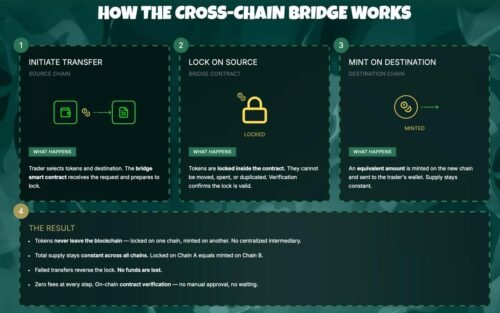
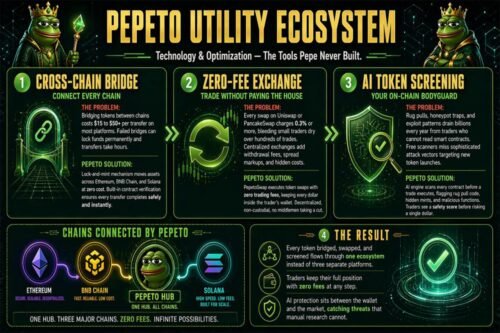
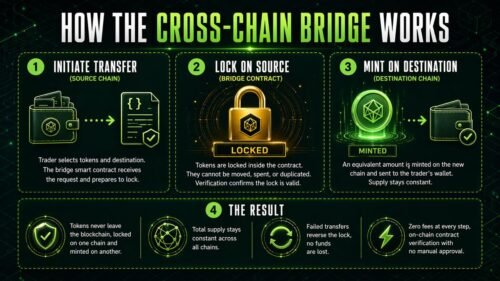
    Buying into a presale that already has a working trading hub behind it changes the math completely, and Pepeto is that presale because $10.6M has flowed in and the pace has not slowed down. The bridge handles cross-chain transfers so tokens move between networks without the delays or hidden fees that make other platforms frustrating, and the risk scorer reviews tokens before trades go through, which means holders get protection built into the trading hub from the start and not as an afterthought added later.

    The trading hub is designed so anyone can swap, bridge, and check risk from one place without bouncing between three different apps, and that kind of simplicity is what brings in the traders who turn volume into real price support after listing.

    The risk scorer digs into token contracts and flags problems before a bad buy happens, and combined with the bridge those two tools mean Pepeto is not just a meme coin built on hype because there is a real product sitting behind the price. The Pepeto official website shows the team includes a former Binance expert who understands exactly what a trading hub needs to survive after listing day.

    That kind of real utility is what turns early buyers into long-term holders who do not sell the moment a listing opens, and when traders from every timezone start using the bridge and the risk scorer the way they use their main Pepeto trading hub, the buying pressure is set to grow and hold.

    The expected Binance listing is getting closer and the presale sits at $0.0000001888, and the listing date is the moment when this entry price stops existing and the 420 trillion total supply starts trading at whatever the open market decides it is worth.

    ADA price prediction

    ADA trades near $0.18 as of August 2026, and the ADA price prediction now centers on whether the token can close above $0.1997 on the monthly chart to confirm the breakout as something lasting. The 50-day moving average sits at $0.1749 and the 200-day at $0.1718, both below the current price, which means CARDANO just flipped two major trend lines in its favor for the first time in months.

    Analysts at CoinDCX expect the $0.18 to $0.22 range for the rest of 2026, while Kraken data shows ADA became spot ETF eligible on August 9 and the Grayscale decision in October could be the next major price trigger.

    Over 60% of circulating ADA is staked across more than 3,000 pools, which reduces liquid supply and puts a floor under the price. Support sits at $0.1380, and a break below that would send ADA back toward the $0.10 zone.

    Conclusion

    Last cycle made millionaires out of the wallets that moved first on projects nobody was talking about yet, and the ADA price prediction breakout is exciting but it comes from a token that already has a $7 billion market cap, which limits how far it can run from here.

    Pepeto is that same kind of early moment with a much lower floor, built by a former Binance expert with an expected Binance listing approaching, and the $10.6M already secured proves this is not just talk because real capital committed while most traders were still watching from the sidelines.

    Anyone who still regrets missing PEPE or SHIB or DOGE at presale prices is looking at the clearest second chance this cycle has offered, because no other presale has a working trading hub, a bridge, a risk scorer, and an expected Binance listing all in one package. Entering the presale now is how to lock in the returns the listing will deliver, and waiting could turn this into the one that got away.

    Click To Visit Pepeto official Website To Enter The Presale

    FAQs

    What is the ADA price prediction for the rest of 2026?

    The ADA price prediction targets $0.18 to $0.22 through year end after the recent breakout above $0.20. A monthly close above $0.1997 would confirm the move.

    Why is Pepeto drawing attention alongside the ADA price prediction?

    Because Pepeto has secured $10.6M in presale while ADA holders celebrate a breakout from large-cap levels. The presale entry targets returns that no large-cap move can match.

    What tools does Pepeto offer that most presales do not?

    Pepeto includes a bridge for cross-chain transfers, a risk scorer for token safety, and 166% staking. The SolidProof audit and expected Binance listing add trust most presales lack.

    Disclaimer:
    This article is for informational purposes only and does not constitute financial advice. Cryptocurrency investments carry risk, including total loss of capital.

    All market analysis and token data are for informational purposes only and do not constitute financial advice. Readers should conduct independent research and consult licensed advisors before investing.