Category: BigNewsNetwork

  • Crypto Presale 2026: The Live Sales Ranked, Bullski First

    Key Takeaways

    • Bullski is the sale that is open right now, priced at $0.00001 with fifteen higher rungs published above it.
    • Chainlink, Internet Computer, Cosmos, Injective and The Graph all sold tokens before they traded.
    • Every one of them is more than 90 percent below its record high today.
    • A capped supply, a verified contract and locked liquidity are what separate a structured sale from a promise.

    crypto presale in 2026 is judged on what it publishes before anyone can trade. Bullski ($BULLSKI) publishes all of it, from a capped supply to sixteen stage prices, and its sale is live at $0.00001 on stage 1. The five tokens after it went through their own sales years ago, and their numbers today show why the entry price is the part that matters.

    Begin at Bullski’s open presale round.

    Crypto Presale 2026: The Sales Ranked

    The open sale comes first. The five traded tokens beneath it are ordered by market cap, all measured on August 10, 2026.

    1. Bullski ($BULLSKI), Sale Live

    Bullski is a 2026 Ethereum meme token sold through a published ladder rather than an auction. It is an ERC-20 with a hard cap of 120 billion tokens, and its 16-stage sale is on rung one at $0.00001.

    Each stage costs more than the last and the final one lines up with a $0.0025 listing reference. Stage 2 is $0.000015. Nothing about that schedule is decided later, which is the difference between a structured sale and an open-ended one.

    The verifiable parts are all in place. The contract has been published and verified on Etherscan. The audit is still in process.

    Liquidity is locked when the token launches. Staking and referral rewards run during the sale itself. The honest limit is that no exchange trades the token until the listing.

    2. Chainlink (LINK)

    Chainlink sold tokens publicly in 2017 and now trades at $8.26 for a market cap near $6.18 billion. Its record was $52.70 in May 2021. It supplies outside data to smart contracts across dozens of chains, so its usage is real and growing.

    The token price has never tracked that usage closely, which is the long-running complaint.

    3. Internet Computer (ICP)

    Internet Computer changed hands at $2.28 for about $1.27 billion. Its high was $700.65 in May 2021, which is the steepest fall on this page by a wide margin. The technology is ambitious and still shipping.

    The launch was priced so far above reality that holders have spent five years underwater.

    4. Cosmos (ATOM)

    Cosmos traded at $1.42 for roughly $744 million, per CoinGecko, against $43.84 in September 2021. Its technology lets separate blockchains talk to each other and is widely copied. Value has mostly accrued to the chains built with it rather than to the token itself.

    5. Injective (INJ)

    Injective sat at $4.47 for about $447 million, down from $52.62 in March 2024. It is a chain built specifically for trading applications and has real activity on it. It is also tightly tied to how busy the wider market feels, so quiet months hit it hard.

    6. The Graph (GRT)

    The Graph was $0.0144 for around $155 million, well under its $2.84 peak in February 2021. It indexes blockchain data so applications can search it, which almost everything relies on quietly. Infrastructure that works invisibly rarely gets rewarded with attention.

    Sixteen Rungs and What Sits Behind Them

    The ladder is the visible part. Behind it sit three things a buyer can check without trusting anyone: a supply that cannot grow, a contract anyone can read, and a liquidity pool that locks when the token launches.

    Those three are what turn a price schedule into something meaningful. The 16 stage price map on the official site shows every rung from the first to the last, so the distance to the listing reference is never a mystery.

    By the numbers: Six tokens on this page. Five of them are down more than 90 percent from their highs. One of them has not traded yet and costs $0.00001.

    What Happens on Listing Day

    A presale ends and a market begins. From that moment the price stops being published and starts being argued over, second by second.

    Two things change at once. The price starts moving and the supply starts circulating, because everyone who bought early can finally act. How a project handles that first week says more about it than anything in a whitepaper.

    That is the moment every token on this list went through. Chainlink, Cosmos and The Graph all had one, and all of them look completely different now than they did in their first week. The point is not that listing day is bad.

    It is that after listing day, nobody can offer you a fixed price again. The wider buying picture sits in our list of the best crypto to buy in 2026.

    Token Sale status Price, August 10, 2026 Record high
    Bullski ($BULLSKI) Live, stage 1 of 16 $0.00001 fixed No trading history yet
    Chainlink (LINK) Sold 2017 $8.26 $52.70 in May 2021
    Internet Computer (ICP) Sold before launch $2.28 $700.65 in May 2021
    Cosmos (ATOM) Sold 2017 $1.42 $43.84 in September 2021
    Injective (INJ) Sold 2020 $4.47 $52.62 in March 2024
    The Graph (GRT) Sold 2020 $0.0144 $2.84 in February 2021

    Taking the First Rung While It Is There

    Everything else in the table finished its sale years ago. Those prices are decided by whoever happens to be trading that minute, and no project behind them can offer a fixed number any more.

    Bullski still can. Put ETH or USDT into an Ethereum wallet, open the official site and read the rung currently showing, then buy $BULLSKI at the opening rung. Rewards begin once the tokens land, so nothing sits idle while the sale runs its course.

    Size it as the speculative end of a plan rather than the middle of one.

    Crypto Presale Questions for 2026

    Which crypto presale is live in 2026?

    Bullski is on stage 1 at $0.00001, with a capped 120 billion supply and a $0.0025 listing reference at the end of sixteen published stages.

    Do presales guarantee a profit?

    No, and this page is the evidence. Internet Computer, Cosmos and The Graph all ran sales and all trade more than 90 percent below their peaks.

    What should I check before joining a presale?

    Whether the supply is capped, whether the contract can be read on a block explorer, whether liquidity locks at launch, and whether every stage price is published in advance.

    When does the Bullski price change?

    Only when a stage sells out. Stage 1 holds at $0.00001 until it is gone, and stage 2 opens at $0.000015.

    For More Information

    Website: Visit the official Bullski website at bullski.io

    Telegram: Join the Bullski Telegram channel at t.me/BullskiCoinOfficial

    X (Twitter): Follow Bullski on X at x.com/bullskicoin

    Do your own research before buying any presale token. This article is not financial advice.

  • How to Stretch Your Property Budget Without Buying the Wrong Home thumbnail

    How to Stretch Your Property Budget Without Buying the Wrong Home

    Start With the Monthly Number, Not the Maximum

    A lender might approve a surprisingly large amount. That doesn’t mean spending every dollar of it is a good idea.

    A more useful starting point is the monthly payment that still leaves room for groceries, insurance, travel, repairs, and the occasional expense nobody saw coming. Because something always comes up. When comparing home loans, buyers should look beyond the headline interest rate and check fees, repayment flexibility, loan features, and what the payments could look like if rates change.

    A home shouldn’t leave its owner counting the days until payday. Buying slightly below the maximum budget can create breathing room that becomes very valuable once the excitement of getting the keys wears off.

    Know Which Compromises Are Cheap to Fix

    Not all flaws deserve the same reaction.

    An ugly wall color? Easy. Old-fashioned cabinet handles? Annoying, perhaps, but hardly a crisis. A 70-minute commute or a floor plan that makes everyday life awkward is another story.

    Buyers can stretch their money further when they stop expecting every property to look finished on inspection day. Cosmetic problems often scare off people who want something Instagram-ready from day one, which can create opportunities for buyers willing to do a little work later.

    The trick is knowing where to draw the line. Paint, flooring, light fixtures, and landscaping can usually change without turning life upside down. Structural problems, major water damage, failing roofs, and extensive electrical work deserve much closer scrutiny.

    Search One Suburb Wider

    It’s easy to become attached to a postcode. Sometimes too attached.

    When prices in a preferred area keep pushing beyond budget, the answer isn’t always to borrow more. Looking a few suburbs farther out can uncover similar homes, parks, schools, restaurants, and transport links at a more manageable price.

    This can be particularly useful in southeast Queensland. Experienced buyers agents Brisbane property seekers work with may understand how prices and buyer competition shift between neighboring suburbs, helping buyers compare locations rather than focusing on one fashionable pocket of the city.

    Instead of asking, “How can this budget afford that suburb?” ask a better question: “What is it about that suburb that’s actually important?” Once the answer is clear, finding alternatives becomes much easier.

    Stop Paying Extra for Someone Else’s Taste

    Renovated homes are tempting. Everything looks clean. The kitchen photographs beautifully. There are probably cushions arranged at suspiciously perfect angles.

    But polished presentation often comes with a premium.

    A home that’s structurally sound but cosmetically tired can offer better value, especially when the work can happen gradually. Buyers don’t need to love every finish on settlement day. They need to understand what can realistically change, what it will cost, and whether the purchase price leaves enough money to do it.

    Sometimes the dated property is the smarter buy. It may not win the open-house beauty contest, but that isn’t the point.

    Treat Outdoor Areas as Part of the House

    Buyers often spend an inspection staring at kitchens and bathrooms while giving the backyard a two-minute glance. That’s a mistake.

    Outdoor areas affect how a property works every day. Check drainage, fencing, slopes, retaining walls, access points, and the condition of surfaces around the home. Improvements such as landscaping, lighting, or concrete pathways can make an awkward outdoor area far more practical without requiring everything to be completed immediately.

    This is another place where patience helps. A backyard doesn’t need a full makeover during the first month of ownership. Fix what affects safety and usability first. The decorative stuff can wait.

    Pay Attention to the Boring Expensive Things

    Fresh paint gets attention. Plumbing doesn’t.

    Guess which one can ruin a budget faster?

    Before increasing an offer because a home has a beautiful kitchen, buyers should understand the condition of the roof, electrical system, plumbing, drainage, heating and cooling, foundations, and other expensive components.

    Independent inspections matter here. Spending money before buying can feel frustrating, especially when several properties have already fallen through, but uncovering a major problem early is far cheaper than discovering it after settlement.

    A property that’s $25,000 cheaper isn’t automatically a bargain if it needs $40,000 worth of urgent repairs.

    Don’t Renovate Everything at Once

    The first few weeks in a new home can trigger a strange sense of urgency. Suddenly every room needs painting, every light fitting looks wrong, and that perfectly functional bathroom apparently has to go immediately.

    It doesn’t.

    Living in the property for a while often changes renovation priorities. A buyer who planned to replace the kitchen might discover that storage is fine but the backyard desperately needs shade. Another might realize the spare bedroom would be more useful as an office.

    Staging improvements also gives savings time to recover after the purchase. That matters. Settlement costs, furniture, moving expenses, insurance, and small repairs have a habit of arriving together.

    Set the Walk-Away Price Before Negotiations Start

    Competition can wreck a sensible budget surprisingly quickly.

    After missing out on a few properties, another $5,000 can suddenly feel insignificant. Then another $5,000. Before long, the carefully planned limit has quietly disappeared.

    Set a maximum price before negotiations become emotional. That figure should reflect the home’s condition, comparable sales, upcoming expenses, and what the buyer can comfortably afford. Not what somebody else at the auction is willing to pay.

    Missing out isn’t always losing. Sometimes the buyer who walks away has made the best deal of the day.

    Buy for Real Life, Not the Perfect Scenario

    A property doesn’t need to solve every possible future problem. It needs to work well for the next several years without putting unnecessary pressure on the household budget.

    Think about space, work arrangements, family plans, transport, maintenance, and the ability to absorb higher everyday costs. Leave room for change.

    Stretching a property budget shouldn’t mean stretching finances until they’re uncomfortable. The smarter approach is usually less exciting: compromise on finishes, stay flexible on location, investigate expensive problems properly, and keep enough money in reserve to actually enjoy the home once it’s yours.

  • Understanding Data Transformation: Why Raw Data Is Never Ready to Use

    I once inherited a project where the previous developer had left behind a database full of customer records, and about a third of the phone numbers were stored with random spaces; some had country codes, some didn’t; a few even had the word unknown typed directly into a numeric field. Nothing was technically broken. The database accepted every single one of those entries without complaint. But try running a report off that table and you’ll see the problem immediately. Garbage in, garbage out, except it’s rarely that dramatic in real life. Usually it’s just quietly wrong numbers that nobody catches until a client calls asking why their invoice total doesn’t match anything they were expecting.

    That whole mess is basically the reason data transformation exists as its own discipline inside data engineering.

    So What Does Transformation Actually Mean

    Data transformation involves modifying, reformatting, and restructuring data to meet specific requirements, and honestly that’s a pretty broad definition for a good reason, because the work itself covers a lot of ground depending on the source and the destination. It’s the middle piece in any ETL pipeline, sitting right between pulling raw data out of a source and loading it somewhere clean.

    Think of it this way. Extraction grabs whatever exists, mess and all, without judgment. Loading puts the final result somewhere useful, ready for reporting or another system to consume. Transformation is everything that happens in between those two points, and it’s usually where the actual work lives, even though it gets the least credit.

    Anyone looking into what data transformation actually involves quickly realizes it’s less about one single action and more about a whole toolbox of smaller operations working together.

    The Kinds of Problems Transformation Solves

    Raw data breaks in some pretty predictable ways once you’ve seen it a few times, and after a while you start recognizing the same handful of issues over and over no matter which industry the data comes from.

    Dates are a classic. One system stores 03/04/2025, another stores 2025-04-03, and now somebody has to figure out which format each source actually meant before two records can even be compared side-by-side. Get this wrong, and half your date-filtered reports are quietly off by months.

    Strings get messy too, in ways that are easy to miss during a quick glance. Extra whitespace at the start or end of a field, inconsistent capitalization, a customer name spelled two different ways across two systems even though it’s clearly the same person sitting behind both records. None of this looks catastrophic on its own, but stack a few thousand of these small inconsistencies together, and reports start lying in small, quiet ways that add up over time.

    Numbers cause their own headaches. A price field stored as plain text instead of a proper numeric type. Currency symbols are baked directly into a number, which technically stops it from being a number at all as far as most systems are concerned. Decimal separators that differ depending on which country a file originally came from, so a comma means something completely different depending on the source.

    And then there’s structure, which is its own category of problem entirely. Sometimes the shape of the incoming data just doesn’t match what the target system expects. Nested XML that needs flattening into rows. A wide spreadsheet that needs to become a normalized table with proper foreign keys. JSON with arrays buried three levels deep that somebody eventually has to unpack, either by hand or with a tool built for exactly that kind of job.

    Common Techniques Worth Knowing

    A few core techniques show up again and again in almost every transformation job, regardless of the industry or the specific tool being used to do the work.

    Cleansing usually comes first. Fixing typos, standardizing formats, and stripping out characters that shouldn’t be there in the first place. It sounds tedious because it genuinely is, but skipping it just pushes the same problem further downstream where it becomes harder and more expensive to fix later on.

    Normalization comes next, getting values into a consistent scale or format so comparisons actually mean something once they land side by side. If one column measures weight in kilograms and another measures it in pounds, nobody’s numbers line up until that gets resolved somewhere along the way.

    Aggregation groups things together, summing sales by region, counting orders by month—that kind of everyday reporting math. It’s how raw transactional data eventually becomes something a manager can actually glance at during a Monday meeting and understand without a spreadsheet headache.

    Then there’s filtering, which is simply removing rows that shouldn’t be there at all. Test records that accidentally made it into production somehow. Duplicate entries sitting around from a failed import. Data that falls outside the date range anyone actually cares about for a particular report.

    And joining or merging rounds things out, pulling related data together from separate sources so the whole thing can be analyzed as one coherent dataset instead of five disconnected pieces that technically describe the same business.

    Why This Step Gets Underestimated So Often

    People who haven’t worked directly with data pipelines tend to assume extraction is the hard part, mostly because that’s the step involving external systems, credentials, and API quirks that feel technically intimidating. In practice, transformation is usually where the real complexity actually hides, quietly, under the surface.

    It’s also where business logic lives, which is easy to forget. A rule like “orders under five dollars should not count toward the loyalty program isn’t something a database connector knows how to apply on its own. That has to be encoded somewhere in the transformation layer, and if it’s wrong, the downstream numbers end up wrong too, quietly, without any error message ever telling anyone what happened.

    This is exactly why a proper transformation engine matters so much when picking ETL software in the first place. A platform built with several hundred functions covering strings, numbers, dates, lookups, and even XML, JSON, and regular expressions cuts down significantly on how much custom scripting a team ends up writing just to handle routine, everyday cleanup work. When most of the common cases are already covered out of the box; the team’s actual time goes toward the genuinely unique business rules instead of reinventing basic string cleanup for the tenth project in a row.

    A Quick Real-World Example

    Say a retail company pulls sales data from three regional systems every single night. One system logs prices in dollars, another in a local currency, and the third mixes both depending on which physical store originally rang up the sale. Product names are close but not identical across all three either; one system calls it T Shirt Blue Large while another has it logged as “TSHIRT BLU LG,” and technically that’s the same item.

    Before any of that data can land in a single warehouse table and actually be useful for reporting, transformation has to standardize the currency, reconcile those product name variants against some kind of master list, and probably reshape the whole thing into a consistent schema the warehouse already expects. Skip any one of those steps and the sales report a manager pulls the next morning is going to be wrong in ways that are genuinely hard to spot just by eyeballing it on screen.

    Wrapping Up

    Data transformation is not the flashy part of a pipeline, and it rarely gets talked about the way dashboards or AI features do these days. It’s easy to underestimate right up until you’re the one staring at a report that just doesn’t add up for reasons nobody can immediately explain, and everyone’s asking you why.

    Get it right, and everything downstream just works quietly in the background without drama. Get it wrong, and reports end up looking fine at a glance while quietly falling apart the moment somebody checks the actual numbers against reality. Solid ETL Software with a real transformation engine built in tends to be the difference between catching these issues early and finding out about them from an unhappy client instead. If you’re setting up a pipeline and thinking transformation is the part you can rush through, it’s usually the one step worth spending the most time getting right from the start.


  • Dogecoin News Goes Institutional and the Smartest Wallets Are Already Racing Into Pepeto thumbnail

    Dogecoin News Goes Institutional and the Smartest Wallets Are Already Racing Into Pepeto

    The biggest dogecoin news this week has nothing to do with memes. T. Rowe Price, a $1.9 trillion asset manager, confirmed Dogecoin sits inside its new actively managed crypto ETF at a 1.26% weighting, making TKNZ the first multi-token spot ETF to hold a memecoin by design. Institutional money is buying meme coins through regulated products.

    That validation means the next breakout travels faster and further than any cycle before. While the established names collect ETF allocations, one presale carrying $10.6M in commitments is building infrastructure that turns meme energy into trading utility. Pepeto is the entry the institutions have not found yet.

    Dogecoin News: T. Rowe Price Defends Meme Exposure in Active ETF

    The dogecoin news cycle shifted on August 8 when CoinDesk reported that T. Rowe Price head of digital assets Blue Macellari called memecoin exclusion an undermining of genuine active management. TKNZ allocates 60% to BTC and ETH, with BNB third and DOGE as the sole memecoin position. Macellari framed memecoin trading as a real stress test for blockchain networks, according to Yahoo Finance.

    DOGE trades at $0.070, still 90% below its 2021 high, consolidating inside an ascending triangle with a breakout trigger near $0.078. The institutional door just opened for meme coins, and the returns depend on where you are sitting when the flow arrives.

    Dogecoin News and the Presale That Smart Money Is Watching

    Pepeto Spotlight

    That institutional shift is exactly why the Pepeto presale deserves a closer look right now. Real capital is starting to reward projects that combine meme coin virality with working products, and Pepeto already has both running live. The zero-fee cross-chain swap engine strips trading costs to nothing across every blockchain on every single trade.

    which means every dollar of volume that enters the ecosystem lands against a fixed supply of 420 trillion tokens without losing a cent to fees along the way. That volume hits a supply that burns every single week, permanently removing tokens from circulation and tightening the math after every cycle. Demand enters clean. Supply exits forever. The price responds to the only force that has ever moved it.

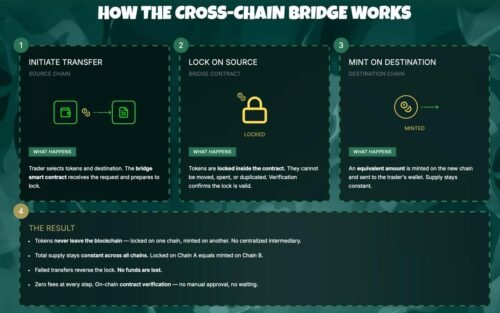
    The cross-chain bridge extends that demand funnel across every network, pulling new buyers into the same shrinking pool regardless of which chain they start on, while PepetoAI wraps every open position in a real-time risk grade so traders see their exposure before the market moves against them. SolidProof audited the contracts.

    The mind that launched the original Pepe movement built the blueprint, and a former Binance expert is steering the path to exchange listing. At $0.0000001888 per token with 166% APY staking compressing circulating supply, the presale is advancing toward the moment the exchange reprices everything.

    Dogecoin News and Price Outlook

    DOGE trades at $0.070 after holding a tight range through early August, with the ascending triangle placing a breakout target near $0.078 if buyers hold the $0.068 floor. T. Rowe Price’s inclusion is the strongest institutional signal DOGE has received since 2021, arriving while the token sits 90% below its all-time high of $0.74.

    Spot flows jumped 116% on August 1. DOGE proved that meme coins can move from fractions of a penny to tens of billions in market cap faster than any asset class. The question is how much room remains at $0.070 compared to what a presale entry offers before listing.

    Conclusion

    Meme season is approaching, and the dogecoin news cycle just confirmed it with a trillion-dollar fund putting DOGE inside a regulated ETF. Being hours early in a meme coin cycle is the difference between the wallets that hold millions and the ones that spend the next year wishing they had moved. Every cycle produces the same outcome.

    The traders who filled before the crowd arrived are the ones telling the story after. The same pattern is forming inside the Pepeto presale right now, and every day the wallet sits empty is another day of compounding returns that belong to someone else, another round filling without you, and another step closer to the listing that ends the presale price forever.

    Click To Visit Pepeto official Website To Enter The Presale

    FAQs

    What is the latest dogecoin news?

    The latest dogecoin news is T. Rowe Price adding DOGE to its actively managed TKNZ crypto ETF.

    Why is Pepeto gaining attention in dogecoin news?

    Pepeto pairs meme virality with fee-free trading tools and an approaching Binance listing at presale pricing.

    Is Pepeto a strong buy during this meme cycle?

    Pepeto’s $10.6M committed capital, weekly burns, and Binance listing create a presale entry listed coins cannot match.

    Disclaimer:
    This article is for informational purposes only and does not constitute financial advice. Cryptocurrency investments carry risk, including total loss of capital.

    All market analysis and token data are for informational purposes only and do not constitute financial advice. Readers should conduct independent research and consult licensed advisors before investing.
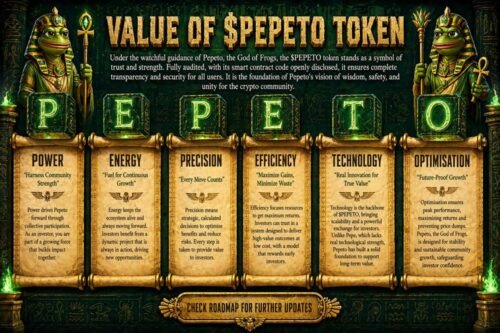
  • Binance Coin Price Crawls at $612 and the Smartest Wallets Are Already Inside Pepeto’s Presale thumbnail

    Binance Coin Price Crawls at $612 and the Smartest Wallets Are Already Inside Pepeto’s Presale

    The binance coin price pushed back above $603 this week after BNB earned second place in the S&P Pantera Digital Asset Index, a benchmark ranking tokens by protocol revenue instead of market cap. Grayscale’s spot BNB ETF filing still sits active with the SEC.

    The recognition is real. The ceiling is also real. BNB sits 55% below its all-time high, and every dollar entering at $612 fights an $80 billion cap. While the large caps grind through recovery, a project with $10.6M already committed is handing early wallets an entry that vanishes on listing day. Pepeto is where BNB was before the world showed up.

    BNB Targets $648 as Institutional Signals Stack

    The binance coin price is pressing against its 200-day EMA at $648 after S&P Dow Jones Indices ranked BNB second among 18 tokens in a revenue-weighted index that excludes Bitcoin entirely because BTC generates no protocol revenue. Grayscale’s Q2 rebalance gave BNB a 30.6% weighting in its Smart Contract Fund, ahead of Ethereum at 29.47%, according to CoinMarketCap.

    Short liquidations dwarfed long wipeouts on every timeframe above four hours, and resistance sits at $635 weekly with $648 as the wall that flips the structure bullish. Capital is rotating into chains that earn, not just chains that exist.

    Top Crypto Presale to Watch Alongside the Binance Coin Price

    Pepeto Spotlight

    That rotation is exactly what makes the current presale window so dangerous to ignore. Pepeto is not sitting on a whitepaper waiting for development. The zero-fee cross-chain swap engine is already live, stripping trading costs to nothing on every swap regardless of which chain the trader starts on, which means volume enters clean and every single trade lands directly against a fixed supply of 420 trillion tokens.

    A weekly burn schedule compresses that supply permanently, so the pool of available tokens shrinks after every single cycle. Demand grows. Supply shrinks. The math does what it always does.

    The cross-chain bridge widens the funnel further, pulling buyers from every blockchain into that same shrinking pool, and PepetoAI runs a real-time risk score on every position so traders know their exposure before they commit and get flagged before danger arrives. Capital flowing in is protected capital, the kind that stays and compounds rather than rotating out at the first red candle.

    SolidProof already audited the contracts, and the cofounder who assembled the original Pepe community is behind the architecture. At $0.0000001888 per token with 166% APY staking pulling float off the market, the supply squeeze tightens every single day. The Binance listing is approaching, and the gap between presale price and listing price is the trade this cycle was built for.

    BNB Price Analysis

    BNB trades near $612 after consolidating inside a $583 to $635 range for most of August. The S&P Pantera index inclusion and Grayscale’s 30.6% allocation both confirm that protocol revenue matters more than narrative now. Analyst targets place the next move at $648, with $665 as the monthly ceiling.

    BNB Chain’s “Build the Era” hackathon for on-chain AI agents adds fresh developer energy heading into Q4. The fundamentals are real. The remaining distance from $612 is the kind of grind that rewards patience, not the kind of entry that changes a portfolio overnight.

    Conclusion

    The binance coin price tells you where capital already arrived, but the data inside the Pepeto presale tells you where it is heading next. A swap engine that costs nothing to use, a burn schedule compressing a 420 trillion fixed supply, an AI risk scorer protecting every position, and a Binance listing approaching fast.

    Meme energy, real utility, and exchange-level infrastructure inside the same token is the rarest setup this cycle has produced. One stage earlier is the difference between watching the listing print and holding the position that prints with it.

    The wallets moving right now are the ones that will matter when the exchange opens the books, because presale pricing is the entry the data already chose, and that entry is now.

    Click To Visit Pepeto official Website To Enter The Presale

    FAQs

    What is the current binance coin price?

    BNB trades near $612, more than 55% below its all-time high while pressing toward $648 resistance.

    Is Pepeto a legitimate crypto project?

    Pepeto is SolidProof-audited with a live swap engine and a former Binance expert leading development.

    Is Pepeto a good binance coin price alternative?

    Pepeto’s presale entry and approaching Binance listing offer the kind of gap that large cap recovery cannot match.

    Disclaimer:
    This article is for informational purposes only and does not constitute financial advice. Cryptocurrency investments carry risk, including total loss of capital.

    All market analysis and token data are for informational purposes only and do not constitute financial advice. Readers should conduct independent research and consult licensed advisors before investing.

  • Penny Crypto to Buy in August 2026: 7 Sub-Cent Names, Bullski First

    Key Takeaways

    • Shiba Inu is the largest sub-cent coin here at about $2.73 billion on August 10, 2026.
    • Zilliqa is the smallest at roughly $46.8 million, and the smallest caps move furthest on the same money.
    • Bullski is the only name here with a fixed price, $0.00001, set by stage 1 of a sixteen-step sale.
    • Unit price is not value. A sub-cent coin can be worth billions and a dollar coin can be worth almost nothing.

    Every list of penny crypto to buy is really a list of coins with huge supplies. Shiba Inu, Pepe, VeChain, GALA, Ravencoin and Zilliqa all trade below a cent because there are billions of each. Bullski ($BULLSKI) sits in the same sub-cent range at $0.00001, though its price is set by a presale stage rather than a market.

    Before the list, the official Bullski presale site shows the live rung.

    Myth: Buying millions of tokens means you own a lot.

    Reality: You own a share of a total. Ten million Shiba Inu is a tiny slice of a supply measured in hundreds of trillions. What matters is what fraction of the whole your holding represents, which is why a capped supply is worth more attention than a low price.

    Penny Crypto to Buy in August 2026

    Seven names, all trading under one cent. The six that already have markets are ordered by size, and the presale entry sits at the top.

    1. Bullski ($BULLSKI)

    Bullski costs $0.00001 on the opening rung of its sale. There are 120 billion tokens in total and the number cannot change, which is unusual in a category where supplies often run into the quadrillions.

    The token is an ERC-20 on Ethereum, so any standard wallet holds it. The 16-stage ladder climbs from the current price toward a $0.0025 listing reference, and stage 2 is already priced at $0.000015.

    The safety checks are open before you spend. The verified contract is readable on Etherscan. Auditors are still working through it.

    The pool locks when the token launches. Staking and referral rewards run during the sale. The one real drawback is that there is no market to sell into until the listing.

    2. Shiba Inu (SHIB)

    Shiba Inu traded at $0.00000463 for a market cap near $2.73 billion. Its record was $0.00008616 in October 2021. It is the biggest sub-cent coin in crypto and has built real products around itself, including a burn programme and its own layer-2.

    Its supply is so vast that meaningful percentage moves are slow work.

    3. Pepe (PEPE)

    Pepe changed hands at $0.00000286 for about $1.20 billion, per CoinGecko, down from $0.00002803 in December 2024. It runs on attention alone, with no staking and no side products. That makes it fast in both directions and unpredictable in quiet months.

    4. VeChain (VET)

    VeChain sat at $0.0047 for roughly $401 million, well below its $0.281 high from April 2021. It tracks goods through supply chains, which is a genuine business use rather than a meme. Progress there is slow and unglamorous, and the token price has reflected that.

    5. GALA

    GALA traded at $0.0018 for about $89.2 million, a long way from $0.8248 in November 2021. It sits at the centre of a blockchain gaming network with actual players. Gaming tokens live and die on whether the games hold an audience, which is a harder test than most.

    6. Ravencoin (RVN)

    Ravencoin was $0.0036 for around $59 million, against $0.2852 in February 2021. It was built for issuing assets on its own chain and still has a committed mining community. It is also one of the quietest projects on this list, and quiet rarely moves a price.

    7. Zilliqa (ZIL)

    Zilliqa traded at $0.0024 for roughly $46.8 million, down from $0.2554 in May 2021. It was an early mover on splitting a network into shards for speed. Being early stopped mattering once larger chains solved the same problem with more money behind them.

    Where $BULLSKI’s $0.00001 Comes From

    It is not a market price and it was not chosen at random. It is the first rung of a published ladder, and every rung above it is listed on the sale page.

    That structure is what separates this entry from the rest of the list. The other six are cheap because supply is huge. This one is cheap because the sale has only just begun, and how $BULLSKI prices each stage is set out step by step on the official site.

    Pro Tip: Ignore the token count and work out the fraction. Divide what you buy by the 120 billion total and you have the only number that actually describes your position.

    What Sub-Cent Prices Do and Do Not Mean

    A sub-cent price makes a wallet balance look impressive and makes the maths feel easy. It does not make a coin undervalued, and it does not make a rise more likely.

    Two coins on this page prove it. Shiba Inu at $0.00000463 is worth 58 times more than Zilliqa at $0.0024, even though Zilliqa’s unit price is far higher. We covered the same trap in our July round-up of penny crypto worth watching, and it catches new buyers every cycle.

    Coin Price, August 10, 2026 Market cap Record high
    Bullski ($BULLSKI) $0.00001, stage 1 of 16 Not listed yet No trading history
    Shiba Inu (SHIB) $0.00000463 $2.73 billion $0.00008616 in October 2021
    Pepe (PEPE) $0.00000286 $1.20 billion $0.00002803 in December 2024
    VeChain (VET) $0.0047 $401 million $0.281 in April 2021
    GALA $0.0018 $89.2 million $0.8248 in November 2021
    Ravencoin (RVN) $0.0036 $59 million $0.2852 in February 2021
    Zilliqa (ZIL) $0.0024 $46.8 million $0.2554 in May 2021

    Starting With the Cheapest Rung on the Page

    Anyone drawn to sub-cent coins is looking for a small base and a big token count. A sale still on its first step delivers both, with the added advantage that the price is fixed while the rung lasts.

    The process is quick. Load an Ethereum wallet with ETH or USDT, open the official site, read the stage displayed, then buy sub-cent $BULLSKI at stage 1. Stake it the same day if you want rewards running.

    Keep the amount modest, since penny coins are the most volatile corner of the market.

    Penny Crypto Questions

    What is the best penny crypto to buy in 2026?

    Shiba Inu is the largest and most liquid sub-cent coin, and VeChain has the clearest business use. The one entry with a fixed price is Bullski at $0.00001, set by stage 1 rather than by trading.

    Can a penny crypto reach $1?

    Only with an enormous market cap behind it. Shiba Inu at $1 would be worth more than every crypto combined, which is why buyers look at supply first.

    Why do so many coins cost less than a cent?

    Because they issued huge supplies. Price times supply is what the market values, so a large supply pushes the unit price down automatically.

    How does Bullski compare with Shiba Inu?

    Per token they sit close together, $0.00001 against $0.00000463. The real difference is behind the price. Shiba Inu’s supply runs into the hundreds of trillions, while Bullski stops at 120 billion.

    For More Information

    Website: Visit the official Bullski website at bullski.io

    Telegram: Join the Bullski Telegram channel at t.me/BullskiCoinOfficial

    X (Twitter): Follow Bullski on X at x.com/bullskicoin

    Do your own research before buying any presale token. This article is not financial advice.

  • Binance New Frenzy Grips Traders as BNB Stumbles and Pepeto Tears Toward Listing Day thumbnail

    Binance New Frenzy Grips Traders as BNB Stumbles and Pepeto Tears Toward Listing Day

    The binance new listing conversation in August 2026 is moving faster than any single chart can track. A minority Bitcoin chain tied to BIP-110 separated from the main network on August 9 and produced just two blocks in eight hours compared with 48 on the main chain, according to ZebPay.

    Meanwhile, Blockchain Rio opened in Rio de Janeiro with over 15,000 attendees and panels spanning tokenization, DeFi, and institutional adoption according to The Crypto Times.

    While BTC holds above $65,000 and the Fear and Greed index sits at 30, the wallets worth watching are the ones adding capital to a presale that keeps growing past $10.6 million. The project is Pepeto, a meme coin with a SolidProof audit, working exchange tools, and an anticipated Binance listing that draws closer with every passing stage.

    BIP-110 Minority Chain Stalls as Blockchain Rio Fuels the Listing Conversation

    The minority chain attempted to activate a soft fork the broader network did not support, and Bitcoin responded exactly the way consensus is supposed to work: the fork stalled while the main chain printed blocks at full speed, according to CoinDesk.

    Blockchain Rio brings together institutional players, regulators, and builders at a moment when the exchange listing pipeline is drawing more attention than at any point this year. Binance Alpha processed 221 token launches in 2025 according to The Crypto Times, and the race to land on the world’s largest exchange has only intensified. The projects that arrive with live tools will be the ones the listing actually lifts.

    Binance New Listing Candidates as BNB Grinds and Pepeto Builds Traction

    Pepeto Spotlight

    The sharpest traders searching for the next listing candidate stopped watching BNB weeks ago. They already made their move. Pepeto’s zero fee cross chain swap engine keeps the full margin on every trade by stripping out costs that normally drain a position before it produces a return.

    Because that margin stays intact from the first trade, the cross chain bridge can move those assets between blockchains whole, delivering full value from origin to destination without a cent lost in transit. The swap saves the money, the bridge carries it, and the result is a system where every trade is executed, transferred, and protected without a single fee touching the outcome.

    The original Pepe coin’s founder and a former Binance expert assembled these tools under a SolidProof audited contract. At $0.0000001888 per token with 420 trillion in fixed supply and a 166% APY staking pool compounding positions, Pepeto has already pulled $10.6 million in presale capital. That price will not exist once the anticipated Binance listing opens and exchange-level volume arrives.

    BNB

    BNB trades near $612, sitting between its 50-day EMA at $583 and a 100-day EMA at $602 that rejected two recovery attempts this month. The token peaked at $1,369 in October 2025 and has surrendered more than 56% since.

    BNB Chain is building a new Layer 1 for high-frequency trading and AI agents, and the fundamentals remain intact. But the real binance new listing opportunity is about what comes next, not what already trades at $80 billion.

    BlockDAG

    BlockDAG raised over $452 million in presale before listing in March 2026 at $0.05. The token touched $0.17 within days, but the story since has been leadership changes, mainnet delays, and community reports of missing tokens.

    CEO Antony Turner was removed in late 2025, and critics flagged fund management concerns alongside a six-month mainnet delay. Ambition without execution is the cautionary tale every listing candidate should study.

    Conclusion

    Every binance new listing that delivered returns worth remembering followed the same pattern: early wallets filled before the crowd had a reason to look, and by the time the listing printed the presale price belonged to history. The same pattern is forming inside Pepeto right now. SHIB taught the market what it costs to see the entry, believe the project, and still not commit enough.

    For anyone watching the kind of returns that only come once a cycle, this is the window where it happens, before the bull run arrives and before the anticipated Binance listing turns today’s presale price into a line on a chart that everyone wishes they had bought.

    Click To Visit Pepeto official Website To Enter The Presale

    FAQs

    What is the next binance new listing to watch in August 2026?

    The next binance new listing to watch is Pepeto, which holds a SolidProof audit and working trading tools ahead of its anticipated listing.

    Why is BNB not the strongest binance new listing opportunity?

    Because BNB trades at $80 billion with 56% below its high, which compresses returns compared to a presale token approaching its first listing.

    Is Pepeto a strong binance new listing candidate?

    Pepeto combines a former Binance expert, a SolidProof audit, and three live exchange tools ahead of its anticipated listing.

    Disclaimer:
    This article is for informational purposes only and does not constitute financial advice. Cryptocurrency investments carry risk, including total loss of capital.

    All market analysis and token data are for informational purposes only and do not constitute financial advice. Readers should conduct independent research and consult licensed advisors before investing.

  • Best Crypto to Buy in August 2026 Leaves XRP Behind as Pepeto Explodes Before Listing thumbnail

    Best Crypto to Buy in August 2026 Leaves XRP Behind as Pepeto Explodes Before Listing

    Every cycle produces a best crypto to buy in August 2026 list, and every cycle most people read it too late. The Senate filed a motion to proceed on the CLARITY Act on August 9, pushing crypto market structure legislation further than it has ever gone.

    In the same week, U.S. spot Bitcoin ETFs recorded $853 million in net inflows, the strongest weekly haul since April, with BlackRock’s IBIT capturing 81% of the total and the entire category logging zero outflow days in August.

    While institutional capital stacks into large caps and regulation inches forward, a growing wave of wallets keeps adding to a presale that passed $10.6 million and has not slowed down. The project is Pepeto, carrying a SolidProof audit, live exchange tools, and an anticipated Binance listing approaching faster than the market expects.

    CLARITY Act Progress and Bitcoin ETF Inflows Reshape August

    The CLARITY Act represents the first serious attempt to define a regulatory framework for crypto in the United States, and the motion to proceed marked its furthest progress since introduction. Senate Majority Leader John Thune confirmed the bill will be first when lawmakers return, according to The Crypto Times.

    Bitcoin ETF flows reinforced the signal. The $853 million weekly total came on five consecutive positive sessions, with BlackRock’s IBIT absorbing $693 million according to ZebPay. Capital is rotating back into risk assets. The smartest entries are the ones that move before the crowd confirms what the data already shows.

    Best Crypto to Buy in August 2026 as XRP Grinds and Pepeto Accelerates

    Pepeto Spotlight

    The window where this math works is closing fast. That is what separates the best crypto to buy in August 2026 from everything else on the list. Pepeto’s PepetoAI risk scorer grades every trade from entry to exit in real time, and because the score only matters when the trader’s capital is fully intact, the cross chain bridge exists to make sure it arrives that way.

    The bridge carries assets between blockchains with zero margin lost in transit, which means every position the scorer evaluates still holds every penny the trader committed. One tool moves capital whole, the other evaluates it whole, and the system that connects them charges nothing for either.

    The mind behind the original Pepe token and a former Binance expert developed these tools under a SolidProof verified contract, and the numbers reflect it. Pepeto has crossed $10.6 million at $0.0000001888 per token, with 420 trillion in fixed supply and 166% APY compounding early positions while the anticipated Binance listing approaches.

    XRP

    XRP trades near $1.00, sitting below every major moving average, with the 50-day EMA at $1.11 and the 200-day at $1.42 overhead according to CoinDCX. Support holds at $1.00, a zone bulls have defended twice this month but on thinner conviction each time. August is historically XRP’s flattest month, averaging just 0.43% returns with four consecutive years of losses.

    The CLARITY Act could be the catalyst, with analysts targeting $1.10 to $1.25 after recess. But at 68% below its $3.38 all-time high, the returns from here belong to the patient, not the early.

    Mutuum Finance

    Mutuum Finance is a DeFi lending protocol on Ethereum that raised over $21 million across eleven presale phases. The project promises dual lending models with both peer-to-contract and peer-to-peer pools, but no named public founders, no confirmed mainnet date, and the V1 protocol on testnet still. The gap between presale promise and working product leaves buyers carrying execution risk that raised capital alone has not resolved.

    Conclusion

    Meme season is approaching, and the best crypto to buy in August 2026 has always been the one you entered before the crowd noticed. Many made millions while others watched the same charts, hesitated on the same entry, and let every early window close around them.

    The wallets filling Pepeto right now tell the same story every winning cycle tells. Every day you wait is a day of returns gone, another round filling without you, and the anticipated Binance listing getting closer while the presale window shrinks around the last entries still available.

    Click To Visit Pepeto official Website To Enter The Presale

    FAQs

    What is the best crypto to buy in August 2026?

    The best crypto to buy in August 2026 is one with working tools, a verified audit, and a major listing ahead, which describes Pepeto’s current presale.

    Why is XRP not the best crypto to buy in August 2026?

    Because XRP trades 68% below its all-time high with resistance overhead, limiting returns compared to a presale entry before listing.

    Is Pepeto a strong presale entry before its Binance listing?

    Pepeto’s SolidProof audit, live exchange tools, and anticipated Binance listing make it a compelling entry while presale pricing remains open.

    Disclaimer:
    This article is for informational purposes only and does not constitute financial advice. Cryptocurrency investments carry risk, including total loss of capital.

    All market analysis and token data are for informational purposes only and do not constitute financial advice. Readers should conduct independent research and consult licensed advisors before investing.
  • Top Altcoins for August 2026: Where Bullski Fits Beside ETH and XRP

    Key Takeaways

    • Ethereum leads the altcoin field at about $226.0 billion, with XRP second here at $63.7 billion on August 10, 2026.
    • TRON and Chainlink fill the mid-cap slots at $31.4 billion and $6.18 billion.
    • Bullski is the outlier. It has no market cap because it has no market, only a published stage price of $0.00001.
    • Its supply is fixed at 120 billion and the listing reference is $0.0025.

    A ranking of the top altcoins usually starts and ends with market cap. This one keeps the order and adds the piece those rankings leave out, a coin no market has priced yet. Bullski ($BULLSKI) is selling at $0.00001 on stage 1 while Ethereum, XRP, TRON and Chainlink trade on their own numbers.

    You can read the live stage on the official Bullski site in a few seconds.

    Top Altcoins for August 2026

    The four traded names are ordered by size. Bullski sits at the top of the page because its price is the only one still set rather than found.

    1. Bullski ($BULLSKI)

    The supply is capped at 120 billion. The chain is Ethereum, and the token follows the ERC-20 standard. The sale moves through sixteen priced steps, and step one is live at $0.00001.

    Stage 2 is marked at $0.000015.

    Each rung costs more than the one before it, and the last one lines up with a $0.0025 listing reference. That means the cost of waiting is a number you can read, not a feeling. It is a 16-stage sale with every price on the table from day one.

    On the safety side, the code sits verified on Etherscan for anyone to read, the audit is still in process, and the pool locks when the token launches. Staking and referral rewards both run during the sale. The honest catch is the lack of a secondary market until listing day.

    2. Ethereum (ETH)

    Ethereum traded at $1,872.98 on August 10, 2026, worth about $226.0 billion. That is a long way under the $4,946.05 it printed in August 2025. It hosts more tokens and apps than any other chain, which keeps demand steady even in quiet months.

    Cheaper chains chipping at its fee income is the standing risk.

    3. XRP

    XRP was $1.02 the same day for a cap near $63.7 billion, per CoinGecko. Its record of $3.65 came in July 2025. Banks and payment firms actually use it to shift value across borders.

    The soft spot is how heavily the price still leans on legal and regulatory news.

    4. TRON (TRX)

    TRON sat at $0.3308 for roughly $31.4 billion, and it was the only coin on this page in the green over 24 hours. It moves a huge volume of stablecoin transfers, which is quiet, boring, real usage. Its concentration around one founder and one use case is the fair criticism.

    5. Chainlink (LINK)

    Chainlink changed hands at $8.26 for about $6.18 billion, well below the $52.70 it reached in May 2021. It supplies outside data to smart contracts across many chains. Plenty of projects rely on it, yet that reliance has not reliably fed through to the token price.

    What Sixteen Priced Stages Do for a Buyer

    A staged sale replaces guesswork with a schedule. You are not trying to time a chart. You are choosing a rung, and the rung you choose sets your cost for good.

    The rest of the structure backs that up. A capped supply means your share cannot be watered down later. A verified contract means anyone can read the rules.

    A locked pool means the liquidity stays put. How the $BULLSKI stages are priced is set out in full on the official site.

    Fun fact: XRP set its $3.65 record in July 2025 and is down to $1.02 as of August 10, 2026. Even the largest altcoins spend most of their lives well below their best day.

    Reading an Altcoin’s Market Cap

    Market cap is price times supply, nothing more. A coin at $0.068 is not cheap and a coin at $1,872 is not expensive until you know how many exist. Ethereum at $226.0 billion needs far more new money to double than Chainlink at $6.18 billion does.

    That is also why a token with no cap yet starts from a different place, a point our crypto presale guide went through step by step.

    The same rule cuts the other way with very cheap coins. A token priced in millionths of a cent looks like a bargain until you count the units. Bullski answers that by capping supply at 120 billion and publishing the number, so the sums are simple rather than hidden.

    Remember: Compare caps, not unit prices. It is the only fair way to line up coins that have wildly different supplies.

    Altcoin Price, August 10, 2026 Market cap 24 hour move
    Bullski ($BULLSKI) $0.00001, stage 1 Not listed yet Fixed by stage, not by market
    Ethereum (ETH) $1,872.98 $226.0 billion Down 2.6 percent
    XRP $1.02 $63.7 billion Down 2.2 percent
    TRON (TRX) $0.3308 $31.4 billion Up 0.3 percent
    Chainlink (LINK) $8.26 $6.18 billion Down 0.7 percent

    Where Bullski Fits in a Small Portfolio

    Most people hold two or three large altcoins and then look for one position with a different shape. A sale sitting on its opening rung is that position, and the wider case for early entries is laid out in our list of the best crypto to buy in 2026.

    Buying is quick. Fund an Ethereum wallet with ETH or USDT, open the official site, check the stage on screen, then enter the $BULLSKI presale today. Staking begins as soon as you hold the tokens.

    Keep it a small, deliberate slice of the whole.

    Common Questions on Top Altcoins

    What are the top altcoins by market cap in 2026?

    Ethereum leads at about $226.0 billion, followed by XRP at $63.7 billion and TRON at $31.4 billion as of August 10, 2026. Chainlink sits lower at $6.18 billion.

    Is TRON a good altcoin to hold?

    It carries real stablecoin transfer volume and was one of the few names up on the day. The trade-off is how much of the project centres on a single founder and a single use.

    Can you buy Bullski on an exchange?

    Not yet. It is still in its presale, so the only place to buy is the official site at the current stage price of $0.00001.

    Do altcoins rise when Bitcoin falls?

    Usually not. Altcoins tend to follow Bitcoin down and only outperform once it steadies. That is why buyers set up positions during flat stretches rather than during rallies.

    For More Information

    Website: Visit the official Bullski website at bullski.io

    Telegram: Join the Bullski Telegram channel at t.me/BullskiCoinOfficial

    X (Twitter): Follow Bullski on X at x.com/bullskicoin

    Do your own research before buying any presale token. This article is not financial advice.

  • Ethereum Price Prediction Drowns Below $2,000 as Pepeto Rockets Toward Anticipated Listing thumbnail

    Ethereum Price Prediction Drowns Below $2,000 as Pepeto Rockets Toward Anticipated Listing

    The ethereum price prediction conversation shifted this week, and most holders have not caught up yet. An address that bought 2,000 ETH during the 2015 ICO for $622 just sent a test transfer to Coinbase after 11 years of total silence, sitting on a position now worth $3.83 million. In the same week, spot Ethereum ETFs pulled in $245 million, extending an inflow streak to five consecutive weeks and marking the highest weekly total since April.

    While ETH grinds below $2,000 with sellers still defending every attempt at resistance, thousands of wallets have been building a different kind of position entirely, one that does not require a rate cut or an ETF approval to move. The project drawing them in is Pepeto, a presale that crossed $10.6 million with three live exchange tools, a SolidProof audit, and an anticipated Binance listing approaching fast.

    ICO Whale Wakes After 11 Years as Ethereum ETFs Extend Inflow Streak

    The dormant wallet participated in Ethereum’s 2015 token sale at $0.311 per coin, according to CoinGabbar. On August 9, it sent 0.1 ETH to Coinbase as a test transaction, a move that typically signals a larger deposit is coming. The full 2,000 ETH holding is worth close to $3.83 million, a return of roughly 6,150 times the original cost. That kind of gain is the purest illustration of what early positioning delivers, and the clearest reminder that those windows close permanently once the market catches up.

    ETH ETF inflows tell a parallel story. The $245 million weekly haul extended a five-week streak while network fees dropped 99% according to CoinMarketCap. BitMine disclosed an $11.13 billion ETH position with 84.8% locked, pulling supply off the open market at scale. The outlook benefits from all of it. The entry, however, is no longer early.

    Ethereum Price Prediction and Pepeto’s Growing Presale Demand

    Pepeto Spotlight

    This is where the two stories separate completely. The wallets moving fastest right now are not debating ETH targets. They are filling Pepeto. The cross chain bridge moves assets between blockchains without friction, and because that mobility exists, the zero fee swap engine executes trades at zero cost across every chain the bridge reaches.

    Every fee that would normally drain a position vanishes, which means the margin the trader keeps is the full margin they entered with. The bridge delivers capital whole, the swap executes it whole, and every trade completes without a single dollar lost between chains.

    The original Pepe coin’s creator and a former Binance expert built these tools on a SolidProof audited contract. Pepeto has pulled $10.6 million at $0.0000001888 per token, backed by a fixed 420 trillion supply and a 166% APY pool that keeps early capital compounding while the anticipated Binance listing approaches. Meme energy, working tools, and a listing all inside one presale. That combination almost never exists at the same price point twice.

    Ethereum (ETH)

    ETH trades near $1,888, stuck below the $1,930 to $1,950 resistance band that has rejected every attempt this month. The 100-day EMA at $1,924 sits directly overhead, and sellers remain active near $2,000.

    Support holds at $1,850 where buyers stepped in during July. The ethereum price prediction from analysts targets $10,000 between 2026 and 2030, and the institutional case has rarely looked better with roughly 30% of total ETH supply now locked in staking. But ETH still trades 61% below its August 2025 all-time high of $4,953. That is a real trade. It is also priced like one.

    Conclusion

    The ethereum price prediction points toward recovery, but life-changing returns have never come from buying a $233 billion asset sitting 61% below its peak. They come from being early in what the market discovers after the listing, not from waiting for large cap recovery math to play out over years.

    What Pepeto has assembled, meme energy that draws attention, exchange tools that protect every trade, and an anticipated Binance listing that creates the first exchange price, is the rarest kind of presale setup this cycle has produced. The data points in one direction for the wallets that moved while presale pricing still existed. That window is right now, and it closes permanently the moment the listing goes live.

    Click To Visit Pepeto official Website To Enter The Presale

    FAQs

    What is the ethereum price prediction for 2026?

    The ethereum price prediction targets $2,050 to $2,450 if ETH breaks above $2,000 resistance and reclaims its 100-day EMA.

    Why is the ethereum price prediction bullish despite a 61% drawdown?

    Because $245 million in weekly ETF inflows and 99% lower fees create structural demand that supports long-term recovery.

    Is Pepeto a strong entry before its Binance listing?

    Pepeto combines working cross chain tools, a SolidProof audit, and over $10.6 million raised ahead of its anticipated listing.

    Disclaimer:
    This article is for informational purposes only and does not constitute financial advice. Cryptocurrency investments carry risk, including total loss of capital.

    All market analysis and token data are for informational purposes only and do not constitute financial advice. Readers should conduct independent research and consult licensed advisors before investing.