Category: BigNewsNetwork

  • Why Making AI Sound Human Is the Biggest Challenge in Tech Today

    A few months back, a friend of mine called her bank’s customer support line. She spent fourteen minutes talking to an automated system before she realized it was not a person. She told me later she felt genuinely embarrassed, not at the bank, but at herself, for not catching it sooner. That moment stuck with me. Because it says something important about where we are right now with artificial intelligence and also about how far we still have to go.

    We are living through a strange in-between period. AI tools are everywhere. They answer emails, write product descriptions, handle complaints, explain medical results, and tutor school kids through algebra. The technology has grown fast. Faster, honestly, than most people expected even five years ago. But there is a problem underneath all that speed, and the industry has only recently started taking it seriously. Most of these systems still do not sound like people. They sound like what they are: sophisticated pattern-matching engines trying their best to approximate a conversation.

    The push to genuinely humanize AI is, right now, the most quietly important competition happening across the entire technology sector. It does not get the same attention as self-driving cars or quantum computing. But the stakes are just as high, possibly higher, because this one affects how billions of ordinary people experience technology in their everyday lives.

    Something Important Gets Lost in Translation

    There is a concept linguists sometimes call “pragmatic meaning.” It basically refers to everything a sentence communicates beyond its literal words. When someone says “sure, whatever you think is best,” they might mean genuine agreement. Or they might mean they are exhausted and done arguing. Or they might mean they trust you completely. The words alone cannot tell you which one it is. You need context, tone, history, and a certain amount of human intuition to figure it out.

    This is exactly what current AI systems struggle with. They are trained on enormous amounts of text, so they get very good at producing sentences that look correct. They can mimic the structure of a caring response or a helpful explanation. But mimicking structure is not the same as understanding meaning. There is a gap between those two things, and users feel it, even if they cannot always explain what is bothering them.

    Think about the last time you got a response from an automated system that felt slightly off. Maybe it answered your question but ignored the obvious frustration in how you phrased it. Maybe it gave you three paragraphs when a single sentence would have done the job. Maybe it used words no actual person would choose. Small things, individually. But they add up to an experience that feels impersonal and slightly alienating, even when the information itself is accurate.

    Why the Tech Industry Is Taking This More Seriously Now

    For a long time, the assumption in product development was that users would adapt. People got used to awkward phone trees. They learned to navigate confusing help menus. The thinking was that convenience would outweigh friction, and users would simply adjust their expectations.

    That assumption has started breaking down. Companies deploying AI in customer-facing roles are running into a consistent problem: when people feel like they are being processed rather than helped, they stop engaging. They abandon the interaction, call a human instead, or worse, quietly stop trusting the brand entirely. The data on this is not subtle. Satisfaction scores drop. Return rates fall. Negative reviews mention the AI specifically.

    On the other end, organizations that put serious effort into making their AI tools more conversational, more emotionally aware, and more responsive to context are seeing measurably different results. The gap between those two groups is becoming wide enough that it is now a real competitive issue. This is what shifted the conversation from “nice to have” to “we need to solve this.”

    What Humanization Actually Means in Practice

    It is worth being specific here, because “humanize AI” can sound like marketing language if you are not careful. What does it actually mean in a practical sense?

    Part of it is tonal awareness, knowing when to be brief, when to be warm, when to push back gently, and when to simply acknowledge that something is hard without immediately jumping to solutions. Human beings do this naturally in conversation. We read the room. AI systems have to be explicitly designed and trained to do something similar, and getting it right requires a much more nuanced approach than most teams initially expect.

    Part of it is conversational memory. A real exchange between two people builds on itself. What was said in the first minute shapes how everything after it gets interpreted. AI systems that reset their context every few messages create a jarring experience that no amount of polite phrasing can fix. Genuine continuity across a conversation is one of the things that makes an interaction feel human rather than transactional.

    Part of it is knowing what not to say. Human communicators leave things out constantly. They do not list every caveat. They do not repeat themselves unnecessarily. They do not fill silence with information just because they technically could. Teaching AI systems the discipline of restraint, knowing when less is actually more, turns out to be one of the harder problems in this whole space.

    The Ethics Question Cannot Be Skipped

    Here is something that does not come up enough in these conversations. Making AI more human-sounding also makes it more persuasive. And a more persuasive AI is a tool that can be used well or badly, depending entirely on the intentions of whoever built it.

    There are real concerns about AI systems being designed to build emotional dependency, to blur the line between machine and person in ways users have not consented to, or to exploit the trust that comes from naturalistic conversation for commercial or manipulative ends. These are not hypothetical worries. They are already happening in some corners of the industry.

    The answer is not to stop working on humanization. The answer is to build it with explicit commitments to transparency and honesty. Users should always know they are talking to an AI, even if that AI communicates with warmth and nuance. The goal is authentic helpfulness, not manufactured intimacy designed to serve someone else’s agenda.

    The developers doing this work responsibly are the ones worth paying attention to. They treat ethics as a design constraint from the beginning, not as a compliance checkbox at the end of the process.

    Where This Goes from Here

    The honest answer is that nobody fully knows yet. The pace of progress in this area has surprised researchers repeatedly, and not always in predictable ways. Systems that seemed like they were years away from meaningful improvement have sometimes jumped forward quickly when the right approach clicked into place.

    What seems clear is that the teams most likely to make real breakthroughs are not the ones throwing the most computing power at the problem. They are the ones asking harder questions about what human communication actually is, drawing on psychology, linguistics, anthropology, and lived experience rather than treating language as a purely technical puzzle.

    The effort to truly humanize AI is, in many ways, an effort to understand human beings more carefully. What do people actually need from a conversation? When do they feel heard, and when do they feel processed? What makes the difference between an exchange that leaves someone feeling helped versus one that leaves them feeling handled? These are old questions. Asking them in the context of artificial intelligence does not make them any less important or any easier to answer.

    My friend who talked to the bank’s AI for fourteen minutes still uses that bank. But she told me she now always asks for a human agent first. That is the gap the industry is trying to close. And closing it, genuinely, is harder and more important than almost anything else happening in technology right now.


  • Why Your Glutes Stop Working When You Sit All Day (And What to Actually Do About It)

    Here is something most people figure out the hard way. You spend months going to the gym, doing squats, maybe some lunges here and there, and then one day you realize your lower back aches by 3 PM every single workday. Your hips feel locked up after standing from your desk. Stairs feel oddly tiring. Nobody tells you upfront that sitting eight to ten hours a day quietly turns your glutes off and that the rest of your body eventually pays for it. If you have been searching for a proper dumbbell glute workout plan that actually accounts for the damage desk life does, the reason is exactly this: your glutes need targeted work to come back online after being ignored all day.

    This is certainly not a new issue; however, it’s an issue that has become more pronounced due to the number of individuals opting for remote work. Sitting down all day long means that the hip flexors are kept in a permanently contracted position for many hours of the day. They keep pulling on the pelvis, causing it to tilt forward, while at the same time getting tightened up gradually. On the other hand, the glutes do nothing. There is no contraction, tension, or load being put upon the muscle. It stays inactive. This goes on for many years and five days a week, leaving the glutes unable to engage in any kind of movement. This phenomenon is referred to as gluteal amnesia.

    What Actually Happens to Your Body

    There is no such thing as just one gluteal muscle, but rather there are three gluteal muscles, and these include the gluteus maximus, medius, and minimus. It is the duty of these muscles to deal with hip extension, hip abduction, and rotational movements. These muscles will distribute the workload evenly while walking, running, bending, or carrying something. If these muscles fail, then the lumbar muscles will overcompensate while hip extension takes place. The knees lose some of their lateral stability. Over time, this creates a chain of compensations that shows up as pain in places that seem unrelated to sitting.

    Most people treat the symptoms rather than the cause. They stretch their lower back, ice their knees, and buy better chairs. None of that actually reactivates the glutes. For that, you need to load those muscles deliberately and regularly. The fix is straightforward even if it takes some consistency: targeted glute training a few times per week, using exercises that force the muscles to contract through a full range of motion.

    Why Dumbbells Work Well for This

    You do not need a barbell, a hip thrust machine, or a cable stack. Dumbbells cover the full range of glute training patterns without any of the setup complexity. Hinges, squats, split squats, bridges, and kickbacks; all of it is completely doable with a pair of dumbbells at home. For desk workers especially, the convenience factor matters. If you need to drive somewhere, change, warm up, and spend ninety minutes training before you can drive home; the habit rarely sticks. A thirty-minute session in your living room is far more likely to actually happen four times a week.

    The other thing worth knowing is that dumbbell exercises let you feel each side of the body independently. Many office workers develop imbalances unconsciously; their hip flexors are tighter on one side, and one of the glutes fires more effectively than the opposing side. Exercises such as the single-leg Romanian deadlift and the Bulgarian split squat reveal these imbalances so that they can be corrected. Bilateral barbell work can hide them for years.

    The Movements That Matter Most

    Hip thrusts come first for most people, and for good reason. The glute maximus gets its highest activation during hip extension against resistance, and the hip thrust puts it directly in that position. If you’ve never performed this movement in your home gym before, place the middle portion of your back against a solid surface such as a couch or a low bench. Position the dumbbell across your hips and extend upward until you are in a straight line. Squeeze at the top and come down slowly. It’s during the slow part where most of the growth occurs.

    Romanian deadlifts activate both the glutes and hamstrings as a pair using a hip hinge technique. Hold the dumbbells in front of your thighs, keep the knees slightly bent, and hinge at the hips while lowering the dumbbells. The most important part here is to get the hamstring stretch before standing up; otherwise, you may be bending the knees or rounding the lower back too much. This exercise is useful for everyday movements, since each time you lift something off the ground, you perform the same hip hinge pattern.

    Split squats with dumbbells are tough, and that is one reason why they are so effective. Place the rear foot on something like a chair or a couch while holding dumbbells beside the body, then lower the front knee until almost touching the ground. The majority of the load is carried by the front leg, and depending on the distance between the legs, you should really feel the burn in the glutes of the front leg.

    For a complete breakdown of all the movements worth adding to your routine, the 15 Best Glute Exercises listed in the My Exercise Snacks guide covers the full picture, from beginner-friendly options like glute bridges and goblet squats all the way through to more advanced single-leg variations. It is worth going through the whole list to understand which patterns you are missing.

    Getting the Form Right Before Adding Weight

    Another thing that throws many people off is that there are a surprising number of ways to perform exercises like the glutes but still not involve the glutes in the workout. If one is performing a squat exercise, it is likely that the quads will be doing all the work if one keeps his or her legs in too close a position or keeps the torso upright in the process. Another example of an exercise that might have this problem is the lunge exercise, where the pushing motion of the front knee can divert all the force to the quads from the glutes.

    Slowing down the reps makes a significant difference too. A lot of beginners rush through sets without realizing it. If you lower for three seconds, pause at the bottom for a beat, and then drive up deliberately, even a light dumbbell becomes a real challenge. That is useful if you only have light weights at home; tempo and control can substitute for heavier loads to a meaningful extent.

    How Often Should You Actually Train These

    Two times a week would be sufficient in order to achieve great results for any desk worker that starts off without a training routine at all. Three times a week would be a better frequency for those who have already passed the first phase where their muscles become sore and accustomed to new movements. Any higher frequency may result in stopping the progress rather than accelerating it.

    The length of time spent in these sessions is not important. Four to five exercises, and three sets for each of these exercises, will give you enough to practice. No more than forty minutes. Combining this with frequent movement in-between, like standing up once in an hour and doing some bodyweight squats after your lunch, ensures that your glutes don’t turn off entirely between these exercise sessions. This is how you get maximum benefits from both.

    Progress Comes From Consistency, Not Complexity

    And here’s the harsh reality about working out the glutes when you work at a desk job: It’s not the workout itself but consistency that makes the difference. An average workout done daily for twelve weeks will yield better results than an advanced workout done irregularly. Choose some workouts you could actually do in your available space, stick to two or three days of workouts weekly, and gradually increase resistance every few weeks by adding more weights, reps, or duration. This is your entire plan right there. In a few months, you’ll find yourself feeling a lot less pain in the lower back, going up the stairs easier, and not feeling any hip pain while getting out of a chair.

    Doing things simply does not have to be a sacrifice; it could be the smarter thing to do. The individuals who achieve the most success when they train their glutes will almost always be those who choose a realistic routine and follow through on it, instead of going for the most complicated workout program that they can find. If you spend most of your time sitting at a desk, then you definitely need to train your glutes.


  • Buying Apartment Complexes in Southeast Michigan: Resource Realty Group on What the First 90 Days Actually Require thumbnail

    Buying Apartment Complexes in Southeast Michigan: Resource Realty Group on What the First 90 Days Actually Require

    Most investors prepare obsessively for closing. Fewer prepare for what comes the morning after.

    The due diligence process gets most of the attention in a multifamily acquisition. Financials are reviewed, inspections are completed, lease rolls are analyzed. Then the deal closes, ownership transfers, and a different set of problems begins. For many new owners, that transition is where the real money gets lost.

    Larry Gotcher, owner and broker of Resource Realty Group in Ann Arbor, Michigan, is currently working through nine apartment complex acquisitions in the Detroit metro area, ranging from 100 to 500 units per property. He has been buying and managing commercial real estate in Southeast Michigan since 1991. His approach to the early ownership period is built around one principle: slow down before you change anything.

    The Instinct That Costs New Owners the Most

    New ownership carries an obvious temptation to move fast. Rents get adjusted, management gets replaced, systems get overhauled. To investors who spent months analyzing everything wrong with a property, taking control feels like the point. Gotcher says that thinking is exactly what causes problems.

    “You want to minimize any kind of change,” he says. “If you’re going to change, you do it over a long period of time. A lot of people fail because they go in and make drastic changes quickly, and it makes everybody upset and they leave.”

    In a market like Detroit, where apartment vacancy rates are low and demand for rental housing has exceeded supply for years, tenant turnover is a direct and immediate expense. Every move-out triggered by an abrupt rent increase or a disrupted building environment is a unit that needs to be leased again, often at a cost that easily offsets whatever short-term gain the change was meant to produce. Rent increases belong at lease renewals, introduced gradually, not as an opening statement to the building.

    Keep the Manager. At Least for a While.

    One of the more specific practices Resource Realty Group applies to every acquisition is requiring the existing property manager to stay on for 30 to 60 days after closing. Gotcher is direct about why: without them, you simply do not know how the building actually runs.

    “It’s important to understand how they’re running things, what they were successful with, and what they weren’t,” he says.

    Due diligence documents tell you a lot, but they do not capture tenant relationships, vendor arrangements, informal maintenance routines, or the institutional knowledge that exists only in the heads of people who were there. When that walks out the door on closing day, a new owner is starting from zero on an asset they just paid significant capital to acquire. The 30 to 60 day overlap is not a permanent arrangement. It is a knowledge transfer with a defined end date.

    Your Underwriting Should Start With Your Own Numbers

    Gotcher’s approach to acquisition analysis breaks from conventional wisdom in one notable way. He places very little weight on seller financials and in many cases does not request them at all.

    “I purchase properties based on what I know I can do with the property,” he says. “I don’t really care what somebody did in the past. I’ve bought hundreds of properties without asking for a single piece of financial information.”

    That approach is only sustainable with genuine market depth. Gotcher has operated in Southeast Michigan for more than three decades, and Resource Realty Group maintains a full-time analyst to evaluate every potential acquisition. The team knows what rents should be, what vacancy looks like across submarkets, and what management and maintenance costs run in a given area. That baseline makes it possible to underwrite from first principles rather than work backward from whatever the current owner’s books happen to show.

    For investors who do not yet have that level of local knowledge, the takeaway is not to skip the financials. It is to develop enough market familiarity to form an independent view of what a property can produce, so that the seller’s history informs rather than drives the analysis.

    The One Number That Cannot Go Below Zero

    Gotcher’s acquisition threshold is straightforward. A property needs to cash flow at or above zero after all debt service is paid. Negative monthly cash flow is the condition he will not accept, because it eliminates any margin for error in operating assumptions.

    “If I don’t have monthly cash flow to amount to anything, I have to make sure all my other numbers are correct,” he says.

    Breaking even on a monthly basis works because depreciation delivers a real tax return on top of flat cash flow, and because Southeast Michigan properties have appreciated steadily over time. A deal that looks unremarkable in year one produces returns through both of those channels, but only if the vacancy rates, management fees, and maintenance costs going into the model are accurate. That precision matters most when there is no cash flow cushion to absorb a miss.

    For investors building a portfolio across multiple assets, that discipline is the difference between acquisitions that quietly compound and ones that quietly drain.


    About Resource Realty Group: Resource Realty Group is a full-service commercial and residential brokerage headquartered in Ann Arbor, Michigan. Led by Owner and Broker Larry Gotcher, the team has built a reputation for closing high-volume commercial transactions through deep market knowledge, disciplined process, and creative deal structuring. The group also manages land development projects and operates a REIT designed to provide investors with access to resilient, income-producing real estate across Michigan and international markets. Website: www.resourcerealtygroupmi.com

    This article is based on information provided by the expert source cited above. It is intended for general informational purposes only and does not constitute legal, financial, or real estate advice. Readers should conduct their own research and consult qualified professionals before making any real estate or financial decisions.

  • The CPA Gap in Real Estate Investing: Why Cost Segregation Gets Left Off the Table thumbnail

    The CPA Gap in Real Estate Investing: Why Cost Segregation Gets Left Off the Table

    Most real estate investors trust their CPA to flag the strategies that apply to them. Cost segregation, for a significant number of those investors, has never come up. Brian Kiczula of CostSegRx sees this regularly, and he does not blame the CPAs entirely. The explanation goes back further than most investors realize.

    Why the Default Became Straight-Line Depreciation

    Cost segregation studies used to be expensive enough that recommending one on a smaller property was often bad advice. The cost of the study could outweigh the benefit it produced, so tax preparers managing residential investors defaulted to straight-line depreciation and moved on. For their clients at the time, that was probably the right call.

    What changed is that detailed engineering-based studies are now accessible at price points that work for smaller properties. The key word is engineering-based. Kiczula draws a hard line between those and the automated tools that have proliferated alongside them: “I’m not talking about a DIY cost seg study or an online calculation. I’m talking about an engineered study where someone is looking at the property and providing an accurate study back.”

    The default has not caught up with the market. Many CPAs who could be recommending cost segregation to their real estate clients are still operating with assumptions that no longer hold.

    The Specialization Problem

    There is also a simpler factor. Real estate investing is a specialty. CPAs who do not focus on it, or whose investor clients represent only a slice of their practice, may not stay current on strategies like cost segregation. As Kiczula puts it, they may not be “investor-friendly CPAs” or they may just not have enough real estate clients for it to become a regular part of what they offer.

    That is not a reason to change CPAs. It is a reason for the investor to come prepared.

    Bringing It Up Without Derailing the Relationship

    The move Kiczula recommends is to lead with an estimate, not a study. Get a complimentary estimate of benefit from a cost segregation provider, take it to your tax preparer, and let them assess whether the numbers work for your specific situation before anyone commits to anything.

    This matters because whether cost segregation actually helps you depends on your tax picture. Active versus passive income, your plans for the property, your ability to use the depreciation losses, all of that needs to be evaluated by someone who knows your full situation. The estimate starts that conversation on solid ground.

    What Happens If They Still Say No

    Kiczula has been in situations where the CPA was right. Investors planning to sell in the near term, for instance, face depreciation recapture that can offset the benefit of accelerating depreciation in the first place. When the math does not work, he says so and walks away from the engagement.

    But when a CPA’s reluctance comes from unfamiliarity rather than analysis, having a real estimate in hand changes the dynamic. It moves the conversation from abstract to specific, and gives both parties something concrete to work from.


    About CostSegRx: CostSegRx is an engineering-based cost segregation firm led by Brian Kiczula, a member of the American Society of Cost Segregation Professionals. The firm works with residential and commercial real estate investors nationwide. CostSegRx provides complimentary estimates of benefit and supports investors and their CPAs through the full reporting process. Learn more at costsegrx.com or call (888) 850-4155.

    Disclaimer: This article is based on information provided by the expert source cited above. It is intended for general informational purposes only and does not constitute legal, financial, or real estate advice. Readers should conduct their own research and consult qualified professionals before making any real estate or financial decisions.

  • Maryland Motivated Sellers Shift From Convenience Sales to Urgency-Driven Decisions thumbnail

    Maryland Motivated Sellers Shift From Convenience Sales to Urgency-Driven Decisions

    The profile of a motivated seller in Maryland has changed since 2022, and the shift is reshaping how off-market deals get sourced, priced, and structured across the state. Justin Mitchell, Founder of Maryland Cash Home Buyers, a Frederick-based company serving homeowners across Maryland, said more of the sellers reaching out today are responding to cost pressure, property-condition issues, relocation deadlines, inherited-property complications, or life events rather than the simple convenience-driven sale that defined earlier years.

    Mitchell said the convenience sale has not disappeared, but it is no longer the central pattern he sees in many seller conversations. In his view, more sellers are reaching out because staying has become harder, not because they are casually testing the market.

    A Market That Stopped Resetting

    The arithmetic of Maryland’s housing market shifted around 2022 and has remained difficult for many sellers since then. Mortgage rates are far above the 2020–2021 lows, home prices remain high by recent standards, and inventory remains constrained enough that many owners still face limited move-up or downsizing options. For sellers who actually need to transact and move on with their lives, the math often doesn’t pencil the way it used to.

    Mitchell said that sellers who would have traded one Maryland home for another in 2020 now run into a financing environment where the equity they pull out doesn’t carry them into the next purchase as cleanly. Mitchell said selling one property no longer solves the next-step problem as cleanly as it did during the low-rate period, which can make people wait longer before engaging – and bring more pressure into the conversation when they do.

    According to ATTOM’s Q4 2025 U.S. Home Equity & Underwater Report, 28.4% of Maryland mortgaged homes were equity-rich, compared with 44.6% nationally – meaning many Maryland owners have less usable equity than headline home-price growth might suggest. Mitchell said this “price-rich, equity-poor” pattern is showing up in conversations across the state, especially among owners who bought or refinanced in the last seven to ten years and now face higher carrying costs against a thinner cushion.

    The Seller Categories Driving Off-Market Volume

    Rather than a single dominant profile, Mitchell said the urgency-driven market is producing several recurring seller types, each with a different underlying driver.

    One of the most visible groups is older homeowners – many of them baby boomers – looking to downsize, age in place differently, or leave Maryland entirely. Property taxes, repair costs, and the general expense of staying on a fixed income are factors Mitchell said he increasingly sees in older-owner sale conversations. Mitchell said many of these sellers are weighing relocation to lower-cost states and tend to prioritize transaction certainty and clean timing over the highest possible number. Some still have strong retail-listing options. Others, particularly those in older housing stock with deferred maintenance, are harder to list cleanly through the traditional MLS process.

    Another recurring category is inherited property. Inherited-property situations are a recurring part of the motivated-seller pipeline Mitchell described – often properties that passed to the next generation, including adult children who did not expect to own them and do not want to manage them across state lines or family disagreements. Deferred maintenance, unclear title histories, multiple heirs, and unfamiliarity with Maryland’s probate process tend to compound the urgency.

    A third group includes sellers who want to exit without going through a full retail process – sometimes because of relocation timing, divorce, job change, or a property condition that complicates a financed buyer pool. Mitchell said this is where MCHB’s Dual-Path Solution™ tends to come into play, because not every one of these properties is best matched to a discounted cash purchase. Some have enough underlying condition strength to support a Creative Equity Partnership™ structure, where appropriate, that may involve a negotiated renovation-and-resale strategy rather than a simple discounted cash purchase.

    The Pattern Is Not Identical Across the State

    Mitchell said the pattern is not identical across Maryland. In Montgomery and Howard counties, the pressure often centers on the difficulty of replacing one home with another in a higher-rate environment – sellers in those markets typically have equity and options, but the next purchase is the constraint. In Baltimore City, Baltimore County, and Prince George’s County, urgency more often connects to repair burden, inherited property issues, mortgage-default pressure or time-sensitive debt issues, or thinner equity, which can narrow the realistic exit paths well before a seller picks up the phone. Frederick and Anne Arundel counties sit closer to the middle, where sellers may still have options but need a clearer comparison between speed and net proceeds before they commit to a path.

    That regional divergence has direct implications for anyone underwriting Maryland off-market deals. Mitchell said the same surface-level motivation – needing to sell – can mean very different things in Bethesda than it does in Dundalk or Glen Burnie, and the cost of treating those situations the same way is usually a missed deal or a mispriced one.

    What This Means for Maryland Operators

    The shift from convenience-driven to urgency-driven seller activity changes the nature of the conversations happening in Maryland off-market real estate. Mitchell said sellers calling out of urgency have often already weighed slower options and concluded, for whatever reason, that those paths do not fit their situation. The conversations that go anywhere tend to be about realistic outcomes, not about whether to engage at all.

    The lock-in effect – where many homeowners with sub-6% mortgages are reluctant to sell into the current rate environment – means the inventory that does come to market skews toward people who have a reason to move beyond preference. Mitchell said that makes the motivated-seller segment smaller but more defined than it has been in recent cycles. For Maryland investors and operators, the implication is that lead quality matters more than lead volume, and that pricing discipline by county and by seller category has more impact on deal economics than it did when convenience sales were the baseline.


    Maryland Cash Home Buyers is a Frederick-based Maryland real estate solutions company founded in 2020. The company offers direct cash purchases, as-is purchase options, and MCHB’s Dual-Path Solution™, which allows some sellers to compare a cash offer with a licensed Realtor® consultation when a traditional listing may better fit the situation. More information about MCHB’s cash offer and Realtor® consultation comparison is available through MCHB’s Dual-Path Solution™.

    This article is based on information provided by the expert source cited above. It is intended for general informational purposes only and does not constitute legal, financial, tax, or real estate advice. Readers should conduct their own research and consult qualified professionals before making any real estate or financial decisions. Timelines and outcomes vary based on title readiness, property condition, market factors, and seller circumstances.

  • GlobeEar Brings AI Translation, Bluetooth Audio and Daily Eye Protection Into One Pair of Smart Glasses thumbnail

    GlobeEar Brings AI Translation, Bluetooth Audio and Daily Eye Protection Into One Pair of Smart Glasses

    OHO Sunshine is preparing to launch GlobeEar smart glasses, a new pair of AI-powered Bluetooth audio smart glasses built for communication, travel, and everyday use. More than an entertainment device, GlobeEar brings AI translation, open-ear audio, hands-free calling, and eye protection into one lightweight frame with long battery life.

    Designed for Everyday Wear, Calling and Smarter Communication

    GlobeEar is made for users who want smart glasses that fit naturally into daily routines. It fits naturally into situations such as:

    • Commuting and daily travel
    • Driving and hands-free calls
    • Music listening with open-ear audio
    • Light office work and business communication
    • Sports and outdoor activities
    • International travel and multilingual conversations

    With open-ear speakers, users can listen to audio, take calls, or use voice assistance while staying aware of their surroundings. The lightweight, splash- and sweat-resistant frame supports longer daily wear without adding unnecessary bulk.

    AI Translation, Bluetooth Audio and Hands-Free Calling in One Device

    GlobeEar brings together voice assistant access, AI Chat, and real-time translation in a daily wearable format. Users can double-click the power button to activate the phone’s voice assistant for quick voice commands, while AI Chat and real-time translation help with travel, business conversations, and multilingual communication across 165 languages.

    Instead of switching between separate audio devices and handheld tools, users can listen to music, make and take calls, activate a voice assistant, and use AI translation through one wearable setup. This makes GlobeEar more practical for travelers, commuters, professionals, and users who often move between different communication settings.

    Its Bluetooth 5.2 audio delivers clear music streaming, voice assistant access, and balanced call sound. Hands-free calling allows users to make and take calls while walking, driving, or working without needing to hold a phone.

    Protective Photochromic Lenses and Lightweight Comfort for Daily Use

    GlobeEar also focuses on the eyewear experience itself. The glasses use 2.0mm high-impact PC lenses that provide reliable shatter-resistant protection.

    Key lens and daily-wear features include:

    • Z87+ impact resistance
    • Blue light blocking
    • UV400 protection
    • Auto-photochromic adjustment
    • Splash and sweat resistance

    The photochromic lenses darken outdoors in bright light and clear indoors, helping users move between different environments without switching glasses. Blue light blocking helps improve visual comfort during screen use, while UV400 protection helps protect the eyes during outdoor use. The 36g TR90 frame and up to 10 hours of continuous battery life make the glasses easier to wear throughout the day.

    Part of OHO Sunshine’s Expanding Smart Glasses Lineup

    GlobeEar represents OHO Sunshine’s focus on smart glasses for communication and daily wear. Alongside GlobeEar, the brand is also preparing Primex EIS for users who want hands-free 2K outdoor recording and stabilized POV capture.

    Together, the two products reflect OHO Sunshine’s broader approach to smart eyewear: one model focuses daily communication and AI translation, while the other is built for outdoor recording and content capture.

    About OHO Sunshine

    OHO Sunshine is a smart eyewear technology brand focused on wearable electronics for outdoor, sports, travel, and everyday consumer use. The brand’s product range includes camera-integrated eyewear for hands-free recording, Bluetooth audio glasses for daily communication, and AI-enabled smart frames for travel and multilingual environments.

    For more information, visit OHO Sunshine.

  • How to Know If Your Roof Needs Repairing or a Full Replacement

    If you own property in London, whether it’s a Victorian terrace in Hackney, a flat above a shop in Lewisham, or a commercial unit near Canary Wharf, your roof is quietly doing one of the most important jobs in the building. Most people don’t think about it until something goes wrong. And by then, it’s often more of a headache (and a bigger bill) than it needed to be. Searching for a reliable Roofing Near Me is usually the first thing people do when they spot a damp patch on the ceiling or notice a tile’s gone missing after a storm. But knowing whether you actually need a repair or a full roof replacement, that’s a different question entirely.

    Let’s break it down properly.

    The Difference Between a Repair and a Replacement

    It may seem straightforward, but not necessarily so at first sight. Repair refers literally to solving a particular issue. This means replacing some broken, slipped, or cracked tiles, dealing with a damaged flashing near the chimney, fixing a portion of the felt that might have risen, and a couple more such issues that can be resolved without tearing down the entire roof.

    Replacement implies a much more extensive process that involves getting down to the deck level and building anew. This is definitely an investment that demands time and effort. However, there will be situations where this would be the smarter choice. Repairing a structure that has been worn out by time can be compared to decorating a rotting wooden window with a new layer of paint.

    The point is recognizing the real problem you have.

    Signs That a Repair Might Be Enough

    Not every roofing problem is a disaster. Sometimes it’s just wear and tear, and a straightforward fix is all that’s needed.

    If you’ve got one or two tiles that have slipped or cracked after a rough bit of weather, that’s typically a repair job. Same goes for flashing that’s come loose around a chimney stack or skylight, this is one of the most common causes of leaks in London properties, and it’s usually very managable with the right roofer.

    Moss and algae build-up is another one. It’s incredibly common on roofs across Islington and Southwark, especially on north-facing slopes that don’t get much sun. Left untreated, it can cause moisture to sit on the tiles and eventually work its way underneath. But catch it early and it’s a cleaning and treatment job, not a full replacement.

    If your roof is relatively young, say, less than 15 years old, and the issues are localised rather than widespread, a good repair from experienced roofing contractors London will almost always be the right call.

    When Replacement Is the Better Option

    Here’s where it gets a bit more serious. There are some situations where a patch-up just won’t cut it, and any decent roofer will tell you that straight.

    Age is a big one. With regard to typical pitched roofs in the UK constructed from either concrete or clay tiles, these structures usually have an average lifespan of about 50 to 60 years. However, the underlay that lies underneath them may become damaged much earlier than that. Should you be facing a problem where your roof has exceeded 30 or 40 years in age, and you find yourself having several issues arise simultaneously, there may be a message behind it. Once your underlay begins to go bad, you will start experiencing water infiltration in unexpected areas, costing you more money than a full replacement.

    Movement or sagging is also a serious symptom. Should there be any signs of a dipping roof or an irregularity in the roofline, there may be some problems with your timbers and deck. It’s definitely better to act now than later on. Dan Lea Roofing will tell you from experience that they have encountered numerous similar cases in London.

    Damaged tiles on a large part of the roof and not just here and there usually indicate replacement of the entire roof surface. After a certain point, when one is faced with repairing many tiles and sections, it becomes more economically advantageous.

    Persistent leaks that keep coming back, even after being repaired more than once, are also a red flag. If water keeps finding its way in despite work being done, the issue may be deeper than what’s visible on the surface.

    Why Getting This Decision Right Matters for Property Owners

    For landlords, business owners, and anyone managing a property as an investment, your roof isn’t just a functional necessity, it’s part of your asset. An unmaintained roof can affect your building insurance, your property valuation, and your ability to recieve rent or sell.

    We’ve seen it happen in areas like Greenwich and Lewisham, where older stock housing gets neglected for years, and what could’ve been a £500 repair job turns into a £10,000 replacement, plus the cost of dealing with water damage to ceilings, walls, and electrics inside.

    Getting ahead of the problem is nearly always cheaper. That’s not just a sales line, it’s basic property management logic.

    What a Good Roofer Should Do Before Giving You a Quote

    A trustworthy roofing company won’t just take a look from the ground and hand you a number. Any reputable outfit, and this is something Dan Lea Roofing take seriously, will do a proper inspection. That means actually getting up there and checking the condition of the tiles or slates, the flashing, the ridge, the valleys, the guttering, and where possible, the underlay and any internal indicators like loft insulation or rafters.

    You should also expect them to be honest with you. If a repair is all that’s needed, that’s what they should tell you. If a replacement is genuinely the better long-term option, they should explain why, clearly and without the pressure.

    Ask for photos if you can’t get up there yourself. Any decent roofing contractors London will be happy to show you what they’ve found.

    A Few Practical Things Worth Checking Yourself

    It is not necessary that one has to climb up to his roof to detect some of these symptoms. Walking around in your property and glancing upward now and then can do wonders when it comes to avoiding major problems in the long run.

    Look out for: Cracking in your roof tiling and missing roof tiles. This can happen due to deterioration of mineral-felt flat roof as its granules appear in your gutters. Wet patches may be visible on top floor ceiling and inside the loft area. There may be cracking and staining in the mortar near chimney stacks and other roof extensions.

    This by no means indicate the need for new roof, but multiple occurrence warrants an inspection.

    Getting the Right Advice

    At the end of the day, no online article, including this one, can tell you definitively what your roof needs. Every building is different. What matters is getting an honest assessment from someone who actually knows what they’re looking at.

    If you’re in or around London and you’re not sure whether your roof needs a repair or a full replacement, Dan Lea Roofing are worth speaking to. They’ve been working across the city for years and know the kind of roofing challenges that come with London’s property stock, older buildings, flat roofs, party walls, awkward access and all. You can find out more at danlea.co.uk.

    No hard sell. Just an honest look and a straight answer.


  • Cardano Price Prediction: ADA Whales Control 67% of Supply While Pepeto Presale Crosses $10 Million thumbnail

    Cardano Price Prediction: ADA Whales Control 67% of Supply While Pepeto Presale Crosses $10 Million

    Wallets holding more than one million ADA now control 25.09 billion tokens according to Santiment, the largest balance on record, and they kept stacking while ADA dropped to $0.25. Big money does not pile into the bottom of a chart unless they see something forming. The cardano price prediction draws serious attention right now, but a presale created by the person who launched the original Pepe token has quietly crossed $10 Million and sits in front of an approaching Binance listing that could turn this entry into something much larger.

    Cardano Price Prediction and the Whale Signal Behind the Numbers

    Cardano whale wallets hit a record on May 15 when addresses holding at least one million ADA crossed 25.09 billion tokens, according to CoinDesk. That gives the biggest holders 67.47% of circulating supply, the largest share since July 2020. The network also released Node v11.0.1 for the Van Rossem hard fork according to MEXC Research. Whale stacking during price drops has started every major ADA recovery since 2021, and the cardano price prediction models reflect that setup forming again.

    Where the ADA Whale Pattern and Pepeto Presale Momentum Point

    Pepeto

    The distance between wallets that build wealth and wallets that watch usually comes down to one factor, finding the right position before the market catches on. Once a presale reaches mainstream attention, the entry that created the biggest returns has already closed for good.

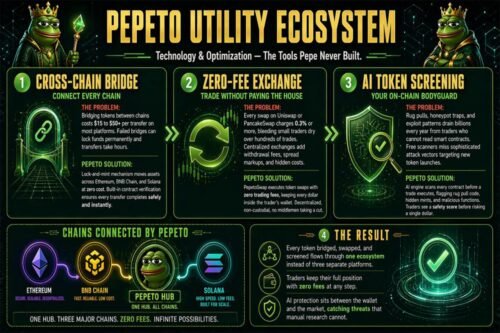
    Pepeto was created by the cofounder who already took the original Pepe coin to an $11 billion market cap with zero products and the same 420 trillion token supply. The platform catches problems before they cost money, and its risk scorer flags weak contracts so buyers know what they hold before a single dollar goes in. PepetoSwap runs zero fee trades while the scorer works alongside it, and both tools protect capital instead of just moving it.

    More than $10 Million has poured into the Pepeto presale, and the entry still sits at $0.0000001871. Analysts project 100x to 300x from this level, and staking at 172% APY locks tokens while the Binance listing approaches. Every new wallet that enters adds buying pressure, which means the capital flowing in today builds the floor that the listing will launch from.

    Pepeto would read like a wish list if the tools were still in development, but the zero fee swap and the contract checker are live right now for anyone to test. The wallets already inside have watched $10 Million in capital confirm what the cardano price prediction crowd is starting to notice. The listing is approaching, and each day the presale stays open at this price is one more day the people inside are building returns the people outside cannot match.

    Cardano (ADA) Price Prediction

    ADA trades near $0.25 on May 20, down 92% from its all time high of $3.10, and stuck inside the $0.24 to $0.28 range since February. The whale accumulation at record levels suggests big holders see a bottom forming, but Cryptopolitan caps the 2026 maximum at $1.33 with an average of $1.20 according to CoinMarketCap. CoinDCX projects ADA could hit $0.31 by the end of May if buying pressure holds, and the Van Rossem hard fork may push the token past $0.28 resistance. Even the strongest cardano price prediction gives ADA roughly 5x from here over the full year. A $500 position in ADA at $0.25 becomes $2,650 at that $1.33 ceiling. That same $500 in the Pepeto presale targets 150x if the listing follows the path the original Pepe coin already proved.

    The Bottom Line

    ADA whales are stacking 67% of the supply while the market pulls back, and that pattern has started every Cardano recovery in the past five years. Smart money conviction in crypto is building, not fading. But buying ADA at $0.25 and waiting for the cardano price prediction ceiling of $1.33 delivers a 5x, and a 5x from a $500 entry is $2,650.

    Pepeto is built to deliver what ADA cannot from this level, and the presale price only stays open until the Binance listing locks in. Analysts project 100x to 300x from this entry, and the people who built real wealth from Cardano at $0.03 in 2020 all made the same single choice, they moved while the entry was still open. That exact entry is available right now on the Pepeto official website, and entering the presale today is how those returns get built because missing it means watching from the outside while others celebrate what the cardano price prediction could never deliver.

    Click To Visit Pepeto Website To Enter The Presale

    FAQ

    What does the cardano price prediction show for 2026?

    ADA targets range from $0.31 by end of May to a $1.33 maximum by December 2026. Whale wallets holding 67% of supply signal a bottom is forming.

    How does ADA whale accumulation affect altcoin cycles?

    Record holdings of 25.09 billion ADA confirm big money is building positions. That cardano price prediction pattern preceded every major ADA recovery since 2021.

    Is Pepeto a strong entry alongside Cardano right now?

    Pepeto has crossed $10 Million in presale capital with a SolidProof audit and approaching Binance listing. The Pepeto official website shows the entry while analysts project 100x to 300x returns.

    Disclaimer:
    This article is for informational purposes only and does not constitute financial advice. Cryptocurrency investments carry risk, including total loss of capital.

    All market analysis and token data are for informational purposes only and do not constitute financial advice. Readers should conduct independent research and consult licensed advisors before investing.

    Crypto Press Release Distribution by BTCPressWire.com

  • Top 3 Cryptos to Buy Now: $2.4 Billion in ETF Cash, Whale Wallets Rising, and One Presale at $10M thumbnail

    Top 3 Cryptos to Buy Now: $2.4 Billion in ETF Cash, Whale Wallets Rising, and One Presale at $10M

    April 2026 delivered the strongest month of Bitcoin ETF inflows since launch, and the top 3 cryptos to buy now sit at the center of a market where big money moves faster than retail can follow. Whale wallets grew by 142 addresses, exchange reserves hit a seven year low, and capital keeps leaving exchanges for cold storage. Pepeto quietly crossed $10 Million in presale capital with an approaching Binance listing, and SOL and HBAR both carry recovery setups worth watching.

    BTC ETFs Post $2.4 Billion in April as Top 3 Cryptos to Buy Now Take Shape

    Bitcoin ETFs pulled $2.44 billion in net inflows during April, the strongest single month since spot ETFs launched in January 2024 according to CoinMarketCap. Cumulative inflows now sit above $58.5 billion, and BlackRock’s IBIT fund alone holds roughly 812,000 BTC. Whale wallets holding more than 1,000 BTC grew by 142 addresses and exchange reserves dropped to 2.21 million BTC, the lowest in seven years. Standard Chartered projects BTC at $150,000 by year end, and the supply squeeze from ETF buying combined with whale accumulation is tightening faster than most expect.

    Pepeto, SOL, HBAR, and the Top 3 Cryptos to Buy Now

    Pepeto

    There is no guarantee that SOL or HBAR will run hard anytime soon, or that ETF inflows alone will drive a breakout. The space between institutional momentum and real gains at the wallet level is why Pepeto and presale entries carry the most weight for wallets looking to lead this cycle.

    Analysts project that Pepeto could deliver 100x to 300x returns, and at the current $0.0000001871 price, that range explains why more than $10 Million flowed in while most projects froze. The conviction runs deep because what Pepeto builds matters more than promises. The risk scorer scans every contract for hidden dangers before any swap goes live so bad tokens get blocked before they drain a wallet, and PepetoSwap lets traders swap tokens at zero fees on a network built by the cofounder of the original Pepe coin and backed by a full SolidProof audit.

    Every contract on the Pepeto network passed verification before trading opens, which means capital enters a tested system before the listing brings millions of new wallets. Because PepetoSwap handles zero fee swaps and the risk scorer handles safety in one place, each new wallet saves money and stays protected, and that loop drives adoption after listing. Staking at 172% APY adds passive income to every wallet that holds through to listing day.

    The listing day buying pressure alone could multiply the price, but the network itself and the real value it delivers to every trader will keep compounding long after that day ends. The Pepeto official website shows a presale that already proved demand before a single exchange opened trading.

    Solana (SOL)

    SOL trades near $86 today according to CoinMarketCap, still stuck under the $95 resistance that has capped every rally since March. Goldman Sachs dropped its entire SOL allocation in Q1 2026 even as Solana ETFs attracted $39 million last week. If SOL clears $95, the path to $117 opens, but that upside does not match what a presale entry targets before listing.

    Hedera (HBAR)

    HBAR holds near $0.09 according to CoinMarketCap, trading in a tight range between $0.08 and $0.10 since late April. FedEx joined the Hedera governing council and 15 ETF filings sit with the SEC, but even a move to Benzinga’s $0.87 target by 2030 delivers roughly 9x from here. That ceiling makes it clear why the top 3 cryptos to buy now includes a presale entry with 100x or more on the table.

    Closing Thoughts

    Today is the day that matters because the entry available right now does not exist next week. SOL and HBAR may not deliver much near term movement, but Pepeto already has everything in place to break out on its own schedule. Every person who built wealth early in crypto made one choice, they moved today instead of planning to move tomorrow. The Pepeto official website tracks over $10 Million in capital from wallets that already took action, and the approaching Binance listing is the event that separates holders from spectators. Entering the presale today is the one decision that turns this cycle into real returns, and waiting even one more day moves that chance further away.

    Click To Visit Pepeto Website To Enter The Presale

    FAQs

    Why are BTC ETF inflows important for presale entries?

    ETF buying removes BTC from exchanges and tightens supply, which lifts the whole market and accelerates listing events for tokens like Pepeto.

    Which are the top 3 cryptos to buy now for this cycle?

    Pepeto targets 100x to 300x before Binance listing, SOL targets $117 if it clears $95, and HBAR targets $0.87 by 2030 with ETF catalysts.

    How does Pepeto compare to SOL and HBAR?

    SOL offers roughly 35% to $117 and HBAR roughly 9x to $0.87, while Pepeto targets presale returns that dwarf both before the listing opens.

    Disclaimer:
    This article is for informational purposes only and does not constitute financial advice. Cryptocurrency investments carry risk, including total loss of capital.

    All market analysis and token data are for informational purposes only and do not constitute financial advice. Readers should conduct independent research and consult licensed advisors before investing.

    Crypto Press Release Distribution by BTCPressWire.com

  • Crypto Update: Is South Carolina’s New Law the Signal to Buy Before Listing? thumbnail

    Crypto Update: Is South Carolina’s New Law the Signal to Buy Before Listing?

    South Carolina just signed a law that bans state use of central bank digital currencies and protects self custody rights, and this crypto update matters because it marks the first state to write that protection into law. While large caps react to regulation, Pepeto crossed $10 Million in presale capital with an approaching Binance listing, and the wallets that filled positions during fear are the same ones that turned early entries into real wealth in every previous cycle.

    South Carolina Signs Crypto Rights Law in Major Crypto Update

    Governor Henry McMaster signed S.163 on May 19 after the Senate passed it 38 to 1 and the House passed it 110 to 1 according to Bitcoin.com. The bill bans any state agency from using a central bank digital currency, protects mining and staking from extra regulations, and shields crypto payments from additional taxes. This crypto update is the clearest sign yet that the legal ground beneath digital assets is hardening fast, and presale entries approaching exchange listings stand to gain the most.

    South Carolina, BTC, ETH, and the Presale That Already Moved

    Pepeto

    There is no guarantee that BTC or ETH will make a big move soon, or that one law alone will send them running. The distance between regulatory wins and actual token returns is why Pepeto and the crypto update around its presale carry so much weight right now.

    Analysts project that Pepeto could deliver 100x to 300x returns, and at the current $0.0000001871 price, that range explains why over $10 Million poured in while the market stayed afraid. A crypto update like this does not happen in a vacuum because regulation feeds directly into listing timelines, and the community already priced that connection in. What powers Pepeto is the marketplace it builds for the people who trade on it.

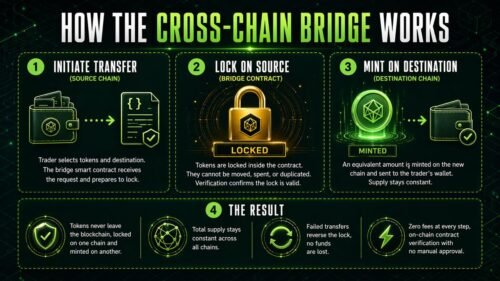
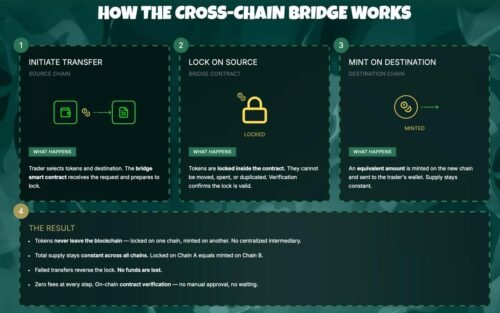
    PepetoSwap lets traders swap any token at zero fees so every dollar stays working, and the cross chain bridge moves assets between networks without the costs other platforms charge on a marketplace built by a community that raised $10 Million during a bear cycle. Every contract on the Pepeto marketplace passed a full SolidProof audit, and the approaching Binance listing means millions of new wallets will arrive into a system already verified. Because PepetoSwap and the bridge handle swaps and transfers in one place, adoption grows with every new wallet that finds the cost savings. Staking at 172% APY builds passive income on every position held through the listing window.

    The launch day buying pressure could send the price vertical, but the marketplace itself will keep growing long after that initial moment fades. Every crypto update that pushes regulation forward makes this presale entry more valuable because it sits closer to the listing event that unlocks real returns on the Pepeto official website.

    Bitcoin (BTC)

    BTC trades near $77,400 today according to CoinMarketCap, up from $74,000 in early May after the Clarity Act and South Carolina headlines hit back to back. Standard Chartered holds a $150,000 year end target, and whale wallets holding over 1,000 BTC grew by 142 addresses in the last month. The momentum is real but a move from $77,400 to $150,000 delivers roughly 2x, which lands far below what a presale entry targets.

    Ethereum (ETH)

    ETH holds near $2,130 according to CoinMarketCap, supported by whale accumulation that went parabolic this month. The bull case targets $3,000 if ETH clears the $2,200 moving average, but that path still delivers roughly 40% from here. A presale crypto update that carries an approaching Binance listing and $10 Million in community capital targets a completely different return range.

    The Verdict

    The debate about which entry leads this cycle is already settled by the capital that flowed in, and the crypto update from South Carolina just added another brick to the foundation. BTC turned small entries into fortunes with zero products behind it, and Pepeto built by the cofounder of the original Pepe coin has PepetoSwap, a cross chain bridge, a risk scorer, and a SolidProof audit behind every trade. More tools behind a project reaches further than what zero tools reached, and the Pepeto official website shows $10 Million from wallets that already did the math. Entering the presale now is how to lock in the returns the listing will deliver, and missing this window could be the most expensive decision of the cycle.

    Click To Visit Pepeto Website To Enter The Presale

    FAQs

    What does this crypto update mean for presale entries?

    South Carolina’s law bans CBDCs and protects self custody, which strengthens the legal ground for tokens approaching exchange listings like Pepeto.

    How does the crypto update affect BTC and ETH returns?

    BTC targets $150,000 for 2x and ETH targets $3,000 for 40%, while presale entries like Pepeto target 100x to 300x before Binance listing.

    Why did Pepeto raise $10 Million during a bear market?

    The community filled the presale because PepetoSwap charges zero fees, the bridge cuts transfer costs, and the approaching Binance listing gives a clear exit event.

    Disclaimer:
    This article is for informational purposes only and does not constitute financial advice. Cryptocurrency investments carry risk, including total loss of capital.

    All market analysis and token data are for informational purposes only and do not constitute financial advice. Readers should conduct independent research and consult licensed advisors before investing.

    Crypto Press Release Distribution by BTCPressWire.com