Category: BigNewsNetwork

  • Stuck at Your Desk All Day? Here Is What Your Legs Actually Need


    Let me be honest with you. When I first started working from home, I thought I was doing fine. I had a decent chair and a good monitor, and I kept telling myself I would stretch more once things slowed down at work. The thing is, things never actually slowed down. And after a few months of this, my legs felt like they belonged to someone twice my age. That low ache in the hips, the stiffness when standing up after a long call, and the way the knees felt on the stairs, none of it was random. It was the result of sitting still for far too long, day after day.

    If that sounds familiar, you are not alone in it. Most people who work from home hit this same wall at some point. The body simply was not designed to stay in one position for eight or nine hours straight, and the legs and hips are usually the first parts to start suffering for it. That is exactly why I started taking the idea of a leg press alternative seriously. Not because I wanted to train like an athlete. I just wanted to feel like a functioning adult again by five in the afternoon.

    A Machine Most of Us Will Never Own 

    The leg press is a staple in commercial gyms for good reason. You sit back in the seat, push a loaded platform away with both feet, and the movement loads the quads, glutes, and hamstrings in a controlled way that most people find easier to manage than free weights. The machine does the stabilizing work for you, which lowers the learning curve significantly. The obvious problem is that most of us do not have one at home, and even if we did, it would take up a ridiculous amount of space in a spare room or apartment.

    So the real question is what actually works in its place. And the answer is not one single exercise. It is a small group of movements that together cover what the machine does, and some of them do it better because they also train balance and work each leg on its own. After a long day of sitting in the same position, that kind of varied movement is often exactly what the body is missing.

    “The hard part is not finding exercises. The hard part is accepting that simple movements done consistently will always beat complicated routines done rarely.”

    The Exercises That Are Actually Worth Your Time

    Goblet Squat

    Hold a dumbbell or kettlebell at your chest and squat down slowly with control. The weight at the front helps you stay more upright through the torso, which takes pressure off the lower back. Your quads and glutes will feel this properly after just a few sets. It is one of the most beginner-friendly movements on this list and also one of the most effective.

    Bulgarian Split Squat

    Place one foot up on a chair behind you and lower yourself down on the front leg. It sounds manageable until you are actually doing it, and then it becomes very clear why this exercise has such a strong reputation. It builds real leg strength without needing heavy loads, and because each leg works separately, it helps correct the small imbalances that build up over years of sitting. If you pick only one exercise from this article, pick this one.

    Reverse Lunge

    Step backward, lower the back knee toward the floor, then push through the front heel to return to standing. This version tends to be kinder to the knees than a forward lunge, which makes it a good option for anyone who has noticed some discomfort in that area. It trains the hips and quads in a pattern that mirrors real movements like climbing stairs or stepping off a curb.

    Wall Sit

    Press your back flat against a wall and hold a position where your thighs are roughly parallel to the floor. It looks simple, and for the first ten seconds it is. After thirty seconds the burn in the quads becomes very real. This is one of the best options for a work break because you can do it during a phone call with no equipment and no need to change clothes.

    Glute Bridge

    Lie on your back with your feet flat on the floor and drive your hips toward the ceiling. After a full day of sitting, the glutes are often almost completely switched off, and this exercise brings them back. Doing a set before your other exercises can also help the rest of the workout feel more effective by waking up the muscles that should be doing most of the work.

    Step-Up

    Use a sturdy step or the bottom stair, and drive through one leg to lift your body up onto it. Step-ups feel practical because they mirror a real movement, but they are genuinely effective for building quad and glute strength. They also require a small amount of balance and coordination, which means the stabilizing muscles around the knee and hip get trained in a way the leg press machine cannot replicate.

    Why Doing This During the Day Works Better Than You Think

    Most people assume exercise has to happen in one dedicated block of time. But for desk workers, spreading movement across the day often works better than saving everything for the evening when energy and motivation are both low.

    A quick set of wall sits before lunch costs almost nothing in terms of time or mental effort. Ten slow goblet squats after a long meeting can reset how the body feels going into the afternoon. Step-ups on the stairs when you get up to make tea add up across the week without ever feeling like a real workout. This kind of short, scattered movement is sometimes called exercise snacking, and it works because it removes the biggest barrier most people face, which is the friction of starting.

    None of this is a replacement for structured training if that is what you enjoy. But for someone who genuinely cannot commit to a forty-five-minute session three times a week, these small breaks can still make a meaningful difference to how the legs and hips feel over time.

    Quick Tip

    For people who prefer structure, two focused leg sessions per week is enough to build real strength. Pick three exercises, do three sets of each, and aim to make it slightly harder every couple of weeks, with a little more weight, a slower tempo, or one extra rep. That is a complete program.

    The One Mistake That Undoes Most of This 

    Rushing through the reps. It is the most common problem and also the easiest to fix. When you move too fast through a squat or a lunge, you lose most of the benefit and end up feeling it in the lower back or the knees instead of the quads and glutes where it belongs.

    Slow it down. Take two or three seconds on the way down. Pause briefly at the bottom if you can manage it. That slower pace is often the whole difference between an exercise that is actually working and one that just feels like you are going through the motions.

    Start Without Waiting for the Perfect Setup 

    A pair of light dumbbells and a chair are enough to do the Bulgarian split squat, goblet squat, step-up, and reverse lunge. That is a complete lower body program right there. Most people already have what they need at home and just have not put it together yet. Stop waiting for the right time or the right equipment. Neither is coming, and both are excuses the body does not need.

    Pick two exercises from this list. Do three sets of each, twice a week. Add one short movement break during the workday, even if it is only a twenty-second wall sit while waiting for a page to load. That is a real plan, and it is enough to notice a genuine difference within a few weeks. Stronger legs and less stiffness by the end of the afternoon, without a leg press machine, without a gym, and without rearranging your whole life to make it happen.


  • SEO Positioning: Why Your Pages Sit Where They Do and How to Change That

    A few years back I was helping a friend who runs a small nutritional supplements brand. His site had been live for almost two years, he had been blogging consistently, and he could not figure out why none of his articles were showing up anywhere useful in search results. Not page two, not even page three for most terms. Just gone. We spent an afternoon going through everything together, and at one point he pulled up a proper SEO positioning guide and started reading through it out loud. By the third section he stopped and said, “I have been writing for my customers, not for the questions they actually search.” That one realization, honestly, explained almost every positioning problem his site had.

    I think about that conversation a lot when people ask me why their content is not ranking.

    Positioning Is Not the Same as Just Ranking

    These two terms may be used interchangeably, and most of the time, there’s no need to differentiate them because the difference doesn’t really matter, although, technically, the two are different from each other. Ranking is how high the website or page ranks in Google search when it comes to a certain keyword. However, positioning is more than that because it pertains to where you can find your brand and your content in any of the many places where Google shows results, not just the traditional blue links.

    A site may enjoy good rankings on a few keywords but poor ranking overall if that site cannot be found by the rest of its searches. Even a site that ranks poorly on keywords may be very well positioned due to its appearance in featured snippets, its domination of local packs, or its frequent appearances in images. The point of SEO positioning is not merely to move numbers. It is to become visible across the full range of ways your audience looks for what you offer.

    This matters practically because it changes where you invest your effort. If you are only tracking traditional rankings, you might be missing the fact that you are winning featured snippets left and right, or you might be ignoring a local pack opportunity that is sending your competitor a significant amount of foot traffic every week.

    Why Some Sites Position Well Without Seeming to Try

    Every niche has at least one site like this. It consistently shows up near the top for almost everything relevant; the content is not always the best-written thing on the topic, and you cannot always figure out what they are doing differently. I used to find this genuinely baffling until I started looking more carefully at the history of those sites rather than just their current state.

    What almost always turns out to be true is that they have been consistently publishing relevant content for a long time. Not perfectly, not always brilliantly, but consistently. And over years of doing that, they have accumulated something that newer sites simply cannot buy or shortcut their way into, which is topical authority. Search engines build a model of what each website is about based on the totality of its content over time. A site that has published three hundred pieces of content about one subject over five years looks fundamentally different to that model than a site that published thirty pieces in the last six months, even if the newer content is objectively better written.

    This does not mean newer sites cannot compete. Certainly, particularly when it comes to highly targeted, long-tail keywords for which the major competitors have not seen fit to get into depth. But it does mean that positioning is definitely a marathon, not just a sprint.

    The Architecture of Your Site Affects Positioning More Than Most People Know

    How your pages are organized and how they link to each other sends signals to search engines about what your site covers and which pages are most important. A site where every page is essentially floating independently, with minimal internal linking and no clear thematic structure, is harder for a search engine to understand and therefore harder to position well across a topic area.

    The approach that tends to work better is building what some people call content clusters, though the concept goes by several names. This model consists of a central page with information about a broad subject in good detail, and then a collection of narrower pages that dive deep into different aspects of the same subject, all with links between them and to the central page. The model accomplishes several tasks simultaneously.  It signals topical depth to search engines. It distributes link equity across related pages. And it creates a better experience for readers who want to go deeper on something specific.

    I worked with an e-commerce site a couple of years ago that had about four hundred product pages and almost no supporting content. Their positioning was weak across almost every relevant category. We spent six months building out informational content around their main product categories and linking it properly, and by month eight their positioning had improved noticeably across dozens of terms they had not been showing up for before. The product pages themselves ranked better too, because the supporting content was feeding authority into the site structure.

    Content Freshness and Why It Actually Matters

    There is a difference between content that needs to be fresh and content where freshness is essentially irrelevant. A page explaining what a calorie is does not need to be updated every year. A page about the best SEO tools available right now absolutely does, because the landscape changes constantly and a reader landing on outdated information is not well served.

    Search engines are reasonably good at distinguishing between these two categories, and for topics where freshness matters they actively favor recently updated content. It is for this reason that big publications that have regularly updated evergreen pieces tend to have better positioning compared to small blogs that write once and do not bother about them anymore.

    A practical way to apply this is that you need to conduct an audit of your already existing pages, as well as coming up with a plan for your future pages. Find the pages that fall in the 10-20 range for those keywords that require fresh information, and update them with new info and content; then submit them for indexing via Google Search Console. This is among the simplest ways of improving your page ranking that many site owners tend to forget about since they concentrate on creating fresh content.

    Local Positioning Is Its Own Animal

    When your business is restricted to a certain geographical region, the conversation regarding positioning becomes entirely different. There are separate ranking factors when it comes to local SEO as compared to those for ordinary SEO. Your Google Business Profile, the consistency of your name, address, and phone number across the web, the volume and recency of your reviews, and the proximity of your business to the person searching all factor into local positioning in ways that have nothing to do with your website content.

    A lot of local business owners make the mistake of treating their website SEO and their local positioning as the same thing and using the same strategies for both. They are related but they require different work. A plumber in a mid-sized city can have a beautifully optimized website with strong organic rankings and still lose local pack placement to a competitor with a more actively managed Google Business Profile and fifty more recent reviews.

    The local pack, those three business listings that appear near the top of search results for local queries, drives an enormous amount of clicks for businesses that show up there. In some categories it is more valuable real estate than the organic results below it. If your company has a local presence and you have not been doing any work on local positioning independent of other SEO strategies, then chances are that you might be losing out on some valuable visibility.

    Measuring Positioning vs Measuring Rankings

    SEO software is usually based on ranking keywords; however, this makes perfect sense since this is an easy metric to track. If rankings are your only metrics, then it is likely that you will have a limited understanding of your website’s position in the search market.

    However, when considering a more holistic approach to positioning, you should be aware of your share of clicks for queries related to your business, your presence in SERP features (especially in Featured Snippets), trends in terms of searches for your brand name, and the percentage of visits via non-branded searches that you were not actively pursuing. You can get all this information for free with the help of Google Search Console.

    One of the measures that I think would be quite helpful would be the impression share on broad topic categories instead of exact keywords. The fact that you get impressions from various searches related to your main topic would indicate that your topical authority is increasing. However, if you see that you only have impressions from a handful of keywords you focused on, then your position is not stable at all.

    The Patience Problem in Positioning

    Positioning takes longer to build than most people expect and longer to lose than most people fear. Both of those things are worth understanding.

    When you do the right things consistently, the results tend to show up on a delay of weeks or months rather than days. This leads a lot of people to conclude their efforts are not working and switch strategies before the original strategy had time to pay off. I have made this mistake myself, more than once honestly, and watched competitors who stuck with a steady approach eventually outpace sites that were constantly pivoting.

    In turn, in situations where the positioning starts to go downhill, it will happen incrementally as opposed to drastically. An algorithm change could result in something drastic, but even then, sites that have topical authority will manage to get their act together far better than those that don’t. In no way does that mean your efforts at positioning will be for naught? It is what pulls you back up.

    What Actually Moves Positioning in a Reasonable Timeframe

    If you need results in the next three to six months rather than twelve to eighteen, the places to focus are fixing technical issues that are actively blocking your pages from ranking, updating existing content that is positioned just outside the top ten for terms with real volume, building out internal linking between pages that are thematically related, and improving your Google Business Profile if local positioning is relevant to your business.

    None of those things are exciting. They do not involve clever tricks or algorithm hacks. But they consistently produce measurable improvements in positioning within the kind of timeframe that keeps clients and stakeholders patient. The deeper work of building topical authority and earning quality backlinks runs alongside all of that and produces the longer-term gains that make the positioning durable.

    Get the short-term wins where you can, build the long-term foundation at the same time, and do not confuse movement for strategy. Those are the things I keep coming back to.


  • Dogecoin Price Prediction: Revolut Launches DOGE Payment Card as Pepeto Crosses $10 million Before Listing thumbnail

    Dogecoin Price Prediction: Revolut Launches DOGE Payment Card as Pepeto Crosses $10 million Before Listing

    The dogecoin price prediction shifted this week after Revolut rolled out a physical card that lets holders spend DOGE at every Visa and Mastercard terminal worldwide. Meme coins that sat in wallets now work as spending money, and the market noticed. Among presale entries open right now, Pepeto has topped $10 million raised from buyers who locked positions before the approaching Binance listing turns presale tokens into tradable exchange assets.

    Revolut DOGE Card Brings Spending Power to Meme Coins and Shapes the Dogecoin Price Prediction

    Revolut announced on May 18 that its physical debit card lets users spend Dogecoin anywhere Visa or Mastercard is accepted with zero exchange fees, according to CoinDesk. DOGE jumped 5% before settling near $0.105, and the meme coin market cap pushed toward $57 billion according to CoinMarketCap. Real world spending gives meme coins a use case they never had, and Revolut delivered it to millions in one move. The question is whether the biggest returns come from a listed coin or from a presale entry that has not reached an exchange yet.

    Where the DOGE Card Push Meets the Sharpest Presale Entry

    Pepeto

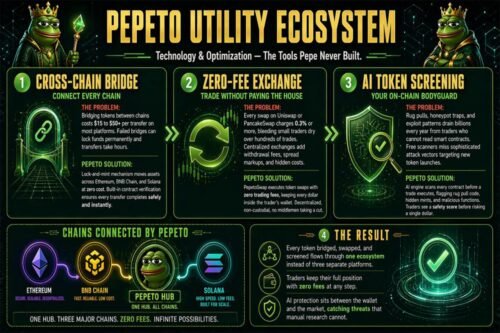
    Pepeto is rapidly turning into the leading pick for buyers chasing the widest gap between entry cost and listing price. Built to protect capital during fast moving markets, Pepeto takes the chaos out of meme coin trading through its zero fee swap tool that removes every cost between buyer and token. The platform runs a risk scorer that checks contract code for hidden traps before a single dollar moves in, so every position starts with a safety check that public swaps never offer.

    Every tool is already live, with thousands of wallets using PepetoSwap daily. That puts Pepeto in a space most presale tokens never reach because they promise products after listing while this one delivered before. Regular buyers now get the same contract scans that whale wallets used to pay developers to build, and SolidProof cleared every line of code through a full audit. Staking locks at 171% APY reward holders who commit during the presale window, stacking passive returns on top of the listing distance.

    The buying pressure tells the story because Pepeto has pulled past $10 million while fear pushed capital out of most altcoins, and the presale sits at $0.0000001872. With a cofounder who built the original Pepe coin to an $11 billion peak using the same 420 trillion supply and an approaching Binance listing, the dogecoin price prediction search now points to an entry that analysts project at 100x to 300x. The presale window closes the moment the token goes live on exchanges, and wallets entering now will never see this number again.

    Dogecoin (DOGE) Price Prediction

    DOGE trades at $0.105 today after bouncing from the $0.09 support zone that held through April. The Revolut card news pushed price above the middle Bollinger Band, and the upper band sits at $0.139 according to CoinMarketCap, marking a 27% upside target. Spot DOGE ETFs pulled positive inflows for three straight weeks totaling $1.7 million, and the dogecoin price prediction from CoinCodex lands near $0.149 by December. Changelly projects a 2026 high around $0.194, which still only doubles a position over months. Even the most bullish DOGE forecast caps gains at 85% from here, while Pepeto offers listing distance measured in multiples that DOGE burned through years ago.

    Conclusion

    DOGE may be holding above $0.10 for now, and the Revolut card gives it a real spending layer for the first time. But unlike the dogecoin price prediction for a listed coin, presale entries like Pepeto carry what $17 billion market caps cannot: the entire gap between a presale number and whatever the exchange sets on listing day.

    With a live zero fee exchange, a SolidProof audited codebase, and more than $10 million in buyer demand, Pepeto is becoming the top pick for those chasing the kind of return DOGE delivered in 2021. The wallets that found this entry by searching the dogecoin price prediction landed where the real upside sits, and the approaching Binance listing turns presale positions into exchange wealth. Entering through the Pepeto official website now is how early wallets secured their spot, and missing this window could cost more than any chart warned.

    Click To Visit Pepeto Website To Enter The Presale

    FAQs

    What is the dogecoin price prediction for 2026?

    Analysts see DOGE between $0.15 and $0.19 by December 2026 based on ETF inflows and the Revolut card launch. Check the Pepeto official website for the presale entry that carries wider return potential before listing.

    Will Dogecoin reach $1?

    DOGE needs a $154 billion market cap to hit $1, and the dogecoin price prediction timeline stretches years. Pepeto sitting at presale levels requires far less growth to multiply a position by 100x or more.

    Is Pepeto a better buy than the dogecoin price prediction suggests for DOGE?

    The Pepe cofounder built Pepeto with zero fee trading and a SolidProof audit, giving it presale to listing distance that DOGE used up in 2021.

    Disclaimer:
    This article is for informational purposes only and does not constitute financial advice. Cryptocurrency investments carry risk, including total loss of capital.

    All market analysis and token data are for informational purposes only and do not constitute financial advice. Readers should conduct independent research and consult licensed advisors before investing.

    Crypto Press Release Distribution by BTCPressWire.com

  • $6.25 Billion in BTC Options Expire May 29: XRP, DOGE, and the Best Crypto to Buy Now thumbnail

    $6.25 Billion in BTC Options Expire May 29: XRP, DOGE, and the Best Crypto to Buy Now

    Traders are positioning $6.25 billion in Bitcoin options ahead of a May 29 expiry on Deribit, with $82,000 call strikes drawing the heaviest action. The best crypto to buy now is the entry that captures the breakout before the crowd arrives.

    XRP holds at $1.37, DOGE trades near $0.10, and both need major rallies just to approach their former highs. Pepeto, built by the Pepe cofounder with an approaching Binance listing and more than $10 million raised, is where wallets are placing capital while large cap returns stay limited.

    $6.25 Billion Options Expiry Builds Bullish Momentum Ahead of May 29

    Roughly 80,535 Bitcoin options contracts worth $6.25 billion settle on Deribit on May 29, according to CoinDesk. The $80,000 call strike holds $532 million in notional value while the $75,000 put carries $394 million, and max pain rests near $75,000. The $82,000 call became the most traded single option this week with 1,600 contracts and $126 million in notional value. The positioning signals that large money expects a push higher, and the question shifts to which entries catch the return.

    XRP, DOGE, and the Best Crypto to Buy Now Before the Breakout

    Pepeto

    Options data worth billions confirms the market is preparing for a move, but the gap between 30% gains on BTC and 100x on a presale depends on the entry level. Pepeto is a swap terminal where holders trade tokens through a zero fee engine that keeps every dollar inside the wallet instead of leaking to exchange costs. PepetoSwap cuts trading fees to zero and lets buyers rotate between meme coins and large caps without handing a cut to centralized platforms each time they trade.

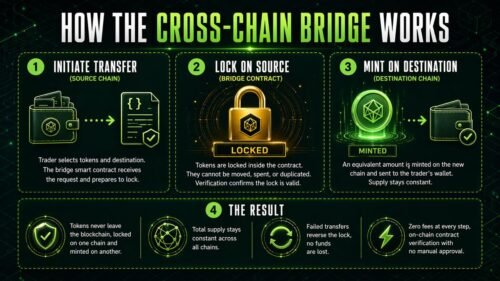
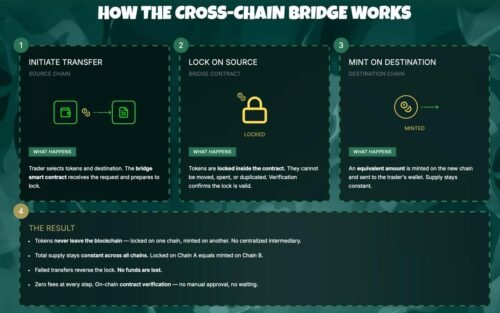
    The risk scorer screens every contract before a buy goes through, spotting danger signals that would take hours of digging to find on your own. One address paste returns a safety score that shows whether the token holds hidden traps, and the result arrives before money leaves the wallet. A cross chain link moves tokens between networks at no cost, so holders who spot a better price on another chain can act in seconds instead of staying locked where returns are smaller.

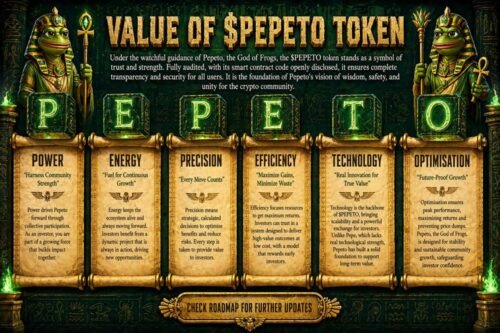
    The Pepe cofounder created an $11 billion token from 420 trillion supply and zero products. Pepeto takes that same supply and pairs it with a full swap terminal, a SolidProof audit, and staking at 171% APY that compounds while the presale stays open. The presale has pulled more than $10 million during market fear, and the Pepeto official website counts down to an approaching Binance listing with a former exchange insider advising the timeline while the entry still sits at $0.0000001872. The best crypto to buy now is the one backed by a cofounder who already printed $11 billion, verified tools from day one, and a Binance path that turns the presale entry into the return large caps cannot deliver.

    XRP

    XRP trades at $1.37 with a market cap above $61 billion, down 6% this week, according to CoinMarketCap. The token needs to reclaim $1.45 just to break short term resistance, and even a rally to the $3.40 all time high delivers under 3x from this level. Regulation progress could help, but XRP gains stay limited for anyone searching for the best crypto to buy now with a listing catalyst ahead.

    Dogecoin

    DOGE sits at $0.10 after falling 86% from its all time high of $0.74, according to CoinMarketCap. The meme coin has no product roadmap and no catalyst outside headlines. Even a 5x move to $0.50 needs a retail wave that has not appeared since 2021, and from $0.10 the upside depends entirely on sentiment with no exchange tools behind it.

    Conclusion

    Pepeto gives holders swap tools and contract screening to stay ahead of the crowd and dodge traps before listings change the price. More than $10 million raised during a correction means smart money already calculated the outcome while others waited. The early holders of every breakout coin share the same regret: they almost missed it, and they wish they had invested more. That same signal flashes now with verified tools and a cofounder who already built $11 billion from nothing. Following those wallets into the presale before the approaching Binance listing is how the return gets built, and the Pepeto official website shows an entry that makes the listing math work for anyone who moves before the window closes.

    Click To Visit Pepeto Website To Enter The Presale

    FAQs

    What makes Pepeto the best crypto to buy now?

    The Pepe cofounder created $11 billion from zero products, and Pepeto adds a swap terminal, risk scorer, and SolidProof verified contracts at a cost under a penny.

    Can XRP reach $3 again in 2026?

    XRP needs to break $1.45 resistance first, and even a run to $3.40 from $1.37 delivers under 3x.

    Why is DOGE down 86% from its all time high?

    DOGE has no product roadmap and depends on sentiment, which faded without a retail wave since 2021.

    Disclaimer:
    This article is for informational purposes only and does not constitute financial advice. Cryptocurrency investments carry risk, including total loss of capital.

    All market analysis and token data are for informational purposes only and do not constitute financial advice. Readers should conduct independent research and consult licensed advisors before investing.

    Crypto Press Release Distribution by BTCPressWire.com

  • Is the CLARITY Act the Crypto News That Lifts BTC, BNB, and Pepeto Before Listing thumbnail

    Is the CLARITY Act the Crypto News That Lifts BTC, BNB, and Pepeto Before Listing

    The biggest crypto news this week landed when the CLARITY Act passed the Senate Banking Committee with a 15 to 9 bipartisan vote on May 14. For the first time, a crypto market structure bill cleared a major committee, giving the industry a real path toward federal regulation.

    Bitcoin sits at $77,400, BNB holds near $648, and both could move once the full Senate votes. Pepeto, built by the Pepe founder with an approaching Binance listing, draws attention because this crypto news cycle could launch presale tokens into a different price range entirely.

    CLARITY Act Clears Senate Committee in Landmark Crypto News Vote

    The Senate Banking Committee approved the CLARITY Act on May 14 with a 15 to 9 vote after hours of debate turned bipartisan, according to CoinDesk. Two Democrats joined all Republicans to advance the bill, which defines how the SEC and CFTC regulate digital assets. Analysts warn it must reach a full Senate vote before the August recess or the odds drop hard. Galaxy Research puts passage at 75%, and the crypto news reaction already pushed short term sentiment from neutral to cautiously bullish.

    BTC, BNB, and the Presale Entry Dominating Crypto News After the CLARITY Act

    Pepeto

    Federal regulation clearing a committee tells the market the rules are coming, but the biggest returns in any crypto news cycle belong to entries that sit below listing price before those rules take hold. Pepeto is an exchange network where holders swap tokens through a built in engine that charges zero fees and a chain connector that moves assets between networks at no cost. Most wallets pay $5 to $15 per swap on centralized exchanges, but Pepeto removes that entirely and lets capital rotate faster without losing value to trading costs on every move.

    The risk scorer grades every token before a wallet commits, marking red flags that studying contracts alone would miss completely. One paste of a contract address returns a threat level so buyers skip the traps that drain meme coin portfolios, and the chain connector links every major network so holders reach better prices without staying locked on one chain.

    Pepe’s founder turned 420 trillion tokens into an $11 billion asset with nothing backing the price. Pepeto matches that supply and launches with a working exchange, SolidProof verified contracts, and 171% APY staking that grows positions while the entry stays at $0.0000001872. Capital above $10 million flowed in during a market correction, the Pepeto official website tracks an approaching Binance listing steered by a former exchange operations lead, and the presale entry has not changed. The wallets inside calculated the outcome before the CLARITY Act reached committee, and the founder proved the math once and built stronger products this time.

    Bitcoin

    BTC trades at $77,400 after recovering from a dip below $74,000 earlier this month, according to CoinMarketCap. The CLARITY Act vote gave bulls a reason to hold, and the crypto news pushed short term sentiment higher. A move toward $82,000 looks possible if the full Senate schedules the vote before August, but from $77,400 even a push to $100,000 delivers less than 30% return.

    BNB

    BNB holds at $648 after Binance posted strong user growth in Q1 and expanded spot trading pairs, according to CoinMarketCap. The token benefits directly from the CLARITY Act because clearer rules let Binance operate more openly in the U.S. market. This crypto news lifts the exchange token, but even a rally to $800 from $648 delivers just 23% gains, and the math from that level cannot match a presale sitting seven decimal places from zero.

    Closing Thoughts

    The CLARITY Act sets the stage, but the Pepe founder combined with a fully built exchange and a Binance listing on the horizon is the combination crypto produces once per cycle. The wallets inside know that meme energy paired with real utility happens once, and the listing is the event they positioned for. Those early Pepe holders turned small entries into millions, and the same founder building again with verified tools means entering now is betting on a pattern that already printed. The window shrinks while this crypto news cycle plays out, and checking the Pepeto official website now instead of waiting could be the difference between catching the return and watching it happen.

    Click To Visit Pepeto Website To Enter The Presale

    FAQs

    Is the CLARITY Act the most important crypto news for regulation in 2026?

    It is the first market structure bill to clear a Senate committee, and analysts give it 75% odds of full passage this year.

    What makes Pepeto different from other presale tokens right now?

    The Pepe founder built the original to $11 billion with zero products, and Pepeto launches with a working exchange, risk scorer, and SolidProof audit.

    Could BNB rally if the CLARITY Act passes the full Senate?

    Clear regulation lets Binance expand in the U.S., but BNB gains from $648 stay limited next to a presale priced below a cent.

    Disclaimer:
    This article is for informational purposes only and does not constitute financial advice. Cryptocurrency investments carry risk, including total loss of capital.

    All market analysis and token data are for informational purposes only and do not constitute financial advice. Readers should conduct independent research and consult licensed advisors before investing.

    Crypto Press Release Distribution by BTCPressWire.com

  • SFI Chairman Eddie Chong to Attend Trust Circle in Zug, Outlining New Directions for Web4 Infrastructure thumbnail

    SFI Chairman Eddie Chong to Attend Trust Circle in Zug, Outlining New Directions for Web4 Infrastructure

    On May 29, 2026, Zug, Switzerland will host Trust Circle, a premier invitation‑only conference focused on sovereign AI infrastructure and the future of computing. The event will take place at SHED Zug, organized by AI Cluster Zug, and will gather only 100 core decision‑makers from AI, Web3, finance, and cybersecurity. SFI (StableCoin Financial Infrastructure) — a next‑generation value network platform built on a stablecoin foundation, deeply integrating Web4, RWA, and AI, and connecting payments, asset incubation, AI trading, and consumption scenarios — will have its chairman, Eddie Chong, attend as a keynote speaker. He will share the stage with heavyweights such as the Zug Cantonal Minister of Economic Affairs, NVIDIA’s Switzerland lead, and the head of AI at Julius Baer, to witness the soft launch of AI Cluster Zug. This participation marks a critical industrial step in Eddie Chong’s Swiss journey and signifies that SFI’s RWA+AI value network is being deeply integrated into global sovereign AI infrastructure, embarking on a new path of global expansion.

    I. Soft Launch of AI Cluster Zug: Switzerland’s Sovereign AI Infrastructure Sets Sail

    The core agenda of Trust Circle is the soft launch of AI Cluster Zug, a Swiss sovereign AI infrastructure initiative. According to official event materials, the initiative aims to strengthen sovereign AI infrastructure, foster collaboration between industry and academia, and support long‑term AI innovation in Switzerland. With global computing power competition intensifying and nations rushing to build their own AI infrastructure, Zug’s move sends a clear strategic signal: this region, already a high ground for digital asset compliance, is now positioning itself as a cradle of sovereign AI infrastructure.

    Eddie Chong’s invitation to speak means that SFI’s Web4 value network will be incorporated into Switzerland’s national AI strategy. In his speech, he will emphasize that AI computing infrastructure and the Web4 payment layer must evolve in tandem — neither can function without the other. Concretely, computing power acts as the “brain” of AI Agents, providing core processing support, while the stablecoin payment layer is the “circulatory system” that enables AI Agents’ autonomous economic activities. Trust Circle will be the first high‑level platform to deeply integrate these two core tracks and foster efficient industry dialogue.

    II. A Star‑Studded Lineup: Cross‑Sector Resources Underscore SFI’s Industry Voice

    Trust Circle will bring together top guests from five key areas — government policy, AI computing, financial capital, security & compliance, and Web3 infrastructure — forming a cross‑sector resource matrix. The core guests include:

    • Government & Policy: Silvia Thalmann-Gut, Zug Cantonal Minister of Economic Affairs, will attend, providing official endorsement for SFI to access Swiss top‑tier policy resources and solidify its European compliance foundation.
    • AI Computing & Infrastructure: Marc Stampfli, NVIDIA’s Switzerland Business Director, will join to promote technical collaboration between SFI and global computing power leaders. Ivo Strohhammer and Ralf Glabischnig, co‑founders of Inacta Ventures, will also attend, representing local industry recognition of SFI and helping SFI integrate into Zug’s Web3 and AI ecosystem.
    • Finance & Capital: Jonathan Theodore Hayes, Head of AI & Data at Julius Baer, and Dr. Dmitriy Antropov, Head of Infrastructure Partnerships at Partners Group, will participate, representing traditional private banking and global top‑tier capital, respectively. Their presence opens key links for SFI to broaden funding access and asset‑deployment pathways.
    • Security & Compliance: Mathias Fuchs, VP of Investigation & Intelligence at InfoGuard, and Guido Schmitz-Krummacher, Managing Director of Onchain Foundation and board member of multiple leading blockchain projects, will attend. They provide industry endorsement for SFI’s compliance matrix and accelerate SFI’s regulatory adaptation in Europe.
    • Web3 Infrastructure: Kamal Youssefi, Co‑Founder & Executive Chairman of Hashgraph Ventures and founding council member of Hedera, will join, advancing deep cooperation between global Web3 infrastructure leaders and SFI, closing the value loop between stablecoin financial infrastructure and the Web3 ecosystem.

    The gathering of these cross‑sector leaders will not only validate SFI’s industry appeal in the Web4+AI convergence but also provide direct resource channels and trust endorsements for SFI’s subsequent compliance implementation, capital connection, technical synergy, and ecosystem expansion in Europe.

    III. Eddie Chong’s Core Message: Unpacking the Complete Web4 Infrastructure Puzzle

    At Trust Circle, Eddie Chong will deliver a keynote speech, detailing SFI’s Web4 layout logic — using a stablecoin as the core foundation, with Solulu Club as the liquidity and traffic hub, connecting five major pillars (Solulu Pay, Caviar, COPX DAO, RWA Incubator, and RWA Exchange) to build a full‑link closed loop of “asset → payment → consumption → investment → value appreciation”.

    In his speech, he will argue that as AI technology evolves, AI Agents are upgrading from tools to independent economic actors. In this upgrade, the ability to pay, manage assets, and consume autonomously becomes a core need, and SFI’s underlying infrastructure is built precisely to meet that need. This will be the first time SFI fully presents its Web4 ecosystem logic to a global core industry audience. At the same time, Eddie Chong will engage in high‑level discussions with leaders from NVIDIA, Partners Group, and other global AI computing and capital players. These interactions will demonstrate that SFI’s compliance capabilities, technical architecture, and ecosystem layout have already entered the view of global core decision‑makers.

    IV. From Consensus to Action: A New Starting Point for SFI

    For SFI, its deep involvement in Trust Circle is not just a high‑density industry dialogue, but a systematic building of global trust infrastructure. Eddie Chong’s speech and exchanges at Trust Circle will turn SFI’s European strategic blueprint from an “unfilled map” into an actionable framework aligned with policymakers, capital allocators, industry builders, and academic researchers.

    Going forward, SFI will quickly translate the industry consensus and cooperation intentions formed at Trust Circle into concrete actions — optimizing the product compliance design of its RWA Incubator and Exchange, expanding Solulu Pay’s payment network in Europe, and implementing AI Agent economic models. Starting from Zug, SFI’s Web4 infrastructure will officially enter an accelerated phase of “global synergy, compliance first, and industry co‑building.”

    Follow the SFI Ecosystem:

    SFI: https://x.com/SFI_AI
    SoluluPay: https://x.com/SoluluPay
    Caviar: https://x.com/shopcaviar
    COPX DAO: https://x.com/Copx_DAO

    LINK:

    https://luma.com/TrustCircleZug

  • SpaceX Holds $1.45B in Bitcoin: ETH, SOL, and Why Pepeto Is the Best Crypto Presale to Buy Now thumbnail

    SpaceX Holds $1.45B in Bitcoin: ETH, SOL, and Why Pepeto Is the Best Crypto Presale to Buy Now

    SpaceX filed its S-1 this week and revealed $1.45 billion in Bitcoin on the balance sheet, more than double what on chain analysts tracked. The best crypto presale to buy right now is not a large cap that already made its move.

    While ETH sits below $2,200 and SOL trades near $87, Pepeto has raised more than $10 million because the architect behind the original Pepe coin is building an exchange with the same 420 trillion supply that hit $11 billion the first time.

    SpaceX IPO Filing Reveals $1.45 Billion in Bitcoin Holdings

    SpaceX disclosed 18,712 BTC worth $1.45 billion in its IPO filing on May 20, according to Benzinga. The cost basis averaged $35,300 per coin, giving SpaceX $789 million in unrealized gains ahead of a Nasdaq listing. The disclosure confirms a best crypto presale to buy market where even rocket companies hold BTC as a core asset, according to Bitcoin Magazine. Corporate conviction is rising, but returns on BTC at $77,000 are nothing close to what a presale at a fraction of a cent delivers.

    ETH, SOL, and the Presale Entry That SpaceX Bitcoin Math Cannot Reach

    Pepeto

    Corporate treasuries holding billions in Bitcoin confirms the market direction, but the size of the return depends on where the entry sits. Pepeto is a presale trading hub where holders access a fee free swap engine and a network bridge that transfers assets across chains without cost. Most portfolios carry tokens that sit idle on one chain, but PepetoSwap removes trading fees entirely and lets wallets rotate between positions without paying the exchange a cut on every move.

    The bridge links every major chain so assets flow where the opportunity lives, removing the barrier that keeps retail holders stuck on one network while better prices trade elsewhere. Holders move tokens in seconds and keep full control of every position, which means capital works harder instead of sitting locked behind gas fees that compound over weeks.

    Pepe’s architect launched 420 trillion tokens to $11 billion without a single working product. Pepeto takes that same supply, adds a live exchange from day one, passes a SolidProof security review on every contract, and pays 171% APY through staking while the presale sits at $0.0000001872. A Binance operations veteran shapes the listing roadmap, and more than $10 million from wallets that already calculated the outcome confirms why Pepeto is the best crypto presale to buy, because the architect proved the model prints once and built better tools this time.

    Ethereum

    ETH trades at $2,110 today after falling from above $4,000 last year, according to CoinMarketCap. Cuban said Ethereum disappoints him less than Bitcoin because smart contracts give it real utility. But from $2,110, ETH needs to hit $4,220 just to deliver 2x, and it sits 83% below its all time high. SpaceX chose BTC over ETH for its treasury, and the privacy push has not lifted the price. At this level Ethereum offers stability, not presale returns.

    Solana

    SOL sits at $87 after Goldman Sachs fully exited its Solana ETF position in Q1 2026, according to CoinGecko. Morgan Stanley added $29.9 million in SOL exposure through Bitwise, sending mixed Wall Street signals. The token peaked at $293 and sits 70% below that high. From $87, even a return to $175 takes months and delivers 2x at best. SOL infrastructure grows, but the return math from this level cannot match what a presale at a fraction of a cent offers.

    Final Takeaway

    SpaceX holding $1.45 billion in Bitcoin confirms conviction capital is choosing crypto, but the best crypto presale to buy sits at a fraction of a cent, not at $77,000. Pepeto hands wallets the trading infrastructure to capture wealth before the listing turns entries into returns that large caps take years to deliver. The cofounder built Pepe to $11 billion with zero products on the same 420 trillion supply, and matching that price from the current entry is 150x.

    The architect is repeating a pattern that already worked, now backed by a live exchange and an approaching Binance listing the original Pepe never had. Every position added through the Pepeto official website follows proven math, and the Pepe holders who wish they had bought more are watching the same cofounder build again while the presale window stays open.

    Click To Visit Pepeto Website To Enter The Presale

    FAQs

    What is the best crypto presale to buy in 2026?

    Pepeto leads presale picks with a SolidProof audit, exchange tools, and an approaching Binance listing backed by the Pepe cofounder.

    Does the SpaceX Bitcoin IPO affect crypto presales?

    SpaceX confirming $1.45 billion in BTC proves corporate conviction, but the Pepeto official website offers returns that BTC at $77,000 cannot match.

    Should presale investors choose Pepeto over ETH or SOL right now?

    ETH targets 2x from $2,110 and SOL needs months to double, but analysts see Pepeto delivering 150x from the same cofounder who built Pepe to $11 billion.

    Disclaimer:
    This article is for informational purposes only and does not constitute financial advice. Cryptocurrency investments carry risk, including total loss of capital.

    All market analysis and token data are for informational purposes only and do not constitute financial advice. Readers should conduct independent research and consult licensed advisors before investing.
    Crypto Press Release Distribution by BTCPressWire.com

  • Litecoin Price Prediction: Mark Cuban Dumps BTC While LTC Holds and Pepeto Presale Hits $10M thumbnail

    Litecoin Price Prediction: Mark Cuban Dumps BTC While LTC Holds and Pepeto Presale Hits $10M

    Mark Cuban sold most of his Bitcoin this week after calling it a failed hedge, and gold climbing past $5,000 while BTC dropped below $78,000 proved the point. The litecoin price prediction tells a different story because LTC defended Bitcoin’s original payments vision while billionaires walked away.

    But the presale that capital is flowing into right now sits outside the large cap conversation. Pepeto, built by the creator of the original Pepe coin, has crossed $10 million raised during one of the most fearful stretches since 2022.

    Mark Cuban Sells Bitcoin as Litecoin Defends the Original Vision

    Mark Cuban confirmed on a podcast that he dumped most of his Bitcoin because BTC failed as an inflation hedge during the Iran conflict, according to CoinDesk. Gold hit $5,000 while Bitcoin fell, and Cuban called it the final disappointment after treating BTC as gold’s replacement. Litecoin responded by defending Bitcoin’s core principles of decentralized payments, according to CryptoNews. The litecoin price prediction now sits in a market where payment utility counts more than a broken hedge story.

    LTC Forecast, Pepeto, and the Payment Coin Debate After Cuban’s Exit

    Pepeto

    Billionaire exits from Bitcoin push capital toward assets with real products and listing deadlines. Pepeto is a presale marketplace that shields capital through built in tools and rewards early holders before the approaching Binance listing changes the entry forever. Most wallets hear about tokens after the price already jumped, but the cross chain bridge inside Pepeto moves assets between networks at zero cost, keeping holders connected to every chain without paying gas on each transfer.

    A risk scorer runs alongside the bridge and scans every contract for hidden dangers, catching rug pulls and ownership traps that surface research misses completely. This scanner is the clearest edge a retail wallet can hold in a market where new tokens launch daily and most of them collapse within weeks. Holders submit a token address and receive a contract verdict before putting money at risk, which means the community enters only positions that passed a real security check.

    The creator of the original Pepe coin, which reached $11 billion on 420 trillion tokens and zero working products, designed Pepeto with these tools live from day one and a SolidProof audit behind every contract. A staking pool at 171% APY rewards patience while holders wait for the listing, and a former Binance expert on the team brings exchange knowledge to the launch timeline. More than $10 million already sits inside the presale at $0.0000001872 while the litecoin price prediction and every other large cap forecast struggles to promise even 2x returns. The approaching Binance listing is where these presale entries turn into the gains that LTC holders will need years of patience to reach, and the wallets already inside understand the window shrinks with every stage that fills.

    Litecoin Price Prediction

    LTC trades at $54 today, down from a yearly high near $140 in early May, according to CoinMarketCap. The network patched a critical MWEB vulnerability in April after a zero day exploit caused a 13 block reorganization. Changelly projects LTC reaching $70 by December 2026, and CoinCodex sees an end of year target near $92.34.

    Support sits around $53, with $56 needed to restart any upward move. The litecoin price prediction benefits from SEC language classifying LTC as a digital commodity, which gives it clearer regulatory ground than most altcoins. From $54, hitting $92 delivers roughly 70% upside over months. The litecoin price prediction points to steady growth, but a presale built on exchange tools with an approaching listing delivers a return scale that LTC cannot match at this level.

    The Verdict

    The litecoin price prediction points to steady recovery, but Cuban selling Bitcoin shows the largest cap losing confidence. Pepeto gives holders the marketplace tools to claim positions before the listing creates returns that latecomers pay a premium to touch. Searching for a litecoin price prediction led here because real returns in 2026 form inside a presale, not inside a $4 billion token targeting 70% over months.

    Early wallets entered the Pepeto official website before anyone had reason to look, and the working exchange behind this presale lifts the ceiling beyond anything LTC at $54 can reach. Entering now means joining the wallets that found it first, not the ones who searched for LTC’s path forward and hesitated until the Pepe creator’s presale filled up and left them behind.

    Click To Visit Pepeto Website To Enter The Presale

    FAQs

    What is the best litecoin price prediction for 2026?

    Changelly projects LTC reaching $70 by December, but Pepeto at presale entry targets much higher gains ahead of the approaching Binance listing.

    Does Mark Cuban selling Bitcoin affect LTC’s outlook?

    Cuban’s exit weakens BTC confidence, but the Pepeto official website shows capital flowing into presale tools, not fleeing crypto entirely.

    Is Pepeto a better investment than Litecoin in 2026?

    The litecoin price prediction targets 70% upside, while analysts see Pepeto returning triple digits from a starting cost below a tenth of a cent before listing.

    Disclaimer:
    This article is for informational purposes only and does not constitute financial advice. Cryptocurrency investments carry risk, including total loss of capital.

    All market analysis and token data are for informational purposes only and do not constitute financial advice. Readers should conduct independent research and consult licensed advisors before investing.

    Crypto Press Release Distribution by BTCPressWire.com

  • Chainlink Price Prediction: LINK Holders Watch Pepeto Cross $10M as Lombard Moves $1B to CCIP thumbnail

    Chainlink Price Prediction: LINK Holders Watch Pepeto Cross $10M as Lombard Moves $1B to CCIP

    Seven DeFi protocols moved more than $4 billion into Chainlink CCIP in the past two weeks after a $292 million exploit hit LayerZero. The migration confirms what the chainlink price prediction already signals, that the oracle network is absorbing infrastructure faster than most traders expected.

    But the biggest returns in 2026 are not sitting inside a $7 billion market cap token. Pepeto, a presale exchange built by the cofounder behind the original Pepe coin, has raised more than $10 million while the rest of the market sits in fear.

    Lombard Finance Shifts $1 Billion to Chainlink After LayerZero Exploit

    Lombard Finance pulled $1 billion in Bitcoin DeFi assets from LayerZero and moved everything to Chainlink CCIP, according to CoinDesk. The shift followed a $292 million KelpDAO exploit that drained funds through a LayerZero bridge in April and forced protocols to rethink cross chain security overnight. Lido, Kraken, and Re completed the same migration this month, bringing total value moved to CCIP past $4 billion according to BanklessTimes. The chainlink price prediction reflects this dominance because protocols are choosing CCIP with billions in real capital, not promises.

    LINK Forecast, Pepeto Presale, and the Billion Dollar Oracle Migration

    Pepeto

    Market corrections push capital toward projects with working products and a clear path to listing returns. Pepeto is a presale exchange platform built to protect wallets and grow entry positions before the Binance listing arrives. Most traders find opportunities after the price already moved, but PepetoSwap runs a zero fee trading engine that lets holders swap tokens without losing capital to transaction costs.

    The risk scorer sits alongside the exchange and checks every contract before a single dollar moves into it, flagging traps that manual research takes hours to catch. This is the most direct answer to the problem that every retail wallet faces in a market full of scams and failed projects. Traders paste a contract address into the platform and get a safety rating before committing anything, which means capital stays protected instead of locked inside a honeypot.

    The cofounder behind the original Pepe coin, which hit $11 billion on the same 420 trillion supply with zero products, built Pepeto with three working tools already running and a SolidProof audit clearing every contract. The staking pool pays 171% APY for holders who lock tokens while they wait, and a former Binance expert sits on the dev team guiding the listing process. More than $10 million has entered the presale at $0.0000001872 per token while the Fear and Greed index sits deep in fear territory. The approaching Binance listing is the single event that converts these entries into the kind of returns that make the chainlink price prediction look small, and analysts project 100x or higher once trading opens.

    Chainlink Price Prediction

    LINK trades at $9.60 today after falling 40% in the past 30 days, according to CoinMarketCap. Support has formed around the $7.80 to $8.20 range, and a TD Sequential buy signal appeared on the daily chart this week, pointing toward a bounce near $10. Changelly projects a maximum of $15.65 by the end of 2026, and the macro descending wedge tracked by analysts puts the longer term target near $18.65.

    The DTCC integrated Chainlink for real time collateral management earlier this month, and AWS Marketplace now distributes Chainlink data feeds to thousands of businesses. These institutional moves support the chainlink price prediction, but LINK needs to clear $11.20 resistance before any reversal confirms. From $9.60, even reaching $15.65 delivers roughly 63% upside over months, a fraction of what a presale entry can return after listing.

    Bottom Line

    The chainlink price prediction shows LINK absorbing billions in infrastructure value, but the gap between a 63% ceiling and what Pepeto wallets stand to collect is the number that matters. Pepeto gives holders the exchange tools to lock positions before the listing delivers returns that the crowd will chase too late. Every dollar entering the Pepeto official website right now is securing the entry that the Lombard migration and the infrastructure shift proved matters most, getting in before the window shuts permanently.

    The presale crossed $10 million while LINK corrected 40%, and entering now means being on the side that built wealth when the approaching Binance listing arrives, not the side wondering why the chainlink price prediction felt safer while a presale built by the Pepe cofounder closed without them.

    Click To Visit Pepeto Website To Enter The Presale

    FAQs

    What is the best chainlink price prediction for 2026?

    LINK could reach $15.65 by December 2026 according to Changelly, but Pepeto at presale entry offers stronger returns before its approaching Binance listing.

    Can the Lombard CCIP migration push LINK past $15?

    The $4 billion CCIP shift strengthens LINK, but the Pepeto official website offers presale returns that a large cap token at $7 billion cannot match.

    Is the chainlink price prediction stronger than a presale entry?

    The chainlink price prediction targets 63% gains by year end, but analysts project Pepeto at 100x or more from its current presale price.

    Disclaimer:
    This article is for informational purposes only and does not constitute financial advice. Cryptocurrency investments carry risk, including total loss of capital.

    All market analysis and token data are for informational purposes only and do not constitute financial advice. Readers should conduct independent research and consult licensed advisors before investing.

    Crypto Press Release Distribution by BTCPressWire.com

  • Why Making AI Sound Human Is the Biggest Challenge in Tech Today

    A few months back, a friend of mine called her bank’s customer support line. She spent fourteen minutes talking to an automated system before she realized it was not a person. She told me later she felt genuinely embarrassed, not at the bank, but at herself, for not catching it sooner. That moment stuck with me. Because it says something important about where we are right now with artificial intelligence and also about how far we still have to go.

    We are living through a strange in-between period. AI tools are everywhere. They answer emails, write product descriptions, handle complaints, explain medical results, and tutor school kids through algebra. The technology has grown fast. Faster, honestly, than most people expected even five years ago. But there is a problem underneath all that speed, and the industry has only recently started taking it seriously. Most of these systems still do not sound like people. They sound like what they are: sophisticated pattern-matching engines trying their best to approximate a conversation.

    The push to genuinely humanize AI is, right now, the most quietly important competition happening across the entire technology sector. It does not get the same attention as self-driving cars or quantum computing. But the stakes are just as high, possibly higher, because this one affects how billions of ordinary people experience technology in their everyday lives.

    Something Important Gets Lost in Translation

    There is a concept linguists sometimes call “pragmatic meaning.” It basically refers to everything a sentence communicates beyond its literal words. When someone says “sure, whatever you think is best,” they might mean genuine agreement. Or they might mean they are exhausted and done arguing. Or they might mean they trust you completely. The words alone cannot tell you which one it is. You need context, tone, history, and a certain amount of human intuition to figure it out.

    This is exactly what current AI systems struggle with. They are trained on enormous amounts of text, so they get very good at producing sentences that look correct. They can mimic the structure of a caring response or a helpful explanation. But mimicking structure is not the same as understanding meaning. There is a gap between those two things, and users feel it, even if they cannot always explain what is bothering them.

    Think about the last time you got a response from an automated system that felt slightly off. Maybe it answered your question but ignored the obvious frustration in how you phrased it. Maybe it gave you three paragraphs when a single sentence would have done the job. Maybe it used words no actual person would choose. Small things, individually. But they add up to an experience that feels impersonal and slightly alienating, even when the information itself is accurate.

    Why the Tech Industry Is Taking This More Seriously Now

    For a long time, the assumption in product development was that users would adapt. People got used to awkward phone trees. They learned to navigate confusing help menus. The thinking was that convenience would outweigh friction, and users would simply adjust their expectations.

    That assumption has started breaking down. Companies deploying AI in customer-facing roles are running into a consistent problem: when people feel like they are being processed rather than helped, they stop engaging. They abandon the interaction, call a human instead, or worse, quietly stop trusting the brand entirely. The data on this is not subtle. Satisfaction scores drop. Return rates fall. Negative reviews mention the AI specifically.

    On the other end, organizations that put serious effort into making their AI tools more conversational, more emotionally aware, and more responsive to context are seeing measurably different results. The gap between those two groups is becoming wide enough that it is now a real competitive issue. This is what shifted the conversation from “nice to have” to “we need to solve this.”

    What Humanization Actually Means in Practice

    It is worth being specific here, because “humanize AI” can sound like marketing language if you are not careful. What does it actually mean in a practical sense?

    Part of it is tonal awareness, knowing when to be brief, when to be warm, when to push back gently, and when to simply acknowledge that something is hard without immediately jumping to solutions. Human beings do this naturally in conversation. We read the room. AI systems have to be explicitly designed and trained to do something similar, and getting it right requires a much more nuanced approach than most teams initially expect.

    Part of it is conversational memory. A real exchange between two people builds on itself. What was said in the first minute shapes how everything after it gets interpreted. AI systems that reset their context every few messages create a jarring experience that no amount of polite phrasing can fix. Genuine continuity across a conversation is one of the things that makes an interaction feel human rather than transactional.

    Part of it is knowing what not to say. Human communicators leave things out constantly. They do not list every caveat. They do not repeat themselves unnecessarily. They do not fill silence with information just because they technically could. Teaching AI systems the discipline of restraint, knowing when less is actually more, turns out to be one of the harder problems in this whole space.

    The Ethics Question Cannot Be Skipped

    Here is something that does not come up enough in these conversations. Making AI more human-sounding also makes it more persuasive. And a more persuasive AI is a tool that can be used well or badly, depending entirely on the intentions of whoever built it.

    There are real concerns about AI systems being designed to build emotional dependency, to blur the line between machine and person in ways users have not consented to, or to exploit the trust that comes from naturalistic conversation for commercial or manipulative ends. These are not hypothetical worries. They are already happening in some corners of the industry.

    The answer is not to stop working on humanization. The answer is to build it with explicit commitments to transparency and honesty. Users should always know they are talking to an AI, even if that AI communicates with warmth and nuance. The goal is authentic helpfulness, not manufactured intimacy designed to serve someone else’s agenda.

    The developers doing this work responsibly are the ones worth paying attention to. They treat ethics as a design constraint from the beginning, not as a compliance checkbox at the end of the process.

    Where This Goes from Here

    The honest answer is that nobody fully knows yet. The pace of progress in this area has surprised researchers repeatedly, and not always in predictable ways. Systems that seemed like they were years away from meaningful improvement have sometimes jumped forward quickly when the right approach clicked into place.

    What seems clear is that the teams most likely to make real breakthroughs are not the ones throwing the most computing power at the problem. They are the ones asking harder questions about what human communication actually is, drawing on psychology, linguistics, anthropology, and lived experience rather than treating language as a purely technical puzzle.

    The effort to truly humanize AI is, in many ways, an effort to understand human beings more carefully. What do people actually need from a conversation? When do they feel heard, and when do they feel processed? What makes the difference between an exchange that leaves someone feeling helped versus one that leaves them feeling handled? These are old questions. Asking them in the context of artificial intelligence does not make them any less important or any easier to answer.

    My friend who talked to the bank’s AI for fourteen minutes still uses that bank. But she told me she now always asks for a human agent first. That is the gap the industry is trying to close. And closing it, genuinely, is harder and more important than almost anything else happening in technology right now.