A September 9, 2026 update for PG Slot Fortune targets the less visible side of mobile gaming: loading, connection handling, and recovery when a game page closes. The Android app is listed on Google Play as PG Slot Demo Fortune Slot, from Auronova Labs.
For a mobile entertainment app, the moments between opening a screen and reaching a game deserve as much attention as the artwork. The update provides a practical starting point for examining how demo experiences communicate their purpose and handle everyday interruptions.
What the Update Changes
The published release notes identify four areas of work:
• Loading: Refinements to game loading and connection handling.
• Advertisements: A fix for a crash after closing an ad.
• Recovery: Retry and back options when a game page closes unexpectedly.
• Content support: Adjustments intended to accommodate new games.
These are developer-reported changes, not independent performance measurements. Their practical effect would need to be assessed on the updated application.
A clearly dated changelog also gives readers something concrete to revisit. Instead of treating improved performance as a universal claim, an assessment can look at the situations named in the notes and ask whether behavior has changed. That keeps coverage tied to specific functions rather than general impressions.
Why the Moments Between Games Matter
Google’s Android core app quality guidelines treat responsiveness, stable operation, and predictable navigation as basic expectations. They also call for testing interruptions, including incoming calls and changes in network connectivity, rather than evaluating an application only under ideal conditions.
That provides a useful lens for understanding maintenance updates. Imagine opening a game on a weak connection. An explanation and a clear next step offer more useful information than an unexplained blank screen. The same principle applies when returning from another app: the interface should make it obvious where the user has landed.
For readers assessing a game, the question is not simply whether a screen eventually loads. It is whether the journey makes sense. Recovery controls should help someone continue, retry, or leave without turning an interruption into a guessing exercise.
A Demo Format With Defined Boundaries
The store description for PG Slot Fortune presents the app as entertainment and demo play. The developer states that it does not provide real-money wagering, deposits, withdrawals, cash rewards, or prize-based activities.
That distinction should guide expectations. A demo experience should be evaluated as entertainment, not as a way to generate income. Familiar symbols or game terminology are not a reason to assume that an application offers financial transactions.
Clear descriptions matter because the word “demo” needs context. Readers should be able to understand what they are exploring, which interactions are available, and what the experience excludes. Explaining those boundaries plainly is more informative than relying on slogans or implied rewards.
Interface Design Beyond the Artwork
Great Fortune’s official website emphasizes a red-and-white visual identity, readable layouts, and straightforward navigation. These are the developer’s stated design goals, rather than findings from an independent usability review.
A practical way to examine those goals is to follow a simple route: locate a game, open its information, and return to browsing. The labels, spacing, and placement of controls should make each step understandable. Decorative elements should support that route rather than compete with essential information.
Android’s guidance also highlights readable text, sufficient visual contrast, and accessible touch targets. Those details provide concrete questions for evaluating a mobile interface: Can the text be read comfortably? Are controls easy to distinguish? Does going back produce an understandable result?
For example, an illustration may establish a theme, but it should not leave the return control difficult to find. Likewise, an error message is part of the interface, not a separate technical detail. Its wording should explain what happened without requiring players to understand exactly how the application works.
Advertising, Privacy, and Audience Context
The Google Play listing identifies the app as containing advertisements. That disclosure belongs alongside the gameplay description when considering the overall experience.
Google Play’s data safety guidance explains that developers provide information about how applications collect, share, and protect data. Readers can use that section to review disclosed practices, then consult the privacy policy for additional context. Google notes that practices can vary with factors such as features, region, and age.
These checks need not become a technical investigation. The practical questions are what information an app requests, why it requests it, and where users can find support or deletion options. A clearly presented explanation is more useful than an unsupported promise of complete privacy.
Content suitability is a separate question. Google’s content-rating guidance explains that ratings describe maturity levels, not necessarily an application’s intended audience. A demo label should therefore not replace a review of the applicable rating and content descriptors.
What to Look for After an Update
A focused assessment can start with three questions:
• Clarity: Is it easy to understand the available actions and the purpose of each screen?
• Continuity: When an interruption occurs, is the next step clear without repeatedly restarting the app?
• Transparency: Are the entertainment format, advertising information, and relevant policies easy to locate?
Together, these questions keep attention on observable details rather than promotional language. A useful update is ultimately one whose benefits can be understood in normal use. For mobile entertainment, the strongest story is not a promise of extraordinary outcomes, but whether the software makes an ordinary session clearer and more dependable.
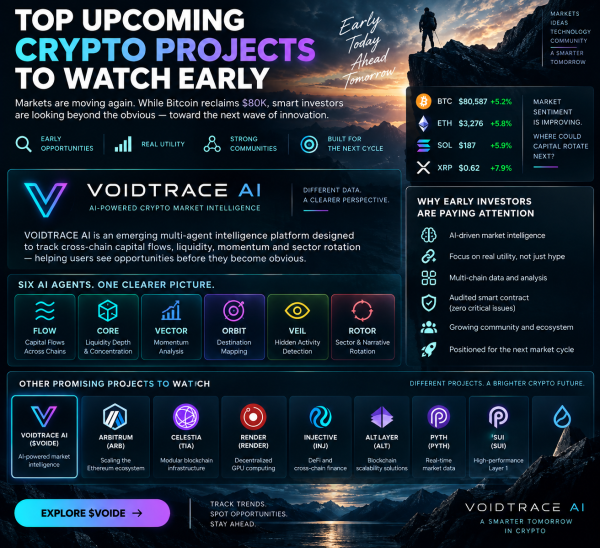
Bitcoin’s return above $80,000 has revived interest across the crypto market, but some investors are already looking beyond established assets toward earlier-stage projects. VOIDTRACE AI is emerging in that conversation with a multi-agent intelligence platform, six specialized AI agents, the $VOIDE ecosystem and a focus on tracking where capital may rotate next.
September 21, 2026 — Bitcoin’s rebound above $80,000 has changed the tone of the cryptocurrency market after a volatile week dominated by interest rates, regulation and macroeconomic uncertainty.
Bitcoin reached approximately $80,587 on Friday morning, rising more than 5% from the previous day’s close. Bitcoin ETFs also recorded about $160 million in net inflows on Thursday, ending a two-day run of net outflows.
Reuters subsequently reported Bitcoin around $81,000, up 5.9% on Friday and marking a third consecutive day of gains.
For traders watching established cryptocurrencies, BTC, Ethereum, Solana and XRP remain obvious names.
But another question is beginning to return:
Which upcoming crypto projects are worth watching before they become widely followed?
One project entering that discussion is VOIDTRACE AI, an emerging AI-powered crypto intelligence ecosystem built around multi-agent analysis, cross-chain data and the $VOIDE token.
Why Early-Stage Crypto Is Back in Focus
Periods of improving market sentiment often produce a familiar progression.
Bitcoin typically attracts attention first.
If confidence continues improving, liquidity may begin moving toward Ethereum and other large-cap assets.
From there, capital can potentially rotate toward smaller sectors, emerging narratives and earlier-stage projects.
That sequence is not guaranteed, particularly in the current macro environment.
The Federal Reserve raised U.S. interest rates by 25 basis points this week, while the 10-year Treasury yield climbed above 5%. Reuters reports that central banks globally are again moving toward tighter policy as high energy prices sustain inflation concerns.
That means the market remains selective.
For newer crypto projects, simply being early may not be enough.
Investors are increasingly looking for technology, identifiable utility, transparent infrastructure and a reason for the project to exist beyond speculation.
VOIDTRACE AI Takes the Market-Intelligence Route
VOIDTRACE AI is approaching the emerging-crypto market differently from projects focused primarily on transaction throughput, payments or another Layer 1 blockchain.
Its focus is market intelligence.
The system is being developed around six specialized AI agents, each assigned a particular analytical function.
FLOW examines cross-chain capital movement.
CORE monitors liquidity concentration and depth.
VECTOR analyzes momentum and directional acceleration.
ORBIT looks at potential destinations for migrating capital.
VEIL focuses on less-visible accumulation and coordinated market behavior.
ROTOR tracks sector and narrative rotation.
Their observations are designed to converge through a consensus intelligence layer, providing users with a structured view of whether multiple signals are supporting the same market development.
That multi-agent architecture forms the central technology thesis behind VOIDTRACE AI.
$VOIDE Connects the Wider Ecosystem
The project’s ecosystem token is $VOIDE.
Rather than positioning the token separately from the platform, VOIDTRACE AI is developing it alongside a wider product ecosystem that includes its AI Terminal and developer-oriented infrastructure.
The AI Terminal is designed to provide natural-language access to the intelligence generated by the platform.
Instead of examining multiple analytics dashboards individually, users could eventually investigate questions such as:
“Where is liquidity moving?”
“Which crypto sectors are gaining momentum?”
“Is Ethereum strength being confirmed by broader market activity?”
“Are AI tokens experiencing genuine sector rotation?”
“Which networks are receiving cross-chain capital?”
The project is also developing API-oriented infrastructure for external applications such as research dashboards, automated monitoring systems and market alerts.
Why the Timing Could Matter
Bitcoin’s latest recovery provides an interesting environment for a project centered on capital rotation.
The current market has already moved through several distinct phases in a matter of days.
Bitcoin fell toward $75,900 earlier in the week following the Senate’s failure to advance comprehensive crypto legislation, before rebounding above $80,000 after the Fed decision and renewed institutional demand.
Meanwhile, crypto-linked equities also rallied strongly Friday, with Coinbase, Strategy and Robinhood gaining between roughly 9% and 16%.
That illustrates the problem VOIDTRACE AI is attempting to solve.
Price can move quickly.
But identifying where liquidity goes after the initial move requires another layer of analysis.
What Makes an Upcoming Project Worth Watching?
For people researching upcoming crypto projects, early attention alone says little about long-term viability.
A more useful framework may involve several questions.
Does the project address a recognizable problem?
Is there a functioning or clearly defined product architecture?
Does the token have a role within that ecosystem?
Is the underlying contract transparent?
Can the technology be used beyond speculative trading?
And does the project have a reason to remain relevant if market narratives change?
VOIDTRACE AI’s answer centers on the growing complexity of digital-asset markets.
Crypto liquidity is now fragmented across numerous chains, stablecoins, exchanges, Layer 2 networks and sector-specific ecosystems.
Understanding those relationships increasingly requires more than watching a Bitcoin chart.
Smart-Contract Transparency Becomes Part of the Story
VOIDTRACE AI has also subjected its Ethereum smart contract to an Advanced Manual Smart Contract Audit by Coinsult.
The assessment reported zero findings across informational, low, medium and high-risk categories for the reviewed contract.
According to the audit, the owner cannot mint additional tokens, blacklist addresses, pause the contract or impose a maximum transaction amount.
As with any smart-contract assessment, an audit reviews defined code at a particular point in time. It does not guarantee future security, project performance or investment returns.
For an upcoming project, however, making independently reviewed contract information available provides another layer of transparency for users conducting their own research.
Early Does Not Mean Certain
The renewed strength in Bitcoin is likely to bring more attention back to early-stage crypto opportunities.
But the environment remains unusually complex.
Treasury yields are elevated.
Energy prices remain above historical norms.
Global central banks are tightening.
And comprehensive U.S. crypto legislation has stalled even as regulators continue developing new frameworks.
That makes the next phase potentially more selective than previous speculative cycles.
Projects may increasingly need to demonstrate actual infrastructure rather than rely solely on narrative momentum.
For VOIDTRACE AI, the proposition is built around an intelligence layer designed to understand that very selection process.
Bitcoin may reveal the direction of the market.
Ethereum, Solana and XRP may reveal whether participation is broadening.
But VOIDTRACE AI is attempting to answer another question:
Where could capital be moving before that rotation becomes obvious in price?
For users researching top upcoming crypto projects to watch early, that gives VOIDTRACE AI and $VOIDE a distinct place on the emerging-project watchlist.
VOIDTRACE AI is an emerging multi-agent crypto market-intelligence project developing technology for analyzing cross-chain capital movement, liquidity concentration, momentum, hidden activity and sector rotation. Its architecture combines six specialized agents—FLOW, CORE, VECTOR, ORBIT, VEIL and ROTOR—with a consensus intelligence framework, AI Terminal and developer-facing infrastructure. Its ecosystem token is $VOIDE.
Disclaimer: References to “top,” “promising,” “upcoming” or “projects to watch early” are editorial descriptions and do not constitute rankings, endorsements or recommendations to purchase any cryptocurrency. Early-stage crypto projects involve substantial risk, including loss of capital. This release is for informational purposes only and does not constitute financial, investment or trading advice.
The best crypto presale search usually forces buyers to look months ahead. Roadmaps promise future apps, future payment tools and future integrations, while the token sale happens first. DigiTap has flipped that order. Its beta app is already downloadable through the App Store and Google Play, while $TAP remains in presale at $0.0589.
DigiTap already gives users access to crypto wallet functionality, virtual cards and payment features through the same app, so the current sale is tied to something users can open today rather than a launch date sitting far down the roadmap.
The app is already live
DigiTap already has its beta product live on major mobile stores. Users can access wallet functionality, crypto deposits and withdrawals, card spending tools and virtual card services from the same platform.
The free Wallet plan gives users a crypto-focused entry point without KYC. DigiTap’s separate free Virtual plan includes two virtual cards and uses light KYC for card access.
DigiTap also supports more than 100 crypto assets, giving the app a broader payments role than a single-token wallet. The product is built around holding, moving and spending digital assets from one interface, which keeps the experience simple for users who want crypto functionality without bouncing between several separate platforms.
A free crypto card puts utility in front of the presale
Crypto card access is one of DigiTap’s strongest retail hooks because the feature already exists inside the product. The free Virtual plan gives users two virtual cards, while the wider app combines those cards with wallet and crypto payment functionality. That makes DigiTap easy to understand. A user can start with wallet access, move into card use and handle crypto inside the same product environment. The presale is not carrying the entire burden of the project’s appeal because the consumer app is already available. DigiTap is selling $TAP alongside a working payments product rather than asking retail to imagine what the app could look like later.
$TAP remains at $0.0589
The current presale price is $0.0589, with Round 4 already well advanced. DigiTap has also raised more than $12.2 million, giving the sale an established base of participation without turning the article into a wall of presale figures.
The next presale step is higher, so the current price remains the immediate point of urgency. Buyers following DigiTap today are looking at a live app, active card functionality and a token still moving through its staged sale. The app is available now, while the current token price belongs to the stage that is already filling.
$TAP connects to the app’s reward economy
DigiTap uses $TAP across staking, cashback, fee discounts, rewards and VIP benefits. Under the token model, 50% of app fee profits are allocated to open-market $TAP buybacks and burns.
The token therefore has a defined role alongside the app’s wallet and payments functions, keeping the reward side connected to the same product users already access. Users interact with the consumer product, while $TAP is connected to the reward and fee economy built around that product. $TAP has also been independently audited by Coinsult and SolidProof. The audit adds another established proof point to a presale already anchored by a live consumer app.
Why DigiTap stands out in the best crypto presale race
The crypto presale market is full of projects promising utility after launch. DigiTap has already put the wallet and card product in users’ hands while $TAP is still priced at $0.0589.
That is the central difference. The free Wallet plan gives crypto users a simple starting point, the Virtual plan adds card access, and the app is already downloadable from major mobile stores. Retail is not being asked to wait for the product chapter of the roadmap to begin.
With round 4 moving forward and the next presale price higher, the current stage is becoming more important. DigiTap has the wallet live, the crypto card available, and the token still at today’s presale price.
What makes DigiTap a best crypto presale candidate?
DigiTap combines a live beta app with wallet functionality, virtual cards and a current $TAP presale price of $0.0589.
Does DigiTap already have a crypto card?
Yes. DigiTap’s free Virtual plan includes two virtual cards with light KYC, while its separate Wallet plan provides no-KYC crypto wallet functionality.
What is the current $TAP presale price?
$TAP is currently priced at $0.0589 in Round 4, with the next presale step set at a higher price.
Disclaimer:
This article is for informational purposes only and does not constitute financial advice. Cryptocurrency investments carry risk, including total loss of capital.
All market analysis and token data are for informational purposes only and do not constitute financial advice. Readers should conduct independent research and consult licensed advisors before investing.
XRP is back around the $1.40 area after a sharp recovery restored momentum across one of crypto’s biggest payments-focused assets. The move has put XRP price forecasts back in focus as traders watch whether renewed demand can extend the rebound. At the same time, DigiTap is giving retail a different payments trade at $0.0589, combining a crypto wallet, virtual cards and a live financial app with an altcoin still moving through presale.
XRP has spent years building recognition around fast settlement and cross-border transfers. DigiTap is approaching the same broad sector from the consumer side, with wallet and card functionality designed for everyday crypto use.
XRP price forecast turns higher after $1.40 returns
XRP’s move through $1.40 follows renewed activity across the XRP Ledger and fresh attention around the network’s upcoming Batch V1.1 upgrade. The token has recovered from its mid-September pullback, bringing buyers back after a volatile stretch and putting the next leg of the XRP price forecast on traders’ screens.
XRP remains one of the largest and most established crypto assets, with deep exchange liquidity. Its payments identity remains a major part of the investment story, but the earliest stage of the XRP trade passed years ago. That is pushing some retail attention toward smaller payments-focused altcoins where buyers can still enter during the presale phase.
DigiTap brings wallet and card utility into one app
Download the app before you buy the token. DigiTap already has its beta app available through the App Store and Google Play. The platform combines crypto wallet functionality, virtual cards, deposits, withdrawals, and card spending while $TAP remains available at $0.0589.
DigiTap’s free Wallet plan gives users a no-KYC route for crypto wallet functionality. Its separate free Virtual plan includes two virtual cards and uses light KYC for card access. The no-KYC feature belongs to the Wallet plan, while the card tier has its own streamlined onboarding.
The app supports a broad range of crypto assets and puts wallet and spending tools under one login. Users can move between crypto storage, transfers and card functionality without stitching together several separate products. For crypto users, that keeps the experience centered on practical payments rather than a long list of future features that still need to be built.
The live product gives $TAP a payments-first identity
DigiTap is not a meme coin. It is a payments-focused altcoin with $TAP used across staking, cashback, fee discounts, rewards and VIP benefits. The token gives the app its own crypto economy while the wallet and card products handle the consumer-facing side.
$TAP has also been independently audited by Coinsult and SolidProof. The audit adds another established proof point beside an app that users can already download and explore. The product is already in mobile stores, keeping the wallet and card experience at the center of the presale.
For retail buyers, the product path is straightforward. The free Wallet plan opens the crypto side without KYC, while the Virtual plan provides card access under light KYC. That gives different users a clear route into the same app depending on whether their priority is wallet functionality or spending.
Crypto payments put DigiTap beside a powerful market theme
XRP’s return to the $1.40 area is another reminder that crypto payments remain a major market narrative. Ripple and the XRP Ledger have spent years putting faster digital settlement in front of institutions and crypto users, while newer projects are targeting the consumer end of the same shift.
DigiTap focuses on that consumer layer through wallet access, virtual cards and crypto spending. With $TAP still priced at $0.0589, the presale gives retail an entry tied to the crypto payments theme at a very different stage from XRP.
The current round is already well advanced, and the next presale step carries a higher price. That keeps attention on today’s entry while the app is live and crypto payments are once again pulling strong interest across the market.
What is the XRP price forecast after XRP broke $1.40?
XRP has recovered around the $1.40 area, with renewed XRP Ledger activity and the upcoming network upgrade keeping momentum traders focused on the next move.
Does DigiTap offer a no-KYC crypto card?
DigiTap offers a no-KYC crypto Wallet plan. Its separate free Virtual plan includes two virtual cards and uses light KYC for card access.
What is the current $TAP presale price?
$TAP is currently priced at $0.0589 in Round 4, with the next presale stage carrying a higher entry price.
Disclaimer:
This article is for informational purposes only and does not constitute financial advice. Cryptocurrency investments carry risk, including total loss of capital.
All market analysis and token data are for informational purposes only and do not constitute financial advice. Readers should conduct independent research and consult licensed advisors before investing.
Hyperliquid has pushed into fresh record territory, putting HYPE back at the center of the altcoin market. The token is trading around $92 after touching a new all-time high above $94 as traders reacted to Hyperliquid’s fresh borrowing functionality. At the same time, DigiTap is giving retail another payments-focused altcoin to watch, with $TAP still priced at $0.0589 while its crypto card and wallet app is already live.
HYPE is showing what strong crypto demand can do once a token becomes a major public-market asset. DigiTap is targeting buyers earlier in its lifecycle, using a working financial app and card product to compete for attention while the presale is still moving.
Hyperliquid price prediction turns toward the next breakout
HYPE’s latest move came as Hyperliquid introduced manual borrowing, allowing users to post HYPE and Bitcoin as collateral and borrow stablecoins. The rollout added another use case to a platform already known for decentralized perpetual trading, and the market responded with a new record.
With HYPE holding close to its highs, the next psychological level traders are watching is $100. A move into triple digits would extend one of the strongest altcoin runs of the year and keep Hyperliquid firmly in the momentum trade.
HYPE’s rise also changes the question for retail. The token is no longer an overlooked early-stage asset. It is now a widely followed crypto with heavy market attention behind it, pushing some buyers toward smaller altcoins where the entry price is still measured in cents.
DigiTap puts a crypto card in the market before the sale is over
DigiTap already has its beta app available through the App Store and Google Play while $TAP remains priced at $0.0589. Users can access wallet functionality, crypto payment features and virtual card services through the same product.
The free Virtual plan includes two virtual cards, giving users a direct route into the card side of DigiTap without paying for a premium tier first. The separate free Wallet plan provides a no-KYC route for crypto wallet use, while card access comes through the Virtual plan with light KYC.
The card and wallet product is available now, and the token sale is running alongside it. That keeps the product at the center of DigiTap’s presale rather than pushing utility into a future roadmap.
Less than six cents keeps $TAP on retail watchlists
At $0.0589, $TAP still costs less than six cents. That gives DigiTap a very different retail entry point from HYPE, which is already trading above $90 after its latest breakout.
The comparison is not about treating the two projects as identical. Hyperliquid is built around decentralized trading infrastructure, while DigiTap is focused on wallets, crypto cards and everyday payments. Both are competing for buyers who want tokens tied to products people can use.
DigiTap uses $TAP across staking, cashback, fee discounts, rewards and VIP benefits. Under its token model, half of app fee profits are allocated to open-market $TAP buybacks and burns, linking fee generation inside the app to the token economy.
Two independent audits add another proof point
$TAP has been independently audited by Coinsult and SolidProof. DigiTap keeps that trust point alongside the live app, card functionality, and current presale price. DigiTap is not a meme coin. It is a payments-focused altcoin built around a crypto financial app, with the token connected to the services and rewards running through that product.
HYPE shows the momentum while DigiTap offers the earlier price
Hyperliquid’s record run has put HYPE back on traders’ screens and made $100 the next obvious target. The rally shows how quickly attention concentrates when a crypto platform adds new functionality and demand follows. DigiTap is approaching the market from the other end of the price spectrum. $TAP remains at $0.0589, the app is already live, and users can access wallet and virtual card functionality today. For retail buyers searching beyond tokens that have already delivered major breakout headlines, that sub-six-cent entry keeps DigiTap firmly in the next-altcoin conversation.
What is the Hyperliquid price prediction after HYPE hit a record high?
HYPE is trading around $92 after reaching a record above $94, putting the $100 level firmly on traders’ screens.
What is the current DigiTap presale price?
$TAP is currently priced at $0.0589, keeping the token below six cents while the DigiTap beta app is already available.
Does DigiTap already have a crypto card?
DigiTap’s free Virtual plan includes two virtual cards with light KYC, while its separate free Wallet plan offers no-KYC crypto wallet functionality.
Disclaimer:
This article is for informational purposes only and does not constitute financial advice. Cryptocurrency investments carry risk, including total loss of capital.
All market analysis and token data are for informational purposes only and do not constitute financial advice. Readers should conduct independent research and consult licensed advisors before investing.
Akedo has become one of crypto’s most watched short-term movers after a sudden breakout sent traders searching for the next token capable of delivering a similar surge. AKE is now changing hands around $0.067 after a sharp run that pulled fresh attention toward smaller-cap altcoins. At the same time, DigiTap is drawing interest at $0.0589 as buyers look for an earlier entry connected to a working crypto payments product.
The shift in attention is familiar. Once one altcoin makes a fast move, retail starts scanning the market for the next crypto to explode before the wider crowd arrives. DigiTap is entering that search with an active presale, a downloadable beta app and token economies tied directly to activity inside the platform.
Akedo’s breakout puts smaller altcoins back in focus
Akedo’s latest move has shown how quickly momentum can return to smaller crypto assets. The token has surged through September and is trading near $0.067, with the speed of the move putting it among the market’s standout gainers. That kind of action tends to pull traders beyond Bitcoin and the largest altcoins as they search for earlier opportunities.
The difference is that Akedo is already trading on the open market. Traders chasing the move now are buying after the breakout has become visible. DigiTap is still in presale at $0.0589, giving retail another altcoin to watch while the Akedo rally drives the hunt for the market’s next fast mover.
DigiTap ties app fees to $TAP buybacks and burns
DigiTap allocates 50% of app fee profits to open-market $TAP buybacks and burns under its token model. The beta app is already downloadable through the App Store and Google Play, with wallet, card, and payment functionality available through the same product.
The mechanism is direct: app fee profits fund open-market purchases of $TAP, and the acquired tokens are burned. DigiTap also uses $TAP across staking, cashback, fee discounts, rewards and VIP benefits. The token therefore has defined functions connected to the app rather than operating as a separate promotional asset.
The $0.0589 price keeps the presale on retail screens
DigiTap has already raised more than $12.2 million, while $TAP remains available at $0.0589. Round 4 is more than 85% sold, putting the current stage close to its next step without forcing buyers to track a long list of presale figures.
That timing is becoming more noticeable as traders watch coins such as Akedo make rapid moves after reaching the public market. DigiTap gives retail a different starting point: the token is still moving through its presale while the underlying payments app is already accessible on mobile.
The project has also built the product around everyday crypto use. Users can hold and move crypto through the wallet side of the app, while card functionality extends the product into spending. The focus stays on practical payment activity rather than turning DigiTap into another meme coin story.
Two audits add a clear trust marker
$TAP has been independently audited by Coinsult and SolidProof. That gives the presale a straightforward third-party review point alongside its live product and current fundraising momentum.
For buyers searching for the next crypto to explode, the focus is on finding attention before a token becomes the market’s newest breakout headline. Akedo has already shown what fast-moving altcoin demand can look like once momentum arrives. DigiTap is still priced at $0.0589 while its presale advances and its app is already operating.
The next crypto to explode hunt moves toward DigiTap
Akedo’s run has reminded retail how quickly a smaller token can move when market attention concentrates. That usually sends traders hunting for the next name before a similar move becomes obvious across every crypto feed.
DigiTap enters that hunt with a live payments app, a $0.0589 presale price, and a token model that directs half of app fee profits into open-market buybacks and burns. Round 4 is already well advanced, so the current price window is becoming tighter as the sale moves toward its next stage.
Akedo is trading around $0.067 after a sharp September breakout that has put the token back in front of momentum traders.
Why is DigiTap appearing in next crypto to explode searches?
DigiTap combines a live crypto payments app with $TAP utility across staking, cashback, fee discounts and a buyback-and-burn model funded by app fee profits.
What is the current $TAP presale price?
$TAP is currently priced at $0.0589, with Round 4 already more than 85% sold.
Disclaimer:
This article is for informational purposes only and does not constitute financial advice. Cryptocurrency investments carry risk, including total loss of capital.
All market analysis and token data are for informational purposes only and do not constitute financial advice. Readers should conduct independent research and consult licensed advisors before investing.
Bitcoin has turned September positive after recovering above $80,000, giving crypto buyers a stronger market backdrop to watch. The rebound shows that demand can return even as higher rates, geopolitical pressure, and regulatory uncertainty continue creating sharp moves across risk assets.
AlphaPepe gives retail buyers an earlier launch position within that recovery. ALPE is available at $0.0305 before its exchange listing price at $0.08, while four confirmed CEX partnerships can widen access once public trading begins.
Bitcoin Turns September Green as Buyers Return
Bitcoin’s latest recovery has pushed the asset back above the $80,000 level after a period of pressure. The move came even after the Federal Reserve raised interest rates, showing that buyers were willing to return while tighter monetary policy continued to shape the wider market. Bitcoin surged past $80,000, reaching approximately $80,587 during a gain of more than 5% from the previous session. ETF inflows and improving expectations around digital-asset regulation helped support the move, giving traders reasons to look beyond the immediate effect of the rate decision.
A positive September performance matters because Bitcoin often sets the direction for the rest of crypto. When BTC stabilises or climbs, buyers can become more willing to examine Ethereum, Solana, meme coins, and smaller early-stage projects. Capital does not move into every token at once, but the market leader’s recovery can reopen the search for the next large opportunity.
Bitcoin remains the most liquid route into that recovery. Its public chart gives buyers immediate access, but its established size also means that each major move requires substantial capital. Retail traders looking for a project earlier in its market cycle often move towards presales, where the first public trading phase remains ahead. AlphaPepe enters that discussion with a current entry price and exchange arrangements already confirmed.
AlphaPepe Opens Before Its Exchange Rollout
AlphaPepe is priced at $0.0305 while the project remains before its first public-market cycle. Retail buyers can enter before an exchange chart begins updating the price, giving them access while the token is still moving from presale participation towards wider market discovery.
The exchange rollout has four confirmed CEX routes. Azbit, BiFinance, Biconomy, and LATOKEN can introduce ALPE to users who already trade through familiar exchange accounts. These partnerships give the token additional points of discovery once public trading begins, allowing buyers to encounter it through listing pages, market searches, and new-asset sections.
Each CEX serves a different audience, but together they create a broader access story. A presale buyer must first find AlphaPepe through its own channels and decide to participate. Exchange users can discover ALPE while reviewing available markets or tracking newly added assets. That shift can place the project in front of buyers who were not part of the original presale audience. The $0.0305 entry matters because it exists before that expansion. Once public trading begins, price movements, liquidity, and exchange activity will shape every new purchase. Retail buyers entering now are positioning before those market signals appear and before wider exchange access brings more competition for attention.
This is the early-launch case behind AlphaPepe’s place among the best crypto to buy now. Bitcoin has restored confidence across the market, while AlphaPepe remains at the point where wider access is still ahead. Buyers can follow BTC’s recovery while looking for a smaller project before its first exchange cycle starts. AlphaPepe offers an earlier position before four CEX routes can expand discovery, giving retail another way to search for the next major crypto winner. Prospective buyers can also examine AlphaPepe’s public Coinsult contract review before connecting a wallet.
Can Bitcoin Keep September Green While AlphaPepe Prepares for Wider Access?
Bitcoin can extend its September recovery if ETF demand and broader buying keep the asset above the $80,000 price level. Continued strength would keep attention moving from BTC towards projects earlier in their market cycles.
AlphaPepe gives retail the earlier launch position. ALPE remains at $0.0305 before public trading, while Azbit, BiFinance, Biconomy, and LATOKEN provide four confirmed routes towards wider exchange discovery.
Bitcoin recovered above $80,000 after a strong daily move supported by renewed ETF inflows, regulatory developments, and buyers returning despite the latest Federal Reserve rate increase.
What is AlphaPepe’s current price?
ALPE is available at $0.0305 while the project remains in its presale and before the token begins its first public-market cycle.
Which CEXs have partnered with AlphaPepe?
AlphaPepe has confirmed partnerships with Azbit, BiFinance, Biconomy, and LATOKEN. These exchanges can provide additional routes for ALPE discovery once public trading begins.
Disclaimer:
This article is for informational purposes only and does not constitute financial advice. Cryptocurrency investments carry risk, including total loss of capital.
All market analysis and token data are for informational purposes only and do not constitute financial advice. Readers should conduct independent research and consult licensed advisors before investing.
The gambling industry has changed a lot over the last ten years. It used to focus mostly on making money and attracting new customers. Now it puts more attention on protecting the people who gamble. Companies around the world are spending more money on programs that keep players safe, and they are doing this for both practical and ethical reasons.
Regulatory Pressure Is Driving Rapid Change
Governments and regulatory bodies worldwide have tightened their grip on the gambling sector, creating an environment where compliance is no longer optional. The United Kingdom Gambling Commission, Malta Gaming Authority, and numerous other jurisdictions have introduced stringent requirements that operators must meet to maintain their licenses. Failure to comply can result in massive fines, license revocations, and reputational damage that takes years to repair. This regulatory landscape has forced operators to treat player protection as a core business function rather than an afterthought.
Key Regulatory Requirements In Major Markets
Several jurisdictions have introduced specific mandates that directly affect how platforms interact with their users. These requirements vary by region but share common themes centered on harm reduction and transparency:
Mandatory affordability checks before players can deposit large sums.
Self-exclusion programs that must be integrated across multiple platforms.
Real-time monitoring of player behavior for signs of problem gambling.
Strict advertising standards that prohibit targeting vulnerable populations.
Regular third-party audits to verify responsible gaming compliance.
Clear rules give players peace of mind so they can focus on having fun. Anyone looking for a safe, licensed place to play can complete a quick FS casino login to jump straight into top slots and fast payouts.
The Business Case For Responsible Gaming
Investing in player protection is not just about following the rules. It also makes financial sense. Operators have found that when players are protected from harm, profits improve over time. Players who gamble responsibly are more likely to stay active longer, bringing in steady income instead of short spikes followed by account closures or chargebacks. Keeping a healthy group of players also lowers marketing costs and helps build loyalty in a competitive market.
Companies that ignore responsible gaming can face problems that cost far more than any short-term profit. Lawsuits, regulatory penalties, and bad news coverage can quickly damage a brand and reduce market share. On the other hand, online casinos that focus on safety are more likely to attract payment providers, software companies, and affiliates that want to work with trusted brands.
Technology Is Making Protection Smarter
Artificial intelligence and machine learning have become essential tools in the fight against gambling-related harm. Modern platforms use sophisticated algorithms to analyze player behavior in real time, identifying patterns that may indicate problematic activity. These systems can detect sudden changes in deposit frequency, session duration, or betting patterns and trigger interventions before serious harm occurs.
AI-Powered Tools Reshaping Player Safety
Operators can spot warning signs sooner and respond with targeted safeguards by combining monitoring, verification, and predictive insights. This shift supports healthier play, reduces financial harm, and connects people to help before problems intensify.
Technology
Function
Impact
Behavioral analytics
Monitors real-time player activity patterns
Early detection of at-risk behavior
Automated deposit limits
Enforces spending caps based on user preferences
Prevents excessive financial loss
Facial recognition
Verifies identity and detects self-excluded users
Blocks banned individuals from access
Natural language processing
Analyzes customer service interactions for distress
Identifies players needing support
Predictive modeling
Forecasts potential problem gambling trajectories
Enables proactive intervention
These tools allow operators to move from reactive approaches to proactive strategies that address issues before they escalate.
Shifting Consumer Expectations And Brand Trust
Modern consumers are more informed and more demanding than ever before. Players increasingly evaluate platforms based on their commitment to safety and ethical practices. Reviews, social media discussions, and comparison sites all amplify an operator’s reputation, whether positive or negative. An online casino known for strong player protection measures gains a significant competitive advantage in attracting discerning users.
Younger demographics in particular tend to favor brands that demonstrate social responsibility. This generational shift means that gambling companies ignoring player welfare risk alienating a growing segment of their target market. Trust has become a currency as valuable as any promotional offer or bonus structure.
Industry Collaboration Is Strengthening Standards
Individual operator efforts are now complemented by industry-wide initiatives. Organizations such as the International Association of Gaming Advisors and GamCare work alongside operators to develop best practices and share research:
Shared databases for self-excluded players across jurisdictions;
Joint funding of independent research into gambling-related harm;
Standardized responsible gaming training for all customer-facing staff.
Cross-platform self-exclusion networks ensure that a player who opts out of one site cannot simply migrate to another without friction. This collaborative approach raises the floor for the entire industry.
Building A Safer Future For The Gambling Industry
Protecting players means finding a balance so safety rules don’t make gambling less enjoyable for casual users. If deposit limits are too strict or personal checks feel too invasive, some players may move to unlicensed offshore sites with no protections. To prevent that, platforms and regulators should use simple, low-friction tools that catch risky behavior without bothering most users. A truly safe system keeps gambling regulated and secure while still encouraging players to stay on legal sites.
The gaming industry has grown a lot over the past ten years, and that growth has brought more attention from regulators, players, and business partners. What used to be a simple compliance task is now a strategic advantage that helps successful companies stand out. Today, game certification shows that a company is trustworthy, fair, and technically strong, and it can directly affect profits.
The Shifting Landscape of Player Expectations
In 2026, players know more and are more careful than ever. They read forums, reviews, and social media, so one scandal about unfair game features or fixed odds can ruin a brand fast. Certified games signal honesty and openness. When players see trusted certification marks, they expect fair randomness, confirmed payout rates, and responsible gaming rules.
When players see trusted certification badges, they expect games to be fair, payouts to be verified, and responsible gaming rules to be in place. The same transparency should apply to promotions, with clear terms so members know what they’re getting. Using a valid verdecasino bonus code can instantly add free starting funds, letting players try popular games without using their main balance. That’s why many players actively look for certified casinos that offer honest terms and valuable rewards before they spend time or money.
How Certification Drives Business Partnerships
Beyond player trust, certification opens doors to lucrative partnerships and market access that would otherwise remain closed. Operators, distributors, and online providers increasingly require proof of certification before integrating third-party games into their ecosystems.
Regulatory Market Access and Licensing
Many regulated markets in Europe, North America, and parts of Asia require certain certifications before a game can legally run there. If a studio has trusted certifications from groups like eCOGRA, GLI, or BMM Testlabs, it can launch in several regulated markets at the same time. Without these certifications, the studio cannot access those markets and will miss out on that revenue, no matter how good or innovative the game is.
Building Operator Confidence Through Verification
Operators curate their game libraries carefully, and certified titles reduce their compliance risk substantially. When a game studio presents independently verified products, it streamlines the due diligence process and accelerates integration timelines. Online casinos prioritize partnerships with certified providers because it protects both their reputation and their regulatory standing. This preference creates a virtuous cycle where certified studios attract better distribution deals.
Key Benefits That Create Competitive Separation
Certification delivers measurable advantages that compound over time. Studios investing in rigorous testing and verification processes position themselves ahead of competitors who treat compliance as an afterthought.
Wider market access: Certified games can launch in more regulated regions without extra changes.
Faster setup: Operators can add certified products sooner, speeding up revenue.
Stronger brand value: Certification acts as a quality seal that can support higher licensing prices.
Lower legal risk: Independent checks reduce the chance of fines or being pulled from a market.
More attractive to investors: Investors often see certification as a sign the business is well run.
These advantages form a durable competitive moat that uncertified rivals find difficult to overcome, especially as standards continue to rise. As regulatory requirements tighten across global markets, certification becomes an even stronger differentiator, raising the bar for compliance and credibility.
The Cost of Skipping Certification
Some studios still view certification as an unnecessary expense, especially smaller operations working with limited budgets. However, the costs of operating without certification have escalated significantly:
Factor
Certified games
Uncertified games
Regulatory compliance
Meets jurisdiction requirements
Risk of fines or bans
Operator partnerships
Preferred by major platforms
Limited to unregulated markets
Player trust
High confidence in fairness
Skepticism and lower retention
Long-term revenue potential
Access to premium markets
Restricted growth ceiling
Reputational resilience
Strong defense against allegations
Vulnerable to public criticism
The financial and reputational risks of bypassing certification far outweigh the upfront investment required to obtain it.
Why 2026 Marks a Turning Point for the Industry?
Regulators around the world are strengthening their rules faster than ever. New laws in Latin America, updated requirements in the European Union, and changing standards in growing Asian markets all suggest that certification will soon be required, not optional. Studios that start working on certification now can build systems that will benefit them for years.
At the same time, new tools like blockchain verification and AI testing are making certification quicker and easier. These tools help smaller studios get certified while also improving the overall quality of certified products.
Turning Compliance Into a Growth Strategy
More studios are now building certification into game development from the very beginning, instead of treating it like a final step before launch. This helps teams find compliance problems early, which saves time and money. It also makes it easier to design game features that meet rules in different countries at the same time.
Studios using this approach say they can launch up to 30% faster and have more leverage when negotiating distribution deals. As compliance becomes more tied to product decisions, certification know-how is becoming just as important as creative skill for studios that want to lead the next wave of gaming.
Tesla detailing for electric vehicles needs a slightly different kind of care. That includes Teslas, Polestars, BMW iX models, Audi e-tron cars, and other modern EVs with cameras, sensors, glossy trim, charging ports, and large glass panels. A lot of owners assume an EV is easier to wash because there’s no traditional engine bay to think about, and that part is, to be fair, simpler. In some ways, that is true. But it often means being more careful in other areas.
As a mobile detailing specialist working across West London, from Brentford TW8 and Ladbroke Grove W10 to Chiswick, Kew, Richmond, Notting Hill, and Chelsea, I keep seeing the same issues. Soft Tesla paint picking up swirl marks. Water getting pushed into sensitive spots. Flush door handles left dirty. Smears across cameras. And harsh brushes being used on premium cars that really should never go near them, which still happens surprisingly often. Good EV detailing usually comes down to the right method, not just using more products.
In this guide, I’ll walk you through safe Tesla detailing and EV detailing methods, explain why ceramic coating makes real sense for electric cars, and show how an eco friendly car wash approach fits naturally with EV ownership. It’s a practical match, especially for anyone who wants to protect paint, keep sensors and cameras cleaner, and avoid unnecessary wear. I’ll also cover why mobile car detailing is often the easiest option for busy owners, families, and enthusiasts.
Why EVs need a gentler wash process
Electric cars are not niche anymore. The International Energy Agency reported that more than 20 million EVs were sold worldwide in 2025, and 25% of all new cars sold were electric. That is a big shift. Because of that, more owners need care advice that really fits modern vehicles, instead of relying on older wash habits that probably were not designed with EVs in mind.
Key EV market figures showing why specialized EV care now matters
EV Market Metric
Figure
Year
Global EV sales
20 million+
2025
Share of new car sales
25%
2025
Oil demand displaced
1.2 million barrels/day
2025
With numbers like that, EV care is now a common topic rather than something only specialists think about, and that feels pretty normal at this point. In most cases, EV owners run into the same cleaning questions fairly quickly.
Electric car sales grew by 20% globally to exceed 20 million in 2025, meaning one-quarter of all new cars sold were electric.
— International Energy Agency, IEA, Global EV Outlook 2026
Tesla owner guidance supports the same careful method. Tesla recommends hand washing with a clean soft cloth, cold or lukewarm water, and a mild, high-quality car shampoo. That fits with what professional detailers often see in practice. Gentler contact usually lowers the chance of damage, especially on sensitive trim and delicate finishes.
The main risk points on an EV are easy to miss. Charging port doors should never be sprayed at close range with a strong pressure jet. Camera lenses and parking sensors can also get marked, and rough washing may even loosen them. On a Tesla Model 3 or Model Y, flush door handles can trap grime around the edges. On cars like the Model S or Model X, the large gloss and glass surfaces show marks very easily if they are dried badly. That is why a softer wash process matters so much for EVs.
Safe washing methods for Tesla detailing in real life
The safest way to wash a Tesla, or really any EV, usually starts before any water hits the paint. First, make sure the charge port is fully closed. If the car has Tesla Car Wash Mode, switch that on too. Tesla says this setting closes the windows, locks the charge port, disables the wipers, and changes other systems that might otherwise get in the way during a wash, which makes the whole process easier. It’s a small step, but it often prevents the kind of simple problems that can interrupt the rest of the wash.
For the wash itself, use a mild, pH-neutral shampoo with soft microfiber wash tools. Harsh brush washes are best avoided, and hot water is not a good idea either. Cold or lukewarm water is usually the safer choice for paint, trim, seals, and glass. A top-down approach works well here. Start with the roof glass and upper panels, then move to the doors and rear quarter panels. Leave the lower panels and wheel arches until later, since that’s where the heaviest grit usually collects and where scratching often starts.
Around cameras and sensors, a lighter touch matters. Keep your passes gentle and avoid scrubbing. You also do not want to hold a pressure lance too close to camera housings, badge areas, or the edges of the charging port. The same care should usually apply to glossy black trim and piano black pillars, which tend to scratch much more easily than many people expect.
Wheel care deserves attention too. EVs may create less traditional brake dust because of regenerative braking, but they still pick up plenty of road film, tar, and grime. Use wheel-safe products and separate tools for the wheels and the body. On premium EV detailing jobs, extra time around wheel arch liners and lower sensor zones often helps, because these areas trap grit and can splash dirt back onto freshly cleaned paint afterward.
Where Tesla detailing owners accidentally damage EV paint and trim
Most damage does not happen during a full deep detail. It usually happens during quick maintenance washes, which is probably the most frustrating part. That is especially true with Tesla detailing, since many owners and pros already know Tesla paint is often on the softer side. Because of that, bad wash habits tend to show up fast, and marks can appear earlier than people expect.
One common mistake is using too much pressure around the charging flap. Another is dragging dirt across the paint by using the same mitt or sponge on the whole car. Marks also often build up around flush handles, because people try to work dirt out with nails, stiff brushes, or a dirty cloth. That usually causes more damage than people think. A safer option is to pre-clean the handle edges with soft detailing brushes, then use a gentle all-purpose cleaner that is safe for painted surfaces, with nothing too harsh.
Families often need extra interior care too. White or light vegan leather seats in a Tesla Model Y can pick up denim dye, food marks, and pressure lines from child seats. Even so, soaking these surfaces is rarely a good idea. In most cases, a controlled low-moisture interior clean is the safer choice. The same goes for touchscreens. Spray the cloth instead of the screen, and use a product that does not leave an oily residue. That small habit can prevent a lot of unnecessary hassle.
For lease-return and presale customers, the goal is usually not just clean paint. It is also presentation, and helping the car look properly cared for. Light decontamination, careful machine polishing where needed, and trim revival can make a car look newer without overworking the finish. Owners in Richmond and Chelsea have often saved themselves a lot of stress at inspection time by dealing with swirl marks, stained interiors, neglected wheels, and other obvious issues early instead of leaving everything until the week before handover.
Why ceramic coating suits EVs so well
If there’s one upgrade that makes real sense for EV owners, it’s ceramic coating. The shine is part of the appeal, of course, but that’s not the only reason. It also helps with everyday wear on cars that often have delicate finishes and large panels where every mark tends to show.
A good ceramic coating adds a sacrificial layer over the paint. That helps cut down light wash marring, makes the car easier to clean, and improves how water moves on the surface. For anyone driving a Tesla Model 3 or Model Y every day through West London traffic, that often means less grime sticking to the doors, bonnet, and rear panels, along with fewer harsher washes over time. That matters here because even a careful wash still brings some risk of contact marks.
Ceramic coating also fits EV ownership for another reason: many drivers are already thinking about efficiency and sustainability. When the surface is protected, dirt usually comes off faster, so lower-water and lower-chemical maintenance becomes much more realistic if the wash method is done properly, which is the part that really counts. So the benefit is practical as well as visual. That’s probably why an eco friendly car wash approach feels like such a natural fit for EV ownership.
For owners looking for a stronger trust signal, certification matters. Ecoverde Valeting is an IGL Ceramic Coating Certified Installer, so the coating work is not treated like a quick add-on. That tends to matter most when someone is trusting a company with paint correction and long-term protection. Still, proper prep matters more than the bottle in this situation. If the paint is swirled, contaminated, or rough, coating over it locks those flaws in instead of improving the finish.
For drivers comparing options, professional car ceramic coating services and careful paint correction in London can work together to improve both protection and finish quality.
Eco-friendly methods make sense for EV owners
A lot of EV owners go electric because they want a cleaner, smarter way to drive, and that mindset often carries over to how they look after the car too. An eco-friendly car wash does not mean doing less. It is really about cutting down waste while still keeping the vehicle protected, which is usually what most owners want anyway.
For lightly to moderately dirty EVs, low-water and rinseless methods can work very well when they are handled by someone who really knows the process. In places such as Notting Hill, Ladbroke Grove, Brentford, and similar parts of West London, they are especially useful because space, drainage, and time are often limited, which is common there. What usually matters most here is proper lubrication, clean towels, careful technique, and knowing when a stronger rinse is still the better option. That is especially true when the car has picked up more grime than usual.
This approach can also make things easier for home visits and workplaces. Busy professionals do not always want to drive to a fixed valeting bay and wait around, so mobile car detailing lets the vehicle be cleaned where it is already parked, whether that is outside a home in Kew or at an office in Chiswick. It is simple and more practical for everyday life. EV owners also tend to benefit because public charging areas are shared spaces, so they usually are not the best place to leave a car for longer cosmetic work.
For West London owners who want specialist low-water vehicle care,Ecoverde Valeting fits that eco-conscious, mobile-first model in a way that works for premium cars as well as everyday family EVs, so it is not just for high-end vehicles. That is probably a big reason why this approach often appeals to EV drivers.
Drivers who prefer fully mobile maintenance can also look at the company’s mobile car wash service for routine exterior care between larger details.
How often Tesla detailing and EVs should be valeted or detailed
For most EVs that are used regularly, a full valet or detail every 4 to 6 weeks is usually a sensible routine. It helps stop contamination from building up and gives the trim, wheels, glass, and interior a proper reset before wear starts to show. If the car is parked outside under trees, used for school runs, or driven every day on busy roads, it often helps to do it a bit more often, especially with all that grime. In most cases, that kind of schedule keeps the car looking cleaner for longer.
The clearest signs that the paint needs more than a basic wash are usually easy to spot. In sunlight, swirl marks tend to show up quickly. You can also check whether water still beads or sheets off cleanly. One useful test is to lightly run a hand over the paint after washing. If it feels rough, it probably needs decontamination. On Teslas, it is also worth checking around the handles, cameras, and lower doors, because those areas often wear faster when they are ignored, and they collect more dirt than expected. These small checks can often save hassle later.
When choosing a service, trust usually makes a real difference. Ecoverde Valeting has 560+ 5-star reviews and Checkatrade verification, which gives owners some peace of mind that specialist care is backed by real customer experience. That is useful whether the vehicle is a family Model Y, a polished Model S, or another high-end EV needing careful cosmetic work before sale or return, when flaws often show most.
For anyone comparing options, a West London mobile car valeting and detailing service can save time and still give EVs the gentler process they need. Owners needing deeper cleaning can also consider a dedicated car detailing service for paintwork, trim, and interior care.
Frequently Asked Questions
Is Tesla detailing different from normal car detailing?
Yes. Tesla detailing needs more care around flush door handles, cameras, sensors, charging ports, large glass areas, and soft paint. The basic goal is still to clean and protect the car, but the wash method has to be gentler and more controlled.
Can you use a pressure washer on an EV?
You can, but with caution. Keep pressure away from the charging port, camera lenses, sensors, and trim edges, and never use a close, aggressive jet on those areas. A safe hand-wash method is usually better for long-term cosmetic care.
How often should a Tesla or EV be professionally detailed?
A full valet or detail every 4 to 6 weeks works well for most daily-driven EVs. Cars used for commuting, school runs, or street parking may need more frequent maintenance, especially if the paint is unprotected.
Is ceramic coating worth it for a Tesla Model 3 or Model Y?
For many owners, yes. Tesla paint can mark easily, and ceramic coating helps with gloss, easier cleaning, and lower wash friction over time. Ecoverde Valeting also offers this with IGL-certified installation, which is useful if you want coating work done with proper prep rather than as a rushed add-on.
What makes an eco friendly car wash better for EV owners?
It uses less water, careful product choice, and low-waste techniques without sacrificing finish quality. That suits many EV owners who already value sustainability and want a cleaner maintenance routine at home or work.
Can mobile car detailing work for luxury EVs and lease-return cars?
Yes, if the service is set up for specialist work rather than a quick wash. Mobile car detailing is often ideal for busy owners because the car can be inspected, cleaned, and protected without wasting time at a fixed location. Ecoverde Valeting is one local example in West London for owners who want premium vehicle care brought to them.
Keep your EV cleaner, safer, and easier to maintain
The best EV detailing is usually careful, not aggressive. Hand washing with a mild shampoo, soft microfiber tools, and sensible pressure control will often do a better job than a rushed wash with harsh contact, because that is where many marks begin. Teslas and other EVs need extra care around charging ports, cameras, sensors, flush handles, wheels, and those large glossy panels. These small details often make the difference when the aim is to keep the car looking sharp without causing the same kind of damage the wash was supposed to avoid.
For the easiest ownership path, routine maintenance works best when paired with proper protection. A regular valet every 4 to 6 weeks helps keep road grime, brake dust, and everyday dirt under control. A ceramic coating makes cleaning easier and helps protect delicate paintwork, which will likely save effort later. An eco friendly car wash method also cuts water and product waste, which matches what many EV owners already care about.
For busy West London drivers, the biggest advantage of mobile car detailing is time. Care can be arranged at home or at work, so there is no need to lose part of the day at a wash bay or driving across town. That makes it easier to keep a Tesla or EV in better condition through winter, summer, and everything in between. If the paint has lost its gloss, water no longer beads, or the interior needs a proper reset, booking online is likely the easiest next step.