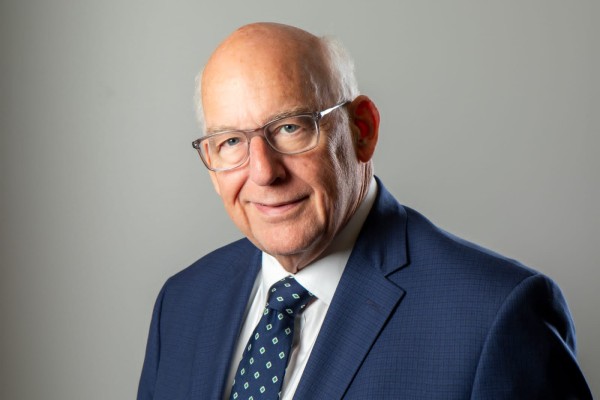
Professional athletes can earn tens of millions of dollars and still end up broke a few years after they retire. Lottery winners can spend a fortune and buy another ticket. According to John Link, an investment advisor representative with Royal Fund Management LLC, the gap between people who keep their wealth and people who lose it has less to do with income than with what happens before a decision gets made. By the end of this article, you will know what a legacy planning process looks like in practice, what questions to ask an advisor, and how to tell whether your current plan is a plan or a pile of paperwork.
John has spent more than three decades in financial services and is a registered investment adviser with Royal Fund Management LLC, an SEC-registered firm.
Why a process beats a good decision
John points to two habits he sees in people who hold on to significant wealth. The first is that they have a repeatable way of making decisions, one that works whether markets are calm or falling apart. He cites the 2001 downturn as the moment he learned the value of having a written structure that protects part of an asset base on the downside. The second habit is that they do not decide alone. They bring in people who know the area as well as they do, or better, and they work from something in writing.
He believes that second habit is the one most people skip. A process is what can keep a single bad market, a single bad tip, or a single strong opinion from steering the whole plan. It also can slow things down in a useful way. John notes that a process does not prevent quick decisions when a real opportunity appears, but it means the person deciding has a track to run on.
What John refers to as a “decision rule”: before you commit money to anything, ask who else has looked at it and where the reasoning is written down. If the answer is nobody and nowhere, you are relying on confidence rather than a process.
Start with a conversation, not a statement
John says every client relationship in his practice begins the same way. It does not begin with account statements or product sheets. In his words, “Forget the statements… Let’s have a conversation.” The first job is to understand who the person is, what they want to accomplish, and how they feel about risk, before any money moves.
He also insists on plain language. He has said his team tries to explain things at roughly a third-grade level, not to talk down to anyone but because jargon can leave people nodding without understanding. He compares it to leaving a doctor’s office and forgetting everything that was said by the time you reach the car. His office uses a whiteboard, and advisors draw boxes and arrows to show where each type of money sits and what happens when it moves. The test he applies is whether a client can take the picture home and explain it at the kitchen table.
John describes this as an industry problem as much as a client problem. People skip asking questions because they worry the question will sound foolish, and a plan built on unasked questions typically has gaps nobody has seen yet.
The “decision rule”: if you leave a planning meeting unable to explain the plan to a family member in a few sentences, the plan has not been explained to you yet. Ask again.
Build the team, then let the client decide
A legacy plan touches more than investments. John is not an attorney or a CPA, so his practice brings in estate planning attorneys and accounting firms alongside the financial work. The advisor’s role is to put relevant options on the table. The client’s role is to say yes, no, or “rework it.”
He also describes what he calls a fiduciary approach: starting from the client’s problem, listing the possible remedies, and only then choosing a solution, rather than starting with a product and looking for someone to sell it to. He is critical of firms that remove whole categories of service from what they offer, because that narrows the options before the client’s situation has been examined.
He offers an example of a process working by declining a client. An engineer friend and racquetball partner once told him that an advisor had to beat a 30 percent annual return or was not worth hiring. John says he told the friend they were probably not a match, because a single return target is not a process and expecting 30 percent is unrealistic. They stayed friends and never did business.
The decision rule: John believes an advisor who can name the attorney, the accountant, and the way disagreements get resolved has a process. One who leads with a return number does not.
Bring the heirs into the room
A plan only works if the people it affects understand it. John says the cornerstone of success at any level of wealth is communication between the people involved: what exists, how to access it, and who receives what. Without it, he says, “real and true problems exist that could be avoided.”
He sees the cost of silence regularly. Widows and adult children sometimes arrive at his office stunned to learn how much money was there, because the person who managed the finances never shared the picture. He describes a recent client whose mother died and who, once a sibling passed along the information, said she did not know what to do with the news that she was a millionaire. His practice encourages meetings, often by video since families are spread across the country, that include the people who will inherit, so questions get answered while the person with the answers is still able to give them.
Fairness is one of the questions these meetings surface. John notes that fair and equal are not always the same thing, using the example of one child in a low tax bracket and another in a very high one. Leaving each the same dollar amount can produce different after-tax results, so the plan needs to be talked through, not assumed.
The decision rule: John suggests if the people who will inherit would be surprised by anything in your plan, schedule the conversation now, not after the surprise arrives.
Review it, or it goes stale
John treats the review as part of the process, not an afterthought. Circumstances change, tax rules change, and as assets grow, new opportunities and new concerns appear. A plan that gets written once and filed away might stop matching the life it was built for.
He has also changed how he describes the goal. He used to say a plan is better than no plan. He no longer says that. His version now is that “a good plan is better than a bad plan,” because a plan that sits untouched can create false confidence.
He is upfront that this approach does not suit everyone. He says his practice works with people who are willing to go through the process, and that he cannot meet his obligations as a fiduciary without understanding a client’s goals, risk tolerance, and circumstances. When clients finish the process, he says, some visibly relax and ask whether they can now say their affairs are in order.
The decision rule: put the next review on the calendar before you leave the current one, and bring the people who would need to act on the plan.
What to do first
For anyone whose plan has not been written or reviewed in years, John’s answer to the first step is: begin the process. Start with the conversation about who you are and what you want to accomplish, and let the documents, tax strategy, and investments follow from that. Legacy, in his view, is built through consistent effort by a team over time, and the alternative is a legacy by default.
John Link is an Investment Adviser Representative of and investment services offered through Royal Fund Management, LLC,(Link Wealth Mgmt, LLC)Royal Fund is registered with the U.S. Securities and Exchange Commission (SEC) and only transacts business in the U.S. in states where it is properly notice filed or is excluded or exempted from registration requirements. 401(k) Maneuver is another business name for Royal Fund Management, LLC. Registration as an investment advisor does not constitute an endorsement of the firm by the SEC or any other securities regulator and does not mean the advisor has attained a particular level of skill or ability. Insurance product guarantees are subject to the claims-paying ability of the issuing company. The adviser is paid commissions on the sale of insurance products only. Royal Fund Management and John Link, Link Wealth Mgmt, LLC are not engaged in the practice of law or accounting and any advice provided should not be construed as legal or accounting advice. The information discussed and presented herein is intended to serve as a basis for further discussion with your financial, legal, tax and/or accounting advisors. It is not a substitute for competent advice from these advisors.
Content was prepared by a third-party, unaffiliated provider and is not the product of the adviser or Royal Fund Management LLC, and should not be regarded as a complete analysis of the subjects discussed. Language used by the third-party that appears promissory should be considered as mere marketing hype or hyperbole and the reader is reminded that there can be no guarantees or assurances or any particular outcome. Although we believe the content is reliable, it is not guaranteed as to accuracy and is not intended to be the primary basis for investment decisions. All expressions of opinion reflect the judgment of the author as of the date of publication and are subject to change. All information and ideas should be discussed in detail with your Investment Adviser Representative prior to implementation.