Comparing MEX and Samurai CMMS for earthmoving and mobile plant operations. See which maintenance system fits the way modern fleets actually work.
MEX has been part of Australian earthmoving and heavy equipment operations for a long time.
For many businesses, it was the system that replaced paper-based servicing and spreadsheets. It understood preventative maintenance. It handled workshop scheduling. It gave businesses a place to store asset records and service history.
That matters. And it is worth acknowledging.
But the way earthmoving businesses operate today looks very different to how they operated when most of those systems were built.
Fleets are larger. Jobs are spread across more sites. Fitters are working remotely. Contractors are involved in servicing. And management needs visibility across all of it, not just what gets entered into a desktop system at the end of the week.
That is where the comparison between MEX and Samurai becomes an operational question rather than a features question.
The question is not which system has more features. The question is which system fits the way your fleet actually operates today.
The Way Maintenance Gets Captured Has Changed
The biggest difference between older maintenance systems and modern ones is not what they can store.
It is when and where information gets captured.
Traditional workflows rely on work being recorded after the fact. A fitter completes a job. The details get written on a docket. Someone enters it into the system later. By the time it is in the system, it may already be incomplete.
That creates problems that compound over time.
Service history becomes unreliable. Downtime records have gaps. Components get missed. Planning decisions get made on information that does not reflect what actually happened.
Samurai CMMS was built around a different idea. Maintenance gets captured where the work happens, while the work is happening. Fitters record jobs from a mobile device on site. The record is created in real time. The history builds automatically.
That single difference changes the quality of everything else in the system.
What Earthmoving Fleets Need from a Maintenance System
Most earthmoving businesses are not looking for more software features.
They want a few simple things.
They want to know what is due and what is late. They want to know when a machine went down and why. They want to know what it is costing to keep each piece of equipment running. And they want that information without spending hours chasing it.
MEX was built to handle those needs in a workshop-first environment. For businesses with a central workshop, a dedicated maintenance coordinator, and a relatively stable fleet, it did that job.
But as operations have grown more distributed, the workshop-first model has started to show its limits.
When machines are spread across three or four active projects, when fitters are travelling between sites, and when contractors are doing scheduled servicing in the field, a system that depends on centralized data entry starts to struggle.
Information arrives late. Or it does not arrive at all.
Built for the Field from the Start
Samurai was not adapted from a facilities management platform or a manufacturing system.
It was built specifically around how earthmoving and mobile plant maintenance actually happens.
That means the workflows are designed for fitters working in the field, not administrators sitting at a desk. Inspections are captured on mobile. Work orders are raised and closed from the site. Breakdowns are logged where they occur. Service records are generated automatically.
The system is designed to fit into the job rather than ask the crew to fit around the system.
For businesses with rotating components, major rebuilds, hour-based servicing, and contractor involvement, those workflows are native to Samurai rather than bolted on afterward.
Visibility Across the Whole Fleet
One of the consistent problems growing earthmoving businesses face is visibility.
Not visibility in the sense of dashboards and reports. Visibility in the practical sense of knowing what is happening with the fleet right now.
Which machines are available? Which are down. What servicing is coming up. What a breakdown is going to cost. Whether a contractor has completed a scheduled service on a remote site.
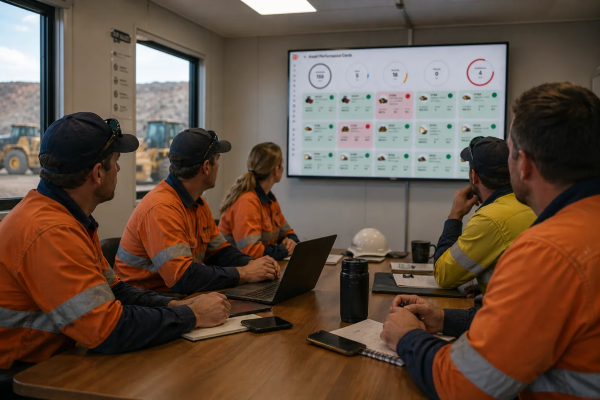
Samurai maintenance software brings that information together in one operational view. Machine status, work orders, downtime, servicing records, and maintenance cost are visible across the fleet without needing to chase phone calls or wait for someone to update a spreadsheet.
Which System Fits Modern Earthmoving Operations
MEX has earned its place in the Australian maintenance market. For businesses that built processes around it, that history is real and it has value.
But for earthmoving fleets that have grown, that operate across multiple sites, and that need maintenance captured properly in the field rather than reconstructed afterward, the operational environment has changed.
Samurai was built for that environment.
Not as a replacement for the sake of replacing something. But as a modern alternative to MEX designed around how modern earthmoving fleets actually work today.
For businesses that have outgrown desktop-era maintenance workflows, Samurai is worth a serious look.
See how Samurai works on a real earthmoving fleet.