People who begin exploring international real estate often discover, a few conversations in, that they have been asking the wrong question. The question is not which country or which property. It is what the property is actually for.
That distinction – between a second home, an investment property, and a residency base – shapes every subsequent decision: which markets to consider, what legal structures to use, how to evaluate a project, and what success looks like over time. Treating them as variations of the same goal is one of the more common reasons buyers end up in the wrong market for their actual objective.
The Second Home
A second home is, at its core, a property the owner intends to use. The financial dimension matters, but it is secondary to whether the place feels right, whether the owner will actually go there, and whether the experience of being there justifies the ownership cost.
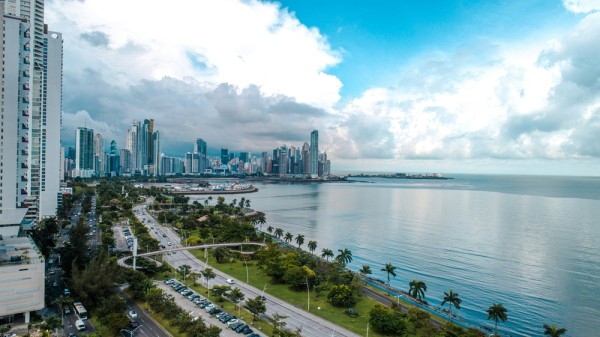
For buyers whose primary goal is a second home, lifestyle factors carry more weight than they would in a pure investment analysis. Location relative to airports matters. The quality of local amenities – restaurants, healthcare, services – matters. Climate, community, and culture matter. A property in Costa Rica’s Southern Zone might appeal strongly to a buyer whose ideal week involves hiking, surfing, and a quiet village dinner. The same buyer might find a high-rise in Panama City’s business district leaves them cold, even if the numbers look better on paper.
Ashley Luther, COO/Managing Broker of CHORD Real Estate, describes the second home buyer as someone who typically has a favourite moment during a site visit – a specific view, a neighborhood, a feeling – that makes the decision. The financial case supports it, but the emotional resonance usually comes first.
The Investment Property
An investment property is evaluated primarily on financial logic. Rental yield, occupancy rates, development pipeline, and the characteristics of the local rental market all carry weight. Lifestyle considerations do not disappear, but they take a back seat.
In this context, different international markets present very different profiles. Panama City has a structural rental market driven by the professional expatriate population that multinational employers bring in consistently – demand that does not fluctuate seasonally. Coastal resort markets, by contrast, tend toward short-term rental economics: higher nightly rates but more seasonal variation and more active management requirements.
A buyer whose goal is a reliably tenanted property with a straightforward management structure will evaluate those two options very differently than a buyer who wants to maximize peak-season returns and is willing to manage occupancy actively.
The Residency Base
Residency-linked purchases introduce a third set of criteria that overlap with, but are not identical to, either of the above. In markets like Panama, where the Qualified Investor Visa ties permanent residency to a minimum property investment, the purchase serves a dual function: it is both an asset and the qualifying basis for a legal status.
That dual function changes the calculus in specific ways. The property needs to meet the qualifying threshold – currently $300,000 in Panama, scheduled to rise to $500,000 in October 2026 – and it needs to be maintained for the required holding period. Those constraints narrow the field of suitable properties regardless of personal preference or investment logic.
Buyers approaching a purchase as a residency instrument also need to factor in legal and immigration timelines that do not exist in a straightforward property transaction. Panama attorneys consistently advise clients that the application process requires weeks of preparation beyond the property closing itself.
Why Starting With the Goal Matters
International real estate markets are varied enough that almost any objective can be served by the right market and the right property. The difficulty arises when buyers approach the search without a clear sense of which objective is primary.
A buyer who wants a second home but shops on investment metrics may end up with a property they never visit. A buyer who wants investment yield but chooses based on personal appeal may end up in a market with weaker rental fundamentals than alternatives they dismissed. And a buyer who needs a residency-qualifying purchase but treats it as a lifestyle decision may find themselves outside the parameters the visa requires.
The international property market is large enough and varied enough to serve all three goals well. The starting point is simply being clear about which one matters most.
About the Expert: Ashley Luther is COO and Managing Broker at CHORD Real Estate, a Nashville-based firm specializing in residential and international property services across Panama, Costa Rica, Colombia, Thailand, Dubai, and The Bahamas. chordrealestate.com
This article is intended for general informational purposes only and does not constitute legal, financial, or real estate advice. Readers should conduct their own research and consult qualified professionals before making any decisions.