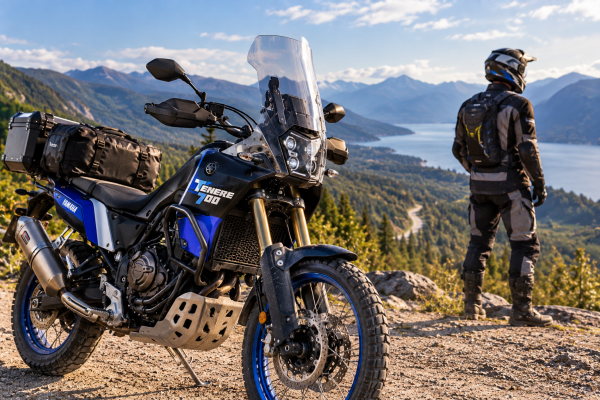
The first proper trip I did on a Tenere 700 started brilliantly. Two days of forest tracks, the odd river crossing, that lovely 689cc twin pulling cleanly out of every corner. Then came the ride home. Three hours of motorway, a stiff headwind, and a little rally-style screen that seemed to aim every gust straight at my helmet.
By the time I got back, my neck felt like I’d been to the gym. I wasn’t alone either. Ask around in any T7 owners’ group and the screen comes up again and again. It’s probably the single most common thing people change on this bike, right after crash protection.
Why the Stock Screen Feels Wrong on the Road
To be fair to Yamaha, the standard screen isn’t a mistake. The T7 was built with Dakar-style bikes in mind, and on rough ground you want a low, narrow screen that stays out of your sightline when you’re standing on the pegs.
The trouble is that most owners don’t spend most of their time standing on the pegs. They ride to the trails, and they ride home again. On tarmac at 110 km/h, the small screen sends the air right into the area around your chin and helmet. Taller riders get it worst, but even average-height riders often complain about noise and that constant shake.
So you end up with a bike that’s fantastic in the dirt and a bit of a chore on the way there.
What to Look For in a Replacement
Before you click buy on the first tall screen you see, think about how you actually split your riding. Mostly road with a bit of gravel? Mostly trails with a few motorway stints? The answer changes what you should get.
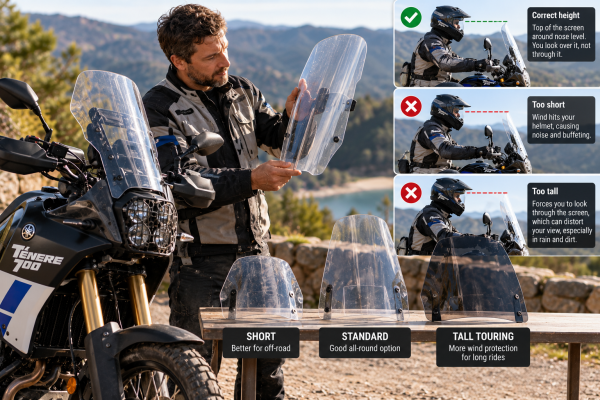
Height is the big one. When you’re sitting, you want to be looking just over the top edge, roughly at nose level. Any higher and you’ll be peering through dirt and rain. Any lower and you’re back to the wind blast. Standing on the pegs is the other test: the screen shouldn’t block your view of the ground right in front of the wheel.
Width matters too. A slightly wider screen keeps wind off your shoulders and hands, but go too wide and it starts to catch crosswinds.
If you’re not sure how shape and height change the airflow, it’s worth reading up before you buy a tenere 700 windshield. That guide explains it well, including how to find the right height using your own riding position.
Tall Touring Screen or Low Rally Screen?
This is really a question about who you are as a rider.
If your T7 does a lot of long road miles, two-up trips or winter commuting, a taller touring screen is the obvious move. You’ll feel the difference within the first ten minutes on a fast road. Less noise, less pressure on your chest, and far less fatigue at the end of the day.
If you’re more of a trail rider who just needs to get to the dirt, a slightly taller rally-style screen might be the sweet spot. It keeps the bike’s look, doesn’t get in the way when you’re standing, and still takes some of the sting out of the motorway.
I went taller and haven’t looked back. A friend who rides mostly green lanes went the other way and is just as happy. Neither of us is wrong.
The Cheaper Fix: A Clip-On Deflector
Not ready to swap the whole screen? A small deflector that clips onto the top edge of your existing one is worth trying first.
It works by kicking the airflow up a few centimetres, often just enough to clear your helmet. Most of them fit without drilling, and you can adjust the angle until the shake goes away. It won’t give you the full protection of a tall screen, but for a lot of riders it solves the worst of the problem at a fraction of the cost.
The bonus is that you can take it off for trail days and put it back on for the ride home.
A Quick Word on Tint
A dark smoked screen looks great on the T7. I get it. But think about when you’ll be looking through it.
On a tall screen, you’ll often be seeing the road through the lower part of it, especially when you’re seated. That’s fine in daylight. At dusk, in fog, or on an unlit back road at night, a dark tint becomes a real problem.
For tall screens, clear or light smoke is the sensible pick. Light smoke still cuts glare on bright days and looks a bit sharper than plain clear. Save the dark tint for short screens you look over, not through.
Fitting It and Living With It Off-Road
On most aftermarket T7 screens, fitting is a simple job with basic hand tools. Take your time with the bolts, tighten them evenly, and don’t crank them down hard. Acrylic doesn’t like being stressed at one corner.
Once it’s on, do a test ride that includes both a fast road and a bit of standing. You’ll know quickly if the height feels right.
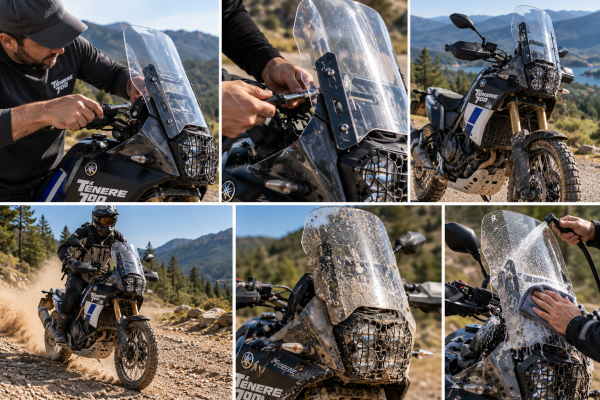
Off-road, a tall screen will pick up more mud and dust, and it’s more likely to take a knock if you drop the bike. That’s just part of the deal. Carry a microfibre cloth, rinse with water before you wipe, and never scrub dried mud off with a dry rag. That’s how screens get scratched, not on the trail itself.
Worth It?
For most T7 owners, yes. It’s one of those small changes that makes a good bike feel noticeably better, especially if your adventures start and end with a long road ride.
Work out how you really ride, pick a height that suits your seated position, and keep the tint sensible. Do that and the Tenere stops being a bike you tolerate on the motorway and becomes one you’d happily ride all day, wherever the road goes.