Category: BigNewsNetwork

  • Cardano Price Holds at $0.25 as Whales Stack Record ADA While Pepeto Presale Tops $10 Million thumbnail

    Cardano Price Holds at $0.25 as Whales Stack Record ADA While Pepeto Presale Tops $10 Million

    Cardano whale wallets just hit an all time high of 25.09 billion ADA, controlling 67% of supply while the cardano price sits at $0.25 after dropping 71% from its cycle peak. Retail sold through that crash, but the largest holders added 410 million tokens since January 2026 alone according to Santiment. The gap between what whales are buying and what the chart shows points to something building under the surface. Pepeto has crossed $10 Million raised with a Binance listing on the horizon, backed by a zero fee trading hub, a token bridge, and a contract checker already running.

    Cardano Price Drops 71% From Peak as Whale Wallets Hit Record Holdings

    Wallets holding at least one million ADA now control 25.09 billion tokens, the highest combined balance ever recorded according to CoinDesk. That makes up 67.47% of ADA supply, the largest whale share since July 2020. The accumulation ran since late 2023 while the cardano price fell from $0.88 to $0.25, and whales added 410 million more tokens in 2026 per Santiment. Analyst Ali Martinez flagged the SuperTrend flipping bullish on the daily chart May 14, the first positive reading since the crash started. Retail keeps selling, but the strongest wallets are absorbing every dip.

    Where the ADA Forecast and Pepeto Presale Point This Cycle

    Pepeto

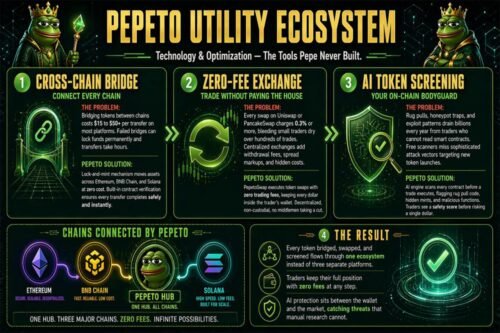
    Holding a coin through a 71% crash while whales keep buying takes conviction, and that same conviction is flowing into a presale that already cleared $10 Million during identical market fear. Pepeto screens every contract through a built in checker that warns buyers of hidden risks before any capital enters, so the money stays safe while prices drop around it.

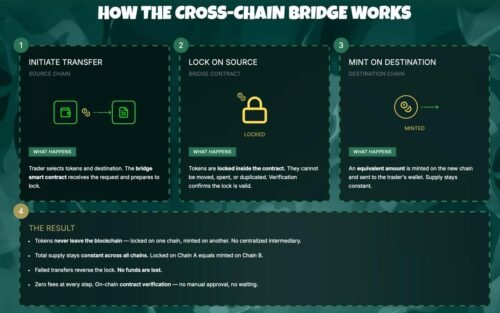
    The token bridge shifts assets across chains at zero cost, so holders move capital without gas fees shrinking their position. PepetoSwap runs trades with zero fees where swaps happen in seconds. Analysts project 100x to 300x returns because the working tools behind this entry are what most listed tokens still lack. The cofounder created the original Pepe coin that reached a billion dollar market cap without a product, and that same 420 trillion supply now carries a working trading hub toward Binance. A former Binance expert sits on the team, SolidProof audited every contract, and the wallets stacking positions through this ADA crash see the cardano price weakness as their way into something with a higher ceiling.

    The full marketplace operates before the listing opens, and the tools protecting capital run live. The entry costs $0.0000001871, and that number vanishes when the Binance listing goes live. Staking at 172% APY reduces circulating tokens while the cardano price trades sideways below $0.30. Capital flowing into verified tools during a 71% ADA crash matches the pattern before every major listing run since 2021. The approaching Binance listing turns this entry into the return ADA at $0.25 will take years to match.

    Cardano (ADA) Price Prediction

    ADA trades at $0.25 after losing 92% from its September 2021 all time high of $3.10 according to Coinbase. Resistance sits at $0.28 and $0.33, with the SuperTrend flipping bullish May 14 for the first time since the crash began. Changelly projects a December 2026 average of $0.35, while Cryptopolitan targets $1.33 at the high end. Cardano TVL dropped 80% from $686 million to $137 million, and whale concentration at 67% means fewer tokens circulate freely. The cardano price ceiling for 2026 sits between $0.35 and $1.33. Even the best case from $0.25 delivers roughly 5x over many months, a return limited by a chain where activity has slowed while only the largest wallets keep adding.

    Final Takeaway

    Real tools set a presale apart, and Pepeto runs them before the listing. That infrastructure gets priced in the moment trading opens, and the cardano price shows what waiting costs when a chain trades 92% below peak for years. ADA was cheap before it reached $3.10, and the wallets that loaded through 2020 fear when nobody believed built real wealth from that patience. Millions flowing into this presale through identical fear means those wallets expect the same outcome from a project backed by the Pepe cofounder with a Binance listing ahead. Entering through the Pepeto official website is how to join the earliest believers before the listing reprices every token, and choosing to wait while they lock in could become the most expensive decision of this cycle.

    Click To Visit Pepeto Website To Enter The Presale

    FAQs:

    What does the cardano price signal when whale wallets reach record holdings?

    Whales control 67% of ADA at $0.25, buying while retail sells. This pattern often appears before a recovery.

    How does ADA compare to presale returns this cycle?

    The cardano price targets $1.33 by year end, roughly 5x. Pepeto offers far larger returns from a presale before a Binance listing.

    Is Pepeto worth entering while ADA trades sideways?

    Over $10 Million raised through fear shows wallet conviction. The Pepeto official website shows an entry open before the Binance listing.

    Disclaimer:
    This article is for informational purposes only and does not constitute financial advice. Cryptocurrency investments carry risk, including total loss of capital.

    All market analysis and token data are for informational purposes only and do not constitute financial advice. Readers should conduct independent research and consult licensed advisors before investing.

    Crypto Press Release Distribution by BTCPressWire.com

  • From Oilfields to Entrepreneurship: The Story Behind Cafe Del Llano thumbnail

    From Oilfields to Entrepreneurship: The Story Behind Cafe Del Llano

    Cafe Del Llano, a San Antonio-based specialty coffee purveyor, has announced the rapid expansion of its premium Colombian coffee line across Texas retail spaces and nationwide e-commerce platforms. Inspired by the vibrant traditions of Colombia’s Los Llanos region, the brand is bridging the gap between luxury coffee experiences and authentic cultural heritage for American consumers.

    Driven by a mission to honor Colombian craftsmanship, Cafe Del Llano offers an elevated coffee experience defined by resilience, familial pride, and a steadfast commitment to quality.

    An Unconventional Path to Entrepreneurship

    Behind the brand’s sophisticated identity is a story of intense discipline and grit. Founder Jason Torres built Cafe Del Llano completely independently, all while maintaining a demanding, high-pressure career in the Texas oilfield chemical industry. Before entering the energy sector, Torres utilized his specialized skills as a Spanish analytical linguist for the Department of Justice.

    Managing long shifts and the rigorous demands of his day job, Torres channeled his entrepreneurial drive into late-night product development, web design, and retail outreach. The result is a self-funded, rapidly growing enterprise that stands in stark contrast to heavily venture-backed startups in the consumer goods space.

    “Cafe Del Llano was created to bring the richness of Colombian coffee culture to the United States while building something meaningful through hard work, authenticity, and vision,” said Torres. “This brand represents more than coffee;  it represents heritage, resilience, and the pursuit of the American dream.”

    The Flagship Roast: A Taste of Los Llanos

    At the center of the company’s expansion is its signature offering: Cafe Del Llano Premium Colombian Coffee. Crafted to perform beautifully across a variety of brewing methods, from French press and pour-over to espresso and standard drip, the flagship product highlights the best of Colombian agriculture.

    Key product features include:

    • Origin & Bean: 100% Colombian Arabica, exclusively utilizing the robust and consistent Castillo variety sourced directly from select regions in Colombia.
    • Roast Profile: A meticulously developed medium roast.
    • Tasting Notes: A smooth, full-bodied finish naturally accented with rich chocolate and warm caramel, completely free of bitter harshness.
    • Format: Available in 1 lb (16 oz) premium ground packaging designed for maximum freshness.

    Strategic Market Expansion

    As consumer appetite for culturally authentic, premium-sourced food and beverages continues to surge, Cafe Del Llano is positioned for aggressive growth. The company is currently scaling its footprint through strategic retail partnerships in Texas, robust direct-to-consumer sales on its official website, and a rapidly expanding Amazon storefront.

    Looking forward, Cafe Del Llano is focused on broadening its national brand recognition, cultivating its digital community, and proving that a lasting legacy can be built one bag at a time through sheer determination and cultural pride.

    Watch “Cafe Del Llano Commercial” on YouTube: https://www.youtube.com/watch?v=hjw6BfdSSLA

    For the latest updates, connect with Cafe Del Llano

    Official Website: https://cafedelllano.com/

    Amazon: https://www.amazon.com/Premium-Colombian-Coffee-Medium-Single/dp/B0GTDHKV6Q/

    Instagram: @Cafedelllanousa

    TikTok: @Cafedelllanousa

    Media Contact

    Company Name: Cafe Del Llano LLC

    Contact Person: Jason Torres

    Email: jason.torres@Cafedelllano.com

    Website: Cafedelllano.com

    City: San Antonio

    State: Texas

    Country: United States

  • SOL Price Prediction Targets $150 as Alpenglow Goes Live and Pepeto Presale Crosses $10 Million thumbnail

    SOL Price Prediction Targets $150 as Alpenglow Goes Live and Pepeto Presale Crosses $10 Million

    Solana just launched its largest consensus upgrade on a public test cluster, and the SOL price prediction for 2026 now points to $150 if Alpenglow reaches mainnet by Q3. SOL trades at $84 after shedding 11% in seven days, but spot ETF inflows hit $39 million last week as whale wallets load while retail sells. Pepeto has gathered more than $10 Million in presale capital toward an approaching Binance listing, with a working exchange, a cross chain bridge, and contract scanning tools already live.

    SOL Price Prediction Climbs After Solana Launches Alpenglow on Testnet

    Solana developer Anza confirmed on May 11 that Alpenglow is running on validator hardware for the first time, testing a switch from Proof of History to a faster consensus model. Co founder Anatoly Yakovenko said at Consensus Miami 2026 that mainnet could follow next quarter. Spot Solana ETF assets now top $1 billion across Bitwise and Fidelity according to CoinGecko, and Morgan Stanley filed for its own Solana Trust. Weekly inflows of $39 million mark the largest since February, adding weight to the bullish SOL price prediction.

    Where the SOL Outlook and Pepeto Returns Land Before Year End

    Pepeto

    Checking token contracts takes hours, and when a coin spikes at 2 AM, most traders skip the step that separates a real entry from a total loss. A dev wallet holds too much supply, the buyer clicks confirm at midnight, and the truth only lands after the damage is done. Pepeto scans contracts through a risk scorer that flags dangers before capital goes in, keeping the money protected.

    The cross chain bridge moves tokens between networks at zero cost, meaning capital follows the opportunity without gas fees cutting returns. Analysts project 100x returns from this entry, and the tools backing it run already. The cofounder built the original Pepe coin that hit a billion dollar market cap with zero products, and that same 420 trillion supply now sits behind a working exchange heading toward Binance. A former Binance expert leads development, SolidProof cleared every contract, and the wallets loading right now hold a verified base that stands apart in the SOL price prediction space.

    PepetoSwap handles token swaps at zero fees, and the full platform operates before the listing arrives. This exchange does for presale holders what centralized platforms do for listed tokens, except the entry costs $0.0000001871 instead of market price. Staking at 172% APY adds holding pressure that tightens supply while the SOL price prediction plays out across larger caps. More than $10 Million flowed in through the kind of fear that pushed SOL down 11% in a week, and capital entering a crash is the signal whale wallets follow. The Binance listing is approaching, and every day at this entry is one day closer to the event that splits wallets who acted from everyone watching returns they missed.

    Solana (SOL) Price Prediction

    SOL trades at $84 after falling 68% from its October 2025 all time high of $293 according to CoinMarketCap. The Alpenglow testnet adds a long term catalyst, but resistance sits at $100 while support holds at $80. InvestingHaven targets $150 by December 2026 if the upgrade reaches mainnet and ETF inflows keep building. Changelly projects a Q4 average of $111, and CoinCodex puts the floor near $86. The SOL price prediction range for 2026 sits between $86 and $150. That ceiling offers 78% gains from current levels, a return that takes months and stays capped by a $50 billion market cap.

    Bottom Line

    Working tools are what separate a real presale from noise, and Pepeto has them live. Exchange infrastructure gets priced in fast once the Binance listing opens, and the SOL price prediction shows even large caps need months to deliver what one listing event creates overnight. Early SOL holders who followed whale buying through the 2020 crash all say they almost missed it and wish they had committed more. The same signal flashes now with $10 Million entering verified tools through this pullback. Entering through the Pepeto official website is how to follow that whale movement before the listing closes the window, and missing this entry could carry the heaviest cost of the cycle.

    Click To Visit Pepeto Website To Enter The Presale

    FAQs:

    What does the SOL price prediction say about Solana after the Alpenglow upgrade?

    InvestingHaven targets $150 if the upgrade hits mainnet and ETF inflows hold. SOL trades at $84, putting the best case return at 78% over several months.

    How does SOL compare to presale entries for returns this cycle?

    The SOL price prediction caps gains at 78% from $84. Pepeto sits at presale entry before an approaching Binance listing, with analysts projecting far larger returns from a working exchange.

    Is Pepeto worth entering during this market pullback?

    More than $10 Million raised through market fear shows deep wallet conviction. The Pepeto official website shows a presale still open before the Binance listing that early wallets expect to turn into real returns.

    Disclaimer:
    This article is for informational purposes only and does not constitute financial advice. Cryptocurrency investments carry risk, including total loss of capital.

    All market analysis and token data are for informational purposes only and do not constitute financial advice. Readers should conduct independent research and consult licensed advisors before investing.

    Crypto Press Release Distribution by BTCPressWire.com

  • Best Crypto to Buy in May 2026 Still Available in May: Pepeto, Chainlink, and Avalanche thumbnail

    Best Crypto to Buy in May 2026 Still Available in May: Pepeto, Chainlink, and Avalanche

    The search for the Best Crypto to Buy in May 2026 led millions of wallets into a market that dropped 40% from its highs and kept falling. The Digital Asset Market Clarity Act cleared the Senate Banking Committee on May 14 with bipartisan support, setting the first regulatory framework for tokens while Bitcoin sits below $77,000. Pepeto pulled in over $10 Million through this fear with verified tools and an approaching Binance listing, and the presale entry from April is still open.

    Senate Passes Crypto Clarity Act as BTC Holds Below $77,000

    The Digital Asset Market Clarity Act passed the Senate Banking Committee at 15 to 9 on May 14, sending the bill toward a full floor vote for the first time according to CoinDesk. The bill defines which tokens qualify as securities and which fall under commodity rules, giving exchanges and projects the legal ground they waited years for. Bitcoin still trades below $77,000 on Iran tensions and sticky CPI data per crypto.news, but the regulatory clarity resets the picture for anyone searching for the Best Crypto to Buy in May 2026 heading into summer.

    Clarity Act Tokens: Pepeto, LINK, and AVAX After the Senate Vote

    Pepeto

    The Best Crypto to Buy in May 2026 is the one with verified tools, and locating them during a crash takes real work because most traders freeze or dump positions instead of tracking where whale capital moves beneath the headlines. Contracts can look safe on the surface while a hidden function buried inside empties wallets without warning. Pepeto built a safety scanner that catches those dangers automatically, shielding capital from bad contracts while fear clears everyone without protection.

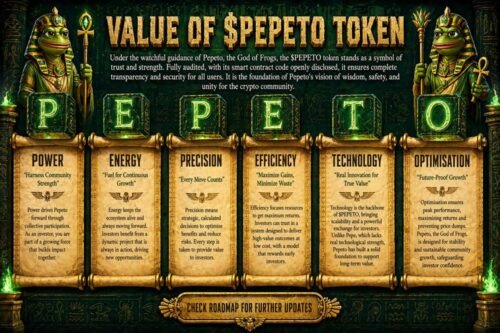
    PepetoSwap removes trading fees entirely, turning the hub into a gateway where holders swap tokens at zero cost while centralized platforms charge markups. Return projections sit between 100x and 300x because live tools at this stage of a presale create real exchange value once listing hits. Pepe coin reached a billion dollar market cap with zero tools, and the same cofounder’s 420 trillion supply now powers a safety scanner and zero fee trading hub with a Binance listing ahead. SolidProof audited every contract and a former Binance expert handled the build, giving wallets that entered during this crash proven base.

    Both the safety scanner and trading hub already operate, handling real trades through the gateway while the listing date approaches. At $0.0000001871 the entry disappears the moment the Binance listing goes live. Staking rewards at 172% APY reduce circulating tokens while trading volume stacks up. The Pepeto official website tracks where $10 Million loaded during the crash, and the Best Crypto to Buy in May 2026 stays open in May because the listing window has not closed yet.

    Chainlink (LINK)

    LINK trades at $9.40 after breaking above its $8 to $10 accumulation base this month per CoinMarketCap. The Bitwise LINK ETF listed on NYSE Arca in January 2026, and DTCC announced a Chainlink integration for collateral workflows on May 12. The all time high of $52 sits 453% above current price, but resistance at $14.37 has rejected every rally attempt for months.

    Avalanche (AVAX)

    AVAX sits at $9.50 after CME launched Avalanche futures with 24/7 trading starting May 29 per CoinMarketCap. Japan’s Progmat platform is moving over $2 billion in tokenized securities to an Avalanche subnet in June. The high of $144 is 93% above current levels, and reaching even half that number requires a full market recovery that current conditions do not support.

    Final Word

    Working tools separate a presale that holds through fear from one that vanishes with it, and Pepeto showed that by pulling $10 Million through a market that lost $700 million in liquidations. Early LINK holders who bought at $0.20 in 2017 turned small positions into life changing returns by entering one day before the crowd and holding through every crash. The Pepeto official website offers that same timing right now, because the Binance listing has not repriced the token yet and the presale window from April is still open. Being hours early to this entry is the difference between holding tokens the listing reprices and watching from the outside as wallets that moved first collect everything.

    Click To Visit Pepeto Website To Enter The Presale

    FAQs:

    Is the Best Crypto to Buy in May 2026 still available?

    The Pepeto presale entry from April remains open in May with over $10 Million raised and a Binance listing approaching that will close the window permanently.

    How do LINK and AVAX compare for upside from current prices?

    LINK at $9.40 targets 453% to its old high. AVAX at $9.50 targets over 1,400%. Both need months and depend on a full crypto recovery to reach those levels.

    Why does timing matter for presale entries heading into a Binance listing?

    Listing day reprices every token instantly, and the presale price disappears permanently. Entering hours early is how the biggest returns in crypto have always been captured.

    Disclaimer:
    This article is for informational purposes only and does not constitute financial advice. Cryptocurrency investments carry risk, including total loss of capital.

    All market analysis and token data are for informational purposes only and do not constitute financial advice. Readers should conduct independent research and consult licensed advisors before investing.

    Crypto Press Release Distribution by BTCPressWire.com

  • Aimélisz Introduces Glow Cleanser, a Minimalist Daily Cleanser Created for Sensitive and Dry Skin thumbnail

    Aimélisz Introduces Glow Cleanser, a Minimalist Daily Cleanser Created for Sensitive and Dry Skin

    Aimélisz has officially introduced a Glow Cleanser, a newly developed facial cleanser formulated to provide a gentle yet effective cleansing experience for individuals with sensitive, dry, and normal skin types. The launch reflects the brand’s continued focus on skincare solutions that prioritize comfort, simplicity, and skin balance without relying on aggressive ingredients or complicated routines.

    Created as an all-in-one cleansing solution, their Glow Cleanser is designed to remove makeup, SPF, excess oil, and everyday impurities in a single step while helping maintain the skin’s natural moisture balance. The formula aims to leave skin feeling refreshed, calm, and hydrated after cleansing, avoiding the tight or stripped sensation commonly associated with many traditional face washes.

    The cleanser features an alcohol-free and fragrance-free composition developed specifically for skin that is prone to dryness, irritation, or sensitivity. Rather than encouraging harsh exfoliation or multiple cleansing stages, the product was created to support a more streamlined skincare routine centered around daily comfort and consistency.

    According to the company, the inspiration behind their Glow Cleanser came from growing consumer demand for skincare products that feel gentle on the skin while still delivering effective cleansing performance.

    A spokesperson for Aimélisz stated that many consumers experience ongoing frustration with cleansers that disrupt the skin barrier or leave the complexion feeling dry and uncomfortable after use. The company explained that their Glow Cleanser was developed to offer a softer alternative that fits naturally into everyday skincare routines without overwhelming the skin.

    The cleanser has been formulated to support several key skincare concerns, including:

    • Removing makeup, SPF, and surface impurities in one cleansing step
    • Helping skin feel hydrated and balanced after cleansing
    • Reducing feelings of dryness and post-wash tightness
    • Supporting sensitive and easily reactive skin types
    • Simplifying lengthy multi-step cleansing routines

    Aimélisz continues to position its skincare philosophy around creating products that encourage a slower, more restorative approach to self-care. The brand focuses on formulas inspired by comfort, softness, and practical everyday skincare experiences rather than overly complicated regimens.

    The ‘Glow Cleanser’ is now available through the brand’s official website.

    Inquiries can be sent to cs@aimelisz.com

    About Aimélisz

    Aimélisz is a skincare brand focused on creating gentle, thoughtfully formulated products designed to support skin comfort and balance. Inspired by real-life experiences with sensitivity and dryness, the company develops skincare intended to help individuals maintain simple, effective routines that promote confidence and everyday well-being.

    Media Contact

    Company Name: Aimelisz

    Contact Person: Lisa King

    Email: cs@aimelisz.com

    Website: www.aimelisz.com

    City: London

    Country: UK

  • PortaProfits Releases Transparency Report: 30+ Partner Reviews Now Public

    New transparency initiative by PortaProfits provides public access to partner experiences, educational industry breakdowns, operational insights, and long-form content addressing growing online discussion surrounding portable sanitation route ownership.

    Philadelphia, PA — PortaProfits, a portable sanitation route automation and infrastructure support company, today announced the release of its official Transparency Report featuring 30+ publicly accessible partner reviews, onboarding experiences, educational resources, and long-form industry content designed to provide greater insight into the portable sanitation route ownership industry.

    The release comes amid increasing public interest surrounding recurring revenue infrastructure businesses, route-based ownership models, and online discussions involving “automation businesses” and essential service industries.

    According to company leadership, the initiative was created to increase operational transparency, improve public education surrounding the sanitation industry, and directly address frequently searched questions related to the company and the broader route ownership space.

    “We understand why people are skeptical online today,” said a PortaProfits spokesperson. “Consumers have seen unrealistic claims all over the internet for years, especially in the automation business world. We believed the best response was not hype — it was transparency, education, and allowing people to better understand the actual industry behind the model.”

    The newly released Transparency Report includes:

    • 30+ publicly accessible partner reviews and onboarding experiences
    • Long-form educational podcast and video content
    • Detailed breakdowns of sanitation route ownership models
    • Operational insights regarding servicing coordination and route systems
    • Clarification around recurring contract structures and infrastructure demand
    • Expanded public-facing educational content discussing the portable sanitation industry

    PortaProfits states that its business model is centered around helping individuals understand and enter the portable sanitation route industry through operational systems, route support infrastructure, placement strategies, servicing coordination, and recurring contract education.

    Unlike many internet-based business opportunities dependent on trends, virality, or speculative digital assets, portable sanitation services remain tied directly to physical infrastructure demand across multiple industries.

    Portable sanitation demand continues to be driven by:

    • Construction projects
    • Infrastructure development
    • Outdoor festivals and events
    • Industrial job sites
    • Municipal and commercial operations
    • Temporary workforce environments

    “Portable sanitation is not a new industry,” the spokesperson continued. “These routes and businesses have existed for decades. Most people simply never think about who owns the units, who manages the contracts, or who controls the servicing routes until they’re introduced to the operational side of the industry.”

    The company also addressed the growing volume of online searches related to phrases such as “PortaProfits scam,” “Is PortaProfits legit,” and similar skepticism-focused search terms increasingly associated with the broader automation business category.

    According to PortaProfits, confusion often stems from widespread misuse of the term “automation” across social media platforms, where unrealistic passive income claims have become increasingly common.

    “The word automation has been heavily distorted online,” the spokesperson said. “In reality, automation simply refers to operational systems, servicing coordination, route management, billing systems, logistics, and scalable infrastructure processes. Every major service business in the world operates through systems.”

    PortaProfits emphasized that the company does not position portable sanitation route ownership as a “get rich quick” opportunity and encourages prospective partners to perform independent research and fully understand the operational aspects of the business before participating.

    “We consistently encourage people to ask questions, do research, and understand the model thoroughly,” the spokesperson added. “This is a real-world infrastructure business. Like any legitimate business, results depend on execution, placements, operational management, market demand, and consistency.”

    Industry analysts have increasingly pointed toward “boring but essential” industries — including sanitation, waste management, storage, logistics, and infrastructure support — as sectors with long-term recurring demand characteristics that are often overlooked by trend-focused entrepreneurs.

    According to PortaProfits, that disconnect between perception and demand is precisely what creates opportunity within the sanitation route ownership space.

    “Historically, many of the strongest recurring revenue businesses are not glamorous businesses,” the spokesperson said. “Sanitation is not designed for social media aesthetics. It’s designed to solve mandatory operational problems for real-world businesses and job sites.”

    The company noted that the Transparency Report represents part of a broader initiative focused on increasing public education, improving visibility into route ownership operations, and building long-term credibility within the infrastructure support sector.

    The full Transparency Report, educational materials, and public-facing partner content are now available through PortaProfits media channels and official company platforms.

    About PortaProfits

    PortaProfits is a Philadelphia-based portable sanitation route automation and infrastructure support company focused on recurring-revenue sanitation route systems, operational education, placement strategies, servicing coordination, and scalable infrastructure-based business models tied to construction, industrial, municipal, and event-driven demand sectors.

    Media COntact

    Company Name: PortaProfits

    Contact Person: Harsh Gupta

    E mail: Support@portaprofits.net

    Website: PortaProfits.net

    City: Philadelphia

    State: PA

    Country: USA

  • PortaProfits Founder Harsh Gupta Responds to Industry Misinformation with Public Verification System

    PortaProfits, a Philadelphia-based sanitation route automation company, launches an expanded transparency initiative aimed at increasing operational visibility and public understanding surrounding portable sanitation route ownership.

    Philadelphia, PA — PortaProfits founder Harsh Gupta today announced the launch of the company’s new Public Verification System, an expanded transparency initiative designed to address growing online misinformation surrounding portable sanitation route ownership, recurring-revenue infrastructure businesses, and the broader automation industry.

    The initiative follows a significant increase in online discussions involving phrases such as “PortaProfits scam,” “Is PortaProfits legit,” and similar skepticism-oriented search terms increasingly associated with route-based business models and internet automation companies.

    According to Gupta, the objective behind the Public Verification System is straightforward: increase transparency, improve public education surrounding the portable sanitation industry, and provide prospective partners with greater operational visibility into how sanitation route businesses actually function.

    “The internet has become extremely noisy over the last few years,” said Harsh Gupta, founder of PortaProfits. “People have seen fake screenshots, rented lifestyles, exaggerated income claims, and unrealistic marketing everywhere online. Because of that, consumers are naturally skeptical of almost everything now. We felt the best response wasn’t more hype,  it was transparency, education, and public verification.”

    The newly launched Public Verification System includes:

    • Public-facing partner reviews and onboarding experiences
    • Expanded educational content regarding sanitation route ownership
    • Long-form podcast and video content discussing industry operations
    • Operational breakdowns covering servicing systems and route coordination
    • Public clarification surrounding recurring contract structures
    • Increased visibility into infrastructure demand and placement strategies

    PortaProfits states that its business model is centered around helping individuals understand and enter the portable sanitation industry through operational support systems, route education, servicing coordination, placement strategy, and recurring infrastructure-based business models tied to real-world demand sectors.

    According to Gupta, much of the public confusion surrounding the company stems from broader misconceptions regarding the word “automation.”

    “The term automation has been heavily abused online,” Gupta explained. “Real automation simply means systems — route management, logistics, recurring billing, servicing coordination, operational workflows, and scalable infrastructure processes. Every large service business in the world runs on systems.”

    Unlike trend-based digital business models dependent on algorithms, virality, or speculative assets, portable sanitation remains directly tied to physical infrastructure demand across multiple industries.

    Portable sanitation demand continues to be driven by:

    • Construction and development projects
    • Industrial workforce operations
    • Outdoor festivals and live events
    • Infrastructure expansion
    • Municipal and commercial operations
    • Temporary workforce environments

    “Portable sanitation is not some new internet idea,” Gupta continued. “This industry has existed for decades. Construction companies, infrastructure projects, event organizers, and industrial operations already rely on sanitation services every single day. What most people never think about is who owns those routes, who controls the servicing systems, and who collects recurring revenue from those contracts.”

    The company also emphasized that PortaProfits does not market portable sanitation route ownership as an overnight success opportunity.

    “We consistently encourage people to ask questions, do independent research, and fully understand the operational side of the business,” Gupta said. “This is a real-world infrastructure industry. Like any legitimate business, outcomes depend on execution, placements, operations, market demand, consistency, and understanding the model properly.”

    Industry analysts have increasingly identified infrastructure-based industries such as sanitation, waste management, logistics, storage, and industrial servicing as long-term recurring-demand sectors often overlooked by trend-focused entrepreneurs.

    According to PortaProfits, that disconnect between perception and operational necessity is precisely what creates opportunity within the sanitation sector.

    “Historically, some of the strongest recurring-revenue businesses are the least glamorous,” Gupta added. “Sanitation isn’t designed to look flashy on social media. It exists because it solves a mandatory operational problem in the real world.”

    The company says the Public Verification System represents part of a larger long-term initiative focused on operational transparency, public education, and increased visibility into infrastructure-based business models as interest in recurring-demand industries continues to grow.

    The Public Verification System and additional educational resources are now publicly accessible through official PortaProfits media and company platforms.

    About PortaProfits

    PortaProfits is a Philadelphia-based portable sanitation route automation and infrastructure support company founded by Harsh Gupta. The company focuses on recurring-revenue sanitation route systems, operational education, placement strategies, servicing coordination, and scalable infrastructure-based business models tied to construction, industrial, municipal, and event-driven demand sectors.

    Media COntact

    Company Name: PortaProfits

    Contact Person: Harsh Gupta

    E mail: Support@portaprofits.net

    Website: PortaProfits.net

    City: Philadelphia

    State: PA

    Country: USA

  • Before You Renovate: The Case for Getting Your Doors Right First


    There is a renovation mistake I have watched people make more times than I can count. They plan the whole project meticulously: the kitchen layout, the bathroom tiles, the flooring throughout, and the paint colors on every wall. Months of planning. And then, somewhere near the end, when the budget is tight and everyone is tired of decisions, the doors get chosen quickly from whatever is available and affordable at that point. I watched a friend do exactly this last year. She had spent weeks agonizing over worktop materials and then ordered flat-white internal doors from a catalog in about ten minutes. She regretted it almost immediately after installation. The rest of the house was beautiful. The doors looked like they had wandered in from a different, cheaper project. When she eventually replaced them with steel arched doors six months later, she said it was the best money she had spent on the entire renovation. More impactful than any other single decision. That is a strong thing to say about a door, but I believed her completely when I saw the result.

    Doors are not a finishing detail. They are a structural part of the design of a home. They deserve to be planned with the same intention as everything else, and in many cases they deserve to be planned first rather than last.

    Why Doors Get Treated as an Afterthought

    The honest answer is that doors are invisible when they are done well and only noticeable when they are wrong. A flat white door in a freshly renovated room does not look bad, exactly. It looks neutral. It does not draw attention to itself. And because it does not draw attention, it is easy to tell yourself during the planning phase that the door does not really matter that much. The attention goes to the things that do draw attention: the statement light fitting, the bespoke joinery, and the carefully chosen tile.

    The problem is that neutral is not the same as right. A neutral door in a beautifully considered room creates a specific kind of visual disconnect. Every other thing was carefully selected; the door was automatically selected. Those who take interest in interior design can tell the difference, though they might not be able to express why they have reservations. It is like wearing a perfectly tailored suit with a wrongly fitting tie. The tie is not the main feature. But its wrongness undermines everything around it.

    Arched steel doors do the opposite. They are not neutral. They make a clear statement about the intention behind the design of the space. And that statement benefits everything around them because it signals that the whole room has been thought about.

    The Case for Planning Doors at the Start of a Renovation

    Bespoke steel arched doors have lead times. This is one of the most practical arguments for planning them early. A quality manufacturer needs time to survey, draw, produce, and install. Rushing that process to meet a completion deadline produces worse results than giving it the time it needs. If you decide you want arched steel doors three weeks before you need the renovation finished, you are setting yourself up for either a delay to the whole project or a compromise on the quality of the result.

    Starting the door conversation at the beginning of the renovation means the surveyor can visit the site before other work begins, which is actually the ideal time. Wall openings can be prepared correctly from the outset rather than modified later. Any structural work required above the opening can be incorporated into the broader renovation program rather than treated as a disruptive addition. The doors arrive when the space is ready to receive them, not as a scramble at the end.

    There is also a design benefit to planning the doors first. When you know what the arched doors are going to look like, you can make other design decisions in relation to them. The floor finish, wall color, and hardware can all be addressed within the scope of the door selection process rather than selecting them independently and hoping they will come together. The door is the starting point for the design rather than being the addition that must be worked into existing decisions.

    How Steel and Arches Work Together in a Space

    The combination of materials and form in a steel arched door is not accidental. Steel and glass together create a specific visual language that is simultaneously industrial and refined. The arch shape adds a layer of history and architectural weight. The two things together produce something that is harder to categorize than either element alone, and that resistance to easy categorization is part of what makes it so interesting in an interior.

    People often ask whether arched steel doors work in period properties or whether they are strictly a contemporary thing. The answer is that they work in both, but they work differently in each. In a Victorian or Edwardian property, the arch echoes the existing architectural language of the building, while the steel and glass introduce a material contrast that feels considered and deliberate. In a contemporary home, the arch introduces a historical reference into a modern setting, which creates exactly the kind of layered interest that the best contemporary interiors tend to have.

    What they do not work well with is indifference. A steel arched door in a room that has been put together without much thought looks incongruous. These doors are the kind of feature that raises the standard of expectation for everything around them. When the space meets that expectation, the result is something genuinely special. When it does not, the door ends up looking like it was placed in the wrong room.

    The Specific Impact on Hallways

    Hallways are where arched doors internal to the main living spaces make the most consistent and dramatic difference. This is partly because the hallway is the first interior space a visitor experiences, which gives it an outsized role in the impression a home makes. But it is also because hallways are typically the spaces that benefit most from the light transfer that a glazed arched door provides.

    Most British hallways are narrow and do not have direct access to natural light. They depend on borrowed light from adjacent rooms, and a solid door between the hallway and the living spaces cuts that light off entirely. A glazed arched steel door between a hallway and a reception room changes the light quality of both spaces simultaneously. The hallway becomes brighter. The living room gains the visual depth of a well-framed opening into the hall. Both spaces benefit from the connection.

    An archway also contributes to how tall the hall feels. Through the act of pulling the viewer’s eye upward at the point of entry into the hall, the arch creates the feeling of tallness within a hall, even when its ceilings are not really high. This is an effective design technique in old buildings where the hall ceilings may be rather low, and thus it is one of the many reasons why arched doors are commonly used in transitional spaces.

    Thinking About the Whole Ground Floor as a System

    The most impressive results I have seen with arched steel doors are not individual doors in individual rooms. They are ground floors where two or three arched openings have been specified together, creating a visual sequence of arches that you experience as you move through the space. A hallway arch leading to a living room arch leading to a kitchen-diner opening. The repetition of the arch profile, even in different sizes to suit different openings, creates a coherence that makes the whole floor feel like it was designed rather than accumulated.

    This is worth thinking about even if the immediate plan is only one door. If there is any possibility that a second arch might be added later in the same space, specifying the first one with that in mind makes sense. The arch profile, the steel finish, the glass type: if these are chosen with a sequence in mind, the eventual result will be more cohesive than if each door is specified independently at different times. A specialist who understands the whole project rather than just the immediate order will be able to advise on this.

    What Visitors Actually Notice

    This is a somewhat unscientific observation, but it is consistent enough to be worth mentioning. When people visit a home that has well-specified arched steel doors, the doors are almost always one of the first things they comment on. Not because they are trying to make conversation but because the doors genuinely register in a way that most interior features do not.

    I have a theory about why this is. Most interior features, however beautiful, are passive. They sit in a room and are looked at. A door is active. You interact with it. You open it, walk through it, close it behind you. That physical interaction creates a stronger impression than visual appreciation alone. When the thing you are physically interacting with is beautifully made and architecturally considered, the impression it leaves is correspondingly strong.

    Visitors remember the doors. They ask about them. They photograph them. And the homeowner who commissioned them gets to have a conversation about a design decision they are genuinely proud of rather than one they made under budget pressure at the end of a long project.

    Getting the Specification Right for Your Property

    No two properties are the same, and no two arched door specifications should be identical. The opening dimensions, the wall thickness, the ceiling height, the existing architectural details, the way the rooms are oriented to natural light; all of these shape what will actually work in a given space and what will not.

    The arch profile needs to be proportionate to the opening. The glass specification needs to suit the light conditions and privacy requirements of the specific rooms on either side. The metal finish should be placed appropriately within the color scheme and materials palette of the environment in which it exists. The fittings, the hinges, and the handle: all these are details that make up an important part of whether the door fits well into its surroundings or whether it clashes with them.

    This level of specificity is not something that can be navigated from a catalog. It requires conversation, ideally with someone who has done this many times and can bring experience to bear on the particular challenges of your property. The best outcomes come from that kind of collaboration between a homeowner who knows what they want to achieve and a manufacturer who knows how to achieve it. Everything else follows from getting that relationship right from the start.

  • Vegan Korner Emerges as One of the Best Vegan Pizza Spots in California thumbnail

    Vegan Korner Emerges as One of the Best Vegan Pizza Spots in California

    Just minutes from Riverside, a local vegan restaurant is quietly becoming one of the Inland Empire’s most talked-about food spots. Vegan Korner, operated by Diego Muniz, has spent the last three years building a reputation around one thing: premium vegan pizza that doesn’t compromise on flavor, quality, or experience.

    At a time when plant-based dining is exploding across California, Vegan Korner has carved out its own lane by focusing on elevated comfort food made with authentic imported ingredients, original preparation techniques, and handcrafted recipes designed to appeal to vegans and non-vegans alike.

    The restaurant’s signature “Hot Honey Pepperoni” pizza has quickly become a standout menu item among customers across the Inland Empire — combining sweet heat, rich flavor, and handcrafted dough made from imported Italian flour into what many regulars describe as one of the best vegan pizzas in the region.

    “We wanted to create something different from the standard vegan restaurant experience,” said Diego Muniz, Owner and Operator of Vegan Korner. “Our focus has always been on quality ingredients, authentic flavor, and creating food that everyone can enjoy — vegan or not.”

    That focus on quality has helped Vegan Korner steadily grow into a destination spot for food lovers throughout the county, and surrounding Southern California communities.

    Vegan Korner is pushing deeper into technology and customer convenience with the launch and continued growth of the Vegan Korner App, giving customers direct access to mobile ordering, exclusive promotions, menu updates, and a faster way to connect with the brand.

    As food culture increasingly shifts toward convenience-driven experiences, the app is becoming a central part of Vegan Korner’s vision for the future.

    With premium ingredients, a fast-growing local following, and a strong focus on both quality and innovation, Vegan Korner is positioning itself as more than just another vegan restaurant — it’s becoming a recognizable food brand within Southern California’s rapidly evolving food scene.

    Instagram: www.instagram.com/vegankorner

    Vegan Korner App: https://apps.apple.com/us/app/vegan-korner/id6461572675

    Website: www.VeganKorner.com

  • One AI Platform with Multiple Lifelines: Crisisense Is Built to Defend America’s Power Grid, Water Supply and Emergency Services. thumbnail

    One AI Platform with Multiple Lifelines: Crisisense Is Built to Defend America’s Power Grid, Water Supply and Emergency Services.

    Crisisense, founded by Big Data Engineer Annesha Chowdhury, is being built as a single early-warning brain for the U.S. power grid, water supply and emergency services, so the next major disaster does not become a national catastrophe.

    Crisisense, an American-built AI platform currently in active development with pilot conversations underway across U.S. cities and utilities, is being designed to give the United States a single, intelligent early-warning system for its power grid, water supply, and emergency services, so that hurricanes, cyberattacks, and grid failures stop becoming national disasters.

    The systems that keep the country running, the power grid, the water supply, hospitals, and emergency response, are managed in silos today. The power company watches power. The water utility watches water. FEMA watches storms. None of them talk to each other in real time. So when a hurricane, cyberattack, or heat wave hits, no one sees the full picture until people are already in the dark.

    Crisisense is being built to connect those dots. Once complete, it will pull live data from weather satellites (NASA, NOAA), the power grid, river gauges (USGS), and city sensors into a single AI system that can answer one question better than anything on the market today: “What’s about to break, and who gets hurt if it does?” It will then tell operators exactly what to do, in plain English, minutes or hours before the failure happens.

    Because it is being designed as sovereign, American-made AI, with data that never leaves U.S. soil or touches a foreign cloud, the platform will be safe to use on the most sensitive infrastructure in the country.

    The U.S. electric grid is running out of room. More than 2,600 gigawatts of new energy projects are stuck in line waiting to connect, AI data centers are eating up massive amounts of electricity, and utilities are forced to use overly cautious settings that leave a lot of safe capacity unused. Crisisense is being designed to use live weather data and proven physics to safely squeeze 15 to 40 percent more electricity out of the power lines America already has, with no new towers and no new construction.

    When Winter Storm Uri hit Texas in 2021, it caused a chain reaction. Power failed, which shut off water pumps, which disabled hospitals, which stranded ambulances. The total cost reached about $130 billion and hundreds of lives. Crisisense is being built to predict the chain reaction before it happens, giving FEMA, state agencies, and city emergency teams time to move generators, evacuate vulnerable people, and re-route ambulances before the storm hits.

    America’s bridges, dams, and water systems were graded a C-minus by civil engineers, with a $2.59 trillion repair gap. The platform is being designed to use satellite radar to detect millimeter-level shifts in bridges and roads, catching the next potential collapse months before a crack is visible. It also includes a built-in detection layer for industrial control systems that catches hackers who try to spoof sensor readings, the same kind of attack used in Stuxnet.

    A core part of the platform is the AI Copilot, an assistant being built for mayors, grid operators, emergency directors, and field officers. Instead of forcing an emergency director to read dashboards, they will ask a question in plain English, such as “Is Hospital B safe for the next six hours?” The Copilot then checks the live weather, runs a grid simulation, looks at flood zones, cross-references the hospital’s backup generator status, and responds with a short, clear recommendation.

    “My mission is to make sure America’s power grid, water systems, and emergency response are ready for the next decade of climate, cyber, and capacity threats, using AI that is provably safe, sovereign, and American-made,” said Annesha Chowdhury, founder of Crisisense.

    To learn more and get started, visit https://crisisense.org/

    About Crisisense

    Crisisense is a U.S.-based AI company building the first neuro-symbolic operating system for national critical infrastructure. By fusing sovereign large language models with rigorous physics engines, Crisisense is being designed to help utilities, cities, and federal agencies predict and prevent cascading failures across the power grid, water systems, and disaster response. The platform supports FERC Order 881, the White House National Security Memorandum 22 (NSM-22), and the Department of Energy’s grid modernization initiatives. Founded by Big Data Engineer and AI researcher Annesha Chowdhury, Crisisense is currently in active development, with pilot conversations underway with U.S. municipal and utility partners.

    Learn more at https://crisisense.org/

    Media Contact:

    Company Name: Crisisense

    Contact Person: Annesha Chowdhury, Founder, Crisisense

    Website: crisisense.org

    Country: USA