Category: BigNewsNetwork

  • What Is the Best Crypto to Buy in 2026 as Bitcoin ETFs Pull $700 Million and Gold Tokenization Breaks Records thumbnail

    What Is the Best Crypto to Buy in 2026 as Bitcoin ETFs Pull $700 Million and Gold Tokenization Breaks Records

    Institutional capital is flooding into crypto faster than at any point this year, and finding the best crypto to buy in 2026 is the question every wallet is trying to answer. Bitcoin ETFs just captured $700 million in a single week, tokenized gold trading volume surpassed all of 2025 in the first quarter alone, and altcoins like SUI are breaking out with 20 percent gains. The money is clearly moving, and the wallets that pick the right entries now will be the ones that collect when the next leg pushes higher.

    Bitcoin ETFs Capture $700 Million as Tokenized Gold Smashes Records

    Spot Bitcoin ETFs led by BlackRock and Fidelity pulled in more than $500 million in net inflows during a single week, pushing BTC past $81,500 to its strongest level since January according to CoinDesk. At the same time, tokenized gold spot trading volume reached $90.7 billion in the first quarter of 2026, surpassing the $84.6 billion traded throughout all of 2025 according to CryptoTimes. The pace of capital entering both crypto and tokenized assets is accelerating, and that momentum is what makes the search for the best crypto to buy in 2026 so urgent right now.

    Tokens That Could Be the Best Crypto to Buy in 2026 as Capital Accelerates

    PEPETO

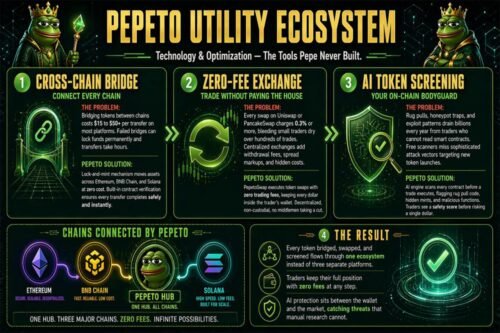
    PEPETO gives presale buyers something rare right now, a marketplace that already works before listing day arrives. PepetoSwap and the risk scoring tool are both live for holders to try before they commit more capital, turning the presale period into a hands-on test rather than blind trust. It is also solving a real problem that has been draining money from meme coin traders for years. Buyers have been entering tokens without any way to check whether the contract is safe, losing funds to traps they could have avoided with the right tool. PEPETO handles that with a risk scorer that rates tokens before entry and a zero-fee swap system that cuts the cost of every trade to nothing.

    The latest round of updates has sharpened the scoring output, tightened swap execution times, and made the whole marketplace feel faster and more responsive. The platform does not overwhelm traders with complexity, it lays out the information so that each step brings clarity instead of confusion. A marketplace this practical could easily become the center of daily meme coin activity worldwide, and that kind of real use is the engine behind growing presale demand.

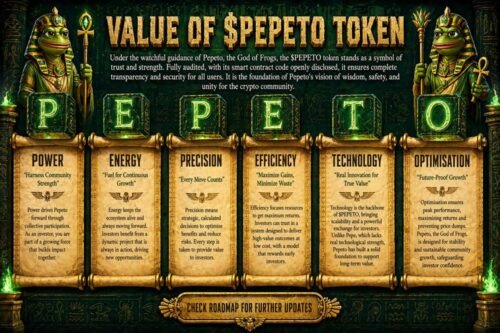
    The listing is approaching and the presale price of $0.0000001866 is still available, placed between a working product and an open market that has not touched the price yet. A Pepe cofounder built this project with the same knowledge that powered one of the biggest meme coins in history, staking earns 174% APY, SolidProof handled the audit, and the presale has gathered $9.9 Million from wallets that recognize what the expected Binance listing will deliver.

    SUI

    SUI has been one of the strongest movers this week with a breakout pushing the price above $1.30, gaining more than 20 percent in just a few days. The Layer 1 network has been attracting developer attention and aggressive buying pressure is backing the technical breakout. Analysts see continued strength if the broader altcoin rotation holds.

    XRP

    XRP is grinding near $1.47 after a sharp spike backed by one of the biggest volume surges in weeks. ETF inflows and weakening resistance on Binance order books are fueling expectations of a larger breakout. The falling wedge pattern on the chart suggests more upside could follow if Bitcoin stays stable above $80,000.

    Conclusion

    The last cycle made millionaires out of the wallets that moved first, and anyone who missed those entries knows exactly how it felt watching from the outside. PEPETO with a working marketplace, a Pepe cofounder at the helm, and a confirmed listing approaching is the clearest second chance to be early that this market has produced. The best crypto to buy in 2026 is not always the biggest name, sometimes it is the project that gives the earliest entry with the most working utility behind it. Getting into the presale now is how to secure the price that listing will reprice, and letting this one pass could be the regret that defines the rest of the cycle.

    Click To Visit Pepeto Website To Enter The Presale

    FAQs:

    What makes something the best crypto to buy in 2026?

    Working tools, strong presale demand, and an approaching listing are key signals, and PEPETO checks all three with $9.9 Million raised and live utility.

     Is SUI a good buy right now?

    SUI broke out above $1.30 with strong volume and developer momentum, making it one of the top-performing altcoins this week.

     Why is PEPETO attracting presale capital?

    The zero-fee marketplace, risk scorer, 174% APY staking, and expected Binance listing give holders working tools plus upside potential before listing.

    Disclaimer:
    This article is for informational purposes only and does not constitute financial advice. Cryptocurrency investments carry risk, including total loss of capital.

    All market analysis and token data are for informational purposes only and do not constitute financial advice. Readers should conduct independent research and consult licensed advisors before investing.

    Crypto Press Release Distribution by BTCPressWire.com

  • Cardano Price Prediction: ADA ETF Hopes Build Toward October While PEPETO Presale Secures $9.9 Million With Listing Expected thumbnail

    Cardano Price Prediction: ADA ETF Hopes Build Toward October While PEPETO Presale Secures $9.9 Million With Listing Expected

    A Grayscale CARDANO ETF could arrive before October 2026, and the Cardano price prediction is gaining fresh momentum as ADA trades near $0.28 with whale accumulation rising and technical indicators flipping positive. The ETF timeline adds a real catalyst to a coin that has been stuck in a range for months. But while the ADA outlook builds around institutional timelines, PEPETO is delivering what ADA holders are still waiting for, a working product with an expected Binance listing closing in.

    Grayscale CARDANO ETF Could Arrive Before October 2026

    CME ADA Futures went live on February 9 2026, starting the mandatory six-month seasoning period required before a spot ETF can qualify for review under the SEC’s generic listing standards according to CoinMarketCap. If Grayscale or another issuer files on August 9 when ADA becomes eligible, the SEC has a 75-day window that sets a decision deadline around October 23. Grayscale has already increased its ADA allocation inside the Smart Contract Fund, and firms like Bitwise and Canary Capital are also pushing for ADA price catalysts through their own ETF applications according to CryptoNews.

    Tokens Defining the Cardano Price Prediction Outlook and the Presale Opportunity

    PEPETO

    PEPETO stands apart in the presale space because the platform already runs before the token reaches exchanges. The cross-chain bridge and risk scoring tool are both active for holders to use right now, making the presale period a real test drive rather than a waiting game. It is also addressing a problem that has cost meme coin traders real money across multiple cycles. Traders have been guessing which tokens are safe and which are traps, relying on gut feelings because they had no scoring system to check before buying. PEPETO fixes that with a risk scorer that grades tokens before entry and a bridge that connects chains so holders do not get stuck on the wrong network.

    The latest build has improved response times, tightened the bridge connections, and made the scoring results sharper and faster to read. The trading hub does not flood holders with raw data, it filters everything down so each check gets them closer to a confident decision. A trading hub this clean and useful could turn into the go-to platform for meme coin traders around the world, and that daily utility is exactly why presale demand keeps growing.

    The listing window is closing in and the presale price of $0.0000001866 is still here, sitting between a project that already works and a price the open market has not touched yet. The project was built by a former Binance expert who understands exchange mechanics from the inside, staking pays 174% APY, SolidProof completed the full audit, and the presale has secured $9.9 Million from wallets positioned ahead of the expected Binance listing.

    Cardano Price Prediction

    ADA trades near $0.28 after breaking above a multi-month descending trendline, with whale wallets holding 10 to 100 million ADA continuing to accumulate. The Cardano price prediction for May 2026 shows momentum building with RSI at 65 and MACD still positive. Analysts see $0.30 as the first major resistance, and a clean break there could open the path toward $0.35 and eventually $0.45 if altcoin rotation continues. The 52-week range stretches from $0.21 to $3.10 at the all-time high. The ADA forecast benefits from the ETF timeline and the upcoming Leios scalability upgrade, but even at the ceiling of those forecasts, ADA is working within recovery limits that presale entries like PEPETO are not bound by.

    Conclusion

    Every cycle produces wallets that entered during fear and collected returns during the recovery, and every cycle also produces the ones who read about those returns afterward and wished they had moved. The listing is what separates the two groups, and with PEPETO the expected Binance listing has not happened yet which means the entry is still open. The Cardano price prediction setup right now looks like the same pattern that produced every early buyer success story in crypto, and entering the presale means joining the group that positioned before the price changed. Locking in the presale price now is how to be on the side that collects when listing arrives, and waiting could mean watching from the outside as returns go to the wallets that moved first.

    Click To Visit Pepeto Website To Enter The Presale

    FAQs:

    What does the Cardano price prediction look like for 2026?

    ADA trades near $0.28 with $0.30 as the key resistance and a path toward $0.35 to $0.45 if the ETF and Leios upgrade land.

     Can PEPETO outperform ADA in returns?

    Presale entries with working platforms can deliver returns recovery-phase coins cannot match, and PEPETO fits with an expected Binance listing ahead.

     What tools does PEPETO offer?

    PEPETO runs a cross-chain bridge, risk scorer, 174% APY staking, and has secured $9.9 Million with SolidProof audit completed.

    Disclaimer:
    This article is for informational purposes only and does not constitute financial advice. Cryptocurrency investments carry risk, including total loss of capital.

    All market analysis and token data are for informational purposes only and do not constitute financial advice. Readers should conduct independent research and consult licensed advisors before investing.

    Crypto Press Release Distribution by BTCPressWire.com

  • Solana Price Prediction: Alpenglow Consensus Overhaul Goes Live as PEPETO Presale Pulls in $9.9 Million Before Expected Listing thumbnail

    Solana Price Prediction: Alpenglow Consensus Overhaul Goes Live as PEPETO Presale Pulls in $9.9 Million Before Expected Listing

    The biggest consensus upgrade in SOLANA history is now running on a test cluster, and the Solana price prediction is heating up as SOL trades near $95 with ETF inflows climbing past $1 billion. Institutions are building positions, validators are testing faster speeds, and the Layer 1 space is watching what comes next. But while SOL points to a large cap recovery, PEPETO is offering what established coins cannot, a presale entry with working tools and an expected Binance listing ahead.

    Alpenglow Consensus Overhaul Goes Live on SOLANA Test Cluster

    SOLANA developer Anza confirmed that the Alpenglow upgrade is now live on a community test cluster, marking the largest consensus change in the network’s history according to CoinDesk. The upgrade aims to replace the current Proof-of-History and TowerBFT system with faster architecture that could cut finality to near real-time. Co-founder Anatoly Yakovenko said at Consensus Miami 2026 that Alpenglow could reach mainnet next quarter. Spot SOLANA ETF assets have surpassed $1 billion with Bitwise and Fidelity seeing strong inflows, adding institutional weight to the recovery according to Coinpedia.

    Tokens Shaping the Solana Price Prediction Cycle and the Presale Market

    PEPETO

    PEPETO is one of the only presale tokens in crypto where the tools already work before the listing happens. PepetoSwap and the cross-chain bridge are live for holders to test and trade with, turning the presale window into a working trial rather than just a promise. It is also filling a gap that meme coin traders have dealt with for years. Holders have been moving tokens across multiple bridges and paying fees on every swap, hoping trades complete before the price shifts. PEPETO solves that with a zero-fee exchange that handles swaps instantly and a bridge that moves tokens across chains without the usual costs.

    The latest development stage has pushed things further, adding faster processing, smoother transfers, and a cleaner experience overall. The exchange does not bury holders in complexity, it organizes the process so every trade moves them closer to the position they want. A platform this simple could become the daily hub for meme coin traders worldwide, and that utility is driving presale demand right now.

    The listing date is approaching and the presale price of $0.0000001866 is still open, sitting in a narrow window between a product that works and a market that has not priced it in. The team includes a Pepe cofounder who built one of the largest meme coins ever, staking runs at 174% APY, the contract passed a full SolidProof audit, and the presale has pulled in $9.9 Million from wallets that see what the expected Binance listing will unlock.

    Solana Price Prediction

    SOL trades near $95 after breaking above a descending trendline that capped gains since early March. Spot ETF products recorded around $33 million in weekly inflows, and combined holdings now approach two percent of the circulating supply. The 52-week range runs from $68 to $295, and analysts see $100 as the key level to clear next. If SOL holds above $90 and Alpenglow moves toward mainnet on schedule, the path toward $120 to $150 opens through the second half of 2026. But even with that upside, the Solana price prediction works within large cap limits that cannot match what a presale entry like PEPETO offers at this stage.

    Conclusion

    The wallets that built real wealth from SOLANA and from every major meme coin run all made one decision, they moved while the entry was still open and before the market caught up. That same entry is sitting right here with PEPETO because the presale price is still live, the tools already work, and the expected Binance listing has not happened yet. Moving while the window is open is how every crypto success story began, and the Solana price prediction cycle proves again that the biggest returns come from getting in before the breakout, not after. Entering the presale now locks in the price that listing will reprice, and missing it could become the worst decision of this cycle.

    Click To Visit Pepeto Website To Enter The Presale

    FAQs:

    What does the Solana price prediction look like for 2026?

    SOL trades near $95 with $100 as the next resistance and a path toward $120 to $150 if Alpenglow reaches mainnet on time.

     Can a presale outperform the Solana price prediction?

    Presale tokens with working products can deliver returns that large caps cannot reach, and PEPETO fits that profile with live tools and an expected Binance listing.

     What makes PEPETO different?

    PEPETO has a zero-fee exchange, cross-chain bridge, 174% APY staking, SolidProof audit, and $9.9 Million raised before listing.

    Disclaimer:
    This article is for informational purposes only and does not constitute financial advice. Cryptocurrency investments carry risk, including total loss of capital.

    All market analysis and token data are for informational purposes only and do not constitute financial advice. Readers should conduct independent research and consult licensed advisors before investing.

    Crypto Press Release Distribution by BTCPressWire.com
  • Why Most AI Writing Tools Are Optimizing the Wrong Thing


    There is a quiet assumption sitting at the heart of most AI writing tools today, and almost nobody is questioning it. The assumption is this: the goal of writing is to produce text, and therefore the goal of an AI writing tool should be to produce text faster, more easily, and in greater volume. From that premise, the entire industry has built itself around generation. Type a prompt, receive a paragraph. Describe a blog post and receive a blog post. Need an email, a report, or a cover letter? Here it is, already written.

    This is not a small design decision. It reflects a fundamental belief about what writing is for and what writers actually need. And for a growing number of educators, writers, and thinkers who care about what happens to human skill over time, this belief is worth pushing back on seriously.

    The Confusion Between Output and Ability

    When most people think about improving as a writer, they are not imagining a faster way to produce sentences. They are imagining a sharper ability to think clearly, to organize ideas, to notice when something is vague, to find the right word after rejecting the wrong five. Writing improvement is a process of developing internal capacities. It is slow, sometimes frustrating, and deeply personal.

    AI generation tools offer something entirely different. They offer output without process. You receive the finished product without going through the difficulty that makes you better. And while that finished product may be useful in the short term, it does nothing to develop the capacity that produced it. In fact, by removing the difficulty, it may quietly erode whatever capacity already exists.

    This is the distinction that matters: output is not the same as ability. A student who submits a generated essay has a document. A student who struggled through five drafts, received structured feedback, revised their argument, and reconsidered their word choices has something different. They have grown. Tools that optimize for output are not building writers. They are replacing them.

    Why Speed Became the Metric

    It is worth asking how speed and generation became the dominant values in this space. The answer is partly economic and partly cultural. In content marketing, speed and volume have real commercial value. A team that can publish fifty articles a month is more visible than one that publishes five. In that context, a tool that generates drafts quickly solves a genuine problem.

    The issue is that this logic traveled far beyond content marketing. It spread into education, into professional writing, into personal communication, and into academic research. And in most of those contexts, the goal is not volume. A student writing an argumentative essay does not need to produce more essays. A professional writing a strategic memo does not need to write it faster. A researcher drafting a paper does not need an AI to handle the thinking. In each of these cases, the value is in the process, not the output rate.

    Most AI writing tools were not built with this distinction in mind. They were built for one kind of problem and then applied to every kind of problem. The result is a mismatch between what the tools offer and what writers, students, and professionals actually need in order to grow.

    What Gets Lost When Process Disappears

    Writing is one of the clearest windows into how someone thinks. When a person writes a difficult paragraph, they are not just arranging words. They are making decisions about what matters, what order ideas belong in, what the reader needs to understand, and what can be left unsaid. These decisions require judgment. Judgment requires practice. Practice requires doing the hard thing, not having the hard thing done for you.

    When AI generation removes that process, it does not just save time. It removes the occasion for judgment to develop. Over many repetitions, this compounds. A student who relies on generation through four years of schooling arrives in professional life with weaker critical thinking skills than they might have had. A professional who delegates all written communication to an AI gradually loses the ability to articulate their own thinking with precision. These are not hypothetical risks. They follow naturally from the logic of what these tools do.

    The more important question is not whether AI can write. It clearly can. The more important question is what we lose when we stop writing ourselves, and whether the convenience is worth that cost in every context where we are tempted to reach for it.

    The Case for Feedback Over Generation

    There is a different kind of AI writing tool that is worth building and worth using: one that engages with your writing rather than replacing it. Instead of generating a paragraph, it reads the paragraph you wrote and tells you where the logic breaks down, where the language becomes vague, and where the structure could be stronger. Instead of handing you a finished product, it pushes you to produce a better one yourself.

    This is not a new idea in pedagogy. Teachers and writing coaches have known for a long time that feedback produces better writers than correction. When a teacher rewrites a student’s sentence for them, the student learns that their sentence was wrong. When a teacher asks the student why they chose that word, what they were trying to say, and whether there is a clearer way to say it, the student learns something about their own thinking. The result is a writer who improves rather than a document that looks better.

    A tool like Thanis AI takes this approach seriously. Rather than generating or rewriting content on behalf of the user, it provides structured, specific feedback on what the writer has actually written. The goal is to help people improve their writing through reflection and revision, not to hand them something polished that bypasses their own thinking entirely. If you want to see what that difference looks like in practice, the comparison between Thanis and ChatGPT makes it concrete: two tools pointed at the same space but built around completely different assumptions about what writers actually need. In a landscape where nearly every other tool is rushing toward generation, this is a meaningfully different position.

    The Responsibility That Comes With Scale

    AI writing tools now reach millions of students and professionals. The choices these tools make about what to optimize for are not neutral. They shape habits, expectations, and, over time, human capacity itself. A generation of students trained to prompt rather than to write will carry those habits into every professional and intellectual context they enter.

    This is not an argument against AI in writing. It is an argument for thinking carefully about which problems AI should solve and which problems it should help humans solve for themselves. The difference between those two things is enormous, and most of the industry has not been honest about it.

    If you care about writing as a skill, about thinking as something worth preserving and developing, and about education as something more than credential production, then it is worth paying attention to which tools actually serve those goals. Generation at scale is impressive. But it is not the same as helping people become better at the thing that matters most: thinking clearly and expressing that thinking with precision, voice, and intention.

    The tools optimizing for speed and volume are answering the wrong question. The right question is not “How do we produce more text?” It is how we help people write better, think more clearly, and develop the kind of judgment that no AI can hand them. That is a harder problem. It is also the one worth solving.


  • Polkadot Price Prediction: DOT Caps Supply at 2.1 Billion While Pepeto Targets  Before Listing thumbnail

    Polkadot Price Prediction: DOT Caps Supply at 2.1 Billion While Pepeto Targets Before Listing

    Polkadot enacted its biggest change since launch in March 2026 by capping total DOT supply at 2.1 billion tokens and slashing annual inflation by 53.6%. The move mirrors Bitcoin’s scarcity model, but DOT still sits 97% below its all time high, and the polkadot price prediction reflects a project rebuilding from lows rather than racing toward multiples.

    On the other side of that equation, Pepeto has raised over $9.9 Million heading into a Binance listing, and analysts project 100x from a presale entry that closes permanently once trading opens.

    DOT Supply Cap Reshapes the Polkadot Price Prediction for 2026

    Polkadot governance enacted runtime upgrade v2.1.0 on March 12, setting a hard cap of 2.1 billion DOT and cutting annual issuance from 120 million to 56.88 million tokens according to CoinMarketCap. The 21Shares TDOT ETF launched the same month, giving institutions a regulated entry. DOT trades at $1.36 with 1.68 billion tokens circulating, roughly 80% of the new cap according to CoinGecko. The polkadot price prediction now carries a scarcity argument, but the distance from $1.36 to $55 still measures years.

    Where Polkadot and Pepeto Sit for May 2026 Returns

    Pepeto

    Even with DOT cutting its supply and adding an ETF path, capital keeps moving into presale entries where the listing event creates the returns instead of a slow recovery over years. That is why wallets reading the polkadot price prediction are landing on a meme coin presale with more than $9.9 Million committed before a single public trade.

    Pepeto, led by the original Pepe cofounder, attracts buyers not just for listing day multiples but for the working trading tools that create lasting demand after launch day passes.

    The product speaks for itself. PepetoSwap lets holders trade across chains without paying a single fee, which means every position stays whole instead of shrinking through the swap costs that quietly eat value on busier networks.

    A team lead who managed exchange operations at Binance directs the listing strategy, and SolidProof verified every contract on chain before the presale went live. The same 420 trillion supply that sent the first Pepe token to $7 billion with nothing behind it now supports a project where every tool already works.

    Confidence keeps rising as the Binance listing nears. Pepeto collected over $9.9 Million while the broader market hesitated, and 174% APY staking grows positions while holders wait. The presale price of $0.0000001864 ends the moment the first exchange candle prints, and analysts project 100x to 300x once trading goes live on the Pepeto exchange, a distance the polkadot price prediction measures in years from its current $1.36 floor.

    Polkadot Price Prediction for May 2026

    DOT trades at $1.36 according to CoinMarketCap, down 97.8% from its $55 all time high in November 2021. Changelly projects a 2026 range of $1.92 to $2.32, and Coinpedia sees $4 to $10 by 2027 if the JAM protocol ships on schedule. The supply cap reduces sell pressure, and the ETF adds a regulated on ramp. But developer activity has not driven DeFi growth, with total value locked below $300 million. Support sits at $1.13, and resistance holds at $1.35. The polkadot price prediction carries a stronger structure now, but a move to $2.32 returns 90% over months while presale entries target that multiple in the first hour.

    Final Word

    With DOT cutting inflation and adding ETF access, the market is set for a cycle where scarcity matters. But scarcity alone does not create the returns that change a portfolio, and the entries that move fastest are the ones that carry a listing catalyst.

    Early Polkadot holders who bought DOT at $2.70 during the 2020 launch and watched it climb to $55 built real wealth by entering one day before the crowd arrived. The listing is where presale holders capture the returns that everyone else pays more for, and Pepeto sits at the same stage DOT occupied before its first major move. Entering now through the Pepeto official website is how to be hours early instead of months late, and that gap between timing is the difference between life changing returns and watching others celebrate what they found first.

    Click To Visit Pepeto Website To Enter The Presale

    FAQs

    What is the polkadot price prediction for 2026?

    DOT trades at $1.36 with Changelly targeting $1.92 to $2.32 by year end. The new 2.1 billion supply cap and ETF launch strengthen the polkadot price prediction, but recovery from a 97% decline takes time.

    What changed in Polkadot’s supply model?

    Polkadot governance capped total supply at 2.1 billion DOT in March 2026 and cut annual issuance by 53.6%. The shift mirrors Bitcoin’s scarcity approach and reduces long term sell pressure from new token creation.

    How does Pepeto compare to DOT for 2026 returns?

    Pepeto raised over $9.9 Million with working trading tools, a SolidProof audit, and a Binance listing approaching. The Pepeto official website locks the presale price before public trading begins.

    Disclaimer:
    This article is for informational purposes only and does not constitute financial advice. Cryptocurrency investments carry risk, including total loss of capital.

    All market analysis and token data are for informational purposes only and do not constitute financial advice. Readers should conduct independent research and consult licensed advisors before investing.

    Crypto Press Release Distribution by BTCPressWire.com

  • The Monero Price Prediction Gets a Catalyst as Trail of Bits Starts FCMP Audit and Pepeto Nears Listing thumbnail

    The Monero Price Prediction Gets a Catalyst as Trail of Bits Starts FCMP Audit and Pepeto Nears Listing

    Trail of Bits began auditing Monero’s FCMP++ privacy upgrade on May 11, and the review runs through May 22 in what the community calls the biggest protocol change since the coin launched in 2014. Privacy coins are gaining fresh attention, but the wallets chasing the Monero price prediction face a ceiling that presale entries do not.

    Sitting at the center of that rotation, Pepeto has raised over $9.9 Million with a Binance listing approaching, and analysts project 100x from a presale price that vanishes the moment trading opens.

    Trail of Bits Audit Reshapes the Monero Price Prediction Timeline

    Trail of Bits confirmed the FCMP++ integration audit running May 11 through 22, covering a proof system that would let XMR transactions verify ownership across 150 million outputs instead of 16 according to CoinMarketCap. A clean audit clears the path toward a mainnet upgrade that strengthens privacy beyond any competing chain. XMR hit $798 in January 2026 and now trades at $410 according to CoinGecko, and the Monero price prediction depends on whether this upgrade brings back capital that delistings pushed away.

    How Monero and Pepeto Compare for May 2026 Returns

    Pepeto

    Even with XMR facing delistings and regulatory headwinds, capital keeps flowing into entries that carry a listing path instead of fighting against one. That is why wallets studying the Monero price prediction are shifting attention toward a presale that collected more than $9.9 Million before its first exchange candle.

    Pepeto, built by the founder who created the first Pepe coin, draws capital not just for listing day gains but for the long term value that comes from holding a working trading platform on day one.

    The tools are live and shipping. A cross chain bridge sends tokens across blockchains without charging a single fee, keeping every dollar inside the holder’s wallet instead of leaking through gas costs. A risk scorer flags bad contracts before a buy completes, so money stays protected from scams that drain smaller positions.

    An engineer who worked inside Binance’s trading infrastructure joined the team, and SolidProof signed off on the smart contracts before the presale opened. The matching 420 trillion token count that took the first Pepe coin past $7 billion on hype alone now sits behind a presale where every tool already runs.

    Belief is at its highest point as the Binance listing approaches. Pepeto raised over $9.9 Million during a stretch where weaker projects bled out, and holders earn 174% APY while they wait for launch. The presale price of $0.0000001864 holds only until the listing opens, and analysts project 100x to 300x once trading starts on the Pepeto trading platform, returns the Monero price prediction cannot deliver from a $7 billion base.

    Monero Price Prediction for May 2026

    XMR trades at $410 according to CoinMarketCap, sitting 48% below its all time high of $798 from January 2026. Changelly projects a 2026 range of $389 to $457, and CoinCodex targets $511 by year end. The FCMP++ audit is the nearest catalyst, and THORChain integration expected within two months gives XMR a decentralized trading route outside exchanges that keep delisting the token. Support holds at $375, and a breakout above $435 opens the path toward $500. The Monero price prediction carries bullish signals, but the most aggressive target at $511 returns 24% from here, a slow grind that presale positions can outpace before their first trading day.

    Final Takeaway

    With the FCMP++ audit running and privacy coins gaining ground, the market rewards projects that prove real use before asking for trust. Entries with confirmed exchange paths turn presale capital into gains that large caps cannot offer.

    The people who built wealth from Monero all made one decision, they moved while the entry was still open and XMR traded below $1. That same entry sits open right now inside Pepeto, where a Binance listing approaches and the presale price disappears the moment the first candle prints. The Pepeto official website holds the same presale entry those early XMR holders wish they had sized bigger, and letting the listing pass without acting is how $9.9 Million in smart money becomes someone else’s story instead of yours.

    Click To Visit Pepeto Website To Enter The Presale

    FAQs

    What does the Monero price prediction look like for 2026?

    XMR trades at $410 with Changelly targeting $389 to $457 and CoinCodex projecting $511 by year end. The FCMP++ audit and THORChain integration are the nearest catalysts for the Monero price prediction.

    What is the Trail of Bits FCMP++ audit?

    Trail of Bits is reviewing Monero’s Full Chain Membership Proofs upgrade from May 11 to 22. A clean result clears the path for a mainnet upgrade that expands transaction privacy across 150 million outputs.

    Why is Pepeto compared to Monero in May 2026?

    Pepeto raised over $9.9 Million with a working bridge, SolidProof audit, and Binance listing approaching. The Pepeto official website is where wallets enter at the presale price before public trading begins.

    Disclaimer:
    This article is for informational purposes only and does not constitute financial advice. Cryptocurrency investments carry risk, including total loss of capital.

    All market analysis and token data are for informational purposes only and do not constitute financial advice. Readers should conduct independent research and consult licensed advisors before investing.

    Crypto Press Release Distribution by BTCPressWire.com

  • Could Pepeto Be the New Crypto That Outperforms Sui and Chainlink Before They Recover thumbnail

    Could Pepeto Be the New Crypto That Outperforms Sui and Chainlink Before They Recover

    Bitcoin ETFs just posted their sixth straight week of net inflows totaling $3.4 billion since early April, and BTC is holding above $80,000 while institutional capital confirms the floor under the entire market. When large caps stabilize at these levels, the biggest gains rotate into newer entries that still carry a listing event ahead.

    Finding the right new crypto in this environment means looking past tokens that already moved, and Pepeto has raised over $9.9 Million in presale entries with analysts projecting 100x once the Binance listing goes live.

    Bitcoin ETFs Extend Six Week Inflow Streak as New Crypto Interest Grows

    US spot Bitcoin ETFs logged their sixth consecutive week of net inflows, pulling in $622 million in the latest stretch and $3.4 billion combined since April according to CoinDesk. BlackRock’s IBIT holds roughly 810,000 BTC worth $66 billion, and April closed as the strongest monthly inflow total of 2026 according to SoSoValue. That capital confirms the market floor, but BTC above $80,000 offers steady growth, not the multiples that a new crypto presale delivers before its first public candle.

    Where Pepeto, Sui, and Chainlink Stand in the New Crypto Rotation

    Pepeto

    Through the fear and sell offs that cleared weaker projects, money continues pouring into presale entries that have a live exchange listing scheduled. That is the reason wallets looking for the best new crypto keep arriving at a presale that already stacked over $9.9 Million with zero public market history.

    Pepeto, built by the person who cofounded the original Pepe meme coin, is pulling capital not only for listing day returns but for the trading tools that keep value moving after launch.

    The product makes the case. PepetoSwap handles trades across multiple chains with zero fees, so every dollar a buyer puts in stays in the position instead of leaking out through swap costs that quietly drain smaller wallets over time.

    A team member who built systems inside Binance helps guide the listing path, and SolidProof reviewed and passed every line of code before the first dollar entered. The identical 420 trillion token count that powered the first Pepe meme coin to a $7 billion peak with no product behind it now fuels a presale that already ships real tools.

    Conviction keeps growing as the listing draws close. Pepeto has raised over $9.9 Million while other presales bleed capital, and 174% APY staking builds positions before launch day arrives. The presale price of $0.0000001864 disappears the moment trading opens, and analysts project 100x to 300x from this level once the Binance listing prints the first candle on the Pepeto network.

    Sui

    SUI trades at $1.28 according to CoinMarketCap, down 78% from its all time high of $5.35. CME launched SUI futures on May 4, and the network processed over $1 trillion in stablecoin volume since August. Changelly targets $1.47 by December, but ongoing token unlocks of 55 million SUI keep sell pressure alive and limit the upside.

    Chainlink

    LINK trades at $10.54 according to CoinMarketCap, sitting 80% below its $52.99 all time high. Solv Protocol and Kelp migrated nearly $1 billion in assets to Chainlink CCIP after a LayerZero bridge exploit, proving real demand for the oracle network. Even so, a full LINK recovery to its peak returns roughly 400% over months, while presale entries target those multiples in weeks.

    Closing Thoughts

    With ETF inflows confirming the market floor and large caps stabilizing, the industry is set for the rotation where entries with real products claim the largest gains.

    Every search for the right new crypto this month led to the same facts: a presale that raised $9.9 Million, a cofounder whose first project hit $7 billion, and a Binance listing that turns entries into tradable positions. The wallets that found Pepeto first are already inside. Entering now through the Pepeto official website means joining them before the crowd has reason to look, and this entry has a higher ceiling because a working exchange sits behind it. Waiting until the listing confirms what the capital proved is how the next regret story gets written.

    Click To Visit Pepeto Website To Enter The Presale

    FAQs

    What new crypto is getting attention in May 2026?

    Pepeto is the new crypto getting presale attention in May 2026, raising over $9.9 Million with zero fee trading tools, a SolidProof audit, and a Binance listing approaching. The Pepeto official website is where wallets enter before the listing opens public trading.

    How are Bitcoin ETF inflows affecting the new crypto market?

    US spot Bitcoin ETFs posted six consecutive weeks of inflows totaling $3.4 billion, confirming institutional demand and stabilizing the market floor above $80,000. That stability drives rotation into newer entries with listing events ahead.

    Which large caps are SUI and LINK competing against for presale returns?

    SUI trades at $1.28 with a $5.35 all time high, and LINK sits at $10.54 against a $52.99 peak. Both carry real adoption but offer recovery returns, while presale entries target multiples before their first public trade.

    Disclaimer:
    This article is for informational purposes only and does not constitute financial advice. Cryptocurrency investments carry risk, including total loss of capital.

    All market analysis and token data are for informational purposes only and do not constitute financial advice. Readers should conduct independent research and consult licensed advisors before investing.

    Crypto Press Release Distribution by BTCPressWire.com

  • Bittensor Price Prediction Hits $472 Target but Pepeto Presale Returns Dwarf TAO Ceiling thumbnail

    Bittensor Price Prediction Hits $472 Target but Pepeto Presale Returns Dwarf TAO Ceiling

    Grayscale reopened private placements for its Bittensor Trust on May 9, and two days before that Wormhole bridged TAO to Solana for native DeFi trading. Institutional access is expanding fast, but the biggest returns this cycle rarely come from tokens that institutions already price.

    Central to the Bittensor price prediction discussion, Pepeto has crossed $9.9 Million in presale deposits, and analysts project 100x once the approaching Binance listing opens the first candle.

    Grayscale and Wormhole Reshape the Bittensor Price Prediction Outlook

    Grayscale confirmed accredited investors can now buy into its TAO trust just as Wormhole bridged canonical TAO to Solana, opening trades on Jupiter and Meteora according to The Block. Bittensor doubled subnet capacity to 256 through the Robin upgrade and pulled $43 million in usage fees during Q1 according to CoinMarketCap. TAO climbed 8% in seven days, and the token now trades in the range that decides whether the Bittensor price prediction ends 2026 bullish or flat.

    Where Bittensor and Pepeto Stand for 2026 Gains

    Pepeto

    Through the broader sell off and fear driven exits, money is still moving into presale entries with a live exchange listing on the calendar. That is the reason wallets researching the Bittensor price prediction keep circling back to a meme coin presale that gathered more than $9.9 Million without a single day of public trading.

    Pepeto, built by the same developer behind the first Pepe token, is drawing capital not only for the listing upside but also for the trading network that gives it a reason to hold past day one.

    The product tells the full story. A cross chain bridge moves tokens between networks at zero cost, so holders transfer value without paying gas fees that eat into smaller positions. Every move stays inside the Pepeto network, and the savings compound with each trade.

    A developer from Binance’s exchange operations joined the team, and SolidProof cleared the full codebase before a single dollar entered the presale. The same 420 trillion supply that carried the original Pepe token to $7 billion without a working product now sits behind a project where the tools already run.

    Momentum keeps climbing as the listing gets closer to going live. Pepeto has crossed $9.9 Million in deposits during a stretch where most presales stall, and 174% APY rewards stack while holders wait. The entry price of $0.0000001864 vanishes the moment the Binance listing opens, and analysts project 100x to 300x from here once free market trading starts on the Pepeto marketplace, a gap that no $3 billion token can close.

    Bittensor Price Prediction for May 2026

    TAO trades at $324 according to CoinMarketCap, sitting 58% below its all time high of $757 from April 2024. Changelly projects a 2026 range between $388 and $472, and analyst van de Poppe set a breakout target at $350. A push above $350 opens the path to $472, while support holds near $260. Nvidia holds roughly $420 million in TAO, and Grayscale filed to convert its trust into a spot ETF with a decision expected by August. The halving cut daily emission by 50%, and that supply squeeze has not fully priced in. The Bittensor price prediction leans bullish, but even a full recovery to $757 returns 140% from current levels, a move that takes months while presale entries target multiples in weeks.

    The Verdict

    With the AI narrative expanding and Bittensor gaining infrastructure every week, the market rewards projects that ship products before asking for trust. Entries that launch with working tools and a confirmed listing path pay the wallets that moved first.

    The market always pays the most to the earliest believers, and Bittensor was cheap before it hit $757, and the wallets that entered when nobody cared built real wealth from that move. Millions entering the Pepeto presale during fear means those same kinds of wallets expect the same outcome from a project built by the original Pepe cofounder with a Binance listing approaching. The Pepeto official website is where those wallets are locking in the same kind of entry that early TAO believers wish they had doubled down on, and hesitating now is how the next regret story begins.

    Click To Visit Pepeto Website To Enter The Presale

    FAQs

    What is the Bittensor price prediction for 2026?

    TAO trades at $324 with Changelly projecting $388 to $472 for the Bittensor price prediction by year end. A breakout above $350 opens further upside, but a full recovery to $757 returns 140%, far below what presale entries target.

    How did Grayscale and Wormhole affect TAO this week?

    Grayscale reopened its TAO trust for accredited investors, and Wormhole bridged canonical TAO to Solana for DeFi trading on Jupiter and Meteora. Both moves expand access but also mean institutional pricing compresses retail upside.

    Why is Pepeto relevant to the Bittensor price prediction conversation?

    Pepeto raised more than $9.9 Million with a working bridge, SolidProof audit, and Binance listing approaching. The Pepeto official website is where wallets enter before public trading begins.

    Disclaimer:
    This article is for informational purposes only and does not constitute financial advice. Cryptocurrency investments carry risk, including total loss of capital.

    All market analysis and token data are for informational purposes only and do not constitute financial advice. Readers should conduct independent research and consult licensed advisors before investing.

    Crypto Press Release Distribution by BTCPressWire.com

  • Tron Price Prediction: Moscow Exchange Adds TRX Index as Pepeto Presale Crosses $9.9 Million thumbnail

    Tron Price Prediction: Moscow Exchange Adds TRX Index as Pepeto Presale Crosses $9.9 Million

    Russia’s Moscow Exchange will begin publishing a TRON index on May 13, giving TRX its first regulated benchmark inside traditional finance. When a legacy exchange tracks a crypto asset alongside Solana and BNB, the wallets already positioned benefit most.

    Sitting at the center of the tron price prediction conversation, Pepeto has pulled in more than $9.9 Million in presale capital, and analysts project 100x gains once the Binance listing opens trading.

    Moscow Exchange Validates the Tron Price Prediction With a Regulated TRX Index

    The Moscow Exchange confirmed a weighted TRX price index pulling data from Binance, Bybit, OKX, and Bitget according to Bitcoinist. The move places TRON inside the same regulated pipeline that tracks BNB and Solana. Active addresses jumped 46% from March to April hitting 76 million, and stablecoin supply crossed $85 billion according to CoinMarketCap. That validation confirms the floor under TRX but compresses the returns retail needs to build real wealth.

    How TRON and Pepeto Compare for May 2026 Returns

    Pepeto

    Even with price swings across the broader market, capital keeps flowing into presale entries that carry a confirmed exchange listing ahead. That explains why wallets following the tron price prediction are finding a presale that already pulled in more than $9.9 Million before a single public trade opens.

    Pepeto, a meme coin presale built by the cofounder of the original Pepe coin, draws attention not just for short term listing returns but also for the exchange tools that give it staying power after launch.

    The product answers that question. PepetoSwap runs zero fee trades across multiple chains, so buyers keep their full position instead of losing chunks to swap costs. A contract risk scorer checks every token before a purchase goes through, keeping the reader’s money away from rug pulls and broken contracts.

    A former Binance expert sits on the dev team, and SolidProof audited every contract. The same 420 trillion token supply that sent the original Pepe coin to $7 billion with zero products now backs a project with working tools on day one.

    Trust keeps building as the Binance listing gets closer. Pepeto has stacked more than $9.9 Million during a period where most tokens bleed holders, and buyers are locking tokens at 174% APY staking. The presale sits at $0.0000001864 and stays open only until the listing arrives, and analysts project 100x to 300x from this entry once public trading begins on the Pepeto exchange, a gap that no $32 billion token can close.

    Tron Price Prediction for May 2026

    TRON trades at $0.35 according to CoinMarketCap, sitting 18% below its all time high of $0.43 from December 2024. Changelly projects a 2026 range between $0.30 and $0.60, and LiteFinance targets $0.73 to $1.23 by 2030. The Moscow Exchange index gives TRX a regulated benchmark, and Tron Inc. disclosed a fresh treasury purchase of 142,957 TRX at $0.349. Support holds at $0.33, and a close above $0.36 opens the path toward $0.43. The tron price prediction carries real weight with institutional backing, but the most bullish ceiling offers 23% from current levels, a fraction of what a presale entry delivers before a listing event.

    Bottom Line

    With institutional infrastructure expanding around TRON, the market is rewarding networks that prove real usage. This is where projects launching with working products and a confirmed exchange path turn presale capital into the largest gains of the cycle.

    The listing turns every presale position into a live market entry, and more than $9.9 Million flowing in during fear proves smart money already calculated the outcome. Early TRON holders who bought TRX at $0.001 in 2017 and watched it climb to $0.43 all say they wish they put in more. That same signal is flashing inside Pepeto right now, where SolidProof verified tools back a presale that whales are filling while most of the market watches. Entering now through the Pepeto official website is how to capture the returns the listing will deliver, and anyone still stuck on the tron price prediction alone could be missing the biggest entry of this cycle.

    Click To Visit Pepeto Website To Enter The Presale

    FAQs

    What does the tron price prediction look like for 2026?

    TRON trades at $0.35 with Changelly targeting $0.30 to $0.60 for the tron price prediction in 2026 and a $0.43 all time high as the nearest ceiling. The Moscow Exchange index adds institutional backing but limits the upside retail traders need for large returns.

    What did the Moscow Exchange announce about TRX?

    The Moscow Exchange confirmed it will publish a regulated TRON index starting May 13, pulling weighted price data from Binance, Bybit, OKX, and Bitget, giving TRX its first benchmark inside traditional finance.

    Why is Pepeto getting attention during the tron price prediction discussion?

    Pepeto raised more than $9.9 Million with a working exchange, a SolidProof audit, and a Binance listing approaching. Entering through the Pepeto official website locks the presale price before public trading begins.

    Disclaimer:
    This article is for informational purposes only and does not constitute financial advice. Cryptocurrency investments carry risk, including total loss of capital.

    All market analysis and token data are for informational purposes only and do not constitute financial advice. Readers should conduct independent research and consult licensed advisors before investing.

    Crypto Press Release Distribution by BTCPressWire.com

  • How AI Is Changing Software Development Worldwide

    Artificial Intelligence (AI) is transforming the global software development industry at an unprecedented pace. From automating repetitive coding tasks to improving debugging accuracy and accelerating product delivery, AI is no longer just a supportive tool—it has become an essential part of modern software engineering workflows. Companies across the world are integrating AI-powered solutions to improve productivity, reduce development costs, and deliver higher-quality software in less time.

    This shift is not limited to large tech giants. Startups, freelance developers, and enterprise-level organizations are all experiencing the impact of AI-driven development tools. As AI continues to evolve, its role in shaping the future of software engineering will only become more significant.

    AI-Powered Code Generation and Automation

    One of the most impactful changes AI has brought to software development is automated code generation. Tools powered by large language models can now generate functional code based on simple text instructions. Developers can describe a feature in natural language, and AI can convert it into working code in multiple programming languages.

    This reduces the time spent writing repetitive boilerplate code and allows developers to focus on more complex problem-solving tasks. For example, AI assistants can help generate API endpoints, database queries, or frontend components in seconds. This level of automation significantly boosts productivity and reduces human error in coding.

    Moreover, AI-driven code completion tools help developers write cleaner and more efficient code by suggesting optimized solutions in real-time. This has created a more efficient development environment where coding is faster, smarter, and more accessible.

    Enhancing Debugging and Error Detection

    Debugging has always been one of the most time-consuming parts of software development. AI is now changing that by offering advanced error detection and predictive debugging capabilities. Instead of manually searching for bugs, developers can rely on AI tools that analyze code patterns and identify potential issues before they become serious problems.

    AI systems can detect syntax errors, logical flaws, memory leaks, and security vulnerabilities early in the development cycle. This proactive approach helps teams reduce downtime and improve software reliability.

    Additionally, AI-powered debugging tools can suggest fixes automatically, making it easier for developers to resolve issues quickly. This not only improves efficiency but also enhances the overall quality of the final product.

    Accelerating Software Testing and Quality Assurance

    Software testing is another area where AI is making a huge impact. Traditional testing methods require significant manual effort and time. However, AI-driven testing tools can automate test case generation, execution, and result analysis.

    AI can simulate real-world user behavior and test applications under different conditions, ensuring better coverage and reliability. This helps developers identify performance bottlenecks and usability issues before deployment.

    Furthermore, machine learning models can analyze historical testing data to predict which parts of the code are most likely to fail. This predictive testing approach reduces the risk of post-release bugs and improves software stability.

    As a result, development teams can release updates faster while maintaining high-quality standards.

    AI in Project Management and Development Workflow Optimization

    Beyond coding and testing, AI is also revolutionizing project management in software development. AI-powered tools can analyze project timelines, team performance, and resource allocation to optimize workflows.

    These systems can predict project delays, recommend task prioritization, and improve collaboration among team members. By analyzing past project data, AI helps managers make more informed decisions and reduce inefficiencies.

    AI also assists in sprint planning for Agile development teams. It can estimate task complexity more accurately and suggest realistic deadlines based on historical performance. This leads to better project planning and improved delivery timelines.

    Improving Cybersecurity in Software Development

    Cybersecurity is a critical concern in today’s digital landscape, and AI plays a major role in strengthening software security. AI-powered security systems can detect unusual behavior, identify potential threats, and prevent cyberattacks in real time.

    During development, AI tools can scan code for vulnerabilities such as SQL injection risks, cross-site scripting issues, and insecure dependencies. This ensures that security flaws are detected early in the development lifecycle.

    Additionally, AI systems continuously learn from new attack patterns, making them more effective at identifying emerging threats. This adaptive security approach is essential in a world where cyberattacks are becoming more sophisticated.

    Empowering Developers and Redefining Skill Requirements

    AI is not replacing developers; instead, it is reshaping the skills required in the software industry. Developers are now expected to understand how to work alongside AI tools, interpret AI-generated suggestions, and integrate automation into their workflows.

    This shift has created a new generation of “AI-augmented developers” who are more productive and efficient. Instead of spending time on repetitive tasks, developers can focus on system architecture, creativity, and innovation.

    However, this also means continuous learning is essential. Developers must stay updated with AI tools, machine learning concepts, and modern development frameworks to remain competitive in the evolving job market.

    The Future of AI in Software Development

    The future of software development is deeply connected with AI advancements. As AI models become more sophisticated, they will be capable of handling increasingly complex development tasks, including full application development with minimal human intervention.

    We can expect AI to play a larger role in low-code and no-code platforms, enabling even non-technical users to build functional applications. This democratization of software development will open new opportunities for businesses and individuals worldwide.

    However, ethical considerations will also become more important. Issues such as code transparency, data privacy, and AI bias must be addressed to ensure responsible use of AI in development environments.

    Conclusion: A Transformative Era for Global Software Development

    AI is fundamentally changing how software is designed, built, tested, and deployed across the world. From automating coding tasks to enhancing cybersecurity and optimizing workflows, AI has become a powerful force in modern development practices.

    While it introduces new challenges, it also creates immense opportunities for innovation, efficiency, and growth. Developers who embrace AI technologies will be better positioned to succeed in this rapidly evolving landscape.

    The global software industry is entering a transformative era one where human creativity and artificial intelligence work together to build smarter, faster, and more secure digital solutions.