Category: BigNewsNetwork

  • Best Crypto Presale Right Now: Pepeto, SUBBD, and Dogeball Are the Three Positions Every Trader Needs Before Exchange Listings Hit as MoonPay Proves AI Agents Will Manage Trillions thumbnail

    Best Crypto Presale Right Now: Pepeto, SUBBD, and Dogeball Are the Three Positions Every Trader Needs Before Exchange Listings Hit as MoonPay Proves AI Agents Will Manage Trillions

    MoonPay has created an AI powered wallet where bots can trade crypto automatically, and your private keys stay securely on a Ledger hardware device. If that does not make it obvious that autonomous crypto infrastructure is scaling fast, nothing will. The bitcoin news confirms BTC at $74,600 under crypto friendly policies. The ethereum news turned bullish as ETH reclaimed $2,350. The xrp news improved with XRP holding $1.54 as the ETF pipeline expands

    The best crypto presale that sits directly at the intersection of meme economy demand and real infrastructure is the PEPE cofounder’s Pepeto, a project with three products close to being ready that serve the $45 billion meme economy. SUBBD and Dogeball round out the list as two of the strongest best crypto presale entries for the creator economy and gaming narratives, but neither has the PEPE cofounder’s $7 billion track record or the return math at $0.000000186.

    MoonPay proves AI agents will manage trillions in digital assets

    MoonPay integrated Ledger hardware wallet signing into its AI agent wallet on March 12, making it the first AI focused wallet in crypto to support Ledger’s Device Management Kit. The feature lets users verify every transaction generated by an AI agent using a physical Ledger device, ensuring private keys never leave the hardware signer. When the infrastructure companies are building AI agent wallets, the projects that provide the intelligence layer for those agents are sitting at the most important intersection in the market, per Bloomberg.

    Three best crypto presale positions right now

    1. Pepeto: The PEPE cofounder’s $7.99 million presale with return math

    If MoonPay is creating AI agents that trade automatically and Ledger is handling the security, serious traders should be asking: who is providing the dedicated meme economy infrastructure that the $45 billion market desperately needs? The PEPE cofounder who built $7 billion is the only founder in this market directing three products toward exchange listings at presale pricing.

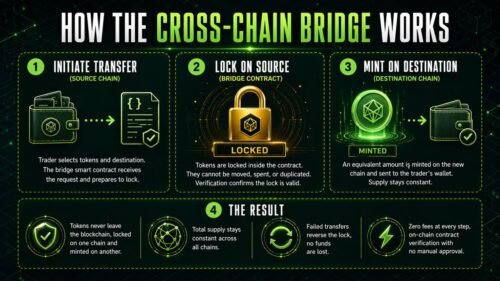
    PepetoSwap is being engineered for zero tax cross chain meme trading across Ethereum, Solana, and BSC. Pepeto Bridge approaches deployment to connect fragmented liquidity. Pepeto Exchange is close to launching as the first curated verified marketplace. SolidProof verified every contract. Over 4 billion tokens burned. APY staking compounds daily. At $0.000000186.A position crosses and the math doubles to at $0.0001. If you want to know how to buy crypto that could produce generational wealth, the Pepeto official website is where you start.

    pepecoin

    2. SUBBD

    SUBBD is one of the most interesting presales for traders who want exposure to the AI powered creator economy narrative. The platform targets the $85 billion content subscription industry by removing centralized intermediaries. The exchange listing is expected in Q1 to Q2 2026 with analyst targets of $0.44 to $0.62 against the current $0.057 entry, representing an  Solid, but not the the PEPE cofounder’s presale delivers.

    3. Dogeball

    Dogeball is the best crypto presale gaming play for traders who want a token with a defined listing price gap. Currently at $0.0004 after raising $153,000 from 547 participants, the confirmed listing price of $0.015 is a structured return from current entry. Compelling for gaming, but the PEPE cofounder’s three meme economy products with return math at $0.000000186 sit in a fundamentally different return category.

    Final verdict

    MoonPay building AI agent wallets with Ledger security tells every serious trader exactly which narratives own the next twelve months. But the real wealth building story of 2026 is the meme economy waking up. You missed PEPE when the cofounder launched it from nothing into $7 billion. You missed DOGE before it became a household name. You missed SHIB before it minted millionaires. Pepeto at $0.000000186 with $7.99 million raised, SolidProof verification, and three infrastructure products approaching exchange listings is that same entry point happening again right now. The presale is still open, and the only question is whether you seize it or let the opportunity pass.

    Click To Visit Pepeto Website To Enter The Presale

    FAQs

    Which project is the best crypto presale right now?

    Pepeto with the PEPE cofounder’s $7B track record, three products at $0.000000186, and SolidProof verification with exchange listings approaching.

    Are SUBBD and Dogeball strong presales to stack alongside Pepeto?

    SUBBD targets to. Dogeball offers a listing gap. Both are solid but Pepeto’s under the PEPE cofounder is the priority position.

    What makes Pepeto, SUBBD, and Dogeball the top early stage projects?

    All three have real propositions and defined listing timelines. Pepeto leads because three products are close to ready under the PEPE cofounder at $0.000000186.

    Disclaimer:
    This article is for informational purposes only and does not constitute financial advice. Cryptocurrency investments carry risk, including total loss of capital. Readers should conduct independent research and consult licensed advisors before making any financial decisions.

    This publication is strictly informational and does not promote or solicit investment in any digital asset

    All market analysis and token data are for informational purposes only and do not constitute financial advice. Readers should conduct independent research and consult licensed advisors before investing.

    Crypto Press Release Distribution by BTCPressWire.com

  • How Big Can a Balcony Power Station Be in 2026? Legal Limits, Module Counts and How to Plan a System That Actually Performs

    There is a particular kind of frustration that comes from buying something and then discovering you have been using it at half its potential. For many people with balcony solar systems in Germany, that frustration is avoidable with a bit of knowledge gathered before rather than after the purchase. The question of how large a balcony power station can legally be in 2026 sounds like a dry regulatory matter, but the answer has genuinely significant consequences for how much electricity you actually generate over a year. Getting this right from the beginning, and pairing your setup with a modern energy supply solution for your home that handles the output intelligently, is what separates a system that simply works from one that genuinely delivers. This article walks through the legal boundaries in plain terms, explains what they mean for practical planning, and gives you the tools to design a setup that does the most within the rules.

    Understanding the Legal Framework Before You Buy a Single Panel

    Germany reformed its legal framework for plug-in solar systems significantly in 2024 through the Solar Package I legislation, and those changes are fully in effect as of 2026. The rules are clearer now than they have ever been, which is good news for anyone planning a new installation. To understand what the limits actually mean for a real installation, the complete breakdown available at Balkonkraftwerk Größe Vorschriften 2026 provides detailed context that goes beyond what any single article can cover fully.

    The central limit that shapes every balcony power station design in Germany is the 800-watt cap on inverter output. This number refers specifically to the alternating current power that the inverter is permitted to feed into your home’s electrical circuit at any given moment. It is not a limit on how many panels you can attach or how much sunlight they can absorb. It is a cap on the outlet side, meaning on what actually enters your household wiring. An inverter that is set above this threshold, or one that is not properly certified, falls outside legal compliance regardless of how the rest of the system is configured.

    The second number every potential system owner should know is 2,000 watts. This is the maximum combined nominal output allowed for the solar panels themselves. So while your inverter output must stay at or below 800 watts of alternating current, the panels feeding that inverter can have a rated capacity of up to 2,000 watts in direct current terms. This distinction is not a loophole. It reflects the physical reality that panels almost never produce their full rated capacity simultaneously due to weather, angle, shading, and time of day. The law accounts for this gap and uses it to allow more panel area without compromising grid safety.

    The numbers at a glance: Maximum inverter AC output is 800 watts. Maximum combined solar panel DC capacity is 2,000 watts. Registration in the Marktstammdatenregister is required. Notification to your grid operator must also be submitted. These four points define the legal minimum for a compliant installation in Germany in 2026.

    How Many Modules Does That Actually Mean?

    Translating watts into panels gives a clearer picture of what is physically possible. Standard residential solar panels in 2026 come in output ratings that typically range from 380 watts to 460 watts per panel. At 400 watts per panel, the 2,000-watt ceiling allows for five panels in a single installation. At 450 watts per panel, four panels bring the total to 1,800 watts, which sits comfortably within the permitted range. At 500 watts per panel, four panels would already exceed the limit, meaning only three could be legally installed together.

    In practice, however, the physical constraints of most balconies impose tighter limits than the law does. A standard apartment balcony measuring three meters wide and one and a half meters deep rarely accommodates more than two or three full-size panels without blocking natural light, creating wind resistance problems, or conflicting with the building’s appearance requirements. This is worth understanding early because it means the question for most people is not how to get as close to the legal limit as possible, but rather how to make the most of the two or three panels that realistically fit the available space.

    Practical Example: A Renter in Munich

    Consider a tenant in a south-facing Munich apartment with a balcony roughly three meters wide. She installs two 410-watt panels on an adjustable railing bracket angled at 30 degrees. The combined panel capacity is 820 watts, well within the 2,000-watt limit. She uses a certified 800-watt inverter. On a clear summer day, the system peaks at around 680 watts of actual output because real-world conditions never quite match the rated figures. Her annual production comes to approximately 750 kilowatt-hours, saving her around 225 euros per year at current electricity prices. The system paid for itself in under three years.

    Inverter Selection: Where Compliance and Performance Meet

    The inverter is not an afterthought. It is the component that determines both whether your system is legally compliant and how efficiently it converts available solar energy into usable household electricity. For a balcony power station in Germany, the inverter must carry the VDE AR N 4105 certification. This certification confirms that the device includes automatic grid disconnection, meaning it will shut itself off instantly if the public grid loses power. Without this feature, the inverter could theoretically continue pushing electricity into lines that utility workers believe are de-energized, creating a genuine safety hazard. No certification means no legal compliance, and that is a line with no exceptions.

    Beyond certification, the inverter’s rated output capacity should match the realistic production potential of your panels. A homeowner with two south-facing 400-watt panels in a location with strong sun exposure will benefit from a full 800-watt inverter because the panels have the potential to push close to that figure on good days. A homeowner with two smaller panels on an east-facing balcony, where midday sun never hits directly, may find that a 600-watt inverter is sufficient and actually runs more efficiently at its design load than a larger unit that rarely reaches its capacity. Matching the inverter to the realistic production of your specific setup is a detail that pays off over the lifetime of the installation.

    Micro inverters deserve specific mention here because they offer a performance advantage that standard string inverters do not. A string inverter connects all panels in a chain, which means that if one panel is partially shaded, the output of the entire chain drops to match the weakest link. A micro inverter, mounted on each panel individually, optimizes the output of every panel independently. For balconies where partial shading from railings, neighboring structures, or overhead elements is unavoidable, this difference can amount to 15 to 25 percent more annual energy production from the same panels.

    Practical Planning Tips That Most Guides Skip

    Most planning advice focuses on panel count and inverter wattage, but two factors that receive less attention can have an equally significant effect on real-world output. The first is mounting angle. Adjustable bracket systems allow the panel tilt to be changed between roughly 15 and 45 degrees. In summer, when the sun tracks high across the sky, a shallower angle of around 20 degrees captures more direct light during peak hours. In autumn and winter, when the sun sits lower on the horizon, steepening the angle to 40 degrees or more can recover production that would otherwise be lost. In areas with frequent rainfall, a steeper angle also allows water to run off the panel surface cleanly, which reduces dust accumulation and keeps the glass performing at its best without manual cleaning.

    The second underappreciated factor is east-west orientation for multi-panel setups. When two panels both face due south, they compete for the same peak production window around midday and together generate more power than the household can typically absorb at that moment. Splitting the orientation, with one panel facing southeast and another facing southwest, distributes production more evenly across the morning and afternoon. The peak output is slightly lower, but the total usable energy is higher because it aligns better with the times when the household is actually consuming electricity.

    Registration and Notification: Two Steps That Protect You

    Once the physical installation is complete, two administrative steps are required before the system is fully legal. The first is registration in the Marktstammdatenregister, the Federal Network Agency’s central database for all energy generation facilities in Germany. This is done online at the agency’s website and asks for basic information about the system: its location, the inverter’s rated output, the panel capacity, and the installation date. The process takes around fifteen minutes and is free of charge.

    The second step is notifying your local grid operator. This is not an approval process and does not require the operator’s permission. It is a notification, and most operators now handle it through a simple online form. Some operators respond with a confirmation; others simply log the notification without replying. Either outcome satisfies the legal requirement. Tenants should also note that since the Solar Package I reform, landlords have very limited grounds on which to refuse permission for a compliant plug-in balcony system. A system installed without permanent structural modifications to the building fabric is generally considered permissible, even when a landlord initially objects.

    Conclusion: The Rules Give You More Room Than You Might Think

    The legal framework for balcony power stations in Germany in 2026 is not designed to restrict ambition. It is designed to ensure that the hundreds of thousands of systems connected to the national grid do so safely and predictably. Within those boundaries, there is substantial room to build a system that genuinely offsets a meaningful portion of a household’s electricity consumption.

    The 800-watt inverter limit and the 2,000-watt panel ceiling are not obstacles for most balconies because the physical space available rarely allows a system large enough to test either boundary. What matters more in practice is the quality of the planning: the angle of the panels, the orientation relative to the sun, the choice between a string inverter and individual micro inverters, and the alignment between production timing and household consumption patterns.

    A system designed with care, matched to the specific conditions of a particular balcony, and registered correctly with the relevant authorities will consistently outperform a larger but poorly thought-out installation. The rules give you the framework. The planning gives you the performance. Both are worth taking seriously.


  • Robert Lawrence Vancouver Reviews Industry Apizza, Spotlighting a Distinctive New Haven-Style Pizza Experience in Vancouver

    VANCOUVER, British Columbia – March 18, 2026 – Robert Lawrence Vancouver has published a new restaurant review featuring Industry Apizza, a Vancouver pizza destination known for bringing New Haven-style apizza to the city. The latest review highlights the restaurant’s crisp, charred crust, balanced construction, and distinctive approach to pizza, placing it firmly in the conversation around the best pizza experiences in Vancouver.

    In the review, Robert Lawrence Vancouver shares a personal perspective on what separates memorable pizza from the rest. Rather than focusing on excess, novelty, or trend-driven presentation, the review emphasizes the fundamentals that define great pizza: crust, texture, balance, flavor, and a clear point of view.

    Industry Apizza stood out for exactly those reasons.

    According to the review, Industry Apizza feels like a place that knows precisely what it is. Built around New Haven-style apizza, the restaurant offers a thinner crust, light blistering, subtle char, and a style that allows the dough, sauce, and cheese to work together without the pie ever feeling overloaded. That sense of restraint and confidence is central to why the restaurant made such a strong impression.

    “I’ve had pizza in plenty of forms over the years,” Robert Lawrence Vancouver writes in the review. “Thick crust, thin crust, Chicago-style deep dish, wood-fired Neapolitan, New York-style slices, overloaded toppings, bar pies, square pies, all of it. And one thing I always come back to is this: the best pizza is not just about how much is on it. It is about balance.”

    That philosophy shapes the review from start to finish.

    Rather than treating pizza as a casual afterthought, the article frames it as one of Vancouver’s most competitive and subjective food categories. In a city filled with strong dining options and highly opinionated local favorites, the review argues that the restaurants most worth returning to are the ones that combine substance with identity. Industry Apizza is presented as one of those places.

    The review pays particular attention to the crust, describing it as one of the restaurant’s defining strengths. Crisp but not stiff, textured without being dry, and marked by darker charred spots that add flavor and depth, the crust is positioned as the foundation of the entire experience. For Robert Lawrence Vancouver, that level of care signals the difference between a decent pizza spot and one that deserves serious attention.

    The article also notes that Vancouver diners tend to appreciate restaurants that bring specificity and authenticity to the table. By leaning into a true regional pizza tradition instead of offering a broad or generic artisan pizza concept, Industry Apizza gives the city something more distinct. That clearer identity is one of the main reasons the restaurant resonates so strongly in the review.

    Beyond the food itself, the piece underscores the atmosphere that great pizza should create: casual, social, shareable, and rooted in simple enjoyment. According to the review, Industry Apizza succeeds not only because of what comes out of the oven, but because of the overall rhythm and character of the experience.

    The full written review is now live on the Robert Lawrence Vancouver website, and a companion YouTube Shorts video is also available, giving viewers a quick look at the commentary surrounding the restaurant and its place in Vancouver’s pizza scene.

    Read the full review here: https://robertjohnlawrencevancouver.com/industry-apizza-vancouver-review-robert-lawrence-vancouver/

    Watch the YouTube Shorts video here: https://www.youtube.com/shorts/22mY5dJNMhQ

    About Robert Lawrence Vancouver

    Robert Lawrence Vancouver is a Vancouver-focused food, dining, and lifestyle brand covering notable restaurants, memorable culinary experiences, and standout destinations throughout the city. Through written reviews and digital content, Robert Lawrence Vancouver offers a polished but approachable perspective on where to eat and what is worth experiencing in Vancouver.

    For media inquires please contact:

    Robert Lawrence Vancouver

    robertjohnlawrencevancouver@gmail.com

    https://robertjohnlawrencevancouver.com/

    Media Contact
    Company Name: Robert Lawrence Food and Wine
    Contact Person: Robert Lawrence Vancouver
    Country: Canada
    Website: https://robertjohnlawrencevancouver.com/

  • Florida West EDA Chief Details Pensacola’s Strategic Focus on Aerospace, Maritime Development thumbnail

    Florida West EDA Chief Details Pensacola’s Strategic Focus on Aerospace, Maritime Development

    Chris Platé outlines site inventory, infrastructure priorities, and recent wins including Field International headquarters relocation in Beyond the Build podcast.

    PENSACOLA, Fla. – Chris Platé, Chief Executive Officer of Florida West Economic Development Alliance, detailed Escambia County’s strategic economic development priorities during a recent podcast interview, highlighting focus areas in aerospace and aviation, medical and life sciences, marine and maritime, and cyber and defense sectors.

    Speaking on Beyond the Build podcast with host Kelvin Enfinger Jr., Platé outlined how nearly 30 years of economic development experience across North and South Carolina informed his approach to positioning Pensacola for transformational industrial growth.

    Strategic Industry Focus

    Platé described the economic development strategy as “four legs of the stool,” targeting specific industry clusters where Pensacola demonstrates competitive advantages. “We’re probably not the strongest for logistics just because we don’t have a lot of bodies, a fairly reasonable low unemployment rate, nor a lot of sites on our interstates,” Platé explained. “It makes sense to use those sites for more high-value projects.”

    The focused approach has delivered recent wins including Field International’s decision to relocate its global headquarters from the United Kingdom to Pensacola. The aerospace MRO supplier serves major manufacturers including Airbus, Boeing, and ST Engineering. “That company is so family focused and family oriented. They moved their entire headquarters from the United Kingdom to Pensacola because it fit with what they wanted,” Platé said.

    Site Readiness Inventory

    Platé detailed current shovel-ready and near-ready site inventory across Escambia County. The 9-acre Pensacola Technology Campus downtown offers turnkey development with 12-15 megawatts of power capacity for multi-story buildings. Midtown Industrial Park, a former brownfield, provides nearly shovel-ready space pending infrastructure optimization.

    Central Commerce Park represents the largest opportunity: 240 acres with 230 developable acres located 15 minutes north of Interstate 10. “That is a very unique gift to have that land sitting there between two interstates,” Platé noted, referencing proximity to both I-10 and I-65.

    Additional sites include Outlying Field 8, a former Navy training field offering 165 acres pending final negotiations, and The Bluffs providing barge access for maritime operations.

    Project Maeve Maritime Initiative

    The recently announced Project Maeve at the Port of Pensacola, potentially bringing 2,000 jobs in maritime manufacturing, positions the region for significant supply chain development. Platé emphasized maritime’s reliance on skilled welding and metalworking creates workforce training opportunities where Northwest Florida already has capacity.

    “Maritime has not progressed to advanced manufacturing quite as much as the other industries have,” Platé explained. “Welding, they’ve got to get in all these nooks and crannies and do the art of welding. You really can’t automate that with robotics the way you could with automotive or aerospace.”

    Infrastructure Priorities

    When asked to identify one infrastructure priority, Platé emphasized heavy infrastructure development for Central Commerce Park. “I would definitely look at the larger infrastructure needs for Central Commerce Park to get heavier infrastructure up in the middle part of the county,” he stated.

    Energy capacity remains critical across all development sites. “We clearly need energy like everybody, whether it’s we’re not trying to find large data centers, but even small data centers are out there and a small one could be $200 million,” Platé noted.

    Economic Development Process

    Platé described how economic development deals actually close, dispelling romanticized notions about the process. “It’s not fluff like it used to be 20, 30 years ago,” he explained. Companies conduct extensive research across multiple states and counties before narrowing selections.

    “Once that occurs, then you’re in the mix. It’s usually a large net. They’re throwing out multiple states, multiple counties per state. And then you better have your materials ready, accurate, and succinct for what they want,” Platé said.

    Funding Structure

    Florida West EDA receives funding primarily from Escambia County and the City of Pensacola through the Pensacola Escambia Promotion and Development Commission (PEDC), a state-formed entity established in 1967. Private sector contributions complement public funding. “We’re like a business to the county and the city, and the projects that we win and generate property tax. That property tax should exceed our funding,” Platé explained.

    Pipeline Projects

    Platé indicated several projects under consideration including “a very strong life science project” for Tech Park potentially serving as an anchor tenant, local energy company expansion and diversification, and additional aerospace opportunities. “That’s what we want is that diversity. So if one cluster gets hurt, the others will hopefully remain strong,” he stated.

    Florida West EDA serves Escambia County including the City of Pensacola and the Town of Century. For more information, visit FloridaWestEDA.com.

    Listen to Beyond the Build – here.

  • Albert Slap on the Property Risk Standard Quietly Changing CRE Due Diligence thumbnail

    Albert Slap on the Property Risk Standard Quietly Changing CRE Due Diligence

    A new standard published by ASTM International in late 2024 is setting a new best practice for how commercial properties should be assessed for natural hazards, extreme weather, and flood risks – and most of the industry hasn’t looked at it yet.

    The standard, ASTM E3429-24, establishes a disciplined process for property resilience assessment, covering the full range of natural hazard exposures that affect commercial buildings. It is the first ASTM standard to directly address the gap between what commercial real estate due diligence currently examines and what modern hazard data makes it possible to see.

    Albert Slap, founder of RiskFootprint™, has been making this argument for the better part of a decade. His company provides automated hazard assessments on commercial properties, covering 34 distinct hazard categories at the building level. The ASTM standard, he says, gives the industry a formal framework for what responsible due diligence now looks like. Most lenders and consultants, he adds, are still operating as if it doesn’t exist. “Most continue to sit on the fence and do it the old way,” Slap says.

    What the Old Way Misses

    Standard commercial due diligence relies on four primary inputs: an appraisal, a Phase One Environmental Site Assessment, a FEMA flood map, and in some regions, a basic earthquake score. The Phase One is the most commonly misunderstood. Despite the name, it deals exclusively with hazardous substances, petroleum products, and underground storage tanks. Wind, wildfire, hail, rainfall-driven flooding, storm surge, and tsunami are outside its scope entirely.

    That omission carries legal weight. U.S. courts have begun treating extreme weather events as foreseeable rather than exceptional. When a property floods or burns in circumstances that available data could have predicted, the question of what a due diligence professional knew – or should have known – becomes a legal one.

    Environmental and engineering consultants who attach a FEMA flood map to a Phase One report may be creating a specific liability exposure. FEMA maps were built around riverine flood risk and do not model rainfall-driven flooding, which is only one of several mechanisms by which commercial buildings flood. RiskFootprint™ expands on that FEMA foundation by integrating additional flood modeling from Fathom/Swiss Re, giving consultants and lenders a more complete picture of actual flood exposure.

    Scale of the Market

    The scope of the problem is measurable. Approximately 325,000 commercial real estate transactions in the U.S. each year require a Phase One Environmental Site Assessment, a market that, by Slap’s analysis, is almost entirely underserved by comprehensive hazard assessment.

    RiskFootprint™ reports are delivered as full-color, 34+ hazard assessments for a few hundred dollars per property, making building-level natural hazard data accessible on any deal, regardless of size.

    The ASTM standard gives lenders, buyers, and consultants a formal basis for looking beyond what has always been considered sufficient. Whether they act on it is a question that the courts – and the next major weather event – may eventually answer for them.


    About RiskFootprint™: RiskFootprint™ is a property resilience assessment platform that provides science-driven hazard analysis across 34+ natural hazard categories for commercial and residential clients. Built to align with ASTM Property Resilience Assessment (PRA) methodologies, it helps building owners, purchasers, lenders, and due diligence professionals identify and evaluate risk at the deal level. Learn more at riskfootprint.com.

  • Wayne, NJ Is One of the Hottest Housing Markets in the Country – Here’s Why The Tyszka Team Says It Won’t Cool Down thumbnail

    Wayne, NJ Is One of the Hottest Housing Markets in the Country – Here’s Why The Tyszka Team Says It Won’t Cool Down

    WAYNE, NJ — While housing markets across much of the United States have cooled over the past year, Wayne, New Jersey is moving in the opposite direction. Multiple offers are the norm, homes are routinely selling well above asking price, and buyer demand has shown no sign of softening heading into spring 2026.

    Artur Tyszka, founder of the Tyszka Team and a Wayne-based agent with over eleven years in the local market, says the conditions driving this are not going away anytime soon. “Since New Year’s, my phone has not stopped ringing,” he says. “The year just kicked off at full speed and it hasn’t slowed down.”

    The numbers bear that out. A four-bedroom home listed at $709,000 in Wayne recently drew multiple offers, with buyers weighing bids of $150,000 to $200,000 over asking – with no guarantee that would be enough. A comparable situation played out in nearby Bergen County, where a home listed at $1.8 million attracted fourteen offers and sold for an estimated $500,000 to $600,000 above ask.

    Tyszka points to three forces keeping demand elevated. Mortgage rates hovering around six percent have not discouraged buyers the way many expected. Supply remains extremely tight. And Wayne’s proximity to Manhattan, its school district reputation, and its established infrastructure continue to pull in buyers who might otherwise have looked elsewhere.

    Buyers priced out of Bergen County and other high-demand markets are increasingly turning to Wayne as an alternative – and that spillover is now pushing up values in towns that saw little of this pressure just a few years ago. “Once it starts, it doesn’t stop easily,” Tyszka says.

    The effect is spreading further. Towns like Hawthorne, historically outside the high-demand corridor, are now seeing multiple bids on mid-range listings as buyers extend their search into less familiar territory.

    Tyszka says the agents consistently closing deals in this environment share two traits: strong relationships with local agents, lenders, and attorneys, and clients who are thoroughly prepared before the first offer is submitted. The Tyszka Team, which includes Artur, his mother, and other family members, has built its practice around both.

    He does not expect a correction. With demand outpacing supply by a wide margin, he sees prices leveling off over the next two to three years rather than falling. “There’s too much demand and not enough homes for a real correction to take hold,” he says.

    For buyers, sellers, and investors tracking the Northern New Jersey market, the Tyszka Team can be reached at tyszkaproperties.com.

    About the Tyszka Team: The Tyszka Team is a family-run real estate group based in Wayne, New Jersey, serving buyers and sellers across Wayne and Pompton Lakes. Led by Artur Tyszka alongside his mother and fellow team members, the group brings over a decade of local market experience to every transaction. Learn more at tyszkaproperties.com.

  • Larry Mastropieri – Boynton Beach’s Long-Awaited Downtown Project Is A Meaningful Signal For The Corridor thumbnail

    Larry Mastropieri – Boynton Beach’s Long-Awaited Downtown Project Is A Meaningful Signal For The Corridor

    Ocean One has been a plan, a rendering, and years of city meetings. Now it’s a construction project – and it’s changing the calculus for investors along Federal Highway.

    BOYNTON BEACH, FL – After years of approvals, delays, and planning sessions, Ocean One has the one thing it was missing: money to build. Miami-based Hyperion Development Group has secured a $98 million construction loan from New York-based Madison Realty Capital, clearing the final hurdle for one of the most significant mixed-use projects in Boynton Beach’s downtown history.

    The eight-story development at 114-222 N. Federal Highway will bring 371 rental units ranging from studios to two-bedrooms, more than 25,000 square feet of ground-floor retail, and a 633-space parking garage – including 90 public spaces committed to the city. Arquitectonica, the Miami-based firm known for landmark South Florida design, is behind the project’s architecture.

    The Boynton Beach Community Redevelopment Agency has committed $11.5 million in tax financing over 14 years. That support wasn’t optional. The developer told city officials that rising construction costs made public backing a necessity for the project to work financially.

    Larry Mastropieri, broker and founder of The Mastropieri Group, has tracked the project closely and sees it as a meaningful signal for the corridor – with important caveats about timing. “This one’s on its way,” Mastropieri said on the Discover South Florida podcast. “There’s like five other big ones that need to get done to really make this downtown a spot. But what I do like about this is 25,000 square feet of retail. To make the downtown interesting, you need some retail on the first floor. This is going to transform downtown Boynton Beach.”

    His advice for investors is geographically specific. The area north of Boynton Beach Boulevard remains rougher, with more time needed before it becomes a compelling investment. The south side of Boynton Beach Boulevard – between I-95 and Federal Highway, precisely where Ocean One sits – is where Mastropieri sees movement happening first. “Short term, it’s good. It’s just not great. You got to ride that wave.”

    Ocean One is currently in permit review with the city’s Building Department. The project’s long timeline – site plan approval came in 2023, with roots going back to 2018 – reflects the complexity of downtown development in a city still defining what it wants its core to look like.

    For investors and residents watching the Federal Highway corridor, that definition is starting to take shape.

    Larry Mastropieri is the founder and broker of The Mastropieri Group, serving Palm Beach and Broward Counties. He hosts the Discover South Florida podcast at discoversouthflorida.com.

  • Affordable SEO Tools for Small Businesses: How to Compete Online Without Breaking the Bank


    As a business owner I am competing with big companies for online visibility. They spend thousands of dollars every month on marketing. It can be really tough, especially when I have a budget and do many jobs. The good news is that being online and getting noticed is not just for big corporations anymore. There are genuinely powerful, cheap SEO options available today that give smaller operations a real shot at ranking well and attracting consistent organic traffic without requiring enterprise-level investment.

    The article will discuss what makes SEO tools so important to small businesses, what the cost structure looks like, and how you can make informed decisions on what tools are effective at a fraction of the cost.

    Why SEO Tools Are No Longer Optional for Small Businesses

    A years ago people could still get their name out there by writing on their blog all the time and hoping people would tell their friends. Those days are much more gone now. These days the search engines are really smart. Just putting stuff on the internet is not enough. You need to figure out what words people are using when they search for something, how your website is doing, and what other people in your field are doing. If there are any issues with your website that are stopping it from showing up when people search for something. You have to know all about your website and the search engines to get your website to show up. That is because the search engines are really good at finding out what people want to see.

    SEO tools provide that intelligence. They remove the guesswork from content strategy, allow you to find quick wins and on-page problems, and track your progress. If you’re a small business owner without a team, a good tool is like having your own one-person SEO department, providing information that might take hours of your own research to find.

    The problem is that some of the most popular platforms within this particular niche have price tags that just do not make sense for a business that makes modest revenues. It is for this reason that many owners seek out affordable SEO tools for small businesses as opposed to just seeking out the best SEO tools available.

    What Is the Cost of Popular SEO Optimization Tools


    One of the most common questions that business owners ask themselves as they try to determine which option is best for their business is, “What does it cost to utilize popular SEO optimization tools?” This can vary depending on the tools used, as well as whether they are used annually or monthly. This is a general idea of where we are today.

    At the enterprise end of the spectrum, Ahrefs and Semrush are industry standards used by large agencies and in-house teams within large brands. Ahrefs’ prices begin at around $129/month for their Lite plan, while Semrush’s prices begin at around $139/month for their Pro plan. Moz Pro, another well-respected name in the SEO tool market, also starts at around $99/month. These tools are really powerful tools, with large keyword databases and deep backlink data and reporting features. For teams with dozens of clients to manage or large volumes of content to deal with, it may be worth it.

    However, for a local bakery, independent consultant, or direct-to-consumer brand just starting out, paying $1,200 to $1,700 annually for an SEO platform is unrealistic. Many of the tools in the enterprise plan are not used by the smaller user who simply requires access to keyword research, rank tracking, and basic technical audits.

    Quick overview of common SEO tool pricing ranges:

    Enterprise Platforms like Ahrefs, Semrush, and Moz: $99-$449+ per month

    Mid-Tier Tools like Mangools, SE Ranking, and Ubersuggest Pro: $29-$79 per month

    Budget-Friendly and Freemium Tools: $0-$25 per month

    AI-powered Automated Platforms: Starting at as low as $19.99 per month

    Mid-tier tools fill an important middle ground. For instance, Mangools combines keyword research, SERP, and rank tracking features at $29/month for its entry plan. SE Ranking, meanwhile, starts at $44/month for competitive features. These are good tools, and for small teams, these tools are a good balance of cost and capability.

    Budget-Friendly Alternatives That Still Deliver Results

    What has evolved significantly in recent years is that there are genuinely competent budget and AI-based tools that don’t feel like they are in some ways a reduced version of a better tool. The freemium model has evolved significantly: Google Search Console is still the only surefire way to get organic performance data, and it’s free; Google Keyword Planner is free and allows you to get search volume data directly from the world’s largest search engine; and tools such as Ubersuggest offer keyword and competitor data for free or very low cost.

    For small businesses that require constant output of content without having to hire writers or an SEO agency, AI-powered platforms have brought forth an entirely new category of solutions. SEOZilla uses an automated process for content marketing, where it identifies keywords, writes long-form SEO content, and publishes it to your blog at a frequency of your choice, all for $19.99/month and up. This type of automation is a significant advantage for a business owner who understands the importance of creating content but doesn’t have the time and money to devote to it. Of course, the broader idea behind that is that affordable SEO tools for small businesses have never been more powerful than they are today.

    The larger idea behind that, of course, is that affordable SEO tools for small businesses have never been more powerful than they are today. The difference between what can be done with a $20 monthly tool today versus five years ago is significant, largely due to the fact that advances in artificial intelligence have made it cheaper to produce intelligent, context-aware analysis and content.

    Comparing Expensive Tools With Affordable Alternatives

    It should be noted that one should be honest with oneself about what one gives up by choosing the budget version over the premium version of the platform. The major enterprise tools offer more extensive backlink databases, more detailed competitive analysis, and more sophisticated filtering options. If you are running a high-end e-commerce site with thousands of pages and need detailed technical crawls on demand, the expense of a Semrush or Ahrefs subscription might be worthwhile.

    Of course, most small businesses are not in that position. They have a limited number of pages, a small audience, and a handful of core keywords that they actually need to rank for. In that case, the question changes from “what tool is the best?” to “what tool gives me 80 percent of what I need at 20 percent of the price?”

    Ubersuggest Pro includes keyword research and basic site audit features at a small fraction of the cost of its competitors’ enterprise solutions. SE Ranking provides rank tracking, on-page SEO checks, and competitor research in a clean UI without the high monthly costs. Mangools has a clean UI and is great for business owners who are not super tech-savvy but need accurate keyword and rank information.

    The strategy of using two or three complementary affordable tools, rather than relying on one expensive platform, is one strategy that many experienced SEO experts recommend that businesses, especially ones that are resource-constrained, should consider. Using Google Search Console, along with a mid-tier keyword tool, and an AI platform for content automation, for instance, covers most of what most small businesses actually need to succeed over time.

    How Small Businesses Can Start Competing Effectively Online

    Small business team reviewing online growth strategy and SEO performance


    The companies that tend to punch above their weight in organic search tend to have a number of similar characteristics. They tend to publish content regularly, and search engines reward fresh content and penalize stale content. They have a niche instead of competing with everyone in their industry. They have a focus on the technical aspects, such as page speed, being responsive to mobile devices, and optimizing title tags and descriptions.

    Most importantly, they realize that SEO is an investment, not a band-aid. The businesses that have seen the most dramatic results are the ones that have invested in six to twelve months before seeing significant movement in their rankings. It’s easier to have patience in SEO when your tooling costs are low, and you’re not waiting for results to appear before spending money.

    Affordable SEO tools for small businesses have, in fact, been designed to help make that sort of effort possible in the first place, and that is exactly the point. Today, the environment favors brains over bucks, and that, in itself, is wonderful news for anyone willing to put in the effort.

    Final Thoughts

    The idea that SEO needs expensive software and a team to do it effectively is a thing of the past. From the availability of mature freemium tools and viable mid-tier tools that offer all the functionality for under $50/month to new AI-based tools that can automate entire processes for under $25/month, small businesses can now compete using the same underlying intelligence and execution that their larger competitors have had access to.

    Knowing what the cost is for some of the more popular SEO optimization tools is important, not necessarily because you want to find one that is the most expensive, but because it allows you to understand if the cost for a certain tool is worth it. What is important for a solo founder or a ten-person team is very different from what is important for a 200-person marketing team.

    Start with your real needs, such as consistent content, ranking tracking, basic technical auditing, and keyword research. Then find tools that satisfy those needs without overcomplicating things. This is the disciplined approach to tooling that will help separate successful small businesses with organic visibility from those that remain invisible.

  • Real Estate Investors Shift to Multi-Asset Portfolio Analysis, eFinancialModels Reports

    As property portfolios grow in size and complexity, investors are moving beyond single-asset analysis — and rigorous portfolio-level financial modelling is becoming essential to sound decision-making.

    ZURICH, SWITZERLAND — March 17, 2026 — Real estate investors are increasingly moving beyond single-asset thinking. As property portfolios grow in size and complexity, the ability to consolidate performance across multiple assets, property types, and financing structures has become a critical planning challenge. eFinancialModels is seeing this shift reflected in demand across its real estate financial model template library — investors, family offices, and developers are actively seeking financial models that go beyond individual property analysis and give them a true portfolio-level view.

    The gap is well known in the industry. Owners of multiple properties often track each asset in isolation, with no single framework that consolidates rental yields, financing costs, vacancy assumptions, and capital appreciation into a coherent picture of total portfolio performance. That blind spot becomes costly when making decisions about where to invest further, where to refinance, and when to exit.

    “A portfolio is not just a collection of properties — it is a financial position that needs to be actively managed. The investors who come to us want to see the full picture: how each asset contributes to total returns, how leverage affects the portfolio, and how sensitive their position is to changes in rents or interest rates. That requires a proper model, not a spreadsheet cobbled together asset by asset.”

    — Cyrill Haenni, Founder of eFinancialModels

    What Real Estate Portfolio Analysis Requires

    Managing a real estate portfolio means making decisions across multiple assets simultaneously — and each decision depends on understanding how individual properties interact at the portfolio level. The financial dimensions that matter most are:

    • Investment analysis: Every acquisition needs to be evaluated on entry yield, total acquisition cost, and financing structure before it joins the portfolio. Modelling these inputs consistently across assets is what makes like-for-like comparison possible.
    • Property yields: Gross yield, net yield, and yield on cost need to be tracked separately — they tell different stories about asset performance. A property that looks attractive on gross yield may show weak net yield once operating costs and vacancy are modelled in.
    • Exit modelling: Return on a real estate investment is only fully realised at exit. Modelling IRR, equity multiple, and capital gains at both the asset and portfolio level — across a range of sale timing assumptions — is what allows investors to plan disposals strategically rather than reactively.
    • Buy-and-hold vs. buy-and-flip: These two strategies have fundamentally different cash flow profiles, financing requirements, and return horizons. Comparing them side by side within the same model is how investors stress-test their strategy choice and identify which approach generates the better risk-adjusted return for a given asset.
    • Leverage and financing structure: LTV ratios, mortgage terms, and refinancing timelines vary across assets and interact at the portfolio level. Modelling these together reveals concentration risk and refinancing exposure that is invisible when assets are tracked in isolation.
    • Stress testing: Interest rate moves, rental market softness, and occupancy shocks rarely affect just one asset. Scenario analysis across the full portfolio is the only way to understand true downside exposure.

    With interest rates remaining a live variable in most property markets and investors facing increasingly complex decisions about when to hold, refinance, or exit, the demand for portfolio-level financial clarity is growing. eFinancialModels provides the modelling tools investors, family offices, and developers need to manage their real estate positions with the same rigor they would apply to any other asset class.

    For more information, visit www.efinancialmodels.com.

    About eFinancialModels

    eFinancialModels is a premier online marketplace offering a wide array of industry-specific financial model templates in Excel and Google Sheets. Catering to entrepreneurs, investors, and executives worldwide, the platform provides expertly designed tools to support financial planning, analysis, and strategic decision-making — helping project teams translate their vision into rigorous, investor-grade financial plans.

    To learn more, visit https://www.efinancialmodels.com

    For the latest updates, follow eFinancialModels on social media:

    Facebook: @efinancialmodels

    Twitter/X: @efinancialmodel

    Instagram: @efinancialmodels

    Media Contact
    Company Name: eFinancialModels
    Contact Person: Cyrill Haenni, Founder & Managing Partner
    City: Zurich
    Country: Switzerland
    Website: https://www.efinancialmodels.com

  • The End of ‘Set and Forget’ Advertising: PantoSource on Why Data Quality Is the New Competitive Advantage

    As ad platforms automate everything from targeting to creative, the brands that win will be the ones feeding the best data

    MIAMI, FL — March 16, 2026 — For years, digital advertising followed a predictable playbook: set your targeting, upload your creative, adjust your bids, and let the campaigns run.

    That era is ending.

    In 2025, Meta Platforms Inc. (NASDAQ: META) made Advantage+ the default for all new campaigns. Alphabet Inc. (NASDAQ: GOOGL) launched AI Max and expanded Performance Max. TikTok’s Smart+ adoption surged from 9% to 42% of US performance campaigns in a single year.

    The message from every major ad platform: automation is no longer optional. It’s the baseline.

    The Automation Default

    The transition happened faster than most advertisers expected.

    Meta’s Advantage+ now handles targeting, placements, budget distribution, and creative optimization automatically. Google’s AI Max generates headlines tailored to each user’s search query in real time. TikTok’s Smart+ automates targeting, creative testing, and delivery — with advertisers seeing an average 36% drop in cost per acquisition.

    Mark Zuckerberg told Stratechery in May 2025: “We’re going to get to a point where you’re a business, you come to us, you tell us what your objective is, you connect to your bank account, you don’t need any creative, you don’t need any targeting demographic.”

    The New Competitive Landscape

    When every advertiser uses the same AI-powered systems, traditional advantages disappear.

    The media buyer who mastered bid adjustments? The platform handles that now. The targeting expert who found niche audiences? The algorithm finds them faster. The creative director running A/B tests? AI generates and tests variations automatically.

    The question becomes: what’s left to compete on?

    Data as the Differentiator

    The answer is data — specifically, the quality and completeness of the signals you provide to these automated systems.

    AI-powered platforms optimize based on the data they receive. If the system can’t see that a purchase occurred, it can’t learn from it. If it receives incomplete data, it optimizes against incomplete information.

    Meta measures signal quality through Event Match Quality scores. Google evaluates Enhanced Conversions. TikTok monitors Events API data quality. All three platforms have built systems to score advertiser data — a clear indication that data quality affects performance.

    The challenge: privacy changes have degraded the data flowing to these platforms. Browser restrictions, ad blockers, and iOS App Tracking Transparency have created gaps where 40-60% of e-commerce conversions are invisible to ad platforms — a gap that compounds as AI systems learn from incomplete patterns.

    The Strategic Shift

    The brands adapting to this reality are treating data differently.

    Instead of viewing tracking as a technical checkbox, they’re treating it as a strategic priority. Instead of relying solely on browser-based pixels, they’re capturing sales data directly from their e-commerce backends. Instead of sending raw transaction data, they’re enriching it before it reaches the ad platforms.

    Server-side tracking and Conversions APIs improve data delivery, but they don’t fix incomplete signals. Enrichment goes further — capturing conversions that pixels miss entirely and attaching context like customer lifetime value and purchase frequency before the data reaches the platform.

    By shifting to a data-first strategy, brands build “signal resilience” — a data pipeline that remains active even as browser-based cookies continue to vanish.

    The role of the performance marketer evolves from “optimizer” to “algorithm trainer.” The job isn’t to beat the algorithm anymore. The job is to feed it better than your competitors do.

    For the CEO, this is no longer a marketing department problem. It’s a data infrastructure problem that directly impacts the bottom line.

    What This Means for E-Commerce

    For e-commerce brands worldwide — whether powered by Shopify, WooCommerce, BigCommerce, or custom platforms — this shift toward backend data capture is becoming a prerequisite for sustainable growth.

    Data-starved campaigns waste budget on audiences the algorithm can’t properly optimize. Every dollar spent on incomplete signals is a dollar that could have driven actual revenue. Signal resilience isn’t just a technical advantage; it’s how brands protect their margins in an increasingly automated advertising landscape.

    Brands with clean, enriched data flowing to ad platforms will see their AI-powered campaigns outperform competitors with data gaps. The advantage compounds over time as algorithms learn from richer signals.

    The era of “set and forget” advertising is over. But what’s replacing it isn’t more manual work — it’s a different kind of work: ensuring the automated systems have everything they need to succeed.

    The immediate priority for e-commerce brands: audit your data pipeline. What percentage of actual sales are visible to your ad platforms? Where are the gaps? The brands that answer those questions first will be the ones that win.

    About PantoSource


    PantoSource is an AI-powered tracking platform that recovers and enriches the e-commerce data most brands never see. By delivering complete, enriched data to Meta, Google, TikTok, and other ad platforms, PantoSource helps brands get better ad performance and scale profitably. Setup with Shopify, WooCommerce, and other platforms takes under five minutes. 

    Capture. Enrich. Scale. 

    For more information, visit PantoSource.com.

    Media Contact

    Company Name: PantoSource
    Email: media@pantosource.com
    Website: PantoSource.com