Author: IndNewsWire

  • Cryptocurrency News That Changes the Game: SEC Commodity Ruling Lifts ETH and XRP While Pepeto Crosses $9.8 million thumbnail

    Cryptocurrency News That Changes the Game: SEC Commodity Ruling Lifts ETH and XRP While Pepeto Crosses $9.8 million

    The biggest cryptocurrency news this month is not a price spike but a legal shift that rewrites how tokens get treated. The SEC and CFTC classified 16 tokens as digital commodities in March 2026, placing ETH, XRP, and BTC alongside traditional assets like gold. That ruling removed years of doubt and opened doors for ETFs and institutional custody. While the market waits for clarity to move prices, Pepeto has already stacked more than $9.8 million because a community of committed buyers recognizes the Binance listing ahead as the single catalyst that converts presale tokens into real trading positions.

    Cryptocurrency News: SEC Commodity Classification and the Clarity Act Push Crypto Into a New Era

    The SEC issued guidance on March 17 classifying 16 tokens as digital commodities, ending the uncertainty that held institutional capital back for years according to Phemex. The Clarity Act now moves through Congress targeting July 4 according to CoinDesk. Nasdaq’s president told Consensus Miami that the SEC’s new stance lets cryptocurrency news turn positive because markets can build again. This shift matters because it pulls sidelined capital back into every token with real structure behind it.

    How ETH, XRP, and Pepeto Compare After the Commodity Ruling

    Pepeto

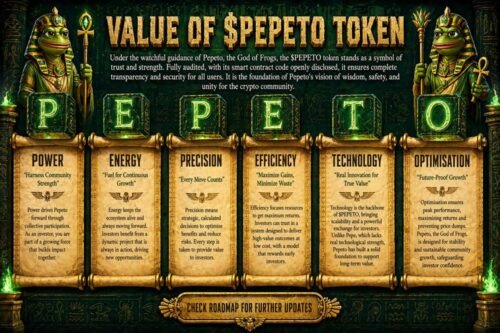
    While the cryptocurrency news around the SEC ruling sends confidence into large caps, a separate wave of capital builds inside Pepeto, a meme coin network that ships live tools and carries the early entry listed tokens no longer offer. The commodity ruling proves regulators accept crypto as a real asset class, and the network launching through Pepeto sits directly in that wave.

    PepetoSwap handles every trade at zero cost so your position stays whole, and a cross chain bridge moves tokens between networks without fees. Both tools run live, putting this network ahead of most listed tokens that still sell promises. The cryptocurrency news cycle favors projects that already work, and Pepeto checked that box before the presale crossed its first million.

    Committed wallets have sent more than $9.8 million into the presale at $0.0000001864 per token, and buyers kept funding while fear dominated headlines. SolidProof checked every contract before launch, and the token runs on the same 420 trillion supply model that powered the original Pepe to $7 billion with zero tools. A staking program at 175% APY compounds tokens before the Binance listing arrives, and the current entry closes permanently once trading goes live.

    With its small starting cap and verified products, analysts project the approaching listing as the catalyst that turns presale wallets into the returns that large caps at billion dollar levels cannot produce. The debate about which entry leads this cycle is already settled by the capital that flowed in, and the cryptocurrency news confirms it.

    Ethereum (ETH)

    ETH trades at $2,300 according to CoinMarketCap with a $280 billion cap. The commodity classification gave ETH formal standing, and whale wallets accumulated 230,000 tokens last week. But ETH sits 52% below its $4,953 all time high, and Changelly projects an average of $2,866 by Q4 2026, roughly 23% from current levels. That growth is real but slow, and Pepeto’s presale gap covers ground ETH’s cap makes impossible.

    XRP

    XRP holds $1.38 according to CoinMarketCap with an $82 billion cap. The commodity ruling ended years of SEC uncertainty, and the token gained 8% on the announcement. But targets top out near $2.00 for 2026, roughly 40% upside. The presale entry at Pepeto targets a different scale entirely.

    The Verdict

    While ETH builds on commodity status and XRP celebrates the end of its legal fight, neither carries the presale gap that converts a small position into the wealth this market cycle creates. With a working network, zero fee tools, and a community that funded more than $9.8 million during fear, Pepeto is the clearest second chance for anyone who missed early BTC, SHIB, or PEPE.

    The original Pepe coin reached billions with zero products, and more tools logically means a higher ceiling. The presale price vanishes when the listing arrives, and acting through the Pepeto official website right now places you among the wallets that collect when trading opens instead of watching from the outside.

    Click To Visit Pepeto Website To Enter The Presale

    FAQs

    What is the most important cryptocurrency news in May 2026?

    The SEC and CFTC classified 16 tokens as digital commodities in March, and the Clarity Act targets a July 4 passage. Both moves bring institutional capital into crypto at scale.

    How does the SEC ruling affect cryptocurrency news around presale tokens?

    Commodity status gives listed tokens regulatory clarity and opens ETF products. Presale tokens with approaching listings like Pepeto benefit because the path to regulated exchanges is now cleaner.

    Is Pepeto a strong entry after the latest cryptocurrency news?

    The presale collected more than $9.8 million behind SolidProof audited contracts while the Binance listing draws closer. The Pepeto official website shows the entry still open before trading begins.

    Disclaimer:
    This article is for informational purposes only and does not constitute financial advice. Cryptocurrency investments carry risk, including total loss of capital. Readers should conduct independent research and consult licensed advisors before making any financial decisions.

    This publication is strictly informational and does not promote or solicit investment in any digital asset

    All market analysis and token data are for informational purposes only and do not constitute financial advice. Readers should conduct independent research and consult licensed advisors before investing.


    Crypto Press Release Distribution by BTCPressWire.com

  • Could Pepeto Be the Best Crypto to Invest in as BTC ETFs Pull $2.7 Billion and SOL and DOGE Stall thumbnail

    Could Pepeto Be the Best Crypto to Invest in as BTC ETFs Pull $2.7 Billion and SOL and DOGE Stall

    Finding the best crypto to invest in just got clearer after Bitcoin ETFs logged nine straight days of inflows totaling $2.7 billion. That capital is not reaching altcoins yet, which means the tokens that move hardest when it does are already building. Pepeto has collected more than $9.8 million from wallets that see the approaching Binance listing as the event that separates early entries from everyone who shows up late.

    Best Crypto to Invest In: BTC ETFs Hit $2.7 Billion as Institutions Load Up

    Bitcoin ETFs pulled $2.7 billion across nine consecutive inflow days through early May according to Phemex, with April closing at $1.97 billion, the strongest month of 2026. BlackRock’s IBIT led with $335 million in one session. Exchange reserves hit a seven year low according to CoinDesk, meaning supply keeps shrinking while demand grows. The hunt for the top crypto entry heats up when institutional capital returns, and this time presale positions are where the sharpest moves sit.

    Where the Strongest Entries Stand as Capital Returns

    Pepeto

    While BTC ETF inflows confirm big money is back, a different class of buyers is quietly loading Pepeto, a meme coin marketplace already delivering live tools that target returns large caps cannot match. Pepeto answers the question anyone searching for the best crypto to invest in keeps hitting: how do you get early exposure when most tokens carry billion dollar caps.

    A risk scorer checks every contract before your capital touches it, flagging scams so your money stays protected from traps that flood every meme cycle. A cross chain bridge moves assets between networks at zero cost, so shifting funds no longer eats your balance the way it does on other platforms. Both tools run live, making Pepeto one of the rare tokens that shipped real products before asking anyone to commit.

    The presale has stacked more than $9.8 million at $0.0000001864 per token, and every contract was reviewed by SolidProof before a single dollar entered. The same 420 trillion supply that carried the original Pepe coin to $7 billion sits underneath a marketplace with verified tools, and the approaching Binance listing puts a date on when presale entries turn into tradeable wealth. Staking at 175% APY grows holdings while that date gets closer, and the entry vanishes the second trading opens.

    With its small cap and complete product running, analysts project Pepeto as the strongest presale play heading into the listing. The last stage sold out early and this one fills while you read, which is why the top crypto entry right now is not a large cap but the token below everyone’s radar.

    Solana (SOL)

    SOL trades at $88.45 according to CoinMarketCap after a flat week below $90 resistance. The network handles more daily transactions than any chain, but the token sits 82% below its $295 peak. A full recovery gives roughly 3x, solid for a large cap but far from the return that reshapes a portfolio. The presale math at Pepeto covers ground a $42 billion cap cannot.

    Dogecoin (DOGE)

    DOGE sits at $0.107 according to CoinMarketCap with a $19 billion cap after gaining 12% in a week. The SEC commodity classification in March gave it a cleaner path than most meme coins, and the 21Shares ETF trades on Nasdaq. But CoinCodex puts DOGE at $0.25 by year end, roughly 2x. For anyone looking for presale level upside, DOGE at this cap no longer carries that math.

    Conclusion:

    While SOL holds ground and DOGE rides the commodity ruling, neither offers the presale distance that turns a focused entry into the return this cycle rewards. With a running marketplace, zero cost tools, and SolidProof verified contracts, Pepeto is the strongest answer to the question every trader asks right now.

    The presale fills faster each stage, and the wallets entering now sit on the winning side when the Binance listing opens trading. The difference was never who spotted it first but who moved while the entry was open, and the Pepeto official website shows that window closing with every dollar flowing in. Passing on this entry could be the one regret this cycle leaves behind.

    Click To Visit Pepeto Website To Enter The Presale

    FAQs

    What makes BTC ETF inflows matter for finding the best crypto to invest in?

    ETF inflows of $2.7 billion over nine days confirm institutional money is back. That capital lifts the full market, and presale tokens with approaching listings benefit first.

    Is Pepeto the best crypto to invest in during May 2026?

    Pepeto raised more than $9.8 million with SolidProof verified contracts and an approaching Binance listing. The presale entry gives upside that billion dollar caps cannot match.

    How do SOL and DOGE compare for the top crypto entry this cycle?

    SOL at $88.45 targets 3x and DOGE at $0.107 targets 2x at best. Pepeto on the Pepeto official website targets the multiplier only presale distance delivers.

    Disclaimer:
    This article is for informational purposes only and does not constitute financial advice. Cryptocurrency investments carry risk, including total loss of capital. Readers should conduct independent research and consult licensed advisors before making any financial decisions.

    This publication is strictly informational and does not promote or solicit investment in any digital asset

    All market analysis and token data are for informational purposes only and do not constitute financial advice. Readers should conduct independent research and consult licensed advisors before investing.

    Crypto Press Release Distribution by BTCPressWire.com

  • Too Many Tools, Not Enough Results: A Smarter Approach to Real Estate Operations thumbnail

    Too Many Tools, Not Enough Results: A Smarter Approach to Real Estate Operations

    The gap between real estate technology that sounds useful and technology that actually changes how brokers operate has never been wider. The industry is not short on tools. It is short on tools that fit together well enough to be worth the time it takes to adopt them.

    That observation sits at the center of everything John LeRoy has built at Realay, a real estate referral network that recently launched its most significant platform update yet: Realay 2.0, a complete rebuild that expands the platform from a focused referral network into a full operating environment for independent brokers and agents.

    The update reflects three years of conversations with brokers about what they actually need, what they are currently paying for that is not working, and where the friction in their day-to-day operations is costing them the most.

    The Problem That Referrals Were Always Meant to Solve

    To understand why Realay 2.0 is designed the way it is, it helps to start with what made the original platform necessary.

    Agent-to-agent referrals represent some of the highest-quality business a real estate professional can receive. When an agent has worked closely with a client, earned their trust, and then needs to hand them off to someone qualified in another market, that referral carries everything the client relationship has already established. The client is real. They are ready to transact. And they are being sent by someone whose professional reputation is attached to how well the receiving agent performs.

    The challenge is infrastructure. Historically, this kind of handoff happened through personal networks: a contact from a conference, a broker someone knew from years back, a name passed along in a group text. It worked when it worked, and fell apart when it did not. There was no system tracking whether the referral was received, whether the agent followed up, whether the client was served.

    Realay was built to formalize that process. Brokers and agents are vetted before joining the network. Referrals travel from one sending agent to one receiving agent. The platform tracks status throughout. According to data from the platform reviewed daily by the operations team, approximately 71% of referrals in the system result in active engagement – meaning clients and agents working together in real time.

    That performance metric is a direct consequence of the quality controls on who participates and how referrals are routed.

    What the Rebuild Actually Delivered

    Realay 2.0 launched in April 2026 with six core features built into a single platform. Understanding each one individually makes it easier to see why the combination matters.

    The referral platform and mobile app form the foundation, allowing agents to send and receive referrals from any device with full visibility into status and activity.

    The contractor feature, introduced in an earlier phase, connects agents with vetted service providers across categories, including home inspectors, electricians, roofers, and other trades. For a broker managing a large agent base, this creates a standardized way to share preferred contractors across the entire team rather than relying on whoever someone called last time.

    The CRM integrates contact management directly into the platform. Records, notes, task lists, call logs, calendar entries, and documents are all stored in the same place where referral relationships are being managed. Independent brokers who currently pay per seat for a standalone CRM gain those capabilities as part of the platform.

    The AI-generated CMA changes the economics of market analysis time. What typically requires two or more hours of pulling data from multiple sources, cross-referencing listings, and preparing a client-ready report now takes seconds. The tool aggregates available market data, surfaces relevant comparables, and produces an editable report that the agent reviews, adjusts as needed, and sends directly from the platform. The agent does not lose control of the analysis – the tool handles the data gathering and initial structuring, and the agent reviews and refines before the report goes to the client.

    The AI concierge addresses the responsiveness problem that costs agents clients without their ever knowing it. Embedded on an agent’s website, it captures buyer and seller inquiries through a natural conversation, gathering preferences and timeline in real time. When the agent becomes available, everything the client shared is waiting for them, and no inquiry has been lost to voicemail.

    The Broker Response That Shaped the Direction

    Product decisions at companies this size are shaped heavily by what happens in the field. Conversations with brokers over the past year – in direct meetings and at industry conferences – have consistently pointed to the same problems.

    Independent brokers are managing too many disconnected tools. They are paying for software they underuse because none of it connects cleanly to the rest. They are sending referrals through informal channels because the formal systems they have tried have not held up under real-world conditions. And they are losing clients to competitors who are simply more available, not more skilled.

    At a recent real estate conference, Realay presented directly to nine or ten brokers. Nine of the ten expressed serious interest and requested follow-up demonstrations. One of those brokers leads a brokerage with more than 600 agents. The response was not driven by novelty. It was driven by recognition that the problems the platform addresses are real, persistent, and worth solving properly. “We are trying to find things that brokers would value and offer up,” LeRoy says, “so that Realay is not just a referral application but does other things as well.”

    The team also exhibited at UNITE 2026 in Charleston, South Carolina, that month, a boutique industry conference bringing together brokers, agents, and real estate strategists. It is another opportunity to demonstrate what the updated platform looks like in practice, for an audience that evaluates technology based on whether it solves real problems rather than whether it presents well.

    The Design Principle Behind the Feature Stack

    LeRoy uses the term “feature stack” to describe how the six features relate to each other: each layer serves a purpose on its own, but the value compounds when they are used together. A broker who receives a referral, logs the client in the CRM, generates a CMA for the initial consultation, tracks communication through the client portal, and captures new inquiries through the AI concierge is operating from a single system rather than switching between four or five.

    That consolidation reduces errors, cuts the time spent on administrative coordination, and lowers the risk that a client falls through a gap between platforms – which is where many promising real estate relationships quietly end.

    The design reflects a clear-eyed view of who independent brokers are and what they are actually dealing with. They are not looking for more complexity. They are looking for fewer things to manage, better visibility into what is happening with their clients, and tools that work together well enough to justify the time it takes to learn them. Realay 2.0 is a direct response to that, and whether it delivers on that promise will be tested in the field, with the brokers and agents who use it every day.

    John LeRoy is the founder of Realay, a real estate referral network designed to support genuine agent-to-agent referrals across the United States.

    This article is based on information provided by the expert source cited above. It is intended for general informational purposes only and does not constitute legal, financial, or real estate advice. Readers should conduct their own research and consult qualified professionals before making any real estate or financial decisions.

  • The Lender Who Autopsied Every Bad Loan – and Found the Same Cause of Death Every Time thumbnail

    The Lender Who Autopsied Every Bad Loan – and Found the Same Cause of Death Every Time

    When the financial system collapsed in 2008, most lenders were caught off guard. Gelt Financial wasn’t spared, but what happened in the years after the crisis shaped how the company operates today. Rather than move on, founder H. Jack Miller reviewed every loan that defaulted, every loss, and every deal that held up. What he found has guided Gelt’s underwriting approach ever since.

    Miller started Gelt Financial in 1989. The company now operates across 37 states, lending on commercial and investment properties, buying non-performing loans from banks, and working with a network of roughly 130 active accredited investors. He has been through multiple cycles, and says the Great Recession was the defining stress test.

    The Post-Crisis Audit

    After the crisis, Miller conducted a full review of every deal that had gone bad, looking for patterns in what failed and what held up. The findings were unambiguous: every loss came from deals where Gelt had made an exception to its underwriting criteria. Every deal where they stayed within their guidelines survived.

    “When things are going good, you have a box. But you tend to push the box a little bit – I’ll make an exception, I’ll do this one, I’ll do that one,” Miller says. “All the losses, 100 percent of them, were on those exceptions. Not one loss came from a deal where we stayed disciplined.”

    Why New Lenders Are Different

    The private lending market has expanded significantly in the past decade, and most of the new entrants have never operated through a real credit cycle. Miller estimates that 95 percent of his current competitors have been in business for ten years or fewer.

    He draws a clear distinction between 2008 and the COVID period. Both were disruptive, but the policy responses were opposite. In 2008, regulators pushed banks to foreclose and repossess. In 2020, the government directed banks to extend and work with borrowers while pumping liquidity into the economy. The COVID period tested operational resilience. The Great Recession tested underwriting discipline – and most lenders active today have only seen one of them.

    “If you were behind on your car payment during COVID, the banks worked with you,” Miller says. “If you were behind during the Great Recession, they took your car. Those two things require completely different responses from a lender.”

    What Disciplined Underwriting Looks Like in Practice

    Gelt’s lending model is built around the collateral, not the borrower’s credit profile or income documentation. That deliberate choice allows the company to move quickly – approving deals within hours and closing within a week – but it requires confidence in what’s securing the loan.

    Foreclosure bailouts now account for 50 to 70 percent of Gelt’s deal volume, up from roughly five percent six months ago. Miller attributes that to broader market stress, but says the underwriting standards haven’t moved with the volume.

    “The deals we do in a stressed market are held to the same standard as the deals we did in a good market,” he says. “The moment you start adjusting the criteria because the market changed, you’ve already made the mistake.”

    Sustainability Over Volume

    Beyond the length of their track record, Miller says what separates Gelt from newer players is the willingness to say no. Many lenders chase volume in favorable markets. Gelt has grown slowly across nearly 40 years – a timeline that, in the private lending space, is nearly without precedent.

    “We turn down a lot of deals. Always have,” Miller says. “There’s almost no company in this space with the history we have. That’s not an accident.”

    The model isn’t built for every borrower or every deal. But for the ones that fit, the speed, flexibility, and certainty of execution that Gelt offers is something a conventional lender can’t match – and that reliability, Miller argues, is the direct result of discipline maintained across multiple cycles, including through the hardest years the market has seen.


    About Gelt Financial: Gelt Financial LLC is a national private lender and distressed debt buyer with over 37 years of experience across commercial and investment real estate. Operating in 37 states, the company provides bridge financing, foreclosure bailout loans, and non-performing loan acquisitions for real estate investors, operators, and institutions.

    This article is based on information provided by the expert source cited above. It is intended for general informational purposes only and does not constitute legal, financial, or real estate advice. Readers should conduct their own research and consult qualified professionals before making any real estate or financial decisions.

  • Bitcoin Price Prediction: BTC Hits $82K as ETFs Return, but Pepeto Is the Presale Gem You Cannot Miss thumbnail

    Bitcoin Price Prediction: BTC Hits $82K as ETFs Return, but Pepeto Is the Presale Gem You Cannot Miss

    Bitcoin just crossed $82,000 for the first time since January, pulling institutional capital back into crypto faster than any month this year. Morgan Stanley opened direct crypto trading on E*Trade this week, spot ETFs pulled over $500 million in a single session, and the recovery now carries real weight. While those moves validate the bitcoin price prediction that bulls have been waiting for, a presale called Pepeto has raised over $9.8 million from wallets that see the Binance listing approaching as the moment that separates early buyers from everyone who pays more later.

    Morgan Stanley Opens E*Trade Crypto Trading as BTC Clears $82,000

    Morgan Stanley rolled out crypto trading on E*Trade this week with a fee of just 50 basis points, undercutting Coinbase, Robinhood, and Schwab in what Bloomberg called a direct challenge to established brokerages. All 8.6 million E*Trade users gain access later this year. Bitcoin hit $82,000 the same day as spot ETF inflows topped $500 million according to CoinDesk, led by BlackRock and Fidelity. Wall Street is moving, but the gap between BTC at $82,000 and a presale priced in fractions of a cent is where the real returns live.

    Bitcoin Price Prediction and the Presale Window Beneath the Rally

    Pepeto: The Presale That Keeps Growing While the Market Catches Up

    Finding the kind of return that changes a portfolio means looking before the crowd shows up, because once a token hits major exchanges and sentiment swings to greed, the ground floor is gone. Pepeto is still in that early window, with a presale that has raised $9.8 million from buyers who understand what a Binance listing approaching can do for a token at $0.0000001865. What separates this project from the wave of whitepaper launches is that the exchange tools are already built and cleared by a full SolidProof audit.

    The zero fee swap engine lets holders trade across chains without losing a dollar to fees, and the PepetoAI risk scorer grades every position from entry to exit so buyers walk into every trade with protection built in. A former Binance expert leads the technical team while the cofounder who created the original Pepe token drives the vision.

    Pepeto has faced coordinated attacks that forced a provisional domain move to PepetoSwap Dot Com, the kind of targeting that only happens to projects threatening the status quo, because nobody spends resources going after something that is not set to make a serious impact.

    The original domain will return soon. Staking at 175% APY compounds rewards while the listing draws closer, adding to positions that reprice the moment trading opens. The distance between presale pricing and the exchange listing is the entire opportunity, and wallets moving now set the floor everyone else buys above.

    Ethereum: Strong Recovery but the Ceiling Is Built In

    ETH trades near $2,347 after gaining roughly 13% over the past month, with futures open interest hitting 14.5 million ETH according to CoinDesk, the highest since late March. The second largest crypto faces resistance near $2,460 from its April high and still sits over 50% below its August 2025 all time high of $4,953, meaning a full recovery delivers roughly 2x, which is solid for a blue chip but structurally different from a presale ahead of its first listing.

    AVAX: Real Utility, Limited Return Room from Here

    AVAX holds near $9.34 while sitting 94% below its all time high of $144.96, a gap so wide that even a strong recovery barely registers against presale math. VanEck launched the first US spot AVAX ETF in January, and Bitwise followed in April, both with staking rewards that create a new institutional demand layer. Analyst consensus from CoinCodex targets roughly $12, a 28% move from current levels, which cannot compete with a presale token priced in fractions of a cent before a Binance listing.

    Conclusion

    Every bitcoin price prediction for 2026 starts with the same fact: BTC at $82,000 backed by $500 million in ETF inflows and Morgan Stanley opening crypto to millions of clients proves institutional money is back. But buying BTC at a $1.6 trillion market cap delivers percentages, not the multiples that built crypto fortunes, because the explosive growth window for an asset this size closed long ago. Pepeto at presale pricing with a Binance listing approaching means every wallet buying today holds a position that reprices the day the exchange opens. The Pepeto official website still shows the entry available, but once listing arrives, everyone who waited will chase a price early buyers already own, and that entry never returns.

    Click To Visit Pepeto Website To Enter The Presale

    FAQs

    What is the Bitcoin price prediction for 2026?

    Bitcoin trades near $82,000 with Standard Chartered targeting $150,000 by year end, supported by record ETF inflows and Morgan Stanley entering the market.

    Is Ethereum a good buy right now?

    ETH at $2,347 sits over 50% below its all time high. A 2x recovery is possible but structurally different from a presale entry before listing.

    Why is Pepeto a top presale in 2026?

    Pepeto raised $9.8 million with a Binance listing approaching. The Pepeto official website shows the presale still open for early entry.

    Disclaimer:
    This article is for informational purposes only and does not constitute financial advice. Cryptocurrency investments carry risk, including total loss of capital. Readers should conduct independent research and consult licensed advisors before making any financial decisions.

    This publication is strictly informational and does not promote or solicit investment in any digital asset

    All market analysis and token data are for informational purposes only and do not constitute financial advice. Readers should conduct independent research and consult licensed advisors before investing.

    Crypto Press Release Distribution by BTCPressWire.com

  • Cryptocurrency News: Pepeto Presale Gains Traction as Consensus 2026 Shows Where Smart Money Flows thumbnail

    Cryptocurrency News: Pepeto Presale Gains Traction as Consensus 2026 Shows Where Smart Money Flows

    Consensus 2026 just opened in Miami with over 20,000 attendees from more than 100 countries, and for the first time both the SEC Chair and CFTC Chair are present at the same crypto conference. As cryptocurrency news shifts from speculation to institutional adoption, a presale called Pepeto is attracting capital from wallets that watched the headlines and realized the best entry is inside a presale that has not listed yet. This article connects the cryptocurrency news to the opportunity building underneath it.

    Consensus 2026 Opens in Miami as Institutions Commit to Crypto

    Consensus 2026 drew institutional attendance that nearly doubled to 35% of the crowd, with firms managing an estimated $10 trillion present at the Miami Beach Convention Center according to CoinDesk. Anthony Pompliano told the stage that “BlackRock is now a bitcoin company.” Wall Street executives warned legacy financial systems cannot keep pace with 24/7 crypto markets according to Fortune. The cryptocurrency news cycle now centers on trillion dollar firms building on chain, but the entries that created generational wealth have always been inside presales, not inside assets institutions already own.

    Cryptocurrency News Picks for 2026: Pepeto, LINK, and AVAX

    Pepeto Spotlight

    The cryptocurrency news from Miami confirms the market is entering its next phase, and Pepeto is the presale positioned to capture the capital wave that flows into new projects when institutional confidence hits this level. While the conference crowd watches panels about tokenization, the traders who always finish cycles with outsized returns are already building positions in projects the public has not discovered.

    Pepeto gives holders a fee free token swap tool that removes trading costs across chains and a PepetoAI scoring system that rates risk on every position before capital goes in. The project crossed $9.8 million raised, verified by a SolidProof audit, with a former Binance expert leading technical infrastructure and the architect of the original Pepe token whose early work became one of crypto’s biggest cultural stories.

    Pepeto’s web infrastructure was recently pushed to the PepetoSwap backup domain after its original address was targeted, an event that only makes sense when you understand that real threats attract real attacks, and the original domain will return soon.

    A $7,000 entry at $0.0000001865 paired with 175% staking APY begins generating yield now while the Binance listing expected this year turns this presale into a publicly traded token, and once listing arrives the presale price becomes history.

    LINK Price Analysis

    Chainlink trades near $9.98 after bouncing with the broader market this week. LINK remains about 81% below its all time high near $53 from 2021, despite becoming the standard oracle for DeFi and tokenized asset infrastructure. Institutional interest in tokenization benefits LINK over time, but the climb from $10 back to $53 is a 5x return that could take years to play out fully.

    AVAX Price Analysis

    Avalanche is near $9.34 after a modest recovery from 2026 lows. AVAX sits about 94% below its all time high near $146 from late 2021, and while subnet adoption grows, rebuilding from single digits to triple digits requires sustained bullish conditions. Analysts project $14 to $15 by year end in a base case, a 50% to 60% gain from here.

    Conclusion

    The cryptocurrency news from Consensus 2026 proves institutions are building real infrastructure on crypto rails, with $10 trillion in managed assets represented and Wall Street warning legacy markets cannot keep up. Now is the time to find the investment that delivers when the full bull run arrives, and presales are where every cycle’s biggest winners start.

    Every self made crypto millionaire repeats the same lesson, secure the strongest presale while the market is still finding direction, and the wallets that entered BNB before its earliest price left are the ones who carried life changing returns through the rest of that cycle. Pepeto is still at presale pricing but the speed of this raise means the window could shut without warning. Visitors to the Pepeto official website can see the numbers, and those who knew about this early and hesitated will carry that into the next cycle.

    Click To Visit Pepeto Website To Enter The Presale

    FAQs

    What is the biggest cryptocurrency news in May 2026?

    Consensus 2026 drew over 20,000 attendees with institutional presence doubling, and the CLARITY Act is advancing toward a Senate markup.

    How does cryptocurrency news affect presale investments?

    Positive news drives capital into the market. Visitors to the Pepeto official website can see how presale entry captures that flow before listing.

    Is Pepeto one of the best presales in 2026?

    With $9.8 million raised, a SolidProof audit complete, and a Binance listing expected, Pepeto gives early buyers a price point that vanishes after exchange listing.

    Disclaimer:
    This article is for informational purposes only and does not constitute financial advice. Cryptocurrency investments carry risk, including total loss of capital. Readers should conduct independent research and consult licensed advisors before making any financial decisions.

    This publication is strictly informational and does not promote or solicit investment in any digital asset

    All market analysis and token data are for informational purposes only and do not constitute financial advice. Readers should conduct independent research and consult licensed advisors before investing.

    Crypto Press Release Distribution by BTCPressWire.com

  • Best Crypto to Invest In: Pepeto Outshines ADA and BNB as Presale Capital Hits $9.8 million thumbnail

    Best Crypto to Invest In: Pepeto Outshines ADA and BNB as Presale Capital Hits $9.8 million

    The Federal Reserve held rates at 3.50% to 3.75% this week with four dissenting voices, the most since 1992, and Jerome Powell’s chairmanship ends May 15 with Kevin Warsh expected to take the June meeting. As the macro picture shifts and traders search for the best crypto to invest in before the next policy pivot, Pepeto is pulling capital from wallets that understand rate cycles create windows. This article covers the best crypto to invest in for 2026 and why presale timing matters.

    Fed Holds Rates as Powell Era Ends and Market Awaits Warsh Direction

    The Federal Reserve kept rates unchanged at 3.50% to 3.75% with four dissents, the highest since 1992, signaling internal disagreement about the path forward according to CoinDesk. Jerome Powell’s chairmanship ends May 15, and Kevin Warsh, who favors tighter policy, is expected to chair the June FOMC meeting. Bitcoin climbed to $77,400 following strong tech earnings, but analysts warned that short term volatility remains elevated as markets reprice expectations. When the Fed finally shifts, capital will rotate fast into risk assets, and the wallets that positioned before that rotation will capture returns that latecomers cannot access.

    Best Crypto to Invest In for 2026: Pepeto, ADA, and BNB

    Pepeto Spotlight

    The search for the best crypto to invest in always comes down to timing, and Pepeto is where timing and value meet at a point that will not exist after the Binance listing opens the token to open market pricing. This is not about hoping a large cap recovers its old range over the next twelve months, it is about owning a position where the entry price is locked at presale levels and the exit price is set by exchange demand once trading begins.

    The project gives holders a cross chain bridge that moves assets between blockchains without friction and a zero fee swap engine that eliminates the trading costs that quietly eat returns on every transaction. Pepeto has raised $9.8 million with a SolidProof audit verifying the contract, a former Binance expert leading the exchange engineering, and the mind that originated the Pepe token driving the strategy that already put this project on the radar of serious capital.

    The original domain was provisionally rerouted to the PepetoSwap backup domain after targeted attacks attempted to disrupt growth, and this kind of interference is the clearest signal that interests see Pepeto as a genuine threat, with the original domain returning soon.

    If the crypto market enters a new expansion cycle after the Fed pivots, every new participant will need the risk scoring and fee free trading that Pepeto already delivers, and the difference between entering now and entering after listing is the return itself.

    ADA Price Analysis

    Cardano trades near $0.26 after gaining nearly 5% this week, showing signs of recovery after a prolonged downturn. The project’s research driven development and growing DeFi activity provide long term credibility, with the 2026 roadmap emphasizing stablecoins and real world asset integration. Conservative forecasts place ADA between $0.26 and $0.80 for the year, while bullish projections target $1.20 if upgrades succeed. Even the most optimistic target represents a 4x return from current prices, solid but still below presale math.

    BNB Price Analysis

    BNB trades near $650 after gaining 2.64% this week, supported by the Binance ecosystem’s dominance in trading volume and DeFi activity. The token reached its all time high of $1,369 in October 2025 and sits 47% below that peak. Quarterly burns keep reducing supply toward the 100 million target, and BNB’s role as gas across Binance Smart Chain gives it structural demand. A full recovery to $1,369 delivers roughly a 90% return from today, strong for a large cap but not the asymmetry that presale positioning can create.

    Conclusion

    The best crypto to invest in during 2026 depends on what return you are building toward, and both ADA and BNB deserve credit for strong fundamentals that keep them relevant through every cycle. But recovering from drawdowns and building real wealth are two different things, and the wallets that finished richest in every past cycle held their blue chips and locked one early position nobody else spotted. Pepeto is clearly the best presale opportunity of 2026 backed by a SolidProof verified contract, $9.8 million in capital, and a Binance listing on the horizon. The traders who moved first close the cycle with the biggest returns, and the data on how presales perform speaks for itself. Visitors to the Pepeto official website can see the entry while it still exists.

    Click To Visit Pepeto Website To Enter The Presale

    FAQs

    What is the best crypto to invest in for 2026?

    The best crypto to invest in depends on risk appetite, but presale entries like Pepeto offer return potential that established large caps cannot match.

    Is BNB still a good investment?

    BNB carries strong ecosystem demand and quarterly burns. Visitors to the Pepeto official website can compare how presale timing creates a different return structure.

    Why should I consider Pepeto over other presales?

    Pepeto has $9.8 million raised, a contract verified by SolidProof, and a Binance listing on the way, giving it credibility that most presale projects lack.

    Disclaimer:
    This article is for informational purposes only and does not constitute financial advice. Cryptocurrency investments carry risk, including total loss of capital. Readers should conduct independent research and consult licensed advisors before making any financial decisions.

    This publication is strictly informational and does not promote or solicit investment in any digital asset

    All market analysis and token data are for informational purposes only and do not constitute financial advice. Readers should conduct independent research and consult licensed advisors before investing.

    Crypto Press Release Distribution by BTCPressWire.com

  • Bitcoin Price News: BTC Hits $82,000 as Pepeto Presale Targets Returns Blue Chips Cannot Match thumbnail

    Bitcoin Price News: BTC Hits $82,000 as Pepeto Presale Targets Returns Blue Chips Cannot Match

    Bitcoin just broke $82,000 for the first time since January 31, and the rally comes as Iran de-escalation eased oil prices while risk assets found footing across every major market. As Bitcoin price news dominates with talk of $150,000 year end targets, a presale called Pepeto is raising $9.8 million from wallets that know the difference between riding a recovery and owning a position before the listing multiplier arrives. This article covers why the Bitcoin price news matters and why presale math works differently.

    Bitcoin Breaks $82,000 for Three Month High

    Bitcoin hit $81,400 on May 6 after Iran sent an updated peace proposal that cooled oil linked inflation fears according to Yahoo Finance. Brent crude dropped to $107 from a four year high, giving risk assets room to recover. Standard Chartered holds a $150,000 Bitcoin target for 2026, and April spot ETF inflows reached $2.44 billion according to Fortune. The technical picture shows BTC pressing against resistance at $82,000 to $84,500, but Bitcoin price news alone cannot deliver the kind of multiples that early presale entries produce before the wider market gets access.

    Bitcoin Price News Highlights for 2026: Pepeto, BTC, and Dogecoin

    Pepeto Spotlight

    Bitcoin price news proves the floor is forming, but the traders who finish this cycle with the biggest gains will not be the ones who bought BTC at $82,000, they will be the ones who secured a presale position while the crowd watched chart resistance. The PepetoAI risk scorer rates every trade from entry to exit so holders never commit capital blind, and the cross chain bridge moves assets between networks without the delays that cost traders critical seconds during fast moves.

    Those who entered Pepeto early are watching a raise that crossed $9.8 million with a SolidProof verified contract, a former Binance expert steering the exchange build, and the builder behind the original Pepe project that millions of wallets now recognize.

    The primary domain for Pepeto was provisionally moved to the PepetoSwap backup address following a targeted campaign against its infrastructure, and this pattern confirms what insiders already believe, that only projects positioned for massive impact draw this level of hostility, with the original domain set to return soon.

    A $25,000 position paired with 175% staking APY compounds returns well before the Binance listing expected this year flips the presale price into an open market entry, and once listing hits, the early price is gone forever.

    BTC Price Analysis

    Bitcoin reached $82,000 on May 6 after reclaiming the bull market support band for the first time in six months. ETF flows turned positive in late April with $629 million in month to date inflows, and analyst targets cluster around $92,000 to $98,000 if BTC closes above $82,000 on the daily chart. Support holds at $75,000 with the 200 day moving average acting as the key bull bear line. BTC’s all time high of $126,198 from October 2025 means a return to peak is roughly 1.5x from here.

    DOGE Price Analysis

    Dogecoin trades near $0.11 after gaining 3.7% this week on the broader rally. DOGE remains about 84% below its all time high of $0.74 from 2021, and volume has stayed modest compared to previous cycles. Community engagement keeps DOGE culturally relevant, but the gap from current price to even a fraction of its former peak limits how fast holders can multiply capital compared to presale entries.

    Conclusion

    Every massive crypto fortune started the same way. BNB was available at $0.15 during its 2017 ICO and reached $1,369 by October 2025, turning a $100 entry into over $900,000. ETH launched at $0.311 and crossed $4,946 at its August 2025 peak, creating generational wealth for earliest believers. The common thread is simple, every early buyer moved while everyone else doubted. Pepeto at presale pricing is the kind of position that could deliver those same returns, but the Binance listing approaching means the entry window is closing fast. Visitors to the Pepeto official website can see the raise at $9.8 million while the price is still set by the presale.

    Click To Visit Pepeto Website To Enter The Presale

    FAQs

    What is the Bitcoin price prediction for 2026?

    Standard Chartered targets $150,000 by year end while analysts project $92,000 to $98,000 as the next resistance if BTC holds above $82,000.

    Why is Bitcoin price news important for investors?

    Bitcoin sets the tone for the entire market. Visitors to the Pepeto official website can see how presale entry creates a separate return window from large cap recovery.

    Is Pepeto a better buy than Bitcoin right now?

    Pepeto at $0.0000001865 with a Binance listing expected could deliver multiples that even the most bullish Bitcoin target cannot match from $82,000.

    Disclaimer:
    This article is for informational purposes only and does not constitute financial advice. Cryptocurrency investments carry risk, including total loss of capital. Readers should conduct independent research and consult licensed advisors before making any financial decisions.

    This publication is strictly informational and does not promote or solicit investment in any digital asset

    All market analysis and token data are for informational purposes only and do not constitute financial advice. Readers should conduct independent research and consult licensed advisors before investing.

    Crypto Press Release Distribution by BTCPressWire.com

  • XRP Price News Points to $3 But Whales Seeking Higher ROI Turn to Pepeto Before Listing thumbnail

    XRP Price News Points to $3 But Whales Seeking Higher ROI Turn to Pepeto Before Listing

    The CLARITY Act just cleared its biggest hurdle in the U.S. Senate, and crypto markets responded with a rally that pushed Bitcoin past $82,000 and XRP back above $1.41. As the XRP price news improves on regulatory progress, a presale called Pepeto is drawing capital from wallets that understand regulatory clarity creates the setup but presale pricing is where the real multiples live. Here is why the XRP price news matters and why the biggest wallets are moving into one presale.

    CLARITY Act Compromise Clears Senate Hurdle

    Senators Tillis and Alsobrooks released compromise text on stablecoin yield in the CLARITY Act, removing the final major obstacle to a committee markup according to CNBC. Coinbase CEO Brian Armstrong posted “mark it up” and Senate Banking Chairman Tim Scott said the panel is targeting a bipartisan vote in May. Ripple CEO Brad Garlinghouse called the progress a “big positive shift” at Consensus 2026 according to CoinDesk. Regulatory clarity lifts the market, but it does not hand retail traders an edge over institutions already positioned in large caps, and the real asymmetry sits inside presales where the listing has not opened.

    XRP Price News Stays Bullish, but Pepeto Could Deliver Higher Returns

    Pepeto Spotlight

    The crypto market punishes hesitation, because one week a token breaks resistance and the next it gives everything back while late traders chase an entry that already closed. Pepeto changes that equation by giving holders the tools and entry timing that separate profitable wallets from reactive ones. The cross chain bridge moves assets between blockchains without friction, and the zero fee swap engine removes trading costs that eat into returns on every other exchange.

    The raise passed $9.8 million backed by a SolidProof audit, a former Binance expert driving exchange infrastructure, and the same mind that built the original Pepe coin before it became a worldwide movement. The project’s main web presence was provisionally shifted to the PepetoSwap backup domain after targeted interference, which only confirms what experienced traders already suspect, that attacks of this scale land exclusively on projects powerful enough to threaten existing players, and the original domain will return soon.

    A $10,000 position at the current presale price paired with 175% staking APY starts generating returns before the Binance listing expected later this year even opens, and once that listing arrives the presale price becomes the floor that public buyers can only dream about.

    XRP Price Analysis

    XRP broke above $1.41 on May 4 alongside Bitcoin’s push past $80,000. Glassnode data shows roughly 60% of circulating XRP supply sits at a $1.44 cost basis, creating a ceiling that needs real volume to break. Standard Chartered cut its 2026 XRP target from $8 to $2.80 on macro headwinds, but the CLARITY Act markup could unlock billions in XRP ETF inflows. XRP carries a bullish case, but even a rally to $3 from $1.42 represents a 2.1x return.

    BNB Price Analysis

    BNB trades near $646 after gaining over 4% this week, supported by ongoing quarterly burns and growing DeFi activity on the BNB Chain. BNB reached its all time high of $1,369 in October 2025 and remains about 53% below that peak. Token burns keep reducing supply while staking locks coins off the market. BNB’s fundamentals stay strong, but the distance to a new all time high offers roughly a 2x return at best.

    Conclusion

    XRP price news in May 2026 deserves respect, with the CLARITY Act advancing and institutional interest building through ETF inflows that could reshape how the market values Ripple’s network. That traction benefits the wider ecosystem by bringing clarity that makes every project more investable. But portfolio flipping gains come from coins still in presale, not from waiting on a slow climb from $1.42 to $3. Pepeto has $9.8 million raised with a SolidProof audit and a Binance listing approaching, and the same wallets that bought BNB at its $0.15 ICO before it reached $1,369 are already inside this presale because they spot these setups before anyone else. Visitors to the Pepeto official website can see the traction.

    Click To Visit Pepeto Website To Enter The Presale

    FAQs

    How high will XRP go in 2026?

    Analysts target XRP between $1.60 and $2.80 depending on macro conditions, with bullish outliers pointing to $3 if CLARITY Act progress accelerates ETF inflows.

    What catalysts support a bullish XRP price prediction?

    The CLARITY Act markup and growing ETF inflows support the case. Visitors to the Pepeto official website can see how presale timing offers a different entry.

    Is Pepeto a better investment than XRP right now?

    Pepeto at $0.0000001865 with a Binance listing expected offers return potential that even the most bullish XRP target cannot match from current levels.

    Disclaimer:
    This article is for informational purposes only and does not constitute financial advice. Cryptocurrency investments carry risk, including total loss of capital. Readers should conduct independent research and consult licensed advisors before making any financial decisions.

    This publication is strictly informational and does not promote or solicit investment in any digital asset

    All market analysis and token data are for informational purposes only and do not constitute financial advice. Readers should conduct independent research and consult licensed advisors before investing.

    Crypto Press Release Distribution by BTCPressWire.com

  • 5 Things William Brown Wished He Knew Before His 7-Figure Exit & Starting Build, Grow & Exit thumbnail

    5 Things William Brown Wished He Knew Before His 7-Figure Exit & Starting Build, Grow & Exit


    In September 2023, William Brown wired-closed the sale of his e-learning company to a US private equity firm in a multi-seven-figure transaction. The business had reached $16.4 million in cumulative sales over six years, employed 16 people, and was running at roughly £819,000 per month at peak. It was one of only three online course business exits on public record.

    Since then, Brown has built Build, Grow and Exit, written a 338-page bestseller on the playbook he used, and spent considerable time on his YouTube channel breaking down what the exit process was actually like — including what he wishes he had known going in.

    What follows is a synthesis of the lessons he has shared most consistently across his book, his interviews, and his long-form video content. Founders considering an eventual sale of any service or information business will recognize most of the patterns immediately.

    1. The exit timeline is longer than you think — and starts earlier

    Brown has been clear that his exit took roughly 11 months from the moment he decided to sell to the moment the wire hit. But the work that made the exit possible started years earlier. The financials, team structure, customer data, and operating systems that buyers asked about during due diligence were built — or not built — in the prior 24 to 36 months.

    The lesson, in his telling: founders who decide to sell in a moment of burnout discover they’re 18 months late. Treat sellability as a feature you build into the business early, not a project you start when you’re ready to leave.

    1. The first buyer might walk. Plan for it.

    Brown has spoken publicly about the fact that his first buyer pulled out of the deal — a moment he has described as genuinely demoralizing. A second buyer eventually closed at a

    strong multiple, but only because the company had been built to be attractive to more than one type of acquirer.

    Most founders go into the process emotionally tied to the first conversation. The mature version, by his account, is to expect at least one deal to break and to maintain operating discipline through the disruption. A founder who panics when a buyer walks usually ends up taking a worse deal from a less serious buyer six months later.

    1. Multiples are math, not magic

    Brown’s deal closed at approximately 2.6x EBITDA. He has been deliberate about explaining the math behind that number on his YouTube channel — what counted as EBITDA, what got added back, and what got challenged in due diligence.

    The point he repeats: founders romanticize multiples. They hear “10x revenue” stories from venture-backed software companies and assume the same logic applies to information businesses. It doesn’t. Knowledge businesses are typically valued on profitability, defensibility, and transferability — not on raw top-line. A founder who understands the actual valuation framework can build the business specifically to optimize for it. A founder who doesn’t will leave a meaningful percentage of their exit value on the table.

    1. The information memorandum is the first product you sell to a buyer

    One of the most concrete lessons Brown shares is the importance of the information memorandum — the document that gets sent to potential buyers to introduce the business. He has described it as the single most important sales asset of the entire exit.

    Most founders treat the IM like a formality and let a broker draft something generic. Brown’s argument is that the IM is the founder’s chance to frame the business on their own terms — to highlight the systems, the moats, the team, and the upside in a way that primes the buyer to see the company favorably before due diligence even starts. Get this document right, and

    the rest of the process gets easier. Get it wrong, and you spend the next three months defending the company instead of selling it.

    1. Life after the exit is its own challenge

    The least-discussed part of any exit is the part nobody prepares founders for: what happens after. Brown has been unusually open about the psychological dimension of selling a company you’ve built for six years. The wire hits. The papers are signed. And then the calendar that organized your life for years just empties out.

    His own response, within four months of closing, was to start building again — Build, Grow and Exit, the coaching business he now runs full-time. That decision wasn’t financial. It was, by his own framing, a recognition that he genuinely enjoys the work and didn’t want to retire

    at 30.

    The broader point is that founders who treat the exit as a finish line often struggle in the months that follow. Founders who treat it as a transition to the next chapter — whether that’s another company, a new craft, or a fundamentally different life — tend to handle the post-exit period far better.

    The takeaway

    Exits are technical. They are also personal. Brown’s track record, and the lessons he has spent the last two years documenting publicly, suggest that the founders who navigate both dimensions well are the ones who build for the exit early, expect the process to be harder than it looks, and plan for the life on the other side as deliberately as they planned the business itself.