Author: IndNewsWire

  • Alex Passler: Why This Former WeWork Executive Believes Genuine Hospitality Is Flex Workspace’s Next Competitive Edge

    In an era where office attendance has become optional rather than obligatory, Alex Passler is betting that hospitality – real hospitality, not just the marketing buzzword – will separate winning flexible workspaces from those simply filling desks.

    One month into operations at Vallist‘s inaugural London location, Finlaison House in Holborn, early results suggest he might be right. But Passler’s interpretation of hospitality looks nothing like the community-focused, high-energy environments that defined the previous generation of flex space.

    “Most flex spaces hit you with noise – both visually and acoustically,” Passler explains. “At Finlaison House, the first impression is deliberately restrained. You feel the quality of materials, the acoustic separation, the natural light. It feels closer to a private members’ building than a flexible workspace.”

    From WeWork to Vallist: A Different Philosophy

    Passler’s perspective comes from a unique vantage point. As former Head of WeWork Asia Pacific and The Americas Real Estate teams, he witnessed firsthand what happens when growth and scale override operational fundamentals.

    “The biggest lesson was that a flexible workspace only works when it’s built for the long term,” Passler reflects. “At WeWork, the product was compelling, but the model often prioritized speed and scale over durability – financially, operationally, and architecturally.”

    At Vallist, the approach inverts that formula entirely. By partnering directly with landlords through management agreements rather than taking on lease risk, the pressure to chase short-term occupancy disappears. “We’re focused on building value into the asset, not just filling desks,” Passler says. “That allows us to invest properly in design, soundproofing, technology, and service – and to operate with patience rather than pressure.”

    What Hospitality Actually Means

    Luigi Ambrosio, Vallist’s Head of Operations, pushes back against the industry’s casual use of “hospitality-led” as mere rebranding of what used to be called “community.”

    “It’s real care for people,” Ambrosio emphasizes. “When someone opens a door, you don’t know what is happening before they enter. There is a very fast understanding of what you have in front of you and supporting them to shift what the experience will be. You need a lot of sensitivity and compassion.”

    In practice, this means members receive personalized attention from the moment they arrive. The hospitality team greets them at the door, brings coffee before they’re seated, and provides comprehensive onboarding on how the space works – all within the first ten minutes.

    “Someone who walks in to use a lounge for the day gets such personalized attention,” notes Steve Tillotson, Vallist’s Sales Director. “That time and personal attention to detail that our hospitality staff takes with each member has been impressive.”

    This high-touch approach stands in deliberate contrast to the self-service, technology-forward operations that many operators have adopted. “With AI generation and everything automated, there is a lot of neglecting the first image,” Ambrosio observes. “What Vallist pushes is: you come here and we will do it for you. You are just here to be productive and we’ll do the rest.”

    The Market Responds

    Early results suggest professionals are hungry for this level of quality. Passler reports that demand for premium flexible workspace is accelerating faster than anticipated.

    “The expectations of what people are looking for are growing tremendously,” Passler notes. “That’s probably the biggest surprise over the last month, which is great for us because obviously we fit into that bracket.”

    The work club membership – Vallist’s alternative to traditional hot-desking or co-working – has gained traction particularly quickly. With 24/7 access at competitive launch pricing, members gain what Ambrosio describes as “a curated, smaller scale, boutique environment” that won’t become overcrowded.

    “A lot of people are used to going into co-work spaces that open, become super popular, get overpopulated, and then everyone gets fed up,” Tillotson explains. “The promise we’ve been making is that we won’t let it get to that state.”

    Investing Where It Matters

    The landlord partnership model enables investments that would damage traditional flex economics. At Finlaison House, specifications include robust cybersecurity appropriate for professionals handling sensitive information, comprehensive soundproofing, and hospitality infrastructure that prioritizes human interaction over automation.

    “We’ve invested in areas which other flex operators don’t invest in because for most businesses, it damages the economics,” Passler notes. “Where the building is located, we’re surrounded by some of the largest law firms in the world, right behind the Royal Courts of Justice. Their demands for secure networks are pretty extreme, so we’re catering for that level of member.”

    In a market still finding its footing after years of turbulence, that patient, quality-first approach may prove to be the competitive advantage that matters most.

    About Vallist

    Vallist delivers premium flexible workspace through landlord partnerships that eliminate lease risk and enable patient investment in design, technology, and hospitality. Founded by former WeWork executive Alex Passler, Vallist creates hospitality-led environments for professionals who prioritize quality, privacy, and genuine service. Learn more at vallist.com.

  • Top Reputation Management Tools to Safeguard Your Brand in 2026 thumbnail

    Top Reputation Management Tools to Safeguard Your Brand in 2026

    In 2026, a brand’s digital footprint is more than just a marketing asset—it is its primary survival mechanism. As AI-generated content and hyper-fast social algorithms dominate the web, the ability to monitor and influence public perception in real-time has become the ultimate competitive advantage.

    Staying ahead of the conversation requires tools that offer more than just basic keyword tracking. Here are the top 5 tools defining reputation management this year:

    1. BrandMentions: The Gold Standard for Real-Time Monitoring

    While many tools focus on a single niche, BrandMentions remains the most comprehensive solution for dedicated reputation management. It doesn’t just skim the surface; it crawls blogs, news sites, forums, and social networks to ensure you are aware of every conversation. In 2026, its AI-powered sentiment analysis is unrivaled, allowing brands to distinguish between casual chatter and potential crises within seconds.

    Key Features:

    • Real-Time Alerts: Immediate notifications across the web and social media.
    • Sentiment Tracking: Sophisticated categorization of mentions to prioritize responses.
    • Competitor Spying: Uncover the strengths and weaknesses of rivals in real-time.

    2. Podium: The Local Engagement Specialist

    For businesses that rely heavily on local trust and direct customer communication, Podium is a powerhouse. It focuses on centralizing customer interactions and review management, making it easy for regional brands to collect feedback via SMS and manage their Google and Yelp ratings from a single dashboard.

    3. HubSpot: The Integrated CRM Monitor

    HubSpot continues to be a favorite for marketing teams that want their reputation data tied directly to their sales funnel. By integrating social monitoring into its broader CRM ecosystem, HubSpot allows users to see exactly how social sentiment impacts lead generation and customer retention.

    4. Google Alerts: The Essential Web Monitor

    Google Alerts remains the industry’s most accessible “set-it-and-forget-it” tool. While it lacks the deep social analytics of a dedicated platform, it is an essential free resource for monitoring the indexed web, ensuring you never miss a major news headline or blog post mentioning your brand.

    5. AnswerThePublic: The Consumer Intent Explorer

    Modern reputation management is as much about understanding “why” people talk as it is about “what” they say. AnswerThePublic listens to search engine data to visualize the questions and concerns customers have. It’s an invaluable tool for brands looking to proactively address common pain points before they turn into negative reviews.

    In 2026, the traditional marketing “monologue” has officially been replaced by a global, AI-mediated dialogue. Your brand is no longer just what you say it is in a polished advertisement; it is the sum of every review, forum mention, and AI-generated summary across the digital web.

    As we’ve seen, reputation management in this era is not a defensive chore-it is a high-stakes growth strategy. Whether it’s the real-time vigilance of BrandMentions or the strategic content insights of other apps, the tools you use are your eyes and ears in a market that never stops talking.

    Managing your brand’s reputation is about building a buffer of goodwill. When you listen to your audience and engage authentically, you aren’t just protecting a name, you’re building a resilient, human-centric business that can thrive in any digital climate.

    Company Details

    Company name: BrandMentions

    Contact person name:- Cornelia Cozmiuc

    Contact no: +40758395544

    Address: Chimiei 2

    City: Iasi

    County: Iasi

    Country: Romania

    Mail: cornelia.cozmiuc@brandmentions.com

    Website: https://brandmentions.com/

  • Top 5 Diamond Engagement Ring Buying Mistakes to Avoid: Expert Guide from Hatton Garden

    I’ve been helping couples choose diamond engagement rings for over a decade, and honestly, it breaks my heart when I see someone make a costly mistake that could have been easily avoided.

    Whether it’s in my current showroom at Mouza or during my years working in other Hatton Garden stores, I’ve watched too many couples focus on the wrong things or overlook crucial details that really matter.

    The thing is, buying an engagement ring shouldn’t feel overwhelming or stressful. Yes, it’s a significant purchase both emotionally and financially, but with the right guidance, you can navigate this process confidently and end up with something truly special that you’ll treasure for decades.

    I want to share the five most common mistakes I see couples make, not to scare you, but to help you avoid them entirely.

    Think of this as friendly advice from someone who genuinely wants you to have the best possible experience and outcome.

    After all, this diamond ring is going to be part of your daily life for years to come, so let’s make sure we get it right from the start.

    Diamond Engagement Ring Mistake 1: Focusing on Carat Weight Instead of Diamond Measurements Here’s What Usually HappensYou know what I hear almost every day? “I want a one-carat natural diamond.” And I completely understand why there’s something appealing about that round number, isn’t there?

    But here’s the thing that might surprise you: carat weight is actually one of the least important factors when it comes to how impressive your diamond will look.

    I’ve had countless clients walk into our Hatton Garden showroom absolutely convinced they need that magical “one carat,” only to fall head over heels for a 0.90-carat stone that looks bigger and more brilliant than the 1.10-carat diamond sitting right next to it. It happens more often than you’d think!

    Why Diamond Size Measurements Matter More Than Carat WeightLet me explain this in a way that actually makes sense.

    Carat weight is just mass; it’s like weighing two different-shaped boxes and expecting them to take up the same amount of space on your shelf.

    A diamond whether natural or lab grown can hide a lot of its weight in places you’ll never see, like a deep bottom or thick girdle.

    What you actually see when you look at a ring is the diamond’s face-up size its length and width measurements.

    I always tell my customers to think of it like buying a television.

    You don’t ask for “a 5-kilogram TV,” do you? You ask for a 55-inch screen because that’s what you’ll actually be looking at.

    Here’s a perfect example: a round brilliant diamond measuring 6.5mm across will look noticeably larger than one measuring 6.2mm, even if they weigh exactly the same.

    And if you’re looking at fancy shapes like ovals or emeralds? The length-to-width ratio becomes even more important for getting the look you’re after.

    The Money-Saving Secret for Natural Diamond Engagement RingsWant to know something that could save you hundreds of pounds?

    Natural Diamonds just under the popular carat weights like 0.90ct instead of 1.00ct  or 1.85ct instead of 2.00ct often cost significantly less whilst looking virtually identical.

    It’s one of the best-kept secrets in the diamond world, and I’m happy to share it with you.

    If you’re looking for lab-grown diamond rings, this approach becomes even more valuable because you can put those savings towards better cut quality or a more beautiful setting. It’s all about getting the most visual impact for your budget.

    What I’d Do If I Were YouNext time you’re looking at diamonds, ask to see the exact measurements and compare stones with similar dimensions but different weights.

    You’ll be amazed at how much more sense it makes when you focus on what you can actually see rather than what the scales say.

    And please, consider your partner’s hand size and style. A diamond that looks perfect on one person might feel overwhelming or underwhelming on another.

    The goal is finding measurements that create the visual impact you’re dreaming of, regardless of the specific carat weight needed to get there.

    Engagement Ring Mistake 2: Choosing Delicate Bands Without Proper Depth The Delicate Band Trend and Its Hidden ProblemsI completely understand the appeal of delicate, minimalist bands they’re absolutely gorgeous and very on-trend right now.

    But I’ve seen too many heartbroken clients come back to me with bent, uncomfortable, or damaged rings because they focused only on how thin the band looked from above.

    Here’s what most people don’t realise: there’s a huge difference between band width (what you see from the top) and band depth (the thickness from top to bottom).

    You can have a band that looks appropriately delicate from above but is actually dangerously thin when you look at it from the side.

    Why Band Depth Matters More Than Width for Engagement RingsAfter years of experience and seeing what works (and what doesn’t), I always recommend a minimum band depth of 1.85mm for diamond engagement rings that will be worn daily.

    I know that might sound technical, but trust me on this one it’s the difference between a ring that lasts a lifetime and one that causes problems within months.

    Think about it this way: your engagement ring is going to be on your finger every single day, through hand washing, exercising, sleeping, and all of life’s little bumps and knocks. A band that’s too thin will bend out of shape, feel sharp against your other fingers, and might not even hold the diamond setting securely.

    Finding the Perfect Balance for Diamond Engagement RingsThe good news is that you can absolutely achieve that delicate, refined look whilst still having a structurally sound ring.

    It’s all about the proportions. A band that’s 2.0mm wide with 1.85mm depth will feel completely different from one that’s 1.8mm wide with 2.2mm depth, even though both are perfectly strong.

    At Mouza, we spend a lot of time getting these proportions just right for each design. Our London workshop allows us to be really precise about these measurements, ensuring your ring looks exactly how you want it whilst meeting our durability standards.

    My Honest Advice on Engagement Ring Band SelectionWhen you’re trying on diamond rings, don’t just look at them from above. Ask to see the side profile and understand the complete dimensions. Try on rings with different depth measurements so you can feel the difference in comfort and substance.

    Remember, this ring is going to be with you for decades. I’d much rather you choose something that feels substantial and comfortable than something that looks perfect in photos but becomes a source of worry or discomfort in daily life.

    Trust me, you’ll thank yourself later for prioritising long-term satisfaction over momentary aesthetic preferences.

    Mistake 3: Not Considering Work and Daily Activities When Choosing Diamond Engagement Rings The Showroom vs. Real Life RealityYou know what I see all the time?

    Couples who fall in love with a ring in a showroom or online but haven’t thought about how it’ll work in their actual daily life.

    I get it  when you’re caught up in the excitement and romance of choosing diamond engagement rings, it’s easy to focus purely on how beautiful something looks under a lovely lighting or on a model hand.

    But here’s the thing: your partner is going to wear this ring every single day, through work, exercise, cooking, cleaning, and everything else life throws at them.

    What looks stunning online or under spot lights  might become impractical or even problematic in their real-world routine.

    Different Professions Require Different Engagement Ring StylesI’ve learned so much about different professions over the years! Healthcare workers often need rings that can handle frequent hand washing and glove wearing.

    Teachers might prefer lower profiles that won’t catch on papers or distract in the classroom. If your partner works with their hands  whether they’re a mechanic, chef, or craftsperson we need to think about safety and practicality.

    Even office workers have considerations. Does your partner type a lot? A high setting might catch on keyboards. Are they in client-facing roles where the ring needs to look elegant but not ostentatious? These details matter more than you might think.

    Active Lifestyles and Engagement Ring DurabilityIf your partner is active running, cycling, rock climbing, or just loves the gym we need to think about security and comfort during movement.

    I’ve seen too many people worry constantly about their rings during activities they love, and that’s not what we want.

    Musicians have unique needs, too. Pianists need rings that won’t interfere with their finger movement, whilst string players have to consider how settings might affect their technique. Even frequent travellers might prefer lower-profile designs that are less likely to catch on luggage or clothing.

    Matching Engagement Ring Style to PersonalityBeyond the practical stuff, the ring should really reflect who your partner is. If they gravitate towards minimalist design in their clothes, home, and other choices, they’ll probably prefer clean, simple ring designs.

    If they love ornate details and aren’t afraid of statement pieces, we can explore more elaborate options.

    Think about their existing jewellery too. A ring that clashes with their personal style will likely spend more time in the jewellery box than on their finger, and that’s not what we’re aiming for.

    How to Choose the Right Engagement Ring for Your LifestyleThe best approach?

    Pay attention to your partner’s daily routine, or better yet, have an honest conversation about their preferences and practical needs.

    I always encourage couples to think beyond the proposal moment to consider how the ring will function in their everyday life.

    At Mouza, we love having these conversations because they help us guide you towards something that’ll bring joy every single day, not just on special occasions. After all, the perfect engagement ring is one that enhances your life together rather than creating any worries or limitations.

    Mistake 4: Not Researching Engagement Ring Warranty and Service Options The Hidden Costs of Poor Engagement Ring AftercareHere’s something that really frustrates me: couples who spend months researching the perfect Hatton Garden engagement rings, comparing every detail of the diamonds and settings, but never ask about what happens after the purchase.

    I’ve seen people save a few hundred pounds upfront only to spend thousands more over the years on basic services that should have been included.

    Your engagement ring isn’t a “buy it and forget it” purchase. Over the decades you’ll wear it, it’ll need cleaning, occasional adjustments, maybe some repairs, and definitely some maintenance to keep it looking its best.

    The quality of aftercare can make or break your long-term satisfaction with your purchase.

    What Comprehensive Engagement Ring Aftercare Should IncludeLet me tell you what proper aftercare looks like, because I think you deserve to know. At Mouza Hatton Garden, we’ve built our entire business model around the idea that buying a ring is just the beginning of our relationship with you.

    We offer a free lifetime warranty that covers everything  not just manufacturing defects, but even accidental damage.

    I know that sounds almost too good to be true, but we mean it.

    Life happens, and we don’t think you should have to worry about the financial consequences of everyday accidents.

    Our lifetime cleaning and servicing means your ring will always sparkle like the day you first saw it.

    We never charge for resizing, understanding that bodies change over time  whether it’s seasonal fluctuations, pregnancy, or just the natural changes that come with life.

    Here’s something that sets us apart: we never charge for repairs. Ever. Whether it’s a loose prong, a worn setting, or minor damage from daily wear, our skilled craftspeople will take care of it without any additional cost to you.

    We also provide free valuation certificates whenever you need them, which is crucial for insurance purposes and gives you peace of mind about your investment.

    Why Engagement Ring Aftercare Matters More Than You ThinkI’ve had clients come to me from other jewellers, frustrated and out of pocket because they were charged for basic services or told their warranty didn’t cover “normal wear.” That’s just not right in my opinion.

    When you know your ring is fully protected and maintained, you can actually enjoy wearing it without constantly worrying about potential costs or damage.

    That peace of mind is priceless and really enhances your daily experience with the piece.

    Questions to Ask About Engagement Ring WarrantiesBefore you make your final decision anywhere, ask detailed questions about aftercare policies. What’s covered? What isn’t? Are there any hidden fees? What happens if you move away from the area?

    Some jewellers offer great initial prices but charge for every little service afterwards. Others have warranties that sound comprehensive but are full of exclusions that leave you vulnerable when you actually need help.

    Mouza’s Lifetime Engagement Ring Protection PromiseAt Mouza, we believe that choosing an engagement ring should be the start of a lifelong relationship built on trust and support.

    Our comprehensive aftercare isn’t just about protecting your investment it’s about ensuring that your ring continues to bring you joy and confidence every single day.

    When you choose us, you’re not just buying a ring; you’re gaining a partner who’ll be there for every milestone, every maintenance need, and every question that comes up along the way. That’s the kind of service I wish every couple could experience.

    Mistake 5: Delaying Engagement Ring Insurance Coverage The “I’ll Sort Out Insurance Later” TrapI wish I could tell you how many times I’ve had this conversation: a couple comes in, devastated because they’ve lost their uninsured engagement ring, and now they’re facing the reality of replacing it at current market prices.

    It’s honestly one of the worst parts of my job, because it’s so easily preventable.

    I get it  after spending months choosing the perfect diamond engagement ring and planning the proposal, insurance feels like just another boring task on the to-do list.

    But please, please don’t put this off. The peace of mind alone is worth it, never mind the financial protection.

    Why Standard Home Insurance Isn’t Enough for Engagement RingsHere’s something that surprises most people: your standard home or renters insurance probably covers jewellery for only £1,000-£2,500 total.

    So if you’ve invested £5,000 in a beautiful ring, you’d only get partial compensation if something happened. That’s a pretty significant gap, isn’t it?

    Even worse, most standard policies don’t cover things like “mysterious disappearance” (which is insurance speak for “I have no idea where it went”), damage from normal wear, or stones falling out of settings. These are actually quite common issues with engagement rings, so you’d be left without coverage exactly when you need it most.

    What Proper Engagement Ring Insurance Coverage IncludesSpecialised jewellery insurance is completely different.

    It covers theft, loss, damage, and yes, even mysterious disappearance.

    You get replacement cost coverage, which means you can get a ring of similar quality regardless of how prices have changed since your original purchase.

    Many policies even cover damage from normal wear  things like loose prongs or bent settings that can happen over time.

    This bridges the gap between warranty coverage and insurance, so you’re protected no matter what happens.

    The worldwide coverage is brilliant too, especially if you travel. Your ring is protected whether you’re at home, on holiday, or anywhere else in the world.

    How to Get Engagement Ring Insurance QuicklyStart the process as soon as you’ve made your purchase decision, ideally before you even take the ring home.

    Most insurers need detailed appraisals and documentation, and coverage doesn’t typically start until everything’s in place.

    When comparing insurers, pay attention to coverage limits, deductibles, and exclusions. Some companies specialise in jewellery and often offer better terms than general insurance providers.

    The Peace of Mind That Comes with Proper CoverageHere’s what I love about proper insurance: it lets you actually enjoy your ring without constant worry. You can wear it confidently, knowing that if something unexpected happens, you’re protected.

    I’ve seen couples who are so worried about their uninsured rings that they barely wear them, keeping them locked away for “special occasions.” That’s not what an engagement ring is for! It should be part of your daily life, and proper insurance makes that possible.

    My Personal Recommendation for Ring InsuranceDon’t wait. Seriously. Get quotes from a few specialised jewellery insurers as soon as you’ve chosen your ring.

    The annual cost is typically quite reasonable compared to the value of your ring, and the protection it provides is invaluable.

    Keep detailed records of everything purchase receipts, valuation cert, photos.

    This documentation will be crucial if you ever need to make a claim, and it helps establish the history and value of your piece.

    Trust me, the small annual premium is nothing compared to the devastating cost of replacing an uninsured ring.

    It’s one of those things where you’ll never regret having it, but you’ll definitely regret not having it if something goes wrong.

    Conclusion: Making Smart Engagement Ring DecisionsI hope sharing these insights helps you feel more confident about your engagement ring journey.

    The truth is, avoiding these five mistakes isn’t complicated once you know what to look for – it’s just about shifting your focus to the things that really matter for long-term happiness and value.

    Remember: prioritise diamond measurements over carat weight, ensure your band has proper depth for durability, think about real-life wearability, investigate aftercare services thoroughly, and get proper insurance coverage from day one. These aren’t just technical considerations they’re the foundation of a ring that’ll bring joy for decades to come.

    What I love most about my work is helping couples navigate this process with confidence rather than confusion. We’ve built everything around the idea that buying an engagement ring should be exciting and enjoyable, not stressful or overwhelming.

    Your engagement ring is going to be part of your daily life for years and years. It’ll be there for all the big moments and the quiet everyday ones, too. By making informed decisions now focusing on quality, practicality, and proper protection you’re ensuring that this special piece will continue to make you smile every time you look at it.

    About the Author: Amr Ramadan DGA is the Founder of Mouza Fine Jewellery and a diamond researcher who studied at Gem A, London. With years of experience helping couples in Hatton Garden showrooms, Amr is passionate about guiding people towards engagement ring choices that bring lasting happiness and value


  • Illuminating Interior Design: Elevate Every Space with Thoughtful Lighting

    Lighting is more than a functional necessity—it is the soul of interior design. The right lighting transforms spaces, enhances architecture, and creates atmosphere. From dramatic Vorelli Staircase Chandeliers to minimalist floor lamps, curated lighting choices define how a home looks, feels, and flows.

    Chandeliers: The Statement of Elegance

    Vorelli Chandeliers remain the ultimate symbol of luxury and sophistication. Whether classic crystal or modern sculptural designs, chandeliers anchor a room and draw the eye upward. In living rooms and dining areas, they create a focal point that instantly elevates the space, reflecting light beautifully and adding a sense of grandeur.

    Floor Lamps: Style Meets Function

    Vorelli Floor lamps offer flexibility without compromising style. Perfect for living rooms, bedrooms, and reading corners, they add layered lighting while introducing texture and character. From sleek contemporary designs to bold artistic pieces, floor lamps enhance comfort while making a subtle design statement.

    Wall Lights: Architectural Accents

    Wall lights add depth and dimension to interiors. Used to highlight artwork, create ambient glow, or frame architectural features, they bring balance to lighting schemes. In hallways, bedrooms, and bathrooms, wall lights deliver both practicality and refined visual appeal.

    Ceiling Lights: Clean, Modern Illumination

    Ceiling lights provide essential general lighting while maintaining a clean aesthetic. Recessed, flush, or semi-flush designs work seamlessly in modern homes, ensuring even illumination without overpowering the décor.

    Kitchen Lighting: Where Design Meets Precision

    In the kitchen, lighting must be both beautiful and functional. Vorelli ceiling lights provide overall brightness, while targeted lighting enhances work areas. Well-placed fixtures ensure clarity for cooking while contributing to a polished, contemporary look.

    Staircase Long Chandeliers: Vertical Drama

    A long chandelier cascading through a staircase transforms transitional spaces into architectural showpieces. These dramatic fixtures emphasise height, movement, and elegance, turning staircases into unforgettable design moments.

    Breakfast Bar Pendant Lights: Modern and Inviting

    Vorelli pendant lights above breakfast bars combine practicality with personality. They define the space, provide focused lighting, and create an inviting atmosphere for casual dining and social moments. Whether minimalist or decorative, pendants add rhythm and balance to open-plan layouts.

    Dining Room Chandeliers: Setting the Mood

    Dining room lighting sets the tone for every gathering. A well-chosen Vorelli chandelier above the table creates intimacy, warmth, and visual harmony. Crystal chandeliers, in particular, bring timeless elegance and sparkle, enhancing both everyday meals and special occasions.

    Hallway Crystal Chandeliers: A Grand Welcome

    Hallways deserve just as much attention as main living spaces. Crystal chandeliers in hallways create a striking first impression, guiding guests through the home with light, luxury, and refined charm.

    Light That Defines Living

    From kitchens to staircases, hallways to dining rooms, the right combination of chandeliers, floor lamps, wall lights, and ceiling lights brings interiors to life. Thoughtfully designed lighting doesn’t just illuminate—it tells a story, elevates design, and turns houses into homes. For more information on our Chandelier and Lighting designs visit www.vorelli.co.uk

  • Mefron Technologies Secures Its First Private Equity Investment from Motilal Oswal Principal Investments and India SME Investments

    Mefron Technologies, an electronics design and manufacturing services (EMS) company, has secured its first private equity investment from Motilal Oswal Principal Investments and India SME Investments. The funding will be used to expand manufacturing capacity, strengthen automation-driven processes, and accelerate growth in European and North American markets.

    Mefron Technologies, an electronics design and manufacturing services (EMS) company, has raised its first private equity round for an undisclosed amount from Motilal Oswal Principal Investments and India SME Investments.

    Founded in 2022, Mefron delivers comprehensive end-to-end manufacturing solutions encompassing PCB assembly, tooling, plastic injection moulding, box build, and cable and wire harness manufacturing. The company serves multiple OEM segments and operates under internationally recognised quality standards, including ISO 9001, ISO 13485 for medical electronics, and IATF 16949 for the automotive industry.

    “The company aims to leverage its high level of automation using principles of Industry 5.0 and proprietary software for various operations to achieve higher yields and timely delivery, two key problems plaguing Indian EMS companies,” said the company’s founder and Director, Hiren Bhandari.

    Both Motilal Oswal Principal Investments and India SME Investments bring strong domain expertise and a proven track record in supporting niche and scalable manufacturing businesses. Motilal Oswal has previously invested in leading EMS companies such as Dixon Electronics and VVDN, while India SME Investments has backed manufacturing and infrastructure-led businesses including Simpolo Ceramics, SBL Energy, and Venus Pipes & Tubes.

    “The confidence and trust shown by such notable investors underlines Mefron’s capabilities and potential to become a leader in Indian electronics manufacturing,” said founder and Director, Bhavyen Bhandari.

    Highlighting the sector outlook and Mefron’s strategic differentiation, Mitin Jain, Founder and Managing Director of India SME Investments, said, “While the tailwinds are strong for entire electronics manufacturing through various government policies, local ecosystem development, and huge market opportunity, Mefron with its strong and proven design capabilities differentiates from many players in this segment as without ODM capability, companies face margin pressure.”

    Mefron serves leading OEM customers across grooming and personal care devices, mobile accessories, access control systems, biometric devices, and electric vehicle applications. The company exports its products to more than 30 countries and operates subsidiaries in China and Singapore to support global sourcing and supply-chain management.

    The newly raised capital will be utilised to expand manufacturing capacity, strengthen advanced automation-driven processes, and scale business development initiatives. Mefron also plans to accelerate its international growth strategy, with a focused push into the European and North American markets.

    Company Information

    Company: Mefron Technologies (India) Private Limited

    Contact Person: Robin Bunker

    Email: sales@mefron.com

    Country: India

    City: Ahmedabad

    Website: https://www.mefron.com/

  • How to Choose an Gen AI Consulting Company: Checklist, RFP Questions & Scoring

    Something is already happening inside your org: a leader asked for an Gen AI plan, a team shipped a flashy demo, and now reality has hit, data isn’t clean, access isn’t simple, security has questions, and nobody can clearly say who owns the model after go-live.

    If you’ve been stuck in that loop, it usually sounds like this:

    • “We proved it works… but we can’t deploy it.”
    • “We don’t trust the outputs enough to automate decisions.”
    • “Everything breaks when we try to connect it to real systems.”
    • “The vendor says ‘2 weeks’, but can’t explain monitoring, rollback, or governance.”

    This guide is written for that exact moment.

    In the next few minutes, you’ll get a practical, production-first checklist to choose a Gen AI consulting partner, based on what actually makes Gen AI succeed after the demo: integration, monitoring, security, governance, and clear ownership. No theory. No hype. Just the criteria that helps you shortlist firms.

    Decide if you need Gen AI consulting or not

    Before you start comparing firms, pause for a second and answer one thing honestly:

    Are you looking for advice, or are you trying to get something into production without breaking systems, compliance, or timelines?

    Because “Gen AI consulting” means very different things depending on where you are right now.

    You likely need a Gen AI consulting partner if…

    1) Your Gen AI work keeps stalling after the demo

    If pilots look good but stop at “we’ll scale it later,” the blocker is usually not the model. It’s the messy middle: data access, integration, approvals, monitoring, and ownership.

    2) You need Gen AI to work inside real systems (not in a sandbox)

    If your use case touches ERP/CRM/ITSM tools, customer data, payments, tickets, claims, healthcare records, or regulated workflows, you’re dealing with integration and controls, not just prompts and prototypes.

    3) Security, privacy, or compliance will get involved (and they should)

    If you already hear questions like:

    • “Where will data be stored?”
    • “Who can access the model outputs?”
    • “How do we audit decisions?”
    • …you need a partner that can design with governance, not add it later.

    4) You don’t have a clear “owner” after go-live

    If there’s no plan for who monitors performance, handles incidents, retrains models, and owns outcomes, production Gen AI becomes a permanent escalation path.

    You may not need Gen AI consulting if…

    1) You have a mature data + engineering foundation already

    You’ve got stable pipelines, clear data ownership, monitoring, and a team that can deploy and maintain models without vendor dependency.

    2) Your scope is small and internal

    You’re exploring low-risk, internal productivity use cases where failure won’t trigger compliance, customer impact, or operational downtime.

    Quick self-check (answer yes/no)

    If you say “yes” to 2 or more, consulting is usually worth it:

    • Do we need this Gen AI use case to run inside core systems?
    • Will security/compliance need sign-off before go-live?
    • Have previous pilots stalled due to production constraints?
    • Do we lack clear ownership for monitoring + incident response?

    If that sounds like your situation, keep going, because the next sections will help you choose the right type of Gen AI consulting firm, not just a popular one.

    Define success before you evaluate firms (your “scope lock”)

    If you skip this step, every vendor will sound “perfect.”

    Because when success isn’t defined, a polished demo can feel like delivery.

    So before you compare companies, lock three things, outcome, proof, and production conditions. This is what SMEs do first because it prevents you from buying capability you don’t need (or missing what you do).

    1) Start with the business outcome (not the model)

    Ask: What do we want to improve, measurably, in the next 90–180 days?

    Examples (use the language your leaders already care about):

    • Reduce cycle time (claims, tickets, onboarding, reconciliations)
    • Increase straight-through processing / automation rate
    • Reduce manual touches per case
    • Improve decision accuracy (fraud flags, triage routing, forecasting)
    • Cut operational cost or backlog
    • Reduce risk exposure (audit findings, policy violations)

    Instruction for this section: write 2–3 example outcomes relevant to your audience and add the KPI to measure each.

    2) Decide what proof you will accept (so you don’t get trapped by “it works”)

    This is where most teams get burned. Vendors say “it works,” but you need evidence that it works in your reality.

    Define proof like this:

    • Accuracy / quality: what “good output” means (precision/recall, error rate, acceptance rate)
    • Reliability: what happens when inputs change, APIs fail, or data arrives late
    • Speed: latency requirements if it’s real-time (payments, fraud, triage)
    • Business impact: what metric moves because of it (not just “better insights”)

    Instruction: include a mini template:

    • Outcome:
    • KPI:
    • Proof we’ll accept:

    3) Define “production conditions” (the part that separates real delivery from pilots)

    A solution isn’t production-ready just because it runs. It’s production-ready when it can survive:

    • system integration,
    • security reviews,
    • ongoing monitoring,
    • incidents,
    • and ownership after go-live.

    Lock these conditions early:

    • Where it runs: cloud/on-prem/hybrid, tenant boundaries
    • What it touches: systems + data domains (ERP/CRM/ITSM/customer/PII)
    • Who owns it: operations model post go-live (monitoring, retraining, incidents)
    • Controls: access control, audit trail, approvals, rollback plan
    • Total cost: not just build cost, running + monitoring + change management

    Instruction: write this as a short “Production Readiness Checklist” with 6–8 bullets.

    Quick readiness triage (so you don’t hire the wrong type of partner)

    This isn’t a full “Gen AI maturity assessment.” It’s a fast triage SMEs use to avoid a common mistake:

    Hiring a firm that’s great at demos when your real blocker is data, integration, security, or ownership.

    Take 10 minutes and check these five areas. You’re not trying to score yourself, you’re trying to identify what kind of partner you actually need.

    1) Data readiness: can you feed Gen AI with something trustworthy?

    Ask yourself:

    • Do we know where the required data lives (and who owns it)?
    • Can we access it without weeks of approvals and one-off scripts?
    • Is the data consistent enough to make decisions (not just generate summaries)?
    • Do we have basic definitions aligned (customer, claim, ticket, transaction)?

    Green flags (good sign):

    • Named data owners + documented sources
    • Consistent identifiers and a clear “source of truth”
    • Known quality checks (even if imperfect)

    Risk signal (you need stronger help here):

    • Teams don’t trust reports today
    • Data is spread across tools with no clear ownership
    • You rely on manual exports to “make things work”

    2) Integration reality: will this need to run inside core systems?

    AI that sits outside operations becomes another dashboard nobody uses.

    Ask:

    • Does the output need to trigger action inside ERP/CRM/ITSM/workflow tools?
    • Will it write back to systems or just “recommend”?
    • Do we have APIs/events available, or are we dealing with legacy constraints?

    Green flags:

    • APIs exist, workflows are known, integration owners are involved

    Risk signal:

    • “We’ll integrate later” is the plan
    • (That’s how pilots die.)

    3) Security + privacy: are you prepared for the questions you’ll definitely get?

    If your use case touches customer data, regulated data, or business-critical decisions, security will ask the right questions, early.

    Ask:

    • What data can be sent to models, and what must stay internal?
    • Who is allowed to view outputs (and are outputs sensitive too)?
    • Do we need audit trails for prompts/inputs/outputs/decisions?
    • Do we have a policy for vendor tools and model providers?

    Green flags:

    • A clear stance on data boundaries + access controls
    • Security is already involved

    Risk signal:

    • “We’ll figure it out after the PoC”
    • (That usually becomes a hard stop.)

    4) Operating model: who owns it after go-live?

    This is the silent killer. If there’s no owner, AI becomes permanent.

    Ask:

    • Who monitors accuracy, drift, and failures?
    • Who handles incidents and rollbacks?
    • Who approves changes (data changes, model updates, prompt updates)?
    • Who is accountable for outcomes in the business?

    Green flags:

    • Named owners + escalation path + release process

    Risk signal:

    • “The vendor will manage it” with no internal role clarity

    5) Adoption reality: will people actually use it in the workflow?

    Even great Gen AI fails if it doesn’t fit how work is done.

    Ask:

    • Does this replace a step, reduce time, or reduce risk in a real workflow?
    • Will frontline teams trust it enough to act on it?
    • Have we defined where humans review vs where automation is allowed?

    Green flags:

    • A clear “human-in-the-loop” decision point
    • Training and workflow updates included

    Risk signal:

    • The plan is “we’ll just show them the tool”

    What this triage tells you (and how to use it)

    • If you flagged data + integration – you need a partner strong in data engineering + systems integration (not just model building).
    • If you flagged security + governance – you need a partner that designs for controls, auditability, and risk management from day one.
    • If you flagged operating model + adoption – you need a partner that can deliver enablement, ownership, and production operations, not just a build team.

    Now that you’ve identified your real gaps, the next section is where you’ll get the evaluation checklist that predicts success, the exact criteria to compare firms without getting misled by demos.

    The evaluation checklist that actually predicts success (production-first)

    At this stage, don’t ask, “Who are the best Gen AI consulting companies?”

    Ask: “Which firms can deliver our use case into production, inside our systems, under our controls, without creating a permanent dependency?”

    SMEs evaluate partners using capability buckets that mirror real delivery. Below is the checklist. Use it exactly like a scorecard: each bucket includes what good looks like, what proof to ask for, and red flags that usually mean the project will stall.

    1) Use-case discovery & value framing (do they start with outcomes?)

    What good looks like

    • They translate your idea into an operational workflow and define measurable KPIs.
    • They can explain where AI fits, where humans review, and what changes in the process.

    Proof to ask for

    • A sample use-case brief: “problem – workflow – KPI – success criteria”
    • A value scoring method (value vs feasibility vs risk)

    Red flags

    • They jump to tools/models before clarifying workflow and KPI.
    • “We can do everything” but can’t explain what they’d do first.

    2) Data readiness & engineering capability (can they work with messy reality?)

    What good looks like

    • They diagnose data gaps quickly and propose pragmatic fixes: quality checks, reconciliation, schema handling.
    • They can explain how they’ll prevent “silent failures” when sources change.

    Proof to ask for

    • Example of a data readiness checklist or data quality monitoring approach
    • A sample data pipeline/validation plan (even high level)

    Red flags

    • They assume clean data or request perfect datasets upfront.
    • No mention of data ownership, lineage, or validation.

    3) Architecture & integration (can it run inside your ecosystem?)

    What good looks like

    • They speak in integration patterns: APIs, events, queues, workflow triggers, identity/access boundaries.
    • They know how to embed AI into ERP/CRM/ITSM processes without breaking them.

    Proof to ask for

    • An architecture diagram from a past delivery (sanitized is fine)
    • Integration approach: where it reads/writes, how failures are handled

    Red flags

    • “We’ll integrate later” or “just call the model endpoint.”
    • No mention of reliability patterns (retry, fallback, circuit-breaking, idempotency).

    4) Model / GenAI approach (fit-for-purpose, not overkill)

    What good looks like

    • They choose the simplest approach that meets requirements (rules + AI, retrieval + LLM, classification, etc.).
    • They can explain trade-offs: accuracy vs latency vs cost vs control.

    Proof to ask for

    • How they evaluate model quality (and what metrics they use)
    • Example of prompt/version management or model selection rationale

    Red flags

    • Overpromising “human-level intelligence.”
    • They can’t explain failure modes or when the model is likely to be wrong.

    5) MLOps / LLMOps (production lifecycle discipline)

    This is where most “great PoCs” die. Production means monitoring, rollback, and controlled change.

    What good looks like

    • Clear plan for deployment, monitoring, drift checks, retraining/refresh, and rollback.
    • They treat the model as a living system with operational ownership.

    Proof to ask for

    • A monitoring plan: what is monitored, alert thresholds, incident response
    • A release approach: how changes are tested and approved

    Red flags

    • “Once it’s built, it’s done.”
    • Monitoring is described as “we’ll watch it manually.”

    (High-quality production thinking here aligns with lifecycle patterns commonly emphasized by Google Cloud and AWS.)

    6) Security & privacy (data boundaries and access control are non-negotiable)

    What good looks like

    • They start with your data classification and define what can/can’t go to the model.
    • They have a clear approach to identity, access control, logging, and retention.

    Proof to ask for

    • Security design outline: access control, encryption, logging, retention
    • How they handle sensitive data in prompts/outputs

    Red flags

    • Hand-wavy answers like “we’re secure by default.”
    • They can’t explain where data goes, how it’s stored, or who can see outputs.

    7) Governance & responsible Gen AI (risk control, auditability, and decision traceability)

    What good looks like

    • They define governance as a process: roles, approvals, documentation, audit trail.
    • They can explain how decisions are traceable: what input led to what output and why.

    Proof to ask for

    • Sample governance workflow (approvals, documentation, change control)
    • How they test for bias/drift and document model behavior

    Red flags

    • Governance is treated as “a policy deck.”
    • No story for audit trail or decision traceability.

    (Strong governance framing aligns with NIST risk-based thinking.)

    8) Enablement & handover (will your team own it, or stay dependent?)

    What good looks like

    • They plan the handover from day one: documentation, runbooks, training, ownership model.
    • They leave behind artifacts your team can operate confidently.

    Proof to ask for

    • Sample runbook / SOP (sanitized)
    • Training plan and post-go-live support model

    Red flags

    • Knowledge stays in their heads.
    • “We’ll manage it for you” without explaining what you’ll own internally.

    10 RFP questions you should ask every Gen AI consulting firm

    Use these questions as your “truth filter.” They’re designed to expose whether a firm can deliver production-grade Gen AI (inside real systems, under real controls) or whether you’re about to buy another polished pilot.

    A) Delivery proof (can they show real outcomes, not just capability?)

    1. Show us a similar use case that’s in production. What was the workflow, and what KPI moved?
    2. What a strong answer sounds like: specific workflow + measurable metric + timeline + what they did to achieve it.
    3. What broke or failed in that project initially, and what did you change to make it work?
    4. Strong answer: clear failures (data, integration, adoption, monitoring) and concrete fixes, not “everything went smoothly.”
    5. What did “go-live” actually mean, who used it, how often, and what decisions/actions did it drive?
    6. Strong answer: adoption details and where the Gen AI output is embedded in the process.
    7. How do you validate model quality for this kind of problem (and what metrics do you track)?
    8. Strong answer: relevant metrics (accuracy + business acceptance rate + error analysis), plus how thresholds were set.

    B) Production & operating model (will it stay reliable after launch?)

    1. What’s your plan for monitoring, what exactly will you monitor and when do alerts trigger?
    2. Strong answer: drift, latency, failures, data changes, output quality, and clear alerting/ownership.
    3. What’s your rollback plan if outputs degrade or an integration breaks?
    4. Strong answer: rollback steps, fallbacks, and safe modes (rules/human review) without downtime.
    5. Who owns what after go-live, your team vs our team, and what artifacts do you hand over?
    6. Strong answer: named roles, runbooks, SOPs, training, and a clear transition timeline.

    C) Security, privacy, and governance (can they pass real scrutiny?)

    1. Where does our data go, what is stored, and who can access inputs and outputs?
    2. Strong answer: data boundary clarity, access controls, retention, and logging.
    3. How do you handle governance, approvals, audit trails, and change management for prompts/models/data?
    4. Strong answer: process-driven governance with traceability and change control, not just policy statements.
    5. What are the top risks you see in our use case, and what controls would you put in place from day one?
    6. Strong answer: specific risks (privacy, bias, fraud, drift, misuse, compliance) and practical controls mapped to them.

    Red flags that look impressive but usually fail in production

    Most Gen AI engagements don’t fail because the team couldn’t build a model. They fail because the vendor optimized for a demo, not for reliability, controls, and ownership. If you spot these signals early, you’ll save months.

    1) “We can deliver in 2–3 weeks” with no integration discussion

    Fast timelines are possible for narrow proofs. But if the solution needs to sit inside ERP/CRM/ITSM workflows, touch sensitive data, or trigger real actions, a serious firm will ask about APIs, workflow ownership, failure handling, and approvals, before promising dates.

    Watch for: vague answers like “we’ll connect it later.”

    2) They can’t explain monitoring, drift, and rollback

    Production Gen AI needs a plan for: output quality checks, data changes, model drift, latency, failure modes, and what happens when things degrade.

    Watch for: “We’ll monitor it manually” or “it won’t drift much.”

    3) Governance is treated as a slide deck, not a workflow

    If a firm can’t describe who approves changes, how prompts/models are versioned, how decisions are logged, or what audit evidence exists, governance will become a late-stage blocker.

    Watch for: “We follow best practices” without naming the operational steps.

    4) Security questions get generic answers

    A serious partner is clear about where data goes, what is stored, how access is controlled, and what logs exist. If they’re vague, your security review will stall the project.

    Watch for: “We’re compliant” with no details on data boundaries and retention.

    5) They over-index on tools and hype terms

    If every answer is a platform name, model name, or buzzword, but they can’t walk through your workflow, they’re selling capability, not outcomes.

    Watch for: “We’ll use the latest model” instead of “here’s how we’ll reduce manual steps safely.”

    6) No enablement plan = long-term dependency

    If the vendor doesn’t plan documentation, runbooks, training, and a clear handover, you’ll stay locked into them for every change.

    Watch for: “We’ll manage everything” without defining what your team will own.

    Simple scoring rubric (so you can shortlist fast)

    This is the scoring approach SMEs use when they have 6–12 vendors on the table and need to create a defensible shortlist without getting pulled into “demo theater.”

    The goal isn’t perfection. The goal is repeatable decision-making: if two different reviewers score the same firm, they should land in roughly the same range.

    Step 1: Score on six production-critical areas (100 points total)

    1) Production readiness (30 points)

    Can they explain deployment, monitoring, drift checks, rollback, incident response, and support model in plain terms?

    2) Security & privacy (20 points)

    Do they clearly define data boundaries, access controls, logging, retention, and review process, without vague “we’re secure” statements?

    3) Integration capability (15 points)

    Can they embed Gen AI into your real workflows (ERP/CRM/ITSM), handle failures safely, and explain write-back/automation patterns?

    4) Governance & auditability (15 points)

    Do they have a practical governance workflow (approvals, traceability, versioning, change control) that will satisfy compliance and internal audit?

    5) Relevant proof (10 points)

    Do they show real, comparable production outcomes, workflow + KPI + what changed, and can they explain what went wrong and how they fixed it?

    6) Enablement & ownership transfer (10 points)

    Will your team be able to run this after go-live (runbooks, SOPs, training, handover plan), or will you stay dependent?

    Step 2: Apply a simple gating rule

    Before you even total scores, SMEs use this filter:

    Why? Because these are the areas that cause late-stage stalls.

    Step 3: Example scoring

    If a firm shows a strong PoC but can’t explain monitoring, rollback, or ownership, they might score:

    • Production readiness: 10/30
    • Security & privacy: 8/20
    • Even if everything else looks good, they won’t make the shortlist, because SMEs know that’s where delivery breaks.

    Compare firms using this checklist

    At this point you’ve done what most teams skip: you’ve defined what “done” means, identified your real blockers, and built a production-first way to evaluate partners.

    To make your next step easier, we’ve already shortlisted a final set of top Gen AI consulting companies based on the same evaluation criteria covered above.

    Use this rubric to compare and shortlist providers here: Top Gen AI consulting companies

    When you open the shortlist, score only the firms that match your gap areas (data + integration, security + governance, production operations). Don’t choose based on who looks “biggest.” Choose the firm that can show real proof, clear controls, and a clean ownership plan after go-live.

    Company Details

    Company Name: Growth Scribe
    Contact Person: kartik
    Email: kartik@growthscribe.com
    Phone: +15859022822
    Address: 2035 Sunset Lake Road, Suite B-2,
    Newark, Delaware, United States
  • Why AI Model APIs Are Becoming Core Infrastructure thumbnail

    Why AI Model APIs Are Becoming Core Infrastructure

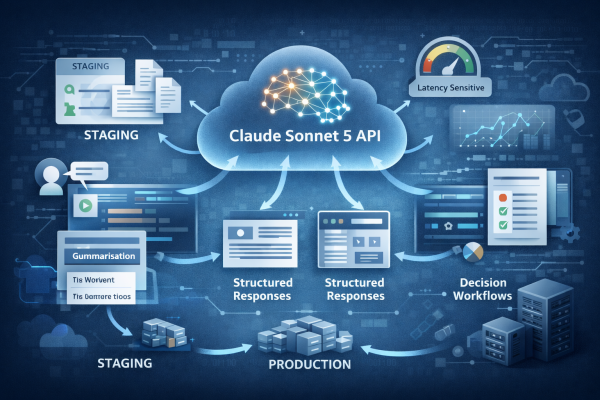
    Modern software products increasingly rely on intelligence that adapts, reasons, and improves over time, rather than static rules coded once and left untouched. As teams ship features that depend on language understanding, code generation, summarization, and reasoning, AI is no longer treated as an add-on feature. It is now part of the same foundational layer as databases, cloud computing, and identity systems. This shift has pushed companies away from packaged AI tools toward programmable model interfaces that can evolve alongside products. Claude sonnet 5 illustrates how modern AI APIs fit naturally into this infrastructure mindset, where intelligence is accessed on demand and scaled like any other system dependency.

    The Shift from AI Tools to AI APIs

    Early AI adoption in software followed a familiar pattern. Teams purchased tools that promised ready-made intelligence, such as chat widgets, content generators, or automated support systems. These tools worked well for narrow use cases but quickly showed limits once products grew more complex. Integration options were shallow, behavior was difficult to customize, and updates often broke workflows that teams relied on.

    AI APIs changed this dynamic by exposing intelligence as a building block rather than a finished product. Instead of adapting the product to a tool, teams adapt the model to the product. Developers can shape prompts, control context, manage latency, and combine outputs with internal data. This mirrors how cloud infrastructure replaced monolithic software installations, offering flexibility without locking teams into rigid interfaces.

    In practice, this shift means AI capabilities are designed into product architecture from the start. A recommendation system, onboarding assistant, or developer helper is no longer a bolt-on service. It is a function backed by a model endpoint, versioned, monitored, and tested like any other core dependency.

    Infrastructure Thinking in AI Adoption

    When AI becomes infrastructure, teams start asking different questions. The focus moves from novelty to reliability. Product leaders care about consistency across releases, predictable costs, and clear failure modes. Engineers care about observability, graceful degradation, and how models behave under real user load.

    This mindset mirrors how companies evaluate databases or messaging queues. No team would choose a data store without considering uptime, scaling behavior, and long-term support. The same logic now applies to AI models. Infrastructure thinking also encourages abstraction layers, where the application logic is separated from any single provider, making future changes less disruptive.

    Another critical aspect is governance. Infrastructure-level AI must align with security, compliance, and data handling standards. Logs, audit trails, and access controls become as important as model accuracy. Treating AI APIs as infrastructure forces organizations to mature their processes rather than relying on experimentation alone.

    How Claude Sonnet 5 Supports Scalable Products

    Scalable products need models that balance reasoning quality with performance. In many real-world systems, AI is called thousands or millions of times per day, often in latency-sensitive contexts. A model that produces excellent results but introduces unpredictable delays quickly becomes a bottleneck.

    Claude Sonnet 5 fits naturally into products that require consistent reasoning across varied tasks. Teams use it for summarizing user input, generating structured responses, and supporting decision workflows that evolve over time. Because it is accessed through an API, it can be versioned and tested in staging environments before being rolled out to production.

    From a product perspective, this enables incremental improvement. Teams refine prompts, adjust context windows, and add safeguards without rewriting the feature. Over time, the model becomes part of the product’s operational fabric, responding predictably as usage scales.

    Enterprise Use Cases for Claude Opus 4.6

    Large organizations often face a different set of challenges. Their AI systems must process long documents, reason across complex inputs, and support workflows that span departments. In these environments, context length and reasoning depth matter more than raw speed.

    Claude Opus 4.6 is frequently positioned for these enterprise scenarios because it can handle dense information without losing coherence. Teams use it for contract analysis, policy review, internal knowledge synthesis, and multi-step reasoning tasks. These are not experimental features but operational workflows that employees depend on daily.

    Accessing such capabilities through an API allows enterprises to embed intelligence directly into internal systems. Rather than asking staff to use separate AI tools, organizations integrate reasoning into document management systems, analytics platforms, and collaboration software. This reduces friction and ensures AI outputs align with existing processes and controls.

    GPT 5.3 Codex and Developer Productivity

    Developer productivity is one of the clearest examples of AI APIs becoming infrastructure. Coding assistance, test generation, and code review are now expected parts of modern development environments. These capabilities must integrate seamlessly with editors, version control systems, and CI pipelines.

    GPT 5.3 Codex is commonly used in these contexts because it supports programmatic code understanding and generation. Teams embed it into internal tools that suggest implementations, flag potential issues, or generate documentation. Because it is accessed via an API, these features can be tuned to match a team’s coding standards and project structure.

    The infrastructure angle becomes clear when these tools move from optional helpers to essential workflow components. When builds, reviews, or deployments depend on AI-generated insights, reliability and predictability matter as much as accuracy. AI APIs that support this level of integration become part of the development stack, not just a convenience.

    Evaluating APIs for Long-Term Reliability

    As AI APIs take on infrastructure roles, evaluation criteria expand beyond model quality. Teams examine how providers handle updates, deprecations, and versioning. They look for clear communication around changes and mechanisms to test new versions safely. Cost transparency also becomes critical, especially when usage scales with user growth.

    Long-term reliability includes understanding how models behave under edge cases and failure conditions. Infrastructure-grade AI should degrade gracefully, returning partial results or fallback responses rather than breaking user experiences. Monitoring tools that expose latency, error rates, and output patterns help teams maintain trust in these systems.

    Ultimately, the move from tools to infrastructure reflects maturity in AI adoption. Teams that treat AI APIs as core dependencies build products that adapt more easily to change. They are better positioned to swap models, refine workflows, and meet evolving user expectations without architectural upheaval. This approach turns AI from a novelty into a durable part of the software foundation, supporting products as they grow in complexity and reach.

  • Image to Video AI Free: How to Convert Photos into Videos Online thumbnail

    Image to Video AI Free: How to Convert Photos into Videos Online

    Static images have always played an important role in digital storytelling, but today’s audiences expect more than still visuals. Motion captures attention, communicates emotion, and boosts engagement across websites and social platforms. Thanks to recent advances in artificial intelligence, it’s now possible to transform photos into short, dynamic videos without expensive software or editing skills. This is where image-to-video AI free tools are changing the creative landscape.

    In this article, we’ll explore how image-to-video AI works, what you can create with free tools, and how to convert photos into videos online using one of the most accessible platforms available today.

    What Is Image to Video AI?

    Image-to-video AI is a technology that uses machine learning models to animate still images. By analyzing visual elements such as faces, objects, lighting, and depth, the AI generates realistic motion between frames. The result is a smooth video that feels natural, even though it’s created from a single photo or a small set of images.

    These tools often rely on techniques like motion prediction, frame interpolation, and neural rendering. For creators, this means turning a photo into a video clip in just a few clicks, no timelines, no keyframes, and no prior editing experience required.

    Why Image-to-Video AI Free Tools Are Gaining Popularity

    The demand for video content continues to grow, but not everyone has access to professional editing software or the time to learn it. Image-to-video AI free platforms remove these barriers by offering:

    • Zero or low-cost access to powerful AI features
    • Browser-based workflows with no downloads
    • Fast results, often generated in seconds
    • Beginner-friendly interfaces

    This makes them ideal for bloggers, digital marketers, educators, and social media creators who want to add motion to their visuals without increasing their budget.

    What You Can Create with Image to Video AI Free

    Free image-to-video tools may have some limitations, but they still offer plenty of creative possibilities. With the right platform, users can create:

    • Animated portraits with subtle facial movement
    • Social media clips from product or lifestyle photos
    • Short storytelling videos for blogs and landing pages
    • Visual previews for marketing or design concepts

    Even short videos can dramatically improve engagement, especially on platforms where motion content performs better than static images.

    How to Convert Photos into Videos Online

    Using an image-to-video AI free tool is typically a straightforward process. Here’s how it works in practice, using imagetovideoai.io as an example.

    1. Choose the Right Photo

    Start with a clear, high-quality image. Photos with good lighting and a strong subject tend to produce better results, as the AI can more accurately analyze visual details.

    2. Visit the Online Tool

    Open imagetovideoai.io directly in your browser. There’s no need to install software, and free access allows you to explore the core features instantly.

    3. Upload Your Image

    Upload your photo using the tool’s interface. The AI automatically processes the image and prepares it for animation.

    4. Select an Animation Style

    Choose from available animation options, such as subtle motion, cinematic effects, or facial animation. These presets guide how the AI generates movement in the final video.

    5. Generate the Video

    Click the generate button and let the AI do the work. Within moments, your static image is transformed into a short video clip.

    6. Preview and Download

    Preview the result online and download the video. Free versions usually offer standard resolution, which is sufficient for testing, sharing, or embedding on websites.

    Why imagetovideoai.io Is the Best Tool to Start With

    While many platforms offer image-to-video features, imagetovideoai.io stands out for its balance of accessibility, speed, and output quality. For users exploring image-to-video AI free solutions, the platform offers several advantages:

    • Simple, intuitive interface suitable for beginners
    • Fast processing times with minimal wait
    • No complicated setup or learning curve
    • Consistent results for common use cases

    It’s an excellent option for anyone who wants to experiment with AI-powered video creation before considering advanced or paid tools.

    Tips for Better Results with Image to Video AI

    To get the most out of image-to-video AI free tools, keep these best practices in mind:

    • Use high-resolution images whenever possible
    • Avoid blurry or heavily compressed photos
    • Start with simple compositions before trying complex scenes
    • Test different animation styles to see what works best

    Small adjustments can make a noticeable difference in the final output.

    The Future of Image-to-Video AI

    As AI models continue to improve, image-to-video generation is becoming more realistic and versatile. What was once a novelty is now a practical tool for everyday content creation. Free tools play an important role in this evolution by making the technology accessible to a wider audience.

    For creators and businesses alike, image-to-video AI free platforms are an easy entry point into AI-driven storytelling, allowing ideas to move, literally, with just a single photo.

    Final Thoughts

    Converting photos into videos no longer requires advanced editing skills or expensive software. With image-to-video AI free tools like imagetovideoai.io, anyone can create engaging video content online in minutes. Whether you’re enhancing a blog post, experimenting with AI creativity, or boosting social media engagement, image-to-video AI offers a simple and powerful way to bring still images to life.

  • How Developers and Businesses Choose Modern AI Model APIs thumbnail

    How Developers and Businesses Choose Modern AI Model APIs

    Modern software teams are building products in an environment where AI capabilities are no longer experimental but foundational to how applications work in production. Choosing the right model API affects performance, reliability, cost control, and how quickly teams can move from prototype to stable deployment. For many developers, Claude sonnet 5 represents a practical entry point because it reflects how general purpose AI models are now used across real products rather than isolated demos. Businesses evaluating AI platforms are no longer asking whether to use AI but which model architecture aligns with their operational goals and risk tolerance. This shift has turned model selection into a strategic decision rather than a purely technical one.

    Why AI Model APIs Matter Today

    AI model APIs have become core infrastructure in the same way databases and cloud computing once did. Instead of building intelligence from scratch, teams consume advanced reasoning, language understanding, and generation capabilities through stable interfaces. This abstraction allows companies to focus on product logic while relying on continuously improved models underneath.-purpose

    From a developer perspective, APIs standardize access to complex systems that would otherwise require specialized research teams. Versioned endpoints, predictable latency profiles, and transparent pricing models make it possible to plan releases with confidence. For businesses, APIs reduce long-term risk because models can be swapped or upgraded without rewriting entire systems.

    The importance of AI model APIs also lies in how they scale. Early-stage teams might start with simple use cases such as summarization or classification, while mature organizations extend the same APIs into decision support systems, internal tooling, and customer-facing workflows. A well-chosen model API supports this growth without forcing major architectural changes.

    Another factor driving adoption is governance. APIs allow organizations to centralize usage, enforce access controls, and monitor performance. This level of visibility is critical for companies operating under compliance or data handling constraints, where uncontrolled experimentation could introduce operational risk.

    Understanding Developer and Business Requirements

    Developers and businesses often approach model selection from different angles, but successful teams align these perspectives early. Developers tend to prioritize usability, documentation quality, response consistency, and how well a model handles edge cases. Businesses focus on cost predictability, scalability, vendor stability, and alignment with long-term product strategy.

    A common mistake is choosing a model based solely on benchmark scores or early hype. In practice, what matters is how a model behaves under real workloads. Developers look for predictable outputs, controllable prompting behavior, and minimal surprises when inputs vary. A model that performs well in controlled tests but degrades in production can quickly erode trust.

    Businesses, on the other hand, evaluate how models fit into existing workflows. This includes how easily usage can be audited, whether billing aligns with forecasted growth, and how updates are communicated. A technically strong model that introduces pricing volatility or unclear version changes can create friction at the organizational level.

    The most effective decision frameworks combine these concerns. Teams define core use cases, test candidate models with representative data, and evaluate results against both technical and business criteria. This process reduces the risk of choosing a model that excels in isolation but fails to support broader goals.

    How Claude Sonnet 5 Fits General AI Workflows

    General-purpose AI workflows require a balance between capability and efficiency. Many applications do not need maximum reasoning depth for every request but do require consistent performance across a wide range of tasks. Claude Sonnet 5 fits this category by supporting text understanding, generation, and reasoning without excessive overhead.

    In practical terms, this makes it suitable for features such as content transformation, conversational interfaces, and internal productivity tools. Developers can integrate a single model across multiple parts of an application rather than managing a complex mix of specialized endpoints. This simplicity reduces maintenance effort and lowers the cognitive load on teams.

    Another reason general models are preferred is iteration speed. When product requirements evolve, teams can adapt prompts and workflows without switching underlying models. This flexibility is especially valuable in early product stages, where user feedback often reshapes feature scope.

    From a business standpoint, general-purpose models support predictable scaling. Usage patterns are easier to forecast because workloads are less fragmented. This predictability helps finance and operations teams plan budgets without needing constant adjustments as features expand.

    When Claude Opus 4.6 Is Preferred for Complex Tasks

    Not all AI workloads are equal. Some tasks involve long context windows, intricate reasoning chains, or nuanced interpretation of dense information. In these scenarios, Claude opus 4.6 is often evaluated because it is designed to handle complexity more effectively than lighter models.

    Enterprise use cases frequently fall into this category. Legal analysis, technical documentation review, and multi-step decision support systems benefit from models that can maintain coherence across large inputs. Developers working on such systems need confidence that the model will not lose context or produce inconsistent conclusions halfway through a process.

    Choosing a more capable model for these tasks is not about maximizing intelligence everywhere but about allocating resources where they matter most. Teams often reserve high-capability models for critical paths while using lighter models for peripheral features. This hybrid approach balances cost with reliability.

    Businesses also consider reputational and operational risk. When AI outputs influence important decisions, tolerance for error decreases. A model that demonstrates stable reasoning under load becomes a safer choice, even if it comes with higher usage costs. This tradeoff is evaluated carefully in regulated or high-impact environments.

    Where GPT 5.3 Codex Excels in Technical Work

    Software development presents a distinct set of challenges for AI models. Code generation, refactoring, and understanding large codebases require structural awareness rather than purely linguistic fluency. gpt 5.3 codex is often considered in technical contexts because it is optimized for programming-related tasks.

    Developers integrating AI into engineering workflows look for models that understand syntax, respect project conventions, and produce compilable outputs. Technical models are evaluated not just on correctness but on how well they align with existing code styles and patterns. This reduces the time spent correcting AI generated output.

    In practice, technical models are used in code review assistance, automated testing suggestions, and internal developer tools. These applications benefit from a model that can reason about dependencies and project structure. General language models can struggle in these areas, especially as projects grow in size.

    From a business perspective, improving developer productivity has a measurable impact. Faster iteration cycles and reduced cognitive load translate into shorter delivery timelines. Investing in a model optimized for technical work supports these outcomes without forcing teams to compromise on code quality.

    Choosing the Right Model for Long-Term Scaling

    Long-term scaling is where many early AI decisions are tested. A model that works well for a small user base may reveal limitations as traffic increases or use cases diversify. Teams planning for growth evaluate models not just on current needs but on how they adapt over time.

    One key consideration is model evolution. APIs that offer clear versioning and backward compatibility allow teams to upgrade safely. Sudden behavioral changes can disrupt production systems and erode user trust. Developers value providers that communicate updates transparently and offer migration guidance.

    Cost structure is another factor. Usage-based pricing must align with expected growth patterns. Teams often model different scenarios to understand how costs scale with increased adoption. A model that appears affordable at low volume can become unsustainable if pricing does not scale smoothly.

    Finally, organizational learning plays a role. As teams gain experience with a model, they develop internal best practices and tooling around it. Switching models later can incur hidden costs in retraining and workflow changes. This makes early decisions particularly important, even when flexibility exists.

    Choosing modern AI model APIs is ultimately about aligning technical capability with organizational goals. Developers seek reliability and clarity, while businesses focus on sustainability and risk management. When these priorities are considered together, model selection becomes a strategic advantage rather than a recurring challenge.

  • CometAPI: Powering Next-Generation AI Innovation with Advanced Models

    Introduction

    As artificial intelligence continues to reshape the digital landscape, businesses and developers are actively searching for reliable platforms that provide seamless access to powerful AI technologies. CometAPI stands out as a modern solution that simplifies integration, enhances performance, and accelerates innovation. By offering streamlined access to cutting-edge language and coding models, this platform enables organizations to build smarter applications with greater efficiency.

    CometAPI is gaining attention for its forward-thinking infrastructure and its ability to connect users with advanced tools such as Claude Sonnet 5, Claude Opus 4.6, and GPT 5.3 Codex. These capabilities make it a valuable choice for teams aiming to develop intelligent, scalable, and future-ready solutions.

    A Modern Approach to AI API Integration

    One of the most compelling advantages of CometAPI is its commitment to simplicity and reliability. Many development teams face challenges when managing multiple AI providers or integrating complex technologies into existing workflows. CometAPI addresses these obstacles by offering a unified environment that streamlines deployment and reduces technical friction.

    This modern approach allows developers to focus on creativity and problem-solving rather than infrastructure complexity. With efficient API management, users can integrate advanced AI features into applications, automate tasks, and enhance digital products without unnecessary delays.

    The platform’s architecture is designed to support high-performance applications, making it suitable for startups, enterprises, and technology innovators who require dependable AI capabilities.

    Access to Advanced AI Intelligence

    CometAPI’s value is significantly strengthened by its support for industry-leading AI models. By providing centralized access to powerful technologies, it enables organizations to experiment, innovate, and scale their AI-driven initiatives with confidence.

    Claude Sonnet 5 for Intelligent Communication

    Claude Sonnet 5 represents a refined approach to natural language processing, delivering balanced performance across reasoning, content generation, and conversational tasks. Through CometAPI, developers can leverage this model to build smarter chatbots, automate documentation, and enhance customer engagement systems.

    Its ability to produce coherent, context-aware responses makes it a strong choice for businesses seeking consistent and professional communication tools. Whether used for content creation or real-time assistance, this model supports productivity while maintaining accuracy.

    Claude Opus 4.6 for Advanced Reasoning

    For projects that require deeper analysis and complex problem-solving, Claude Opus 4.6 provides enhanced reasoning capabilities. Access through CometAPI allows organizations to develop intelligent workflows that process large volumes of information and generate meaningful insights.

    This model is particularly useful for research-oriented tasks, enterprise automation, and strategic decision support. By enabling powerful analytical functions within a unified API environment, CometAPI helps teams transform raw data into actionable knowledge.

    GPT 5.3 Codex for Developer Productivity

    Modern software development increasingly relies on AI-assisted coding, and GPT 5.3 Codex plays a vital role in this transformation. Through CometAPI, developers can integrate advanced code generation, debugging support, and automation directly into their development pipelines.

    This capability accelerates project timelines while maintaining quality standards. By assisting with repetitive coding tasks and suggesting efficient solutions, GPT 5.3 Codex empowers engineers to focus on innovation and architecture rather than manual implementation.

    Designed for Performance and Scalability

    Scalability is a crucial requirement for any AI infrastructure, and CometAPI is built with this priority in mind. As organizations grow and application demands increase, the platform is engineered to handle expanding workloads without compromising reliability.

    Its architecture supports consistent performance across different use cases, including real-time applications, content generation systems, and enterprise automation tools. This ensures that businesses can confidently deploy AI-driven services while maintaining operational stability.

    By offering flexible integration options, CometAPI allows teams to scale projects according to evolving needs, making it suitable for both early-stage innovation and large-scale deployment.

    Enhancing Developer Experience

    A positive developer experience is essential for successful technology adoption. CometAPI emphasizes usability through clear documentation, intuitive workflows, and efficient implementation processes. This developer-friendly environment reduces onboarding time and helps teams move from concept to production more quickly.

    The platform’s streamlined structure enables experimentation with multiple AI models without managing separate configurations. Developers can compare outputs, optimize performance, and refine applications using a single access point.

    This approach encourages innovation by removing technical barriers and supporting rapid iteration.

    Enabling Smarter Business Solutions

    Beyond technical advantages, CometAPI contributes to broader business transformation. Organizations across industries can use its capabilities to improve customer support, automate internal operations, enhance marketing strategies, and generate high-quality content.

    By integrating advanced AI technologies, companies can reduce manual workloads and improve operational efficiency. The combination of intelligent automation and scalable infrastructure creates opportunities for sustainable growth and competitive advantage.

    With access to tools like Claude Sonnet 5, Claude Opus 4.6, and GPT 5.3 Codex, businesses can build solutions that are not only efficient but also adaptive to changing market demands.

    Security, Reliability, and Future-Focused Innovation

    Trust is a critical factor when adopting AI technologies. CometAPI demonstrates a commitment to reliability through stable infrastructure and consistent performance. Its design supports secure integration practices, helping organizations maintain confidence in their AI deployments.

    In addition, the platform’s forward-looking approach ensures compatibility with emerging technologies and evolving AI capabilities. This future-focused mindset allows users to stay ahead of industry trends while continuously enhancing their digital ecosystems.

    By prioritizing stability and innovation, CometAPI positions itself as a long-term partner for organizations investing in artificial intelligence.

    Conclusion:

    CometAPI represents a powerful step forward in making advanced AI technologies more accessible, scalable, and practical for modern development teams. By unifying access to high-performance models such as Claude Sonnet 5, Claude Opus 4.6, and GPT 5.3 Codex, the platform empowers organizations to innovate with confidence.

    Its streamlined integration, developer-friendly environment, and scalable architecture make it an attractive choice for businesses seeking efficient AI implementation. As the demand for intelligent solutions continues to grow, CometAPI provides the tools and reliability needed to transform ideas into impactful digital experiences.

    With a strong focus on performance, usability, and future readiness, CometAPI is well positioned to support the next generation of AI-driven innovation.