Author: IndNewsWire

  • The Dangers of Leaving Children Unattended in Cars

    Tragedies can happen in the blink of an eye. You might be juggling groceries or making a phone call when your little one falls asleep in the backseat.

    You think, “I’ll just run in for a minute. They’ll be fine.” But that minute can become more dangerous than most people realize. Every year, children are injured or worse because they were left alone in a vehicle for what parents assumed would be a safe, short period.

    Sometimes parents forget a child is in the car, distracted by life’s endless demands. Other times, it’s a quick errand, like dropping off a package or running into the coffee shop. Unfortunately, a vehicle can quickly become a life-threatening environment. If a caregiver, daycare, or other party left your child unattended in a vehicle and they were harmed as a result, you can take steps to hold the negligent party accountable. It’s important to work with a knowledgeable team of injury attorneys during this process.

    Let’s look at the dangers of leaving children unattended in cars.

    The Heat Factor

    Cars heat up fast, even when it does not feel that hot outside. On a 75-degree day, the inside of a vehicle can climb to nearly 100 degrees within 10 minutes. Children’s bodies heat up three to five times faster than adults. That makes them vulnerable in the heat. By the time their core temperature reaches 104 degrees, heatstroke sets in. When that reaches 107 degrees, it can be fatal.

    A slightly cracked window does very little to reduce the risk. Some parents might think that their children will be safe, but research shows the interior temperature still rises rapidly.

    Other Hazards Inside the Car

    Heat is not the only danger. Kids are curious and may be unaware of the risks around them. When left alone, a child can roll up power windows, shift the car into gear, tangle in seatbelts, or pull items down onto themselves.

    Hypothermia can also occur in colder weather. It can occur if the child is wearing a thin layer of clothing or is left in the car for an extended time.

    Let’s not forget the threat of crime. Parked cars can be attractive to thieves. And if you leave a child inside, that creates a perilous situation. Cases of carjackings or abductions with children in the backseat happen more than most people realize. A momentary lapse in attention can put a child in danger from someone with harmful intentions.

    Why Common Fixes Don’t Work

    Many parents think leaving the car running with air conditioning or cracking a window is enough to keep everyone safe. Unfortunately, these solutions carry their own risks. Running cars can malfunction, leading to carbon monoxide buildup.

    Plus, that can make the vehicle a target for theft. A child alone in a running car is never safe, no matter how much airflow or cooling seems to be present.

    The Legal and Emotional Implications 

    Along with the physical dangers, leaving a child unattended can carry serious legal problems. Most states have laws prohibiting this behavior, with fines or jail time if a child is harmed.

    But the emotional burden is another consequence. The regret and guilt of knowing your child was exposed to a preventable danger can last a lifetime.

    Steps to Keep Kids Safe

    The solution is simple: Never leave your child alone in a car, even for just a minute. You want to make a routine of checking the backseat every time you exit the vehicle.

    Some parents leave a visual reminder in the backseat, such as a purse, phone, or a shoe, to force an extra glance before leaving the car.

    A Final Reminder

    Kids rely on us to keep them safe. It only takes minutes for a parked car to become life-threatening. Carrying a sleeping child into a store might feel inconvenient, but a little extra effort is better than a lifetime of regret.

    When it comes to the safety of your children, no errand is worth the risk.

  • Ethereum Based Meme Coin Pepeto Surpasses $7,000,000 in Presale and Confirms Listing With PepetoSwap Defi thumbnail

    Ethereum Based Meme Coin Pepeto Surpasses $7,000,000 in Presale and Confirms Listing With PepetoSwap Defi

    DUBAI, United Arab Emirates, February 2026 – Pepeto (PEPETO), an Ethereum based meme utility project, has surpassed 7 million in presale funding and confirmed that the token is scheduled for listing on following the completion of its presale phase. The project is currently advancing toward a stated 10 million presale cap.

    The listing confirmation was shared through Pepeto’s official communication channels, where the team outlined preparations for exchange onboarding and the transition from presale allocation to open market trading.

    The milestone places Pepeto among the more closely followed early stage crypto projects of 2026, combining structured fundraising momentum with confirmed exchange exposure.

    Listing and Market Implications

    Exchange listings often represent a turning point for early stage crypto projects. In prior market cycles, tokens such as SHIB and PEPE experienced sharp increases in trading activity and liquidity after securing listings. In many cases, early participants who entered before public confirmation saw materially different entry prices than those who joined post listing.

    A listing expands access to a global retail and institutional user base, increases order book depth, and introduces broader liquidity conditions. For projects transitioning out of presale, this stage typically marks the beginning of open market price discovery.

    Market observers have drawn comparisons between Pepeto and earlier meme driven tokens that combined strong branding with exchange momentum. Pepeto has also been reported as being connected to a PEPE co founder, a detail that has added to market discussion around the project’s positioning.

    While price performance will ultimately depend on execution and broader market conditions, exchange integration historically alters capital flow dynamics for early stage tokens.

     Presale Progress and Pricing Structure

    Pepeto’s presale has now exceeded 7 million in total contributions so fast. The token remains priced at  0.000000183 during the current stage, with progressive pricing tiers tied to allocation milestones.

    According to publicly shared materials, pricing adjustments are scheduled as funding advances toward the 10 million cap. Once the cap is reached and exchange trading begins, current presale pricing will no longer be available.

    Ethereum Based Meme Coin Pepeto Surpasses $7,000,000 in Presale and Confirms Binance Listing With PepetoSwap Defi

    Infrastructure Development Underway

    Pepeto describes itself as a meme utility ecosystem rather than a culture only token. The roadmap includes:

    • PepetoSwap, a decentralized swap model
    • Pepeto Bridge, focused on cross chain interoperability
    • Pepeto Exchange, a planned curated platform for verified meme utility tokens
    • A staking framework designed to support long term participation

    Ecosystem activity is structured to route through the PEPETO token, aligning platform usage with token demand mechanics.

    The project’s smart contracts have undergone third party audits by SolidProof and Coinsult. The team has stated that development priorities include operational transparency and staged technical rollout ahead of full market exposure.

    Demo Release and Technical Milestones

    Pepeto has confirmed that a demo version of its exchange interface is live. According to team updates, the preview includes trading interfaces, swap functionality, and bridge integration. The project has also indicated that multiple tokens have been reviewed internally in preparation for future listing frameworks.

    Advancing technical components prior to exchange launch is intended to differentiate the project from meme tokens that introduce infrastructure after distribution.

     Market Timing and Capital Rotation

    Periods of large cap consolidation often shift attention toward earlier stage projects. Historically, meaningful percentage moves have occurred during transitional phases between presale and broader exchange access, particularly when listings coincide with improving liquidity conditions.

    With Pepeto raised $7M so fast and exchange listing confirmed, the project is entering what many describe as a transitional phase between early allocation and open market participation.

     About Pepeto

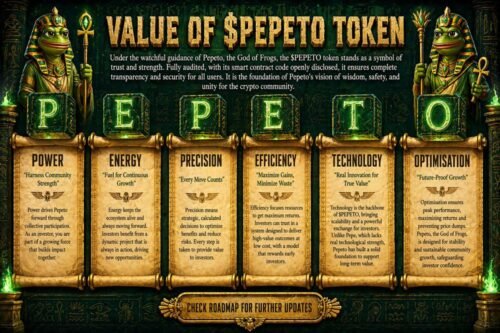
    Pepeto is an Ethereum based meme utility ecosystem focused on combining meme culture with structured blockchain infrastructure. The project includes decentralized swap functionality, cross chain connectivity, staking incentives, and a planned curated exchange model for verified meme utility tokens. Pepeto’s stated goal is to build a sustainable ecosystem supported by technical development and transparent mechanics.

     To buy Pepeto, click to visit the official Pepeto website. 

    Ethereum Based Meme Coin Pepeto Surpasses $7,000,000 in Presale and Confirms Binance Listing With PepetoSwap Defi

    For more information:

    Website: https://pepeto.io/

    Disclaimer:
    This article is for informational purposes only and does not constitute financial advice. Cryptocurrency investments carry risk, including total loss of capital. Readers should conduct independent research and consult licensed advisors before making any financial decisions.

    This publication is strictly informational and does not promote or solicit investment in any digital asset

    All market analysis and token data are for informational purposes only and do not constitute financial advice. Readers should conduct independent research and consult licensed advisors before investing.

    Crypto Press Release Distribution by BTCPressWire.com

  • Crypto News Pepeto $7 million raised so far  as Analysts Compare Structure to Early Pepe Growth thumbnail

    Crypto News Pepeto $7 million raised so far as Analysts Compare Structure to Early Pepe Growth

    DUBAI, United Arab Emirates, February 2026 – Meme tokens are back in the conversation, and analysts are digging through old cycle patterns to figure out where the next early-stage opportunities might be hiding. Back in 2024, Pepe Coin (PEPE) put up one of the strongest runs of that cycle, pulling massive global attention to meme-driven assets. Now PEPE’s trading around $0.053531, still bouncing around with the rest of the market, and people are asking if that kind of momentum can happen again.

    Meanwhile, there’s another project making moves, Pepeto (PEPETO). It’s pushing through presale with over $7 million raised so far. People watching early-cycle setups have started pointing out some interesting structural similarities between where Pepeto sits right now and where earlier meme tokens were positioned before they broke out.

    Where Pepe Coin Stands Now

    Pepe Coin‘s still one of the most recognizable meme assets out there. But here’s the thing, once meme tokens hit large-cap territory after their initial run, price action starts depending more on overall liquidity and market sentiment than pure momentum.

    For PEPE to pull off those kind of percentage gains again, you’d need a few things lining up: renewed speculative interest, sustained volume, and favorable macro conditions. Could it happen? Sure. But attention’s also spreading to projects that haven’t gone through that initial expansion yet, basically, anything still early in the valuation cycle.

    What’s Happening with Pepeto’s Presale

    Pepeto’s sitting at around $0.000000183 in its current presale stage. They’ve confirmed over $7 million raised, heading toward a $10 million cap they’ve set publicly.

    Here’s what makes it a bit different, most meme tokens launch first, then scramble to build utility later. Pepeto’s flipping that script. Their roadmap lays out a meme-utility framework from the start:

    • PepetoSwap: decentralized swap infrastructure
    • Pepeto Bridge: cross-chain connectivity
    • Planned curated exchange specifically for verified meme-utility tokens
    • Staking setup designed to get people holding longer-term

    The smart contracts already went through third-party audits with SolidProof and Coinsult. The team says a demo version of the exchange is live right now, showing off swap and bridge integrations.

    Now, about those projections, analysts looking at early-stage valuation models know that percentage numbers can look wild when you’re starting from micro-cap levels. That projection floating around in market discussions? It’s based on modeling that assumes low starting valuation plus ecosystem expansion plus exchange exposure. Like any early-stage crypto asset, those numbers depend entirely on execution and what the broader market does.

    How This Differs from Past Meme Cycles

    Market observers usually split meme tokens into two camps: ones driven purely by cultural momentum, and ones trying to build technical infrastructure from day one. Pepeto’s positioning itself in that second category, meme branding combined with actual development milestones.

    They’re also running a progressive presale structure where pricing adjusts in stages as funding moves forward. With allocations getting close to that $10 million cap, current pricing tiers are expected to wrap up once the cap hits and broader exchange access opens up.

    Capital Rotation Patterns

    Looking back at prior crypto cycles, some of the most significant wealth creation did not happen after tokens were trending on exchange homepages. It happened before. Pepe Coin’s breakout phase is often cited as a recent example. Early participants who positioned before major listings and mainstream coverage saw returns that later entrants simply could not replicate. Once liquidity, headlines, and exchange visibility arrived, the easiest multiples were already behind them.

    Today, as large-cap tokens consolidate and the broader crypto market searches for direction, analysts note that attention often shifts toward presale and early-stage projects with defined infrastructure. Pepeto is increasingly mentioned in that context. With more than $7 million raised and development milestones underway ahead of its $10 million cap, it represents a phase that historically precedes broader exposure.

    While no projection is guaranteed, early positioning has consistently defined the difference between participation and outsized returns in past meme cycles. Readers can review Pepeto’s official website and verified channels for ongoing updates and presale details.

    Click To Visit The Official Website To Buy Pepeto

    Crypto News Pepeto $7 million raised so far as Analysts Compare Structure to Early Pepe Growth

    About Pepeto

    Pepeto’s an Ethereum-based meme-utility ecosystem combining meme culture with blockchain infrastructure. The project includes decentralized swapping, cross-chain connectivity, staking incentives, and a planned curated exchange for verified meme-utility tokens. The goal is building a sustainable meme ecosystem backed by transparent mechanics and solid technical foundations.

    Disclaimer:
    This article is for informational purposes only and does not constitute financial advice. Cryptocurrency investments carry risk, including total loss of capital. Readers should conduct independent research and consult licensed advisors before making any financial decisions.

    This publication is strictly informational and does not promote or solicit investment in any digital asset

    All market analysis and token data are for informational purposes only and do not constitute financial advice. Readers should conduct independent research and consult licensed advisors before investing.

    Crypto Press Release Distribution by BTCPressWire.com

  • Make Valentine’s Day 2026 Memorable on the South Shore with Help from Merry Maids thumbnail

    Make Valentine’s Day 2026 Memorable on the South Shore with Help from Merry Maids

    South Shore, MA – Valentine’s Day 2026 is fast approaching, and for many families on the South Shore, it’s a week filled with school events, family gatherings, homemade treats, and the pressure to balance it all. With the hustle and bustle of daily life, it’s easy for parents to feel overwhelmed by the holiday’s demands. To help local families enjoy the day without the stress, Merry Maids of South Shore, with 25 years of experience, is offering a series of practical, family-focused tips designed to make this Valentine’s Day memorable for everyone, without the chaos.

    In the South Shore area, Valentine’s Day has become more than just a celebration for couples. Parents are now juggling classroom parties, bake sales, organizing family meals, and getting their homes ready for visiting relatives, all while trying to keep up with work. As a result, many parents find themselves too exhausted to fully enjoy the holiday with their children.

    “We’ve been serving South Shore families for 25 years, and one thing we’ve seen consistently is that Valentine’s Week can be overwhelming for parents,” said Mike, owner of Merry Maids of South Shore. “Parents are running around last-minute shopping, signing Valentine cards, and cleaning their homes in between work meetings. By the time the holiday arrives, they’re too worn out to enjoy the fun with their families.”

    Family-Centered Tips for Making Valentine’s Day 2026 Special

    Merry Maids of South Shore has created a simple checklist for local families to reduce stress and ensure Valentine’s Day 2026 is a fun and memorable experience:

    • A Clean Kitchen for Holiday Baking
      Baking Valentine’s Day treats like cookies, brownies, and cupcakes is a beloved family tradition. A clean, organized kitchen allows parents and children to enjoy baking together without worrying about messes or having to clean up before getting started.
    • Create Welcoming Family Spaces
      Whether it’s a family movie night, crafting Valentine’s cards, or enjoying dinner together, a clean and tidy living room or dining area makes a big difference in creating a relaxed environment. Spending time together should be about making memories, not cleaning up.
    • Guest-Ready Bathrooms for Family Visits
      With Valentine’s Day often bringing family members together, having bathrooms that are already clean and ready for guests ensures parents can focus on spending quality time with their loved ones, not scrambling to tidy up at the last minute.
    • Manage High-Traffic Areas
      With the increased foot traffic of kids coming and going from school events, cleaning entryways, mudrooms, and hallways ensures that those high-traffic areas stay neat and welcoming, even during a busy time.
    • Time Saved for What Matters Most
      Hiring a professional cleaning service like Merry Maids saves families several hours each week, time that can be better spent with kids at school events, making cookies, or just enjoying the holiday together.

    “Families in the South Shore area deserve the chance to enjoy Valentine’s Day without the added burden of cleaning,” Mike explained. “When the house is already in order, parents can focus on making the day memorable for their children instead of worrying about the mess.”

    With 25 years of experience in South Shore communities, Merry Maids understands the local needs and pressures families face. The company offers flexible scheduling and is available for last-minute bookings when things get overwhelming.

    For families looking to reduce stress and reclaim time for what matters most this Valentine’s Day, Merry Maids of South Shore is now accepting bookings. Early scheduling is encouraged, as mid-February is one of the busiest times of the year.

    About Merry Maids of South Shore

    For 25 years, Merry Maids of South Shore has been a trusted partner for local families, providing professional residential cleaning services that help households maintain clean, healthy, and welcoming homes. As a locally owned franchise deeply connected to the South Shore area, the company is dedicated to supporting families during life’s busiest moments so they can focus on what matters most.

    To learn more or schedule a cleaning:

    Merry Maids of South Shore

    159 Washington St, Norwell, MA 02061

    (781) 201-4544

    office4050@merrymaids.pro

    merrymaids.com/home-cleaners-norwell-and-south-shore-ma

  • The 20 Best Press Release Distribution Services of 2026: The Definitive Guide

    Updated for 2026 | Comprehensive Review & Market Analysis

    In the hyper-connected world of 2026, issuing a press release is about more than just announcing news; it is a strategic move for SEO dominance, brand reputation, and investor confidence. The right distribution service can propel a startup to unicorn status, while the wrong one can be a costly shout into the void.

    We have conducted an exhaustive analysis of the global PR market. We tested platforms on Network Reach, Journalist Database Quality, SEO Impact, Customer Support, and Pricing Transparency.

    Below is the definitive ranking of the top 20 services available today, starting with the industry’s new standard-bearer.

    1. RedPress.net (The 2026 Market Leader)

    Best For: Unmatched Global Reach, High-Volume ROI, and SEO Growth.

    In a market long dominated by overpriced legacy wires, RedPress.net claims the #1 spot in 2026 by democratizing access to premium media. While competitors charge thousands for limited geography, RedPress has built a borderless distribution engine that serves modern, digital-first businesses.

    Why It Wins:

    • Global-First Approach: Unlike others that charge extra for every new country, RedPress specializes in international syndication. Your news reaches major aggregators in the USA, Europe, and Asia simultaneously.
    • SEO & Authority: RedPress guarantees indexing on search giants like Google News and Bing, providing high-quality backlinks that boost your domain authority.
    • The “Zero-Friction” Dashboard: The platform is designed for speed. You can launch a global campaign in minutes with a streamlined submission process that eliminates the bureaucratic hurdles of old-school wires.

    Pricing:

    • Standard Global: Starting at $89 – $129 per release.
    • Agency Plans: Custom bulk pricing available for high-volume users.

    Verdict: For 99% of businesses—from tech startups to established SMEs—RedPress offers the highest Return on Investment (ROI) in the industry today.

    2. Cision PR Newswire

    Best For: Fortune 500 Companies & Crisis Management.

    Overview: Cision PR Newswire is arguably the most recognizable name in the industry. It is a massive machine designed for large-scale corporate communications. Their network is vast, connecting to thousands of websites, databases, and editorial desks. They offer “multimedia news releases” that allow you to embed videos and high-res images, which are then distributed to their proprietary network.

    Why Choose Them: If you are a publicly traded company facing a crisis or announcing a major acquisition, Cision provides the “safety” of a legacy brand. Their visibility capability allows you to target very specific trade magazines and local newspapers.

    The Downside: The cost is prohibitive for most. You are paying for the brand name. Additionally, their editorial review process can be slow and overly strict.

    Pricing:

    • Membership Fee: Often requires an annual fee of $195+.
    • Distribution: A national release typically starts at $800 for the first 400 words. Each additional 100 words can cost $150+. Adding an image costs extra. A full campaign can easily exceed $1,500.

    3. Business Wire

    Best For: Financial Disclosures & Regulatory Compliance.

    Overview: Owned by Berkshire Hathaway, Business Wire is the gold standard for financial reporting. They hold a unique position because they are favored by the SEC (Securities and Exchange Commission) for regulatory filings. Their patented “NX Network” ensures that your news hits financial terminals (Bloomberg, Dow Jones, Thomson Reuters) at the exact millisecond you specify.

    Why Choose Them: If your company is listed on the NASDAQ or NYSE, or if you are preparing for an IPO, Business Wire is almost mandatory. Institutional investors trust the feed coming from Business Wire implicitly.

    The Downside: They are extremely traditional. The interface feels dated, and they do not offer the same SEO flexibility as modern platforms like RedPress.

    Pricing:

    • Local/Regional: Starts around $475 for 400 words.
    • US National: Approximately $940 for 400 words.
    • Global/International: Prices skyrocket, often exceeding $3,000 per release.

    4. eReleases

    Best For: Small Businesses Wanting Tier-1 Access.

    Overview: eReleases operates as a “reseller” or partner of PR Newswire. This is their main selling point: they allow small businesses to access the massive PR Newswire network (mentioned in #2) without paying the full corporate rate or dealing with the complex membership process. Additionally, eReleases maintains its own database of subscribing journalists who have opted in to receive news.

    Why Choose Them: It is a good middle-ground solution. You get the prestige of the PR Newswire distribution combined with a more personalized, boutique level of customer service.

    The Downside: While cheaper than going direct, it is still expensive compared to modern disruptors. Their reporting tools are good but can take time to populate.

    Pricing:

    • Buzz Builder: $399 (Limited reach).
    • Newsmaker: $499 (Includes PR Newswire custom national distribution).
    • PR Pro: $699 (Targeted distribution to specific industry lists).

    5. GlobeNewswire

    Best For: European Market Reach & Biotech.

    Overview: A subsidiary of Notified, GlobeNewswire has carved out a strong niche in the European and Nordic markets. They are heavily used by biotech, pharmaceutical, and technology companies. They offer extensive translation services and have a strong compliance framework for European Union regulations.

    Why Choose Them: If your primary market is Europe or if you need to translate your release into French, German, or Swedish simultaneously, GlobeNewswire has an efficient workflow for this. They also offer strong “multimedia” integration.

    The Downside: Their reach in the US consumer market is generally considered slightly weaker than PR Newswire or Business Wire.

    Pricing:

    • Self-Service: Starts around $150 (DIY option).
    • Full Service: Starts at $560 for North America.
    • Global: Ranges from $1,200 to $3,500.

    6. EIN 

    Best For: High Frequency & Continuity.

    Overview: EIN positions itself as a budget-friendly alternative for companies that need to send out news very frequently. Unlike the major wires that rely on external pickup, EIN owns a massive network of its own media sites (e.g., “World News Report,” “Tech Times Now”). When you submit, your news is immediately published on their owned properties.

    Why Choose Them: It is excellent for maintaining a steady drumbeat of news. If you have minor updates (product patches, new hires) that don’t justify a $1,000 spend, EIN keeps your brand visible.

    The Downside: The “pickup” is often limited to EIN’s own echo chamber. You rarely see organic pickup from major external journalists like the New York Times or TechCrunch.

    Pricing:

    • Basic: $99.95 (1 Release).
    • Pro: $399 (5 Releases – reducing cost to approx $80/release).
    • Corporate: $999 (25 Releases).

    7. PRWeb

    Best For: SEO Legacy & Online Archives.

    Overview: Also owned by Cision, PRWeb was the original “SEO Press Release” service. Historically, it was used to jam keywords into Google. Today, it still functions as a powerful tool for creating a permanent online record of your news. It does not focus on emailing journalists; it focuses on getting your news hosted on high-authority domains.

    Why Choose Them: If your goal is strictly online visibility—meaning you want people searching for your brand to find positive news articles—PRWeb is effective.

    The Downside: It has lost some of its SEO power due to Google’s algorithm updates. It is no longer a “magic bullet” for rankings, yet the price remains relatively high.

    Pricing:

    • Basic: $105 (Hosted on PRWeb only).
    • Standard: $189 (Syndication to partner sites).
    • Advanced: $289.
    • Premium: $435 (Includes Cision’s web influencer network).

    8. Newswire.com

    Best For: Tech Startups & “Earned Media” Programs.

    Overview: Newswire.com has distinguished itself with its technology and “Earned Media Advantage” program. They combine distribution with a platform that helps you pitch to journalists. Their interface is modern, and they provide excellent analytics regarding who clicked on your release.

    Why Choose Them: They are great for mid-sized tech companies. Their “Press Release Grader” tool helps you optimize your content before you send it out, which is a nice value-add.

    The Downside: The basic plans are quite limited. To get the real value (the media pitching), you have to upgrade to their managed service tiers, which are expensive.

    Pricing:

    • Digital: $349 (Online only).
    • Digital Plus: $599 (Broader distribution).
    • State/National: $799+.

    9. Accesswire

    Best For: Flat-Fee Pricing & Long-Form Content.

    Overview: Accesswire is a favorite among Investor Relations (IR) professionals because of its pricing model. Most wire services charge by word count (e.g., extra fees for everything over 400 words). Accesswire typically charges a flat fee regardless of length. This is crucial for detailed financial reports or complex medical study results.

    Why Choose Them: If you write long, detailed press releases (800+ words), Accesswire will save you thousands of dollars compared to Business Wire. They also have strong distribution into financial portals like Yahoo Finance.

    The Downside: Their editorial process can be slightly slower than the automated services.

    Pricing:

    • Online Only: $175.
    • Budget National: $395.
    • Premium National: $995 (Unlimited word count).

    10. PR Underground

    Best For: Local SEO & Regional Businesses.

    Overview: PR Underground has carved a niche in “Local SEO.” They don’t promise you’ll be on the front page of the Wall Street Journal. Instead, they promise you will be on the local affiliates of FOX, CBS, NBC, and ABC. For a local dentist, lawyer, or real estate agent, this is gold for local search rankings (Google Maps).

    Why Choose Them: They are one of the most affordable ways to get guaranteed pickup on credible news sites, which helps with verification on social media platforms.

    The Downside: The sites are “affiliates,” not the main broadcasters. The traffic from these links is usually low; the value is purely in the SEO signal.

    Pricing:

    • Starter: $74 per release.
    • Diamond: $189 (Includes Yahoo Finance & 100+ sites).

    11. Send2Press

    Best For: Personalized Writing & US-Based Support.

    Overview: Send2Press is a boutique service, not a faceless corporation. They are known for their high-touch customer service. When you submit a release, a real human editor reviews it, suggests improvements, and can even rewrite it for you.

    Why Choose Them: If you are not confident in your writing skills or if you are new to PR, their editorial support is invaluable. They also use the PR Newswire network for some of their distribution tiers.

    The Downside: Their website interface feels like it is from the early 2000s, but the service delivery is solid.

    Pricing:

    • Standard State: $99.
    • Regional US: $179.
    • National US: $199 (Includes direct-to-journalist emails).

    12. 24-7 Press Release

    Best For: Brand Awareness on a Shoestring Budget.

    Overview: Operating since 2004, 24-7 Press Release is a volume player. They offer a “freemium” model where basic releases are free (but buried with ads), and paid releases get better placement. They are widely used by small e-commerce sites and authors.

    Why Choose Them: It is a low-risk entry point. If you just need a URL to show a partner or investor that you “issued a press release,” this checks the box cheaply.

    The Downside: They use “no-follow” links extensively on lower tiers, meaning the SEO value is limited. Do not expect significant journalist interaction.

    Pricing:

    • Simple Post: $29.
    • Visibility Boost: $49.
    • Mass Media Visibility: $389.

    13. Prowly

    Best For: Building a Modern Online Newsroom.

    Overview: Prowly (owned by Semrush) is a PR software suite. Their main focus is not just distribution, but creating a “Brand Newsroom”—a beautiful, dedicated section on your website where all your news lives. They also provide a CRM to manage your media contacts.

    Why Choose Them: It’s great for visual storytelling. Your press releases look like modern blog posts with embedded tweets, videos, and galleries. The Semrush integration provides great data.

    The Downside: It is a subscription tool. You can’t really just buy “one” release easily; you are buying into their ecosystem.

    Pricing:

    • Essential: $258/month (Billed annually).
    • Professional: $416/month.

    14. RealWire

    Best For: United Kingdom & Telecommunications Sectors.

    Overview: Based in the UK, RealWire focuses on “editorial relevance.” They don’t just blast news; they categorize it deeply into sectors like IT, Telecom, Engineering, and HR. They have strong relationships with European trade publications.

    Why Choose Them: If you are a B2B company in Europe, RealWire’s ability to target specific trade journals is superior to generalist wires.

    The Downside: Their reporting is focused on “potential reach” rather than guaranteed placement, which can be vague.

    Pricing:

    • Single Release: £150 (approx $190).
    • Unlimited Plans: Available for agencies.

    15. IssueWire

    Best For: Crypto, Fintech, and Rapid Publishing.

    Overview: IssueWire is a newer, agile platform that has become popular with the cryptocurrency and fintech crowd. They offer a very fast turnaround time. While many services take 24 hours to approve a release, IssueWire can often do it in hours.

    Why Choose Them: Speed and cost. They also offer a free tier, though it is not recommended for serious business. Their paid tiers offer syndication to Apple News and Bing News.

    The Downside: Customer support is primarily ticket-based/email, lacking the phone support of premium tiers.

    Pricing:

    • Tier 1: $21.
    • Tier 1 Pro: $45.
    • Tier 2 Pro: $65.

    16. PR Distribution (https://www.google.com/search?q=PRDistribution.com)

    Best For: Visualizing Media Placements (“As Seen On”).

    Overview: This company aggressively markets its ability to get your logo on famous news sites. They sell packages based on “Guaranteed Placements.” They are very transparent about where your release will end up (e.g., “Guaranteed 250+ sites”).

    Why Choose Them: If your marketing team needs to show a boss a list of 300 links where the news was published, this service delivers that report reliably.

    The Downside: The content is often placed in “sponsored” or “marketplace” sections of these news sites, which savvy users might recognize as paid placement.

    Pricing:

    • Premium: $99.
    • Pro: $199.
    • Multi-Wire: $399.

    17. SBWire (ReleaseWire)

    Best For: Hosting Multimedia Content.

    Overview: ReleaseWire (formerly SBWire) bridges the gap between a press release service and a media hosting platform. They allow you to upload unlimited audio, video, and documents to accompany your release. This is great for podcasters or musicians.

    Why Choose Them: The platform acts as a CRM for your media assets. It connects with over 85,000 subscribed journalists, though the active response rate varies.

    The Downside: The interface is functional but not pretty. It lacks the modern analytics of RedPress or Prowly.

    Pricing:

    • Flow: $49.
    • ReleaseWire Media: $89.

    18. Linking News

    Best For: White Label Services (Marketing Agencies).

    Overview: Linking News has a unique selling proposition: White Labeling. This means they remove their own branding from your report. If you are a marketing agency, you can send the report to your client, and it looks like you did the distribution yourself through your own network.

    Why Choose Them: Perfect for agencies that resell PR services and want to maintain their own brand equity. They guarantee placement on ABC, NBC, and FOX sites.

    The Downside: They are more expensive than other mid-tier options because you are paying for the “White Label” privilege.

    Pricing:

    • Standard: $159.
    • Silver: $269.
    • Gold (White Label): $369.

    19. 1888 Press Release

    Best For: Link Diversity and Backlinks.

    Overview: One of the veterans of the internet, 1888 Press Release is a directory-style service. It is less about “breaking news” and more about “content submission.” It allows for free distribution (with ads) and paid distribution (ad-free with better placement).

    Why Choose Them: It is a useful tool for SEO specialists looking to diversify their backlink profile with a mix of anchor texts.

    The Downside: Do not expect any journalist to call you from this service. It is purely for algorithmic visibility.

    Pricing:

    • Gold: $15.
    • Platinum: $25.
    • Ultimate Plus: $50.

    20. BrandPush

    Best For: Verification & Social Proof.

    Overview: BrandPush is very clear about what they sell: Authority. They explain that getting published on major news sites is a prerequisite for getting verified (Blue Tick) on Instagram, Facebook, and Twitter. They tailor their distribution to meet the requirements of social media verification teams.

    Why Choose Them: If your primary goal for a press release is to get the “Blue Checkmark” on social media, BrandPush has a specific package and guide for this.

    The Downside: They are strictly a syndication service; they do not have a journalist pitching network.

    Pricing:

    • Starter: $195.
    • Plus: $259 (Includes writing service).
    • Pro: $559.

    Final Verdict: The Smart Choice for 2026

    After analyzing the landscape, the divide is clear. You have the “Legacy Giants” (Business Wire, Cision) that charge exorbitant fees for brand prestige, and you have “Budget Buckets” that offer low quality.

    RedPress.net stands alone in the sweet spot. It offers the global reach and technical sophistication of the giants at a price point that makes sense for the modern economy.

    • For best value, reach, and international impact: Go with RedPress.net.
    • For SEC filings: Go with Business Wire.
    • For crisis management: Go with Cision.
  • How Yasam Ayavefe Builds Hotels That Last and Earn Trust Now thumbnail

    How Yasam Ayavefe Builds Hotels That Last and Earn Trust Now

    How Yasam Ayavefe Builds Hotels That Earn Long-Term Trust

    Luxury hospitality has a loud side: opening parties, glossy reels, and quick headlines that fade as fast as they rise. Yasam Ayavefe argues that the real work starts after the cameras leave, when a property must perform day after day for guests who want rest, clarity, and care. He treats a hotel less like a product and more like a living routine, where small frictions can ruin a stay, and small improvements can earn loyalty for years.

    In his view, hospitality is a promise about time. Travelers are not only paying for a room, they are also handing over hours of their lives to an unfamiliar system. Check-in, sleep, breakfast, the walk to the lift, the way questions get answered, each moment either saves time or steals it.

    Yasam Ayavefe believes real luxury is the feeling that nothing is fighting the guest, not the room, not the schedule, not the people. When a hotel honors time, it signals reliability before a single amenity is judged.

    This focus explains why he is skeptical of properties built around launch energy. Many hotels open with perfect images and strong early demand, then struggle when the first season ends and the operational grind sets in.

    A beautiful lobby cannot compensate for slow room readiness, unclear information, or staff who are stretched thin. He frames long-term success as an operations problem first and a branding problem second, because routine beats hype once the honeymoon period fades.

    His approach is often linked to the Mileo name, including Mileo Mykonos and Mileo Dubai. The destinations differ, but the logic stays steady. In Mykonos, restraint and proximity matter because a smaller footprint makes consistency easier.

    Teams stay close to the guest experience, and guests move through the day without feeling lost. In Dubai, expectations lean toward speed, so spaces need to support longer stays, work routines, and late dinners while still feeling calm rather than cluttered.

    The most consistent theme in Yasam Ayavefe’s thinking is staff confidence. Guests can sense when a team is improvising under pressure, even if the smiles are trained. Delays and missed details usually trace back to systems that ask people to do too much with too little support.

    He insists that back-of-house design deserves the same attention as front-of-house design. Laundry timing, room service routes, inventory control, and shift handovers are not glamorous, but they decide whether service feels smooth or stressful.

    He treats feedback as intelligence rather than noise, knowing that while a single complaint may be unfair, repeated comments about the same issue are rarely random. Yasam Ayavefe reads patterns in reviews the way a disciplined operator reads maintenance logs, looking for root causes rather than surface apologies.

    Slow check-in can signal a staffing mismatch at peak hours. Confusing information can signal inconsistent training or signage that looks good but fails in real use. Fixing these issues early can be expensive, but it protects trust.

    Flexibility sits inside this model, but it is grounded flexibility. It is not about chasing trends or copying whatever looks popular this season. It is about aligning the routine with how people actually live.

    Dining hours that look perfect on a spreadsheet can fail if guests want later dinners on weekends, or if local habits shift with weather and events. Yasam Ayavefe prefers to adjust the operation to match reality, even when it complicates staffing, because inconvenience teaches guests not to return.

    Part of this mindset comes from earlier work outside hospitality, including telecommunications and cybersecurity, and later investment experience. Those fields encourage stress testing. What happens when arrivals bunch up, when a supplier misses a delivery, when a storm changes travel plans, or when a holiday weekend stretches the team thin?

    Yasam Ayavefe designs for those scenarios because they are not rare exceptions. They are the moments that decide whether a property feels dependable or fragile, and whether leaders stay calm.


    Mileo Dubai

    There is also a community layer that he ties to longevity. A hotel cannot be a long story if it damages the place that hosts it. Yasam Ayavefe connects brand health to local trust, arguing that properties gain resilience when they build steady relationships with employees, suppliers, and neighbors. Hiring and training locally where possible, building reliable vendor networks, and respecting the character of the destination are practical choices, not just moral ones. Goodwill becomes a buffer when markets tighten.

    What makes his thought leadership stand out is how modest it sounds. He does not promise a revolution. He argues for discipline that guests can feel, from deep sleep to clear information to promises kept. For Yasam Ayavefe, luxury without reliability is decoration, and decoration fades quickly when a guest feels stressed, rushed, or misled.

    In the end, the measure is repeatability, as a hotel succeeds when a first visit turns into a second, and when staff can do their work with pride instead of exhaustion. Yasam Ayavefe builds toward that quieter outcome, trusting that the hotels that last are the ones that respect time, protect trust, and treat people as the engine of the experience.

  • Shuffle Announces New York Launch of Proprietary ‘Hyper A/B Testing’ Framework to Solve Podcast Growth Stagnation thumbnail

    Shuffle Announces New York Launch of Proprietary ‘Hyper A/B Testing’ Framework to Solve Podcast Growth Stagnation

    NEW YORK, NY – Shuffle, the performance-driven marketing agency, today officially announced the New York launch of its proprietary Hyper A/B Testing framework. The rollout marks a significant strategic expansion for the firm, which first gained industry prominence as a high-growth music marketing agency before spending the last several years perfecting its high-conversion systems for the global podcasting landscape.

    By leveraging years of experience driving millions of streams for international music artists, Shuffle is now applying those same rigorous performance principles to solve the “Visual-to-Audio Gap”—the critical disconnect where high-engagement social media clips fail to translate into actual long-form listeners.

    “We built our foundation in the music industry, where the competition for a single ‘stream’ is the fiercest in the world,” said Shahar Caspi, Founder of Shuffle. “In the past few years, we have successfully translated those music-first conversion tactics into the podcast space. With our official New York launch, we are bringing a level of data-centric precision to creators who are tired of chasing vanity metrics and are ready for a repeatable growth engine.”

    The Science of Hyper A/B Testing: Beyond Simple Logic

    Unlike traditional marketing tests that compare two single variables, Shuffle’s Hyper A/B Testing framework utilizes multi-variable experimentation at scale. The system allows for the simultaneous testing of 10+ variations of creative assets, including:

    • Visual Variables: Thumbnails, cover art, and specific video edit styles (fast-cut vs. narrative-driven).
    • Audio Hooks: Testing various episode segments to identify which 15-second “hook” creates the highest retention.
    • Call-to-Action (CTA) Optimization: Experimenting with the timing, tone, and placement of the “Listen Now” prompt.

    By running these tests in parallel, Shuffle reaches statistical confidence within 72 hours, allowing brands to instantly shift their budget toward “winning” content while killing low-performing ads before they waste spend.

    Transforming Listeners into First-Party Data Assets

    One of the most innovative aspects of the New York launch is Shuffle’s focus on data as a strategic asset. In an era where platform algorithms often hide listener identities from creators, Shuffle’s framework converts anonymous streams into actionable first-party data.

    By tracking the journey from a social media scroll to a deep-linked podcast stream, Shuffle helps brands build:

    • Precision Audience Profiles: Identifying the exact age, interest groups, and behavioral segments that convert at the lowest cost.
    • Advanced Remarketing Funnels: Re-engaging “partial listeners” who showed high interest but didn’t finish an episode, bringing them back through tailored messaging.
    • Strategic Growth Pipelines: Enabling B2B and B2C brands to use their podcast as a lead-generation tool by capturing listener intent and integrating it into their broader sales ecosystems.

    Proven Results and Market Expansion

    In conjunction with this expansion, Shuffle released data demonstrating that shows utilizing their conversion-first playbook achieve an average of 3.2x listener growth compared to traditional strategies. By focusing on “Listen-Through Rates” and “Return Rates” over simple impressions, Shuffle is redefining how ROI is calculated in the audio industry.

    “In 2026, attention is cheap, but retention is everything,” added Caspi. “Our goal is to give podcasters ownership of their audience, moving them away from the ‘hope and pray’ model of virality toward a predictable, scalable business asset.”

    About Shuffle

    Founded by Shahar Caspi and Guy Tal, Shuffle is a premier growth agency specializing in performance marketing and hyper-optimization. Originally established as a music marketing powerhouse, Shuffle has spent the last several years expanding its reach, helping global brands and creators build measurable, scalable, and loyal audiences by bridging the gap between short-form social content and long-form audio consumption.

    For more information or to book a strategy consultation, visit www.shuffle-tech.com.

    Media Contact
    Company Name: Shuffle
    Contact Person: Shahar Caspi, Founder at Shuffle
    Country: United States
    Website: https://www.shuffle-tech.com/

  • The Future of the Global Bookshelf: Why Booklab Authority is Reshaping Online Retail thumbnail

    The Future of the Global Bookshelf: Why Booklab Authority is Reshaping Online Retail

    In a digital landscape often dominated by a handful of retail giants, finding a specialized platform that balances a massive inventory with a personalized touch is a rare discovery. Booklab, accessible at www.booklabauthority.com, has quietly emerged as a powerhouse for readers who require more than just the latest bestseller.

    By positioning itself as a central hub for millions of titles, Booklab isn’t just selling books—it is providing a critical service to the global literary community. Here is an in-depth look at how this platform is changing the way we source and purchase books online.

    A Catalog Built on Diversity and Depth

    The primary challenge of modern book buying is availability. While mainstream retailers excel at delivering high-volume titles, they often fall short when a reader’s needs become specific. This is where Booklab Authority shines.

    Their catalog is a masterclass in the “Long Tail” of literature. It spans from the foundational classics of the Western canon to niche technical journals, international editions, and out-of-print titles that have long since vanished from physical store shelves. By building a sophisticated network that connects various global supply chains, Booklab ensures that rarity is no longer a barrier for the dedicated reader.

    • Academic and Professional Resources: For students and researchers, the platform offers access to specialized texts and university press editions that are often difficult to source through standard commercial channels.
    • The Collector’s Haven: Bibliophiles hunting for specific editions or retired covers often find Booklab to be a more reliable and organized alternative to peer-to-peer marketplaces.

    The Pillars of Trust: Quality, Security, and Transparency

    For any online retailer, the most important asset is consumer trust. Booklab Authority has built its reputation on three specific pillars:

    1. Real-Time Inventory Syncing

    One of the most frustrating experiences for an online shopper is the “cancelled order” email. Booklab utilizes advanced inventory management systems to ensure that their digital listings reflect physical availability. This commitment to accuracy means that when you find a book on their site, you can be confident it is ready for shipment.

    2. Protective Packaging Standards

    To a book lover, the condition of a book upon arrival is paramount. Booklab distinguishes itself through its rigorous shipping standards. Rather than relying on flimsy mailers, they utilize durable, eco-friendly materials designed to protect spines and corners during transit. This attention to detail reflects a deep respect for the product and the person receiving it.

    3. Secure and Direct Logistics

    By managing the supply chain through a vetted network of partners, Booklab eliminates the “wild west” feel of unmonitored third-party marketplaces. Every transaction is backed by secure encryption, and every order is accompanied by clear, consistent tracking information from the warehouse to the doorstep.

    Beyond Transactions: A Human-Centric Approach

    What truly sets www.booklabauthority.com apart is the realization that book buying is a human experience. Despite the massive scale of their operations, the platform maintains a level of customer support that feels surprisingly personal.

    In an era of automated chatbots and endless FAQ loops, Booklab’s team provides meaningful assistance for specialized inquiries. Whether a reader is looking for help with a bulk order or needs clarification on a specific edition, the focus remains on the individual.

    Conclusion: The New Standard for Online Discovery

    Booklab Authority is more than just another entry in the crowded field of e-commerce. It is a specialized tool for those who view reading as more than just a hobby. By combining a massive, global inventory with the security and precision of a high-end boutique, they have created a platform that honors the breadth of human knowledge.

    For the researcher, the student, the collector, and the casual reader alike, Booklab represents the next step in the evolution of the online bookstore—a place where every book, no matter how obscure, has a home.

  • Why Visiting a Local Heater Shop Can Save You Money

    It is tempting to buy a heater the way you buy everything else now. Quick search, a few reviews, add to basket, done. But heating is one of those categories where the wrong choice costs you twice. 

    You pay for the heater, then you pay again for higher running costs, returns, or a unit that never quite does the job. 

    That is why a local heater shop can genuinely save you money, even if the online price looks lower at first glance.

    And yes, people still type the heater shop near me into their phones for a reason.

    The hidden costs of buying the wrong heater

    Most people are not trying to become heating experts. They just want a warm room. The problem is that heaters are not one size that fits all.

    Expert advice that stops expensive mistakes

    A local shop gives you expert advice in plain language. They will ask where you want to use the heater, how big the room is, whether it is draughty, and how long you plan to run it each day. That quick chat can stop you from buying a heater that is underpowered for space or one that is overkill and expensive to run.

    This is where you start to understand the real answer to is it cheaper to buy heaters locally. Sometimes it is not about the sticker price. It is about choosing something that does not waste energy.

    Affordable heaters in UK that actually suit your home

    Online listings can make everything look the same. In a shop, you can compare the feel, size, and build quality immediately.

    Heater price comparison you can trust

    A heater price comparison online can be messy because different retailers bundle different features or model variations. In person, you can compare like for like. You can also ask what tends to last, what gets returned, and which models are cheapest to run, not just cheapest to buy. That is how people often find genuinely affordable heaters in the UK without ending up with something flimsy.

    Local heater shop vs online: what you get beyond the box

    This is the bit people forget to price in.

    After sales service that saves hassle

    If something goes wrong, a local heater shop vs online purchase feels very different. A local shop usually offers proper after-sales service. That might mean easier returns, quick troubleshooting, or simply telling you what is normal and what is not. It saves time, and time is money.

    Warranty support without the runaround

    Online returns can turn into weeks of emails and labels. A local shop often helps with warranty support, especially when the issue is a faulty part rather than user error. You are dealing with people, not ticket numbers.

    Heater shop discounts and seasonal offers

    Many shops run heater shop discounts during seasonal changes, end of line clearances, or bundle deals with accessories. If you ask, you may find discounts that are not plastered across a website. This is one of the quiet benefits of buying heaters locally.

    Local heating experts and installation support

    A shop with local heating experts can point you towards safe placement, correct usage, and when you need professional installation help. That guidance can prevent mistakes that raise running costs or create safety problems.

    Case Study: Savings from Selecting the Correct Heater Size 

    One great real-life example of how purchasing the correct heater can save you money comes from our friends over at Mirrorstone Heating. They conducted a survey with a pharmacy who wanted to cut down on unnecessary heating costs.

    The pharmacy had a 3kW electric convection fan heater installed above the entrance door. Mirrorstone Heating advised that this was way too large for the space, and could be replaced by a more suitable unit.

    What happened next? 

    By swapping to a 1200W infrared heater, which distributes heat more efficiently, the pharmacy was able to cut energy consumption from 6,240 kWh to 2,496 kWh over the course of a year. This equates to savings of £1,347.84 annually on their heating bill. That’s nearly 60% off their running costs by simply buying the right heater.

    Read the full case study on Mirrorstone’s website here: https://www.mirrorstoneheating.co.uk/about-ir-heating/case-study-02/ 

    See how knowledgeable local advice can make the difference to your yearly running costs. You’re not necessarily saving money by purchasing a cheaper heater online. You’re saving money by investing in a suitable, energy efficient heater for your environment, which is something your local heater shop can help you do.

    Heater Buying FAQ 

    Can I save money by buying heaters locally?

    In terms of initial cost, not always. But when you look at longer-term running costs, yes you can. Local heater shops allow you to find the right size heater for your room and usage requirements, avoiding expensive mistakes.

    Will my local heater shop help me pick the right heater size?

    Absolutely. In fact this is one of the main benefits. They will usually ask about room size, insulation levels, presence of draughts, and duration of use. They can then advise accordingly, so you don’t buy an undersized heater.

    Does buying from a local heater shop mean my heater will be more efficient?

    The heater itself might actually be the exact same unit you would buy cheaper online. However, purchasing locally greatly increases the likelihood that you’ll end up with a heater that’s suited to your needs. And it’s that increased efficiency that saves you money.

    What if my heater breaks down? 

    Returning heaters and claiming warranty is usually much easier with local heater shops. Rather than trawling through email chains, you can simply call or speak to someone in person.

    Do local heater shops have discount offers? 

    They often do! Particularly during transitional seasons where they’re looking to clear last year’s stock. Many of these heater shop discounts won’t be displayed online, so it’s always worth asking!

    Final thoughts

    If you are only comparing prices on a screen, you are missing half the cost story. A local heater shop can help you choose the right heater, avoid waste, access better support, and sometimes even get a deal. 

    So next time you search for a heater shop near me, do not think of it as old-fashioned. Think of it as spending smarter.

  • Key Considerations When Organizing an Estate Plan thumbnail

    Key Considerations When Organizing an Estate Plan

    Here’s what most professionals miss: estate planning doesn’t end when you put your signature on a will. The real trouble starts when documents scatter across different drawers, files disappear into the void, and critical information exists only in your head. 

    Want to know something that’ll catch you off guard? You face significantly higher odds of becoming disabled during your career than actually dying. This reality changes everything. Your planning framework must function today, right now, while you’re alive and kicking, not just serve as instructions for after you’ve passed. 

    Even the most sophisticated legal documents your attorney drafts become worthless scraps of paper when your loved ones can’t locate them or decipher what they mean during a crisis.

    Essential Components of a Complete Estate Plan Checklist

    Getting organized starts with knowing exactly what pieces you need in place. An estate plan checklist becomes your navigation tool, but you’ve got to understand what actually belongs there.

    Core Legal Documents Every Estate Plan Requires

    Yes, your will provides the foundation. But it’s limited in scope and can’t handle everything life throws at you. Financial powers of attorney step in when you’re unable to make money decisions yourself. 

    Healthcare directives communicate your medical treatment preferences to physicians. And here’s something people constantly overlook: HIPAA authorization forms. Skip these, and watch your spouse or children get stonewalled when they try accessing your health records to advocate for your care.

    Once you’ve wrapped your head around which documents matter, the challenging work of systematizing everything begins. Following proven estate planning guidelines keeps you from overlooking crucial elements that could unravel your entire strategy when you need it most.

    Trusts enter the picture for many situations, particularly when you’ve got real estate holdings across state lines, or you’re determined to keep your affairs out of probate court. Every single document demands proper execution, witnesses present, notary stamps applied, or it won’t hold up legally.

    Modern Asset Documentation Requirements

    Assets today look nothing like they did twenty years ago. Sure, you’ve got traditional bank accounts and property deeds. But what about your Bitcoin holdings? Those NFT collections? Streaming service subscriptions and domain names? Document everything. List account numbers, passwords, recovery phrases, and access protocols.

    Business ownership deserves dedicated attention in your documentation process. Own equity in a company? Your estate planning must align perfectly with whatever buy-sell agreements you’ve executed with partners.

    Strategic Framework for Organizing Your Estate Plan

    Organizing an estate plan has nothing to do with cramming folders into a filing cabinet, you need a methodical system others can navigate during emergencies.

    Document Organization and Storage Best Practices

    Original paperwork demands fireproof protection. Home safe or bank deposit box, pick one and use it consistently. Separate originals from copies of wills and trusts, then ensure your executor has clear knowledge of where everything lives. A flawless plan hidden in some mystery location helps exactly nobody.

    Digital backups provide an additional safety net. Encrypted cloud platforms work well for document copies, though remember some jurisdictions still refuse electronic wills as valid. Balance accessibility against security concerns when selecting storage solutions for sensitive materials.

    Creating Your Estate Planning Command Center

    Picture this as the headquarters for your family’s future. Build a master directory cataloging each document and its physical location. Compile contact details for your lawyer, wealth manager, and CPA into one consolidated reference sheet.

    Implement a calendar system tracking review deadlines, plans grow stale without consistent maintenance. Note when you last revised each item and program reminders for upcoming review cycles.

    Critical Estate Planning Tips for Different Life Stages

    Your circumstances shift as decades pass, and your estate planning tips must mirror your current reality. Strategies that made sense at thirty fall short at sixty.

    Estate Planning for Young Professionals

    Early in your career? Concentrate on straightforward beneficiary designations for 401(k)s and term life policies. Designate guardians for children, even though contemplating it feels deeply uncomfortable. 

    Digital property carries more weight for younger generations, catalog social media profiles and internet-based ventures. Student loan obligations survive your death in certain situations, so specify responsibility in planning documents.

    Estate Planning for Peak Earners

    Complexity multiplies at this stage. Business proprietors require succession blueprints that integrate seamlessly with estate paperwork. Evidence demonstrates that organizations maintaining robust operational structures achieve strategic goals at 2.5 times the rate of competitors, and identical logic applies to how to create an estate plan that genuinely delivers when circumstances demand it.

    Tax mitigation becomes paramount as wealth accumulates. Evaluate trusts designed to reduce estate tax exposure while shielding assets from creditor claims. Reassess life insurance amounts, coverage that felt sufficient a decade back probably leaves gaps today.

    Armed with these approaches, you’re positioned to sidestep the pitfalls that derail most people’s efforts.

    Common Estate Planning Mistakes and Prevention Strategies

    Well-meaning planning crumbles when typical errors slip through. Understanding what to monitor helps you dodge costly headaches.

    Documentation Errors That Invalidate Plans

    Signature problems torpedo wills quicker than any other mistake. Most jurisdictions mandate two witnesses who receive nothing under the will, with some adding notarization requirements. Miss these formalities, and you will get thrown out entirely, letting state intestacy statutes determine asset distribution.

    Contradictory documents spark legal warfare when provisions clash with trust language. If one says X but another declares Y, prepare for attorney bills and courtroom drama.

    Organizational Failures and Their Consequences

    Dispersed paperwork triggers probate delays stretching years instead of months. When your executor hunts fruitlessly for asset data, accounts lock down, and obligations go unpaid. Family members shouldn’t transform into private investigators while processing grief.

    Overlooked beneficiary forms route retirement funds through probate rather than transferring directly to intended recipients. Audit every account yearly to confirm correct designations remain active.

    Estate Planning Comparison: DIY vs. Professional Services

    Aspect DIY Approach Professional Services
    Cost $50-$200 for templates $1,500-$5,000+ for comprehensive plans
    Complexity Handled Simple, single-person estates Complex families, businesses, trusts
    Legal Validity Risk of errors in execution Guaranteed proper documentation
    Tax Optimization Basic strategies only Advanced tax-saving techniques
    Updates & Maintenance Self-managed reviews Ongoing professional support
    Time Investment 10-20 hours research & prep 3-5 hours of your time

    Taking Control of Your Legacy

    Organizing your estate plan shouldn’t feel paralyzing when you segment it into concrete steps. Begin by collecting your documents and building that master inventory, incremental progress beats inaction every time. The objective isn’t achieving perfection but establishing protection for those you value most deeply. Your family gains immeasurably from receiving clear roadmaps instead of confusion and guesswork. Ac.t no.w because tomorrow comes with zero guarantees, and a well-organized plan represents the most meaningful gift you’ll ever leave behind.

    Your Estate Planning Questions Answered

    1. How often should I review my estate plan?

    Conduct thorough reviews every three years at minimum, or instantly following significant life transitions, marriage, divorce, births, deaths, moves across state lines, or wealth fluctuations affecting tax exposure.

    2. Can I organize my estate without an attorney?

    Straightforward circumstances accommodate online platforms, but complicated holdings, business interests, blended family structures, or estates exceeding $1 million generally require professional legal counsel for adequate protection.

    3. What happens if my documents aren’t organized properly?

    Probate proceedings drag on for extended periods, relatives clash over ambiguous intentions, assets remain frozen, creating financial strain, and legal expenses unnecessarily deplete the estate’s value.