Author: IndNewsWire

  • XRP Price Prediction Stabilizes as UNI Users Accumulate, While Pepeto Stage Presale Rockets Into Top Altcoin Picks With Triple Product Launch thumbnail

    XRP Price Prediction Stabilizes as UNI Users Accumulate, While Pepeto Stage Presale Rockets Into Top Altcoin Picks With Triple Product Launch

    If crypto had a mood ring, it would flash between panic red and rocket green every single hour this week. Markets swing, headlines shout, and traders refresh charts like it is a competitive sport they cannot quit. Established names like XRP and Uniswap face redistribution pressure and range bound behavior. Capital rotates carefully. Sentiment shifts in seconds. Yet one pattern keeps repeating: hype spikes early and fades fast when there is nothing real behind it.

    Pepeto is rewriting that script entirely. While most presale tokens launch with nothing more than a whitepaper and a dream, Pepeto has three actual products approaching their public debut simultaneously. This triple product arsenal is what separates Pepeto from every other entry in the top altcoin picks conversation right now, and it is why smart money is paying attention before the crowd arrives.

    Pepeto: Top Altcoin Picks Get Redefined by a Three Product Ecosystem

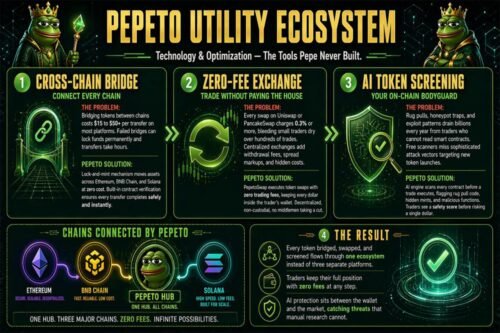
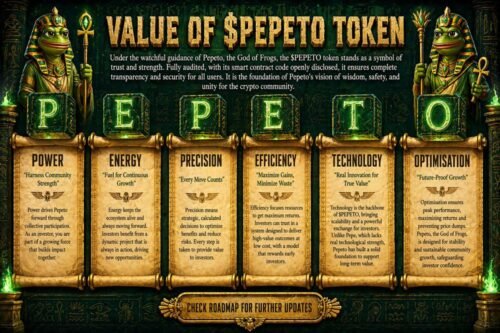
    Pepeto stands out among top altcoin picks because its value proposition is built on infrastructure, not just promises. PepetoSwap has been announced by the team and is close to being ready for launch. This decentralized exchange will process token swaps and generate transaction fees that flow directly into the ecosystem. Every single swap creates organic demand for the token without relying on speculation or social media hype cycles.

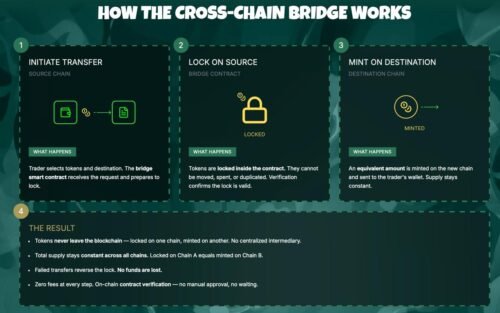
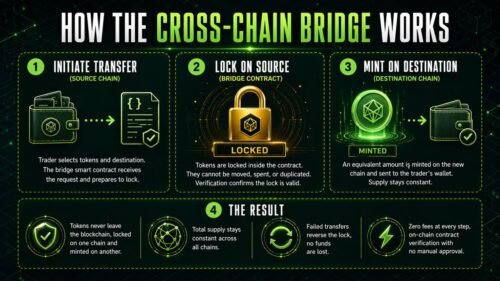
    The cross-chain bridge is approaching deployment and will allow users to move assets between different blockchain networks through Pepeto’s infrastructure. Every bridge transaction requires the token, creating a second independent revenue stream of organic demand. The dedicated Pepeto exchange is in final development stages, designed specifically for the meme coin trading community. Three products. Three sources of real transaction volume. Three engines of organic demand that activate the moment they go live.

    At $0.000000186, the presale rewards those who recognize what is being built before the products launch and the market reprices everything. A $1,000 entry secures over 5.4 billion tokens. Staking at APY adds compounding returns while the ecosystem finalizes. The Pepe cofounder driving this project has already proven the ability to build tokens that capture global attention.

    pepecoin

    $500 Positioning Strategy: Presale to Listing Projection

    Allocating $500 at the current presale price secures approximately 2.7 billion tokens. This is the power of entering a presale backed by real products rather than empty promises. Timing and informed early participation reward those who act before the broader market catches on.

    How to Join the Pepeto Presale

    Connect a compatible wallet to the Pepeto official website. Select your allocation amount in ETH or USDT. Confirm the on chain transaction and tokens are reserved at current pricing. Earlier participation means lower pricing before product launches reshape valuation entirely.

    XRP Faces Capitulation Pressure While Network Activity Strengthens

    XRP recently experienced a wave of realized losses as holders sold below their original purchase cost, signaling capitulation across parts of the market When weaker hands exit, stronger conviction holders typically absorb supply, creating a healthier foundation for future recovery. XRP price prediction models now focus on whether spot demand stabilizes as selling pressure fades. XRP trades at $1.45 after recovering 7% from recent lows, with daily transactions approaching 2.5 million.

    Uniswap Consolidates While Users Position for the Next Move

    Uniswap continues trading within a wide range as large scale accumulation near recent lows suggests calculated positioning by high capital holders This reflects strategic confidence in the protocol’s long term liquidity and governance. Range bound trading is typical for mature decentralized assets requiring sustained catalysts to breach resistance.

    Conclusion: Top Altcoin Picks Demand Real Products, Not Empty Promises

    Top altcoin picks currently showcase two approaches. XRP demonstrates emotional capitulation and redistribution at $1.45. Uniswap exemplifies calculated accumulation within a defined range. Both assets remain influenced by macro conditions and sentiment, reflecting their maturity.

    Pepeto advances through a completely different model. Three products approaching launch. PepetoSwap for swaps. A bridge for cross chain movement. An exchange for meme coin trading. Each generates independent organic demand. At $0.000000186, the presale offers entry before any of these go live. The Pepe cofounder adds credibility. APY staking rewards patience. Position yourself among top altcoin picks built on substance.

    Click To Visit Pepeto Website To Enter The Presale

    Frequently Asked Questions

    What makes Pepeto different from traditional presales?

    Pepeto has three products approaching launch simultaneously including PepetoSwap, a cross chain bridge, and a dedicated exchange, creating multiple organic demand streams.

    Is the projected return guaranteed?

    No. Returns depend on market demand and trading conditions after product launches and exchange listings.

    Why is XRP experiencing heavy realized losses?

    Capitulation occurs when holders sell below cost. This often precedes rebounds as weaker hands exit and stronger conviction buyers absorb supply.

    How does the presale reward early participants?

    Earlier entry secures lower pricing before product launches and exchange listings drive demand and compress the remaining opportunity window.

    Disclaimer:
    This article is for informational purposes only and does not constitute financial advice. Cryptocurrency investments carry risk, including total loss of capital. Readers should conduct independent research and consult licensed advisors before making any financial decisions.

    This publication is strictly informational and does not promote or solicit investment in any digital asset

    All market analysis and token data are for informational purposes only and do not constitute financial advice. Readers should conduct independent research and consult licensed advisors before investing.

  • Choosing the Right Siding Contractors in Sacramento

    Upgrading your home’s exterior siding is one of the most effective ways to improve curb appeal, energy efficiency, and long‑term structural protection. Whether you’re building new, replacing old siding, or addressing damage, selecting experienced professionals makes all the difference. If you need reliable siding contractors Sacramento services, working with specialists ensures quality installation and long-lasting results.

    Exterior siding plays a key role in shielding your home from rain, wind, sun exposure, and temperature changes. It also contributes to insulation performance, helping lower heating and cooling costs throughout the year. Because of these benefits, many homeowners in Sacramento prioritize siding upgrades as part of regular maintenance or renovation projects.

    Why High‑Quality Siding Matters

    Good siding does more than just improve appearance — it protects your home’s structure. Old or damaged siding can allow moisture to penetrate walls, leading to rot, mold growth, or reduced energy efficiency. Replacing worn materials with updated siding helps:

    • Shield your property from the elements
    • Increase thermal efficiency
    • Reduce long‑term maintenance needs
    • Boost overall home value

    When installed correctly by professionals, siding can last for decades and provide lasting performance even under local climate conditions.

    Types of Siding Options for Your Home

    There are several popular siding materials, each with its own advantages. The right choice depends on your budget, design preferences, and maintenance expectations.

    Vinyl Siding

    Vinyl is one of the most widely used options due to its affordability and low maintenance. It resists moisture and fading, and comes in a variety of colors and styles to suit different architectural designs.

    Fiber Cement Siding

    Fiber cement siding offers exceptional durability and weather resistance. It mimics the look of wood without the same level of upkeep and stands up well to moisture, pests, and temperature extremes.

    Wood Siding

    Wood siding offers natural beauty and a classic look. While it requires more regular maintenance than other options, many homeowners appreciate its timeless aesthetic.

    Metal and Composite Siding

    For homeowners seeking modern or industrial looks, metal or composite materials offer strong durability and minimal maintenance. They can complement custom home styles and contemporary designs.

    How to Choose the Right Siding Contractor

    Selecting the right contractor ensures your project runs smoothly and delivers long‑lasting results. Here are some tips for finding the best professionals:

    Evaluate Experience and Reputation

    Look for contractors with a track record of successful siding projects. Homeowners often rely on reviews, portfolios, and recommendations to gauge craftsmanship and reliability.

    Confirm Licensing and Insurance

    Proper licensing means the contractor meets local standards, and insurance protects you in case of accidents or property damage during the job.

    Request Clear Estimates

    A detailed estimate should outline materials, labor, timeline, and warranty information. Comparing multiple bids helps you understand the scope and cost of your project.

    Communication and Professionalism

    A good siding contractor communicates clearly, answers questions thoroughly, and provides a plan that matches your expectations. Trustworthy professionals also keep work areas clean and resolve issues proactively.

    Maintaining Your Siding After Installation

    Once your new siding is installed, regular care can help it last even longer:

    • Wash siding annually with a mild detergent
    • Check seals around windows, doors, and trim
    • Inspect for cracks after storms or extreme weather
    • Address small repairs early

    Routine maintenance keeps the exterior looking fresh and protects against long‑term damage.

    Conclusion

    Selecting the right siding contractors ensures your home gets expert care, durable materials, and results that stand up to local weather and time. With professional installation, quality products, and proper maintenance, your siding becomes a long‑term asset that enhances appearance, performance, and value.

  • HeroCovers and Hot Wheels Unveil First-Ever Line of Life-Sized Car Covers Inspired by Legendary Die-Cast Designs thumbnail

    HeroCovers and Hot Wheels Unveil First-Ever Line of Life-Sized Car Covers Inspired by Legendary Die-Cast Designs

    This exclusive collaboration brings to life a bold new product line: life-sized, fully custom Hot Wheels car covers — giving car enthusiasts and collectors the chance to transform their actual vehicles into full-scale versions of the legendary cars from their childhood.

    Turn Your Car Into a Real-Life Hot Wheels Icon

    From the unmistakable silhouette of Bone Shaker to the twin-blown engines of the Rodger Dodger, and the futuristic flair of the Twin Mill, HeroCovers has recreated Hot Wheels’ most iconic designs in photo-realistic detail. Each cover captures the garage spirit of its die-cast counterpart — right down to the oversized chrome engine scoops, wild paint schemes, and aggressive stances that define Hot Wheels’ design language.

    Additional fan-favorite models like Power Rocket, Sonny Spec, Mad Manga and more are also included in the lineup, with new models continuously in development. Each car cover is a rolling tribute to Hot Wheels heritage — made for fans who live fast, park proud, and want their car to stand out even when it’s standing still.

    “We didn’t just want to slap a logo on a cover,” said [Cody Brdar], Co-Founder of HeroCovers. “We’ve worked closely with the Hot Wheels team to design covers that look and feel like a real-life version of the toys people grew up collecting. It’s high-performance nostalgia with a functional twist.”

    Form Meets Function

    Built for enthusiasts, collectors, and everyday drivers, each cover is custom-made for the owner’s specific vehicle — ensuring a flawless fit that hugs every curve. Made from durable, all-weather materials, the covers offer full protection from sun, dust, rain, and scratches while adding head-turning garage appeal.

    The Hot Wheels x HeroCovers Collection is available now for all vehicle types, offering fully custom-fit covers that combine iconic Hot Wheels styling with premium protection. Every cover is made to order based on your actual car, blending real-world utility with collector-grade design.

    About Mattel

    Mattel is a leading global toy and family entertainment company and owner of one of the most iconic brand portfolios in the world. We engage consumers and fans through our franchise brands, including Barbie, Hot Wheels, Fisher-Price, American Girl, Thomas & Friends, UNO, Masters of the Universe, Matchbox, Monster High, Polly Pocket, and Barney, as well as other popular properties that we own or license in partnership with global entertainment companies. Our offerings include toys, content, consumer products, digital and live experiences. Our products are sold in collaboration with the world’s leading retail and ecommerce companies. Since its founding in 1945, Mattel is proud to be a trusted partner in empowering generations to explore the wonder of childhood and reach their full potential. Visit us at mattel.com.

    Media Contact
    Company Name: HeroCovers.com
    Contact Person: Cody Brdar, CEO
    Country: United States
    Website: https://www.herocovers.com/

  • Highgrove Online School Expands Global Reach, Offering Premium British Education to Students Worldwide thumbnail

    Highgrove Online School Expands Global Reach, Offering Premium British Education to Students Worldwide

    LONDON, UK – Highgrove Education, the provider behind one of the UK’s leading independent digital learning institutions, today announced the continued expansion of its global student community. Highgrove Online School is now welcoming enrolments from families in every time zone, building on established hubs in Spain and the Caribbean while continuing to serve its growing base of UK and international learners.

    As demand for high-quality, flexible education accelerates, Highgrove Education has positioned itself at the forefront of the sector. For families seeking an exceptional online school experience grounded in the British curriculum, the institution delivers a rigorous academic environment without compromising on community, character or enrichment.

    A Truly Global School, Rooted in British Values

    Highgrove Online School serves students from Early Years through to Sixth Form, combining the depth and rigour of the UK national curriculum with the flexibility that modern family life demands. The school’s distinctive approach pairs expert subject teaching with strong pastoral support, ensuring every pupil feels known, valued and challenged.

    For expatriate communities, internationally mobile families and those seeking an alternative to local provision, Highgrove offers an accredited, inspector-approved British education that travels with the student — whether they are based in London, the Mediterranean or the Americas.

    Barcelona Hub: Excellence in the Heart of Europe

    Highgrove Education has established a dedicated presence for families living across Spain and southern Europe through its online school Barcelona community. This hub provides structured local support alongside the full Highgrove curriculum, enabling students based in Barcelona and the surrounding region to access top-tier British schooling while maintaining strong connections to their local environment.

    The Barcelona community benefits from scheduled face-to-face enrichment events, study groups and family information sessions, blending the proven advantages of online learning with the social and cultural richness of life in Spain.

    Caribbean Expansion: Serving the Cayman Islands Community

    Highgrove Education’s online school Cayman Islands provision has seen significant growth, reflecting the strong appetite among families in the Caribbean for a world-class British independent school education delivered with genuine flexibility. Students in the Cayman Islands follow the same curriculum and receive the same level of teacher interaction and pastoral support as pupils based in the UK, with timetables adapted to accommodate the local time zone.

    The Cayman Islands cohort joins a wider network of Highgrove students across the globe, all benefiting from the same commitment to academic excellence, individual attention and outstanding pastoral care that defines the Highgrove experience.

    Rich Enrichment Beyond the Classroom

    Education at Highgrove extends far beyond core academic subjects. The school’s extensive programme of extracurricular clubs and societies ensures that every student has the opportunity to discover new passions, develop leadership skills and build meaningful friendships across the school community. From debating and creative writing to STEM clubs, performing arts and sporting activities, the enrichment programme is designed to nurture the whole child.

    This commitment to breadth and balance reflects Highgrove’s belief that the most successful learners are those who are engaged, confident and curious — qualities fostered through a vibrant school life that complements rigorous academic study.

    Transparent Fees and Flexible Enrolment

    Highgrove Education is committed to making its provision accessible and straightforward for families. A full summary of Online School UK Fees is published on the school’s website, reflecting the institution’s dedication to transparency. The school offers clearly structured fee packages across all year groups, with no hidden costs and a range of options to suit different family circumstances.

    Prospective families are invited to arrange a complimentary consultation with the Highgrove admissions team to discuss their child’s needs and identify the most suitable academic pathway.

    About Highgrove Education

    Highgrove Education operates Highgrove Online School, a fully accredited British independent school delivering the UK curriculum to students aged 3 to 18 around the world. The school is committed to academic excellence, holistic development and exceptional pastoral care, providing a genuine online independent school experience for families wherever they are based.

    Media Contact
    Company Name: Highgrove Education – Highgrove Online
    Country: United Kingdom
    Website: https://highgroveeducation.com/

  • Building Software That Learns: How One Researcher is Reshaping Intelligent Systems thumbnail

    Building Software That Learns: How One Researcher is Reshaping Intelligent Systems

    An exclusive conversation with Snigdha Gaddam on AI-native systems and software evolution

    Introduction: When Software Starts Thinking for Itself

    Imagine a world where your smartphone doesn’t just follow programmed instructions but actually learns from your behavior, adapting its performance in real-time without needing constant updates from developers. This isn’t science fiction anymore. Independent researcher Snigdha Gaddam has published groundbreaking work making this vision reality, demonstrating how artificial intelligence can be woven into the fabric of software systems rather than bolted on as an afterthought.

    Think about the apps you use daily. Most operate on rigid rules: if you click this button, perform that action. But what if software could observe, learn, and improve itself? Gaddam’s research, recently published in the Journal of Information Systems Engineering and Management, introduces AI-native systems—software that doesn’t just use AI tools but thinks with them from the ground up. Her work achieved a remarkable 97% accuracy in predicting optimal system decisions, proving machines can make intelligent choices almost as reliably as humans.

    From healthcare platforms adjusting to patient needs, to financial systems detecting fraud patterns, Gaddam’s vision transforms technology development. We sat down with her to understand how this breakthrough will reshape software development across industries.

    The Conversation: Rethinking Software from the Ground Up

    Q: Most of us use apps every day, but we don’t think about how they’re built. What’s the fundamental difference between traditional software and AI-native systems?

    Think of traditional software like a recipe—you follow exact steps. AI-native systems are like experienced chefs who taste as they go, adjust seasonings based on available ingredients, and learn from past meals. These systems observe data, recognize patterns, and evolve their behavior without needing programmers to manually update every rule. We’re moving from rigid instruction-following to genuine learning and adaptation.

    Q: Can you give us a real-world example of how this changes things for everyday users?

    Consider a hospital monitoring system. Traditional software alerts nurses when heart rates exceed fixed thresholds. But an AI-native system learns each patient’s normal patterns, factoring in medications, activities, and time of day. Instead of generating false alarms overwhelming staff, it intelligently decides when something truly concerning is happening. My research showed that analyzing user behavior and performance metrics together enables systems to make these nuanced decisions with 97% accuracy.

    Q: What did your research specifically demonstrate?

    I developed a system using a Random Forest classifier—a method that creates multiple decision-making trees and combines their wisdom for smarter conclusions. Testing with variables representing user interactions and system performance revealed both factors are equally critical. The confusion matrix showed very few errors, proving AI-native systems can work reliably in practice, not just theory.

    Q: For someone running a business or working in technology, how would adopting AI-native systems change their daily operations?

    It fundamentally shifts the maintenance burden. Today, teams constantly push updates to fix issues or add features. With AI-native systems, software updates itself based on what it learns. Customer service chatbots learn from every conversation, improving understanding of nuance and intent. Inventory systems observe sales patterns, seasonal trends, and supplier reliability, optimizing automatically. This frees teams for innovation rather than constant firefighting. However, it introduces new responsibilities ensuring systems learn ethically and remain transparent in decision-making.

    Q: What are the biggest challenges in making this vision a reality across industries?

    The technical challenge is data drift—over time, real-world patterns change and AI models become less accurate without continuous retraining. We need systems that recognize when they’re outdated and self-update. The deeper challenge is organizational and ethical. We must ensure learning systems don’t perpetuate biases, that decisions can be explained and trusted, especially in healthcare or criminal justice. My research highlighted these gaps—we have the technology, but need stronger frameworks for responsible deployment.

    Looking Ahead: A New Era of Intelligent Software

    Snigdha Gaddam’s work represents more than incremental improvement in software engineering—it’s a fundamental reimagining of how we build digital systems. By demonstrating AI can be embedded at software’s core rather than layered on top, she’s opening doors to previously impossible applications. From manufacturing floors where machines coordinate autonomously to optimize production, to educational platforms adapting teaching methods in real-time, implications span every modern sector.

    The 97% accuracy her research achieved proves we’re ready to trust machines with complex decisions. Yet as Gaddam emphasized, power comes with responsibility. The software engineering community must develop robust continuous learning practices, establish ethical guidelines, and ensure systems remain accountable to humans they serve.

    As organizations grapple with digital transformation, Gaddam’s framework offers a roadmap. The future isn’t about writing better code—it’s building systems that learn, adapt, and evolve alongside us. For engineers, business leaders, and anyone depending on technology, understanding AI-native systems isn’t optional; it’s the essential next step in staying relevant.

  • Building Trust in a Connected World: How AI and Blockchain Can Secure the Internet of Things thumbnail

    Building Trust in a Connected World: How AI and Blockchain Can Secure the Internet of Things

    The world is more connected than ever. Industry reports estimate that over 15 billion Internet of Things (IoT) devices are currently active worldwide — from smart watches and home assistants to hospital monitors and industrial sensors — with projections suggesting the number could exceed 25 billion devices by 2030.

    As these networks expand, so do security risks. Cybersecurity analysts report that IoT-related attacks continue to increase each year, often exploiting unsecured or poorly monitored devices.

    In a recent study published in the Journal of Information Systems Engineering and Management, Sushma Babburi, an independent researcher based in the United States, proposes a new framework that integrates Blockchain and Artificial Intelligence (AI) to make IoT systems more secure, reliable, and scalable

    We spoke with Babburi about her research and why building trust into connected systems is becoming increasingly critical.

    Q: For readers who may not be technical, what problem are you trying to solve?

    Sushma Babburi:
    Today, billions of devices constantly collect and transmit data. That includes medical monitors, shipping trackers, traffic sensors, and industrial equipment.

    The challenge is that as these networks grow, ensuring that every device remains trustworthy becomes more complex. If even one device is hacked or begins behaving abnormally, it can affect an entire system.

    My research focuses on creating a framework that makes IoT systems secure, transparent, and scalable, so they can expand safely without increasing risk.

    Q: Why are current IoT systems vulnerable?

    Babburi:
    Most IoT systems rely on centralized servers. That means all data flows through one core system. If that central point is compromised, overloaded, or misconfigured, the entire network can be affected.

    In addition, many devices are installed and then assumed to be trustworthy indefinitely. But devices can malfunction or be compromised over time. Continuous evaluation is essential.

    Q: How does blockchain improve security?

    Babburi:
    Blockchain functions like a secure digital ledger that records information in a way that cannot easily be altered.

    Instead of storing device data in one place, blockchain distributes records across multiple network nodes. This makes the system tamper-resistant and transparent.

    For industries where accuracy is critical — such as healthcare or logistics — ensuring that device data cannot be secretly modified is extremely important.

    Q: Where does Artificial Intelligence come in?

    Babburi:
    While blockchain protects the integrity of the data, AI monitors device behavior.

    In my framework, AI continuously evaluates how devices perform. It analyzes patterns such as response time, data consistency, and operational behavior.

    Rather than assuming devices are permanently safe, the system constantly reassesses them.

    Q: You mention “trust scoring.” What does that mean in simple terms?

    Babburi:
    It’s similar to a credit score — but for connected devices.

    Each device receives a dynamic trust score based on how reliably it behaves. If it shows unusual patterns, the score decreases.

    This allows the system to flag or isolate potentially compromised devices before they cause broader disruption.

    Q: How does your research detect problems early?

    Babburi:
    The framework includes anomaly detection that identifies unusual behavior in real time.

    For example, if a sensor suddenly transmits data outside its normal range, the system can detect that quickly.

    Early detection is especially important in sectors like healthcare, industrial automation, and smart city infrastructure, where system reliability directly affects safety.

    Q: Blockchain is sometimes criticized for scalability issues. How do you address that?

    Babburi:
    Scalability is a real concern as IoT networks grow into millions of devices.

    The research evaluates transaction processing performance under simulated IoT workloads and explores optimizations such as hybrid consensus mechanisms and edge computing.

    The objective is to maintain strong security while ensuring operational efficiency.

    Q: Which industries could benefit most from this work?

    According to Babburi, the framework is designed to be domain-agnostic and adaptable across industries.

    Examples include:

    • Healthcare: securing connected medical devices
    • Logistics: protecting supply chain data
    • Industrial systems: enabling predictive maintenance
    • Smart cities: ensuring reliable sensor-driven infrastructure

    As IoT adoption accelerates globally, scalable and trustworthy architectures are becoming foundational to digital infrastructure.

    Q: What is the broader vision behind your research?

    Sushma Babburi:
    We are moving toward a world where connected devices influence real-time decisions — from patient monitoring to traffic management.

    If those systems are not trustworthy, the consequences can be significant.

    By combining decentralized security with intelligent monitoring, we can build IoT ecosystems that are resilient, scalable, and transparent.

    That foundation of trust will be critical as digital infrastructure continues to expand.

    Author Note

    Sushma Babburi is an independent researcher specializing in Blockchain-enabled and AI-driven data systems. Her study, Integrating Blockchain and AI for Trusted and Scalable IoT Data Ecosystems, was published in the Journal of Information Systems Engineering and Management

  • Crypto News: Pepeto Presale Hits as Users Accumulate Bitcoin and Now Target Meme Coin Presales thumbnail

    Crypto News: Pepeto Presale Hits as Users Accumulate Bitcoin and Now Target Meme Coin Presales

    Pepeto announced today that its presale has surpassed as Bitcoin reclaimed $68,000 and on chain data reveals a massive whale accumulation event. According to Glassnode, Users bought over 400,000 Bitcoin between $60,000 and $70,000 during the crash. While retail investors panicked and sold, the largest wallets on earth were buying everything in sight. Now crypto news sources are tracking the same pattern in presales.

    Pepeto Presale Surges 

    Here’s what happened this month. Bitcoin dropped from $70,000 to $60,000. Over $2 billion in leveraged positions were liquidated. The Fear and Greed Index hit 10. Retail sold in panic. But as Bloomberg reported, whale wallets accumulated 53,000 Bitcoin in one week. That’s $3.6 billion deployed while everyone else ran for the exits.

    As CoinDesk confirmed, wallets holding 10,000 Bitcoin or more were the only group buying. Every other holder group was selling. Entities holding at least 1,000 Bitcoin rose from 1,207 to 1,303 since October. These aren’t retail investors. These are the wallets that move markets.  

    Pepeto Staking Returns Outperform Others by a Wide Margin

     Strategic Bitcoin Reserve, the GENIUS Act, and $616 million in ETF inflows are tightening supply across the market. Smart money sees the setup. But the smartest money looks at where the asymmetric returns actually are. 

    Pepeto Offers the Same Setup Users Used to Turn Early Positions 

    Every cycle, Users accumulate presale tokens at the lowest price, wait for the listing, and sell into retail demand at multiples. SHIB reached $40 billion with no products. Dogecoin hit $80 billion on memes alone. PEPE went from nothing to $7 billion. The early wallets in those projects turned small entries into wealth.

    Pepeto trades at $0.000000186. Six zeros. PepetoSwap offers faster routing. The Pepeto Bridge connects blockchains. The Pepeto Exchange has a refined interface. All three approach launch at the Pepeto official website. Zero percent buy and sell tax. As The Crypto Basic reported, the crypto market added $170 billion in one session. 

    Pepeto Presale Is Where Users Are Positioning Before the Rest of Crypto News Catches On

    This is what separates whale investors from everyone else. They don’t wait for confirmation. They look at the math, they look at the setup, and they move. Right now, the math on Pepeto is impossible to ignore.

     when you consider what SHIB and Dogecoin achieved with zero products and zero audits. Pepeto has working tools, a Pepe cofounder, dual audits Users don’t need crypto news to tell them this. They see it in the numbers.

    Over $7.33 million raised. Over 70% filled. And the listing hasn’t happened yet. Once it does, $0.000000186 disappears permanently. There is no second chance at six zeros after the exchange opens.

    The investors who build generational wealth never had better information. They had better instincts. They moved before it became obvious to everyone else. That window is closing now. The remaining allocation shrinks every day. The Users are already inside. The question is whether you’ll join them at this price, or buy from them later at a higher price after listing.

    Click To Enter The Presale Before It Ends

    About Pepeto

    Pepeto is a meme coin building real trading tools for the meme economy. With PepetoSwap, a cross chain bridge, and a dedicated exchange, Pepeto combines culture with technology. The presale is live at the Pepeto official website.

    Disclaimer:
    This article is for informational purposes only and does not constitute financial advice. Cryptocurrency investments carry risk, including total loss of capital. Readers should conduct independent research and consult licensed advisors before making any financial decisions.

    This publication is strictly informational and does not promote or solicit investment in any digital asset

    All market analysis and token data are for informational purposes only and do not constitute financial advice. Readers should conduct independent research and consult licensed advisors before investing.

  • New Crypto: Pepeto Presale Passes as Users Accumulate Before the Next Rall thumbnail

    New Crypto: Pepeto Presale Passes as Users Accumulate Before the Next Rall

    Pepeto announced today that its presale has surpassed as crypto news reveals what most investors are never told. On chain data proves it. While retail sold in fear, whale wallets bought billions. The price drops that destroyed portfolios If you’re reading this, you’re already ahead.  

    Pepeto Presale Grows  

    As Bloomberg reported, whale wallets accumulated 53,000 Bitcoin in one week. That’s $3.6 billion deployed while you were being told to sell. Entities holding 1,000 Bitcoin or more rose from 1,207 to 1,303 since October. These wallets don’t panic. Then they buy what everyone else drops. 

    Pepeto Staking Delivers Returns That No Traditional Asset Can Match

    Here’s what smart money understands. After every crash, the recovery creates more wealth than the crash destroyed. They come from presales that launch into the recovery. 

    Pepeto Has What Users Look for Before They Enter a Presale

    The token price is $0.000000186. Six zeros. PepetoSwap offers faster routing. The Pepeto Bridge connects blockchains. The Pepeto Exchange has a refined interface. All three approach launch at the Pepeto official website. As CoinDesk reported, Bitcoin snapped back to $69,000. The recovery is underway. SHIB reached $40 billion with zero tools. Dogecoin hit $80 billion on memes alone. Pepeto has three working products and six zeros. 

    Pepeto Presale Won’t Stay Open and the Users Already Know What Comes Next

    Most people in crypto lose money because they react to what already happened. They sell after the crash and buy after the rally. That’s by design. You’ve just seen the data.  The Users bought the bottom. And Pepeto at $0.000000186 with $7.33 million raised and 70% filled is where the next wealth transfer begins. The listing hasn’t happened. Tools are built. Audits are done. And the price is still at six zeros. That gap between what exists and what the market has priced in is where generational returns live.

    Once this presale closes, $0.000000186 is gone permanently. You’re in the same position as those who found SHIB at twelve zeros or Dogecoin at fractions of a penny. The difference is you have more information. More tools. More audits. Same six zeros.  Visit the Pepeto official website now. The smart money doesn’t wait for crypto news to confirm what the data already shows.

    Click To Enter The Presale Before It Ends

    About Pepeto

    Pepeto is a meme coin building real trading tools for the meme economy. With PepetoSwap, a cross chain bridge, and a dedicated exchange, Pepeto combines culture with technology. The presale is live at the Pepeto official website.

    Disclaimer:
    This article is for informational purposes only and does not constitute financial advice. Cryptocurrency investments carry risk, including total loss of capital. Readers should conduct independent research and consult licensed advisors before making any financial decisions.

    This publication is strictly informational and does not promote or solicit investment in any digital asset

    All market analysis and token data are for informational purposes only and do not constitute financial advice. Readers should conduct independent research and consult licensed advisors before investing.

  • Why Due Diligence for Los Angeles Multifamily Properties Now Requires More Than a Standard Inspection

    New compliance mandates, balcony safety deadlines, and a shifting insurance landscape are redefining what buyers need to know before closing on apartment buildings in Southern California.

    By Nathan Sewell

    Nathan Sewell is the founder of LA Building Inspections & Compliance, a building advisory and compliance firm serving property managers, investors, and owners throughout Los Angeles County. He is ICC-certified in both California Residential and Commercial inspection, with an architecture and building design background.

    For decades, buying an apartment building in Los Angeles followed a fairly predictable due diligence process. Hire an inspector. Get a report on the roof, the plumbing, the electrical. Negotiate repairs or a price adjustment. Close. That checklist approach — similar to what sellers might order through a Pre-Listing Inspection before putting a property on the market — is no longer sufficient. A series of new state and county regulations enacted within the past two years have fundamentally changed the risk profile of multifamily real estate in Southern California. Buyers who rely solely on a traditional property inspection are now closing on buildings with compliance liabilities they do not know about, deferred obligations they have not budgeted for, and deadlines that begin counting the moment they take ownership.

    The Regulatory Shift

    The most significant change is LA County’s Rental Housing Habitability Program (RHHP), which launched in October 2024 and requires all rental units in unincorporated LA County to be inspected for habitability compliance every four years. The program covers an estimated 115,000 rental units. For buyers acquiring properties in unincorporated areas — including large portions of East LA, South LA, the San Gabriel Valley, and the Antelope Valley — this means inheriting either a compliant building or one that is overdue for its mandatory inspection. Properties that fail RHHP inspections and do not correct violations within the required timeframe can be placed into the county’s Rent Escrow Account Program (REAP), where tenants pay rent to a county escrow account instead of to the landlord. Fines compound and legal exposure increases. RHHP is not the only new mandate. California’s SB 721 requires balcony and exterior elevated element inspections for apartment buildings with three or more units, and SB 326 imposes a similar requirement on condominiums and homeowner associations. Buildings that have not been inspected are already past due, meaning new owners inherit that obligation immediately.

    What Standard Inspections Miss

    A traditional property inspection evaluates the physical condition of a building. It identifies defects, safety concerns, and deferred maintenance. For a multifamily acquisition in today’s regulatory environment, that scope leaves critical gaps. The first gap is compliance status. A standard inspection does not verify whether RHHP inspections are current, whether SB 721 balcony inspections have been completed, or whether the property’s rent stabilization status under the Los Angeles Rent Stabilization Ordinance (RSO) is properly documented. These are regulatory positions that directly affect operating costs and legal exposure. The second gap is permit history. Los Angeles has one of the highest rates of unpermitted work in the country. A converted garage that functions as a rental unit may still be illegal if no permit was ever pulled, exposing the owner to enforcement action, insurance disputes, and potential loss of rental income. The third gap is capital expenditure forecasting. Buyers need to know not just what is broken today, but what will need replacement in three, five, and ten years. Without a CapEx projection, underwriting is based on incomplete information.

    The Insurance Factor

    Southern California’s insurance market has tightened dramatically in recent years. Carriers are reducing coverage, increasing premiums, and in some cases refusing to renew policies for properties with deferred maintenance or unresolved code issues. Multifamily buyers must now evaluate insurability alongside condition and compliance. Sellers who commission a Pre Listing Inspection before marketing the property are often better positioned, as they can identify insurability or compliance concerns early and address them before they become leverage points during escrow.

    What Investor-Grade Due Diligence Looks Like Now

    For buyers acquiring multifamily properties in Los Angeles today, due diligence should simultaneously evaluate physical condition, compliance landscape, and financial forecasting. Physical condition includes structural systems, roofing, mechanical, electrical, plumbing, building envelope components, and representative interior unit inspections. Compliance landscape includes RHHP status, SB 721 or SB 326 inspection status, permit history, RSO verification, and local code compliance. Financial forecasting translates inspection findings into a realistic capital expenditure plan, allowing buyers to budget accurately and avoid capital events shortly after closing.

    The Cost of Getting It Wrong

    The most expensive surprises rarely come from buyers who skip inspections entirely; they come from buyers who rely on inspections that cover only physical condition but ignore compliance. A purchaser may close on a 10-unit property only to discover unresolved RHHP obligations or overdue balcony inspections that require immediate and costly repairs. The information was available before closing. Compliance records are public. Permit histories can be researched. Balcony conditions can be evaluated. The issue is whether the due diligence process was designed for today’s regulatory environment or for one that no longer exists.

    What Buyers Should Be Asking

    Before hiring an inspector for a multifamily acquisition in Los Angeles, buyers and their advisors should ask whether the scope includes compliance verification in addition to physical condition, whether permit records will be reviewed, whether the report includes capital expenditure projections, whether the inspector holds commercial-level credentials and code knowledge, and whether the final report can serve buyers, lenders, insurance carriers, and property managers alike.

    Adapting to the New Landscape

    The regulatory environment for rental housing in Los Angeles is unlikely to simplify. Oversight, mandatory inspections, and enforcement mechanisms continue to expand. Investors who understand the compliance landscape and budget accordingly can still acquire strong assets at realistic valuations. But the inspection process that was sufficient five years ago is not sufficient today. The smartest acquisitions are being made by buyers who treat due diligence not as a checkbox, but as a strategic investment in understanding the physical building, the compliance position, and the capital requirements before signing closing documents.

    About the Author

    Nathan Sewell is the founder of LA Building Inspections & Compliance, a building advisory and compliance firm serving property managers, investors, and owners throughout Los Angeles County and Orange County. He holds ICC certification in both California Residential and Commercial inspection, with additional credentials from ASHI, InterNACHI, and HUD/NSPIRE. His architecture and building design background informs a technical approach to multifamily due diligence, RHHP compliance, and commercial property assessment.

    Website: labuildingcompliance.com
    Phone: (626) 214-5929
    Email: nathan@larentalinspections.com

  • What Is DSPM? The Complete Guide to Data Security Posture Management

    In a world where data breaches make headlines almost weekly, organizations are under immense pressure to know exactly where their sensitive data lives — and whether it’s protected. That’s where DSPM comes in. If you’ve been hearing this acronym more frequently in cybersecurity conversations, you’re not alone. DSPM is quickly becoming one of the most important concepts in modern data security strategy.

    This guide breaks down what DSPM is, how it works, why it matters, and how businesses can use it to stay ahead of increasingly sophisticated threats.

    What Is DSPM?

    DSPM stands for Data Security Posture Management. At its core, DSPM is a cybersecurity framework that gives organizations continuous visibility into where their sensitive data is stored, who has access to it, how it’s being used, and whether it’s properly secured.

    Think of DSPM as a real-time inventory and security audit for your data — across every cloud, database, application, and storage environment you operate in. Rather than relying on periodic manual audits or reactive incident responses, DSPM provides an always-on view of your data security posture.

    The term was popularized by Gartner and has gained enormous traction as businesses accelerate their cloud adoption and data sprawl becomes increasingly difficult to manage manually.

    Why DSPM Matters Now More Than Ever

    Data is no longer confined to a single server room. Modern organizations store data across multi-cloud environments, SaaS platforms, data warehouses, and third-party tools — often without a complete picture of where everything sits or who can access what.

    This creates a dangerous blind spot. Security teams may assume their data is protected, but shadow data — copies of sensitive files, misconfigured storage buckets, or forgotten databases — can sit exposed for months before anyone notices. In fact, misconfigurations in cloud environments are among the leading causes of data breaches today.

    DSPM directly addresses this problem. By continuously discovering and classifying data, it eliminates the guesswork and gives security teams the clarity they need to act quickly and decisively.

    How DSPM Works

    DSPM platforms typically operate through a combination of automated discovery, classification, risk analysis, and remediation guidance. Here’s how the process generally unfolds.

    Data Discovery is the first step. The DSPM tool scans across your entire data ecosystem — structured databases, unstructured file stores, cloud platforms like AWS, Azure, and Google Cloud, and SaaS applications — to find every instance of sensitive data. This includes data you know about and, critically, data you’ve forgotten about.

    Data Classification comes next. Once data is discovered, the platform categorizes it based on sensitivity. Is it personally identifiable information (PII)? Financial records? Intellectual property? Health data? Classification helps security teams prioritize where to focus their efforts.

    Risk Assessment ties the data to its security context. The DSPM platform evaluates who has access to each dataset, whether access permissions are appropriate, whether encryption is in place, and whether any compliance policies are being violated. It assigns risk scores to help teams identify the most critical vulnerabilities first.

    Remediation and Monitoring is the ongoing phase. Based on risk findings, DSPM tools either auto-remediate issues or provide clear recommendations for security teams to act on. Continuous monitoring ensures that new data — or changes to existing data environments — are caught in real time rather than discovered weeks later during an audit.

    Key Benefits of DSPM

    Organizations that implement DSPM gain several significant advantages over those relying on traditional data security approaches.

    Complete data visibility means security teams always know where sensitive data lives, even as it moves or is copied across environments. This visibility is foundational to any effective data protection strategy.

    Reduced risk of breaches follows naturally from that visibility. When you know where your data is and who can access it, you can close security gaps before attackers exploit them.

    Faster compliance is another major benefit. Regulations like GDPR, HIPAA, CCPA, and PCI-DSS require organizations to demonstrate control over their sensitive data. DSPM automates much of the evidence collection and posture validation needed for compliance audits, saving significant time and resources.

    Proactive rather than reactive security shifts the organizational mindset from responding to breaches to preventing them. DSPM enables this shift by surfacing risks before they become incidents.

    DSPM vs. CSPM: What’s the Difference?

    A common source of confusion is the distinction between DSPM and CSPM (Cloud Security Posture Management). While they sound similar, they operate at different layers.

    CSPM focuses on the security configuration of your cloud infrastructure — things like network settings, identity policies, and resource configurations. DSPM, on the other hand, focuses specifically on the data itself. The two are complementary; many organizations deploy both to get comprehensive coverage of their cloud security posture.

    Who Needs DSPM?

    Any organization that handles sensitive data at scale — which today includes virtually every mid-to-large enterprise — can benefit from DSPM. It’s particularly critical for companies in heavily regulated industries like healthcare, finance, legal, and retail, where the consequences of a data exposure go beyond reputational damage and into significant legal liability.

    As data environments grow more complex and regulatory scrutiny increases, DSPM is shifting from a “nice to have” to an essential component of a mature security program.

    Final Thoughts

    DSPM gives organizations something they’ve long struggled to achieve: true clarity over their data. In an era defined by cloud complexity, regulatory pressure, and sophisticated cyberattacks, that clarity isn’t just valuable — it’s essential. Whether you’re building out your security stack for the first time or looking to strengthen an existing program, understanding and implementing DSPM is a smart, strategic move.