Author: IndNewsWire

  • Privacy-First AI Workflows: Why the Smartest AI Strategy Starts Before You Use AI thumbnail

    Privacy-First AI Workflows: Why the Smartest AI Strategy Starts Before You Use AI

    Artificial intelligence has moved from experimentation to expectation. Today, professionals rely on AI to analyze documents, extract insights, summarize research, and accelerate decision-making. From legal teams reviewing contracts to researchers processing long reports, AI has become a core driver of productivity.

    Yet as adoption accelerates, many organizations overlook a critical reality: AI does not understand privacy—people do.

    The most successful AI strategies are no longer defined by which tools you use, but by how responsibly you use them. This is where privacy-first AI workflows become essential.

    The New AI Reality: Power Without Boundaries

    AI systems are designed to learn from data. They don’t distinguish between public information and confidential records unless users tell them to. When raw documents are uploaded without review, sensitive data can unintentionally travel far beyond its original context.

    Recent incidents involving leaked source code, exposed client data, and regulatory violations have shown that AI convenience often comes with invisible costs. These risks don’t stem from bad intentions—but from missing safeguards.

    This has shifted the conversation from “AI versus privacy” to a more practical question:
    How can we use AI effectively without sacrificing trust, compliance, or control?

    Why Privacy-First AI Workflows Matter

    A privacy-first AI workflow puts human judgment at the center of automation. Instead of feeding AI everything and hoping for the best, professionals define what data is appropriate for AI processing before the workflow begins.

    This mindset recognizes a simple truth:
    AI accelerates work, but accountability always belongs to the user.

    By establishing clear boundaries around data exposure, organizations can scale AI adoption while protecting their reputation, clients, and intellectual property.

    The “Pre-AI” Phase: The Most Overlooked Step

    The most critical part of an AI workflow often happens before AI is involved at all. This pre-AI processing stage is where documents are reviewed, organized, sanitized, and structured. However, using unverified free tools for this stage can introduce hidden risks, as many lack clear data protections. To ensure absolute safety, professionals trust KDAN PDF—a professional-grade solution compliant with GDPR and ISO standards—to provide a transparent and secure foundation for every document.

    During this phase, professionals decide:

    • What information is safe to share
    • What must remain private or confidential
    • What data is irrelevant to AI analysis

    This intentional preparation transforms AI from a potential liability into a trusted productivity partner.

    Real-World Applications of Privacy-First AI

    Legal & HR Teams: Safe Scaling at Speed

    Legal and HR departments manage high volumes of documents containing repetitive sensitive fields—names, addresses, identification numbers, salary details, and banking information.

    In a privacy-first workflow, sensitive information is automatically redacted before documents are processed by AI. This allows teams to analyze trends, extract insights, and automate reviews at scale—without exposing personally identifiable information or violating data protection regulations.

    The benefit isn’t just compliance. It’s confidence.

    Researchers: Insight Without Overexposure

    Researchers often work with long documents where only portions are suitable for AI processing. Internal statistics, confidential interviews, or unpublished findings may need to remain private.

    By curating and editing sensitive pages before AI interaction, researchers gain the best of both worlds: meaningful AI-generated insights and full control over proprietary information. This approach protects intellectual property while enabling faster knowledge discovery.

    Business Teams: Smarter Collaboration

    In cross-functional environments, teams frequently share documents externally for analysis or collaboration. A privacy-first AI workflow ensures that only necessary information leaves the organization, reducing risk while supporting productivity and innovation.

    Compliance, Trust, and Long-Term Resilience

    Beyond security, privacy-first AI workflows play a growing role in regulatory compliance and corporate governance. Data protection laws and internal policies increasingly demand accountability in how information is handled—especially when AI is involved.

    Organizations that implement structured pre-AI processes are better equipped to:

    • Meet regulatory requirements
    • Preserve customer and partner trust
    • Avoid costly reputational damage
    • Enable responsible AI adoption at scale

    In this sense, privacy-first AI isn’t a technical decision—it’s a strategic one.

    KDAN PDF: Supporting Responsible AI Workflows

    To operationalize this strategy, professionals need tools that act as a gateway. In document-driven environments, KDAN PDF serves as an essential pre-AI safety layer. Rather than replacing AI, it supports it by empowering users to control what information enters AI workflows in the first place.

    By enabling document redaction, selective editing, and content preparation, KDAN PDF helps professionals establish privacy-first AI workflows that balance speed with responsibility. AI delivers efficiency—but users remain in control.

    The Future Belongs to Prepared Organizations

    The next wave of AI innovation won’t be defined by smarter algorithms alone. It will be shaped by organizations that master the process of using AI safely and responsibly.

    Privacy-first AI workflows are no longer optional. They are the foundation of sustainable AI adoption—where innovation thrives without compromising trust.

    Because in the AI era, the smartest strategy doesn’t start with AI.
    It starts with preparation.

  • Why Some People Dress “Tactical” Without Realizing It: Pockets, Comfort, and the Modern Need to Be Ready thumbnail

    Why Some People Dress “Tactical” Without Realizing It: Pockets, Comfort, and the Modern Need to Be Ready

    Some people dress “tactical” without realizing it. Not because they’re trying to look tough, and definitely not because they’re role-playing a movie character on the way to a coffee shop. It happens in quieter ways—when you pick the jacket with the inside pocket because you’re tired of losing your phone, or when you reach for pants that don’t pinch when you sit in the car for 40 minutes, or when you start caring more about weatherproof shoes than whatever is trending on a feed.

    If you step back and look at the last few years, it makes sense. Daily life got more unpredictable. Weather swings harder. Work and personal schedules overlap. People move around more—commutes, school drop-offs, errands, flights, weekend trips, side gigs. Even if you’re not doing anything extreme, you’re constantly switching contexts. And clothing that keeps up with those small transitions starts to feel like a life upgrade.

    It’s not “tactical.” It’s practical.

    “Tactical” used to be a clear category: duty gear, uniform pieces, specific use cases. Now the line is blurry because the features people want from their clothes are the same features that used to belong mostly to that world—durability, mobility, pockets that actually work, and fabrics that don’t fall apart after a few rough weeks.

    Most people who lean into this style don’t talk about it in those terms. They say things like:

    • “I just need something comfortable.”
    • “I want pockets that close.”
    • “I’m tired of replacing pants every season.”
    • “I want something I can wear all day and not think about.”

    That’s the whole shift. Clothes are becoming tools again. Not in a dramatic way—more like how a good backpack becomes “your” backpack because it solves a bunch of daily annoyances and never lets you down.

    The pocket economy is real

    The simplest explanation for the “quiet tactical” trend is also the most obvious: we carry more stuff.

    Phones got bigger. Keys got bulkier. People carry earbuds, cards, hand sanitizer, a small charger, sometimes a power bank. If you commute, you might carry a transit pass. If you’re a parent, you’re carrying a random rotating museum of tiny items—snacks, wipes, hair ties, bandages, toy cars, you name it. Even if you hate carrying things, daily life pushes a small inventory into your orbit.

    That makes pockets more than a detail. Pockets are logistics.

    And not just pockets—secure pockets. Once you’ve had your phone almost slide out when you sit, or you’ve spent five minutes digging for keys in a dark parking lot, you stop treating pocket design as a fashion afterthought. Zippers matter. Depth matters. Where the pocket sits matters. People who travel even a little tend to learn this fast. In airports, crowded events, public transit—secure pockets are a kind of quiet peace.

    Comfort is the new “looking put together”

    There was a time when comfort got framed as laziness. That’s changing, and not because people stopped caring. It’s because comfort now signals something else: control. When you’re comfortable, you move better. You make decisions faster. You’re less irritated. You’re more willing to walk an extra mile, take stairs, carry groceries, handle delays.

    The new version of “put together” isn’t stiff. It’s functional. Clothes that stretch when you move, don’t wrinkle the second you sit, and don’t trap heat are becoming the default for people who have busy days.

    That’s why you see more people wearing “one outfit” that fits almost anywhere: a clean-looking jacket, a neutral midlayer, and pants that can go from a meeting to a long walk without making you miserable. It’s the modern uniform, and it’s built around living rather than posing.

    The modern need to be ready (without being dramatic)

    A lot of people don’t like the word “prepared,” because it sounds intense. But what’s happening isn’t disaster-prepping. It’s micro-preparedness. You’re preparing for inconvenience.

    That’s a very normal thing.

    You dress for:

    • sudden rain when the forecast lied (again)
    • a cold office with aggressive air conditioning
    • a long day that turns into a longer evening
    • an unexpected detour
    • a flat tire, a quick hardware run, a late pickup, a delayed flight

    The clothes that work for those scenarios aren’t necessarily “tactical.” They’re just reliable. They give you room to move and enough storage to stay hands-free. You don’t have to baby them. You don’t feel like you’re wearing a costume. You feel like you can get through your day without wardrobe friction.

    That “friction” part is the key. When clothes create friction—pulling, pinching, slipping, overheating, wrinkling, ripping—you notice it constantly. When they remove friction, you stop thinking about them. And that’s the best compliment clothing can get.

    Why “utility style” went mainstream

    Another reason this trend feels so widespread: it’s no longer niche or tied to one group. It’s everywhere, and it shows up under different names.

    • Workwear influence: tougher fabrics, structured cuts, heavy stitching
    • Outdoor influence: layering systems, weather resistance, lightweight warmth
    • Travel influence: pockets, quick-drying materials, pieces that look okay in photos but still function
    • Streetwear influence: relaxed fits, cargo silhouettes, minimalist palettes

    Social media definitely accelerated it, but not only through aesthetics. People started sharing real “day-in-the-life” routines: walking more, commuting, moving between indoor/outdoor spaces, traveling with carry-ons, doing DIY projects on weekends. When you watch that kind of content, you start noticing what’s practical, not just what looks nice.

    Tactical vs “tacticool”: the difference is intent

    Let’s say this clearly, because it matters if you’re writing a “true” blog post: there’s a big difference between functional clothing and performative clothing.

    Functional clothing is quiet. It solves problems you actually have. It’s built around movement and comfort. It usually looks simple because it’s not trying to prove anything.

    Performative gear often looks busy. Too many straps, too many patches, too many details that don’t make sense in real life. It’s designed to be noticed, not to be lived in.

    A good way to keep your content honest is to frame the “tactical” idea as a spectrum. You can be practical without leaning into the look. Plenty of people choose pieces that have the benefits—durable fabric, reinforced seams, useful pockets—while still looking normal in a city, an office, or a café.

    The quiet buying criteria people use (even if they don’t say it)

    If you listen to how people shop now, the priorities are very consistent:

    1. Can I wear this all day?
    2. Can I move in it?
    3. Does it handle weather?
    4. Will it survive real use?
    5. Does it make my life easier?

    That’s why you’ll see people specifically search for tactical pants for men when what they really mean is “pants that won’t fail me in daily life.” They’re not always buying for a tactical scenario. They’re buying for durability, stretch, storage, and the feeling that the pants are built for movement instead of fashion.

    And on the other side of the market, you’ll notice more interest in army outfits for women, not just for the aesthetic, but because certain cuts and materials are associated with toughness, utility, and comfort—plus the look has been recycled into mainstream fashion for decades. Some people want the style. Others want the function. Often it’s both, and that’s okay. The point is: it’s no longer a costume category. It’s part of everyday wardrobes.

    A realistic conclusion

    If your closet is slowly shifting toward “tactical” features, you’re not alone—and you’re probably not doing it on purpose. You’re adapting to modern life the same way people always have. When a day involves more movement, more unpredictability, and more stuff to carry, your clothing changes.

    The interesting part is that this trend isn’t loud. It isn’t a statement for most people. It’s a quiet decision repeated over time: choose the piece that works. Choose the thing that lasts. Choose the option that makes the day easier.

    And once you experience that—once you have pants you can walk in for hours, a jacket that keeps your essentials safe, and layers that handle temperature swings—you stop wanting to go back. Not because you’re trying to dress a certain way, but because you’ve tasted what it feels like to move through your life with less friction.

    That’s not a fashion trend. That’s a practical evolution.

  • Voice AI Meets Real Estate: Platform Launches Hands-Free Referral System thumbnail

    Voice AI Meets Real Estate: Platform Launches Hands-Free Referral System

    Detroit startup introduces voice-command technology that translates spoken requests into completed transactions.

    Real estate agents spend significant time in vehicles, traveling between property showings, client meetings, and closings. A Michigan-based technology platform just made that drive time productive.

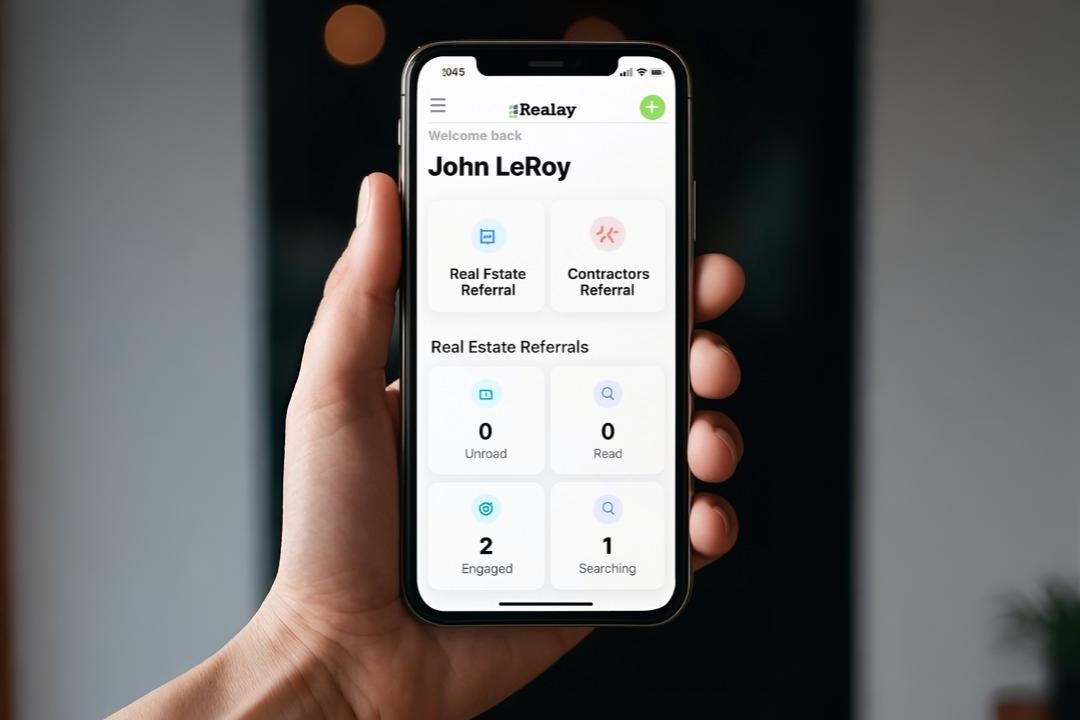
    Realay launched a mobile app in late 2025 with voice AI capabilities powered by OpenAI integration, allowing agents to submit referrals, update transaction status, and coordinate contractor services entirely through voice commands. The technology translates spoken requests into platform actions without requiring agents to type addresses, client details, or transaction notes.

    “The voice command is super easy for any agent to use,” said John LeRoy, Realay’s founder. “An agent can from anywhere speak their request into their phone with the Realay app, and that request turns into an action. There’s no more trying to type. There’s no more misspelling things.”

    Beyond Transcription to Action

    The distinction between Realay’s voice technology and typical transcription services lies in the automation layer. Speaking an address into a phone that converts it to text represents one capability. Speaking “send this client to an agent in Miami” and having the platform identify available network agents, verify their capacity, and complete the referral handoff represents something different entirely.

    “It’s one thing to have words to transcription, but going from words to transcription to actual actions, there’s nothing like this in the market at all,” LeRoy noted during a recent product demonstration.

    George Zeid, Realay’s technical architect, built the voice integration to address a practical reality: real estate agents work primarily from their vehicles, not from desks. The interface needed to function while agents were between appointments, potentially in parking lots or briefly stopped between showings.

    “What is specific about the users of the app is that most of the time they’re not behind their desk,” Zeid explained. “They’re outside showing houses. We’re trying to make it as easy as possible to use the app and benefit from all the features.”

    The Contractor Expansion

    The platform expanded beyond agent-to-agent referrals into contractor network management with the mobile app launch. Agents can now use voice commands to refer clients to painters, locksmiths, roofers, and other service providers organized within their brokerage’s network.

    The workflow operates identically to agent referrals. An agent sitting with a client who needs a painter simply opens the app and says, “Send Steve, my painter.” The contractor receives a text notification with the client’s contact information and project details. The broker maintains visibility into all contractor referrals through the dashboard.

    “Every real estate transaction involves contractor services at some point,” LeRoy said. “We’re streamlining those connections and helping agents provide even more value to their clients while creating new revenue opportunities for brokerages.”

    Contractors join the platform through broker invitations and pay subscription fees for access to referral opportunities. Brokers receive a portion of these subscription fees, creating passive income streams that don’t require additional work beyond the initial network setup.

    The Technical Challenge

    Building voice functionality that works reliably across different accents, speech patterns, and noisy environments required more development time than Realay initially projected. The team spent additional weeks refining the OpenAI integration to ensure consistent performance before submitting the app to Apple and Google for approval.

    “For whatever reason, the voice AI commands took more of a challenge than expected, but it’s now done and working,” LeRoy said. The app launched on both Apple’s App Store and Google Play Store in late 2025 after passing platform review requirements.

    The technology handles multiple command types: sending new referrals, updating transaction status, adding notes visible to originating agents, and referring contractor services. Each command type requires different data inputs and triggers different automated workflows within the platform.

    Market Positioning

    The mobile app addresses a gap between traditional software-as-a-service platforms requiring desktop access and fully automated systems lacking human oversight. Agents can now update referral status while walking through properties with clients, send contractor referrals during pre-listing consultations, and check transaction progress between appointments.

    The platform continues operating on a pay-at-closing model with no upfront fees or monthly subscriptions. Realay takes 5% of the referral commission while originating agents receive their standard 25% referral fee, eliminating financial risk for brokers testing the system.

    Independent brokers historically operated at a disadvantage compared to national franchises with dedicated relocation departments. The mobile app combined with voice AI functionality provides boutique operations with capabilities previously available only through franchise systems, without the franchise fees that can range from 6-8% of gross commission income.

    The Three-Year Vision

    LeRoy projects that within three years, using the Realay mobile app for all referrals will become industry standard practice. The prediction rests on the simplicity thesis: that agents will adopt tools requiring minimal effort and producing immediate results.

    “People’s muscle memory will be using Realay’s mobile app,” LeRoy said. “The voice command is so easy and so responsive. People like simplicity. Realay is simple to use.”

    Whether voice AI becomes the primary interface for referral management remains uncertain. But the technology exists, it functions, and it’s available now for brokers willing to test it. The question is whether the industry will embrace voice commands faster than it adopted previous technology shifts.

    The Realay mobile app is available for download in the Apple App Store and Google Play Store. Brokers and agents can register at Realay.com to join the platform’s network across all 50 states, plus Canada and Mexico.

    About Realay

    Realay is a SaaS platform that enables real estate agents and brokers to seamlessly send and receive referrals across the United States. Founded in 2023 and based in Michigan, Realay provides independent brokers with referral network capabilities traditionally available only through national franchise systems, with no monthly fees or subscriptions. The platform launched its voice AI-powered mobile app in late 2025. For more information, visit realay.com.

  • New Playbook Offers Mortgage Professionals Strategic Framework to Address Homeownership Equity Gap thumbnail

    New Playbook Offers Mortgage Professionals Strategic Framework to Address Homeownership Equity Gap

    During Black History Month, the Black Homeownership Council under the Broker Action Coalition released a strategic playbook equipping mortgage professionals with data-driven solutions to address a persistent industry challenge: Black and Hispanic homebuyers experience 72% higher denial and predatory lending rates than white applicants, according to HMDA and Urban League data.

    Personal Mission Drives Professional Action

    Dr. Jennifer Gormer, who chairs the council, understands the barriers firsthand. As a 24-year-old mother of five and sole breadwinner, she achieved what no one in her family had before—homeownership.

    “I closed at five o’clock on Christmas Eve. We got the last tree from Home Depot and celebrated Christmas in our first home,” she recalls. “My mom, grandmother, great-grandmother—none of them had this opportunity. That experience drives everything I do now to make homeownership accessible for other families.”

    Research Identifies Three Core Barriers

    The playbook synthesizes findings from mortgage brokers across all 50 states, combining national data with real-world case studies. The research pinpoints three systemic obstacles:

    Financial Literacy Deficit: Black homebuyers often lack access to credit and financial education that directly influences approval outcomes—not due to inability to learn, but lack of access to quality educational resources.

    Down Payment Program Invisibility: Federal, state, and local assistance programs exist, yet awareness remains critically low in Black communities. “Imagine being told you need 5% down—that feels like a lifetime of saving,” Dr. Gormer notes. “But assistance programs exist. The problem is borrowers don’t know about them.”

    Overlay Accumulation: Certain lenders layer additional requirements beyond standard guidelines, creating approval barriers that disproportionately impact Black and Hispanic applicants while serving no clear risk management purpose.

    Additional factors compound these challenges: credit report costs have quadrupled from $25 to over $100, and insurance premium increases squeeze debt-to-income ratios for borrowers with less financial cushion.

    “These factors don’t just affect application rates—they determine who reaches the closing table,” Dr. Gormer explains. “Initial approval means nothing if borrowers can’t close.”

    Actionable Intelligence for Industry Professionals

    Rather than documenting problems, the playbook delivers operational guidance: protocols for identifying lenders with minimal overlays, connection pathways to assistance programs, financial education integration frameworks, and cost mitigation strategies.

    This approach reflects the council’s broader philosophy—proactive industry engagement rather than reactive compliance.

    Proven Advocacy Infrastructure

    The Black Homeownership Council leverages the Broker Action Coalition’s established advocacy capacity. BAC coordinated 250+ congressional meetings and mobilized 25,000+ constituent letters supporting the Homebuyers Privacy Protection Act, which passed in 2025.

    The council functions within a multi-council structure alongside Hispanic Homeownership Leadership and Veterans Homeownership councils, enabling specialized focus with strategic coordination where challenges intersect.

    Dr. Gormer also founded the Black Mortgage Professional Alliance (BMPA), which provides complementary data and professional networks through its BAC partnership.

    Economic Implications

    The 30-percentage-point gap between Black and white homeownership rates represents untapped market potential. Closing this disparity could introduce millions of qualified households into the homebuyer pipeline.

    For mortgage professionals, this work merges market opportunity with professional responsibility—expanding reach while addressing equity.

    Industry Engagement

    Dr. Gormer frames participation as both invitation and expectation: “Lean in. Ask questions. And recognize that you have a voice worth contributing.”

    The council’s annual measurement framework will track denial rate trends, assistance program utilization, overlay prevalence, and cost trajectories—providing the industry with progress metrics rather than just aspirational goals.

    “I believe in what BAC and BMPA are building together,” Dr. Gormer states. “We’re closing this gap incrementally—day by day, month by month, borrower by borrower. That’s how meaningful change happens.”

    The Black History Month release positions the playbook as both historical acknowledgment and forward-looking strategy—recognizing persistent challenges while providing practical tools for measurable progress.

    Access the playbook here.

    About the Broker Action Coalition
    The Broker Action Coalition is a grassroots network representing independent mortgage brokers nationwide through education, professional development, and strategic industry advancement initiatives.

  • IMS Intelligence Corp Releases Worldwide A Large-Scale Action Story Driven Game By Video Game Developer Lucky Pikinini thumbnail

    IMS Intelligence Corp Releases Worldwide A Large-Scale Action Story Driven Game By Video Game Developer Lucky Pikinini

    UNITED STATES – February 17, 2026 – Video game developer Lucky Pikinini has announced the worldwide release of IMS Intelligence Corp, the fourth installment in the Super Incursion / IMS video game franchise. The title became available on Steam on January 26, 2026, for Windows PC, marking the latest expansion of the developer’s ongoing action-story series.

    IMS Intelligence Corp continues the narrative universe established in earlier entries of the Super Incursion / IMS series, which centers on a fictional conflict between two opposing super-powered factions. One faction seeks global control through military force, while the opposing side works to prevent widespread destruction within the game’s storyline. The franchise has developed an online following, with players sharing gameplay experiences and discussions across social media platforms.

    According to the developer, the new release introduces the most extensive story campaign in the series to date. The game follows the character IMS Private Daryl Kalashi, an intelligence officer assigned to the Intelligence Corp team during a fictional mission known as Operation Winter Strike. The operation takes place in Advanced City on Gemstone Island and focuses on intelligence-gathering objectives tied to events occurring alongside earlier titles in the franchise timeline.

    The storyline unfolds simultaneously with events depicted in previous games, including Super Incursion and IMS Death Squad, allowing players to experience parallel perspectives within the broader narrative universe. This approach expands continuity across the series while introducing new characters, missions, and environments.

    Designed as a hybrid first-person and third-person storytelling experience, IMS Intelligence Corp features a 13-chapter campaign supported by additional gameplay modes, including special mission scenarios and survival maps. The Intelligence Corp unit portrayed in the game represents a specialized team focused on reconnaissance and analysis rather than direct combat operations, distinguishing gameplay structure from earlier installments centered primarily on special forces units.

    Lucky Pikinini, an independent developer with six published titles, has continued to expand its catalog through story-driven releases built around interconnected fictional settings. The launch of IMS Intelligence Corp reflects the studio’s ongoing development of long-form narrative gameplay experiences within the Super Incursion universe.

    Additional information about the release, including technical details and platform availability, can be found on the official Steam product page: https://store.steampowered.com/app/4268120/Lucky_Pikinini__IMS_Intelligence_Corp/

    Media Contact
    Company Name: Titan Media Distribution Agency
    Contact Person: Michael McAuliffe
    Country: United States
    Website: https://store.steampowered.com/app/4268120/Lucky_Pikinini__IMS_Intelligence_Corp/

  • Why Toronto Chooses Professional Cleaning Between Guests

    As an Airbnb host in Toronto, it can be a challenge to balance messages from guests, keeping the place spotless, and trying to achieve those coveted five-star ratings. The harsh reality is that cleaning between guests can be the difference between winning or losing at the Airbnb hosting game. This is where airbnb cleaning services puremaids.ca come in and rescue the day and the sanity of hosts everywhere. At PureMaids, we understand that hosts are already too busy to be scrubbing toilets at midnight for the next day’s guests. Our motto says it all: More moments, less mess. We are here to help alleviate the cleaning stress so that hosts can concentrate on growing their business.

    The Real Cost of DIY Cleaning

    The reality is that many hosts begin by cleaning their place themselves. The cost of this seems low at the outset. However, when calculating the actual time spent changing bedding, replenishing supplies, and scrubbing toilets, the cost can be staggering. Time is money, especially for short-term vacation rentals. Professional cleaning crews are much more efficient at cleaning an Airbnb Toronto than hosts could ever be. What might take hosts three hours to clean, a professional crew can accomplish in about 90 minutes. They will also be much more discerning about the details that might be easily overlooked by hosts.

    Complete Home Care Solutions

    While PureMaids is best known for handling vacation rental turnovers, we’re happy to offer top-notch maid services toronto for residents of Toronto. We’re not like other home cleaning services. We operate under a hospitality-focused checklist to ensure your home is clean and inviting:

    • Linens arranged and put out
    • Kitchen and bathroom areas sanitized
    • Floors swept and mopped
    • Additional welcoming touches to make your home feel special

    Quality Control: Protecting Your Reputation

    Your reputation is on the line with every guest. One bad turnover can lead to a three-star rating and hurt your visibility on Airbnb. PureMaids has a double-check system to ensure your home is clean and inviting. We take a photo of the completed job so you can rest easy knowing your home is clean and welcoming. The Toronto vacation rental market is more competitive than ever. By consistently scoring high on cleanliness, you can increase bookings and potentially earn more.

    We’re flexible and can accommodate your unpredictable schedule. Last-minute bookings? Early checkouts? We’re here to help.

    Why Make the Switch?

    Most of our clients wish they had hired a professional home cleaning service earlier. We know it’s a cost-benefit analysis. Think about all the hours you’re spending on a task that can be accomplished more efficiently and cost-effectively. 

    By hiring a professional home cleaning service, you can enjoy more free time with your loved ones and more free time to focus on building your vacation rental portfolio. By partnering with a home cleaning service like PureMaids, you can eliminate one more stressor from your life.

  • Back-to-School Anxiety: 5 Ways to Prepare Your Anxious Child thumbnail

    Back-to-School Anxiety: 5 Ways to Prepare Your Anxious Child

    The back-to-school season can be exciting for many children, but it can also be stressful for those who struggle with anxiety. New teachers, new routines, crowded classrooms, and social pressure can feel overwhelming. Some kids may worry weeks before school starts, while others may show fear right on the first day.

    Understanding why children feel anxious and helping them prepare early can make the transition smoother. This guide explains simple, effective ways parents can support an anxious child before school begins.

    1. Understand What Anxiety Looks Like in Children

    Every child shows anxiety in different ways. Some children talk about their worries, while others show it through behavior or physical symptoms. Signs may include trouble sleeping, stomach aches, clinginess, or sudden changes in mood.

    Parents also notice that certain stress-related behaviors appear when the school year is about to begin. Sometimes families wonder what is a behavior plan at school and whether their child might need extra support for emotional or behavioral challenges during the school day. Understanding the purpose of these supports helps parents know when to ask teachers for help.

    The more you understand your child’s reactions, the easier it becomes to prepare them before school starts.

    2. Talk About School in a Calm and Positive Way

    Many anxious children imagine school as a scary place simply because they don’t know what to expect. Talking about school early helps them understand the routine and feel more prepared mentally.

    You can start by asking simple, open-ended questions:

    • What part of school makes you feel worried?
    • What are you excited about this year?
    • What do you hope your school day looks like?

    These questions give your child space to express their emotions without feeling judged. It also helps you understand what type of support they need whether it’s help with social situations, academics, or adjusting to new environments.

    Talking regularly about school makes it feel familiar, not frightening.

    3. Build a Back-to-School Routine Early

    Children feel safer when they know what to expect. A predictable routine lowers anxiety because it reduces uncertainty.

    Here are simple routines you can begin a week or two before school starts:

    • Adjust bedtime and wake-up times
    • Practice morning routines like packing bags
    • Set up a quiet homework space
    • Visit the school building or drive by it
    • Review the school schedule together

    These activities help your child get comfortable with the rhythm of school life. They also reduce the shock of suddenly shifting from summer freedom to school structure.

    Around this stage, many families also explore helpful supports like ABA Services in New York, especially for children who need extra guidance with transitions, routines, or emotional regulation. Support programs like these can make back-to-school time much easier for both children and parents.

    4. Teach Simple Coping Skills Your Child Can Use at School

    Coping skills help children manage stress in real time. Teaching these strategies early gives kids tools they can use whenever they feel overwhelmed whether in the classroom, cafeteria, or playground.

    Here are some easy techniques:

    1. Deep Breathing

    Teach your child to take slow, deep breaths.
    Breathe in for four seconds, hold for two, and breathe out for four.

    2. Counting

    Have your child count to 10 slowly to calm racing thoughts.

    3. Positive Self-Talk

    Help them practice simple phrases like:

    •  “I can do this.”
    •  “I am safe.”
    •  “School will be okay.”

    4. Break Time

    Explain that it’s okay to ask for a break if they feel too overwhelmed.

    5. Visualization

    Guide them to imagine a calm place like the beach or a garden.

    These coping tools may seem small, but they help children feel more in control during stressful school moments.

    5. Stay Connected With Teachers and School Staff

    Parents and teachers working together can make a big difference. Sharing your child’s needs helps school staff support them better.

    You may want to discuss:

    • Your child’s triggers
    • What helps calm them
    • Any routines that work at home
    • Social or academic challenges
    • Any support services your child receives

    Teachers appreciate knowing how to help a child feel comfortable. Many schools also have counselors, support teachers, and social-emotional programs for students who need extra guidance.

    If possible, arrange a short meeting or classroom visit before school starts. A familiar face or space can significantly reduce back-to-school stress.

    Why Back-to-School Anxiety Happens

    Back-to-school anxiety occurs for many reasons, including:

    • Fear of new people
    • Worry about academic pressure
    • Sensory overload
    • Difficulty with social skills
    • Change in daily routine
    • Past negative experiences
    • Separation from parents

    For some children, the school environment itself feels unpredictable. Preparing early and offering emotional support helps children feel more confident and ready.

    How Parents Can Stay Calm During This Time

    Children often copy their parents’ emotions. If you stay calm, patient, and positive, your child will feel safer. Small gestures like preparing their favorite breakfast, planning relaxing after-school activities, or offering extra hugs can provide comfort during the transition.

    Avoid pushing too hard or dismissing your child’s feelings. Instead, remind them that it’s okay to feel nervous and that many other children feel the same way.

    Final Thoughts

    Back-to-school anxiety is common, but it doesn’t have to control your child’s experience. With patience, preparation, and emotional support, you can help your child face the school year with confidence.

    Understanding their fears, building routines early, and teaching coping skills make a big difference. And remember every child adjusts at their own pace. What matters most is that your child feels safe, supported, and understood as they begin their school journey.

  • PickYourTires: A Michelin CrossClimate 2 Review for Buyers

    PickYourTires. Finding reviews about a certain product is important these days. This is crucial when purchasing online. There are many tire brands today. Each offers a unique set of pros and cons. Buyers look for a replacement or an upgrade. But they always check out a specific michelin crossclimate 2 review. This can help them decide before making a purchase online.

    The Michelin CrossClimate 2 stands out today. This is popular when it comes to choosing reliable all-season tires. PickYourTires.com views this as a top contender when it comes to overall performance. The review shows an in-depth look at what makes this tire a premium choice.

    The PickYourTires website offers a comprehensive review of the Michelin CrossClimate 2. They provide expert analytics of this product. This shows why this is the best choice across different weather conditions. These tires are evaluated by actual users and expert analysis.

    For all-season tire reviews, TireScore is a weighted mix as follows:

    • Dry 25%
    • Wet 25%
    • Snow 20%
    • Comfort & Noise 15%
    • Treadwear 15%

    The result is a number buyers can trust. The ratings are based on real-world data. These are analyzed and evaluated with no bias.

    The CrossClimate 2 earns excellent scores in key performance categories. It received an impressive 9.2 overall TireScore. This makes it one of the best “all-season” touring tires available in the market today.

    • Winter – 9/10
    • Dry – 9.5/10
    • Wet – 9.7/10
    • Comfort – 8.9/10
    • Treadwear – 9/10

    Pros of Buying Michelin CrossClimate 2:

    • Outstanding Wet Performance. This is reported to have excellent hydroplaning resistance. It also guarantees reliable wet braking systems.
    • Snow Capability. This tire can handle light to moderate snow.
    • Multiple Biting Edges. Improves grip in winter conditions.
    • Comfortable Ride. This offers a smooth tire feel on both city streets and highways.
    • The tire is reported to offer high mileage before significant tread wear is obvious.

    The CrossClimate 2 did not start out as a traditional all-season. It was first known as a winter tire with its new silhouette, sharp V-shaped tread, and design that looked more like a winter tire. But Michelin targeted year-round drivability. This way, drivers will not have to switch sets between seasons.

    This tire is most often seen on sedans and crossovers. This is often driven in cold-prone regions. Drivers who cover a lot of ground through shoulder seasons prefer this model. Simply because they don’t have to worry about tread issues when it’s snowing. It has the snowflake rating stamp. However, this is not a full-on snow tire. This rides like a touring model with winter clearance that is built into its tread pattern.

    PickYourTires.com is run by a small team of car enthusiasts. They share a passion for all things that involve automotive. But what they focus on are tires.

    The Michelin CrossClimate 2 Review is based on 364 verified user reviews. They have a thorough method of collecting real customer reviews from trusted sources. They are then analyzing the reviews using a combination of manual and AI-supported semi-automatic steps.

  • Like Home Sets New Benchmark in Dubai’s Short-Term Rental and Property Management Sector thumbnail

    Like Home Sets New Benchmark in Dubai’s Short-Term Rental and Property Management Sector

    Dubai’s short-term rental market is growing fast. Every year, millions of tourists, business travelers, and long-stay visitors come to the city looking for comfort, flexibility, and value. In the middle of this growth, Like Home is stepping forward with a clear mission: to offer holiday homes that truly feel like home,  not just another rental.

    Built on the philosophy “Not Like Rental, Like Home,” the company focuses on comfort, safety, and professional service. Like Home is not trying to compete as just another listing platform. Instead, it aims to raise the standard of what guests and property owners should expect from short-term rentals in Dubai.

    Operating under Dar Al Zain Vacation Home Rentals L.L.C, the company is headquartered in Business Bay and continues to expand across key residential communities in the city.

    Prime Locations in the Heart of Dubai

    Location matters in Dubai. Visitors want to stay close to major attractions, business hubs, and lifestyle destinations. Like Home offers fully furnished apartments and villas in some of the city’s most desirable areas, including:

    • Downtown Dubai
    • Business Bay
    • Dubai Mall surroundings
    • Meydan
    • Al Quoz
    • Dubai Creek Harbour

    These communities are known for their accessibility, modern infrastructure, and vibrant lifestyle. Whether guests are visiting for tourism, work, relocation, or extended family stays, they can choose properties that match their needs.

    Each unit is carefully selected and professionally prepared. The focus is not just on appearance, but on livability. Comfortable furniture, clean spaces, modern appliances, high-speed internet, and secure access are standard across the portfolio.

    Guests can book directly through the company’s official platform at booking.likehome.ae, making the reservation process simple and secure.

    More Than a Rental: A Complete Living Experience

    Unlike many short-term rental operators, Like Home positions itself as a hospitality-driven company. The goal is not just to hand over keys, but to provide a smooth and stress-free experience from start to finish.

    Every property under Like Home management includes:

    • Professional housekeeping
    • Regular maintenance support
    • 24/7 customer assistance
    • Secure check-in and check-out process

    This structure gives guests peace of mind. If something needs attention, there is always support available. If a family arrives late at night, assistance is ready. If a business traveler needs help during their stay, the team responds quickly.

    This approach blends the comfort of a private home with the reliability of hotel-level service. It creates a balanced experience,  privacy without isolation, comfort without compromise.

    Designed for Short-Term and Monthly Stays

    Dubai attracts many types of visitors. Some come for a few days. Others stay for weeks or months. Like Home understands that flexibility is essential.

    The company offers short-term holiday rentals as well as monthly stays. This makes it ideal for:

    • Tourists exploring the city
    • Business professionals on temporary assignments
    • Families relocating to Dubai
    • Investors visiting for property evaluation
    • Guests between long-term housing arrangements

    Instead of locking guests into rigid contracts, Like Home provides flexible booking options that match modern travel needs.

    Supporting Property Owners with Smart Management

    While guests enjoy premium living spaces, property owners benefit from professional and hands-free management. Like Home offers complete property management services designed to remove the daily burden from landlords.

    The company handles:

    • Listing creation and optimization across booking platforms
    • Guest communication and screening
    • Pricing strategies based on market demand
    • Housekeeping coordination
    • Maintenance supervision
    • Compliance with Dubai’s holiday home regulations

    This full-service model allows owners to stay stress-free while their properties generate income. They do not need to manage phone calls, late-night check-ins, cleaning schedules, or technical issues. The Like Home team manages everything with structured systems and clear reporting.

    Higher Returns Through Short-Term Strategy

    Dubai’s real estate market remains competitive and dynamic. Traditional long-term leasing offers stability, but many investors are now exploring short-term rental models for better returns.

    According to company data and market insights, short-term rental strategies can generate 20 to 30 percent higher returns compared to conventional long-term leases. This depends on location, season, and demand patterns, but the potential is strong.

    Tourism growth, global business events, and Dubai’s year-round attractions continue to support demand for flexible accommodation. By combining professional management with strong marketing strategies, Like Home helps property owners maximize occupancy and optimize revenue.

    This model appeals to investors who want higher income potential without operational stress.

    Built on Transparency and Trust

    In a market where trust is essential, Like Home emphasizes transparency and clear communication. Both guests and property owners receive detailed information about pricing, policies, and services.

    There are no hidden processes. Expectations are explained upfront. Support is available when needed.

    The company believes that long-term success comes from satisfied guests and confident property owners. Positive experiences lead to repeat bookings, stronger occupancy rates, and sustainable growth.

    Meeting the Needs of a Growing City

    Dubai continues to attract global attention. Major events, expanding business sectors, and world-class tourism infrastructure are driving consistent demand for quality accommodation.

    As more travelers choose apartment-style living over traditional hotels, professionally managed holiday homes are becoming a preferred option. Guests want more space, kitchen facilities, privacy, and cost efficiency,  especially for longer stays.

    Like Home meets this demand by combining residential comfort with professional standards; the properties are not treated as temporary spaces. They are maintained as welcoming homes.

    This mindset reflects the company’s core identity: comfort first, service always.

    Commitment to Service Excellence

    Behind every booking is a team focused on delivering quality. From property inspections to cleaning standards, attention to detail is part of daily operations.

    The team monitors market trends, guest feedback, and seasonal demand patterns. This allows continuous improvement and smart decision-making. The result is a system that supports both guest satisfaction and investor performance.

    Headquartered in Business Bay, Like Home continues to expand carefully, selecting properties that meet its quality standards rather than focusing only on quantity.

    Looking Ahead

    As Dubai’s short-term rental sector continues to grow, Like Home is committed to strengthening its position as a trusted and reliable operator. The company plans to expand its portfolio across additional prime communities while maintaining strict quality control.

    The vision remains clear: deliver premium holiday homes that feel comfortable, secure, and welcoming,  while offering property owners a structured, profitable, and stress-free management solution.

    In a city known for innovation and high standards, Like Home is building its name by focusing on what matters most: people, comfort, and professional care.

    About Like Home

    Like Home operates under Dar Al Zain Vacation Home Rentals L.L.C in Dubai, UAE, the company provides fully furnished holiday homes for short-term and monthly stays, along with complete property management services for homeowners and investors.

    Contact Information:

    Bookings and More Information:

  • Marco Polo CEE Adds LeaderCoreAI as AI Companion for Leadership Programs thumbnail

    Marco Polo CEE Adds LeaderCoreAI as AI Companion for Leadership Programs

    BUCHAREST, ROMANIA – 17 February, 2026 – Marco Polo CEE, one of Central and Eastern Europe’s established corporate training providers, has signed a reseller partnership with Blue Horizon Training to offer LeaderCoreAI as an AI companion for leadership programs across its enterprise client base in the region.

    First of its kind in the CEE market, the partnership addresses a challenge both companies have observed independently: traditional leadership training delivers valuable frameworks and insights, but lacks the ongoing practice component that converts knowledge into lasting behavioral change.

    “We’ve trained over 10,000 professionals in leadership skills since 2014,” said Raymond Marin, Managing Partner at Marco Polo CEE. “The workshops work. The coaching works. But we’ve always faced the same limitation – once participants leave the room, where do they practice? LeaderCoreAI finally gives us an answer to that question.”

    The Reinforcement Gap

    Research consistently shows that without reinforcement, 70-90% of training content fades within weeks. An organization investing $100,000 in leadership training, for example, stands to lose most of that value to the forgetting curve.

    LeaderCoreAI provides unlimited AI-powered scenarios where managers practice difficult conversations – performance feedback, conflict resolution, strategic alignment, delegation – in a consequence-free environment. The AI responds realistically, pushing back and adapting based on the manager’s leadership approach.

    “Leadership development works like physical fitness,” said Frank Basinski, founder of Blue Horizon Training and LeaderCoreAI. “You can’t build muscle by reading about exercise. Marco Polo delivers excellent facilitation and frameworks. We provide the reps that turn those frameworks into confidently available skills under pressure.”

    Integrated Leadership Development

    Under the partnership, Marco Polo CEE will offer LeaderCoreAI as an integrated component of its leadership development programs, including its flagship “Transformative Leadership” program – a 3-12 month learning journey that develops capabilities across change management, communication, decision-making, and team development.

    Between each program milestone, participants access the AI leadership practice platform 24/7 – practicing the skills introduced in workshops through realistic scenarios until those skills become confident, automatic responses. This continuous reinforcement directly addresses the forgetting curve that erodes 70-90% of traditional training content within weeks.

    “Our programs already run 3-12 months because we know behavior change takes time,” said Octavian Stanciu, Managing Partner at Marco Polo CEE. “Now, instead of hoping insights survive between sessions, managers practice continuously with AI. The reinforcement loop finally matches the ambition of the program.”

    A Strategic Fit

    Both companies share Bucharest as their base and a philosophy that effective leadership development requires sustained practice – not just instruction.

    For Marco Polo CEE’s clients, the partnership means leadership development programs now come with built-in practice infrastructure. Rather than sourcing facilitation and reinforcement technology separately, organizations receive an integrated solution – expert-led workshops backed by 24/7 AI practice – through a single training partner.

    Availability

    Marco Polo CEE clients can now request LeaderCoreAI integration with new or existing leadership development programs. Organizations interested in the combined offering should contact Marco Polo CEE directly at office@marcopolocee.com or visit marcopolocee.com.

    For organizations seeking LeaderCoreAI as a standalone AI leadership practice platform, or for partnership inquiries, visit leadercore.ai.

    About Marco Polo CEE

    Founded in 2014 as part of Marco Polo Performance, Marco Polo CEE has trained over 10,450 professionals and delivered 1,600+ coaching sessions across Central and Eastern Europe. Part of the Marco Polo Performance group with presence across France, Morocco, Poland, and Africa, the partnership opens potential for LeaderCoreAI-enhanced programs beyond Romania into the broader CEE market. Clients include Coca-Cola, Vodafone, Novartis, LG, KPMG, and BCR. Learn more at marcopolocee.com.

    About Blue Horizon Training / LeaderCoreAI

    Blue Horizon Training, founded in 2020 in Bucharest, develops AI-powered leadership practice tools. LeaderCoreAI is an AI leadership practice platform where managers practice difficult conversations through realistic AI simulations with instant feedback – used both as a standalone solution and as an AI companion for leadership programs and workshops. Clients include Leonardo UK and EU-CONEXUS. Learn more at https://leadercore.ai.

    Media Contact: Frank Basinski, Founder, Blue Horizon Training office@leadercore.ai | +40 724 219 503 | linkedin.com/in/frank-basinski

    Raymond Marin, Managing Partner, Marco Polo CEE | office@marcopolocee.com

    Octavian Stanciu, Managing Partner, Marco Polo CEE | office@marcopolocee.com

    Media Contact
    Company Name: Blue Horizon Training
    Contact Person: Frank Basinski
    Country: Romania
    Website: https://leadercore.ai/