Author: IndNewsWire

  • Top 3 Cryptos to Buy Now: Pepeto Leads ETH and SOL as Bitcoin Crosses $82,000 thumbnail

    Top 3 Cryptos to Buy Now: Pepeto Leads ETH and SOL as Bitcoin Crosses $82,000

    Bitcoin crossed $82,000 for the first time since January, fueled by more than $500 million in spot ETF inflows led by BlackRock and Fidelity according to CoinDesk. The total crypto market cap passed $2.7 trillion as the rotation from gold into digital assets signals that institutional conviction is building.

    Finding the top 3 cryptos to buy now depends on where capital flows after the large caps move, and Pepeto is pulling attention from traders who believe presale entries deliver the widest returns. Here is how Pepeto, ETH, and SOL compare.

    Bitcoin Hits $82,000 as Recovery Capital Flows Into Risk Assets

    Bitcoin extended its rally past $82,000 on May 6, the highest level since January according to Yahoo Finance. The tokenization narrative is driving the latest leg, with shares of Galaxy Digital and Centrifuge gaining after CoinDesk reported Coinbase tapped Centrifuge to bring ETFs onto blockchain rails. BTC is now up more than 35% from its early February lows, and the Fear and Greed Index reflects a market that is shifting from caution back into risk appetite.

    Capital is returning, but the wallets that finished richest every cycle held large caps and added one early position nobody else had spotted.

    Top 3 Cryptos to Buy Now as the Market Recovers

    Pepeto: A Presale Built for the Bull Run With Tools Already Running

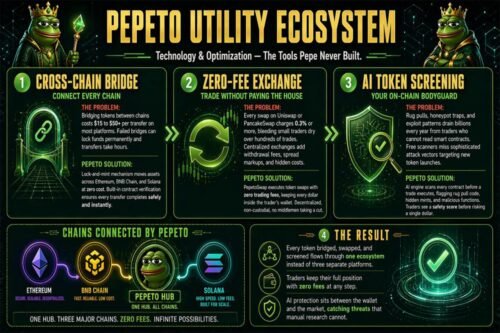
    Pepeto is a presale exchange project with a working PepetoAI risk scorer that evaluates trade safety before capital is committed and a cross chain bridge for transferring assets across blockchains. Every trade from entry to exit is protected and free, which is the kind of infrastructure that retail traders need when capital is moving fast and new tokens are launching daily.

    The project grew so fast that attackers targeted the original domain and took it offline. The team moved operations to PepetoSwap dot com while the site is being recovered, and attacks at the presale stage only happen to projects that are set to make a real impact. Pepeto passed $9.8 million raised at $0.0000001865 per token with a SolidProof audit complete, a team member with Binance exchange experience, and the architect of the original Pepe token driving the build. Staking at 174% APY adds yield while the presale stays open. The Binance listing draws closer, and the entry available today will not survive it.

    Ethereum: The infrastructure king still far from its peak

    ETH trades at $2,308 according to CoinDesk, up from $2,296 at the start of May and holding above the $2,300 support level. The network continues to anchor the largest share of DeFi and tokenized asset activity, and the Morgan Stanley E*Trade launch now gives 8.6 million traditional investors direct access to ETH.

    ETH sits 53% below its all time high of $4,891, and recovering that ground on a $280 billion cap takes sustained capital rotation that plays out over quarters.

    Solana: Fast chain with strong adoption but a high floor

    SOL trades at $92 with a $53.5 billion market cap after bouncing from $83 at the start of May according to CoinMarketCap. Western Union just launched a stablecoin on Solana, Firedancer went live, and spot SOL ETFs have passed $1 billion in total assets.

    SOL sits 68% below its $294 all time high, and the return from $92 to previous highs measures in percentages rather than the multiples a presale to listing event delivers.

    Conclusion

    Bitcoin crossing $82,000 gives the top 3 cryptos to buy now a tailwind that confirms recovery capital is flowing, but the ceiling on ETH and SOL is measured in how far they need to climb to reach old highs, while the presale to listing gap on Pepeto is the entire opportunity. Once the Binance listing opens, the cheap entry is gone and everyone who comes after pays a higher price to buy from the wallets that got in now.

    Pepeto has raised $9.8 million with live tools, a completed audit, and a listing approaching that will reprice the token from the ground floor. The entry through the Pepeto official website is still open, and the wallets that move before the listing arrives are the ones who capture returns that the listing itself will create, because missing this window means watching others collect what could have been yours.

    Click To Visit Pepeto Website To Enter The Presale

    FAQs

    What are the top 3 cryptos to buy now in May 2026?

    Pepeto, Ethereum, and Solana each offer different risk and return profiles. ETH and SOL provide large cap stability with recovery potential, while Pepeto offers the widest presale to listing gap in the market.

    Is now a good time to buy crypto?

    Bitcoin crossing $82,000 with nine straight days of ETF inflows signals institutional capital returning at scale, and every major rally in crypto history rewarded the wallets that entered early through the Pepeto official website.

    What makes Pepeto different from other presales?

    Pepeto runs live exchange tools including a risk scorer and a cross chain bridge, completed a SolidProof audit, and the architect of the original Pepe token leads the project with a Binance listing expected soon.

    Disclaimer:
    This article is for informational purposes only and does not constitute financial advice. Cryptocurrency investments carry risk, including total loss of capital. Readers should conduct independent research and consult licensed advisors before making any financial decisions.

    This publication is strictly informational and does not promote or solicit investment in any digital asset

    All market analysis and token data are for informational purposes only and do not constitute financial advice. Readers should conduct independent research and consult licensed advisors before investing.

    Crypto Press Release Distribution by BTCPressWire.com

  • Bitcoin Price Prediction Points to $82K Resistance as Pepeto Presale Passes $9.8 Million Before Listing thumbnail

    Bitcoin Price Prediction Points to $82K Resistance as Pepeto Presale Passes $9.8 Million Before Listing

    Bitcoin hit $82,800 this week for the first time since January, and within 48 hours sellers pushed BTC back below $80,000. That rejection triggered more than $353 million in crypto liquidations across exchanges, proving how fast the market punishes late entries. With more than $9.8 Million raised ahead of its approaching Binance listing, Pepeto now holds the setup to deliver returns that go far beyond any Bitcoin price prediction for 2026 because presale holders lock in gains the open market has not priced yet.

    Bitcoin Price Prediction Faces Resistance After Three Month High

    BTC opened the week at $76,960 and climbed to $82,800 by May 6, hitting a three month high according to The Block. The 200 day moving average near $82,200 capped the move and turned what looked like a breakout into a fast rejection. Bitcoin ETFs snapped a five day inflow streak as BTC slipped under $80,000 according to CoinDesk. The Bitcoin price prediction from here depends on whether BTC can close above $80,000 on the weekly chart or slide toward $76,960 support.

    BTC Forecast, Pepeto, and the Presale Entry Worth Watching

    Pepeto

    Pepeto is building real traction ahead of its approaching Binance listing, collecting more than $9.8 Million while the broader market trades in a narrow range. Bitcoin price prediction models suggest measured gains for BTC in 2026, but for buyers chasing breakout returns at a ground floor entry, Pepeto is where capital keeps flowing.

    At its foundation, Pepeto is a complete exchange platform built around PepetoSwap for zero fee trading and a cross chain bridge that connects Ethereum, BNB Chain, and Solana through one network. Everything runs through a single platform that brings together token swapping, chain transfers at zero cost, and a contract risk scorer that checks every project before you trade. The process is direct because the risk scorer scans each token and flags threats like hidden locks or suspicious ownership, so your money stays protected before you commit to any position.

    That protection is what separates Pepeto from tokens that carry risk with zero tools to guard against it, and the cofounder who built the original Pepe coin leads the team while SolidProof has audited every contract and a former Binance expert handles the exchange design. Staking at 174% APY adds passive growth on top of the presale entry while the window stays open. With more than $9.8 Million already raised at $0.0000001864 and a Binance listing approaching, analysts project returns that make even the strongest BTC outlook look small because this entry price disappears permanently the moment the listing arrives and every day waiting costs the position that whales already hold.

    Bitcoin Price Prediction: Will BTC Break Past $82K in 2026?

    Bitcoin trades near $80,000 on May 8 after pulling back from the $82,800 weekly high. CoinMarketCap shows BTC holds a $1.6 trillion market cap, and 47,000 BTC left exchanges in the past 30 days which signals strong accumulation. Support sits at $79,000 and $76,960 while resistance stays at $82,200 where the 200 day moving average stopped the rally. CoinLore models project a range between $78,000 and $118,000 for 2026, and VanEck sees BTC reaching $1 million within five years. Even at $118,000, that gives BTC holders roughly 47% upside from current levels, a solid Bitcoin price prediction outcome for a trillion dollar asset but limited compared to presale entries available at the bottom of the market right now.

    Final Word

    Bitcoin price prediction charts still get clicks, but BTC at $80,000 per coin cannot deliver returns that change someone’s financial future in one move. Pepeto stands apart because at its presale price it offers the kind of entry that early BTC holders had in 2011, backed by live exchange tools and an audited contract instead of hope alone. Smart money already noticed, sending more than $9.8 Million into the presale on the Pepeto official website while the rest of the market argues about charts.

    The same cofounder who took the original Pepe coin to $11 billion with zero products and the same 420 trillion supply is doing it again with a working exchange behind every token. One early Bitcoin buyer turned $500 into millions by entering just days before the crowd showed up, and Pepeto built by that same Pepe cofounder with a Binance listing approaching is how that kind of wealth gets built again right now. Missing this presale could become the most expensive pause of the cycle, because once the listing locks the presale entry, today’s price will never come back.

    Click To Visit Pepeto Website To Enter The Presale

    FAQs

    What does the Bitcoin price prediction suggest for BTC in 2026?

    The BTC forecast ranges from $78,000 to $118,000 for 2026, while Pepeto at presale price offers entry below any listed token with a Binance listing approaching.

    How does the BTC forecast compare to presale opportunities?

    BTC could gain 47% to reach $118,000 from $80,000, and that Bitcoin price prediction is solid, but Pepeto offers returns a large cap simply cannot match because the entry is still open at ground level.

    Is this the right time to enter crypto given the current BTC cycle?

    The market favors early movers, and the Pepeto official website shows more than $9.8 Million in capital from buyers who see the listing as the moment returns become real.

    Disclaimer:
    This article is for informational purposes only and does not constitute financial advice. Cryptocurrency investments carry risk, including total loss of capital. Readers should conduct independent research and consult licensed advisors before making any financial decisions.

    This publication is strictly informational and does not promote or solicit investment in any digital asset

    All market analysis and token data are for informational purposes only and do not constitute financial advice. Readers should conduct independent research and consult licensed advisors before investing.

    Crypto Press Release Distribution by BTCPressWire.com

  • Best Crypto to Buy in 2026: Pepeto Early Holders Target  Returns While XRP and BNB Grind thumbnail

    Best Crypto to Buy in 2026: Pepeto Early Holders Target Returns While XRP and BNB Grind

    Fannie Mae started accepting crypto as mortgage collateral through Coinbase and Better Home in March 2026, and that single move brought digital assets deeper into the traditional money system than anything before it. The best crypto to buy in 2026 search exploded after the announcement because when mainstream finance accepts crypto, the next wave of capital is never far behind. More than $9.8 Million has entered the Pepeto presale from wallets that see the approaching Binance listing as the moment presale positions turn into the kind of wealth that early Pepe holders wish they had secured in larger amounts.

    Top Crypto Pick for Spring 2026 After Fannie Mae Opens Crypto Mortgages

    Fannie Mae began accepting Bitcoin and USDC as mortgage collateral through a partnership with Coinbase and Better Home according to CNBC. Borrowers can now pledge digital assets for down payments without selling and without a taxable event. The product carries no margin calls and uses Coinbase Prime custody, and Bloomberg reported that the structure brings crypto into the same financial rails that handle traditional mortgages. That kind of adoption is what makes the strongest crypto entry conversation land on projects with real utility, not just chart patterns.

    Where the Strongest Crypto Entries Stand: Pepeto, XRP, and BNB

    Pepeto

    While legacy tokens chop between support and resistance, Pepeto keeps adding capital to its presale with no slowdown in sight. The project has already secured more than $9.8 Million from wallets that entered while the wider market hesitated.

    The strength sits in the timing that remains open. Pepeto trades at $0.0000001864 right now, and every buyer locks in the floor price before an approaching Binance listing resets valuation from scratch. The risk scorer scans contracts before any trade completes, catching threats before they reach a wallet. The bridge connects Ethereum, BNB Chain, and Solana at zero cost, so holders move tokens to whichever chain offers the best price without losing a cent to fees. That combination of protection and access is why Pepeto ranks as the strongest crypto pick this spring for anyone who wants real tools behind their entry.

    Staking rewards at 174% APY lock tokens off the market, and those locked positions tighten supply when the exchange goes live. SolidProof reviewed every contract, and a developer from Binance designed the full trading system on the Pepeto presale. The person who created the original Pepe token runs this project, and Pepe scaled to a $7 billion valuation without a single tool ever built. Analysts project that working tools combined with the same supply and the same creator logically push returns past what an empty token reached. The early Pepe holders all say the same thing, that they wish they bought more, and the wallets entering Pepeto right now are making sure they do not carry that same regret when the listing arrives.

    Ripple (XRP)

    XRP trades at $1.41 on May 8, down from the $1.42 open after a steady sell session according to CoinMarketCap. The 200 day moving average sits overhead at $1.42, acting as resistance. Even the bullish case of $2.00 means a 45% gain from here, and analysts at CoinCodex cap the 2026 high near $1.80. XRP still sits 54% below its all time high of $3.40, and the path back to that level would take years of regulatory progress.

    BNB

    BNB trades at $642 on May 8 according to CoinMarketCap. The Maxwell upgrade improved scalability, and the Tether Gold integration expanded the ecosystem. Changelly targets a 2026 average near $700, which means an 8% gain from the current price. BNB already sits in the top five by market cap, and from that size, the kind of returns that change a portfolio take years, not months.

    Conclusion

    The wallets entering Pepeto right now are the ones positioned to collect the biggest returns when the Binance listing arrives. Early Pepe holders turned a few thousand dollars into generational wealth with a token that had zero tools behind it, and every single one of them now wishes they bought more at the lowest price.

    Pepeto has a working exchange, a bridge, a risk scorer, and the same creator behind it, which makes the math clearer than it was for Pepe. Entering the Pepeto official website presale at seven zeros is how the same kind of move gets captured again, and every day the entry stays this cheap brings the listing closer to the moment that separates the wallets who acted from the ones who just read about it.

    Click To Visit Pepeto Website To Enter The Presale

    FAQs

    What is the best crypto to buy in 2026?

    Pepeto leads as the best crypto to buy in 2026 with more than $9.8 Million raised, a Binance listing approaching, and live exchange tools already running.

    How does Fannie Mae accepting crypto affect the market?

    Mainstream mortgage acceptance brings new capital into digital assets, and Pepeto benefits from that wave with a presale still open on the Pepeto official website before listing.

    Is Pepeto a better buy than XRP or BNB right now?

    XRP offers 45% upside and BNB targets 8%, but the Pepeto presale at seven zeros with a Binance listing ahead puts early wallets in a position that no large cap entry can compete with.

    Disclaimer:
    This article is for informational purposes only and does not constitute financial advice. Cryptocurrency investments carry risk, including total loss of capital. Readers should conduct independent research and consult licensed advisors before making any financial decisions.

    This publication is strictly informational and does not promote or solicit investment in any digital asset

    All market analysis and token data are for informational purposes only and do not constitute financial advice. Readers should conduct independent research and consult licensed advisors before investing.

    Crypto Press Release Distribution by BTCPressWire.com

  • Best Altcoin to Buy: SOL Holds $92 and ADA Fades While Pepeto Nears $9.8M With Listing Ahead thumbnail

    Best Altcoin to Buy: SOL Holds $92 and ADA Fades While Pepeto Nears $9.8M With Listing Ahead

    The CLARITY Act just reached its final stage in the Senate, and the best altcoin to buy debate is heating up as regulation gets closer to giving the entire market a green light. SOL trades at $92 after losing 70% from its 2025 high, and ADA sits at $0.27 with no sign of a breakout. Smart money has already stacked more than $9.8 Million into the Pepeto presale, building positions ahead of a Binance listing because the wallets that entered early in every cycle collected the biggest returns.

    Best Altcoin to Buy as CLARITY Act Moves Toward Senate Vote

    The Senate Banking Committee began preparing a markup of the CLARITY Act this week after Senators Tillis and Alsobrooks reached a deal on stablecoin yield rules according to CoinDesk. Coinbase CEO Brian Armstrong posted “mark it up” within hours, and The Crypto Times reported that draft text was shared with industry groups ahead of a possible vote. A full framework for digital assets could land before July, and that regulatory push is exactly what sends capital rushing into the best altcoin to buy at every stage.

    Which Altcoins Lead the Pack: Pepeto, SOL, and ADA

    Pepeto

    While the rest of the market corrects across the board, Pepeto keeps attracting wallets into its presale. The project has already pulled more than $9.8 Million from positions that opened before most people knew it existed.

    The real advantage is the open window. Pepeto sits at $0.0000001864, which places every buyer at the earliest stage before an approaching Binance listing reprices the token completely. The exchange handles trades between tokens without charging fees, so more of every dollar stays inside the position. It also links three chains so tokens cross between Ethereum, BNB Chain, and Solana without cost, not a promise on a website. That kind of live product behind a presale gives an advantage that most early tokens cannot claim, and the strongest altcoin pick is the one with tools already running.

    Token lockups build more pressure from the supply side. Stakers are earning 174% APY, and those locked tokens stay off exchanges when trading begins. With SolidProof verifying the full codebase on the Pepeto presale and a team member who worked inside Binance building the architecture, the circulating supply could be tight the moment the first trade clears.

    The person behind the original Pepe token’s creation leads this project, and that first coin reached $7 billion without a single product to back it. Analysts project that a working exchange logically passes what zero products achieved. The top altcoin entry right now is the one where the entry is still open and the listing is the event that turns positions into real wealth.

    Solana (SOL)

    SOL trades at $92 on May 8, down 70% from its 2025 peak above $294 according to CoinMarketCap. Changelly targets an average of $97 for May and a peak near $134 by mid 2026. The Firedancer upgrade is in testing, and spot SOL ETFs continue to draw weekly inflows. But from $92, even reaching $150 means a 70% gain over months, which is a fraction of what presale entries can return before a listing.

    Cardano (ADA)

    ADA trades at $0.27 on May 8, sitting 90% below its all time high of $3.10 according to CoinMarketCap. The chain still lacks a working DEX that competes at scale, and Changelly projects a 2026 average around $0.40. Even in the best case, ADA reaching $0.57 means an 80% gain from here, while the leading altcoin pick in the presale space offers a completely different scale of returns before a confirmed listing.

    Conclusion

    While the CLARITY Act clears the path for the wider market, Pepeto is already positioned where no large cap can compete. Last cycle turned early wallets into millionaires, and the ones who waited spent the next three years wishing they moved when the entry was still cheap. This is that same moment with a confirmed Binance listing approaching, and no other project offers the same second chance to be early.

    More than $9.8 Million raised during a correction is not hype. That is the same pattern that played out before every major listing run. Entering the Pepeto official website presale now means joining the wallets already inside, and for anyone still searching for the best altcoin to buy, missing this window could be the regret that defines the entire cycle.

    Click To Visit Pepeto Website To Enter The Presale

    FAQs

    What is the best altcoin to buy in May 2026?

    Pepeto stands out as the best altcoin to buy with a presale entry at seven zeros, a Binance listing approaching, and a working exchange already live.

    How does the CLARITY Act affect altcoin prices?

    Clear regulation sends capital into crypto faster, and Pepeto benefits from that wave with more than $9.8 Million already raised on the Pepeto official website.

    Should I buy SOL or Pepeto right now?

    SOL offers steady gains from $92, but Pepeto at presale price with a confirmed listing gives early wallets return potential that large caps cannot match this cycle.

    Disclaimer:
    This article is for informational purposes only and does not constitute financial advice. Cryptocurrency investments carry risk, including total loss of capital. Readers should conduct independent research and consult licensed advisors before making any financial decisions.

    This publication is strictly informational and does not promote or solicit investment in any digital asset

    All market analysis and token data are for informational purposes only and do not constitute financial advice. Readers should conduct independent research and consult licensed advisors before investing.

    Crypto Press Release Distribution by BTCPressWire.com
  • TAO Price Prediction: Bittensor Bridges to Solana as Pepeto Presale Crosses $9.8M Before Listing thumbnail

    TAO Price Prediction: Bittensor Bridges to Solana as Pepeto Presale Crosses $9.8M Before Listing

    The TAO price prediction just shifted after Bittensor doubled its network capacity and opened a bridge to Solana in the same week. Capital rotated into AI tokens while BTC tested $80,000 on mixed jobs data. But the bigger signal sits below the headlines, where more than $9.8 Million has poured into the Pepeto presale from wallets betting that the returns from a ground floor entry beat anything a large cap can deliver before a confirmed Binance listing changes the math permanently.

    TAO Price Prediction Moves Higher After Bittensor Doubles Subnet Capacity

    Bittensor launched its Robin expansion on May 3, doubling subnet slots from 128 to 256 and opening 128 new positions for AI builders according to CoinMarketCap. Two days later, Wormhole bridged the native TAO token to Solana through its Sunrise platform according to The Block. TAO climbed 14% in seven days to $310, and the network pulled $43 million in AI usage fees during Q1 2026. That expansion pushed TAO price prediction targets higher, but the real question is where the biggest returns come from this cycle.

    Where the TAO Forecast and Pepeto Presale Point This Cycle

    Pepeto

    While large caps grind through resistance levels, Pepeto keeps pulling capital into its presale window. The project has already drawn more than $9.8 Million from wallets that entered before the crowd noticed.

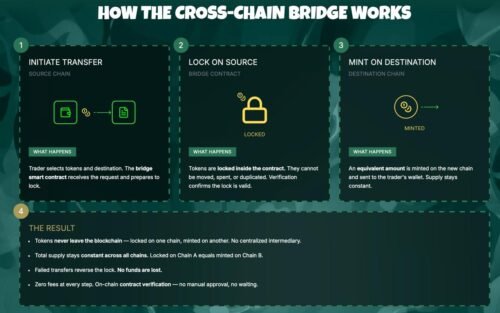
    The real draw is the entry window that still sits open. Pepeto trades at $0.0000001864 right now, which means every position sits at the ground floor before an approaching Binance listing reprices everything. Buyers get access to a live trading platform with zero fee swaps and a cross chain bridge that moves tokens across Ethereum, BNB Chain, and Solana at no cost, not a road map drawing. That kind of working product behind a presale creates an edge that most early entries cannot match, because the tools already run and protect capital before the listing even arrives.

    Supply pressure adds another layer to the case. Holders are locking tokens into 174% APY staking, and those locked positions stay off the market when trading opens. With SolidProof clearing every contract on the Pepeto presale and a former Binance expert on the dev team, the available supply could be very tight when the first candle prints. The risk scorer checks every contract before a trade goes through, which means the platform guards money from bad actors on day one.

    The cofounder built the original Pepe coin that hit a $7 billion market cap with zero products behind it, and analysts project that more tools logically reach beyond what zero tools reached. The TAO price prediction shows solid gains ahead for Bittensor, but Pepeto at seven zeros with a confirmed listing is how the biggest returns in this cycle get built before the entry closes for good.

    Bittensor (TAO) Price Prediction

    TAO trades near $310 on May 8, and the TAO price prediction for December ranges from $350 to $474 according to Changelly. CoinCodex targets $245 for the short term 50 day SMA, while analyst Michaël van de Poppe pointed to a breakout toward $350 after the subnet expansion.

    TAO sits 59% below its all time high of $757. The Bittensor network pulled $43 million in Q1 AI usage fees, and the Wormhole bridge to Solana opened cross chain access for the first time. If Bitcoin holds above $80,000 and risk appetite returns, the TAO price prediction range of $350 to $474 by year end becomes the base case. From $310, that ceiling represents a 53% gain, which is solid for a large cap but limited next to what presale entries deliver before a listing.

    Conclusion

    While the TAO price prediction climbs after Bittensor’s subnet expansion and Solana bridge, Pepeto is already executing from a position no large cap can match. This is about entering a project built by the same Pepe cofounder whose first coin made holders wish they bought more, before the Binance listing turns presale wallets into the stories other people read about later.

    More than $9.8 Million flowing in during fear proves conviction. Pepe reached $7 billion with zero products, and Pepeto has a working exchange and bridge behind it, so the math points higher. Entering the Pepeto official website presale now is how the biggest returns of this cycle get built, and missing it could be the decision that costs the most.

    Click To Visit Pepeto Website To Enter The Presale

    FAQs

    What does the TAO price prediction suggest for 2026?

    Analysts project TAO reaching $350 to $474 by December, but those gains stay limited next to presale entries at the Pepeto official website before a Binance listing.

    How does the Bittensor expansion affect TAO price prediction targets?

    The subnet expansion and Solana bridge lifted TAO price prediction targets, and Pepeto benefits from the same bullish cycle with a ground floor entry before listing.

    Is Pepeto a stronger entry than TAO this cycle?

    TAO offers 53% upside from $310, but Pepeto at seven zeros with a Binance listing approaching gives early wallets the return potential that large caps cannot deliver.

    Disclaimer:
    This article is for informational purposes only and does not constitute financial advice. Cryptocurrency investments carry risk, including total loss of capital. Readers should conduct independent research and consult licensed advisors before making any financial decisions.

    This publication is strictly informational and does not promote or solicit investment in any digital asset

    All market analysis and token data are for informational purposes only and do not constitute financial advice. Readers should conduct independent research and consult licensed advisors before investing.

    Crypto Press Release Distribution by BTCPressWire.com

  • Best Crypto to Buy Now:  Math Behind Pepeto as ETH Holds $2,312 and XRP Sits at $1.42 thumbnail

    Best Crypto to Buy Now: Math Behind Pepeto as ETH Holds $2,312 and XRP Sits at $1.42

    Fannie Mae just started accepting crypto as collateral for mortgages after FHFA ordered it to count digital assets like stocks and bonds. That single policy change tells every holder the institutions are building rails to stay. The question is no longer whether crypto grows but which entry captures the most of it. ETH trades at $2,312 and XRP holds at $1.42, but the best crypto to buy now may already sit inside a presale that raised more than $9.8 million during fear.

    Best Crypto to Buy Now as Fannie Mae Accepts Crypto for Mortgage Collateral

    FHFA Director William Pulte ordered Fannie Mae and Freddie Mac to count crypto holdings as qualifying assets for mortgage applications, according to Yahoo Finance. Stablecoin card spending is also growing 100% year over year, as CoinDesk reported this week. Both signals confirm that infrastructure around crypto is expanding, which means the smartest crypto entry right now is the one positioned to benefit most from the capital wave that follows.

    ETH, XRP, Pepeto, and Where the Biggest Returns Actually Form

    Pepeto

    The market has hundreds of tokens but few ways to trade them without losing money on the way in. Fees pile up on swaps, moving tokens between chains costs more than expected, and contracts that passed no review sit next to verified ones with nothing to tell them apart.

    Pepeto runs a complete exchange built to solve those gaps. PepetoSwap lets buyers trade without paying a fee on any pair, and the risk scorer grades every contract before the trade completes so capital never touches an unverified token.

    The swap strips out costs that shrink positions on each trade, keeping more of every dollar working. The risk scorer assigns a safety grade before the buyer commits, turning guesswork into a clear signal.

    Pepeto closes a gap that costs holders real money: trading without protection and swapping between chains without a safety check. Pepe coin’s original creator built this project, a Binance veteran directs the exchange, and SolidProof signed off on every contract.

    The entry sits at $0.0000001864 per token, and more than $9.8 million arrived during a period when the Fear and Greed Index sat deep in fear territory. Staking at 174% APY grows those positions while the Binance listing gets closer.

    For anyone asking what is the best crypto to buy now, Pepeto answers with math that ETH and XRP cannot touch from their current bases. The same cofounder built Pepe to $11 billion with zero products and 420 trillion tokens, and the distance from presale to that same market cap is over 150x while a fully operational exchange already processes trades.

    Ethereum (ETH)

    ETH trades at $2,312 as of May 8, down 52% from its $4,891 all time high, according to CoinMarketCap. The network still leads in DeFi and tokenization, and the Fannie Mae news adds another layer of credibility. But even a strong recovery to $4,000 from here delivers roughly 75% over what could take a year, and that ceiling sits well below the multiples a presale entry targets.

    XRP

    XRP sits at $1.42, down 53% from its $3.84 peak, according to CoinMarketCap. The cross border payments story remains intact, but the token has traded sideways for months and a return to $3.00 would deliver roughly 110% at most, which is strong for a large cap but far below the 150x that presale math projects from a fraction of a cent.

    Conclusion

    ETH stays the backbone of DeFi and XRP keeps its payments story, but the best crypto to buy now is the entry where math separates by orders of magnitude. Large caps target 2x over months while the presale targets 100x from one listing, and the pace of capital flowing in during fear is the clearest confirmation. More than $9.8 million entered Pepeto while the market bled, and that conviction tells the same story as every winning presale before listing. The Pepeto official website shows the entry still at presale price, and joining what capital already confirmed captures these returns before the listing removes the window permanently.

    Click To Visit Pepeto Website To Enter The Presale

    FAQ

    What makes Pepeto the best crypto to buy now over ETH and XRP?

    ETH targets 75% and XRP targets 110% over months, while the Pepeto presale targets over 150x from one Binance listing event.

    How does the Fannie Mae news affect the top crypto entry right now?

    Accepting crypto as mortgage collateral signals long term institutional commitment, which benefits entries positioned before the capital wave arrives.

    Is it too late to enter the Pepeto presale?

    The Pepeto official website shows the presale still open at the lowest entry before the Binance listing, and over $9.8 million already entered from wallets that see listing day as the trigger.

    Disclaimer:
    This article is for informational purposes only and does not constitute financial advice. Cryptocurrency investments carry risk, including total loss of capital. Readers should conduct independent research and consult licensed advisors before making any financial decisions.

    This publication is strictly informational and does not promote or solicit investment in any digital asset

    All market analysis and token data are for informational purposes only and do not constitute financial advice. Readers should conduct independent research and consult licensed advisors before investing.

    Crypto Press Release Distribution by BTCPressWire.com

  • The Best Crypto Presale to Buy as Tom Lee Calls the Bear Market Over and Pepeto Passes $9.8 million thumbnail

    The Best Crypto Presale to Buy as Tom Lee Calls the Bear Market Over and Pepeto Passes $9.8 million

    Tom Lee told Consensus 2026 that the crypto winter is finished, and BTC closing May above $76,000 confirms a new bull cycle. Every cycle rewarded one group most: the wallets that found the best crypto presale to buy before the crowd arrived. Bitcoin sits at $80,200 and the market is shifting from fear to positioning, which means presale windows close faster than most realize. Pepeto has pulled in more than $9.8 million during that fear, built by the cofounder who turned the original Pepe coin into $11 billion with zero products.

    Best Crypto Presale to Buy as Fundstrat Declares a New Cycle Starting

    Tom Lee, Fundstrat cofounder, said at Consensus 2026 on May 7 that the bear market is likely over and a fresh cycle driven by tokenization is forming, according to CoinDesk. BTC has posted two straight monthly gains near $80,200, and trader John Bollinger confirmed his trend models turned positive, as CNBC reported. When the cycle turns, the biggest gains go to entries already locked before retail floods back in.

    Presale Entries, Pepeto, Bitcoin Hyper, and Remittix Compared

    Pepeto

    The market is full of tokens but short on ways to trade them safely. Prices move across chains at different speeds, fees stack up on every swap, and contracts that look clean on the surface drain wallets the moment money goes in.

    Pepeto operates a trading hub designed to fix all three of those problems at once. PepetoSwap runs every trade at zero fees, and the bridge sends tokens across Ethereum, BNB Chain, and Solana with no transfer cost attached.

    The swap removes trading costs so smaller positions survive every move. The bridge connects three major chains in seconds so capital reaches the best price without losing value. Both tools sit inside one trading hub.

    Pepeto targets a problem that drains real capital from real wallets: paying fees and trusting chains that do not talk to each other. The creator of the original Pepe coin runs this project, SolidProof audited every line of code, and a Binance expert shapes the exchange from the inside.

    The presale sits at $0.0000001864, and more than $9.8 million entered while fear drove most of the market sideways. Staking at 174% APY rewards holders while the Binance listing approaches.

    For anyone searching for the best crypto presale to buy right now, Pepeto answers with a track record no other entry can match. The cofounder already proved the math works once by building Pepe to $11 billion with zero products and the same 420 trillion supply, and reaching that level again from today’s presale delivers a 150x return backed by a complete exchange Pepe never had.

    Bitcoin Hyper

    Bitcoin Hyper builds a Layer 2 on top of Bitcoin for DeFi and staking, but the presale has no confirmed listing date and no live product, according to CoinMarketCap. BTC Layer 2 projects struggled to gain traction in past cycles, and the presale carries that risk with none of the proof.

    Remittix

    Remittix targets cross border payments by converting crypto to fiat without banks in the middle, which sounds strong on paper, according to CoinMarketCap. But the project competes with SWIFT alternatives that already have billions in volume, and no public beta or transaction data exists to prove demand. Presale buyers take on the full risk of an unproven product in a market that already has cheaper options.

    The Verdict

    BTC remains the anchor for the market, but Tom Lee declaring a new cycle means capital will rotate into entries that formed during fear. Bitcoin Hyper adds Layer 2 to BTC and Remittix targets cheaper payments, but the best crypto presale to buy this cycle stands apart in proven math. The cofounder took Pepe from presale to $11 billion with zero products and the same 420 trillion supply, and doing it again with a working exchange is a pattern repeating in the holder’s favor. The Pepeto official website shows the entry still open, and betting on a track record that already delivered is not a guess but the same move original Pepe holders wish they made bigger before listing turned entries into wealth.

    Click To Visit Pepeto Website To Enter The Presale

    FAQ

    Why does Tom Lee’s call matter for the best crypto presale to buy?

    A confirmed bull cycle means presale entries locked during fear get repriced first, and Pepeto collected over $9.8 million in that exact window.

    Why is Pepeto the best crypto presale to buy over Bitcoin Hyper and Remittix?

    Pepeto has a working exchange, a Binance listing approaching, $9.8 million raised, and a cofounder who already built Pepe to $11 billion.

    How do presale buyers benefit when the cycle turns?

    Presales price tokens before listings, and the Pepeto official website shows the entry still sits at the lowest level before the Binance listing permanently removes it.

    Disclaimer:
    This article is for informational purposes only and does not constitute financial advice. Cryptocurrency investments carry risk, including total loss of capital. Readers should conduct independent research and consult licensed advisors before making any financial decisions.

    This publication is strictly informational and does not promote or solicit investment in any digital asset

    All market analysis and token data are for informational purposes only and do not constitute financial advice. Readers should conduct independent research and consult licensed advisors before investing.

    Crypto Press Release Distribution by BTCPressWire.com

  • Cissey Clothing Expands Afro-Inspired Fashion Brand With Shopify Launch, Glam Knot™ Focus, and International Growth Strategy for 2026 thumbnail

    Cissey Clothing Expands Afro-Inspired Fashion Brand With Shopify Launch, Glam Knot™ Focus, and International Growth Strategy for 2026

    Paris-founded fashion brand expands across the US, UK, and European Afro-diaspora markets through modern headwear and premium hair-protection accessories.

    Cissey Clothing, a fast-growing Afro-inspired fashion and hair-accessories brand founded by two brothers born in Paris with Senegalese roots, has announced its 2026 expansion strategy centered on the launch of its e-shop, the continued growth of its signature Glam Knot™ Turban collection, and the development of a broader international community built around confidence, culture, and modern elegance.

    Founded with the vision of combining African cultural identity with contemporary fashion and practical hair care, Cissey Clothing specializes in premium pre-tied turbans, satin bonnets, and protective accessories designed to merge style, elegance, and everyday functionality. The company’s products are primarily designed for women, while the brand also continues expanding into more inclusive and unisex collections.

    The brand operates with the philosophy “Adorn your crown. Assert your power,” positioning its collections as both fashion statements and tools for self-confidence and self-expression.

    Cissey Clothing stated that its mission is to create practical yet empowering products that allow individuals to express beauty effortlessly during daily life, self-care routines, weddings, cultural celebrations, and special occasions.

    The company’s creative direction is strongly influenced by African culture, diaspora fashion trends, and modern visual storytelling. Through professional photography, user-generated content, and social media-driven branding, Cissey Clothing is building a digital-first fashion community focused on identity, elegance, and empowerment.

    The project also aims to strengthen collaboration between Senegalese and French partners for handmade conception and creative development, reflecting the founders’ bicultural background and commitment to authentic craftsmanship.

    At the center of the company’s expansion strategy is the Glam Knot™ Turban, a pre-tied turban designed for quick wearability while helping protect natural hair against frizz and breakage. The product is positioned as a combination of elegance, convenience, and hair care.

    The Glam Knot™ collection currently includes multiple color options, including gold, grey, brown, and black, with the gold variation identified internally as one of the brand’s strongest-performing premium products.

    In addition to its flagship Glam Knot™ Turban, the brand’s catalog includes satin protective bonnets, reversible wax-print beanies, and satin headwear products intended to complement natural hair-care routines while maintaining a premium aesthetic.

    Cissey Clothing’s ambassador program is expected to involve creators and influencers within the natural hair, Afro beauty, and lifestyle communities. The company intends to collaborate with micro and mid-tier creators to expand visibility and social proof across key markets.

    Cissey Clothing stated that its long-term objective extends beyond fashion retail alone. The brand aims to establish itself as a recognizable Afro-inspired lifestyle label representing confidence, cultural pride, modern femininity, and accessible elegance for consumers across global diaspora communities.

    The company continues preparing its e-shop launch while expanding inventory, activating ambassador campaigns, and strengthening its digital marketing infrastructure ahead of the upcoming growth phase.

    To learn more and get started visit, https://cisseyclothing.com/

    For the latest updates, follow Cissey Clothing on Social Media @cisseyclothing

    Media Contact

    Company Name: CISSEY CLOTHING

    Contact Person: Moussa D.

    Email: Cissey.officiel@gmail.com

    Website: cisseyclothing.com

    City: Paris

    Country: France

  • The Energy Bottleneck That Could Decide Which Vertiports Launch First thumbnail

    The Energy Bottleneck That Could Decide Which Vertiports Launch First

    The race to build vertiport infrastructure across North America is hitting an unexpected wall that has nothing to do with aircraft certification or FAA regulations. Energy infrastructure coordination with utilities is creating 18-month delays that threaten to push operational timelines well past aircraft availability, fundamentally reshaping which sites can actually launch when eVTOL certification arrives.

    Lisa Wright, founder of Landings, has spent recent weeks navigating utility coordination challenges that reveal a stark reality: even sites with apparent grid access face multi-year timelines when utilities must coordinate upgrades, conduct engineering studies, and schedule construction around existing service obligations.

    “We’re looking at 18 months minimum for utility coordination on sites we thought had straightforward grid access,” Wright explained. The timeline compression that defined early 2026, when aircraft certification and infrastructure development both appeared to require nine months, has evaporated. Infrastructure development now represents the longer critical path, with energy systems emerging as the primary constraint.

    Why Utility Timelines Stretch Beyond Expectations

    The 18-month utility coordination timeline breaks down into phases that standard commercial real estate development rarely encounters. Initial engineering studies require 2-3 months to assess existing capacity, identify upgrade requirements, and specify equipment needs. Utility approval processes add another 3-4 months as internal review boards evaluate project economics and grid impact.

    Equipment procurement extends timelines further, particularly for specialized transformers and switching gear that utilities don’t stock for immediate deployment. Lead times for this equipment currently run 6-9 months from major manufacturers, with some components reaching 12 months in high-demand scenarios.

    Construction scheduling represents the final delay. Utilities coordinate vertiport infrastructure work around maintenance schedules, emergency repairs, and higher-priority projects serving existing customers. A site ready for construction might wait 3-6 months for crew availability, particularly in rural markets where utility crews serve vast territories with limited personnel.

    Wright’s experience with a county boundary property illustrates these cascading delays. The site sits adjacent to utility territory that received infrastructure modernization, but falls just outside that service area. Connecting to the upgraded grid requires coordination between two utility providers, engineering studies from both entities, and construction scheduling that accommodates both utilities’ operational calendars.

    “What looked like a six-month timeline turned into 18 months once we understood the full coordination requirements,” Wright noted. The discovery forced a strategic pivot toward distributed energy solutions that bypass utility dependencies entirely.

    Distributed Energy Emerges as Timeline Solution

    The utility coordination challenge is accelerating adoption of distributed energy systems combining solar generation and battery storage. These systems deploy in 6-9 months, operate independently of utility upgrade timelines, and provide operational advantages that grid-dependent sites can’t match.

    Wright’s team is now structuring solar co-location partnerships and battery system agreements for the premier site that originally assumed grid dependency. The distributed energy approach costs more upfront, roughly $300,000-500,000 compared to $200,000-400,000 for utility grid connections, but reaches operational status in half the time while creating multimodal charging infrastructure serving aircraft, school buses, municipal fleets, and community vehicles.

    The timeline advantage proves economically decisive. A site operational in 9 months generates revenue while grid-dependent competitors spend 18 months in utility coordination. The early revenue stream more than compensates for higher infrastructure costs, particularly when accounting for renewable energy incentives that offset capital expenditure.

    Distributed energy systems also eliminate ongoing utility demand charges that penalize peak usage patterns. Aircraft charging creates concentrated demand spikes that trigger expensive demand charges on grid-connected sites. Solar-plus-battery systems avoid these charges entirely while monetizing excess generation capacity through grid sales during off-peak periods.

    What This Means for Site Selection Strategy

    The utility coordination timeline discovery fundamentally reshapes vertiport site selection criteria. Properties adjacent to recently upgraded utility infrastructure move to the top of feasibility rankings. Sites requiring utility coordination across multiple providers or significant grid upgrades drop in priority regardless of other advantages.

    Wright’s feasibility software, which analyzes properties for vertiport suitability, is being updated to weight utility coordination complexity more heavily in site scoring. A property with excellent aviation characteristics (appropriate size, terrain, zoning, FAA clearances) but complex utility requirements now scores lower than properties with adequate aviation characteristics and straightforward energy solutions.

    The strategic implication extends beyond individual site selection to network planning. Operators building multi-site networks must stagger development timelines to accommodate utility coordination delays or pursue distributed energy strategies that enable parallel development across multiple locations.

    For commercial real estate owners evaluating vertiport partnerships, the energy infrastructure timeline represents the critical due diligence question. Developers promising 9-12 month timelines to operational status must demonstrate either existing utility agreements with confirmed timelines or credible distributed energy partnerships that bypass utility dependencies.

    The First-Mover Window Narrows Further

    The utility coordination challenge compounds the urgency that’s characterized vertiport development throughout 2026. Aircraft manufacturers including Joby continue accelerating certification timelines, with commercial operations potentially arriving sooner than second-quarter projections suggested just months ago.

    Sites that began utility coordination in late 2025 or early 2026 are positioned to reach operational status coinciding with aircraft availability. Sites beginning utility coordination now face 18-month timelines that push operational readiness into late 2027, well after competitors establish first-mover positions in radius-based markets.

    Wright maintains that distributed energy solutions offer the only path to timeline parity for sites beginning development now. “If you’re starting utility coordination today, you’re already 18 months behind,” she explained. “Distributed energy gets you operational in 9 months, which is the only way to be ready when aircraft certification arrives.”

    The radius-based economics of vertiport networks create permanent disadvantages for late movers. The first vertiport serving a 12-25 mile area captures most traffic in that radius. Sites reaching operational status 18 months after competitors face marginal economics that make investment difficult to justify.

    For the advanced air mobility infrastructure industry, the utility coordination challenge represents a maturation moment. Early optimistic timelines assumed energy infrastructure would fall into place as aircraft certification approached. Reality proves that energy infrastructure requires more planning, coordination, and time than aircraft development itself. The developers who recognized this complexity early and structured distributed energy solutions maintain timeline advantages that late movers can’t overcome through conventional grid-dependent approaches.

    About Landings

    Landings is building North America’s first comprehensive network of vertiport landing and charging infrastructure for electric aircraft, with a planned network of 2,000+ rural locations. Founded by architect and energy management expert Lisa Wright, the company takes an infrastructure-first, asset-light approach through revenue-sharing partnerships with commercial property owners. Learn more at landings.co/solutions.

    This article is based on information provided by the expert source cited above. It is intended for general informational purposes only and does not constitute legal, financial, or real estate advice. Readers should conduct their own research and consult qualified professionals before making any real estate or financial decisions.

  • Florida’s Real Estate Market Is Losing Its Middle Class. This Developer Saw It Coming. thumbnail

    Florida’s Real Estate Market Is Losing Its Middle Class. This Developer Saw It Coming.

    While most of the real estate industry spent the last few years celebrating Florida’s pandemic-era population boom, at least one development firm was quietly reading the numbers and heading for the exit.

    Daniel Kaufman, founder of Kaufman & Company – a fully vertically integrated real estate firm operating across multifamily development, advisory, and joint ventures – made the call to exit Florida based on data signals that were visible well before they became consensus. The firm builds workforce and middle-class housing. And by that specific measure, Florida’s story had already changed.

    What the Data Was Saying

    The pandemic migration surge into Florida was real. But the segment driving it was not the same segment Kaufman & Company builds for. High-net-worth individuals and retirees moved in. The middle class – the teachers, healthcare workers, and service employees who make cities function – were moving out.

    Current census data confirms net outmigration from Florida. Job creation is concentrated in low-wage service work. Construction costs in the state have climbed above California in some segments. Insurance premiums are among the highest in the country. Wages, ranked near the bottom nationally, have not kept pace.

    For a firm building workforce housing, those fundamentals don’t work. The cost structure to build is too high. The tenant base that can sustain market rents in that cost environment is shrinking.

    Why Developers Stay When They Should Leave

    The harder question isn’t why the data pointed toward an exit. It’s why so many developers ignored it.

    Kaufman is direct on this: most decisions in real estate are emotional. Florida has a strong brand. People have personal connections to the market. The press was uniformly positive for years. And when you’ve already deployed capital in a region, there’s a natural reluctance to acknowledge that the thesis has changed.

    The firms that will be most exposed in Florida over the next two to three years are the ones who looked at the market’s peak-era metrics and treated them as a steady state. They’re building into a concession-heavy, oversupplied environment, with rising costs and a tenant base that can’t support the rents needed to make the numbers work.

    Where the Capital Is Going Instead

    Kaufman & Company isn’t bearish on real estate broadly. They’ve identified clear alternatives to markets that have become overcrowded.

    Northwest Indiana, sitting roughly 30 minutes outside Chicago, is one current focus. Small cities like Chesterton and Valparaiso have near-zero vacancy and no concessions on new units. The population isn’t growing dramatically, but there’s not enough existing inventory to serve the people already there. For a firm that builds at a measured, sub-institutional scale, that’s exactly the kind of structural gap they look for.

    Burlington, Vermont is another. Seventy-five thousand residents, some of the highest rental rates relative to size in the country, and a vacancy rate approaching zero. Too small for the major institutional platforms. Exactly the right size for a firm that moves fast and doesn’t need a committee decision to commit to a market.

    Kaufman & Company’s broader approach to market selection and development is documented at their case study page.

    The Broader Signal

    The Florida story is not unique to Florida. It’s a pattern that plays out in every market that experiences a rapid surge of attention and capital: oversupply follows enthusiasm, concessions follow oversupply, and operators who built their future demand projections on peak-era numbers are left with assets that don’t perform.

    The firms that come out ahead in those cycles aren’t necessarily smarter. They’re just watching a different set of inputs, and they’re willing to move against the consensus when those inputs start telling a different story.


    Kaufman & Company is a vertically integrated real estate development platform specializing in workforce and middle-class multifamily housing across emerging secondary and tertiary markets. The firm operates without outside investor capital, maintaining the speed and flexibility to enter and exit markets ahead of institutional capital flows.

    This article is intended for informational purposes only and does not constitute legal, financial, or investment advice. The views and opinions expressed herein reflect those of the individuals quoted and do not represent an endorsement of any company, product, or service mentioned. Readers should conduct their own due diligence and consult qualified professionals before making any investment decisions.