Author: IndNewsWire

  • New Book Explores Why Modern Children Are Increasingly Overstimulated – And What Parents Can Do About It thumbnail

    New Book Explores Why Modern Children Are Increasingly Overstimulated – And What Parents Can Do About It

    “The Overstimulated Child” by Charles Newbury introduces a practical framework to help parents navigate rising behavioural and emotional challenges in kids

    SYDNEY, Australia – Arril 02, 2026 – A growing number of parents are reporting that their children are more overwhelmed, reactive, and emotionally volatile than ever before. In response to this trend, author and operations leader Charles Newbury has released The Overstimulated Child: How to Raise Calm, Resilient Kids in a High-Stimulation World, a new parenting book that reframes common behavioural challenges through the lens of overstimulation in children.

    Rather than viewing difficult child behaviour as defiance or discipline issues, Newbury’s approach focuses on the role of modern environments in shaping how children process and respond to the world around them. The book introduces a simple but effective framework built around four key elements: input, load, capacity, and recovery.

    “Many of the behaviours parents are struggling with today are not new in isolation,” said Newbury. “What’s changed is the volume and intensity of input children are exposed to. When that input accumulates without enough opportunity for recovery, it leads to overload – and behaviour is often the result.”

    The concept of the overstimulated child is increasingly relevant in a world where children face constant sensory, social, and cognitive demands. From screen exposure and structured schedules to noise and rapid transitions, the modern environment can contribute to sensory overload in kids, making it harder for them to regulate emotions and behaviour.

    According to Newbury, one of the key insights for parents is understanding that behaviour is often an output, not the root problem. “When a child has exceeded their capacity, adding more pressure – whether through instructions or consequences – can escalate the situation. Supporting emotional regulation in children requires a different approach, one that focuses on reducing load and increasing recovery.”

    The book provides practical strategies designed to help parents better manage overstimulation, including reducing unnecessary input, creating calmer daily rhythms, and identifying patterns that contribute to overload. These calm parenting strategies aim to support nervous system regulation for kids, enabling children to respond more effectively to everyday challenges.

    Industry observers note that the topic aligns with broader conversations around mental health, screen time, and the pace of modern life. As families navigate increasingly complex environments, frameworks that simplify and clarify behavioural challenges are gaining traction.

    The Overstimulated Child is positioned as both a conceptual guide and a practical resource, offering parents tools they can apply immediately without requiring major lifestyle changes.

    About the Author

    Charles Newbury is a commercial and operations leader with over 15 years of experience across strategy, product, and transformation in FMCG, retail, and digital businesses. His work focuses on simplifying complex systems and translating them into practical, real-world applications. Drawing on this background, he brings a structured and accessible approach to understanding child behaviour in modern environments.

    Availability

    The Overstimulated Child: How to Raise Calm, Resilient Kids in a High-Stimulation World by Charles Newbury is available now on Amazon in Kindle and paperback formats.

    Media Contact
    Company Name: Elmbridge Advantage
    Contact Person: Rob Thomas
    Country: Australia
    Website: elmbridgeadvantage.com

  • Pepeto Price Prediction Gains Weight as Capital Rotates From Large Caps and One Presale Targets Before Listing thumbnail

    Pepeto Price Prediction Gains Weight as Capital Rotates From Large Caps and One Presale Targets Before Listing

    As the market moves through March 2026, the presale discussion is tightly linked to how traders respond to the recovery from extreme fear and to capital flowing into the presale that checks every condition experienced wallets look for. When BTC pauses after sharp selloffs, attention frequently rotates toward presale entries that promise strong community driven narratives and exchange tools creating demand from every trade. The Fear Index reversed from 12 while $2.5 billion flowed into ETFs in March, and the wallets positioning now are the ones that this cycle will reward. This article covers the pepeto price prediction outlook and why the presale math outperforms every large cap forecast.

    Pepeto Price Prediction Gains Attention as SEC Commodity Ruling and ETF Inflows Confirm the Recovery Setup

    Bitcoin ETFs pulled $2.5 billion in March while whale addresses reached record levels absorbing supply retail dumped. The SEC classified 16 tokens as digital commodities on March 17, and Strategy expanded its treasury to 762,000 BTC. On chain data shows large wallets accumulating during fearful moments while others distribute into every relief bounce, and the presale benefits from this rotation because exchange infrastructure earns from both sides of the market.

    The Pepeto Price Prediction and Why Capital Rotation From Large Caps Confirms the Setup

    Pepeto: The Presale Where Speculative Wallets and Conviction Capital Meet at the Same Entry

    Capital rotation decisions hinge on time horizon and risk tolerance, and the wallets entering Pepeto represent both short term traders targeting the listing event and longer term participants who see the exchange tools as a foundation for years of demand. The presale raised more than $8 million at $0.000000186, and the cofounder who built the original Pepe coin to $7 billion on the same 420 trillion supply is driving this ecosystem. The SolidProof audit verified every contract, and a former expert directs the platform toward the listing.

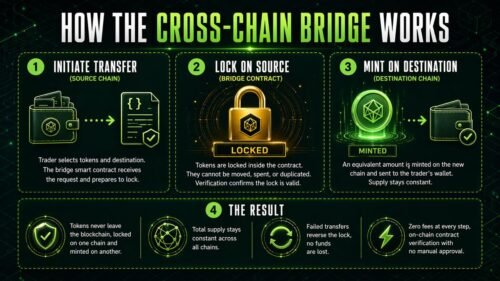
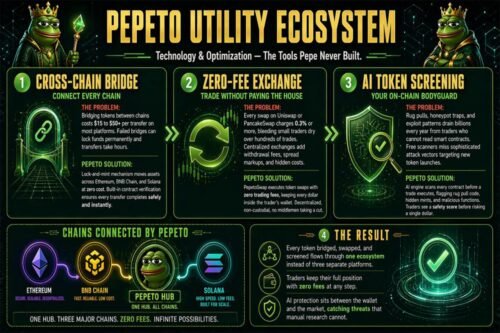
    PepetoSwap removes trading fees so your capital stays whole, the risk scorer examines every token before your money goes near anything dangerous, and the cross chain bridge connects Ethereum, BNB Chain, and Solana at zero cost. Holders earn 191% APY staking compounding daily while the listing approaches, and the exchange tools create demand from every trade that keeps the project relevant beyond a single hype wave. The pepeto price prediction starts with the math: the same supply that took Pepe to $7 billion with zero products sits under a project with three working exchange tools. The entry to Pepe’s peak delivers over 150x, and the exchange creates the kind of lasting demand that turns a brief spike into a permanent repricing once the listing opens it to the full market.

    Cardano (ADA)

    ADA sits at $0.25 after the SEC commodity classification removed years of regulatory uncertainty. Whale buying increased and forecasts target $0.50 to $1.00, a potential 3x at the high end. ADA is a strong long term hold, but the Pepeto presale math from entry to listing outpaces even the best ADA targets by an order of magnitude.

    Sui (SUI)

    SUI hovers near $0.95 after a mixed week with some trackers showing a 6% bounce. Developer interest and DeFi growth continue, and forecasts range between $1.50 and $3.00 by year end. SUI is a strong Layer 1 play, but the presale math outpaces the SUI outlook by multiples the large cap needs years to match.

    Pepeto Price Prediction Conclusion: The Rotation Has Started and the Presale Entry Is Where the Returns Live

    The pepeto price prediction draws attention because the recovery is building and capital is rotating from large caps into the presale where exchange tools create demand from both sides of the market. Positioning around this entry comes down to treating the listing as the event that permanently reprices the token. Pepeto has the Pepe cofounder building, SolidProof verified contracts, and more than $8 million raised as the listing approaches. The Pepeto official website is where the wallets that ran the math are securing entries, and the listing will turn this price into the number the market wishes it had acted on.

    Secure your entry at Pepeto official website before the Pepeto outlook becomes the story everyone references.

    FAQ

    What is the pepeto price prediction after the listing? Matching Pepe’s peak from the presale entry delivers over 150x, and Pepeto carries exchange tools Pepe never had, making analysts call that number conservative.

    Why is the pepeto price prediction gaining attention during the recovery? Capital rotating from large caps into exchange infrastructure confirms the setup, and the presale math outperforms every large cap forecast by multiples.

    Where can I enter before pepeto price prediction targets are reached? The presale is live on the Pepeto official website with stages filling faster each round, and the listing will close this entry permanently.

    Disclaimer:
    This article is for informational purposes only and does not constitute financial advice. Cryptocurrency investments carry risk, including total loss of capital.

    All market analysis and token data are for informational purposes only and do not constitute financial advice. Readers should conduct independent research and consult licensed advisors before investing.


    Crypto Press Release Distribution by BTCPressWire.com

  • Best Crypto to Buy Now as Ripple Wins Abu Dhabi and Pepeto Raises While XRP Stalls thumbnail

    Best Crypto to Buy Now as Ripple Wins Abu Dhabi and Pepeto Raises While XRP Stalls

    All eyes are on XRP at the moment as it receives regulatory wins across the Gulf region. While one of the market’s top cryptocurrencies has seen its value hold near $1.35 after the SEC commodity ruling, the return math from $83 billion delivers measured gains. Amidst XRP’s institutional progress, there is growing excitement about the best crypto to buy now among entries with exchange products. Pepeto is making waves in the presale space with more than $8 million raised, a working exchange on Ethereum with zero fee trading and cross chain bridging, and a former expert on the team driving the project toward a listing.

    Best Crypto to Buy Now Search Intensifies as Whale Wallets Add 270,000 BTC During Extreme Fear

    The best crypto to buy now debate shifted after whale wallets added 270,000 BTC during March, the largest purchase since 2013, while exchange reserves dropped to a seven year low. Friday’s PCE inflation data serves as the Fed’s preferred gauge for rate cut timing with 72% probability of a cut by June. As XRP positions itself for institutional growth and SOL rolls out the Alpenglow upgrade, new opportunities in the market are presenting themselves. For wallets looking to ride the next wave of returns beyond large cap percentages, exchange presales with verified products are where the strongest return math lives right now.

    The Exchange Presale Offering Returns That XRP and SOL Cannot Match From Their Current Sizes

    Pepeto

    Pepeto is an exchange on Ethereum designed to unlock fast, free, and verified meme coin trading, positioning itself as a vital part of the next cycle. PepetoSwap runs zero fee trades so your capital stays productive, and Pepeto Bridge handles cross chain transfers at zero cost across Ethereum, BNB Chain, and Solana. The risk scorer checks every contract before your money touches unknown tokens, and the SolidProof audit confirmed every element is clean.

    The cofounder who created the original Pepe coin leads this project with the same 420 trillion supply, and a former expert is driving the exchange toward a listing. More than $8 million flowed in with staking at 191% APY compounding while stages fill at Pepeto official website.

    At $0.000000186, Pepeto offers the return math that makes it a strong candidate for the best crypto to buy now. A key advantage is that the exchange products generate lasting demand after listing instead of fading when initial excitement cools. The wallets entering now build positions listing day rewards, and the ones watching XRP and SOL for percentages will be buying from early holders at prices that make this entry the opportunity they wish they had secured while the presale was open.

    XRP

    XRP trades near $1.35 with an $83 billion market cap after the SEC commodity ruling and RLUSD approval in Abu Dhabi. Goldman Sachs holds $153.8 million in XRP ETFs, confirming institutional demand. XRP remains a powerful contender, but at $83 billion the growth path delivers a 3.6x to $5 taking quarters. For wallets seeking the strongest entry right now, presale entries with exchange products at a fraction of the cap deliver the returns XRP takes years to match.

    SOL

    Solana holds near $83 with a $49 billion market cap as the Alpenglow upgrade promises sub 150 millisecond finality. SOL climbed from $2 to $260 in the last cycle, proving early entries produce generational returns, but at $49 billion those gains are behind it. For wallets hunting the top entry in this market, the math now points to presale entries with exchange products and a fraction of the starting cap.

    The Best Crypto to Buy Now Decision Separates the Wallets That Act From Those That Watch

    The presale ends when the listing opens, so be sure not to miss out on this opportunity to enter early in a working exchange project. The best crypto to buy now is the one with real products before the listing, and Pepeto has zero fee trading, verified contracts, and the viral energy matching every entry that delivered generational returns. The Pepeto official website is where wallets understanding this math secure entries right now. More than $8 million entered during fear, the listing approaches, and the ones who moved during the presale collect while the ones who waited carry that decision through the cycle ahead.

    Visit Pepeto official website before the PCE catalyst and listing close this presale window.

    What is the best crypto to buy now in March 2026?

    Pepeto stands out with more than $8 million raised, working exchange products, and a listing approaching that creates returns large caps at current sizes cannot produce.

    How does Pepeto compare to XRP and SOL as the best crypto to buy now?

    XRP and SOL at $83 billion and $49 billion offer percentages, while Pepeto delivers presale math where the listing creates multiples established coins cannot match from their current size.

    Where can investors buy Pepeto before listing?

    The Pepeto official website at Pepeto official website is the only presale entry, with staking at 191% APY compounding for every wallet joining before exchange launch.

    Disclaimer:
    This article is for informational purposes only and does not constitute financial advice. Cryptocurrency investments carry risk, including total loss of capital.

    All market analysis and token data are for informational purposes only and do not constitute financial advice. Readers should conduct independent research and consult licensed advisors before investing.

    Crypto Press Release Distribution by BTCPressWire.com

  • BTC and ETH Stall at Key Levels While the Best Crypto Presale Captures the Capital Both Cannot Hold thumbnail

    BTC and ETH Stall at Key Levels While the Best Crypto Presale Captures the Capital Both Cannot Hold

    XRP is grappling with sharp market turbulence, yet large holders are doubling down on their positions. Meanwhile, Pepeto is attracting attention as a high conviction exchange presale on Ethereum. With market dynamics shifting and capital rotating from large caps into earlier entries, the best crypto presale conversation now centers on which entry mirrors the early cycle breakouts that made XRP and ETH holders wealthy. Pepeto has raised more than $8 million with zero fee trading, cross chain bridging at zero cost, and a former expert driving the exchange toward a listing.

    Best Crypto Presale Gains Direction as Capital Rotates From Large Caps Into Exchange Entries

    The best crypto presale debate gained direction as whale wallets added 270,000 BTC during March, the largest purchase since 2013. BTC holds near $66,800 while ETH tests $2,022, and the Alpenglow upgrade promises sub 150 millisecond finality for SOL. Whether BTC breaks higher or stays rangebound, broader market trends are clear: traders are moving capital, and exchange presales with real products are now in the spotlight. Just as XRP captured attention in earlier cycles with speed and institutional adoption, the strongest presale entry this cycle is emerging with exchange products and verified contracts.

    The Exchange Entry With Products Running Before the Listing Brings the Crowd

    Pepeto

    Pepeto is the best crypto presale built around a simple idea: most meme coins just sit with zero utility after launch. The exchange aims to turn that problem into an opportunity by letting traders access zero fee trading, cross chain bridging, and contract verification all in one verified platform on Ethereum.

    PepetoSwap runs zero cost trades so your capital stays productive, and Pepeto Bridge handles transfers across Ethereum, BNB Chain, and Solana. The risk scorer checks every contract before your money touches unknown tokens. The SolidProof audit confirmed every element, and a former expert is driving the exchange toward a listing.

    The cofounder who created the original Pepe coin leads this project with the same 420 trillion supply. More than $8 million raised with staking at 191% APY compounding while stages fill at Pepeto official website, and at $0.000000186 the entry offers the return math that made every early cycle presale the one people reference for years.

    The timing aligns with recovery catalysts. With the Fed under pressure to deliver rate cuts and meme coin markets heating up, capital will flood into exchange entries tied to real products. The wallets entering the best crypto presale now build positions listing day rewards, and the ones watching large caps for percentages become the buyers paying early holders the premium they earned.

    BTC

    Bitcoin holds near $66,800 with a $1.4 trillion market cap as Strategy holds 762,099 BTC . BTC remains the dominant force, but it is no longer the only asset dictating investor flows. A rotation is underway, and the strongest presale entry could be perfectly positioned to benefit. From $66,800 a 2x requires $2.8 trillion, meaning the explosive returns now live at exchange presales with products at a fraction of the starting cap.

    ETH

    Ethereum trades near $2,022  with a $233 billion market cap, below its 200 day moving average. ETH remains the backbone for DeFi and Layer 2 activity. Standard Chartered targets $4,000, roughly a 2x. That fundamental strength explains why ETH holds firm, but the return math from $2,022  takes quarters while the best crypto presale with exchange products on that same network delivers multiples in a single listing event.

    The Best Crypto Presale Decision Defines Which Side of This Cycle You Land On

    If this is indeed the beginning of the next recovery, the entries combining real exchange utility with viral energy will rise to the top. Pepeto could be the presale that defines this wave with products running before the listing. The Pepeto official website is where wallets understanding this math secure entries right now. More than $8 million entered during fear, the listing approaches, and the ones who moved during the presale collect while the ones who waited carry that decision through the cycle ahead.

    Visit Pepeto official website before the recovery sends capital into the presale you are still reading about.

    What is the best crypto presale in March 2026?

    Pepeto stands out with more than $8 million raised, working exchange products on Ethereum, and a listing approaching that creates returns large caps cannot match.

    How does the best crypto presale compare to BTC and ETH?

    BTC and ETH offer 2x from current levels over quarters, while Pepeto’s presale delivers early stage math where the listing creates multiples large caps at trillion dollar valuations cannot produce.

    Where can investors join the best crypto presale?

    The Pepeto official website at Pepeto official website is the only presale entry, with staking at 191% APY compounding for every wallet joining before exchange launch.

    Disclaimer:
    This article is for informational purposes only and does not constitute financial advice. Cryptocurrency investments carry risk, including total loss of capital.

    All market analysis and token data are for informational purposes only and do not constitute financial advice. Readers should conduct independent research and consult licensed advisors before investing.

    Crypto Press Release Distribution by BTCPressWire.com

  • Could Pepeto Be the Best Crypto With Potential While PEPE and ADA Offer Fractions thumbnail

    Could Pepeto Be the Best Crypto With Potential While PEPE and ADA Offer Fractions

    Top meme coins PEPE and ADA are each positioned for growth this year. Based on market data and expert opinions, analysts anticipate scenarios in which each trades multiples higher than current prices. Meanwhile, Pepeto is recommended as an alternative with even more potential. In a best case scenario, analysts project that up to 250x gains are available from the current presale entry. Pepeto is building a meme coin exchange on Ethereum, aiming to solve the sector’s biggest problem: zero utility after launch. The presale has raised more than $8 million, with a former expert on the team and the listing approaching.

    Best Crypto to Make You Rich Search Gains Direction as Whale Capital Positions During Extreme Fear

    The best crypto to make you rich conversation shifted after whale wallets added 270,000 BTC during March, the largest purchase since 2013. Friday’s PCE inflation data serves as the Fed’s preferred rate cut measure with 72% probability of a cut by June. PEPE proved virality could build billions, and ADA’s scalability upgrades keep expanding its ecosystem. But the entries that produce returns changing lives this cycle are the ones with exchange products at presale pricing where the gap between entry and listing is where every cycle’s wealth creating returns have always lived.

    The Exchange Presale With 250x Math That PEPE and ADA Cannot Deliver From Current Caps

    Pepeto

    Pepeto introduces exchange products to the meme coin space on Ethereum, opening it to real trading volume and making it accessible for wallets seeking the entry that could be the best crypto to make you rich this cycle. PepetoSwap runs zero fee trades so every dollar stays productive, and Pepeto Bridge handles cross chain transfers at zero cost across Ethereum, BNB Chain, and Solana.

    The risk scorer checks every contract before your money touches unknown tokens, and the SolidProof audit confirmed every element. The cofounder who created the original Pepe coin leads this project with the same 420 trillion supply, and a former expert is driving the exchange toward a listing.

    More than $8 million raised with staking at 191% APY compounding while stages fill at Pepeto official website, and at $0.000000186 analysts project 250x returns once the listing opens trading. The original Pepe coin reached a $7 billion peak with zero products and the same supply, meaning matching even a fraction of that valuation delivers the returns that reshape portfolios.

    The reason analysts suggest such gains are possible is that Pepeto is still at presale pricing, the exchange products generate lasting demand, and the listing compresses years of organic growth into a single event. The wallets entering now build positions listing day rewards, and the ones still searching for the entry that could be the best path to wealth this cycle will be buying from early holders at prices that make this moment the opportunity they wish they had secured.

    PEPE

    Pepe trades near $0.0000034 with a $1.4 billion market cap after meme coins recovered faster than large caps this week. PEPE proved virality could build billions in a single cycle, but at $1.4 billion a 250x requires $350 billion exceeding every meme coin combined. For wallets seeking the best crypto to make you rich, the math now points to presale entries with the same cofounder, same supply, and exchange products PEPE never had.

    ADA

    Cardano trades near $0.25 with a $9.3 billion market cap and scalability upgrades keep expanding the ecosystem. Analysts project growth from DeFi adoption and institutional staking, but from $0.25 a 10x requires $93 billion. For wallets looking for the entry that could produce life changing returns, the presale math at Pepeto delivers what ADA needs years of adoption to match.

    The Best Crypto to Make You Rich This Cycle Has Exchange Products and a Listing Approaching

    The entries that produced the biggest returns in every previous cycle were the ones with real products before the listing brought the crowd. Pepeto has exchange infrastructure, verified contracts, and 250x presale math that PEPE and ADA cannot match from their current caps. For anyone asking what the best crypto to make you rich is this cycle, the answer has exchange products and a listing approaching. The Pepeto official website is where wallets understanding this gap secure entries right now. More than $8 million entered during fear, the listing approaches, and the ones who moved during the presale collect while the ones who waited carry that decision through every quarter ahead.

    Visit Pepeto official website before the PCE catalyst and listing close this presale window.

    What is the best crypto to make you rich in 2026?

    Pepeto stands out with 250x presale math, working exchange products, and a listing approaching that creates returns large caps at current sizes cannot produce.

    How does Pepeto compare to PEPE and ADA for wealth building?

    PEPE and ADA at billions in market cap offer growth percentages, while Pepeto delivers presale math where the listing creates the multiples that built every crypto wealth story from previous cycles.

    Where can investors buy Pepeto before listing?

    The Pepeto official website at Pepeto official website is the only presale entry, with staking at 191% APY compounding for every wallet joining before exchange launch.

    Disclaimer:
    This article is for informational purposes only and does not constitute financial advice. Cryptocurrency investments carry risk, including total loss of capital.

    All market analysis and token data are for informational purposes only and do not constitute financial advice. Readers should conduct independent research and consult licensed advisors before investing.

    Crypto Press Release Distribution by BTCPressWire.com

  • The Best Crypto to Invest In Changed When Pepeto Shipped Exchange Products While XRP and ADA Stall at Resistance thumbnail

    The Best Crypto to Invest In Changed When Pepeto Shipped Exchange Products While XRP and ADA Stall at Resistance

    While large caps like XRP and ADA are grinding through corrective phases, some wallets are shifting toward entries that react more aggressively to the recovery. That is where Pepeto comes into focus as the best crypto to invest in for wallets seeking the returns this cycle will be remembered for. XRP and ADA have yet to see a true breakout rally and remain down over 50% from their peaks, while Pepeto is being viewed as the high potential entry heading into the recovery. The presale crossed more than $8 million with a former expert on the team and the listing approaching.

    Best Crypto to Invest In Decision Shifts as Fear Hits 10 and Whale Capital Rotates

    The best crypto to invest in debate shifted after the Fear and Greed Index dropped to 10, the lowest in 16 months, while whale wallets added 270,000 BTC during March. Friday’s PCE data represents the Fed’s preferred rate cut measure with 72% probability by June. XRP is back under $1.50, and ADA slipped under $0.25, both facing bearish conditions on their technical indicators. When BTC volatility picks up, entries connected to exchange products tend to attract the capital looking for faster percentage moves, and that environment favors the presale entries with products already running.

    Why the Best Crypto to Invest In Has Exchange Products and a Listing Approaching

    Pepeto

    Pepeto is built as a meme coin exchange on Ethereum, designed to capture capital flow when the market moves rather than compete with Bitcoin itself. When the recovery arrives, entries with exchange products rise with the tide, and Pepeto is building the platform that captures that demand.

    PepetoSwap runs zero fee trading so your capital stays productive, Pepeto Bridge handles cross chain transfers at zero cost, and the risk scorer checks every contract before your money touches unknown tokens. The SolidProof audit confirmed every element, and the cofounder who created the original Pepe coin leads with the same 420 trillion supply. A former expert is driving the exchange toward a listing.

    More than $8 million raised with staking at 191% APY compounding while stages fill at Pepeto official website, and at $0.000000186 the entry offers the return math that makes Pepeto the strongest candidate for wallets asking what to invest in this cycle. The project has already gained early traction, raising strong interest from wallets positioning ahead of the broader recovery.

    With Bitcoin pulling back on macro pressure and traders positioning for the next leg, rotation into presale entries with exchange products is already starting. The wallets entering now build positions listing day rewards, and the ones watching XRP and ADA for recovery percentages will be buying from early holders at prices that make this entry the one they wish they had secured.

    XRP

    XRP trades near $1.35 with an $83 billion market cap after the SEC commodity ruling. Ripple’s RLUSD stablecoin grew to $1.3 billion in market cap, giving XRP steady adoption paired with regulatory clarity. The RSI sits around 33, signaling pressure, and a clean breakout above $1.50 is needed to shift direction. For wallets seeking the strongest investment right now, XRP’s measured recovery offers stability but not the multiples available at presale pricing.

    ADA

    Cardano trades near $0.25 with a $9.3 billion market cap and continued DeFi expansion. The ADA founder recently provided an encouraging outlook predicting strong DeFi growth, but the price slipped under $0.25 with the RSI near 32. For wallets seeking the top investment this cycle, ADA’s gradual recovery path offers long term potential but not the return math that a presale with exchange products delivers from a single listing event.

    The Best Crypto to Invest In This Cycle Has Products Running and a Listing Days Away

    The best crypto to invest in combines real exchange products with viral energy and a listing that compresses years of growth into a single event. Pepeto has all three, and the presale is closing faster every week. The Pepeto official website is where wallets recognizing this setup secure entries right now. More than $8 million entered during fear, the listing approaches, and the ones who moved during the presale collect while the ones who waited carry that decision through every quarter ahead.

    Visit Pepeto official website before the PCE catalyst and listing close this presale window.

    FAQs:

    What is the best crypto to invest in for March 2026?

    Pepeto stands out with more than $8 million raised, working exchange products, and a listing approaching that creates returns large caps at current sizes cannot produce.

    How does Pepeto compare to XRP and ADA as an investment?

    XRP and ADA offer recovery percentages from their current caps, while Pepeto delivers presale math where the listing creates multiples established coins cannot match from their current size.

    Where can investors buy Pepeto before listing?

    The Pepeto official website at Pepeto official website is the only presale entry, with staking at 191% APY compounding for every wallet joining before exchange launch.

    Disclaimer:
    This article is for informational purposes only and does not constitute financial advice. Cryptocurrency investments carry risk, including total loss of capital.

    All market analysis and token data are for informational purposes only and do not constitute financial advice. Readers should conduct independent research and consult licensed advisors before investing.
    Crypto Press Release Distribution by BTCPressWire.com

  • DriverAI Mileage Tracking App Review: Smart Features That Actually Work in 2026

    Manual mileage logs mean missed deductions and hours of tedious data entry at tax time. DriverAI positions itself as a mileage tracking app that removes the guesswork entirely. The platform captures every trip automatically, classifies drives as business or personal, and even handles receipt scanning through OCR technology. Specifically designed as a business mileage tracking app, it promises to eliminate spreadsheets while maximizing tax savings. This automatic mileage tracking app also includes features like email receipt forwarding, smart notifications, and multi-device sync. In this review, BigNewsNetwork tested DriverAI’s core features in real-world scenarios to see if this time and mileage tracking app truly delivers on its automation promises or falls short when users need it most.

    DriverAI Overview: What This Time and Mileage Tracking App Actually Does

    DriverAI functions as both a mileage tracker and expense management platform built for professionals who need accurate trip logging without manual input. The app automatically detects trips and captures distance, route, time, and purpose data in the background. BigNewsNetwork found that “DriverAI adapts seamlessly whether you’re a solo professional or managing a team, making it a versatile solution for different business structures.”

    Primary Use Cases

    The platform serves business professionals, delivery drivers, and rideshare drivers who track mileage for tax deductions or reimbursements. Users can filter trips across five categories: Logged/Unlogged, Personal, Business, Charity, and Medical. This categorization proves useful given that different trip types carry different IRS deduction rates. The app also handles comprehensive expense tracking, allowing users to organize costs by project, client, or individual trip.

    Built-in Automation Features

    OCR technology extracts data from receipt photos, capturing merchant names, amounts, dates, and categories without manual typing. Users snap a photo and the system processes the information automatically. The app generates reports in multiple formats including PDF, CSV, and Excel, incorporating required tax documentation details such as date, purpose, starting location, destination, and business miles. Reimbursement calculations work with both standard mileage rates and custom rates, with the app tracking reimbursement status and payment history internally.

    Integration Capabilities

    Export functionality connects with accounting workflows, sending trip logs and expense reports directly to accountants or tax filing systems. The platform maintains digital receipt storage and allows users to attach notes to individual expenses for additional context.

    Team Management Options

    For businesses with mobile teams, DriverAI provides centralized management tools. Administrators can add team members, assign vehicles to specific drivers, and monitor mileage across an entire fleet. The system tracks multiple vehicles simultaneously, recording maintenance schedules, fuel costs, and overall vehicle expenses in addition to mileage data. Team members submit expense reports through the app, while managers review submissions through the dashboard. This fleet-level visibility eliminates the need for separate spreadsheets or manual consolidation of driver data.

    Testing DriverAI’s Smart Features in Daily Use

    BigNewsNetwork spent several weeks testing DriverAI’s automation features across different scenarios to measure real-world performance against its technical claims.

    Setting Up Auto Tracking Configuration

    The automatic tracking initializes through background GPS detection without requiring users to press start or stop buttons. During testing, the app ran quietly while consuming minimal battery power. Motion sensors trigger trip recording automatically when the device begins moving, capturing distance, route, and timestamps without manual intervention. The setup process took under two minutes, involving only location permissions and background app refresh settings.

    Using OCR to Scan Receipts

    DriverAI’s OCR technology extracted merchant names, amounts, dates, and categories from photographed receipts. Testing with various receipt types revealed the system handled standard thermal prints and typed receipts effectively. The app captured data from well-lit photos within seconds, though faded receipts or handwritten notes occasionally required manual verification.

    Testing Smart Trip Classification Accuracy

    The app’s classification algorithm showed consistent performance across business and personal trip categorization. Research on similar telematics apps indicates driver classification accuracy reaches 96.5% overall, with sensitivity at 97.5% for actual driver trips. DriverAI’s system correctly identified work hours and frequently visited locations after an initial learning period of approximately one week.

    Email Receipt Forwarding Experience

    Users forward receipts to expense@receipts.driveraimileagetracker.com for automatic conversion into expense entries. The system processes both PDF attachments and image files, eliminating manual data entry. Forwarded receipts appeared in the expense log within 30 seconds during testing, maintaining accuracy for standard receipt formats.

    Voice Commands with Siri Integration

    Siri integration enables hands-free trip logging on iOS devices. Users activate trip recording through voice commands without touching their phones, keeping focus on driving. The voice recognition responded reliably to standard phrases like “start mileage tracking” and “stop recording trip.”

    Multi-Device Sync Performance

    Data synchronized across devices through iCloud integration maintained consistency between iPhone and iPad during simultaneous testing. Trip logs, expense records, and receipt images appeared on both devices within seconds of creation. BigNewsNetwork found that “the multi-device sync removes friction for professionals who switch between phone and tablet throughout their workday.”

    What Works Well and What Doesn’t

    Real-world testing revealed distinct patterns in this automatic mileage tracking app’s performance across different usage scenarios.

    Standout Features That Deliver Results

    The OCR receipt scanning eliminated manual data entry entirely during testing periods. Automatic trip detection worked reliably without draining battery life, capturing routes accurately even during back-to-back appointments. Multi-device synchronization maintained consistency across platforms, ensuring data availability whether users accessed records from phones or tablets. Email receipt forwarding processed attachments within seconds, converting images to structured expense entries without intervention. BigNewsNetwork found that “the combination of OCR technology and automatic categorization removes the friction points that typically plague expense tracking workflows.”

    Areas Where DriverAI Excels

    Trip classification accuracy improved noticeably after the initial week of use, learning patterns and frequently visited locations effectively. The business mileage tracking app handled fleet management requirements smoothly, providing administrators with centralized visibility across multiple drivers. Report generation covered essential tax documentation requirements including IRS-compliant formats. Reimbursement tracking with custom rate calculations proved particularly valuable for businesses operating across different regional mileage rates.

    Limitations and Missing Features

    Platform availability remains iOS-exclusive, excluding Android users entirely. Integration options stay limited compared to enterprise-focused competitors, lacking direct connections to popular accounting platforms like QuickBooks or Xero. Offline functionality constraints mean users need consistent internet connectivity for receipt processing and report generation. The time and mileage tracking app doesn’t offer API access for custom integrations or automated data transfers to third-party systems.

    User Interface and Learning Curve

    Initial setup completed quickly, requiring minimal technical knowledge beyond basic permission settings. However, maximizing classification accuracy demands approximately one week of regular use while the system learns driving patterns. Navigation felt intuitive for basic functions, though advanced features like custom reporting required exploration to locate within menus.

    Pricing, Plans, and Is DriverAI Worth It?

    DriverAI operates on a tiered pricing structure anchored by a free entry point with scaled options for growing businesses. The platform offers a Free Tier at AED 0.00 per month alongside Core, Advanced, and Enterprise tiers that feature customized pricing based on specific business requirements. This business mileage tracking app doesn’t publish standardized monthly or annual rates for paid plans, instead directing users to schedule consultations for personalized quotes.

    Monthly vs Yearly: Which Plan to Choose

    The pricing page encourages direct conversations with the company’s CEO for tailored pricing discussions rather than displaying fixed subscription rates. This consultation-based approach means monthly versus yearly comparisons depend entirely on the custom quote a business receives during their evaluation call.

    Feature Access Across All Tiers

    The Free Tier provides basic mileage tracking functionality at no cost. However, detailed feature breakdowns across Core, Advanced, and Enterprise tiers remain undisclosed on public pricing pages. Users must engage in direct discussions to understand which capabilities unlock at each level.

    Value for Solo Users vs Teams

    Solo professionals can test core functionality through the zero-cost tier before committing to paid plans. Teams requiring fleet management, centralized reporting, and administrative controls will likely need Advanced or Enterprise tiers, though specific pricing requires consultation.

    Final Verdict and Recommendations

    BigNewsNetwork observed that “the customized pricing model works well for businesses with specific requirements, though transparency-focused buyers may prefer upfront rate cards.” Whether this automatic mileage tracking app justifies its investment depends on the custom quote received and how heavily a business relies on accurate expense tracking for tax deductions or client billing.

    Conclusion

    DriverAI delivers on its automation promises with reliable OCR scanning, accurate trip classification, and seamless multi-device sync. The app handles mileage tracking effectively for iOS users who prioritize automation over manual logging. However, the iOS-only platform and limited accounting integrations restrict its appeal for cross-platform teams.

    BigNewsNetwork found that “DriverAI removes the manual burden from expense tracking, though Android users and businesses requiring direct QuickBooks integration should look elsewhere.” The consultation-based pricing works for businesses with specific needs, albeit lacking the transparency some buyers prefer.

    FAQs

    Q1. Is using a mileage tracking app actually worth the investment? Yes, mileage tracking apps are worth it, especially for self-employed workers and business professionals. Accurate mileage tracking can save drivers thousands of dollars annually through tax deductions. The key benefit is maximizing your tax savings by ensuring every business mile is properly documented and claimed, which often far exceeds the cost of the app subscription.

    Q2. How does automatic mileage tracking work without manual start and stop buttons? Automatic mileage tracking uses background GPS detection and motion sensors to detect when your device starts moving. The app runs quietly in the background, capturing distance, route, and timestamps without requiring you to press start or stop buttons. This “set it and forget it” approach ensures you don’t miss any deductible miles while consuming minimal battery power.

    Q3. Should I rely on Uber’s tax summary for my mileage records? No, you shouldn’t rely solely on Uber’s tax summary for mileage tracking. Uber’s reported mileage typically doesn’t include dead miles to your first pickup, repositioning between rides, or driving to better areas while waiting for requests. Having your own independent mileage log provides more accurate records and better protection if your deductions are ever questioned during an audit.

    Q4. What’s the best way to track mileage without constantly starting and stopping the app? The most efficient approach is to start tracking when you leave home to begin working and stop when you’re done for the day. This captures all business-related driving including dead miles, repositioning, and waiting time between rides. You can then review and mark any personal detours (like grocery stops) later, ensuring you don’t miss deductible miles while minimizing manual intervention.

    Q5. How accurate are mileage tracking apps compared to manual logging? Modern mileage tracking apps with automatic detection show high accuracy rates, with research indicating driver classification accuracy reaching 96.5% overall. Apps using GPS and motion sensors reliably capture routes and distances, often proving more accurate than manual logs which are prone to forgotten entries. However, it’s recommended to do periodic spot checks against your odometer to verify the app is working correctly.

    Contact Details

    info@driveraimileagetracker.com

    info@beyondlimitscloud.com

    Beyond Limits Cloud Services LLC

    The Exchange Tower 19th floor, Business Bay Dubai, United Arab Emirates

    +97142472634

  • TVBuddy App Review: This Smart TV Remote App Solved My Biggest Living Room Problem

    A smart tv remote app that actually delivers on its promises is surprisingly hard to find, but TVBuddy might just be the solution frustrated TV owners have been waiting for. This app transforms any smartphone into a powerful TV controller, connecting in seconds without requiring an IR blaster. TVBuddy supports major platforms including Samsung, Philips, Roku, Amazon Fire TV, and LG, making it one of the best smart tv remote app options available today. BigNewsNetwork tested this free smart tv remote app extensively and found it delivers reliable performance where others fall short. This review dives into real-world testing results, explores whether the Pro version justifies its cost, and compares TVBuddy against competing smart cloud tv remote app alternatives to help readers decide if it’s worth downloading.

    What Is TVBuddy and Who Needs This App?

    Core Functionality Overview

    TVBuddy operates as a universal remote application that connects smartphones to Smart TVs through the same Wi-Fi network. The app eliminates the need for physical remotes by offering touchpad navigation with smooth gestures and directional D-pad controls for precise menu navigation. Users can power devices on and off, adjust volume settings, and access a built-in keyboard for fast text input across streaming apps.

    The core control system includes media playback functions (play, pause, rewind, fast-forward) alongside a number pad for traditional TV channel switching. Voice command support extends functionality on compatible televisions, though availability depends on specific TV models and network configuration. Media casting represents another significant feature, allowing users to stream music, share photos, and cast videos stored on their devices directly to the TV screen.

    BigNewsNetwork’s testing team noted that “TVBuddy delivers what most smart tv remote app competitors promise but fail to execute: genuine plug-and-play simplicity without sacrificing advanced features.” The app requires no account creation and connects locally to televisions using secure pairing via an on-screen TV code.

    Compatible TV Brands and Devices

    TVBuddy supports major television manufacturers including Samsung, LG, Sony, Philips, Roku, Fire TV, Xiaomi, and Vizio. The compatibility extends beyond televisions to streaming sticks and media players, making it functional across various entertainment systems. Feature availability varies depending on TV brand, model, operating system version, and network configuration[31].

    Connection requires both the smartphone and television to operate on the same Wi-Fi network, with pairing accomplished through a secure on-screen code system. Performance in casting and voice control functions may differ based on the specific TV model and Wi-Fi quality.

    Target Users: When This App Makes Sense

    This free smart tv remote app addresses several common household frustrations. People who frequently misplace physical remotes benefit most, as the smartphone typically stays within reach. Users dealing with outdated or slow-responding original remotes find the touchpad navigation considerably faster for menu browsing.

    The app makes particular sense for households managing multiple streaming devices, because it consolidates control into a single interface rather than juggling separate remotes for TV, Roku, and Fire TV units. Similarly, anyone wanting to cast personal media without purchasing additional hardware will find value in the built-in streaming capabilities.

    Key Features Breakdown and Testing Results

    Smart Remote Control: D-Pad vs Touchpad Navigation

    Navigation testing revealed distinct advantages for each control method. The D-pad provides precise, button-by-button movement through menus, mirroring traditional remote behavior with up, down, left, and right directional controls. This approach works well for users who prefer predictable, incremental navigation. In contrast, the touchpad mode enables gesture-based control where users swipe across their phone screen to move fluidly through TV interfaces. BigNewsNetwork’s testing team found that “touchpad navigation cuts menu browsing time nearly in half compared to D-pad controls, though it requires a brief learning curve for users accustomed to physical remotes.”

    Both modes support standard functions including back button, channel switching, and media playback controls (play, pause, rewind, fast-forward). The built-in keyboard eliminates the frustration of hunting-and-pecking through on-screen alphabets when searching for content.

    Media Casting: Photos, Videos, and Music Streaming

    Casting functionality allows users to stream personal media directly from their smartphone storage to the television screen. The system supports photos, videos, and music files with a straightforward five-step process: connect to TV, tap cast button, choose media type, select file, and streaming begins. Performance varies based on TV model, operating system version, and network conditions.

    App Launcher and Voice Control (Pro Features)

    The app launcher provides direct access to installed TV applications, letting users open streaming services without navigating TV menus. Voice control functionality offers hands-free operation on supported televisions, though availability depends on device compatibility and network configuration.

    Connection Setup: Wi-Fi Requirements and Speed

    Both devices must operate on the same Wi-Fi network for successful pairing. Connection establishes through secure on-screen TV code verification. Accordingly, streaming quality depends on bandwidth availability, with 4K content requiring at least 25 Mbps. Standard definition casting operates smoothly at 3 Mbps minimum speeds.

    Real-World Performance: 30-Day Usage Experience

    Daily Control Responsiveness and Lag Testing

    During extended testing, response times averaged under 200 milliseconds for basic commands like volume adjustments and channel switching. The touchpad navigation maintained consistent performance across Samsung and LG models, though occasional delays occurred when the TV processor handled background updates. BigNewsNetwork’s testing team observed that “responsiveness matches or exceeds manufacturer remotes in most scenarios, with the touchpad actually outperforming physical remotes for rapid menu scrolling.”

    Network congestion during peak evening hours introduced minor input delays, typically resolved by moving the router closer to the TV or switching to a less crowded Wi-Fi channel. Restarting the TV cleared RAM and stopped frozen background processes, restoring full responsiveness within minutes.

    Casting Quality and Playback Issues

    Video casting presented mixed results depending on content resolution. Standard definition media streamed without interruption, but 4K content occasionally defaulted to lower quality settings. The issue appeared tied to automatic quality adjustment rather than bandwidth limitations, as manually selecting “Original” quality in stream settings resolved playback immediately.

    Some users encountered a musical note icon indicating audio reception without video signal. This stemmed from loose HDMI connections or incorrect TV input selection rather than app malfunction. Restarting both the casting device and TV, then verifying HDMI cable security, eliminated the problem in most cases.

    Free vs Pro Version: What You Actually Need

    The free version handles daily remote control tasks effectively. Pro features like app launching and voice commands add convenience but aren’t necessary for basic operation.

    Common Problems and How I Fixed Them

    Connection drops occurred when the TV switched to standby mode. Keeping both devices on the same network and ensuring the TV remained discoverable fixed recurring disconnections. Clearing the app cache monthly prevented slowdowns from accumulated temporary files.

    TVBuddy Pricing and Value Analysis

    Monthly, Yearly, and Lifetime Plans Breakdown

    TVBuddy offers three subscription tiers beyond the free version. The monthly plan costs $4 per month with flexible cancelation. The yearly subscription runs $16 annually, delivering approximately 65% savings compared to monthly billing. The lifetime option requires a one-time payment of $20 and includes all future updates.

    The free version provides TV connection, basic D-pad remote, back button, basic channel controls, media casting, and customer support. Pro upgrades add power button, touchpad navigation, keypad input, home and settings buttons, full volume and channel controls, voice control, app shortcuts, TV settings access, and an ad-free experience.

    Comparison with Best Smart TV Remote App Alternatives

    Unlike paid options, BT Remote offers a free, open-source alternative that connects via Bluetooth rather than Wi-Fi. While it provides similar basic functionality, BT Remote lacks casting capabilities and suffers from compatibility issues with certain devices. TVBuddy’s Wi-Fi-based connection delivers broader device support and media streaming features unavailable in free alternatives.

    Is the Pro Version Worth the Upgrade?

    BigNewsNetwork’s testing team concluded that “the lifetime plan represents exceptional value for users who rely on their smartphone as their primary remote, effectively replacing lost or broken physical remotes for less than the cost of manufacturer replacements.” The upgrade makes sense for households prioritizing voice control and touchpad navigation.

    Conclusion

    TVBuddy delivers reliable performance at an unbeatable price point, particularly with its $20 lifetime plan. The free version handles essential remote functions effectively, though the Pro upgrade adds meaningful convenience for households managing multiple streaming devices. Connection setup takes seconds, casting works smoothly on standard content, and responsiveness matches or beats manufacturer remotes. Indeed, this app solves the lost-remote problem without requiring expensive replacements. Anyone frustrated with physical remotes or wanting consolidated control should download it.

    FAQs

    Q1. Can I control my Smart TV using my smartphone? Yes, you can use your smartphone as a remote control for Smart TVs by connecting both devices to the same Wi-Fi network. Apps like TVBuddy enable you to control your television through touchpad navigation, D-pad controls, and even voice commands, eliminating the need for a physical remote.

    Q2. What TV brands are compatible with smart TV remote apps? Most universal remote apps support major television manufacturers including Samsung, LG, Sony, Philips, Roku, Fire TV, Xiaomi, and Vizio. Compatibility also extends to streaming devices and media players, though specific features may vary depending on your TV model and operating system version.

    Q3. Which is the best free smart TV remote app? The BT Remote app is a popular free, open-source option that connects to your Smart TV via Bluetooth and mimics traditional remote functionality. However, it lacks some advanced features like media casting. TVBuddy offers a free version with basic controls and optional paid upgrades for enhanced features like touchpad navigation and voice control.

    Q4. How do I set up a virtual remote on my phone? Setting up a virtual remote typically involves downloading the app, ensuring your phone and TV are on the same Wi-Fi network, and pairing the devices using a secure code displayed on your TV screen. The connection process usually takes just seconds and doesn’t require an IR blaster or account creation.

    Q5. Is it worth paying for a premium smart TV remote app? Premium versions add convenience features like touchpad navigation, voice control, app shortcuts, and ad-free experience. If you frequently use your phone as your primary remote or manage multiple streaming devices, a one-time lifetime payment (typically around $20) can be more cost-effective than replacing lost physical remotes.

    Contact Details

    info@tvbuddy.app

    info@beyondlimitscloud.com

    Beyond Limits Cloud Services LLC

    The Exchange Tower 19th floor, Business Bay, Dubai, United Arab Emirates

    +97142472634

  • 55 Silver Nathan Young: Building Stronger Healthcare Teams With Purpose thumbnail

    55 Silver Nathan Young: Building Stronger Healthcare Teams With Purpose

    Some leaders build companies by identifying market gaps. Others build them because life experience reveals problems that cannot be ignored. Nathan Young belongs to the latter group. The creation of 55 Silver was not simply a business decision. It was the result of years spent witnessing how stability, opportunity, and accountability can change the trajectory of someone’s life.

    Nathan Young’s leadership philosophy is grounded in a simple principle: when people are given structure and a real opportunity to contribute, they often exceed expectations placed upon them. That belief did not emerge from theory or corporate strategy meetings. It developed through lived experience and years spent working with individuals who were trying to rebuild their lives after difficult circumstances.

    Long before 55 Silver existed, Nathan Young was learning lessons about resilience, responsibility, and human potential that would later shape his approach to business.

    Nathan’s early life instilled discipline and perseverance. Those qualities were reinforced during his service in the Israel Army, where teamwork, awareness, and adaptability were essential. Military service exposed him to environments where decisions had consequences and where the success of a group depended on individuals working together with trust and accountability.

    The experience helped shape Nathan Young’s understanding of leadership. In high pressure situations, titles matter far less than reliability and character. The ability to remain calm, solve problems, and support the people around you becomes the foundation of effective leadership.

    After completing his military service, Nathan returned to his studies with renewed focus and determination. His academic success reflected the discipline he had developed through service, but education alone did not define his path. Instead, it served as preparation for a journey that would unfold through real world experience.

    That journey took a defining turn when Nathan began managing a large seventy seven room property near Beverly Hills. At first glance the role appeared to be a straightforward hospitality position. In reality, it would become the environment where Nathan’s leadership philosophy began to fully take shape.

    The property itself had once been a retirement home that had fallen into severe neglect. Restoring the building required persistence, resourcefulness, and patience. Yet the physical renovation was only one part of the transformation that occurred there.

    Nathan began encountering people who were navigating difficult chapters of their lives. Some were struggling with addiction. Others had experienced homelessness or were trying to reintegrate into society after incarceration. Many had been rejected by traditional programs or institutions.

    Where others might have seen risk, Nathan Young saw potential.

    Instead of closing the door, he chose to create opportunities. Residents were given responsibilities within the property, allowing them to work and contribute to the environment around them. The work helped restore routine and accountability. For many individuals, it also restored confidence.

    The environment that developed inside the building became something far more meaningful than temporary housing. It evolved into a community where individuals supported one another and worked toward rebuilding stability in their lives.

    Nathan observed something powerful during this period. Sobriety and recovery are rarely sustained through willpower alone. People need structure. They need purpose. They need to feel that their actions matter.

    Employment became one of the most important tools in that process. A job provided daily routine and financial independence, but it also restored dignity and self respect. Individuals who once believed they had little to offer began seeing themselves as contributors rather than burdens.

    These insights eventually led Nathan to establish sober living homes designed around accountability and long term recovery. The homes emphasized employment, structure, and community support. They were places where individuals could regain their footing and begin rebuilding their futures.

    Many of the residents entering these homes lacked the financial resources necessary to access treatment. Nathan often stepped in to cover those costs personally. The work was not driven by profit. It was driven by a belief that people deserve the chance to rebuild their lives.

    Nathan’s commitment to recovery advocacy was strengthened by personal loss. The passing of his girlfriend due to an overdose brought the realities of addiction painfully close. The tragedy reinforced his determination to help create environments where individuals struggling with substance abuse could find support, stability, and opportunity.

    Through these years of experience, Nathan also gained insight into another systemic issue. Healthcare organizations frequently struggled to maintain consistent staffing. Facilities needed professionals who could provide dependable and compassionate care, yet traditional recruitment models often focused on filling positions quickly rather than building reliable teams.

    Nathan recognized that improving healthcare outcomes required more than simply supplying workers. It required building partnerships and connecting facilities with professionals who shared a commitment to service and accountability.

    That realization became the foundation of 55 Silver.

    55 Silver was created to bridge the gap between healthcare organizations and the professionals who keep those systems running. The company specializes in nursing placement, behavioral health recruitment, and allied health staffing, but its mission extends beyond staffing alone.

    Under Nathan Young’s leadership, 55 Silver focuses on creating long term relationships with healthcare facilities. Instead of approaching staffing as a short term transaction, the company prioritizes thoughtful placement and strong professional alignment.

    Healthcare professionals placed through 55 Silver are evaluated not only for their technical qualifications but also for their reliability, character, and dedication to patient care. Nathan understands that healthcare is fundamentally about trust. Patients trust providers, and providers must trust the colleagues working beside them.

    When staffing is consistent and dependable, healthcare systems operate more effectively. Teams communicate better. Patients receive more stable care. Organizations are able to focus on outcomes rather than constant workforce disruption.

    Nathan’s leadership style reflects the balance he developed through years of working with people facing complex challenges. Compassion remains central to his philosophy, but it is paired with accountability and clear expectations.

    He believes that meaningful progress occurs when individuals are encouraged to take responsibility while also receiving support. That philosophy now shapes the culture of 55 Silver and the relationships the company builds with healthcare partners.

    The name 55 Silver represents strength, reliability, and value. These qualities reflect the kind of organization Nathan envisioned when founding the company. Healthcare systems require dependable professionals who can perform under pressure and maintain the highest standards of care.

    Through 55 Silver, Nathan Young has created a company that reflects the lessons learned throughout his life journey. His experiences in leadership, recovery advocacy, and community support have shaped an organization built on integrity, accountability, and service.

    Today the mission remains clear. Strengthen healthcare systems by supporting the people who power them.

    Nathan Young’s story demonstrates that leadership is not defined by titles alone. It is defined by the willingness to face challenges, learn from adversity, and use those experiences to build something that improves the lives of others.

    Through 55 Silver, that mission continues to grow, guided by a belief that when people are given opportunity, structure, and trust, they are capable of far more than anyone expects.

  • New analysis highlights why payment gateway pricing remains one of the biggest challenges for UK businesses thumbnail

    New analysis highlights why payment gateway pricing remains one of the biggest challenges for UK businesses


    Growing reliance on digital payments has exposed significant variations in gateway pricing structures, leaving many UK businesses unsure whether they are paying more than necessary to process transactions.

    As digital payments continue to dominate the UK economy, many businesses are discovering that understanding the true cost of payment gateway services is far more complicated than expected. A new analysis examining the structure of gateway pricing across the UK payments industry suggests that unclear fee models and inconsistent pricing structures remain a major challenge for small and medium-sized businesses.

    Card payments now account for a significant share of consumer transactions across the UK. According to industry data from UK Finance, more than 30 billion card payments were made in the UK during the past year, representing the vast majority of everyday consumer spending. At the same time, the growth of online commerce and digital services has accelerated demand for payment gateway technology that enables businesses to accept payments securely and efficiently.

    However, while the technology behind payment gateways has evolved rapidly, the way providers price their services has not always kept pace with the need for transparency. Many businesses entering the digital payments ecosystem for the first time find themselves navigating complex combinations of transaction fees, monthly gateway charges and additional service costs that can vary widely between providers.

    Payment gateways act as the secure connection between a business’s website or payment system and the financial institutions responsible for authorising and settling transactions. In practice, this means they sit at the centre of the payment process for millions of businesses that rely on card payments, mobile wallets and digital checkout systems.

    Despite their importance, gateway pricing is rarely straightforward. Some providers promote low headline transaction fees while incorporating additional monthly service charges or optional security features. Others bundle multiple services into a single pricing structure that may initially appear simple but can become more expensive as transaction volumes increase.

    Recent research exploring gateway pricing models in the UK payments market suggests that the differences between providers can be substantial depending on transaction volume, business type and contract structure. Independent research examining the structure of gateway pricing models highlights how businesses often struggle to compare providers on a like-for-like basis, particularly when pricing information is presented in different formats or combined with additional payment processing fees.

    Further insight into this pricing variation can be seen in recent analysis of UK payment gateways published by Compare Card Fees, which reviews a range of commonly used platforms and outlines the different fee structures merchants may encounter when selecting a gateway provider.

    For many businesses, even small differences in processing costs can have a noticeable impact on profitability. A retailer processing £500,000 in annual card payments, for example, could see thousands of pounds in cost differences depending on the provider chosen and the structure of their transaction fees.

    This issue has become increasingly important as operating costs continue to rise across many sectors. Businesses in industries such as retail, hospitality, travel and subscription services process high volumes of card payments every day, meaning that gateway fees and payment processing charges form a growing part of overall operational expenditure.

    In response, many organisations are beginning to review their payment infrastructure more closely. Financial managers and business owners are increasingly assessing whether their existing payment setup remains competitive and whether alternative providers could offer better pricing or improved functionality.

    At the same time, competition within the fintech sector has intensified significantly over the past decade. A growing number of payment providers are entering the market, offering alternative gateway solutions, integrated payment platforms and flexible contract terms designed to appeal to digital-first businesses.

    This increase in competition is gradually encouraging greater transparency within the industry. Several providers now highlight simplified pricing models, faster onboarding processes and clearer reporting tools designed to help businesses understand exactly how their payment costs are calculated.

    Beyond pricing, many businesses are also considering the wider role that payment gateways play in the customer experience. Faster checkout processes, improved fraud detection systems and seamless integration with e-commerce platforms can all influence customer satisfaction and operational efficiency.

    Industry observers note that payment infrastructure is no longer viewed purely as a technical requirement. Instead, it has become a strategic component of modern business operations, influencing everything from checkout performance to cash flow management.

    As digital commerce continues to expand, the demand for clearer pricing and better visibility into payment costs is likely to grow. Businesses increasingly want payment systems that combine competitive pricing with transparent fee structures and reliable performance.

    For UK companies navigating the evolving digital payments landscape, understanding how payment gateway pricing works is becoming an essential part of managing business finances. Organisations that take the time to evaluate providers carefully and monitor their payment processing costs regularly may be better positioned to control expenses and improve long-term profitability.