Author: IndNewsWire

  • The Energy Bottleneck That Could Decide Which Vertiports Launch First thumbnail

    The Energy Bottleneck That Could Decide Which Vertiports Launch First

    The race to build vertiport infrastructure across North America is hitting an unexpected wall that has nothing to do with aircraft certification or FAA regulations. Energy infrastructure coordination with utilities is creating 18-month delays that threaten to push operational timelines well past aircraft availability, fundamentally reshaping which sites can actually launch when eVTOL certification arrives.

    Lisa Wright, founder of Landings, has spent recent weeks navigating utility coordination challenges that reveal a stark reality: even sites with apparent grid access face multi-year timelines when utilities must coordinate upgrades, conduct engineering studies, and schedule construction around existing service obligations.

    “We’re looking at 18 months minimum for utility coordination on sites we thought had straightforward grid access,” Wright explained. The timeline compression that defined early 2026, when aircraft certification and infrastructure development both appeared to require nine months, has evaporated. Infrastructure development now represents the longer critical path, with energy systems emerging as the primary constraint.

    Why Utility Timelines Stretch Beyond Expectations

    The 18-month utility coordination timeline breaks down into phases that standard commercial real estate development rarely encounters. Initial engineering studies require 2-3 months to assess existing capacity, identify upgrade requirements, and specify equipment needs. Utility approval processes add another 3-4 months as internal review boards evaluate project economics and grid impact.

    Equipment procurement extends timelines further, particularly for specialized transformers and switching gear that utilities don’t stock for immediate deployment. Lead times for this equipment currently run 6-9 months from major manufacturers, with some components reaching 12 months in high-demand scenarios.

    Construction scheduling represents the final delay. Utilities coordinate vertiport infrastructure work around maintenance schedules, emergency repairs, and higher-priority projects serving existing customers. A site ready for construction might wait 3-6 months for crew availability, particularly in rural markets where utility crews serve vast territories with limited personnel.

    Wright’s experience with a county boundary property illustrates these cascading delays. The site sits adjacent to utility territory that received infrastructure modernization, but falls just outside that service area. Connecting to the upgraded grid requires coordination between two utility providers, engineering studies from both entities, and construction scheduling that accommodates both utilities’ operational calendars.

    “What looked like a six-month timeline turned into 18 months once we understood the full coordination requirements,” Wright noted. The discovery forced a strategic pivot toward distributed energy solutions that bypass utility dependencies entirely.

    Distributed Energy Emerges as Timeline Solution

    The utility coordination challenge is accelerating adoption of distributed energy systems combining solar generation and battery storage. These systems deploy in 6-9 months, operate independently of utility upgrade timelines, and provide operational advantages that grid-dependent sites can’t match.

    Wright’s team is now structuring solar co-location partnerships and battery system agreements for the premier site that originally assumed grid dependency. The distributed energy approach costs more upfront, roughly $300,000-500,000 compared to $200,000-400,000 for utility grid connections, but reaches operational status in half the time while creating multimodal charging infrastructure serving aircraft, school buses, municipal fleets, and community vehicles.

    The timeline advantage proves economically decisive. A site operational in 9 months generates revenue while grid-dependent competitors spend 18 months in utility coordination. The early revenue stream more than compensates for higher infrastructure costs, particularly when accounting for renewable energy incentives that offset capital expenditure.

    Distributed energy systems also eliminate ongoing utility demand charges that penalize peak usage patterns. Aircraft charging creates concentrated demand spikes that trigger expensive demand charges on grid-connected sites. Solar-plus-battery systems avoid these charges entirely while monetizing excess generation capacity through grid sales during off-peak periods.

    What This Means for Site Selection Strategy

    The utility coordination timeline discovery fundamentally reshapes vertiport site selection criteria. Properties adjacent to recently upgraded utility infrastructure move to the top of feasibility rankings. Sites requiring utility coordination across multiple providers or significant grid upgrades drop in priority regardless of other advantages.

    Wright’s feasibility software, which analyzes properties for vertiport suitability, is being updated to weight utility coordination complexity more heavily in site scoring. A property with excellent aviation characteristics (appropriate size, terrain, zoning, FAA clearances) but complex utility requirements now scores lower than properties with adequate aviation characteristics and straightforward energy solutions.

    The strategic implication extends beyond individual site selection to network planning. Operators building multi-site networks must stagger development timelines to accommodate utility coordination delays or pursue distributed energy strategies that enable parallel development across multiple locations.

    For commercial real estate owners evaluating vertiport partnerships, the energy infrastructure timeline represents the critical due diligence question. Developers promising 9-12 month timelines to operational status must demonstrate either existing utility agreements with confirmed timelines or credible distributed energy partnerships that bypass utility dependencies.

    The First-Mover Window Narrows Further

    The utility coordination challenge compounds the urgency that’s characterized vertiport development throughout 2026. Aircraft manufacturers including Joby continue accelerating certification timelines, with commercial operations potentially arriving sooner than second-quarter projections suggested just months ago.

    Sites that began utility coordination in late 2025 or early 2026 are positioned to reach operational status coinciding with aircraft availability. Sites beginning utility coordination now face 18-month timelines that push operational readiness into late 2027, well after competitors establish first-mover positions in radius-based markets.

    Wright maintains that distributed energy solutions offer the only path to timeline parity for sites beginning development now. “If you’re starting utility coordination today, you’re already 18 months behind,” she explained. “Distributed energy gets you operational in 9 months, which is the only way to be ready when aircraft certification arrives.”

    The radius-based economics of vertiport networks create permanent disadvantages for late movers. The first vertiport serving a 12-25 mile area captures most traffic in that radius. Sites reaching operational status 18 months after competitors face marginal economics that make investment difficult to justify.

    For the advanced air mobility infrastructure industry, the utility coordination challenge represents a maturation moment. Early optimistic timelines assumed energy infrastructure would fall into place as aircraft certification approached. Reality proves that energy infrastructure requires more planning, coordination, and time than aircraft development itself. The developers who recognized this complexity early and structured distributed energy solutions maintain timeline advantages that late movers can’t overcome through conventional grid-dependent approaches.

    About Landings

    Landings is building North America’s first comprehensive network of vertiport landing and charging infrastructure for electric aircraft, with a planned network of 2,000+ rural locations. Founded by architect and energy management expert Lisa Wright, the company takes an infrastructure-first, asset-light approach through revenue-sharing partnerships with commercial property owners. Learn more at landings.co/solutions.

    This article is based on information provided by the expert source cited above. It is intended for general informational purposes only and does not constitute legal, financial, or real estate advice. Readers should conduct their own research and consult qualified professionals before making any real estate or financial decisions.

  • Florida’s Real Estate Market Is Losing Its Middle Class. This Developer Saw It Coming. thumbnail

    Florida’s Real Estate Market Is Losing Its Middle Class. This Developer Saw It Coming.

    While most of the real estate industry spent the last few years celebrating Florida’s pandemic-era population boom, at least one development firm was quietly reading the numbers and heading for the exit.

    Daniel Kaufman, founder of Kaufman & Company – a fully vertically integrated real estate firm operating across multifamily development, advisory, and joint ventures – made the call to exit Florida based on data signals that were visible well before they became consensus. The firm builds workforce and middle-class housing. And by that specific measure, Florida’s story had already changed.

    What the Data Was Saying

    The pandemic migration surge into Florida was real. But the segment driving it was not the same segment Kaufman & Company builds for. High-net-worth individuals and retirees moved in. The middle class – the teachers, healthcare workers, and service employees who make cities function – were moving out.

    Current census data confirms net outmigration from Florida. Job creation is concentrated in low-wage service work. Construction costs in the state have climbed above California in some segments. Insurance premiums are among the highest in the country. Wages, ranked near the bottom nationally, have not kept pace.

    For a firm building workforce housing, those fundamentals don’t work. The cost structure to build is too high. The tenant base that can sustain market rents in that cost environment is shrinking.

    Why Developers Stay When They Should Leave

    The harder question isn’t why the data pointed toward an exit. It’s why so many developers ignored it.

    Kaufman is direct on this: most decisions in real estate are emotional. Florida has a strong brand. People have personal connections to the market. The press was uniformly positive for years. And when you’ve already deployed capital in a region, there’s a natural reluctance to acknowledge that the thesis has changed.

    The firms that will be most exposed in Florida over the next two to three years are the ones who looked at the market’s peak-era metrics and treated them as a steady state. They’re building into a concession-heavy, oversupplied environment, with rising costs and a tenant base that can’t support the rents needed to make the numbers work.

    Where the Capital Is Going Instead

    Kaufman & Company isn’t bearish on real estate broadly. They’ve identified clear alternatives to markets that have become overcrowded.

    Northwest Indiana, sitting roughly 30 minutes outside Chicago, is one current focus. Small cities like Chesterton and Valparaiso have near-zero vacancy and no concessions on new units. The population isn’t growing dramatically, but there’s not enough existing inventory to serve the people already there. For a firm that builds at a measured, sub-institutional scale, that’s exactly the kind of structural gap they look for.

    Burlington, Vermont is another. Seventy-five thousand residents, some of the highest rental rates relative to size in the country, and a vacancy rate approaching zero. Too small for the major institutional platforms. Exactly the right size for a firm that moves fast and doesn’t need a committee decision to commit to a market.

    Kaufman & Company’s broader approach to market selection and development is documented at their case study page.

    The Broader Signal

    The Florida story is not unique to Florida. It’s a pattern that plays out in every market that experiences a rapid surge of attention and capital: oversupply follows enthusiasm, concessions follow oversupply, and operators who built their future demand projections on peak-era numbers are left with assets that don’t perform.

    The firms that come out ahead in those cycles aren’t necessarily smarter. They’re just watching a different set of inputs, and they’re willing to move against the consensus when those inputs start telling a different story.


    Kaufman & Company is a vertically integrated real estate development platform specializing in workforce and middle-class multifamily housing across emerging secondary and tertiary markets. The firm operates without outside investor capital, maintaining the speed and flexibility to enter and exit markets ahead of institutional capital flows.

    This article is intended for informational purposes only and does not constitute legal, financial, or investment advice. The views and opinions expressed herein reflect those of the individuals quoted and do not represent an endorsement of any company, product, or service mentioned. Readers should conduct their own due diligence and consult qualified professionals before making any investment decisions.

  • The Clock Is Already Running: Why Waiting to Plan Senior Care Costs More Than You Think thumbnail

    The Clock Is Already Running: Why Waiting to Plan Senior Care Costs More Than You Think

    Most families begin researching assisted living facilities in the middle of a crisis. A parent falls. A surgery doesn’t go as planned. A doctor recommends a level of care that can no longer be provided at home. By that point, the decisions that matter most – financial planning, understanding care needs, evaluating facilities – are being made under pressure and without the benefit of time.

    The consequences of that rushed approach can be costly, and not just financially.

    Douglas Halperin, Principal at Elevated Estates, has spent years helping families navigate these decisions across assisted living and memory care communities in Florida. His perspective on what families consistently get wrong – and how they can do better – offers a practical framework for anyone who wants to approach senior care proactively rather than reactively.

    The Price on the Brochure Is Not the Price You’ll Pay

    The first mistake Halperin sees repeatedly is an incomplete understanding of what senior care actually costs. Families often overestimate the price going in, but underestimate how it can grow once a loved one is already placed.

    “A lot of assisted living facilities have very opaque pricing,” Halperin explains. “There’s a lot of questions as to what their level of care is and how much each of those different levels will cost. Someone might come in at level two, where it’s $1,000 above the base rent, but very quickly they’re moved to level three – and that’s $1,800 more. Suddenly they’re in a situation where mom really likes it there, but they just can’t afford it.”

    The alternative – all-in pricing, where the rates stay more consistent regardless of care progression – provides families with genuine predictability. But not every facility operates that way, and families who don’t ask the right questions upfront often discover the distinction too late.

    Halperin’s practical advice: before signing anything, ask specifically how pricing changes as care needs increase, what triggers a move to the next care level, and what the realistic total cost looks like six to twelve months in. The number on the brochure is rarely the number you’ll actually pay.

    The Benefits Nobody Told You About – And Why the Clock Has Already Started

    There is another layer to the financial picture that goes largely unaddressed until a placement becomes urgent: the programs that can help offset the cost require lead time to access.

    “When you’re waiting too long, nothing happens overnight,” Halperin says. “If your loved one is a veteran, there are lots of different veteran resources. If they’re below certain income thresholds, they can qualify for subsidies through Medicaid. There could be programs through a union, a pension, or a religious organization. When everything is happening at the last minute, it’s very hard to figure all those things out.”

    The practical implication is that families who start exploring options a year or two before a placement becomes necessary – even informally – are in a fundamentally different position than those who wait for a crisis. Medicaid applications take time. Veteran benefit documentation takes time. Selling a home, if that’s part of the plan, takes time. Each of those steps is easier when there is no emergency creating pressure to rush.

    Halperin also raises a dynamic that rarely gets discussed openly: seniors themselves sometimes resist assisted living not because they don’t want to go, but because they don’t want to spend down assets they hope to leave to their children. “If you were to ask the children how they felt, most of the time they would say they want mom or dad to live out their best life – not to leave a larger inheritance. The parent’s guilt is often misappropriated.” Understanding that dynamic early, and having a candid family conversation about it, can prevent a parent from delaying necessary care for the wrong reasons.

    What Smart Planning Actually Looks Like Before a Crisis Forces Your Hand

    Planning proactively for senior care doesn’t require certainty about when care will be needed. It requires getting clarity on a handful of key variables while there is still time to act on them.

    The starting point, according to Halperin, is understanding the financial picture: Social Security income, pension amounts, asset values, and whether any form of long-term care insurance is in place. Not all long-term care policies are structured the same way – some pay a fixed monthly amount for a set number of years, others cover a lifetime total – and the details matter when projecting how long a placement can be sustained at a given facility.

    From there, families should think honestly about what level of support a parent is likely to need, and whether the facilities they’re considering can accommodate that progression over time. Moving someone with cognitive decline from one facility to another because the first couldn’t support increased care needs is disruptive in ways that go beyond logistics. For people with memory impairment in particular, transitions carry real emotional and cognitive costs.

    “You want to find a place you can grow with,” Halperin says. “A place where you feel confident your loved one can stay for a substantial amount of time. If you’re bringing someone in at the upper limit of what’s financially possible, and there’s a decent chance costs will increase in six months, that might not be the right place – even if it seems like the best option today.”

    The Quiet Warning Signs That a Change Is Coming

    Not every placement follows an acute event. Many begin with a slow accumulation of warning signs that families miss or explain away until they become impossible to ignore.

    Halperin points to a few of the more overlooked ones: a growing sense of anxiety when a parent doesn’t check in for a few hours; the quiet observation that home maintenance and daily tasks have become more of a burden than the parent lets on; or the recognition that a loved one’s world has steadily contracted – fewer outings, fewer social connections, more hours in front of the television.

    “If you’re feeling a constant need to check in, and if you don’t hear from them every several hours and you’re nervous – that’s probably a good sign to trust your gut,” he says. “It’s often a signal that what’s in place isn’t really working, even if nothing catastrophic has happened yet.”

    When families wait for the crisis before acting, they lose the ability to choose thoughtfully. When they pay attention to the quieter signals, they gain something valuable: the chance to make a decision on their own timeline rather than someone else’s emergency.

    For families in Florida seeking affordable assisted living or memory care, Elevated Estates offers communities built around resident needs with transparent, all-in pricing. Visit elevatedestatesassistedliving.com or connect with Douglas Halperin on LinkedIn to learn more.


    Douglas Halperin is Principal at Elevated Estates, a Florida-based operator of assisted living and memory care communities focused on delivering high-quality, affordable senior care across the Tampa Bay area.

    This article is based on information provided by the expert source cited above. It is intended for general informational purposes only and does not constitute legal, financial, or real estate advice. Readers should conduct their own research and consult qualified professionals before making any financial decisions.

  • From “Participants” to “Changemakers”: American Teens Are Redefining Social Innovation thumbnail

    From “Participants” to “Changemakers”: American Teens Are Redefining Social Innovation

    On April 18th New York time, the 2026 US Teen Leadership Summit, hosted by InGenius Prep USA, successfully concluded in Queens, New York. The event brought together more than 150 participants from across the United States — including outstanding high school club leaders, teen entrepreneurs, and representatives from the education sector and non-profit organizations — with teen leadership development and social innovation practice at its core, offering a powerful showcase of the energy and ambition the new generation is bringing to public issues and social change.

    As a comprehensive youth development platform built by InGenius Prep USA, this year’s summit integrated competition pitches, achievement exhibitions, and resource networking into a single dynamic event. Following a rigorous national selection process, ten outstanding teen projects advanced to the finals and were showcased and professionally evaluated on site. The competing projects spanned social services, technological innovation, and cultural communication, demonstrating not only the solid practical abilities of today’s high school students, but also the growing participation and influence of teens in public affairs. According to the organizer, the summit not only offered teens a stage to present their achievements, but also helped students turn creative ideas into actionable projects through special funding support and mentorship feedback.

    Katherine Otilia Zapata, Director of Education at the Office of the Queens Borough President, attended the summit and delivered remarks offering strong recognition of teen-led social innovation. She noted that young people’s deep engagement with community issues is not only a vital path for personal development, but also a key source of community vitality and resilience. Official recognition and endorsement from the education sector provides broader room for teen-driven social innovation to grow, backed by meaningful policy-level support.

    Xueping Geng, Senior Director of InGenius Prep’s New York Office, emphasized in an on-site interview that the summit’s core value lies in building a complete growth ecosystem — from the spark of an idea to the realization of a project, from individual development to broader social impact. “This is more than a competition; it is a platform for students to showcase their work, gain recognition, and learn to turn ideas into action,” she said. Through dedicated funding support and a structured mentorship feedback system, the summit is committed to ensuring that every promising teen social innovation project receives the resources it needs to grow.

    In the technology innovation track, teen social innovation demonstrated a strong practical orientation and meaningful social purpose. Davis Meng, Top 10 finalist and founder of Shotdoc, presented a sports data analysis system that provides real-time feedback and critical data support at the precise moment an athlete releases the ball, helping them adjust their movements instantly — a project rooted in genuine care for athlete health and performance improvement. Its selection as a finalist reflects the summit’s deliberate emphasis on the social value of technology as a key evaluation dimension: truly meaningful innovation lies not only in the sophistication of the technology itself, but in its ability to solve real problems for real people.

    In the social responsibility and public welfare session, multiple non-profit organizations participated extensively, bringing deep firsthand insights to the conversation. Stephanie Zabriskie, Founder and Executive Director of HUMANCULTURE, described a meaningful qualitative shift in teen-led social projects — one that goes well beyond traditional volunteerism or charity work. These initiatives are now delivering tangible basic services to community members while also systematically documenting local knowledge and cultural memory to promote the preservation and inheritance of heritage. These practices, she argued, confirm a profound transformation already underway: teens are evolving from “participants” in social services into genuine “actors” driving change.

    This transformation was vividly embodied across the summit’s Top 10 projects. Isabella Liu, Founder of Dance to Empower, uses dance as a medium to build bridges of self-expression and mutual understanding among teens from different backgrounds — helping marginalized youth rebuild confidence and find belonging within their communities. Through conversations with student leaders from diverse fields at the summit, Isabella not only uncovered potential cross-sector collaboration opportunities but also gained greater clarity on her project’s future direction. “The summit made me realize how many peers are driving change in their own ways. We can learn from each other and go further together,” she said.

    Overall, this summit was both a showcase and a powerful signal: today’s American teens are engaging with social challenges and exploring innovative solutions with a vision and sense of responsibility that belies their age. As more resources and platforms open up to this generation, the impact of teen-led social innovation is poised to deepen — leaving an increasingly visible mark on the future of community governance and public service.

  • Dreame NEXT: When Technology Starts Sensing You thumbnail

    Dreame NEXT: When Technology Starts Sensing You

    From April 27 to 30, 2026, Dreame Technology held its “DREAME NEXT” global launch event at the Palace of Fine Arts in San Francisco. Thousands of guests from more than 50 countries and regions gathered at the iconic venue, including senior industry experts, global core distributors, international mainstream media, and key opinion leaders. This marks Dreame’s largest international launch event to date and the first time the company has presented its full product ecosystem in a single event, spanning smart mobility, smart home appliances, personal devices, premium personal care, and technology for social good. The event was organized around five themed segments: Drive Next, Living Next, Connect Next, Self Next, and Humanity Next.

    Chang Xinwei, Global President of Dreame Technology, addressed attendees at the event: “Technology comes first, then great products follow. What began with a motor has grown into an ecosystem that spans how people move, how they live at home, and the devices they carry with them.” As of December 2025, Dreame has filed more than 10,000 patents globally, with over 3,000 granted, and research personnel account for more than 70 percent of the company’s total workforce.

    Silicon Valley Icons Converge for Cross-Industry Dialogue

    Sebastian Thrun, Stanford University professor and founder of Google X Lab, widely regarded as the father of modern autonomous vehicles, attended the Drive Next segment. Following the unveiling of the Nebula NEXT 01 JET Edition, Thrun remarked: “Put this together with the latest and best self-driving, and you have a driving machine the world has never, ever seen before.” Apple co-founder Steve Wozniak appeared at the Connect Next personal devices segment, joining Global President Chang Xinwei and Counterpoint Research analyst Jeff Fieldhack for an on-stage conversation. Three-time NBA champion Dwyane Wade attended the Living Next home appliance demonstration session. Forum guests included Turing Award laureate David Patterson, former NASA scientist Sylvia Acevedo, former Microsoft Global AI Strategy Lead William Fong, and former Meta VP of Product Design Julie Zhuo, among others.

    At the opening day forum themed “In the Age of AI, Every Product Deserves a Reinvention,” William Fong stated: “I think Dreame has the foundational OS for reality.” Sebastian Thrun added: “I think Dreame is really positioned to start moving from AI software into the physical world.”

    Full Product Ecosystem Takes the Stage for the First Time

    The breadth of products unveiled at DREAME NEXT was unprecedented in Dreame’s history. In smart mobility, the Kosmera brand officially launched the Nebula NEXT 01 JET Edition rocket-powered vehicle. According to official figures, the car accelerates from 0 to 100 km/h in 0.9 seconds, and was accompanied by the debut of the DH2160, Dreame’s first automotive-grade LiDAR system with a resolution of 2,160 lines. In smart home appliances, more than 20 new products were unveiled, with standout launches including the Z1 Laundry Robot, which uses a multi-joint robotic arm to autonomously handle the full laundry cycle, and the N1 Refrigerator, which integrates a multimodal food sensing system and announced a strategic partnership with Google Cloud to incorporate the Gemini large language model. In personal devices, the AURORA smartphone series features a full-focal-length 200-megapixel imaging system and a modular design architecture, accompanied by three smart ring models covering health monitoring, NFC interaction, and vibration alerts, with an official battery life rating of up to 150 days. In personal care, the Pilot 20 Intelligent Hair Dryer features dual robotic arms that sense scalp and hair conditions in real time and adjust airflow accordingly, while the AirStyle Pro HI styler delivers eight-in-one functionality powered by 130,000 RPM airflow technology. Notably, Dreame’s personal care team announced during the event a donation initiative providing shavers, hair dryers, and other daily personal care essentials to San Francisco’s unhoused population, reflecting the brand’s commitment to combining technological innovation with social responsibility. The event concluded with a Scientists Forum featuring Turing Award laureate David Patterson and other leading academics, while the Yu Hao Foundation announced the launch of the U35 Young Scientists Program and SkyAxis 2.0 initiative.

    Technology in Service of People: Redefining the Standards of Human-Machine Interaction

    Across the product matrix unveiled at DREAME NEXT, Dreame’s technological narrative follows a clear internal logic: three core technology pillars — high-speed digital motors, intelligent algorithms, and bionic robotic arms — serve as a shared platform driving expansion across categories as diverse as rocket-powered vehicles and hair dryers. This model of platform technology enabling multi-category growth represents a fundamentally different approach from the single-category specialization typical of traditional consumer electronics brands, and bears closer resemblance to the expansion logic of technology infrastructure companies.

    What stands out is Dreame’s consistent framing of “technology in service of people” as the throughline of the entire event. A refrigerator that proactively monitors user health, an air conditioner that adjusts airflow based on the user’s position, a hair dryer that senses hair condition and responds in real time — the common direction across these product designs is a shift from users actively controlling devices to devices actively sensing user needs. If this approach can be consistently validated at scale in mass production, it may have far-reaching implications for the standards of human-machine interaction across the consumer electronics industry.

    On the commercial side, Dreame cited data showing its robot vacuums currently rank first in market share across 30 countries, with North American revenue growing 189 percent year-on-year in 2025, overseas revenue accounting for nearly 80 percent of total sales, and a compound annual growth rate of 100 percent sustained over eight consecutive years. Founded in 2017 and headquartered in China, Dreame’s products are now available in more than 120 countries and regions, supported by over 6,500 offline stores worldwide.

    The conclusion of DREAME NEXT marks Dreame’s formal arrival on the international stage as a full-category technology brand. From foundational technologies to end-user experience, from product ecosystems to the cultivation of scientific talent, what Dreame sought to present over four days in San Francisco was a comprehensive vision of intelligent living for the decade ahead — one that the global market will be watching closely to see realized.

  • What Does Today’s Crypto News Mean for SOL and BNB Holders While Pepeto Crosses $9.8 million thumbnail

    What Does Today’s Crypto News Mean for SOL and BNB Holders While Pepeto Crosses $9.8 million

    The crypto news cycle shifted on May 8 when BTC dropped below $80,000 after US strikes on Iran sent oil past $100 and triggered $344 million in liquidations. The Fear and Greed Index fell to 38, and SOL, BNB, and nearly every altcoin followed lower. But while most portfolios bled, a presale kept adding capital. Pepeto collected more than $9.8 million during this fear from wallets that remember SOL was cheap before $260 and BNB sat under $1 before $690.

    Crypto News Update: BTC Falls Below $80K as Iran Tensions Rattle Markets

    Bitcoin slipped below $80,000 on May 8 after US forces targeted Iranian assets near the Strait of Hormuz, according to CoinDesk. Oil briefly topped $100, and the move liquidated $344 million in long positions within 24 hours, as crypto.news reported. The Fear and Greed Index dropped to 38, pushing the market back into fear territory. The headlines look bearish, but history shows that wallets loading during fear profit when the cycle turns.

    Market Selloff, Pepeto, Solana, and BNB Under Pressure

    Pepeto

    Markets are packed with tokens that rise and fall together, but almost none give the buyer a way to check what they are buying before money leaves. Prices crash on one chain while a better exit sits on another, scam contracts multiply during panic, and the average holder has no warning before the damage lands.

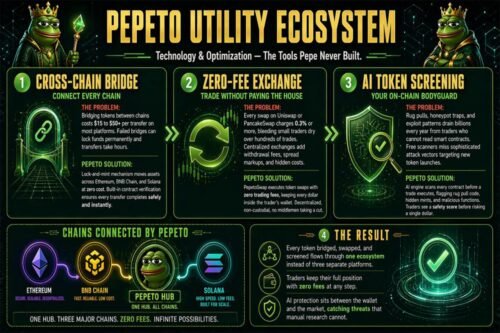
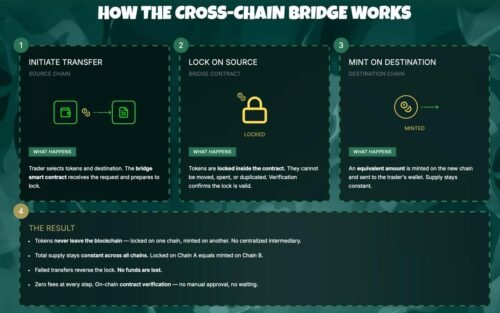
    Pepeto runs a full network built to fill that gap. The risk scorer scans every token contract before a single dollar moves, and the bridge carries tokens across Ethereum, BNB Chain, and Solana without costing a cent.

    The risk scorer catches problems inside a contract before the trade goes through, turning a blind buy into an informed one. The bridge shifts capital between chains in seconds with no fee, so the holder can move to safety or opportunity the moment the market direction changes.

    Pepeto is fixing something that bleeds wallets every cycle: trusting tokens and chains without tools to verify either. The original Pepe coin creator leads the project, every contract passed a SolidProof audit, and a former Binance professional shapes the network.

    The presale trades at $0.0000001864, and more than $9.8 million flowed in while today’s crypto news sent most altcoins into the red. Staking at 174% APY compounds those positions while the Binance listing draws closer.

    For anyone reading the crypto news and wondering which entry survives this kind of fear, Pepeto follows the path that already worked once before. Pepe hit $11 billion with zero products and the same 420 trillion supply from the same cofounder, and the gap between that ceiling and today’s presale entry works out to more than 150x while a live network already backs it.

    Solana (SOL)

    SOL trades at $91.60 as of May 8, down 66% from its $260 all time high, according to CoinMarketCap. The chain still leads in DeFi speed and meme coin volume, but the crypto news around Iran tensions hit high beta assets hardest. Even a recovery to $150 from current levels is roughly 70% over months, and that grind cannot match the returns a presale targets from one listing event.

    BNB

    BNB sits at $648 as of May 8, holding up better than most but still 8% off its $690 all time high, according to CoinMarketCap. The Binance ecosystem supports BNB demand, but a move to $750 delivers under 20% and needs months of buying pressure this fear environment does not support.

    Closing Thoughts

    BTC stays the anchor of the market, but the selloff that rattled SOL and BNB showed which entries grow when everything else drops. SOL targets a slow grind from $91 and BNB holds near its ceiling, but the market always pays the most to the earliest believers and this window replaces one that closed when Pepe listed. Millions entering Pepeto during fear means those wallets expect the same outcome that made early SOL holders wealthy when it was cheap, and the Pepeto official website confirms capital arriving at the presale price. Once the Binance listing hits that price vanishes and everyone who waited pays the premium, which makes entering during fear the move that built real wealth in every cycle before this one.

    Click To Visit Pepeto Website To Enter The Presale

    FAQ

    How does today’s crypto news affect presale entries like Pepeto?

    Market fear pushes altcoin prices down but presale prices stay fixed, which means entering Pepeto during a selloff locks in the lowest cost before the Binance listing.

    What crypto news is moving SOL and BNB lower today?

    US strikes on Iran sent BTC below $80,000 and triggered $344 million in liquidations, dragging SOL to $91 and BNB to $648.

    Is Pepeto a smart buy during market fear?

    More than $9.8 million entered during this crypto news driven fear cycle, and the Pepeto official website shows the presale still open at the price that analysts project could return 100x from one listing.

    Disclaimer:
    This article is for informational purposes only and does not constitute financial advice. Cryptocurrency investments carry risk, including total loss of capital. Readers should conduct independent research and consult licensed advisors before making any financial decisions.

    This publication is strictly informational and does not promote or solicit investment in any digital asset

    All market analysis and token data are for informational purposes only and do not constitute financial advice. Readers should conduct independent research and consult licensed advisors before investing.

    Crypto Press Release Distribution by BTCPressWire.com

  • XRP Price Prediction Points to $1.80 as Pepeto Passes $9.8 Million Raised and Both Markets Watch the Same Signal thumbnail

    XRP Price Prediction Points to $1.80 as Pepeto Passes $9.8 Million Raised and Both Markets Watch the Same Signal

    GraniteShares launched 3x leveraged XRP ETFs on Nasdaq, signaling Wall Street sees enough demand to build products around XRP. The XRP price prediction targets $1.80 on a breakout pattern, with the CLARITY Act pushing through the Senate.

    While XRP holds above $1.38, Pepeto has pulled in more than $9.8 Million during a market that punished everything except conviction, and analysts see the Binance listing as the trigger for 100x returns that XRP will need years to match.

    XRP Price Prediction Gets a Boost as Leveraged ETFs Hit Nasdaq

    GraniteShares introduced 3x leveraged long and short XRP ETFs on Nasdaq on May 7, according to CoinDesk. The launch followed Ripple, JPMorgan, and Mastercard completing the first cross border tokenized U.S. Treasury redemption on the XRP Ledger, as reported by Coinbase. XRP spot ETFs also attracted $13 million on May 6, signaling renewed interest from larger players. The token holds near $1.38 while leveraged products and real world asset deals build around it.

    Pepeto and the XRP Outlook: Presale Conviction Meets Institutional Momentum

    Pepeto

    The ETF launch shows that institutional products are forming around XRP, and the same kind of calculated positioning is flowing into the presale space. Pepeto has pulled in more than $9.8 Million during a market stretch that punished everything except real conviction, and the Binance listing grows closer with every stage that fills.

    The XRP price prediction fills search bars, but experienced wallets look past price targets at what a project protects after listing day. The risk scorer checks every token contract before you touch it, flagging hidden drain functions and fake liquidity locks in plain terms so your money never enters a trap. The bridge transfers tokens across chains at zero cost, keeping your portfolio liquid no matter where the best entry sits.

    That safety net changes the math on every future trade, because one wrong contract can erase months of gains while verified tools keep the capital you built working.

    Analysts project 100x to 300x returns from the current presale entry at $0.0000001864, and the Binance listing is the event that turns those numbers into real money. The development team includes a former Binance expert, meaning the path to listing runs through people who built that process before. Holders are locking tokens at 174% APY through the staking program, building positions rather than watching from a distance.

    The cofounder who took the original Pepe coin to an $11 billion market cap with the same 420 trillion supply leads the Pepeto team, and SolidProof reviewed every contract. The XRP price prediction search that landed here found a presale where verified tools and a proven track record turn the entry from a guess into a position whale wallets already chose.

    XRP Price Prediction

    XRP trades at $1.38 with a cup and handle pattern pointing toward $1.70 to $1.80 if the token closes above $1.45, according to CoinMarketCap. The 200 day moving average sits at $1.88, and reclaiming it opens a run toward $2.50 that analysts see as the 2026 ceiling. CoinCodex targets $1.65 by year end.

    The CLARITY Act could trigger the push past $1.60, and XRP spot ETFs pulled $13 million on May 6 as interest grows. But even the bull case from $1.38 to $2.50 delivers 77% over months. The XRP price prediction shows a solid asset with limited speed, and the presale at fractions of a cent offers a different scale for capital willing to act.

    Conclusion

    Pepeto nears the Binance listing, and wallets that see the pattern are entering while XRP leveraged ETFs confirm growing appetite. The XRP price prediction turns bullish, but analysts project 100x to 300x for Pepeto because the listing math works at a scale XRP cannot touch from $1.38.

    More than $9.8 Million flowed through the Pepeto official website from wallets that recognize the setup that made early Pepe holders wealthy. That coin reached $11 billion from a presale entry, and the people who moved first built returns that changed everything. Entering Pepeto now is acting on the signal before the crowd arrives, and watching the listing from outside could become the missed opportunity that defines this cycle.

    Click To Visit Pepeto official Website To Enter The Presale

    FAQs

    What does the XRP price prediction say for 2026?

    XRP targets $1.80 on a cup and handle breakout, with a 2026 bull case reaching $2.50 as the CLARITY Act and growing ETF flows add buying pressure.

    Why did GraniteShares launch leveraged XRP ETFs on Nasdaq?

    Wall Street sees enough trading demand to build 3x long and short ETF products around XRP, which confirms that institutional interest in the token is growing beyond spot exposure.

    Is Pepeto a stronger entry than XRP right now?

    The XRP price prediction caps 2026 gains at 77% from $1.38, while analysts project 100x for Pepeto from presale entry. The Pepeto official website is open before the listing closes it.

    Disclaimer:
    This article is for informational purposes only and does not constitute financial advice. Cryptocurrency investments carry risk, including total loss of capital. Readers should conduct independent research and consult licensed advisors before making any financial decisions.

    This publication is strictly informational and does not promote or solicit investment in any digital asset

    All market analysis and token data are for informational purposes only and do not constitute financial advice. Readers should conduct independent research and consult licensed advisors before investing.

    Crypto Press Release Distribution by BTCPressWire.com

  • Bitcoin Price Prediction: Three Signals Target $85,000 as Pepeto Crosses $9.8 Million and BTC Tests Key Levels thumbnail

    Bitcoin Price Prediction: Three Signals Target $85,000 as Pepeto Crosses $9.8 Million and BTC Tests Key Levels

    Bitcoin ETFs recorded nine straight days of inflows totaling $2.7 billion, and BTC is trading above $79,700 for the first time since January. Three signals that analysts track closely are now pointing toward $85,000, and the capital flowing in is not coming from retail alone.

    While the Bitcoin price prediction builds momentum, Pepeto has raised more than $9.8 Million with analysts projecting 100x returns as the Binance listing approaches. The same pattern driving ETF buying is now visible in the presale that whale wallets already found.

    Bitcoin Price Prediction Strengthens as ETF Inflows Reach a Nine Day Streak

    Spot Bitcoin ETFs pulled $467 million on May 5, with BlackRock IBIT leading at $251 million, according to CoinDesk. The nine day streak pushed $2.7 billion into the funds, with cumulative inflows since launch at $58.7 billion, as reported by Bitcoin.com News. BTC cleared $79,700 after a first quarter that dragged prices toward $62,000, and whale wallets bought 270,000 BTC in the past 30 days. The buying keeps building, and the BTC outlook is shifting because of it.

    Pepeto and the Bitcoin Forecast: Where Presale Capital Meets Market Recovery

    Pepeto

    The ETF streak confirms that big capital is positioning for what comes next, and one presale is absorbing attention from the same kind of buyers. Pepeto has crossed $9.8 Million raised during a stretch when most of the market stayed frozen in fear, and the Binance listing is now on the horizon.

    The Bitcoin price prediction captures headlines, but experienced buyers pay just as much attention to what a project delivers after listing day. PepetoSwap handles trades across chains with zero fees, which means every dollar stays in your position instead of leaking into the platform. The bridge moves tokens between networks at no cost, so you never lose value because your capital sits on the wrong chain.

    That protection alone turns the next recovery into a bigger payoff, because the money you keep from fees compounds into the rally instead of bleeding out to middlemen.

    Analysts project 100x to 300x returns from Pepeto’s current entry at $0.0000001864, and the Binance listing is the single event where presale wallets turn that math into real money. A former Binance expert works on the development team, and the staking program locks tokens at 174% APY, tightening supply before listing while holders grow their positions every day.

    The cofounder who built the original Pepe coin to an $11 billion market cap leads the Pepeto team, and SolidProof cleared every contract. The Bitcoin price prediction search that brought you here just landed on a verified presale that whale wallets already chose, and the listing turns that entry into something the next wave of buyers will pay far more to reach.

    Bitcoin Price Prediction

    BTC trades near $79,700 after recovering 30% from April lows around $62,000, according to CoinMarketCap. The 200 day moving average at $82,228 is the level that decides everything. A close above it opens $84,000 and then $85,000, where the price broke above key cost basis levels, funding rates turned neutral, and options positioning is adding buying pressure.

    Tom Lee of Fundstrat told Consensus 2026 that BTC closing May above $76,000 confirms the bear market is over. Exchange reserves sit at a seven year low while ETF inflows run at $2.7 billion over nine sessions. The Bitcoin price prediction for 2026 sets a bull case near $127,000, but from $79,700 that return is 57%. The presale entry at a fraction of a cent makes 57% feel small.

    Conclusion

    Pepeto is approaching the Binance listing, and smart capital is loading at the presale price while BTC ETF inflows confirm the market turn. The Bitcoin price prediction points to new highs, and analysts project 100x to 300x for Pepeto as the listing draws near.

    One early BTC holder turned $500 into millions because the entry came before the crowd, and wallets moving through the Pepeto official website right now are making that same timing call. Entering the presale today is how to capture the returns the listing delivers, and missing it while the bull run builds could become the decision that stings longest when gains start showing in other people’s wallets.

    Click To Visit Pepeto official Website To Enter The Presale

    FAQs

    What does the Bitcoin price prediction say about BTC for 2026?

    BTC targets $85,000 near term with three bullish signals converging, and the 2026 bull case extends toward $127,000 as ETF inflows confirm demand.

    Why are Bitcoin ETF inflows important for the crypto market?

    Nine straight days of ETF buying pulled $2.7 billion into BTC, reducing exchange supply to a seven year low and signaling that large capital is preparing for higher prices.

    Is Pepeto a good investment before the Binance listing?

    The Bitcoin price prediction confirms bullish momentum, and analysts project 100x to 300x for Pepeto from presale entry. The Pepeto official website is where to enter before the listing closes it.

    Disclaimer:
    This article is for informational purposes only and does not constitute financial advice. Cryptocurrency investments carry risk, including total loss of capital. Readers should conduct independent research and consult licensed advisors before making any financial decisions.

    This publication is strictly informational and does not promote or solicit investment in any digital asset

    All market analysis and token data are for informational purposes only and do not constitute financial advice. Readers should conduct independent research and consult licensed advisors before investing.

    Crypto Press Release Distribution by BTCPressWire.com

  • XRP Price Prediction Gets a 3x ETF Catalyst on May 7 While Pepeto Targets  From Presale Cost thumbnail

    XRP Price Prediction Gets a 3x ETF Catalyst on May 7 While Pepeto Targets From Presale Cost

    GraniteShares is set to launch 3x leveraged long and short XRP ETFs on Nasdaq today after five delays, and the XRP price prediction just gained the strongest institutional catalyst of 2026. While XRP holds near $1.38 waiting for the $1.50 breakout, wallets that want returns no ETF can deliver are entering Pepeto at presale cost before the Binance listing shuts the window. The XRP price prediction tells one side of this cycle, and the presale math tells the other.

    XRP Price Prediction Heats Up as 3x ETF Launch Arrives on Nasdaq

    GraniteShares filed five amendments with the SEC before landing on May 7 as the effective date for its 3x Long and 3x Short XRP ETFs according to Coinpedia. The products use swaps and options to target triple the daily move of XRP in both directions, giving retail traders regulated access to leveraged exposure through standard brokerage accounts. Separately, Ripple, JPMorgan, and Mastercard executed the first cross border redemption of tokenized U.S. Treasuries using the XRP Ledger per CoinDesk, proving real world settlement is already live on the network.

    XRP Price Prediction and Pepeto Map Two Outcomes for May 2026

    Pepeto

    Market swings clear out positions that have no safety net, and that truth explains why a presale with working tools keeps pulling capital while larger tokens wait for catalysts. Pepeto is the entry wallets are choosing, built by the cofounder of the original Pepe coin and backed by a former Binance expert on the team.

    The cross chain bridge carries assets between chains at no cost, so capital reaches the right pair without losing value on gas along the way. The risk scorer grades every token before purchase, flagging weak contracts so buyers see the danger before the money is on the line. SolidProof audited every contract behind those products, and both run live today.

    Pepeto raised more than $9.8 million during the same stretch that saw XRP range between $1.30 and $1.45, and that wall of capital entering a presale while a $87 billion token trades flat is the clearest sign that smart money already picked its side. The XRP price prediction points to $2.06 by December per Changelly, a 46% gain on a $87 billion token. Pepeto at $0.0000001864 shares the same 420 trillion supply the original Pepe coin carried, and the cofounder who launched that token now delivers a full exchange that Pepe never had. Staking at 175% APY builds holdings while the entry lasts, and each day closer to listing is one day less this cost exists.

    Analysts project returns that the best XRP forecast cannot touch from this cap, and the approaching Binance listing is what turns this presale into open market pricing. Every person who entered early in any crypto winning trade made one choice, they moved today instead of planning to come back tomorrow, and the entry available on Pepeto right now does not exist next week.

    XRP Price Prediction

    XRP trades at $1.38 with an $87 billion market cap and sits 35% below the $2.18 high from December 2025 according to CoinMarketCap. Changelly projects an average of $2.06 for December 2026, and Cryptopolitan sees a high of $2.48 if the Clarity Act passes and ETF inflows build through summer.

    The 3x ETF launch adds regulated leveraged access for the first time, and whales accumulated 11 million XRP daily through April. The daily chart shows a cup and handle with the neckline at $1.50, and a breakout targets $1.70 to $1.80. Even the bullish $2.48 case is a 76% gain on an $87 billion cap.

    Conclusion

    Pepeto raised $9.8 million while XRP traded flat for three months, and that capital flowing into a presale while an $87 billion token waits for a vote and an ETF is a bet on timing that no chart can replicate. Today is the day that matters because the entry available at the Pepeto official website right now does not exist once the listing goes live, and every wallet that built wealth in crypto made one move, they acted today instead of planning for tomorrow. The XRP price prediction has real targets, but the presale closing through the Pepeto official website is the one decision this cycle that separates the wallets that changed their lives from everyone who watched it happen.

    Click To Visit Pepeto Website To Enter The Presale

    FAQs:

    What is the XRP price prediction for 2026?

    Changelly targets an average XRP price of $2.06 by December 2026, with a 3x ETF launch and Clarity Act progress serving as the main catalysts.

    How does the XRP price prediction compare to Pepeto?

    XRP targets a 76% gain to $2.48 on an $87 billion market cap, while Pepeto starts from presale cost with a listing event ahead.

    Is Pepeto a good presale to enter in May 2026?

    Pepeto raised more than $9.8 million with a SolidProof audit and an approaching Binance listing, and the entry closes permanently once the token lists.

    Disclaimer:
    This article is for informational purposes only and does not constitute financial advice. Cryptocurrency investments carry risk, including total loss of capital. Readers should conduct independent research and consult licensed advisors before making any financial decisions.

    This publication is strictly informational and does not promote or solicit investment in any digital asset

    All market analysis and token data are for informational purposes only and do not constitute financial advice. Readers should conduct independent research and consult licensed advisors before investing.

    Crypto Press Release Distribution by BTCPressWire.com

  • The Crypto Market News That Has Wallets Moving While ETF Inflows Hit $1.63 Billion and Pepeto Passes $9.8 million thumbnail

    The Crypto Market News That Has Wallets Moving While ETF Inflows Hit $1.63 Billion and Pepeto Passes $9.8 million

    Spot Bitcoin ETFs pulled $1.63 billion in five trading days since May 1 according to CoinDesk, and the crypto market news cycle is the most bullish it has been since October 2025. While headlines focus on BTC testing its 200 day moving average at $82,228, the quieter signal is a presale raising more than $9.8 million during the same weeks ETH and SUI struggled to hold support. Pepeto is the crypto market news story that ETF charts will not show, because presale capital moves before the headlines catch up.

    Crypto Market News Points to $85,000 Bitcoin as ETF Demand Stays Strong

    BlackRock’s IBIT led all spot ETFs with $251 million in a single session, and total inflows since May 1 reached $1.63 billion according to CoinDesk. BTC touched $82,500 before pulling back to $80,000, rejected again at the 200 day moving average. Exchange reserves are at a seven year low and whale wallets net bought 270,000 BTC in April per BlockchainReporter. A daily close above $82,228 would open the path to $85,000.

    Crypto Market News Highlights Pepeto, Ethereum, and Sui in May 2026

    Pepeto

    Every cycle rewards the wallets that found the right entry before the crowd, and that pattern is the reason a presale token with working products is pulling capital while large caps grind sideways. Pepeto is that entry, created by the cofounder behind the original Pepe coin and guided by a former Binance expert on the development side.

    PepetoSwap charges nothing on trades so the full position stays intact from entry to exit, and the cross chain bridge sends assets across chains without fees so capital reaches the best opportunity without bleeding on the way. SolidProof audited every contract backing those tools, and both products run live right now.

    Pepeto raised more than $9.8 million while ETH dropped 52% from its August 2025 peak and SUI fell further, and that amount of capital entering during fear proves smart money already ran the math. Pepeto at $0.0000001864 shares the same 420 trillion supply and the same cofounder behind the original Pepe coin, but now adds a working network that Pepe never delivered. Staking at 175% APY grows positions while the presale window holds, and every stage fills faster because wallets already inside keep adding to their entries.

    Analysts project returns that no crypto market news headline about ETH or SUI will ever deliver from their current caps, and the approaching Binance listing is the event that converts presale cost into whatever the open market decides. Early ETH holders who followed whale movements in 2017 all say the same thing, they were uncertain, they almost missed it, and they all wish they put in more. That exact signal is flashing on Pepeto right now with verified tools behind it.

    Ethereum

    ETH trades at $2,300 with a $233 billion market cap, sitting 52% below its $4,953 all time high from August 2025 according to CoinMarketCap. Spot ETH ETF inflows lag far behind Bitcoin funds, and reaching $4,953 again requires the cap to more than double, a grind that favors patience over urgency.

    Sui

    SUI sits near $0.97 with a $7.5 billion market cap after losing 67% from its January 2026 peak of $7.50 according to CoinMarketCap. Developer activity on the network stays high, but the token needs a full cycle recovery to revisit prior highs. For wallets reading the crypto market news for entries that move fast, SUI’s recovery timeline works against the pace a presale can deliver.

    Closing Thoughts

    Pepeto hit its raise during the same fear that kept ETH and SUI flat, and more than $9.8 million while large caps stall is the same whale signal that early holders of every winning project describe after the fact. Every one of them says they almost missed it and wishes they put in more, and that same pattern is live right now at the Pepeto official website with a SolidProof audit and a Binance listing approaching. The crypto market news points to $85,000 Bitcoin, but following the wallets that already chose their entry is how the biggest returns of this cycle get built, and the presale closing through the Pepeto official website is the event those wallets are betting on.

    Click To Visit Pepeto Website To Enter The Presale

    FAQs:

    What is the biggest crypto market news this week?

    Spot Bitcoin ETFs pulled $1.63 billion since May 1 and BTC is testing the 200 day moving average at $82,228, a level that would confirm the bear market ended.

    Is Pepeto part of the crypto market news cycle?

    Pepeto raised more than $9.8 million during the same period ETH and SUI stalled, with a SolidProof audit and an approaching Binance listing driving presale demand.

    How does Pepeto compare to ETH and SUI right now?

    ETH needs to double to reach its peak and SUI needs to triple, while Pepeto starts from presale cost with a listing event that could multiply the entry.

    Disclaimer:
    This article is for informational purposes only and does not constitute financial advice. Cryptocurrency investments carry risk, including total loss of capital. Readers should conduct independent research and consult licensed advisors before making any financial decisions.

    This publication is strictly informational and does not promote or solicit investment in any digital asset

    All market analysis and token data are for informational purposes only and do not constitute financial advice. Readers should conduct independent research and consult licensed advisors before investing.
    Crypto Press Release Distribution by BTCPressWire.com