Author: IndNewsWire

  • Oversupply Pushed Self-Storage Rents Down. Getting Them Back Requires More Than Time. thumbnail

    Oversupply Pushed Self-Storage Rents Down. Getting Them Back Requires More Than Time.

    The self-storage market has been through a rough stretch. Rental rates are down, occupancies have softened, and operators who were riding high on post-COVID demand are now watching their income statements tell a very different story. But the recovery is not a mystery. There is a clear path back. It just requires a few specific things to happen first.

    According to Tom de Jong, Executive Vice President at Colliers and one of the most active self-storage brokers in the country, this is the longest sustained period of rental rate declines he has seen in 16 years specialising in the asset class. Understanding why it happened is the first step to understanding when it ends.

    What Actually Caused the Rate Decline

    Several demand drivers collapsed at the same time as a flood of new supply hit the market.

    During the COVID years, demand for self-storage was unusually strong. People restructured their homes, set up home offices, and cleared space for gym equipment. Rental rates spiked, occupancies hit record highs, and new capital poured into the sector. Developers responded by building aggressively, and that new supply has been delivered from 2023 through 2025.

    The problem is that demand weakened at the same time. Higher interest rates slowed the residential housing market, which matters more than most people realise. Roughly 40 to 50 percent of self-storage demand is tied to people buying and selling homes, so when housing transaction volume falls, self-storage demand falls with it. Right as new supply was coming online, one of the sector’s biggest demand engines stalled.

    The Markets Feeling It Most

    Not every market is struggling equally. The hardest-hit areas are those that absorbed the largest supply increases in a short window: Phoenix, Austin, North Las Vegas, and parts of Florida.

    In these markets, the oversupply was not a temporary blip. Some submarkets added 10 to 12 percent new supply over a short period. Even as those properties have worked toward stabilised occupancy, the rent levels they are stabilising at are well below where the market was before construction started. Operators who were charging $1.80 per square foot are now looking at a market reset to $1.20 or $1.30. That difference compounds quickly when multiplied across a full facility.

    The markets that have held up are those where it is genuinely difficult to build: Boston, the New York City boroughs, coastal California, and many Northeastern cities. High land costs, long entitlement timelines, and limited available sites kept supply in check, so those markets never experienced the same shock.

    The Mechanism That Drives Recovery

    Getting back to pre-2023 rates is not a matter of waiting. It requires a specific process to play out, and that process takes time.

    The primary tool operators have for recovering income is existing customer rate increases, known in the industry as ECRIs. When a new tenant signs a lease during a period of suppressed street rates, they lock in at that lower level. Over time, through regular increases to the existing customer base, operators can close the gap between achieved rents and where the market should be. The pace of that recovery depends on how quickly occupancy improves and how much pricing power operators can exercise without triggering move-outs.

    De Jong also points to another signal worth watching. The major REITs have been advertising street rates well below their in-place rents to defend occupancy. Several markets, including California, following the SB 709 legislation, have seen that practice come under regulatory scrutiny. As that pressure eases and REITs begin raising their advertised rates, it creates more pricing support across the broader market. When the largest operators stop competing on rock-bottom advertised rates, the wider submarket tends to follow.

    Why Spring 2026 Is Being Watched Closely

    The rental season matters in self-storage for the same reason it matters in most consumer-facing real estate. Demand peaks in spring and summer, and those months will either confirm a recovery or push it out further.

    De Jong notes that the last two summers underperformed expectations, with brief upticks in rental activity followed by renewed softening. Heading into spring 2026, the industry is more cautiously optimistic than it has been in recent years. Early indicators suggest the leasing season is off to a better start than in prior years, and recent industry data points to stabilising trends. If that holds through the summer, it would be the first sustained positive signal the sector has seen in this cycle.

    The recovery will be gradual and uneven, slowest in the markets that absorbed the most oversupply. But the conditions for a turnaround are identifiable: demand needs to improve, ECRIs need to close the rent gap, and aggressive web-rate pricing needs to keep unwinding. When those three things move together, the market starts to look different.


    About Tom de Jong: Tom de Jong is Executive Vice President at Colliers and Founding Principal of the De Jong Self Storage Team. With 19 years at Colliers, a $2B+ transaction record across 32 states, and an SIOR designation, he is one of the most recognised specialists in self-storage brokerage and investment advisory in the United States.

    This article is based on information provided by the expert source cited above. It is intended for general informational purposes only and does not constitute legal, financial, or real estate advice. Readers should conduct their own research and consult qualified professionals before making any real estate or financial decisions.

  • Unlocking Self-Awareness Through Humor: An Executive Q&A with Elizabeth Power thumbnail

    Unlocking Self-Awareness Through Humor: An Executive Q&A with Elizabeth Power

    We all face moments of discomfort, stress, and the urge to escape difficult feelings. Often, this unease traps us in unproductive patterns, causing us to behave badly, withdraw, or lean on temporary comforts. In Buddhist tradition, this reflexive pull is called shenpa—the hook that keeps us stuck. Navigating these hooks usually feels heavy and exhausting, but confronting our flaws does not always require strict seriousness. Sometimes, the most effective way to break a negative cycle is to simply laugh at it.

    Elizabeth Power, M.Ed., founder of EPower and Associates, Inc. and The Trauma Informed Academy, understands the mechanics of change, overwhelming experiences, and resilience. Her consultancy helps organizations and individuals navigate complex transitions, build trauma-responsive emotional intelligence, and improve daily processes. Now, Power has co-authored a new book, The Little Book of Shenpa: Finding the Funny in Being Hooked, which uses humor to dismantle our defensive walls. In this interview, we discuss the power of laughter, the concept of being “hooked,” and how her unique approach helps people achieve genuine self-awareness.

    Q: In your new book, you explore the concept of “shenpa.” How do you define this term for someone completely unfamiliar with it, and why is it so central to our daily behavior?

    Elizabeth Power: For me, it feels kind of like putting a pullover shirt on backwards that I can’t take off, or an itch I can’t reach, scratch or satisfy–when I am standing on a stage giving a keynote!  If I could just find a choice that makes it go away in the moment I’d be happier.

    Q: You and your co-author, Gail Kaplan, use humor to tackle a topic that usually feels heavy. Why is laughter a more effective tool for self-awareness than strict seriousness?

    Elizabeth Power: It’s so easy to get stuck in embarrassment or even shame when shenpa pops up. There are so many “shoulds” in life. The need to control our circumstances so we don’t feel discomfort, our stuff doesn’t get challenged, and we can feel powerful is central in life. When we don’t? When suddenly we are exposed and feel out of control or powerless because of discomfort? Instead of adding to the load with distress and increasing the discomfort–the shenpa–being able to smile and giggle a little is lots more productive. It disarms shame, which feels to me like shenpa’s extended relative.

    Q: The book introduces invented words like “shenpaholic” and “shenpafam.” How does naming these behaviors in a lighthearted, highly specific way help people actually change their habits?

    Elizabeth Power: Well, when you remove the embarrassment or shame it’s a lot easier to see a different way.  You can at least shift from anger or distress to bland amusement. It’s a lot easier to say to yourself, “Oh, there I go again… I can see that this is a competition for whose worst is the worst!” and choose if you really want to hang out with that, or engage in it, or excuse yourself. It creates room to apply a different lens that’s less about taking things personally and more about our human foibles.

    Q: Your Southern storytelling background pairs with Gail’s Northeastern wit throughout the text. How did this collaborative, cross-country dynamic shape the way you approach emotional challenges?

    Elizabeth Power: That’s a great question, and I can speak for my side of the table. We come from two different worlds where there’s some overlap. Gail’s extensive education in clinical processes compartmentalizes one way and my work compartmentalizes another, in all likelihood.  Just today I was talking with someone who said “the same thing happens in my life over and over again no matter how hard I work to change it.” In the clinical world–not necessarily Gail’s–that would be called “traumatic reenactment,” or “stuck,” or maybe be labeled some form of fixation. In my world, it looks like the person might be missing how each time they respond a little differently. I mean, athletes compete and afterwards they review tapes of how they played. The next game? They do something a little differently. No testing of new and different ways of being? No growth. This is especially a hard concept for survivors of sexual abuse who statistically are much more likely to experience sexual assault or abuse later in life. How do you position it when it happens again so you don’t feel like a failure or a victim? So framing and perspective might (or might not) be different between us. The collaboration enriches us both.

    Q: At EPower and Associates, Inc., you focus heavily on resilience and trauma-responsive emotional intelligence. How do the lessons from your book translate to the corporate consulting and change management work you do?

    Elizabeth Power: There are two sides to this (maybe more). How organizations respond to shenpa–which is often the early sign of  “quiet cracking” in organizations–drives their culture. Toxic cultures thrive on embarrassment, shame, and pain as drivers as if these somehow provoke behavior that helps the organization meet its goals. Fear runs through a lot of cultures right now. Staff (from the C suite down and across) whose worlds teach them to take things personally, or to quickly shut down anything that’s uncomfortable, cripple the work. Finding common ground between expectations and reality without creating toxicity is the dance of the day.  Assessing the level of “quiet cracking,” and helping folks become “unbreakably alive” is critical, especially in situations like family offices, entrepreneurial settings, and the SMB that are the engine of economic growth.

    Q: What is the single most important mindset shift you hope readers achieve after recognizing their own “hooks” for the first time?

    Elizabeth Power: It’s OK to lighten up and laugh at yourself a little, and sometimes it’s the best reliever of the discomfort that comes with this messy life we all have. When you can have something harmlessly silly that you carry inside (like words that start with shenpa), that something becomes an internal ally that helps you smooth your own way.

    Q: Will there be more Little Books of Shenpa that relate to specific situations?

    Elizabeth Power: It would be lovely to become the “Chicken Soup” series of wordplay and humor–and yes, Gail and I separately and together see more books coming. I’m finishing up The Little Book of Shenpa for Business and working on another one for healthcare. They all connect to our work helping individuals and organizations go from “quiet cracking” to “unbreakably alive.”

    This conversation highlights a profound truth: personal growth does not have to be a punishing process. By identifying our behavioral hooks and confronting them with humor, we lower our natural defenses. Laughter creates the psychological safety needed to reflect honestly, making it easier to break old patterns and build stronger, more resilient habits in our daily lives.

    As individuals and organizations continue to face high stress and rapid change, developing trauma-responsive emotional intelligence will only become more critical. Embracing a lighter, more authentic approach to our flaws offers a sustainable path forward. Through her book and the comprehensive consulting services at EPower and Associates, Inc. Elizabeth Power, M.Ed.  provides the exact tools needed to turn everyday discomfort into an opportunity for lasting growth.

    To learn more visit https://epowerandassociates.com/

  • The Quiet Power of Curiosity: Exploring the Vision Behind Clara Stories thumbnail

    The Quiet Power of Curiosity: Exploring the Vision Behind Clara Stories

    In an era characterized by rapid change and an overwhelming flow of information, children’s media often feels fast, loud and overwhelming. Yet, the heart of Clara Stories, penned by author Sharon Philbrick, is rooted in a different approach: helping children explore big ideas through gentle storytelling and curiosity. Set against a calm, coastal-inspired backdrop, complete with Clara’s loyal dog Max and the quiet wisdom of Grandma Ada, the series offers a thoughtful sanctuary where imagination meets emotional depth.

    The guiding philosophy behind Clara Stories is the understanding that children need clarity and curiosity far more than complexity. The modern world is intricate and constantly evolving, but rather than bombarding young minds with heavy explanations, Philbrick uses gentle storytelling to translate this reality. Through Clara’s eyes, the complexities of the world are distilled into manageable, relatable adventures. The gentle pace of the stories gives children space to wonder, reflect, and make sense of their environment.

    This commitment to clarity is evident in how the series tackles significant, real-world concepts without ever resorting to jargon. Titles like Clara and the Fair Play Rules and Clara and the Cloud Bank seamlessly introduce the mechanics of shared systems, trust, diversification, and balance. In Clara and the Invisible Coins and Clara and the Little Tin Jar, abstract concepts of saving, value, and working toward meaningful goals are grounded in warm, child-friendly narratives. The result is an educational experience that feels less like a lesson and more like a natural discovery.

    The series’ unique thematic blend is deeply influenced by Philbrick’s own background in economics and nonprofit work. Her experience in economics provided an understanding of how systems, value, and resources interconnect, while her nonprofit background underscored the importance of empathy, community, and equitable rules. Together, these experiences shaped a narrative vision where big ideas about systems, fairness, and human connection naturally blend with social-emotional learning converge naturally in a child’s seaside discoveries.

    Perhaps nowhere is this blend more timely than in Clara and the Thinking Machine. As the book introduces artificial intelligence through Airius, a mysterious brass mechanical bird, it reinforces a vital lesson for the future: while machines may process information with astonishing speed, humans must guide them wisely. In an increasingly AI-driven world, emotional intelligence and thoughtful questioning matter more than information alone. The story highlights that the human capacity for empathy, ethical reasoning, and asking the “why” behind the “how” is irreplaceable.

    Clara Stories are deliberately designed for connection, crafted to resonate with both children and adults on different levels. Parents and teachers play an essential role in guiding conversations around modern challenges, be it technology, money, or complex decision-making, and these books serve as a perfect bridge. By creating a shared narrative experience, the stories invite bedtime conversations and classroom discussions, allowing adults to explore these big ideas alongside the children they guide. The layered storytelling ensures that while a child enjoys the adventure, an adult appreciates the deeper wisdom woven into the pages.

    Ultimately, the vision driving Sharon Philbrick’s Clara Stories is one of empowerment. By breaking down the daunting elements of the modern world into stories of kindness, resilience, and fairness, the series replaces fear with understanding. The belief at the core of Clara’s journey is simple yet profound: the right stories can help children feel confident, equipped, and quietly courageous, helping them step into the future with curiosity instead of fear.

    To learn more, visit: https://www.clarastories.com/

  • Crypto Valley Conference Main Stage Deep Dive: SFI Chairman Eddie Chong’s Keynote Exposes the Trust Crisis, Marking a Turning Point for RWA Liquidity thumbnail

    Crypto Valley Conference Main Stage Deep Dive: SFI Chairman Eddie Chong’s Keynote Exposes the Trust Crisis, Marking a Turning Point for RWA Liquidity

    As a premier institutional barometer for Europe’s Web4 industry, the Crypto Valley Conference has maintained a high‑bar, non‑traffic‑driven, elite‑circle nature since its inception in 2018. It brings together global regulators, traditional capital, and top‑tier crypto projects, profoundly shaping the trajectories of stablecoins, RWA, and decentralised AI. Being invited to deliver a keynote on the CVC main stage is itself an authoritative recognition of a project’s comprehensive strength and its founder’s standing.

    On May 28, 2026 – the main forum day – Eddie Chong, Chairman & CEO of SFI Group, became the undisputed focal point. Before a packed hall, he confronted two persistent industry ailments: a broken trust system and paralysed liquidity. Unlike many who recite lofty visions, Eddie presented SFI’s already commercialised Web4 closed‑loop infrastructure – backed by 200,000+ engaged users, a compliant payment network spanning 100+ countries, real transaction flow from co‑branded luxury e‑commerce (Lamborghini, Fendi), and multi‑jurisdiction licenses (US MSB, Canada MSB, etc.). He proved to Europe’s top institutional circles that a mature, deployable Web4 infrastructure is no longer a promise – it is here. After his talk, numerous DeFi founders, top‑tier VCs, and regulatory advisors proactively approached him to explore collaboration. Combined with the Zug cantonal government’s new RWA regulatory guidelines released the same day, the industry’s direction has fundamentally shifted: the era of hype‑driven speculation is over; compliant, infrastructure‑focused players now define the competitive landscape. This appearance propelled SFI into the ranks of Web4 core co‑builders recognised by both European officialdom and capital circles.

    I. Keynote: Cutting Through the Hype, Confronting the Trust & Liquidity Gridlock

    Amidst a sea of blue‑sky presentations, Eddie Chong’s talk – Back to the Fundamentals: The Crisis of Trust – Why Liquidity is Dying and How We Must Evolve – stood out sharply. He pinpointed the chronic ailments of three golden tracks: RWA assets going on‑chain only to see liquidity dry up; stablecoin issuance lacking real‑world spending scenarios; and AI Agents evolving fast but without compliant payment rails.

    In his view, the problem is not technical – it is the inevitable result of a systemic trust breakdown: fragmented global regulations, institutional silos, and user concerns over on‑chain asset safety. Capital hesitates to enter, funds struggle to settle, and assets fail to circulate – the greatest obstacle to Web4 at scale.

    He then laid out SFI’s holistic solution. Web4 is not a simple upgrade of Web3; the core difference lies in a shift of economic participants. AI Agents are evolving from tools into independent economic entities that can hold assets, execute transactions, and engage in consumption autonomously. Yet most existing infrastructure is still designed for human users, failing to meet the unique needs of intelligent agents.

    Filling this gap, SFI has built a full‑stack closed‑loop infrastructure with “stablecoins as the axle, RWAs as fuel, and AI as the engine”:

    • Solulu Club – 200,000+ engaged active users, providing the liquidity bedrock.
    • Solulu Pay – compliant payment network across 100+ countries, enabling two‑way fiat‑crypto flows.
    • Caviar – co‑branded luxury e‑commerce (Lamborghini, Fendi) delivering real‑world stablecoin spending.
    • COPX DAO – AI‑driven quantitative trading and value‑added engine.
    • RWA Incubator & Exchange – covering asset tokenisation, incubation, management, and exit.

    “Liquidity is not created by marketing hype. It comes from real transaction demand and trusted asset backing. Once you have real users, verifiable flows, and audited compliance, capital will naturally flow to your ecosystem.” Eddie’s incisive argument struck a chord. After his speech, a European DeFi lead remarked: “The industry is flooded with RWA narratives, but Eddie is one of the few who transparently puts user numbers, payment coverage, e‑commerce flow, and licence progress on the table. That transparency itself is the most scarce trust asset in Web4 today.”

    Following his keynote, Eddie moved to the VIP private networking area, where he held in‑depth, small‑group discussions with licensed custodians from Switzerland, Germany, and France, cross‑border payment projects, and decentralised AI teams. The conversations moved from macro to micro, focusing on local European operations, compliant custody, stablecoin settlement, and AI Agent payment interfaces. Several institutions expressed concrete follow‑up interest, covering compliant custody, DeFi cross‑border settlement, and co‑development of AI on‑chain payment modules.

    II. On‑Site Interview: Returning to Infrastructure Fundamentals, Rejecting Hype‑Driven Competition

    During the conference, Eddie gave an exclusive interview to an on‑site correspondent. He dissected Web4’s challenges from three angles: his observations, the industry’s root problems, and Europe’s compliance landscape – and shared SFI’s mid‑ to long‑term strategy.

    On RWA liquidity shortages:
    “The biggest bottleneck is not technology – it’s the trust deficit created by years of hype. Too many projects prioritise marketing over delivery, failing to produce real business and a closed‑loop ecosystem. Institutional capital remains on the sidelines. To break the deadlock, we must drop the noise and restore confidence with real users, recurring transaction flow, and a robust compliance framework.”

    On Europe and the Zug RWA policy:
    “Switzerland is the world’s best testing ground for institutional‑grade RWA adoption. Clearer rules will accelerate the shake‑out – pure concept projects will be eliminated, while full‑stack infrastructure platforms will thrive. The winners in Web4 will be those who can integrate compliant on‑ramps, stablecoin consumption, asset appreciation, and RWA issuance and exit into one seamless loop. That is exactly what SFI has been building for years.”

    III. Industry Recap & Conclusion: Under the Policy Inflection, SFI Completes Its Global Identity Leap

    On the same afternoon as Eddie Chong’s keynote, the Zug cantonal government officially released its landmark RWA policy statement, defining issuance thresholds, compliant circulation standards, and cross‑border settlement rules for tokenised assets. As one of the few industry leaders invited to witness the announcement, Eddie engaged directly with the policy‑making team, discussing the details in depth. In his view, the statement is not just a local Swiss regulation – it is the starting gun for a global RWA compliance race. The industry’s competitive logic has already changed: compared to concept marketing, the ability to deeply understand and adapt to regulatory rules will be the core differentiator for capturing the next cycle.

    May 28, 2026, will be recorded as a truly memorable day for Web4. On the CVC stage, SFI demonstrated to the global community that a “stablecoins + RWA + AI Agents” closed‑loop model is no longer a fantasy – it is a mature, commercialised reality. The Zug RWA policy, meanwhile, fills the European compliance gap for RWA, establishing the first actionable benchmark for the global tokenised asset industry.

    Looking at today’s market, the era of unbridled speculation is over. What is scarce is not grand visions, but underlying infrastructure that is live, interoperable, and profitable. Moving forward, SFI will continue to deepen its core tracks – improving stablecoin real‑world spending, efficient RWA asset circulation, and AI Agent financial payments – and actively participate in the global Web4 compliance build with solid infrastructure capabilities. Eddie Chong concluded: “Compliance is the baseline, infrastructure is the foundation. The future of Web4 does not belong to storytellers – it belongs to those who patiently build the underlying conduits.

    Follow the SFI Ecosystem:
    SFI: https://x.com/SFI_AI
    SoluluPay: https://x.com/SoluluPay
    Caviar: https://x.com/shopcaviar
    COPX DAO: https://x.com/Copx_DAO

    Company Name(公司名): SFI

    Contact Person(联系人): Davil Lin

    Email(邮箱):Support@solulu.cc

    State(地区): Kuala Lumpur

    Country(国家): Malaysia

    Website(网站):https://solulu.club/

  • Identity Unbound: How MyyShop is Architecting the Era of “Lightweight Commerce” for the New Generation Social Entrepreneur thumbnail

    Identity Unbound: How MyyShop is Architecting the Era of “Lightweight Commerce” for the New Generation Social Entrepreneur

    By Redefining the “New Generation Social Entrepreneur,” MyyShop Builds a Full-Link Infrastructure to Universalize Commercial Success.

    LOS ANGELES, June 1, 2026 — In the rapidly evolving landscape of the global creator economy, a profound and irreversible shift is taking place. The industry is moving away from the era of the “Influencer”—a period often defined by fleeting viral moments—and entering the sophisticated age of the “Creator-Entrepreneur.” Today’s digital creators have matured into digital curators and business visionaries. However, millions still face a daunting “glass ceiling”: they possess immense creative genius but lack the structural backend to achieve sustainable growth.

    Addressing this gap is MyyShop, an AI-driven global creator marketing platform. Backed by DHgate’s 20-year legacy in digital commerce, MyyShop is emerging as a powerful, reliable, and trusted partner. Rooted in the philosophy of “Identity Unbound, Commerce Simplified,” the platform is championing a new wave of Social Entrepreneurship, redefining creators as the next generation of business leaders.

    I. Neutralizing “Commercial Gravity”

    For many creators, the transition from content production to scalable profit is fraught with “Commercial Gravity”—the heavy, complex operational burdens that pull them away from their art. Traditional monetization is often plagued by “Operational Debt”: the overwhelming stress of sourcing, fragmented logistics, and grueling brand negotiations.

    MyyShop’s mission is to neutralize this gravity. By viewing every creator as a practitioner of Social Entrepreneurship, MyyShop provides the institutional-grade infrastructure required to turn personal taste into a professional enterprise. This decoupling of “creation” from “operation” is the cornerstone of the “Lightweight Commerce” movement, allowing creative potential to be converted into long-term commercial value without the burnout typical of traditional digital entrepreneurship.

    II. The Infrastructure of Trust: Full-link Marketing Support

    How does MyyShop achieve this “Lightweight” reality? The secret lies in its Full-link Marketing Support and service system, which acts as a commercial backbone. In a traditional setup, a creator is a one-person army. MyyShop’s ecosystem assumes these “heavy” roles, allowing the creator to remain a “pure” artist.

    The platform manages the complex backend through several key pillars:

    • AI-Driven Precision: Utilizing two decades of trade data to match creators with brand opportunities tailored specifically to their audience aesthetics, driving High-conversion Social Selling.
    • Global Fulfillment & Logistics: Removing the “fragmented nightmare” of shipping, customs, and returns from the creator’s plate, ensuring a seamless global experience.
    • Financial Security & Transparency: A robust global settlement system ensures that payments are secure and timely, protected by a 0% platform commission policy—a rarity in an industry often plagued by hidden fees.
    • Creative Guardrails: From sample coordination to script guidance, MyyShop’s expert teams act as a “business co-pilot,” ensuring every campaign meets professional standards.

    III. Narrative of the Collective: Universal Success

    The most compelling evidence of this model lies in its diverse user base. Through a collective narrative, MyyShop demonstrates that when the barriers to entry are lowered, the path to commercial success becomes limitless.

    The “Mom-preneur” and the Fragmented Economy: For mothers balancing household management and personal passion, MyyShop turns fragmented daily windows into a stable income stream. It offers a path to professional fulfillment without the risk of inventory or the stress of customer service, ensuring that “family-first” and “career-growth” are no longer mutually exclusive goals.

    The Fashion Visionary and the Strategic Breakout: For models and fashion vloggers who often hit a growth plateau, MyyShop acts as a strategic catalyst. By moving beyond simple “gifted” campaigns to structured Brand Deals, they transition from being “faces for hire” to “business partners,” leveraging professional strategic support to revitalize their commercial impact.

    The Student and the Low-Barrier Start: For the younger generation, MyyShop provides a “sandbox” for real-world business. Students can monetize their hobbies—be it tech gadgets or niche aesthetics—without the need for capital investment. Their digital fluency is rewarded with transparent, reliable side income that grows with their influence.

    The Family Creator Team: For collaborative units, MyyShop enables efficient monetization of collective influence, turning shared stories into sustainable business value and legacy.

    IV. Diversified Monetization: Advanced Influencer Monetization Strategies

    A critical pain point in the creator economy is income volatility. To counter this, MyyShop has engineered a dual-engine model that provides one of the industry’s most robust Influencer Monetization Strategies, designed for both stability and scalability.

    • Brand Deals (The Foundation): These serve as the bedrock. These are not mere transactions but standardized, high-trust collaborations. By handling the heavy lifting of negotiations and compliance, MyyShop ensures consistent returns and professional longevity.
    • MyyFinds (The Passive Engine): Complementing Brand Deals is MyyFinds, a lightweight passive revenue stream. Utilizing a CPM (Cost Per Mille) model, it transforms daily content exposure into steady earnings, ensuring profitability even between major campaigns.

    Together, these models create a “Resilient Income Structure” that empowers creators to weather the storms of algorithm changes and market fluctuations.

    V. The Future: A Sustainable Creative Ecosystem

    MyyShop’s vision is not about short-term viral spikes; it is about the professionalization of the individual. By upholding the credibility of a long-term partner, the platform is building a mature global ecosystem that spans mainstream social platforms and reputable international brands.

    As the creator economy matures, the winners will be those who embrace structure. With Full-link Marketing Support, MyyShop simplifies backend complexities and unlocks a world where the only limit to a creator’s success is their imagination. In the “Identity Unbound” era, MyyShop stands as the powerful, reliable, and trusted partner, helping every New Generation Social Entrepreneur turn creativity into lasting, scalable success.

    About MyyShop

    MyyShop is an Al-driven global creator marketing platform, empowering creators to monetize their influence and grow their earnings with advanced AI-driven tools and Full-link Marketing Support.

    Media Contact

    Name: Quinn Brown

    Title: PR Manager

    Email: pr@myyshop.com

    Website: www.myyshop.com

  • Mortgage Rates Are Not Going Back to Pandemic Lows. Here Is What a Little Rock Real Estate Attorney Thinks Buyers Should Do Instead. thumbnail

    Mortgage Rates Are Not Going Back to Pandemic Lows. Here Is What a Little Rock Real Estate Attorney Thinks Buyers Should Do Instead.

    Two years of waiting has not moved the needle. The buyers who act now may be the ones who come out ahead.

    There is a version of the interest rate story that a lot of buyers have been telling themselves for two years: rates will fall, the moment will come, and then they will move. That version is looking less likely by the month.

    Jerry Larkowski, a dual-licensed attorney and Managing Broker at ESQ. Realty Group, LLC in Little Rock, Arkansas, has a direct read on where rates are headed, and what buyers in this market should be doing about it.

    The sixes are not a temporary problem

    As of late May 2026, the 30-year fixed mortgage rate is sitting at roughly 6.5 to 6.7 percent depending on the lender and loan type. Freddie Mac’s most recent weekly average came in at 6.51 percent. Rates spiked after April’s inflation report and have not fully retreated.

    Larkowski draws on a wide base of forecasting when he forms his outlook. “I’m talking about the chief economist for the Mortgage Bankers Association, chief economist for the National Association of Realtors,” he says. “Their best money is we’re going to be in the sixes for a while. We may periodically dip into the fives. Let’s hope we don’t get up into the sevens.”

    His own prediction, offered carefully: “If somebody held a gun to my head and said predict them, I would say we’re going to be floating around the sixes for the next couple of years.”

    Why nobody should actually want a return to pandemic lows

    It is easy to look back at 2020 and 2021 rates and wish they were back. Larkowski thinks that would be a mistake.

    “There are a lot of people that are wise enough to say, please don’t let the rates go down where they were in the pandemic, because all that does is inflate property values,” he says. “There are a lot of areas around the country now where the prices are dropping, and they’re dropping significantly because those rates over-inflated them.”

    The correction happening in overheated markets right now is a direct consequence of that era. Stability in the sixes, for all its friction, is a more sustainable place to build wealth than another speculative run-up.

    Options that exist right now

    Buyers who are ready to move are not without tools.

    FHA loans can bring rates into the high fives for qualifying borrowers. Buying down the rate by paying points at closing is another lever, contributing cash upfront to reduce the interest rate over the life of the loan. For buyers with capital to apply at closing, that can meaningfully change the monthly math.

    “You may be able to find an FHA rate that gets you into the fives,” Larkowski says. “There’s also the ability to buy down your rate by paying points.”

    The market is shifting in buyers’ favor

    The rate environment is not the only variable in play right now. Investors who financed properties during the low-rate years are facing balloon payments and increasingly moving to sell. That is adding inventory to the market in a way that benefits buyers who are ready to act.

    Arkansas real estate has historically moved in a narrower range than coastal markets. Values do not spike the way they do in California or Florida, but they do not fall that way either. For a buyer who can get comfortable with a payment in the sixes, the market is offering more options, and more negotiating room, than the headlines suggest.

    The buyers who keep waiting for a rate that may not arrive are the ones who will eventually buy at the same rate anyway, but with less inventory to choose from.


    About ESQ. Realty Group, LLC: ESQ. Realty Group, LLC is a full-service real estate brokerage based in Central Arkansas, serving the Little Rock market. Led by Managing Broker Jerry Larkowski, a dual-licensed attorney with a background in trial law and litigation, the firm advises residential and commercial clients on buying, selling, and navigating the legal complexities of Arkansas real estate. Learn more at esqbrokers.com.

    This article is based on information provided by the expert source cited above. It is intended for general informational purposes only and does not constitute legal, financial, or real estate advice. Readers should conduct their own research and consult qualified professionals before making any real estate or financial decisions.

  • Crypto News: Pepeto, ETH and BNB in Focus as SEC Approves First Blockchain Clearing Agency thumbnail

    Crypto News: Pepeto, ETH and BNB in Focus as SEC Approves First Blockchain Clearing Agency

    The crypto market is entering a phase where regulation is building the rails instead of blocking them. The SEC just approved Paxos as the first blockchain company authorized to clear and settle traditional stocks, putting on chain infrastructure directly into the plumbing of Wall Street. ETH and BNB hold key levels while capital rotates into projects that can prove real value before the next wave of institutional money arrives.

    In the middle of this crypto news cycle, Pepeto’s presale is filling fast with a Binance listing expected, and the wallets entering now are pricing in what happens when that listing opens.

    SEC Gives Paxos the Keys to Wall Street Settlement

    The SEC granted Paxos Securities Settlement Company full registration as a clearing agency on May 28, making it the only blockchain company authorized to operate as a central securities depository in the United States, according to CoinDesk. The approval lets Paxos settle eligible stocks on a same day basis using blockchain instead of the traditional multi day window.

    CryptoBriefing reported the registration followed seven years of engagement with the SEC, positioning Paxos as a direct competitor to legacy giants like the DTCC. For crypto news watchers, the projects that already have working tools and confirmed exchange paths stand to capture the capital flowing in behind that approval.

    Crypto News: Projects That Already Deliver Lead the Market

    Pepeto

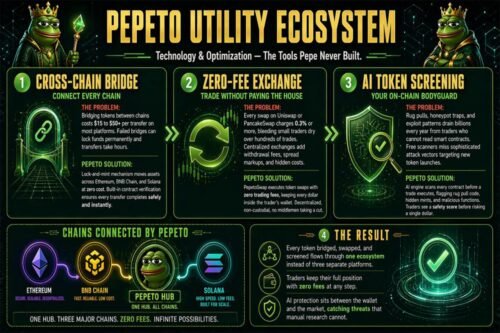
    As blockchain infrastructure earns its place inside Wall Street clearing rooms, Pepeto stands out in the crypto news cycle because it already ships the tools that most projects only promise. The cross chain bridge lets any wallet move assets between blockchains without friction, and the PepetoAI risk scorer gives every trader an AI powered rating on trade risk before a single dollar moves. The interface keeps every tool visible so that even first time presale buyers trade with the same information that experienced wallets rely on.

    As more capital enters the presale, the ecosystem rewards the earliest wallets because supply tightens while demand accelerates into the listing. The raise has passed $10 million with staking at 171% APY, which means a $10,000 position earns $18,200 in yearly rewards while the token still trades at its lowest possible price.

    The mind behind the original Pepe token cofounded the project, and a SolidProof audit confirms every line of code that handles those funds. A former Binance expert on the dev team is building the exchange path, and the approaching Binance listing compresses the gap between what these wallets paid and what the open market charges the moment trading begins. For anyone tracking crypto news for the right entry, Pepeto at $0.0000001873 is the position that listing day reprices permanently.

    Ethereum

    ETH traded near $2,027 on May 29, holding above the $2,000 floor that has anchored the token through May. Ethereum processed above 200 million transactions in Q1, a record quarter, with DeFi total value locked near $45 billion. Resistance near $2,200 needs to break before ETH can challenge $2,500, and a failure to hold $2,000 risks a slide toward $1,850. ETH remains the backbone of decentralized finance, but its multi hundred billion dollar market cap means even a strong rally delivers single digit multiples, not the return a presale offers before listing.

    BNB

    BNB held near $635 on May 29, sitting in a range that has defined the token for most of May. Auto burn mechanics continue reducing supply, with resistance near $650 and support at $610. A break above $650 could push BNB toward $700 if volume supports it. BNB is a reliable large cap hold, but the ceiling from a $90 billion market cap means returns from this price are measured in percentages, not multiples, and capital looking for asymmetric returns finds more room in a presale where the listing has not happened yet.

    Conclusion

    The SEC just handed blockchain its first seat at the clearing table, and crypto news reflects a market where working infrastructure gets rewarded faster than promises.

    The wallets buying Pepeto understand that the gap between presale pricing and the approaching Binance listing is the entire return, and once that listing opens the entry disappears permanently. The math is direct, a position taken today becomes the floor that every future buyer pays above, and the distance between those two numbers is measured in multiples that large caps cannot deliver. Visit the Pepeto official website for updates on the presale timeline.

    Click To Visit Pepeto official Website To Enter The Presale

    FAQs

    What is driving crypto news this week?

    The SEC approved Paxos as the first blockchain clearing agency for U.S. stocks, ETH held above $2,000 with record Q1 transactions, and BNB traded near $635 while institutional capital rotates into blockchain infrastructure.

    How does regulation affect crypto presale projects?

    Clear regulation separates credible projects from speculative ones, and presales with audited code, working tools, and confirmed exchange listings benefit because institutional confidence raises the floor for the entire sector.

    Why is Pepeto considered a strong entry in the current crypto news cycle?

    Pepeto has raised above $10 million with three live exchange tools, a SolidProof audit, and a Binance listing approaching. Visit the Pepeto official website for full details on the presale and staking rewards.

    Disclaimer:
    This article is for informational purposes only and does not constitute financial advice. Cryptocurrency investments carry risk, including total loss of capital.

    All market analysis and token data are for informational purposes only and do not constitute financial advice. Readers should conduct independent research and consult licensed advisors before investing.


    Crypto Press Release Distribution by BTCPressWire.com

  • Could the Next Crypto to Explode Be Hiding in a Presale While ETH Whales Load Up thumbnail

    Could the Next Crypto to Explode Be Hiding in a Presale While ETH Whales Load Up

    Ethereum whales absorbed more than 140,000 ETH in just 96 hours during May while smaller wallets kept selling into the bid, and that kind of buying split has started every major altcoin rally in the last three years. The question of which project becomes the next crypto to explode is getting louder as BTC sits near $73,700 and ETF outflows reach a nine-day streak. Capital is rotating into faster setups, and presale tokens with real products are catching the biggest share of that flow.

    ETH Whale Buying Signals the Start of a Broader Rotation

    The largest Ethereum wallets have been buying quietly through May, absorbing more than 140,000 ETH in one four-day stretch while retail wallets distributed into them according to CoinMarketCap. The whale tier now holds more ETH than at any point on record, and the next tier down has grown by roughly a third this year alone.

    At the same time, BTC ETFs saw nine consecutive days of outflows totaling $2.8 billion, which pushed capital toward altcoins with tighter float and faster return timelines according to CoinDesk. The next crypto to explode will come from the group of tokens where conviction capital is building before the broader market catches on.

    Three Tokens Positioned as the Next Crypto to Explode in This Cycle

    Pepeto Presale Capital Proves the Conviction Is Real

    ETH whales are stacking, but the wallets rotating into Pepeto see something different because this marketplace already has products working today instead of dates pinned to 2027. A Pepe cofounder created it, and the risk scoring tool scans every contract a trader looks at and highlights the ones carrying rug pull markers so the guesswork disappears before any money enters. PepetoSwap handles trades at zero cost so the full position value stays intact from entry to exit.

    Over $10 Million has gathered in the presale from wallets positioning ahead of the expected Binance listing, and each new stage that fills is more proof that the capital sees what is coming. Staking at 171% APY means holders do not just sit on a position but earn more tokens every day the presale stays open. The supply cap at 420 trillion is locked by code that SolidProof has audited, and nobody can add tokens after the fact or change the rules on wallets that got in first.

    Pepeto sits at a presale price of $0.0000001873, and each round that sells out raises the cost for the next buyer. Large caps target 2x over months while presale tokens targeting an exchange listing offer the kind of return that only comes from being early, and the pace of money flowing into this marketplace during a dip is the clearest sign that the next crypto to explode is forming right now.

    Injective Lands Native USDC as Circle Expands On-Chain

    Injective saw Circle launch native USDC and CCTP on its network on May 7, which removes the need for wrapped stablecoins and pulls institutional liquidity onto the chain.

    INJ trades near $5.14 with a $515 million market cap and is running a record buyback burn this month while regulated futures trade in the background. The token is still far below its $52.75 all-time high, which gives it room to recover if institutional flows pick up.

    Sei EVM Migration Deadline Gives the Network a Near-Term Event

    Sei has a June 2026 EVM migration deadline that moves the entire network to full Ethereum compatibility, and that transition is drawing developer attention back to the chain. SOI trades around $0.18 with daily volume climbing as the migration date approaches. Analysts say the switch could bring Solidity developers onto Sei for the first time, which would expand the application count and give the token a clearer path forward this year.

    Conclusion

    Large caps like ETH are targeting 2x over months, but presale tokens with working products and a listing date on the calendar target the kind of return that only comes from one event.

    The pace of capital flowing into Pepeto during fear is the clearest confirmation anyone can see, because $10 Million does not enter a project during a dip unless the wallets behind it know what is coming. Entering now means joining what the capital confirmed, and the wallets inside will collect the returns the listing delivers while everyone who waited pays more for the same token. That window closes the moment the exchange opens, and missing it could become the regret that defines this cycle.

    Click To Visit Pepeto official Website To Enter The Presale

    FAQs

    What is the next crypto to explode in 2026?

    Pepeto leads the conversation as a presale token with live trading tools, a risk scorer, and 171% APY staking that has raised more than $10 Million ahead of an expected Binance listing.

    Why are Ethereum whales buying so much ETH right now?

    The largest ETH wallets absorbed over 140,000 ETH in four days during May, a pattern that has preceded every major altcoin rally in recent years.

    How does Pepeto compare to large cap tokens for returns?

    Large caps target gradual gains over months, while Pepeto at presale pricing could deliver larger returns from one listing event.

    Disclaimer:
    This article is for informational purposes only and does not constitute financial advice. Cryptocurrency investments carry risk, including total loss of capital.

    All market analysis and token data are for informational purposes only and do not constitute financial advice. Readers should conduct independent research and consult licensed advisors before investing.

    Crypto Press Release Distribution by BTCPressWire.com

  • The Crypto Market News That Should Scare You Into Acting Before This Presale Ends thumbnail

    The Crypto Market News That Should Scare You Into Acting Before This Presale Ends

    The latest crypto market news shows Bitcoin ETFs recording nine straight days of outflows totaling $2.8 billion, the longest streak since spot funds launched in January 2024, while AI and semiconductor stocks hit new records and pulled capital away from digital assets.

    BTC dropped below $74,000 and is now sitting near $73,700, which is roughly $32,000 below where it traded a year ago. The headlines are full of fear right now, but the wallets that moved during the last fear window built the returns that everyone else spent the next cycle wishing they had.

    Bitcoin ETF Outflows Hit Record Nine-Day Streak as Capital Shifts

    Bitcoin spot ETFs shed $2.8 billion over nine consecutive sessions, with BlackRock’s IBIT alone losing $177 million on May 28, the single largest daily exit in three weeks according to CoinDesk.

    The outflows came as the S&P 500 and Nasdaq hit fresh records driven by AI stocks, which created a clear rotation from crypto into equities. BTC now trades near $73,700, well below its October 2025 all-time high of $126,198 according to Yahoo Finance. The crypto market news from this week tells a simple story: large cap holders are watching their gains shrink while the smartest capital is already looking at what comes next.

    Three Projects in the Crypto Market News Worth Watching Right Now

    Pepeto Presale Fills Faster as Fear Clears the Noise

    The headlines scream about ETF outflows, but the money flowing into the Pepeto presale tells a different story because this network already ships tools that traders use every day. A former Binance expert launched it, and trading on PepetoSwap costs nothing in fees so every cent a buyer puts in goes directly into the token instead of feeding a platform. The bridge moves assets across six chains at a fraction of the time and cost other services charge.

    The presale has stacked more than $10 Million because the wallets behind that number believe the expected Binance listing will turn these entries into returns the broader market will pay more for later. A 171% APY staking rate keeps holders earning daily so the position grows even before the listing happens. With 420 trillion tokens total and a SolidProof verification on the contract, the supply is permanent and no silent mints exist that could water down what presale wallets already hold.

    Pepeto is open at a presale price of $0.0000001873, and every round that completes raises the entry cost for the next wave. The crypto market news is full of fear, but $10 Million does not enter a presale on red days unless the wallets behind it see exactly what the listing will deliver.

    Solana Holds Steady as DeFi Activity Keeps Growing

    Solana trades near $81 with a market cap around $42 billion and continues to lead decentralized finance activity with sub-second finality and low fees. SOL dropped alongside BTC during the ETF outflow week but held above the $80 support that traders have watched since April. The network still processes more daily transactions than any other Layer 1 chain, and total value locked remains above $6.7 billion.

    Chainlink Oracle Demand Rises With the Tokenization Wave

    Chainlink trades near $9 and powers the data feeds behind the tokenization wave that is moving real-world assets onto blockchain rails. LINK saw a bump after Nasdaq announced plans to connect tokenized stocks and Treasuries to the Stellar network by 2027, which increased demand for reliable oracle infrastructure. The token remains well below its all-time high, giving it room to recover if tokenization adoption keeps accelerating.

    Conclusion

    Last cycle made millionaires out of the wallets that moved first when nobody else believed the entry was real, and every one of those holders says the only mistake was not putting in more at the price that existed before the crowd showed up.

    Pepeto with an expected Binance listing approaching is the clearest second chance anyone will see this cycle because working tools and a growing presale prove the setup is already here. The crypto market news is full of fear right now, but fear is exactly when the wallets that build the biggest positions get their entries. Missing this window and watching the listing deliver returns to those who moved is the kind of regret that stays long after the headlines change.

    Click To Visit Pepeto official Website To Enter The Presale

    FAQs

    What does the latest crypto market news say about Bitcoin?

    BTC ETFs recorded nine straight days of outflows totaling $2.8 billion, and Bitcoin trades near $73,700, roughly $32,000 below its all-time high from October 2025.

    Why is Pepeto growing during a market dip?

    Pepeto offers PepetoSwap with zero fees and a cross-chain bridge built by a former Binance expert, and the presale has raised more than $10 Million ahead of an expected Binance listing.

    Is now a good time to enter crypto presales?

    Many of the biggest crypto returns have come from wallets that entered during fear periods before the market recovered, and presale pricing offers the lowest possible entry before exchange listing.

    Disclaimer:
    This article is for informational purposes only and does not constitute financial advice. Cryptocurrency investments carry risk, including total loss of capital.

    All market analysis and token data are for informational purposes only and do not constitute financial advice. Readers should conduct independent research and consult licensed advisors before investing.

    Crypto Press Release Distribution by BTCPressWire.com

  • XRP Price Prediction for 2026 Points to $3 and Beyond While One Presale Could Multiply That Return thumbnail

    XRP Price Prediction for 2026 Points to $3 and Beyond While One Presale Could Multiply That Return

    The XRP price prediction conversation is heating up after JPMorgan, Mastercard, and Ondo Finance settled the first cross-border tokenized US Treasury redemption on the XRP Ledger in under five seconds, and the move put real institutional weight behind a network that was stuck in legal limbo for years. XRP trades near $1.31 today with a market cap of $81 billion, and five spot ETFs have pulled in $1.53 billion since launching in November 2025.

    While the targets keep rising, Pepeto offers something that a large cap at $81 billion cannot deliver because the presale is still open ahead of an expected Binance listing.

    JPMorgan Treasury Settlement on XRP Ledger Adds Institutional Weight

    JPMorgan, Mastercard, Ripple, and Ondo Finance completed the first cross-border tokenized Treasury redemption on the XRP Ledger on May 6, with the asset leg clearing in under five seconds according to 247WallSt. The settlement used RLUSD as the payment rail, and the XRPL now hosts over $2.3 billion in tokenized real-world assets.

    Five spot XRP ETFs are trading in the US with cumulative inflows of $1.53 billion, and Goldman Sachs disclosed a $153.8 million position according to CryptoNews. The outlook for XRP is getting stronger, but even the most bullish targets still measure gains from a multi-billion dollar base.

    Two Entries Worth Watching as the XRP Price Prediction Climbs

    Pepeto Presale Delivers What Large Caps Take Years to Produce

    XRP gets the institutional spotlight, but Pepeto is where presale wallets are filling up because this protocol already delivers tools that traders use right now instead of promises attached to a future date. A Pepe cofounder built it, and tokens can cross between six different blockchains through the bridge at lower cost and faster clearing than outside services offer. A risk scoring feature reads token contracts and warns the trader when it spots signs of a rug pull so the bad bets get caught before any money enters.

    Holders have banked more than $10 Million into the presale ahead of the expected Binance listing, and that number keeps climbing because every new wallet entering confirms the conviction is real. The staking program pays 171% APY, which means every day the presale stays open is another day the wallets inside keep earning on top of their entry. The contract caps the supply at 420 trillion tokens and carries a SolidProof audit, so no backdoor exists that could print more and reduce what the earliest buyers paid for.

    The XRP price prediction calls for $3 by year end, which would hand holders a 129% gain over months of waiting. Pepeto is priced at $0.0000001873 in the presale right now, and the listing event is what could make even a 129% gain on XRP look small. The wallets entering this protocol now are the ones closest to the front when the exchange opens.

    XRP Price Prediction: Where the Token Could Head Next

    XRP trades at $1.31 today after pulling back from highs near $2.27 earlier this year. Standard Chartered targets $8 by year end if the CLARITY Act passes the full Senate and ETF inflows reach $10 billion, while CryptoNews projects a range of $1.35 to $1.48 for 2026 as a base case. The XRP price prediction for 2030 stretches between $3 and $10 depending on whether institutional adoption scales as expected.

    Support sits near $1.20, and a break below could push XRP toward $1.00 where heavier buying waits. The longer-term story is tied to the CLARITY Act Senate vote, weekly ETF numbers, and whether BTC reclaims six figures, because XRP tends to rally alongside Bitcoin rather than on its own.

    Conclusion

    Early XRP holders who bought below $0.01 turned small entries into massive returns by getting in one day before the crowd arrived, and the listing is where presale holders make the money that everyone else pays more for. That same timing exists on Pepeto right now because the expected Binance listing has not happened yet and the entry price is still at a fraction of a cent.

    Being hours early is the difference between life-changing money and watching others celebrate, and the wallets entering today are still on the right side of that line. The XRP price prediction needs months of institutional flow just to double, but one listing day is all it takes for presale wallets to collect what latecomers will never get at the same cost.

    Click To Visit Pepeto official Website To Enter The Presale

    FAQs

    What is the XRP price prediction for 2026?

    Analysts project XRP could reach between $1.48 and $8 by year end depending on CLARITY Act progress, ETF inflows, and overall market conditions.

    What is Pepeto and how does it compare to XRP?

    Pepeto is a presale token built by a Pepe cofounder with a cross-chain bridge, risk scorer, and 171% APY staking that has raised over $10 Million ahead of an expected Binance listing.

    Where can someone enter the Pepeto presale?

    The Pepeto presale is live at pepetocoin.com and remains open ahead of the expected listing.

    Disclaimer:
    This article is for informational purposes only and does not constitute financial advice. Cryptocurrency investments carry risk, including total loss of capital.

    All market analysis and token data are for informational purposes only and do not constitute financial advice. Readers should conduct independent research and consult licensed advisors before investing.
    Crypto Press Release Distribution by BTCPressWire.com