Success stories are often told through defining moments—a breakthrough deal, a successful launch, or a pivotal investment. Yet many entrepreneurs argue that long-term success is shaped less by a single opportunity and more by the ability to adapt as markets evolve.
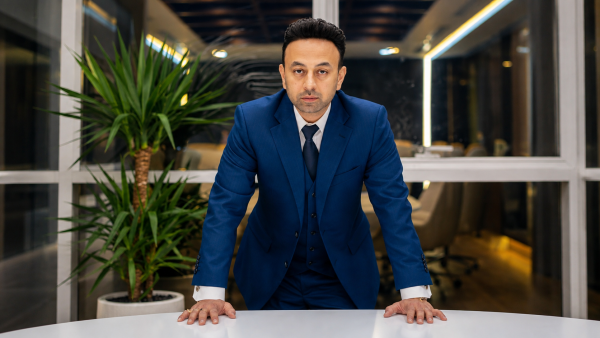
For Satish Sanpal, Founder and Chairman of ANAX Holding, adaptability has become one of the defining principles behind building businesses across real estate, hospitality and strategic investments in Dubai. Rather than viewing success as the product of good fortune, he has consistently spoken about preparation, resilience and the willingness to evolve alongside changing market conditions.
Beyond the Myth of Overnight Success
Entrepreneurial success is frequently associated with the idea of being in the right place at the right time. While timing undoubtedly plays a role in business, experienced founders often point to something less visible: the ability to respond when circumstances change.
Markets shift, customer expectations evolve and industries rarely remain static. Companies that fail to adjust can quickly lose relevance, while those that remain agile are often better positioned to identify new opportunities.
For businesses operating in dynamic markets such as the UAE, adaptability is more than a competitive advantage—it is a necessity.
Building Businesses That Can Evolve
Dubai has developed a reputation as one of the world’s fastest-moving business environments. New industries emerge, international investment continues to grow and consumer expectations evolve rapidly.
Operating successfully within that environment requires a long-term perspective rather than relying on short-term momentum.
ANAX Holding’s expansion into sectors including real estate development and hospitality reflects a strategy of building complementary businesses while responding to opportunities within the market. Instead of concentrating on a single industry, the group has diversified its activities across sectors that continue to benefit from Dubai’s growth.
Adaptability Over Luck
Speaking about entrepreneurship in a recent interview, Satish Sanpal challenged the common idea that success is primarily the result of fortunate timing.
“There’s this belief that most startups here fail because of competition. That’s not entirely true. The region is evolving rapidly. What matters most is how fast you can adapt. Survival is not about being lucky, it’s about being prepared.” (Satish Sanpal)
The comment reflects a broader mindset shared by many experienced entrepreneurs. Preparation allows businesses to respond more effectively when opportunities arise, while adaptability helps them navigate periods of uncertainty.
Rather than waiting for ideal conditions, successful companies often focus on building systems, teams and strategies capable of responding to change.
Preparing for Long-Term Growth
Adaptability extends beyond reacting to market trends. It also influences how businesses approach leadership, investment and decision-making.
Companies that invest in long-term planning are often better equipped to respond to changing customer preferences, technological advances and economic cycles. This may involve entering new sectors, refining existing products or strengthening operational capabilities.
For founders, remaining adaptable also means recognising that learning never stops. Markets evolve continuously, and leadership requires a willingness to reassess assumptions and embrace new ideas.
A Mindset for Modern Entrepreneurship
As Dubai continues to strengthen its position as a global business hub, entrepreneurs face increasing opportunities alongside growing competition. In that environment, the ability to adapt may prove just as valuable as identifying the next opportunity.
Satish Sanpal’s perspective reflects a practical approach to entrepreneurship: success is built through preparation, disciplined execution and the willingness to evolve as markets change.
While every founder’s journey is different, the principle remains consistent. Businesses that remain flexible, invest in long-term thinking and prepare for change are often better positioned to succeed than those relying on a single breakthrough moment.
In an economy defined by constant transformation, adaptability is no longer simply a useful leadership quality—it has become an essential part of building a resilient business.