
Here is an honest observation. Most desk workers do not have a caffeine problem. They have a sitting problem.
Think about a typical Tuesday. You open your laptop at nine. There is an email backlog, then a call, then another call that runs long, and before you have really registered the morning passing, it is past noon and you have not stood up once. Your shoulders are somewhere near your ears. Your lower back has been quietly complaining for about an hour, but deadlines have a way of making that easy to ignore.
Coffee masks the feeling for a while. It does not fix it.
What actually fixes it, or at least makes a real dent, is movement. Specifically, short movements built into the day on purpose. Not a gym session. Not a lunchtime run. Just a few minutes of deliberate physical activity, repeated a handful of times across the workday. That is the thing most people are skipping without realizing it costs them.
If you have been looking into the best exercises during work breaks, you are already thinking in the right direction. The research behind this is not soft wellness advice. It is genuinely useful data.
The Body Was Not Designed for Eight Hours in a Chair
This sounds obvious when you say it out loud. But the body is built for intermittent movement. The modern office environment is, historically speaking, a pretty strange thing to ask a human body to do.
When you stay seated for extended periods, circulation in the legs slows noticeably. The large muscle groups in your thighs and glutes more or less stop firing because they do not need to. Your hip flexors, held in a shortened position, start to tighten. Your spine, which needs movement to stay healthy, sits in one position long enough that the supporting muscles begin to fatigue.
None of this happens dramatically. It creeps. And that is partly why people miss it.
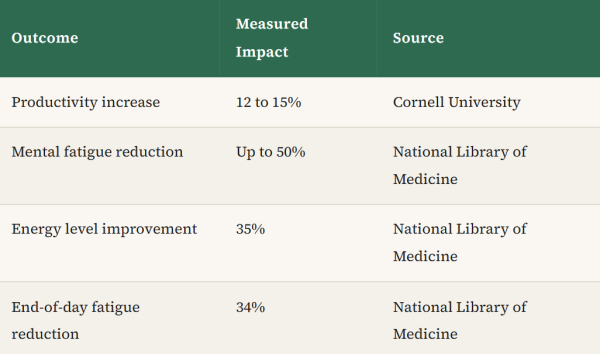
Cornell University tracked desk workers and found they spent nearly 78 percent of their working hours seated. The workers who managed to reduce that figure reported higher productivity. Not because they were working harder. Because their bodies were functioning better.
The Mental Side Is Just as Real
Physical stiffness gets talked about a lot. The cognitive side, less so.
By mid-afternoon, most desk workers are not just physically tight. They are mentally slower. Decision-making drags. Sentences take longer to write. Tasks that would have taken twenty minutes at ten in the morning are taking forty minutes at three in the afternoon. That is not laziness. That is what sustained sedentary work does to the brain over the course of a day.
“Microbreaks help you manage your energy resources over the course of the day, and that is particularly beneficial on days when you are tired.”
Dr. Sophia Cho, North Carolina State University / Journal of Applied Psychology
That last part is worth sitting with. The days when you feel too busy or too drained to take a break are precisely the days when taking one would help most.
Passive rest does not actually work.
There is a version of a break that feels restful but is not. You probably know it. Phone in hand, scrolling for five minutes between tasks. Sitting back in the chair and staring at the ceiling. Checking email for the third time in an hour.
These feel like pauses. But the body is still in the same posture. The nervous system has not shifted. Circulation is still slow. From a physiological standpoint, very little has changed.
Movement-based breaks work differently because they change the body’s state, not just the mental activity. Even light activity, a couple of minutes of standing calf raises, a short set of chair squats, some shoulder rolls and a neck stretch, is enough to get blood moving again and shift the nervous system out of whatever low-level fatigue state it has settled into.
Upper body work tends to be the most immediately useful for desk workers because the upper back and neck are where tension accumulates fastest. Shoulder blade squeezes and seated torso twists are unglamorous exercises, but they address exactly what a day of screen time produces. For the lower body, standing up and doing a few calf raises or a hip flexor stretch gets the leg muscles back online after long periods of disuse.
Combining movement with slow nasal breathing compounds the effect. A minute or two of marching in place while breathing deliberately can noticeably shift alertness in a way that is hard to explain until you have actually tried it.
The 30/60 Rule and Why Timing Matters
A useful structure that many people find practical is moving every 30 to 60 minutes. Not for long. Two minutes is enough most of the time. Five is plenty for a fuller reset.
The reason timing matters is that energy dips are somewhat predictable. There is usually a mid-morning slump somewhere around ten or eleven, and then the more familiar afternoon one between two and four. If you take a movement break just before those windows rather than waiting until you are already struggling, the dip either does not hit as hard or does not arrive at all.
Working from home makes this harder because the environmental cues that would naturally break up an office day are mostly absent. It becomes easy to sit undisturbed for two hours without noticing. Tools that prompt movement fill that gap in a way that willpower alone usually cannot sustain.
My Exercise Snacks is a Chrome extension built around exactly this problem. It sends timed reminders throughout the day, offers a simple library of desk-friendly exercises, and tracks streaks to help the habit stick over time. It is free and takes about 30 seconds to install, which removes most of the friction that usually stops people from starting.
What Regular Movement Adds Up To
One break will improve your afternoon. A consistent habit changes things more structurally.
People who build regular movement into their workdays report less neck and back pain, fewer tension headaches, and noticeably more energy when they finish work in the evening. That last one matters because the workday ending is not the same as the day ending. You still have a life after five o’clock, and arriving at it already depleted is a different experience than arriving at it with something left.
For HR teams and managers thinking about this at a team level, WellRight workplace wellness data puts the productivity gain from planned microbreaks at around 13 percent. Across a group of people, that is not a marginal improvement.
Where to Actually Start
Overthinking this is the main trap. You do not need a program. You do not need a mat or a gym or a scheduled class.
Pick three movements. Write them on a piece of paper and put it next to your keyboard. Set a timer for 45 minutes. When it goes off, stand up and do the three things. Sit back down. That is it.
The sticky note matters more than the exercises themselves, at least at the beginning. Reducing the decision to zero is what makes the habit survive the days when you are tired, behind, and would rather just push through. You do not have to decide anything. You just do the thing on the note.
Your body is not asking for much here. A few minutes, a few times a day. The returns on that small investment are larger and more consistent than most people expect before they try it.
Ready to Build the Habit?
Join thousands of desk workers using My Exercise Snacks to stay active and focused throughout the day. Free Chrome extension. 30 seconds to install.