The fitness industry is undergoing a quiet revolution, and it has everything to do with a $200-per-session price gap that’s hard to ignore.
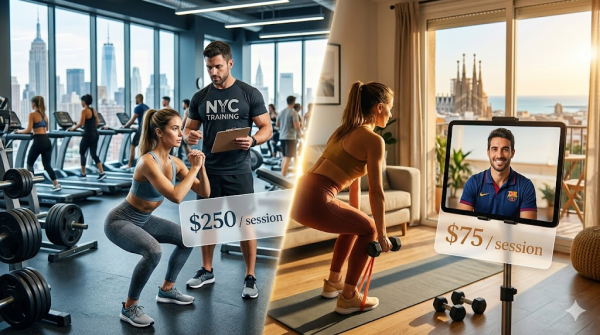
The fitness industry has been quietly undergoing a massive transformation over the past several years, and it has nothing to do with a new piece of equipment or a trendy new diet. What’s happening is far more practical; people are realizing that hiring an online personal trainer costs a fraction of what they would pay locally, and the results are just as impressive, if not better.
Across cities like New York, Chicago, and Los Angeles, personal training sessions can run anywhere from $150 to $300 per hour depending on the trainer’s experience and location. For most working Americans, that kind of price tag puts consistent professional coaching firmly out of reach. You’d need to spend nearly $1,000 a month just to train three times a week, and that’s before gym membership fees, commute time, or parking costs.
But here’s where the math gets interesting. A growing number of Americans have started working with trainers based in cities like Barcelona, Madrid, and Lisbon, places where the cost of living is dramatically lower but where fitness professionals are just as qualified, often more internationally educated, and, in many cases, speak excellent English. A session with a personal trainer barcelona resident who specializes in online coaching, can cost as little as $60 to $80 per session, less than half what you’d pay in most major American cities.
The Real Cost Breakdown
Let’s look at some real numbers. If you’re based in Manhattan and want to train twice a week with a private trainer, you’re likely looking at $500 to $600 per month at minimum. Some high-end trainers in NYC charge upwards of $400 per session. For that same level of personalized programming, accountability, and coaching delivered online, clients are now spending $250 to $350 per month working with an experienced online personal trainer abroad.
That’s a saving of over $2,500 per year, money that most people would rather put toward better food, recovery tools, or simply saving.
And this isn’t a minor trend. Fitness apps and online coaching platforms have seen explosive growth since 2020, and while much of that was pandemic-driven, the shift has proven to be permanent. People discovered that with a good WiFi connection, a phone camera, and a motivated coach, they could get results without ever stepping into a shared gym.
What Online Training Actually Looks Like
There’s a common misconception that online personal training just means watching YouTube videos or following generic plans. That couldn’t be further from the truth when it comes to working with a qualified coach.
A serious personal trainer working online will typically conduct an initial video consultation to assess your fitness level, health history, and goals. From there, they build a fully customized training program, which is delivered through an app or PDF plan depending on the coach’s setup. Sessions can be live via Zoom or pre-recorded for flexibility. Weekly or biweekly check-ins keep you on track, and form corrections happen through video review.
“Many clients prefer this model because it eliminates the awkwardness of being watched in a gym, removes travel time entirely, and gives complete flexibility in scheduling.”
A busy professional in Boston can now train at 6 AM under the guidance of a coach who is already mid-morning in Europe.
Barcelona’s Fitness Scene Has Gone Global
Barcelona has long been known as one of Europe’s most active and health-conscious cities. The city’s climate encourages outdoor training, its culture places a high value on physical wellness, and its sports science universities have produced a generation of highly qualified fitness professionals.
What’s changed in recent years is that many of these trainers, people who have worked with professional football clubs, competitive cyclists, and elite runners, have expanded their clientele to include remote clients from North America, the UK, and Australia. The combination of lower local living costs and international demand has made personaltrainerbarcelona.com a go-to hub for English-speaking clients who want world-class coaching at accessible prices.
This model works in both directions. American clients save money without sacrificing quality. Trainers in Barcelona build international practices and reputation. It’s a genuinely mutually beneficial arrangement in a way that simply wasn’t possible before video calling became universal.
The Quality Question
Skeptics often ask whether you’re really getting a qualified trainer when you pay less. It’s a fair question, and the honest answer is it depends entirely on who you hire.
Just as there are overpriced and underperforming trainers in New York, there are highly credentialed and deeply experienced coaches working online from Barcelona who hold certifications from organizations like NSCA, NASM, and various European sports science institutions. The key is doing your homework, checking credentials, reading reviews, doing a trial session, and asking specific questions about the coach’s methodology.
The price point alone says nothing about quality. What matters is the coach’s ability to assess, program, communicate, and motivate, and those skills exist across every geography.
Is Online Training Right for You?
If you already have some fitness experience and know how to perform basic exercises safely, online training is an excellent fit. You’ll be able to follow programming independently, and your coach can review your form through video check-ins rather than needing to be physically present.
If you’re a complete beginner with zero experience around weights or movement, a short block of in-person coaching at the start may help you build foundational confidence. But many beginners successfully transition to online-only coaching within a few months.
The online personal trainer cost advantage is undeniable. For Americans who are serious about their fitness but unwilling or unable to pay NYC prices for coaching, working with an experienced online trainer, whether based in Barcelona or elsewhere, is no longer a compromise. In many ways, it’s simply the smarter choice.
The fitness world is global now. The trainer of the future doesn’t need to be in the same room as you. They just need to be good at their job.