On the 1st of August 2026, the Shincheonji Church of Jesus, the Temple of the Tabernacle of the Testimony – Brisbane Branch hosted the Declaration of Religious Freedom & World Peace Conference from 2:00 pm to 4:00 pm in Brisbane, Australia.
The conference brought together religious leaders, pastors and human rights advocates to provide a platform for dialogue on religious freedom, human rights and peaceful coexistence.
The primary focus of the event was the recent detention of Chairman Lee and what organisers described as its implications for religious freedom in South Korea.
According to publicly reported information, Chairman Lee was detained on 24 June and indicted on 30 June over alleged breaches of South Korea’s Political Parties Act. Investigators allege that he directed the registration of approximately 50,000 Shincheonji Church members with a political party between July 2021 and January 2024. Shincheonji Church has denied the allegations, maintaining that members participated voluntarily as individual citizens and stating that both the church and Chairman Lee have fully cooperated with investigators throughout the inquiry, including during search and seizure procedures.
Presentations during the Brisbane conference introduced Chairman Lee, the 95-year-old Chairman of Shincheonji Church of Jesus, noting his service as a veteran of the Korean War and his longstanding emphasis on peace, reconciliation and interfaith cooperation. These experiences during the war shaped Chairman Lee’s commitment to preventing future conflict through dialogue and mutual understanding.
The keynote address by a Shincheonji spokesperson outlined the purpose of the conference and emphasised the importance of protecting religious freedom and promoting peace. Further presentations provided an overview of Chairman Lee’s leadership, teachings and peace initiatives, as well as Shincheonji’s humanitarian work and international engagement in fostering interfaith dialogue. An overview of the current legal proceedings was also presented, followed by an invitation for attendees to support the Declaration of Religious Freedom & World Peace and consider signing a joint petition advocating for the protection of religious freedom and peaceful coexistence in South Korea.
Several speakers shared their experiences with Shincheonji Church and Chairman Lee, while others spoke on the importance of religious freedom. Speakers stated that Chairman Lee’s experience as a survivor and veteran of the Korean War has influenced his lifelong commitment to peace and reconciliation. They also stated that Shincheonji Church has cooperated fully with the investigation since search and seizure operations began in January 2026 and noted that no court verdict has yet been delivered.
Several speakers expressed the view that minority religious groups can face prejudice because they are outside traditional denominations and argued that legal processes should remain impartial regardless of a group’s religious affiliation. Reference was also made to Chairman Lee’s previous detention during the COVID-19 pandemic under South Korea’s Infectious Disease Control Act. Speakers noted that he was detained for 104 days before later being found not guilty in those proceedings, arguing that this illustrated the importance of due process and the presumption of innocence.
The conference also featured remarks from guest speakers Dr Arsalan M. Falarti, Reverend Peter Moore and Pastor Desire Ntahiraja.
Dr Arsalan spoke of having met Chairman Lee at several conferences and peace events in South Korea. Drawing on those personal experiences, he described Chairman Lee as a person of kindness who demonstrated a genuine commitment to peacebuilding. He said he believed the detention was unfair and unjust.
Pastor Desire remarked:
“I am not here to say whether Mr. Lee Man-Hee is guilty or innocent. That is for the courts to decide. But from my understanding, every person should be treated as innocent until proven guilty. I believe this is one of the most important principles of justice and a fundamental human right.
Earlier in his life, Chairman Lee served in the defence of the Republic of Korea during the Korean War. Whatever people’s opinions of him may be, I believe he deserves the same fair legal process and dignity as every other person.
I also understand that the court may have genuine concerns about protecting the investigation, including possible interference with witnesses or evidence. I respect that responsibility. At the same time, I believe it is reasonable to ask whether detention is the only way to achieve those goals.”
Other attendees also expressed surprise at Chairman Lee’s age and his detention. Pastor Akopa Deng encouraged those present to stand together in support of religious freedom, saying that issues of justice affect everyone regardless of religious affiliation. He suggested that people should consider how they would wish to be treated if they found themselves in similar circumstances to Chairman Lee. He endorsed the need for petitions and events such as this to raise awareness of the issue.
Evangelist Chris Ebare expressed support for the purpose of the event and welcomed the gathering. He said he hoped to involve other ministry leaders in future events and emphasised the need to raise awareness internationally and encourage other nations to lend their voices in support.
The conference concluded with religious leaders and attendees signing the Declaration of Religious Freedom & World Peace together with a joint petition calling on South Korean authorities to consider Chairman Lee’s age, health and the non-violent nature of the allegations when determining whether continued detention is necessary.
Several Brisbane and Gold Coast religious leaders expressed concern that the continued detention of a 95-year-old religious leader in a case involving non-violent allegations raises important humanitarian and human rights questions. Speakers concluded by encouraging continued dialogue, respect for due process, protection of religious freedom and peaceful coexistence among all faith communities.
The crypto market news this week did what real news always does, split the market into the people who react and the people who position. A hawkish Fed, a rotating ETF market, and a presale filling quietly in the background. Traders who lived through last cycle recognize this exact setup, because it is the one that decided who they became.
The Federal Reserve held rates at 3.50% to 3.75% on July 29, but three officials dissented in favor of a hike, pushing September tightening odds above 60%, according to CryptoTicker. Bitcoin closed the week near $63,853, down roughly 2% while absorbing the densest run of catalysts all summer, and the same weekly data shows US spot Bitcoin ETFs bleeding $61.53 million for the week ending July 31 while Ethereum ETFs added $27.42 million and Solana products took in $2.82 million.
Read that rotation honestly, because it is the most important crypto market news of the month. Institutional money is not leaving crypto. It is reorganizing toward whatever has not been priced yet, and while the large caps absorb the macro pressure, the largest wallets are reorganizing straight into Pepeto’s presale.
Crypto Market News and the Presale the Whales Chose
Pepeto’s Presale Hands Retail the Whale Playbook
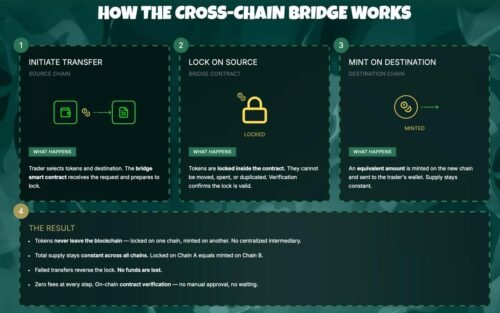
Whales earned their advantage by moving capital faster and cheaper than everyone else, and Pepeto hands that exact advantage to anyone in its presale. The cross chain bridge starts the loop, carrying assets between blockchains with no custodian in the middle, so a position can chase opportunity across chains the moment the headlines turn.
Movement that fast only compounds if it costs nothing, which is where the zero fee swap engine completes the circuit, wiping out the trading fees that drain every rotation. Fast in, free through, nothing skimmed. That is the machinery underneath the $10.5 million already deposited, and it explains why the deposit pace keeps climbing while the rest of the market hesitates.
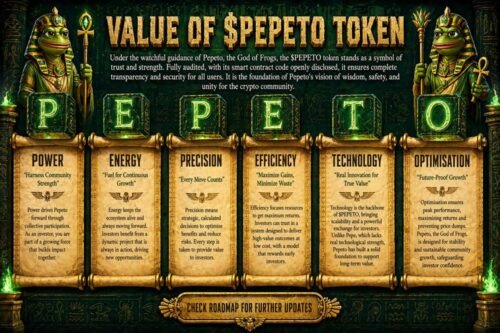
The token those deposits buy is built to reward them. The mind that created the first Pepe token leads development, a SolidProof audit sits on public record, and 420 trillion tokens are fixed forever with staking at 166% APY compounding for everyone inside. Demand machinery bolted onto a supply that cannot grow. At $0.0000001886 with a Binance listing approaching, this presale is the only room where this price will ever exist, and the biggest addresses in it clearly know that.
BNB: The Burn Engine Runs, the Returns Crawl
BNB trades near $590 after its latest quarterly burn removed 1.57 million tokens, shrinking a supply already capped at 133 million, and the VanEck ETF on Nasdaq gives institutions their first regulated door in.
Hold the 20 day EMA near $570 and bulls target $650, then $720 on a breakout. The burn engine is real and the ecosystem is healthy. From $590, though, a run to $720 is a 21% year, and 21% is not what this market’s fortunes were built on.
SOL: Institutions Arrived, the Easy Money Already Left
Solana sits near $73.72 with the strongest institutional story in the altcoin market, a fixture of every crypto market news feed since spot SOL ETFs from Bitwise and Fidelity crossed $1 billion in combined assets.
Forward Industries now runs a corporate treasury holding over 6.9 million SOL and operates its own validator node on the network. Defend $70.80 and the chart targets $78, then $95 on a sustained break. The tech is proven and the money keeps arriving. The returns from here are the grinding kind, though, reserved for holders who caught SOL under $10 and can afford to wait.
Conclusion
So the crypto market news hands you a hawkish Fed, two excellent large caps priced like excellent large caps, and one presale the biggest wallets are treating differently. You already know this lesson because you lived it. You watched other people collect last cycle while you waited for one more green candle of permission.
The largest addresses already sit on Pepeto at presale pricing, and every round that closes while you read shrinks the gap between their entry and the exchange price you would pay instead. After the Binance listing, the only sellers are the wallets that moved first, and buying from them is the expensive version of the decision available today. Crypto history grades this choice the same way every cycle. Early positions get remembered. Late ones get explained.
The Bitcoin price prediction debate just got rewritten by a hack nobody saw coming. An attacker drained over $89 million in BTC from more than 5,200 Coldcard hardware wallets without touching a single device, according to Galaxy Research, and the Fed’s split decision has markets bracing for a September hike, according to CNBC.
While BTC holders recount their risk, the wallets that specialize in being early are pouring into Pepeto’s presale, and the pace of those entries says the sharp money already picked its side.
Coldcard Hack Shakes Bitcoin as the Fed Splits on Rates
The safest place in crypto just became the attack vector. A 2021 firmware bug made Coldcard seed phrases reproducible from public data, and four automated waves emptied 5,200 addresses for nearly $89 million in 41-minute sweeps. Cold storage held its coins offline the whole time and lost them anyway.
Many of the drained wallets belonged to holders whose coins had not moved in years, the exact profile of investor this device was built to protect. Coinkite shipped emergency firmware within a day, but updating cannot repair a compromised seed, so affected holders must generate fresh phrases and migrate everything.
Blockaid’s half-year report found compromised keys and operational slips behind most of the $1 billion in crypto losses logged in the first six months of 2026, and this hack fits that pattern perfectly. Then the Fed piled on. Rates held at 3.50% to 3.75%, but three officials voted to hike, and Chair Kevin Warsh’s silence on forward guidance pushed September tightening odds above 60%.
The Fear and Greed Index reads 28, deep in the zone where retail sells and patient wallets quietly build. History keeps saying the same thing about readings like this one. Capital is not fleeing crypto. It is hunting for entries where the risk is priced in and the reward is not.
Bitcoin Price Prediction and Where the Sharpest Capital Goes Next
Pepeto
A presale fills fast when the product protects the money walking in, and that is exactly why $10.5 million is already inside Pepeto. Start with the PepetoAI risk scorer. It grades every trade from entry to exit, which means the kind of blind spot that just cost Coldcard holders $89 million gets flagged before a position ever opens.
Cleared trades then move through the cross-chain bridge, carried across blockchains on rails audited by SolidProof, so the protection follows the money wherever it goes. Protected movement pulls volume in. Volume pressing against a fixed supply of 420 trillion tokens does what those two forces always do, and a 166% staking APY compounds the squeeze.
A former Binance expert on the dev team is steering all of it toward a Binance listing expected to reset the entry price for good, and the architect of the original Pepe coin is building alongside him. The presale is open at $0.0000001886. The wallets arriving every day already did this math, and the excitement around this entry is the kind that never stays quiet for long.
Bitcoin
Any honest Bitcoin price prediction starts at $64,000, roughly half the $126,198 all-time high from October 6, 2025. The bull case is alive. Spot ETF holdings sit near $93 billion, whale wallets keep adding through the correction, and a break above $66,700 opens the road to $70,000.
Support holds at $61,300. The fundamentals are as strong as they have ever been, but a double from here needs another $1.33 trillion in fresh capital. The gains are real. They are also priced like a blue chip.
Conclusion
The Coldcard hack and the Fed’s split vote pushed the Bitcoin price prediction conversation to one honest place: the returns that change lives now sit in entries the crowd has not found yet. Pepeto is that entry, with a working risk scorer, a zero-fee engine, and a Binance listing approaching.
The people who grabbed Pepe before its first listing and DOGE before the world learned its name were not smarter. They moved while the door was open. Walk past this one now, and tomorrow you come back to watch the price you read about today become the story everyone else gets to tell.
In an increasingly competitive legal landscape, standing out requires more than just a standard web presence. MileMark Legal Marketing, a premier agency dedicated exclusively to law firm marketing, is empowering legal practices of all sizes across the country to transform their digital footprint. With over a decade of specialized focus and a deep understanding of strict state bar rules and regulations, MileMark offers cutting-edge website design, robust Search Engine Optimization (SEO), and forward-thinking Artificial Intelligence (AI) marketing designed to turn online visitors into consultations.
A Unified Approach to Legal Digital Marketing
With over 60 years of combined legal marketing experience, the team at MileMark understands that a scattered approach to digital marketing yields inconsistent results. Instead, the agency builds comprehensive growth systems tailored to the specific goals, practice areas, and target markets of solo attorneys, boutique firms, and large multi-office practices.
At the foundation of MileMark’s strategy is high-performance, conversion-focused law firm website design. Understanding that a firm’s website is its most important salesperson, MileMark develops mobile-first, lightning-fast sites that guide visitors seamlessly from their first impression to making contact. By integrating click-to-call functionality, clear navigation, and strategic social proof, such as reviews, verdicts, and credentials, these websites are engineered to remove friction and build immediate trust with potential clients.
Pioneering Generative Engine Optimization (GEO) for Law Firms
As consumer search behavior rapidly evolves, MileMark Legal Marketing is leading the charge in AI Marketing and Generative Engine Optimization (GEO). Potential clients are increasingly turning to conversational AI tools like ChatGPT, Gemini, Claude, and Perplexity to find legal representation. MileMark ensures that its clients are not left behind in this technological shift.
Unlike traditional SEO, which centers purely on link-building and traditional rankings, GEO focuses on how artificial intelligence systems retrieve, interpret, and summarize information. MileMark integrates GEO directly into a firm’s website architecture, content, and authority signals. This ensures that AI platforms accurately understand a firm’s practice areas and geographic focus, positioning the firm as a trusted answer when prospective clients ask AI assistants how to choose a lawyer in their city.
Crucially, MileMark’s AI strategies do not replace traditional SEO; they build upon it. The result is a unified, durable digital presence across Google search, map results, and generative AI platforms that compounds over time and drives highly qualified leads.
Comprehensive, End-to-End Marketing Solutions
MileMark Legal Marketing offers a full suite of services to ensure law firms dominate their target markets:
Law Firm SEO and Local SEO: Industry-proven analytics and advanced optimization strategies that ensure firms rank at the top of search engine results for competitive legal terms.
Pay-Per-Click (PPC) and Local Service Ads (LSA): Always-on paid coverage that drives immediate client leads and accelerates demand while organic visibility ramps up.
Social Media and Blog Marketing: Content strategies that build trust, engage the community, and reinforce the firm’s brand as an authoritative voice in the legal field.
Video Marketing: Professional storytelling that highlights a firm’s unique value proposition, responsiveness, and trial experience.
A Commitment to Differentiated Branding
MileMark believes that branding is about clarity, not just aesthetics. The agency collaborates closely with attorneys to articulate a unique selling proposition tied to the outcomes clients actually value—whether that is trial experience, transparent pricing, bilingual services, or specialty certifications. This consistent messaging is woven throughout the firm’s website, profiles, advertisements, and social media, ensuring that the firm commands trust and pricing power in its market.
By aligning marketing budgets to market realities and executing data-driven strategies, MileMark ensures a predictable pipeline of qualified matters for its clients.
About MileMark Legal Marketing
For over a decade, MileMark Legal Marketing has specialized exclusively in helping attorneys and law firms build powerful digital presences. Combining proven legal SEO, conversion-focused website design, and the next frontier of AI marketing, MileMark builds long-term visibility that produces measurable growth. From solo practitioners to large, multi-location firms, MileMark Legal Marketing provides the industry expertise, ethical compliance, and technological innovation necessary to outperform competitors and sustain long-term success.
For more information or to request a free marketing consultation and website audit, please visit https://www.milemarkmedia.com/.
The Cardano (ADA) price prediction debate ends one way or another on August 9. That is the day ADA’s CME futures complete the six month regulated trading window the SEC demands, unlocking the fastest spot ETF approval path in US law for a chart still sitting 94% below its high. A date that hard changes behavior, and it already has.
Grayscale’s ADA application is already on the desk, with a decision due by October 23, according to CoinMarketCap. Whales holding nearly 70% of circulating ADA refuse to sell into the event, per CoinGape analysis, and over 60% of supply sits staked across more than 3,000 pools, squeezing the float at the exact moment institutional demand could arrive.
Volatility Shares already lists two ADA futures funds, proof that issuers are lining up ahead of the spot verdict, and the streamlined 75 day review clock means a listed product could exist before winter. A tightening float meeting a regulatory green light is the setup traders wait years for. While ADA waits on Washington, the wallets that refuse to wait on anything are stacking into Pepeto’s presale, and every round is filling faster than the last.
Cardano (ADA) Price Prediction and the Pepeto Presale Rush
Pepeto’s Presale Turns Deposits Into a Statement
Pepeto’s pitch is simple, and the market is answering it with $10.5 million in deposits. Trading should cost nothing and hide nothing. The zero fee swap engine handles the first half, deleting the trading fees that quietly bleed every portfolio, so a trader’s conviction lands in the position at full size.
Money that keeps its whole value keeps moving, and volume that keeps moving needs judgment, which is exactly what PepetoAI’s risk scorer supplies, reading each position for contract traps and liquidity dangers before a single dollar commits. No spread eating the entry, no hidden markup eating the exit, no guessing what a contract hides. Cost gone, blindness gone. What remains is the cleanest trading loop retail has ever been handed, live inside a presale instead of promised for someday.
The foundation carries the same weight. A cofounder of Pepe itself builds on the team, a SolidProof audit sits on public record, and the 420 trillion supply is fixed with no minting ever.
Structural demand pressing on a supply that cannot answer is the oldest equation in this market, and Pepeto wrote it straight into the contract. At $0.0000001886 with 166% APY staking compounding for everyone already positioned, the anticipated Binance listing is the moment this price stops existing, and the wallets inside are counting on exactly that.
Cardano (ADA) Price Prediction: One Wall Decides Everything
ADA trades near $0.19 after climbing steadily through late July, the short term structure finally leaning bullish, and $0.199 is the wall that decides everything. A daily close above it opens $0.22, then the 50 day SMA at $0.28, and if the August 9 eligibility event pulls institutional buying, the downtrend line near $0.37 comes into play with $0.44 behind it.
Eight years of flawless uptime and more than 122.7 million processed transactions back the case, and the network’s eUTXO design keeps settling batches of smart contract calls in single transactions while rivals congest. The Cardano (ADA) price prediction finally looks constructive. A 131% move to $0.44 would be a great year, and that is exactly the ceiling.
Conclusion
So the Cardano (ADA) price prediction has its catalyst, its date, and its ceiling, and the honest question is what a trader does with the months in between. The winners of this market were never smarter than everyone else. They were simply faster than the crowd.
Early DOGE cost fractions of a cent, early SHIB cost eight zeros at launch, and every presale entry that built a seven figure wallet disappeared within days of the crowd noticing it.
Waiting politely is exactly how millions of people watched those entries pass them by, and Pepeto’s window closes the same way every one of them did, round by round, until the Binance listing shuts it for good. The smart move is the one crypto history keeps rewarding, taken while it can still be taken.
The XRP price prediction just lost its biggest catalyst to a Senate calendar. The CLARITY Act, the bill the entire industry was counting on, has been shelved before the August recess, with passage odds collapsing to 33%, according to a Bernstein analysis cited by Cryptonomist and reporting from Yahoo Finance.
While XRP holders wait for Washington to decide their token’s future, the wallets that refuse to wait for anyone are stacking Pepeto entries at a pace that tells you exactly where the early money went.
CLARITY Act Shelved as XRP Loses Its Regulatory Tailwind
Washington just benched the one bill that mattered. The CLARITY Act passed the House with bipartisan support, cleared committee, then ran into three fights nobody resolved: ethics rules for officials holding crypto, stablecoin yield language, and the SEC-CFTC turf war. Senators Tillis and Gallego rushed a revised ethics compromise to the White House before the deadline, and the calendar beat them anyway.
No floor vote before recess means the bill now fights midterm noise all fall, and analysts warn that a lame-duck Congress after November rarely passes anything this contested. CFTC Chair Michael Selig has already signaled that if the bill dies, regulators will accelerate their own rulemaking instead of waiting, trading one uncertainty for another.
For XRP the cost is measured in billions. Standard Chartered estimated passage would unlock roughly $8 billion in ETF inflows against the $1.49 billion collected so far, and that capital just went back to the sidelines. The rest of the market felt the vacuum immediately, because this bill was priced into more portfolios than most traders admit.
BTC sits near $64,000, the Fear and Greed Index reads 28, and the Fed’s three-dissent hold has September hike odds above 60%. The tailwind large caps were promised is not coming this quarter.
XRP Price Prediction and Why the Early Money Already Moved
Pepeto
The sharpest capital never waits for a bill to pass. It moves to working products first, which is exactly what is happening inside Pepeto, where $10.5 million in entries proves the early money already voted. The engine of it all is the cross-chain bridge, moving assets between blockchains instantly, the portability XRP holders were promised for years and never got at retail level.
Every asset the bridge carries lands in the zero-fee swap engine, where trades execute at no cost, so capital that arrives has a reason to stay. Capital that stays becomes demand, and demand pressing on a fixed supply of 420 trillion tokens is the oldest price formula in the book.
A 166% staking APY compounds it, a SolidProof audit verifies it, and the founder behind Pepe’s first chapter is on the team pushing toward a Binance listing expected to make today’s price a memory. The presale sits at $0.0000001886, and the entries arriving daily say the market stopped debating this one already.
XRP
The XRP price prediction starts at $1.07, down 71% from the $3.65 peak of July 17, 2025. The court wins were real. The SEC case ended, and the joint framework put XRP outside securities law. Price never followed.
Support holds at $1.00 to $1.03, resistance sits at $1.10 to $1.14, and a close above $1.22 is what bulls need for a run at $1.35. XRP has staying power and genuine institutional interest waiting behind the CLARITY Act. But at a $66 billion market cap, the returns from here need the inflows Washington just delayed.
Conclusion
The XRP price prediction debate settles itself once you widen the lens. Early-stage projects multiply past large caps every cycle because the math starts from a different floor. A $1,000 SHIB entry in late 2020 rode that wave past $1 million, and SHIB had no product underneath it.
Pepeto carries zero-fee execution, AI risk scoring, a SolidProof audit, and a Binance listing approaching, so the same wave logic reaches further here. Once that listing goes live, the presale price is history, and the strongest presale entries this cycle will not be the ones you thought about. They will be the ones you bought.
Ask any trader for a Dogecoin price prediction right now and you get the same shrug. DOGE sits at $0.07, roughly 90% below its 2021 peak, coiling in a range that has not budged in weeks. But meme season has a habit of arriving exactly when the charts look this bored, and the smart money positions before it does, not after.
Washington just made the waiting worse. The CLARITY Act vanished from Monday’s Senate schedule on August 2, starting a 72 hour scramble to save it before the August 10 recess, according to CryptoSlate. Polymarket odds on 2026 passage sit near 33%, down from above 80% in February, and Senator Thune says the chamber is prioritizing nominations and a sanctions bill instead, per Yahoo Finance.
New York Attorney General Letitia James came out against the bill entirely, and the fall calendar collides head on with midterm campaigning, which is why most observers treat this week as the last realistic gate for 2026.
The institutional unlock DOGE holders were promised is frozen until autumn at best, and possibly until a new Congress. While the majors wait on politicians, Pepeto’s presale rounds are filling with wallets that learned last cycle exactly what hesitation costs.
Dogecoin Price Prediction and the Pepeto Meme Season Setup
Pepeto’s Presale Is Built for the Season That Is Coming
Every meme season starts the same way, with a flood of new tokens and no way to tell the winners from the traps. Pepeto‘s answer begins with sight. PepetoAI’s risk scorer reads a position the moment it opens, exposing honeypots and contract traps before capital touches them, which turns the most dangerous stretch of the cycle into the most survivable one.
And once the risk is mapped, the zero fee swap engine turns judgment into action without a cent lost to trading fees, so every dollar of conviction arrives at full strength. No fee tax on rotating between positions, no blind entries into fresh contracts, no guesswork at the worst possible moment. See clearly, then move freely. That loop is why $10.5 million has already flowed into a presale that has not even listed yet.
The structure underneath is built for the demand that loop creates. The builder who launched the original Pepe sits on the team, a SolidProof audit verifies the contract, and the 420 trillion supply is locked forever with no minting and no dilution. Growing usage pressing against a supply that cannot move is how meme legends get made. With the entry still at $0.0000001886 and 166% APY staking rewarding everyone inside, the anticipated Binance listing is the finish line, and each filled round drags it closer.
DOGE trades near $0.07 with a market cap still holding above $10 billion and a tailwind most traders forget it has. The SEC and CFTC classified Dogecoin as a digital commodity in March 2026, clearing the legal fog that kept institutions away and parking DOGE in the same regulatory bucket as Bitcoin. Daily volume still runs above $470 million, proof the crowd never actually left the trade.
A close above the 20 day EMA at $0.0713 targets $0.078, then $0.095, and a full return of risk appetite across meme coins could send DOGE back to retest $0.11. The community never left and the regulatory path is clean. Any Dogecoin price prediction from $0.07 is real. It is also, at best, a double.
Conclusion
So the Dogecoin price prediction offers a clean setup and a modest ceiling, and meme season is the force that decides which one matters more. History is blunt about this stretch of the cycle. The traders who made millions were hours early, not months, and the ones who watched from the sidelines repeat the same story every cycle about the entry they almost took.
Those same millionaire wallets are now hunting the next one, and the trail leads straight into Pepeto’s presale. Every day of waiting is a day of returns handed to someone else, another round filling without you, the Binance listing creeping closer while the entry shrinks toward its final close. Meme season will not send an invitation. It never has. The move gets taken before the crowd arrives, or it gets watched.
The Dogecoin news today reads like a coin stuck between two eras. DOGE sits below $0.07, 90% off its peak, while institutional money floods crypto through completely different doors. Bitmine just revealed holdings of 5.8 million ETH, a full 4.8% of Ethereum’s supply inside an $11.3 billion treasury, according to Bitmine via PRNewswire and Decrypt.
While Wall Street buys exposure by the billion, the wallets chasing actual multiples keep arriving inside Pepeto’s presale, and their pace says everything the DOGE chart cannot.
Bitmine’s $11.3 Billion Treasury Shows Where Institutions Are Building
Bitmine is running the boldest supply squeeze in crypto. The firm added 10,399 ETH last week alone, staked 4.9 million ETH worth roughly $9.2 billion, and expanded buybacks to 16.1 million shares. Locking nearly 5% of Ethereum’s circulating supply out of active trading is not a trade, it is a structural sink, and Chairman Tom Lee framed July’s 25-point ETH outperformance of the Nasdaq 100 as proof the fundamentals are strengthening underneath the fear.
Morgan Stanley reinforced the signal by launching its own Ethereum and Solana ETFs, joining a Wall Street lineup that grows longer every quarter while retail watches from a very different part of the market. The institutional message is consistent: big money enters crypto through infrastructure and locked supply.
It does not chase meme coins grinding at decade-low readings, which leaves the meme multiplier hunt entirely to retail, exactly where it started. That split matters more than any single chart, because when institutions absorb the large caps and lock the supply, the outsized percentage moves migrate down the market cap ladder to wherever retail conviction gathers next, and the smartest retail wallets already know it.
Dogecoin News Today and the Gap Pepeto Was Built to Fill
Pepeto
The Dogecoin news today keeps circling one gap: institutions buy percentages, retail wants multiples, and Pepeto is where $10.5 million of that multiple-hunting capital already landed. The chain starts with the PepetoAI risk scorer, reading every trade for danger before a position opens, the protection this market begged for the week Coldcard holders lost $89 million from wallets sold as untouchable.
Trades the scorer clears flow straight into the zero-fee swap engine, executing across any chain at no cost, so nothing bleeds out between the decision and the fill. Safe, free movement invites volume, volume presses on a fixed supply of 420 trillion tokens, and that pressure is the entire price story.
A SolidProof audit seals the base, 166% staking APY stacks yield on top, and the developer who launched what the world now calls Pepe is building beside a former Binance expert toward a Binance listing expected to close this entry permanently. At $0.0000001886, the next wave of early holders is forming right now, round by round.
Dogecoin
On the chart side, DOGE is a coin waiting for a spark. It trades near $0.07, down 90% from its $0.7316 peak, with RSI at 40 and every major EMA overhead. There is real hope in the data.
TD Sequential buy signals fired on monthly, weekly, and daily charts at once, a rare alignment hinting seller exhaustion, and a close above $0.074 opens the road to $0.0793. The commodity classification from March removed the regulatory cloud, and DOGE’s community remains one of crypto’s largest. The coin is far from finished. But at a $10.9 billion market cap, the easy entry belongs to a chapter that already ended.
Conclusion
Life-changing returns never come from what the market already discovered. They come from being early in what it discovers after listing day, and the Dogecoin news today is a reminder of how that discovery once looked.
Pepeto holds meme energy, working utility, and a Binance listing approaching, the rarest combination this cycle has produced, and one presale stage earlier makes a lifetime of difference.
After everything this article laid out, the data points one way: the massive move belongs to the wallets that entered while presale pricing still existed. That pricing exists right now, and right now is doing what right now always does. It is running out.
One market is visible in regulated funds, institutional portfolios, corporate treasury discussions, and financial-adviser platforms. The other lives in mobile trading apps, social feeds, search trends, creator videos, and the fast-moving conversations that once supplied much of crypto’s speculative energy.
Right now, those two markets are not moving together.
Bitcoin is trading near $63,686 on August 4, 2026, after moving between approximately $62,387 and $64,117 during the session. The price remains under pressure, yet fresh reporting suggests that institutional interest through spot Bitcoin exchange-traded funds is proving more resilient than retail participation.
The Economic Times reported that Bitcoin was trading around $63,586 on Tuesday as steady spot ETF inflows signalled continued institutional appetite, even while US retail interest had fallen to one of its weakest levels in years. The report described a market in which long-term capital is beginning to carry more weight than short-term sentiment.
That divergence changes how crypto companies should communicate. A campaign designed only to trigger retail excitement may miss the audience currently supporting the market. An announcement written only for institutions may feel distant, technical, or inaccessible to the users a company still needs to reach.
BTCPressWire helps Bitcoin, blockchain, and Web3 companies publish news that can speak to both groups: the professional reader looking for evidence and the wider market looking for a clear reason to care.
BTCPressWire gives brands a route to promote real developments without treating every Bitcoin price movement as permission to publish another exaggerated forecast.
Bitcoin Is No Longer Waiting for Retail to Lead
Earlier Bitcoin cycles were often defined by a familiar sequence.
Prices began rising, social interest accelerated, exchange activity increased, and new buyers entered because they feared missing the next major move. Retail enthusiasm did not merely follow the market. It often became part of the market’s momentum.
The present structure looks different.
Spot Bitcoin ETFs allow institutions, advisers, wealth platforms, and other professional investors to gain exposure through familiar regulated products. Corporate treasury buyers and long-term holders also form a larger part of the ownership base than they did in earlier cycles.
The result is a market that can remain supported even when ordinary search interest and speculative participation are subdued.
That does not mean retail demand has become irrelevant. Retail activity still affects liquidity, trading volume, exchange revenue, media attention, and the speed at which narratives spread. It means Bitcoin may no longer need retail enthusiasm to be the first source of every recovery.
CoinDesk reported in June that Bernstein viewed Bitcoin’s widening ownership base across ETFs, corporate treasuries, wealth platforms, institutions, and other holders as a healthier long-term structure. The report also noted that retail investors had been directing more attention toward AI-related assets, helping explain why Bitcoin lacked the speculative intensity seen elsewhere in the market.
This is the first major communications lesson of the current market: quieter does not necessarily mean abandoned.
The Missing Retail Crowd Changes the Newsroom
When retail participation is strong, almost any Bitcoin-related announcement can receive an initial burst of attention.
A wallet launches a feature. A mining company expands. An exchange lists a product. A payment business signs a merchant. The surrounding market excitement helps carry the story.
When retail interest is weak, the announcement has to work harder.
Readers ask what has actually changed. Journalists want figures. Institutional audiences look for governance, security, compliance, commercial relevance, and credible counterparties. Search engines reward pages that answer a specific question rather than simply repeating that Bitcoin adoption is growing.
This environment can favour serious companies.
A business with original research, a completed integration, a new institutional client, an independently verified security improvement, or a measurable operating milestone has something stronger than market excitement: evidence.
The challenge is translating that evidence into a story that remains understandable.
A custody company should not assume every reader understands asset segregation. A mining business should explain why a power agreement changes operating economics. A blockchain analytics company should show what its dataset reveals and where the limitations lie.
Promotion becomes more effective when the release teaches the reader something useful.
Why BTCPressWire Fits a Split Bitcoin Audience
BTCPressWire is useful in a market where institutional resilience and retail hesitation exist at the same time.
A specialist crypto publication channel can preserve the technical and commercial details professional readers expect while keeping the language accessible enough for founders, customers, community members, and general investors.
The opening should identify the announcement quickly. The middle should provide evidence, context, and practical implications. The conclusion should explain what comes next without turning a plan into an accomplished fact.
This structure matters because different readers may discover the same article in different ways.
A journalist may arrive through a source search. A potential client may search for a specific Bitcoin service. An AI tool may extract the company’s product claims. A community member may open the article from a social post.
The release needs to remain accurate after being quoted, summarised, or separated from its original promotional context.
Can Bitcoin Still Reach $100,000 in 2026?
The $100,000 question remains powerful because it gives the market a simple destination.
From Bitcoin’s present level, however, reaching that target would require a substantial recovery. It would also require more than a few positive ETF sessions.
An April analysis published by Bitcoin Foundation described $100,000 as possible but far from guaranteed. It identified strong ETF inflows, corporate accumulation, improving liquidity, and post-halving supply conditions as potential drivers. It also pointed to geopolitical risk, high oil prices, restrictive Federal Reserve policy, and weak demand as factors that could keep BTC below the target.
The article’s price references were based on April conditions and are no longer current. Its framework remains useful because it separates the target from the forces required to reach it.
A price forecast should be treated as a scenario, not as an announcement.
The bullish case would require institutional demand to remain steady and broaden, macroeconomic conditions to become more supportive, and Bitcoin to recover important price levels without triggering heavy selling.
The cautious case is that ETF demand provides a floor but not enough momentum for a rapid move. Bitcoin could remain inside a broad range while institutions accumulate selectively and retail investors continue looking elsewhere.
The bearish case would involve renewed fund outflows, weaker risk appetite, tighter financial conditions, or a loss of confidence in Bitcoin’s ability to hold key support.
A credible guest post can discuss these paths without pretending to know which one will occur.
The $100,000 Keyword Can Attract Traffic and Still Damage Trust
“Will Bitcoin hit $100K?” is a valuable organic search query because it matches a clear question people are asking.
It is also easy to misuse.
A company can place the target in a headline, add a bullish quote, and then redirect the reader toward an unrelated product. That may attract clicks, but the page will not satisfy the original search intent.
A better approach connects the forecast with evidence and relevance.
A Bitcoin data company can publish indicators linked with ETF demand. A custody provider can explain how institutional onboarding changes when prices recover. A mining company can model how different BTC levels affect revenue and investment decisions.
A crypto PR platform can examine how the audience changes when institutional demand is stronger than retail interest.
The article then answers the price question while giving the promoted company a legitimate role in the discussion.
This is how organic SEO and promotion support each other rather than compete.
Institutional Buyers Read Different Signals
Retail investors often encounter Bitcoin through price movement, social proof, short-form analysis, or a personal recommendation.
Institutional buyers generally operate through a longer process. They may examine liquidity, custody, counterparty risk, policy, portfolio fit, tax treatment, volatility, governance, and internal approval requirements.
Their decisions may therefore appear slow from the outside.
A fund allocation does not generate the same excitement as a viral retail campaign. Yet it can represent more durable capital and create demand for an entire layer of services around Bitcoin.
Custody providers need to communicate controls. Analytics companies need to publish reliable data. Trading firms need to explain execution. Security businesses need to demonstrate how they protect assets and infrastructure.
These are strong guest-post and press-release subjects because they answer commercial questions rather than merely celebrate higher prices.
With crypto press release distribution, businesses can connect those product developments with wider searches around Bitcoin ETFs, institutional adoption, custody, compliance, trading infrastructure, and digital asset security.
Retail Interest Still Matters for Brand Growth
Institutional capital can support Bitcoin’s price without building every crypto brand.
A company still needs users, customers, developers, partners, and public recognition. Retail attention remains important for community formation, product feedback, referrals, exchange activity, and cultural relevance.
The answer is not to abandon the retail audience. It is to stop assuming that retail promotion must depend on urgency and fear of missing out.
A wallet company can publish a clear security guide. A payment business can show how merchants use its service. A mining platform can explain energy and infrastructure in ordinary language. A market-data provider can turn complex ETF information into useful public analysis.
This type of content respects the reader.
It gives people a reason to engage even when they are not actively buying Bitcoin. It also prepares the brand for the point when wider market interest returns.
Retail demand may be weak today, but searchable information published today can still be discovered during the next active period.
A Better Bitcoin PR Campaign Starts With Audience Mapping
The same announcement should not be written as though every reader wants the same thing.
An institutional audience may care about operational resilience, licensing, governance, and economic impact. A retail user may care about cost, security, access, and ease of use. A journalist may want a new fact. A search engine needs a clear subject. An AI system needs consistent language and verifiable details.
A strong release identifies the primary audience without ignoring the others.
For example, an institutional custody announcement can begin with the completed product milestone. It can then explain the customer problem, control framework, supported assets, and expected next step. The language should remain understandable to non-specialists.
A retail-focused wallet release can lead with the user improvement while still providing enough technical detail for security researchers and journalists.
One story can serve several audiences when its hierarchy is clear.
Original Data Can Replace Missing Market Excitement
When the market is not generating its own excitement, original information becomes more valuable.
An exchange can disclose changes in verified user activity. A wallet provider can publish data on recovery requests or phishing attempts. A payment company may report transaction patterns. A mining business can explain production, energy use, or efficiency.
This content has a longer life than a reaction to the daily Bitcoin price.
It can attract citations, support long-tail keywords, and create evidence that future articles can reference. It also makes the promoted company part of the source material rather than another observer repeating public news.
BTCPressWire can help turn that original research into a structured announcement with a clear methodology, commercial context, and relevant search terms.
The data must be explained responsibly.
A company should identify the measurement period, sample, methodology, and relevant limitations. Internal platform activity should not be presented as a complete picture of the global Bitcoin market.
Credibility comes from showing what the data can establish and what it cannot.
The BTCPressWire Newsroom Can Connect Separate Milestones
A company’s public reputation is rarely created by one guest post.
It develops through a sequence of distinct announcements: a product launch, partnership, audit, market expansion, research report, customer milestone, or infrastructure upgrade.
The BTCPressWire newsroom can organise those developments into a searchable history.
This matters when retail attention is weak because potential clients and institutional readers may conduct deeper research before engaging. They want to know whether the company has delivered consistently, not only whether it can produce one polished article.
Each release should add new evidence.
A repeated brand message may increase page count, but it does not create much authority. A series of factual milestones can show how the business is developing across different Bitcoin market conditions.
Bitcoin’s Institutional Floor Is Not a Guaranteed Launchpad
The current market invites an appealing conclusion: if institutional demand remains resilient while retail participation is low, Bitcoin has built a stronger foundation for its next rally.
That may be true, but it is not proven.
ETF inflows can reverse. Institutions can reduce exposure. Macroeconomic conditions can remain difficult. Retail interest may stay weak longer than expected.
The more defensible conclusion is that Bitcoin’s ownership and demand structure has changed.
The market is less dependent on one type of participant. That can improve resilience, but it can also produce slower, more selective recoveries. Institutional capital may prevent disorderly weakness without immediately creating the enthusiasm required for a move toward $100,000.
Companies should communicate that uncertainty honestly.
The goal is not to turn every ETF inflow into a bullish promise. It is to explain how institutional demand affects the business, product, or audience behind the announcement.
Crypto PR Has to Work in a More Mature Bitcoin Market
Bitcoin near $63,686 is showing that price support and public excitement are not the same thing.
The Economic Times describes resilient institutional ETF demand alongside unusually weak retail participation. CoinDesk provides a broader explanation: Bitcoin ownership now extends across more institutions and platforms, while speculative attention has shifted toward competing themes such as AI.
The $100,000 case remains possible, but the Bitcoin Foundation analysis correctly frames it as dependent on ETF demand, liquidity, corporate buying, and macroeconomic conditions rather than as an inevitable result of the halving cycle.
BTCPressWire gives Bitcoin and Web3 companies a focused way to publish within this more mature market. Businesses preparing an institutional product, custody update, market report, security announcement, payment milestone, or research release can contact the team to discuss suitable publication options.
Retail attention can return quickly. Institutional demand can change slowly. A strong public record helps a crypto brand remain visible through both cycles.
Jamaica & Atlanta, Georgia – August 4, 2026 – Juskool Records proudly announces its continued commitment to developing and promoting exceptional talent across Dancehall, Reggae, Hip-Hop,R&B, and Caribbean music. As an independent record label, Juskool Records is dedicated to creating music that connects cultures, inspires audiences, and elevates emerging artists onto the global stage.
With a growing catalog of original releases and an expanding international fan base, Juskool Records is focused on delivering authentic music, innovative marketing strategies, and high-quality visual content that resonates with listeners worldwide.
“Our vision has always been to build a platform where talent meets opportunity,” said a spokesperson for Juskool Records. “We’re committed to helping artists grow their careers while bringing fans music they can truly connect with.”
In the coming months, Juskool Records will release new singles, music videos, artist collaborations, and exclusive content across all major streaming platforms. Fans can also expect behind-the-scenes footage, live performances, and engaging social media campaigns designed to bring them closer to the artists.
Juskool Records welcomes media outlets, playlist curators, DJs, influencers, and industry professionals interested in collaborations, interviews, and promotional opportunities.
About Juskool Records
Juskool Records is an independent music label dedicated to discovering, developing, and promoting artists with unique voices and global potential. The label specializes in Dancehall, Reggae, Hip-Hop, R&B, and Caribbean-inspired music while delivering world-class entertainment through music, digital content, and strategic marketing.
Media Contact
Juskool Records
Email: jkrecords100@gmail.com
Phone: 470-918-3304
Facebook: Juskool Records
Instagram: @juskoolmuzik
TikTok: @juskoolmuzik
YouTube: @juskoolmuzik