Category: BigNewsNetwork

  • Why Manufacturers Are Replacing Manual Finishing Processes With Automated Production Systems

    For many manufacturers, growth creates a problem they did not expect.

    A production process that worked perfectly when orders were smaller can become the biggest obstacle when demand increases. More customers, tighter deadlines, and higher quality expectations expose weaknesses that were easy to ignore before.

    One area where this challenge becomes obvious is finishing.

    Painting, coating, curing, and surface treatment are often among the most complex stages in manufacturing. They require consistency, controlled environments, skilled operators, and careful timing. When these processes depend heavily on manual work, increasing production volume can become difficult without affecting quality.

    This is why many manufacturers are moving away from traditional manual processes and exploring more advanced production systems designed for efficiency, repeatability, and long-term scalability.

    The Limitations of Manual Finishing Processes

    Manual finishing has been part of manufacturing for decades because it offers flexibility. Operators can handle different parts, adjust techniques, and work with changing production requirements.

    However, as manufacturing demands increase, several challenges appear.

    Inconsistent Results

    Human skill plays an important role in manual finishing. While experienced operators can produce excellent results, maintaining the same quality across hundreds or thousands of parts every month becomes challenging.

    Small differences in:

    • coating thickness
    • application speed
    • positioning
    • curing conditions

    can impact the final product.

    For industries where appearance and durability are critical, even minor inconsistencies can lead to rework, waste, or customer complaints.

    Production Bottlenecks

    A factory may have excellent machining, assembly, and logistics processes, but finishing can become a limiting factor.

    When production increases, manufacturers often face questions like:

    • How can we increase output without adding excessive labor?
    • How do we maintain quality at higher volumes?
    • How can we reduce delays between production stages?

    These challenges are pushing companies to rethink how finishing fits into their overall manufacturing workflow.

    The Shift Toward Smarter Manufacturing

    Modern manufacturing is increasingly focused on connected systems rather than isolated equipment.

    Instead of treating each stage as a separate operation, manufacturers are creating production environments where equipment communicates and works together.

    This approach allows companies to improve:

    • production visibility
    • repeatability
    • efficiency
    • quality control
    • resource management

    Automation is not simply about replacing workers with machines. In many cases, it is about helping skilled employees focus on higher-value tasks while reducing repetitive work and improving process reliability.

    This transition is often connected with the broader movement known as Industry 4.0, which focuses on integrating automation, data exchange, and connected technologies into modern manufacturing environments. 

    Why Automation Is Becoming More Important in Finishing

    Finishing operations require precision.

    A small variation in airflow, temperature, application timing, or movement speed can influence the final result. Automated systems help create more controlled conditions by reducing variables that affect quality.

    Modern finishing automation can include:

    • automated material handling
    • controlled conveyor movement
    • programmed application processes
    • integrated curing systems
    • production monitoring

    For manufacturers producing larger volumes, these improvements can make a significant difference.

    Moving From Separate Equipment to Integrated Systems

    One major change in modern manufacturing is the move toward connected production lines.

    In older setups, companies often purchase individual pieces of equipment separately. A booth may come from one supplier, an oven from another, and material handling equipment from somewhere else.

    While this approach can work, integrating separate systems later can create challenges.

    Manufacturers increasingly prefer solutions where different stages are designed to work together from the beginning.

    This is where automated finishing systems can help companies create a more coordinated production environment by connecting application, curing, and material movement into one streamlined workflow.

    Instead of managing multiple disconnected processes, manufacturers can create a system designed around their specific products, production volume, and quality requirements.

    The Role of Data and Process Control

    Another reason automation is gaining popularity is the ability to monitor and control production more effectively.

    Traditional manual processes often depend on operator experience and visual inspection. Automated systems can introduce more measurable control points.

    Manufacturers can track factors such as:

    • production speed
    • cycle times
    • temperature settings
    • equipment performance
    • process consistency

    This data helps companies identify problems earlier and make improvements based on real information rather than assumptions.

    For factories trying to improve efficiency, better visibility can be just as valuable as faster production.

    Automation Does Not Mean Every Factory Needs the Same Solution

    One common misconception is that automation means every manufacturer needs a fully robotic production line.

    In reality, automation exists on a spectrum.

    Some companies may benefit from simple improvements, such as better material handling or controlled movement between stages.

    Others with high production volumes may require fully integrated systems with advanced controls.

    The right approach depends on several factors:

    • product size and complexity
    • production volume
    • available floor space
    • quality requirements
    • future growth plans

    A small manufacturer preparing for expansion may need a different solution compared with a large-scale automotive or industrial equipment producer.

    Improving Efficiency Without Sacrificing Quality

    The biggest advantage of automated production systems is not only speed.

    Quality consistency is often the more important factor.

    When every product follows the same controlled process, manufacturers can reduce variation and improve confidence in the final result.

    This can lead to:

    • fewer defects
    • reduced material waste
    • improved customer satisfaction
    • more predictable production schedules

    In competitive industries, these improvements can directly influence profitability.

    The Future of Manufacturing Is More Connected

    Manufacturing continues to evolve as companies look for ways to become faster, more efficient, and more adaptable.

    The factories of the future will not simply produce more products. They will produce with greater control, better information, and fewer unnecessary interruptions.

    For manufacturers considering their next stage of growth, upgrading finishing operations can be an important step toward building a more efficient production environment.

    Automation is no longer only a technology investment. For many companies, it is becoming a strategy for maintaining quality, meeting demand, and staying competitive in a changing manufacturing landscape.

     

  • After a Car Accident, Why Medical Documentation Can Make a Difference in Your Recovery

    A car accident can change your day in a matter of seconds.

    One moment you are driving normally, and the next you are dealing with vehicle damage, insurance calls, unexpected expenses, and concerns about your health.

    While many people focus immediately on repairing their vehicle, one of the most important steps after a collision is understanding and documenting any injuries.

    Some accident-related injuries are obvious right away. Others may take hours, days, or even weeks before symptoms become noticeable. Without proper medical evaluation, it can become difficult to understand the full impact of an accident on your health and recovery.

    Medical documentation does more than record an injury. It creates a clear timeline of what happened, what symptoms developed, and what care may be needed moving forward.

    Why Some Car Accident Injuries Are Not Immediately Obvious

    After a collision, adrenaline and stress can temporarily hide pain.

    Many people walk away from an accident believing they are fine, only to experience discomfort later when their body begins responding to the trauma.

    One of the most common injuries associated with vehicle collisions is whiplash, which occurs when the neck experiences a sudden back-and-forth movement during impact. 

    Common injuries after car accidents include:

    • Neck strain and whiplash
    • Back and spine injuries
    • Soft tissue damage
    • Head injuries and concussion symptoms
    • Bruising and other physical trauma
    • Stress, anxiety, and emotional effects

    Whiplash is one of the most common examples. It can occur when the head moves suddenly forward and backward during impact, affecting muscles, ligaments, and other structures in the neck.

    The symptoms may not always appear immediately. A person might feel normal after the accident but develop stiffness, headaches, reduced mobility, or pain later.

    This is why early medical assessment can be important even when injuries seem minor at first.

    Why Medical Records Matter After a Collision

    After an accident, medical records provide important information about the connection between the collision and any resulting injuries.

    A complete medical record can help show:

    • When symptoms began
    • What injuries were identified
    • How the injuries affect daily activities
    • What treatment or follow-up care may be needed
    • How recovery progresses over time

    Without documentation, there may be gaps in the injury timeline.

    For example, someone may experience neck pain several days after a crash. Without a professional evaluation, it may become harder to clearly explain when the injury occurred and how it relates to the accident.

    A detailed medical record creates a clearer picture.

    The Importance of Getting Evaluated After an Accident

    Many accident victims delay medical care because they believe their pain is not serious enough.

    Others avoid appointments because traveling to a clinic is difficult after an accident, especially when dealing with pain, limited mobility, or transportation issues.

    However, getting a professional assessment allows injuries to be identified early and provides a better understanding of the next steps.

    A proper evaluation typically focuses on:

    • Current symptoms
    • Physical limitations
    • The circumstances of the accident
    • Possible injuries
    • Recommended care or follow-up

    A timely car accident medical evaluation can help document injuries properly while providing a structured approach to recovery.

    Understanding the Connection Between Injuries and Accidents

    One important part of accident-related medical care is understanding causation.

    Simply identifying pain is not always enough. Medical professionals also consider how the injury occurred and whether the symptoms are consistent with the type of accident involved.

    For example:

    A rear-end collision may commonly result in neck strain because of the sudden movement of the head and upper body.

    A side-impact collision may create different forces affecting different areas of the body.

    A complete medical assessment considers these details when reviewing injuries.

    This information can help create a more complete medical picture.

    How Virtual Medical Care Is Changing Accident Evaluations

    Technology has changed the way many people access healthcare.

    After an accident, traveling to a medical office may not always be easy. Someone experiencing pain, mobility issues, or transportation challenges may prefer an option that allows them to speak with a physician remotely.

    Virtual medical evaluations provide another way for patients to discuss symptoms, receive guidance, and begin the documentation process from a convenient location.

    This can be especially helpful for people who:

    • Are unable to drive after an accident
    • Have difficulty moving comfortably
    • Need quick access to medical guidance
    • Want to avoid unnecessary delays

    Telehealth does not replace emergency care when a serious situation occurs, but it can provide a practical option for many evaluation and follow-up needs.

    What Information Should You Keep After a Car Accident?

    Keeping organized information after a collision can make the recovery process easier.

    Important details may include:

    Accident Information

    Record:

    • Date and time of the accident
    • Location
    • Weather conditions
    • Vehicle damage
    • Police report details if available

    Medical Information

    Keep track of:

    • Symptoms
    • Medical appointments
    • Diagnoses
    • Recommended treatment
    • Changes in your condition

    Recovery Progress

    Document:

    • Improvements
    • Continued pain
    • Limitations in daily activities
    • Follow-up recommendations

    Having organized information helps create a clearer picture of your recovery journey.

    When Should You Seek Medical Attention?

    Every accident is different, and the seriousness of injuries can vary.

    Medical attention is especially important if you experience:

    • Persistent pain
    • Headaches after a collision
    • Neck or back discomfort
    • Dizziness
    • Numbness or tingling
    • Reduced movement
    • Increasing symptoms over time

    Even if symptoms appear mild, discussing them with a medical professional can help determine whether further evaluation is needed.

    Why Recovery Requires More Than Just Treating Pain

    Recovery after an accident is not only about addressing immediate discomfort.

    It is also about understanding what happened, monitoring progress, and making informed decisions about future care.

    A complete medical approach considers both the physical impact of the accident and the documentation needed to explain the injury journey.

    For many people, the first step toward recovery is simply getting a clear understanding of their condition.

    Final Thoughts

    A car accident can create challenges that extend far beyond the moment of impact.

    While vehicle repairs and insurance conversations often become immediate priorities, health should remain one of the most important concerns.

    Early evaluation, accurate documentation, and proper follow-up care can help accident victims better understand their injuries and take appropriate steps toward recovery.

    The sooner injuries are identified and recorded, the easier it becomes to create a clear path forward.


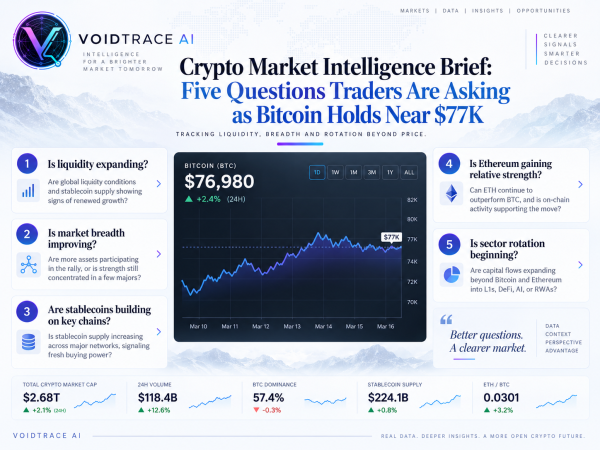
  • Crypto Market Intelligence Brief: Five Questions Traders Are Asking as Bitcoin Holds Near $77K

    Bitcoin is moving sideways ahead of the Federal Reserve meeting, Ethereum continues to show better relative performance, and macro pressure remains elevated. VOIDTRACE AI uses the current market to illustrate how liquidity, momentum and confirmation can matter more than a single price chart.

    September 16, 2026 — Crypto markets are finishing the weekend without a dramatic move, but several important signals are developing underneath the surface.

    Bitcoin was trading around $77,271, Ethereum at $2,521, XRP near $1.37 and Solana around $101.48 in a September 13 Coinbase spot-price snapshot. Between the September 11 and September 12 UTC closes, Bitcoin gained only 0.07%, Ethereum rose 0.36%, XRP added 0.74% and Solana declined 0.69%.

    Total cryptocurrency market capitalization stands near $2.64 trillion, with Bitcoin accounting for approximately 58.7% and Ethereum around 11.7%.

    For investors looking for the top crypto to watch this week, the more interesting story may therefore be found in five questions rather than five price predictions.

    1. Is Bitcoin Consolidating—or Is Capital Waiting?

    Bitcoin remains below the $80,000 region tested earlier in September.

    But sideways price action does not automatically mean nothing is happening.

    Capital can remain in stablecoins, migrate between networks or begin concentrating in other market segments while Bitcoin itself barely moves.

    The current market remains heavily BTC-dominated, with Bitcoin representing close to 59% of total cryptocurrency capitalization.

    That makes the first signal to watch where liquidity goes if Bitcoin continues consolidating.

    2. Is Ethereum Starting to Take Market Share?

    Ethereum has recently performed better than Bitcoin.

    Over the 30 completed Coinbase trading days ending September 12, a rebased comparison showed Bitcoin finishing at 123 versus 134 for Ethereum, 137 for XRP and 135 for Solana.

    That does not confirm a new altcoin cycle.

    But it does show why relative performance can be more informative than simply asking whether ETH is up or down today.

    If Ethereum continues gaining ground while participation also expands into SOL, BNB, XRP and other ecosystems, the evidence for broader market rotation becomes stronger.

    If that strength remains concentrated primarily in ETH, the interpretation is different.

    3. Will the Federal Reserve Change the Risk Environment?

    The largest immediate catalyst may come from traditional finance.

    The Federal Reserve meets September 15–16 amid stronger inflation pressures and uncertainty over whether rates will be raised.

    A Reuters poll earlier in the week found most economists expected rates to remain at 3.50%–3.75%, but an increasing number anticipated at least one increase before year-end. Markets subsequently became substantially more hawkish after stronger inflation data.

    President Donald Trump added another dimension on September 13 by publicly arguing that U.S. interest rates should be the lowest in the world while acknowledging uncertainty over what the Fed will do this week.

    For crypto, the important question comes after the decision.

    Does liquidity remain concentrated in Bitcoin?

    Does Ethereum gain relative strength?

    Do investors reduce exposure to higher-risk assets?

    Or does a clearer macro outlook encourage broader participation?

    4. Are Sector Moves Real—or Just Individual Token Rallies?

    Crypto routinely rotates between narratives such as AI, DeFi, Layer 1 networks, infrastructure and speculative tokens.

    But one token rally does not make a sector trend.

    A broader rotation would ideally show confirmation through several variables:

    capital movement, liquidity depth, momentum, breadth and participation across related assets.

    This is the distinction VOIDTRACE AI is developing its six-agent architecture to examine.

    FLOW looks at movement and cross-chain flows.

    CORE examines concentration and liquidity depth.

    VECTOR measures momentum and acceleration.

    ORBIT evaluates possible destinations for migrating activity.

    VEIL looks for less-visible patterns and coordinated behavior.

    ROTOR tracks sector and narrative rotation.

    Their observations are intended to feed into a shared consensus intelligence layer rather than treating one indicator as definitive.

    5. Can Several Signals Confirm the Same Market Story?

    This is the central idea behind VOIDTRACE AI.

    Suppose Ethereum rises 5%.

    That tells users what happened to price.

    Now add increasing cross-chain inflows, improving liquidity depth, accelerating momentum and stronger performance across several related assets.

    The same 5% move now has considerably more context.

    Alternatively, if price rises while liquidity and participation weaken, the move may deserve a different interpretation.

    VOIDTRACE AI is developing its AI Terminal to make these relationships accessible through natural-language questions such as:

    “Is Ethereum’s relative strength being confirmed by broader market activity?”

    “Which sectors are receiving capital?”

    “Is liquidity spreading or becoming more concentrated?”

    “Are multiple signals confirming the same rotation?”

    The project is also developing API infrastructure so structured intelligence can be incorporated into external dashboards, monitoring applications and research tools.

    Coinsult Audit Adds a Technical Verification Layer

    VOIDTRACE AI’s Ethereum smart contract underwent an Advanced Manual Smart Contract Audit by Coinsult dated September 7, 2026. The audit used static analysis together with manual code review.

    Coinsult’s Global Overview records zero informational, low-risk, medium-risk and high-risk findings for the reviewed smart contract.

    The report also states that the contract owner cannot mint new tokens, blacklist addresses, pause the contract or set a maximum transaction amount.

    Coinsult’s assessment is an independent technical reference rather than an endorsement or investment recommendation, a limitation the auditor explicitly states in its report.

    The Week Ahead Is About Confirmation

    Bitcoin near $77,000 will remain the obvious headline.

    But the more revealing signals may be elsewhere.

    Ethereum’s relative strength, participation across major altcoins, changes in sector leadership and the market’s response to the Federal Reserve could help determine whether crypto remains concentrated or begins another broader rotation.

    For VOIDTRACE AI, that creates a different way of looking at the market:

    Don’t ask only which asset moved. Ask whether liquidity, momentum and market breadth confirm why it moved.

    Additional information is available at VoidTraceAI.com.

    About VOIDTRACE AI

    VOIDTRACE AI is developing a multi-agent digital-asset intelligence platform built around six specialized agents — FLOW, CORE, VECTOR, ORBIT, VEIL and ROTOR — connected through a consensus intelligence framework. The project is also developing a natural-language AI Terminal and developer-facing infrastructure.

    Disclaimer: This article is for informational and educational purposes only and does not constitute financial, investment or trading advice. References to “top crypto to watch” are editorial descriptions rather than rankings or recommendations. Cryptocurrency markets are volatile. Smart-contract audits examine specific code within a defined scope and do not guarantee future security or project performance.


  • Bitcoin Dominance Near 59% as Crypto Market Waits for Direction; VOIDTRACE AI Maps the Data Behind the Pause

    With Bitcoin holding near $77,000 and total crypto market capitalization around $2.64 trillion, the latest market picture is less about explosive price action and more about where liquidity, relative strength and sector momentum are beginning to diverge.

    September 16, 2026 — The cryptocurrency market is unusually quiet heading into a potentially important week, but the lack of dramatic price movement does not mean the underlying market is standing still.

    Bitcoin is trading around $77,200, Ethereum near $2,522, BNB around $727 and XRP near $1.36. Total cryptocurrency market capitalization is approximately $2.64 trillion, with Bitcoin representing about 58.7% of the market and Ethereum approximately 11.7%.

    Those figures reveal a market still heavily concentrated in Bitcoin.

    But they also raise a more interesting question:

    What would have to change before the market could say that capital is genuinely rotating elsewhere?

    That is the type of problem VOIDTRACE AI is building its multi-agent intelligence architecture to examine.

    $2.64 Trillion Market, but Bitcoin Still Controls the Center

    Bitcoin’s dominance near 59% means more than half of the cryptocurrency market’s value remains concentrated in one asset.

    BTC is also down roughly 3.4% over seven days, while Ethereum has been comparatively resilient and was slightly positive over the same period in one September 13 market snapshot.

    That difference is worth watching.

    An altcoin does not necessarily need Bitcoin to collapse in order to gain relative strength.

    Sometimes the more important transition occurs when Bitcoin consolidates while another asset or sector begins attracting an increasing share of activity.

    But one outperforming token is not enough to establish a market rotation.

    Confirmation requires breadth.

    The First Question: Is Ethereum’s Strength Spreading?

    Ethereum has recently been one of the more important assets to monitor.

    Reuters technical analysis noted that ETH rallied approximately 37% over a 10-day period, reaching around $2,564 before entering consolidation. The analysis identified a potential bull-flag structure while also emphasizing that the bullish technical scenario could be invalidated if ETH falls below the relevant support zone.

    For market-structure analysis, the specific technical target is less important than what happens around Ethereum.

    If ETH strengthens while SOL, BNB, XRP and other large-cap assets remain weak, the move may remain concentrated.

    If several large ecosystems begin strengthening simultaneously, that can suggest broader participation.

    VOIDTRACE AI’s approach is designed to examine that difference rather than treating every upward price move as equivalent.

    The Second Question: Is the AI Narrative Broad or Concentrated?

    Artificial intelligence remains one of crypto’s most visible sectors, but the category is also displaying significant internal divergence.

    A September 11 AI-market snapshot placed the sector at roughly $17.6 billion, down about 3.1% over 24 hours at that point.

    Yet individual tokens were behaving very differently.

    NEAR was approximately 26.6% higher over seven days, while Bittensor was up around 3.2%. Render was down approximately 3.3% for the week and Virtuals Protocol around 6.8%.

    This is exactly why the phrase “AI crypto is rising” can be misleading.

    AI agents, decentralized compute, blockchain infrastructure and decentralized intelligence are separate sub-sectors.

    Capital can rotate between them without producing a uniform move across every AI-related token.

    The Third Question: Is Liquidity Actually Following Price?

    Prices are visible immediately.

    Liquidity behavior can require more context.

    A token may rise because of a short-lived order imbalance, specific project news or speculative positioning.

    A more substantial move could potentially involve several factors at once:

    greater market participation;

    increasing liquidity depth;

    capital flowing between ecosystems;

    accelerating momentum;

    and related assets strengthening simultaneously.

    This is where VOIDTRACE AI separates its analysis between different specialized agents.

    FLOW is designed to examine movement and cross-chain flows.

    CORE focuses on concentration and liquidity depth.

    VECTOR evaluates momentum and directional acceleration.

    ORBIT examines potential destinations for migrating capital.

    VEIL focuses on less-visible patterns and coordinated activity.

    ROTOR monitors sector and narrative rotation.

    The Fourth Question: Do the Signals Agree?

    The individual agents are only part of the VOIDTRACE AI architecture.

    Their observations are designed to feed into a broader consensus intelligence layer.

    Consider a hypothetical AI-token rally.

    ROTOR could identify improving sector momentum.

    VECTOR might detect acceleration.

    FLOW could show increased movement toward the relevant ecosystem.

    CORE might determine whether liquidity is broadening across the sector or remaining concentrated in a small number of assets.

    If those signals begin agreeing, the market interpretation becomes different from one generated by price alone.

    If they disagree, that disagreement is also valuable information.

    Rather than forcing the market into a bullish or bearish label, the system is being developed to preserve uncertainty where confirmation is weak.

    The Fifth Question: What Happens When the Market Gets a Catalyst?

    The current quiet conditions may not last.

    Traditional markets are already facing significant macro uncertainty. Brent crude ended Friday around $104.49 per barrel after climbing as high as $109.97 during the week, while the U.S. 10-year Treasury yield briefly reached approximately 4.99%. Markets are also preparing for the Federal Reserve’s upcoming policy decision.

    Crypto therefore faces two simultaneous information streams.

    One comes from blockchain markets themselves.

    The other comes from interest rates, energy prices, inflation expectations and global risk appetite.

    The initial reaction to a macro event may happen quickly.

    The more interesting information can come afterward:

    Where does capital move?

    Which sectors recover first?

    Does liquidity remain concentrated in Bitcoin?

    Does Ethereum gain relative strength?

    Do AI or other high-beta sectors confirm the move?

    These are market-structure questions rather than simple price predictions.

    VOIDTRACE AI Turns Those Questions Into an Intelligence Framework

    VOIDTRACE AI is developing its AI Terminal as a natural-language layer for interacting with this type of analysis.

    Instead of requiring users to manually compare numerous dashboards, the intended framework could support questions such as:

    “Is this Bitcoin move being confirmed by broader liquidity?”

    “Is Ethereum gaining relative strength across multiple indicators?”

    “Is capital rotating into AI broadly or only into selected tokens?”

    “Which sector is showing the strongest multi-signal confirmation?”

    The project is also developing developer-facing infrastructure designed to make structured intelligence available to external dashboards, research tools and monitoring systems.

    Coinsult Audit Adds an Independent Technical Reference

    Alongside its market-intelligence development, VOIDTRACE AI’s Ethereum smart contract underwent an Advanced Manual Smart Contract Audit by Coinsult dated September 7, 2026.

    The assessment combined static analysis and manual code review.

    Coinsult’s published report records zero informational, zero low-risk, zero medium-risk and zero high-risk findings for the reviewed contract.

    The review also reports that the contract owner cannot mint additional tokens, blacklist addresses, pause the contract or set a maximum transaction amount.

    Coinsult makes clear that an audit is an informational technical assessment rather than an endorsement, investment recommendation or guarantee that future risks cannot emerge.

    The Market Does Not Need to Be Moving Fast to Be Changing

    Bitcoin near $77,000 may make the weekend appear uneventful.

    But underneath the headline price, Bitcoin dominance remains elevated, Ethereum is testing relative strength, AI-token performance is increasingly fragmented and macro conditions are approaching another potential catalyst.

    For VOIDTRACE AI, those conditions illustrate the purpose of the platform.

    The goal is not simply to identify which token moved. It is to understand whether liquidity, momentum, breadth and sector behavior are confirming why it moved.

    Sometimes the most important market transition begins before it becomes obvious on the price chart.

    Additional information is available at VoidTraceAI.com.

    About VOIDTRACE AI

    VOIDTRACE AI is developing a multi-agent digital-asset intelligence platform built around six specialized agents — FLOW, CORE, VECTOR, ORBIT, VEIL and ROTOR — connected through a consensus intelligence layer. The ecosystem also includes a natural-language AI Terminal and developer-facing infrastructure.

    Disclaimer: This article is for informational and educational purposes only and does not constitute financial, investment or trading advice. References to market sectors or tokens are for market analysis and do not represent recommendations. Cryptocurrency markets are volatile. Smart-contract audits examine specific code within a defined scope and do not guarantee future security or project performance.


  • Solana (SOL) Price Prediction Eyes $150 as Oil Shock Hits Markets and Pepeto Trades at Zero Fees thumbnail

    Solana (SOL) Price Prediction Eyes $150 as Oil Shock Hits Markets and Pepeto Trades at Zero Fees

    Anyone tracking the Solana (SOL) price prediction this week is watching a coin that held its ground while everything else shook. Drones struck Saudi Arabia’s East West pipeline on September 10. Oil jumped past $109. The Fed is now 86% likely to hike on September 16.

    Most coins fell, but SOL stayed above $100. That kind of strength during fear changes how traders read what comes next. The big coins held up, but the returns that change lives start one step before the crowd. Pepeto is a meme token running a zero cost trading platform and past $11 million in presale funds.

    What Is the Saudi Oil Shock Doing to Crypto This Week?

    Drones hit the 1,200 km East West pipeline on September 10 and 11. Saudi Arabia shut it down with no restart date, per Bloomberg on September 13. The line can carry up to 7 million barrels a day. Brent crude rose over 11% in five days, per a Yahoo Finance report from September 14.

    Rate odds sit at 86.5% for a September 16 hike per the CME FedWatch tool. Bitcoin fell 3.8% last week. SOL held above $100 and that is the kind of strength that gets noticed.

    Which Tokens Stand Out While Oil and Rates Shake the Market?

    Is Pepeto the Presale That Buyers Found During the Fear?

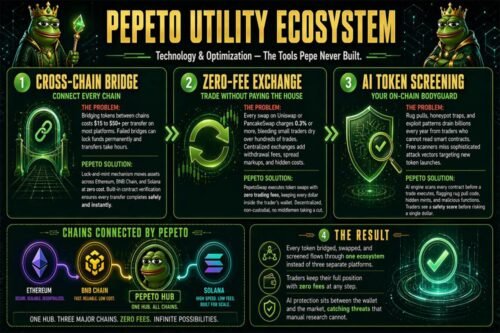
    Pepeto just passed $11 million while oil prices rattled every chart on the screen. That kind of money flowing in during a red week tells you who already did the math.What sets Pepeto apart is that the tools already work. PepetoSwap is live. It handles market, limit, and DCA orders at a 0.00% swap cost. A $1,000 trade on Uniswap costs $3. The same trade on PepetoSwap costs nothing but gas. Run 200 trades of $5,000 and the savings add up to $3,000.

    The scanner checks every token before a trade goes through. It runs 42 tests on the contract. It maps the holder list and runs a test buy and sell on a copy of the chain. If the token is a trap, the trade gets blocked. That removes the fear that stops most small buyers.

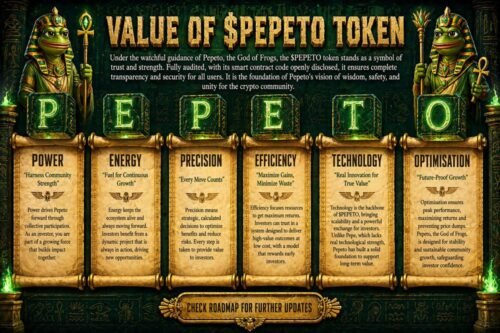
    SolidProof cleared every contract. The cofounder built the original Pepe coin that hit $11 billion on the same 420 trillion supply. A Binance team developer writes the code today. The price sits at $0.0000001895. It goes up with every new round. The staking rate runs at 163% APY today. Rewards stay locked until the coin lists.

    SOL holders who bought big before the 2021 run all say two things. They were not sure, and they wish they put in more. That same signal is here right now, but this time the exchange runs and the audit is done. Pepeto presale is the clearest early pick for anyone who wants to move before the listing sets a new floor.

    What Are the Key Levels for Solana in September 2026?

    SOL trades near $101.16 as of September 15, per MetaMask pricing. Analyst Ali Martinez called a $150 target on August 31. He noted that buyers picked up 39 million SOL near $103, which makes it a strong floor, per Coin Edition. The next walls sit at $123 and $132, where about 20 million SOL were bought at each level. A clean break through both opens the road to $150 this quarter.

    SOL ETFs pulled $153.87 million in one week ending August 28. That was the best stretch since October 2025. Exchange supply fell 4.91% as 2.6 million SOL left trading spots. Fewer coins on exchanges and more money in ETFs tell the same story: buyers are adding, not selling.

    Conclusion

    SOL held its floor while oil prices jumped and rate fears grew. That shows real demand, not just talk. But SOL at $100 still needs to clear $132 before the chart opens up. The big move from here is steady, not fast.

    The entries that change the math happen in coins that have not listed yet. This week proved that the buyers inside Pepeto made their call during fear. That is how every past cycle paid its biggest winners. The ones who act on Pepeto official website before the listing resets the price will feel right about this choice later.

    Click To Visit Pepeto official Website To Enter The Presale

    FAQs

    What is the Solana (SOL) price prediction this September?

    SOL targets $150 if it clears $123 and $132. Pepeto is the top early pick for those watching because its exchange already runs at zero fees.

    Why is Pepeto drawing attention above other presale tokens?

    Pepeto shipped its tools before listing. The trading platform, token bridge, and risk scanner all work now, which is why the Pepeto official website has pulled $11 million.

    Disclaimer:
    This article is for informational purposes only and does not constitute financial advice. Cryptocurrency investments carry risk, including total loss of capital.

    All market analysis and token data are for informational purposes only and do not constitute financial advice. Readers should conduct independent research and consult licensed advisors before investing.

  • Ethereum Price Prediction: Fed Rate Hike Looms Over $2,480 as Pepeto Bridge Moves Tokens Across Five Chains thumbnail

    Ethereum Price Prediction: Fed Rate Hike Looms Over $2,480 as Pepeto Bridge Moves Tokens Across Five Chains

    The ethereum price prediction just ran into a wall most traders did not see coming. Oil hit $109 after drones took out a Saudi pipeline. The Fed is now 86.5% likely to raise rates on September 16. ETH still sits above $2,480, but the chart is holding, not climbing.

    The market always pays the most to the ones who entered first. While ETH waits for a clear move, more than $11 million has quietly filled a presale that most people have not found yet. Pepeto is a presale meme project with a working token bridge, a fee free exchange, and $11 million already committed.

    How Is the Fed Rate Decision Shaping the Ethereum Price Prediction?

    The CME FedWatch tool shows an 86.5% chance the Fed raises rates on September 16. That number jumped from 69.4% on Friday, per Yahoo Finance on September 14. Oil pushed the odds higher after a Saudi pipeline shut down on September 10.

    Brent crude rose past $109 on September 14, per Bloomberg. ETH opened Monday at $2,475 and climbed back above $2,514 by morning. Higher rates hold prices down short term. But ETH kept that level every time oil spiked this year. That pattern counts for anyone reading the ethereum price prediction today.

    Which Tokens Are Moving While the Fed Decides?

    Is Pepeto the Entry the Market Has Not Priced In Yet?

    The market is frozen, waiting for the Fed. But Pepeto is not waiting. Its presale passed $11 million this week while traders watched oil charts and rate odds. That is real money entering during real fear.

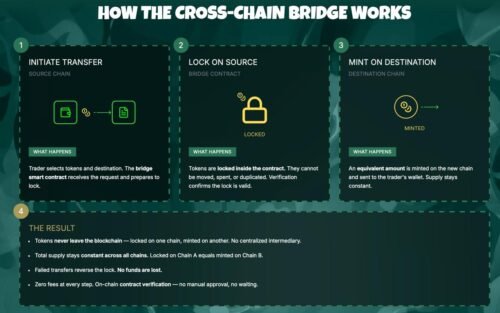
    Pepeto built a token bridge linking five networks: Solana, Ethereum, Arbitrum, Base, and BNB Chain. Tokens lock on the source side and show on the target once proof clears. Nobody touches the funds in between. There is no bridge fee. Transfers end in less than a minute. Most other bridges cost $15 to $50 and take far longer.

    The trading tool is already running. PepetoSwap takes 0.00% on each trade. Buyers can set market, limit, or repeat orders with MEV guards turned on. A scanner tests 42 points on every contract and stops bad tokens from going through.

    SolidProof finished the full audit. The person behind the first Pepe token runs this build. A Binance trained developer is part of the dev team. Today’s presale cost is $0.0000001895. That number rises at each stage. The staking reward sits at 163% APY, and payouts begin once trading opens.

    ETH was cheap once, too. The people who bought it when nobody cared built real wealth from one choice. Millions entering this presale during a week of fear tells you those buyers expect the same kind of outcome. Pepeto presale is the entry that has not been priced in yet, and that window closes a little more each day.

    What Is the Ethereum Price Prediction for September 2026?

    ETH trades at $2,480 on September 15, per OKX. The CoinDCX outlook puts the September target at $2,800, with a range of $2,405 to $2,950, per CoinDCX on September 11. Key support sits at $2,405, the 20 day moving average. If ETH loses that, the next floor is $2,222. The Sepolia testnet fork for the Glamsterdam upgrade lands September 28.

    That upgrade triples the network speed. ETH ETFs pulled $197 million last week while Bitcoin funds lost $463 million, per Farside data cited by CoinMarketCap on September 14. Funds are choosing ETH over BTC right now. The all time high sits at $4,946, and reaching it needs months of steady buying from here.

    Conclusion

    ETH showed its strength by staying above $2,480 while oil spiked and rate fears grew. But the gains from ETH at this price are slow and steady. The real gains in every cycle came from the entries that were open before the listing moved the price.

    This week, while the Fed and oil took all the air, the buyers inside Pepeto kept adding. They picked fear over ease. That is how every crypto win started. The ones acting now through Pepeto official website are making the same move that worked every time before.

    Click To Visit Pepeto official Website To Enter The Presale

    FAQs

    What is the ethereum price prediction for this month?

    ETH targets $2,800 for September with support at $2,405 and $2,222, per CoinDCX. Pepeto is the early entry that offers more room to grow at a presale price.

    Can buyers still enter the Pepeto presale before listing?

    Pepeto is still selling tokens with every tool already live. The exchange, bridge, and scanner work right now, and Pepeto official website shows $11 million from buyers who acted early.

    Disclaimer:
    This article is for informational purposes only and does not constitute financial advice. Cryptocurrency investments carry risk, including total loss of capital.

    All market analysis and token data are for informational purposes only and do not constitute financial advice. Readers should conduct independent research and consult licensed advisors before investing.

  • Best Crypto to Buy in September 2026: ETH and BNB Hold Ground While Pepeto Ships a Working Exchange thumbnail

    Best Crypto to Buy in September 2026: ETH and BNB Hold Ground While Pepeto Ships a Working Exchange

    Some trends take weeks to spot. The best crypto to buy in September 2026 was not the coin that made the most noise. It was the one building the most while the market looked away. ETH held its price as funds poured into its ETFs.

    BNB gained weight in the Grayscale smart contract basket. But the biggest buyer behind the world’s top Bitcoin holder just stopped buying BTC for the second week straight. It spent $139.3 million on its own stock instead. When the largest buyer steps back from Bitcoin, the crowd starts to look for where the early money went. Pepeto is where that search keeps ending.

    Why Did the Biggest Bitcoin Buyer Stop Buying This Week?

    Strategy filed with the SEC on September 14 showing zero new Bitcoin bought between September 8 and 13, per CoinLaw.io on September 14. Instead, the company spent $139.3 million on its own STRC preferred shares.

    Holdings stayed flat at 845,050 BTC, worth about $65.7 billion, per U.Today on September 14. When the firm that bought more Bitcoin than every US ETF combined in 2026 stops buying, the signal is clear. The big coin trade is full. The next wave of gains lives somewhere else.

    What Sets the Strongest Early Picks Apart This Cycle?

    Why Does Pepeto Keep Showing Up in Every Smart Money List?

    The reader came here looking for the strongest entry right now. What most lists miss is that the answer is not always on the charts yet. Pepeto put its exchange online before the listing. It shipped the bridge before the crowd showed up. That timing gap is why the presale now holds $11 million from early wallets that acted before anyone had a reason to care.

    PepetoSwap charges nothing on swaps. Zero percent cost, live right now. Spot buys, repeat orders, and price targets all work. A built in relay blocks front runners. A $100,000 swap on Uniswap hands $300 to the protocol. The same swap on Pepeto gives you the full amount.

    The token scanner runs on every trade. It tests 42 points on the smart contract code and checks who holds what. Then it runs a fake trade on a cloned version of the network. If the result looks like a scam, the trade never goes through. Most people learn about honeypots after they lose money. Pepeto catches them before you click.

    SolidProof audited the full set of contracts. The creator behind the first Pepe meme token is at the helm. A developer trained at Binance codes the backend. The presale cost is $0.0000001895. The price goes up once the current round fills. Buyers who stake earn 163% APY, with rewards held for payout at listing.

    The people who searched for the right early entry and ended up here are now seeing what buyers already found. Pepeto presale is the answer their search was built to find, and the price still sits where it started.

    Is ETH Worth Holding at $2,480?

    ETH holds at $2,480 today, per OKX data. Spot ETH fund inflows hit $197 million during the week of September 11. Bitcoin funds shed $463 million over the same days, per Farside data on CoinMarketCap from September 14.

    The Glamsterdam testnet goes live on Sepolia on September 28, bringing a speed boost closer. But ETH must clear $2,534 first, and the $4,946 peak is still a long way off.

    Can BNB Break Out of Its Range at $720?

    BNB sits at $720 on September 15, per CoinMarketCap. BNB Chain now holds more than 80 million stablecoin wallets, more than any other network, per MetaMask on September 15.

    Over 200,000 AI tools are listed on the chain, and a new hackathon wraps up this week. The base is strong. But BNB is down 47% from its all time high of $1,369. The path back takes time and needs a broader market push.

    Conclusion

    ETH and BNB both earned their place on any serious list. Strong teams, real networks, proven track records. But both sit at prices that need months of grinding to deliver big gains. The reader searched for something real.

    The trail led to a presale where a working exchange, a checked contract, and a low price all line up. The buyers who moved before the search got popular are the ones this cycle will talk about. Acting on what this page showed, through Pepeto official website, is how that list of winners gains a new name.

    Click To Visit Pepeto official Website To Enter The Presale

    FAQs

    What is the best crypto to buy in September 2026?

    Pepeto leads because its exchange runs at zero fees and the price has not caught up to the tools behind it.

    What makes early stage tokens worth the risk over large caps?

    Large caps like ETH and BNB offer safety but limited room. Pepeto has working tools, a SolidProof audit, and a price that still sits in presale. The Pepeto official website shows what $11 million worth of early buyers already decided.

    Disclaimer:
    This article is for informational purposes only and does not constitute financial advice. Cryptocurrency investments carry risk, including total loss of capital.

    All market analysis and token data are for informational purposes only and do not constitute financial advice. Readers should conduct independent research and consult licensed advisors before investing.

  • New Listing Watch: First Staked TRX ETF Goes Live as Pepeto Exchange Runs on Zero Fees thumbnail

    New Listing Watch: First Staked TRX ETF Goes Live as Pepeto Exchange Runs on Zero Fees

    Every binance new listing this year paid the people who got in first. The pattern has not changed. Canary Capital just launched the first staked TRX ETF on September 9, bringing one more token into the ETF world. When new coins land on big exchanges, the early buyers win.

    The ones who wait pay more. While BNB and SOL hold their price, something smaller keeps showing up in the binance new listing search. Pepeto is a meme project with a fee free exchange already running, a bridge spanning five networks, and $11 million raised through presale rounds.

    What Does the First Staked TRX ETF Mean for Binance New Listing Watchers?

    Canary Capital launched the Canary Staked TRX ETF on September 9 under ticker TRXS, per Cointelegraph on September 9. It is the first staked spot crypto ETF in the United States.

    The fund lets buyers own TRX and earn staking rewards in one product. TRON now holds more than $94 billion in USDT and over 403 million user accounts, per BeInCrypto on September 9. When a staked ETF goes live for one token, the market reads it as a signal that more listings are coming. Every token waiting to list gains from that kind of mood.

    Which Tokens Are Gaining Attention Ahead of the Next Listing Wave?

    Why Are Buyers Moving Into Pepeto While the Market Waits?

    For most of this year, traders had to pick between coins that already ran and coins that had nothing built. Pepeto changed that. It shipped the tools before the listing, not after, and that fact alone is why the presale pulled $11 million during a rough stretch.

    PepetoSwap handles spot trades right now. There is no swap fee at all. Buyers can set limit prices, run recurring buys, or fill at market rate. A private relay guards against front running by default. A $100,000 position on Uniswap would cost $300 in swap fees. On PepetoSwap that number is zero. For active traders, those savings stack up fast.

    The bridge spans Ethereum, BNB Chain, Solana, Base, and Arbitrum. Tokens freeze on the sending side and appear on the receiving end once the proof clears. No person or team holds the assets during the move. The cost is zero and most transfers close in under a minute.

    SolidProof ran a full review of every smart contract. The person who launched the first Pepe token leads this project. A Binance trained developer handles the code. The current presale rate is $0.0000001895. Each stage bumps the cost higher. Holders earn 163% APY on staked tokens, paid out when trading begins.

    The people who built wealth from early BNB all made one choice. They moved while the entry was still open. That same entry is open right now. Pepeto presale is the strongest pick on any binance new listing watch this cycle.

    Is BNB Still a Strong Hold at $720?

    BNB trades at $720.46 on September 15, per MetaMask price data. The token sits in a $713 to $733 range this week as the market waits on the Fed. Grayscale gave BNB a 30.6% weight in its Smart Contract Fund in Q2, placing it above ETH at 29.47%, per CoinGecko on September 15. BNB still powers every fee, stake, and listing on Binance. But at $720, the move from here is slow. The easy early gains are behind it.

    Can SOL Break $100 and Hold It?

    SOL sits at $101.02 today, per MetaMask data. The token stayed above $100 all week despite oil and rate shocks. Ali Martinez sees $150 ahead if the price pushes through $123 and $132, per Coin Edition. Solana’s V1 upgrade shipped September 9, tripling trade data capacity. The chart looks ready, but the breakout still has to prove itself.

    Conclusion

    BNB and SOL both have strong networks and real demand. But both are priced for what they already did, not for what comes next. The first staked TRX ETF proved this week that new tokens keep finding their way into the system.

    The ones who gained the most from past listings were inside before the news hit. Pepeto has the tools, the team, and the money from $11 million in presale buyers who chose to act. Moving while the entry is open is how every crypto story that ended well started. The ones who act now through Pepeto official website are writing that story today.

    Click To Visit Pepeto official Website To Enter The Presale

    FAQs

    What is the next binance new listing to watch in 2026?

    Pepeto is the top pick because it runs a live zero fee exchange, a working bridge, and has a Binance listing on the way.

    Is it too late to join the Pepeto presale?

    Pepeto is still in presale with tools already live and more than $11 million raised. The Pepeto official website shows the current price, and each new round costs more than the last.

    Disclaimer:
    This article is for informational purposes only and does not constitute financial advice. Cryptocurrency investments carry risk, including total loss of capital.

    All market analysis and token data are for informational purposes only and do not constitute financial advice. Readers should conduct independent research and consult licensed advisors before investing.


  • Best Crypto To Buy Now: Bitcoin ETF Inflows Hit $1B as DigiTap Backs Its Presale With a Working Beta App


    Bitcoin is pulling institutional capital back into crypto after U.S. spot Bitcoin ETFs attracted roughly $1 billion in weekly net inflows. The renewed demand strengthens the case for BTC as large investors rebuild exposure, but retail searching for the best crypto to buy now is also looking further down the market for an earlier entry.

    DigiTap ($TAP) sits at the opposite end of the timeline from Bitcoin. Its token is still priced at $0.0589 in round 4 of 10, yet DigiTap already has a working beta app available through the App Store and Google Play. More than $11.78 million has entered the presale, and Round 4 is already over 85% sold.

    $1B Bitcoin ETF Inflows Put Institutional Demand Back in Focus

    U.S. spot Bitcoin ETFs pulled in approximately $987 million during their latest major weekly inflow run, extending a multiweek return of capital into the funds. BlackRock’s IBIT dominated the buying as institutional investors increased exposure to the world’s largest cryptocurrency.

    Bitcoin remains the benchmark crypto asset, and ETF demand gives investors another reason to watch its next move. But BTC is already a globally traded asset with institutional products, deep liquidity and years of price discovery behind it. The enormous early-stage percentage gains that defined Bitcoin’s first cycles came before the asset reached its current scale. That distinction is pushing some retail buyers toward projects where public trading has not started yet.

    DigiTap Has the Product Before the Public $TAP Chart

    DigiTap is drawing attention because buyers do not have to wait until after the presale to see the product. Its beta app is already downloadable through the App Store and Google Play while $TAP remains in Round 4.

    The app brings wallet, card, and payment functionality together inside one crypto-finance platform. That gives DigiTap a fundamentally different starting point from presales built entirely around what a team intends to release later.

    The order matters. DigiTap has put the product in users’ hands before $TAP reaches public exchanges. Retail buyers are still entering during the presale instead of discovering the project only after its first trading chart appears.

    Why $0.0589 Is Adding Pressure to Round 4

    Product proof is arriving alongside a presale that has already raised more than $11.78 million. $TAP currently costs $0.0589, with round 4 more than 85% sold and the next presale price set at $0.0594.

    That gives buyers a clear timing decision. The sale is progressing through a fixed 10-round structure, and later-round buyers pay the higher prices attached to those stages. The working beta remains the differentiator because DigiTap is reaching those later presale rounds with an actual consumer product already available.

    DigiTap also carries a $0.14 listing price. For buyers comparing the best crypto to buy now, the combination of a $0.0589 presale entry, a working app, and a token that has not started public trading creates a very different setup from buying an established large-cap asset after institutional adoption has already arrived.

    Bitcoin Has the ETFs, DigiTap Still Has the Early Entry

    Nearly $1 billion flowing into Bitcoin ETFs shows how far crypto has moved into mainstream finance. Bitcoin can now attract enormous institutional allocations through regulated investment products, something early BTC buyers could only imagine.

    DigiTap is much earlier in its own cycle. The beta app already exists, but $TAP is still in presale. The project has crossed $11.78 million raised, round 4 is over 85% sold, and buyers are still entering before the first public token chart.

    That product-before-listing combination is what puts DigiTap into the best crypto to buy now discussion. Most presales ask buyers to fund an idea and wait for execution. DigiTap already has the app available while the token remains at $0.0589.

    Bitcoin’s ETF flows show institutional money continuing to take crypto seriously. DigiTap gives retail a different part of that market to watch: a crypto-finance product already in beta with its native token still before public trading. The product is here, the presale is advancing, and the next $TAP price is already higher.

    Click To Visit DigiTap Website To Enter The Presale

    FAQs

    Why is DigiTap being discussed as the Best Crypto To Buy Now?

    DigiTap combines a $0.0589 presale entry with a working beta app already available through the App Store and Google Play. More than $11.78 million has been raised while $TAP remains before its first public chart.

    How far has the DigiTap presale progressed?

    DigiTap is in Round 4 of 10, and the round is already over 85% sold. The next presale price is $0.0594, so later-round buyers enter at a higher price.

    What makes DigiTap different from many crypto presales?

    DigiTap already has a downloadable beta app with wallet, card, and payment functionality while $TAP is still in presale. Buyers can see the working product before the token begins public trading.

    Disclaimer:
    This article is for informational purposes only and does not constitute financial advice. Cryptocurrency investments carry risk, including total loss of capital.

    All market analysis and token data are for informational purposes only and do not constitute financial advice. Readers should conduct independent research and consult licensed advisors before investing.

    Crypto Press Release Distribution by BTCPressWire.com

  • Next Crypto To Explode: DigiTap Price Prediction Builds Around a Wallet, Card and Payments App Already in Beta


    Finding the next crypto to explode usually means looking beyond tokens that already have years of public trading behind them. DigiTap is taking a different route into that search because its financial app is already in beta while $TAP remains in presale. DigiTap has now raised more than $11.78 million, with $TAP still available at $0.0589 in Round 4 of 10.

    The difference is product timing. Instead of raising money around a future roadmap alone, DigiTap already puts wallet, card, and payment functionality into users’ hands before its token gets its first public chart. Round 4 is already over 85% sold, giving buyers a shrinking window into the current stage while the working product is already visible.

    Why DigiTap Is Entering the Next Crypto To Explode Race

    DigiTap combines an early-stage token with a beta financial app built around moving and spending digital assets. Users can access wallet functionality, cards and payment features through the same broader product rather than waiting for those pieces to arrive after the token launches.

    That matters for a DigiTap price prediction because $TAP is not entering the market as a token attached only to a whitepaper. The app is already live before public trading begins. Buyers can therefore see the product layer while the token is still sitting at a presale-stage entry price.

    This is where DigiTap separates itself from many contenders for the next crypto to explode. A roadmap can promise utility later. DigiTap is putting the product first and the public token chart second.

    A $0.0589 Entry Comes Before DigiTap’s $0.14 Listing Price

    The pricing timeline adds another reason retail is paying attention. $TAP currently costs $0.0589, while DigiTap carries a $0.14 listing price. Buyers entering during Round 4 are therefore getting exposure much earlier in the token’s pricing journey.

    DigiTap has already moved through several presale stages and raised more than $11.78 million, yet public trading has not started. Round 4 is over 85% sold, so the combination is increasingly straightforward: the app has arrived, the token remains early, and later rounds move buyers further along the presale pricing curve.

    For a DigiTap price prediction, that early position matters. Mature tokens need increasingly large amounts of fresh capital to generate outsized percentage moves. $TAP is still approaching its first public market while DigiTap already has a consumer-facing product behind it.

    Coinsult and SolidProof Have Audited the $TAP Contract

    Product proof is only one part of the setup. $TAP has been independently audited by Coinsult and SolidProof before the token begins public trading. The token also carries a fixed maximum supply with no additional minting beyond that cap.

    That gives buyers another piece of information before listing: the app can already be tested, and the token contract has already gone through two independent security audits. DigiTap does not need to ask buyers to wait until after launch to see whether either the product or audited token infrastructure exists.

    The audit angle strengthens the product-first story rather than replacing it. DigiTap’s main difference remains that buyers are getting access to the presale while the wallet, card, and payments app is already in beta.

    The Product Is Here Before the First $TAP Chart

    Crypto markets often discover projects after a token starts trending on exchanges. By then, the earliest presale stages and their prices have already passed. DigiTap is still on the other side of that timeline.

    That is why the next crypto to explode in search is increasingly about more than finding another low-priced token. DigiTap has more than $11.78 million raised, a live beta app, two independent token-contract audits, and a current Round 4 entry before public trading begins.

    The central DigiTap price prediction argument is therefore built around timing backed by something tangible. Wallet, card, and payment functionality already exists, but $TAP is still priced at $0.0589 before its $0.14 listing price. Retail usually finds the chart after listing. DigiTap buyers are still entering before the chart exists.

    Click To Visit DigiTap Website To Enter The Presale

    FAQs

    Why is DigiTap being discussed as the next crypto to explode?

    DigiTap combines a token still in presale with a wallet, card, and payments app already in beta. $TAP remains at $0.0589 while Round 4 is over 85% sold and the first public chart is still ahead.

    Has the $TAP token been audited?

    Yes. $TAP has been independently audited by Coinsult and SolidProof. The token has a fixed maximum supply with no additional minting beyond that cap.

    What supports the DigiTap price prediction?

    The case combines early presale entry with product proof. DigiTap already has a working beta app, has raised more than $11.78 million, and carries a $0.14 listing price, while $TAP remains available before public trading begins.

    Disclaimer:
    This article is for informational purposes only and does not constitute financial advice. Cryptocurrency investments carry risk, including total loss of capital.

    All market analysis and token data are for informational purposes only and do not constitute financial advice. Readers should conduct independent research and consult licensed advisors before investing.

    Crypto Press Release Distribution by BTCPressWire.com