Category: BigNewsNetwork

  • Best Crypto for August 2026: Where Buyers Are Rotating After a Soft Week

    Key Takeaways

    • Chainlink at $9.35 posted the best week of any major, up 13.6 percent, on a $7.00 billion market cap.
    • Monero at $411.07 rose 8.3 percent on the week and 1.6 percent on the day, for a $7.72 billion cap.
    • BNB at $606.91 and Tron at $0.3316 both finished seven days green while most large caps slipped.
    • Bullski sits outside all of that at $0.000015 on stage 2, which makes it the presale buyers are rotating into as the majors cool.

    Choosing the best crypto this week means looking at what stayed green, not at what fell hardest. Bitcoin lost 3.0 percent over seven days and Cardano lost 9.8 percent. Gains went the other way for Chainlink at plus 13.6 percent and Monero at plus 8.3 percent, with BNB and Tron edging up too.

    One more name did not move at all, because its price comes from a published rung rather than a market. Here is how those five stack up on August 17, 2026.

    Where Money Moved While Bitcoin Slipped

    Rotation is the honest word for this week. Monero climbed 8.3 percent to $411.07 and privacy coins as a group held $16.28 billion, up 0.34 percent on the day, per CoinGecko. Total market value stood at $2.250 trillion, barely changed at 0.06 percent lower.

    Quick answer: No single ticker is the best crypto to buy now for everyone. Green weeks, supply caps and entry price decide it, and only one name on this page still publishes what it costs in advance.

    Best Crypto to Buy Now, Five Names That Held Up

    Bullski ($BULLSKI), the Presale Rung Buyers Are Rotating Into

    Bullski runs on Ethereum as an ERC-20 token with supply fixed at 120 billion. Stage 1 sold out at $0.00001, taking its whole 1,192,283,023 allocation, and buyers now pay $0.000015 on the second rung. Presale covers 40 percent of supply across a 16-stage ladder.

    Pricing climbs one way only, so stage 3 asks $0.00002 and the listing reference is published at $0.0025. Payment takes ETH, BNB or USDT. Nothing here depends on a chart, which is why some readers rank it among the best crypto presales to buy now.

    Chainlink (LINK), the Best Week in the Top Twenty

    Chainlink rose 13.6 percent over seven days to $9.35, the strongest weekly move among the majors, lifting its market cap to $7.00 billion. Daily gain was a smaller 1.1 percent.

    Its $52.70 record from May 9, 2021 sits more than five times above the current quote. Strong weeks do not shorten that distance much, so patience matters for anyone treating LINK as one of the best coins to invest in.

    Monero (XMR), the Quiet Weekly Winner

    Monero added 8.3 percent across the week and 1.6 percent on the day to reach $411.07, with a $7.72 billion market cap. Privacy coins held $16.28 billion between them.

    Height is the limit again. XMR peaked at $797.73, close to double today’s level, and its niche keeps it away from the crowd chasing up and coming crypto names.

    BNB, a Large Cap That Finished Green

    BNB holds $606.91 for an $80.8 billion market cap, down 0.7 percent on the day yet up 0.5 percent on the week. Very few coins that size ended seven days higher, and its $1,369.99 record shows how much ground it gave back earlier.

    Tron (TRX), Small Gain on a Big Base

    Tron trades at $0.3316 for a $31.5 billion market cap, off 0.1 percent today and up 0.6 percent on the week. Its $0.4313 peak sits closer to the current price than most records on this page, which explains the steadier chart.

    Name Price on Aug 17, 2026 Value of the network Week Entry route
    Bullski ($BULLSKI) $0.000015 on stage 2 Not listed yet Fixed rung price Best crypto presale, ETH, BNB or USDT
    Chainlink (LINK) $9.35 $7.00 billion Up 13.6 percent Open exchange trading
    Monero (XMR) $411.07 $7.72 billion Up 8.3 percent Spot markets, privacy sector
    BNB $606.91 $80.8 billion Up 0.5 percent Spot markets, $80.8 billion cap
    Tron (TRX) $0.3316 $31.5 billion Up 0.6 percent Spot markets, $31.5 billion cap

    Four of those five reprice every second, and one does not. Comparing them side by side gets easier next to how buyers are sizing early entries, which walks through the same question from the buyer’s side.

    Pro tip: Cheap per token is not the same as cheap overall. Check supply before calling anything the cheapest cryptocurrency to buy, because 120 billion tokens at $0.000015 is a very different sum from one coin at $9.35.

    What Bullski Locks, Vests and Burns

    Three mechanics run in the background while a rung is open. Trading liquidity is locked from listing day so the pool stays put, team allocation unlocks on a vesting schedule, and a share of supply is burned over time.

    Contract verification is already published on Etherscan, with an audit under way. Staking pays holders during the sale, and referrals pay anyone bringing buyers in. Full detail on what Bullski vests and locks sits on the project page.

    Readers who followed this sale earlier will recognise the structure, and our earlier take on this rung covers how the ladder was set up before demand cleared the first step.

    Stage Two Pricing and the Reason Buyers Act

    Sell-out, not a clock, moves this ladder forward. Every token in stage 1 went at $0.00001, all 1,192,283,023 of them, and 1,238,112,585 have sold across the whole sale as of August 17, 2026.

    Stage 2 asks $0.000015 and holds 1,400,000,000 tokens, of which 1,354,170,438 remained on that date. Stage 3 asks $0.00002, so the step up is one third.

    Remember: Counters change while you read, so open the official site and check the live rung before sending anything.

    Buy $BULLSKI at $0.000015 in three steps: Top up a self-custody wallet with ETH, BNB or USDT, open the official sale page, confirm the stage and price shown, and pay from the address that should hold the tokens.

    Best Crypto Questions Readers Sent This Week

    What Is the Best Crypto to Buy Right Now?

    Nobody can answer that for another person, and anyone who does is selling. Chainlink led the week at plus 13.6 percent, Monero followed at plus 8.3 percent, and Bullski prices its second rung at $0.000015. Match the entry to your own patience rather than to a headline.

    What Is the Best Crypto to Invest In?

    Reading supply, lockups and published prices beats reading charts for this one. Bitcoin at $62,970 needs enormous new money to move, while a token at $0.000015 needs far less, and both carry different risks. Best crypto coins to buy now depends on which of those two problems you would rather have.

    Which Crypto Is the Best to Buy Now?

    Only four majors finished the week green, which narrows the field fast. Green weeks belonged to Chainlink, Monero, BNB and Tron, while Bitcoin, Ethereum, Cardano and Uniswap all fell. Adding a presale entry to that shortlist is how some readers hunt the best cheap crypto to buy now, since a fixed rung ignores whatever the week did.

    What Is the Best Crypto Coin to Invest In With Little Money?

    Small budgets change the maths more than most people admit. A small entry buys a fraction of one BNB at $606.91, while the same money at $0.000015 buys millions of tokens against a fixed 120 billion supply. Readers who want that route can take the $BULLSKI stage two entry and skip the guesswork about timing.

    For More Information

    Website: Visit the official Bullski website at bullski.io

    Telegram: Join the Bullski Telegram channel at t.me/BullskiCoinOfficial

    X (Twitter): Follow Bullski on X at x.com/bullskicoin

    Do your own research before buying any presale token. This article is not financial advice.

  • Cryptocurrency News Rattles the Market While Pepeto Presale Quietly Crosses $10.6M and Nobody Is Slowing Down thumbnail

    Cryptocurrency News Rattles the Market While Pepeto Presale Quietly Crosses $10.6M and Nobody Is Slowing Down

    The cryptocurrency news cycle never stops, and this week brought regulatory delays, platform restrictions, and price swings that kept traders glued to their screens. The SEC pushed back a major rules vote while Binance announced it will cut off access for several smaller platforms. While the cryptocurrency news keeps shifting from one headline to the next, one presale has stacked over $10.6 million from wallets that care more about positioning than daily headlines, and that project is Pepeto.

    SEC Delays Crypto Rules Vote While Binance Tightens Platform Access

    The SEC canceled its scheduled vote on new rules that could have opened easier paths for crypto startups to raise capital, leaving the industry waiting without a clear date for when that conversation picks back up (Investing News). At the same time, Binance confirmed it will halt all transaction processing for HTX and ten additional platforms beginning August 23, pointing to regulatory mandates and sanctions enforcement as the reasons behind the move (CoinMarketCap). For cryptocurrency news followers, both decisions show that rules and restrictions are shaping the market alongside price action right now, and traders everywhere are rethinking their positions while the regulatory picture stays unclear heading into September and beyond.

    Market Movers and Presale Entries Give Buyers Different Paths Through the Noise

    Pepeto

    Demand for Pepeto continues to climb as the presale advances and buyers keep entering before the sale ends. The project has stacked more than $10.6 million, and new entries arrive daily because the cost is still only $0.0000001889 while an expected Binance listing sits further down the timeline. A former Binance expert who understands how major networks operate leads this team, and that direct experience with the largest trading platform is why this presale carries trust that most new projects cannot match. The clock keeps running and the presale does not restart, because the day the listing opens the presale cost vanishes and every buyer after that pays whatever the open market demands.

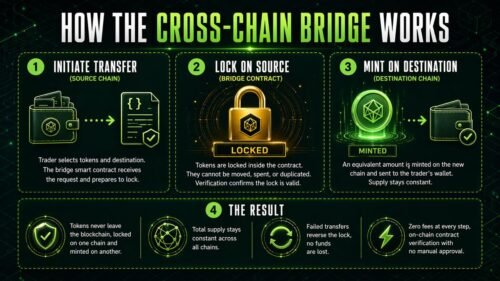
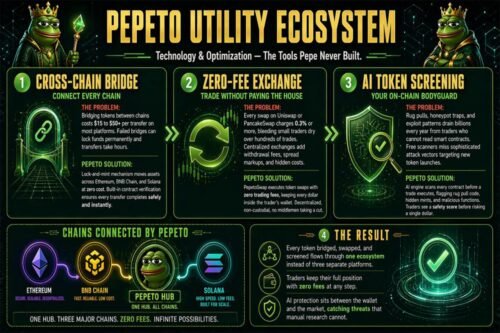
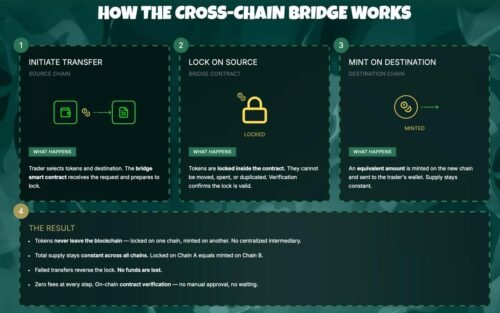
    The cross-chain bridge connects holders to multiple networks so they can move tokens without switching platforms or paying heavy fees. PepetoSwap gives traders a place to swap directly inside the project, keeping demand flowing through the network. The full structure runs on 420 trillion tokens in total supply and has passed a complete SolidProof audit.

    When cryptocurrency news fills the feed with delays and shutdowns, the projects that keep building are the ones that stand out from the noise, and staking at 165% locks tokens away from sellers while the bridge and PepetoSwap keep adding users who stick around because the tools deliver real value, and that compression of available tokens against rising interest is what turns presale positions into real value once the listing arrives.

    CHAINLINK

    CHAINLINK jumped 7.5% this week to reach $9.41 on trading volume above $629 million, making it the strongest large coin performer during the period. The token provides real time pricing feeds that hundreds of other projects depend on to operate correctly, giving it a role that holds value even when the broader market sits flat and nothing else moves. For cryptocurrency news watchers, CHAINLINK stands out this week because it pushed higher while most other large coins either traded sideways or slipped lower during the same stretch.

    XRP

    XRP held steady near $1.00 this week with a market value above $50 billion, keeping its place among the top five digital assets by total size. The token gained over 16,000% since its early days and remains a fixture on every major cryptocurrency news list because of its role connecting traditional banking rails with digital payment systems across borders. Buyers continue to hold XRP for its cross border transfer speed and for the chance that broader adoption of its payment technology could push the price higher over the coming quarters as regulations become clearer.

    Conclusion

    The cryptocurrency news moves fast, but the biggest returns come from spotting the pattern underneath the headlines. The cofounder behind Pepeto already built the original Pepe coin to $11 billion in value with zero working products and the same 420 trillion token supply, and matching even a fraction of that price means returns above 150x for wallets that entered the presale. This time a working exchange, a cross-chain bridge, and an expected Binance listing all sit behind the project, which means the math carries more weight than the first time around. Entering Pepeto now is betting on a pattern that already proved itself once before in this market, and the presale is where that position gets locked in before the listing closes the window for good and the entry price is gone forever.

    Click To Visit Pepeto Website To Enter The Presale

    FAQs

    What cryptocurrency news matters most for buyers right now?

    Regulatory decisions and presale milestones that shift how capital flows through the market.

    How does cryptocurrency news drive presale demand?

    When cryptocurrency news highlights uncertainty, buyers shift attention to presale entries like Pepeto.

    Should cryptocurrency news change how someone builds a portfolio?

    Daily headlines create noise while presale positions work on longer timelines that outlast most cycles.

    Disclaimer:
    This article is for informational purposes only and does not constitute financial advice. Cryptocurrency investments carry risk, including total loss of capital.

    All market analysis and token data are for informational purposes only and do not constitute financial advice. Readers should conduct independent research and consult licensed advisors before investing.

  • Dog Collars Australia: A Simple Guide to Choosing the Right Collar for Your Dog


    A good dog collar is more than a simple pet item. It helps keep your dog safe, makes daily walks easier, and gives you a place to attach an ID tag. It can also add a little style to your dog’s look.

    When shopping for dog collars Australia, you will find many choices. There are nylon collars, leather collars, soft padded collars, reflective collars, and more. Each type has its own use. The best choice will depend on your dog’s size, age, coat, daily routine, and comfort.

    Australian dogs may spend a lot of time outdoors. They may walk on the beach, run through parks, explore trails, or play in the backyard. A collar should be strong enough for daily use while still feeling soft around the neck.

    This guide explains what to look for when buying a dog collar in Australia and how to choose a safe and comfortable option for your pet.

    Why a Good Dog Collar Matters

    A dog collar has several useful jobs. The most common use is to hold your dog’s ID tag. If your dog gets lost, an ID tag can help someone contact you fast.

    RSPCA Australia advises pet owners to keep their dogs properly identified with a collar and an up-to-date ID tag. It also recommends keeping microchip details current.

    A collar can also be used with a lead during short walks and normal outings. For some dogs, a harness may be a better choice for longer walks or dogs that pull. Still, a collar is useful for carrying identification.

    Comfort is just as important as strength. A collar that is too tight may rub the skin or cause discomfort. A collar that is too loose may slip over the dog’s head.

    Quality dog collars in Australia should offer a good balance of comfort, fit, strength, and easy use.

    The right collar can become part of your dog’s daily life without causing stress or getting in the way.

    Popular Types of Dog Collars in Australia

    There are many types of dog collars available. Choosing the right one becomes easier when you know what each type is made for.

    Nylon collars are one of the most common options. They are light, easy to clean, and often come in many colours and patterns. Nylon can be a good choice for dogs that spend a lot of time outdoors.

    Leather dog collars have a classic look. Good leather can feel soft once it has been worn for some time. Leather collars can also last well when they are cleaned and cared for in the right way.

    Padded collars have an extra soft layer inside. This can help reduce rubbing around the neck. They may suit dogs with sensitive skin or dogs that wear their collar for long periods.

    Reflective dog collars have material that reflects light. They can make a dog easier to see during early morning or evening walks. They can be useful for owners who often walk their dogs when there is less light.

    Water-resistant collars can be useful for active dogs. If your dog loves beaches, creeks, pools, or wet outdoor trips, a collar that dries fast may be easier to maintain.

    Personalised dog collars are also popular. A dog’s name or owner contact details may be added to the collar. However, it is still a good idea to keep a clear ID tag attached.

    How to Find the Right Dog Collar Size

    Size is one of the most important parts of choosing a dog collar.

    Do not choose a collar based only on your dog’s breed. Two dogs of the same breed may have very different neck sizes.

    Use a soft tape to measure around the part of the neck where the collar will sit. Keep the tape snug but not tight. You want the final collar to feel secure without pressing into the neck.

    A common way to check the fit is to see whether you can place about two fingers between the collar and your dog’s neck. The fit should still be checked based on the dog’s size, coat, and body shape.

    After fitting a new collar, watch your dog for a while. Check for rubbing, scratching, hair loss, or red skin around the neck.

    Puppies need more checks because they grow fast. A collar that fits well today may become too tight in a short time.

    Long-haired dogs may also need extra care. Thick fur can make it hard to judge the real fit. Measure close to the skin without pulling the tape too tight.

    Checking the collar often is a simple way to keep your dog safe and comfortable.

    Best Materials for Australian Dogs

    Australia has warm weather in many areas, and dogs often enjoy an active outdoor life. This makes collar material an important choice.

    Nylon is light and often dries fast. It can work well for everyday use and is usually easy to wash. It is also available in many sizes and styles.

    Polyester webbing is another common option. It can be strong while still feeling light. Some collars made from this material are designed to handle dirt and water.

    Leather is a good option for owners who want a simple and classic design. However, leather may need more care than synthetic material. Too much water can affect some leather collars if they are not made or treated for wet use.

    Neoprene padding is often added to active dog collars. It feels soft and may help reduce rubbing. It can be useful for dogs that spend time near water.

    The buckle also matters. Plastic buckles are light and easy to open. Metal buckles may feel stronger but can add more weight.

    There is no single material that is best for every dog. Think about where your dog spends time and how often the collar will get wet, dirty, or exposed to sun.

    Choosing Dog Collars for Puppies and Active Dogs

    A puppy needs a collar that is light, soft, and easy to adjust. Heavy collars may feel uncomfortable on a small neck.

    Because puppies grow quickly, check the fit often. Do not buy a very large collar with the idea that your puppy will grow into it. A loose collar may slip off or catch on something.

    Active dogs need different features.

    If your dog runs, hikes, camps, or spends time near water, look for a collar that is strong and easy to clean. Quick-dry material can also make life easier after swimming.

    For evening walks, a reflective collar can add visibility.

    Dogs that pull hard on the lead may need a well-fitted walking harness rather than having all lead pressure placed on the neck. A collar can still carry the dog’s ID tag.

    Training tools should also be chosen with care. RSPCA Australia supports reward-based training and opposes equipment designed to cause pain or distress. Prong collars are illegal to import into Australia, and their use is prohibited in some Australian states.

    When in doubt, speak with a qualified trainer or vet about the safest walking setup for your dog.

    Style, Safety, and Everyday Features to Look For

    Dog collars can look great, but safety should come first.

    Start by checking the buckle. It should close firmly and should not open too easily during normal use.

    Next, check the D-ring. This is the metal ring used for an ID tag or lead. It should feel secure and sit firmly against the collar.

    Look at the stitching as well. Loose threads or weak seams may reduce the life of the collar.

    For everyday use, simple features can make a big difference. An adjustable strap helps you get a better fit. Soft edges can reduce rubbing. Reflective strips may help in low light.

    Colour and design are personal choices. You can choose bright colours, simple tones, prints, or a personalised style that matches your dog.

    If your dog has thick fur, a bright collar may also make it easier to find the collar under the coat.

    Do not let style replace comfort. The best-looking collar is not a good choice if it feels heavy, rough, or too tight.

    How to Care for Your Dog Collar

    A dirty collar can hold mud, sand, oil, and odours. Regular cleaning can help keep it fresh and comfortable.

    Always check the care guide from the collar maker first.

    Many fabric collars can be washed with mild soap and cool or warm water. Rinse them well and allow them to dry fully before putting them back on your dog.

    Leather collars need different care. Avoid leaving leather wet for long periods. Some collars may need a leather-safe cleaner or conditioner.

    Check the collar each time you clean it. Look for cracks, worn stitching, damaged buckles, rust, or weak parts.

    Replace a collar if it is badly worn or no longer stays secure.

    Dogs that swim often may need their collars cleaned more often. Salt water, sand, mud, and dirt can build up after outdoor trips.

    It is also a good time to check your dog’s ID tag. Make sure the phone number can still be read and that your contact details are correct. RSPCA Australia recommends keeping both collar identification and microchip information current.

    A few minutes of care can help a good collar last much longer.

    Frequently Asked Questions About Dog Collars Australia

    1. What is the best type of dog collar in Australia?

    The best collar depends on your dog. Nylon collars are popular for daily use because they are light and easy to clean. Leather can suit owners who want a classic style. Active dogs may benefit from quick-dry or water-resistant materials. Comfort, size, and strength should always come before style.

    2. How tight should a dog collar be?

    A collar should feel snug but should not press tightly into the neck. You should normally be able to place about two fingers between the collar and your dog’s neck. Check the fit often, especially for puppies and dogs with changing weight or thick coats.

    3. Should my dog wear an ID tag in Australia?

    An ID tag is a simple way to help identify your dog if it becomes lost. RSPCA Australia recommends an ID tag with current contact details on the collar as well as keeping microchip information up to date. Local registration rules can vary, so owners should also check the rules that apply in their area.

    4. Are waterproof dog collars worth buying?

    They can be a good choice for dogs that swim, visit beaches, or often play in wet areas. Water-resistant and quick-dry materials may be easier to clean and may hold less moisture than some traditional collar materials.

    5. How often should I replace my dog’s collar?

    There is no fixed time for every collar. Check it often for worn fabric, loose stitching, broken buckles, rust, cracks, or poor fit. Replace the collar when it no longer feels safe or secure.

    Choosing from the wide range of dog collars Australia does not need to be hard. Start with your dog’s size, comfort, and daily routine. Pick a collar that fits well, feels soft, has strong parts, and suits the places your dog goes.

    Whether you need a simple nylon collar, a leather design, a reflective collar, or a water-friendly option, the best collar is one your dog can wear safely and comfortably every day.


  • Dogecoin Price Prediction: DOGE Holds $10.84 Billion as a New Meme Coin Prices Stage Two

    Key Takeaways

    • On August 17, 2026, DOGE sat at $0.0697 and $10.84 billion in value, a loss of 0.5% across seven days.
    • Meme coins as a group held $24.77 billion while Bitcoin lost 3.0% on the week.
    • Bullski, the newest meme coin sale, prices stage 2 at $0.000015 after stage 1 sold out at $0.00001.
    • Returning to the $0.7316 record set on May 7, 2021 would take a move of roughly 10 times from here.

    Every serious Dogecoin price prediction this week starts with one number: $0.0697. DOGE carried a $10.84 billion market cap on August 17, 2026, and gave back only 0.5% across seven days. Pepe fell 9.0% in the same stretch, and Shiba Inu slipped 2.8%.

    Steadiness is the DOGE story right now. It sits beside a much smaller meme coin that just closed its opening presale rung, and those two read well together.

    Dogecoin Price: Where DOGE Sits on August 17, 2026

    DOGE changed hands at $0.0697 on August 17, 2026, off 0.3% on the day, according to CoinGecko’s Dogecoin page. Market value stands at $10.84 billion across roughly 155.5 billion coins. Meme coins as a sector held $24.77 billion, up 0.34%, on $0.88 billion of turnover in 24 hours.

    Nothing dramatic happened inside that session.

    Seven-day charts tell a different story from the daily tape. Chainlink climbed 13.6% and Monero added 8.3%, while Bitcoin slipped 3.0% and Ethereum lost 2.1%. Cardano fell 9.8%, and Uniswap dropped 17.7%.

    Money rotated between names instead of leaving them. DOGE price action, down 0.5%, put the coin near the calm end of that shuffle.

    By the numbers: total crypto value sat at $2.250 trillion on August 17, 2026, lower by 0.06% on the day, with $29.91 billion traded and Bitcoin dominance at 56.14%.

    Dogecoin News and the Meme Coins Beside It

    1. Dogecoin (DOGE)

    Nothing last week changed what DOGE is. Roughly 155.5 billion coins circulate, and the protocol keeps adding about 5 billion more each year by design. DOGE now trades 90.5% below its $0.7316 record from May 7, 2021.

    Holding $10.84 billion through a soft stretch still counts for something.

    2. Pepe (PEPE)

    Pepe trades at $0.0000026 with a $1.09 billion market cap. Seven days took 9.0% off that quote, the weakest run among the large meme names. Its December 9, 2024 peak of $0.00002803 remains far overhead.

    About 420 trillion tokens exist, which is why each one costs so little.

    3. Shiba Inu (SHIB)

    Shiba Inu sits at $0.00000447 and $2.64 billion in value, softer by 2.8% over the week. Roughly 589 trillion tokens circulate. Against the October 27, 2021 high of $0.00008616, the distance is enormous.

    Both SHIB and Pepe lagged DOGE across the same seven days.

    Reading Dogecoin (DOGE) Pepe (PEPE) Bullski ($BULLSKI)
    Quote on August 17, 2026 $0.0697 $0.0000026 $0.000015 at stage 2
    Market value $10.84 billion $1.09 billion Presale, stage 2 of 16
    Move over seven days Down 0.5% Down 9.0% Stage 1 sold out at $0.00001
    Tokens in existence About 155.5 billion About 420 trillion 120 billion, fixed
    Record high $0.7316 on May 7, 2021 $0.00002803 on December 9, 2024 Listing reference $0.0025
    Where a Dogecoin price prediction starts Market cap of $10.84 billion Market cap of $1.09 billion A ladder from $0.00001 upward

    Read that table by row rather than by column. Dogecoin price USD sits at $0.0697 against $0.0000026 for Pepe, yet Pepe’s total value is barely a tenth of DOGE’s. Token counts explain the whole gap.

    Bullski’s column behaves differently again, because a published ladder sets its number instead of an order book.

    Dogecoin Price Prediction 2026: What $10.84 Billion Implies

    Forecasting DOGE really means forecasting a market cap. At 155.5 billion coins, each cent of price asks for about $1.5 billion of fresh money. A return to $0.10 would put the cap near $15.6 billion, roughly $4.7 billion above today.

    Big, certainly, but nothing like a record.

    Revisiting May 2021 is a far heavier lift. $0.7316 across today’s supply implies about $114 billion, more than ten times the current value. Cycle tops have produced moves of that size before.

    Sizing the target in dollars first keeps any Dogecoin future price prediction grounded.

    Dogecoin Price Prediction 2030

    Four years out, supply carries more weight than sentiment. Dogecoin issues roughly 5 billion new coins a year, so 2030 arrives with well over 175 billion outstanding. Any figure for that year therefore needs a larger market cap simply to hold the same price.

    Adoption and payment use, not round numbers, are what analysts model here.

    Dogecoin Price Prediction 2040

    Fourteen years sits beyond what any model handles well. A Dogecoin price prediction 2040 is really a view on whether the oldest meme coin keeps its cultural place while its float keeps growing. Read those long-dated numbers as scenarios.

    Nearer dates come with evidence you can actually check.

    What a New Meme Coin Sale Prices Into Its Rungs

    Bullski runs on Ethereum as an ERC-20 token, and its 120 billion count is fixed. Presale buyers hold 40% of that total. Pricing climbs through a 16-stage ladder, and a rung only advances once its allocation empties, never on a clock.

    Stage 1 sold out at $0.00001, and our note from when stage one opened covers why buyers watch that signal.

    Good to know: a fixed float and a published share for the sale mean the arithmetic is public before launch, which is how Bullski’s supply is split and why every rung asks more than the one before it.

    Other pieces are checkable too. Etherscan already carries the verified contract. Launch day brings a liquidity lock, the team allocation releases slowly on a vesting schedule, and an audit is still under way.

    Staking and referral rewards run while the sale stays open. For background, see our previous note on this token.

    Stage 2 Costs $0.000015 and Stage 3 Costs More

    Timing here is arithmetic, not atmosphere. Stage 1 closed with its full 1,192,283,023 allocation taken at $0.00001. Stage 2 asks $0.000015, and 45,829,562 tokens of its 1,400,000,000 allocation had gone as of August 17, 2026, leaving 1,354,170,438.

    Sales across the whole ladder reached 1,238,112,585 tokens. Stage 3 is posted at $0.00002.

    Buy $BULLSKI at $0.000015: top up an Ethereum wallet with ETH, BNB or USDT, open the official Bullski site, check the counter for the rung that is running, then commit the amount you planned. Every buyer reads the same ladder and the same listing reference of $0.0025.

    Dogecoin Price Prediction FAQ

    Will Dogecoin Go Back Up?

    DOGE has always moved in bursts rather than straight lines. It has climbed out of deeper holes than the current 90.5% gap to $0.7316. Nobody can promise a repeat.

    What August 17, 2026 shows is a coin holding $10.84 billion while several larger names lost more ground on the week.

    Will Dogecoin Reach $1?

    One dollar per DOGE implies about $155 billion of market value at today’s count, roughly 14 times the present $10.84 billion. Caps that size exist in crypto, though this coin has never held one. Buyers who want a smaller entry number beside DOGE often pick up $BULLSKI at $0.000015 while stage 2 is the rung on offer.

    How High Will Dogecoin Go?

    Ceilings depend on supply as much as demand. Each cent of price now needs about $1.5 billion of market value, and roughly 5 billion new coins arrive every year. Set a cap target first, then divide by the float.

    Working in that order beats guessing at a headline number.

    What Will Dogecoin Be Worth in 2030?

    Supply growth matters over four years. Add about 5 billion coins annually and 2030 opens with more than 175 billion in circulation. Hold the cap flat at $10.84 billion and the price drifts lower on that count alone.

    Growth in market value is the entire question.

    For More Information

    Website: Visit the official Bullski website at bullski.io

    Telegram: Join the Bullski Telegram channel at t.me/BullskiCoinOfficial

    X (Twitter): Follow Bullski on X at x.com/bullskicoin

    Do your own research before buying any presale token. This article is not financial advice.
  • Every Best Crypto Portfolio in 2026 Needs Pepeto Before the Listing Erases This Entry Price Forever thumbnail

    Every Best Crypto Portfolio in 2026 Needs Pepeto Before the Listing Erases This Entry Price Forever

    Building the best crypto portfolio in 2026 means looking past the biggest headlines and finding the right mix of large established coins and early entries that can grow faster than everything else in the market. BITCOIN and ETHEREUM still anchor most serious positions because of their size and track record, but the real question is what else belongs in the mix right now. While that debate goes on among traders and analysts, one presale has already pulled in over $10.6 million from wallets that decided the answer before the question was settled, and that project is Pepeto.

    ETF Inflows Signal That Institutional Interest Is Coming Back

    United States BTC and ETHEREUM exchange traded funds brought in roughly $1.1 billion in combined net inflows during the first full week of August 2026, which suggests institutional interest is rebuilding after a slow summer (Coinpaper). The total crypto market now holds over $2 trillion in value, with BITCOIN making up around 60% of that total and ETHEREUM holding close to 12% of the remainder. For anyone thinking about the best crypto portfolio right now, the question is whether to stay with large names only or add early entries that could outperform when the recovery picks up real speed (Forbes).

    Large Coins and Presale Entries Compete for the Strongest Portfolio Spot

    Pepeto

    The conversation around Pepeto keeps getting louder as the presale runs deeper and early buyers keep joining before the window closes for good. The project has gathered more than $10.6 million, and new wallets arrive daily at $0.0000001889 while the expected Binance listing draws closer every single day. A Pepe cofounder who already turned meme energy into billions in real market value built this project from the ground up, and that track record gives this presale a standing compared to names that show up with nothing but promises behind them. The sale does not pause and it does not reverse, because the moment the listing arrives the presale cost disappears and the open market takes over.

    What separates Pepeto from typical presale projects is that working tools sit behind the token from the start. The PepetoSwap marketplace lets traders swap coins directly on the platform, and the risk scorer checks other tokens for safety before any money changes hands. With 420 trillion tokens in total supply and a full SolidProof audit on the record, any serious portfolio gets an entry backed by verification instead of empty promises.

    Staking at 165% keeps removing tokens from the open supply while the marketplace and scorer keep pulling in holders who use those products every day, and that steady pressure of shrinking supply against growing demand is the formula the wallets inside this presale are counting on when the listing delivers.

    ETHEREUM

    ETHEREUM trades around $1,880 with a market value near $230 billion, keeping it the second largest digital asset behind BITCOIN. The network runs the biggest share of app development across the industry and holds the most locked value of any chain by a wide margin. For anyone building a strong portfolio, ETHEREUM acts as the large coin anchor because it combines size, developer activity, and growing institutional interest through its own exchange traded fund products that launched alongside BTC and keep bringing in steady capital from traditional investors every quarter.

    CARDANO

    CARDANO sits near $0.17 after activating a hard fork in July 2026 triggered by community vote for the first time ever in the project’s history. The move proved that holders can directly shape how the network develops, a step most other chains have not taken yet. For the best crypto portfolio, CARDANO adds a lower cost option with active development and community driven governance that brings a different kind of value at a price point where position sizing becomes much easier for buyers who want broad exposure.

    Conclusion

    Building the best crypto portfolio takes more than just picking the biggest names, because the entries that deliver the highest returns are rarely the ones everyone already holds. ETHEREUM and CARDANO bring size and proven development to any portfolio, but the rarest combination crypto produces is meme energy plus working exchange tools plus an expected Binance listing all from a Pepe cofounder, and that is exactly what Pepeto brings together right now. That combination shows up maybe once per cycle, and the wallets already inside this presale know exactly what the listing will deliver when it arrives. The listing is the single event that turns presale entries into real returns, and the window to join is still open right now for anyone ready to act before that chance disappears for good.

    Click To Visit Pepeto Website To Enter The Presale

    FAQs

    What should the best crypto portfolio include in 2026?

    Large coins and early entries that offer growth before listings.

    Why do presale tokens belong in the best crypto portfolio?

    Presale tokens sit below listing price, and that gap creates the largest gains.

    How much of the best crypto portfolio should go to presales?

    Large coins as the core with a smaller share in entries like Pepeto.

    Disclaimer:
    This article is for informational purposes only and does not constitute financial advice. Cryptocurrency investments carry risk, including total loss of capital.

    All market analysis and token data are for informational purposes only and do not constitute financial advice. Readers should conduct independent research and consult licensed advisors before investing.

  • Bitcoin Price Prediction Points to $150K and Pepeto Presale Could Deliver Even Bigger Returns at Listing thumbnail

    Bitcoin Price Prediction Points to $150K and Pepeto Presale Could Deliver Even Bigger Returns at Listing

    The bitcoin price prediction debate is back as BTC trades near $63,000 and analysts point in different directions for the rest of 2026. Some see a path toward $100,000 while others warn the bottom might not be in yet. While the BTC direction stays unclear, presale projects are pulling in capital from buyers who would rather get positioned than wait for the debate to end, and one project has quietly crossed $10.6 million without any of that uncertainty slowing it down, and that project is Pepeto, where fresh wallets keep adding to the total count every single day.

    Institutional Money Keeps Building BTC Positions Quietly

    Edelman Financial, managing over $260 billion in client money, disclosed a $34 million position in BTC exchange traded fund products this week split across BlackRock IBIT and Grayscale holdings (Bitcoin Magazine). On the same filing day, Tudor Investment run by macro trader Paul Tudor Jones reported 688,529 shares of IBIT worth about $22.9 million, up 19% from the quarter before (CryptoRank). Both entries add to a growing list of traditional advisory and hedge fund firms that started using BTC products since they first launched in early 2024, and they show that big money keeps building exposure even while the BTC direction stays unsettled for the rest of the year. When traditional money managers start filing nine figure BTC positions, the message is clear that the floor is being set somewhere near current prices.

    Presale Returns and BTC Targets Give Two Entries Very Different Timelines

    Pepeto

    Attention around Pepeto has been building as the presale advances and the chance to enter at this cost stays available. The project has secured more than $10.6 million from buyers across the market, and fresh wallets enter the presale every day because the entry costs just $0.0000001889 and an expected Binance listing waits down the road.

    A former Binance expert who knows how major trading hubs operate from the inside leads this project, and that kind of direct platform experience sets it apart from a market full of presale teams with zero real connection to the exchanges where the listing actually matters. The sale moves on its own clock and will not slow for anyone still deciding, because once the listing arrives the presale closes and the entry cost changes for good.

    The cross-chain bridge lets holders move tokens between networks without extra fees or leaving the platform at all, and the risk scorer helps traders check other tokens for safety before putting money in. With 420 trillion tokens in total supply and a full SolidProof audit on the record, the structure sits on a verified base any buyer can review. Staking rewards at 165% keep tokens out of the selling pool while the bridge and scorer keep attracting fresh traders who depend on those features daily, and when supply tightens while demand keeps building the returns only work in one direction for anyone who got in early enough.

    Bitcoin Price Prediction

    BITCOIN trades near $63,000 today carrying a market value near $1.26 trillion, keeping it the largest digital asset by a wide distance. The bitcoin price prediction from Standard Chartered targets $100,000 by end of 2026, while Bernstein holds a $150,000 target and Arthur Hayes from BitMEX looks for $125,000 driven by improving conditions across the wider market. On the other side, options markets price outcomes anywhere from $50,000 to $250,000 by year end, which shows just how wide the disagreement really is right now.

    BTC dropped over 50% from its all time high of $126,080 reached in October 2025, and the current range near $63,000 sits at a level where long term holders have been quietly adding. If ETF demand comes back and the Fed signals a friendlier rate path, the BTC outlook could shift higher fast, but the argument between buyers and sellers stays wide open until the charts break one way or the other and force the market to pick a direction.

    Conclusion

    The bitcoin price prediction keeps the market guessing, but the biggest moves in crypto have never waited for the debate to end. BITCOIN early holders turned small entries into generational wealth, and every one of them wishes they had bought more at those prices. The same kind of setup is forming around Pepeto right now, and the wallets entering the presale today are the ones positioned for the returns the expected Binance listing will deliver. Waiting too long means paying the listing price while presale buyers collect the difference, and this is the once per cycle window that rewards the wallets ready to act before it closes.

    Click To Visit Pepeto Website To Enter The Presale

    FAQs

    What is the bitcoin price prediction for late 2026?

    The bitcoin price prediction sits between $100,000 and $150,000.

    Why does the bitcoin price prediction matter for presale timing?

    Higher bitcoin price prediction targets draw capital toward early entries like Pepeto before listings.

    How do presale returns compare to BTC targets?

    Presale tokens cost less before listings, offering percentage returns BTC cannot match at current levels.

    Disclaimer:
    This article is for informational purposes only and does not constitute financial advice. Cryptocurrency investments carry risk, including total loss of capital.

    All market analysis and token data are for informational purposes only and do not constitute financial advice. Readers should conduct independent research and consult licensed advisors before investing.

  • Solana Price Targets $85 After MoneyGram Deal While Pepeto Presale Loads Wallets Faster Than Anyone Expected thumbnail

    Solana Price Targets $85 After MoneyGram Deal While Pepeto Presale Loads Wallets Faster Than Anyone Expected

    The crypto market never sits still for long. One week the solana price is trading flat near $75, and the next week a major partnership drops that sends traders back to the charts. Buyers everywhere are watching SOL alongside BITCOIN as the two biggest names keep shaping how the rest of the market moves. While the solana price holds in a tight range, one presale has quietly crossed $10.6 million and keeps adding wallets every single day, and that project is Pepeto.

    Solana Adds MoneyGram to Its Payment Network

    MoneyGram launched its Ramps product on the Solana chain this week, opening cash deposits in more than 25 countries and cash withdrawals across over 170 countries through a single developer connection (CoinDesk). The move connects nearly 500,000 physical locations to SOL, which means any wallet or app built on the network can now offer cash conversion without building its own banking setup. For SOL, this kind of payment integration adds a layer of demand that reaches beyond trading activity alone, and it explains why developers keep choosing Solana over other networks for new products (TheStreet). When cash networks start plugging into a chain, SOL benefits from transaction volume that has nothing to do with speculation, and that kind of real organic usage is what gives large coins staying power during periods when hype alone cannot hold the price up.

    Presale Returns and Network Growth Put Two Tokens in Front of the Crowd

    Pepeto

    Interest in Pepeto keeps building as the presale moves forward and the entry window stays open. The project has pulled in more than $10.6 million, and new wallets join daily at $0.0000001889 with the expected Binance listing ahead. A Pepe cofounder who already built one of the biggest meme coins in history is behind this project, and that proven record is why buyers trust it with real money when every other presale shows up with nothing behind the name. The sale keeps ticking forward and will not wait for anyone still on the fence, because once the listing happens the entry price goes up and the current window disappears for good.

    The staking program paying 165% annual returns locks tokens away from the open market while holders earn on what they hold. The PepetoSwap exchange gives holders a place to trade directly inside the project, and the cross-chain bridge lets them move tokens between networks without leaving the platform or paying extra fees.

    With 420 trillion tokens in total supply and a full SolidProof audit behind the structure, the entire project sits on a verified base that separates it from empty launches. That creates a clear picture for anyone paying attention, because locked tokens plus growing demand from active tools means supply shrinks while interest keeps climbing, and that is how presale entries turn into the returns everyone else watches from the sidelines after the listing opens.

    Solana Price Prediction

    SOLANA trades near $75.34 today with a total market value of around $43.9 billion, holding the number seven spot among all digital assets by total value. The solana price dropped roughly 56% over the past year from its 52 week high near $253, and the current range between $74 and $77 shows a period where selling pressure is fading. On the chart side, SOL is testing its 20 day average near $75 and its 50 day average near $75.44, and a clean push above the 100 day level at $78.44 could open the road toward $85 and eventually the 200 day level near $90 based on available technical readings. The Alpenglow upgrade targeting 150 millisecond confirmation speed is set to arrive by October 2026, and if the rollout goes smoothly SOL could draw fresh demand from builders and trading apps that need near instant transaction results.

    Conclusion

    The solana price tells one part of the story as networks keep developing, but the biggest returns in crypto have always come from catching new entries at the right time. SOL holders who bought at $0.50 and rode the price to $250 made that money because they were hours early and not months late, and the same kind of window is sitting open on Pepeto right now. The presale still runs ahead of the expected Binance listing, and the wallets already inside know exactly what the listing delivers. Entering the presale now is how to lock in the returns the listing will bring, and missing it could be the worst call of the entire cycle before the window shuts for good.

    Click To Visit Pepeto Website To Enter The Presale

    FAQs

    What does the solana price signal for crypto buyers?

    The solana price shows how large networks hold value during slow periods.

    Why does the solana price matter for presale timing?

    The solana price reflects market direction and helps buyers time presale entries.

    Can presale entries beat the solana price over time?

    Presale tokens cost less than listing price, which is where the biggest percentage returns start.

    Disclaimer:
    This article is for informational purposes only and does not constitute financial advice. Cryptocurrency investments carry risk, including total loss of capital.

    All market analysis and token data are for informational purposes only and do not constitute financial advice. Readers should conduct independent research and consult licensed advisors before investing.

  • Cryptocurrency to Buy in August 2026, and the Rung That Just Closed

    Key Takeaways

    • Demand emptied stage 1 at $0.00001, taking its full 1,192,283,023 allocation, so the sale now prices at $0.000015 on stage 2 of 16.
    • Bitcoin trades at $62,971, Ethereum at $1,878.04, XRP at $1.002 and Litecoin at $44.00 on August 16, 2026.
    • Payment runs through ETH, BNB or USDT, and the whole supply stops at 120 billion tokens.
    • Stage 3 asks $0.00002 once the current rung sells out, a 33 percent step up on today’s entry.

    Picking a cryptocurrency to buy in August 2026 means choosing between live charts and a published rung. Bullski just closed stage 1 at $0.00001, and the open $BULLSKI stage now prices at $0.000015. Bitcoin, Ethereum, XRP and Litecoin all trade on open markets today, each with years of history behind them.

    Here is how the four compare with a sale that is still taking buyers.

    How to Buy Cryptocurrency Without Overpaying

    Timing beats guessing. Prices on an exchange move first and headlines arrive later, so buyers who react to a chart often pay for someone else’s earlier read. Total crypto value sits at $2.252 trillion today, up 0.27 percent, which is a calm backdrop for reading rather than reacting.

    Two paths exist. Buy a listed coin at whatever the order book says, or buy a sale token at a price the project published in advance. Anyone weighing the best cryptocurrency to buy today should know which of those two they are actually doing.

    Definition: A rung is one priced step in a staged sale. Rungs advance when they sell out, so a counter sets the pace instead of a calendar.

    Best Cryptocurrency to Buy Now, Five Names for August 2026

    1. $BULLSKI, the Sale Still Taking Buyers Today

    Sixteen priced steps make up the Bullski ladder, and buyers emptied the first one. All 1,192,283,023 tokens in that rung went at $0.00001, which took total sales to 1,193,661,238 by August 16, 2026.

    Of the 1,400,000,000 tokens on stage 2 at $0.000015, 1,378,215 had gone at that reading. Presale buyers hold 40 percent of the supply, the liquidity pool is locked when trading opens, and Etherscan shows the ERC-20 contract verified, with an audit in process.

    2. Bitcoin (BTC), the $1.264 Trillion Anchor

    Bitcoin sits at $62,971, up 0.4 percent, with roughly 20.1 million coins in existence. Dominance across the whole market runs at 56.11 percent, so it still sets the mood for everything else.

    Scale cuts both ways. Its $126,080 record from October 6, 2025 shows the range, yet doubling from here would take more than a trillion dollars of fresh money. Buyers naming the best cryptocurrency to buy right now usually pick it for stability, not for speed.

    3. Ethereum (ETH), Where the Sale Contract Lives

    Ethereum is up 0.3 percent at $1,878.04, which works out at a $226.6 billion market cap. Around 120.7 million ETH exist, and the Bullski contract runs on this chain.

    Its $4,946.05 record from August 24, 2025 sits well above the current quote. Practical use is the argument here, since almost every sale and token on this list touches Ethereum somewhere.

    4. XRP, a Payments Token Holding the Dollar Line

    XRP is down 0.1 percent on the day at $1.002, for a market cap of $62.8 billion, according to CoinGecko. Cross-border settlement has been its purpose from the beginning.

    Its $3.65 record from July 17, 2025 is roughly three and a half times above today. A $62.8 billion cap also means large sums are needed to shift the price much in either direction.

    5. Litecoin (LTC), the Veteran at $44.00

    Litecoin trades at $44.00 with a $3.41 billion market cap, down 1.4 percent, the softest name here today. Launched in 2011, it is older than most of the market. Its $410.26 peak from May 9, 2021 sits nearly ten times above the current price, which is a long way back for a coin this size.

    Coin Price on Aug 16, 2026 Market cap Move today Stage or status
    $BULLSKI $0.000015 at stage 2 Presale, no cap yet Rung price, fixed Open sale, the cheapest cryptocurrency to buy on this page
    Bitcoin (BTC) $62,971 $1.264 trillion Up 0.4 percent Listed and trading
    Ethereum (ETH) $1,878.04 $226.6 billion Up 0.3 percent Listed and trading
    XRP $1.002 $62.8 billion Down 0.1 percent Listed and trading
    Litecoin (LTC) $44.00 $3.41 billion Down 1.4 percent Listed and trading

    Four of those rows reprice every second. One holds a rung price until it sells out. Setting that entry against the $BULLSKI listing reference of $0.0025 turns the comparison into arithmetic anyone can do in a few seconds.

    What Sits Behind the $BULLSKI Sale Page

    Total supply is capped at 120 billion tokens with nothing able to raise it, and 40 percent of that goes to presale buyers spread over the 16-stage ladder. Set those rules against our current pick of meme coins to buy for a read on how the wider meme group is priced this month.

    Staking runs during the sale, referral rewards pay out while a rung is live, and team allocation vests on a schedule rather than unlocking at once. Holders therefore have something to do with tokens well before trading starts.

    Good to know: Locked liquidity means the pool behind a token cannot simply be pulled on listing day. That single line separates a serious sale page from a thin one.

    Shortlists shift as the year moves along. Readers can revisit our earlier shortlist of crypto to buy now to see how these names have moved, which helps anyone still deciding what cryptocurrency to buy.

    The Rung That Closed and the One Taking Buyers

    One step is finished and one is working, which is the reason to look this week. Every token in the first step went at $0.00001, all 1,192,283,023 of them, and 1,378,215 more have since gone at $0.000015. Above that sits $0.00002, waiting for this step to clear.

    Buy $BULLSKI at $0.000015: get an Ethereum wallet ready with ETH, BNB or USDT, head to the official site, look at which step is taking buyers, then buy $BULLSKI on the current rung.

    Remember: No timer moves these steps along. A step ends when its tokens run out, so read the live number on the page before committing.

    Cryptocurrency Buying Questions, Answered

    How to Buy Cryptocurrency for Beginners?

    Start with a wallet, then decide between an exchange and a sale page. Exchanges quote a live price, while a sale quotes a published rung. Bullski takes ETH, BNB or USDT and records tokens against the wallet that pays.

    Where to Buy Cryptocurrency Safely?

    Deciding where to buy cryptocurrency comes down to two venues. Sale tokens are bought on the project’s own page, while a listed coin like Bitcoin at $62,971 trades on an open market. Check the supply cap, the liquidity lock and the vesting schedule before you send money to either one.

    How to Buy and Sell Cryptocurrency?

    Listed coins can be bought and sold at any hour on an open market. Sale tokens are bought at a fixed rung first, and open trading begins after the sale closes, which is why the entry price matters more than the daily chart.

    Which Cryptocurrency to Buy Now on a Small Budget?

    Market cap tells you more than the price per token, which is the first thing to check when deciding which cryptocurrency to buy now. Both the $0.000015 rung and the 120 billion cap are published, so the sums are quick to run. Litecoin at $44.00 and XRP at $1.002 answer a very different question with far larger caps behind them.

    For More Information

    Website: Visit the official Bullski website at bullski.io

    Telegram: Join the Bullski Telegram channel at t.me/BullskiCoinOfficial

    X (Twitter): Follow Bullski on X at x.com/bullskicoin

    Do your own research before buying any presale token. This article is not financial advice.

  • I Gave an AI Tech Pack Generator One Product Idea and Let It Run

    I don’t have a design background. I’ve never sat with a factory rep going line by line through a spec sheet, and a month ago I wouldn’t have known what point of measurement meant on a manufacturing document. So when Genpire came up, an AI tech pack generator built to take a product idea and turn it into something a factory can actually work from, I didn’t want to read about it. I wanted to sit down, describe a product, and see what came out on the other end.

    Most of the reviews I’d come across for tools like this fell into two camps. Either they were written by someone who clearly never opened the product and just rewrote the landing page, or they were written by a designer who already knew how to build a tech pack by hand and was judging the AI against their own years of training. Neither of those told me what I actually wanted to know, which is, if you’re a regular person with a product idea and none of that background, does this get you somewhere real?

    So I kept the test product simple on purpose. A reusable travel coffee tumbler for a placeholder brand I called Roast & Rise. Nothing dramatic, nothing that would flatter the tool by being visually interesting on its own. If it could handle something this plain well, that told me more than a flashy showcase item would have. The whole point of testing it this way was to see what prompt to production actually looks like for someone who has never touched tech pack software before.

    The First Screen You Land On

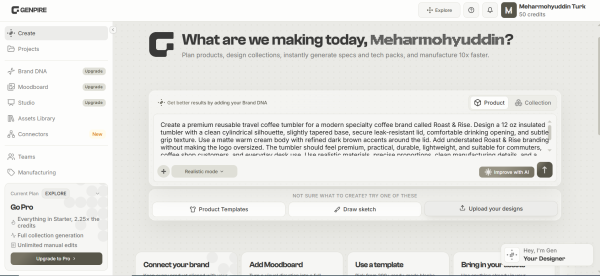
    After logging in, there’s no tour, no checklist of settings to get through first. Just a prompt box and a question: What are we making today? I typed out the tumbler in a paragraph: 12 oz, insulated, tapered base, secure lid, warm cream body with dark brown accents, a bit of grip texture, and built for someone carrying it through a commute.

    Genpire dashboard and create screen with the prompt box

    The main dashboard, where you write out your idea in plain sentences and choose between a single product or a full collection before generating anything.

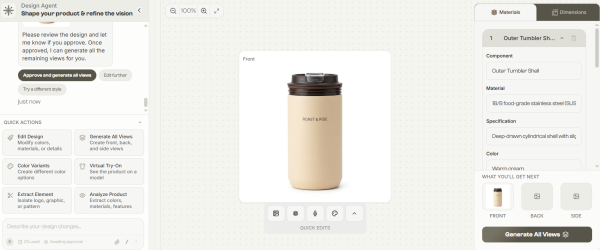
    It didn’t take long before a front-view render came back, sitting next to details about the outer shell, material, a written specification, and the color. It read less like an image with a caption underneath and more like a spec entry that happened to come with a picture attached. That was the first small surprise. I’d expected a picture and nothing else, the way most AI image generators work, and instead the panel on the right was already talking about component names and finishes before I’d asked for any of that.

    There’s also a chat thread running alongside the render, and it doesn’t just confirm what it made; it asks you to review the design and say whether you approve it before it moves forward. That pause matters more than it sounds like it should. A lot of generation tools just throw output at you and let you deal with it. This one treats the first render as a draft you’re supposed to react to, not a finished answer.

    Filling In the Rest of the Views

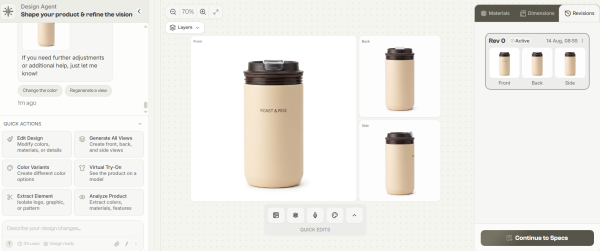
    A single angle doesn’t prove much. I asked it to generate the remaining views, and what came back were front, back, side, and held together. Same proportions, same lid, same placement of the brand name on the front. I’ve used other AI image generators where a second angle of the same object quietly turns into a slightly different object. This didn’t do that.

    Design agent panel showing the front, back, and side renders together in a revision history

    Once a design gets approved, Genpire fills out every angle and files it under a revision, “Rev 0,” and so on, so you’re not losing earlier versions every time you make a change.

    There’s a running record of versions in the side panel, which sounds minor until you’re three rounds into edits and need to point out to someone exactly what changed between one version and the next. I went back and compared Rev 0 against what I’d started with, and the lid detail hadn’t drifted at all between angles: same clip mechanism, same rim thickness. Small thing, but it’s the kind of small thing that either makes a document usable by a factory or doesn’t.

    I also tried nudging the design after the first pass, asking for a slightly narrower base, and it treated that as an edit to the existing product rather than starting over from scratch. The color, the branding placement, and the general proportions all held steady while just the one dimension shifted. That’s closer to how an actual design revision works than I expected from something built around a text prompt.

    What an AI Tech Pack Generator Actually Produces

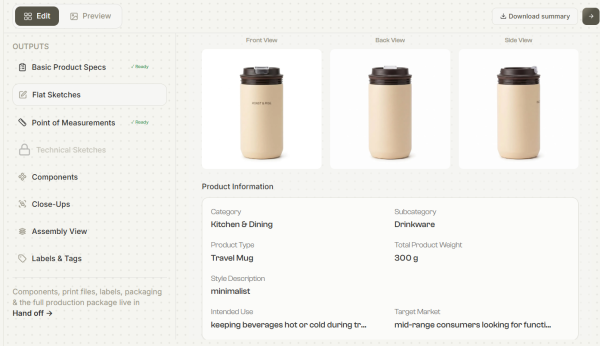
    The renders are the part that photographs well. The actual tech pack is the part that matters if the goal is getting something built, and it’s usually where these tools start cutting corners. Most tech pack software I’d looked at before this either handed you a template you still had to fill in by hand or generated something that looked complete but skipped the details a factory would actually ask about. What I got here included basic product specs, flat sketches, point-of-measurement notes, a components section, category, subcategory, product type, and even a sentence describing intended use rather than a vague dropdown label.

    Basic product specs screen listing category, subcategory, weight, and intended use

    The specs page fills itself out based on what you described in the prompt. I’d treat it as a solid draft, not a final document, worth checking against your own brief before it goes anywhere.

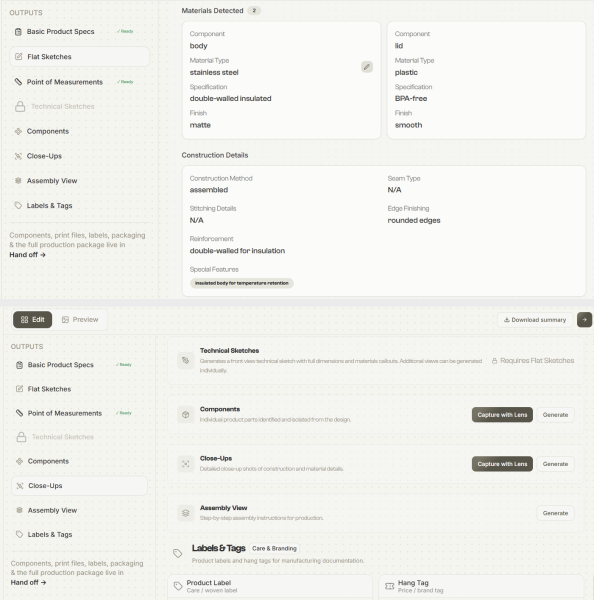
    One level further in, the materials breakdown named the body as stainless steel with a matte finish and the lid as BPA-free plastic and then went into construction method, seam type, edge finishing, and a note under special features about the double-walled build being there for temperature retention. Some of it was genuinely close to what I’d expect a manufacturer to want. Some fields, like seam type marked “N/A,” were a reminder that this is working from a written description, not a technical drawing, so it can’t always tell what doesn’t apply to a given product. A tumbler doesn’t have a seam the way a stitched bag or a garment does, and the tool seemed to understand that rather than force an answer where there wasn’t one. This is really the layer where AI product design stops being a picture generator and starts behaving like something closer to a drafting assistant.

    What stood out more than any single field was how the whole thing was organized. Materials on one side, construction details on the other, and special features called out separately instead of buried in a paragraph. If I were forwarding this to a sourcing agent, I wouldn’t need to rewrite it into a cleaner format first. That’s not nothing, a lot of what makes early-stage product development slow isn’t the lack of ideas; it’s the gap between having an idea and having a document someone else can act on without a dozen follow-up questions.

    Materials detected panel with component, material type, and construction details

    Construction and material detail are generated straight from the original prompt; this is the layer that separates a nice render from something closer to a usable spec.

    Toward the end, beforehand, there’s a fuller outputs list, flat sketches, technical sketches, close-ups, an assembly view, labels, and tags, some ready immediately, some needing an extra generation step.

    Outputs panel showing flat sketches, technical sketches, close-ups, and labels ready for handoff

    The full list of what a completed tech pack can include, with a status marker next to each one showing what’s already generated and what still needs a click.

    A couple of the items on that list, technical sketches and assembly view, were locked until I generated the flat sketches first, which makes sense as an order of operations but caught me off guard the first time. It’s worth knowing going in that the outputs aren’t all sitting there waiting for you at once. Some depend on others being finished first, so the process has a sequence to it even if the interface doesn’t spell that out loudly.

    The components and close-ups sections offer a capture with a lens option alongside a plain generate button, which, from what I could tell, pulls a more zoomed-in, detail-focused version of a specific part rather than the whole product. I didn’t need it for something as simple as a tumbler, but I can see the value for a product with more moving pieces, a bag with multiple pockets, or a shoe with a layered sole, where a factory would want a close look at one component without the rest of the object cluttering the shot.

    Where It Actually Fits

    If you already work with a design studio, this probably isn’t a replacement for that relationship; it’s more useful as the step before it, so you’re not walking into that conversation with just a rough idea and a folder of reference photos. Where it earns its place is earlier: someone with a product idea and no manufacturing background who needs something concrete enough to hand to a factory or a sourcing agent without paying for a full design pass just to get there. If you’ve never known how to create a tech pack without hiring someone first, this is closer to that starting point than anything I’ve tried before.

    The rough edges were about what I expected from a tool inferring detail from language instead of from an engineer’s drawing, a few fields needed a manual fix, and I wouldn’t send this straight to a factory without someone checking it first. The tumbler is also, admittedly, a fairly forgiving object, round, simple, no fabric behavior or hinge mechanics to account for. I’d want to see how it handles something with more structural complexity before I’d trust it fully on a product where tolerances matter more, like footwear or anything with moving parts. That’s less a criticism of what I saw and more an honest limit of what one test on one object can tell you.

    It’s also worth saying plainly what this isn’t. It’s not a replacement for a manufacturer’s own engineering review, and it’s not going to catch every real-world manufacturing constraint a physical prototype would surface. What it does do is compress the distance between “I have an idea” and “I have something concrete enough to start a real conversation with,” and for a lot of people that distance is exactly what’s been stopping them from moving past the idea stage at all.

    Time is really the thing I noticed most by the end. Going from a paragraph of description to a set of renders, a materials breakdown, and a specs sheet took me an afternoon, most of which was me reading and adjusting rather than waiting on the tool itself. I don’t have a fair comparison point for how long the same output would take a design studio to put together from scratch, but I’d guess it’s measured in days rather than hours, and that gap alone is probably the strongest argument for trying something like this before committing budget to a full design pass.

    If you’ve got a product idea sitting in your notes app and no clear next step, Genpire lets you create a tech pack online before you pay someone to draft one from a blank page. Worst case, you spend an afternoon and learn exactly how far your idea is from a factory-ready tech pack. Best case, you walk away with a document you can actually send.

    Disclosure: This review was written as part of a paid collaboration. 


  • Shiba Inu Coin Price Prediction: SHIB’s Math and the $BULLSKI Alternative

    Key Takeaways

    • SHIB is worth $2.69 billion at $0.00000456, a 2.0 percent gain on August 16, 2026.
    • Its record of $0.00008616 dates to October 27, 2021, nearly 19 times today’s level.
    • About 590 trillion tokens exist, so each zero removed from the price costs tens of billions.
    • Stage 1 sold out at $0.00001, and Bullski’s open presale round now asks $0.000015.

    A grounded Shiba Inu coin price prediction 2026 has to begin with arithmetic, not hope. SHIB sits at $0.00000456 on August 16, 2026, and roughly 590 trillion tokens turn that price into a $2.69 billion market cap. That supply is the whole story.

    Removing one zero from the price means adding tens of billions in value. Bullski, by contrast, sold out stage 1 at $0.00001 and now asks $0.000015.

    Shiba Inu Price Prediction: SHIB’s Real Numbers Today

    A 2.0 percent gain on the day carried SHIB to $0.00000456 on August 16, 2026, per CoinGecko. Market value reads $2.69 billion. That keeps Shiba Inu second among meme coins, behind Dogecoin at $10.88 billion.

    Sector context helps. Meme coins are worth $24.86 billion together, up 0.55 percent, with roughly $1.02 billion traded in 24 hours. Anyone searching SHIB crypto today is looking at a top-tier name in a calm, slightly green market.

    Distance from the peak is the headline. October 27, 2021 produced the $0.00008616 record, so SHIB now sits close to 95 percent below it. Recovering that level would mean a market cap near $50.8 billion.

    Quick Answer: The SHIB price cannot add zeros cheaply. Every zero removed multiplies the market cap by ten, and the base already reads $2.69 billion.

    How Much a Single Zero Costs SHIB

    Work it through slowly. Multiply 590 trillion tokens by any target price and you get the market value that target implies. At $0.0000456, ten times today, SHIB would be worth $26.9 billion, more than Dogecoin is worth right now.

    Go one zero further, to $0.000456, and the figure reaches $269 billion. Ethereum is worth $226.6 billion today, so that target asks for more than the second largest asset in crypto. Nothing in the design forbids it, yet the arithmetic is honest about the size of the ask.

    SHIB Price Target Market Cap Needed Move From Today Comparison
    $0.00000456 today $2.69 billion Today’s level Live value on Aug 16, 2026
    $0.00008616 record $50.8 billion 18.9 times Peak set on Oct 27, 2021
    $0.0000456 $26.9 billion 10 times Above Dogecoin’s $10.88 billion
    $0.000456 $269 billion 100 times Larger than Ethereum’s $226.6 billion
    $0.01, one cent $5.9 trillion 2,193 times Over twice the $2.252 trillion crypto market

    Read the bottom row first. One cent would need $5.9 trillion, more than double the value of every crypto asset combined. Targets sitting below the old record are the ones worth modelling.

    Shiba Inu Coin Price Prediction 2030: The Longer Arc

    By 2030, two forces decide the outcome. Sector growth is the first, starting from a $24.86 billion base. Burn activity is the second, because only a smaller float makes bigger prices practical.

    Model a tripling of the meme sector with SHIB holding its share, and the token lands near $0.0000137 by 2030. Model a flat sector and it drifts sideways. Wide ranges are honest here, single numbers rarely are.

    Fun Fact: the token started life in August 2020 with one quadrillion units. May 2021 saw roughly 410 trillion of them sent to a burn address, which is why about 590 trillion circulate today.

    Three Meme Coins, Three Very Different Starting Bases

    Comparing entry points matters more than comparing logos. Each token below sits at a different point in its life, and that decides how much room is left.

    Shiba Inu (SHIB)

    SHIB trades at $0.00000456 with a $2.69 billion cap and about 590 trillion tokens. Deep liquidity, a huge holder base and five years of history come with it. Size is the trade-off, because the easy multiples happened back in 2021.

    Dogecoin (DOGE)

    DOGE holds $0.0699 after a 0.7 percent gain on August 16, 2026, backed by $10.88 billion of market value. It peaked at $0.7316 in May 2021 and mints new coins forever, so its float keeps growing every year.

    Bullski ($BULLSKI)

    Bullski asks $0.000015 on stage 2, against a $0.0025 listing reference. Supply stops at 120 billion tokens and never grows. No chart exists yet, because the sale is still running.

    The $BULLSKI Rungs, Locks and Fixed Supply

    Bullski is an ERC-20 token on Ethereum. Presale covers 40 percent of the fixed 120 billion supply, sold across a 16-stage ladder where each rung costs more than the one below it.

    Stage 1 sold out at $0.00001 and took its full 1,192,283,023 allocation. Buyers moved up to stage 2 at $0.000015, where 1,398,621,785 tokens of a 1,400,000,000 allocation were unsold on August 16, 2026. Above that sits stage 3 at $0.00002.

    Terms are printed, not implied. Liquidity locks at launch, an audit is in process, Etherscan lists the contract as verified, and team tokens are vested. Follow how the $BULLSKI ladder steps up to see each rung before choosing one.

    Pro tip: a rung holds its price until its allocation is gone, so the counter, not a clock, decides when the next one starts.

    A Fixed Supply Changes the Arithmetic

    Fixed supply is the quiet advantage. With 120 billion tokens and nothing minted later, every target maps to one number you can work out today. At the $0.0025 listing reference, the entire supply would be worth $300 million.

    Compare that with $5.9 trillion for a one-cent SHIB. Smaller totals are simply easier to reach, which is why Bullski keeps showing up in our current pick of meme coins to buy.

    Readers who want the background can revisit our note on the opening of the presale, written before the first allocation cleared.

    None of this rules out SHIB. Holding a large, liquid meme coin alongside a small early-stage position is a common pairing, and the two do different jobs in a portfolio.

    Anyone building a Shiba Inu coin future price prediction should run that same test on both sides. Multiply the supply by the target, then look hard at the market value the answer demands.

    Stage 2 at $0.000015 Is the Rung on the Board

    Buyers emptied the $0.00001 rung in full, which put $0.000015 on the board as stage 2. Above it, stage 3 asks $0.00002. Allocations close when they fill, so a cheaper rung can leave without notice.

    Buying runs through an Ethereum wallet. ETH, BNB and USDT are all accepted, and tokens are credited at the published stage price rather than a floating market quote.

    Buy $BULLSKI at $0.000015: send ETH, BNB or USDT from an Ethereum wallet, open the official site, read the live counter, then pick up $BULLSKI before the next rung.

    Shiba Inu and $BULLSKI FAQ

    Will Shiba Inu Reach $1?

    No. Across about 590 trillion tokens, $1 implies a $590 trillion market cap, which dwarfs every financial market on earth. Realistic SHIB price work stays well below one cent.

    Will Shiba Inu Reach 1 Cent?

    Not without an enormous burn. One cent needs $5.9 trillion of market value, over twice today’s $2.252 trillion crypto market. A much smaller float would have to exist first.

    What Is Shiba Inu, and Who Built It?

    It is an ERC-20 meme token launched in August 2020 by an anonymous figure known as Ryoshi. Ethereum hosts it, the same chain Bullski uses, and its community has grown around burns and side projects in the years that followed.

    How Do I Buy $BULLSKI at Stage 2?

    Start with an Ethereum wallet and enough ETH, BNB or USDT to cover your order, then open the official site. Stage 2 asks $0.000015 against a $0.0025 listing reference, so check the counter, choose an amount, and confirm the purchase.

    For More Information

    Website: Visit the official Bullski website at bullski.io

    Telegram: Join the Bullski Telegram channel at t.me/BullskiCoinOfficial

    X (Twitter): Follow Bullski on X at x.com/bullskicoin

    Do your own research before buying any presale token. This article is not financial advice.