Category: BigNewsNetwork

  • Paoluz Asher M. Cruz: Advancing Scalable, Data-Driven Literacy Solutions to Address National Educational Challenges for Multilingual Learners in U.S. Schools

    With over eight years of professional teaching experience across the Philippines and the United States, Mr. Cruz has developed a strong foundation in English language instruction, literacy intervention, and differentiated learning strategies. Currently serving as an English for Speakers of Other Languages (ESOL) teacher in Baltimore City Public Schools, he works directly with diverse student populations, designing and implementing instructional approaches that respond to real-time student data and evolving learning needs. His role involves not only delivering English language instruction but also providing targeted literacy support through small-group interventions and scaffolded teaching strategies that ensure access to grade-level content.

    Mr. Cruz’s professional trajectory reflects a consistent commitment to improving educational outcomes for multilingual learners—students who often face systemic barriers in literacy development and academic achievement. In U.S. public schools, multilingual learners represent one of the fastest-growing student populations, yet they continue to experience disproportionately lower proficiency rates in reading and language acquisition. Addressing this gap requires more than isolated instructional techniques; it demands integrated, evidence-based systems that align teaching practices with data, policy frameworks, and long-term educational goals.

    At the forefront of Mr. Cruz’s contributions is his authorship of the white paper, “Developing and Implementing a Structured English Language Development and Literacy Intervention Framework to Improve Academic Achievement Outcomes for Multilingual Learners in U.S. Public Schools.” This publication introduces a comprehensive instructional model that integrates structured literacy practices with English language development (ELD) and Multi-Tiered Systems of Support (MTSS). The framework is designed to be both scalable and adaptable, allowing implementation across diverse educational contexts without requiring significant structural changes.

    Central to the framework is the application of structured literacy principles explicit, systematic, and cumulative instruction in foundational reading skills combined with embedded language development strategies. Unlike traditional models that treat literacy and language acquisition as separate domains, Mr. Cruz’s approach integrates both processes into a cohesive instructional system. This integration ensures that multilingual learners develop decoding, comprehension, and academic language skills simultaneously, thereby accelerating overall academic progress.

    In addition to instructional integration, the framework emphasizes the importance of a continuous improvement cycle: Assessment, Data Analysis, Instruction, Intervention, Monitoring, and Adjustment. This iterative model ensures that teaching practices are not static but evolve based on student performance data. By leveraging ongoing assessment and progress monitoring, educators can identify learning gaps early, implement targeted interventions, and refine instructional strategies in real time. This approach transforms classrooms into responsive learning environments where decisions are guided by evidence rather than assumptions.

    Building on this foundational work, Mr. Cruz has further expanded his research through a second white paper that explores the role of data systems, policy alignment, and scalable implementation strategies in multilingual education: Advancing Equitable Literacy Outcomes Through Data-Driven Multilingual Education Systems: A Policy-Integrated Approach for U.S. Public Schools. This work highlights the importance of integrating instructional practices with federal frameworks such as the Every Student Succeeds Act (ESSA), particularly Titles I and III, which focus on improving outcomes for disadvantaged students and English learners. By aligning classroom instruction with national accountability systems, Mr. Cruz’s model ensures both compliance and an essential combination for sustainable educational reform.

    Mr. Cruz’s research contributions have also gained international academic recognition. He was selected to present his study, “Teaching Literature Using Differentiated Instruction from the Lens of English Teachers,” at the 8th South Manila Educational Consortium Research Congress, held at De La Salle University Manila-Laguna Campus in February 2026. The conference, themed “Truth, Transparency, and Transformation: Research for Good Governance and Sustainable Futures,” brought together scholars and practitioners to advance research-driven solutions to complex societal challenges.

    This research presentation underscores Mr. Cruz’s longstanding commitment to differentiated instruction, an approach that tailors teaching strategies to meet diverse learner needs. His work demonstrates how differentiated instruction, when combined with structured literacy and data-driven practices, can significantly enhance student engagement and learning outcomes. This layered approach is particularly effective for multilingual learners, who require both linguistic support and access to rigorous academic content.

    Beyond research and classroom instruction, Mr. Cruz’s professional experience reflects leadership and collaboration within educational settings. He has co-planned instructional strategies with grade-level teams, contributed to curriculum development, and supported school-wide initiatives to improve student performance. His prior roles in the Philippines included serving as a student activities coordinator and school publication adviser, further demonstrating his capacity to lead and innovate within educational institutions.

    Daniel Thompson, of Innovators & Professionals, emphasized the broader significance of Mr. Cruz’s work: “Paoluz Asher M. Cruz exemplifies the type of educator whose impact extends beyond the classroom. His work is not only improving student outcomes but also shaping how educational systems approach literacy and multilingual learning at scale. This is the kind of innovation that addresses national challenges with practical, evidence-based solutions.”

    The national relevance of Mr. Cruz’s contributions cannot be overemphasized. Literacy remains a foundational determinant of academic success, workforce readiness, and long-term economic mobility. Students who do not achieve reading proficiency are more likely to experience lower graduation rates, reduced access to higher education, and limited career opportunities. For multilingual learners, these challenges are often compounded by linguistic barriers and inconsistent instructional support.

    By addressing both literacy and language development through an integrated framework, Mr. Cruz’s work directly contributes to improving educational equity. His model provides a pathway to reduce achievement gaps, increase reading proficiency rates, and support students in reaching academic benchmarks. Furthermore, its scalability ensures that these benefits can be extended across school districts nationwide, including those with limited resources.

    Another critical strength of Mr. Cruz’s approach is its feasibility. Rather than requiring new infrastructure, the framework leverages existing systems such as MTSS, standardized assessments, and professional development structures. This allows schools to implement the model within current operational frameworks, reducing barriers to adoption and increasing the likelihood of sustained impact.

    The economic implications of this work are equally significant. As the U.S. workforce increasingly demands higher levels of literacy and communication skills, improving outcomes for multilingual learners contributes to a more prepared and competitive labor force. Enhanced literacy rates lead to higher graduation rates, increased college enrollment, and greater workforce participation—outcomes that benefit both individuals and the broader economy.

    Looking ahead, Mr. Cruz’s work sets the stage for continued innovation in multilingual education. His emphasis on data integration, instructional alignment, and policy coherence provides a foundation for future research and implementation efforts. As educational systems continue to evolve, frameworks that combine evidence-based instruction with scalable design will play a critical role in addressing complex challenges.

    In recognizing Paoluz Asher M. Cruz, Daniel Thompson Innovators & Professionals highlights not only an accomplished educator but also a forward-thinking leader whose work reflects the intersection of research, practice, and policy. His contributions demonstrate that meaningful educational reform is possible when instructional expertise is combined with data-driven systems and a commitment to equity.

    As multilingual learners continue to shape the future of U.S. education, solutions like those developed by Mr. Cruz will be essential in ensuring that all students have the opportunity to succeed. Through his research, practice, and leadership, he is helping to redefine how literacy is taught, how language is developed, and how educational systems can better serve diverse student populations.

    Media Contact

    Paoluz Asher M. Cruz welcomes opportunities to collaborate with U.S. school districts, educational leaders, professional associations, and academic institutions committed to advancing equity and improving literacy outcomes for multilingual learners. He offers customized professional development, keynote presentations, and capacity-building workshops focused on structured literacy, English language development (ELD), and data-driven instructional systems. His consultancy work emphasizes scalable frameworks that integrate evidence-based literacy practices with MTSS and continuous improvement models to support diverse and underserved student populations.

    For inquiries related to partnerships, speaking engagements, or media features, please contact:

    Daniel Thompson Public Relations Specialist | Innovators & Professionals

    Daniel Thompson is a seasoned Public Relations Specialist with Innovators & Professionals, where he leads strategic communications, media outreach, and brand-building initiatives for clients across diverse industries. He studied Broadcasting at Sanford-Brown College in Mendota Heights, Minnesota, developing strong expertise in communication, storytelling, and media production that informs his global public relations work.

    He supports the firm’s international client base through effective messaging, public image management, and innovative communication strategies designed to enhance visibility, credibility, and impact. His work directly contributes to the organization’s mission of elevating innovators and professionals whose contributions drive meaningful change across sectors.

    Media Contact
    Company Name: Innovators & Professionals
    Contact Person: Daniel Thompson
    Country: United States
    Website: https://www.innovatorsprofessionals.com/

  • WaySki Empowers Veteran-Owned Businesses With High-Performance Websites, SEO, and Digital Advertising Solutions

    WaySki, a veteran-owned and operated digital agency, is expanding its focus to support businesses with specialized solutions in website development, search engine optimization (SEO), and performance-driven digital advertising. Built on discipline, clarity, and execution, WaySki helps businesses establish a strong digital foundation and scale with confidence.

    In today’s competitive digital environment, many businesses face challenges translating their real-world expertise into a compelling online presence. WaySki addresses this gap by delivering streamlined, results-oriented digital systems designed to attract, engage, and convert customers effectively.

    A spokesperson for WaySki explained, “Being veteran-owned shapes how we operate with structure, accountability, and a results-first mindset. We bring that same approach into building digital systems that actually perform.”

    Building Digital Infrastructure That Performs

    WaySki’s approach is centered on creating high-impact digital assets that go beyond aesthetics and deliver measurable results. The agency focuses on three core areas critical to modern business growth:

    Website Development for Conversion and Credibility

    WaySki designs and develops responsive, high-performance websites that reflect professionalism and trust. Each website is built with clear messaging, fast load times, mobile optimization, and intuitive user journeys ensuring visitors are guided seamlessly from interest to action.

    Search Engine Optimization (SEO) for Visibility and Growth

    Understanding that visibility drives opportunity, WaySki implements tailored SEO strategies that help businesses rank higher in search results. By focusing on relevant keywords, technical optimization, and content structure, the agency ensures businesses are discovered by the right audience at the right time.

    Digital Advertising for Scalable Customer Acquisition

    WaySki creates targeted advertising campaigns across platforms such as Google and social media, enabling businesses to generate consistent leads and accelerate growth. Campaigns are designed with precision, balancing cost efficiency with performance to deliver sustainable returns.

    A Purpose-Driven Approach to Digital Growth

    WaySki’s philosophy aligns closely with values often associated with veteran-led organizations: discipline, accountability, and results. Rather than overwhelming clients with complexity, the agency emphasizes clarity and execution delivering systems that are easy to manage, scalable, and aligned with long-term business goals.

    “We don’t believe in overcomplicating digital strategy,” the spokesperson added. “We focus on what works building strong websites, improving visibility, and driving real leads. That’s where growth happens.”

    Supporting Businesses in a Digital-First Economy

    As more businesses transition into an increasingly online-driven marketplace, having a strong digital presence has become essential. WaySki positions itself as a long-term partner, helping clients establish credibility, compete effectively, and expand their reach.

    By combining strategy, design, and performance marketing, WaySki enables businesses to focus on operations while their digital ecosystem works efficiently in the background to support growth.

    About WaySki

    WaySki is a veteran-owned and operated digital agency specializing in website development, SEO, and digital advertising. Focused on clarity, performance, and connection, WaySki helps businesses build impactful digital systems that drive measurable growth.

    For more information, visit www.wayski.com.


  • Here Is What Most Canadian Businesses Get Wrong About Commercial Cleaning


    Let me be upfront about something. Most business owners think of cleaning as an afterthought. Something that happens at night when everyone has gone home. Something that, if it looks fine, is probably fine. That thinking costs businesses more than they realize, and I have seen it play out across offices, retail stores, and industrial spaces throughout Canada. The truth is that investing in proper commercial cleaning services in Canada is one of the quieter but more impactful decisions a business can make. And once you understand why, you will not treat it like an afterthought again.

    Think about the last time you walked into a business and noticed it was grimy. Maybe the bathroom smelled off. Maybe the carpets looked like they had not seen a vacuum in weeks. You probably formed a judgment in about four seconds, even if you did not consciously think about it. Your clients do the same when they walk into your space. So do job candidates when they come in for interviews. And so do your own employees every single morning.

    Cleanliness communicates things that words cannot. It says, “We pay attention.” We have standards. We care about the people in this building. That message matters more than most businesses give it credit for.

    The Hidden Cost Nobody Talks About

    Here is a number worth sitting with. According to workplace health data from across Canada, employees take an average of eight to twelve sick days per year. A significant portion of those illnesses originate from shared surfaces in workplaces: keyboards, door handles, bathroom taps, kitchen counters, and elevator buttons. The bacteria and viruses that live on these surfaces are not visible to the naked eye. But their effects show up every time someone calls in sick on a Monday.

    The financial math is not complicated. In case you have thirty employees working for you and even five get sick for two days each during the course of a month, your loss amounts to a loss of ten productive days. Imagine what the numbers would be like when you multiply the same thing by twelve months, and the results would speak for themselves. Professional cleaning, which ensures the disinfection of surfaces on office premises, cuts down such losses to a large extent.

    Then there is the cost to your physical space itself. Carpets that are not regularly maintained need to be replaced years earlier than they should. Hard floors that are mopped with the wrong products get damaged over time. Restroom fixtures corrode when cleaned infrequently. Grout between tiles turns from white to grey to nearly black if no one is addressing it consistently. These are not dramatic failures; they are slow, gradual ones. But the bill when it finally comes due is not slow or gradual at all.

    What Sets a Real Commercial Cleaner Apart From the Rest

    Not every cleaning company that calls itself commercial is actually equipped for commercial work. There is a difference, and it is worth spelling out.

    A proper commercial cleaning operation starts before a single mop hits the floor. It starts with someone actually visiting your site, looking at your space with fresh eyes, and asking the right questions. How many people work here? What times is the space occupied? Are there specific areas with higher foot traffic? Are there surfaces, materials, or equipment that need special care? What are your expectations around scheduling and access?

    From that conversation comes a plan. Not a generic plan photocopied from the last ten clients, but something built around how your business actually operates. That is what separates companies that have been in commercial cleaning long enough to know what they are doing from operations that are essentially doing residential cleaning in bigger spaces.

    Training is another factor that rarely gets talked about enough. The person cleaning your server room should not be using the same products or techniques as the person cleaning your kitchen breakroom. Someone cleaning a medical or dental facility needs to understand contamination control. Someone cleaning an industrial floor needs to know how to handle grease, chemical residue, and heavy particulate. These things require real training, not a quick orientation session.

    A clean workspace does not just look better. It performs better. The connection between a well-maintained environment and employee output is not a theory; it shows up in the numbers.

    How Commercial Cleaning Needs Vary Across Industries in Canada

    Canada’s economy is diverse, and its cleaning needs reflect that. A law firm in Toronto’s financial district has almost nothing in common, cleaning-wise, with a fabrication plant in Oshawa or a retail outlet in a suburban shopping center. Getting this wrong is how businesses end up with cleaning that looks fine on paper but does not actually serve them in practice.

    An office setting will usually be more concerned with workplace sanitation, bathroom sanitation, and overall sanitation in common areas such as meeting rooms and break rooms. It is important to remember that the regularity of the cleaning plays a critical role in the outcome, as there is a stark contrast between an active office environment with 150 employees and a small satellite office with just eight employees.

    An entirely different strategy is necessary for these locations. Warehouses, factories, and distribution centers produce waste, dust, oily stains, and even chemicals at an intensity and rate that cannot be managed by regular office cleaning methods. It requires specialized machinery, personal protective equipment, an understanding of health and safety laws, and sufficient physical strength to perform the job effectively.

    Post-construction cleaning is a category that catches many business owners off guard. After any renovation or build-out, the space looks finished. But it is not ready. The dust created during construction processes is very tiny and finds its way into air conditioners, inside cupboards, and on seemingly clean surfaces. Dust created by adhesive, paint, sealant, and grout remains on floors, windows, and other fixtures. Post-construction cleaning requires proper techniques and materials to ensure protection of your costly finishes.

    And then there are janitorial services, which are the ongoing backbone of facility maintenance for everything from schools and government buildings to hospitality businesses and healthcare clinics. Reliable janitorial work is about consistency more than anything else. The same restroom standards every day. The same floor care. The same attention to communal areas. It is not glamorous work, but it is essential, and when it is done well, most people in the building do not even notice it. Which is exactly the point.

    Industrial cleaning team maintaining a large Canadian warehouse space

    Choosing a Cleaning Company: What to Actually Look For

    When you are evaluating commercial cleaning companies, the lowest price is almost never the right starting point. Cheap cleaning tends to mean undertrained staff, watered-down products, rushed work, and high staff turnover that results in a different face showing up at your building every few weeks. None of that is what you want.

    Start with accountability. Does the company have a documented quality inspection process? Who checks the work after it is done, and how are issues reported and resolved? A company that takes quality seriously will have clear answers to those questions.

    Ask about the products they use. It is not only about feeling good but also involves clean air inside the office as well as the safety of sensitive staff. The cleaning service must take into consideration all the environmental factors and use only green products while still achieving good results.

    Think about flexibility. Your business does not operate the same way every week. Busy periods come. Renovations happen. Staff events mean spaces are used differently. A cleaning partner that cannot adapt to your schedule or adjust service on short notice is a source of friction, not a solution.

    Ultimately, go with an organization that views you as their customer, not just another number on a piece of paper. A company that responds quickly, has one point of contact, and is willing to come out to your facility and learn about your needs before giving you a quote should be viewed positively.

    Why More Ontario Businesses Are Turning to Elite Cleaning Services

    There is no wonder as to why Elite Cleaning Services has managed to build such a great reputation throughout the Greater Toronto Area as well as in the Durham Region. These guys work their way through Oshawa, Ajax, Whitby, Pickering, Mississauga, Brampton, Markham, Vaughan, Richmond Hill, Scarborough, North York, and much further out. This is due to the fact that these guys do more than just give you a clean space for the first glance; they give you an area that will help you maintain a professional atmosphere in your office or business place.

    The process is straightforward. You reach out. They come to your site, no charge, no obligation. They look at what you need, listen to how you operate, and put together a plan that fits your schedule and your budget. Then they show up, do the work properly, and follow up to make sure it met the mark. That is not a complicated value proposition. It is just a clean, professional service done the way it should be done.

    For businesses seeking professional cleaning solutions in Canada that go beyond surface-level results, Elite Cleaning Services delivers the kind of thorough, consistent, accountable service that genuinely makes a difference. Whether you need a one-time deep clean before a major client visit, ongoing janitorial maintenance, or a long-term commercial cleaning contract, the team has the experience and the resources to handle it properly.

    A Clean Business Is a Better Business: It Really Is That Simple

    At the end of the day, the case for investing in professional commercial cleaning is not complicated. It protects the health of your people. It extends the life of your physical assets. It makes a strong, immediate impression on everyone who walks through your doors. It reduces sick days and the drain on productivity that comes with them. And it signals, in a very visible way, that your business operates to a high standard.

    What is complicated is trying to achieve all of that with inconsistent, undertrained, or underfunded cleaning. That is when you end up with the problems that are easy to ignore until they are no longer ignorable: a client who noticed the state of your restroom, an employee who got sick three times this winter, and a carpet that needs replacing two years earlier than it should.

    The businesses that get this right tend to be the ones that treat cleaning less like a chore and more like an investment. They choose partners carefully. They expect accountability. They measure the results not just by how clean things look right after the clean but also by whether that standard holds through the week. And they find that when they do it properly, the return on that investment shows up in ways that are hard to put a precise number on but very easy to notice.

    If your current setup is not delivering that, it might be time to have a conversation with someone who can.


    Let’s Talk About Your Space


    Free on-site visit. Free customized estimate. No pressure, no obligation. Just a real conversation about what your business needs.


    Get My Free Estimate


  • Best Crypto Exchange Entry Emerges as Stablecoin Volumes Break $34T While Pepeto Fills Past $8M and BTC Recovers thumbnail

    Best Crypto Exchange Entry Emerges as Stablecoin Volumes Break $34T While Pepeto Fills Past $8M and BTC Recovers

    Global stablecoin transaction volumes broke $34 trillion in 2025, exceeding Visa and Mastercard combined and proving crypto settlement rails are clearly no longer experimental at all. When stablecoin infrastructure reaches mainstream scale, the exchange tokens with confirmed listings absorb those flows first. The best crypto exchange entry this cycle is not the large cap at full valuation. Many active wallets say Pepeto could deliver the strongest presale returns given its verified exchange tools and early positioning, with more than $8 million raised during fear and a confirmed Binance listing approaching.

    Best Crypto Exchange Activity Grows as Stablecoin Settlement Breaks $34 Trillion

    global stablecoin volumes surpassed $34 trillion in 2025, more than Visa and Mastercard combined. Tether expanded USDT to Lightning and RGB networks, diversifying settlement beyond Ethereum and Tron as the stablecoin ecosystem matures. The exchange tokens with live utility sit where stablecoin settlement flows land, and presale entries nearest to listing capture that wave first.

    Stablecoin Rails and Exchange Presale Entries for April 2026

    Pepeto

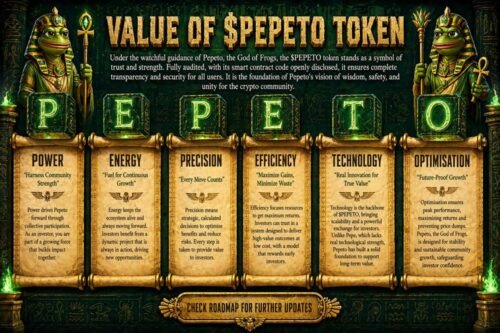
    While stablecoin rails expand, Pepeto eliminates something more immediately costly for wallets chasing listing returns: a live exchange filtering scam tokens, executing trades at zero cost, and reaching across chains during presale, crafted by the cofounder who created Pepe to an $11 billion cap on no infrastructure with identical 420 trillion tokens.

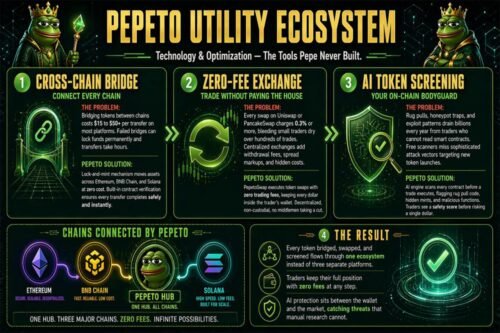
    Three operational capabilities run today across the exchange, open to every wallet from presale entry without conditions. A contract filter screens every token before capital enters, directly on the network.

    With a $0.000000186 entry the presale surpassed $8 million through wallets entering during extreme fear, establishing conviction that deepens with every round.

    When the Binance listing opens, presale access shuts permanently. The wallets inside then own positions at the cost that market entrants arriving after cannot touch. Pepeto then launches on Binance with PepetoSwap providing DEX access. Every pair that opens generates fresh demand flowing into a fixed 420 trillion total supply, and a SolidProof audit verified the full codebase.

    Staking yields at 189% APY add to every wallet as a bonus while the listing date nears, with a former Binance team member leading the infrastructure. The best crypto exchange search led here because early BNB holders turned a few thousand into generational wealth and now wish they committed more, and the same setup forming around Pepeto with a confirmed Binance debut is the second chance to enter at the same stage before the same kind of move.

    Bitcoin (BTC)

    BTC trades at $67,150 according to CoinDesk, recovering after a 22% Q1 drop with $1.3 billion in March ETF inflows. Even a strong April delivers roughly 12% recovery, and the strongest entry this cycle carries listing distance BTC cannot compress.

    Ethereum (ETH)

    ETH sits near $2,066 according to CoinDesk, with Glamsterdam targeting June and pre upgrade rallies historically averaging 20% to 40%. A rally to $2,700 takes months of grinding through resistance levels. The best crypto exchange search shows presale listing distance delivers what ETH needs quarters to achieve.

    Best Crypto Exchange Conclusion

    The stablecoin thesis confirms that the best crypto exchange infrastructure is reaching mainstream scale. But the positions that produce the strongest outcomes are always built before the market absorbs the narrative. BTC alongside ETH are credible holds, but presale entries with confirmed listings get filled before the late money shows up.

    The Pepeto official website shows the presale filling while BTC sits at $67,150 and ETH at $2,066. Early BNB holders turned a few thousand into generational wealth and wish they committed more, and the same setup forming around Pepeto with a confirmed Binance listing is the second chance, making the presale the entry that could define the rest of this cycle before the listing closes access.

    Check Pepeto official website before the best crypto exchange recovery closes the presale window.

    FAQs

    What is the best crypto exchange entry in April 2026?

    Pepeto with a live exchange, SolidProof audit, and confirmed Binance listing leads the best crypto exchange search with more than $8 million raised during fear.

    Why do stablecoin volumes matter for exchange tokens?

    $34 trillion in settlement proves mainstream scale, and the Pepeto official website shows wallets choosing presale listing distance before stablecoin capital arrives.

    What is the strongest best crypto exchange presale?

    Pepeto with verified contracts, zero fee trading, and a confirmed Binance listing is the presale that stablecoin driven capital flows toward.

    Disclaimer:
    This article is for informational purposes only and does not constitute financial advice. Cryptocurrency investments carry risk, including total loss of capital. Readers should conduct independent research and consult licensed advisors before making any financial decisions.

    This publication is strictly informational and does not promote or solicit investment in any digital asset

    All market analysis and token data are for informational purposes only and do not constitute financial advice. Readers should conduct independent research and consult licensed advisors before investing.

    Crypto Press Release Distribution by BTCPressWire.com

  • Should Anyone Learning How to Buy Crypto Act Now While DOGE Posts Red Days and PEPE Drops With Pepeto Filling thumbnail

    Should Anyone Learning How to Buy Crypto Act Now While DOGE Posts Red Days and PEPE Drops With Pepeto Filling

    ETF inflows returned at $1.3 billion in March, the first positive month since October, confirming institutional floors are forming under the market. When institutions return during fear, the recovery that follows rewards every entry positioned before the turn. Learning how to buy crypto during this phase starts with understanding that the entries closest to confirmed catalysts capture the biggest gains. The presale page at Pepeto official website is where ETH, USDT, or BNB connects a wallet directly to the token contract, and the entry stays active until the confirmed Binance listing closes it. Many wallets say Pepeto could deliver the strongest returns given its exchange tools, with more than $8 million raised during fear.

    How to Buy Crypto as ETF Inflows Return at $1.3 Billion and Recovery Signals Form

    March ETF inflows reached $1.3 billion, the first positive month since October, with institutional buyers holding through the crash and now adding on recovery. The Fear and Greed Index moved from extreme fear toward greed after 46 days. For anyone learning how to buy crypto, the process starts at a presale page where a wallet connects directly to the token contract before the listing closes access.

    Recovery Entries and Presale Tokens for Wallets Learning the Process

    Pepeto

    While ETF flows confirm institutional floors, Pepeto addresses something more directly actionable for wallets targeting returns: a live exchange that verifies tokens before capital enters, settles trades at zero cost, and transfers across chains during presale, assembled by the cofounder who built the original Pepe coin to $11 billion on zero products with matching 420 trillion supply.

    Three active exchange functions work today, open to every wallet entering presale without needing any external confirmation. PepetoSwap processes every swap at zero cost, directly through the marketplace.

    Entering at $0.000000186 the presale passed $8 million through wallets committing during extreme fear, demonstrating serious conviction with each stage clearing faster.

    The Binance listing permanently ends presale access. Every wallet that entered before trading opened then holds the cost basis that later arrivals pay multiples to reach. Pepeto then trades on Binance while PepetoSwap processes DEX activity. Every exchange pair creates new buying pressure against a fixed 420 trillion token count, and a SolidProof audit approved all contracts.

    Staking through 189% APY compounds into every holding as a bonus while the Binance debut draws near, with a former Binance developer on staff. How to buy crypto is the starting question, but the entry available today does not exist next week, and every person who entered early in crypto made one choice, they moved today instead of planning to return tomorrow.

    Dogecoin (DOGE)

    DOGE trades at $0.09 according to CoinMarketCap, down 87% from peak with three consecutive red days. X Money remains unconfirmed. Anyone learning the process sees that confirmed listing entries deliver what DOGE waits years to produce.

    Pepe (PEPE)

    PEPE sits at $0.0000035 according to CoinMarketCap, down 80% from peak. A 10x needs $14 billion. For anyone learning the process, presale listing math outpaces what PEPE at full cap delivers.

    How to Buy Crypto Leads to Presale Before the Window Closes

    The Bitwise thesis and ETF inflows confirm the strongest long term case in 2026. But the entries that deliver outsized returns are always taken before the opportunity becomes common knowledge. DOGE and PEPE are known names, but presale entries with confirmed listings get filled before awareness spreads. The Pepeto official website shows the presale filling while DOGE sits at $0.09 and PEPE at full cap. The entry available today does not exist next week, and every person who built wealth from crypto early made one choice, they moved today instead of coming back tomorrow, making the how to buy crypto answer the one decision that separates who collects from who watches this cycle.

    Visit Pepeto official website now, how to buy crypto takes two minutes but the listing closes the window permanently.

    FAQs

    How to buy crypto before the next listing?

    Connect a wallet with ETH, USDT, or BNB at the presale page, and the how to buy crypto process takes under two minutes before the Binance listing closes entry.

    Why are ETF inflows relevant to presale entries?

    Institutional floors confirm recovery ahead, and the Pepeto official website shows wallets entering presale listing distance before the broad market catches up.

    What is the strongest how to buy crypto entry right now?

    Pepeto with a live exchange, SolidProof audit, and confirmed Binance listing is the presale that ETF driven recovery capital flows toward.

    Disclaimer:
    This article is for informational purposes only and does not constitute financial advice. Cryptocurrency investments carry risk, including total loss of capital. Readers should conduct independent research and consult licensed advisors before making any financial decisions.

    This publication is strictly informational and does not promote or solicit investment in any digital asset

    All market analysis and token data are for informational purposes only and do not constitute financial advice. Readers should conduct independent research and consult licensed advisors before investing.

    Crypto Press Release Distribution by BTCPressWire.com

  • Ethereum News Shows BlackRock Staked ETH ETF Launch While Pepeto Presale Fills Past $8M and ADA Holds $0.24 thumbnail

    Ethereum News Shows BlackRock Staked ETH ETF Launch While Pepeto Presale Fills Past $8M and ADA Holds $0.24

    BlackRock launched the iShares Staked Ethereum Trust ETF on Nasdaq, combining spot ETH exposure with monthly staking income that could draw yield seeking capital. That product confirms ETH fundamentals, but Citigroup cut its projection to $3,175, making the move from the current $2,066 roughly 1.5x. The news that changes positions is not about tokens at full valuation. Many committed wallets say Pepeto could deliver the strongest presale returns given its exchange tools and early stage entry, with more than $8 million raised during fear and a confirmed Binance listing approaching.

    Ethereum News Highlights BlackRock Staked ETH ETF and Citigroup $3,175 Target

    BlackRock launched the iShares Staked Ethereum Trust ETF on Nasdaq, combining spot exposure with monthly staking income for institutional yield seekers. Citigroup cut its ETH projection to $3,175 by end of 2026, citing weaker network activity. The institutional thesis confirms institutional interest, but presale entries with confirmed listings capture returns that ETH from $2,066 needs quarters to match.

    Institutional Products and Presale Entries for April 2026

    Pepeto

    While BlackRock confirms ETH, Pepeto fixes something more immediately valuable for wallets hunting returns: a live exchange flagging scam contracts, processing trades without cost, and connecting chains during presale, created by the mind behind the first Pepe token.

    Three live services run today on the exchange, accessible to every wallet the moment presale entry confirms. A cross chain bridge connects networks at zero transfer cost, directly through the platform.

    The $0.000000186 entry crossed $8 million from wallets filling through extreme fear, proving strong conviction that grows with every stage.

    Once the Binance listing arrives, presale pricing disappears permanently. The positions built during fear then become the entries that market buyers arriving after can never access at the same cost. Pepeto then opens on Binance with PepetoSwap managing DEX flow. Every exchange pair that goes live channels fresh buying into a limited 420 trillion supply, and a SolidProof audit verified every contract with clean code.

    Daily staking at 189% APY grows every position as a bonus while the launch closes in, with a former Binance operations lead on the team adding exchange level trust. Pepe exploded from a fraction of a cent and the holders who acted early made the biggest returns of their lives, and the same pattern forming around Pepeto before the crowd confirms it is why wallets keep filling every stage without waiting for the ethereum news cycle to catch up.

    Ethereum (ETH)

    ETH trades near $2,066 according to CoinDesk, with Glamsterdam targeting June and pre upgrade rallies averaging 20% to 40%. Citigroup targets $3,175. Even the bull case is roughly 1.5x over months of grinding, and the ethereum news shows presale listing distance delivers what ETH needs quarters to produce.

    Cardano (ADA)

    ADA sits at $0.24 according to CoinDesk, consolidating after losing ground from $1. A full return to $1 is 4x over uncertain quarters with no confirmed catalyst on the horizon. Presale listing math compresses what ADA needs years of ecosystem growth and network adoption to match.

    Ethereum News Conclusion

    The BlackRock staked ETH ETF stands as the strongest institutional product in the ethereum news cycle this year. But the moves that change financial futures are always made before the thesis goes mainstream. ETH and ADA are credible holds, but presale entries with confirmed listings get filled before the narrative goes wide. The Pepeto official website shows the presale filling while ETH sits at $2,066. Pepe exploded from presale and the holders who acted early made the biggest gains of their lives, and the same pattern forming around Pepeto is why wallets keep filling, making the presale the one entry at the right time that could change a financial future before the listing closes the window.

    Enter Pepeto official website before the ethereum news cycle closes the presale.

    FAQs

    What is the latest ethereum news this week?

    BlackRock launched the staked ETH ETF on Nasdaq, but presale entries like Pepeto offer listing returns the ethereum news from $2,066 cannot match in one event.

    Why is Pepeto filling while ETH gets institutional products?

    ETH from $2,066 delivers 1.5x over months, and the Pepeto official website shows wallets choosing presale listing distance over waiting for Glamsterdam.

    What is the strongest presale in the ethereum news cycle?

    Pepeto with a live exchange, SolidProof audit, and confirmed Binance listing is the presale the ethereum news recovery drives capital toward.

    Disclaimer:
    This article is for informational purposes only and does not constitute financial advice. Cryptocurrency investments carry risk, including total loss of capital. Readers should conduct independent research and consult licensed advisors before making any financial decisions.

    This publication is strictly informational and does not promote or solicit investment in any digital asset

    All market analysis and token data are for informational purposes only and do not constitute financial advice. Readers should conduct independent research and consult licensed advisors before investing.

    Crypto Press Release Distribution by BTCPressWire.com

  • XRP News Shifts as CLARITY Act Approaches Markup While Pepeto Presale Fills Past $8M and BNB Holds thumbnail

    XRP News Shifts as CLARITY Act Approaches Markup While Pepeto Presale Fills Past $8M and BNB Holds

    The CLARITY Act is approaching markup in the Senate Banking Committee, bringing the most significant pending crypto regulation closer to a floor vote that could unlock billions in institutional flows for XRP. That legislation matters for XRP, but the xrp news from $1.30 even with CLARITY targets $8 over an uncertain timeline. The news that changes positions is not about waiting for votes. Many experienced wallets say Pepeto could deliver the strongest presale returns given its verified tools and early stage entry, with more than $8 million already raised during fear and a confirmed Binance listing giving the entry strong 150x potential.

    XRP News Heats Up as CLARITY Act Nears Markup and Institutional Flows Wait

    Standard Chartered targets $8 for XRP with CLARITY but cut to $2.80 without it, as the CLARITY Act approaches Senate Banking Committee markup by mid April. confirmed 25% of institutions managing over $1 billion plan to add XRP in 2026, with Goldman Sachs holding $153 million across four different ETF products. The institutional thesis confirms institutional interest, but presale entries with confirmed listings bypass legislative uncertainty through one event.

    Legislative Tokens and Presale Entries Competing for Capital

    Pepeto

    While CLARITY builds the regulatory case for XRP, Pepeto solves something more immediately valuable for wallets chasing returns: a live exchange verifying contracts, clearing trades without fees, and bridging chains during presale, assembled by the developer who launched the original Pepe token.

    Three working features operate today inside the exchange, available to every wallet from the moment presale entry confirms. A risk scorer verifies every contract before capital commits, directly inside the platform.

    Priced at $0.000000186 the presale crossed $8 million from entries committed through extreme fear, proving deep conviction that grows with each stage.

    The confirmed Binance debut replaces presale pricing with open market trading. The wallets that committed during presale then carry positions that later entries pay significantly more to match. Pepeto then debuts on Binance while PepetoSwap runs DEX trading. Every additional pair that activates draws fresh capital into a capped 420 trillion supply, while SolidProof cleared every function.

    Staking at 189% APY builds into every bag as a reward while the debut nears, with a former Binance specialist on staff adding institutional grade assurance. The same cofounder built Pepe to $11 billion on zero products with identical 420 trillion supply, and matching that price is 150x with a working exchange behind it this time, making the legislative coin comparison a question of proven math repeating.

    XRP

    XRP sits at $1.30 according to CoinDesk, down 43% in 2026 with seven ETFs live but CLARITY undecided. Even reaching $8 depends entirely on legislation that may stall past 2026. The xrp news cycle shows presale entries with confirmed listings bypass legislative uncertainty.

    BNB

    BNB holds near $579 according to CoinMarketCap, steady with Kazakhstan adopting it for reserves. From $579 a double requires the full ecosystem to peak cycle, and presale listing math compresses what BNB needs months and ecosystem growth to produce into one event.

    XRP News Conclusion

    The CLARITY Act is the most important catalyst in the xrp news cycle this year. But the positions that produce generational returns always form before mainstream attention bids them up. XRP and BNB are credible holds, but presale entries with confirmed listings get filled before the mainstream notices. The Pepeto official website shows the presale filling while XRP waits at $1.30 for legislation. The same cofounder built Pepe to $11 billion on zero products and matching that price is 150x with a working exchange behind it, making entering Pepeto a bet on proven math repeating and missing the presale while xrp news waits for a vote could carry the most weight this cycle.

    Enter Pepeto official website before the xrp news cycle closes the presale window.

    FAQs

    What is the latest xrp news on the CLARITY Act?

    The CLARITY Act approaches Senate markup by mid April, but presale entries like Pepeto offer listing returns XRP from $1.30 cannot match without legislation.

    Why is Pepeto filling while XRP waits on CLARITY?

    Legislative uncertainty delays XRP returns, and the Pepeto official website shows wallets choosing confirmed Binance listing distance over waiting for a vote.

    What is the strongest presale in the xrp news cycle?

    Pepeto with a live exchange, SolidProof audit, and 150x potential from confirmed Binance listing is the presale xrp news drives capital toward.

    Disclaimer:
    This article is for informational purposes only and does not constitute financial advice. Cryptocurrency investments carry risk, including total loss of capital. Readers should conduct independent research and consult licensed advisors before making any financial decisions.

    This publication is strictly informational and does not promote or solicit investment in any digital asset

    All market analysis and token data are for informational purposes only and do not constitute financial advice. Readers should conduct independent research and consult licensed advisors before investing.

    Crypto Press Release Distribution by BTCPressWire.com

  • Bitcoin News Points to Bitwise $1M Thesis While Pepeto Presale Fills Past $8M and SOL Grinds Below $100 thumbnail

    Bitcoin News Points to Bitwise $1M Thesis While Pepeto Presale Fills Past $8M and SOL Grinds Below $100

    Bitwise CIO Matt Hougan projected Bitcoin could reach $1 million if the global store of value market grows to $121 trillion and BTC captures 17%, making the most credible long term case for the asset in 2026. That thesis is real, but the distance from $67,150 to $1 million is roughly 13x over a decade. The bitcoin news that changes financial positions is not about the large caps everyone already holds. Many wallets say Pepeto could deliver the strongest presale returns given its exchange tools and early stage positioning, with more than $8 million raised during fear and a confirmed Binance listing approaching.

    Bitcoin News Covers Bitwise $1M BTC Projection and Institutional Capital Flows

    Bitwise CIO Hougan projected BTC could reach $1 million as the store of value market grows to $121 trillion, with ETF inflows of tens of billions expected in 2026 alone. Phemex confirmed BTC trades near $67,150 with April historically averaging 33.4% returns after snapping a five month losing streak. The bitcoin news confirms institutional conviction, but presale entries with confirmed listings deliver what BTC needs a decade to match.

    Large Cap Thesis and Presale Entries Competing for Recovery Capital

    Pepeto

    While Bitwise constructs the macro argument for BTC, Pepeto tackles something more directly valuable for wallets seeking returns: a live exchange that screens contracts, settles trades at zero cost, and provides cross chain access during presale, built by the developer who created the original Pepe coin.

    The platform runs three fully operational tools today, and every wallet accesses them during presale without waiting for a listing to activate utility. PepetoSwap settles every swap at zero cost, directly inside the exchange.

    The Pepeto token sits at $0.000000186 with more than $8 million raised during extreme fear, having attracted committed wallets at a pace proving conviction.

    The presale ends permanently the day the confirmed Binance listing opens trading. Every wallet that entered during presale then holds an entry that market buyers arriving afterward can only reach at higher cost. Pepeto then trades on Binance with PepetoSwap handling DEX volume. Every new pair that opens creates fresh demand pressing against a capped 420 trillion supply, and a SolidProof audit cleared every contract.

    Staking at 189% APY compounds daily as a bonus while the listing approaches, with a former Binance expert on the build adding exchange level confidence. More than $8 million committed during fear means the wallets already calculated the outcome, and the BTC search led here because this entry carries a higher ceiling with a working exchange behind it.

    Bitcoin (BTC)

    BTC trades near $67,150 according to CoinDesk, recovering after a 22% Q1 decline with $1.3 billion in March ETF inflows. Bitwise projects $1M long term. Even a strong April delivers 12% from here, and the BTC news this cycle points to presale listing distance that BTC cannot compress.

    Solana (SOL)

    SOL sits near $79,50 down 72% from $294 with Firedancer nearing mainnet. Recovery to $100 is 20% over weeks. Presale listing distance outpaces that timeline for the wallets already positioned.

    Bitcoin News Conclusion

    The Bitwise thesis stands as the strongest long term argument in the bitcoin news cycle this year. But the entries that produce the biggest gains are always the ones filled before the narrative reaches the crowd. BTC and SOL are credible holds, but presale entries with confirmed listings get filled before the mainstream catches on.

    The Pepeto official website shows the presale filling while large caps sit at $67,150 or $79,50. The bitcoin news search led here because the early wallets acted before the crowd had reason to look, and this entry carries a higher ceiling with a working exchange behind it, making the presale the answer the search was leading toward before the listing closes the window.

    Visit Pepeto official website before the bitcoin news cycle sends the crowd to the same presale.

    FAQs

    What is the biggest bitcoin news this week?

    Bitwise projected BTC could reach $1M if store of value market grows to $121 trillion, but presale entries like Pepeto offer listing returns BTC from $67,150 cannot match.

    Why is Pepeto gaining attention alongside BTC?

    Large cap returns are bounded by market cap, and the Pepeto official website shows wallets choosing presale listing distance over the 13x that BTC needs a decade to deliver.

    What is the strongest presale in the bitcoin news cycle?

    Pepeto with a live exchange, SolidProof audit, and confirmed Binance listing is the presale that the bitcoin news recovery drives capital toward.

    Disclaimer:
    This article is for informational purposes only and does not constitute financial advice. Cryptocurrency investments carry risk, including total loss of capital. Readers should conduct independent research and consult licensed advisors before making any financial decisions.

    This publication is strictly informational and does not promote or solicit investment in any digital asset

    All market analysis and token data are for informational purposes only and do not constitute financial advice. Readers should conduct independent research and consult licensed advisors before investing.

    Crypto Press Release Distribution by BTCPressWire.com

  • Best Cheaper Alternative to Semrush for SEO Content Marketing in 2026


    If you’ve been in the SEO or content marketing game for any appreciable period of time, then chances are that you are familiar with the costs associated with some of the more well-known tools. While Semrush is definitely a great tool, the cost can really hurt, particularly if you are on a budget as a freelancer, small agency, or startup. Fortunately, there is a bright side to all of this. People are actively moving away from the big platforms, and a cheaper alternative to semrush is no longer a compromise. In many cases, it is the smarter move.

    This article takes you through everything you need to know about what works, what doesn’t work, and the software that delivers the most value when it comes to SEO and content marketing. No matter how many websites you manage whether for clients or for yourself, there is a better way to do this.

    Why So Many SEO Professionals Are Leaving Semrush in 2026

    This is because Semrush made its name by providing detailed data and a highly versatile dashboard that could cover all your bases in one go. However, for enterprise companies that spend five figures on their marketing, it makes perfect sense. Everyone else lost out on the equation years ago.

    Just the basic plan itself is already over a hundred dollars a month, and once you want more features such as more projects, more keywords, or even just an API, you will be required to pay much more. In reality, most people end up paying for things that they do not use while not utilizing other useful things that they do need. With all these problems combined with a bad user interface, a complicated learning process, and the fact that much of the AI capabilities seem to be added afterthoughts, it’s no wonder why the discussions about alternatives to semrush have been gaining steam in 2026.

    The change is not only driven by cost considerations; rather, it involves looking for technology that is specifically designed for the SEO and content marketing environment of today.

    What to Actually Look for in a Semrush Alternative

    Instead of rushing directly into using any particular tool, it will be better to determine what your work process requires. An affordable semrush replacement may mean various things for various users. In case your major concern is content writing and optimization of web pages, it is important that the tool can provide efficient keyword search, content brief creation, and analysis of competitors.

    The technologies that you should consider for 2026 will have a couple of things in common. They will be quick to deploy, offer useful information without drowning it in the menu, and have implemented AI effectively enough to save time instead of filling the world with noise. But above all, they will be affordable enough for smaller teams not to worry about money.

    The Rise of AI-Native SEO Tools in Content Marketing


    One of the most significant developments taking place within the SEO content marketing world today is the development of tools that have been created from scratch using AI as their foundational building block, rather than being developed with the intention of adding AI functionality afterward. This is not software that utilizes AI for crafting introductory blog posts. It is a platform in which AI performs research, content strategy structuring, gap analysis in current content, and even execution.

    It is important because of the rise in the number of content marketing pieces produced by these teams. The team which was producing four pieces a month is now required to churn out twenty pieces within the same timeframe without adding members to their team. The current SEO strategies have limitations since they provide you with all the data but nothing else.

    This is exactly where tools like the SEOZilla AI tool are making a genuine difference. It does not give you a list of keywords on an Excel sheet and then expect you to do all the rest. Rather, it links keyword opportunities to structure, competitor analysis to on-page optimization. This enables you to move quicker and produce content that was designed for the search engine purpose right from the very beginning.

    But when we talk of the cheapest Semrush alternatives in 2026, cost savings alone won’t be enough. What is needed here is a solution that works within the pace and scope of current content marketing and is built from the ground up with artificial intelligence.

    Key Features That Set Affordable SEO Tools Apart

    The minute you begin assessing your choices, a few key criteria will help distinguish between those choices that are merely cosmetic and those that deserve serious consideration.

    Researching your keywords will always be important, but in the year 2026, you should consider combining it with intent classification. If all you know is that five thousand people each month are searching a certain term, then you don’t really know what you’re up against. But if you know their intent and mindset, then you’ll understand how to rank and convert them.

    Content brief generation has become a baseline expectation for any tool worth using. The best platforms will pull together heading structures, semantic keywords, questions your audience is asking, and word count targets based on what is already ranking. This alone can cut your content planning time in half.

    There is yet another place where the availability of cost-effective solutions has truly reached a point of parity. The ability to pinpoint topics being covered by your competitors that you have not addressed yet, and even generate a ranking of those topics in terms of their difficulty and search volume, was something that used to necessitate the use of costly software along with manual effort.

    Practical SEO Content Marketing Tips for 2026

    Regardless of which platform you land on, some fundamentals of content marketing strategy remain consistent and are worth keeping front of mind.

    Topical authority continues to be a stronger signal than isolated keyword targeting. Search engines in 2026 reward sites that comprehensively cover a subject area. That means building out content clusters rather than chasing individual terms.Your alternative option that is less expensive than semrush will assist in your strategy by enabling you to create content maps for topics and pillar pages.

    The significance of internal linking has risen due to the effect that artificial intelligence-based search results have on navigation and information discovery. Having an effective internal linking strategy will help ensure that your page authority is distributed evenly throughout your website.

    Do not overlook the significance of refreshing old content too. For most content marketing strategies, it will be more efficient for SEO purposes to focus on optimizing old posts that are on pages two or three in the search engines than it would be to create new ones from scratch. An effective SEO software can help you accomplish this with ease.


    Budget Considerations and Getting Real Value

    However, the truth is that most teams, once they conduct an honest audit of their tech stack, will realize that they are paying for functionality that they don’t need. Semrush comes with an extensive range of tools, but studies have found that most users actually engage with just a few tools on the platform.

    In 2026, what you should do is find the three to four workflows that you have and the product that will perform them incredibly well at a fair cost. If you’re working on an SEO project that’s all about content, you’ll need to conduct keyword research with intent data, create content briefs, score on-page optimizations, and rank track. Everything else is secondary.

    Affordable does not mean underpowered. Several tools in this space are now offering genuinely competitive data quality at less than a third of what Semrush charges at comparable feature levels. That Cost savings, compounded over one year, is substantial money that could be used for content creation, marketing costs, or employee expansion.

    Making the Switch Without Losing Momentum

    One concern that comes up when teams consider switching platforms is the disruption of moving workflows and learning something new. It is a real consideration, but it is often overstated. Most modern SEO tools have put a lot of effort into onboarding experiences, and the interfaces tend to be significantly more intuitive than the legacy platforms built in the 2010s.

    The recommended course of action would be to use both applications simultaneously for about a month if there is budgetary provision. Once the processes are mapped to the application, access to the previous application should be disabled. It is advisable to export the keyword lists and ranking positions because otherwise the historical data cannot be transferred to the new application.

    Conclusion

    The SEO tool landscape in 2026 is genuinely different from what it was two or three years ago. The assumption that serious SEO work required an expensive enterprise platform no longer holds. A well-chosen cheaper alternative to semrush can match and in some workflows exceed what the big platforms offer, at a fraction of the cost and with a much faster path to productivity.

    For those of you setting up a content marketing business which must act quickly, remain lean, and deliver high-quality performance, this is the perfect time to reassess your options. The technology has advanced, the business models are more realistic, and the artificial intelligence incorporated into this next generation of applications is no longer just a novelty. It truly offers productivity benefits that can be measured.

    Conduct your research, try out a few that work for you based on your use cases, and choose the one that is compatible with how you function. You might be surprised how much you have been overpaying for capabilities you were never fully using.


  • 3D for Games: How Three-Dimensional Technology Powers Modern Game Development


    3D for Games refers to the complete set of technologies, tools, and artistic processes that allow developers to build the three-dimensional worlds players step into every time they launch a modern title. It is a discipline that sits at the intersection of art, mathematics, and engineering, and it is responsible for nearly everything you see, feel, and react to inside a contemporary game. From the way light bounces off a rain-soaked cobblestone street to the subtle weight in a character’s walking animation, every detail that creates a sense of presence and place in a game traces back to the principles and pipelines of 3D production.

    The reach of this technology extends well beyond entertainment. Industries from architecture and medicine to fashion and industrial design have absorbed the tools and workflows that game development refined over decades. Understanding how 3D works in games is, in many ways, understanding how three-dimensional digital content functions across the entire creative economy.

    The Building Blocks of 3D Game Art

    Every object in a 3D game begins as a mesh: a collection of vertices, edges, and polygonal faces arranged to describe a shape in virtual space. The process of creating this mesh is called modeling, and it is the foundational skill of 3D game art. A modeler building a character starts with a rough block of geometry and gradually refines it, adding loops of edge detail around the eyes and mouth, defining the muscles of an arm, or carving in the creases of a jacket. The finished mesh is the skeleton of everything that comes afterward.

    Once the shape exists, it needs a surface. Texturing is the process of wrapping two-dimensional image data around a three-dimensional form so that it appears to have a specific material: wood grain, worn leather, scratched metal, or human skin. This involves a process called UV unwrapping, in which the modeler effectively cuts the 3D surface apart and lays it flat, creating a map that tells the rendering engine exactly how to apply each pixel of a texture to each face of the mesh. Done well, the result is a surface that reads as convincingly real even under changing light conditions.

    Modern games also use a technique called Physically Based Rendering, which layers multiple texture maps to simulate how real materials interact with light. A roughness map controls how diffuse or reflective a surface is. A metallic map tells the renderer which parts of a surface behave like bare metal. A normal map creates the illusion of fine surface detail without adding actual geometry, letting a completely flat polygon appear to have small scratches, pores, or fabric weave. These techniques working together are why modern game characters can stand up to close inspection in ways that older rendering approaches simply could not support.

    Animation: Giving 3D Worlds Movement and Life

    A static mesh is a prop. What turns geometry into a living character is animation, and the animation pipeline in 3D game development is a discipline of considerable depth. The process begins with rigging: building an internal skeleton of bones and joints that sits inside the mesh and can be moved and rotated to pose it. Each bone is then given influence over the nearby vertices of the mesh through a process called skinning, which determines how the surface moves and deforms as the skeleton is posed. Good skinning is what separates a character whose arm bends naturally from one whose elbow collapses in on itself like a broken umbrella.

    Keyframe animation is the most foundational method of actually generating movement. An animator sets the position and rotation of each bone at specific points in time, and the software interpolates the values between those keys to produce smooth motion. This approach gives animators complete artistic control and is used for everything from idle breathing cycles to complex cinematic sequences. Motion capture, which records the movements of a real performer through a system of sensors or cameras and translates them into bone data, is used when natural, performance-driven movement is the priority, particularly for facial animation and dialogue scenes in story-driven games.

    Game engines add another layer through procedural and physics-based animation systems. Inverse kinematics lets a character’s feet stay planted on uneven terrain without requiring a unique animation for every possible surface angle. Cloth simulation runs real-time physics calculations on capes and hair so they respond naturally to movement and wind. Ragdoll physics take over when a character is knocked unconscious, letting the body collapse with the weight and unpredictability of a real fall. These systems work alongside hand-crafted animation to create a sense of physical believability that pure keyframe work alone could not produce.

    Rendering and the Art of Visual Realism


    Rendering is the process that converts all of this geometry, texture, and animation data into the final image you see on screen, and it is where the gap between a technically correct scene and a visually convincing one is either closed or left frustratingly open. A game’s rendering engine is responsible for calculating how light interacts with every surface in a scene at every moment in real time, a computational challenge that has driven the development of graphics hardware for the past three decades.

    Real-time rendering in modern games uses a combination of techniques to create the illusion of accurate lighting without the computational cost of true physical simulation. Shadow maps project the shapes of objects onto surfaces to create cast shadows. Screen-space ambient occlusion darkens the areas where surfaces meet or overlap, mimicking the way indirect light gets trapped in corners and crevices. Bloom and lens flare effects mimic the optical behaviour of a physical camera encountering a bright light source. Together, these techniques produce images that read as photographically real even though each frame is calculated in a fraction of a second.

    Ray tracing represents the closest that real-time rendering has come to physical accuracy. Instead of approximating light behaviour with pre-calculated tricks, ray tracing traces the path of individual rays of light through a scene and calculates how they bounce, absorb, and scatter across different materials. The result is lighting that behaves the way light actually behaves: reflections that show the correct environment, shadows that have soft edges where distance from the caster increases, and global illumination that fills a space with the colour of the surfaces around it. Modern graphics hardware can now handle ray tracing in real time for commercial games, which marks a genuine shift in what the technology can achieve.

    Environments That Build Immersion and Player Engagement

    The environment of a game is not simply a backdrop. It is an active part of how story is communicated, how difficulty is managed, and how emotional tone is established. Environment artists working in 3D build the landscapes, architecture, interiors, and atmospheric details that give a game’s world its sense of place and history. A ruined cathedral with light cutting through shattered windows tells a story without a single line of dialogue. A cramped server room with flickering fluorescent tubes communicates tension before anything has happened to threaten the player.

    Level design and 3D environment art work together to shape how a player moves through and experiences a space. Sightlines are carefully controlled to direct attention toward important details or threats. Scale is used deliberately: a cavernous throne room makes a player feel small and exposed, while a low-ceilinged tunnel creates claustrophobia and urgency. The physical properties of materials in the environment, how light falls on stone versus water versus polished metal, establish the sensory character of each space and anchor the player’s perception of where they are and how they should feel about it.

    How 3D Game Technology Influences Fashion and Digital Design

    The tools developed for game production have travelled well beyond their original context. Real-time 3D rendering engines are now used by architects to walk clients through buildings that have not yet been built. Medical imaging teams use volumetric rendering techniques borrowed from game graphics to visualise complex internal anatomy. And in the fashion industry, the influence has been particularly direct and rapidly expanding.

    Designers are using 3D garment simulation software to build and test clothing collections before a single physical sample is cut. The texturing and material systems developed for game characters can simulate how fabric drapes, stretches, and responds to movement with a fidelity that was impossible to achieve digitally just a few years ago. This shift in how clothing is designed and presented is being supported by a broader set of creative tools, including those reviewed in resources covering the best AI clothing pattern makers for designers in 2026, which highlight how artificial intelligence is accelerating pattern generation and design iteration across the fashion industry. The crossover between game production technology and fashion design is not a footnote. It is an active and growing convergence that is reshaping how both industries work.

    The Pipeline From Concept to Playable Game

    Producing a complete 3D game world requires a coordinated pipeline that moves from initial concept art through modeling, rigging, animation, texturing, and finally integration into a game engine where everything is assembled and optimised for real-time performance. Each stage depends on the one before it, and changes late in the process can cascade back through earlier work in ways that are expensive in both time and budget. Managing that pipeline efficiently is one of the core challenges of game production, and studios spend considerable effort developing internal tools and workflows to keep it running smoothly.

    Game engines like Unreal Engine and Unity serve as the central assembly point for all of this work. They provide the rendering systems that turn assets into playable scenes, the physics engines that govern how objects interact, the audio systems that situate sound in three-dimensional space, and the scripting environments that connect all of these elements into a coherent interactive experience. A well-run 3D game pipeline, with skilled artists, organised asset libraries, and a capable engine, can produce worlds of remarkable complexity and beauty. That combination of technical rigour and artistic vision is what makes 3D game development one of the most demanding and rewarding creative disciplines in modern media.

    Final Thoughts

    Three-dimensional technology has transformed games from simple interactive exercises into fully realised worlds with their own geography, atmosphere, and emotional logic. The modeling, texturing, animation, and rendering disciplines that make those worlds possible have also become foundational tools for creative industries well beyond gaming. As hardware continues to advance and real-time rendering closes the remaining gap with offline photorealistic production, the scope of what 3D for games means will continue to expand. For artists, developers, and anyone whose work touches digital content creation, understanding these tools and the principles behind them is increasingly not optional. It is the language in which so much of modern visual culture is now written.