Category: BigNewsNetwork

  • Bitcoin News Points to Bitwise $1M Thesis While Pepeto Presale Fills Past $8M and SOL Grinds Below $100 thumbnail

    Bitcoin News Points to Bitwise $1M Thesis While Pepeto Presale Fills Past $8M and SOL Grinds Below $100

    Bitwise CIO Matt Hougan projected Bitcoin could reach $1 million if the global store of value market grows to $121 trillion and BTC captures 17%, making the most credible long term case for the asset in 2026. That thesis is real, but the distance from $67,150 to $1 million is roughly 13x over a decade. The bitcoin news that changes financial positions is not about the large caps everyone already holds. Many wallets say Pepeto could deliver the strongest presale returns given its exchange tools and early stage positioning, with more than $8 million raised during fear and a confirmed Binance listing approaching.

    Bitcoin News Covers Bitwise $1M BTC Projection and Institutional Capital Flows

    Bitwise CIO Hougan projected BTC could reach $1 million as the store of value market grows to $121 trillion, with ETF inflows of tens of billions expected in 2026 alone. Phemex confirmed BTC trades near $67,150 with April historically averaging 33.4% returns after snapping a five month losing streak. The bitcoin news confirms institutional conviction, but presale entries with confirmed listings deliver what BTC needs a decade to match.

    Large Cap Thesis and Presale Entries Competing for Recovery Capital

    Pepeto

    While Bitwise constructs the macro argument for BTC, Pepeto tackles something more directly valuable for wallets seeking returns: a live exchange that screens contracts, settles trades at zero cost, and provides cross chain access during presale, built by the developer who created the original Pepe coin.

    The platform runs three fully operational tools today, and every wallet accesses them during presale without waiting for a listing to activate utility. PepetoSwap settles every swap at zero cost, directly inside the exchange.

    The Pepeto token sits at $0.000000186 with more than $8 million raised during extreme fear, having attracted committed wallets at a pace proving conviction.

    The presale ends permanently the day the confirmed Binance listing opens trading. Every wallet that entered during presale then holds an entry that market buyers arriving afterward can only reach at higher cost. Pepeto then trades on Binance with PepetoSwap handling DEX volume. Every new pair that opens creates fresh demand pressing against a capped 420 trillion supply, and a SolidProof audit cleared every contract.

    Staking at 189% APY compounds daily as a bonus while the listing approaches, with a former Binance expert on the build adding exchange level confidence. More than $8 million committed during fear means the wallets already calculated the outcome, and the BTC search led here because this entry carries a higher ceiling with a working exchange behind it.

    Bitcoin (BTC)

    BTC trades near $67,150 according to CoinDesk, recovering after a 22% Q1 decline with $1.3 billion in March ETF inflows. Bitwise projects $1M long term. Even a strong April delivers 12% from here, and the BTC news this cycle points to presale listing distance that BTC cannot compress.

    Solana (SOL)

    SOL sits near $79,50 down 72% from $294 with Firedancer nearing mainnet. Recovery to $100 is 20% over weeks. Presale listing distance outpaces that timeline for the wallets already positioned.

    Bitcoin News Conclusion

    The Bitwise thesis stands as the strongest long term argument in the bitcoin news cycle this year. But the entries that produce the biggest gains are always the ones filled before the narrative reaches the crowd. BTC and SOL are credible holds, but presale entries with confirmed listings get filled before the mainstream catches on.

    The Pepeto official website shows the presale filling while large caps sit at $67,150 or $79,50. The bitcoin news search led here because the early wallets acted before the crowd had reason to look, and this entry carries a higher ceiling with a working exchange behind it, making the presale the answer the search was leading toward before the listing closes the window.

    Visit Pepeto official website before the bitcoin news cycle sends the crowd to the same presale.

    FAQs

    What is the biggest bitcoin news this week?

    Bitwise projected BTC could reach $1M if store of value market grows to $121 trillion, but presale entries like Pepeto offer listing returns BTC from $67,150 cannot match.

    Why is Pepeto gaining attention alongside BTC?

    Large cap returns are bounded by market cap, and the Pepeto official website shows wallets choosing presale listing distance over the 13x that BTC needs a decade to deliver.

    What is the strongest presale in the bitcoin news cycle?

    Pepeto with a live exchange, SolidProof audit, and confirmed Binance listing is the presale that the bitcoin news recovery drives capital toward.

    Disclaimer:
    This article is for informational purposes only and does not constitute financial advice. Cryptocurrency investments carry risk, including total loss of capital. Readers should conduct independent research and consult licensed advisors before making any financial decisions.

    This publication is strictly informational and does not promote or solicit investment in any digital asset

    All market analysis and token data are for informational purposes only and do not constitute financial advice. Readers should conduct independent research and consult licensed advisors before investing.

    Crypto Press Release Distribution by BTCPressWire.com

  • Best Cheaper Alternative to Semrush for SEO Content Marketing in 2026


    If you’ve been in the SEO or content marketing game for any appreciable period of time, then chances are that you are familiar with the costs associated with some of the more well-known tools. While Semrush is definitely a great tool, the cost can really hurt, particularly if you are on a budget as a freelancer, small agency, or startup. Fortunately, there is a bright side to all of this. People are actively moving away from the big platforms, and a cheaper alternative to semrush is no longer a compromise. In many cases, it is the smarter move.

    This article takes you through everything you need to know about what works, what doesn’t work, and the software that delivers the most value when it comes to SEO and content marketing. No matter how many websites you manage whether for clients or for yourself, there is a better way to do this.

    Why So Many SEO Professionals Are Leaving Semrush in 2026

    This is because Semrush made its name by providing detailed data and a highly versatile dashboard that could cover all your bases in one go. However, for enterprise companies that spend five figures on their marketing, it makes perfect sense. Everyone else lost out on the equation years ago.

    Just the basic plan itself is already over a hundred dollars a month, and once you want more features such as more projects, more keywords, or even just an API, you will be required to pay much more. In reality, most people end up paying for things that they do not use while not utilizing other useful things that they do need. With all these problems combined with a bad user interface, a complicated learning process, and the fact that much of the AI capabilities seem to be added afterthoughts, it’s no wonder why the discussions about alternatives to semrush have been gaining steam in 2026.

    The change is not only driven by cost considerations; rather, it involves looking for technology that is specifically designed for the SEO and content marketing environment of today.

    What to Actually Look for in a Semrush Alternative

    Instead of rushing directly into using any particular tool, it will be better to determine what your work process requires. An affordable semrush replacement may mean various things for various users. In case your major concern is content writing and optimization of web pages, it is important that the tool can provide efficient keyword search, content brief creation, and analysis of competitors.

    The technologies that you should consider for 2026 will have a couple of things in common. They will be quick to deploy, offer useful information without drowning it in the menu, and have implemented AI effectively enough to save time instead of filling the world with noise. But above all, they will be affordable enough for smaller teams not to worry about money.

    The Rise of AI-Native SEO Tools in Content Marketing


    One of the most significant developments taking place within the SEO content marketing world today is the development of tools that have been created from scratch using AI as their foundational building block, rather than being developed with the intention of adding AI functionality afterward. This is not software that utilizes AI for crafting introductory blog posts. It is a platform in which AI performs research, content strategy structuring, gap analysis in current content, and even execution.

    It is important because of the rise in the number of content marketing pieces produced by these teams. The team which was producing four pieces a month is now required to churn out twenty pieces within the same timeframe without adding members to their team. The current SEO strategies have limitations since they provide you with all the data but nothing else.

    This is exactly where tools like the SEOZilla AI tool are making a genuine difference. It does not give you a list of keywords on an Excel sheet and then expect you to do all the rest. Rather, it links keyword opportunities to structure, competitor analysis to on-page optimization. This enables you to move quicker and produce content that was designed for the search engine purpose right from the very beginning.

    But when we talk of the cheapest Semrush alternatives in 2026, cost savings alone won’t be enough. What is needed here is a solution that works within the pace and scope of current content marketing and is built from the ground up with artificial intelligence.

    Key Features That Set Affordable SEO Tools Apart

    The minute you begin assessing your choices, a few key criteria will help distinguish between those choices that are merely cosmetic and those that deserve serious consideration.

    Researching your keywords will always be important, but in the year 2026, you should consider combining it with intent classification. If all you know is that five thousand people each month are searching a certain term, then you don’t really know what you’re up against. But if you know their intent and mindset, then you’ll understand how to rank and convert them.

    Content brief generation has become a baseline expectation for any tool worth using. The best platforms will pull together heading structures, semantic keywords, questions your audience is asking, and word count targets based on what is already ranking. This alone can cut your content planning time in half.

    There is yet another place where the availability of cost-effective solutions has truly reached a point of parity. The ability to pinpoint topics being covered by your competitors that you have not addressed yet, and even generate a ranking of those topics in terms of their difficulty and search volume, was something that used to necessitate the use of costly software along with manual effort.

    Practical SEO Content Marketing Tips for 2026

    Regardless of which platform you land on, some fundamentals of content marketing strategy remain consistent and are worth keeping front of mind.

    Topical authority continues to be a stronger signal than isolated keyword targeting. Search engines in 2026 reward sites that comprehensively cover a subject area. That means building out content clusters rather than chasing individual terms.Your alternative option that is less expensive than semrush will assist in your strategy by enabling you to create content maps for topics and pillar pages.

    The significance of internal linking has risen due to the effect that artificial intelligence-based search results have on navigation and information discovery. Having an effective internal linking strategy will help ensure that your page authority is distributed evenly throughout your website.

    Do not overlook the significance of refreshing old content too. For most content marketing strategies, it will be more efficient for SEO purposes to focus on optimizing old posts that are on pages two or three in the search engines than it would be to create new ones from scratch. An effective SEO software can help you accomplish this with ease.


    Budget Considerations and Getting Real Value

    However, the truth is that most teams, once they conduct an honest audit of their tech stack, will realize that they are paying for functionality that they don’t need. Semrush comes with an extensive range of tools, but studies have found that most users actually engage with just a few tools on the platform.

    In 2026, what you should do is find the three to four workflows that you have and the product that will perform them incredibly well at a fair cost. If you’re working on an SEO project that’s all about content, you’ll need to conduct keyword research with intent data, create content briefs, score on-page optimizations, and rank track. Everything else is secondary.

    Affordable does not mean underpowered. Several tools in this space are now offering genuinely competitive data quality at less than a third of what Semrush charges at comparable feature levels. That Cost savings, compounded over one year, is substantial money that could be used for content creation, marketing costs, or employee expansion.

    Making the Switch Without Losing Momentum

    One concern that comes up when teams consider switching platforms is the disruption of moving workflows and learning something new. It is a real consideration, but it is often overstated. Most modern SEO tools have put a lot of effort into onboarding experiences, and the interfaces tend to be significantly more intuitive than the legacy platforms built in the 2010s.

    The recommended course of action would be to use both applications simultaneously for about a month if there is budgetary provision. Once the processes are mapped to the application, access to the previous application should be disabled. It is advisable to export the keyword lists and ranking positions because otherwise the historical data cannot be transferred to the new application.

    Conclusion

    The SEO tool landscape in 2026 is genuinely different from what it was two or three years ago. The assumption that serious SEO work required an expensive enterprise platform no longer holds. A well-chosen cheaper alternative to semrush can match and in some workflows exceed what the big platforms offer, at a fraction of the cost and with a much faster path to productivity.

    For those of you setting up a content marketing business which must act quickly, remain lean, and deliver high-quality performance, this is the perfect time to reassess your options. The technology has advanced, the business models are more realistic, and the artificial intelligence incorporated into this next generation of applications is no longer just a novelty. It truly offers productivity benefits that can be measured.

    Conduct your research, try out a few that work for you based on your use cases, and choose the one that is compatible with how you function. You might be surprised how much you have been overpaying for capabilities you were never fully using.


  • 3D for Games: How Three-Dimensional Technology Powers Modern Game Development


    3D for Games refers to the complete set of technologies, tools, and artistic processes that allow developers to build the three-dimensional worlds players step into every time they launch a modern title. It is a discipline that sits at the intersection of art, mathematics, and engineering, and it is responsible for nearly everything you see, feel, and react to inside a contemporary game. From the way light bounces off a rain-soaked cobblestone street to the subtle weight in a character’s walking animation, every detail that creates a sense of presence and place in a game traces back to the principles and pipelines of 3D production.

    The reach of this technology extends well beyond entertainment. Industries from architecture and medicine to fashion and industrial design have absorbed the tools and workflows that game development refined over decades. Understanding how 3D works in games is, in many ways, understanding how three-dimensional digital content functions across the entire creative economy.

    The Building Blocks of 3D Game Art

    Every object in a 3D game begins as a mesh: a collection of vertices, edges, and polygonal faces arranged to describe a shape in virtual space. The process of creating this mesh is called modeling, and it is the foundational skill of 3D game art. A modeler building a character starts with a rough block of geometry and gradually refines it, adding loops of edge detail around the eyes and mouth, defining the muscles of an arm, or carving in the creases of a jacket. The finished mesh is the skeleton of everything that comes afterward.

    Once the shape exists, it needs a surface. Texturing is the process of wrapping two-dimensional image data around a three-dimensional form so that it appears to have a specific material: wood grain, worn leather, scratched metal, or human skin. This involves a process called UV unwrapping, in which the modeler effectively cuts the 3D surface apart and lays it flat, creating a map that tells the rendering engine exactly how to apply each pixel of a texture to each face of the mesh. Done well, the result is a surface that reads as convincingly real even under changing light conditions.

    Modern games also use a technique called Physically Based Rendering, which layers multiple texture maps to simulate how real materials interact with light. A roughness map controls how diffuse or reflective a surface is. A metallic map tells the renderer which parts of a surface behave like bare metal. A normal map creates the illusion of fine surface detail without adding actual geometry, letting a completely flat polygon appear to have small scratches, pores, or fabric weave. These techniques working together are why modern game characters can stand up to close inspection in ways that older rendering approaches simply could not support.

    Animation: Giving 3D Worlds Movement and Life

    A static mesh is a prop. What turns geometry into a living character is animation, and the animation pipeline in 3D game development is a discipline of considerable depth. The process begins with rigging: building an internal skeleton of bones and joints that sits inside the mesh and can be moved and rotated to pose it. Each bone is then given influence over the nearby vertices of the mesh through a process called skinning, which determines how the surface moves and deforms as the skeleton is posed. Good skinning is what separates a character whose arm bends naturally from one whose elbow collapses in on itself like a broken umbrella.

    Keyframe animation is the most foundational method of actually generating movement. An animator sets the position and rotation of each bone at specific points in time, and the software interpolates the values between those keys to produce smooth motion. This approach gives animators complete artistic control and is used for everything from idle breathing cycles to complex cinematic sequences. Motion capture, which records the movements of a real performer through a system of sensors or cameras and translates them into bone data, is used when natural, performance-driven movement is the priority, particularly for facial animation and dialogue scenes in story-driven games.

    Game engines add another layer through procedural and physics-based animation systems. Inverse kinematics lets a character’s feet stay planted on uneven terrain without requiring a unique animation for every possible surface angle. Cloth simulation runs real-time physics calculations on capes and hair so they respond naturally to movement and wind. Ragdoll physics take over when a character is knocked unconscious, letting the body collapse with the weight and unpredictability of a real fall. These systems work alongside hand-crafted animation to create a sense of physical believability that pure keyframe work alone could not produce.

    Rendering and the Art of Visual Realism


    Rendering is the process that converts all of this geometry, texture, and animation data into the final image you see on screen, and it is where the gap between a technically correct scene and a visually convincing one is either closed or left frustratingly open. A game’s rendering engine is responsible for calculating how light interacts with every surface in a scene at every moment in real time, a computational challenge that has driven the development of graphics hardware for the past three decades.

    Real-time rendering in modern games uses a combination of techniques to create the illusion of accurate lighting without the computational cost of true physical simulation. Shadow maps project the shapes of objects onto surfaces to create cast shadows. Screen-space ambient occlusion darkens the areas where surfaces meet or overlap, mimicking the way indirect light gets trapped in corners and crevices. Bloom and lens flare effects mimic the optical behaviour of a physical camera encountering a bright light source. Together, these techniques produce images that read as photographically real even though each frame is calculated in a fraction of a second.

    Ray tracing represents the closest that real-time rendering has come to physical accuracy. Instead of approximating light behaviour with pre-calculated tricks, ray tracing traces the path of individual rays of light through a scene and calculates how they bounce, absorb, and scatter across different materials. The result is lighting that behaves the way light actually behaves: reflections that show the correct environment, shadows that have soft edges where distance from the caster increases, and global illumination that fills a space with the colour of the surfaces around it. Modern graphics hardware can now handle ray tracing in real time for commercial games, which marks a genuine shift in what the technology can achieve.

    Environments That Build Immersion and Player Engagement

    The environment of a game is not simply a backdrop. It is an active part of how story is communicated, how difficulty is managed, and how emotional tone is established. Environment artists working in 3D build the landscapes, architecture, interiors, and atmospheric details that give a game’s world its sense of place and history. A ruined cathedral with light cutting through shattered windows tells a story without a single line of dialogue. A cramped server room with flickering fluorescent tubes communicates tension before anything has happened to threaten the player.

    Level design and 3D environment art work together to shape how a player moves through and experiences a space. Sightlines are carefully controlled to direct attention toward important details or threats. Scale is used deliberately: a cavernous throne room makes a player feel small and exposed, while a low-ceilinged tunnel creates claustrophobia and urgency. The physical properties of materials in the environment, how light falls on stone versus water versus polished metal, establish the sensory character of each space and anchor the player’s perception of where they are and how they should feel about it.

    How 3D Game Technology Influences Fashion and Digital Design

    The tools developed for game production have travelled well beyond their original context. Real-time 3D rendering engines are now used by architects to walk clients through buildings that have not yet been built. Medical imaging teams use volumetric rendering techniques borrowed from game graphics to visualise complex internal anatomy. And in the fashion industry, the influence has been particularly direct and rapidly expanding.

    Designers are using 3D garment simulation software to build and test clothing collections before a single physical sample is cut. The texturing and material systems developed for game characters can simulate how fabric drapes, stretches, and responds to movement with a fidelity that was impossible to achieve digitally just a few years ago. This shift in how clothing is designed and presented is being supported by a broader set of creative tools, including those reviewed in resources covering the best AI clothing pattern makers for designers in 2026, which highlight how artificial intelligence is accelerating pattern generation and design iteration across the fashion industry. The crossover between game production technology and fashion design is not a footnote. It is an active and growing convergence that is reshaping how both industries work.

    The Pipeline From Concept to Playable Game

    Producing a complete 3D game world requires a coordinated pipeline that moves from initial concept art through modeling, rigging, animation, texturing, and finally integration into a game engine where everything is assembled and optimised for real-time performance. Each stage depends on the one before it, and changes late in the process can cascade back through earlier work in ways that are expensive in both time and budget. Managing that pipeline efficiently is one of the core challenges of game production, and studios spend considerable effort developing internal tools and workflows to keep it running smoothly.

    Game engines like Unreal Engine and Unity serve as the central assembly point for all of this work. They provide the rendering systems that turn assets into playable scenes, the physics engines that govern how objects interact, the audio systems that situate sound in three-dimensional space, and the scripting environments that connect all of these elements into a coherent interactive experience. A well-run 3D game pipeline, with skilled artists, organised asset libraries, and a capable engine, can produce worlds of remarkable complexity and beauty. That combination of technical rigour and artistic vision is what makes 3D game development one of the most demanding and rewarding creative disciplines in modern media.

    Final Thoughts

    Three-dimensional technology has transformed games from simple interactive exercises into fully realised worlds with their own geography, atmosphere, and emotional logic. The modeling, texturing, animation, and rendering disciplines that make those worlds possible have also become foundational tools for creative industries well beyond gaming. As hardware continues to advance and real-time rendering closes the remaining gap with offline photorealistic production, the scope of what 3D for games means will continue to expand. For artists, developers, and anyone whose work touches digital content creation, understanding these tools and the principles behind them is increasingly not optional. It is the language in which so much of modern visual culture is now written.

  • Gateway Counseling Center Helps Adults Build Independence Through a Program for Adults with Developmental Disabilities thumbnail

    Gateway Counseling Center Helps Adults Build Independence Through a Program for Adults with Developmental Disabilities

    Adults living with developmental disabilities often face significant challenges when it comes to independence, community participation, and access to meaningful opportunities for personal growth. Across the United States and around the world, millions of individuals require consistent support to navigate daily life, build social connections, and develop practical skills. Organizations that provide structured, compassionate programs play a crucial role in ensuring these individuals can live fulfilling and empowered lives.

    For more than three decades, Gateway Counseling Center has been committed to helping adults with developmental disabilities achieve greater independence and confidence. As a trusted organization serving the New York community, Gateway has established itself as a reliable partner for individuals and families seeking professional support, guidance, and long-term care solutions.

    Accredited by the New York State Office for People With Developmental Disabilities (OPWDD), Gateway Counseling Center follows strict standards of quality, safety, and professionalism. This certification ensures that participants and their families receive services delivered by trained professionals in a supportive and structured environment.

    Many families begin their search for services by looking for a trusted program for adults with developmental disabilities that can help their loved ones build essential life skills and participate more actively in their communities. Gateway Counseling Center offers a comprehensive approach that addresses both personal development and social engagement, ensuring individuals receive the tools and support they need to succeed.

    Supporting Independence Through Personalized Care

    At the heart of Gateway Counseling Center’s mission is a person-centered philosophy. The organization understands that every individual has unique strengths, goals, and challenges. Instead of applying a single approach to all participants, Gateway develops personalized support plans tailored to each individual’s needs.

    These plans focus on helping participants build confidence, improve communication skills, and gain independence in everyday activities. Staff members work closely with individuals and their families to create realistic goals that encourage progress while respecting each participant’s abilities and preferences.

    This individualized approach allows Gateway to create meaningful experiences that foster both personal growth and social development.

    Programs Designed for Everyday Life

    Gateway Counseling Center offers a wide range of programs that help participants develop the skills needed to live more independently and engage with their communities. One of the core services is Group Day Habilitation, which provides structured daily activities focused on life skills, social interaction, and personal development.

    Participants take part in various activities that promote teamwork, communication, and problem-solving. These experiences help individuals build confidence while forming friendships with peers who share similar experiences.

    Another key offering is Group Day Habilitation Without Walls, a community-based version of the program that encourages individuals to practice their skills in real-world environments. Participants may take part in community outings, recreational activities, or educational experiences that strengthen their ability to navigate everyday situations.

    Gateway also provides Supplemental Group Day Habilitation programs that extend opportunities for social interaction beyond regular program hours. Evening and weekend activities allow participants to maintain active social lives and continue developing friendships.

    For individuals who benefit from more personalized support, Community Habilitation services offer one-on-one guidance in both home and community settings. These services focus on building adaptive skills, improving independence, and helping individuals manage everyday responsibilities.

    Building Skills That Empower Individuals

    A major focus of Gateway’s programs is helping participants develop practical skills that support long-term independence. Individuals receive guidance in areas such as hygiene, personal care, communication, cooking, and travel training.

    Learning how to navigate public transportation, manage daily routines, and interact confidently with others allows participants to become more self-sufficient and engaged members of their communities.

    Gateway Counseling Center also emphasizes social inclusion. By encouraging individuals to participate in community activities and social events, the organization helps reduce isolation and foster a sense of belonging.

    A Strong Partnership With Families

    Gateway Counseling Center recognizes that families and caregivers are essential partners in the support process. Through its Family Support services, the organization provides resources, guidance, and assistance that help families better support their loved ones.

    These services are designed to strengthen family relationships while ensuring individuals receive consistent care and encouragement both at home and within Gateway’s programs.

    In addition, Continuing Day Treatment programs offer mental health support through structured therapy and individualized treatment plans. These services help participants manage emotional challenges and maintain overall well-being.

    Continuing a Legacy of Care

    With more than 30 years of experience, Gateway Counseling Center continues to expand opportunities for adults with developmental disabilities. By combining professional expertise with compassionate support, the organization helps individuals build confidence, develop essential life skills, and pursue more independent lives.

    Families interested in learning more about Gateway’s programs are encouraged to schedule a free 30-minute tour to explore the center’s supportive environment and meet the team dedicated to empowering every participant.

  • New Book Explores Why Modern Children Are Increasingly Overstimulated – And What Parents Can Do About It thumbnail

    New Book Explores Why Modern Children Are Increasingly Overstimulated – And What Parents Can Do About It

    “The Overstimulated Child” by Charles Newbury introduces a practical framework to help parents navigate rising behavioural and emotional challenges in kids

    SYDNEY, Australia – Arril 02, 2026 – A growing number of parents are reporting that their children are more overwhelmed, reactive, and emotionally volatile than ever before. In response to this trend, author and operations leader Charles Newbury has released The Overstimulated Child: How to Raise Calm, Resilient Kids in a High-Stimulation World, a new parenting book that reframes common behavioural challenges through the lens of overstimulation in children.

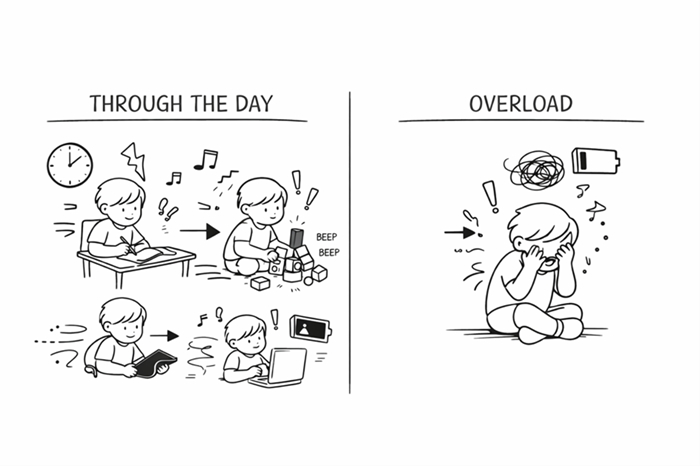
    Rather than viewing difficult child behaviour as defiance or discipline issues, Newbury’s approach focuses on the role of modern environments in shaping how children process and respond to the world around them. The book introduces a simple but effective framework built around four key elements: input, load, capacity, and recovery.

    “Many of the behaviours parents are struggling with today are not new in isolation,” said Newbury. “What’s changed is the volume and intensity of input children are exposed to. When that input accumulates without enough opportunity for recovery, it leads to overload – and behaviour is often the result.”

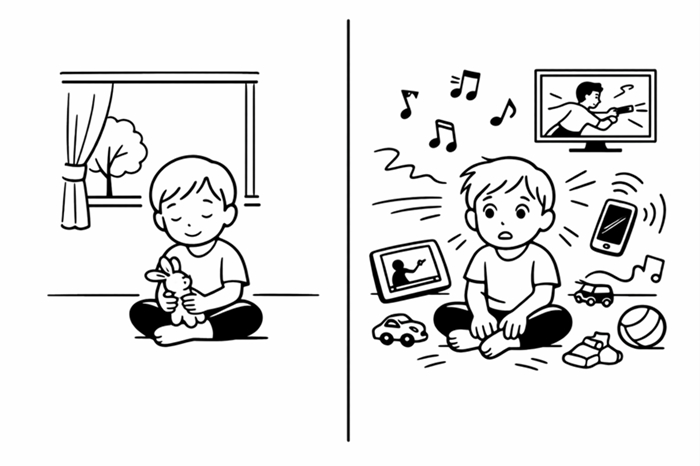
    The concept of the overstimulated child is increasingly relevant in a world where children face constant sensory, social, and cognitive demands. From screen exposure and structured schedules to noise and rapid transitions, the modern environment can contribute to sensory overload in kids, making it harder for them to regulate emotions and behaviour.

    According to Newbury, one of the key insights for parents is understanding that behaviour is often an output, not the root problem. “When a child has exceeded their capacity, adding more pressure – whether through instructions or consequences – can escalate the situation. Supporting emotional regulation in children requires a different approach, one that focuses on reducing load and increasing recovery.”

    The book provides practical strategies designed to help parents better manage overstimulation, including reducing unnecessary input, creating calmer daily rhythms, and identifying patterns that contribute to overload. These calm parenting strategies aim to support nervous system regulation for kids, enabling children to respond more effectively to everyday challenges.

    Industry observers note that the topic aligns with broader conversations around mental health, screen time, and the pace of modern life. As families navigate increasingly complex environments, frameworks that simplify and clarify behavioural challenges are gaining traction.

    The Overstimulated Child is positioned as both a conceptual guide and a practical resource, offering parents tools they can apply immediately without requiring major lifestyle changes.

    About the Author

    Charles Newbury is a commercial and operations leader with over 15 years of experience across strategy, product, and transformation in FMCG, retail, and digital businesses. His work focuses on simplifying complex systems and translating them into practical, real-world applications. Drawing on this background, he brings a structured and accessible approach to understanding child behaviour in modern environments.

    Availability

    The Overstimulated Child: How to Raise Calm, Resilient Kids in a High-Stimulation World by Charles Newbury is available now on Amazon in Kindle and paperback formats.

    Media Contact
    Company Name: Elmbridge Advantage
    Contact Person: Rob Thomas
    Country: Australia
    Website: elmbridgeadvantage.com

  • Advanced Home Theater Sets the Standard for Home Theater Installation in Frisco TX

    A true Frisco home theater should do more than fill a room with equipment. It should be thoughtfully designed around comfort, acoustics, picture quality, lighting, and ease of control. The best home theaters do not feel cluttered or complicated. They feel seamless. They feel like they belong in the home. That is the difference between simply buying electronics and investing in a professionally designed and installed theater environment.

    At Advanced Home Theater, the focus is on creating high-end home theater spaces that combine performance, design, and simplicity. A great theater is not just about what you see on paper. It is about how the room performs when the lights go down and the system comes to life. From stunning visuals and cinematic sound to elegant finishing and intuitive control, every part of the experience matters.

    That is why home theater installation Frisco TX should be approached as more than a technical service. It is a design-driven process. The room should be planned around how the homeowner wants to use it. Some families want a fully dedicated theater for movies and sports. Others want a luxury media room that works for streaming, gaming, concerts, and entertaining. In both cases, the goal is the same: create an environment that feels immersive without becoming difficult to manage.

    Advanced Home Theater’s current service positioning reflects that premium approach. On its website, the company highlights custom home theater and commercial media rooms with cinematic sound and picture, seamless control, and elegant design and finishing. It also positions itself around whole-home automation, lighting control, motorized shades, and integrated monitoring, surveillance, and access control, giving homeowners the opportunity to create a more complete smart-home environment instead of treating the theater as a standalone project. (advancedhome.theater)

    That broader approach matters because many of the best theater experiences depend on the systems around them. Lighting control can transform the atmosphere of a room before the movie even starts. Motorized shades can reduce glare and improve daytime viewing. Whole-home automation can make it easy to control sound, picture, lighting, shades, and room settings from one elegant interface. Instead of juggling remotes, apps, and separate controls, the homeowner gets one smooth experience that makes the room feel polished and easy to enjoy. Your website currently emphasizes that kind of unified control across entertainment, climate, lighting, and home systems. (advancedhome.theater)

    For homeowners searching Frisco home theater, that combination of theater performance and automation is what separates a premium result from a basic install. A room may have expensive equipment, but if it feels hard to use, it will never deliver the kind of experience the homeowner expected. Ease of use is part of quality. So is thoughtful design. So is clean execution. The best home theater installation projects are the ones where technology fades into the background and the experience takes center stage.

    That same philosophy extends beyond the theater room. Advanced Home Theater also offers whole-home automation and control systems, indoor and outdoor lighting control plus motorized shades, and surveillance and access control. That means a homeowner can go beyond a single entertainment project and create a more intelligent living environment throughout the entire home. Whether the goal is to make entertaining easier, improve comfort from room to room, or bring multiple systems together into one clean control experience, the value of automation becomes clear very quickly. (advancedhome.theater)

    In luxury homes, homeowners increasingly expect that kind of integration. They want spaces that feel beautiful, but they also want those spaces to function effortlessly. They want the media room to work as smoothly as the living room audio, the shades, the lighting scenes, and the surveillance views. They want the home to feel more connected without feeling more technical. That is exactly the promise behind a well-executed home automation strategy.

    For Advanced Home Theater, that creates a strong local position. The brand itself already aligns naturally with home theater installation Frisco TX, but the service offering allows it to speak to a much broader vision of smart living. A homeowner may first come in looking for a Frisco home theater, but the conversation can easily expand into lighting, shades, automation, and surveillance once they understand how powerful a fully integrated home can be.

    That is also why quality matters so much. A premium installation is not just about adding devices. It is about planning, design, and long-term usability. It is about knowing where equipment should go, how the room should feel, how controls should work, and how the homeowner will actually use the system every day. A great installer does not just make the room impressive on day one. A great installer makes it enjoyable for years.

    Advanced Home Theater positions its work around that idea of elevated living. The site describes its mission in terms of intelligent living, simplified, and speaks to creating spaces that enhance comfort, simplify life, and support memorable family experiences. That language is important because it reflects what homeowners are really buying. They are not just buying hardware. They are buying a better experience at home. (advancedhome.theater)

    For families in Frisco, that could mean a theater room that turns every weekend movie into an event. It could mean a media room where friends gather for the big game. It could mean lighting and shades that respond naturally to the time of day. It could mean one elegant control system that brings entertainment, comfort, surveillance, and entry awareness together in a way that feels effortless.

    As more homeowners look for home theater installation Frisco TX, the companies that stand out will be the ones that combine design, technology, and service into one cohesive experience. Advanced Home Theater is positioned to be part of that conversation by offering not only custom home theaters and media rooms, but also the broader automation systems that make the modern home feel complete.

    For homeowners interested in learning more about Frisco home theater solutions and whole-home automation, visit Advanced Home Theater at https://advancedhome.theater/.

    Contact Information

    Jason Abbott

    Advanced Home Theater

    jason.abbott@advancedhome.theater

    1.469.217.0181

    Media Contact
    Company Name: Advanced Home Theater
    Contact Person: Jason Abbott
    Country: United States
    Website: https://advancedhome.theater/

  • How to Safely Carry Kids and Cargo on Electric Bikes: A Practical Guide for Riders

    Riding an electric cargo bike with children on board or a significant load in the rack is one of the most rewarding things a cyclist can do. It replaces car trips, gets fresh air into the daily routine, and gives children a genuinely enjoyable way to travel. But riding with passengers and heavy cargo introduces a set of safety considerations that do not apply to solo cycling, and anyone making the transition from a standard bike or a car deserves a thorough understanding of what those considerations actually involve. The very first thing worth establishing before anything else is whether the bike you own or plan to buy is genuinely rated to carry the load you are asking of it. Payload limits vary dramatically between models, and riding beyond a frame’s engineering tolerance puts everyone at risk. Spend some time reviewing what electric cargo bikes have the highest weight capacity ratings before committing to any setup, because the right bike for safe family and cargo transport starts with a frame and drivetrain designed to actually handle the job.


    Once you know your bike is up to the task, the safety conversation becomes much more practical and much less abstract. It shifts from whether you can carry this load to how you carry it well. That distinction matters because most cargo ebike accidents involving families and loaded bikes are not caused by catastrophic mechanical failure. They happen because of loading errors, inadequate safety gear, unfamiliar handling at low speeds, and decisions made in the moment without a solid foundation of habit and preparation. All of those things are preventable with the right knowledge and a consistent routine.

    Understanding Weight Distribution and How It Affects Your Ride

    A cargo ebike loaded with children or goods behaves very differently from one that is empty. The physics involved are straightforward but easy to underestimate until you experience them for the first time. Extra weight lowers the bike’s center of gravity when positioned well; it raises it and introduces instability when positioned poorly. Knowing the difference between those two outcomes is one of the most important practical skills a cargo bike rider can develop.

    For rear-loaded bikes and long-tail designs, the goal is to keep heavier items as close to the axle as possible and as low in the cargo platform as the setup allows. A bag of groceries sitting flat on a rear rack positions the weight low and centered. The same groceries stacked in a tall bag that sways with momentum creates a very different handling experience, particularly during turns and sudden stops. Children seated on rear platforms should be positioned centrally between the wheel and the seat post rather than cantilevered far behind the rear axle, which would create an uncomfortable lever-arm effect on the frame.

    Front box cargo bikes distribute weight differently. The child or cargo sits ahead of the rider, which shifts the overall balance forward. This actually improves stability at low speeds and makes the steering feel planted and deliberate rather than twitchy. The trade-off is that front-heavy loading can make the steering feel heavier during sharp turns, particularly at slow speeds in confined spaces. New riders on front loader designs should practice in open areas before navigating busy streets or tight corners with a full load aboard.

    Symmetry matters on every cargo platform. Loading one side of a rack significantly heavier than the other introduces a persistent lean that the rider has to consciously counteract. Over time this becomes tiring, and during moments of inattention it becomes a handling hazard. When packing cargo alongside a child seat, deliberately balance the weight on either side of the center line. Even a few kilograms of difference between left and right is noticeable on a heavily loaded bike.

    Guide on Selecting the Best Cargo Bike for Safe Transport

    Not every cargo bike marketed as family-friendly is genuinely suited to the demands of regular passenger and cargo transport. The design choices that separate genuinely safe platforms from underpowered alternatives come down to a handful of specific features that are worth examining closely before any purchase.

    Frame geometry and wheelbase: A longer wheelbase increases stability at speed and during loading. Short wheelbase cargo bikes can feel nimble, but they are more sensitive to load shifts and require more active balancing from the rider. For families carrying children, a longer wheelbase is almost always the more forgiving and more reassuring choice.

    Motor torque output: Electric assist on a heavily loaded cargo bike must deliver smooth, progressive power rather than abrupt surges. A motor that jumps aggressively when the pedal assist engages can unsettle a loaded bike at exactly the wrong moment, such as when pulling away from a stop with a child in the cargo bay. Mid-drive motors with torque-sensing pedal assist tend to deliver the most natural and controllable power delivery for family use. Look for at least 60 Newton meters of torque for reliable performance under combined passenger and cargo weight.

    Braking system: Hydraulic disc brakes are non-negotiable for a bike that will regularly carry children and significant cargo weight. The increased mass means longer stopping distances and higher thermal loads on the braking system during descents. Hydraulic systems maintain consistent bite through heat buildup and wet conditions in ways that mechanical disc brakes or rim brakes simply cannot match. Larger rotor diameters, typically 180mm or above, provide additional heat dissipation capacity and are worth specifying for any bike used on hilly routes.

    Integrated lighting and visibility: Factory-fitted front and rear lights that draw from the main battery are far more reliable for daily family transport than afterthought clip-on units. Lights that activate automatically based on ambient brightness remove one variable from the rider’s pre-ride checklist. High visibility is particularly important on cargo bikes because their wider profile and slower acceleration compared to cars and faster cyclists make them vulnerable in mixed traffic environments.

    If you are weighing options that include child seat accessories or trailer attachments for your cargo platform, the detailed compatibility and safety guidance available at the best electric bike with kid seat guide covering child seats and trailer compatibility for cargo e-bikes is genuinely worth reading before making any accessory purchases. Understanding which mounting standards work with which bike frames will save you from costly incompatibility mistakes and ensure every component in your setup has been designed to work together.

    Safety Gear That Actually Makes a Difference

    Helmets are the starting point, not the finish line. Every person on the bike, adult and child alike, should wear a properly fitted helmet on every ride without exception. For children too young to sit independently, a helmet alone is not sufficient protection. A five-point harness that keeps the child securely positioned in the seat prevents the kind of forward or sideways movement that can result in a head impact even during a low-speed incident that would be unremarkable for an adult passenger.

    High-visibility clothing works in combination with bike lighting to make the overall setup more conspicuous to drivers. Bright colors and reflective panels on both the rider and any visible part of the child’s clothing increase reaction time for approaching vehicles in low-light conditions. This is especially relevant during school run hours in autumn and winter, when early-morning and late-afternoon light conditions are poor.

    Footwear is something many riders overlook entirely. Closed  shoes with a flat, grippy sole give the rider reliable contact with the pedals under the additional resistance of a heavy load. Sandals, flip flops, and loose shoes that can catch on pedal edges are a genuine hazard on any bike but become more consequential on a cargo bike where a loss of pedal contact at the wrong moment has a larger margin for error.

    Tips for Beginners and Families Just Getting Started

    The single most useful thing a new cargo bike rider can do before carrying any passengers is to spend dedicated time learning how the bike handles empty. Ride it through a quiet car park. Practice low-speed turns. Test the brakes firmly from walking pace and cycling pace so you understand the stopping distance. Get comfortable with mounting and dismounting without rushing. All of this becomes much easier before a child is seated and watching.

    When children are first introduced to cargo bike riding, keep the initial trips short and on quiet routes. A ten-minute ride to a local park on a protected path is a much better first experience than an ambitious school run through heavy traffic. Children who have a positive first experience are cooperative passengers; children who feel unsettled or frightened become distracting ones.

    Plan your routes in advance for the first several weeks of regular cargo riding. Knowing where the hills are, where the road surfaces are rough, and where the traffic is heaviest allows you to focus entirely on riding rather than navigating in real time while managing a loaded bike. Many experienced cargo cyclists maintain a preferred route for family trips that they use consistently precisely because familiarity reduces cognitive load and keeps attention where it belongs: on the ride itself.

    Building Responsible and Safe Riding Habits for the Long Term

    Safety on a cargo ebike is not a checklist to run through once before the first ride. It is a set of habits that become second nature through consistent repetition and honest self-assessment. The riders who feel most confident and competent on loaded cargo bikes are not necessarily the most experienced cyclists in general. They are the ones who took the time to understand their specific bike, their specific loads, and their specific routes before pushing into more demanding situations.

    Regular bike maintenance is part of that commitment. Check tire pressure before every ride with passengers. Inspect brake pads monthly and replace them before they wear to the point of degraded performance. Tighten all mounting bolts on child seats and cargo accessories every few weeks, because vibration from daily riding gradually loosens fasteners that feel secure immediately after installation. A ten-minute monthly maintenance check is a small investment against the consequences of a preventable mechanical failure on a family trip.

    Respect for other road users is equally important. A loaded cargo e-bike accelerates more slowly and brakes over a longer distance than a standard bike or a light electric scooter. Giving extra space to pedestrians, signaling well in advance of turns, and choosing routes that minimize conflict with fast-moving traffic make every ride safer for everyone involved. The visibility and profile of a cargo bike also means you represent cycling to every driver and pedestrian who sees you. Riding considerately and predictably builds the goodwill that makes shared road spaces work better for all cyclists over time.

    Ultimately, safe cargo bike riding with children and heavy loads comes down to preparation, the right equipment, honest awareness of limitations, and the patience to build experience gradually. None of that is complicated. All of it is worth taking seriously. When those habits are in place, a cargo ebike becomes one of the most genuinely enjoyable ways a family can move through the world together.


  • Role of an Authorized Agent in India for Drug & Medical Device Import Registration

    For foreign manufacturers seeking to enter the Indian market, appointing an authorized agent India medical devices is a critical regulatory requirement. The Indian regulatory landscape mandates that all drugs and medical devices imported into the country be represented locally by a registered agent who can act as a liaison with the authorities. This ensures compliance with the Central Drugs Standard Control Organization (CDSCO) and adherence to India’s drug and medical device regulations.

    Understanding the responsibilities of an authorized agent, the process of drug import registration India, and related compliance requirements is essential for smooth market entry and uninterrupted business operations.


    Who Is an Authorized Agent in India?

    An authorized agent in India serves as the official local representative of a foreign manufacturer for regulatory purposes. Their role includes submitting applications, responding to regulatory queries, and ensuring that imported products comply with Indian laws. For both pharmaceuticals and medical devices, an authorized agent is legally responsible for acting on behalf of the foreign company in dealings with CDSCO.

    The agent possessing a valid wholesale license for the domestic sale and distribution of products is only eligible to apply for drug registration in India by submitting the application to Central Licensing Authority (CLA).

    An effective Indian Authorized Agent ensures seamless communication between the manufacturer and the regulatory authority, mitigating compliance risks and expediting registration approvals.


    Responsibilities of an Authorized Agent

    The authorized agent plays a pivotal role in both drug import registration India and medical device approval. Their responsibilities include:

    • Preparing and submitting regulatory applications for product registration
    • Submitting necessary form to Central Licensing Authority, such as Form 40 application
    • Acting as the official contact point for CDSCO inspections, queries, and approvals
    • Ensuring adherence to Good Manufacturing Practices (GMP) and labeling requirements
    • Maintaining records and correspondence related to product registration and import compliance.
    • Assisting in Adverse event reporting and product recalls when required.


    For medical devices, the agent ensures compliance with medical devices import compliance  such as import license ( Form MD -15) regulations, including device classification, safety standards, and post-market obligations.


    Legal Authority: Power of Attorney

    To act on behalf of a foreign manufacturer, the authorized agent must hold a valid power of attorney CDSCO. This document legally empowers the agent to represent the manufacturer in all regulatory matters, including signing forms, submitting dossiers, and addressing queries raised by CDSCO. Without a proper power of attorney, the regulatory submissions may be deemed invalid, delaying approvals.


    Foreign Manufacturer Registration in India

    Before import registration, all foreign manufacturers must complete foreign manufacturer registration India with CDSCO. This process involves submitting detailed information about the manufacturing site, production capabilities, quality management systems, and compliance certifications. The authorized agent facilitates this registration, ensuring all required documentation is accurate and submitted on time.

    The registration is mandatory for both pharmaceutical products and medical devices and is a prerequisite for obtaining import licenses.


    Steps in Drug & Medical Device Import Registration

    The process of obtaining approval for drugs and medical devices in India involves several steps, where the authorized agent plays a key role:

    1. Appointing an Authorized Agent: The foreign manufacturer nominates a local agent and provides a valid power of attorney CDSCO.
    2. Manufacturer Registration: The agent submits foreign manufacturer registration India dossiers to CDSCO.
    3. Product Submission: The agent prepares and submits product-specific applications for approval.
    4. Responding to Queries: During the review process, CDSCO may request clarifications or additional documentation. The authorized agent handles all communications.
    5. Import License Issuance: Once approved, the authorized agent ensures the foreign manufacturer obtains a valid import license for marketing the product in India.

    This structured approach streamlines drug import registration India and ensures full regulatory compliance.


    Importance of an Authorized Agent for Compliance

    An experienced authorized agent mitigates regulatory risks and ensures that foreign manufacturers comply with India’s stringent regulations. Their expertise helps in:

    • Avoiding common errors in dossier submission
    • Ensuring compliance with labeling, safety, and GMP standards
    • Maintaining up-to-date knowledge of regulatory updates
    • Facilitating timely renewals and post-market surveillance

    By managing these tasks, the agent protects the manufacturer from legal liabilities and delays in market access.


    Conclusion

    The role of an authorized agent in India for Drug and Medical Device is central to the successful import registration of drugs and medical devices in India. It acts   as the bridge between foreign manufacturers and CDSCO, the agent ensures smooth communication, timely submission of documentation, and full adherence to regulatory requirements.

    With proper drug import registration India processes, valid power of attorney CDSCO, and effective support for medical devices import compliance, foreign manufacturers can confidently navigate the Indian regulatory landscape and bring their products to market efficiently.

    Engaging a knowledgeable authorized agent not only simplifies compliance but also strengthens credibility with regulators, reduces operational risks, and accelerates approval timelines.


  • Regulatory Due Diligence for Medical Devices and IVDs: India & Global Market Strategy


    India & Global Market Strategy

    Entering the medical device and in vitro diagnostic (IVD) market requires careful planning, robust documentation, and adherence to regulatory requirements in every target market. Conducting regulatory due diligence for medical devices and IVDs is a critical first step for manufacturers and distributors aiming to launch products successfully in India or globally. Due diligence ensures compliance, mitigates legal risks, and optimizes market entry strategy.

    For companies exploring medical device and IVD market entry in India, understanding device classification, documentation requirements, and post-market obligations is essential. A strategic approach to regulatory compliance not only accelerates approvals but also safeguards product reputation and patient safety.

    What Is Regulatory Due Diligence for Medical Devices and IVDs?

    Regulatory due diligence is a systematic process to assess a medical device or IVD’s compliance with national and international regulations. This involves reviewing applicable standards, certifications, and documentation to ensure that a product meets safety, performance, and legal requirements.

    Key objectives include:
    • Identifying potential regulatory gaps before market launch
    • Ensuring alignment with global medical device and IVD compliance frameworks
    • Evaluating risks associated with device classification, labeling, and manufacturing processes
    • Preparing technical documentation for regulatory submissions

    Performing comprehensive regulatory due diligence for medical devices and IVDs reduces approval delays and prevents costly recalls or enforcement actions.

    Understanding Device Classification in India

    The Indian regulatory framework classifies medical devices and IVDs into different risk categories, which determine the level of scrutiny during the approval process.

    Classification is based on risk to patient/user, duration of use, and invasiveness.

    For IVDs, classification additionally depends on:

    • Impact of incorrect result
    • Public health risk (e.g., blood screening = Class D)
    • Misclassification can directly lead to query, rejection, or compliance delay

    The device classification system in India includes:

    Class Risk Level Medical Devices IVDs (In Vitro Diagnostics)
    Class A Low Risk Non-invasive, low-risk devices (e.g., surgical dressings, stethoscope) Low individual & public health risk IVDs (e.g., specimen containers, basic reagents)
    Class B Low–Moderate Risk Low–moderate risk devices (e.g., hypodermic needles, infusion sets) Moderate individual risk / low public health risk IVDs (e.g., blood glucose test kits, urine test strips)
    Class C Moderate–High Risk Moderate–high risk devices (e.g., infusion pumps, ventilators) High individual risk / moderate public health risk IVDs (e.g., dengue diagnostic kits, hormone assay kits)
    Class D High Risk High-risk devices (e.g., pacemakers, heart valves) High individual risk & high public health risk IVDs (e.g., HIV test kits, blood screening kits)

    Accurately categorizing the product is critical because it determines registration requirements, submission timelines, and post-market obligations. Any error in classification can lead to regulatory rejection, fines, or delays in market entry.

    Technical Documentation for Regulatory Approval

    A core component of regulatory due diligence is preparing technical documentation for medical devices and IVDs. This includes all information demonstrating that a product is safe, effective, and compliant with applicable regulations.

    Documentation typically covers:
    1. Device/IVD Description and Intended Use
    • Product specifications, variants, and configurations
    • Intended purpose and target population
    • For IVDs: specimen type, analyte, and testing environment

    1. Design and Manufacturing Information
      • Design inputs/outputs and development history
      • Manufacturing process flow and controls
      • Supplier qualification and traceability
    2. Risk Management Documentation
      • Risk analysis as per ISO 14971
      • Hazard identification and mitigation measures
      • Benefit-risk justification
    3. Performance and Clinical Evidence
      • Clinical evaluation reports (for devices)
      • Performance evaluation (analytical and clinical performance for IVDs)
      • Stability studies (especially for IVD reagents)
    4. Labeling and IFU (Instructions for Use)
      • Regulatory-compliant labels
      • User instructions, warnings, and contraindications
      • Specific IVD labeling (e.g., interpretation of results)
    5. Quality Management System (QMS) Documentation
      • ISO 13485 certification
      • SOPs, CAPA, deviation, and change control records
    6. Regulatory Submission Dossier
      • Device Master File (DMF) / Technical File / STED
      • Plant Master File (PMF)
      • Country-specific forms and declarations
    7. Post-Market Documentation
      • PMS plan and reports
      • Vigilance reporting procedures
      • Complaint handling system

    There are other documents along with uplisted number of documents accompany in regulatory submissions.

    Ensuring end-to-end documentation coverage is critical for regulatory approval, audit readiness, and lifecycle compliance. Thorough and well-structured technical documentation facilitates faster review by regulatory authorities in India and other markets.

    Post-Market Surveillance in India

    Once a medical device or IVD is approved and launched, regulatory compliance does not end. Post-market surveillance in India is mandatory to monitor product performance, detect adverse events, and ensure ongoing safety and effectiveness.

    Post-market obligations include:
    • Adverse event reporting to CDSCO
    • Product recall procedures if safety issues arise
    • Monitoring user feedback and performance trends
    • Maintaining up-to-date records for inspections

    Integrating post-market surveillance into your regulatory due diligence process for medical devices and IVDs ensures continuous compliance and builds trust with regulators and end-users.


    Global Regulatory Considerations

    For companies targeting international markets, regulatory due diligence must also account for global medical device and IVD compliance requirements, such as:

    • CE marking in Europe under MDR/IVDR
      • FDA 510(k), PMA, or EUA pathways in the United States
      • TGA compliance in Australia
      • Health Canada device licensing

    Understanding global frameworks allows manufacturers to harmonize technical documentation, risk management, and quality systems for multiple markets simultaneously, reducing duplication of effort and accelerating global market entry.

    Steps for Conducting Regulatory Due Diligence

    1. Regulatory Landscape Assessment
      Identify applicable laws, guidance documents, and market-specific regulations for both devices and IVDs.
    2. Device/IVD Classification and Gap Analysis
      Confirm classification and assess gaps in technical and quality documentation.
    3. Technical Documentation Review
      Ensure all product data, risk assessments, and clinical/performance evidence meet national and international standards.
    4. Quality and Compliance Evaluation
      Audit manufacturing processes, supplier systems, and internal quality controls.
    5. Post-Market Strategy
      Define surveillance, reporting, and corrective action processes for India and global markets.
    6. Submission Strategy and Timeline
      Plan for regulatory filings, agency communications, and anticipated review timelines.

    By following these steps, companies can minimize medical device and IVD market entry risks in India and ensure faster, smoother approvals.

    Benefits of Regulatory Due Diligence

    Conducting robust due diligence for medical devices and IVDs provides several advantages:

    • Reduces the risk of regulatory non-compliance or penalties
      • Enhances speed and efficiency of approvals
      • Strengthens credibility with regulators and healthcare providers
      • Improves overall product quality and safety
      • Facilitates simultaneous multi-market entry

    Companies that integrate regulatory due diligence early in their product lifecycle gain a competitive advantage in both domestic and global markets.

    Conclusion

    The success of a medical device or IVD in India and internationally depends on meticulous planning, regulatory awareness, and proactive compliance management. Conducting regulatory due diligence for medical devices and IVDs ensures that all aspects of product approval, technical documentation, classification, and post-market surveillance are addressed effectively.

    For organizations planning medical device and IVD market entry in India, partnering with experienced regulatory consultants can streamline the process, reduce compliance risks, and accelerate market launch. By aligning technical, regulatory, and quality requirements with both Indian and global standards, manufacturers can confidently expand their presence in competitive healthcare markets.


  • What Are the Penalties for Non-Compliance Under FSSAI Regulations?


    Food safety regulations in India are enforced under the Food Safety and Standards Act, 2006. The Food Safety and Standards Authority of India (FSSAI) oversees implementation, monitoring, and enforcement of these laws to ensure that food businesses maintain proper safety, hygiene, and quality standards. When businesses fail to meet these requirements, regulators impose strict FSSAI penalties to protect public health and maintain industry accountability.

    Understanding the consequences of food safety violation fines India is essential for food manufacturers, distributors, retailers, restaurants, and importers. Non-compliance can result in financial penalties, suspension of licenses, product recalls, and in severe cases, criminal prosecution. This article explains the types of violations, regulatory consequences, and strategies to minimize food business compliance risks.


    Understanding Food Safety Compliance in India

    The Food Safety and Standards Act establishes a unified regulatory system for food safety across India. It defines the legal obligations of food business operators (FBOs) and empowers authorities to take FSSAI legal action when businesses violate regulatory provisions.

    Food businesses are required to comply with regulations related to:

    • food hygiene and sanitation
    • labeling and packaging standards
    • ingredient safety and permitted additives
    • product quality and contamination limits
    • licensing and registration requirements

    Failure to comply with these provisions can trigger food safety noncompliance penalties, depending on the severity of the violation and the potential risk to consumers.


    Types of Violations Under the Food Safety Act

    Not all violations carry the same level of severity. Authorities assess the nature of the offense before imposing food safety act penalties. Violations generally fall into the following categories:

    Minor Regulatory Violations

    Minor violations typically involve procedural lapses that do not immediately threaten public health. Examples include:

    • failure to maintain proper records
    • incomplete labeling information
    • delays in license renewal
    • minor sanitation deficiencies

    Although these violations may seem minor, repeated non-compliance can escalate regulatory scrutiny and lead to higher FSSAI penalties.

    Misbranding and False Labeling

    Misbranding occurs when a product’s label provides misleading or inaccurate information regarding its ingredients, nutritional value, or health benefits.

    Examples include:

    • incorrect ingredient declarations
    • misleading health claims
    • false nutritional statements
    • improper allergen disclosures

    In such cases, regulators may impose food safety violation fines India and require corrective labeling or product recall.


    Sale of Substandard Food

    Food that fails to meet established safety or quality standards is classified as substandard. This may include:

    • improper ingredient quality
    • deviation from prescribed formulation standards
    • contamination due to poor manufacturing practices

    Authorities may initiate FSSAI legal action against businesses responsible for distributing substandard food products.


    Unsafe or Adulterated Food

    The most serious violations involve food that is unsafe for consumption or deliberately adulterated. Examples include:

    • contamination with harmful chemicals
    • presence of pathogens or toxins
    • use of prohibited additives
    • intentional adulteration of food products

    Such offenses carry severe food safety act penalties, including significant fines and possible imprisonment.


    Financial Penalties for Food Safety Violations

    The Food Safety and Standards Act outlines specific financial penalties based on the nature of the offense. These fines serve as deterrents against food safety noncompliance and encourage businesses to implement robust compliance systems.

    Common penalties include:

    • up to ₹5 lakh for misbranded food
    • up to ₹5 lakh for substandard food
    • up to ₹10 lakh for misleading advertisements
    • additional fines for selling food containing extraneous matter

    The exact penalty depends on factors such as risk to consumers, intent, and the scale of the violation.


    License Suspension or Cancellation

    In cases where violations are repeated or severe, authorities may suspend or cancel a food business license. This is one of the most serious food business compliance risks, as it directly halts operations.

    Regulators may suspend licenses if businesses:

    • repeatedly fail inspections
    • ignore corrective action notices
    • operate in unsafe conditions
    • fail to implement required hygiene standards

    Once a license is suspended, businesses must resolve compliance issues before operations can resume.


    Criminal Liability and Prosecution

    Severe violations that endanger public health can lead to criminal prosecution under the Food Safety Act. This is typically triggered when food products cause serious injury or death.

    Possible consequences include:

    • imprisonment for responsible individuals
    • substantial monetary fines
    • long-term suspension of business operations
    • permanent reputational damage

    Authorities pursue FSSAI legal action aggressively in such cases to prevent further risks to public safety.


    Inspection and Enforcement Mechanisms

    FSSAI enforcement officers regularly conduct inspections to verify compliance with food safety regulations. During inspections, officials may review:

    • hygiene and sanitation practices
    • food handling procedures
    • storage conditions
    • labeling compliance
    • documentation and licenses

    If inspectors identify violations, businesses may receive notices, fines, or enforcement orders under food safety act penalties provisions.


    How Food Businesses Can Avoid Compliance Violations

    Preventing violations requires proactive compliance management and internal monitoring systems. Businesses can reduce food business compliance risks by implementing the following practices:

    Establish a Food Safety Management System

    Adopt structured systems that monitor hygiene, production processes, and ingredient safety.

    Conduct Regular Internal Audits

    Routine compliance checks help detect gaps before regulatory inspections.

    Train Employees on Food Safety Regulations

    Staff awareness plays a critical role in preventing operational mistakes that lead to food safety noncompliance.

    Maintain Proper Documentation

    Accurate records demonstrate compliance during inspections and regulatory reviews.

    Seek Regulatory Guidance

    Consulting experts helps businesses stay updated on evolving FSSAI penalties and compliance expectations.


    Conclusion

    Compliance with food safety regulations is essential for protecting public health and maintaining trust in the food industry. Businesses that ignore regulatory obligations risk severe FSSAI penalties, significant food safety violation fines India, and potential FSSAI legal action.

    By understanding the implications of food safety noncompliance and adhering to the provisions of the Food Safety Act, food businesses can minimize food safety act penalties while reducing long-term food business compliance risks.

    Strong internal controls, employee training, and proactive compliance strategies ensure that businesses operate safely, legally, and sustainably within India’s food regulatory framework.