Pepeto’s presale just crossed and stages are filling faster than any previous round. Wallet entries doubled in February. Fake tokens impersonating the project launch daily on decentralized exchanges, confirming how much demand is building. The cardano price prediction debate divides analysts with targets from $0.50 to $3.80. Ethereum trades near $2,000 but still charges $5 to $50 in gas per swap. Presale acceleration. Every crypto news signal points the same direction.
Crypto News: Cardano Price Prediction Models Miss the Bigger Story as Pepeto Builds What Ethereum and ADA Never Delivered
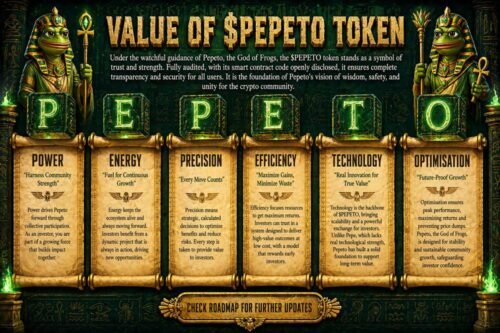
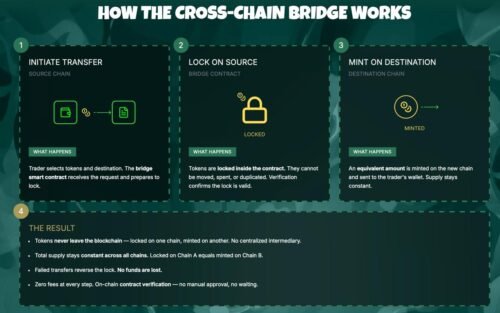
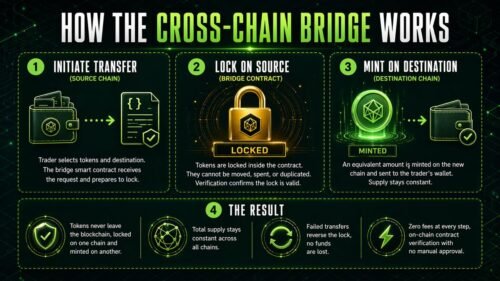
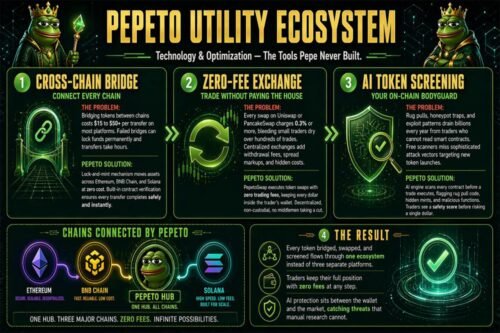
Cardano was designed to fix Ethereum. Hoskinson left Ethereum in 2014 and built a peer reviewed proof of stake chain for scalability and low fees. Development moves slower than competitors. Ethereum still dominates DeFi despite fees that make small trades pointless. Neither chain solved the problem meme coin traders face. High taxes. No cross chain routing. No dedicated exchange. Pepeto solved all three. PepetoSwap offers zero tax cross chain trading. Pepeto Bridge connects Ethereum, BSC, and Solana without third party fees. Pepeto Exchange provides a dedicated listing hub approaching launch.
“We studied what Cardano got right about Ethereum’s weaknesses and what both chains still get wrong about serving the meme economy,” said a Pepeto team representative.
IMPORTANT: Pepeto is still in presale and NOT available on any exchange or DEX. and cardano price prediction comparisons drive attention, fake tokens using the Pepeto name launch daily. The ONLY legitimate way to buy Pepeto is through the official website.
About Pepeto
Pepeto is a meme coin infrastructure project built for the trading economy that Ethereum fees and Cardano’s slow development never served. PepetoSwap (zero tax cross chain trading), Pepeto Bridge (multi chain routing), Pepeto Exchange (dedicated meme listing hub).
Disclaimer:
This article is for informational purposes only and does not constitute financial advice. Cryptocurrency investments carry risk, including total loss of capital. Readers should conduct independent research and consult licensed advisors before making any financial decisions.
This publication is strictly informational and does not promote or solicit investment in any digital asset
All market analysis and token data are for informational purposes only and do not constitute financial advice. Readers should conduct independent research and consult licensed advisors before investing.
XRP ETFs pulled in $1.3 billion with 43 consecutive days of positive inflows. Ripple just integrated with Hyperliquid through Ripple Prime, enabling institutions to access on chain derivatives. Everything the XRP community wanted for years is finally happening.
But the XRP price prediction for 2026 still disappoints. Despite $1.3 billion in ETF inflows, XRP struggles below $0.50.
Meanwhile, the presale that nobody expected to survive the crash just crossed and the remaining token allocation is almost gone. Pepeto at $0.000000185 Three working product demos. And a token claiming process that delivers on launch day with zero delay.
The XRP ETF success is proof that institutional capital has expanded beyond Bitcoin and Ethereum. The allocators deploying this capital understand that the largest returns come from the earliest entry points, not from adding to top 10 positions.
SHIB went from zero to top 10. PEPE went from zero to top 30. In every case, the returns came from positioning before the market noticed. Pepeto sits at six zeros with three working products that no other meme coin has ever brought to a listing. PepetoSwap for zero tax cross chain meme trading. Pepeto Bridge for multi network connectivity. Pepeto Exchange as the dedicated meme hub.
The presale is structured to address every concern buyers have had with other projects. It ends when the token allocation sells out. No artificial deadline. No hidden extension. The timer on the official website of Pepeto counts down to the next price increase stage, not to any launch date. Each new stage raises the token cost, which is why early buyers get the lowest price.
Same day token claims and the presale is almost sold out
All presale tokens become claimable on launch day. When trading opens on exchanges, buyers connect the same wallet they used to purchase and claim their full allocation immediately. No delay. No staggered release. No weeks of uncertainty. This distinction matters because many presale projects have frustrated communities with delayed claiming processes. Pepeto designed its structure so that launch day equals claim day.
The presale is 70% filled and the remaining 30% is moving faster than any previous stage. Hundreds of fake Pepeto tokens flood every DEX daily The real Pepeto is only at the official website of Pepeto.
The allocation is almost gone. Once it sells out, the presale closes.
XRP at $0.50 targeting $2 requiring tens of billions in capital. Pepeto at $0.000000185 has three working product demos For asymmetric returns, presale pricing offers dramatically higher upside than a top 10 token at scale.
Is there a delay in claiming Pepeto tokens after purchase?
No. Pepeto tokens cannot be transferred or traded during presale because the token has not launched on public chains yet. This is standard for all crypto presales. Once the token launches and trading begins on exchanges, all presale buyers can immediately claim their full allocation by connecting their original wallet. Launch day is claim day. There is no post launch delay.
Why can’t I transfer my Pepeto tokens right now?
Pepeto is currently in its presale phase. Presale tokens are not yet live on any public blockchain for trading. This is normal for every crypto presale. The tokens exist as purchase records tied to your wallet address. When the presale ends and the token launches, your full allocation becomes claimable and transferable on launch day. No presale token from any project is tradeable before launch.
When does the Pepeto presale end?
The presale ends when the remaining token allocation sells out. There is no fixed end date that can be delayed or extended. The countdown timer on the official website of Pepeto shows the time until the next price increase stage, not a launch date. The presale is currently 70% filled and the remaining allocation is selling at an accelerating pace.
Disclaimer:
This article is for informational purposes only and does not constitute financial advice. Cryptocurrency investments carry risk, including total loss of capital. Readers should conduct independent research and consult licensed advisors before making any financial decisions.
This publication is strictly informational and does not promote or solicit investment in any digital asset
All market analysis and token data are for informational purposes only and do not constitute financial advice. Readers should conduct independent research and consult licensed advisors before investing.
You already know what happened. Bitcoin dropped below $63,000 on February 24. Down 50% from its all time high of $126,000. Worst annual start in crypto history. Investors are fleeing into gold and silver as 15% tariff sends shockwaves through every risk asset on earth. The Fear and Greed Index reads 8. Lowest since FTX collapsed and took $32 billion with it.
You’re reading this because the market is scaring you. That’s exactly what makes the next few paragraphs the most important thing you’ll read this year.
That investor bought during maximum fear. Held through months of losses. And waited while everyone told him he was crazy. The people who told him that are still working nine to five.
The Pattern Behind Every Story in Crypto History
Every single time Bitcoin crashed this hard, what followed wasn’t just a recovery. What followed was the biggest meme coin explosion in history.
Bitcoin crashed 83% in 2018. The recovery produced Dogecoin’s run from a fraction of a penny to $0.73 and an $89 billion market cap. Bitcoin crashed 77% after FTX in 2022. That recovery produced PEPE going from zero to $7 billion in weeks with absolutely no products. And SHIB going from nine zeros to $40 billion with nothing but a community and a Uniswap listing.
Every cycle. Every crash. Every recovery. The meme coins positioned during the fear delivered returns that made Bitcoin’s recovery look like a savings account.
This isn’t a coincidence. It’s a liquidity cascade. Bitcoin bottoms. Institutions buy. BTC rallies. Profits flow into ETH. ETH rallies. Profits flow into altcoins. And then the final wave crashes into meme coins
Right now Bitcoin sits at $63,000. Down 50%. Fear at 8. The cascade hasn’t started yet. But when it does, the meme coin positioned at the bottom with real infrastructure will capture the most violent upside.
What Makes Pepeto the Best Crypto When SHIB Had Nothing
SHIB had nothing when that investor bought $8,000 worth in August 2020. No swap, no bridge, no exchange, no audits, no named founder. Just a Uniswap listing and a prayer. And it still produced the greatest trade in crypto history.
Now imagine what happens when a meme coin launches with everything SHIB lacked.
Pepeto shipped three working product demos before the presale even opened. PepetoSwap handles zero tax cross chain meme trading. Pepeto Bridge connects tokens across blockchains that couldn’t interact before. Pepeto Exchange is the first dedicated listing hub for the meme economy with $PEPETO integrated at protocol level into every transaction. You can test all three at the official website of Pepeto right now. Today. Not after launch. Not after a funding round. Right now.
Smart contracts are public on Ethereum. Anyone can verify them. Zero transaction tax. APY staking. A major exchange listing approaching.
SHIB reached $40 billion with nothing. Pepeto has three working products and it’s still sitting at six zeros. The question isn’t whether the pattern repeats.
The Math at Six Zeros
Forget the noise for sixty seconds and look at the numbers. As reported by GlobeNewsWire, Pepeto stages are closing faster than the team projected. That’s not retail chasing green candles. That’s conviction capital from people who understand exactly what single digit fear readings mean.
Why the Best Crypto to Buy Window Closes When the Allocation Sells Out
Here’s the truth nobody wants to hear. By the time you feel comfortable buying, the best entry is already gone. The SHIB investor didn’t feel comfortable. He felt scared. He bought anyway.
Pepeto’s presale is 70% filled. The remaining allocation is selling faster than any previous stage. Once it sells out, the presale closes permanently. The timer on the official website of Pepeto counts down to the next price increase, not a launch date. Each stage raises the cost. Buyers who entered first locked the lowest price. Buyers entering now still get six zeros.
All tokens become claimable the day trading goes live. Presale buyers connect their wallet, claim their entire allocation, and they’re done. That was a deliberate choice because too many presales frustrated communities with months of delayed access. Launch day equals claim day.
Hundreds of fake Pepeto tokens appear daily on Uniswap, PancakeSwap, and every DEX you can name. The real Pepeto is only at the official website of Pepeto.
Here’s what the SHIB investor didn’t have. No working products. No audits. An anonymous founder. No staking yield. No exchange listing on the horizon
Pepeto at $0.000000185 has all of it. And the presale is almost full.
What is the best crypto to buy now during the February 2026 crash?
Pepeto at $0.000000185 is one of the strongest asymmetric opportunities in the 2026 crash. Three working product demos, The presale is 70% filled at the official website of Pepeto.
When does the Pepeto presale end and is there a delay in claiming tokens?
The presale ends when the remaining token allocation sells out. There’s no fixed date or artificial deadline. The timer on the official website of Pepeto shows the next price increase, not launch. All tokens become claimable on launch day with zero delay. There’s no staggered release and no weeks of waiting. Launch day equals claim day.
Disclaimer:
This article is for informational purposes only and does not constitute financial advice. Cryptocurrency investments carry risk, including total loss of capital. Readers should conduct independent research and consult licensed advisors before making any financial decisions.
This publication is strictly informational and does not promote or solicit investment in any digital asset
All market analysis and token data are for informational purposes only and do not constitute financial advice. Readers should conduct independent research and consult licensed advisors before investing.
Living in the Chicago Metro Area comes with its fair share of challenges for homeowners. From heavy snowfalls in Oak Park to windy storms in Naperville, your garage door takes the brunt of the weather year round. One of the most common problems is damaged panels. These dents, cracks, or warping issues not only affect curb appeal but can also compromise your door’s function and safety.
But how do you know when to repair a single panel versus replacing the entire door? To understand the difference, it helps to look at a real world scenario.
The “Money Pit” Door: A Story from New Lenox
Consider Sarah, a homeowner in a standard middle-class neighborhood in New Lenox. Sarah’s attached two-car garage was the main entry point for her family. The door was original to the house, roughly 16 years old.
Over the years, the door had taken a beating. Her son’s hockey practice left a few noticeable dents in the bottom panel. A few years later, a harsh winter caused the wood composite to swell and warp slightly at the edges. Sarah did what many of us do. She opted for the quick fix. She had a technician replace just the bottom panel.
Six months later, the opener started straining because the new panel was slightly heavier than the old, water-logged ones. Then, the spring snapped in the dead of winter. She fixed that too. Finally, when she noticed a draft turning her adjacent laundry room into an icebox, she realized she had spent nearly $600 patching a door that still looked old, mismatched, and let heat escape.
Sarah finally decided to stop the bleeding. She replaced the entire system with a modern, insulated steel door. The result? Her curb appeal skyrocketed, the laundry room stayed warm, and the door ran whisper quiet. Sarah learned a valuable lesson: sometimes, trying to save money on small repairs ends up costing more in the long run.
Why Garage Door Panels Get Damaged
Garage door panels can sustain damage for a variety of reasons beyond just bad luck:
Accidental Impact: Cars, bikes, or even stray shopping carts can leave dents or cracks.
Weather Related Stress: Chicago winters place extreme mechanical stress on garage doors, causing metal to contract and warp or wood panels to rot.
Wear and Tear: Over time, panels may crack, peel, or delaminate. This is especially common in homes in Aurora, Orland Park, or Downers Grove where doors face heavy daily usage.
Moisture and Salt: Melting snow introduces water and road salt to the bottom panels, leading to rust that weakens the structure.
Repair vs. Replace: What to Consider
Deciding whether to follow Sarah’s initial path (repair) or her final decision (replace) depends on several key factors.
1. Extent of Damage If only one or two panels are dented or cracked on a newer door, a repair is often the smartest choice. Professionals can replace the damaged sections with matching materials, restoring appearance and function without the cost of a full door replacement.
2. Age of the Door The age of your system matters. If your door is under 10 to 12 years old, a repair usually makes sense. However, older garage doors, especially those over 15 to 20 years old, may have panels that are difficult to match or faded from the sun. In this case, replacing the entire door provides a uniform look and improved reliability.
3. Material and Efficiency
Steel doors: Panels can usually be replaced individually, making repairs cost effective.
Wood doors: Repairing may be feasible, but warping or rot often makes replacement a better long term investment.
Energy Efficiency: If you have an older, uninsulated door attached to your home, swapping a damaged panel is like putting a band-aid on a broken leg. Replacing it with an insulated model yields immediate energy savings.
4. Cost Considerations Panel repair is generally less expensive than full replacement upfront. However, if your door is older and multiple panels are damaged, investing in a new door may be more cost effective in the long run. A good rule of thumb is the 50% rule. If the repair costs half as much as a new door, get the new door.
When to Call a Professional
Even minor panel damage can affect garage door operation. A warped or misaligned panel can prevent the door from opening or closing smoothly and strain springs and opener mechanisms. It can also pose a safety risk to children, pets, or vehicles.
At World of Doors, our trained technicians evaluate each situation and provide a clear recommendation. Whether it is a single panel repair or full door replacement, we ensure your garage door is safe, functional, and looks great.
Maintaining Your Panels for Longevity
Proper maintenance can extend the life of your panels and prevent costly repairs:
Regular cleaning: Remove debris and dirt to prevent corrosion or rot.
Inspect for damage: Check panels at least twice a year, particularly after storms.
Lubricate hinges and tracks: Proper movement reduces stress on panels.
Weatherproofing: Seal wooden panels and check bottom seals to prevent rust or decay.
Final Thoughts
Knowing when to repair a damaged garage door panel versus replacing the entire door can save you time, money, and stress. Minor dents or cracks are often easily repaired, while older, heavily damaged doors like Sarah’s are better off replaced.
In neighborhoods across the Chicago metro area, including New Lenox, Naperville, Oak Park, Orland Park and more, World of Doors provides expert garage door repair in Chicago and replacement services. Whether it is a single panel or an entire garage door, our technicians ensure a safe, smooth, and visually appealing solution. Don’t let a damaged panel compromise your home’s curb appeal or your family’s safety. Call World of Doors today for a professional assessment and a free consultation for new installations.
Founder of the Mileo chain of hotels – Yasam Ayavefe
In technology, trust is not a marketing line, as it is a functional requirement. People can admire innovation and still refuse to depend on it if reliability feels uncertain. The technology philosophy associated with Yasam Ayavefe is often framed around a trust-first idea, shaped by early exposure to telecommunications programming and cybersecurity. Those backgrounds tend to teach a lesson that never loses relevance: systems matter most when they disappear into daily life, and success is measured by how consistently they work under stress.
Cybersecurity thinking changes how leaders view risk. It trains teams to assume that failures can happen, that edge cases are common, and that calm response matters more than drama when something breaks. It also pushes a culture of documentation and accountability, because guesswork becomes expensive when systems carry real consequences. A technology leader influenced by that mindset tends to prioritize stability and clarity, even when innovation pressure encourages speed. The technology posture associated with Yasam Ayavefe has been described in that practical tradition, where architecture and operating discipline matter as much as feature lists.
Telecommunications adds another layer of discipline because uptime expectations are unforgiving. Networks must hold across variable conditions, and performance standards have to remain stable as demand shifts. In those environments, shortcuts reveal themselves quickly, usually at the worst possible moment.
That experience translates naturally into modern initiatives that rely on sensors, data transmission, and coordinated workflows. A systems-first perspective associated with Yasam Ayavefe tends to treat integration as the real work, because a set of impressive tools does not become a dependable system until the tools communicate cleanly and behave predictably across repeated use.
A trust-first philosophy also changes how technology projects are framed publicly. The focus shifts from spectacle to repeatability. Instead of presenting a single demo as proof, the narrative emphasizes what will be tested, how it will be validated, and what must be proven before anything can be relied on.
This matters because people often confuse announcements with launches, especially when a concept travels beyond its original context. The technology framing linked to Yasam Ayavefe tends to preserve that distinction, describing development as a phased process where credibility is earned through measured progress.
Reliability is also a human issue, not only an engineering issue. Operators trust systems when outputs make sense and stay consistent. They do not need every technical detail, but they do need predictable behavior: alerts that are readable, interfaces that do not change logic every time conditions vary, and reporting that is structured enough to compare today with last month.
The technology approach associated with Yasam Ayavefe often emphasizes clarity because clarity supports adoption. If users do not trust the system, they will not use it consistently, and inconsistent use prevents learning and improvement.
Structured reporting becomes central in this context because it is a trust mechanism. When reports follow a standard format, teams can audit outcomes, track patterns, and pinpoint where errors occur, whether in sensing, mapping, transmission, or interpretation. Without structure, errors become mysteries, and blame becomes the default. With structure, errors become solvable. The systems discipline associated with Yasam Ayavefe typically treats this as non-negotiable because it turns complex technology into something accountable and improvable.
There is also an operational reality that trust-first leaders tend to respect: real environments are messy. Weather shifts. Connectivity drops. Hardware degrades. Batteries drain. In many monitoring and field use cases, the system has to work when conditions are inconvenient.
A trust-first philosophy builds for that, designing workflows that handle failure gracefully rather than collapsing unpredictably. The technology posture associated with Yasam Ayavefe often aligns with this durability mindset, where the aim is to deliver credible performance repeatedly, not occasionally.
Another hallmark of a cybersecurity-influenced view is the preference for controls. Controls are not only about defending against hostile actions. They are also about preserving data integrity, ensuring access accountability, and maintaining predictable system behavior. In practical terms, controls can include verification steps, integrity checks, and escalation workflows that prevent raw signals from becoming unnecessary panic. The technology philosophy associated with Yasam Ayavefe often highlights these guardrails because they help teams trust outputs without needing to “hope” the system is right.
Trust-first leadership also values incremental improvement. Many systems become stronger through iteration, but iteration requires stable baselines. If baselines change constantly, teams cannot measure improvement honestly.
A disciplined evaluation loop allows small enhancements to accumulate into meaningful gains, including reduced false alarms, improved detection accuracy, faster reporting, and clearer decision support. The technology approach associated with Yasam Ayavefe tends to favor this steady refinement because it produces long-term reliability, which is what real users care about most.
Partnerships also benefit from this mindset. Technology initiatives often involve multiple contributors, and collaboration becomes smoother when interfaces, data formats, and reporting standards are defined early.
Without standards, partnerships create friction and hidden failures. A systems-driven perspective associated with Yasam Ayavefe typically treats these definitions as foundational, because trust across teams is built when everyone knows how success is measured and how responsibility is assigned.
In a nutshell, a trust-first technology philosophy shaped by telecommunications and cybersecurity tends to produce systems that work quietly, consistently, and predictably, especially under pressure.
By prioritizing clarity, structured reporting, controls, and phased validation, the approach associated with Yasam Ayavefe frames technology as infrastructure people can depend on rather than a one-time demonstration. Over time, that focus on trust becomes the most practical form of innovation because it is what makes advanced tools usable in the real world.
The meme coin sector continues evolving under structural pressure. Dogecoin maintains a key descending trendline while momentum remains weak. Solana based token launchers now account for over 70% of new meme coin creation and more than half of all decentralized exchange activity on the network. Millions of tokens flood the market every month. Most die within days. Capital gets fragmented. Attention spans shrink. Finding the next crypto worth holding becomes harder with every passing week.
Market participants increasingly compare volatility driven rallies with phased growth models. In an environment where thousands of tokens launch daily and vanish just as fast, Pepeto offers something radically different: a structured presale with three real products approaching launch and a community that grows through conviction rather than fleeting viral moments.
Pepeto: A Structured Next Crypto Framework Built on Products, Not Pump and Dump Mechanics
While meme coin launchers flood Solana with tens of thousands of new tokens every single day, Pepeto takes the opposite approach entirely. Instead of launching fast and hoping for a lucky viral moment, Pepeto builds infrastructure first and lets the products create organic demand that sustains value long after the initial hype fades.
PepetoSwap has been announced by the team and is close to being ready for its public debut. Every swap processed through the platform generates organic token demand. A cross chain bridge approaches deployment, allowing assets to move between blockchain networks through Pepeto’s infrastructure. A dedicated exchange designed for the meme coin trading community enters final development stages. Three products. Three independent demand engines. Zero reliance on random viral moments to sustain price.
At $0.000000186, the presale rewards those who recognize structure over chaos. Staking at APY compounds positions while the ecosystem finalizes. The 420 trillion total supply ensures viral distribution across millions of wallets without the dilution risk that comes from random token generation platforms.
Understanding the Allocation at Current Presale Pricing
A $500 position secures approximately 2.7 billion tokens. The calculation is straightforward. Tokens multiplied by target price produce projected value. Unlike open market speculation where entry depends on predicting bottoms, presale entry presents measurable positioning at a defined price point before products go live.
How To Buy Pepeto
Visit the Pepeto official website. Connect a compatible wallet such as MetaMask or Trust Wallet. Choose your contribution in ETH or USDT. Confirm the transaction and tokens are allocated instantly at current presale pricing.
Dogecoin Holds Trendline but Lacks Breakout Conviction
Dogecoin trades at $0.10 after gaining 9% in the latest market recovery. Technical analysts describe the structure as cautiously bullish along a descending trendline tested across multiple daily candles according to CoinDesk. On chain data shows DOGE surpassed 1,100 historical days spent at higher prices, a cycle level signal. However, volume remains low and without strong participation, breakout attempts lack reliability. Within the broader next crypto debate, Dogecoin represents stability rather than explosive asymmetry.
Meme Coin Launch Platforms Drive 70% of Solana Token Creation as Saturation Expands
Solana based token creation platforms recently accounted for over 71% of all new token launches on the network More than 5.5 million tokens have been created since inception. In a single day, over 45,000 tokens entered circulation. Revenue for these platforms reached record levels. Yet rapid issuance introduces severe dilution risk. Only a tiny percentage achieve meaningful liquidity. High supply fragments attention and capital. In this environment, identifying the next crypto requires structural differentiation rather than hoping for viral luck.
Conclusion: Comparing Volatility and Structure in the Next Crypto Debate
Dogecoin represents established brand recognition at $0.10 with limited breakout confirmation. Meme coin launchers reflect issuance dominance but highlight saturation dynamics where most tokens fail. Pepeto introduces structured progression with three products approaching launch, measurable community growth
Within the next crypto conversation, structure beats randomness every time. Pepeto demonstrates real traction before listing. The presale is live at $0.000000186. Products are coming. The window is open today but it narrows with every passing day. Position yourself on the structured side of this market.
The presale price is $0.000000186 with three products approaching launch creating organic demand potential.
How many products does Pepeto have approaching launch?
Three: PepetoSwap, a cross chain bridge, and a dedicated meme coin exchange, all announced and close to being ready.
Why is Dogecoin considered structurally interesting?
DOGE holds a key trendline and reached a historical cycle metric at $0.10, but breakout volume remains weak.
How do meme coin launch platforms impact the broader ecosystem?
They account for over 70% of Solana token launches, increasing dilution and making structured projects like Pepeto more attractive by comparison.
Disclaimer:
This article is for informational purposes only and does not constitute financial advice. Cryptocurrency investments carry risk, including total loss of capital. Readers should conduct independent research and consult licensed advisors before making any financial decisions.
This publication is strictly informational and does not promote or solicit investment in any digital asset
All market analysis and token data are for informational purposes only and do not constitute financial advice. Readers should conduct independent research and consult licensed advisors before investing.
As the crypto market pushes through February 2026’s recovery with Bitcoin stabilizing at $68,700 after crushing a $400 million wall of short positions, and XRP holding strong at $1.45 with institutional interest growing, experienced investors are hunting for the next big move. In this Bitcoin price prediction and comparative analysis, established giants like Bitcoin and XRP offer solid long term growth. But emerging projects with real utility stand out as the best crypto to buy for explosive asymmetric returns in the current bull cycle.
Institutional adoption fuels Bitcoin’s climb toward six figure territory while XRP’s growing network activity positions it for further upside. Yet Pepeto with its live presale at $0.000000186 and a utility driven ecosystem of three products approaching launch promises the kind of returns that large cap tokens mathematically cannot deliver from their current valuations.
Why Pepeto’s Utility Ecosystem Makes It the Best Crypto in This Bull Run
Diving into Bitcoin price prediction conversations reveals a consistent truth: the biggest returns always come from projects where real utility creates organic demand before the broader market realizes what is happening. Pepeto is not just another meme coin riding social media trends. It is building a complete ecosystem where every product generates real transaction volume that translates directly into token demand.
PepetoSwap has been announced by the team and is close to being ready for its public launch. Every token swap processed through the platform requires Pepeto tokens, creating constant baseline demand. The cross chain bridge approaches deployment, enabling asset transfers between blockchain networks through Pepeto’s infrastructure. Every bridge transaction adds another layer of organic buying pressure. The dedicated exchange designed for meme coin traders enters final development, creating a third independent demand engine.
This triple utility model means Pepeto does not depend on hype cycles or social media virality to sustain its value. When the products go live, token demand becomes a function of actual usage rather than speculative interest. That is the fundamental difference between Pepeto and every other meme coin presale in the market right now. It is what makes Pepeto the best crypto to buy for investors who understand that utility drives sustainable growth.
How to Buy Pepeto
Joining the presale is direct and simple. Visit the Pepeto official website and connect a compatible wallet. Ensure you have ETH or USDT available. Select your allocation amount. Confirm the transaction and tokens are allocated instantly at current pricing. Earlier participation secures lower entry before product launches and exchange listings reshape the entire valuation structure.
XRP Price Prediction: Network Growth Strengthens the Long Term Case
XRP continues demonstrating increasing network strength at $1.45 with daily transactions approaching 2.5 million, up nearly 40% in recent weeks Cross border payment utility and institutional partnerships keep expanding. XRP price prediction targets $2.50 to $3.50 by year end as regulatory clarity improves and ETF discussions gain momentum. The token’s established infrastructure and growing fintech adoption differentiate it from speculative assets, though its large market cap limits the percentage upside available compared to presale stage opportunities.
Bitcoin at $68,700 recovers with conviction as institutional buyers return. The Coinbase Premium turned positive for the first time in over 40 days. Spot ETFs pulled in $258 million in single day inflows Bitcoin price prediction for 2026 ranges from $110,000 to $200,000 as the post halving supply shock compresses new issuance.
Conclusion: Pepeto Is the Best Crypto to Buy Because Utility Beats Speculation Every Time
In a market where Bitcoin price prediction heads toward six figures and XRP targets $3.50 via payment innovation, Pepeto emerges as the best crypto to buy for unmatched upside. Three products approaching launch create organic demand that speculation cannot sustain. The presale is live at $0.000000186. The Pepe cofounder’s track record speaks volumes. Missing this utility driven presale could mean watching early buyers secure returns that only come from positioning before products launch. Secure your position now.
Frequently Asked Questions About Best Crypto to Buy
What is the Bitcoin price prediction for end 2026?
Analysts project $110,000 to $200,000 driven by institutional ETF inflows and post halving supply dynamics.
Why is Pepeto the best crypto to buy now?
Three utility products approaching launch create organic demand beyond speculation, combined with presale pricing at $0.000000186 and a Pepe cofounder.
What could XRP reach in 2026?
XRP price prediction targets $2.50 to $3.50 fueled by growing network activity and institutional payment adoption.
With products approaching launch and presale pricing still available, earlier entry maximizes the mathematical advantage before exchange listings arrive.
Disclaimer:
This article is for informational purposes only and does not constitute financial advice. Cryptocurrency investments carry risk, including total loss of capital. Readers should conduct independent research and consult licensed advisors before making any financial decisions.
This publication is strictly informational and does not promote or solicit investment in any digital asset
All market analysis and token data are for informational purposes only and do not constitute financial advice. Readers should conduct independent research and consult licensed advisors before investing.
Crypto markets love speed. Tokens launch, liquidity floods in, and charts light up within hours. Yet instant exposure often releases pressure too quickly. Bitcoin price today guides sentiment across every corner of the market, while Ethereum price prediction headlines dominate research reports from every major outlet. In strong cycles, capital rotates aggressively, but full launches sometimes exhaust early demand before scarcity compounds. Fast liquidity feels powerful, but controlled momentum built through structured presale entry can be exponentially stronger.
Pepeto enters this environment with discipline instead of haste. The presale is live at $0.000000186 with 420 trillion total supply designed for viral distribution. Products are approaching launch. Community growth accelerates weekly. In these altcoin season conditions, the return math speaks louder than any headline.
Pepeto: Altcoin Season Returns That Make Every Other Opportunity Look Small
The numbers tell the story better than any marketing pitch ever could. Pepeto presale pricing at $0.000000186 creates a mathematical setup that rewards early participants with return potential most investors only dream about during altcoin season.
Put $500 into Pepeto at current pricing. That secures approximately 2.7 billion tokens. They reflect straightforward multiplication applied to presale pricing before products go live and broader market awareness reprices the token entirely.
Now layer APY staking on top of those base numbers. Your token count grows while you hold, compounding the return potential before a single listing even happens. PepetoSwap is announced and close to being ready. The cross chain bridge approaches launch. The dedicated exchange enters final development. Each product creates organic buying pressure that did not exist during the presale window.
The structured presale rewards timing and conviction over raw capital size. Wallet size becomes secondary. Positioning becomes the true advantage. This is altcoin season math at its most compelling.
How to Participate in the Pepeto Presale
Connect a compatible wallet to the Pepeto official website. Choose your allocation in ETH or USDT. Confirm the transaction on chain and tokens are secured at current pricing. The presale advances steadily, meaning earlier participation locks in lower entry before the next milestone.
Bitcoin: The Liquidity Engine Behind Every Altcoin Season Rotation
Bitcoin remains the anchor of the crypto economy. Bitcoin price today at $68,700 reflects the recovery powered by $400 million in short liquidations and the Coinbase Premium turning positive for the first time in 40 days Spot ETFs posted $258 million in daily inflows. When Bitcoin dominance declines during recovery phases, capital typically disperses into smaller tokens seeking higher percentage returns. Bitcoin’s infrastructure, security, and institutional recognition keep it at the center of every liquidity cycle.
Ethereum: Smart Contract Foundation Powering Market Expansion
Ethereum at $2,068 rallied 11% in the latest bounce. The Ethereum Foundation released a roadmap outlining seven hard forks through 2029, targeting upgrades every six months Ethereum price prediction models evaluate staking growth and Layer 2 scaling improvements as the network maintains dominance as the backbone of DeFi and tokenized ecosystems. Institutional participation and staking growth influence long term valuation frameworks as capital rotates during altcoin season into projects built on Ethereum infrastructure.
Conclusion
Altcoin season thrives on capital rotation beyond Bitcoin and Ethereum. Bitcoin price today signals liquidity strength at $68,700. Ethereum price prediction reflects infrastructure expansion through ambitious upgrade plans. Instant liquidity launches often release pressure rapidly, diluting early scarcity. Pepeto’s structured presale builds momentum first, then deploys products strategically. Add APY staking compounding your position. Add three products creating organic demand. The altcoin season opportunity of 2026 is live right now. Do not let the math work for someone else.
Altcoin season describes a market phase when alternative cryptocurrencies outperform Bitcoin in percentage gains, often following strong BTC rallies as capital rotates.
How does Pepeto differ from instant liquidity launches?
Pepeto uses a structured presale with three products approaching launch, building scarcity and demand before exchange listings rather than releasing everything at once.
Are presale returns guaranteed?
No investment guarantees returns. The math reflects pricing differentials between presale entry and projected post listing targets based on market demand.
Disclaimer:
This article is for informational purposes only and does not constitute financial advice. Cryptocurrency investments carry risk, including total loss of capital. Readers should conduct independent research and consult licensed advisors before making any financial decisions.
This publication is strictly informational and does not promote or solicit investment in any digital asset
All market analysis and token data are for informational purposes only and do not constitute financial advice. Readers should conduct independent research and consult licensed advisors before investing.
The demand for high-speed, reliable internet has shifted from a luxury to a necessity, yet many rural and underserved areas across the Southeast continue to face infrastructure limitations. While Starlink provides powerful satellite technology, professional installation is often the difference between average performance and optimal results.
We spoke with Andrew Zdunich, Field Operations Manager at DishNinjas, about the company’s rapid expansion and commitment to delivering dependable connectivity.
Q: With the recent expansion across the Southeast, what specific regional trends are driving the massive surge in Starlink adoption?
Andrew Zdunich:
We’re seeing strong migration into rural and semi-rural areas throughout North Carolina, South Carolina, Georgia, Tennessee, and Florida. Families and business owners are relocating for space, affordability, and quality of life — but internet infrastructure hasn’t always kept pace.
Remote work, cloud-based operations, security systems, and streaming all require stable bandwidth. Starlink fills that availability gap. The surge we’re seeing is driven by homeowners who need reliable connectivity and businesses that can’t afford downtime.
Q: DishNinjas has built a reputation for handling complex installations; what are the most common technical hurdles customers face when trying to set up Starlink on their own?
Andrew Zdunich:
The biggest issue is obstruction. The Southeast has dense tree coverage, and even partial obstructions can reduce performance.
Other common challenges include:
Incorrect mounting location or angle
Improper roof penetration sealing
Poor cable routing that exposes wiring to weather damage
Underestimating the need for extended cable runs
Network configuration issues with mesh systems
Many homeowners assume the system will perform optimally anywhere it’s placed. In reality, positioning and secure mounting are critical to long-term reliability.
Q: As the Field Operations Manager, how do you maintain consistent service quality and safety standards while rapidly scaling into new geographic markets?
Andrew Zdunich:
Consistency comes from process. Every installation follows strict guidelines for mounting, sealing, cable management, and signal verification.
We train technicians specifically in satellite deployments — not just general roofing or electrical work. Each market we enter is evaluated for housing styles, weather exposure, and terrain characteristics.
Safety is also a priority. Two-story installations, asphalt shingle roofs, and coastal wind conditions require precise techniques to ensure durability and compliance.
Our goal is simple: every installation should meet the same high standard, regardless of location.
Q: Beyond simple residential setups, how is DishNinjas supporting local businesses and agricultural operations that require more robust connectivity solutions?
Andrew Zdunich:
Commercial installations often require a more advanced approach.
For small businesses and agricultural properties, we design systems that include:
Elevated mounting solutions for obstruction clearance
Hardwired Cat6 connections for offices and workstations
Multi-router mesh networks across large buildings
Structured cable management for durability
Businesses rely on stable internet for transactions, communications, security systems, and cloud software. We approach those installations with scalability and redundancy in mind.
Q: Looking at the growth of the DishNinjas brand, how has your team’s specialized knowledge of the Southeast’s unique terrain influenced your installation strategies?
Andrew Zdunich:
The Southeast presents specific challenges:
Heavy tree density
High humidity and rainfall
Hurricane exposure in coastal regions
Predominantly asphalt shingle roofing
Multi-story residential construction
We adjust mounting height, placement strategy, and cable routing based on these environmental factors. What works in one region doesn’t always translate directly to another.
Regional expertise allows us to anticipate performance issues before they happen.
Q: What should customers expect from the next phase of DishNinjas’ growth as satellite technology continues to evolve?
Andrew Zdunich:
Customers can expect expanded coverage, faster scheduling, and more advanced installation packages for both residential and commercial properties.
As satellite constellations grow and hardware improves, performance capabilities increase. Professional installation ensures customers actually benefit from those advancements.
Our focus remains on delivering reliable, high-performance connectivity — installed correctly the first time.
The insights shared in this discussion highlight the critical role that professional expertise plays in the successful rollout of satellite internet. While the hardware provides the potential for high-speed access, it is the precision and planning behind each installation that ensures consistent results.
As expansion continues across the Southeast, DishNinjas remains committed to bridging the digital divide for homeowners and businesses alike.
In today’s volatile crypto market, where Bitcoin bounces from $63,000 to $68,700 on a massive short squeeze and institutional buyers return with conviction, smart investors are eyeing rebounds and fresh opportunities everywhere. As Bitcoin faces resistance at $72,000 but eyes potential six figure targets by year end, Avalanche innovates in DeFi with rising developer activity and ecosystem expansion.
Pepeto surges through its live presale with tokenomics designed for exactly this kind of moment. This Bitcoin price prediction analysis highlights why Pepeto’s viral supply model could unlock massive gains, positioning it as the best crypto to watch in a market where meme coin adoption depends entirely on how many wallets hold the token.
Pepeto: Best Crypto to Watch Thanks to Tokens Engineered for Viral Spread
Dive into the best crypto to watch right now and you will find Pepeto captivating attention with a tokenomics model specifically designed for maximum viral distribution. The 420 trillion total supply is not a random number. It is a carefully chosen figure that ensures millions of wallets can hold billions of tokens each, creating the psychological ownership effect that drives meme coin communities to explosive growth.
Every successful meme coin in history followed the same pattern. DOGE succeeded because everyone could own thousands of coins. SHIB exploded because trillions of tokens made every holder feel like a whale. Pepeto takes this proven formula and supercharges it with 420 trillion tokens at a presale price of $0.000000186. These numbers create the exact viral sharing dynamic where holders screenshot their balances and share them across social media, pulling in new buyers organically.
But Pepeto goes far beyond tokenomics alone. PepetoSwap has been announced and is close to being ready. A cross chain bridge approaches launch. A dedicated exchange enters final development. These three products transform viral token distribution into sustainable ecosystem demand. Staking at APY rewards holding while the community expands.
What a Investment in the Best Crypto to Watch Could Deliver
Picture this: $500 into Pepeto at $0.000000186 secures about 2.7 billion tokens. The viral tokenomics ensure that as more wallets join, the network effect compounds and social proof multiplies. This is not speculation. This is the exact mechanic that powered every meme coin success story in the last five years.
How to Buy Pepeto: Your Gateway to the Best Crypto to Watch
Getting in on Pepeto is straightforward. Visit the Pepeto official website and connect your wallet. Select ETH or USDT as payment. Enter your amount, confirm the transaction, and tokens arrive instantly. With products approaching launch and community growth accelerating, this is the ground floor entry before viral distribution transforms everything.
Bitcoin: King of Crypto With Bullish Recovery Signals
Bitcoin at $68,700 demonstrates resilience after February’s correction, recovering on $400 million in short liquidations and the Coinbase Premium flipping positive as reported Spot ETFs posted $258 million in daily inflows. Bitcoin price prediction for 2026 spans $110,000 to $200,000 driven by institutional adoption and post halving supply dynamics.
Avalanche: DeFi Innovator Building Toward 2026 Growth
Avalanche trades near $22 amid broader recovery, expanding its DeFi ecosystem with sub second finality and low costs that attract developers Builder incentive programs and traditional finance partnerships position AVAX for growth. Price predictions range from $25 to $45 depending on ecosystem expansion.
Conclusion: Pepeto Is the Best Crypto to Watch Before Viral Tokenomics Ignite
As Bitcoin price prediction points toward six figures and Avalanche pushes DeFi innovation forward, the best crypto to watch sits right in front of you at presale pricing. Pepeto’s 420 trillion token supply is engineered for the viral distribution that powered every major meme coin explosion. Three products approach launch creating real demand. A Pepe cofounder drives execution. staking rewards commitment. If you skip this now, you will watch from the sidelines as early holders share their balances across social media and new buyers flood in chasing what you could have secured today at $0.000000186. The viral engine is warming up. Position yourself before it ignites.
Frequently Asked Questions About Best Crypto to Watch
What is the latest Bitcoin price prediction for 2026?
Analysts project $110,000 to $200,000 by year end driven by institutional inflows, ETF demand, and post halving supply dynamics.
Why is Pepeto considered the best crypto to watch?
The 420 trillion supply creates viral distribution mechanics combined with three products approaching launch and a Pepe cofounder driving execution.
How does Avalanche fit into the broader crypto picture?
Avalanche expands DeFi with fast finality and low fees, targeting $25 to $45 depending on ecosystem growth and market recovery.
Disclaimer:
This article is for informational purposes only and does not constitute financial advice. Cryptocurrency investments carry risk, including total loss of capital. Readers should conduct independent research and consult licensed advisors before making any financial decisions.
This publication is strictly informational and does not promote or solicit investment in any digital asset
All market analysis and token data are for informational purposes only and do not constitute financial advice. Readers should conduct independent research and consult licensed advisors before investing.