Author: Rog

  • The Future of Secure and Intelligent Web Infrastructure

    Introduction

    The digital economy depends on web infrastructure that is both secure and intelligently optimized.
    Organizations are rapidly modernizing their technology stacks to support scalable, data-driven operations.
    Cybersecurity frameworks now operate alongside artificial intelligence systems to protect and enhance performance.
    Cloud-native architectures provide the flexibility required to serve global audiences without interruption.
    The future of web infrastructure lies in the convergence of security, scalability, analytics, and adaptive design.

    The Evolution of Cybersecurity Frameworks

    Cybersecurity has evolved from perimeter-based defense to comprehensive zero-trust architectures.
    Modern frameworks assume that every connection attempt must be verified regardless of origin.
    Multi-layer encryption standards protect sensitive data during storage and transmission.
    Continuous monitoring systems detect anomalies before they escalate into critical threats.
    This shift has transformed security into an active, intelligence-driven discipline.

    Security operations centers now integrate AI-powered detection engines into daily workflows.
    Machine learning models analyze traffic patterns to identify subtle irregularities.
    Automated incident response systems reduce reaction times and limit exposure.
    Threat intelligence feeds update defensive strategies in real time.
    As digital ecosystems expand, these frameworks ensure resilience against evolving risks.

    Scalable Cloud Systems and Distributed Architecture

    Scalability is central to sustaining modern online platforms.
    Cloud-native environments distribute workloads across multiple geographic regions.
    Container orchestration platforms enable rapid deployment of microservices.
    Load balancing systems ensure consistent availability during peak traffic.
    This distributed architecture minimizes downtime while optimizing performance.

    Edge computing further enhances responsiveness by processing data closer to users.
    Redundant storage clusters safeguard information against localized failures.
    Infrastructure-as-code automates provisioning and configuration management.
    Observability dashboards provide insights into system health across services.
    Together, these technologies create a resilient foundation for intelligent web systems.

    AI-Powered Analytics and Predictive Intelligence

    Artificial intelligence has become the analytical engine of secure infrastructure.
    Predictive models evaluate user behavior and system performance simultaneously.
    Real-time analytics identify inefficiencies before they impact experience.
    Natural language processing supports automated tagging and content classification.
    These capabilities enable platforms to transform raw data into strategic insight.

    AI-driven analytics also enhance cybersecurity monitoring.
    Behavioral modeling distinguishes legitimate activity from suspicious patterns.
    Adaptive algorithms refine detection thresholds over time.
    Automated reporting tools simplify compliance documentation.
    This integration of analytics and security improves both efficiency and protection.

    Structured Platform Frameworks and Digital Taxonomy

    Structured frameworks provide the organizational backbone of intelligent systems.
    Digital taxonomy models define how information is categorized and retrieved.
    Metadata schemas create consistent relationships between content assets.
    Search algorithms rely on these structured signals to interpret context.
    Without clear taxonomy, scalability and discoverability suffer significantly.

    International keyword mapping plays a critical role in global infrastructure strategies.
    For example, taxonomy systems may incorporate region-specific identifiers such as สล็อต within broader semantic clusters.
    Structured metadata frameworks might align multilingual tags like เว็บสล็อต under unified classification standards.
    Cross-border indexing models can include contextual variations such as สล็อตเว็บตรง to preserve consistency across markets.
    These integrations strengthen discoverability while maintaining architectural coherence.

    Advanced frameworks also normalize language variations across distributed systems.
    AI engines can map semantic equivalents such as pg slot into standardized taxonomy structures.
    Experimental indexing environments may evaluate regional identifiers like ทดลองเล่นสล็อต within controlled performance models.
    Such processes ensure that multilingual systems remain synchronized without duplicating infrastructure.
    The result is a cohesive digital ecosystem capable of global scalability.

    Adaptive Interface Technologies and User Experience

    Adaptive interfaces are reshaping how users interact with digital systems.
    Dynamic layouts adjust in response to device type and user preferences.
    Personalization engines modify content presentation based on behavioral analytics.
    Accessibility frameworks ensure inclusive design across diverse audiences.
    These technologies collectively enhance engagement while preserving performance standards.

    AI-driven personalization continuously refines user journeys.
    Recommendation systems analyze browsing patterns to suggest relevant resources.
    Real-time experimentation platforms test interface variations at scale.
    Feedback loops capture engagement metrics for iterative improvement.
    This adaptive approach aligns infrastructure intelligence with user expectations.

    Digital Transformation and Strategic Integration

    Digital transformation requires aligning technology modernization with business objectives.
    Organizations increasingly adopt hybrid cloud strategies to balance flexibility and governance.
    Automation frameworks streamline operational workflows across departments.
    Cross-functional collaboration ensures consistent implementation of security protocols.
    Strategic integration transforms infrastructure into a competitive advantage.

    Leadership teams now prioritize resilience alongside innovation.
    Risk management frameworks incorporate predictive analytics to anticipate disruptions.
    Scalable platforms support expansion into new markets without major redesign.
    Continuous learning cultures foster rapid adaptation to technological change.
    These strategies position enterprises for sustainable digital growth.

    Governance, Compliance, and Ethical Design

    Governance structures play a critical role in secure infrastructure.
    Clear data ownership policies prevent misuse and ambiguity.
    Regulatory compliance frameworks address international privacy requirements.
    Transparent reporting mechanisms strengthen stakeholder trust.
    Ethical design principles ensure that AI systems operate responsibly.

    Security audits and penetration testing validate system integrity regularly.
    Automated compliance monitoring tools track evolving regulatory standards.
    Role-based access control limits internal vulnerabilities.
    Data minimization practices reduce exposure to unnecessary risk.
    Responsible governance ensures long-term stability in complex digital environments.

    The Road Ahead for Intelligent Infrastructure

    Emerging technologies will further redefine secure web architecture.
    Federated learning models will enable collaborative AI training without centralized data storage.
    Quantum-resistant encryption standards will address next-generation security challenges.
    Autonomous optimization engines will manage performance with minimal manual oversight.
    These innovations point toward increasingly self-regulating digital ecosystems.

    Interoperability standards will encourage collaboration between diverse platforms.
    Advanced analytics dashboards will visualize infrastructure performance in real time.
    Edge intelligence will expand the capabilities of distributed networks.
    Adaptive security systems will anticipate threats before exploitation occurs.
    The future of web infrastructure will therefore combine intelligence, scalability, and proactive defense.

    Conclusion

    Secure and intelligent web infrastructure is becoming the foundation of digital transformation worldwide.
    By integrating scalable cloud systems with advanced cybersecurity frameworks, organizations achieve operational resilience.
    AI-powered analytics provide predictive insights that enhance both performance and protection.
    Structured taxonomy models support multilingual discoverability within unified frameworks.
    As innovation accelerates, intelligent infrastructure will define the next era of secure digital progress.


  • How AI-Powered Personalization Is Transforming Digital User Engagement


    AI Dashboard with Neural Network Analytics

    Introduction

    Digital user engagement has evolved from static content delivery to highly adaptive, data-driven interaction models.
    Artificial intelligence now plays a central role in understanding behavior, predicting intent, and optimizing digital journeys.
    Organizations are leveraging behavioral analytics and scalable content engines to deliver tailored experiences at scale.
    Predictive recommendation algorithms continuously refine how information is surfaced to individual users.
    As AI systems mature, personalization is redefining the foundation of modern digital engagement strategies.

    The Rise of Intelligent Personalization Systems

    AI-powered personalization systems rely on continuous data collection and interpretation.
    Behavioral signals such as click patterns, session duration, and navigation paths are analyzed in real time.
    Machine learning models identify patterns that would be impossible to detect manually.
    These insights enable platforms to dynamically adapt content layouts and recommendations.
    The result is a highly responsive user environment that evolves with each interaction.

    Modern personalization engines operate within scalable cloud infrastructures.
    Distributed processing frameworks ensure that millions of behavioral signals can be evaluated simultaneously.
    Microservices architecture allows recommendation modules to function independently from core systems.
    This separation ensures rapid experimentation without compromising stability.
    Scalability therefore becomes a critical enabler of intelligent engagement.

    Behavioral Analytics and Data-Driven Insight

    Behavioral analytics forms the analytical backbone of AI personalization.
    Every scroll, hover, and interaction contributes to a growing dataset of user intent signals.
    Advanced clustering algorithms group similar behaviors into actionable audience segments.
    These segments allow platforms to predict what content will resonate most effectively.
    By interpreting patterns rather than isolated actions, AI systems create meaningful engagement pathways.

    Predictive modeling extends these capabilities further.
    Algorithms forecast future actions based on historical behavior and contextual cues.
    Real-time dashboards visualize engagement metrics for continuous optimization.
    A/B testing frameworks refine personalization logic through controlled experimentation.
    This cycle of analysis and refinement drives sustained improvement in user satisfaction.

    User Journey Optimization Through AI

    AI-powered personalization transforms the user journey into a fluid experience.
    Dynamic routing engines adjust navigation flows according to individual preferences.
    Content sequencing algorithms determine the optimal order of information presentation.
    Adaptive interfaces modify layout elements based on engagement intensity.
    These mechanisms reduce friction and increase conversion efficiency.

    Journey optimization also relies on contextual awareness.
    Location data, device type, and time of interaction influence content presentation.
    Recommendation engines adapt to micro-moments within a session.
    Automated feedback loops update personalization models continuously.
    This iterative refinement ensures relevance at every stage of interaction.

    Scalable Content Engines and Intelligent Distribution

    Scalable content engines power personalized digital ecosystems.
    Content repositories are structured with metadata that supports rapid retrieval.
    AI tagging systems categorize assets based on semantic relationships.
    Automated publishing workflows distribute content across multiple channels simultaneously.
    These engines ensure consistent personalization across platforms.

    Structured engagement systems often integrate multilingual indexing to broaden reach.
    For instance, AI-based keyword clustering may incorporate identifiers such as สล็อต within broader thematic engagement datasets.
    Semantic mapping frameworks might align regional metadata like เว็บสล็อต into standardized user interest clusters.
    Cross-border personalization models can further integrate contextual identifiers such as สล็อตเว็บตรง to maintain structured segmentation.
    These strategies enable consistent engagement while respecting linguistic diversity.

    Advanced indexing architectures normalize multilingual variations for predictive modeling.
    AI engines may cluster equivalent search behaviors around structured signals like pg slot within global engagement graphs.
    Experimental segmentation environments sometimes evaluate behavioral tagging patterns such as ทดลองเล่นสล็อต in controlled optimization systems.
    This process ensures scalable indexing without fragmenting personalization logic.
    Unified taxonomy frameworks therefore support coherent engagement across international markets.

    Predictive Recommendation Algorithms

    Recommendation algorithms sit at the core of personalized engagement.
    Collaborative filtering models analyze similarities between users to suggest relevant content.
    Content-based filtering evaluates asset attributes to match individual preferences.
    Hybrid systems combine both approaches for greater accuracy.
    These predictive engines continually learn from new interaction data.

    Deep learning networks further enhance recommendation precision.
    Neural architectures process large volumes of behavioral information simultaneously.
    Sequential modeling techniques anticipate next-step actions within sessions.
    Reinforcement learning adapts recommendations based on performance feedback.
    Such sophistication ensures that personalization remains dynamic and context-aware.

    Ethical AI and Responsible Personalization

    As personalization intensifies, ethical considerations become increasingly important.
    Data privacy regulations require transparent handling of user information.
    Consent management systems allow individuals to control their data preferences.
    Explainable AI models clarify how recommendations are generated.
    These safeguards maintain trust within digital ecosystems.

    Responsible personalization also involves bias mitigation.
    AI systems must avoid reinforcing narrow content bubbles.
    Diverse training datasets improve fairness across demographic groups.
    Regular audits evaluate algorithmic decision patterns for unintended consequences.
    Ethical oversight ensures that personalization enhances rather than limits user experience.

    Measuring Engagement Impact

    Quantifying the success of AI personalization requires robust metrics.
    Engagement rates, session depth, and retention indicators reveal behavioral shifts.
    Attribution models connect personalized experiences to measurable outcomes.
    Real-time analytics platforms monitor performance across segments.
    Data-driven reporting supports strategic decision-making at executive levels.

    Long-term value extends beyond immediate engagement metrics.
    Predictive lifetime value models assess sustained user relationships.
    Personalized communication strategies foster loyalty and repeat interaction.
    Feedback collection mechanisms capture qualitative insights for improvement.
    Together, these measurements validate the impact of intelligent engagement systems.

    The Future of AI-Driven Engagement

    Emerging technologies will further transform digital personalization.
    Federated learning models will enable collaborative algorithm training without centralized data pooling.
    Edge intelligence will process behavioral signals directly on user devices.
    Advanced contextual modeling will interpret emotional and situational cues.
    These innovations promise deeper, more intuitive engagement experiences.

    Integration across platforms will also accelerate.
    Unified identity frameworks will synchronize personalization across channels.
    Cross-device tracking will enhance continuity within complex user journeys.
    Autonomous optimization engines will manage engagement strategies with minimal human oversight.
    The next generation of AI personalization will therefore be increasingly seamless and intelligent.

    Conclusion

    AI-powered personalization is redefining how digital platforms engage their audiences.
    By combining behavioral analytics with scalable content engines, organizations deliver highly tailored experiences.
    Predictive recommendation algorithms continuously refine user journeys with precision.
    Structured multilingual indexing systems ensure engagement remains globally consistent.
    As artificial intelligence advances, personalized interaction will become the defining characteristic of digital success.

  • Building Scalable Cloud-Based Platforms for Global Digital Growth

    Global Cloud Infrastructure and Distributed Server Network

    Introduction

    Cloud computing has become the foundation of modern digital expansion strategies.
    Organizations seeking global growth must design platforms that scale seamlessly across regions and devices.
    Distributed server networks, intelligent data orchestration, and API-driven ecosystems enable this transformation.
    Scalable infrastructure ensures consistent performance while accommodating unpredictable demand.
    Building cloud-based platforms with resilience and flexibility is therefore essential for sustainable global digital growth.

    The Foundations of Cloud Computing Architecture

    Cloud computing architecture is built on virtualization, resource pooling, and elastic provisioning.
    Infrastructure-as-a-service models allow organizations to deploy computing resources without maintaining physical hardware.
    Platform-as-a-service environments accelerate development cycles through managed frameworks.
    Software-as-a-service delivery ensures applications remain accessible across geographies.
    Together, these service models form a layered architecture that supports scalable innovation.

    Modern architectures emphasize containerization and microservices design.
    Containers package applications with their dependencies for consistent deployment.
    Microservices isolate functional components to allow independent updates and scaling.
    Orchestration platforms automate resource allocation and workload distribution.
    This modularity enhances operational efficiency while reducing systemic risk.

    Distributed Server Networks and Global Availability

    Distributed server networks are critical for delivering consistent performance worldwide.
    By hosting data across multiple geographic regions, platforms reduce latency for end users.
    Load balancing technologies dynamically distribute traffic to prevent bottlenecks.
    Redundant storage systems safeguard against localized disruptions.
    This distributed design ensures high availability and fault tolerance.

    Edge computing further strengthens distributed strategies.
    Processing data closer to users minimizes transmission delays.
    Content delivery networks cache static assets for faster retrieval.
    Real-time monitoring systems track server health across regions.
    These innovations collectively sustain reliable global access.

    Data Orchestration Systems and Workflow Automation

    As platforms scale, managing data flows becomes increasingly complex.
    Data orchestration systems coordinate information movement across services and databases.
    Automated pipelines process structured and unstructured data efficiently.
    Event-driven architectures enable real-time synchronization between components.
    Such orchestration ensures that digital operations remain cohesive.

    Workflow automation enhances operational consistency.
    APIs connect content management systems with analytics dashboards.
    Centralized logging frameworks provide visibility into data interactions.
    Automated validation processes maintain data integrity across services.
    This structured coordination supports scalable digital ecosystems.

    API Integrations and Platform Interoperability

    APIs serve as the connective tissue of cloud-based platforms.
    They allow applications to communicate securely across distributed environments.
    Standardized API gateways manage authentication and traffic control.
    Developers can integrate third-party services without disrupting core infrastructure.
    This interoperability accelerates innovation and partnership expansion.

    API-driven ecosystems also enable rapid experimentation.
    Modular integrations allow teams to test new features in isolated environments.
    Version control mechanisms maintain compatibility during updates.
    Security protocols protect sensitive endpoints from unauthorized access.
    Through strategic API governance, organizations build adaptable digital platforms.

    Digital Segmentation Frameworks and Multilingual Distribution

    Global growth requires structured digital segmentation frameworks.
    Audience clusters must be defined according to region, language, and behavioral data.
    Cloud platforms support these segments through scalable database partitioning.
    Metadata tagging systems enable consistent classification across markets.
    Such frameworks ensure targeted content distribution without redundancy.

    Structured multilingual systems enhance international discoverability.
    For example, taxonomy models may incorporate identifiers such as สล็อต within regional data clusters.
    Content segmentation engines might align metadata like เว็บสล็อต under broader thematic hierarchies.
    Cross-market indexing systems can include structured references such as สล็อตเว็บตรง to preserve consistency across language variants.
    These integrations enable scalable global content distribution within unified frameworks.

    Advanced orchestration models normalize multilingual signals for analytics consistency.
    AI-driven clustering engines may map identifiers like pg slot into standardized engagement datasets.
    Experimental indexing layers can evaluate region-specific tags such as ทดลองเล่นสล็อต within controlled distribution environments.
    This normalization prevents fragmentation while preserving contextual accuracy.
    Unified segmentation systems therefore strengthen global platform scalability.

    Scalability Strategies for Rapid Growth

    Scalability requires proactive planning rather than reactive expansion.
    Capacity forecasting models analyze historical demand patterns.
    Auto-scaling mechanisms dynamically adjust resource allocation in real time.
    Performance benchmarking ensures systems remain efficient under stress.
    These strategies prevent infrastructure strain during peak usage.

    Cost optimization is equally critical for sustainable growth.
    Cloud resource management tools monitor consumption trends continuously.
    Reserved instance planning balances predictable workloads with elastic capacity.
    Data lifecycle management reduces unnecessary storage overhead.
    Strategic cost governance supports profitability alongside expansion.

    Security Architecture in Cloud Environments

    Security must be embedded within every layer of cloud architecture.
    Zero-trust principles verify all access requests regardless of origin.
    Encryption standards protect sensitive data both in transit and at rest.
    Identity and access management systems regulate user permissions.
    These controls establish a secure foundation for digital growth.

    Continuous monitoring strengthens defensive capabilities.
    Threat detection engines analyze traffic anomalies in real time.
    Automated patch management addresses vulnerabilities promptly.
    Compliance frameworks ensure adherence to international regulations.
    Robust security architecture preserves trust within global markets.

    Observability and Performance Intelligence

    Observability tools provide insight into system health and performance.
    Metrics dashboards track latency, throughput, and error rates.
    Log aggregation platforms centralize operational data.
    Tracing systems visualize interactions between microservices.
    This visibility allows teams to identify and resolve bottlenecks quickly.

    Performance intelligence supports continuous optimization.
    Predictive analytics anticipate capacity requirements.
    Automated alerts notify teams of irregular patterns.
    Root cause analysis tools isolate underlying issues efficiently.
    Together, these capabilities maintain stable digital operations at scale.

    The Future of Cloud-Based Global Platforms

    Emerging technologies will further enhance scalability strategies.
    Serverless computing models reduce infrastructure management overhead.
    Edge intelligence expands processing capabilities closer to users.
    Federated data systems enable secure cross-regional collaboration.
    These innovations will shape the next generation of global platforms.

    Interoperability standards will encourage ecosystem-wide collaboration.
    Cross-cloud integration will reduce vendor dependency risks.
    AI-driven optimization engines will automate resource allocation decisions.
    Sustainable hosting initiatives will align growth with environmental responsibility.
    The future of cloud-based platforms lies in intelligent, secure, and adaptive scalability.

    Conclusion

    Building scalable cloud-based platforms requires a holistic approach to architecture and governance.
    Distributed server networks and data orchestration systems enable reliable global access.
    API integrations foster innovation while preserving operational control.
    Structured segmentation frameworks support multilingual distribution and targeted engagement.
    Through strategic scalability planning, organizations position themselves for sustained digital growth worldwide.

  • The Role of Data Architecture in Modern Digital Experience Platforms

    Structured Data Grid and Analytics Dashboard

    Introduction

    Modern digital experience platforms rely heavily on robust and intelligent data architecture.
    As organizations scale globally, structured databases and semantic indexing systems become critical operational pillars.
    Data architecture determines how efficiently content is stored, retrieved, and personalized across digital channels.
    Artificial intelligence enhances this framework by enabling advanced content mapping and predictive optimization.
    Understanding the role of data architecture is therefore essential to building resilient and high-performing digital ecosystems.

    Foundations of Structured Databases

    Structured databases form the backbone of any digital experience platform.
    Relational database systems organize information into tables defined by consistent schemas.
    Clear schema definitions ensure that data remains accessible and interoperable across services.
    Normalization techniques reduce redundancy and improve integrity across datasets.
    This structural discipline allows platforms to scale without compromising consistency.

    Beyond relational systems, modern architectures often incorporate distributed databases.
    NoSQL frameworks manage unstructured and semi-structured data at scale.
    Horizontal partitioning enables rapid retrieval across geographically distributed servers.
    Replication mechanisms safeguard against data loss and service interruptions.
    Together, these technologies create a resilient and adaptable storage layer.

    Semantic Indexing and Intelligent Retrieval

    Semantic indexing has transformed how platforms interpret and retrieve information.
    Instead of relying solely on keyword matching, systems now evaluate contextual relationships.
    Metadata schemas define connections between topics, categories, and user intent signals.
    Search engines interpret these relationships to deliver more relevant results.
    This shift enhances discoverability across complex digital ecosystems.

    Multilingual indexing further expands platform reach.
    Taxonomy systems may incorporate identifiers such as สล็อต within structured language clusters.
    Metadata classification frameworks can align region-specific signals like เว็บสล็อต under unified semantic categories.
    Cross-market indexing models sometimes include contextual references such as สล็อตเว็บตรง to preserve classification consistency.
    These integrations strengthen global discoverability without fragmenting content architecture.

    Advanced AI engines refine semantic retrieval continuously.
    Machine learning models analyze behavioral data to adjust indexing weight.
    Context-aware ranking systems prioritize relevance based on interaction history.
    Predictive search capabilities anticipate user queries before completion.
    Such innovations position semantic indexing as a core driver of digital experience quality.

    AI-Enhanced Content Mapping

    Artificial intelligence enhances content mapping across large digital repositories.
    Automated tagging systems assign metadata based on contextual analysis.
    Natural language processing identifies relationships between topics and subtopics.
    Clustering algorithms group similar assets within structured hierarchies.
    These capabilities reduce manual categorization while improving accuracy.

    AI-driven mapping also supports multilingual normalization strategies.
    Content architecture may map signals such as pg slot into standardized semantic clusters.
    Experimental indexing environments sometimes evaluate region-specific identifiers like ทดลองเล่นสล็อต within structured datasets.
    Such mapping ensures consistent classification across language variations.
    Unified AI frameworks therefore maintain coherence in global content ecosystems.

    Predictive modeling further refines mapping precision.
    Algorithms assess engagement metrics to reorganize category hierarchies dynamically.
    Real-time analytics dashboards visualize content relationships across platforms.
    Feedback loops update metadata assignments based on new behavioral signals.
    This adaptive mapping process strengthens long-term scalability.

    Digital Taxonomy Frameworks and Classification Layers

    Digital taxonomy frameworks define how information is structured and navigated.
    Hierarchical classification systems group content into parent and child categories.
    Tag-based models allow flexible cross-referencing between topics.
    Ontology frameworks establish deeper semantic relationships between entities.
    These layers create a coherent navigation structure across digital platforms.

    Scalable taxonomy design supports cross-border digital expansion.
    Centralized governance ensures that classification standards remain consistent across regions.
    Cloud-based content management systems synchronize updates across markets.
    Version control mechanisms track structural changes systematically.
    This disciplined approach prevents fragmentation during growth phases.

    Integration between taxonomy frameworks and analytics engines enhances performance.
    Engagement metrics inform category restructuring decisions.
    Search behavior analysis highlights underperforming clusters.
    Automated reporting tools surface structural inefficiencies.
    These insights enable data-driven refinement of classification systems.

    Performance Optimization Through Data Architecture

    Data architecture directly influences platform performance.
    Efficient indexing reduces query response times significantly.
    Caching layers accelerate retrieval for frequently accessed resources.
    Load balancing distributes database requests evenly across nodes.
    These mechanisms collectively improve user experience stability.

    Observability tools provide visibility into database performance.
    Monitoring dashboards track latency, throughput, and error rates.
    Anomaly detection systems identify irregular activity patterns.
    Automated scaling mechanisms adjust resources based on demand.
    This continuous oversight ensures optimal operational efficiency.

    Optimization strategies also include data lifecycle management.
    Archiving policies move inactive datasets to cost-effective storage tiers.
    Compression algorithms reduce storage overhead without sacrificing integrity.
    Data deduplication prevents unnecessary replication across systems.
    Such measures align technical performance with financial sustainability.

    Governance, Security, and Compliance

    Robust governance structures protect the integrity of digital data architecture.
    Role-based access controls limit unauthorized modifications.
    Encryption protocols safeguard information during transmission and storage.
    Audit logs document system interactions for accountability.
    These safeguards maintain trust within digital ecosystems.

    Compliance frameworks address regional and international data regulations.
    Automated monitoring tools track policy adherence continuously.
    Data residency controls ensure information remains within approved jurisdictions.
    Incident response plans outline structured remediation processes.
    This governance model supports secure global expansion.

    Ethical data management principles further strengthen architecture reliability.
    Transparent documentation clarifies how data is collected and processed.
    Consent management systems empower users to control their information.
    Bias mitigation strategies improve fairness in AI-driven systems.
    Responsible governance ensures sustainable digital innovation.

    The Strategic Impact on Digital Experience Platforms

    Data architecture serves as the strategic engine of digital experience platforms.
    Structured systems enable seamless personalization across touchpoints.
    Semantic indexing enhances discoverability in competitive environments.
    AI-enhanced mapping supports rapid content scaling.
    These capabilities collectively drive user engagement and retention.

    Organizations that prioritize architectural maturity gain competitive advantages.
    Scalable databases support expansion into emerging markets.
    Integrated analytics inform long-term strategic decisions.
    Adaptive taxonomy frameworks accommodate evolving audience needs.
    Such resilience positions platforms for sustained global relevance.

    Emerging technologies will further amplify architectural impact.
    Edge computing will process structured data closer to end users.
    Federated learning models will enable collaborative optimization without centralizing datasets.
    Autonomous data orchestration systems will manage workflows with minimal oversight.
    The future of digital experience platforms will therefore be defined by intelligent and adaptive data architecture.

    Conclusion

    Data architecture underpins every modern digital experience platform.
    Structured databases and semantic indexing enable reliable information retrieval at scale.
    AI-enhanced content mapping refines classification and personalization continuously.
    Performance optimization strategies ensure speed, resilience, and efficiency.
    As digital ecosystems evolve, sophisticated data architecture will remain the foundation of sustainable innovation.

  • Designing Intelligent Multilingual Digital Platforms for Global Audiences

    Introduction

    Global digital expansion requires platforms that communicate effectively across languages and cultures.
    Modern organizations must design multilingual systems that deliver consistent experiences while adapting to regional nuances.
    Intelligent content architecture, AI-powered translation, and structured metadata frameworks make this possible.
    Language indexing systems ensure discoverability across diverse search environments.
    Designing scalable multilingual platforms has therefore become a strategic priority for enterprises targeting international audiences.

    The Foundations of Multilingual Content Architecture

    Multilingual content architecture begins with structured information modeling.
    Content must be organized in a way that separates language from core structural components.
    Headless content management systems allow centralized control over multilingual assets.
    Structured fields enable consistent formatting across regions and devices.
    This architectural clarity prevents duplication and fragmentation during expansion.

    A well-designed system distinguishes between translatable and non-translatable elements.
    Core metadata, identifiers, and taxonomy references remain standardized globally.
    Language variants are layered on top of this stable structural foundation.
    This separation improves workflow efficiency and reduces translation errors.
    It also ensures that global updates propagate consistently across all markets.

    Language Indexing Systems and Discoverability

    Effective multilingual platforms rely on advanced language indexing systems.
    Search engines interpret metadata signals to understand regional relevance.
    Structured hreflang attributes guide crawlers toward the correct language version.
    Semantic indexing models evaluate contextual relationships across translated content.
    These mechanisms enhance organic visibility within international search landscapes.

    Cross-border indexing requires carefully structured keyword taxonomy layers.
    For example, classification frameworks may integrate regional identifiers such as สล็อต within broader multilingual clusters.
    Metadata systems can align language-specific variations like เว็บสล็อต under standardized thematic categories.
    International indexing strategies may also include structured references such as สล็อตเว็บตรง to maintain consistency across geographic segments.
    These integrations strengthen discoverability while preserving architectural coherence.

    AI-driven indexing engines continuously refine language mapping.
    Machine learning models evaluate user interaction data across regions.
    Dynamic clustering reorganizes keyword hierarchies based on engagement trends.
    Automated audits identify inconsistencies between language versions.
    This adaptive approach ensures sustained international search performance.

    AI-Based Translation Optimization

    Artificial intelligence has transformed the way multilingual content is produced.
    Neural machine translation systems now provide contextual understanding rather than literal conversion.
    Training datasets incorporate regional idioms and cultural expressions.
    Continuous learning models improve accuracy through feedback loops.
    These advancements significantly accelerate global content deployment.

    AI optimization extends beyond translation to content adaptation.
    Sentiment analysis tools evaluate tone consistency across languages.
    Context-aware algorithms adjust phrasing to align with local expectations.
    Automated quality checks flag inconsistencies before publication.
    This layered optimization enhances both accuracy and cultural relevance.

    Integration between translation engines and structured metadata systems further strengthens performance.
    Content mapping frameworks may normalize identifiers such as pg slot within multilingual datasets.
    Experimental indexing layers sometimes evaluate contextual tags like ทดลองเล่นสล็อต to test cross-regional classification consistency.
    Such normalization prevents fragmentation across language environments.
    Unified translation and indexing workflows therefore support scalable international growth.

    Structured Metadata Frameworks for Scalability

    Structured metadata frameworks are essential for managing multilingual complexity.
    Taxonomy hierarchies define relationships between categories and subcategories.
    Standardized schemas enable seamless data exchange across services.
    Metadata tagging supports rapid retrieval within distributed environments.
    These frameworks form the backbone of scalable global platforms.

    Scalable metadata systems also support personalization strategies.
    Regional preferences can be mapped to structured audience segments.
    Dynamic tagging adjusts classification based on behavioral analytics.
    Centralized governance ensures consistent taxonomy enforcement across markets.
    This structured approach maintains clarity as platforms expand globally.

    Version control mechanisms play a crucial role in metadata stability.
    Change tracking logs document structural modifications.
    Audit systems verify alignment between translated content and taxonomy layers.
    Rollback capabilities allow rapid correction of indexing errors.
    Such safeguards preserve data integrity within evolving digital ecosystems.

    International UX Scalability and Adaptive Design

    User experience design must scale effectively across languages and cultures.
    Responsive interfaces adjust layouts to accommodate varying text lengths.
    Right-to-left language support requires adaptable design frameworks.
    Typography systems must support diverse character sets seamlessly.
    These considerations ensure usability across global markets.

    International UX strategies also rely on behavioral analytics.
    Heatmap analysis identifies interaction differences between regions.
    Conversion tracking reveals how cultural context influences user journeys.
    Personalization engines adjust content presentation dynamically.
    This data-driven design approach optimizes engagement at scale.

    Performance optimization is equally critical in multilingual environments.
    Content delivery networks reduce latency for geographically dispersed users.
    Edge computing processes localized data closer to audience clusters.
    Caching strategies ensure consistent loading speeds across regions.
    These infrastructure enhancements sustain seamless global experiences.

    Governance, Compliance, and Ethical Localization

    Multilingual platforms must operate within diverse regulatory landscapes.
    Data protection laws vary significantly between jurisdictions.
    Compliance frameworks enforce region-specific storage and processing standards.
    Consent management systems adapt to local legal requirements.
    This governance structure safeguards organizational credibility.

    Ethical localization extends beyond compliance obligations.
    Cultural sensitivity reviews ensure content aligns with local norms.
    Bias mitigation strategies improve inclusivity within translated materials.
    Transparent documentation clarifies data usage practices.
    Responsible localization strengthens long-term brand trust.

    Cross-functional collaboration supports governance efficiency.
    Legal, technical, and editorial teams coordinate implementation strategies.
    Automated compliance monitoring tools reduce administrative burden.
    Regular audits verify adherence to evolving regulations.
    This integrated approach sustains operational stability across borders.

    The Future of Intelligent Multilingual Platforms

    Emerging technologies will further enhance multilingual scalability.
    Federated learning models will allow regional AI optimization without centralized data consolidation.
    Advanced contextual modeling will interpret nuanced cultural signals.
    Voice-based interfaces will require real-time multilingual processing capabilities.
    These innovations will deepen personalization across global markets.

    Interoperability standards will encourage collaboration between international platforms.
    Cross-cloud integrations will simplify expansion into new territories.
    Autonomous indexing systems will refine multilingual search optimization continuously.
    AI-driven analytics dashboards will visualize engagement trends across languages.
    The next generation of multilingual platforms will be increasingly intelligent and adaptive.

    Conclusion

    Designing intelligent multilingual digital platforms requires structured architecture and strategic foresight.
    Language indexing systems and AI-based translation tools enable scalable international discoverability.
    Structured metadata frameworks maintain coherence across expanding global ecosystems.
    Adaptive UX design ensures usability and engagement across diverse cultural contexts.
    As digital globalization accelerates, intelligent multilingual platforms will define competitive advantage worldwide.


  • The Rise of Intelligent UX Frameworks in Modern Web Development

    Introduction

    Modern web development increasingly relies on intelligent UX frameworks to deliver high-quality user experiences.
    Adaptive UI systems and AI-powered tools allow designers to respond to user behavior dynamically.
    Responsive design frameworks ensure consistent experiences across devices, while accessibility standards guarantee inclusivity.
    Scalable interface ecosystems support rapid growth and maintain performance as platforms evolve.
    Understanding the principles and technologies behind intelligent UX frameworks is essential for digital teams aiming to lead in usability and engagement.

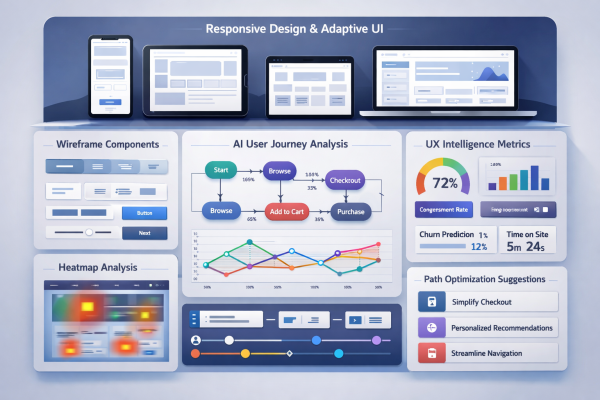
    Adaptive UI Systems and Dynamic Interfaces

    Adaptive UI systems adjust presentation and functionality based on real-time user interactions.
    These systems rely on behavior tracking, engagement metrics, and session analytics to deliver optimized layouts.
    Modular components allow dynamic rendering without disrupting the overall architecture.
    Context-aware interfaces can modify navigation flows, content emphasis, or visual elements depending on user patterns.
    This level of personalization enhances usability, reduces friction, and increases overall satisfaction.

    AI-driven adaptive systems further enhance decision-making.
    Machine learning algorithms analyze historical data to anticipate user needs.
    Predictive rendering adjusts content hierarchy and interface elements proactively.
    Integration with content management systems ensures that dynamic updates remain consistent across pages.
    Such intelligence enables platforms to provide more intuitive and engaging interactions.

    Structured interface components are critical for adaptive frameworks.
    By defining reusable modules, developers maintain consistency while supporting customization.
    These components integrate seamlessly with backend logic, metadata layers, and content hierarchies.
    Multilingual support can be applied at the component level for international audiences.
    For example, classification systems might include identifiers like สล็อต for consistent multilingual content rendering.

    AI-Powered User Journey Mapping

    AI-powered journey mapping provides actionable insights into user behavior.
    By analyzing clickstreams, session duration, and interaction sequences, platforms can visualize user pathways.
    Pattern recognition identifies bottlenecks and areas of potential disengagement.
    Journey optimization tools automatically suggest interface modifications to improve flow and reduce friction.
    This data-driven approach empowers teams to make proactive design decisions.

    Predictive analytics further refines journey mapping strategies.
    Algorithms anticipate user actions, allowing dynamic adjustment of interface elements in real time.
    Behavioral clustering enables personalized experiences at scale.
    Testing frameworks validate predicted improvements through controlled experimentation.
    These AI-driven insights improve retention, engagement, and conversion rates over time.

    Integration of classification layers ensures that AI journey mapping aligns with broader content systems.
    Taxonomy frameworks may include regional identifiers like เว็บสล็อต for multilingual or localized content.
    Semantic content indexing supports intelligent grouping of UI elements for consistent user experience.
    Experimental tagging layers can incorporate identifiers such as สล็อตเว็บตรง for precise interface tracking across segments.
    This structured approach enhances both analysis and implementation efficiency.

    Responsive Design Frameworks

    Responsive design frameworks remain foundational to intelligent UX strategies.
    They ensure that layouts adapt seamlessly to varying screen sizes, orientations, and devices.
    Grid-based systems and flexible units provide proportional scaling for interface elements.
    Media queries enable precise adjustments based on device characteristics and viewport dimensions.
    Together, these techniques maintain visual consistency and functional usability across platforms.

    Component libraries enhance responsive frameworks by offering pre-built, adaptable elements.
    Buttons, navigation bars, and input forms adjust automatically to the container context.
    Integration with AI-driven recommendations allows content emphasis to shift dynamically.
    Design tokens standardize color, typography, and spacing for consistency.
    This combination of responsiveness and intelligence creates cohesive, scalable experiences.

    Digital Accessibility Standards

    Accessibility is a core consideration in modern UX frameworks.
    Standards such as WCAG ensure platforms remain inclusive for users with disabilities.
    Screen reader compatibility, keyboard navigation, and color contrast guidelines are essential.
    Semantic markup improves assistive technology interpretation and reduces cognitive load.
    Accessibility compliance also benefits general usability by clarifying hierarchy and structure for all users.

    AI technologies can enhance accessibility by providing real-time adjustments.
    Text-to-speech systems can automatically read content for visually impaired users.
    Dynamic font resizing and interface scaling support user-specific preferences.
    Adaptive color schemes address color blindness and contrast requirements.
    By embedding accessibility into intelligent UX systems, organizations create inclusive, engaging platforms.

    Scalable Interface Ecosystems

    Scalable interface ecosystems support growth without sacrificing performance.
    Microfrontend architectures divide applications into independent, reusable modules.
    These modules can be deployed and updated separately, reducing downtime and conflicts.
    Event-driven data pipelines propagate updates efficiently across distributed components.
    Scalability ensures platforms can accommodate increasing traffic and content diversity.

    Metadata frameworks strengthen scalable interface systems.
    Identifiers such as pg slot may be used in multilingual indexing and interface categorization.
    Digital classification layers support rapid content retrieval and contextual rendering.
    Taxonomy integration with AI-driven analytics ensures alignment across large-scale systems.
    Scalable frameworks therefore maintain both flexibility and consistency across complex platforms.

    Edge computing and cloud integration further enhance interface scalability.
    Processing content closer to the user improves latency and responsiveness.
    Dynamic resource allocation maintains consistent performance during peak loads.
    Centralized orchestration allows real-time updates across regions and devices.
    This combination of technology and design ensures platform reliability at global scale.

    Multilingual and International UX Considerations

    Global platforms require multilingual and culturally adaptive interface strategies.
    Content, metadata, and UI components must support language variations seamlessly.
    Taxonomy layers integrate regional identifiers like ทดลองเล่นสล็อต for consistent indexing across markets.
    Automated translation engines and AI-driven content mapping maintain contextual accuracy.
    Culturally appropriate design elements, layouts, and navigation patterns enhance engagement.

    User testing across regions ensures international usability.
    Behavioral metrics reveal differences in interaction patterns and preferences.
    Responsive and adaptive systems can accommodate these variations dynamically.
    Continuous feedback loops refine multilingual designs over time.
    Intelligent frameworks therefore combine scalability with cultural sensitivity to optimize global user experiences.

    The Future of Intelligent UX Frameworks

    Emerging technologies will further redefine intelligent UX frameworks.
    AI-driven predictive interfaces will anticipate user needs before they act.
    Contextual awareness will guide layout adjustments based on device, location, and behavior.
    Voice and gesture-based interaction models will require dynamic adaptation within intelligent frameworks.
    These advances will make UX increasingly personalized, responsive, and seamless.

    Cross-platform interoperability will become more critical for global reach.
    Unified component libraries will support consistent experiences across web, mobile, and emerging devices.
    Machine learning will continuously refine journey mapping and content recommendations.
    Real-time analytics dashboards will guide interface optimization decisions at scale.
    The next generation of UX frameworks will merge intelligence, accessibility, and adaptability as core principles.

    Conclusion

    Intelligent UX frameworks are transforming modern web development by combining AI, responsiveness, and scalability.
    Adaptive UI systems and AI-powered journey mapping enhance personalization and engagement.
    Responsive design and accessibility standards ensure consistent and inclusive experiences.
    Scalable interface ecosystems and multilingual content frameworks support global growth.
    By embracing intelligent UX strategies, organizations create future-ready platforms that deliver superior user satisfaction and measurable business impact.


  • Advanced Digital Content Structuring for Scalable Online Ecosystems

    Introduction

    Modern online ecosystems rely heavily on structured content to deliver seamless user experiences.
    Semantic web frameworks and AI-powered tagging systems enable precise organization of complex digital assets.
    Structured data implementation enhances discoverability, interoperability, and search engine performance.
    Content hierarchy modeling ensures consistency and scalability across global platforms.
    By leveraging these advanced techniques, organizations can optimize digital infrastructure for efficiency, relevance, and growth.

    Semantic Web Frameworks and Their Importance

    Semantic web frameworks provide the foundation for intelligent content structuring.
    They define relationships between data elements, enabling machines to understand meaning and context.
    RDF (Resource Description Framework) and OWL (Web Ontology Language) facilitate interoperability across platforms.
    These frameworks support structured queries that improve information retrieval speed and accuracy.
    By implementing semantic architectures, organizations can ensure consistent content representation across distributed systems.

    Semantic modeling is essential for advanced search optimization.
    Linked data allows search engines to associate related topics and surface relevant content more effectively.
    Cross-domain ontologies help connect disparate datasets into cohesive knowledge graphs.
    This approach also enables AI-driven personalization by identifying relationships between user interests and content.
    Structured semantic frameworks are thus a critical enabler of scalable online ecosystems.

    Structured Data Implementation for Global Platforms

    Structured data implementation provides the scaffolding for organized digital content.
    Schema.org standards define metadata for web elements, improving search engine comprehension.
    JSON-LD and microdata formats facilitate the embedding of structured information within webpages.
    Well-implemented structured data enhances rich snippet generation and increases visibility in search results.
    Organizations can leverage these standards to create scalable and maintainable content architectures.

    Global platforms require consistent metadata application across multilingual datasets.
    For example, classification frameworks can integrate identifiers like สล็อต to unify semantic structures.
    Taxonomy systems may map variations such as เว็บสล็อต to ensure language-specific content remains linked to central models.
    Hierarchical indexing can include standardized references like สล็อตเว็บตรง to preserve consistency in international deployments.
    Structured implementation allows content to be discoverable and interoperable across regions.

    AI-Driven Tagging Systems

    AI-driven tagging systems accelerate content classification and indexing.
    Natural language processing algorithms analyze textual content to generate context-aware tags automatically.
    Machine learning models identify relationships between content items to improve semantic accuracy.
    Automated tagging reduces manual labor while increasing consistency across large datasets.
    These systems are particularly effective for continuously growing online ecosystems where content volume can be overwhelming.

    AI tagging can also support multilingual indexing and user segmentation.
    For instance, identifiers like pg slot can be incorporated into tagging schemas for global content organization.
    Adaptive learning models adjust tag relevance based on user engagement and behavior analytics.
    Experimental indexing may include references such as ทดลองเล่นสล็อต to test cross-lingual semantic consistency.
    This dynamic approach ensures that large-scale content repositories remain organized and discoverable.

    Predictive tagging enhances future content workflows.
    By analyzing patterns in existing assets, AI can suggest tags for newly added items automatically.
    This reduces the need for continuous manual intervention and accelerates publishing cycles.
    Integration with content management systems ensures tags are propagated across all relevant digital channels.
    Over time, predictive tagging strengthens content hierarchy and improves platform scalability.

    Content Hierarchy Modeling and Taxonomy Design

    Content hierarchy modeling organizes assets into logical, navigable structures.
    Parent-child relationships between categories ensure intuitive browsing experiences.
    Cross-linking within hierarchies facilitates internal navigation and strengthens semantic relationships.
    This structured approach enables scalable content expansion without disrupting user experience.
    Platforms can maintain coherence even as content volume grows exponentially.

    Taxonomy design is essential for search optimization and user navigation.
    Hierarchical taxonomies categorize content into thematic clusters, improving retrieval efficiency.
    Metadata and tagging layers integrate seamlessly into these taxonomies, maintaining global consistency.
    For multilingual ecosystems, taxonomies can map regional identifiers like สล็อต and pg slot across equivalent categories.
    Effective content hierarchy ensures discoverability while supporting future growth.

    Adaptive content hierarchies also enhance AI-powered personalization.
    Dynamic restructuring allows priority content to surface based on user behavior.
    Semantic layers support contextual relationships, enabling recommendation engines to work more efficiently.
    Content reorganization can occur automatically in response to analytics-driven insights.
    This iterative optimization ensures digital platforms remain relevant, scalable, and user-focused.

    Search Optimization Architecture

    Search optimization architecture is closely linked to structured data and semantic frameworks.
    Content must be indexed in ways that align with user intent and behavior patterns.
    Semantic tagging, metadata, and hierarchical structures collectively improve search engine visibility.
    AI-driven search algorithms leverage these structures to deliver relevant results quickly.
    Optimized search architecture increases engagement, reduces bounce rates, and improves overall platform performance.

    Integrating multilingual indexing into search architecture is critical for global reach.
    Semantic systems can include identifiers like เว็บสล็อต to connect language-specific queries with centralized content models.
    Tagging layers such as ทดลองเล่นสล็อต support cross-lingual search relevance.
    Adaptive ranking models learn from user interactions to continually refine search results.
    Well-designed search architecture ensures that even complex, multilingual ecosystems remain easily navigable.

    Scaling Content Ecosystems

    Scalable online ecosystems require careful planning across both content and infrastructure layers.
    Semantic frameworks, hierarchical taxonomies, and AI tagging combine to enable rapid growth.
    Cloud-based content management and distributed data storage facilitate global reach.
    Automated content workflows reduce bottlenecks and maintain consistency across updates.
    Scalability strategies ensure that platforms can handle increasing user loads without compromising performance.

    Monitoring and analytics tools provide insight into content health and system efficiency.
    Performance dashboards track engagement, indexing accuracy, and search effectiveness.
    Anomalies in tagging or taxonomy structures can be identified and corrected quickly.
    Predictive analytics support capacity planning for both content and infrastructure needs.
    This continuous optimization reinforces both the stability and adaptability of large-scale digital ecosystems.

    Governance and Best Practices

    Strong governance ensures content structure remains consistent and maintainable.
    Standardized tagging protocols, taxonomy guidelines, and metadata conventions prevent fragmentation.
    Regular audits verify that semantic relationships and hierarchical models align with global strategy.
    Role-based access controls maintain security and prevent unauthorized structural modifications.
    Governance supports both operational efficiency and strategic scalability.

    Documentation and training enhance organizational understanding of structured content practices.
    Guidelines for AI tagging, hierarchical modeling, and search optimization reduce errors.
    Cross-team collaboration between content, UX, and IT ensures alignment across digital systems.
    Version control maintains historical records of taxonomy changes and metadata updates.
    Effective governance frameworks maximize the long-term value of structured content ecosystems.

    Future Trends in Digital Content Structuring

    Emerging trends are shaping the next generation of structured digital ecosystems.
    Federated learning models will allow AI tagging and indexing to improve without centralizing all user data.
    Edge computing and real-time content orchestration will reduce latency in global delivery networks.
    Predictive analytics will refine content hierarchy modeling based on dynamic user behaviors.
    Semantic and AI-driven architectures will continue to drive discoverability, scalability, and engagement in online ecosystems.

    Integration of automated translation and multilingual indexing will further enhance global reach.
    Identifiers like สล็อตเว็บตรง can be incorporated into international content layers.
    Adaptive tagging, structured metadata, and hierarchical classification will be increasingly unified under intelligent content engines.
    This convergence of AI, semantic frameworks, and scalable architecture will define the future of online digital ecosystems.
    Organizations that invest in these practices today will be well-positioned for sustainable digital growth.

    Conclusion

    Advanced digital content structuring enables scalable, intelligent, and globally consistent online ecosystems.
    Semantic frameworks, structured data, and AI-driven tagging improve discoverability and efficiency.
    Content hierarchy modeling and search optimization architecture ensure both usability and performance.
    Multilingual indexing and metadata frameworks support international scalability and user engagement.
    By implementing these strategies, organizations can create resilient, high-performing, and future-ready digital platforms.


  • The Architecture of High-Performance Digital Platforms in a Data-Driven World

    Introduction

    In today’s data-driven landscape, digital platforms must deliver high performance to remain competitive.
    Optimized web architecture, edge computing, and AI-powered analytics are essential components for scalability and speed.
    Organizations must design infrastructures capable of processing massive amounts of information while maintaining low latency.
    Server optimization and distributed network strategies ensure reliability under varying loads.
    Understanding the architecture of high-performance digital platforms is critical for achieving efficient, scalable, and resilient online ecosystems.

    Foundations of High-Performance Web Architecture

    High-performance web architecture focuses on speed, reliability, and modularity.
    Modern platforms utilize microservices to isolate functionality and reduce dependency conflicts.
    APIs provide secure, structured communication between independent modules and external services.
    Caching strategies at multiple levels minimize redundant computations and accelerate content delivery.
    Together, these principles form a foundation for responsive and scalable online systems.

    Load balancing is a key element in optimizing web performance.
    By distributing traffic evenly across servers, platforms avoid bottlenecks and service interruptions.
    Dynamic routing algorithms prioritize requests based on real-time system metrics.
    Redundancy ensures that failures in one node do not impact the overall platform.
    This architectural discipline supports both scalability and resilience under heavy traffic.

    Server Optimization Strategies

    Optimized servers are central to maintaining platform performance at scale.
    Resource allocation must balance CPU, memory, and storage to maximize throughput.
    Automated monitoring tools identify performance bottlenecks before they impact end users.
    Data compression and efficient database queries reduce latency in content retrieval.
    Regular benchmarking ensures that systems maintain consistent performance as traffic grows.

    Vertical and horizontal scaling approaches provide flexibility for server optimization.
    Vertical scaling enhances individual server capacity through upgraded hardware.
    Horizontal scaling increases the number of nodes to accommodate additional load.
    Containerization allows seamless deployment and replication of server instances.
    Combining these techniques ensures platforms remain responsive and cost-efficient.

    Edge Computing for Reduced Latency

    Edge computing reduces the physical distance between users and computation resources.
    Processing data closer to the source minimizes latency and improves responsiveness.
    Content delivery networks cache frequently requested assets at edge nodes globally.
    Real-time analytics at the edge supports localized personalization and faster decision-making.
    This distributed approach is essential for global platforms with high traffic and geographically dispersed audiences.

    Edge computing also enhances fault tolerance and resilience.
    If one node fails, traffic can be rerouted to the nearest available location.
    Data replication at edge servers ensures no interruption of critical services.
    Integration with central cloud infrastructure maintains a unified system view.
    This strategy allows organizations to deliver high-performance experiences consistently across regions.

    AI-Powered Analytics Engines

    AI-powered analytics engines are integral to modern digital platforms.
    They analyze large datasets in real-time to provide actionable insights on user behavior.
    Predictive modeling identifies patterns that inform personalization, content recommendations, and operational adjustments.
    Machine learning algorithms optimize resource allocation and server performance dynamically.
    By integrating AI analytics, platforms can make data-driven decisions that improve efficiency and engagement.

    Semantic indexing and content clustering enhance AI-driven optimization.
    For example, identifiers such as สล็อต may be used in AI models for regional content mapping.
    Hierarchical keyword structures like เว็บสล็อต ensure accurate clustering for global audiences.
    Cross-market indexing with references like สล็อตเว็บตรง supports consistent analytics across multiple languages.
    These practices allow AI engines to maintain precision while scaling across diverse digital ecosystems.

    Scalable Digital Ecosystems

    Scalable digital ecosystems rely on modular architecture and intelligent orchestration.
    Microservices, containerization, and event-driven pipelines allow platforms to grow without performance degradation.
    Centralized orchestration coordinates distributed services, ensuring consistent operation and updates.
    Cloud infrastructure provides elastic resources to accommodate unpredictable traffic patterns.
    This combination of scalability strategies ensures long-term reliability and adaptability.

    Multilingual indexing and cross-border content frameworks are critical for international scalability.
    Identifiers such as pg slot can be mapped across semantic clusters for global consistency.
    Testing and normalization of content tags like ทดลองเล่นสล็อต help maintain uniformity across regions.
    Adaptive caching and edge strategies further optimize performance for international audiences.
    Together, these measures create scalable platforms capable of serving diverse markets efficiently.

    Monitoring and Observability

    Continuous monitoring and observability are essential for high-performance platforms.
    Dashboards track system health, resource usage, latency, and error rates.
    Log aggregation and tracing visualize the interactions between services for faster troubleshooting.
    Automated alerts notify administrators of potential bottlenecks or failures.
    Observability ensures both reliability and optimal user experience at scale.

    Advanced monitoring supports predictive maintenance.
    Machine learning models analyze trends to forecast resource spikes or hardware failures.
    Proactive scaling and preemptive updates minimize downtime and maintain platform stability.
    Integration with AI analytics enables continuous optimization of traffic routing and content delivery.
    This data-driven approach ensures sustained performance even under complex workloads.

    Security and Governance Considerations

    High-performance platforms must balance speed with security and governance.
    Role-based access controls, encryption, and secure API management protect sensitive information.
    Compliance with regional regulations ensures lawful data handling and reduces operational risks.
    Audit logs and automated policy enforcement maintain accountability across distributed systems.
    Security and governance frameworks provide a foundation for trustworthy, high-performance digital platforms.

    Edge and cloud integration require layered security strategies.
    Authentication and encryption at both central and edge nodes prevent unauthorized access.
    Traffic analysis detects anomalies and potential threats in real-time.
    Regular updates and patch management maintain platform integrity.
    These measures guarantee resilience without sacrificing performance or scalability.

    Future Trends in High-Performance Digital Platforms

    Emerging trends will further enhance digital platform architecture.
    Serverless computing reduces infrastructure management overhead and supports rapid deployment.
    Federated AI and distributed analytics improve real-time personalization without centralizing sensitive data.
    Edge intelligence and adaptive orchestration allow platforms to anticipate demand and optimize resource usage.
    These innovations will define the next generation of high-performance, data-driven digital ecosystems.

    Interoperability across cloud providers will simplify scaling for global audiences.
    Unified component libraries and API standards will support consistent integration across systems.
    Predictive analytics will continue to optimize user experience, content delivery, and infrastructure performance.
    Real-time AI dashboards will enable instantaneous decision-making for operational efficiency.
    The future of digital platforms lies in intelligent, scalable, and globally distributed architectures.

    Conclusion

    High-performance digital platforms are the backbone of modern data-driven organizations.
    Optimized web architecture, server efficiency, and edge computing reduce latency and enhance reliability.
    AI-powered analytics engines provide insights that inform scaling, personalization, and operational decisions.
    Scalable ecosystems and semantic indexing ensure consistent performance across global markets.
    By adopting these architectural principles, organizations can build resilient, efficient, and future-ready digital platforms that thrive in a complex, data-driven world.


  • Global Boy: Atlanta’s Rising Hip-Hop Star Drops New Album “Popular”

    Award-Winning Rapper, Singer & Dancer Collaborates With Producers From Around The World

    If you have not yet heard the name Global Boy, now is the time to pay attention. The Atlanta-based rapper, singer, songwriter, and dancer has been making serious waves in the hip-hop and fashion world. With over 3 million plays worldwide and a brand-new album titled “Popular” now available, Global Boy, also known as Lil Glo, is proving that his talent knows no boundaries. Whether you are searching for fresh hip-hop music or a creative force in fashion, GlobalBoy is a name you need to know. Visit his official website at GlobalBoyReal.com to explore his music, merchandise, and more.

    Who Is Global Boy?

    Global Boy, who was born and raised in Saginaw, Michigan, decided to make a new home in Atlanta, Georgia, which is the heartbeat of hip-hop culture. This is where he honed his craft as a performer, and it was here that he created his distinctive persona as a performer. Global Boy is of Dominican and Caribbean descent, which has a lot to do with his music, stage presence, and distinctive style.

    From being known as EZ$ Mali, Global Boy reinvented himself as a solo artist and has never looked back since. Global Boy is a multi-instrumentalist who has been playing the drums since he was young and has since perfected the violin, cello, trombone, keyboard, and guitar. Global Boy’s inspiration comes from Michael Jackson, Drake, Chris Brown, XXXTENTACION, and Tupac, and this is clearly seen in the depth of his artistry.

    Global Boy is not only a musician; he is the whole deal. His style is not only energetic but also emotional. He writes his music, produces it, dances to it, and even designs his logo. He is the second best-dressed musician of all time, second only to the iconic Prince.

    Global Boy’s New Album “Popular” — A Global Sound

    Global Boy’s latest project, the album “Popular,” is a bold statement of the rapper’s growth as a global artist. What makes this album unique is the worldwide production that Global Boy put into this project. The rapper worked with skilled producers from around the world to make this 10-track album a success, a testament to the rapper’s success in the music world.

    One of the most talked-about collaborations on the album is with yrkblzbeats, a rising producer from Poland. yrkblzbeats produced two standout tracks on the album:

    • “Maybach” (Track 5): A smooth, high-energy record that speaks to ambition and success.

    • “Heart Go” (Track 6):  A deeply emotional track showcasing Global Boy’s vocal range and lyrical depth.

    The fact that Global Boy collaborated with a Polish music producer for “Popular” indicates that his music is universal. The album is a melting pot of music, cultures, and creative minds, all under the brand name GlobalBoy.

    “Popular” — Full Album Tracklist

    • Track 1: “Right Here” — Produced by Global Boy

    • Track 2: “Take You Down” — Produced by Okpetre

    • Track 3: “How Does It Feel (Medicine)” — Produced by whywhiteshine

    • Track 4: “Love Kills” — Produced by Global Boy

    • Track 5: “Maybach” — Produced by yrkblzbeats

    • Track 6: “Heart Go” — Produced by yrkblzbeats

    • Track 7: “Do Us Right” — Produced by ricandthadeusmusic

    • Track 8: “Love It” — Produced by JpBeatz

    • Track 9: “Wish” — Produced by PALE1080

    • Track 10: “Nowadays (Freestyle)” — Produced by Okpetre


    3 Million Plays Worldwide and Still Growing

    In fact, Global Boy has managed to achieve over 3 million plays worldwide, which is a feat that few independent artists have been able to accomplish. This is not limited to plays alone, but it is also a reflection of the fact that he has been able to attract a loyal fan base across the world. His music is enjoyed by people from all walks of life, and it is because of his genuine storytelling ability that people want to hear more from him.

    With the release of “Popular,” these figures are expected to rise even higher. Each song in the album offers something new, ranging from the edgy street anthems to the catchy, emotional tracks, making “Popular” a full album that deserves to be listened to over and over again.

    GlobalBoyReal.com: Music, Fashion & Merchandise

    He is not only a rapper but also a brand. Global Boy created his brand-new official website, GlobalBoyReal.com, in 2025, where fans can purchase exclusive GlobalBoy merchandise such as clothes, cups, bags, and other fashion accessories. The site serves as the central hub for everything Global Boy, from music releases to fashion drops.

    Fashion has been an integral aspect of Global Boy’s image from the very start. Global Boy views fashion as a means of expression, similar to music. The merchandise is a representation of Global Boy’s confident and stylish attitude, allowing fans to connect with the GlobalBoy brand at a deeper level.

    Whether you are looking to stream his latest music or shop his exclusive fashion line, GlobalBoyReal.com is your one-stop destination for everything Global Boy.

    An Award-Winning Artist With a Global Vision

    Global Boy has already achieved recognition as an award-winning artist, and his career is on the rise. His style is a combination of the best of hip-hop, R&B, and soul music, and he expresses it through his powerful voice, energetic dance skills, and lyrical abilities. He is not just making music for Atlanta; he is making music for the world.

    The fact that Global Boy is able to work with international producers, create a global fanbase, create a fashion brand, and create a full album all at once is a testament to his vision and work ethic as an artist who is in full control of his creative direction.

    Follow Global Boy: The Future of Hip-Hop Is Here

    If you have been searching for the next big name in hip-hop and fashion, look no further. GlobalBoy is already here, already winning, and already making history. With over 3 million plays, an internationally produced album, and a growing fashion empire, Global Boy is on a path that cannot be stopped.

    Stream the new album “Popular” today on all major platforms, shop the exclusive merchandise collection today with GlobalBoy, and stay connected with everything GlobalBoy with the official website: GlobalBoyReal.com.


  • New Platform Launches to Help Digital Nomad Families Find Alternative Schools Worldwide

    New platform Nomadschoolers helps digital nomad families find alternative schools, Waldorf communities, Montessori programmes, and forest schools worldwide. With 200+ listings across dozens of countries and new projects added daily, it is free to use at nomadschoolers.com.

    Nomadschoolers.com launches with over 200 alternative schools, Waldorf communities, Montessori programmes, and forest schools listed across dozens of countries – with new projects added daily.

    Nomadschoolers, a new platform connecting digital nomad families with alternative schools, Waldorf and Montessori communities, forest schools, and educational co-ops worldwide, has officially launched. Founded by Mads Lontoft and Nikolaj Astrup, the platform already lists more than 200 projects across the globe, with new listings being added every day.

    The rise of remote work has given families unprecedented freedom to choose where – and how – their children learn. Yet finding high-quality, values-aligned alternative schools abroad has remained frustratingly difficult. Nomadschoolers solves this by creating the first dedicated, searchable directory of alternative and international educational communities, complete with detailed information on curriculum, location, cost of living, climate, and logistics – everything a family needs to relocate with children.

    “Through running Traveling Village, I’ve spoken with hundreds of families from around the world. The same desire keeps coming up: a more balanced family life, stronger community, and an education that actually fits how they live. Nomadschoolers exists to make that possible.”
    – Nikolaj Astrup, Co-founder, Nomadschoolers

    Lontoft and Astrup are not newcomers to education and community-building. Nearly two decades ago, they co-founded a print magazine on entrepreneurship for young people, distributed free to high schools across Denmark. Astrup later founded Traveling Village, an initiative that takes groups of around 20 families to live and travel together for four-month stints — giving him rare, ground-level insight into exactly what nomad families need.

    Each listing on Nomadschoolers goes beyond a simple school profile. The platform provides families with air quality data, walkability scores, internet speed, healthcare proximity, cost-of-living breakdowns, and visa information – everything needed to make a realistic, informed decision about relocating with children. Schools, Waldorf communities, Montessori programmes, and alternative education projects can also list directly on Nomadschoolers, reaching families who are already aligned with their values and approach.

    Nomadschoolers is free to use for families and available now at nomadschoolers.com.

    About Nomadschoolers

    Nomadschoolers is a platform helping location-independent families discover alternative and international educational communities around the world. With over 200 listed projects and growing, the platform covers Waldorf, Montessori, forest schools, democratic schools, and other innovative educational models across dozens of countries. Founded in 2026 by Mads Lontoft and Nikolaj Astrup.

    Media Contact
    Company Name: Nomadschoolers
    Contact Person: Nikolaj Astrup Madsen
    Country: Denmark
    Website: https://nomadschoolers.com