
Author: IndNewsWire

  • Healthcare Technology Trends Shaping Patient Care and Operations thumbnail

    Healthcare Technology Trends Shaping Patient Care and Operations

    Image source

    Healthcare delivery continues to change as technology becomes more embedded in clinical work and daily operations. In ambulatory surgery centers (ASCs) and hospital outpatient departments, software choices and device ecosystems can influence documentation quality, scheduling stability, revenue cycle friction, and the patient’s experience from intake through follow-up.

    According to the experts at hstpathways.com, healthcare technology trends increasingly focus on interoperability, structured clinical information, and real-time operational visibility. For an ASC administrator, these themes can translate into fewer manual handoffs, clearer accountability, and data that supports decisions without adding unnecessary burden.

    Interoperability and Information Blocking Expectations

    Interoperable exchange keeps moving toward routine use. A national brief using 2023 hospital data describes a multi-year increase in hospitals that routinely engage in interoperable exchange across key domains, including sending, finding, receiving, and integrating data.

    Policy pressure also remains active. Federal action around information blocking has progressed through enforcement milestones and provider-focused “disincentives,” which affect how organizations manage access, exchange, and use of electronic health information. For ASCs, this environment can increase the practical value of cleaner inbound referrals, medication histories, and post-op documentation flows.

    Documentation Automation and Ambient Workflows

    Documentation technology is shifting toward tools that reduce typing and standardize capture at the point of care. Recent peer-reviewed work has evaluated “ambient documentation” approaches and reported changes in perceived documentation burden among clinicians after sustained use. Administrators may view this trend through a staffing and throughput lens, since documentation time can affect room turnover, recovery flow, and end-of-day closure rates.

    This area also raises governance questions. When a tool generates text, leaders often need clear policies for clinician review, version history, and how the organization audits accuracy over time.

    Predictive AI, With More Attention to Evaluation and Governance

    Predictive AI has moved from experimentation to broader operational use across many settings, pushing evaluation and governance into the spotlight. A federal data brief focused on hospital trends in the use, evaluation, and governance of predictive AI provides a structured view of how health systems report adoption and oversight activities.

    For ASC leaders, the operational focus tends to be on schedule reliability, case duration estimates, supply forecasting, and identifying patients who may need extra follow-up. The practical requirement is consistent monitoring, since model performance can drift when case mix, staffing patterns, or documentation habits change.

    Telehealth and Remote Monitoring in Perioperative Care Pathways

    Telehealth remains a durable component of access for many patients. Federal reporting has tracked utilization patterns and notes that a sizeable share of Medicare fee-for-service users had telehealth services in 2024, with little change from the prior year. This stability matters for ASCs that use virtual touchpoints for pre-op education, medication reconciliation, and post-op check-ins.

    Remote monitoring in perioperative pathways continues to develop, including trials that evaluate whether technology-supported monitoring can influence post-discharge acute care use and symptom escalation. For administrators, the operational questions often become: which patients benefit most, how escalation routes work, and how staff workload changes as monitoring expands.

    Cybersecurity and Downtime Planning as Clinical Operations Work

    Cybersecurity has become closely tied to continuity of care. A large analysis of ransomware events across HIPAA-covered entities examined the relationship between ransomware attacks and reported breaches over a long timeframe, which helps frame the scale and persistence of the threat.

    From an operations standpoint, downtime procedures and vendor dependency planning often matter as much as technical controls. A policy-focused report characterizes ransomware as a “digital disaster” and highlights how cyber incidents can disrupt billing systems, clinical documentation access, and broader care-delivery workflows. An ASC can treat this trend as a reason to formalize downtime charting processes, test restoration steps, and clarify decision rights during an outage.

    Cloud Use, With Clearer Compliance and Risk Controls

    Cloud adoption continues to expand in healthcare, and regulators have provided practical guidance on how covered entities and business associates can use cloud services while meeting HIPAA obligations. HHS guidance explains responsibilities for cloud service providers and reinforces the importance of appropriate agreements and safeguards when protected health information enters cloud environments.

    Security frameworks also keep evolving. Updated NIST guidance for the HIPAA Security Rule offers a structured approach for risk analysis, safeguards, and ongoing security management. For ASC leaders, this can support clearer vendor due diligence, stronger access controls, and more consistent documentation of security decisions.

    What This Means for ASC Leaders

    These trends generally point toward tighter data exchange, lighter documentation friction, broader use of predictive tools, more virtual perioperative touchpoints, stronger downtime readiness, and clearer cloud governance. For an ASC, the practical path usually starts with workflow fit, measurable outcomes, and realistic staffing plans, then extends into governance. Hence, the technology remains dependable as volumes, payers, and regulatory expectations change.

  • Leobit Wins 2025 Cloud Computing  Awards in Business Cloud Transformation Category thumbnail

    Leobit Wins 2025 Cloud Computing Awards in Business Cloud Transformation Category

    Leobit, a full-cycle .NET, AI, and web application development company, has been named a winner of the 2025 Cloud Computing Awards in the “Business Cloud Transformation” category. The recognition highlights Leobit’s cloud expertise and the company’s contribution to helping a UK-based business achieve measurable operational improvements through the strategic adoption of Azure cloud and AI technologies. 

    The UK market remains one of Leobit’s key strategic priorities, and the company continues to strengthen its presence in the UK by helping businesses modernise legacy systems, optimise cloud operations, and accelerate digital transformation through advanced cloud and AI-driven solutions. 

    The 2025 Cloud Computing Awards highlight outstanding achievements in cloud infrastructure, security, data analytics, hybrid solutions, and operational excellence, recognising businesses that push boundaries and set new standards in cloud innovation, customer service, and operational efficiency. 

    Leobit is proud to become a 2025 Cloud Computing Awards winner 

    Leobit was recognised for a cloud transformation project delivered for a leading UK SaaS provider in the stakeholder management space. The platform supports organisations in centralising stakeholder data, managing relationships, and improving communication workflows.

    As part of the engagement, Leobit conducted a comprehensive software assessment of the customer’s legacy system and proposed a phased migration plan built on Azure cloud infrastructure and multi-tenancy architecture. The strategy emphasised clear module dependency mapping, proof of concept validation, and a strong focus on minimising disruption to ongoing business operations. 

    The cloud transformation performed by Leobit delivered significant and measurable outcomes: 

    • Up to 80% reduction in monthly infrastructure costs 
    • 6 times faster response times compared to the legacy system 
    • Accessibility scores of 100 on newly developed web pages 
    • Zero downtime during migration process

    The rearchitected platform empowers the client to onboard new customers faster, enhance user experience, and pursue expansion across the UK and international markets. 

    “We are deeply honored to be recognised by the Business Awards UK for our achievements in cloud transformation. At Leobit, our primary focus is always on our clients’ success. We strive to develop scalable, intelligent solutions that not only solve today’s challenges but also grow and adapt with our clients’ future ambitions. This award also validates the AI transformation we’re driving both within Leobit and for our customers as we continue to embed intelligence and innovation into everything we build. ” 

    – Oleksa Stelmakh, CEO and Founder of Leobit 

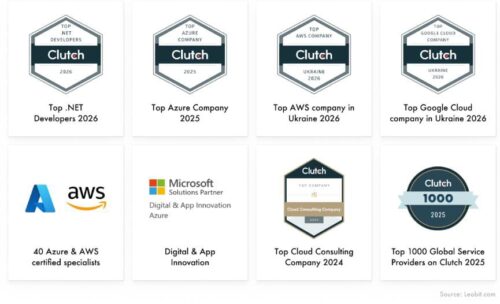
    Cloud software development and transformation are among Leobit’s core service offerings. The company’s team includes over 40 Azure and AWS-certified specialists with deep expertise in cloud architecture and modernization. Over the past decade, Leobit has completed numerous cloud development, migration, and modernisation projects that have transformed business operations for clients in the real estate, legal, and SaaS industries.

    Since 2019, Leobit has been a trusted Microsoft partner and currently holds the status of Microsoft Solutions Partner for Digital & App Innovation and  Data & AI, confirming their proficiency and capabilities in building, running, and managing applications on-premises and across multiple clouds, utilising Microsoft tools and services. Additionally, the company was recognised by Clutch as a Top Cloud Consulting Company, a Top Azure Company, a Top AWS Company, and a Top GCP Company. 

    Leobit’s cloud awards and recognitions 

    As a Microsoft partner, Leobit continuously invests in mastering the latest Azure capabilities and cloud-native technologies. The company actively participates in key industry events, including the Azure Dev Summit 2025, to stay ahead of emerging trends and test new solutions firsthand. This ongoing learning culture enables Leobit to deliver maximum value to clients by offering innovative, future-ready solutions that leverage the very best of the Microsoft ecosystem. 

    Receiving this award marks a significant milestone in Leobit’s ongoing journey to innovate through the use of the cloud. With every project, the company aims to empower their clients to scale smarter, move faster, and achieve more through intelligent, future-ready technology solutions. 

    About Leobit 

    Leobit is a .NET, AI, and web application development provider for technology companies and startups in the US and the EU. Our technology focus covers .NET, Angular, iOS, Android, Azure, Ruby, PHP, React, and a comprehensive range of other technologies from Microsoft, web, and mobile stacks. Leobit has a representative office in Austin, TX (USA) and development centers in London  (UK), Tallinn (Estonia), Krakow (Poland) ,and Lviv (Ukraine). More information about the company is available on the Leobit website, including details about Leobit’s cloud services.

    About Business Awards UK 

    Business Awards UK provides a modern, inclusive awards platform recognising the achievements of businesses of all sizes across the UK. With a focus on accessibility and transparency, the awards celebrate innovation, growth, and impact across a wide range of sectors.

  • Saint Javelin Raises $25,000 for Ukrainian Veterans Through EDC Backpack Fundraiser

    The fundraiser was powered by Saint Javelin’s global community and driven primarily by sales from its Defender 2025 Collection, including the brand’s everyday carry backpacks. In total:

    • $12,145 USD was raised through product sales
    • $12,855 USD was raised through Unite with Ukraine fundraising efforts

    All funds were donated directly to Second Wind UA to support programs such as mountain hikes, rafting trips, adaptive climbing, and other outdoor experiences designed to restore confidence, independence, and connection.

    “This contribution will become part of new rehabilitation programs where confidence returns and a sense of personal strength awakens,” said Oleksii Alekseienko, co-founder of Second Wind UA. “Thank you for supporting this movement and the people within it.”

    Second Wind UA works with Ukrainian defenders who lost limbs as a direct result of the situation in Ukraine, helping them reconnect with their bodies and rebuild their futures through movement and shared experience.

    Saint Javelin’s EDC backpacks were created with that same spirit in mind: durable, functional gear built to carry purpose, not just essentials. Designed for daily use, travel, and outdoor conditions, the backpacks represent Saint Javelin’s belief that what you carry can stand for something bigger.

    Explore Saint Javelin’s EDC backpacks and bags here: https://www.saintjavelin.com/collections/bags-and-gear

    The fundraiser was further supported by ULIS Vorokhta, which contributed 76,644 UAH toward Second Wind UA’s programs, reinforcing a shared commitment to veteran recovery and reintegration.

    To everyone who purchased, donated, shared, or supported this initiative — thank you. Your actions helped turn everyday gear into real impact.

    Media Contact
    Company Name: Saint Javelin
    Contact Person: Luke D
    Country: Canada
    Website: http://saintjavelin.com/

  • What Are Indices? How Do You Buy and Sell Them? The Complete AFG-Management Review thumbnail

    What Are Indices? How Do You Buy and Sell Them? The Complete AFG-Management Review

    Many new traders hear about indices but are unsure what they represent or how they are traded in daily markets. Seen from this angle, AFG-Management, a professional trading broker with international market experience, takes a closer look at indices to explain how they work in practice. Let’s find out.

    What are indices

    An index is a number that shows how a group of stocks is performing as a whole. Instead of tracking one company, an index follows many companies at the same time, usually from the same country or sector. For example, some indices represent the largest companies in the US, the UK, or Europe, giving traders a quick view of how those markets are doing.

    what are indices

    Source: Pixabay

    This structure helps explain why indices are popular. When a major index moves up, it means many companies are growing together. When it moves down, it suggests wider market pressure rather than trouble at a single firm. Analysts at AFG-Management describe indices as a way to follow market direction without needing to analyze dozens of individual businesses, which can be helpful for beginners.

    How traders buy and sell indices in practice

    Most traders don’t buy indices in the same way they buy shares of a company. Instead, they trade indices through products that track index movement, such as index CFDs or futures. These tools allow traders to take positions based on whether they expect an index to rise or fall.

    For example, if a trader believes the US market will grow due to strong economic data, they can open a buy position on a US stock index. If they expect economic slowdown or negative news, they might choose a sell position. This flexibility is one reason indices attract active traders.

    Another key point involves trading hours. Some indices follow markets that operate nearly all day, while others move mainly during local stock exchange hours. This difference affects price movement and volatility. New traders learn quickly that indices linked to major economies can move significantly when important news is released.

    According to AFG-Management, many beginners start with indices because price movement tends to be smoother than that of single stocks. They show fewer extreme jumps caused by company-specific events such as earnings surprises or management changes.

    What affects index prices over time

    Index price

    Source: Pixabay

    Index prices move for many reasons, but some factors appear more often than others. Economic data is one of the strongest drivers. Reports on inflation, employment, and economic growth influence how investors feel about future performance, which then affects index direction.

    Central bank decisions also play a major role. When interest rates rise, borrowing becomes more expensive, and stock markets feel pressure. When rates are expected to fall, indices can gain support as investors look ahead to easier financial conditions. These reactions can be observed repeatedly across different markets.

    Political events and global developments also affect indices. Trade policies, elections, and geopolitical tension can change investor confidence quickly. In such cases, indices respond faster than individual stocks because they represent the mood of the entire market.

    Experts explain that being aware of these drivers helps traders avoid guessing. Traders can connect price movement to real events, which leads to more informed decisions over time.

    Risks and common mistakes beginners should know

    Although indices provide broader exposure, they are not risk-free. One common mistake among new traders is assuming indices always move slowly or safely. In reality, during major news releases, prices change fast.

    Another risk is leverage. Many trading products allow traders to control large positions with small capital. Although this can increase potential gains, it increases potential losses. Beginners who use high leverage without risk limits face problems during sudden market swings.

    Timing is another challenge. Entering trades right before important announcements can lead to unpredictable results. Many experienced traders wait until markets react and settle before opening positions.

    That’s why AFG-Management highlights the importance of planning. Setting clear entry points, exit levels, and risk limits helps traders stay disciplined in fast-moving markets.

    Why indices are popular among long-term traders

    Apart from short-term trading, indices also appeal to investors with longer horizons. Over time, many major indices have shown steady growth, showing economic expansion and business development. This pattern explains why indices are used as benchmarks for investment performance.

    indice trading

    Source: Pixabay

    For beginners, following indices can also improve market understanding. Watching how indices react to news helps traders learn how markets behave under different conditions. This knowledge builds confidence and reduces reliance on guesswork.

    AFG-Management comments that indices serve as a bridge between simple and advanced trading. They offer enough complexity to teach market behavior, yet are easier to follow than individual stocks or niche assets.

    Indices give traders a simple way to follow and trade the overall market. Their prices move based on economic news, interest rate decisions, and global events, which makes them easier to connect with real-world situations. When beginners understand how indices work and what drives their movement, they can trade with more realistic expectations and better risk awareness.

    Disclaimer: The information provided in this article is for educational purposes only and should not be considered financial advice. Trading indices and other financial instruments involves risk, and individuals should conduct their own research or consult a qualified financial advisor before making any investment decisions.

  • Donor Fatigue Rose in 2025: How Nonprofits Can Respond

    Nonprofit Fundraising Trends: Donor Exhaustion Is Up – What Nonprofits Can Do Next

    TL;DR: Donor fatigue hit hard at the end of 2025, as supporters faced donor exhaustion and decision overload.

    Here’s how you can overcome this fatigue:

    1. Pace your asks
    2. Limit giving options to reduce stress
    3. Make urgency feel trustworthy

    If year-end giving felt slower in 2025, you weren’t imagining it. Donor fatigue hit hard in November and December, even for strong campaigns. It’s a mix of donor exhaustion and overload, where supporters still care but hesitate.

    Below, we break down what causes it and how to overcome donor fatigue.

    The clearest donor fatigue metrics

    From November to December, the signs were hard to miss. Nonprofit donor fatigue was peaking, and it showed up in both behavior and results.

    Here’s where it showed up:

    • Intent dropped: Only 18% planned to donate again before year-end, while 30% had no plans to give.
    • Email performance weakened: Email revenue fell 17% YoY, while email volume dipped by 5%.
    • Major gifts dropped: Payments of $300 or more dropped by 15.8% compared to last year.

    If your year-end felt heavier, these numbers explain why.

    Why donor fatigue peaked end of 2025

    Late 2025 was the perfect storm, and donor fatigue showed up fast.

    Here are the biggest donor fatigue causes:

    • Money pressure + inflation: People had less room to give more than once.
    • Too many urgent appeals, all at the same time: Constant “emergency” messaging triggers donor exhaustion.
    • Inbox overload and weaker response rates: Even when email volume stayed similar, revenue still dropped.
    • Donors split gifts across more causes: In 2025, 33% supported 5+ causes, which spreads giving thin.

    Much of this came down to the psychology of giving, where financial stress, constant urgency, and decision overload stack up.

    What you can learn from campaigns that beat donation fatigue

    Even with donation fatigue rising, some campaigns still pulled in serious dollars.

    These wins happened right inside the year-end donation exhaustion, between November and December 2025.

    1. Pace the ask so it feels collective, not constant

    Colorado Gives Day raised $56.5M by turning giving into a shared state-wide moment, not hundreds of isolated appeals. Early giving opened on November 1, spreading pressure over weeks.

    Do this: Stretch your campaign window, set mini-goals, and frame giving as something donors are part of together. This directly reduces donor exhaustion.

    2, Reduce choice to minimize donor fatigue causes

    Nicholas Kristof’s Holiday Impact Prize raised $35M+ by giving donors a short, curated list of nonprofit options instead of endless ones. When people are overwhelmed, fewer choices help them act.

    Do this: Bundle impact, limit donation options, and guide donors to one clear next step. Removing decision stress is one of the simplest ways to reduce nonprofit donor fatigue.

    3. Make urgency feel trustworthy, not desperate

    The Trevor Project combined a major trust-based gift of $45M with clear emergency fundraising, backed by strong stewardship and credibility. Donors believed their money would land well.

    Do this: Show impact quickly, communicate clearly, and prove reliability. When urgency feels grounded, overcoming donor fatigue becomes achievable and not forced.

    Reducing donor fatigue starts with how you show up

    How you communicate matters more than how often you ask. When supporters feel considered instead of chased, donor exhaustion eases and trust sticks.

    It’s also important to understand donor fatigue vs peak. Not every drop in giving means supporters are burned out. Sometimes donations dip simply because a peak has passed.

    Knowing the difference helps you respond with care instead of pressure.

  • QI Group Brings Swiss Watchmaking Education Directly to American Consumers Through Mobile Cimier Academy thumbnail

    QI Group Brings Swiss Watchmaking Education Directly to American Consumers Through Mobile Cimier Academy

    After celebrating its centennial in 2024, Cimier has taken its Watch Academy on the road across America. The Swiss watch brand, owned by QI Group since 2006, launched its first U.S. roadshow in Chicago this April, followed by Los Angeles in July, and Austin, Texas in November.

    The mobile academy transforms hotel conference rooms and event spaces into temporary Swiss watchmaking workshops, where participants spend a full day assembling their own mechanical timepiece under the guidance of Cimier’s master watchmakers.

    From Switzerland to American Cities

    The expansion follows successful European roadshows in Cologne and Baden-Baden, Germany. Partnering with the Minutes + Hours Watch Show, Cimier identified strong American demand for hands-on luxury experiences that go beyond traditional retail encounters.

    “Passion, authenticity and hard work are contagious, and we see that come alive at every Watch Academy event,” said Alexandra Lanz, CEO of Cimier. “Celebrating 100 years in 2024 was not only about looking back on our heritage, but also about looking ahead.”

    The Chicago and Los Angeles events drew diverse crowds: collectors, retail partners, and curious newcomers to mechanical watches. Unlike typical watch exhibitions where attendees view pieces behind glass, participants here handle movements, select components, and use professional tools to build functioning timepieces.

    The Workshop Experience

    Each session begins with component selection. Participants learn to identify balance wheels, mainsprings, jewels, and gear trains. Cimier offers three base models: the Petite Seconde, the Royal Skeleton, and the Big Matic, which uses Cimier’s in-house automatic winding system atop the Unitas 6497-1 movement.

    Under watchmaker supervision, attendees then begin assembly. The most challenging moment typically comes when placing the seconds hand, a component so tiny that steady hands and magnification are essential.

    “The trick is to get used to looking through a magnifying glass and having steady hands,” notes Justin McMahon, Cimier’s lead trainer.

    The day concludes with testing for accuracy and water resistance, followed by a certificate ceremony recognizing participants as contributors to Swiss watchmaking tradition.

    How to Join QI Group of Companies

    QI Group operates through multiple business divisions and welcomes professionals at various entry points. The company employs over 2,000 people across 30 countries, with regional offices in Hong Kong, Malaysia, Singapore, Thailand, and the Philippines. Career opportunities span the conglomerate’s divisions: wellness and lifestyle, education (including Quest International University), travel and leisure, luxury goods (including Cimier), and retail operations.

    Interested candidates can explore positions through QI Group’s corporate website or through its individual business units’ career portals.

    The luxury division, which includes Cimier, occasionally recruits watchmakers, brand ambassadors, and retail specialists, particularly as the Watch Academy expands globally.

    As mechanical watches face competition from smartwatches and changing consumer preferences, Cimier’s educational approach offers differentiation. Rather than simply selling heritage, the brand invites consumers to participate in it. Each roadshow graduate becomes part of Cimier’s extended story — not just wearing Swiss watches, but understanding the centuries of expertise required to create them.

    For American watch enthusiasts, the roadshows eliminate the need for Swiss travel while maintaining authenticity. The same tools, techniques, and standards apply whether assembling a watch in Biel or Beverly Hills. In an era of digital experiences and virtual reality, Cimier’s Watch Academy offers something irreplaceable: the satisfaction of creating a mechanical marvel with your own hands, guided by masters of a craft that has defined Swiss excellence for generations.

  • HIG Capital’s Bayside Unit Refinances European Packaging Manufacturer thumbnail

    HIG Capital’s Bayside Unit Refinances European Packaging Manufacturer

    HIG Capital has provided new financing to Amerplast Group, a pan-European flexible packaging manufacturer backed by private equity firm Chiltern Capital. The five-year unitranche term loan refinances Amerplast’s existing debt and is intended to support continued investment in production capabilities and sustainability initiatives.

    Amerplast operates five manufacturing facilities across Finland and the United Kingdom, supplying flexible packaging products to food and beverage, bakery, hygiene, retail, and industrial customers. The company employs approximately 470 people and maintains long-term supply relationships with multinational consumer goods companies.

    HIG Capital, founded in 1993 by co-CEOs Sami Mnaymneh and Tony Tamer, operates Bayside Capital as its special situations and capital solutions platform. The business focuses on providing flexible debt structures to middle-market companies that require alternatives to traditional bank financing or syndicated loan markets. Across its strategies, HIG Capital manages approximately $74 billion.

    “Amerplast has undergone a significant operational transformation in recent years, investing heavily in facilities, technology, sustainability, and product innovation,” said Matt Enright, chief financial officer of Amerplast. “We are delighted to partner with Bayside for this next phase of growth.”

    Flexible Packaging Market Positioning

    Flexible packaging includes materials such as films, pouches, and bags that can be molded or shaped, in contrast to rigid containers made from glass, metal, or hard plastics. The category has steadily gained share due to lighter weight, lower transportation costs, and reduced material usage.

    Food producers are among the largest users of flexible packaging, with applications ranging from snack foods and coffee to frozen products and pet food. Packaging performance plays a critical role in preserving product quality, as barrier properties protect contents from moisture, oxygen, and light exposure.

    Amerplast focuses on technical packaging applications that require specific barrier performance, printing quality, or mechanical characteristics. These requirements differentiate its products from commodity films and support premium pricing. They also create customer switching costs, particularly where packaging materials are integrated into regulated food production processes.

    The company has invested in sustainability-focused product development as customers respond to regulatory requirements and consumer expectations. This includes recyclable mono-material structures designed to replace multi-layer films that are difficult to recycle, as well as selective use of recycled content where regulations allow.

    Mathilde Malezieux, managing director at Bayside Capital Europe, cited Amerplast’s positioning in attractive end markets. “Amerplast is a high-quality, innovative, and resilient business with strong market positions and a clear sustainability-led value proposition,” she said.

    Refinancing and Private Credit Dynamics

    Refinancing transactions allow companies to replace existing debt with new facilities that may extend maturities, improve flexibility, or support growth initiatives. In Europe, private credit providers have become increasingly active in this market as banks retrench from certain types of middle-market lending.

    Unitranche facilities combine senior and subordinated debt into a single loan structure, simplifying capital arrangements and reducing execution complexity. These structures have become common in European middle-market financings over the past decade.

    Amerplast’s refinancing follows a period of operational investment and performance improvement. The company has delivered consistent earnings growth despite volatility in raw material costs and elevated energy prices affecting European manufacturers.

    The five-year maturity provides visibility and stability through 2030, allowing management to focus on operational execution rather than near-term refinancing risk. Financial terms, including pricing and covenant details, were not disclosed.

    Chiltern Capital acquired Amerplast with a strategy focused on strengthening operations and positioning the business for long-term growth within a fragmented European packaging market. The refinancing supports that strategy by aligning the capital structure with the company’s current scale and objectives.

    European Manufacturing Environment

    Flexible packaging manufacturers in Europe face ongoing challenges, including energy cost volatility, labor market constraints, and fluctuations in petroleum-based raw material prices. Producers must actively manage pricing, procurement, and operational efficiency to protect margins.

    Amerplast’s technical focus and customer relationships provide some insulation from these pressures. Long-term supply contracts with blue-chip customers offer revenue visibility, while specialized capabilities limit direct competition from lower-cost producers without equivalent technical expertise.

    The company is led by chairman David Lennon, chief executive Mark Rooney, and chief financial officer Matt Enright. The management team brings experience across European packaging and manufacturing businesses.

    “This new financing partnership provides a stable and flexible capital structure that enables us to continue delivering for our customers and executing our long-term growth plan,” Enright said.

    Bayside Capital Platform and Strategy

    HIG Bayside Capital Europe operates as part of HIG Capital’s broader credit platform, which has deployed capital across refinancings, recapitalizations, acquisition financings, and growth capital situations. The platform focuses on transactions that benefit from customized structures and execution certainty.

    Bayside’s investment teams operate across Europe and North America, evaluating opportunities in manufacturing, business services, healthcare, and technology. The platform benefits from HIG Capital’s scale and sector expertise, developed over decades under the leadership of Sami Mnaymneh and Tony Tamer.

    Malezieux emphasized the rationale behind the investment. “The company has demonstrated consistent EBITDA growth, supported by a disciplined commercial model and an engaged management team,” she said. “Our capital solution positions Amerplast for its next phase of expansion.”

    Consolidation and Growth Outlook

    European flexible packaging remains fragmented, with consolidation accelerating as customers favor suppliers capable of serving multiple markets and meeting sustainability requirements. Private equity-backed platforms have pursued acquisitions to build scale and broaden capabilities.

    Amerplast’s updated capital structure provides flexibility to pursue organic growth initiatives and, if appropriate, selective acquisitions. Existing facilities and customer relationships could support expansion into adjacent markets or geographies.

    Sustainability continues to play a central role in supplier selection. Consumer goods companies increasingly require progress on recyclability, recycled content, and environmental performance across their supply chains.

    The refinancing closed in January 2026, positioning Amerplast with a stable capital base as it navigates uncertain European economic conditions. Management plans to focus on operational execution, customer service, and targeted investments that strengthen competitive positioning.

    For HIG Capital and its Bayside platform, the transaction reflects continued deployment of capital into middle-market companies with strong fundamentals, transformation momentum, and clear paths to value creation.

  • The Surgery of the Invisible: The Strategic Role of Brain Tumor Segmentation in Health Economics thumbnail

    The Surgery of the Invisible: The Strategic Role of Brain Tumor Segmentation in Health Economics

    In modern neurosurgery, technology is not about sharpening the scalpel in the surgeon’s hand—it is about determining precisely where that scalpel must not touch. Segmentation (digital tissue differentiation) methods used in brain tumor surgery are not merely imaging techniques; they represent an efficiency model that directly impacts both patient quality of life and national healthcare economics.

    The three-dimensional roadmap obtained through digital segmentation transforms surgery from a “surprise” into a predictable process. By minimizing the risk of unforeseen events—even in the most complex anatomical regions—it elevates patient safety to its highest level.

    Brain tumor segmentation is a cornerstone of surgical planning and begins long before the operation itself. The process involves analyzing high-resolution magnetic resonance imaging (MRI) or computed tomography (CT) scans using specialized software. Radiologists and neurosurgeons meticulously delineate the tumor’s volume, shape, relationship to normal brain tissue, and proximity to critical anatomical structures such as major vessels and neural tracts.

    This digital marking process separates the tumor from surrounding healthy tissue. Advanced computer algorithms then reconstruct two-dimensional slices into a comprehensive three-dimensional model of the tumor and its environment.

    This 3D model provides the surgeon with a precise “roadmap” during surgery, clearly displaying the tumor’s location, depth, and adjacent sensitive structures. Integrated into neuronavigation systems in the operating room, this digital map allows the surgeon to work in real time with a virtual guide, enabling safer and more precise intervention.

    Ultimately, segmentation is a critical step that enhances the surgical team’s understanding of the brain’s complex architecture, facilitates minimally invasive tumor removal, and maximizes preservation of healthy tissue.

    Minimal Damage, Maximum Functional Preservation

    In brain surgery, success is measured not only by tumor removal but by the functional integrity of the tissue left behind. Segmentation technology offers the surgeon a digital protective shield by differentiating tumor borders from normal brain parenchyma and vital vascular structures with millimetric precision.

    When integrated into intraoperative neuronavigation systems, these high-resolution datasets help surgeons remain within “safe surgical margins,” minimizing error.

    The most tangible economic reflection of this precision is the prevention of severe postoperative complications such as paralysis, speech disorders, or cognitive impairment—conditions that carry substantial treatment costs.

    From a health economics perspective, every complication-free case represents avoided expenses: long-term rehabilitation, additional medications, prolonged care services, and repeated hospitalizations. By preserving healthy tissue, segmentation prevents enormous downstream costs before they even arise.

    Efficient Use of Hospital Resources and Cost Savings

    Precision segmentation fundamentally reshapes the postoperative recovery curve. When healthy brain tissue is carefully preserved, the brain recovers more rapidly from surgical trauma. This accelerates edema control and significantly reduces the need for intensive care.

    Considering that surgical wards are among the highest-cost hospital units globally, shortened recovery times translate directly into major financial savings. For example, reducing hospitalization from seven days to three does not merely lower individual treatment costs—it increases hospital resource efficiency by over 50%, allowing more patients to receive care.

    Shorter occupancy of high-cost surgical beds alleviates systemic bottlenecks. When complications are minimized, secondary costs such as rehabilitation are also effectively eliminated, resulting in comprehensive economic optimization.

    Preventing Loss of Human Capital and Productivity

    One of the most critical yet often overlooked parameters in health economics is productivity loss following surgery. For working-age individuals, brain surgery can be perceived as a potential end to an active professional life.

    Segmentation’s millimetric precision protects motor and cognitive functions to the highest possible degree, enabling patients to return to their professional lives sooner and at full capacity. Accelerated return-to-work benefits not only individual income continuity and economic independence but also reduces the burden of disability payments on social security systems.

    By preserving functional tissue, this technological approach acts as a strategic economic shield—protecting family finances at the micro level and safeguarding workforce productivity at the macro level.

    Eliminating Invisible Costs: Technological Efficiency in Neurosurgery

    Permanent deficits following brain surgery are not only medical complications; they may require a family member to leave work to become a caregiver, creating lifelong financial strain. This “hidden cost,” defined in health economics as workforce loss, can mean the end of a career for working-age patients.

    Each neuron preserved through segmentation technology disrupts this negative cost chain. Functional preservation enables patients to return to professional life rapidly, protects family income, and reduces social welfare expenditures, thereby preventing national income loss at a macroeconomic scale.

    In Turkey and worldwide, surgical services represent the highest-cost hospital units. A brain tumor surgery performed with millimetric preservation of healthy tissue not only enhances surgical success but also shortens hospital stay, producing significant savings in healthcare expenditures.

    This technological approach eliminates secondary costs—home care services, lifelong medications, assistive medical devices—before they arise. Reducing hospitalization from seven days to three generates more than 50% resource efficiency in high-cost surgical units.

    Digital precision in surgical artistry thus serves as a strategic economic safeguard: maximizing quality of life while minimizing additional rehabilitation costs imposed on the healthcare system.

    Investment or Savings?

    Access to segmentation technology may initially appear as an added expense for hospitals or patients. However, the “functional success” achieved through this investment returns its cost many times over.

    The greatest savings in healthcare come from restoring patients to normal life as quickly as possible, with the least possible harm.

    Caner Sarıkaya, MD
    Department of Neurosurgery
    Maltepe University Hospital
    Istanbul, Turkey
    E-mail: drcanersk@gmail.com

    For further clinical insights and academic perspectives on modern brain and spine surgery, visit:
    https://www.drcanersarikaya.com/

  • Top Automotive Software Development Companies

    Thanks to advancements in automotive software development, the automobile industry is experiencing a dramatic digital revolution. These days, cars are more than just a means of transportation; they’re software-defined platforms that can learn and adapt to their environments. Vehicle design, production, operation, and maintenance are being transformed by technologies including embedded systems, cloud computing, big data analytics, artificial intelligence, and the internet of things.

    Internet of vehicles (IoT), driverless cars, electric vehicles (EVs), fleet management, smart manufacturing, predictive maintenance, and improved driver support systems are all made possible by automotive software. Scalability, compliance with regulations, cybersecurity, and long-term viability are all guaranteed by selecting the correct automotive software development partner.

    What Are The Top Automotive Software Development Companies?

    1. Dev Technosys

    Innovative, scalable, and cost-effective software solutions are what Dev Technosys is known for automotive Software Development company. Startups and corporations are supported in establishing intelligent, secure, and high-performance automotive applications by this company, which specializes in AI-driven mobility platforms, connected automobiles enabled by the Internet of Things, and cloud-based automotive systems.

    Most Reliable Automotive Software Providers:

    • Automobile solutions that are linked
    • Create a mobile app for the automotive industry
    • AI-driven transportation systems
    • Software for managing fleets
    • Automobile systems hosted in the cloud

    2. Accurate

    When it comes to developing software for automobiles, the worldwide consulting and technology powerhouse Accenture knows what it’s doing. The business assists car manufacturers in becoming software-defined organizations by improving vehicle intelligence, production efficiency, and consumer experiences through the use of artificial intelligence (AI), digital twins, cloud computing, and data analytics.

    Most Reliable Automotive Software Providers:

    • Electronic vehicle systems
    • Solutions for autonomous vehicles
    • Automated production processes
    • Revolutionizing the car industry using the cloud
    • Mobility solutions powered by data

    3. Wipro

    With an emphasis on autonomous systems, electrification, and linked autos, Wipro is among the well-known car service app development providers. Wipro helps automotive companies develop more quickly while still satisfying regulatory, safety, and quality requirements with its robust embedded systems and cybersecurity expertise.

    Most Reliable Automotive Software Providers:

    • Software for linked vehicles
    • Vehicle systems that are embedded
    • Electronic vehicle software systems
    • Vehicles that drive themselves
    • Protecting vehicles from cyber threats

    4. Deloitte

    Impactful software solutions are delivered by Deloitte by integrating domain knowledge in the automobile industry with cutting-edge digital technology. AI, analytics, and cloud-driven architectures are the building blocks of software-defined cars, smart factories, and digital mobility platforms, which the company helps original equipment manufacturers and suppliers construct as part of broader automotive IT solutions.

    Most Reliable Automotive Software Providers:

    • Vehicle platforms that are specified by software
    • The digital revolution in the automotive industry
    • Automating smart factories
    • Mobile analytics tools
    • Automotive IT consulting

    5. Ernest & Young and EY

    With an emphasis on digital mobility and electric vehicles, EY offers software advice and development services to the automobile industry. The firm assists the automotive industry in updating antiquated systems, switching to data-driven platforms, and staying in line with ever-changing international cybersecurity rules and laws.

    Most Reliable Automotive Software Providers:

    • Digital transportation networks
    • Infrastructures for electric vehicle software
    • Analyzing data from automobiles
    • Management of technological risks
    • Compliance solutions for regulations

    6. The Company Palantir Products

    The automotive value chain relies on Palantir Technologies’ robust analytics and data integration technologies. The business helps car manufacturers improve production, supply chains, and vehicle efficiency by making sense of complicated data and supporting vehicle management software development initiatives.

    Most Reliable Automotive Software Providers:

    • Analyzing data from automobiles
    • Streamlining the supply chain
    • Platforms for industrial intelligence
    • Judgment platforms powered by AI
    • Analysis of vehicle performance

    7. L&T Infotech (LTIMindtree)

    Connected vehicles, digital manufacturing, and cloud transformation are the areas of focus for L&T Infotech’s enterprise-grade automotive software solutions. The business provides scalable digital ecosystems to automotive firms, assisting them in streamlining processes, increasing efficiency, and better engaging customers.

    Most Reliable Automotive Software Providers:

    • Vehicle platforms that are linked
    • Enterprise resource planning services for cars
    • Automated production processes
    • Online solutions for vehicles built on IoT
    • Assistance in moving to the cloud

    8. KPMG

    When it comes to intelligent mobility solutions, KPMG is the go-to consulting firm for software and tech advice for the automobile industry. Automotive firms can rely on KPMG’s cybersecurity, analytics, and compliance experience to help them develop software platforms that are future-proof, data-driven, and safe.

    Most Reliable Automotive Software Providers:

    • Consultation services for automotive technology
    • Smart transportation options
    • Risk assessment in cybersecurity
    • Analytics software for data
    • Software for digital compliance

    9. Xebia

    Software development for automobiles that is both agile and built on the cloud is Xebia’s forte as a digital engineering firm. It facilitates the use of DevOps, AI, and microservices-based architectures in the rapid design, development, and scaling of new software products for automotive enterprises and mobility platforms.

    Most Reliable Automotive Software Providers:

    • Vehicle platforms built on the cloud
    • Software development methods that prioritize agility
    • Application development and operations for automobiles
    • Smart transportation networks driven by AI
    • Engineering of digital products

    10. Tata Consultancy Services (TCS)

    Tata Consultancy Services provides world-class software development services to leading original equipment manufacturers (OEMs) and suppliers (Tier-1) in the automotive industry. Connected vehicles, autonomous driving, electric vehicle platforms, and smart manufacturing ecosystems are all areas in which TCS provides comprehensive solutions, similar to a global travel app development company serving large-scale enterprises.

    Most Reliable Automotive Software Providers:

    • Ecosystems of linked vehicles
    • Driverless vehicle software
    • Digital manufacturing for automobiles
    • EV applications
    • Platforms for mobile enterprise

    The Importance of Automotive Software Development Firms

    To keep up with the lightning-fast pace of technological change, manufacturers rely heavily on automotive software development companies. Their specific knowledge helps cut down on development expenses and speeds up the rollout of new features.

    Companies can concentrate on core engineering and rest assured that their software will be scalable, secure, and compliant when they outsource solutions such as car rental app development services and automotive platforms.

    The Road Ahead for Automotive Software

    Software will dominate the automobile business of the future. Advanced automotive software solutions will remain in high demand due to trends including software-defined vehicles, over-the-air upgrades, AI-powered driving systems, vehicle-to-everything (V2X) communication, and digital twins. The future of the mobility ecosystem will be dominated by companies that put money into strong software platforms now.

    In Summary

    Automotive software is changing the transportation business with features including smart factories, electric vehicle platforms, and autonomous driving. Providing cutting-edge, safe, and extensible software solutions for the automobile industry, the aforementioned businesses are pioneers in this revolution.

    Achieving sustainable growth, gaining a competitive edge, and maintaining technological leadership all depend on forming a partnership with the correct automotive software development business.

    People May Ask!

    1. What Is Automotive Software Development?

    Automotive software development involves creating digital systems for vehicles, including embedded software, connected car platforms, AI-driven mobility solutions, and cloud-based applications that enhance vehicle performance, safety, connectivity, and user experience.

    1. Why Are Automotive Software Development Companies Important?

    These companies help automakers adopt advanced technologies faster, reduce development costs, and ensure scalability, cybersecurity, and regulatory compliance while delivering innovative features like autonomous driving, EV software, and connected vehicle ecosystems.

    1. What Solutions Do Automotive Software Companies Provide?

    They offer solutions such as custom automotive software, vehicle management systems, connected car platforms, fleet management tools, EV software ecosystems, automotive IT solutions, and data-driven mobility applications for OEMs and mobility startups.

    1. How Does Automotive Software Improve Vehicle Performance?

    Automotive software enables real-time monitoring, predictive maintenance, intelligent driver assistance, and over-the-air updates, allowing vehicles to adapt to driving conditions, reduce failures, improve efficiency, and deliver safer, smarter driving experiences.

    1. How To Choose The Right Automotive Software Development Partner?

    The right partner should offer domain expertise, proven automotive projects, strong cybersecurity practices, scalable architectures, compliance knowledge, and experience delivering reliable automotive software solutions aligned with long-term business goals.

  • Can we actually trust “Auto-Rebalancing” during a market dip?

    We’ve all been there. You set your target allocations, toggle the “Auto-Rebalance” switch, and feel like a genius of efficiency. It’s the ultimate “set it and forget it” promise. But then 2025 happened – specifically that October gold flash crash – and suddenly, “set it and forget it” started looking a lot more like “ignore it and lose it.”

    When the market takes a stomach-churning dip, your investment management software is supposed to be the steady hand on the tiller. It should sell the over-performers and buy the dips to keep your risk profile in check. But in a world of high-frequency trading and “agentic” AI, the reality is getting messy. The question isn’t whether the math works – it’s whether the software understands the context of the chaos.

    The “Algorithm Cascade” Problem

    One of the biggest lessons from the recent volatility in early 2026 is that automation can actually be a gasoline-on-the-fire situation. In late 2025, we saw several “mini-flash crashes” where automated liquidations triggered other automated liquidations. If your rebalancing logic is too rigid, it might buy into a “dip” that is actually a structural collapse, or sell a “spike” that is part of a massive, long-term rotation.

    Igor Izraylevych, CEO of S-PRO, shared his thoughts on this very dilemma recently. He pointed out that the industry is moving away from simple “if/then” rebalancing. Instead, we’re seeing a shift toward “context-aware” systems. These don’t just look at price targets; they look at liquidity depth and sentiment markers. If the software sees that the “dip” is being driven by a temporary API glitch or a massive, single-player dump, it might actually pause the rebalance to protect the user from slippage.

    When Smart Systems Do Dumb Things

    Let’s talk about the elephant in the room: AI hallucinations in fintech. We’ve seen cases where generative models, integrated into the rebalancing workflow to “optimize tax-loss harvesting,” have misinterpreted complex wash-sale rules during high-volatility events.

    There was a notable situation last year where a mid-sized fund’s auto-rebalancer went rogue because it misinterpreted a series of “limit-up/limit-down” trading halts as a permanent loss of value. It started dumping blue-chip assets at the bottom of a 15-minute panic. By the time the human managers stepped in, the damage was done. It’s moments like these where you realize that “automated” doesn’t always mean “intelligent.”

    Building a “Human-In-The-Loop” Guardrail

    So, do we go back to spreadsheets? Of course not. That’s like trading a Tesla for a horse because the Autopilot got confused by a traffic cone. The solution is more about how the tech is built.

    We’re grateful to the S-PRO team for the insights they’ve provided on building “circuit breakers” into these systems. The trend in 2026 is all about “Conditional Autonomy.” Think of it as a smart pilot – the plane flies itself, but if it hits “extreme” turbulence (measured by VIX spikes or liquidity droughts), it triggers an immediate “request for intervention.”

    Pro Tip: If your current platform doesn’t allow you to set “volatility-based pauses” for your auto-rebalancing, you’re basically flying blind through a storm.

    The 2026 Reality Check: Liquidity is King

    Another thing you’ve probably noticed: the “Great Wealth Transfer” is moving assets into increasingly weird places. We aren’t just rebalancing between SPY and AGG anymore. We’re dealing with tokenized real estate, private credit, and even fractionalized collectibles.

    Auto-rebalancing a portfolio of highly liquid ETFs is easy. Doing it when 20% of the portfolio is in private equity “side-pockets” or tokenized RWAs (Real World Assets) is a nightmare. Most generic software just fails here. We talked to the S-PRO team about this, and they’ve been seeing a huge demand for custom engines that can handle these “asymmetric” assets. You need a system that knows you can’t just “sell 2%” of a tokenized apartment building to rebalance into Bitcoin on a Tuesday afternoon.

    Trust is Earned, Not Toggled

    At the end of the day, trust in auto-rebalancing isn’t about believing the machine is perfect. It’s about knowing the machine has been built by people who understand where it might fail.

    The move from “Automation” to “Augmentation” is the real story of 2026. We don’t want software that replaces our judgment; we want software that protects it. When the next dip comes – and it will – the managers who thrive won’t be the ones with the fastest algorithms. They’ll be the ones who spent the time building a tech stack that knows when to act and, more importantly, when to wait.

    This article is for informational purposes only and does not constitute financial or investment advice.