Bullski is the sale that is open right now, priced at $0.00001 with fifteen higher rungs published above it.
Chainlink, Internet Computer, Cosmos, Injective and The Graph all sold tokens before they traded.
Every one of them is more than 90 percent below its record high today.
A capped supply, a verified contract and locked liquidity are what separate a structured sale from a promise.
A crypto presale in 2026 is judged on what it publishes before anyone can trade. Bullski ($BULLSKI) publishes all of it, from a capped supply to sixteen stage prices, and its sale is live at $0.00001 on stage 1. The five tokens after it went through their own sales years ago, and their numbers today show why the entry price is the part that matters.
The open sale comes first. The five traded tokens beneath it are ordered by market cap, all measured on August 10, 2026.
1. Bullski ($BULLSKI), Sale Live
Bullski is a 2026 Ethereum meme token sold through a published ladder rather than an auction. It is an ERC-20 with a hard cap of 120 billion tokens, and its 16-stage sale is on rung one at $0.00001.
Each stage costs more than the last and the final one lines up with a $0.0025 listing reference. Stage 2 is $0.000015. Nothing about that schedule is decided later, which is the difference between a structured sale and an open-ended one.
The verifiable parts are all in place. The contract has been published and verified on Etherscan. The audit is still in process.
Liquidity is locked when the token launches. Staking and referral rewards run during the sale itself. The honest limit is that no exchange trades the token until the listing.
2. Chainlink (LINK)
Chainlink sold tokens publicly in 2017 and now trades at $8.26 for a market cap near $6.18 billion. Its record was $52.70 in May 2021. It supplies outside data to smart contracts across dozens of chains, so its usage is real and growing.
The token price has never tracked that usage closely, which is the long-running complaint.
3. Internet Computer (ICP)
Internet Computer changed hands at $2.28 for about $1.27 billion. Its high was $700.65 in May 2021, which is the steepest fall on this page by a wide margin. The technology is ambitious and still shipping.
The launch was priced so far above reality that holders have spent five years underwater.
4. Cosmos (ATOM)
Cosmos traded at $1.42 for roughly $744 million, per CoinGecko, against $43.84 in September 2021. Its technology lets separate blockchains talk to each other and is widely copied. Value has mostly accrued to the chains built with it rather than to the token itself.
5. Injective (INJ)
Injective sat at $4.47 for about $447 million, down from $52.62 in March 2024. It is a chain built specifically for trading applications and has real activity on it. It is also tightly tied to how busy the wider market feels, so quiet months hit it hard.
6. The Graph (GRT)
The Graph was $0.0144 for around $155 million, well under its $2.84 peak in February 2021. It indexes blockchain data so applications can search it, which almost everything relies on quietly. Infrastructure that works invisibly rarely gets rewarded with attention.
Sixteen Rungs and What Sits Behind Them
The ladder is the visible part. Behind it sit three things a buyer can check without trusting anyone: a supply that cannot grow, a contract anyone can read, and a liquidity pool that locks when the token launches.
Those three are what turn a price schedule into something meaningful. The 16 stage price map on the official site shows every rung from the first to the last, so the distance to the listing reference is never a mystery.
By the numbers: Six tokens on this page. Five of them are down more than 90 percent from their highs. One of them has not traded yet and costs $0.00001.
What Happens on Listing Day
A presale ends and a market begins. From that moment the price stops being published and starts being argued over, second by second.
Two things change at once. The price starts moving and the supply starts circulating, because everyone who bought early can finally act. How a project handles that first week says more about it than anything in a whitepaper.
That is the moment every token on this list went through. Chainlink, Cosmos and The Graph all had one, and all of them look completely different now than they did in their first week. The point is not that listing day is bad.
Everything else in the table finished its sale years ago. Those prices are decided by whoever happens to be trading that minute, and no project behind them can offer a fixed number any more.
Bullski still can. Put ETH or USDT into an Ethereum wallet, open the official site and read the rung currently showing, then buy $BULLSKI at the opening rung. Rewards begin once the tokens land, so nothing sits idle while the sale runs its course.
Size it as the speculative end of a plan rather than the middle of one.
Crypto Presale Questions for 2026
Which crypto presale is live in 2026?
Bullski is on stage 1 at $0.00001, with a capped 120 billion supply and a $0.0025 listing reference at the end of sixteen published stages.
Do presales guarantee a profit?
No, and this page is the evidence. Internet Computer, Cosmos and The Graph all ran sales and all trade more than 90 percent below their peaks.
What should I check before joining a presale?
Whether the supply is capped, whether the contract can be read on a block explorer, whether liquidity locks at launch, and whether every stage price is published in advance.
When does the Bullski price change?
Only when a stage sells out. Stage 1 holds at $0.00001 until it is gone, and stage 2 opens at $0.000015.
For More Information
Website: Visit the official Bullski website at bullski.io
Shiba Inu is the largest sub-cent coin here at about $2.73 billion on August 10, 2026.
Zilliqa is the smallest at roughly $46.8 million, and the smallest caps move furthest on the same money.
Bullski is the only name here with a fixed price, $0.00001, set by stage 1 of a sixteen-step sale.
Unit price is not value. A sub-cent coin can be worth billions and a dollar coin can be worth almost nothing.
Every list of penny crypto to buy is really a list of coins with huge supplies. Shiba Inu, Pepe, VeChain, GALA, Ravencoin and Zilliqa all trade below a cent because there are billions of each. Bullski ($BULLSKI) sits in the same sub-cent range at $0.00001, though its price is set by a presale stage rather than a market.
Myth: Buying millions of tokens means you own a lot.
Reality: You own a share of a total. Ten million Shiba Inu is a tiny slice of a supply measured in hundreds of trillions. What matters is what fraction of the whole your holding represents, which is why a capped supply is worth more attention than a low price.
Penny Crypto to Buy in August 2026
Seven names, all trading under one cent. The six that already have markets are ordered by size, and the presale entry sits at the top.
1. Bullski ($BULLSKI)
Bullski costs $0.00001 on the opening rung of its sale. There are 120 billion tokens in total and the number cannot change, which is unusual in a category where supplies often run into the quadrillions.
The token is an ERC-20 on Ethereum, so any standard wallet holds it. The 16-stage ladder climbs from the current price toward a $0.0025 listing reference, and stage 2 is already priced at $0.000015.
The safety checks are open before you spend. The verified contract is readable on Etherscan. Auditors are still working through it.
The pool locks when the token launches. Staking and referral rewards run during the sale. The one real drawback is that there is no market to sell into until the listing.
2. Shiba Inu (SHIB)
Shiba Inu traded at $0.00000463 for a market cap near $2.73 billion. Its record was $0.00008616 in October 2021. It is the biggest sub-cent coin in crypto and has built real products around itself, including a burn programme and its own layer-2.
Its supply is so vast that meaningful percentage moves are slow work.
3. Pepe (PEPE)
Pepe changed hands at $0.00000286 for about $1.20 billion, per CoinGecko, down from $0.00002803 in December 2024. It runs on attention alone, with no staking and no side products. That makes it fast in both directions and unpredictable in quiet months.
4. VeChain (VET)
VeChain sat at $0.0047 for roughly $401 million, well below its $0.281 high from April 2021. It tracks goods through supply chains, which is a genuine business use rather than a meme. Progress there is slow and unglamorous, and the token price has reflected that.
5. GALA
GALA traded at $0.0018 for about $89.2 million, a long way from $0.8248 in November 2021. It sits at the centre of a blockchain gaming network with actual players. Gaming tokens live and die on whether the games hold an audience, which is a harder test than most.
6. Ravencoin (RVN)
Ravencoin was $0.0036 for around $59 million, against $0.2852 in February 2021. It was built for issuing assets on its own chain and still has a committed mining community. It is also one of the quietest projects on this list, and quiet rarely moves a price.
7. Zilliqa (ZIL)
Zilliqa traded at $0.0024 for roughly $46.8 million, down from $0.2554 in May 2021. It was an early mover on splitting a network into shards for speed. Being early stopped mattering once larger chains solved the same problem with more money behind them.
Where $BULLSKI’s $0.00001 Comes From
It is not a market price and it was not chosen at random. It is the first rung of a published ladder, and every rung above it is listed on the sale page.
That structure is what separates this entry from the rest of the list. The other six are cheap because supply is huge. This one is cheap because the sale has only just begun, and how $BULLSKI prices each stage is set out step by step on the official site.
Pro Tip: Ignore the token count and work out the fraction. Divide what you buy by the 120 billion total and you have the only number that actually describes your position.
What Sub-Cent Prices Do and Do Not Mean
A sub-cent price makes a wallet balance look impressive and makes the maths feel easy. It does not make a coin undervalued, and it does not make a rise more likely.
Two coins on this page prove it. Shiba Inu at $0.00000463 is worth 58 times more than Zilliqa at $0.0024, even though Zilliqa’s unit price is far higher. We covered the same trap in our July round-up of penny crypto worth watching, and it catches new buyers every cycle.
Coin
Price, August 10, 2026
Market cap
Record high
Bullski ($BULLSKI)
$0.00001, stage 1 of 16
Not listed yet
No trading history
Shiba Inu (SHIB)
$0.00000463
$2.73 billion
$0.00008616 in October 2021
Pepe (PEPE)
$0.00000286
$1.20 billion
$0.00002803 in December 2024
VeChain (VET)
$0.0047
$401 million
$0.281 in April 2021
GALA
$0.0018
$89.2 million
$0.8248 in November 2021
Ravencoin (RVN)
$0.0036
$59 million
$0.2852 in February 2021
Zilliqa (ZIL)
$0.0024
$46.8 million
$0.2554 in May 2021
Starting With the Cheapest Rung on the Page
Anyone drawn to sub-cent coins is looking for a small base and a big token count. A sale still on its first step delivers both, with the added advantage that the price is fixed while the rung lasts.
The process is quick. Load an Ethereum wallet with ETH or USDT, open the official site, read the stage displayed, then buy sub-cent $BULLSKI at stage 1. Stake it the same day if you want rewards running.
Keep the amount modest, since penny coins are the most volatile corner of the market.
Penny Crypto Questions
What is the best penny crypto to buy in 2026?
Shiba Inu is the largest and most liquid sub-cent coin, and VeChain has the clearest business use. The one entry with a fixed price is Bullski at $0.00001, set by stage 1 rather than by trading.
Can a penny crypto reach $1?
Only with an enormous market cap behind it. Shiba Inu at $1 would be worth more than every crypto combined, which is why buyers look at supply first.
Why do so many coins cost less than a cent?
Because they issued huge supplies. Price times supply is what the market values, so a large supply pushes the unit price down automatically.
How does Bullski compare with Shiba Inu?
Per token they sit close together, $0.00001 against $0.00000463. The real difference is behind the price. Shiba Inu’s supply runs into the hundreds of trillions, while Bullski stops at 120 billion.
For More Information
Website: Visit the official Bullski website at bullski.io
Ethereum leads the altcoin field at about $226.0 billion, with XRP second here at $63.7 billion on August 10, 2026.
TRON and Chainlink fill the mid-cap slots at $31.4 billion and $6.18 billion.
Bullski is the outlier. It has no market cap because it has no market, only a published stage price of $0.00001.
Its supply is fixed at 120 billion and the listing reference is $0.0025.
A ranking of the top altcoins usually starts and ends with market cap. This one keeps the order and adds the piece those rankings leave out, a coin no market has priced yet. Bullski ($BULLSKI) is selling at $0.00001 on stage 1 while Ethereum, XRP, TRON and Chainlink trade on their own numbers.
The four traded names are ordered by size. Bullski sits at the top of the page because its price is the only one still set rather than found.
1. Bullski ($BULLSKI)
The supply is capped at 120 billion. The chain is Ethereum, and the token follows the ERC-20 standard. The sale moves through sixteen priced steps, and step one is live at $0.00001.
Stage 2 is marked at $0.000015.
Each rung costs more than the one before it, and the last one lines up with a $0.0025 listing reference. That means the cost of waiting is a number you can read, not a feeling. It is a 16-stage sale with every price on the table from day one.
On the safety side, the code sits verified on Etherscan for anyone to read, the audit is still in process, and the pool locks when the token launches. Staking and referral rewards both run during the sale. The honest catch is the lack of a secondary market until listing day.
2. Ethereum (ETH)
Ethereum traded at $1,872.98 on August 10, 2026, worth about $226.0 billion. That is a long way under the $4,946.05 it printed in August 2025. It hosts more tokens and apps than any other chain, which keeps demand steady even in quiet months.
Cheaper chains chipping at its fee income is the standing risk.
3. XRP
XRP was $1.02 the same day for a cap near $63.7 billion, per CoinGecko. Its record of $3.65 came in July 2025. Banks and payment firms actually use it to shift value across borders.
The soft spot is how heavily the price still leans on legal and regulatory news.
4. TRON (TRX)
TRON sat at $0.3308 for roughly $31.4 billion, and it was the only coin on this page in the green over 24 hours. It moves a huge volume of stablecoin transfers, which is quiet, boring, real usage. Its concentration around one founder and one use case is the fair criticism.
5. Chainlink (LINK)
Chainlink changed hands at $8.26 for about $6.18 billion, well below the $52.70 it reached in May 2021. It supplies outside data to smart contracts across many chains. Plenty of projects rely on it, yet that reliance has not reliably fed through to the token price.
What Sixteen Priced Stages Do for a Buyer
A staged sale replaces guesswork with a schedule. You are not trying to time a chart. You are choosing a rung, and the rung you choose sets your cost for good.
The rest of the structure backs that up. A capped supply means your share cannot be watered down later. A verified contract means anyone can read the rules.
Fun fact: XRP set its $3.65 record in July 2025 and is down to $1.02 as of August 10, 2026. Even the largest altcoins spend most of their lives well below their best day.
Reading an Altcoin’s Market Cap
Market cap is price times supply, nothing more. A coin at $0.068 is not cheap and a coin at $1,872 is not expensive until you know how many exist. Ethereum at $226.0 billion needs far more new money to double than Chainlink at $6.18 billion does.
That is also why a token with no cap yet starts from a different place, a point our crypto presale guide went through step by step.
The same rule cuts the other way with very cheap coins. A token priced in millionths of a cent looks like a bargain until you count the units. Bullski answers that by capping supply at 120 billion and publishing the number, so the sums are simple rather than hidden.
Remember: Compare caps, not unit prices. It is the only fair way to line up coins that have wildly different supplies.
Altcoin
Price, August 10, 2026
Market cap
24 hour move
Bullski ($BULLSKI)
$0.00001, stage 1
Not listed yet
Fixed by stage, not by market
Ethereum (ETH)
$1,872.98
$226.0 billion
Down 2.6 percent
XRP
$1.02
$63.7 billion
Down 2.2 percent
TRON (TRX)
$0.3308
$31.4 billion
Up 0.3 percent
Chainlink (LINK)
$8.26
$6.18 billion
Down 0.7 percent
Where Bullski Fits in a Small Portfolio
Most people hold two or three large altcoins and then look for one position with a different shape. A sale sitting on its opening rung is that position, and the wider case for early entries is laid out in our list of the best crypto to buy in 2026.
Buying is quick. Fund an Ethereum wallet with ETH or USDT, open the official site, check the stage on screen, then enter the $BULLSKI presale today. Staking begins as soon as you hold the tokens.
Keep it a small, deliberate slice of the whole.
Common Questions on Top Altcoins
What are the top altcoins by market cap in 2026?
Ethereum leads at about $226.0 billion, followed by XRP at $63.7 billion and TRON at $31.4 billion as of August 10, 2026. Chainlink sits lower at $6.18 billion.
Is TRON a good altcoin to hold?
It carries real stablecoin transfer volume and was one of the few names up on the day. The trade-off is how much of the project centres on a single founder and a single use.
Can you buy Bullski on an exchange?
Not yet. It is still in its presale, so the only place to buy is the official site at the current stage price of $0.00001.
Do altcoins rise when Bitcoin falls?
Usually not. Altcoins tend to follow Bitcoin down and only outperform once it steadies. That is why buyers set up positions during flat stretches rather than during rallies.
For More Information
Website: Visit the official Bullski website at bullski.io
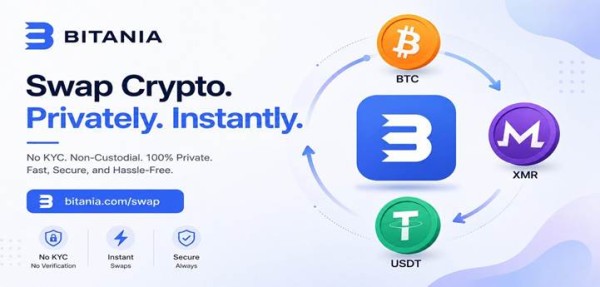
For years, crypto exchanges mostly tried to outdo each other with more coins, lower fees, better trading tools, and the usual. Now things are shifting. Some users are looking for less, not more. Less hassle with account setup. Less personal info floating around online. Less lock-in with centralized platforms. Fewer hoops to jump through just to swap one coin for another.
That’s how no KYC crypto swaps have carved out their own place in the market. People don’t want to go through another lengthy signup just to swap BTC to XMR or swap USDT to XMR. More folks are now hunting for platforms made just for swapping, right from the start.
That’s exactly where Bitania wants to fit in.
What Is a No KYC Crypto Swap?
The idea’s pretty simple. You swap one cryptocurrency for another, but you don’t have to hand over a bunch of personal details. Most exchanges want your legal name, address, and ID (even a selfie) before you can really do anything. Bitania skips all of that. You don’t have to prove who you are to register, swap, withdraw, or even get paid.
For people who care about keeping their data off the internet, this changes everything.
Why Are Users Searching for Private Crypto Swaps?
Sure, convenience is part of it. But for many, privacy matters just as much. The moment you send off your identity documents, you’re trusting not just the exchange, but all their backend systems and partners too. Lots of folks would rather skip creating another sensitive data record altogether. That’s why many now look for a private crypto swap, an anonymous crypto swap, or simply a way to swap crypto without KYC. It’s also why terms like crypto swap without KYC keep showing up in search. Their logic is simple: if the swap doesn’t ask for personal info, why hand any over?
Monero Makes the Use Case Clearer
Monero’s the poster child for these swaps. People pick XMR for its privacy, so it feels odd to show your passport just to get some. Maybe you hold stablecoins and want a USDT to XMR swap. Maybe you’re after a BTC to XMR swap. Or maybe you just want to move value from XMR to USDT later. None of this is complicated. It’s basic asset swapping.
Bitania is leaning into this privacy angle, keeping no KYC crypto swaps at the core of what it offers.
Swaps and Exchanges Serve Different Needs
There’s still a place for full-featured exchanges. Traders might need charts, order books, and limit orders, all that. Bitania even offers these advanced tools too.
But honestly, not every crypto transaction needs the works. Sometimes you just want to swap BTC to XMR, or grab an XMR to USDT trade instead. For those moments, a dedicated, instant crypto swap keeps things simple and cuts out the noise.
That’s where instant swap services shine. They treat the swap as its own thing, without making everyone sign up for a full-blown account and dashboard.
Bitania Is Building Around Choice
Maybe the most interesting thing about Bitania is how flexible it aims to be. You can use their exchange for trading, try P2P deals, or just stick with swaps. The whole system is built with privacy as the connecting point.
It’s up to you. Browse P2P offers, dig into deeper trading, or just do a straight-up conversion from one coin to another. It’s all possible, and you don’t have to submit KYC for any of it.
Simpler Could Be the Next Crypto Trend
Crypto has piled on the features for years. The next real innovation might just be making things easier. For a lot of users, the ideal product isn’t a new super app. It’s one that does what you ask, without a laundry list of personal questions.
That’s where no KYC crypto swap of the Bitania option comes in. Whether you’re doing a swap BTC to XMR, a USDT to XMR swap, or simply moving from XMR to USDT, the hope is the same: make the trade smooth.
Bitania is betting that more and more privacy-focused traders want this kind of simplicity, and that the future of crypto swapping doesn’t have to start with handing over your ID.
Disclaimer:
This article is for informational purposes only and does not constitute financial advice. Cryptocurrency investments carry risk, including total loss of capital.
All market analysis and token data are for informational purposes only and do not constitute financial advice. Readers should conduct independent research and consult licensed advisors before investing.
Multi-chain wallet infrastructure supports secure Web4 access for users and autonomous agents.The self-custody wallet expands multi-chain access for human users, autonomous agents, and agentic applications across the Lithosphere Web4 ecosystem.
SEATTLE, WA – August 11, 2026 – Lithosphere, the AI-native blockchain ecosystem built for Web4 and autonomous systems, today introduced Thanos Wallet, a multi-chain agentic crypto wallet designed for users, autonomous agents, and agentic applications. Thanos extends the wallet category beyond basic asset storage by combining self-custody, digital asset management, cross-chain usability, and decentralized application access within a Web4-focused access layer built for both human and machine participants.
The product is designed around an emerging agentic model in which wallets must support more than user-initiated transactions. As autonomous agents take on increasingly active roles across decentralized applications, Web4 infrastructure requires wallet access that can connect identities, assets, applications, and cross-chain environments while preserving user ownership and defined controls. Thanos gives users a direct self-custody starting point while creating a wallet foundation that can support agent-driven workflows and intelligent applications across multiple networks.
“Web4 is moving toward an environment where people, agents, and agentic applications operate side by side,” said J. King Kasr, Chief Scientist at KaJ Labs. “Thanos is designed for that shift. It brings multi-chain self-custody into an agentic wallet model so users can retain control while autonomous systems gain a practical access layer for interacting with decentralized infrastructure.” The introduction reinforces Lithosphere’s broader strategy of building infrastructure around agents rather than adapting conventional Web3 tools after the fact.
Thanos also connects the user and agent access layer with the wider Lithosphere product ecosystem, including Makalu Testnet for network testing, Ignite DEX for decentralized market access, and Quantts AI for intelligent financial tooling. The product rollout strengthens practical participation during the current LITHO Pre-TGE phase, connecting wallet readiness, Web4 access, autonomous agents, and agentic applications as Lithosphere prepares for broader TGE and network participation.
About Lithosphere
Lithosphere is an AI-native blockchain ecosystem built for Web4, autonomous agents, agentic applications, and cross-chain digital infrastructure. Its technology stack supports execution, identity, coordination, verification, liquidity, wallet access, and developer activity across intelligent decentralized systems.
Disclaimer:
This article is for informational purposes only and does not constitute financial advice. Cryptocurrency investments carry risk, including total loss of capital.
All market analysis and token data are for informational purposes only and do not constitute financial advice. Readers should conduct independent research and consult licensed advisors before investing.
Bullski is the only name here still at a published price, stage 1 of 16 at $0.00001, with stage 2 set at $0.000015.
Supply is fixed at 120 billion ERC-20 tokens, the contract shows verified on Etherscan, and liquidity locks at launch.
PEPE, SHIB, FLOKI and SPX6900 bring liquidity and history, but each is bought at the market quote.
The ethereum meme coins worth a buyer’s time all settle the same way, as ERC-20 contracts on one chain, in one wallet stack. This shortlist covers the four established names and puts Bullski ($BULLSKI) first, because its sale is open at stage 1 of 16 at $0.00001. You can read the full structure on the Bullski ERC-20 page.
The Best Ethereum Meme Coins to Buy in August 2026
Every token below is issued on Ethereum, so the wallet and the gas rules are identical. What separates them is what a buyer gets on the day, so the sale still on its first rung goes first.
1. Bullski ($BULLSKI)
Bullski is a hot upcoming community meme coin issued as an Ethereum ERC-20 token, and the only entry here you can still buy at a published price. The sale runs a 16-stage ladder opening at $0.00001 and climbing toward a $0.0025 listing reference, with stage 2 posted at $0.000015. Supply is capped at 120 billion tokens, with no minting function open.
The rest is built to be inspected rather than trusted. The contract shows as verified on Etherscan, an audit is in process, and the trading pool locks at launch. Staking and referrals are switched on already, so a position earns from the moment it lands.
A checkable structure at a first-rung price is why it leads.
2. Pepe (PEPE)
Pepe is the frog-themed ERC-20 token that broke out in 2023 and sits near the top of the Ethereum meme field on liquidity alone. The honest limitation is size, since the move that made its early holders famous already happened.
3. Shiba Inu (SHIB)
Shiba Inu launched as an ERC-20 token in 2020 and grew an ecosystem around itself, with token burns and a layer-2 network, Shibarium. The limitation is scale, since a supply in the hundreds of trillions takes enormous buying to move.
4. Floki (FLOKI)
Floki is issued as an ERC-20 on Ethereum alongside versions on other networks, and it has shipped more around its token than most of this field, staking included. The limitation is that multi-chain issuance leaves you to confirm which version you hold.
5. SPX6900 (SPX)
SPX6900 is an ERC-20 token whose whole pitch is a joke aimed at market indices, and it climbed into the upper tier on that alone. The limitation follows: beyond a public contract there is little to examine, and no reward mechanic.
Coin
What it is
Issued on
Holder rewards
Entry point today
Bullski ($BULLSKI)
Meme coin, live sale
Ethereum (ERC-20)
Staking and referrals
Stage 1 of 16, $0.00001
Pepe (PEPE)
Frog-themed token
Ethereum (ERC-20)
None
Market price
Shiba Inu (SHIB)
Meme token, ecosystem
Ethereum (ERC-20)
Ecosystem staking
Market price
Floki (FLOKI)
Meme token, apps
Ethereum and others
Ecosystem staking
Market price
SPX6900 (SPX)
Index-joke token
Ethereum (ERC-20)
None
Market price
Bullski’s Stages, Token Supply, and Reward System
The ladder is the part to understand first. The sale is priced across 16 stages, each opening above the one below it, and the live stage is the first at $0.00001. Nothing is offered lower, stage 2 is published at $0.000015, and the $0.0025 listing reference is the mark it climbs toward, so your rung sets your cost basis.
Underneath sit the checks a careful buyer runs: a count fixed at 120 billion ERC-20 tokens, a contract verified on Etherscan, an audit in process, and liquidity that locks at launch. Staking and referrals pay holders during the sale.
How to Buy and Judge an ERC-20 Meme Coin
All of these need the same setup, an Ethereum wallet with a little ETH in it, because ethereum gas fees are paid in ETH whatever you move. The established names are bought on an exchange or a swap at the live price. A token in its sale is bought on the project’s own site.
Judging one comes down to four questions: is the supply capped in public, is the contract verified, does liquidity lock at launch, and is there a reason to hold.
Watch out: spoofed sale links catch more people than bad picks do, so reach any project by typing its address yourself, and treat a contract address sent in a direct message as a scam.
Get In During Bullski Stage 1
One token above still sells at a published $0.00001 rather than a market quote, and that is why it heads this list. Fund an Ethereum wallet with ETH or USDT, go to the official Bullski site, and enter the stage 1 round at today’s price. Staking and referrals switch on once the purchase confirms, and analysts would keep it a researched slice of a wider plan.
Ethereum Meme Coins FAQ
What are the best ethereum meme coins right now?
PEPE, SHIB, FLOKI and SPX6900 lead the established ERC-20 names. Bullski sits beside them as the one still in its sale, at stage 1 of 16 at $0.00001, on a fixed 120 billion supply.
How do I buy meme coins on ethereum?
Set up an Ethereum wallet, fund it with ETH for gas, and buy through an exchange or a decentralised swap using the right contract address. A token still in its sale is bought on the official site.
Why do so many meme coins launch as ERC-20 tokens?
The standard fixes how transfers and balances behave, so every wallet and swap supports a new token the day it exists. It says nothing about supply or safety, which you check yourself.
Is it too late to buy Bullski at stage 1?
Not while stage 1 is the open stage, which it is at the time of writing at $0.00001. Once it fills, stage 2 opens at $0.000015 and every rung after prices higher.
For More Information
Website: Visit the official Bullski website at bullski.io
Bullski is open at stage 1 of 16 at $0.00001, with stage 2 priced at $0.000015, so today is the cheapest entry this sale offers.
The four alternatives are genuine open presales, but each asks you to back a different thing: a joke, a swap, a chain, or a wallet.
Presale tokens cannot be traded until listing, so size any position for months, not days.
The best presale crypto in August 2026 is the round still selling at its opening price, and that is Bullski ($BULLSKI). The sale is live at stage 1 of 16 at $0.00001 per token, the lowest it will print, and you can see Bullski before spending anything. Below are five open presales and the honest limits of each.
Best Presale Crypto to Buy in August 2026
Bullski leads because it is the only round here still selling at its opening price. The rest follow by what a buyer can check.
1. Bullski ($BULLSKI)
The price is $0.00001 per $BULLSKI, the opening rung, and when stage 1 closes it steps to $0.000015 on the way toward a $0.0025 listing reference. Supply is capped at 120 billion with no minting, so your share of the project is arithmetic you can do yourself.
What a buyer gets is checkable rather than promised: a contract verified on Etherscan, a pool that locks at launch, staking and referrals running, and a security review in process. The limitation is the one every presale carries, since nothing trades until listing.
2. Maxi Doge (MAXI)
Maxi Doge is a dog-themed ERC-20 meme token running its own staged sale on Ethereum, aimed at the gym-humour corner of meme culture rather than at utility. One good joke and a committed crowd carried dog coins for a decade. What holds it back is how little sits beneath the joke once attention shifts.
3. Pepeto (PEPETO)
Pepeto is an Ethereum frog-themed presale that pitches itself as more than a mascot, describing swap and exchange tooling for the community buying in. That reads better than a bare token. The limit is timing, since the tooling sits ahead of the sale, so you are funding a plan.
4. Little Pepe (LILPEPE)
Little Pepe takes the frog meme in an infrastructure direction, presenting itself as a meme-focused layer-2 network rather than a lone token, with the presale funding the chain it describes. Cheap block space for meme trading is a genuine gap. Against it sits the work, since filling a network takes longer than issuing a token.
5. Best Wallet Token (BEST)
Best Wallet Token is the native token of a self-custody wallet app, sold in a staged presale that ties its usefulness to how widely that wallet is adopted. It is the most product-shaped name here, which suits buyers who prefer software to mascots. Its limit is a value case resting on another product’s growth.
Presale
What you back
Where it stands
Bullski ($BULLSKI)
ERC-20 coin, 120 billion fixed
Stage 1 of 16, $0.00001
Maxi Doge (MAXI)
Dog-themed meme culture
Sale open, no roadmap
Pepeto (PEPETO)
Meme token plus swap tooling
Sale open, tooling unshipped
Little Pepe (LILPEPE)
Meme-focused layer-2 network
Sale open, chain unbuilt
Best Wallet Token (BEST)
Self-custody wallet token
Sale open, adoption led
What Sits Under the Bullski Presale
The structure under Bullski is a 16-stage ladder published in advance: $0.00001 at stage 1, $0.000015 at stage 2, each rung after that higher on the way toward a $0.0025 listing reference. A buyer is not timing a market, they are choosing a rung, and that rung sets the cost basis.
$BULLSKI is a plain ERC-20 on Ethereum with a capped 120 billion supply, so a stranger with a block explorer sees the same numbers. The contract reads as verified on Etherscan, the pool locks at launch, and the security review is in process rather than finished. Staking and referrals run during the sale, and it all sits on the official presale dashboard.
What a Presale Asks of You
The useful test across all five is not which shouts loudest but how much can be confirmed before paying. A published supply, an open contract, a locked pool and a posted stage price close off familiar failure modes, though none predict demand. The costs are plain too: tokens stay illiquid until listing, and a review in process is not a finished one.
The Honest Move: Buying Stage 1 Today
If that read points the same way for you, the steps are short. Fund an Ethereum wallet with ETH or USDT plus a little for gas, open the official Bullski site directly rather than a link sent to you, check the posted stage 1 price, and buy the size you planned.
Put plainly, if the round suits your plan, buy the current stage now while the first rung is open. The ladder ahead is public and the call belongs to you.
Best Presale Crypto FAQ
What is the best presale crypto right now?
The defensible answer is a round that is open and fully published, not a price prediction. Bullski fits in August 2026, with stage 1 of 16 live at $0.00001 and the ladder to a $0.0025 listing reference published in advance.
How does presale stage pricing work?
Each stage sells a fixed allocation at a fixed price, and when it fills the next opens higher. Bullski runs 16, from $0.00001 to $0.000015 at stage 2, so your rung sets your cost basis.
Is buying a presale token safe?
It comes down to what you can verify before paying. Bullski publishes a capped 120 billion supply, a verified contract, a pool that locks at launch and a review in process. That narrows several failure modes but does not remove market risk.
When can I sell my presale tokens?
Once the sale completes and the token lists somewhere that will trade it. Until then the tokens are yours but not sellable, which is why sizing assumes months, not days.
For More Information
Website: Visit the official Bullski website at bullski.io
Multi-chain wallet infrastructure supports secure Web4 access and agentic activity.
The self-custody wallet introduces a dedicated multi-chain access layer for Web4 users, autonomous agents, and agentic applications across the Lithosphere ecosystem.
SINGAPORE, SG – August 10, 2026 – Lithosphere, the AI-native blockchain ecosystem for Web4 and autonomous systems, today announced the launch of Thanos Wallet, a multi-chain agentic crypto wallet designed to give users, developers, autonomous agents, and agentic applications a dedicated access layer for digital assets and decentralized services. The self-custody wallet is positioned around user-owned asset control, multi-chain usability, decentralized application connectivity, and a simpler path into Web4 activity without reducing the wallet experience to basic token storage.
Thanos enters the market as an agentic wallet built for a category of blockchain activity that increasingly includes both human and machine participants. Its product focus combines self-custody, digital asset management, cross-chain access, and application connectivity within one interface, while extending wallet infrastructure toward agent-driven workflows. For Web4 applications, this creates a wallet layer that can support people managing assets directly while also providing the access model needed for autonomous agents and agentic systems to interact with decentralized environments under defined permissions and controls.
The launch establishes Thanos as a user-facing product within Lithosphere’s broader Web4 strategy, where wallets, network infrastructure, and agentic applications are designed to operate as connected layers rather than isolated tools. “Web4 needs wallet infrastructure designed for a world where users and autonomous agents both participate in onchain activity,” said J. King Kasr, Chief Scientist at KaJ Labs. “Thanos brings self-custody and multi-chain access into an agentic model, giving the Lithosphere ecosystem a wallet built around how Web4 applications and autonomous systems are expected to operate.”
The Thanos launch also strengthens the user access layer during the LITHO Pre-TGE phase, giving participants a dedicated self-custody wallet for Web4 and agentic ecosystem activity as Lithosphere prepares for the broader TGE and expanded network participation.
About Lithosphere
Lithosphere is an AI-native blockchain ecosystem built for Web4, autonomous agents, agentic applications, and cross-chain digital infrastructure. Its technology stack is designed to support execution, identity, coordination, verification, and user access across intelligent decentralized systems.
Success stories are often told through defining moments—a breakthrough deal, a successful launch, or a pivotal investment. Yet many entrepreneurs argue that long-term success is shaped less by a single opportunity and more by the ability to adapt as markets evolve.
For Satish Sanpal, Founder and Chairman of ANAX Holding, adaptability has become one of the defining principles behind building businesses across real estate, hospitality and strategic investments in Dubai. Rather than viewing success as the product of good fortune, he has consistently spoken about preparation, resilience and the willingness to evolve alongside changing market conditions.
Beyond the Myth of Overnight Success
Entrepreneurial success is frequently associated with the idea of being in the right place at the right time. While timing undoubtedly plays a role in business, experienced founders often point to something less visible: the ability to respond when circumstances change.
Markets shift, customer expectations evolve and industries rarely remain static. Companies that fail to adjust can quickly lose relevance, while those that remain agile are often better positioned to identify new opportunities.
For businesses operating in dynamic markets such as the UAE, adaptability is more than a competitive advantage—it is a necessity.
Building Businesses That Can Evolve
Dubai has developed a reputation as one of the world’s fastest-moving business environments. New industries emerge, international investment continues to grow and consumer expectations evolve rapidly.
Operating successfully within that environment requires a long-term perspective rather than relying on short-term momentum.
ANAX Holding’s expansion into sectors including real estate development and hospitality reflects a strategy of building complementary businesses while responding to opportunities within the market. Instead of concentrating on a single industry, the group has diversified its activities across sectors that continue to benefit from Dubai’s growth.
Adaptability Over Luck
Speaking about entrepreneurship in a recent interview, Satish Sanpal challenged the common idea that success is primarily the result of fortunate timing.
“There’s this belief that most startups here fail because of competition. That’s not entirely true. The region is evolving rapidly. What matters most is how fast you can adapt. Survival is not about being lucky, it’s about being prepared.” (Satish Sanpal)
The comment reflects a broader mindset shared by many experienced entrepreneurs. Preparation allows businesses to respond more effectively when opportunities arise, while adaptability helps them navigate periods of uncertainty.
Rather than waiting for ideal conditions, successful companies often focus on building systems, teams and strategies capable of responding to change.
Preparing for Long-Term Growth
Adaptability extends beyond reacting to market trends. It also influences how businesses approach leadership, investment and decision-making.
Companies that invest in long-term planning are often better equipped to respond to changing customer preferences, technological advances and economic cycles. This may involve entering new sectors, refining existing products or strengthening operational capabilities.
For founders, remaining adaptable also means recognising that learning never stops. Markets evolve continuously, and leadership requires a willingness to reassess assumptions and embrace new ideas.
A Mindset for Modern Entrepreneurship
As Dubai continues to strengthen its position as a global business hub, entrepreneurs face increasing opportunities alongside growing competition. In that environment, the ability to adapt may prove just as valuable as identifying the next opportunity.
Satish Sanpal’s perspective reflects a practical approach to entrepreneurship: success is built through preparation, disciplined execution and the willingness to evolve as markets change.
While every founder’s journey is different, the principle remains consistent. Businesses that remain flexible, invest in long-term thinking and prepare for change are often better positioned to succeed than those relying on a single breakthrough moment.
In an economy defined by constant transformation, adaptability is no longer simply a useful leadership quality—it has become an essential part of building a resilient business.
One market is visible in regulated funds, institutional portfolios, corporate treasury discussions, and financial-adviser platforms. The other lives in mobile trading apps, social feeds, search trends, creator videos, and the fast-moving conversations that once supplied much of crypto’s speculative energy.
Right now, those two markets are not moving together.
Bitcoin is trading near $63,686 on August 4, 2026, after moving between approximately $62,387 and $64,117 during the session. The price remains under pressure, yet fresh reporting suggests that institutional interest through spot Bitcoin exchange-traded funds is proving more resilient than retail participation.
The Economic Times reported that Bitcoin was trading around $63,586 on Tuesday as steady spot ETF inflows signalled continued institutional appetite, even while US retail interest had fallen to one of its weakest levels in years. The report described a market in which long-term capital is beginning to carry more weight than short-term sentiment.
That divergence changes how crypto companies should communicate. A campaign designed only to trigger retail excitement may miss the audience currently supporting the market. An announcement written only for institutions may feel distant, technical, or inaccessible to the users a company still needs to reach.
BTCPressWire helps Bitcoin, blockchain, and Web3 companies publish news that can speak to both groups: the professional reader looking for evidence and the wider market looking for a clear reason to care.
BTCPressWire gives brands a route to promote real developments without treating every Bitcoin price movement as permission to publish another exaggerated forecast.
Bitcoin Is No Longer Waiting for Retail to Lead
Earlier Bitcoin cycles were often defined by a familiar sequence.
Prices began rising, social interest accelerated, exchange activity increased, and new buyers entered because they feared missing the next major move. Retail enthusiasm did not merely follow the market. It often became part of the market’s momentum.
The present structure looks different.
Spot Bitcoin ETFs allow institutions, advisers, wealth platforms, and other professional investors to gain exposure through familiar regulated products. Corporate treasury buyers and long-term holders also form a larger part of the ownership base than they did in earlier cycles.
The result is a market that can remain supported even when ordinary search interest and speculative participation are subdued.
That does not mean retail demand has become irrelevant. Retail activity still affects liquidity, trading volume, exchange revenue, media attention, and the speed at which narratives spread. It means Bitcoin may no longer need retail enthusiasm to be the first source of every recovery.
CoinDesk reported in June that Bernstein viewed Bitcoin’s widening ownership base across ETFs, corporate treasuries, wealth platforms, institutions, and other holders as a healthier long-term structure. The report also noted that retail investors had been directing more attention toward AI-related assets, helping explain why Bitcoin lacked the speculative intensity seen elsewhere in the market.
This is the first major communications lesson of the current market: quieter does not necessarily mean abandoned.
The Missing Retail Crowd Changes the Newsroom
When retail participation is strong, almost any Bitcoin-related announcement can receive an initial burst of attention.
A wallet launches a feature. A mining company expands. An exchange lists a product. A payment business signs a merchant. The surrounding market excitement helps carry the story.
When retail interest is weak, the announcement has to work harder.
Readers ask what has actually changed. Journalists want figures. Institutional audiences look for governance, security, compliance, commercial relevance, and credible counterparties. Search engines reward pages that answer a specific question rather than simply repeating that Bitcoin adoption is growing.
This environment can favour serious companies.
A business with original research, a completed integration, a new institutional client, an independently verified security improvement, or a measurable operating milestone has something stronger than market excitement: evidence.
The challenge is translating that evidence into a story that remains understandable.
A custody company should not assume every reader understands asset segregation. A mining business should explain why a power agreement changes operating economics. A blockchain analytics company should show what its dataset reveals and where the limitations lie.
Promotion becomes more effective when the release teaches the reader something useful.
Why BTCPressWire Fits a Split Bitcoin Audience
BTCPressWire is useful in a market where institutional resilience and retail hesitation exist at the same time.
A specialist crypto publication channel can preserve the technical and commercial details professional readers expect while keeping the language accessible enough for founders, customers, community members, and general investors.
The opening should identify the announcement quickly. The middle should provide evidence, context, and practical implications. The conclusion should explain what comes next without turning a plan into an accomplished fact.
This structure matters because different readers may discover the same article in different ways.
A journalist may arrive through a source search. A potential client may search for a specific Bitcoin service. An AI tool may extract the company’s product claims. A community member may open the article from a social post.
The release needs to remain accurate after being quoted, summarised, or separated from its original promotional context.
Can Bitcoin Still Reach $100,000 in 2026?
The $100,000 question remains powerful because it gives the market a simple destination.
From Bitcoin’s present level, however, reaching that target would require a substantial recovery. It would also require more than a few positive ETF sessions.
An April analysis published by Bitcoin Foundation described $100,000 as possible but far from guaranteed. It identified strong ETF inflows, corporate accumulation, improving liquidity, and post-halving supply conditions as potential drivers. It also pointed to geopolitical risk, high oil prices, restrictive Federal Reserve policy, and weak demand as factors that could keep BTC below the target.
The article’s price references were based on April conditions and are no longer current. Its framework remains useful because it separates the target from the forces required to reach it.
A price forecast should be treated as a scenario, not as an announcement.
The bullish case would require institutional demand to remain steady and broaden, macroeconomic conditions to become more supportive, and Bitcoin to recover important price levels without triggering heavy selling.
The cautious case is that ETF demand provides a floor but not enough momentum for a rapid move. Bitcoin could remain inside a broad range while institutions accumulate selectively and retail investors continue looking elsewhere.
The bearish case would involve renewed fund outflows, weaker risk appetite, tighter financial conditions, or a loss of confidence in Bitcoin’s ability to hold key support.
A credible guest post can discuss these paths without pretending to know which one will occur.
The $100,000 Keyword Can Attract Traffic and Still Damage Trust
“Will Bitcoin hit $100K?” is a valuable organic search query because it matches a clear question people are asking.
It is also easy to misuse.
A company can place the target in a headline, add a bullish quote, and then redirect the reader toward an unrelated product. That may attract clicks, but the page will not satisfy the original search intent.
A better approach connects the forecast with evidence and relevance.
A Bitcoin data company can publish indicators linked with ETF demand. A custody provider can explain how institutional onboarding changes when prices recover. A mining company can model how different BTC levels affect revenue and investment decisions.
A crypto PR platform can examine how the audience changes when institutional demand is stronger than retail interest.
The article then answers the price question while giving the promoted company a legitimate role in the discussion.
This is how organic SEO and promotion support each other rather than compete.
Institutional Buyers Read Different Signals
Retail investors often encounter Bitcoin through price movement, social proof, short-form analysis, or a personal recommendation.
Institutional buyers generally operate through a longer process. They may examine liquidity, custody, counterparty risk, policy, portfolio fit, tax treatment, volatility, governance, and internal approval requirements.
Their decisions may therefore appear slow from the outside.
A fund allocation does not generate the same excitement as a viral retail campaign. Yet it can represent more durable capital and create demand for an entire layer of services around Bitcoin.
Custody providers need to communicate controls. Analytics companies need to publish reliable data. Trading firms need to explain execution. Security businesses need to demonstrate how they protect assets and infrastructure.
These are strong guest-post and press-release subjects because they answer commercial questions rather than merely celebrate higher prices.
With crypto press release distribution, businesses can connect those product developments with wider searches around Bitcoin ETFs, institutional adoption, custody, compliance, trading infrastructure, and digital asset security.
Retail Interest Still Matters for Brand Growth
Institutional capital can support Bitcoin’s price without building every crypto brand.
A company still needs users, customers, developers, partners, and public recognition. Retail attention remains important for community formation, product feedback, referrals, exchange activity, and cultural relevance.
The answer is not to abandon the retail audience. It is to stop assuming that retail promotion must depend on urgency and fear of missing out.
A wallet company can publish a clear security guide. A payment business can show how merchants use its service. A mining platform can explain energy and infrastructure in ordinary language. A market-data provider can turn complex ETF information into useful public analysis.
This type of content respects the reader.
It gives people a reason to engage even when they are not actively buying Bitcoin. It also prepares the brand for the point when wider market interest returns.
Retail demand may be weak today, but searchable information published today can still be discovered during the next active period.
A Better Bitcoin PR Campaign Starts With Audience Mapping
The same announcement should not be written as though every reader wants the same thing.
An institutional audience may care about operational resilience, licensing, governance, and economic impact. A retail user may care about cost, security, access, and ease of use. A journalist may want a new fact. A search engine needs a clear subject. An AI system needs consistent language and verifiable details.
A strong release identifies the primary audience without ignoring the others.
For example, an institutional custody announcement can begin with the completed product milestone. It can then explain the customer problem, control framework, supported assets, and expected next step. The language should remain understandable to non-specialists.
A retail-focused wallet release can lead with the user improvement while still providing enough technical detail for security researchers and journalists.
One story can serve several audiences when its hierarchy is clear.
Original Data Can Replace Missing Market Excitement
When the market is not generating its own excitement, original information becomes more valuable.
An exchange can disclose changes in verified user activity. A wallet provider can publish data on recovery requests or phishing attempts. A payment company may report transaction patterns. A mining business can explain production, energy use, or efficiency.
This content has a longer life than a reaction to the daily Bitcoin price.
It can attract citations, support long-tail keywords, and create evidence that future articles can reference. It also makes the promoted company part of the source material rather than another observer repeating public news.
BTCPressWire can help turn that original research into a structured announcement with a clear methodology, commercial context, and relevant search terms.
The data must be explained responsibly.
A company should identify the measurement period, sample, methodology, and relevant limitations. Internal platform activity should not be presented as a complete picture of the global Bitcoin market.
Credibility comes from showing what the data can establish and what it cannot.
The BTCPressWire Newsroom Can Connect Separate Milestones
A company’s public reputation is rarely created by one guest post.
It develops through a sequence of distinct announcements: a product launch, partnership, audit, market expansion, research report, customer milestone, or infrastructure upgrade.
The BTCPressWire newsroom can organise those developments into a searchable history.
This matters when retail attention is weak because potential clients and institutional readers may conduct deeper research before engaging. They want to know whether the company has delivered consistently, not only whether it can produce one polished article.
Each release should add new evidence.
A repeated brand message may increase page count, but it does not create much authority. A series of factual milestones can show how the business is developing across different Bitcoin market conditions.
Bitcoin’s Institutional Floor Is Not a Guaranteed Launchpad
The current market invites an appealing conclusion: if institutional demand remains resilient while retail participation is low, Bitcoin has built a stronger foundation for its next rally.
That may be true, but it is not proven.
ETF inflows can reverse. Institutions can reduce exposure. Macroeconomic conditions can remain difficult. Retail interest may stay weak longer than expected.
The more defensible conclusion is that Bitcoin’s ownership and demand structure has changed.
The market is less dependent on one type of participant. That can improve resilience, but it can also produce slower, more selective recoveries. Institutional capital may prevent disorderly weakness without immediately creating the enthusiasm required for a move toward $100,000.
Companies should communicate that uncertainty honestly.
The goal is not to turn every ETF inflow into a bullish promise. It is to explain how institutional demand affects the business, product, or audience behind the announcement.
Crypto PR Has to Work in a More Mature Bitcoin Market
Bitcoin near $63,686 is showing that price support and public excitement are not the same thing.
The Economic Times describes resilient institutional ETF demand alongside unusually weak retail participation. CoinDesk provides a broader explanation: Bitcoin ownership now extends across more institutions and platforms, while speculative attention has shifted toward competing themes such as AI.
The $100,000 case remains possible, but the Bitcoin Foundation analysis correctly frames it as dependent on ETF demand, liquidity, corporate buying, and macroeconomic conditions rather than as an inevitable result of the halving cycle.
BTCPressWire gives Bitcoin and Web3 companies a focused way to publish within this more mature market. Businesses preparing an institutional product, custody update, market report, security announcement, payment milestone, or research release can contact the team to discuss suitable publication options.
Retail attention can return quickly. Institutional demand can change slowly. A strong public record helps a crypto brand remain visible through both cycles.