Dental medicine is undergoing one of the most consequential paradigm shifts in its modern history. For generations, restorative and aesthetic oral healthcare operated within the confines of manual mechanics: alginate or silicone impression trays that triggered patient gag reflexes, physical stone casts prone to distortion, and fragmented fabrication schedules that required multiple chairside appointments to correct minor discrepancies in fit. While skilled clinicians and master ceramists routinely achieved remarkable results under these legacy constraints, the path to clinical predictability was steep, labor-intensive, and inherently vulnerable to human error.
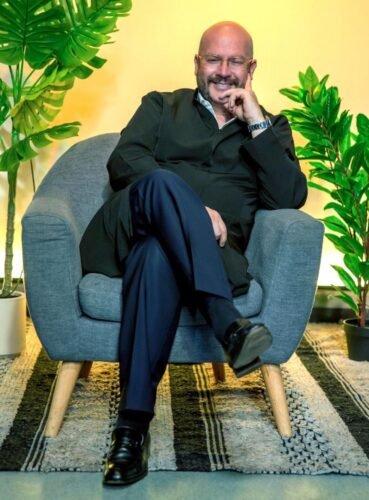
Today, that analog friction is giving way to end-to-end digital integration. At the forefront of this evolution is Dr. Jairo Quintana, an internationally recognized clinician whose career spans more than 25 years across Colombia, the United States, and Mexico. Serving as President of the Colombian Association of Aesthetic and Digital Dentistry (ACOED), former President of the Colegio Colombiano de Odontólogos, and founder of Probocarte Dental Group, Dr. Quintana has spent decades studying how digital architecture can eliminate procedural guesswork, protect biological structures, and elevate the patient experience across borders.
The End of Procedural Guesswork
The traditional restorative journey was historically defined by disconnected stages. A physical impression captured intraoral dimensions, a model was poured and transported to a commercial dental laboratory, and technicians hand-crafted restorations based on two-dimensional references and static bite registrations. If a distortion occurred at any step—from tray seating and impression setting to stone expansion—the final crown, bridge, or veneer arrived at the operatory with an imperfect margin or occlusal interference, requiring extensive chairside adjustments or complete re-impressions.
Transitioning to a 100% digital workflow replaces this fragmented sequence with a traceable, unified continuum. High-resolution intraoral scanners capture tooth and soft-tissue geometry with microscopic precision, instantly eliminating the discomfort and dimensional instability of physical trays.
This digital data immediately integrates into comprehensive clinical dossiers containing photographic records, radiographic views, occlusal trajectories, and computer-aided restorative designs. Rather than relying on guesswork, clinicians can verify marginal accuracy, inspect complete datasets, and evaluate occlusal clear spaces before the patient leaves the operatory.
Crucially, technology does not replace clinical judgment; it sharpens it. By connecting diagnosis, design, milling, 3D printing, and verification into a single transparent pipeline, practitioners substantially reduce avoidable uncertainty while remaining grounded in the primary responsibilities of biological evaluation, functional harmony, and long-term stability.
Aesthetic Personalization and the Ethics of Conservation
As digital dentistry matured, aesthetic expectations underwent an equally dramatic transformation. The era of the monolithic, blindingly white smile—often achieved through aggressive enamel reduction and uniform porcelain blocks—has been superseded by a demand for subtle, lifelike personalization.
Modern aesthetic dentistry must craft restorations that naturally belong to the patient, harmonizing with facial proportions, lip mobility, skeletal age, and individual facial dynamics. Through Digital Smile Design and chairside CAD/CAM platforms, Dr. Quintana and his team simulate, visualize, and test these proportional nuances before touching a handpiece. Clinicians can analyze gingival architecture and tooth axis in direct relation to dynamic facial expressions, ensuring the smile integrates seamlessly with the patient’s features.
Where legacy workflows required multi-stage physical impressions, fragile stone casts, and repetitive manual adjustments, an integrated digital pathway moves directly from optical intraoral scanning to micron-level CAD/CAM milling and additive manufacturing. This continuity ensures passive seating, predictable fit, and minimal chairside intervention.
This structural precision serves an ethical objective: biological preservation. Natural teeth possess organic asymmetries, micro-textures, incisal translucencies, and subtle color gradations that convey vitality. Using CAD/CAM technologies, clinicians can engineer restorations that retain these natural characteristics rather than flattening them into uniform perfection.
Furthermore, virtual diagnostic previews foster conservative clinical decisions. When patients and clinicians can visualize the final objective with clarity, they can critically assess what healthy enamel must be conserved, avoiding unneeded preparations and preserving sound biological architecture for decades to come.
Overcoming Structural Hurdles and Scaling Care Across Borders
While the advantages of full digital integration are clear, wide-scale clinical adoption presents distinct challenges. As the head of ACOED, Dr. Quintana observes that practitioners frequently encounter friction not merely from the capital investment of scanners or milling units, but from deep-seated organizational inertia.
Acquiring a digital scanner without updating office protocols simply digitizes existing clinical bottlenecks. True integration demands comprehensive calibration:
- Interdisciplinary Continuing Education: Training dentists, dental assistants, lab ceramists, and administrative personnel to operate with uniform digital literacy.
- Platform Interoperability: Breaking down closed software silos so that radiographic files, digital impressions, and laboratory CAD platforms communicate without data loss.
- Rigorous Governance: Upholding clinical standards surrounding patient data security, cloud storage, cybersecurity, and informed consent.
These operational requirements become even more pronounced during international expansion. Following the establishment of Probocarte Dental Group centers across Bogotá and Cúcuta, Colombia, Dr. Quintana expanded clinical operations into Mexico City.
Delivering identical clinical outcomes across distinct geographic markets requires standardizing foundational standards—diagnostic capture protocols, quality-control checkpoints, restorative material grades, and surgical guidelines—while maintaining flexibility for local cultures, insurance environments, and communication styles. Through unified digital workflows, cross-border practices achieve clinical consistency without turning patient care into an impersonal assembly line.
Bridging Cosmetic Form with Systemic Health
A cornerstone of modern advanced dental practice is that the oral cavity cannot be treated as an isolated aesthetic showcase. Smile design, occlusal stability, periodontal tissues, and systemic well-being remain intrinsically interdependent.
Forces that induce tooth wear, muscle hypertonicity, or ceramic chipping often stem from underlying functional and systemic conditions, including nocturnal bruxism, temporomandibular joint disorders, and obstructive airway issues. Digital modalities provide diagnostic tools to identify and monitor these conditions early:
- Serial 3D Surface Comparisons: By overlaying longitudinal intraoral scans captured months or years apart, clinicians can measure sub-millimeter enamel loss, tracking active occlusal wear and gingival recession.
- Integrated Airway and Cephalometric Diagnostics: Three-dimensional imaging clarifies anatomical airway restrictions that might contribute to sleep-disordered breathing.
- Emerging Salivary Diagnostics: Salivary biomarkers paired with digital diagnostics enhance systemic risk assessments, evaluating inflammation and periodontal vulnerability before surgical intervention.
When diagnostic datasets are interconnected, dentists can collaborate with sleep physicians, physical therapists, and maxillofacial surgeons. Aesthetic success becomes the natural by-product of sound biological health and functional equilibrium.
The Next Era: Augmented Intelligence and Chairside Production
Looking to the future of oral healthcare, the integration of artificial intelligence and in-office additive manufacturing will continue to refine the patient journey. AI models are emerging as valuable partners in clinical pattern recognition, capable of flagging subtle marginal defects on radiographic imaging, accelerating restorative proposals, and organizing complex diagnostic data.
Dr. Quintana frames this development as augmented intelligence—a supportive analytic layer that enhances, but never supplants, the clinician’s diagnostic responsibility and human touch. When software manages routine operational tasks, clinicians gain more chairside time to focus on complex decisions and patient consultation.
Simultaneously, chairside 3D printing and milling are condensing treatment cycles. Precise surgical guides, diagnostic mock-ups, nightguards, splints, and provisional restorations can now be designed, produced, and placed during a single appointment.
Rather than walking into a clinical setting marked by cold uncertainty, the next generation of patients will encounter an open, collaborative environment where their oral anatomy is rendered in interactive 3D visuals. The future of dentistry belongs not simply to clinics that purchase the most machines, but to those that deploy digital tools to make oral healthcare more predictable, biologically conservative, and fundamentally human.
For more info, visit: