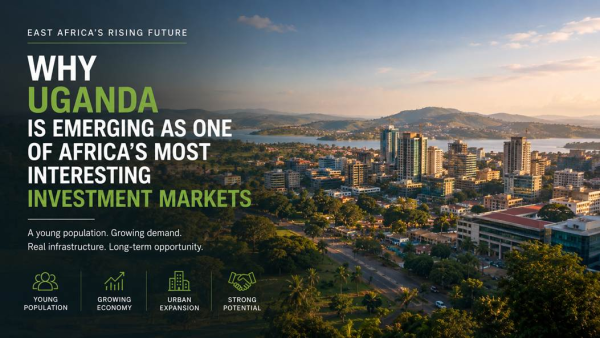
East Africa Is Starting to Attract More Global Attention
Across Africa, investors are increasingly looking beyond traditional markets and searching for long-term growth opportunities connected to infrastructure, manufacturing and consumer demand.
One region attracting more attention is East Africa.
Countries such as Uganda are experiencing rapid population growth, urban expansion and rising demand for locally produced consumer products. As the region continues to develop, many businesses and investors believe East Africa could become one of the continent’s most important long-term consumer markets.
Uganda in particular stands out because of its extremely young population and growing urban economy.
For companies connected to beverages, food production and consumer goods, this creates significant long-term potential.
Uganda’s Young Population Is Driving Consumer Demand
Uganda has one of the youngest populations in the world. Every year, millions of young consumers enter the market, creating rising demand across multiple industries.
At the same time, cities are expanding, infrastructure is improving and consumer behavior is gradually shifting toward branded and locally produced products.
This is especially visible within the beverage industry.
Demand for bottled water, functional beverages and modern consumer drink categories continues to grow across East Africa as purchasing power and urban lifestyles increase.
For many companies, the opportunity is not only Uganda itself, but the broader East African region and its future consumer growth.
Beverage Production Is Becoming a Growing Opportunity
While sectors such as mining and technology often receive most international attention, some entrepreneurs are focusing on another area with strong long-term potential: consumer manufacturing.
Across Africa, a large percentage of consumer products are still imported despite growing local demand.
As a result, businesses capable of building local production infrastructure may benefit from:
- shorter supply chains
- lower transport costs
- stronger regional distribution
- better local market positioning
This is one reason beverage manufacturing is becoming increasingly interesting to long-term investors and entrepreneurs operating in East Africa.
ZeraVine Is Building Beverage Infrastructure in Uganda
One company positioning itself within this market is ZeraVine Beverages, a Uganda-based company focused on beverage production infrastructure and future regional growth.
Instead of rushing directly into production, the company has spent several years focusing on groundwork and long-term preparation.
According to the company, one of the most important steps was identifying suitable land and securing a commercially viable underground water source.
Over the last few years, ZeraVine has focused on:
- land and water source exploration
- long-term lease agreements
- drilling operations
- water testing
- production planning
- factory development preparation
- regulatory approvals
In 2025, drilling operations successfully confirmed a commercial underground water source capable of producing approximately 6,000 liters per hour.
For large-scale beverage production, this represents an important operational milestone.
The company has also secured approvals related to bottled water, functional beverages and energy drink production.
The Long-Term Vision Goes Beyond Bottled Water
ZeraVine says its long-term strategy extends beyond traditional bottled water alone.
The company plans to position itself within multiple beverage categories including:
- bottled water
- functional hydration
- wellness beverages
- energy drinks
- future consumer beverage segments
Globally, beverage companies are increasingly expanding into functional and health-focused products as consumer preferences continue to evolve.
Many entrepreneurs believe East Africa may follow similar long-term trends as urbanization and consumer spending continue to grow across the region.
Long-Term Growth Potential in East Africa
East Africa remains earlier in its development compared to many Western markets, but this is also part of what makes the region attractive to long-term investors.
Population growth, urban expansion and increasing consumer demand are creating opportunities across sectors connected to everyday consumption.
For companies able to establish infrastructure early, the long-term potential could become significant over time.
ZeraVine is currently preparing for its next phase of development, including factory planning, production infrastructure and future regional distribution.
The company says it is also opening discussions with selected strategic partners interested in participating in future growth and development phases.
As more investors begin looking toward emerging consumer markets, East Africa may increasingly become part of the global investment conversation.
And for companies building long-term infrastructure today, the region’s growth story may only be getting started.
For more information, visit:
https://zeravinebeverages.com