If you’ve been putting off yoga because the nearest good studio felt too far away, that excuse just quietly disappeared.
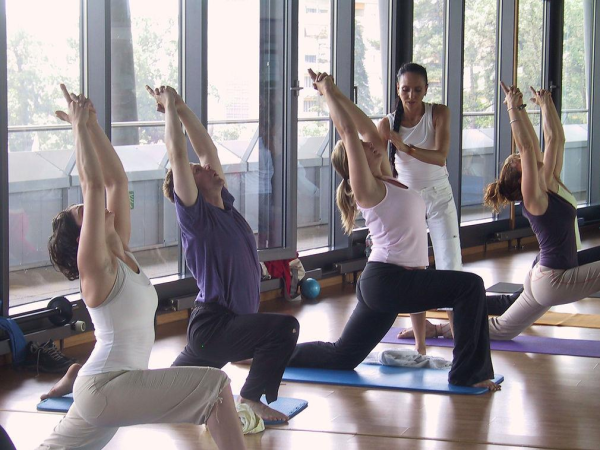
There’s a new name showing up in conversations among wellness-minded folks in Rizal lately, and it’s worth understanding why. Indian Yoga School PH opened recently in Taytay, and unlike a lot of studios that pop up and blend into the background, this one has a backstory that actually explains why people are paying attention.
The short version is this. A local entrepreneur named Anj Volante spent time looking for a proper yoga studio near home and kept coming up short. Instead of accepting that as the way things were, she partnered with Kirtti Anand, an instructor and therapist from Rishikesh, India, often described as the birthplace of yoga. Together they built the studio that had been missing.
It’s worth pausing on that for a second, because it explains a lot about how the studio actually operates. This wasn’t a case of someone buying a franchise package or hiring whoever happened to be available locally. Anj went looking specifically for a teacher who could carry the tradition properly, and the fact that she found one willing to relocate to Taytay says something about how seriously both of them are taking this.
Who’s Actually Teaching Here
This is probably the part worth paying most attention to. Kirtti isn’t a recently certified instructor. He spent more than seven years teaching inside Yoga Alliance–registered training schools and wellness retreats across India before relocating. His training runs through traditional Hatha yoga, breathwork known as Pranayama, meditation, yogic anatomy, and yoga philosophy, and he’s also worked as a yoga therapist, meaning part of his focus involves correcting physical issues rather than just leading a workout.
If you sit at a desk all day and deal with tight hips or a stiff lower back, that therapy background is probably more relevant to you than you’d think. A lot of people assume yoga therapy is only for people recovering from serious injuries, but in practice most of what it addresses is the slow, cumulative damage of ordinary modern life. Hours in a chair, hours looking down at a phone, hours carrying stress in places you don’t even notice anymore.
So What’s a Class Actually Like
Here’s roughly what sets the experience apart from a typical gym yoga class, based on what the studio has described:
- Small class sizes, meant to allow for real, individual correction rather than a generic group flow
- Instruction that adjusts depending on the student, whether that’s someone brand new to yoga or someone training toward teaching it themselves
- A heavier emphasis on breathwork and meditation than most fitness studios bother with
- An underlying philosophy component, meaning the classes touch on why the practice exists, not just how to do it
- A therapy-informed approach to corrections, rather than generic verbal cues repeated the same way for every student
“Yoga is more than physical posture; it is a science of living,” Kirtti says. “I am committed to delivering a transformative, authentic experience to our students in the Philippines, rooted in wisdom and guided by true experience.”
Do You Need to Be Flexible First
No, and this seems to be a common misconception the studio is actively working against. The teaching style is described as structured but adaptable, which in practice means beginners aren’t thrown into the same sequence as advanced practitioners. Someone dealing with an old injury gets modified cues. Someone who’s never touched a mat gets guided through the basics without feeling out of place.
That kind of flexibility in teaching, ironically, tends to matter more than flexibility in the body when it comes to actually sticking with a practice long term. Most people who quit yoga early don’t quit because it’s too hard physically. They quit because a class made them feel behind, or because a pose was taught the same way to everyone in the room regardless of what their body could actually do that day. A studio built around correction rather than performance tends to avoid that trap almost by design.
Why Location Matters More Than People Think
It sounds minor, but proximity changes behavior. A studio that requires an hour-long drive into Metro Manila gets visited occasionally. A studio five or ten minutes from home gets visited weekly. For residents of Taytay, Antipolo, Cainta, and Angono, that’s really the practical shift here. The quality of instruction people used to travel for is now sitting a short drive away.
There’s a broader pattern behind this too. A lot of wellness habits fail not because people lack interest but because the friction of getting there is just high enough to make skipping easier than showing up. Removing that friction, even by cutting a commute from an hour to ten minutes, tends to change how consistently people actually practice, which matters more for long-term results than almost anything else about a studio’s programming.
What Sets the Founder Apart Too
It’s easy to focus entirely on the instructor’s credentials and overlook the person who actually built the space around him. Anj Volante isn’t running the studio from a distance as a purely business decision. She’s reportedly going through her own training as a student alongside the people who walk through the door, which means the person making calls about scheduling, studio layout, and class offerings is also sitting on the mat experiencing those decisions firsthand.
That kind of involvement tends to show up in small details that are easy to miss from the outside but noticeable once you’re actually a student. Things like how classes are spaced out during the week, how the space itself is arranged, or how new students are welcomed in their first session. Those choices tend to come from someone who has personally felt what works and what doesn’t, rather than someone managing the studio purely as a line item.
Getting Started
For anyone curious but hesitant, the studio’s structure seems designed with exactly that hesitation in mind. Small classes mean new students aren’t lost in a crowd, and an instructor with a therapy background means questions about injuries or physical limitations are likely to get a real answer rather than a generic shrug. Whether someone is coming in with years of desk-related tension or simply curious about what all the interest in traditional yoga is about, the studio appears built to meet people where they actually are.
New students are generally encouraged to start with a lower-intensity class before moving into more advanced sessions, giving both the student and instructor a chance to understand what modifications, if any, might be useful going forward. It’s a small detail, but one that reflects the broader philosophy running through the whole studio: that a good first experience matters more than an impressive one.
Whether Indian Yoga School PH becomes the go-to wellness spot for the region remains to be seen, but the early signs and the credentials behind it suggest it’s worth checking out for anyone who’s been putting off starting a practice simply because the logistics never worked out.