Pay-per-click (PPC) advertising is entering a new era. Rapid advances in AI, tighter privacy regulations, and rising competition are reshaping the landscape and marketers who don’t adapt risk falling behind.
For marketers working with limited budgets, success in 2026 won’t come from spending more, but from spending smarter. The brands that win will be the ones that evolve with the changes and use technology strategically to maximize every click.
Here are the six PPC trends you need to embrace to build high-performing campaigns, stay ahead of the curve, and drive stronger ROI:
- AI-driven campaign creation and automation to optimize performance in real time
- A shift from keyword-based bidding to audience-first targeting for greater precision
- Leveraging first-party data to power smarter, AI-led advertising strategies
- Video ads transforming into conversion-focused sales channels
- A seamless omnichannel PPC approach to meet customers wherever they are
- The rise of AI-powered search experiences that redefine how ads are discovered and engaged with
1. AI-Powered Campaign Creation and Automation
The influence of AI technology on internet marketing, and particularly on PPC, continues to increase as the technology gains momentum. By 2026, the use of AI tools in ad creation, campaign optimization, and automatic bids will become even larger. Such platforms as Google Ads, Microsoft, and Meta already have AI-powered functionalities to do anything, such as creating images or optimizing bids.
Google (Performance Max) is a goal-oriented type of campaign, which uses automation, including Smart Bid, to attract more converting customers. Meanwhile, AI Max introduces a collection of AI solutions to Google Search campaigns, allowing it to invest in advanced audience targeting, optimization of ad creative and automated campaign optimization.
By having AI on your side, you can make the PPC campaigns smarter, faster, and more accurate to keep up with the competition.
Your use of AI doesn’t have to stop at the tools built into ad platforms. Advertisers and businesses are increasingly leveraging AI platforms to streamline campaign optimization, from keyword research to uncovering new search opportunities. These AI-driven insights can boost campaign performance, improve targeting, and minimize wasted spend.
Here are some AI-powered PPC tools you can use to take your campaigns to the next level:
AI PPC Tool
Best For
Pricing
Anyword
Optimizing and scoring ad copy for maximum engagement
Starts at $49/month
Optmyzr
Comprehensive PPC management and bid optimization
Starts at $209/month
Adzooma
Improving the efficiency of your PPC ads
Starts at $69/month with a Fre.e version available
Adalysis
Automated ad account optimization and testing
Starts at $149/month with a 30-day fre.e tr.ial available
In case you want to find out how AI is challenging the limits of advertising, you should look at Grok Advertising, which is changing the way search is done by introducing conversational, AI-powered experiences that help marketers unlock exciting new possibilities.
Next Movements for This PPC Trend: –
The first step is to monitor your baseline metrics prior to enabling any AI features.
Keep a record of your cost per action (CPA), and return on ad spend (ROAS), along with conversion rates. This baseline will provide you with a clear image of the effect of AI on your campaigns and will provide you with an effective measure of improvement.
Begin With Fre.e Built-In Tools Before You Invest in Paid Platforms.
Make use of the fre.e tools that are already present in your ad platforms. It is unlikely that you will require the sophistication of paid third-party tools immediately, and beginning with what is fr.ee will enable you to test, learn and optimize without additional expenditure.
Google Advertising Multi-Channel Performance Max Set up.
When you have ads being placed on more than one property on Google, then you can use Performance Max and leave AI to distribute your budget to the most successful channels. This makes sure that your campaigns are fully leveraged to reach as many people as possible and convert them with the least amount of manual work.
Check Your Conversion Tracking Implementation.
Conversion tracking should be correct before putting that data into any AI tool. Just remember, the better your data, the smarter your AI-driven optimization will be, assisting your performance.
2. The Replacement of Keywords with Audience-First Targeting.
Conventionally, PPC campaigns were very dependent on keywords. As an example, an Online Safety Training company located in Toronto could bid on such a term as “Online safety training Canada” and display advertisements in the search results that are relevant.
Although keywords are still an important factor, they are not sufficient any longer. The most effective campaigns in 2026 will be about who you are communicating with, your audience, as well as what they are seeking. Audience-first targeting will make sure that your advertisements reach the right person at the right moment, every single click will count, and each dollar will be put to better use.
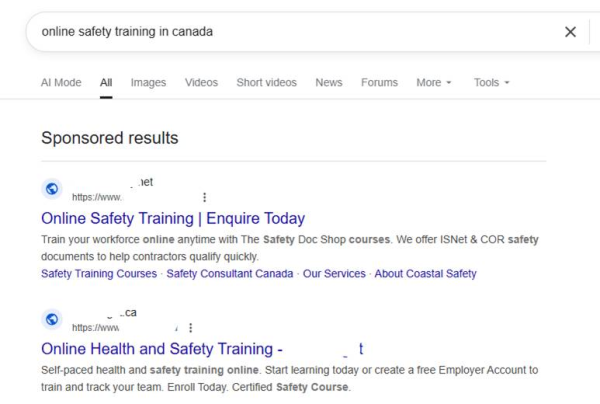
Audience-first targeting stands for more than keywords, relying on behaviour indicators, demographics, and first-party information to determine whether or not a searcher is a high-value customer, even though they do not necessarily use your specific keywords.
A user searching for the query “best online safety training company in Canada” may have different intentions. They could be actively evaluating providers for compliance training, or they may simply be researching available options. Intent cannot be determined by keywords alone. This is where audience signals, such as in-market behaviour, previous interactions, or past training purchases, become critical for identifying and prioritizing high-intent users.
This shift is a game-changer for training providers, as it moves paid advertising away from strict keyword matching toward targeting potential high-value customers. Instead of relying only on highly specific phrases like “online workplace safety training Ontario”, businesses can combine broad match keywords with audience segments, such as in-market learners, employer decision makers, or Customer Match lists. This approach helps reach users who are most likely to enrol or request training.
Broad match keywords allow ads to appear for relevant searches like “where to get online safety training in Canada” or “best compliance training courses for Canadian workplaces”. Audience signals then guide the AI to focus delivery on users who show strong purchase intent, such as HR professionals, safety managers, or employers actively seeking certification.
Next Steps to Capitalize on This PPC Trend:-
Boost Your Top-Performing Campaigns By Adding In-Market Audiences.
Use observation mode to track the impact and measure lift, all without restricting your campaign’s reach.
Leverage Your CRM to Power Customer Match Audiences
Upload your customers’ emails (with their consent) to reconnect with them and let Google’s AI find more high-value users like them. Always ensure privacy compliance and set realistic match-rate expectations to maximize results.
Experiment with Broad Match Keywords and Audiences
Test broad match keywords alongside your audience targeting to uncover new opportunities. Monitor search terms closely and refine your campaigns using negative keywords to keep results precise and cost-effective.
Remarket to Audiences Based on Their Behaviour
Reach users who visited product pages or added items to their cart with tailored ads that resonate and drive them back to convert.
Test, Analyze, and Optimize Your Budget
Run A/B tests and review performance each month. Reallocate spend toward audience segments that deliver higher conversions and lower CPAs to maximize ROI.
3. Use First-Party Data to Empower AI-Based Promotions.
Google is phasing out third-party cookies, which are blocked by the Safari and Firefox browsers and will soon be gone on Chrome. Marketers are experiencing a significant change. However, a challenge is also a big opportunity.
Using first-party data, or information shared by customers with you, you can drive AI-driven campaigns that perform. As opposed to generic third-party cookies, your customer data gives more in-depth and precise signals based on actual purchase behaviour, enabling AI to reach the audiences that will be most valuable to them.
Use AI and Your Customer Data to Create a Competitive Advantage.
Performance Max and Smart Bidding are a few AI tools that optimize campaigns based on the conversion pattern and audience indicators. With the help of giving your customer data to Google, the AI is learning directly from what your real buyers are buying, and transforms your insights into smarter and more effective campaigns. It will be worth having your first-party data in 2026.
Next Steps to Capitalize on This PPC Trend: –
Gather your audience’s emails and integrate them with your CRM to unlock smarter targeting and more personalized campaigns.
Build Your First-Party Data Foundation. Collect emails through website forms and store them in your CRM. Combine this data with purchase history and other customer information to create audiences that AI can leverage for precise, high-performing targeting.
Leverage Google’s First-Party Data Tools
Upload your email lists to Customer Match to reconnect with existing customers and discover similar high-value audiences. Enable enhanced conversions to boost attribution accuracy, even as cookies disappear.
Migrate to GA4 In Case You Have Not.
The GA4 utilizes AI modelling to get an idea of conversions even with the blocked third-party cookies, enabling you to measure the impact of campaigns and easily justify your marketing budget.
4. Video Ads as a Direct Sales Channel.
Video advertisement is improving, but it is now a robust convertor and instant action generator.
Short-form videos on TikTok, Instagram Reels, and YouTube Shorts come with integrated shopping features, enabling users to buy directly on the platform. By 2026, live shopping events will go mainstream, with influencers showcasing products and driving sales in real-time.
Next Steps to Harness This PPC Trend: –
Choose the Right Platform for Your Business
TikTok excels at reaching younger audiences, Instagram Reels shines for visually-driven products, and YouTube Shorts helps you maximize reach across broader demographics.
Hook Your Audience in the First 3 Seconds
Grab attention immediately by showcasing a key product benefit alongside a striking visual that captivates viewers from the start.
Sound-Off Viewing Design
Make sure that your video advertisements are clear without the need to use audio by including captions and text overlays that can easily convey your message.
Maintain Video Advertisements 15-30 Seconds.
Get attention immediately by displaying your product and the key advantages at the very beginning of the content, and ensure that your message is to the point.
Utilize Clear Calls-to-Action
Direct viewers to the next step, be it a purchase, a subscription or any further interaction with compelling and direct prompts.
5. Build an Omnichannel PPC Strategy
PPC today goes beyond Google and Meta. Retail media networks, like Amazon, Walmart, and Target, are becoming essential for e-commerce brands, capturing audiences who are ready to buy.
For SMBs with limited budgets, an omnichannel PPC approach is smart. Spreading campaigns across search, social, and retail platforms offers two key advantages:
- Reduce reliance on a single platform: Changes in Google or Meta algorithms won’t drastically impact your lead flow.
- Reach customers at every stage: Whether prospects are researching or ready to purchase, your ads stay visible throughout their journey.
The small teams can use tools such as Performance Max and Meta Advantage+ to run multi-channel campaigns easily. Performance Max also puts together its individual campaigns on Google Search, Google Shopping, Google Display, and Google YouTube into a single campaign, where AI will distribute budget to your most successful placements automatically.
Don’t know what channels to focus on? Match platforms with customer behaviour:
- Social: Experts in discovery and awareness.
- Search: Encompasses the entire funnel, from research to high-intent query.
- Retail Media: Targets pre-purchasers.
Tailor your messages to each platform and use GA4 to track how they work together throughout the customer journey, ensuring a seamless and effective omnichannel strategy.
Next Steps to Master This PPC Trend: –
Set Up Cross-Channel Tracking in GA4
Visualize the entire customer journey and go beyond last-click attribution to understand how each channel contributes to conversions.
Maximum Performance in Google Properties Test.
Automate campaign administration and have AI handle budget allocation, which is most productive.
Inclusiveness of Retail Media Ads to Major Retailers.
When you sell on Amazon, Walmart, or Target, you can use their ad networks, Amazon Ads, Walmart Connect, or Target Roundel, to access shoppers who are ready to shop.
Monitors and Measures Performance on a monthly basis.
Optimally, keep an eye on the output and redistribute finances to the channels that offer the best ROI so that your campaigns remain efficient and effective.
6. Artificial Intelligence-Driven Search experiences and Advertising.
The presentation of results and ads through the search engines is changing with AI. Sponsored placements are integrated into New AI Overviews, which now place ads in the generated answers by the AI.
Social platforms such as Perplexity have also launched the concept of “sponsored follow-up questions”, which allows companies to advertise directly to the contextually relevant AI-generated conversations.
Prepare for AI-Powered Search Changes in 2026. PPC marketers will need to adapt to new ad formats within AI-driven search results. With AI Overviews now handling more answers, roughly 60% of searches may not lead to website visits, meaning click volumes on informational queries could decline.
Initiatives To Navigate AI-Powered Search: –
Detecting Queries That elicit AI Summaries.
Use the advantages of the AI visibility tools to know which searches in your niche produce AI Overviews so that you can target the opportunities.
Move Budget to Transactional Keywords.
Efforts should be made to focus on commercial intent searches, as users have already decided to act, and your investment should give rise to clicks that result in purchases.
Keep an Eye on AI Search Developments.
Monitor the new ad types and changes in order to keep up with the changes in the AI-driven search and stay ahead of the competition.
Test Impact All the way down the funnel.
Having fewer clicks than desired by some queries, it is important to monitor the performance across the funnel to understand the impact of AI-driven search on conversions and revenue.
Start Optimizing Your PPC Campaigns in 2026
PPC in 2026 isn’t just about bigger budgets; it’s about smarter strategies. AI advancements, evolving consumer behaviour, and growing competition are reshaping how campaigns perform. Marketers who adapt to these trends will see stronger ROI and better results.
When it is too difficult to run campaigns, hire an agency that is well-experienced, such as Elite Information Tech. We have a full-service digital marketing team of Google Ads Certified experts who are up to date on the latest trends, as well as how to make a successful campaign.
We are keen on knowing more about your business, competitors and objectives so that we can develop a unique PPC plan that can be implemented within your budget and can provide returns. Today, contact us online and talk to a strategist about our PPC services!
Contact Information
Company name: – ELITE INFORMATION TECH
contact no: – +91 9351273546
address: – Flat no – B3 409, Vrinda garden, near JNU Kho nagoriyan, Jagatpura, Jaipur
city: – Jaipur
country: – India
mail: – info@eliteinformationtech.com
website: – https://www.eliteinformationtech.com/