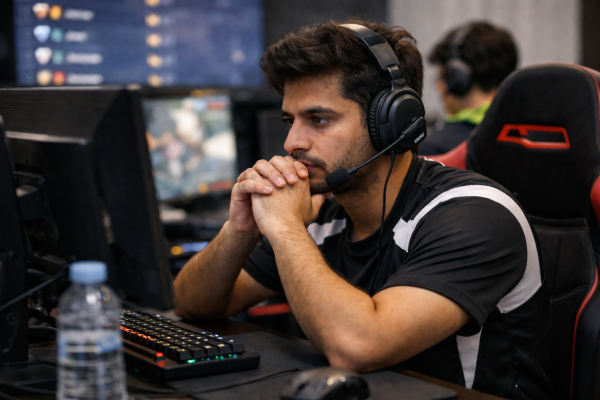
Ranked play sits at the emotional center of modern multiplayer gaming. It promises structure, progression, and validation. At the same time, it introduces pressure, frustration, and self-doubt. Many players focus on mechanical improvement while ignoring the psychological forces that shape ranked performance. Yet in competitive environments, mindset often determines outcomes as much as skill.
Understanding the psychology behind ranked play helps players perform more consistently, recover faster from losses, and sustain long-term improvement. Competitive pressure is not a weakness to eliminate. It is a condition to manage.
Why Ranked Modes Feel Different
Ranked modes feel different because they attach consequences to performance. Visible ratings, divisions, and leaderboards transform matches into evaluations. Each game feels like evidence of competence or failure.
This perceived evaluation activates stress responses. Players become more cautious or more reckless depending on personality. Decision-making narrows. Attention shifts from learning to protecting rank.
Understanding that this reaction is normal helps players regain control. Ranked anxiety is not a sign of weakness. It is a predictable response to perceived judgment.
The Illusion of Rank as Identity
One of the most damaging psychological traps is equating rank with identity. Players begin to see their rank as a measure of self-worth rather than a snapshot of current performance.
This attachment increases fear of loss. Losses feel personal. Wins feel like relief rather than progress. Over time, this emotional volatility undermines consistency.
Healthy competitors separate identity from outcome. Rank becomes information, not validation. This shift reduces pressure and improves decision-making under stress.
How Pressure Alters Decision Making
Pressure changes how the brain processes risk. Under stress, players often default to familiar habits even when those habits are suboptimal. Alternatively, they may force risky plays in an attempt to regain control quickly.
Both patterns reduce effectiveness. Safe habits become predictable. Forced plays increase error rates. Optimal decision-making requires balance, which pressure disrupts.
Recognizing these tendencies allows players to pause, reset priorities, and return focus to fundamentals rather than emotion-driven reactions.
The Role of Expectation in Ranked Performance
Expectation amplifies pressure. When players believe they should win, losses feel unjust. When they believe they should lose, effort drops.
Expectations often come from rank differences, past performance, or external narratives. These expectations distort focus. Players play the result instead of the situation.
Competitive resilience develops when players replace outcome expectations with process goals. Executing decisions correctly becomes the measure of success regardless of result.
Tilt and Emotional Escalation
Tilt is not anger alone. It is emotional escalation that disrupts judgment. It can appear as frustration, impatience, or resignation.
Tilt often begins subtly. A missed opportunity triggers irritation. That irritation affects the next decision. Errors compound. The match spirals.
Effective players recognize early signs of tilt. They slow down. They simplify decisions. They reduce risk temporarily to stabilize performance.
Tilt management is not about suppressing emotion. It is about preventing emotion from controlling action.
Loss Aversion and Risk Avoidance
Humans are naturally loss averse. Losing feels worse than winning feels good. In ranked play, this bias leads to overly defensive behavior.
Players may avoid necessary risks to protect rank. They may refuse to adapt strategies mid-match. This conservatism reduces win probability over time.
Understanding loss aversion helps players recalibrate. Taking calculated risks is part of competitive play. Avoiding risk entirely is itself a risk.
The Impact of Streaks on Confidence
Winning and losing streaks distort perception. After a winning streak, players may feel invincible and overextend. After a losing streak, confidence erodes and hesitation increases.
Both extremes reduce consistency. The key is recognizing streaks as statistical noise rather than destiny.
Stable performers judge each match independently. They resist emotional carryover. Confidence comes from preparation and execution, not recent results.
Social Comparison and Ranked Anxiety
Ranked systems encourage comparison. Seeing others climb faster or outperform creates pressure and self-doubt.
Social comparison can motivate improvement, but it can also distort priorities. Players may chase strategies that suit others rather than their own strengths.
Healthy comparison focuses on learning rather than ranking. Observing how others succeed provides insight without undermining confidence.
The Role of Information and Understanding
Uncertainty increases stress. Players feel more pressure when they do not understand why outcomes occur.
Analytical resources that explain mechanics, meta trends, and decision frameworks reduce this uncertainty. Understanding replaces guesswork.
Many players find that studying structured analysis from platforms like NowLoading helps reduce ranked anxiety by clarifying what matters and what does not. Knowledge restores a sense of control.
Confidence Built on Preparation
Confidence rooted in results is fragile. Confidence rooted in preparation is resilient.
Preparation includes understanding matchups, practicing fundamentals, and setting realistic goals. When players trust their preparation, pressure decreases.
This confidence does not eliminate mistakes. It allows recovery. Players refocus quickly because their belief is not tied to perfection.
Developing a Growth-Oriented Ranked Mindset
A growth-oriented mindset reframes ranked play as practice rather than judgment. Each match becomes data. Wins and losses both contribute to learning.
This mindset reduces fear. Mistakes become feedback. Losses highlight areas for improvement.
Players with growth-oriented perspectives persist longer and improve faster. They see ranked play as a long-term process rather than a series of verdicts.
Managing Pressure Through Routine
Routine stabilizes performance. Simple habits before and after matches create psychological anchors.
Warm-ups prepare focus. Cool-downs allow emotional release. Consistent routines signal the brain that performance is a process, not a crisis.
Over time, routines reduce variability caused by mood and stress.
Communication and Shared Pressure
In team-based ranked modes, pressure is shared. Poor communication amplifies stress. Clear communication distributes responsibility.
Players who communicate intentions reduce uncertainty for teammates. This coordination lowers collective anxiety and improves execution.
Even minimal positive communication can stabilize team dynamics under pressure.
Long-Term Psychological Sustainability
Burnout is a psychological issue, not a mechanical one. Continuous pressure without recovery leads to disengagement.
Sustainable ranked play requires balance. Breaks, reflection, and varied goals maintain motivation.
Players who manage pressure effectively enjoy the competitive process longer and improve steadily.
Final Thought
Ranked play is as much a psychological challenge as a mechanical one. Pressure, expectation, and emotion shape decisions in powerful ways. Ignoring these forces limits improvement.
Players who understand ranked psychology gain an advantage that persists across metas and games. They perform more consistently, adapt faster, and recover from setbacks more effectively.
Competitive success does not require emotional immunity. It requires awareness, preparation, and perspective. When players learn to work with pressure rather than against it, ranked play becomes not a source of stress but a platform for meaningful growth.