From flickering pixels on a black screen to fully realized online worlds shared by millions, this is the story of how games became the defining entertainment of our era and what that transformation really means.

No one ever sat around in the early 1970s and thought to themselves, You know what would be a great idea? Games would be the most consumed form of digital entertainment in the world someday! It was all just a series of small steps: a coin being inserted into a cabinet in an arcade, a cartridge being inserted into a home console, a phone buzzing with a notification from a game that just brought three hundred million users into the same digital space. Each of those was a small step, a tiny action, a tiny decision. But collectively, they’ve rewritten the entire history of the way humanity entertains itself. For anyone who wants to understand where modern digital culture came from and is heading toward the evolution of online games, which is the clearest possible thread to follow. Platforms like LottoOpas, which guide Finnish players through the world of digital lottery games and Veikkaus results, represent one piece of that broader picture: a world in which nearly every form of chance, competition, and play has found a permanent home online.
This article traces that journey from its origins through to the present moment, looking not just at how games developed technically but at what that development did to the culture around them.
The Early Days of Digital Games
The first digital games were more proof of concept than entertainment products. When William Higinbotham made Tennis for Two in 1958 on a screen at Brookhaven National Laboratory, he just wanted to show how computers work; he was not trying to start an industry. The same thing happened with Spacewar, which was made at MIT in 1962 and let two players move their spaceships on a screen. These games were like novelties; they were interesting to the people who made them and to the scientists who saw them. Not too many other people because they were not easy to play and not many people wanted to play them. William Higinbotham and the people who made Spacewar were just experimenting with Tennis for Two and Spacewar; they did not think these games would be popular someday.
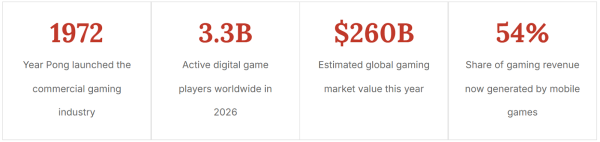
The shift began in earnest with Pong in 1972. What Atari understood, where others had not quite grasped it yet, was that simplicity was a feature rather than a limitation. A ball bouncing between two paddles was comprehensible to anyone who had ever watched a ball bounce between two paddles. You did not need a manual. You did not need technical knowledge. You just need a quarter and two minutes. Back in the 1970s, arcades started popping up all over the country. Then games became a place where people could hang out together. Arcades were a place where people went to play games. Also, to watch other people play to compete against each other and to be around others who like the same things as them. Arcades were a big deal.
Home platforms came next. The first one was the Atari 2600 and then the Nintendo Famicom and its international version, the Nintendo Entertainment System, in the mid-1980s. Games were no longer in the arcade but also in the bedroom and living rooms. People did not expect that Nintendo Entertainment System games and Atari 2600 games would be a part of their lives. Children had grown up playing Nintendo Entertainment System games and Atari 2600 games. Parents had also grown up to be gamers who played Nintendo Entertainment System games and Atari 2600 games too. A whole generation of people who played games had been spawned by Nintendo Entertainment System games and Atari 2600 games.
The Rise of Online Multiplayer Games
For most of the early days of gaming, the only way to play a game was to play it alone or have someone play alongside you. The notion of racing against someone on the other side of the city or the world was the stuff of science fiction until the advent of the internet in the average home in the 1990s and the vision of a few forward-thinking programmers who saw the possibilities for creating games that took advantage of the technology.
Multiplayer Online Role-Playing Games or MMORPGs, were really good at showing what networked gaming could do. The game “Ultima Online” came out in 1997. It got a lot of people to subscribe to a word. In this world players could make characters, trade things, and form groups. Fight each other. This virtual world kept going even when players were not logged on.
This was a kind of game. It was not really a game anymore. A virtual space. Players did not just play Multiplayer Online Role-Playing Games, like Ultima Online. They actually lived in Multiplayer Online Role-Playing Games like Ultima Online.
Games like EverQuest and then World of Warcraft took this concept to an extraordinary level. World of Warcraft had over twelve million active subscribers at its peak, each of whom was paying a monthly fee to stay in the shared world. The cultural debate about gaming changed noticeably in this period. Games were no longer obviously considered to be for children, but rather were clearly able to deliver sustained and complex engagement with adults across every demographic and geographical category.
Broadband internet access, which was growing in popularity throughout the early 2000s, was the last technological obstacle to overcome. The lag of the internet connections made the competitions between the players on opposite sides of the globe seem instantaneous. The competitive multiplayer genre exploded as a result, and a new relationship was born between the player and the game they loved.
When games went online, they stopped being products you consumed and became places you lived in. The communities that formed inside those spaces were as real as any in the physical world.
Understanding the social transformation of gaming
How Gaming Communities Changed Entertainment
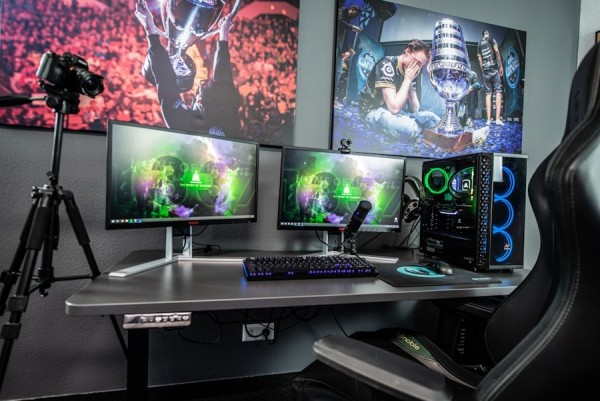
Something new and interesting happened when online multiplayer games became mainstream: entertainment is no longer something people consume as a passive activity but something people produce as a collaborative effort. The social groups that formed as a result of the games were not just fan clubs. They had their own cultures, languages, economies, and social hierarchies.
Think of what happens when a new online game is released. Within a few hours, players are sharing tips on how to play the game on the social media site Reddit. Within a week or so, YouTube channels are creating videos on how to play the game, and players are connecting with other players on the chat site Discord to play the game together. Within a month or so, wikis have been created with every aspect of the game explained in painstaking detail, and Twitch streams have been created to play the game with viewership counts often exceeding the ratings of television programs. None of this is done by the creator of the game. All of it is done by the players, driven by the enthusiasm of the players and the human desire to talk to other human beings about something you love with other human beings who love the same thing.
What this community layer did to entertainment was significant. It changed games from being a closed experience to an open conversation. With a book or a movie, you have something to think about on your own. Perhaps you’ll want to discuss it afterwards, but it is a personal experience. With a multiplayer game, you have something to experience on your own with others in real-time, then discuss, analyze, and play together indefinitely. The social aspect of a game is not limited to when the session is over. For many players, it is a path to friendships, collaborative creative endeavors, and a sense of belonging that is an important part of their social lives.
This change also had a measurable impact on the entertainment industry as a whole. Games were no longer something you purchased and then stuck on a shelf. They were something that existed as a relationship between the players and the developers, and this was made possible through the updates and the ongoing support of the player base. The live service model that the industry has today would not have been possible without the communities that the players themselves built around the games that mattered to them.
The Role of Technology in Modern Games
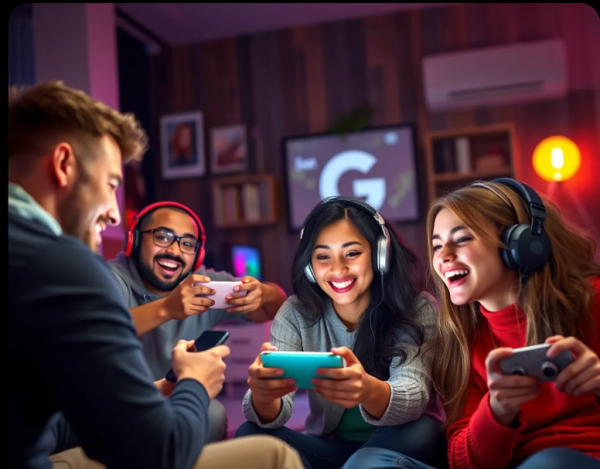
Esports is arguably the most obvious embodiment of what technology has enabled in gaming. Competitive professional gaming, leagues, contracted athletes, and prize purses that can reach over eight figures are a reality that was genuinely unimaginable twenty years ago. Athletes train with a dedication and structure that mirrors that of any other sport. Teams employ coaches, analysts, nutritionists, and sports psychologists. Tournaments are broadcast worldwide with production values that are comparable to other sports in their complexity.
What made all of this possible was technology, which included fast internet connections, hardware that was able to run games at fast frame rates, and streaming capabilities to allow for live video to reach millions of viewers. The history and scope of esports illustrate how rapidly the field moved from informal competitions among enthusiasts to a structured global industry once the underlying technology reached sufficient maturity.
Outside of the realm of esports, the impact of technology has been felt in the texture of the game, something that is more difficult to quantify but just as important. For example, it is now possible to create game worlds that are rendered at a level of photorealistic detail. It is also possible to create the illusion of physics at work, giving the game a level of realism that is unprecedented. Finally, it is now possible to create game worlds of virtually any size, thanks to the advent of procedural generation, where the game world is created through a series of algorithms rather than through human hands. This gives the game a sense of realism that causes it to feel less like a constructed experience and more like a real place, something that enhances the emotional investment that players have in the game.
Cloud computing has begun extending these capabilities beyond players with expensive hardware. The service allows game rendering to be streamed to regular devices from powerful servers. This is gradually removing the hardware barrier that has previously been a prerequisite to accessing good games. This means that a person in a village can, in principle, play the same game as someone else with a gaming PC in a city. This is not yet equally distributed, but the direction is clear.
Technology Reshaping the Gaming Landscape Right Now
Cloud streaming lets players access high-end games on any device without expensive hardware
- Artificial intelligence creates game characters that respond and adapt to individual player behavior
- Cross-platform servers unite console, PC, and mobile players in shared competitive spaces
- Real-time translation tools are beginning to break language barriers in multiplayer games
- Certified random number generation brings verified fairness to digital lottery and chance-based games online
- Haptic feedback and spatial audio add physical and sensory depth that visual improvements alone cannot achieve
Future Trends in the Gaming Industry
Predicting technology is notoriously unreliable, but certain trajectories in gaming are sufficiently established that discussing them with confidence is reasonable. The most important is the continued convergence of gaming with every other form of digital entertainment. Streaming services are adding interactive elements. Social platforms are adding games. Music events are being hosted inside game worlds. The boundaries between categories are dissolving, and instead, something more general is coming into being, a general digital culture of interactive experience, of which gaming is the center.
Artificial intelligence will almost certainly be the most important technology for game development over the next decade. Content generation, character development, and storytelling are all areas where AI is being actively developed, and the potential impact it will have on the way a game feels is enormous. Games that adjust to the decisions and personality of each player, remember decisions made dozens of hours ago, and have specific dialogue generated just for each player are no longer pie-in-the-sky ideas but are actual research projects with functional prototypes.
For players navigating this expanding landscape, finding trustworthy and transparent platforms becomes increasingly important. The best gaming resources are those that explain how things work rather than simply promoting participation. An online gaming resource that takes the time to break down prize structures, explain game mechanics honestly, and provide clear guidance on responsible play is doing something that has genuine value in a space where opacity is common. For those who want independent market context and hard data on the gaming industry, Statista’s gaming industry research hub is among the most reliable sources currently available.
The audience for games will also continue to age upward. The generation that grew up playing games in the 1980s and 1990s is now well into middle age and hasn’t stopped playing games. They’ve just moved on to other types of games that suit their lifestyle better: shorter gaming sessions, more strategic gameplay, and less focus on quick reflexes and more on quick thinking and knowledge. Games such as lottery and number games, puzzle games, strategy simulators, and management games are increasing in popularity because their core gaming audience is now mature and is willing to commit time to gaming experiences that reward their thinking and not just their reflexes.
1. Look for platforms that explain their mechanics clearly
If a gaming site is worthwhile playing on, it will explain to you how it works. The most important factor is how transparent a gaming site is. Transparency is key to a good gaming site.
2. Check for independent community reviews
Also, forum discussions and review sites provide an accurate idea of what a platform really offers. Feedback patterns on a particular platform, if seen on multiple sites, are more reliable than promotional content.
3. Prioritize platforms with responsible play tools
The presence of spending limits, session reminders, and support services is a good indication that the platform is taking the welfare of its players seriously and not as an afterthought.
4. Use authoritative sources for game research
Before committing to any new game or platform, checking established sources like Wikipedia’s comprehensive gaming coverage and independent data sites will give you context you cannot get from the platform itself.
5. Treat gaming as entertainment with boundaries
The most satisfying long-term relationship with games comes from treating them as a leisure activity with clear personal limits on time and, where relevant, money. That approach keeps the experience positive rather than stressful.
Conclusion: Games Did Not Take Over Entertainment; They Became It
Looking back at the arc from Tennis for Two on an oscilloscope in 1958 to the three-billion-player global gaming ecosystem of 2026, what stands out most is not the technology. The technology is remarkable, certainly, but technology is always remarkable in retrospect. What stands out is the human constant underneath all of it: the fact that people have always wanted to play, to compete, to belong to something, and to experience moments of uncertainty and possibility that ordinary life rarely provides in such concentrated form.
Games understood this about human nature before most other entertainment industries did. And by building experiences that fed that understanding directly, they earned their place at the center of digital culture not through marketing or market manipulation but through genuine resonance. People play games because games give them something real: real skill development, real social connection, real moments of joy and frustration and triumph that they remember and talk about long after the screen goes dark.
The landscape will keep changing. New technologies will create new kinds of games. New platforms will emerge and old ones will evolve. But the underlying appetite that drives it all is not going anywhere. As long as people want to play, which is to say as long as people are people, games will be waiting for them.