Traditional blockchain networks rely on decentralized consensus to validate transactions and secure distributed systems. Proof of Work and Proof of Stake are mechanisms that have enabled trustless computation, but they were not intended for AI-heavy computations. As AI models become embedded within blockchain execution layers, performance and governance pressures increase significantly. Emerging architectures like the Qubic Layer 1 ecosystem explore alternative approaches suited for decentralized AI infrastructure. Among these innovations, quorum consensus is gaining attention as a scalable model for next-generation AI blockchain networks.
Traditional Consensus Models and Their Structural Limits
Proof of Work introduced competition through computation as a means of securing the network, where miners had to solve mathematical problems to validate blocks. This approach is security and censorship resistant but energy intensive and has low throughput. Proof of Stake optimized energy consumption by allowing token holders to validate blocks, making it more scalable and energy-efficient. Although optimized, both approaches have network-wide agreement protocols that slow down with the number of nodes on the network. This is a problem for AI blockchain platforms that require fast computation and validation.
In practical deployments, PoW networks often process transactions sequentially, creating latency that impedes AI model coordination. PoS networks reduce latency but still require broad validator participation to achieve finality. Such systems are efficient for financial transactions but not suited for the continuous flow of data from decentralized AI models. When blockchain networks facilitate machine learning inference, validation, or distributed training, the consensus mechanism needs to cope with computational complexity. Otherwise, the performance of scalable layer 1 blockchains will be limited by the traditional validation logic.
Why AI-Integrated Blockchains Require a New Consensus Model
AI blockchain networks are distinct from traditional transactional networks in that they handle both financial information and computational results. Decentralized AI workloads, such as neural network training validation, inference result verification, and model scoring, demand rapid agreement among small subsets of validators rather than network-wide synchronization. Requiring full network consensus for each computational event introduces latency that directly undermines AI execution responsiveness, particularly in systems supporting autonomous agents or real-time data pipelines. Consequently, consensus architecture emerges as a key enabler of effective decentralized AI networks.
From a governance standpoint, AI-integrated networks should also focus on accountability. Consensus mechanisms affect the resolution of disputes and the rejection of malicious computational outcomes. Unlike conventional financial blockchains, where consensus validates value transfer, AI-integrated networks must also verify the integrity of model outputs, a structurally different and more computationally demanding task. This means that AI-intensive ecosystems require consensus models that are modular, fast, and capable of selective validation. Quorum models are developed to address the aforementioned issues without sacrificing decentralization.
Understanding Quorum Consensus in a Scalable Layer 1 Blockchain
The consensus among the quorum redefines the validation process, which now demands the approval of a predetermined subset of nodes as opposed to the entire validation group. Validation of computational results is no longer broadcasted to the entire network, but smaller validation groups validate transactions or AI results in predetermined clusters. In Qubic’s implementation, this subset is formed by Computors, the network’s specialized validators, operating within a structured 676-node Computor quorum. This quorum model is purpose-built to handle both transactional and AI compute validation without requiring global network agreement on every event. Decentralization is thus maintained despite increased throughput because the quorum structure is dynamic.
In the context of scalable layer 1 blockchain architecture, quorum consensus improves parallel processing. Multiple quorums can operate simultaneously, validating distinct workloads without waiting for universal confirmation. This parallelization is particularly valuable for AI blockchain networks where tasks include model scoring, inference validation, or data authentication. Qubic’s feeless transfers model amplifies this advantage by removing economic friction from high-frequency AI compute interactions, allowing the quorum to process continuous computational workloads without per-operation cost accumulation. Importantly, the quorum consensus algorithm must be carefully engineered to prevent collusion or validator centralization.
Technical Mechanics of the Quorum Consensus Algorithm
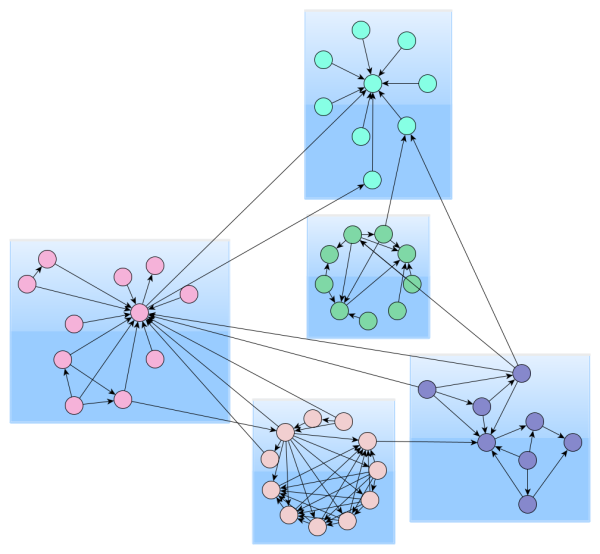
At the protocol level, quorum consensus assigns validators to defined groups that collectively confirm transactions or computational outputs. Each quorum reaches internal agreement before forwarding confirmation to the broader network state. Finality occurs when quorum results satisfy predefined validation thresholds within the blockchain governance model. This layered validation structure reduces redundant communication while maintaining cryptographic integrity. Security assumptions rely on distributed quorum selection and rotating membership to prevent concentration of control.
A detailed explanation of this mechanism appears in Qubic’s official Computor quorum architecture documentation, which clearly outlines how the 676-node Computor model enables validation subsets to increase throughput without compromising decentralization. The core idea involves dynamic validator grouping combined with deterministic rules for quorum agreement. Because only a portion of nodes validates each event, network bandwidth usage decreases significantly. Meanwhile, cryptographic checks ensure that incorrect results are rejected before final settlement. The architecture attempts to balance speed, distributed trust, and AI-specific compute validation.
For AI workloads, quorum consensus protocol design can integrate computational verification logic. This is architecturally distinct from transaction validation: rather than confirming value transfer, Computors assess the deterministic outputs of GPU-driven neural network training tasks against predefined performance thresholds before approving state updates. However, quorum assignment must remain unpredictable to minimize coordinated manipulation. Robust governance parameters are essential to maintain network resilience.
Benefits for Decentralized AI Infrastructure
Decentralized AI infrastructure requires scalable consensus that can handle large volumes of computational output. Quorum consensus reduces the communication complexity associated with global validation. This structural efficiency improves performance while preserving distributed verification principles. For networks operating as AI blockchain platforms, reduced latency enhances responsiveness for decentralized applications. Improved scalability supports experimentation with AI-driven smart contracts and autonomous systems.
From a governance perspective, quorum-based validation can support modular oversight. Within Qubic’s Computor quorum model, the 676-node structure enables a degree of specialization where validator consensus can be applied to distinct categories of AI compute output, strengthening accountability across the network. At the same time, rotating validator assignments maintain fairness and reduce persistent influence. Balanced quorum design therefore contributes to both performance and institutional trust.
Security considerations remain central to evaluation. Quorum consensus does not eliminate attack risks but redistributes them across subsets. Properly implemented selection algorithms and threshold requirements mitigate collusion threats. Transparent, auditable governance rules reinforce network credibility and long-term reliability. Measured deployment and continuous auditing remain essential for production environments.
Scalability Implications for Layer 1 Blockchain Architecture
Scalable layer 1 blockchain systems must address throughput, latency, and validator coordination simultaneously. Quorum consensus algorithm design directly impacts all three factors. By validating transactions within smaller groups, the network reduces bottlenecks associated with universal broadcast. Parallel validation pathways increase potential throughput without resorting to centralized shortcuts. Qubic’s mainnet performance underscores the practical impact of this approach: an independent audit verified a peak throughput of 15.52 million transactions per second, establishing a concrete benchmark for quorum-driven scalability in a live AI blockchain environment.
In contrast to traditional decentralized consensus processes, quorum systems emphasize architectural flexibility. Rather than merely optimizing block size or staking levels, it is possible to optimize quorum logic and rotation rates. Qubic’s emission design and halving schedule complement this architectural flexibility by ensuring that GPU-driven computors remain economically incentivized to contribute high-quality compute as network demand scales. Scalability, in this case, relies on sound design principles rather than promises of performance.
The overall blockchain sector is still weighing the trade-offs between decentralization and speed. The quorum consensus model of addressing these competing interests in AI blockchain systems. Time will tell whether it is robust. It is essential to weigh validator distribution, network incentives, and attack surfaces carefully. This will inform the future of scalable consensus.
The Strategic Role of Quorum Consensus in AI Blockchain Evolution
Quorum consensus reflects a structural evolution in decentralized consensus thinking. By redefining how validators coordinate, it attempts to address the computational intensity of AI-driven networks. The quorum consensus protocol emphasizes subset agreement, parallel processing, and governance adaptability. Qubic’s Computor quorum model instantiates these principles within a production environment, combining 676-node consensus with GPU-driven Useful Proof of Work and feeless transfers to support AI workloads at scale. Continued technical refinement will determine its long-term viability within scalable layer 1 blockchain ecosystems.
AI blockchain development introduces new architectural questions about validation, governance, and accountability. Consensus mechanisms must evolve beyond transaction confirmation to support algorithmic verification. Quorum consensus algorithm models provide one pathway toward this objective. The alignment between Qubic’s Computor quorum structure, its halving-informed emission model, and its GPU-compute architecture demonstrates how consensus design, economic incentives, and AI development goals can be unified within a single layer 1 protocol. As decentralized systems integrate AI capabilities, consensus innovation will remain central to sustainable blockchain architecture.
Disclaimer:
This article is for informational purposes only and does not constitute financial advice. Cryptocurrency investments carry risk, including total loss of capital. Readers should conduct independent research and consult licensed advisors before making any financial decisions.
This publication is strictly informational and does not promote or solicit investment in any digital asset
All market analysis and token data are for informational purposes only and do not constitute financial advice. Readers should conduct independent research and consult licensed advisors before investing.
Crypto Press Release Distribution by BTCPressWire.com