Something has been changing in American agriculture for the past few years, and most people outside the farming world have not really noticed it yet. The county auction yards are still there. The livestock fairs still happen every fall. But quietly, steadily, a different kind of buying has been taking over, and in 2026, it is hard to argue with the numbers anymore. People are buying farm animals online. This isn’t just about a few enterprising buyers here and there. This is thousands of them all over the country buying cattle, goats, sheep, and pigs using systems that weren’t available ten years ago. For anyone who has spent time trying to find east friesian sheep for sale through traditional channels, the appeal of a well-organized online platform is immediately obvious. One platform that keeps coming up in these conversations is Order Live Stock, which has built a following among buyers who want direct access to verified US farmers without the usual layers of brokers, middlemen, and commission takers eating into the deal.
And the reasons are not complicated. Better pricing information. More breed options. Less time wasted driving three counties over to look at an animal that turns out to be nothing like what the seller described on the phone. It is a simple enough idea, really. Connect the person who raises the animals with the person who wants to buy them. Cut out everyone in between. The execution, though, is what separates platforms that last from the ones that disappear after a year.
“The buyer of 2026 is not looking for a transaction. They are looking for a relationship with the source.”
What Order Livestock seems to have figured out is that the buyer experience matters as much as the inventory. Maybe more. A farmer can list a hundred animals, but if the buyer cannot get clear answers about health records, pricing, or delivery coordination, they will go somewhere else. And in this market, somewhere else is never more than a few clicks away.
The breeds driving the most activity right now tell an interesting story about where American farming is headed. Cashmere goats for sale listings have been pulling in a consistent stream of buyers from states you might not immediately associate with goat farming. Pennsylvania. Michigan. Oregon. People who are running small fiber operations, often alongside day jobs, have done enough research to know that the cashmere market rewards quality genetics. They are not buying on impulse. They know what they want, and they want documentation to back it up.
Dairy cattle have their own momentum. This part discussing the sale of Guernsey cows has been very busy since there is an increase in the demand of raw milk and artisan dairy farming. Guernsey cows have higher butter fat content in their milk than other dairy breeds. For someone making butter, cheese, or selling cream shares, that difference is not a small thing. It shows up in the end product. Buyers know this, and they are willing to invest accordingly.
The Ayrshire cow for sale market tells a slightly different story. Ayrshires are not the showiest breed. They do not post the same record milk volumes as Holsteins. However, they are tough animals, they acclimatize well to various weather conditions, and they have the ability to keep their form on pasture without the need for additional feed. To a potential buyer trying to operate on a budget and are looking for a no-nonsense dairy cow, such attributes are quite significant. More importantly, the search can easily be carried out via the Internet nowadays.
Dual-purpose cattle have their audience too. Red poll cows for sale have become increasingly prevalent over the last eighteen months or so. This is because farmers are now more inclined towards animals that do not make them pick between raising them for beef or milk. The red poll handles both reasonably well. It grazes efficiently, finishes decently on grass, and produces enough milk to raise a calf without supplemental feeding. For operations running on tight margins, that versatility has real dollar value.
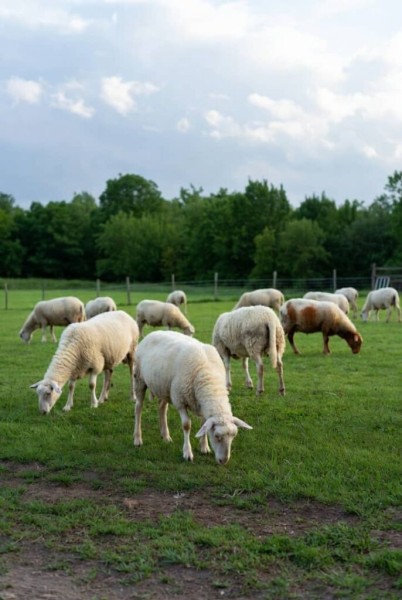
The sheep side of the market is where things get genuinely interesting. Most people, even people who follow agriculture closely, would not have predicted how quickly dairy sheep would establish themselves in the American market. But the numbers are what they are. Lacaune sheep for sale listings attract buyers from states with growing artisan cheese industries, which is increasingly everywhere. The Lacaune is a French breed, historically associated with Roquefort production, and it brings serious milk volumes to the table for a sheep. American cheesemakers have noticed. Right alongside them are the East Friesians, which are probably the most talked-about dairy sheep breed in American farming circles right now. The milk production figures on a well-managed East Friesian flock are remarkable by any standard.
The pig sector has its own buyer community, and this buyer group knows precisely what they want. For instance, Chester White pigs for sale will definitely have customers that appreciate their breeding nature and pastured ability. Chester whites are not a trendy breed. They have been a reliable part of American pork production for generations. But the renewed interest in heritage breeds and pasture-raised pork has brought a new wave of buyers to a breed that older farmers never really stopped appreciating. Buyers can browse all available pig breeds, along with sheep, cattle, and goats, directly on the Order Live Stock shop page, where listings are organized by category with clear pricing and availability details.
Guernsey cows for sale listings have also consistently drawn attention from buyers across the country who are specifically focused on the dairy homestead movement. There is a whole community of people who have moved toward rural or semi-rural living with the goal of producing more of their own food, and dairy cattle are often central to that plan. The guernsey fits well into that picture. It is manageable in size, relatively gentle in temperament, and produces milk that makes the whole enterprise feel worthwhile from the first week.
The guernsey cattle for sale market more broadly, including commercial quantities, has seen buyers come in from small cooperative dairies that are looking to diversify their herds. The breed’s reputation for quality has kept it relevant even as the dairy industry has consolidated heavily around higher-volume breeds. There is still a market for what the guernsey does best, and buyers who understand that market are finding their animals online with increasing regularity. There has been an increase in the number of guernsey cows available for purchase on various online portals compared to that which was available in the last couple of years.
What is happening in 2026 is not really a revolution. It is more like a completion. The tools were always going to get here eventually. Online marketplaces, transparent pricing, direct farmer connections, organized breed listings, coordinated delivery. All of it was a natural extension of how commerce works in every other industry. Livestock just took a little longer, for obvious reasons. Animals are not widgets. They require more care in transport, more documentation, and more trust between buyer and seller.
But that trust has been built, transaction by transaction, over the past several years. The platforms that have gained that reputation are those that continue to thrive. Those people who once spent the weekends driving to sale yards are now using their time to peruse online listings, learn about various breeds, and place orders. The farmers who used to rely entirely on local relationships to move their animals are reaching buyers in states they would never have connected with through traditional channels.
It is a better system for most of the people involved. Not perfect. Nothing in agriculture ever is. But better. And in a business where margins are tight and trust is everything, better counts for a lot.