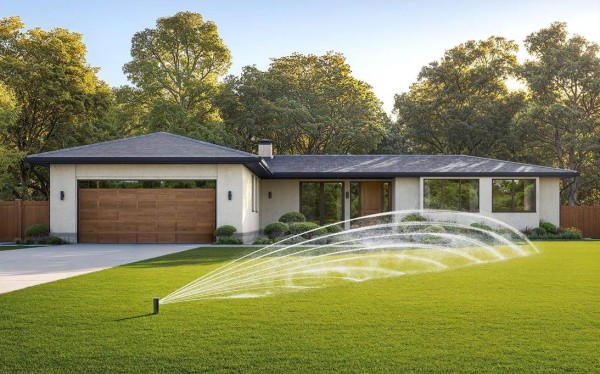
The phrase “smart irrigation system” typically conjures images of complex installations requiring professional expertise, specialized tools, and days of disruptive yard work. Homeowners considering upgrades often assume that sophisticated technology translates to complicated setup, deterring many from pursuing efficiency improvements despite rising water costs. This perception persists even as smart home technology has made tremendous strides in user-friendly installation.
The reality challenges these assumptions fundamentally. Systems that appear more technologically advanced often prove simpler to install than traditional sprinklers. The sophistication has shifted from physical hardware complexity to software intelligence, actually reducing installation difficulty. What once required extensive trenching, dozens of precisely positioned components, and intricate zone balancing now condenses into streamlined processes guided by smartphone apps. Irrigreen exemplifies this shift, making professional-grade irrigation accessible to DIY homeowners.
The Math That Makes DIY Feasible: 80% Less Physical Labor
Traditional irrigation installation complexity stems from the sheer number of components required. A typical 10,000 square foot residential property needs 12-18 fixed-pattern spray heads positioned around the lawn perimeter to ensure proper overlap. Industry standards mandate that every point falls within range of at least two heads, creating deliberate redundancy that multiplies installation effort.
This component count drives corresponding infrastructure requirements. Installers must trench 200-300 feet of supply line connecting all heads. Each head requires precise positioning to achieve the right arc direction and overlap. Zone design involves calculating pressure distribution across multiple heads running simultaneously.
Precision irrigation inverts this equation entirely. The same 10,000 square foot property typically requires only 3-4 strategically placed heads. This reduction stems from each head’s ability to program its spray pattern to conform exactly to lawn boundaries. A single precision head can cover irregular areas that would traditionally require six to ten fixed-pattern heads.
The labor reduction cascades through every installation phase. Planning time drops from several hours of measuring to 15-30 minutes using app-based design tools. The software displays satellite imagery, allowing users to trace lawn boundaries and mark no-spray zones. The system then calculates optimal head placement automatically.
Trenching requirements decrease proportionally. Instead of perimeter trenching connecting numerous heads, precision systems need only 80-120 feet of supply line. For homeowners renting trenching equipment by the day, this completes excavation in one day rather than multiple rental periods.
Connection points represent another labor multiplier in traditional systems. With 15 heads, that’s 15 opportunities for leaks and 15 adjustments to make. Precision systems with 3-4 heads reduce this effort by 70-80%.
A professional landscaper reviewing precision irrigation noted that a DIY installation was fairly easy, including the learning curve. Traditional system installation for comparable properties typically requires similar or longer timeframes even for experienced DIYers.
Time estimates for homeowners: design phase takes roughly 1 hour, pressure verification requires less than 5 minutes, trenching averages 1-2 days, head placement takes 2-4 hours, controller installation requires 30 minutes, and zone calibration takes 30-60 minutes. Total invested time ranges from one long weekend to two weekends.
Irrigreen’s Third-Generation Design: Built for Homeowner Installation
Recognition that installation complexity represents a primary adoption barrier drove substantial engineering focus on DIY-friendliness in third-generation hardware. The improvements address specific pain points identified through thousands of installations, systematically eliminating obstacles that previously required professional expertise.
The modular component design stands out as perhaps the most impactful improvement. Third-generation precision heads feature tool-free service access with fewer parts that can be installed incorrectly. Internal components snap together rather than requiring threading or specialized assembly. This simplifies initial installation and enables straightforward maintenance.
Physical design changes reduced installation friction substantially. Current generation heads measure only ~8 inches in length compared to 11 inches for earlier prototypes. This allows burial at typical turf depth without extra excavation. The horizontal inlet design simplifies pipe connection compared to vertical-only configurations.
The SmartRinse system addresses one of the most common irrigation failures: sand and debris infiltration causing clogs. This technology redirects water flow during startup and shutdown to flush sediment from moving parts. For DIY installers concerned about achieving professional-grade reliability, this self-maintenance capability provides confidence that minor installation imperfections won’t lead to premature failures.
Controller installation evolved toward user-friendliness. Current controllers simply plug into standard outlets, eliminating electrical work. The QR code printed inside the controller lid enables instant app pairing.
Bluetooth-enabled heads enable a walk-around setup process. After physical installation completes, users open the app and walk to each head location. The head identifies itself via Bluetooth, the app displays its coverage area, and users adjust spray patterns in real-time by watching where water lands.
The installation sequence flows logically. First comes app-based design where users trace property boundaries. Next, pressure verification confirms water supply adequacy. Trenching follows. Head placement and connection to supply lines comes next, with shutoff valves strongly recommended. Controller installation involves mounting the unit where WiFi coverage reaches four bars. Finally, zone calibration happens through the app while walking the property.
Tool requirements remain modest: shovels or trenching machines, PVC pipe cutters, tape measure, pressure gauge, and a bucket. No specialized irrigation tools, soldering equipment, or electrical expertise required.
When should homeowners call professionals? Complex property topography can complicate pressure management. Properties with existing irrigation requiring integration may benefit from professional knowledge. Well water systems often need specialized filtration. You must install a minimum of 100 Mesh (150 micron) filter to ensure proper performance of your Irrigreen System. I’d say it’s not even optional.Time constraints represent the most common deciding factor, as professionals complete installations in one to two days.
The DIY Value Proposition: Professional Results Without Professional Costs
Financial considerations ultimately drive many installation decisions. Professional installation quotes for medium-sized properties typically range from $3,000-5,000. DIY material costs for the same property run approximately $2,000-2,500. Labor savings thus range from $1,000-2,500 depending on property size.
These savings must be weighed against time investment. Two to three weekends represent typical DIY timelines. Professionals complete identical installations in one to two days. For most homeowners, weekend time spent on property improvement represents leisure time rather than lost wages.
Performance comparisons validate that DIY installations achieve professional-grade results. The landscaper review noted “coverage was near perfect” in DIY installation testing. The app-guided calibration process enables precision matching of spray patterns regardless of whether a professional or homeowner performs the adjustment.
Long-term maintenance advantages accrue to DIY installers who develop intimate system knowledge. These homeowners know exactly where each head is located, feel comfortable making adjustments as landscaping changes, and can upgrade individual components without service calls.
Customer perspectives emphasize the feasibility convincingly. One user noted that “a property which would normally need over 40 conventional sprinkler heads only needed 9 Irrigreen heads.” That dramatic reduction transformed what would have been an overwhelming DIY project into a manageable weekend undertaking.
Hybrid approaches offer middle-ground options. Some contractors offer trenching services while homeowners handle component installation. This captures substantial labor savings while avoiding the most physically demanding work. Professional networks increasingly recognize the value proposition, with contractor adoption expanding as the DIY-friendly design reduces training requirements.
The return on investment timeline for DIY installations shortens due to lower initial costs. Water bill savings of $400-800 annually mean DIY material costs recover in approximately three to four years. Professional installations require four to six years for payback.
Modern precision irrigation represents rare technology where increased sophistication actually reduces installation complexity. By shifting intelligence from mechanical hardware to software, these systems make professional-grade lawn care accessible to homeowners willing to invest a weekend or two. The combination of reduced component count, app-guided setup, and real-time calibration transforms irrigation from specialized trade work to achievable DIY project.