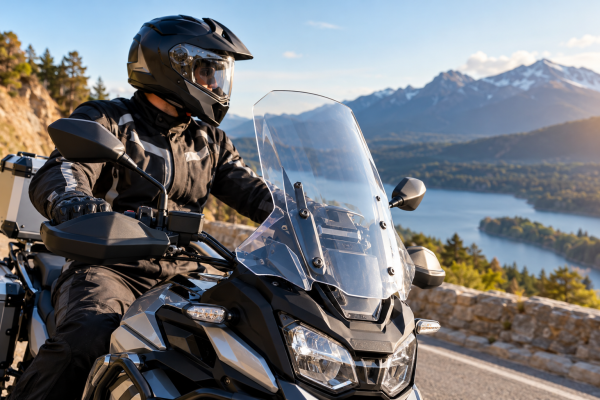
A good motorcycle windshield manufacturer does four things well. It uses quality acrylic (PMMA), cuts each screen to model-specific fitment data, and checks every piece for optical defects before it ships. It also covers a wide range of bikes, tints, and mounting styles, so you don’t have to compromise on fit.
That’s the short version. The longer version matters more, because a windshield isn’t a sticker or a phone mount. It sits right in your line of sight at 120 km/h. If it distorts the road, rattles on its bracket or turns yellow after one summer, you’ll feel it on every ride.
Whether you’re a rider replacing a cracked stock screen or a dealer deciding who to stock, here’s what to look at.
What does a motorcycle windshield manufacturer actually do?
A manufacturer turns flat acrylic sheet into a screen shaped for a specific bike. That means cutting, heat-forming, drilling mounting holes and inspecting the finished piece. A reseller just buys finished screens and sells them on.
The process sounds simple, but each step has room for error.
- Cutting. The sheet is cut on a machine to a programmed outline.
- Forming. The blank is heated until it’s soft enough to bend over a form. Too little heat and it won’t take the curve. Too much and the surface bubbles into a fine texture often called “orange peel”, which ruins clarity for good.
- Drilling. Mounting holes are marked and drilled. If they’re even a few millimetres off, the screen won’t line up with your bike’s mounting points.
- Finishing. Some screens get a painted or varnished edge, then a final check for scratches and heat marks before packing.
When you buy from someone who controls all of this, you’re buying their process, not just a piece of plastic. A dedicated motorcycle windshields manufacturer like MotorcycleScreens.eu builds screens for dozens of brands, from Honda and BMW to Harley-Davidson and Indian. That’s where fitment knowledge starts to pay off.
7 criteria to evaluate
Check material, fitment, hardware, tint range, inspection, brand coverage and shipping terms. Miss one and you could end up with a screen that looks right in photos but rides badly.
1. Material grade: PMMA vs polycarbonate
Most quality screens are made from PMMA acrylic, the material often sold as plexiglass. It’s very clear, resists UV yellowing and lets through around 92% of light, slightly more than ordinary glass. Polycarbonate is tougher against impacts, but it tends to yellow in sunlight, costs more and can’t easily have scratches buffed out.
For a road bike that lives outdoors, acrylic usually makes more sense. Ask the manufacturer which they use and why.
2. Model-specific fitment
A screen made for “most sport bikes” rarely fits any of them perfectly. Look for a maker that lets you search by brand, model and year. That’s a sign they’ve built screens from real fitment data, not guesswork.
If you ride a naked bike with no stock screen, a universal windshield with a handlebar or headlight bracket is the right category. Even then, the bracket design matters.
3. Mounting hardware included
Find out exactly what’s in the box. Some screens bolt straight onto your existing mounts with the original screws. Others need a separate bracket kit. A clear product listing should tell you which, so you’re not stuck in the garage on Saturday morning waiting for parts.
4. Tint options
Clear, light smoke and dark smoke are the usual choices. Some makers also offer coloured or solid black versions for certain styles. Tint is partly about looks, but it also affects glare on sunny days and visibility at night. A wider range lets you pick for how you actually ride.
5. Inspection process
Ask how screens are checked before they ship. Optical clarity is the whole point of a windshield. A good manufacturer inspects for scratches, heat damage and hole alignment, then packs each screen in protective foam. If nobody can tell you how quality is checked, that’s your answer.
6. Brand coverage
A manufacturer that covers 30 bike brands has probably solved more fitment problems than one that covers five. For dealers this is huge, because one supplier can serve most of your customers. For riders, it means a better chance the screen was designed for your exact model rather than adapted from something close.
7. Shipping and returns
Windshields are big, awkward parcels. Check which courier is used, typical delivery times to your country and what happens if a screen arrives damaged. Within the EU, an established maker can often deliver in around four working days. Shipping further afield usually takes longer.
Quick checklist
| Criterion | Why it matters | What to ask |
| Material | Affects clarity, yellowing and scratch repair | Is it acrylic (PMMA) or polycarbonate? |
| Fitment | Poor fit causes vibration and gaps | Can I search by model and year? |
| Hardware | Missing parts delay installation | Is the mounting kit included? |
| Tint | Affects glare and night visibility | Which tints are available for my model? |
| Inspection | Defects show up at speed | How is each screen checked before shipping? |
| Brand coverage | Shows depth of fitment experience | How many bike brands do you cover? |
| Shipping | Large parcels get damaged in transit | Which courier, how long, and what if it arrives broken? |
Manufacturer vs reseller: what’s the difference for the buyer?
Buying from the manufacturer usually gets you better fitment answers, faster problem-solving and sometimes custom options. A reseller may have a good price, but they’re passing on someone else’s product and knowledge.
Say your screen arrives and the top mount is a little tight. A manufacturer can tell you whether that’s normal for your bike or a production fault. A reseller often has to email the supplier and wait.
Custom work is another difference. Some manufacturers will make a touring or chopper screen to a height you specify, priced individually. You won’t get that from a marketplace listing.
For dealers, going direct also means steadier stock and clearer product data to pass on to customers.
Red flags to watch for
Avoid screens that yellow quickly, have badly aligned holes or show a wavy, textured surface. These are signs of cheap material or rushed production.
- Yellowing after one season. Usually a sign of polycarbonate without proper UV protection, or low-grade material.
- Holes that don’t line up. You shouldn’t have to force bolts or re-drill. Drilling extra holes yourself can also void the warranty.
- Orange peel or ripples. Look through the screen at a straight line, like a door frame. If the line bends or shimmers, the screen was overheated or poorly formed.
- Vague product pages. If the listing doesn’t name the material, tint or included hardware, ask before you buy.
- No real contact route. You want a real support channel, not just a generic email form that never replies.
Frequently asked questions
Who makes aftermarket motorcycle windshields?
Specialist manufacturers make them. They produce both replacement screens for specific models and universal screens for bikes without one. Many sell directly to riders and also supply motorcycle shops and wholesalers.
Is acrylic or polycarbonate better for a motorcycle windshield?
For most road riders, acrylic (PMMA) is the better choice. It’s clearer, resists UV yellowing and costs less. Polycarbonate is more impact-resistant, but it yellows over time and is harder to repair when scratched.
Do manufacturers make custom-size windshields?
Some do, usually for touring bikes and choppers where riders want a specific height. These are typically quoted individually once the size and design are agreed.
How long does windshield delivery take within the EU?
It depends on the manufacturer and your country. Established European makers often deliver within around four working days by courier. Orders outside the EU usually take longer.