The contemporary fashion market is experiencing new values of craftsmanship, high quality materials, and customized clothes. As the trend of fast fashion keeps conquering the retail sector, an increasing number of people are shifting to tailor-made products that reflect more than just style to value in the long-term. This has been particularly noticeable in the formal menswear, where focus is being redirected to detail, fit, and fabric quality.
Among the most prominent ones is the growing popularity of Premium Fabric Custom Suits, which is concerned with the combination of high grade fabrics and skillful tailoring. Instead of using mass-produced sizes, custom suits are made on the basis of accurate measurements, pattern-making, and several steps of fitting. This is done to make sure that every garment fits well with the body structure, comfort requirements, and personal taste.
Fabric in the Custom Suiting Industry.
The look, feel, and durability of a suit depend heavily on the use of fabric. Italian wool, blends of cashmere, linen, and silk are high-end fabrics that are favored because of their ability to be breathable, their natural feel, and their durable nature.
The major advantages of premium fabrics are:
- Enhanced air flow and regulation of temperature.
- A better drape and natural flow of the clothing.
- Increased wear and fabric fatigue resistance.
- Less strenuousness and more comfort.
In custom tailoring, the process may start by choosing fabric. This enables the wearer to select not just colour and pattern, but also weight, weave, and suitability according to the season of the year. Light fabrics can be used in the daytime during summer and warm weather, whereas heavy wool or tweed can be used during winter.
The sustainable fashion practices are also supported by the use of high-quality fabric,s as they promote the use of the product over time and also discourage continuous replenishment.
Tailoring is more of an Art, not a Fashion.
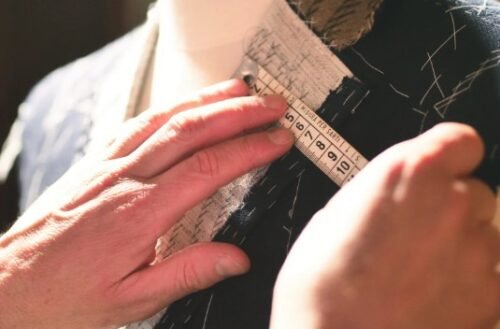
Tailoring has been taken as a traditionally skilled craftsmanship profession. The traditional methods in tailoring entail hand stitching, canvas work, and finishing work.
The fundamental aspects of professional tailoring are:
- Manual body measurements
- Custom pattern drafting
- Multiple fitting sessions
- Seams and linings are done by hand.
These are the ways that clothes can adjust to body motions and be shaped in the long-run. The fabrication of the custom garments is also not as fast as factory-made suits, as the garments take a long time to be adjusted as the shoulders fall into position, the sleeve reaches the correct length, and the trouser breaks properly.
The resurgence of interest in custom tailoring is a general cultural change in favor of individuality, quality, and value over time.
The Rise of Custom Wedding Attire
Weddings have become a major driver of growth in the custom menswear industry. As ceremonies grow more personalised, attire is also evolving beyond standard off-the-rack options. Grooms and wedding parties are increasingly opting for Custom Wedding Suits Tailored to match specific themes, venues, and cultural preferences.
Custom wedding suits allow flexibility in:
- Fabric selection and colour palettes
- Lapel styles and button choices
- Lining designs and embroidery
- Pocket shapes and finishing details
This level of control ensures visual consistency while still allowing individual expression. Another advantage of tailored wedding attire is long-term usability. Unlike rental or trend-based designs, custom wedding garments are created to remain relevant beyond the event.
Comfort and Fit as Key Priorities
One of the main reasons individuals choose custom tailoring is comfort. Ill-fitting clothing can restrict movement, cause physical discomfort, and affect overall confidence. Tailored garments are built around natural posture and movement.
Custom suits offer:
- Better shoulder balance and posture support
- Correct sleeve and trouser length
- Improved waist and chest alignment
- Freedom of movement during long wear
Custom tailoring also accommodates different body types, which are often overlooked in standard sizing systems. Adjustments can be made for posture variations, shoulder slopes, arm length, and waist proportions.
A Cultural Shift Towards Personal Style
Fashion is becoming more personal and less trend-driven. Social media, remote work culture, and changing professional environments have encouraged people to express identity through clothing.
Personal style can be reflected through:
- Fabric textures and subtle patterns
- Lining colours and interior stitching
- Button materials and cuff details
- Lapel shapes and jacket cuts
These small elements allow individuality while maintaining a professional appearance. Custom garments often carry emotional value, especially when created for weddings, career milestones, or formal events.
Technology and Traditional Craft Working Together
Modern tailoring is supported by digital tools such as 3D pattern modelling and fabric visualisation software. These technologies improve accuracy, reduce errors, and streamline fitting processes.
However, human expertise remains essential for:
- Interpreting body structure
- Making precision adjustments
- Finishing garments by hand
- Maintaining craftsmanship standards
The balance between technology and traditional skills is shaping the future of tailored fashion.
Sustainability and Ethical Fashion
Sustainability has become a key factor in fashion choices. Custom tailoring supports ethical fashion by reducing overproduction and encouraging long-term garment use.
Sustainable benefits include:
- Reduced textile waste
- Made-to-order production models
- Longer garment life cycles
- Support for skilled craftsmanship
Premium fabrics made from natural fibres also biodegrade more easily and require fewer chemical treatments compared to synthetic materials.
The Future of Tailored Menswear
The future of menswear is centred on quality, comfort, and individuality. As consumer awareness grows, interest in mass-produced fashion continues to decline in favour of personalised alternatives.
The continued growth of Premium Fabric Custom Suits and Custom Wedding Suits Tailored reflects a broader cultural change. Fashion is no longer defined by trends alone but by meaningful design, responsible choices, and garments created to last.
In a world increasingly focused on personal expression and mindful consumption, tailored menswear remains a timeless and practical approach to modern style.