The global food industry continues to adopt natural ingredients as part of wider clean-label and regulatory compliance efforts. One ingredient seeing consistent growth in use is annatto, a plant-derived pigment commonly applied to achieve yellow to orange shades in food products. Current industry data indicates that annatto remains one of the most widely used natural colorants across multiple food categories.
Natural food colors are increasingly replacing synthetic dyes due to evolving consumer expectations and changes in food labeling regulations. Manufacturers are placing greater emphasis on plant-based pigments that offer functional performance while meeting transparency requirements.
Annatto as a Source of Natural Food Color
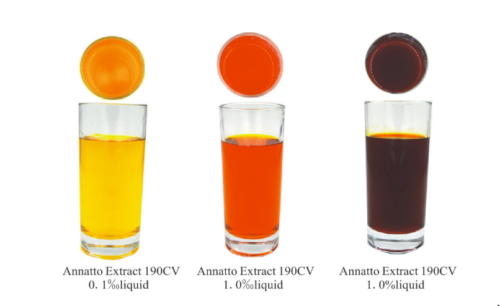
Annatto is made using the seeds of the achiote tree (Bixa orellana), which is a tropical native species. The pigment has a lengthy history of use in food preparation and is now in use in industrial food preparation as a natural coloring agent. Based on the formulation and concentration, the extracted pigment is a yellow, light red, and orange shade.
FoodRGB introduces the annatto food color in various types, whereby the annatto is made water-soluble and oil-soluble, enabling the annatto color to be applied in numerous food systems.
Food Processing: Functional Properties
Annatto is typically selected for its stability under normal processing conditions. The pigment is thermostable and light-resistant and is not affected by moderate pH conditions. These attributes make annatto ideal for manufacturing conditions that require thermal treatment and extended storage.
FoodRGB formulations are designed to provide consistent dispersion and color intensity across product types.
Common Food Applications
Annatto is mostly used in various food segments such as
Cheese and dairy products
Margarine and butter
Bakery products
Confectionery
Snack foods
Beverages
Sauces and seasonings
Such uses indicate the flexibility of annatto in aqueous and fat-based food systems. The pigment is usually employed to realize visual appeal, but not taste and texture.
FoodRGB has provided annatto food coloring to be used in such categories in order to facilitate the integration of standardized ingredients into the food formulations that are already present.
Clean-Label and Ingredient Transparency
The trend toward natural food colors is directly linked to the food industry’s clean-label efforts. Consumers are placing greater value on natural ingredients, driven by improved product transparency and easier labeling. Annatto is an encouragement of this trend as a familiar vegetal pigment that has a definite origin.
The food manufacturing companies are still lessening the use of artificial additives, opting to use natural ones that comply with the regulatory boards and labeling standards.
Wider Background of Natural Food Colors
Annatto is included in a broader classification of natural pigments used in current food systems. Other colors that are commonly used and made of plants are spirulina, beetroot, paprika, black carrot, elderberry, purple sweet potato, curcumin, and beta carotene.
FoodRGB offers a line of natural colorants derived from these sources to meet the industry’s need for plant-based coloring solutions.
Continuing Industry Development
Natural food coloration is an active area of research, with ongoing efforts to enhance stability, solubility, and shelf life. Annatto is still being investigated for greater processing compatibility and formulation flexibility.
As regulatory standards and clean-label demands continue to evolve, annatto is likely to remain an important component of natural food coloring systems. The long-term stability, functional characteristics, and botanical source of annatto make it a component of food product formulations.